|
2010/04 유병열(gtyou@hanmail.net)
Ritchie Blackmore
From Wikipedia, the free encyclopedia
(Redirected from Richie Blackmore)
| Ritchie Blackmore |

Blackmore performing in 2009 |
| Background information |
| Birth name |
Richard Hugh Blackmore |
| Born |
14 April 1945 (1945-04-14) (age 66)
Weston-super-Mare, England |
| Genres |
Hard rock, heavy metal, blues rock, neo-classical metal, progressive rock, medieval folk rock, psychedelic rock |
| Occupations |
Musician, songwriter |
| Instruments |
Guitar, bass, cello, keyboards, hurdy gurdy, mandolin, mandola, drums, percussion |
| Years active |
1960s–present |
| Labels |
Tetragrammaton, Warner Bros., Polydor, BMG, Edel, SPV, Spinefarm |
| Associated acts |
The Outlaws, Deep Purple, Rainbow, Blackmore's Night |
| Website |
blackmoresnight.com |
| Notable instruments |
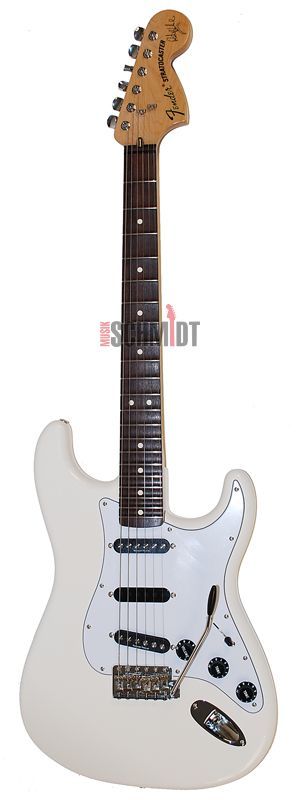
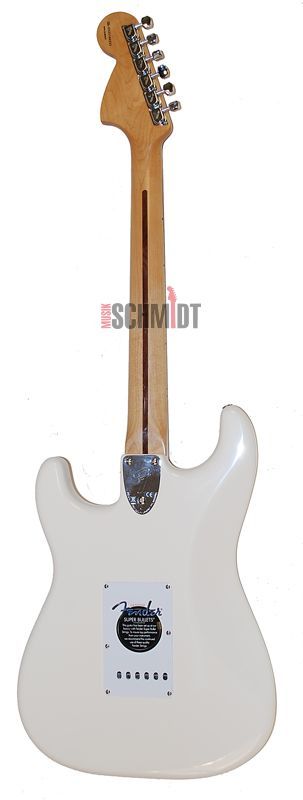
Ritchie Blackmore Signature Stratocaster
Gibson ES-335 |
Richard Hugh "Ritchie" Blackmore (born 14 April 1945) is an English rock guitarist who is an American resident, known for his work in Deep Purple. During his career Blackmore also fronted his own band, Rainbow. In the late 1990s he retired from hard rock for good, to start concentrating on the traditional folk rock project Blackmore's Night, which featured his wife Candice Night on vocals.
[edit] Early life
Blackmore was born at Allandale Nursing Home, Weston-super-Mare, England, but moved to Heston, Middlesex at the age of two. He was 11 when he got his first guitar. His father bought it for him on certain conditions: "So I actually took the lessons for a year – classical lessons...."[1]
Whilst at school he did well at sports including the javelin. Blackmore left school at age 15 and started work as an apprentice radio mechanic at nearby Heathrow Airport. He was given guitar lessons by Big Jim Sullivan. He was influenced in his youth by early rockers like Hank Marvin.
[edit] Career
He joined minor local bands from 1960 or 1961.[2] His playing improved and in 1963 he started out as a session player for Joe Meek's music productions and performed in several bands. He was a member of the instrumental combo, The Outlaws, and backed Heinz (playing on his top ten hit "Just Like Eddie"), Screaming Lord Sutch, Glenda Collins and Neil Christian among others. While working for Joe Meek, he got to know engineer Derek Lawrence, who would later produce Deep Purple's first three albums.
[edit] The Deep Purple years: 1968–1975 & 1984–1993

Blackmore in Hannover, Germany, 1970 (with the touring band)
Blackmore co-founded the rock group called Roundabout in 1968 with Jon Lord (keyboards) and other musicians.[3] Later on the name was changed to Deep Purple and vocal, bass and drums were changed to other musicians. The permanent name of the band came from his grandmother's favorite song. The band had a hit US single with its remake of the Joe South song "Hush". Purple's early sound leaned on psychedelia and progressive rock.[4] The first line-up recorded a mixture of original and cover materials. This "Mark One" line-up featuring singer Rod Evans lasted until mid-1969 and produced three studio albums.
The second line-up's first studio album, In Rock (1970), changed the band's style, turning it in a hard rock direction. This "Mark Two" line-up featuring singer Ian Gillan lasted until mid-1973, produced four studio albums and had their biggest hit single "Smoke on the Water".
The third line-up's new album was entitled Burn (1974), which featured former Trapeze bassist/vocalist Glenn Hughes and a then-unknown singer named David Coverdale. This "Mark Three" line-up lasted until mid-1975 and produced two studio albums. Blackmore publicly disliked the funky soul influences that Coverdale and Hughes injected into the band.[5] Following its conclusion, he departed Deep Purple to front a new group, Rainbow.
In the mid-1980s, a reunion of the former Deep Purple "Mark Two" line-up including Blackmore took place and recorded new materials. The album Perfect Strangers was released in October 1984.
In 1989, after the next album's release and supporting tour, Ian Gillan (vocals) was fired from the band because of a poor working relationship with Blackmore. His replacement was former Rainbow vocalist Joe Lynn Turner. This new lineup recorded one album titled Slaves & Masters (1990). The album's sound was different from the traditional Purple sound, so core Purple fans were unhappy. Following its conclusion, Turner was fired from the band in 1992 and Gillan returned. Shortly after the next album's release and supporting tour, Blackmore left the band permanently. His last show with the band was in Helsinki, Finland on 17 November 1993.
[edit] The Rainbow years: 1975–1984 & 1994–1997
In 1975, Blackmore formed his solo band Rainbow. The name of the band came from a Hollywood bar and grill called The Rainbow that catered to rock stars, groupies and rock enthusiasts. Blackmore originally planned to make his solo album, but later progressed to be a new band project. It was established with vocalist Ronnie James Dio and his blues rock band Elf as session musicians. This first line-up never performed live.

Blackmore, right, with Rainbow in Norway, 1977
The band's debut album, Ritchie Blackmore's Rainbow, was released in 1975. Blackmore fired every original band member except Dio shortly after the first album was recorded, and recruited a new lineup to record the second album Rising (1976).
For the next album, Long Live Rock 'n' Roll (1978), Blackmore kept the drummer Cozy Powell and Dio but replaced the rest of the band. Blackmore had difficulty finding a bass player for this record so he handled the bass duties himself, except on three songs. After the album's release and supporting tour, Ronnie James Dio left Rainbow due to "creative differences" with Blackmore.
Blackmore continued with Rainbow and the band released a new album entitled Down To Earth (1979), which featured Graham Bonnet on vocals and recruiting then former Deep Purple bassist Roger Glover. The album contained Rainbow's first chart successes, as the single "Since You Been Gone" (a cover of the Russ Ballard penned tune) became a smash hit.[6] Bonnet and Cozy Powell would leave after this support tour.
The band's next album, Difficult to Cure (1981), introduced vocalist Joe Lynn Turner. The title track from this album was an arrangement of Beethoven's Ninth Symphony, a personal favourite of Blackmore's. The music went in the radio-targeted more AOR style.[7]
Rainbow's next studio album was Straight Between the Eyes (1982) and included the hit single "Stone Cold." It would be followed by the album Bent Out of Shape (1983), which featured the single "Street Of Dreams". The song's video was banned by MTV for its supposedly controversial hypnotic video clip.[8] The resulting tour saw Rainbow return to the UK and also to Japan where the band performed with a full orchestra. In 1983 Blackmore was also nominated for Grammy Award for his work in an instrumental "Anybody There".[9]
Rainbow disbanded in 1984, and Blackmore rejoined Deep Purple. A then-final Rainbow album, Finyl Vinyl, was patched together from live tracks and "b" sides of singles.
Blackmore reformed Rainbow with new members in 1994. This Rainbow line-up featuring singer Doogie White lasted until 1997 and produced one album titled Stranger in Us All in 1995. It was originally intended to be a solo album, but due to the label BMG pressures, the record was billed as Ritchie Blackmore's Rainbow.[10] Released in the post-grunge mid '90s, Stranger in Us All and the tour supporting enjoyed some success, particularly in Europe. This is regarded as his last hard rock album. Rainbow was put on hold once again, after playing its final concert in Esbjerg, Denmark in 1997.
Over the years Rainbow went through many line-up changes with no two studio albums featuring the same line-up, Blackmore was the sole constant band member.[6] While with Rainbow, he changed his musical approach multiple times following each lead singer's departure and it is said that the result was the confusion and alienation of many of his supporters.[11]
[edit] The Blackmore's Night years: 1997–current
In 1997, Blackmore and his girlfriend (now wife) Candice Night as the band's vocalist formed the traditional folk rock duo Blackmore's Night. Around the same time as production of Stranger in Us All (1995), they were already gearing up their debut album Shadow of the Moon (1997).[12] Candice's mother, Carole Stevens became the band manager.[13] Blackmore's Night was originally thought to be a one-off collaboration, but was later revealed to be a new band project.
The band project released a new studio album every about 2 or 3 years since their first album and is performing small intimate tours. The band's musical style differed from Blackmore's previous bands and much of Blackmore's inspiration came from his favorite of classical music which matched nicely with Candice's lyrics about medieval themes. It features a mixture of traditional Renaissance music, contemporary songs, arrangements and instrumentals.[14] Blackmore plays acoustic guitar almost exclusively.[15] Through numerous personnel changes, the recruited backing musicians consist of bassist, keyboardist, drummer and violinist, etc.
The next release was titled Under a Violet Moon (1999) and continued in the same folk rock style established on the previous release, with Candice's vocals remaining a prominent feature of the band's style. In subsequent albums, particularly Fires at Midnight (2001), there was an increased incorporation of rock guitar into the music, whilst maintaining a folk rock direction. A live album, Past Times with Good Company was released in 2002. They have also performed some of the music for MagiQuest, a live simulation game located in Myrtle Beach, SC.[16] A Christmas-themed cover album, Winter Carols was released in 2006.
[edit] Musical style
With Deep Purple and Rainbow, Blackmore almost exclusively played a Fender Stratocaster. He is also one of the first rock guitarists to use a "scalloped" fretboard where the wood is filed and carved out into a shallow "U" shape between the frets. One of Blackmore's best-known guitar riffs is from the song "Smoke on the Water". He plays the riff without a pick, using two fingers to pluck the strings in fourths.
In his soloing, Blackmore combines blues scales and phrasing with dominant minor scales and ideas from European classical music. While playing he would often put the pick in his mouth to play with his fingers.
He has two guitar solos ranked on Guitar World magazine's "Top 100 Greatest Guitar Solos" ("Highway Star" at #19 and "Lazy" at #74, both from the album Machine Head).[17] Rolling Stone ranked him #55 in their list of the "100 Greatest Guitarists Of All Time".
Blackmore has been recognised as a significant influence by many notable rock guitarists including Randy Rhoads, Axel Rudi Pell,[18] Adrian Smith,[19] Craig Goldy,[20] Joe Stump,[21] John Sykes,[22] Kirk Hammett,[23] Steve Vai,[24] and Yngwie Malmsteen.[25]
[edit] Equipment
During the 1960s, Blackmore played a Gibson ES-335 but switched to a Fender Stratocaster after buying a second hand Stratocaster which included a Telecaster neck from Eric Clapton's roadie. However, the guitar was deemed unplayable by Blackmore because the intonation was too off to be fixed. Since then and right up until his Blackmore's Night project Blackmore has used Stratocasters almost exclusively. The middle pickup is screwed down and not used, with only the bass and treble pickup selector set. Blackmore has also occasionally used a Fender Telecaster Thinline during recording sessions.
In the 1970s, Blackmore used a number of different Stratocasters. However, around the time of the Long Live Rock 'n' Roll album, Blackmore found one particular Strat that was his main guitar up until Blackmore's Night. Like most of Blackmore's guitars, this Strat had its fingerboard scalloped. The pickups in it have been changed quite a few times, as described below. Blackmore added a strap lock to the headstock of this guitar as a conversation piece to annoy and confuse people.[26]
His amplifers were originally 200W Marshall Major stacks which were modified by Marshall with an additional output stage (generated approximately 278W) to make them sound more like Blackmore's favourite Vox AC-30 amp, cranked to full volume. Since 1994, he has used Engl valve amps. One of the reasons he cited was that the Marshall heads did not sound as good as the Engls at low volume.
Blackmore frequently used effects during his time with Deep Purple and Rainbow, (despite claims to the opposite). He used a Hornby Skewes Treble Booster in the early days. Around the time of the Burn sessions, he experimented with an EMS Synthi Hi Fli guitar synthesizer. He would sometimes use a wah-wah pedal and a variable control treble-booster for sustain. Moog Taurus bass pedals were used during solo parts of concerts. He also had a modified Aiwa TP-1011 tape machine built to supply echo and delay effects. The tape deck was also used as a pre-amp. Other effects that Blackmore used were a Schulte Compact Phasing A, a Unicord Univibe, a Dallas Arbiter Fuzz Face and an Octave Divider.
In the mid-1980s he also experimented with Roland guitar synths. A Roland GR-700 was seen on stage as late as 1995-96, later replaced with the GR-50. Guitar synths are also used quite a bit in Blackmore's Night. As an example, Blackmore plays with a slide over what is probably an organ patch in the beginning of "Way to Mandalay".
His strings used during his tenures with Deep Purple and Rainbow were Picato brand (.010, .011, .014, .026, .038, .048) Blackmore has experimented with many different pickups in his Strats. In the early Rainbow era, they were still stock Fenders, later Dawk installed overwound, dipped, Fender pickups. He has also used Schecter F-500-Ts, Velvet Hammer "Red Rhodes", DiMarzio "HS-2", OBL "Black Label", Bill Lawrence L-450, XL-250 (bridge), L-250 (neck). He used Seymour Duncan Quarter Pound Flat SSL-4 for several years and since the late 80s he has used Lace Sensor (Gold) "noiseless" pickups.
[edit] Personal life
Blackmore has a son, Jürgen R. Blackmore (b. 1964), from his first marriage to a German woman named Margit Volkmar (b. 3 Jan 1945).[27] Their marriage ended in 1969. Jürgen is now playing guitar in touring tribute band Over the Rainbow, formed by several ex-members of Rainbow.
Blackmore married another German woman, dancer Bärbel Hardie in September 1969.[28] His third marriage, on 16 May 1981, to Amy Rothman,[29] ended after divorce in 1987 (they separated in 1983).
He met band partner Candice Night in 1989. They have been living together since 1991 and got engaged in 1994.[30] The couple resides in Long Island, New York,[31][32] and married on 5 October 2008.[33][34] Their daughter, Autumn Esmerelda Blackmore, was born on 27 May 2010.[35]
He has lived in the U.S.A. since the mid-1970s. In 2010 he agreed to be one of the advisers for the National Guitar Museum.
[edit] In popular culture
Blackmore was portrayed by Mathew Baynton in Telstar, a film adaptation of James Hicks' play of the same name. The film was directed by Nick Moran and premiered on 19 June 2009 in the UK. The film follows Joe Meek, the flamboyantly gay, songwriter-producer behind the '60s hits "Have I the Right?," "Just Like Eddie," "Johnny Remember Me" and "Telstar." In the original stage version of "Telstar", which premiered in 2005, Blackmore was played by David Hayler.
[edit] Discography
[edit] As a session player (1963–1965), selected releases
- 1963 Just Like Eddie (Heinz)
- 1963 Live It Up (Heinz, EP)
- 1965 Michael Cox in Sweden (Michael Cox, EP)
- 1964 Ramona (Houston Wells & The Marksmen, EP)
- 1965 Glenda Collins (Glenda Collins, EP)
- 1965 Screaming Lord Sutch (Screaming Lord Sutch, EP)
- 1968 Sundragon (Sundragon)
- 1989 Rock Profile (Ritchie Blackmore)
- 1991 Rock Profile Vol. 2 (Ritchie Blackmore)
- 1991 The Derek Lawrence Sessions Take 1
- 1992 The Derek Lawrence Sessions Take 3
- 1994 Dreams Do Come True - The 45's Collection (Heinz)
- 1994 Heinz (Heinz, EP)
- 1994 Take It! Sessions 63/68 (Ritchie Blackmore)
- 1995 It's Hard To Believe It: The Amazing World Of Joe Meek
- 2002 Joe Meek - The Alchemist of Pop: Home Made Hits and Rarities 1959-66
- 2002 Pre Purple People (VA)
- 2005 Getaway - Groups & Sessions (Ritchie Blackmore)
- 2008 Houston Wells - Then & Now: From Joe Meek To New Zealand
[edit] Guest appearances
- 1967 Roy Harper - Sophisticated Beggar ("Committed")
- 1971 Green Bullfrog - Green Bullfrog aka Natural Magic
- 1972 Screaming Lord Sutch & Heavy Friends - Hands Off Jack The Ripper (recorded live '71)
- 1973 Randy, Pie & Family - Hurry To The City/Looking with Eyes of Love (SP, "Hurry To The City)
- 1974 Adam Faith - I Survive ("I Survive")
- 1980 Jack Green - Humanesque ("I Call, No Answer")
- 1990 Rock Aid Armenia - The Earthquake Album ("Smoke On The Water '90")
- 1992 Laurent Voulzy - Caché Derrière ("Guitare héraut")
- 1996 Twang! A Tribute To Hank Marvin & The Shadows ("Apache")
- 1996 Sweet - All Right Now ("All Right Now By Now", recorded live '76)
- 1997 Pat Boone - In a Metal Mood: No More Mr. Nice Guy ("Smoke On The Water")
- 1999 Geyers Schwarzer Haufen - Live '99 ("Göttliche Devise")
- 2004 Geyers Schwarzer Haufen - Historock Lästerzungen ("God's Gospel")
- 2011 William Shatner - Searching For Major Tom ("Space Oddity")
[edit] Film & TV appearances
- 1963 Live It Up! - appearance as a member of The Outlaws
- 1991 Deep Purple - Heavy Metal Pioneers (interviewee)
- 1996 Pat Boone - In a Metal Mood
- 2000 100 Greatest Artists of Hard Rock
- 2002 Classic Albums, ep. Deep Purple: Machine Head
- 2005 Big Phat Ass Guitar (Leslie West DVD, cameo appearance)
[edit] See also
[edit] References
- ^ Alexis Korner (6 March 1983). "Interview with Ritchie Blackmore". BBC Radio One Guitar Greats series.
- ^ "Ritchie Blackmore Discography". Blackmore's Night. http://www.blackmoresnight.com/moon_castle_pages/blackmore_discography.htm. Retrieved 11 January 2011.
- ^ "Ritchie Blackmore Bio". Blackmores Night. 8 May 1998. http://www.blackmoresnight.com/ritchie_bio.html. Retrieved 13 November 2010.
- ^ Browne, David. "Deep Purple early years: Seventy Seven Minutes In Prog Rock Heaven". http://www.deep-purple.net/review-files/earlyyears/earlyyears.htm. Retrieved 19 January 2011.
- ^ "History" track on the "Deep Purple: History and Hits" DVD.
- ^ a b Frame, Pete (March 1997). "Rainbow Roots and Branches." The Very Best of Rainbow (liner notes).
- ^ Adams, Bret. "Stranger in Us All". Allmusic. http://www.allmusic.com/album/r347818. Retrieved 22 July 2010.
- ^ "Blackmore's Night - Ritchie Blackmore Bio". Ritchieblackmore.com. 8 May 1998. http://www.ritchieblackmore.com/ritchie_bio.html. Retrieved 13 November 2010.
- ^ "Ritchie's Bio". The Official Ritchie Blackmore and Blackmore's Night website. http://www.ritchieblackmore.com/ritchie_bio.html. Retrieved 30 December 2010.
- ^ Adams, Bret. "Blackmore's Night". Allmusic. http://www.allmusic.com/artist/blackmores-night-p289774. Retrieved 2011-04-28.
- ^ Rivadavia, Eduardo. "Rainbow". Allmusic. http://www.allmusic.com/artist/p5219. Retrieved 8 July 2010.
- ^ Adams, Bret (26 February 2011). "Stranger in Us All". allmusic. http://www.allmusic.com/album/r347818.
- ^ Sweden Rock Magazine. "An evening with Ritchie Blackmore". The Highway Star. http://www.thehighwaystar.com/thsblog/2006/06/04/an-evening-with-ritchie-blackmore/. Retrieved 4 June 2006.
- ^ Warnock, Matt (28 January 2011). "Ritchie Blackmore: The Autumn Sky Interview". Guitar International Magazine. http://guitarinternational.com/wpmu/2011/01/28/ritchie-blackmore-the-autumn-sky-interview/.
- ^ Adams, Bret (26 February 2011). "Blackmore's Night". allmusic. http://www.allmusic.com/artist/blackmores-night-p289774.
- ^ "Blackmore's Night - The Music". The Official MagiQuest Homepage. http://magiquest.com/blackmores-night/. Retrieved 11 April 2011.
- ^ "100 Greatest Guitar Solos - Tablature for the greatest guitar solos of all time". Guitar.about.com. 17 June 2010. http://guitar.about.com/library/bl100greatest.htm. Retrieved 13 November 2010.
- ^ "Interview: AXEL RUDI PELL". getreadytorock.com. http://www.getreadytorock.com/rock_stars/axel_rudi_pell.htm. Retrieved 19 September 2010.
- ^ "Adrian Smith > Overview". allmusic.com. http://www.allmusic.com/artist/p20596. Retrieved 19 September 2010.
- ^ "The Rough Cutt, Giuffria, Dio Days Guitarist Craig Goldy". fullinbloommusic.com. http://www.fullinbloommusic.com/craig_goldy_dio_giuffria_rough_cutt_guitarist.html. Retrieved 19 September 2010.
- ^ "An Interview with Joe Stump". instrumentalcase.com. http://instrumentalcase.com/Stump.aspx. Retrieved 19 September 2010.
- ^ "BAD BOYS RUNNING WILD : interview with John Sykes". johnsykes.com. http://www.johnsykes.com/AtomicInterview.htm. Retrieved 19 September 2010.
- ^ "Kirk Hammett admits: "I'm never confident"". musicradar.com. http://www.musicradar.com/news/guitars/kirk-hammett-admits-im-never-confident-176717. Retrieved 19 September 2010.
- ^ "Steve Vai: interview". allaccessmagazine.com. http://allaccessmagazine.com/2010/07/15/steve-vai/. Retrieved 19 September 2010.
- ^ "Yngwie Malmsteen Interview". Modernguitars.com. http://www.modernguitars.com/archives/001060.html. Retrieved 19 September 2010.
- ^ "Ritchie Blackmore Gear Videos". Guitarheroesgear.com. http://www.guitarheroesgear.com/2009/06/ritchie-blackmore-gear-guitars.html. Retrieved 13 November 2010.
- ^ "BIO". Official Site of J.R.Blackmore. http://www.jrblackmore.de/index.php?option=com_content&view=article&id=5&Itemid=2. Retrieved 24 May 2010.
- ^ "Events 1969". Sixties City. http://www.sixtiescity.com/Events/Events69.shtm. Retrieved 24 May 2010.
- ^ "DPAS Magazine Archive. Darker Than Blue, 1981". http://www.deep-purple.net/DPASmags/stargazer25.htm. Retrieved 24 May 2010.
- ^ "Between Us". Candice Night Official Website. July 2006. http://candicenight.com/betweenus_archives/betweenus_07_2006.html. Retrieved 24 May 2010.
- ^ SHATTUCK, KATHRYN (29 January 2006). "FOOTLIGHTS". The New York Times. http://query.nytimes.com/gst/fullpage.html?res=9D0DE1DA103FF93AA15752C0A9609C8B63.
- ^ HINCKLEY, DAVID (28 December 2008). "Candice Night & Ritchie Blackmore". New York DAILY NEWS. http://articles.nydailynews.com/2008-12-28/entertainment/17911673_1_castles-wedding-dresses.
- ^ "Hear Ye! Hear Ye!". Official website. November 2008. http://www.blackmoresnight.com/index2.htm. Retrieved 14 November 2008.
- ^ "RITCHIE BLACKMORE, Longtime Girlfriend CANDICE NIGHT Tie The Knot". Blabbermouth.net. 13 Oct. 2008. http://www.roadrunnerrecords.com/blabbermouth.net/news.aspx?mode=Article&newsitemID=106777. Retrieved 24 May 2010.
- ^ "RITCHIE BLACKMORE And CANDICE NIGHT Announce Arrival Of First Child, Autumn Esmerelda". http://www.bravewords.com/news/143346. Retrieved 26 July 2010.
[edit] Further reading
- Davies, Roy (2002). Rainbow Rising. The Story of Ritchie Blackmore's Rainbow. Helter Skelter.
- Popoff, Martin (2005). Rainbow - English Castle Magic. Metal Blade.
- Bloom, Jerry (2006). Black Knight - The Ritchie Blackmore Story. Omnibus Press.
[edit] External links
|
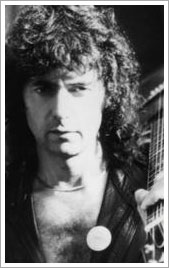

 딥 퍼플과 레인보우의 핵심적인 인물 리치 블랙모어의 기타 플레이는 그의 성격과 너무 닮아있다고 할 수 있다. 그는 괴팍하면서도 날카롭고 독단적인 품성으로 알려져 있다. 완벽주의를 추구했기에 이런 평가를 받았을지도 모르지만 그의 기타 소리는 날카로운듯하며 매우 공격적이며 유난히 힘이 느껴진다.
  그의 비브라토는(줄을 누르고 떨어줘서 바이브레이션 효과를 내는 테크닉) 참으로 깊고 날렵하다. 가장 중요한 오른손 피킹의 넘치는 파괴력과 정교함은 당대와 후대를 통틀어 록 기타리스트로서 최고라고 할 수밖에 없다. 요즘엔 기타 이펙터(기타소리를 변형시켜주는 장비)가 많아지면서 더욱 소리가 폭넓어졌지만 1970년대 만해도 철저하게 앰프에 의한 기타리스트의 내공으로 연주했다.
  클래식 록의 전형 'April'은 공격적인 플레이와 서정성이 함축되어 굉장히 아름답고 깊은 울림을 만들어낸다. 여기서 짚고 넘어가야 할 것은 슬픔을 연주할 때 공격적인 분노를 표현할 수 없다면, 애절한 슬픔도 담아낼 수 없다는 사실이다. 그래서 리치 블랙모어의 플레이는 흑과 백의 극단적 양면성이 드러나는 소리가 많고, 까칠한 성격이 그대로 녹아있는 날카로우나 인간적인 소리를 지니고 있다.
  기타리스트 유병열 : 前 윤도현 밴드의 기타리스트, 현재 그룹 비갠 후의 기타리스트로 활동 중