6·10 만세운동 100주년… "민족주의·사회주의, 독립으로 연대" Scholars Reassess June 10th Manse Mov
작성자정승남세기영어교육연구회장작성시간26.06.10조회수25 목록 댓글 06·10 만세운동 100주년… "민족주의·사회주의, 독립으로 연대"
Scholars Reassess June 10th Manse Movement's Unity, Legacy at Centenary
"특정 조직이나 이념보다는
학생 네트워크로 이뤄진 운동"
New research challenges 'failed movement' narrative, highlighting cross-ideological unity and student networks' role in shaping colonial-era resistance
새로운 연구는 '실패한 운동' 내러티브에 도전하며, 식민지 시대 저항 형성에 있어 이념 간 통일성과 학생 네트워크의 역할을 강조합니다
유석재 역사문화전문기자 박진성 기자 입력 2026.06.10. 00:42 조선일보
6·10 만세운동 100주년을 맞아 학계에서 새로운 평가들이 나오고 있다. 6·10 만세운동은 1926년 6월 10일 순종 임금의 인산일(장례일)을 기해 만세 시위를 일으켰던 민족 독립운동으로, 1919년의 3·1 운동을 계승하는 독립운동으로 평가된다. 서울에서 210여 명, 전국적으로는 1000여 명이 일본 경찰에 체포됐다. 침체된 민족 운동에 새로운 활기를 안겨준 것으로 여겨졌으나, 3·1 운동처럼 거족적 민족운동으로 발전하지는 못했기 때문에 ‘실패한 운동’ 또는 ‘좌우 대립을 극복하지 못한 운동’ 등으로 평가받아왔다. 하지만 실증적 자료에 기반한 최근 연구들은 이런 관점을 넘어서고 있다.
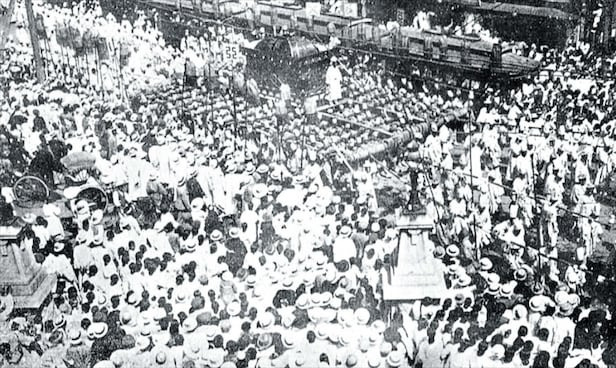
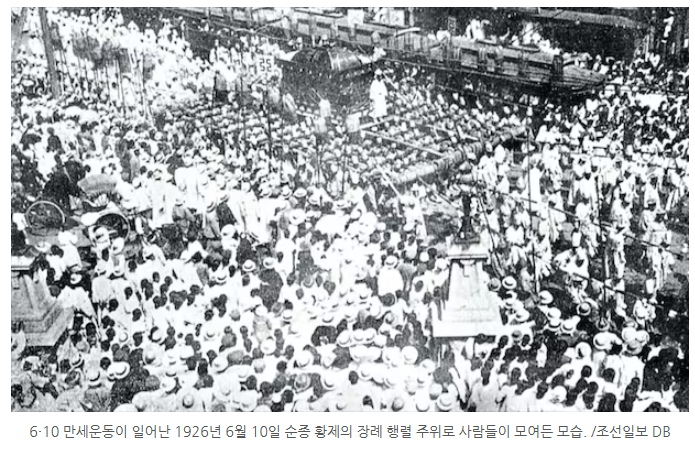
6·10 만세운동이 일어난 1926년 6월 10일 순종 황제의 장례 행렬 주위로 사람들이 모여든 모습. /조선일보 DB
박찬승 한양대 명예교수는 지난달 27일 대한민국역사박물관 콜로키움에서 “6·10 만세운동은 민족주의 세력과 사회주의 세력이 ‘대한독립’ 아래 연대한 민족 협동전선이었으며, 이 연대의 경험은 다음 해인 1927년 신간회 탄생에 영향을 미쳤다”고 분석했다.
지난 5일 열린 국제학술심포지엄에서 발표자인 홍성표 연세대 국학연구원 교수는 학생들이 하숙집, 기숙사, 선후배 관계 같은 학연 네트워크로 만세운동을 했다고 분석했다. 홍 교수는 “6·10 만세운동은 특정 조직이나 이념의 산물로만 환원될 수 없다”며 “학생 네트워크와 상황 인식 속에서 형성된 집합 행동이자, 이후 식민지 학생운동의 전개를 가능하게 한 중요한 사회적 경험으로 이해해야 한다”고 했다.
최은진 한국외국어대 사학과 교수는 6·10 만세운동 시기에 전국적으로 일어난 주민들의 망곡(望哭)과 상인들의 철시, 학생들의 동맹휴학 등에 주목했다. 그는 “이 시기 각지에서 일어난 여러 운동은 민족적 상실감을 표현한 주체적인 민족운동이었고, 일제의 탄압 속에서도 확고한 독립 의지를 보여주는 것이었다”고 했다.
당시 조선일보와 동아일보의 보도를 비교한 김민석 한양대 비교역사문화연구소 연구교수는 “두 신문 모두 만세운동을 민족적 사건으로 이해했지만 이끌어가는 방향은 달랐다”고 했다. 그는 “동아일보가 민족 감정의 도덕적·문화적 승화를 강조했다면 조선일보는 민족 감정의 정치적 성격과 현실 운동으로의 전환 가능성을 보다 강하게 부각했다”고 분석했다.
6·10 만세운동 100주년을 기념해 9일 서울 대학로 예술가의집에선 만세운동 참가자들을 위한 진혼음악회가 열렸다. 10일 오전 11시 서울 광화문광장 놀이마당에선 국가보훈부 주최로 제100주년 6·10 만세운동 기념식 ‘함성이 하나로, 대한을 이루다’가 개최된다. 오후 2시 서울 종로구 수운회관 내 천도교 중앙총부 앞마당에선 6·10 만세운동 100주년 기념비 제막식이 열린다.
고려대 동양사학과와 동 대학원(석사) 졸업. 조선일보 사회부와 탐사보도팀, 사회정책부 등을 거치며 교육부와 문체부 등 출입. 2003년부터 조선일보 문화부에서 학술 분야를 담당. '뉴스 속의 한국사' '유석재의 돌발史전'과 프리미엄 기사 '유석재의 악인전'을 연재 중.
문화부에서 출판과 음식 기사를 쓰고 있습니다. 먹고 마시고 읽는 일이야말로 삶을 풍요롭게 만든다고 생각합니다. 제423회 이달의 기자상을 받았습니다.
------------------------------------------------------------------------------------------------------------------
Scholars Reassess June 10th Manse Movement's Unity, Legacy at Centenary
New research challenges 'failed movement' narrative, highlighting cross-ideological unity and student networks' role in shaping colonial-era resistance
| By Yoo Sok-jae, Park Jin-seong Published 2026.06.10. 00:42 The Chosun Daily Newspaper / 조선일보 Marking the 100th anniversary of the June 10th Manse Movement, new academic evaluations are emerging. The June 10th Manse Movement was a national independence movement that sparked a pro-independence protest on June 10, 1926, coinciding with the funeral day of Emperor Sunjong. It is assessed as a continuation of the March 1st Movement of 1919. Over 210 people were arrested in Seoul, and over 1,000 nationwide by Japanese police. While it was believed to have injected new vitality into a stagnant national movement, it failed to develop into a nationwide movement like the March 1st Movement, leading to evaluations such as a “failed movement” or a “movement that failed to overcome left-right conflicts.” However, recent studies based on empirical data are transcending these perspectives. 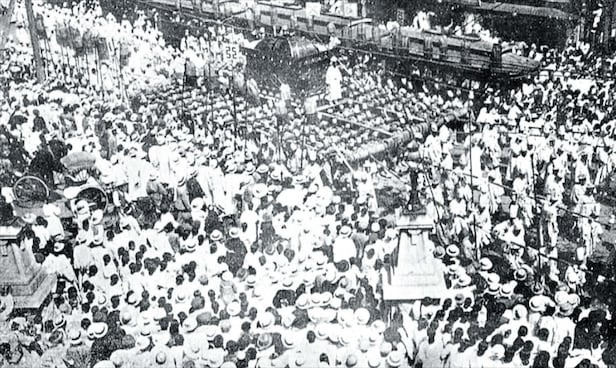 Park Chan-seung, emeritus professor at Hanyang University, analyzed at a colloquium hosted by the National Museum of Korean Contemporary History on the 27th of last month, “The June 10th Manse Movement was a national cooperation front where nationalist and socialist forces united under ‘Korean independence,’ and this experience of solidarity influenced the establishment of the New Korea Society the following year, in 1927.” At an international academic symposium held on the 5th, Hong Seong-pyo, a professor at Yonsei University’s Institute of Korean Studies, analyzed that students organized the Manse Movement through academic networks such as boarding houses, dormitories, and senior-junior relationships. Hong stated, “The June 10th Manse Movement cannot be reduced solely to the product of specific organizations or ideologies. It should be understood as a collective action formed within student networks and situational awareness, and as a significant social experience that enabled the development of colonial student movements afterward.” Choi Eun-jin, a professor of history at Hankuk University of Foreign Studies, focused on residents’ mangok (mourning rituals), merchants’ market closures, and students’ allied school strikes that occurred nationwide during the June 10th Manse Movement. She said, “The various movements that arose across the country during this period were autonomous national movements expressing a sense of national loss and demonstrated a resolute will for independence even under Japanese oppression.” Kim Min-seok, a research professor at Hanyang University’s Institute for Comparative Historical Culture, who compared reports from the Chosun Ilbo and Dong-A Ilbo at the time, said, “Both newspapers understood the Manse Movement as a national event, but their approaches differed.” He analyzed, “While the Dong-A Ilbo emphasized the moral and cultural sublimation of national sentiment, the Chosun Ilbo more strongly highlighted the political nature of national sentiment and its potential to transform into a practical movement.” To commemorate the 100th anniversary of the June 10th Manse Movement, a consolation music concert for participants was held on the 9th at the Artist House in Daehakro, Seoul. On the 10th at 11 a.m., a commemorative ceremony titled “Voices United, Achieving Great Korea” will be held at the Playground in Gwanghwamun Square, hosted by the Ministry of Patriots and Veterans Affairs. At 2 p.m., a monument unveiling ceremony for the June 10th Manse Movement’s 100th anniversary will take place in the courtyard in front of the Cheondoist Central Headquarters at Suun Hall in Jongno-gu, Seoul. · This article has been translated by Upstage Solar AI. |
21세기 영어교육연구회 / ㈜ 파우스트 칼리지
Phone : (02)386-4802 / (02)384-3348
E-mail : faustcollege@naver.com / ceta211@naver.com
Twitter : http://twitter.com/ceta21 21세기 영어교육연구회
Web-site : www.faustcollege.com (주)파우스트 칼리지
Cafe : http://cafe.daum.net/21ceta 21세기 영어교육연구회
Band : http://band.us/@ceta21 21세기 영어교육연구회
Blog : http://blog.naver.com/ceta211 21세기 영어교육연구회