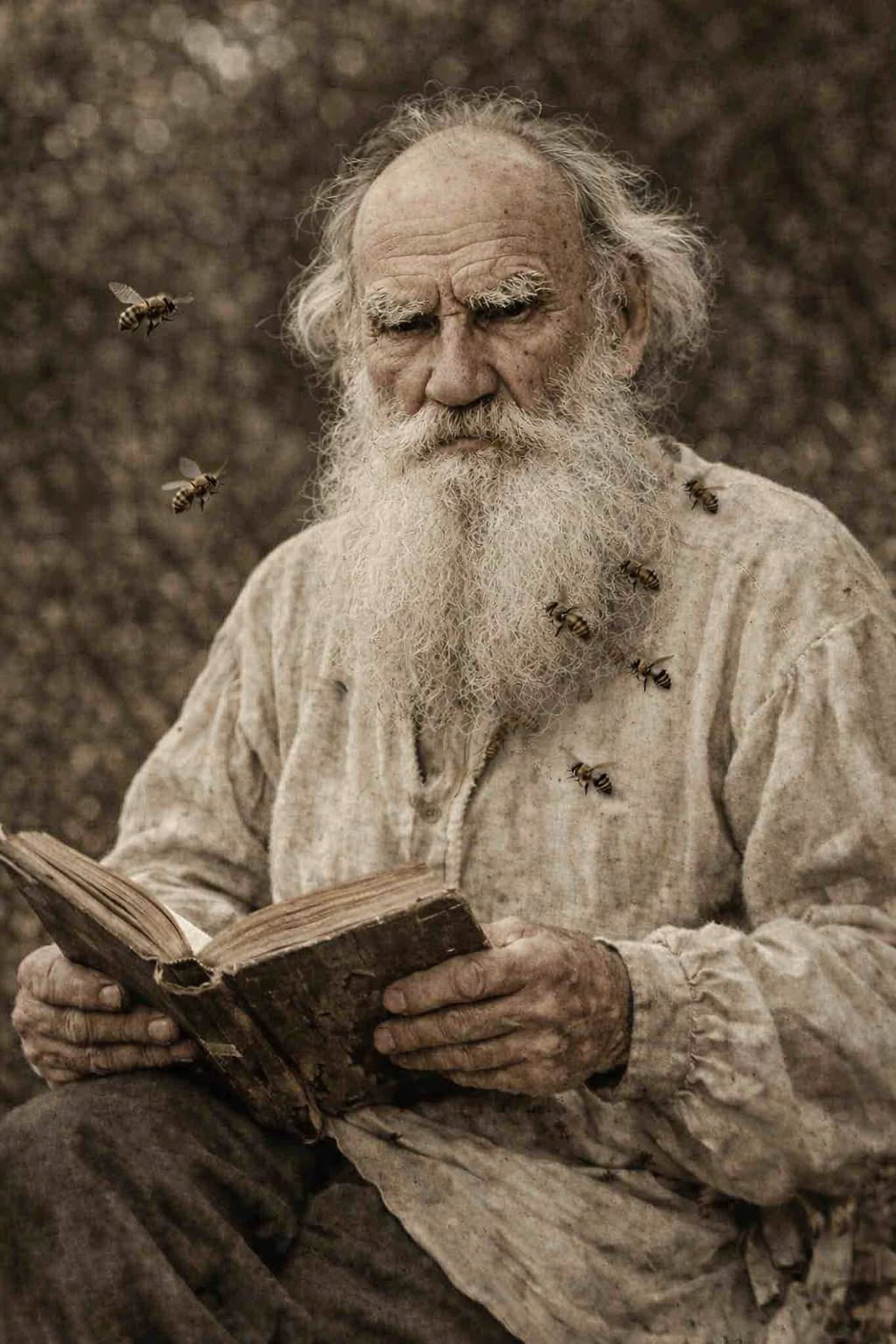
Leo Tolstoy used the hive as a profound metaphor for human society and history.
His writings, particularly his epic War and Peace, frequently feature apiary observations, illustrating themes of human limitation and the fundamental necessity of care when engaging with others.
Tolstoy’s interest in bees was not just literary; it was deeply personal.
He kept hives on his Yasnaya Polyana estate and studied apiculture thoroughly.
His wife, Sophia Tolstaya, even kept diaries noting how engrossed he became in his beekeeping, a hobby that he sometimes prioritized to an obsessive degree.
In Anna Karenina and his earlier work A Morning of a Landed Proprietor, he details the daily rhythm of apiculture.
Tolstoy is credited with the poignant observation: "One can no more approach people without love than one can approach bees without care."
자동번역
레오 톨스토이는 벌집을 인간 사회와 역사에 대한 심오한 은유로 사용했습니다.
그의 작품, 특히 대작 『전쟁과 평화』에는 양봉 관찰이 자주 등장하며, 인간의 한계와 타인과 관계를 맺을 때 배려가 얼마나 중요한지를 보여줍니다. 톨스토이의 꿀벌에 대한 관심은 단순히 문학적인 차원을 넘어 매우 개인적인 것이었습니다.
그는 야스나야 폴랴나 영지에 벌집을 두고 양봉을 철저히 연구했습니다.
그의 아내 소피아 톨스타야는 그가 양봉에 얼마나 몰두했는지,
때로는 강박적으로 양봉을 최우선 순위에 두었는지를 일기에 기록하기도 했습니다.
『안나 카레니나』와 그의 초기작 『지주(梵主)의 아침』에서 그는 양봉의 일상적인 리듬을 자세히 묘사합니다. 톨스토이는 "사랑 없이 사람에게 다가갈 수 없듯이 배려 없이 꿀벌에게 다가갈 수 없다"라는 가슴 아픈 말을 남겼습니다.