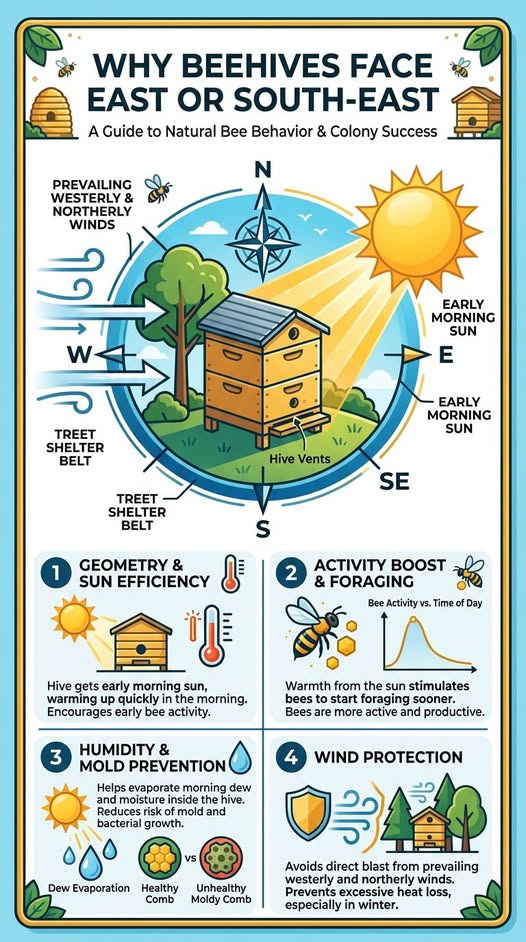
WHY BEEHIVES FACE EAST OR SOUTH-EAST


Honey bees naturally prefer hive entrances that face east or south-east because this orientation provides warmth, protection, and better daily productivity. Beekeepers around the world often use this positioning to help colonies thrive.
1. Early Morning Sun = Faster Start
The rising sun warms the hive entrance soon after dawn. As temperatures increase, worker bees become active earlier and can begin their daily tasks sooner.
Benefits:
Earlier flight activity
Faster brood warming
Reduced energy needed to generate heat
More productive workday for the colony
2. Increased Foraging Time
Bees cannot fly efficiently when temperatures are too low. A hive facing east receives morning sunlight first, allowing foragers to leave the hive earlier and collect nectar, pollen, water, and propolis.
Result:
More flowers visited each day
Greater nectar collection
Increased honey production potential
3. Reduced Moisture and Mold
Morning sunshine helps dry dew and excess moisture around the entrance and inside the hive. Excess humidity can encourage mold, fungal growth, and unhealthy hive conditions.
Advantages:
Drier combs
Healthier brood development
Lower risk of mold and disease
Better hive ventilation
4. Protection from Strong Winds
In many regions, the strongest and coldest winds come from the west or north. An east or south-east facing entrance helps shield the colony from direct wind exposure.
Benefits:
Less heat loss during winter
Reduced stress on the colony
Easier temperature regulation
Improved overwinter survival
5. Mimics Natural Nesting Preferences
Studies of wild honey bee colonies show that bees often choose nest entrances that receive morning sunlight while remaining protected from harsh afternoon heat and strong winds.
Best Hive Orientation
Ideal: East or South-East
Good: South (in cooler climates)
Less Ideal: West-facing (hot afternoon sun)
Avoid: Direct exposure to strong prevailing winds
Key Takeaway
Facing a beehive east or south-east allows bees to warm up earlier, forage longer, stay drier, and remain protected from harsh weather. This simple positioning choice can contribute to a healthier, more productive colony and better honey yields throughout the season.
/////////////////////////////////////////////////
벌통이 동쪽이나 남동쪽을 향하는 이유 🐝☀️
꿀벌은 본능적으로 동쪽이나 남동쪽을 향한 벌통 입구를 선호합니다. 이 방향은 따뜻함과 보호를 제공하고 일일 생산성을 높여주기 때문입니다. 전 세계 양봉가들은 벌집이 번성하도록 이러한 방향으로 벌통을 배치하는 경우가 많습니다.
1. 이른 아침 햇살 = 빠른 활동 시작
떠오르는 태양이 새벽녘에 벌통 입구를 따뜻하게 해줍니다. 온도가 올라가면 일벌들은 더 일찍 활동을 시작하고 일과를 더 빨리 시작할 수 있습니다.
장점:
더 이른 비행 활동
더 빠른 유충 온도 상승
열 발생에 필요한 에너지 감소
벌집의 생산성 향상
2. 더 많은 채집 시간
온도가 너무 낮으면 벌들은 효율적으로 날 수 없습니다. 동쪽을 향한 벌통은 아침 햇살을 가장 먼저 받기 때문에 일벌들이 더 일찍 벌통을 나와 꿀, 꽃가루, 물, 프로폴리스를 모을 수 있습니다.
결과:
매일 방문하는 꽃의 수 증가
꿀 채집량 증가
꿀 생산 잠재력 증가
3. 습기 및 곰팡이 감소
아침 햇살은 벌통 입구 주변과 벌통 내부의 이슬과 과도한 습기를 말리는 데 도움이 됩니다. 과도한 습도는 곰팡이, 균류 번식 및 벌통 환경 악화를 초래할 수 있습니다.
장점:
건조한 벌집
더 건강한 유충 발달
곰팡이 및 질병 위험 감소
벌통 환기 개선
4. 강풍으로부터 보호
많은 지역에서 가장 강하고 차가운 바람은 서쪽이나 북쪽에서 불어옵니다. 동쪽이나 남동쪽을 향한 입구는 벌집을 바람으로부터 보호하는 데 도움이 됩니다.
이점:
겨울철 열 손실 감소
벌집의 스트레스 감소
온도 조절 용이
겨울 생존율 향상
5. 자연적인 둥지 선호도 모방
야생 꿀벌 군집 연구에 따르면 꿀벌은 종종 아침 햇살을 받으면서 오후의 강한 열기와 바람으로부터 보호받을 수 있는 둥지 입구를 선택합니다.
최적의 벌통 방향
✅ 이상적: 동쪽 또는 남동쪽
✅ 좋음: 남쪽 (서늘한 기후)
⚠️ 바람직하지 않음: 서쪽 (뜨거운 오후 햇볕)
⚠️ 피해야 할 방향: 강한 바람에 직접 노출되는 곳
핵심 요점
벌통을 동쪽이나 남동쪽으로 향하게 하면 벌들이 더 일찍 따뜻해지고, 더 오랫동안 먹이를 찾아다니며, 더 건조한 환경을 유지하고, 악천후로부터 보호받을 수 있습니다. 이러한 간단한 위치 선정만으로도 더 건강하고 생산적인 벌집을 만들고, 시즌 내내 더 풍부한 꿀을 얻을 수 있습니다. 🐝🍯