[Research related with O'nail class]Permissible search for US police
작성자강석근작성시간23.07.23조회수38 목록 댓글 1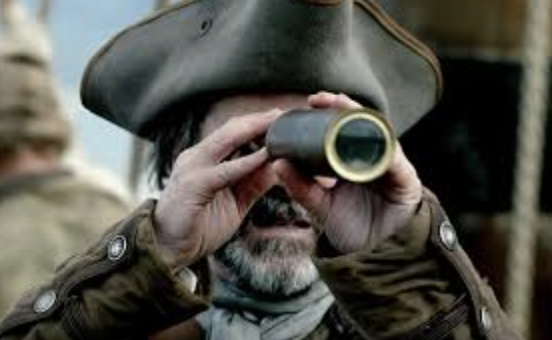

Telescopes, Binoculars, and the Fourth Amendment
https://scholarship.law.cornell.edu/cgi/viewcontent.cgi?article=4271&context=clr
NCJ Number
96541
Journal
Cornell Law Review Volume: 67 Issue: 2 Dated: (January 1982) Pages: 379-395
Author(s)
L K Marks
Date Published
1982
Length
17 pages
Annotation
This note critically reviews the reasonable expectation of privacy standard as applied to evidence obtained through telescope and binocular surveillance.
Abstract
It suggests that police use of telescopes and binoculars to observe activities or objects unobservable from a proper location by the 'naked eye' violates an individual's expectation of privacy. The U.S. Supreme Court's landmark decision in Boyd v. United States triggered the ultimate development of the reasonable expectation of privacy standard. The Court emphasized the function and spirit of the fourth amendment and stressed the need to construe liberally constitutional provisions protecting the security of persons and property. The Court's decision in Olmstead v. United States signaled a retreat from the expansive doctrine set forth in Boyd. Justice Brandeis, dissenting, maintained that the majority erred in restricting the fourth amendment to physical trespasses on constitutionally protected areas. Nearly 40 years later, in Katz v. United States, the Court repudiated the Olmstead trespass doctrine. This decision requires that courts determine whether government activity has violated a defendant's reasonable expectation of privacy. This means that the use of telescopes or binoculars to observe activity or objects that a person could not have viewed from a lawful location without the use of these aids violates reasonable expectations of privacy and that evidence so obtained must be excluded. The note argues that courts should weigh the threat to a free and open society posed by visual enhancement devices against the techniques’ utility to law enforcement.
NOTE
TELESCOPES, BINOCULARS, AND THE FOURTH AMENDMENT
Since the Supreme Court's landmark fourth amendment' decision in Katz v. United States,2 courts have considered a wide variety of cases 3 involving alleged violations of defendants' "reasonable expectation of privacy."14 In particular, courts have experienced difficulty in evaluating evidence acquired by police through the use of telescopes and binoculars.5 This Note critically reviews the reasonable expectation of privacy standard as applied to evidence obtained through telescope and binocular surveillance, and suggests that police use of telescopes and binoculars to observe activities or objects unobservable from a proper location by the "naked eye" violates an individual's expectation of privacy.
.
.
.
“CONCLUSION
The Supreme Court's decision in Katz v. United States requires that courts determine whether government activity has violated a defendant's reasonable expectation of privacy. The use of telescopes or binoculars to observe activity or objects that a person could not have viewed from a lawful location without the use of these aids violates reasonable expectations of privacy; evidence so obtained must be excluded. The development of the reasonable expectation of privacy standard since Katz, and a comparison of telescope and binocular surveillance to electronic wiretapping, supports this conclusion. Because the government can manipulate expectations of privacy, courts should weigh the threat to a free and open society posed by visual enhancement devices, against the utility of the techniques to law enforcement. The limited impairment to law enforcement of a requirement that police first obtain warrants before using telescopes and binoculars to view private activity unobservable by the naked eye is a small price to pay for the significant privacy interests that such a requirement would promote. Lawrence Kaiser Marks”
일단 망원경 같은 경우는 사용은 가능하지만 합법적인 장소에서, 즉 피관찰자가 예상 할 수 있는 장소에서만 사용 가능 한 것으로 보입니다. 그리고 사용 하기 앞서 사용 warrant 를 얻어 내는 것이 나중에 탈이 없을 것이라는... 내용 입니다. 지금은 합법적으로 누구나 사용 할 수 있는 고성능 장치들이 많아 져서 예전보다 관측이 용이 해 졌음을 예상 할 수 있습니다. 그리고 이번 기회에Katz 케이스 리뷰해서 올릴 필요가 있어 보입니다.