1985년까지 미국은 아돌프 게오기예비치 톨카체프라는 엔지니어를 포섭해 항공기 및 관련 시스템에 대해 막대한 정보를 입수했고, 이를 통해 확보한 구소련제 무기에 대한 풍부한 정보를 바탕으로 1986년 리비아 개입, 1991년 걸프전 등에서 리비아와 이라크의 구소련제 무기들을 손쉽게 압도할 수 있었다고 하네요.
시드라만의 SA-5 포대를 공습한 미해군의 커세어II 파일럿들은 SA-5의 성능을 '정확하게' 알고 있었고, 마찬가지로 리비아의 MiG-23을 격추한 톰캣 파일럿들도 MiG-23을 잘 알고 있었다고 합니다. 이라크 상공에서 MiG를 사냥한 이글 드라이버들도 마찬가지로 적기에 대해 잘 알고 있었다고 하네요.
톨카체프는 구소련의 레이다를 개발한 파조트론 설계국의 엔지니어였고, 1979년부터 구소련제 애비오닉스와 레이다, 무기에 대한 기밀 데이터를 대량으로 제공해 1990년대까지 CIA는 그가 제공한 데이터를 번역하기 바빴다고 합니다. 1985년 스파이 활동이 들켜서 1986년 처형됐습니다만, 이 피해를 복구하기 전 소련이 망하고 항공산업이 무너지는 바람에 이 손상을 아직도 복구하지 못했다고..
The Man Who Ruined the Soviet Warplane Industry

The Man Who Ruined the Soviet Warplane IndustryMeet Adolf Georgievich Tolkachev

Jan 26, 2025
22
4
Share
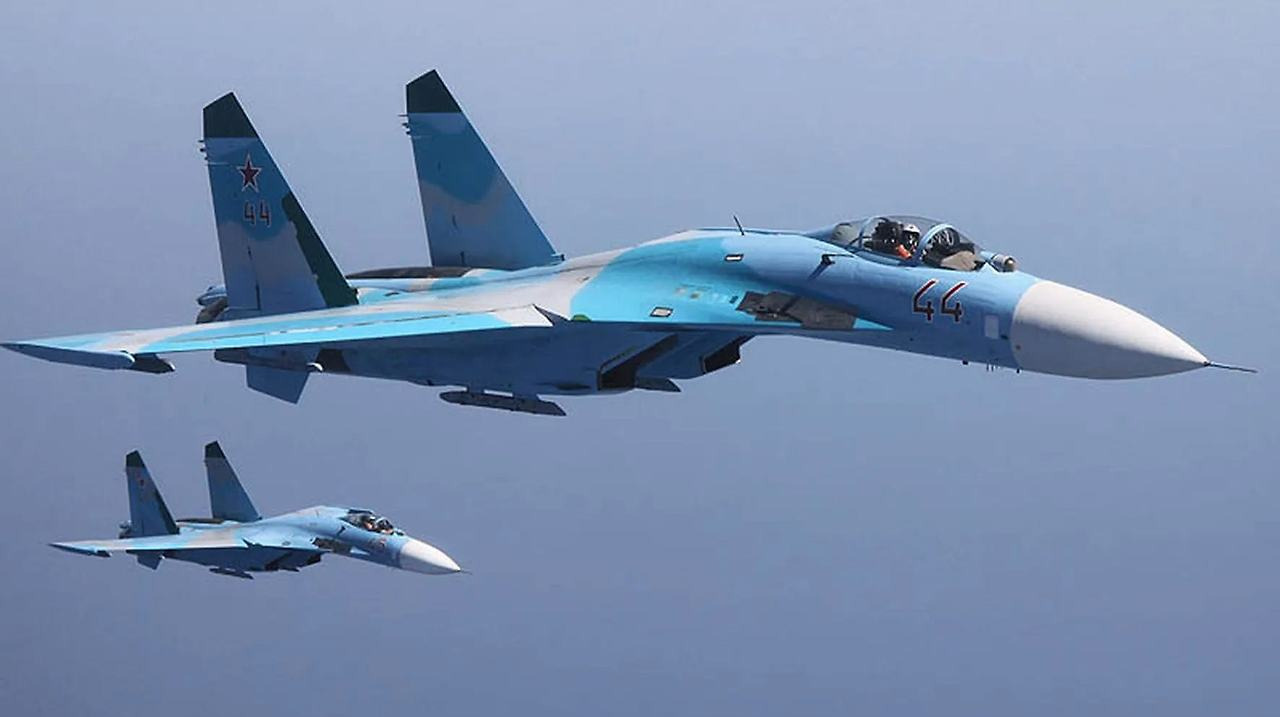
by TOM COOPER
In March 1986, U.S. Navy aviators out-flew, out-maneuvered and jammed the Libyan Arab Air Force so badly that the Libyans stopped flying their interceptors over the Gulf of Sidra.
As a result, Tripoli had to give up its claim on this part of the Mediterranean. Equally damaging, the lack of air cover allowed the Americans to attack with relative impunity.
You could chalk up the Americans’ success to superior training and tactics. But don’t dismiss another potentially important factor—espionage. By the mid-1980s, the U.S. military had obtained reams of vital intelligence on Soviet-made weaponry, particularly aircraft and related systems, from Adolf Georgievich Tolkachev, a disgruntled Soviet engineer.
Tolkachev was, arguably, the man who wrecked the Soviet warplane industry. Much of what follows can be found in David Hoffman’s book, The Billion Dollar Spy.
Consider the Americans’ sound defeat of Libyan forces. On March 24, 1986—having already cleared the air space over the Gulf of Sidra—U.S. Navy planes easily knocked out a Libyan SA-5 Gammon surface-to-air missile site at Sidra and then sank several fast missile craft of the Libyan navy.
Only a month later, U.S. Air Force F-111Fs bombed three carefully-selected targets in Tripoli, while Navy A-6E Intruders struck two targets in Benghazi. Despite fierce resistance from Libyan air defenses, the Americans lost only one of their fighter-bombers.
Adding insult to injury, in January 1989 a pair of U.S. Navy F-14A Tomcats shot down two Libyan air force MiG-23MF interceptors.
The U.S. winning streak continued through the 1990s. In 1991, U.S. air power overwhelmed the Iraqi air force in a matter of three days. After flying just a few defensive missions, the Iraqi air force—a well-equipped air arm shaped and seasoned by eight years of bitter war with Iran—was all but grounded and subsequently evacuated its most precious aircraft to Iran.
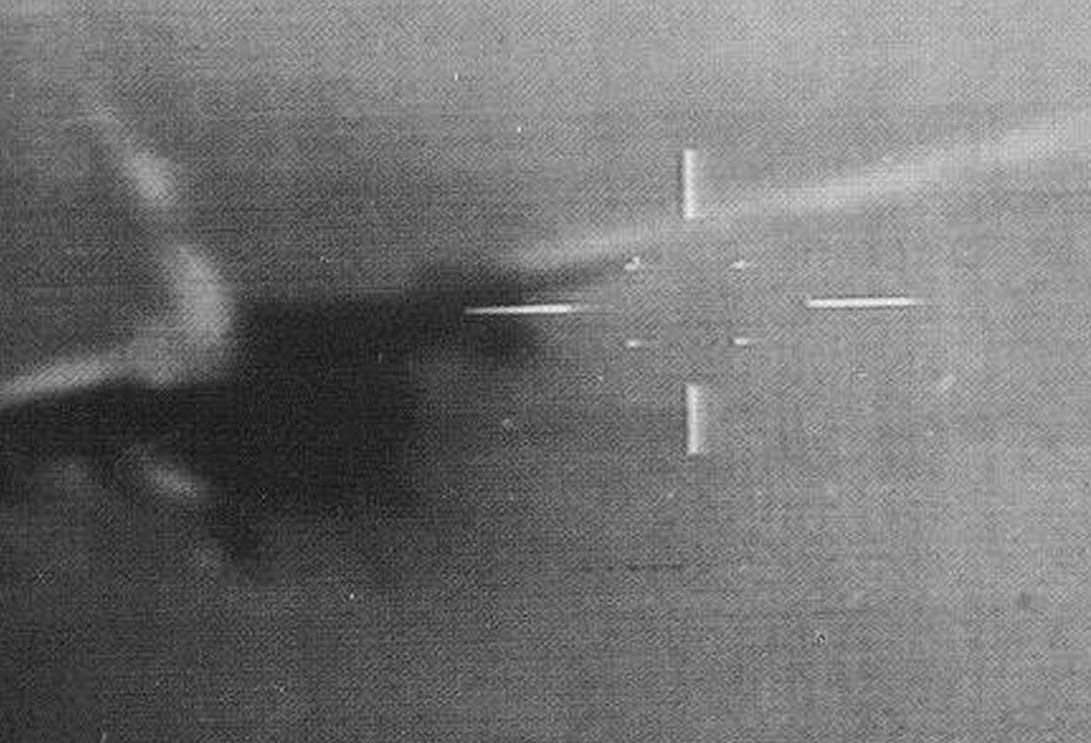
Some of first victims of Tolkachev’s treachery were numerous Soviet export customers, including Libyan air force pilots—including the pilot of this MiG-23MF, about to get shot down by a U.S. Navy F-14A on Jan. 4, 1989. U.S. Navy release
Except in a handful of cases, Iraq’s elaborate ground-based air defenses—patiently developed at great cost over nearly 20 years—proved no major hindrance to U.S. forces.
These are only four out of about a dozen examples in which U.S. air power overwhelmed its opponents in the last 30 years. Now, one could argue that the opponents in question were no match for the Americans—that they were poorly trained, poorly commanded, inexperienced and equipped with downgraded export models of Soviet-made aircraft and armament.
That they were, in other words, a far cry from the kind of threat the Soviets, and later Russians, themselves represented. Well-informed Iraqi and Libyan sources counter this impression, insisting that their air forces possessed modern equipment operated by well-trained and skilled officers and pilots.
Some might go as far as to say that the Serbian air force and ground-based air defenses fared much better when confronting U.S.-led NATO air power in 1995 and 1999. Others would stress that, by the late 1990s, Iraqi air defenses were so worn out, and so constrained by nonsensical orders from top political leaders, that they posed greater danger to themselves than to their opponents.
Subscribe
However, leaving aside details about aircraft and equipment, training, tactics, strategy, politics and other background noise, one thing remains common in all these operations—U.S. forces’ amazing level of knowledge about the Soviet and Russian weapons systems used by the Libyans, Iraqis and Serbs.
For example, the pilots of the U.S. Navy A-7E Corsair IIs that attacked the Libyan SA-5 Gammon SAM site near Sidra during the evening of March 24, 1986, knew the exact performance specs of the system they were facing.
Likewise, the crews of the two F-14A Tomcats that shot down a pair of Libyan MiG-23MFs had intricate knowledge of the swing-swing MiG-23. U.S. Air Force F-15 pilots hunting MiGs over Iraq in the period 1991 to 2002 knew precisely what their opponents’ aircraft, avionics and armament were capable of doing.
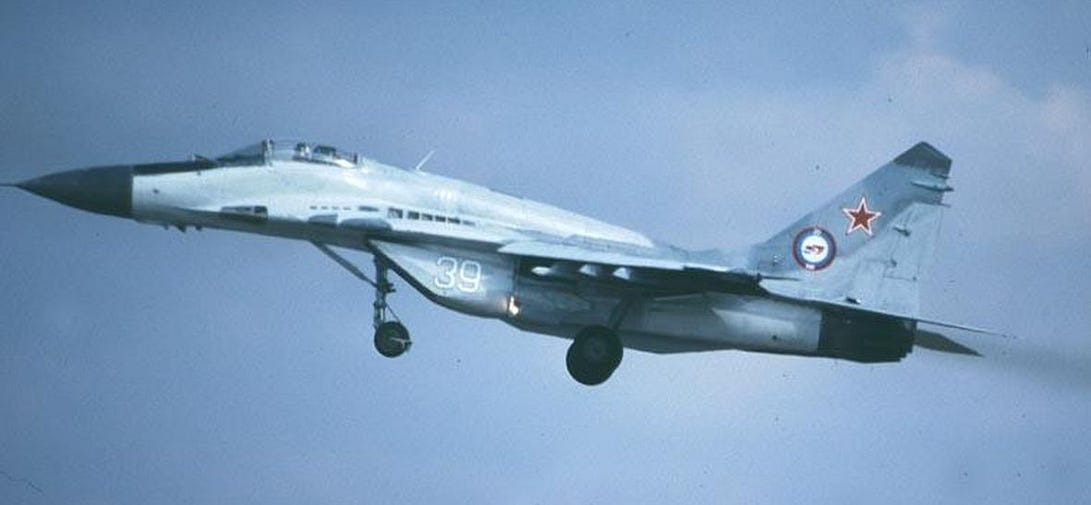
The MiG-29 was severely hit by the Tolkachev affair, and Soviets reacted by fielding the MiG-29SMT, depicted here. However, such efforts were far from satisfactory, while a lack of funding caused delays lasting decades. Tom Cooper Collection photo
Evidence indicates that superior intelligence was the key to American military successes. Consider that the tactical manuals that the U.S. Air Force’s Fighter Weapons School issued in the late 1980s were already well-informed about even the latest Soviet equipment, including the MiG-29, Su-27, SA-10 Grumble, SA-11 Gadlfy and many others.
Tolkachev provided much of the most useful intelligence. He was, in the 1970s and ’80s, an electronics engineer at the Soviet Union’s Scientific Research Institute of Radar, better known as the Phazotron Design Bureau—the USSR’s main developer of military radars and avionics.
Motivated by the persecution of his wife’s parents under Joseph Stalin and disappointed in the communist government, Tolkachev established ties to the U.S. Central Intelligence Agency in Moscow and, beginning in 1979, began transferring huge volumes of highly classified and extremely sensitive data about the most important avionics, radars and weapons installed in Soviet-made combat aircraft.
The amount of material that “Donald,” as Tolkachev was known to the CIA, was such that U.S. translators couldn’t keep up with it. They remained busy translating and studying the information Tolkachev had provided well into the 1990s.
As early as December 1979, the U.S. Defense Department completely reconfigured the electronics package for one of its latest fighter aircraft, based on the information from Tolkachev.
An internal CIA evaluation from March 1980 praised Tolkachev’s information on the latest generation of Soviet surface-to-air missile systems. “We never before obtained such detail and understanding of such systems until years after they were actually deployed,” the CIA stressed.
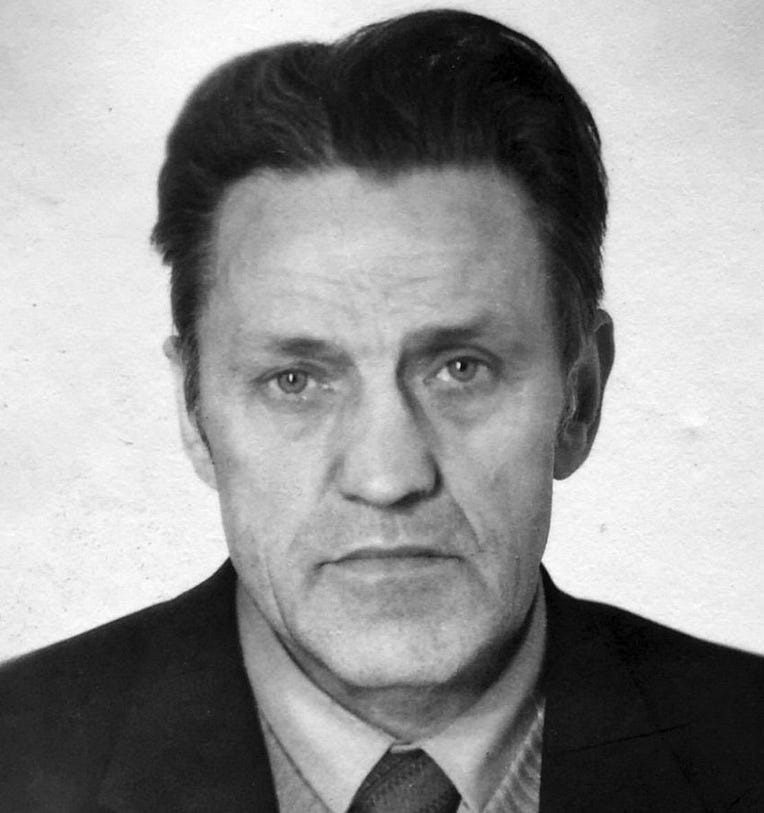
One of the few photos of Adolf Tolkachev that has become available. Photo via David Hoffman
In April 1980, another internal CIA memorandum called Tolkachev’s information on jam-proofing tests for Soviet fighter aircraft radar systems “unique.” Obviously, Tolkachev provided data that no other CIA asset had access to.
Only few months later, Tolkachev was credited with “providing unique information on a new Soviet fighter aircraft, and documents on several new models of airborne missile systems.”
Similarly, a memorandum from the Defense Department from September 1980 praised the impact of Tolkachev’s reporting as “limitless in terms of enhancing U.S. military systems’ effectiveness.” Tolkachev’s leaks had the “potential to save lives and equipment” and were “instrumental in shaping the course of billions of dollars of U.S. research and development activities.”
The extent of the damage Tolkachev caused the Soviets is hard to summarize in a few sentences. What little the CIA did release about its cooperation with Tolkachev indicates that he might have inflicted irreparable harm to the Soviet military aviation and air-defense industries.
He certainly provided the Americans with full insight into modern Soviet-made aircraft such as as the MiG-29, MiG-31 and Su-27 and their air-to-air missiles—and enabled U.S. scientists and engineers to quickly develop electronic countermeasures against these systems.
Perhaps more importantly, the Tolkachev affair hit the Soviet Union at a time of instability for the USSR. A Soviet spy in the United States revealed Tolkachev’s own spying in early 1985. The Soviet government executed Tolkachev in 1986.
However, the Soviet Union by then was bankrupting itself—and dissolved in 1991. For most of the 1990s, what was left of the Russian military aviation and air-defense industries languished due to a general lack of funding. Major upgrades of the newest combat aircraft and various air-defense systems—all urgently necessary because of Tolkachev’s treachery—took decades to implement.
In the words of one Sukhoi engineer, “it took more than 10,000 different upgrades and over 20 years” merely to improve the original Su-27 to the Su-27SM-standard, and thus “repair some of the damage” Tolkachev caused.
While full details on what exactly Tolkachev revealed to the CIA are unlikely to become public for a number of years, it was certainly a lot. The effects of his treachery—foremost the fact that an entire generation of brand-new combat aircraft, air-to-air and even surface-to-air missiles was compromised and thus became obsolete as soon as it entered service—are still being felt in Russia today.
Tolkachev, A Worthy Successor to Penkovsky: An Exceptional Intelligence Operation
댓글
댓글 리스트-
작성자백선호 작성시간 25.02.03 오잉 처음 보는 얘기네요. @.@
-
답댓글 작성자위종민 작성자 본인 여부 작성자 작성시간 25.02.04 CIA 발간 PDF 한글 번역본도 추가했습니다 ^^
미사일 갭이 없다는 걸 확인시켜 준 올레그 펜코프스키의 후계자라고 평하는 걸 보면 정보의 가치가 어마어마하긴 했나 봅니다 @.@ -
작성자Minowski(김유철) 작성시간 25.02.04 공유 감사합니다 ^^. 다음 주 미국출장인데 읽고 있으면 공항에서 체포되려나..... ^^..
그나저나 러우전 초반에 FSV발 카더라가 줄줄 세고 그랬는데 요즘 그런 게 사실상 없어진 것 보면 러시아 방첩망도 꽤 굴을 많이 찾아낸 것 아닌가 싶습니다.