미국공군이 XA100 가변 사이클 엔진을 F-35A에 달 생각을 하고 있네요. 실현되면 항속거리가 더욱 늘어나겠습니다.
게다가 항전 장비들이 업그레이드되며 열을 더 내고 있고, 이 열을 지금 있는 F135 엔진이 감당하기 힘들지만 새 엔진은 충분할 것이라고 하네요.
"... the F135 was optimized to absorb up to 14 kW of waste heat from the electronics, but the Block 3 version of the F-35 produces 30 kW. As the program upgrades to the Block 4 version with Technology Refresh 3 Program avionics, the amount of waste heat is expected to rise to 47 kW.
An adaptive engine may provide a quick fix for thermal management capacity. The XA100 has the capacity to absorb twice the amount of waste heat now shed by the Block 3 version of the F-35, Tweedie says. If true, the XA100 would be able to absorb up to 60 kW of waste heat. "
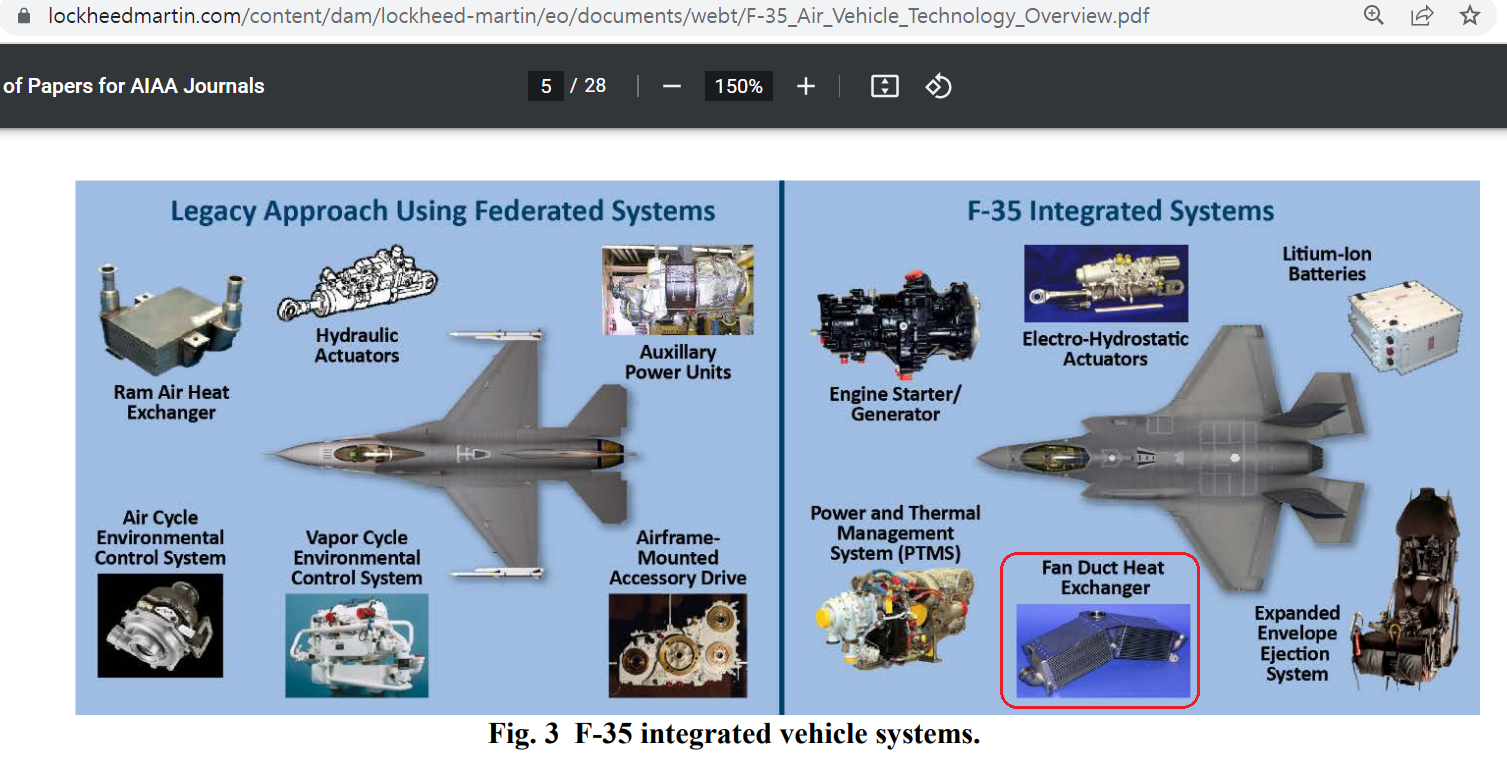
F-35는 항전 장비들이 내는 열을 엔진의 공기 흡입구 안에 있는 열교환기를 통해서 밖으로 뺍니다.
During flight, waste heat generated by onboard systems is rejected overboard via engine-mounted heat exchangers embedded within the F135 engine fan air duct. This eliminates the weight and volume penalties associated with conventional ram air heat-sink systems.
GE’s XA100 Poised To Vie for New F-35 Engine Program
Guy Norris Steve Trimble July 04, 2022
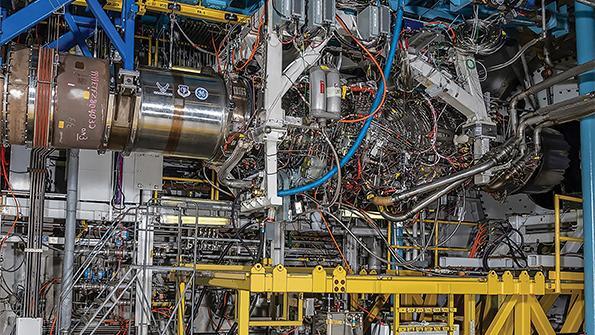
The XA100 is undergoing dynamic tests across a range of simulated altitude conditions at AEDC.
Credit: U.S. Air Force
General Electric says the XA100 adaptive-cycle fighter engine is on track to complete an exhaustive two-phase evaluation later this summer as a new U.S. Air Force leadership team moves forward with a proposal to reengine the domestic Lockheed Martin F-35A fleet.
Developed by GE’s Edison Works advanced programs unit, the XA100 is one of two experimental adaptive demonstrators contracted for under the U.S. Air Force’s Life Cycle Management Center’s Adaptive Engine Transition Program (AETP). The other engine, the XA101, is being developed by Pratt & Whitney.
The final phase of tests on the XA100—the second GE-built adaptive engine to be evaluated in the AETP—began when the test unit was fired up at the Arnold Engineering Development Complex (AEDC) in Tennessee on March 25, says David Tweedie, vice president and general manager of GE Edison Works advanced products unit. The initial XA100 began tests in December 2020, followed by the second engine that entered Phase 1 tests at GE’s Evendale, Ohio, site in August 2021.
“We continue to like the data that we get from these engines,” Tweedie says. “That continues to show that we’ve done our homework—that the structured risk-reduction program that was put together is working and delivering.”
The end of Phase 2 testing later this summer is expected to complete a 15-year, $4.4 billion campaign by the Air Force to demonstrate adaptive-cycle propulsion technology at a high technology readiness level.
The three-stream architecture already is a requirement for the engine that will power the advanced fighter at the core of the Next-Generation Air Dominance program.
In parallel, the Air Force launched the AETP in 2016 to demonstrate a 45,000-lb.-thrust, adaptive-cycle turbofan as a candidate to reengine the F-35. Despite the billion-dollar investment in the program, however, Air Force leaders opposed proposals to replace the Pratt & Whitney F135 as late as July 2021. During a congressional hearing that month, Deputy Chief of Staff Lt. Gen. David Nahom and F-35 Program Executive Officer Lt. Gen. Eric Fick, told lawmakers that transitioning the AETP to a production program would be a “struggle.”
But the swearing-in of Air Force Secretary Frank Kendall prompted a quick policy reversal. Instead of resisting calls to reengine the F-35, Kendall embraced the concept. In January, the Air Force launched a market survey for the F-35 Adaptive Engine Replacement Program, surveying potential suppliers in advance of a possible program launch in fiscal 2024.
In the interim, F-35 program officials have released new information on the limitations of the current F-35 engine. Fick says the F135 was optimized to absorb up to 14 kW of waste heat from the electronics, but the Block 3 version of the F-35 produces 30 kW. As the program upgrades to the Block 4 version with Technology Refresh 3 Program avionics, the amount of waste heat is expected to rise to 47 kW.
An adaptive engine may provide a quick fix for thermal management capacity. The XA100 has the capacity to absorb twice the amount of waste heat now shed by the Block 3 version of the F-35, Tweedie says. If true, the XA100 would be able to absorb up to 60 kW of waste heat.
Using a pressurized test cell at the AEDC, “we’re simulating as best we can, in a test environment, the ability for this engine to operate in the real-world application across the flight envelope,” Tweedie says. The main focus is on proving “the dynamic ability of this engine to switch modes at the response rates that are required,” he says.
Demonstration work includes proving out the engine’s automatic transition function between lower-thrust cruise-mode power settings and higher-thrust combat performance. “If you’re the pilot, you don’t even know what mode you’re in,” Tweedie says. “You’re not pressing a button. You’re operating the throttle the way you normally do, and when the engine has the ability to make the required thrust in the high fuel-efficiency mode, it will do so.
“Only then, when the engine gets to the point where it cannot meet thrust demand in the high-efficiency mode, will it switch over to the traditional mode,” he adds. “It’s a function of altitude, airspeed and throttle demand that sets what mode you’re in. So as you’re just going through a flight envelope and go into different power settings, it’ll make the transition up and down organically as required.”
Much of the evaluation is also focused on the performance of the digital engine control system, which schedules the operation of the variable fan system and controls the flow demand of the engine through the main booster inlet and the adaptive third stream. The additional bypass duct also incorporates an innovatively packaged, additively manufactured heat-exchanger system, Tweedie says.