미육군이 FARA ( Future Attack Reconnaissance Aircraft ) 사업을 취소했네요. 이미 20억 달러가 투입됐고 향후 50억 달러가 투자될 예정이었는데 20억 달러를 매몰비용 처리해 버리네요. 이와 함께 UH-60V 블랙호크의 생산도 비용 상승으로 2025년으로 끝내버린다고 합니다.
우-러 전쟁의 전훈을 분석한 결과 무인시스템 및 우주배치 센서 등이 저렴해지고 보편화돼 항공정찰의 개념이 근본적으로 변화한 것이 원인이라고 합니다.
시코르스키는 FLRAA를 내준 대신 FARA를 노리고 있었을 텐데 2030년대부터 뭘로 먹고 살 지 고민이 되겠습니다.
Army cancels FARA helicopter program, makes other cuts in major aviation shakeup
In addition to halting the FARA competition, service leaders want to end UH-60 V Blackhawk production, postpone moving the Improved Turbine Engine Program into production, and phase out legacy drones.
By ASHLEY ROQUEon February 08, 2024 at 5:30 PM
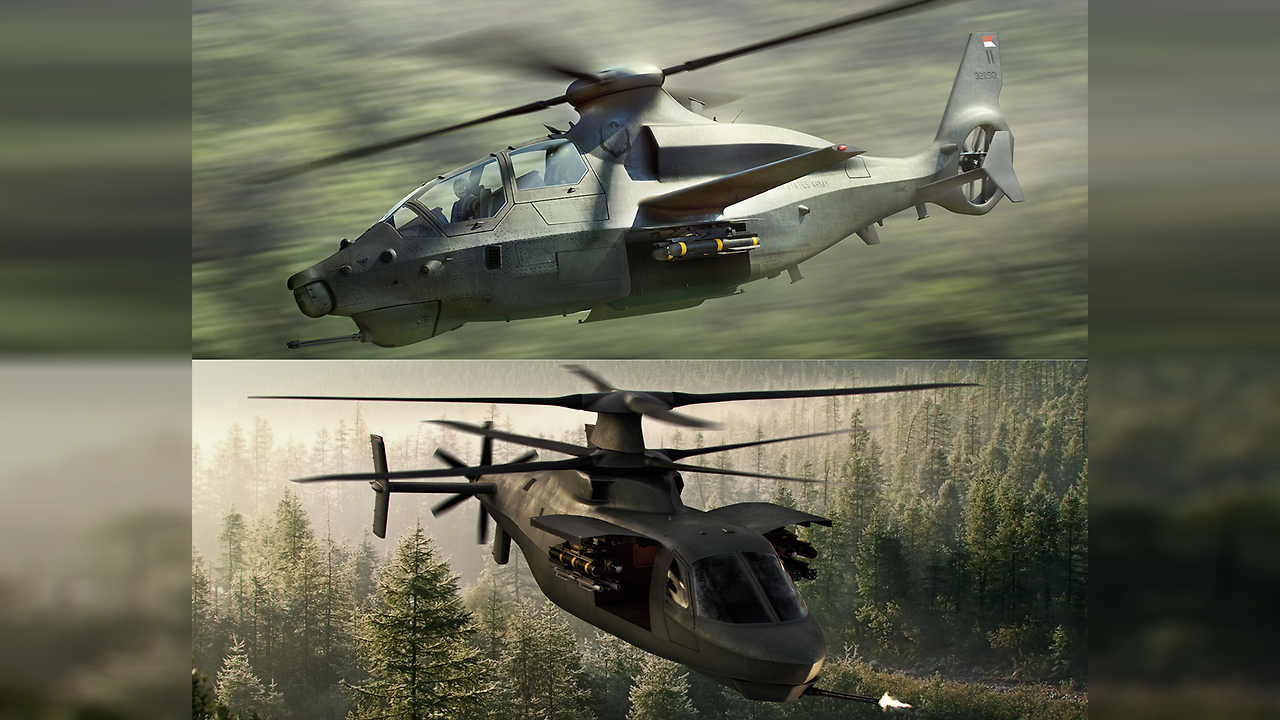
The two contenders for the Army’s Future Attack Reconnaissance Aircraft (FARA): The Bell 360 Invictus (top) and the Sikorsky Raider-X (bottom). (Army graphic, modified)
WASHINGTON — The US Army is cancelling its next generation Future Attack Reconnaissance Aircraft (FARA) program, service officials announced today, taking a potential multi-billion-dollar contract off the table and throwing the service’s long-term aviation plans into doubt.
In addition, the Army plans to end production on the UH-60 V Black Hawk in fiscal 2025, due to “significant cost growth,” keep General Electric’s Improved Turbine Engine Program (ITEP) in the development phase instead of moving it into production, and phase the Shadow and Raven unmanned aerial systems out of the fleet, the service added.
All told, it reflects a massive shift in the Army’s aviation strategy and upends years of planning. There is also an ironic sense of history repeating: the decision to end FARA comes two decades to the month after the Army ended its plans to procure the RAH-66 Comanche and nearly 16 years after it terminated work on the ARH-70A Arapaho, both aircraft designed to replace the Kiowa — the same helicopter FARA was supposed to, finally, replace.
The reason for ending FARA, Army leaders told a small group of reporters ahead of the announcement, is a reflection of what war looks like in the modern era.
“We absolutely are paying attention [to world events] and adjusting, because we could go to war tonight, this weekend,” head of Army Futures Command Gen. James Rainey told reporters at the Pentagon on Thursday.
“We are learning from the battlefield — especially Ukraine — that aerial reconnaissance has fundamentally changed,” Army Chief Gen. Randy George said in a press release. “Sensors and weapons mounted on a variety of unmanned systems and in space are more ubiquitous, further reaching and more inexpensive than ever before.”
Although industry was planning for a Kiowa replacement for years, the program officially kicked off in 2018 with five competitors, which in 2020 were downselected to two: Bell-Textron with the 360 Invictus and Sikorsky with its Raider X.
While observations from places like Ukraine and Gaza are part of the impetus for FARA’s cancellation, the need to free up billions of dollars to invest in unmanned systems was also a prime factor, Rainey and other aviation leaders explained.
So the tentative plan, if Congress approves a fiscal 2024 spending bill with FARA dollars in it, is to keep FARA development going this year, in part to protect the industrial base and continue testing, Army acquisition head Doug Bush said. However, come Oct. 1 when FY25 kicks off, the FARA development will come to an end — if the service gets its way, as Congress will have to weigh in.
Although the Army still has a requirement for a FARA-like capability, Rainey said the service does not plan to kickstart another manned Kiowa replacement effort like it has done in the past. Instead, it will invest elsewhere, especially on the unmanned side, to fulfill the Kiowa’s role as an armed scout operating ahead of other units in war zones.
Just what those final investments will look like will take time to emerge, but Bush said the service plans to use a portion of the billions of dollars freed up, to invest in four spots inside the aviation portfolio.
RecommendedAir Force launches reorganization, as Kendall warns ‘We are out of time’ to match China
Under the “reoptimizing” effort, changes are coming across the Department of the Air Force, from new training approaches to the establishment of high-level offices.
By MICHAEL MARROW and THERESA HITCHENS
- Ink a new multi-year procurement deal with Lockheed-Sikorsky for the UH-60M Blackhawk line.
- Give Boeing the greenlight to formally begin production on the CH-47F Block II Chinook.
- Continue Future Long-Range Assault Aircraft (FLRAA) development as planned.
- Additional investments for developing and buying unmanned aerial reconnaissance systems like the future tactical unmanned systems and launched effects.
“The Army is deeply committed to our aviation portfolio and to our partners in the aviation industrial base,” service Secretary Christine Wormuth wrote in a press release. “These steps enable us to work with industry to deliver critical capabilities as part of the joint force, place the Army on a sustainable strategic path, and continue the Army’s broader modernization plan which is the service’s most significant modernization effort in more than four decades.”
Saying FARA-Well To Long Term Plans
Fallout from the Army’s new plan will likely be swift from both Capitol Hill, the industry and analysts — all stakeholders the Army needs to win over in order to keep their FY24 request intact and change course in FY25.
“We are hoping that we can retain all of that [FY24] funding where it resides to allow us to do these transitions from current efforts to new ones in an orderly way,” Bush said. “That also helps protect the workforce.”
Rep. Rob Wittman, R-Va., vice chairman of the House Armed Services Committee and chairman of the Tactical Air and Land Forces (TAL) Subcommittee, issued a first reaction to the decisions saying it requires “serious scrutiny” from Congress.
“To better assess the administration’s proposal to terminate these aviation programs and divest legacy platforms, I plan to hold a hearing this spring on Army aviation rebalancing, the path forward, and the health of the industrial base,” he wrote in a statement.
On the industry side, Bell and Sikorsky have spent years and a large number of their own dollars working on the prototypes, while GE has worked on the long-delayed ITEP. Both prototype helos were slated for first flight this year but it is now unclear if or when they will ever get there.
From Sikorsky’s vantage point, the company said today that it remains committed to its prototype, the X2, “disappointed” with the Army’s decision and awaiting a debrief to better understand that choice. In an emailed statement to Breaking Defense, a Bell spokesperson said that although the company is also “disappointed,” it will “apply the knowledge and demonstrated successes of our FARA development efforts on future aircraft.”
While Army leaders did not provide reporters with in-depth insights into their decision making process that shaped the new plan, Bush didn’t blame the FARA cancellation on runaway costs or technology challenge. Instead, he emphasized that the decision comes in the wake of a newly completed analysis of alternatives (AOA), a review some inside Congress, including Wittman, said should have happened earlier.
“I plan on reviewing how the Army plans to address the service’s aviation attack and reconnaissance mission-set without FARA, expended funds, vision for future investments, and how the AOA informed this decision,” Wittman wrote. “The Army must expediate delivery of this document to Congress to inform our work in the FY25 [authorization] and appropriations bills.”
While Bell and Sikorsy are now both unable to secure a FARA production deal, the Army did make sure to give industrial support to both firms in the reworked plan.
For example, the plan to end the UH-60V Black Hawk upgrade program (which includes installation of a new digital cockpit) in FY25 would seem a blow to Northrop Grumman that designed the cockpit. However, freed up dollars from the larger aviation decision can now be used to ink a new multi-year UH-60M procurement deal that would carry production beyond FY26, Bush said. (So far, the National Guard has received 60 of those helos, with more coming this year, but going forward that component will instead receive UH-60M Black Hawks.)
Questions about the fate of the UH-60 line mushroomed last year when the service picked Bell’s V-280 Valor for its multi-billion-dollar Future Long-Range Assault Aircraft program. And while Bell will now miss its chance to win FARA, Bush’s statement that some of the money freed up will go towards FLARA should ease concerns.
A third industrial player, Boeing, is also set for a much needed win with Bush announcing that the service plans to formally begin production on the CH-47F Block II Chinook, a move coming roughly five years after the service put the brakes on buying that configuration. In the interim years, lawmakers have repeatedly added unrequested funds into the budget for the service to purchase those helicopters.
Power Up
As for the engine slated to power FARA, the service isn’t pulling the plug on it right now – but it is slowing it down.
The T901 Improved Turbine Engine is meant to have 50 percent more horsepower and 25 percent better fuel efficiency, and will also replace some of the Army’s legacy powerplants. All AH-64E Apaches and UH-60M Black Hawk helicopters, currently powered by the T700 engine that first started flying Black Hawks in the 1970s, have been planned to have those engines swapped out for the T901, according to the Army.
But delivery of the T901 powerplants, developed by GE Aerospace, was delayed as the engine maker wrestled with supply chain disruptions. Late last year the service accepted two engines and they were sent on to both FARA competitors.
Brig. Gen. David Phillips, the Program Executive Officer for Aviation, on Thursday said the service has now received six more ITEPs, with another two slated to arrive in May and head to Black Hawk line.
“All that is on track, we’re learning from all that effort and we’re really putting all that learning to use and how we’re thinking about integrating it in Apache, how we’re thinking about integrating it in Black Hawk long term,” the one-star general said. “Then really thinking carefully about the transition to production because we have had challenges in that development phase was some of those very unique pieces and parts and manufacturing.”
“As we go toward production, we want to make sure we get that right,” he added.
Unmanned Focus
While FARA may be dead, Army leaders still envision a future with aviators in a cockpit, at least for now. But in the short term, they need to spend more on unmanned capabilities.
“Indisputably the requirement to conduct reconnaissance and security is a valid and remaining requirement: It’s not going anywhere,” Rainey said.
“The requirement to be able to conduct reconnaissance and security is still absolutely valid,” he later added. “Just how to do it, and how much risk to accept [and] … the future is going to be about who can properly integrate humans and machines effectively.”
For now, that future will not include the legacy Shadow and Raven unmanned aerial systems. Instead the Army wants to funnel dollars toward future tactical unmanned systems. In September 2023, the service selected Griffon Aerospace and Textron Systems to move ahead with the second phase of the FTUAS Increment 2 competition, the RQ-7B Shadow replacement.
If all goes as planned, the service wants to have these prototypes in users hands in early FY25, receive feedback and make a contract award in time for production to begin the following year, Phillips said.
It is also moving ahead with a “launched effects” portfolio — small drones that shoot out of something else mid-flight. The service is eyeing three versions for now — one that is short-range, medium-range and long-range.
When it comes to the short-range version, Phillips said the service hosted an industry day this week and the goal is to make an award in early FY25.

US Army spent billions on a new helicopter that now will never fly
By Jen Judson
Friday, Feb 9
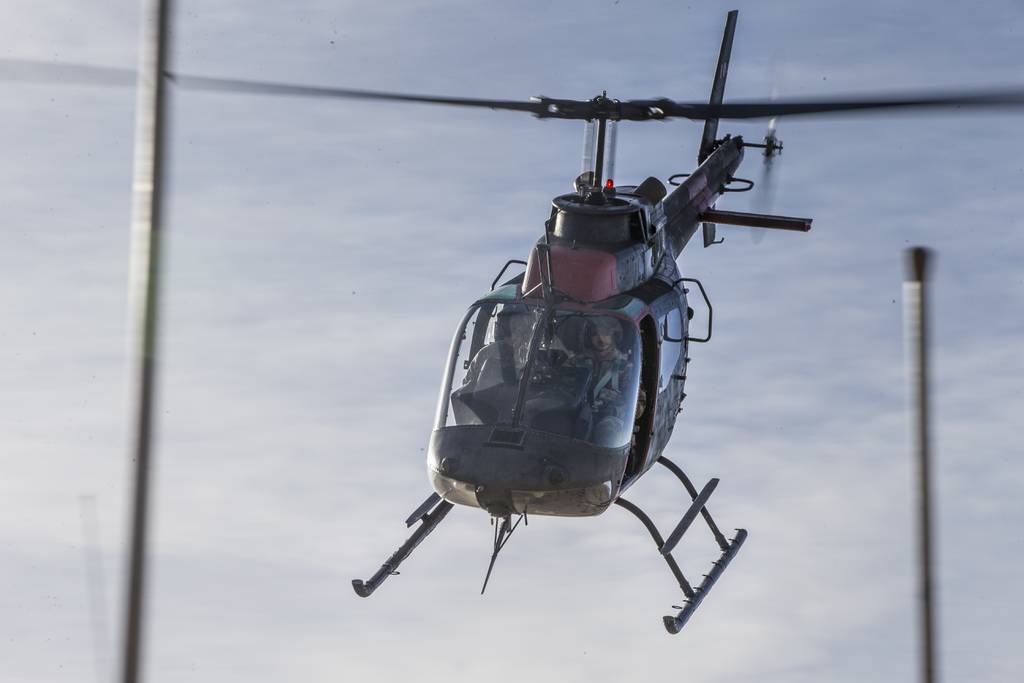
The Army previously held a competition to design, build and test Future Attack Reconnaissance Aircraft prototypes to fill an existing capability gap created by the divestiture of the OH-58 helicopter, shown. (Cpl. Koby Saunders/U.S. Marine Corps)
The U.S. Army is ending its latest effort to build a new armed scout helicopter, known as the Future Attack Reconnaissance Aircraft, an abrupt change of direction that marks one of the department’s most significant program cancellations of the last decade.
The service had already spent at least $2 billion on the program and had requested another $5 billion for the next five years, according to budget documents.
The helicopter program arrived in 2018 with lofty expectations. Army leaders hoped it would serve as a model for new acquisition approaches for its most complex and most expensive weapon systems. Prototypes from Bell Textron and Lockheed Martin’s Sikorsky were expected to fly later this year. And, perhaps most importantly, the aircraft was slated to provide a long-needed armed scout solution after decades of starts and stops.
But Thursday, the Army’s top acquisition officials described a new vision and major aviation overhaul. In addition to ending FARA, the Army plans to get rid of its entire Shadow and Raven unmanned aircraft fleets, said Doug Bush, the service’s acquisition chief.
It will also stop fielding its new replacement for UH-60 Lima-model Black Hawk utility helicopter — the Victor-model — to the Army National Guard and instead field UH-60 Mike-models, the latest variant used in the active force, Bush said.
Finally, the service will delay procurement of its next-generation helicopter engine, which was set to be used in all UH-60s, AH-64 Apache attack helicopters as well as to power FARA.
Instead, Bush said the Army will spend the newly available money on Black Hawks, the latest variant of the CH-47F Block II Chinook cargo helicopter, the Future Long-Range Assault Aircraft and research and development efforts to accelerate its unmanned aerial reconnaissance capability.
Gen. James Rainey, an acquisition leader overseeing the program, said he doesn’t view the cancellation “as a failure” for Army Futures Command, the Austin, Texas-based office heading the service’s modernization efforts.
“We are making great progress, we have momentum, the overwhelming majority of our signature modernization efforts are either on time or ahead of schedule and are starting to translate into capabilities,” he told reporters Thursday.
Top priority
The Future Attack Reconnaissance Aircraft, or FARA, was meant to fill Army aviation’s No. 1 mission gap: armed reconnaissance. For the last 10 years, following the retirement of the Vietnam-era OH-58 Kiowa Warrior helicopter, which long performed that mission, the service has relied on the more expensive AH-64E Apache attack helicopter paired with the Shadow unmanned aircraft system.
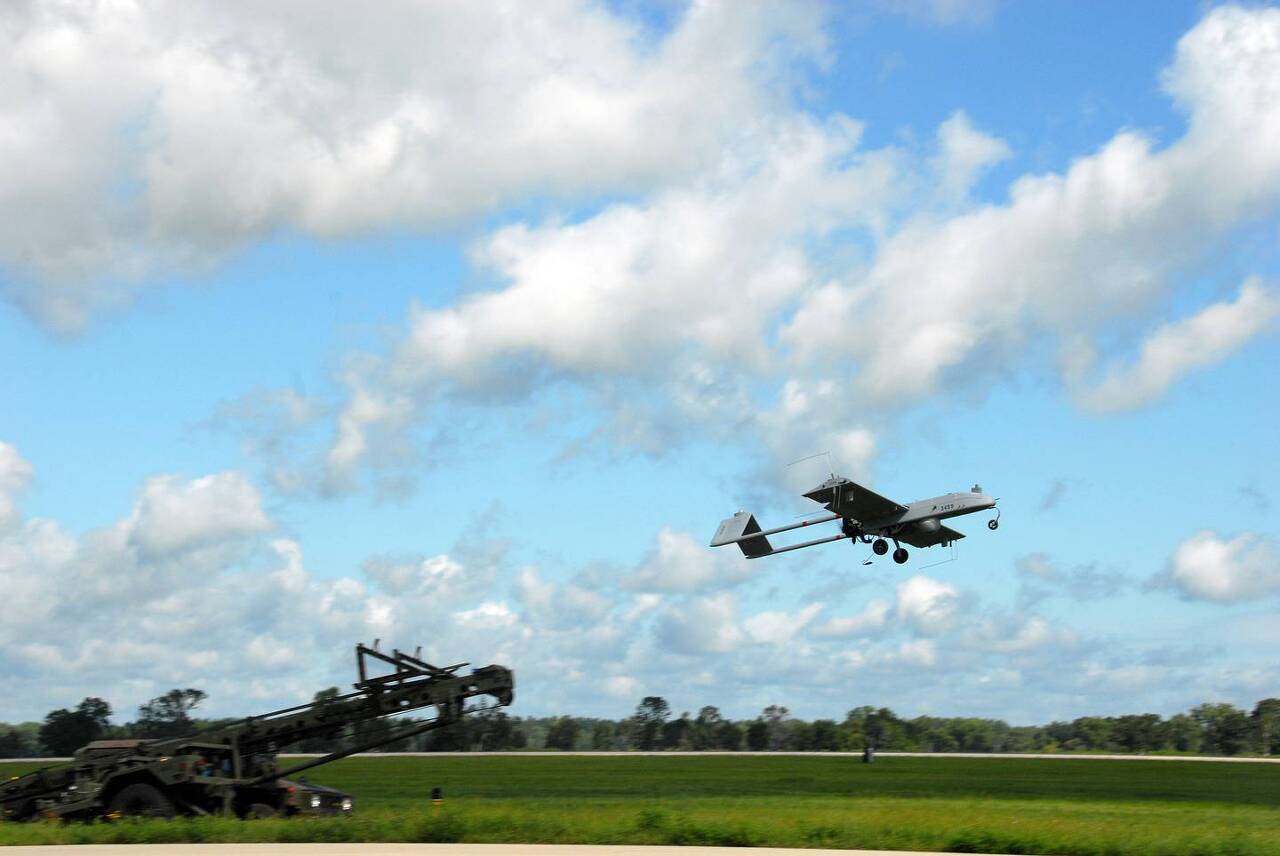
An RQ-7 Shadow drone takes off during a training flight at Volk Field, Wis. (Vaughn R. Larson/U.S. Army)
The Army has already twice canceled potential replacement efforts for the armed scout. In 2004, it terminated the Comanche program after spending $9 billion to produce two prototypes.
Four years later, it canceled the Armed Reconnaissance Helicopter.
In the last attempt before FARA, the service asked industry to bring commercial off-the-shelf aircraft to a “fly-off” to fill the armed scout mission, but the Army walked away from the effort in 2013, finding nothing that met all of its requirements.
Five years ago, the service unveiled Army Futures Command, a new command meant to improve the service’s modernization program track record. FARA quickly became a signature effort of the command, which was tasked with outfitting a fully modernized force by 2030.
At the same time, the Army has been advancing a second helicopter program, the Future Long Range Assault Aircraft. Bell Textron won the contract to provide its V-280 tiltrotor aircraft for the program at the end of 2022.
Skeptics have wondered if the Army can successfully procure two aircraft simultaneously, but service leaders have said they have no choice.
Asked which program he’d choose if future budgets didn’t allow for both, Maj. Gen. Wally Rugen, then director of AFC’s Future Vertical Lift cross-functional team, said the efforts are “not a ‘want to have,’ it’s an imperative.”
“Modernization is an imperative, so as long as that remains the Army priority, which I believe it will, then we’re going to continue to find ways to execute these programs,” he told Defense News in 2021. “I don’t see it as a choice.”
In a statement Thursday evening, Sikorsky said its prototype, the X2, offers “speed, range and agility that no other helicopter in the world can match.”
“We remain confident in X2 aircraft for U.S. and international mission needs now and in the future,” the statement read. “We are disappointed in this decision and will await a U.S. Army debrief to better understand its choice.”
Vision for vertical lift
Army officials said the service still needs armed reconnaissance — but the technology has changed. The service will no longer rely on a manned helicopter to execute the majority of armed scout missions and will instead look to unmanned aircraft and sensors to conduct those missions.
“The future is going to be about who can properly integrate humans and machines effectively, how do you optimize those two things,” Rainey said.
In a statement, Army Chief of Staff Randy George said the service was influenced by the battlefield in Ukraine. It has seen there “that aerial reconnaissance has fundamentally changed.”
“Sensors and weapons mounted on a variety of unmanned systems and in space are more ubiquitous, further reaching, and more inexpensive than ever before,” he added.
The service plans to conclude FARA prototyping activities at the end of fiscal 2024, which will give the service and industry a chance to finish up technology development transferable to other programs.
While Bush would not specify exactly how much money would be available to spend on other efforts to strengthen the Army’s aerial tier, he said the Army plans to spend more on reconnaissance UAS that are more capable of surviving high-end fights, including the Future Tactical UAS and launched effects.
The Army’s inventory of small, runway independent UAS includes more than 575 Shadows and 19,000 Ravens.
The service had long planned to retire a portion of its Shadow fleet, grown during the counterinsurgency years. Raven, a small unmanned aircraft, is also an aging platform and the service considers it no longer effective in multidomain operations against near-peer adversaries.
The Army has sought to replace Shadow with a Future Tactical UAS. In 2022, after a roughly four-year competition, the Army awarded AeroVironment an $8 million contract to provide its Jump 20 system as an interim FTUAS capability for a single brigade.
To buy more, the Army held a second competition and, about a year ago, chose five companies to advance. It quickly eliminated incumbent AeroVironment. By September 2023, the Army whittled the group to just two companies — Shadow manufacturer Textron and Griffon Aerospace. Both are still building prototypes in hopes of winning an FTUAS production contract.
According to Brig. Gen. David Phillips, program executive officer for Army aviation, the Army is planning to get FTUAS prototypes into operational users’ hands by FY25.
And the Army is pushing to award a contract for a short-range launched effect in early 2025, he said. The service has plans to acquire short, medium and long-range launched effects as part of its modernization push.
The FLRAA program will continue as planned, Bush said, and the Army will work to stay on track to field the first operational unit by FY30.
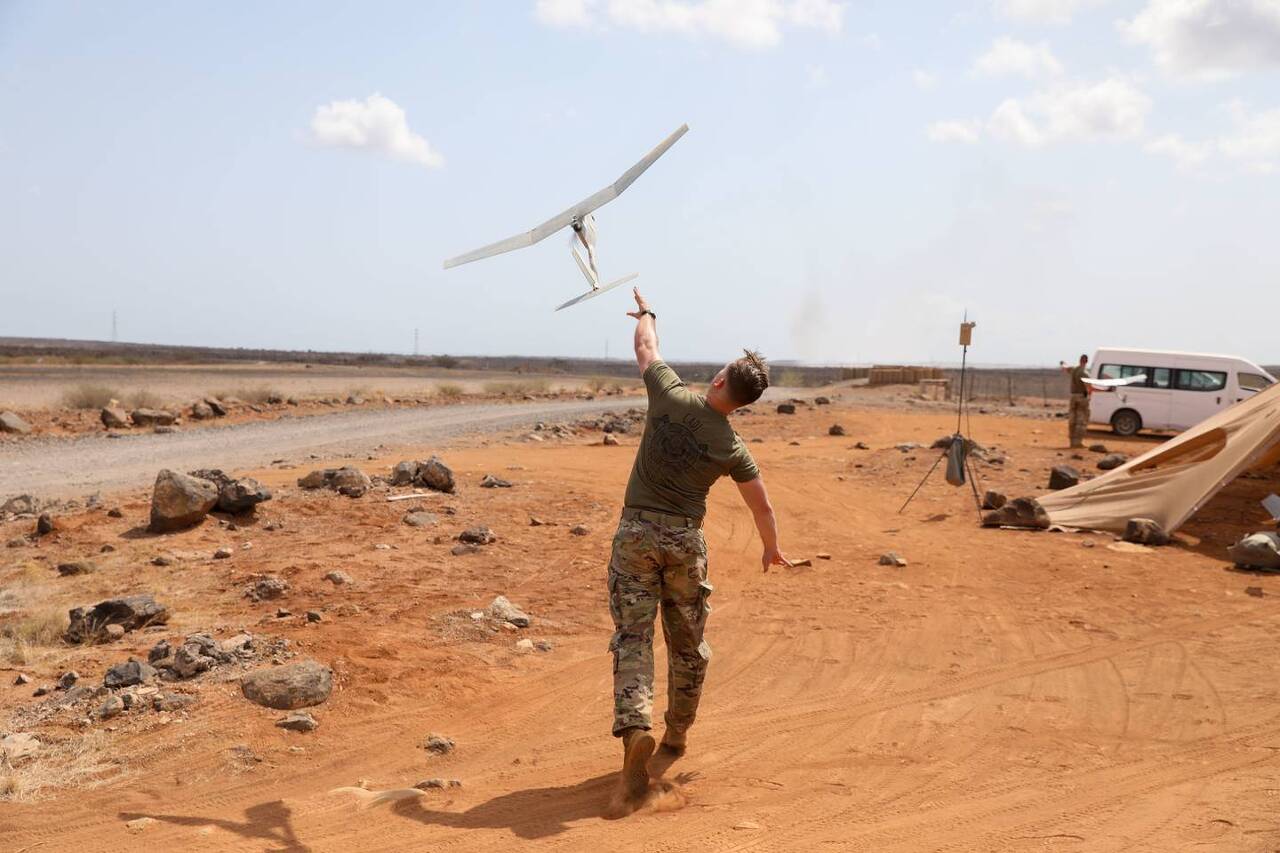
U.S. Army Spc. William Ellison launches an RQ-11 Raven drone during an operators course at Chabelley Airfield, Djibouti, on Oct. 13, 2021. (Pfc. Gauret Stearns/U.S. Army)
Making adjustments
With the absence of a second future vertical lift platform as part of the Army’s modernization plans, the service will commit more money to modernizing its current fleet.
The service wants a new multiyear contract to procure UH-60Ms beginning in FY26, when the current multiyear comes to an end, according to Bush.
After planning not to buy CH-47F Block II Chinooks for the active force to free up funding for FVL efforts in 2018, the Army is now reversing that decision and plans to formally enter production leading to future full-rate production, Bush said.
Meanwhile, the Army says it will curb its Victor-model Black Hawk utility helicopters, which feature digital cockpits and were intended to replace older Lima-model aircraft for the Army National Guard. Bush said the program experienced “significant cost growth.”
The Army has said it considered the V-model technology a stepping stone in its pursuit of a digital backbone for its FVL fleet, which will allow mission systems to seamlessly plug into the architecture of the aircraft.
Redstone Defense Systems won a contract in spring 2014 to take a Northrop Grumman-designed cockpit and integrate the technology into V-model prototypes. The Army then partnered with Corpus Christi Army Depot, Texas, to convert Lima-models into Victor-models at the rate of 48 aircraft per year, which some called too slow, as it would take roughly 15 years for the service to produce all 760 V-model aircraft to replace the L-models in the Guard.
Phillips said the Army has delivered 60 V-models to the Guard and plans to continue fielding through fiscal 2024. The service will provide the Guard Mike-model Black Hawks to fill out the fleet requirements instead.
The V-model experienced software reliability issues in its initial operational test and evaluation in 2019, which partly delayed the program. The program was further delayed when the Army was unable to reschedule a new operational test and receive certification to fly in national airspace during the early part of the coronavirus pandemic. The Army wrapped up its second initial operational test and evaluation of the V-model in summer 2022.
Bush said the Army still intends to buy its next-generation engine, but will delay production for an indefinite period. The effort, known as the Improved Turbine Engine Program, has already been running years behind schedule.
According to Phillips, there are six ITEP engines in tests, two with the FARA competitors and two more that will go into the first UH-60s in May for testing.
댓글
댓글 리스트-
답댓글 작성자위종민 작성자 본인 여부 작성자 작성시간 24.02.14 네 시코르스키의 디파이언트-X 개량형 사진인 것 같은데 저 모델은 결국 빛을 못 보겠네요.
-
작성자강준구 작성시간 24.02.18 한국 육군도 이제 공격헬기 도입 숫자를 확 줄여야 하지 않나 싶네요.
장갑이 두껍기로 유명한 KA-52도 MANPADS에 뚝뚝 떨어지는 상황인데, LAH는 더 느리기까지 하니...