AW&ST 최신 기사인데 괌에서 떠 대만까지 무급유로 갔다 오게 대당 3억 달러의 큰 전투기로 만드는 대신
1950년대에 B-52를 무급유로 소련 폭격하고 돌아올 수 있게 더 크게 만드는 대신 KC-135 급유기로부터 반드시 급유를 받아야 임무를 할 수 있게 지금 사이즈로 만들었듯이
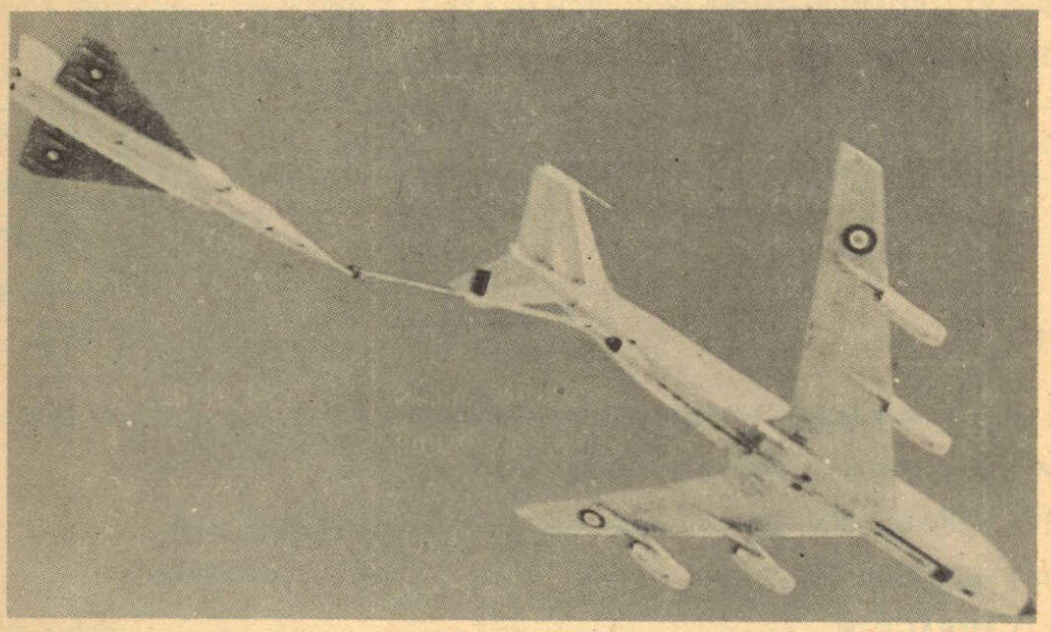
NGAD도 작게 만들되 NGAS로부터 급유를 받아 행동반경을 확보할 수 있게 만들려고 한다고 하네요. 물론 CCA도 붙여서. 그래서 한 부대에 전투기와 급유기가 함께 있도록 편제도 바꾼다고 합니다.
참고로 프랑스의 Mirage IV도 KC-135가 있어야만 했죠.
https://aviationweek.com/defense/aircraft-propulsion/us-air-force-seeks-fast-reduction-ngad-costs

U.S. Air Force Seeks A Fast Reduction In NGAD Costs
Brian Everstine September 20, 2024
The ongoing saga of the U.S. Air Force’s next-generation fighter took another turn during the service’s biggest public event in September, with top leaders saying the program must become considerably cheaper if it is to survive.
The Next-Generation Air Dominance (NGAD) program has been heralded for the past several years as a replacement for the Lockheed Martin F-22 Raptor. Air Force Secretary Frank Kendall has estimated $300 million per unit for the high-end fighters. Speaking Sept. 16 at the Air and Space Forces Association’s Air Space and Cyber Conference in National Harbor, Maryland, Kendall said that cost needs to drop by more than two-thirds.
- The Next-Generation Air Dominance change shows increasing reliance on uncrewed systems
- CCA designs unveiled at major conference
- Combat designs are tied to the future tanker plan
The service pressed the pause button this summer on NGAD’s acquisition just weeks ahead of an expected contract award to either Boeing or Lockheed Martin. Kendall says the Air Force needs to reexamine requirements for the overall program to ensure that it will be cost-effective, meet emerging threats and take advantage of recent technology developments.
Kendall’s new unit cost target is less than that of a Lockheed Martin F-35 or Boeing F-15EX, which is about $90 million per aircraft. That figure was met with some suspicion and even bewilderment among industry leaders at the show, but Kendall said it could be achieved with the evolution of the service’s Collaborative Combat Aircraft (CCA) effort.
“Once you start integrating CCA and transferring some mission capabilities . . . functions to the CCA, then you can talk about a different concept,” he told reporters. “So there’s a real range in there.”
While the review is extensive, it also needs to wrap up within the next few months, Kendall said, because industry teams are in a holding pattern waiting for the service’s downselect, and Congress is awaiting the service’s funding plans.
Air Force Chief of Staff Gen. David Allvin, speaking shortly after Kendall, said the NGAD process now is a “redesign,” which is also connected to the service’s plans for its second increment of CCA and the upcoming Next-Generation Air Refueling System (NGAS).
“The coalescing things between the NGAD platform redesign, NGAS conceptualization, CCA Increment 2—we’re moving on from a platform as a thing that does a mission alone versus more disaggregating that mission appropriate to the threat,” Allvin said.
This comes as the service has stood up an interim version of its Integrated Capabilities Command, which combines the requirements-creating work from individual major commands—Air Combat Command handling fighters, Air Mobility Command handling tankers, etc.—into one unit.
“There will be probably some overlap in the intellectual capacity that goes into those, but it is all part of integrating a force design,” he continued. “And it’s on mission threads, not just [individual] Air Force programs.”
A relevant example can be found in the early days of designing Boeing’s KC-135 tanker and B-52 bomber. The two aircraft were tied together conceptually, as the bomber needs the tanker to complete the mission. Kendall said the Air Force wants “simultaneous and well-supported analysis of design concepts” for NGAD, NGAS and CCA over the next few months.
The service released a new request for information (RFI) on Sept. 13 for NGAS, specifically on mission systems for the upcoming tanker. This release came before an analysis of alternatives for the overall program has finished; an RFI for the main airframe also has yet to be released.
Andrew Hunter, Air Force assistant secretary for acquisition, said issuing the RFI for mission systems this early is a different approach for the service. The Air Force wants to work directly with these companies, as opposed to working with them as subcontractors to traditional prime companies that will build the airframe. It hopes this will help ensure the mission systems can be integrated across multiple platforms. There will be another RFI for airframe-producing companies after the analysis of alternatives is complete.
The service wants this early outreach to involve companies in setting the requirements that will be continued throughout the acquisition program.
The service’s CCA effort has become the focal point of its ongoing modernization, with the two selected companies taking center stage at the service’s largest conference. Anduril unveiled a full-scale model of its Fury design on the show floor (AW&ST Sept. 16-29, p. 16).
General Atomics Aeronautical Systems Inc. (GA-ASI) for the first time showed its CCA design, as well as the XQ-67A uncrewed system it is developing for the Air Force Research Laboratory’s Off-Board Sensing Station (OBSS) program, which is part of the campaign for CCA selection.
GA-ASI President David Alexander tells Aviation Week the XQ-67A and OBSS are about 80% similar, although the CCA design is far sleeker, with internal weapon bays and other areas for sensors that the company is providing on its own. Alexander would not specify the engine selected for the CCA, saying it is a “highly efficient turbofan with the proper thrust-weight ratio for this class of airplane.”
The Air Force expects the Anduril and GA-ASI aircraft to begin flying next year, a target Alexander has said his company aims to beat. GA-ASI is going through design reviews and working on capacity to hasten mass production with automation.
“The sale job is you can build a lot of CCA quick so you can bring affordable mass to the fight, and what we’re showing here is we haven’t been under contract very long and look what we’ve got,” he says. “We’re ready to rock and roll.”
The Air Force is still setting its requirement for the follow-up CCA increment, although companies including GA-ASI are expecting a low cost for that round. This increment is intended to include international buyers.
Lockheed Martin, left out of the first round alongside traditional primes Boeing and Northrop Grumman, is changing its concept. John Clark, vice president and director of Lockheed’s Skunk Works division, said the company’s first-round proposal was too expensive.
“Our Increment 1 offering had higher levels of stealth than were necessary in the requirements because of the operational analysis conviction of building something that actually had value to the Air Force over the long haul,” Clark told reporters Sept. 17. “We gold-plated something that didn’t need gold-plating.”
However, Clark cautions of a “reckoning” on the use of cheaper CCA. Specifically, will the Air Force continue spending $15-20 million on an aircraft that is not survivable? Skunk Works analysis showed that more than 80% of the CCA would not survive a fight, so continuing to buy them would be a “losing proposition.”
The Skunk Works says stealth should still be considered in CCA and other uncrewed aircraft systems. This is why the company continues to offer flying-wing style aircraft, such as its RQ-170. It unveiled a new flying-wing type design at its Air and Space Forces Association’s Air Space and Cyber Conference booth. Having stealth means the aircraft could operate closer without relying on countermeasures.
“Countermeasures are great to help offset when you’re now in a compromised situation,” Clark says. “Do you want to start your day compromised from the get-go, and then rely on a technology that isn’t 100% foolproof?”
댓글
댓글 리스트-
작성자위종민 작성시간 24.09.24 일단 항속거리(=크기)를 트레이드오프할 모양이네요.
-
작성자Minowski(김유철) 작성시간 24.09.24 유인기+무인기로 구성된 공격편대군을 그것도 급유기를 동반한 것으로 구성한다면, 생존성 문제때문에 동반하는 CCA 태반은 미끼로 희생시켜도 무방한 수준의 물량과 가격이 필요해지는 상황이겠습니다만... 계속 B21과 비교되는 상황이라 차별화를 위해 NGAD의 능력을 줄이는 방향인 것 같은데..... 이 조건이라도 B21+CCA로 가는 것이 유리하다는 결론이 나올수도 있겠는데요.