내전이 한창인 미얀마의 준타 정부가 Mi-38T 중형수송헬기 3대를 도입했네요. 11월 7일 네피도에서 열린 도입식에 민 아웅 훌리안 최고사령관이 참관했습니다. 러시아 이외에 미얀마가 최초의 국제 고객입니다.
인도는 9월에 마무리됐고, 중국의 Y-8F 수송기 2기도 같이 도입됐네요.
미얀마, 러시아 Mi-38T 헬리콥터 도입… 세계 최초 국제 운용국으로 미얀마가 러시아산 Mi-38T 군용 수송헬리콥터 3대를 도입하면서, 이 기종의 세계 첫 해외 운용국이 되었다. 이는 공중기동 능력, 지역 내 세력 균형, 그리고 동남아시아에서 확대되는 모스크바의 전략적 영향력에 변화를 예고한다.
(디펜스 시큐리티 아시아) — 미얀마는 러시아산 차세대 중형 수송헬리콥터 Mi-38T 3대를 공식 도입하며 자국 군용항공 역사에 새로운 장을 열었다. 이는 미얀마 공군이 공중기동 능력 현대화를 목표로 하는 중요한 전환점이자, 러시아의 최신 회전익 항공기의 첫 해외 수출 사례이다.
11월 7일 네피도에서 열린 도입식에는 민 아웅 흘라잉 최고사령관이 참석했으며, 이는 미얀마가 러시아의 최첨단 회전익 전력의 첫 수출 고객이 된 역사적 순간으로, 동남아시아의 방위 구도에서 상징적 의미를 가진다.
Mi-38T의 도입은 미얀마 전역에서 확대되고 있는 내전 상황 속에서 이루어졌다. 미얀마군은 험준한 산악지대와 밀림에서 작전을 강화하고 있으며, 신속한 공중기동 능력은 전략적 필수 요소가 되었다.
이번 조달은 서방 제재와 지정학적 블록의 재편 속에서 양국이 더욱 밀착하고 있음을 보여준다. Mi-38T는 단순한 군사 자산을 넘어 모스크바와 네피도 간 전략적 수렴의 상징으로 자리 잡았다.
이 헬리콥터의 도입은 게릴라 교전과 불안정한 전선으로 인해 지상 물류망이 붕괴된 지역에서 미얀마군이 장기적인 공중수송 작전을 수행할 수 있도록 하는 전략적 진화를 의미한다.
Mi-38T는 향상된 적재능력과 ‘고온·고고도’ 성능을 갖추어, 고지대 작전에서 기존 Mi-17 계열이 리프트나 항속 유지에 어려움을 겪던 문제를 극복할 수 있게 한다.
이 새로운 헬리콥터 전력은 러시아가 미얀마의 장기적 전략 공급자로서 입지를 공고히 하려는 구상을 반영하며, 전투기·수송기·방공체계·무인기 등 러시아산 플랫폼으로 구성된 통합 생태계를 구축하고 있다.
미얀마 입장에서는, Mi-38T의 도입으로 병력 증원 주기가 빨라지고, 반군 지역으로의 깊은 침투 및 기상 악화나 산악 지역에서도 지속 가능한 항공 물류 지원이 가능해졌다.
이 헬리콥터의 배치는 국제적 고립 속에서도 미얀마가 현대적 회전익 전력을 운용할 의지를 갖고 있음을 주변국에 보여주며, 이로 인해 지역 내 작전 반경과 기동력에 대한 인식이 바뀔 수 있다.
이러한 발전은 러시아의 아시아 전략 확장의 맥락 속에서, 모스크바가 Mi-38T 같은 회전익 수출을 단순한 상업적 목적이 아닌 지정학적 영향력 확대의 수단으로 활용하고 있음을 보여준다.
Mi-38T의 진화: 러시아 차세대 중형 수송헬리콥터
Mi-38T는 50년 넘게 러시아군 헬리콥터의 주력이었던 Mi-8/17 계열을 대체하기 위해 수십 년간의 개발 끝에 완성된 기종이다.
이 프로그램은 1980년대 후반 시작되어, 더 큰 탑재량, 연료 효율성, 첨단 항전장비를 갖춘 21세기형 헬리콥터를 목표로 했다. 초기에는 유로콥터(현 에어버스 헬리콥터)와의 협력을 통해 서방제 항전장비와 엔진을 통합하려 했지만, 지정학적 변화와 러시아의 체제 전환으로 협력은 중단되었고 러시아가 독자 개발을 이어갔다.
2003년 12월 첫 시제기가 프랫앤휘트니 PW127/TS 엔진으로 비행했으며, 이후 2014년 서방 제재 강화로 자국산 클리모프 TV7-117V 엔진으로 전환해 공급 안정성을 확보했다.
Mi-38T는 군용 수송 임무용으로 설계되어 2017년 공개, 2018년 러시아군 인증을 받았다. 산악지형이 많은 샨주와 카친주 등 미얀마 환경에 맞는 고고도·장거리·다목적 성능을 제공한다.
Mi-38T는 경량 Mi-17과 중대형 Mi-26 사이의 틈새를 메우며, 높은 적재능력을 확보하면서도 운용비용을 절감한 중형 헬리콥터이다.
이 헬리콥터의 최대이륙중량은 15,600kg이며, 내부 적재 6,000kg, 외부 슬링 7,000kg까지 가능하다. 이는 보통 4,000kg 수준인 Mi-17보다 우수하다.
길이 약 20m, 6엽 주로터와 4엽 꼬리로터를 갖추어 향상된 리프트와 안정성을 제공한다. 엔진 출력은 각 2,800마력으로 최대속도 300km/h, 순항속도 250~275km/h에 달한다.
항속거리는 기본 연료로 880km, 보조탱크 장착 시 1,300km이며, 최대 고도는 6,300m다. 내부 공간은 29.5m³로 최대 40명의 병력, 30명의 일반 승객, 또는 들것 12개를 탑재할 수 있다.
Mi-38T는 유리 콕핏, 플라이바이와이어 제어, 다기능 디스플레이, 야간작전 호환 항법·통신장비를 탑재해 24시간 운용과 조종사 상황인식을 강화했다.
선택 옵션으로는 방탄 패널, 제빙장치, 병력 수송·화물 수송·탐색구조·VIP용 ‘살롱(Salon)’ 버전 모듈 장비가 있다.
시코르스키 S-92나 레오나르도 AW101 같은 서방제 대체기보다 리프트 성능이 비슷하면서도 대당 가격이 미화 2,500만 달러(약 1억 1,800만 링깃) 이하로, 예산 압박이나 제재를 받는 국가들에 매력적이다.
계약 경과 및 인도 일정
미얀마의 Mi-38T 도입 논의는 2019년 로소보로넥스포트(Rosoboronexport)와의 협상으로 시작되었다. 2019년 11월 유출 문서에 따르면 표준형은 1,889만 유로, VIP형은 2,190만 유로로 제시되었으며, 훈련(217만 유로), 옵션(148만 유로), 유지보수(가격의 30%)가 추가됐다. 총 사업비는 약 8,000만 유로(미화 약 9,200만 달러, 4억 3,500만 링깃)로 추산됐다.
2020년 1월 계약이 체결되고 9월에 첫 지불이 이루어졌으나, 엔진·항전장비 개량과 미얀마 내정 불안, 2021년 2월 쿠데타 이후 서방 제재, 2022년 러시아의 우크라이나 침공으로 인한 생산 지연 등으로 일정이 늦춰졌다.
2025년 9월 최종 인도가 완료되었으며, 도착 직후 시험비행이 확인되었다. 이번 패키지는 표준 수송형 2대와 VIP형 1대로 구성되어 전투지원과 지휘통제 임무 모두에 활용된다.
도입식은 중국제 Y-8F-200W 수송기 2대의 인도와도 시기가 겹쳐, 서방 제재로 인해 미얀마가 러시아와 중국에 동시 의존하고 있음을 보여준다.
미얀마 공군의 전략기동력 강화
1947년 창설된 미얀마 공군은 총 356대가량의 항공기를 보유하고 있으며, 이 중 81대가 러시아·중국제 헬리콥터다. Mi-17 수송헬기, Mi-24/35 공격헬기, Z-9, Mi-2 등이 주력으로, 대반군 작전의 핵심이다.
또한 Su-30, JF-17 전투기와 Y-8, Y-9 수송기 등 고정익 전력을 함께 운용하며, 전투 및 보급 임무를 수행한다.
확산되는 내전으로 인해 공군은 신속한 병력 투입, 의무후송, 재보급, 특수부대 투입 등 다양한 임무 수행이 요구되고 있다. 험준한 지형과 고온다습한 환경은 노후 헬리콥터에 큰 부담을 준다.
Mi-38T는 화포, 장갑차, 발전기, 탄약, 공병장비 등 중량 화물을 수송하며 전략기동력을 높이고, 장거리 재보급과 고속 순항으로 사가잉·카친·친 등 내전 지역의 공중 보급 능력을 개선한다.
VIP형 ‘살롱’ 모델은 지휘부가 전선과 지휘소를 신속히 오가며 통제력을 유지하도록 지원하며, 의무후송 및 인도적 임무에도 활용될 수 있다.
지정학적 의미와 러시아-미얀마 관계 심화
Mi-38T 도입은 2021년 쿠데타 이후 급격히 강화된 러시아-미얀마 방산 협력의 상징이다. 러시아는 미얀마의 주요 무기 공급국으로 부상했으며, 양국은 항공기·드론·방공체계·훈련·핵에너지·우주기술 등 협력 범위를 확대하고 있다.
2025년 민 아웅 흘라잉과 블라디미르 푸틴 간 회담에서는 핵에너지 및 군사훈련 협력의 새로운 틀이 마련되었다. 러시아는 Su-30, 판치르-S1, 오를란-10 드론, 유도탄 등을 공급하며 군사적 지원망을 구축했다.
이에 대해 미얀마는 희토류 자원, 에너지 협력, 제재 회피형 물자 시장, 그리고 러시아의 동남아 전략 거점을 제공한다.
Mi-38T 계약은 러시아가 아시아·아프리카·라틴아메리카로 방산 입지를 확장하려는 전략의 일환이며, 제재 속에서도 자국 항공산업이 여전히 수출 역량을 유지하고 있음을 보여준다.
지역 분석가들은 이번 도입이 태국·인도·방글라데시 등 인접국에 불안감을 조성할 수 있다고 지적한다. 인권단체들은 이 장비가 민간인 이주를 초래하는 군사작전을 강화하고 인도적 위기를 악화시킬 수 있다고 비판한다.
러시아 입장에서는, 미얀마의 Mi-38T 채택이 제재 환경에서도 자국 헬리콥터의 수출 가능성을 입증하는 고위험·고가시성 사례로 평가된다. — 디펜스 시큐리티 아시아

Myanmar Inducts Russian Mi-38T Helicopters, Becoming World’s First International OperatorMyanmar’s induction of three Russian Mi-38T military transport helicopters marks the global debut of the platform, reshaping air-mobility capabilities, regional power dynamics, and Moscow’s expanding strategic footprint in Southeast Asia.

By admin On Nov 11, 2025
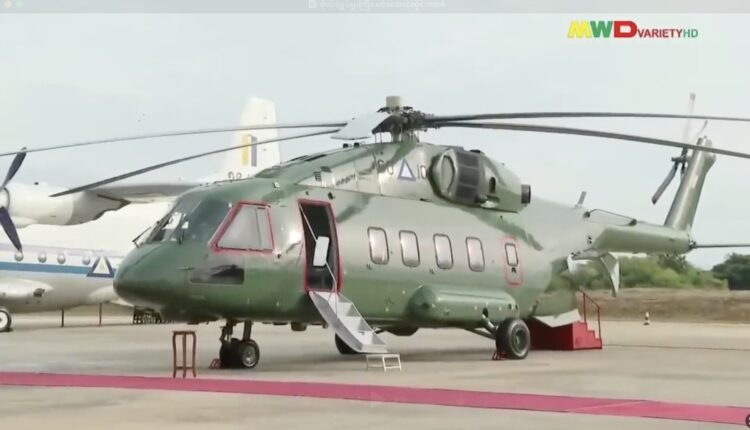
Mi-38T
Share
(DEFENCE SECURITY ASIA) — Myanmar has entered a new chapter in its military aviation history by officially inducting three Russian Mi-38T helicopters, becoming the first foreign operator of this next-generation medium-lift platform and signalling a decisive shift in the Myanmar Air Force’s ambition to modernise its air-mobility capabilities.
The induction ceremony held in Naypyidaw on November 7 and attended by Senior General Min Aung Hlaing, marks a historic moment in Southeast Asia’s defence landscape as Myanmar becomes the launch export customer for one of Russia’s most advanced rotary-wing systems.
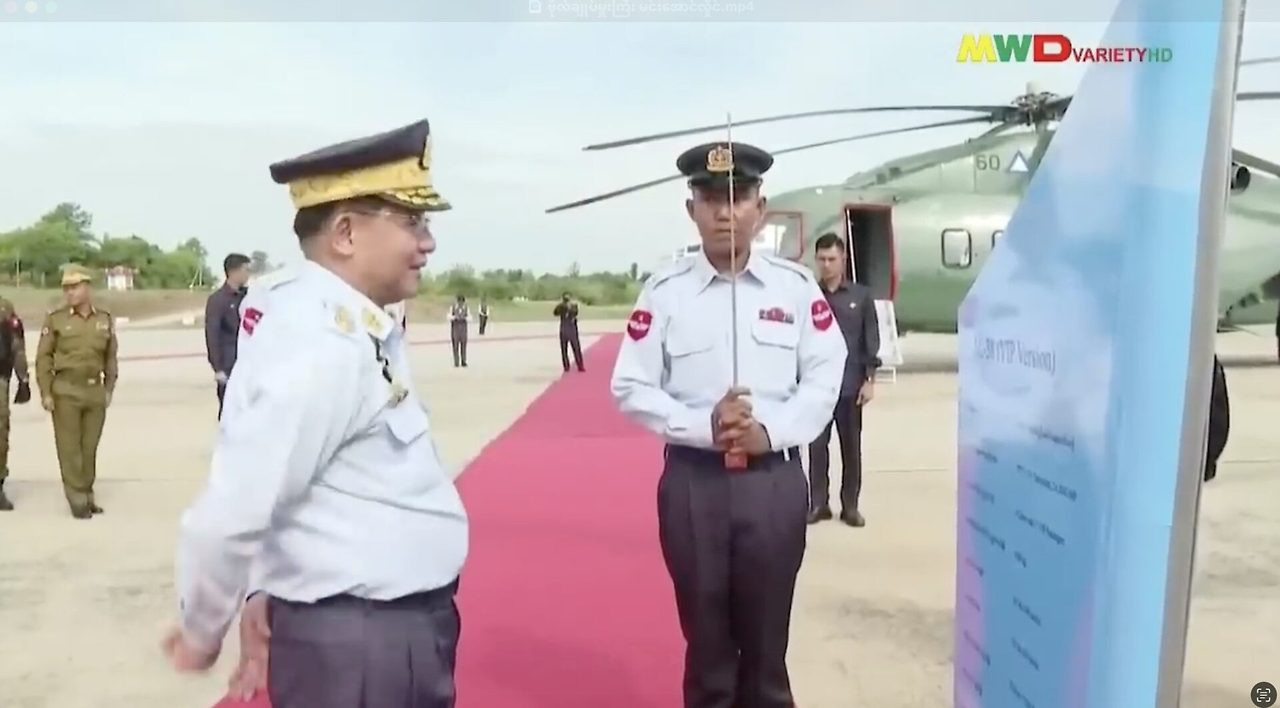
Mi-38T
The arrival of the Mi-38T takes place against the backdrop of Myanmar’s sprawling civil conflict, with the country’s armed forces intensifying operations across rugged highlands and thick jungles where rapid aerial mobility has become a strategic necessity.
The acquisition also reflects a deepening Russia-Myanmar defence alignment as both governments move closer in the face of Western sanctions and shifting geopolitical blocs, embedding the Mi-38T not only as a military asset but also as a symbol of strategic convergence between Moscow and Naypyidaw.
The induction of the Mi-38T also marks a strategic evolution in Myanmar’s ability to conduct sustained airlift missions across contested zones where ground logistics have collapsed under guerrilla interdiction and shifting frontlines.
The platform’s enhanced payload capacity and hot-and-high performance give the Myanmar Air Force a critical advantage in operating above the altitude thresholds where older Mi-17 variants struggle to maintain lift or endurance during high-intensity operations.
The arrival of this new helicopter class further consolidates Russia’s ambition to anchor itself as a long-term strategic supplier to Myanmar, creating a vertically integrated ecosystem of Russian platforms spanning fighters, transports, air defence systems, and unmanned assets.
For Myanmar, the induction strengthens its long-term campaign planning by enabling faster reinforcement cycles, deeper penetration into insurgent-held territories, and more resilient aerial logistics across weather-disrupted or mountainous theatres.
The deployment of the Mi-38T also signals to neighbouring militaries that Myanmar is willing to field modern rotary-wing capabilities despite international isolation, potentially reshaping regional assessments of the country’s operational reach and mobility.
This development, when viewed through the broader strategic lens of Russia’s Asia outreach, underscores how Moscow is leveraging rotary-wing exports like the Mi-38T not only for commercial gain but also as instruments of geopolitical influence in a region marked by realignment and intensifying great-power competition.
Evolution of the Mi-38T: Russia’s Next-Generation Medium Transport Platform
The Mi-38T represents the culmination of decades of development aimed at producing a modern successor to the Mi-8/17 family, which has been the backbone of Soviet and Russian helicopter operations for more than half a century.
The programme began in the late 1980s as part of an effort to create a helicopter that offered greater payload, better fuel efficiency, and advanced avionics to meet 21st-century operational needs.
Early cooperation with Eurocopter (now Airbus Helicopters) was intended to integrate Western avionics and engines for improved export prospects, but geopolitical realities and Russia’s post-Soviet restructuring caused the partnership to dissolve, leaving Moscow to continue development independently.
The first prototype flew in December 2003 powered by Pratt & Whitney Canada PW127/TS engines, but subsequent variants transitioned to indigenous Klimov TV7-117V engines to ensure supply security amid widening Western sanctions after 2014.
The Mi-38T, designed specifically for military transport operations, was unveiled in 2017 and certified for Russian military service in 2018, positioning it as the newest addition to Russia’s medium-lift helicopter fleet.
The aircraft was engineered to offer superior hot-and-high performance, long-range endurance, and multi-mission flexibility, qualities that align closely with Myanmar’s operational environment across mountainous terrains such as Shan State and Kachin State.
The Mi-38T sits between the lighter Mi-17 and the heavy-lift Mi-26, forming a bridge that offers greater payload capacity without the high operating cost associated with Russia’s largest helicopter.
The helicopter features a maximum takeoff weight of 15,600 kg, enabling an internal payload of 6,000 kg and an external load of up to 7,000 kg, giving it a substantial advantage over older Mi-17 variants, which typically transport around 4,000 kg internally.
The aircraft measures around 20 meters in length and incorporates a six-bladed main rotor coupled with a four-bladed tail rotor, providing enhanced lift capability and improved stability during demanding operations.
The Klimov TV7-117V engines produce approximately 2,800 horsepower each, enabling the helicopter to reach speeds of up to 300 km/h while maintaining a cruise speed between 250 km/h and 275 km/h.
The Mi-38T can cover distances of up to 880 km on internal fuel or 1,300 km when fitted with auxiliary tanks, a range advantageous for long-distance logistics missions across Myanmar’s dispersed areas of conflict.
The aircraft’s service ceiling of 6,300 meters allows it to operate effectively in high-altitude environments where thin air limits the performance of older helicopters.
The cabin offers a generous 29.5 cubic meters of internal space that can accommodate 40 troops in high-density seating, 30 passengers in standard configurations, or 12 medical stretchers for casualty evacuation missions.
The Mi-38T integrates a modern glass cockpit with multifunction displays, fly-by-wire controls, advanced navigation and communication systems, and night-vision compatibility, enabling round-the-clock operations and improved pilot situational awareness.
Optional features include armor plating for crew protection, de-icing systems for cold-weather missions, and modular mission equipment for troop transport, cargo delivery, search-and-rescue, and VIP movement in its “Salon” version.
When measured against Western alternatives such as the Sikorsky S-92 or Leonardo AW101, the Mi-38T provides competitive lift performance at a lower acquisition cost estimated at under USD25 million per unit (approximately RM118 million), making it appealing to militaries facing budget pressure or sanctions.
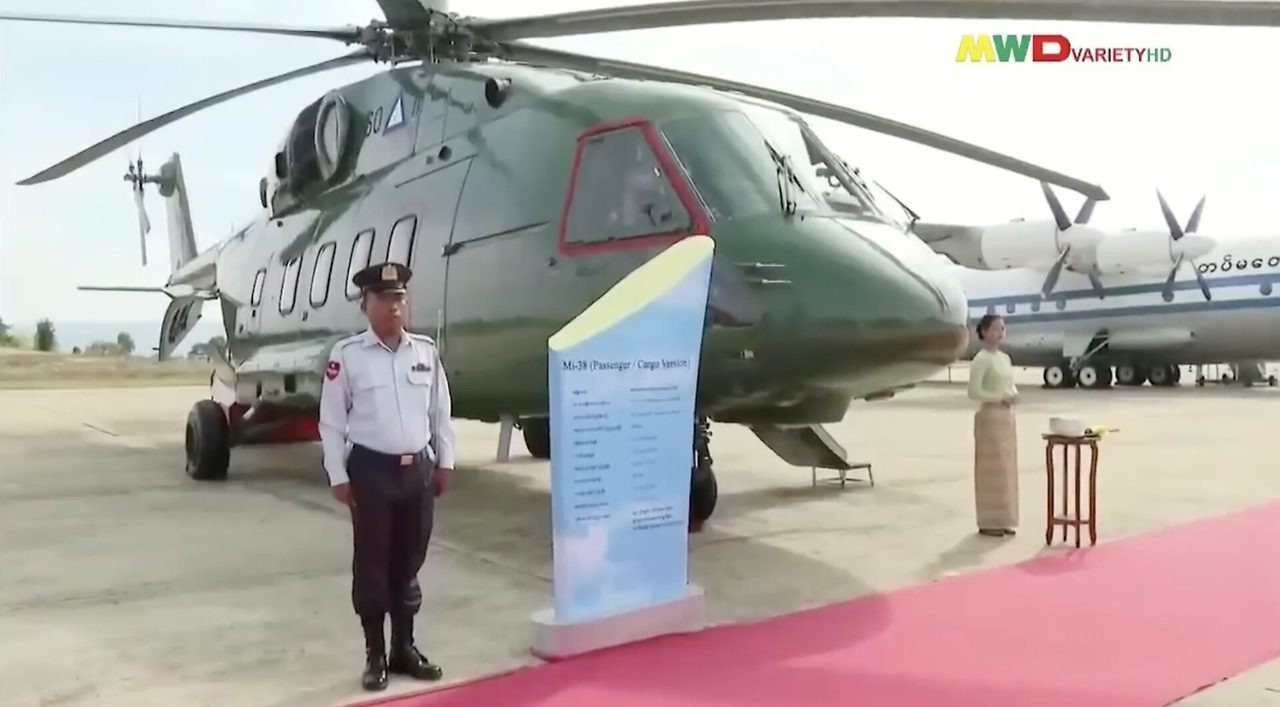
Mi-38TContractual Path, Delays, and Induction Timeline
Myanmar’s journey toward acquiring the Mi-38T began as early as 2019 when discussions with Rosoboronexport led to a formal commercial offer for the helicopter.
A leaked document from November 22, 2019, indicated a per-unit price of €18.89 million for the standard transport variant and €21.9 million for the VIP Salon configuration, with additional charges for training (€2.17 million), optional equipment (€1.48 million), and maintenance packages valued at up to 30 percent of the helicopter’s price.
The total programme cost was estimated at approximately €80 million, equivalent to around USD92 million (about RM435 million), covering aircraft, training, spares, and logistical support.
The agreement was concluded in January 2020 and an initial payment was made by September of the same year.
The project faced delays stemming from technical refinements to the helicopter’s propulsion system and avionics, as the TV7-117V engines required additional tuning for hot-and-high operations.
Myanmar’s political upheaval following the February 1, 2021 military coup and the heightened Western sanctions that followed created further disruptions across payment channels, shipping routes, and insurance arrangements.
Russia’s full-scale invasion of Ukraine in 2022 placed added strain on its defence industrial base, forcing priority shifts and slowing production timelines for multiple export programmes, including Myanmar’s Mi-38T order.
Despite these obstacles, delivery was completed in September 2025 with one aircraft seen undergoing trial flights shortly after arrival.
The package delivered to Myanmar comprises two standard Mi-38T transport helicopters and one Salon variant configured for VIP transport, allowing the Myanmar military leadership to integrate the platform into both combat support and command-and-control roles.
The induction ceremony coincided with the arrival of two Chinese Y-8F-200W turboprop transports, illustrating Myanmar’s dual reliance on Russian and Chinese military suppliers as its access to Western markets remains closed due to sanctions.
Strengthening the Myanmar Air Force’s Strategic Air Mobility
The Myanmar Air Force (MAF), established in 1947, fields a fleet of approximately 356 aircraft, of which around 81 are helicopters drawn mainly from Russian and Chinese manufacturers.
The service operates multiple Mi-17 transport helicopters, Mi-24 and Mi-35 attack helicopters, and light utility platforms such as the Mi-2 and Chinese-built Z-9 variants, forming a rotary-wing backbone essential for counter-insurgency operations.
Fixed-wing assets include Russian Su-30 multirole fighters, Chinese-Pakistani JF-17s, and tactical transport aircraft like the Y-8 and Y-9, supporting a broad spectrum of combat and logistical missions.
The MAF’s operational challenges have increased significantly as Myanmar’s civil war expands across ethnic regions, requiring rapid troop deployment, medical evacuation, resupply flights, and insertion of special forces into contested areas.
The country’s geography, characterised by dense forests, river valleys, and mountainous corridors, imposes substantial strain on helicopter fleets, especially those with aging airframes or limited payload capacities.
Prior to the Mi-38T’s arrival, the Mi-17 fleet had been the workhorse of Myanmar’s vertical lift capability but suffers from lower carrying capacity, higher maintenance demand, and decreasing performance in high-altitude missions.
The Mi-38T offers Myanmar an uplift in strategic air mobility by enabling heavier lift loads, such as artillery pieces, armoured vehicles, field generators, ammunition pallets, and engineering equipment essential for prolonged operations.
The helicopter’s extended range and higher cruise speed strengthen the Myanmar military’s ability to conduct long-distance resupply missions across states such as Sagaing, Kachin, and Chin where overland routes are disrupted by armed resistance.
The VIP-configured Salon Mi-38T allows senior military leaders to travel between frontlines and command posts, ensuring continuity of command-and-control operations during high-tempo campaigns.
The Mi-38T also enables more effective casualty evacuation and humanitarian logistics in areas where aerial access is the only viable method of transportation, reinforcing the aircraft’s dual military and humanitarian value.
Is China Using Myanmar’s Great Coco Island to Spy on India’s Military in the Bay of Bengal?Geopolitical Significance and Deepening Russia-Myanmar Strategic Ties
The arrival of the Mi-38T underscores a rapidly strengthening defence partnership between Russia and Myanmar following the 2021 coup, with Moscow emerging as Naypyidaw’s primary supplier of advanced weapons systems.
Myanmar has increasingly turned to Russia for aircraft, drones, air defence systems, training, and technological cooperation as Western nations tighten sanctions and restrict military exports to the country.
The relationship includes agreements on nuclear energy collaboration, space technology access, and military education programmes, further embedding Russia as Myanmar’s strategic partner in long-term capability development.
Min Aung Hlaing’s meetings with Vladimir Putin in 2025 resulted in a new framework of cooperation in atomic energy and military training, enhancing Russia’s stake in Myanmar’s military infrastructure and internal security apparatus.
Russia has supplied Myanmar with Su-30 fighters, Pantsir-S1 air defence systems, Orlan-10 surveillance drones, and multiple categories of guided munitions, forming a comprehensive web of defence support that strengthens the junta’s position in its civil war.
In return, Myanmar offers Russia strategic presence in Southeast Asia, access to rare earth minerals, energy cooperation, and a market for dual-use goods restricted by Western sanctions.
The Mi-38T deal fits into Russia’s broader ambition to expand its defence footprint in Asia, Africa, and Latin America, demonstrating that despite geopolitical pressure, its aerospace industry retains significant export potential.
Regional observers note that Myanmar’s helicopter acquisition may raise concerns among neighbouring countries such as Thailand, India, and Bangladesh, particularly regarding cross-border instability and increased military operations near frontier regions.
Human rights organisations argue that such equipment enhances Myanmar’s ability to conduct offensives that displace civilian populations, heighten humanitarian crises, and intensify border tensions with neighbouring countries.
From a Russian perspective, Myanmar’s adoption of the Mi-38T serves as a high-profile demonstration of the platform’s export viability, especially to nations seeking reliable, cost-effective alternatives to Western helicopters amid sanction constraints. — DEFENCE SECURITY ASIA