When Computers Went To Sea | B-52H는 엔진 및 레이더 업그레이드를 받고 새로운 형식명으로 재지정될 것 - Daum 카페
보잉이 B-52 두 대에 TF33을 대체해 F130엔진을 장착하는 사업을 20억 달러에 수주했네요.
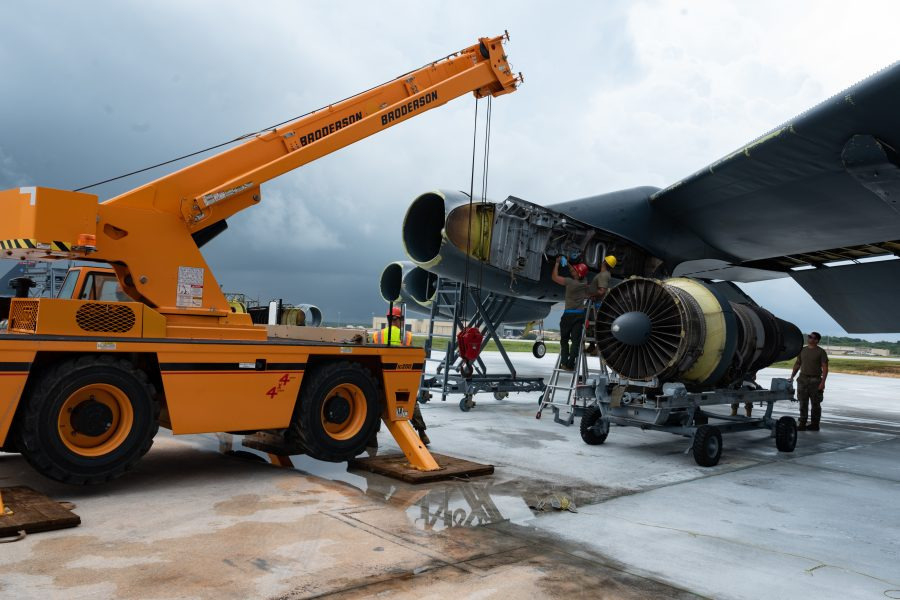
미국 공군 소속 장병들이 2021년 4월 25일 괌 앤더슨 공군기지에서 진행된 폭격기 태스크포스 배치 기간 동안 B-52H 스트래토포트리스의 엔진을 수리하고 있다. 미 공군 사진, 상급공군병 조반테 존슨 촬영사진 확대
공군, 시험을 위해 B-52 두 대 재엔진화에 20억 달러 계약 체결2026년 1월 5일 | 그레그 해들리
기사 공유
공군은 보잉과 20억 달러 규모의 계약을 체결해 B-52 폭격기 두 대에 신규 엔진을 장착하고, 새로운 8기 엔진 구성에 대한 시험을 시작한다.
보잉은 미 공군의 B-52 상용 엔진 교체 프로그램(B-52 Commercial Engine Replacement Program)의 주 통합업체로, 1960년대부터 사용돼 온 기존 TF33 엔진을 대체해 롤스로이스 F130 엔진을 장착하게 된다.
발표문에 따르면 “이번 과업 지시는 중요 설계 검토(Critical Design Review) 이후 체계 통합 활동을 완료하고, 신규 엔진과 관련 하위체계를 장착해 B-52 항공기 두 대를 개조·시험함으로써 B-52 CERP 프로그램을 진전시킨다”고 밝혔다.
국방부는 첫 시험기가 언제 준비될지는 명시하지 않았으며, 과업 지시는 “2033년 5월 31일까지 완료될 것으로 예상된다”고만 밝혔는데, 이는 공군이 신규 엔진으로 초기 작전운용능력(IOC)을 달성할 것으로 예상하는 시점과 비슷하다.
F130 엔진은 2024년 12월 중요 설계 검토를 통과했지만, 교체 프로그램에는 엔진 자체 외에도 엔진 스트럿, 전력 생성 시스템, 조종석 엔진 표시장치 등이 포함된다. 정부책임감사원(GAO)은 지난해 여름 공개한 연례 무기 보고서에서 전체 프로그램에 대한 중요 설계 검토가 4월로 예정돼 있다고 밝혔다.
NASA 스테니스 우주센터에서 시험 중인 롤스로이스 F130 엔진. 이미지 제공: 롤스로이스.신규 엔진과 함께 공군은 B-52의 레이더도 교체하고 있다. 두 업그레이드가 모두 적용되면 이를 결합해 “B-52J” 파생형이 되며, 이는 기체 수명이 100년에 가까워질 2050년대까지 비행을 지속하도록 설계됐다.
B-52 레이더 현대화 프로그램도 최근 진전을 보였으며, 신형 AN/APQ-188 레이더가 12월 8일 B-52에서 첫 비행을 실시했다. 이 폭격기는 텍사스주 샌안토니오에서 캘리포니아주 에드워즈 공군기지로 비행해 올해 생산 결정에 앞서 시험을 시작했다. 신형 레이더는 1980년대에 개발된 현용 AN/APQ-166 레이더를 대체한다.
F130 엔진을 장착한 B-52들도 공군의 주요 시험 비행단이 있는 에드워즈에서 시험을 받을 예정이다. GAO와 작전시험평가국(DOT&E)의 보고서에 따르면 엔진 교체 프로그램에 대한 양산 결정은 2028년 말로 예상된다.
엔진과 레이더 업그레이드 모두 난관을 극복해 왔다. 엔진 프로그램은 나셀 설계와 보조 엔진 계통의 변경 필요로 처음 지연됐고, 이후 시험 중 발견된 엔진 흡입구 문제로 추가 어려움을 겪었다. 한편 레이더 프로그램은 GAO에 따르면 “환경 적합성 인증, 부품 조달, 소프트웨어”로 인해 기준 일정이나 비용이 최대 15% 증가했음을 의미하는 “비중대” 넌-맥커디 위반을 극복해야 했다.
그럼에도 불구하고, 미 공군의 계획된 폭격기 전력에서 스텔스 B-21 “내부” 폭격기와 원거리 타격용 B-52로 구성된 “스탠드오프” 구성요소로서 B-52를 향후 수십 년간 운용하기 위한 작업은 계속 진행되고 있다.
Air Force Signs $2 Billion Deal to Re-Engine Two B-52s for Testing
U.S. Air Force Airmen repair a B-52H Stratofortress engine during a Bomber Task Force deployment at Andersen Air Force Base, Guam, April 25, 2021. U.S. Air Force photo by Senior Airman Jovante Johnson
Expand Photo
Air Force Signs $2 Billion Deal to Re-Engine Two B-52s for Testing
Jan. 5, 2026 | By Greg Hadley
Share Article
The Air Force inked a $2 billion deal with Boeing to install new engines on two B-52 bombers and begin testing of the new eight-engine configuration.
Boeing is the prime integrator for USAF’s B-52 Commercial Engine Replacement Program in which new Rolls-Royce F130 engines will be installed in place of the legacy TF33 engines that date back to the 1960s.
“The task order progresses the B-52 CERP program by completing system integration activities after Critical Design Review and modifying and testing two B-52 aircraft with new engines and associated subsystems,” the announcement states.
The Pentagon did not specify when the first jets will be ready for testing, saying only that the task order “is expected to be complete by May 31, 2033″—around the time the Air Force anticipates achieving initial operational capability with the new engines.
The F130 engine passed critical design review in December 2024, but the replacement program includes much more, including the engine struts, the electrical power generation system, and engine cockpit displays. A critical design review for the entire program is projected for April, according to the Government Accountability Office in its annual weapons report released last summer.
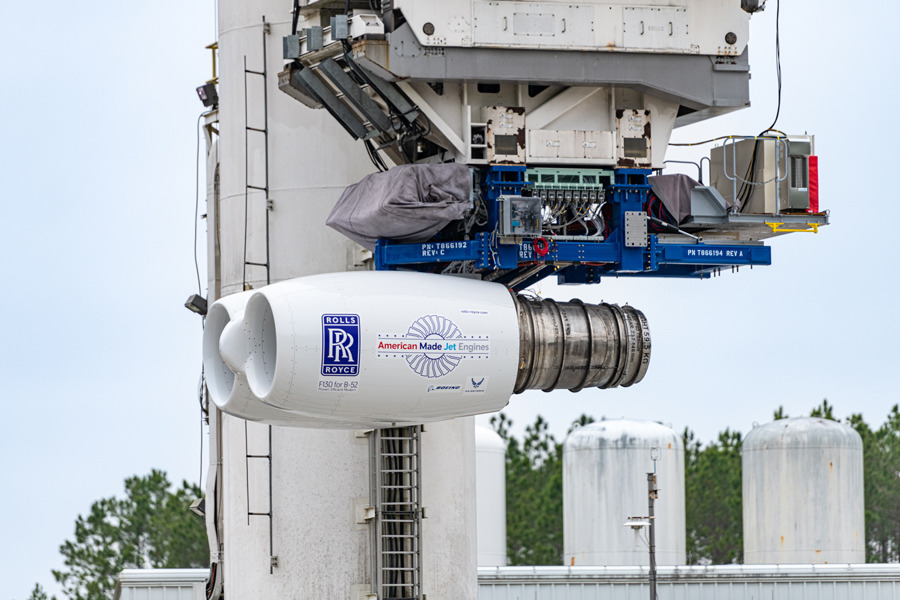
Rolls-Royce F130 engines on test at NASA Stennis Space Center. Image courtesy Rolls-Royce.
Along with the new engines, the Air Force is also replacing the radar on the B-52. Once both upgrades are installed, they will combine to form the “B-52J” variant, intended to continue flying into the 2050s, when the airframes will approach 100 years old.
The B-52 Radar Modernization Program has also signaled recent progress, with the new AN/APQ-188 radar making its first flight on a B-52 on Dec. 8. The bomber flew from San Antonio, Texas, to Edwards Air Force Base, Calif., to begin testing ahead of a production decision this year. The new radar replaces today’s AN/APQ-166 radars, which were developed in the 1980s.
The F130-equipped B-52s will also be tested at Edwards, the home of the Air Force’s main test wing. A production decision on the engine replacement program is projected in late 2028, according to reports from the GAO and the Director of Operational Test and Evaluation.
Both the engine and the radar upgrades have overcome challenges. The engine program was first delayed by needed changes to nacelle design and auxiliary engine systems, followed by engine inlet issues discovered during testing. The radar program, meanwhile, had to overcome a “non-critical” Nunn-McCurdy breach, meaning its baseline schedule or cost had grown by up to 15 percent, due to “environmental qualification, parts procurement, and software,” per the GAO.
Work progresses, however, to keep the B-52 flying for decades to come as the “standoff” component of USAF’s planned bomber force, consisting of stealthy B-21 “inside” bombers and stand-off B-52s.