록히드 마틴의 스컹크 웍스가 시뮬레이션을 해 보니 CCA는 다 맞고 떨어지고 재사용은 거의 불가능했다고 하네요.
그런데 CCA가 핵심 임무를 마친 다음에는 디코이 역할을 하도록 했으니 맞아 떨어지는 것이 당연한(?) 결론이 아닌가 싶네요.
CCA들이 미사일을 다 쏴서 뭔가 효과를 본 다음에 맞아 떨어졌냐 아니냐가 key question일 것 같습니다.
The Debrief: Skunk Works Analysis Reveals Vulnerability Of CCA Fleet
Steve Trimble June 03, 2024
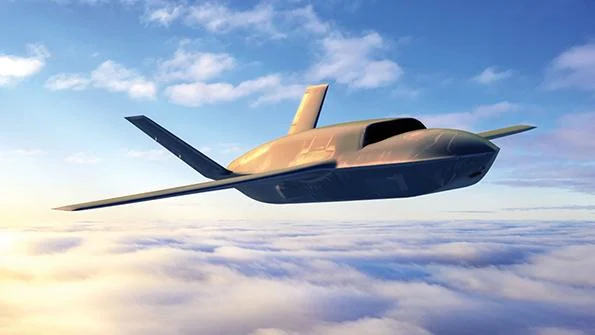
The life expectancy of a future Collaborative Combat Aircraft (CCA) is not a trivial question. The answer could influence everything from the strength of its landing gear to the endurance of the engine and the sophistication of the autonomy algorithms.
As the U.S. Air Force soon embarks on the 12-18-monthlong Project Venom experimental flight series, determining the lifespan of an artificial intelligence (AI)-piloted wingman will likely be a key goal. To the operations analysis team inside Lockheed Martin’s Skunk Works, however, the answer to the question of the CCA’s lifespan in combat is already apparent: Not long.
“We’re doing our [operational] analysis and we’re doing it against peer adversary situations, and CCAs are really just turning into expensive targets,” Skunk Works General Manager John Clark said in a recent interview. “They’re all getting shot down.”
The Skunk Works has factored that into its plans for an autonomy core system that could be used by a future CCA. A short lifespan means this set of codified, software-enabled behaviors does not need to be overly complex. It just has to be sufficient to manage a short mission. If it survives the primary task, it can transition into a final role as a decoy, taking the proverbial bullet for a crewed fighter or bomber.
“You’re going to want the system to just be smart enough to live long enough to do its core mission, and then end its life in a decoy sort of role. And so that’s where you try to focus the AI behaviors,” Clark said.
Clark’s remarks came a couple of weeks after the U.S. Air Force bypassed three prime contractors—Lockheed, Boeing and Northrop Grumman—to build the first increment of the CCA fleet. Instead, General Atomics Aeronautical Systems Inc. and Anduril are building the first two members of a future family of CCA. Meanwhile, the Air Force is still experimenting with the autonomy software that will control the CCA, along with their sensors and any weapons.
The Skunk Works’ life expectancy estimate for the CCA fleet is not necessarily a negative for the concept. Since military planners began conceiving of approaches to crewed-uncrewed teaming, the latter member has often been thought of as an “attritable” asset. The attritable term has been variously invoked to mean either relatively low cost or simply uncrewed, but the basic idea is that they would be expendable.
Heather Penney, senior resident fellow at the Mitchell Institute of Aerospace Studies, elaborated on the potential use of CCA as attritable systems in a September 2022 report.
“CCA could increase the survivability of their crewed teammates by acting as decoys or ‘missile sinks’ that soak up enemy air-to-air or surface-to-air missiles as a means to alter kill exchange ratios,” Penney wrote.
Replacing a CCA is comparatively simple compared to a human pilot. It can take years of training and experience to replace human skills, but not so with an AI pilot.
“When a CCA is lost, its replacement can be fielded with the exact same levels of competence, because their skill is based on program updates, not personal and individualized history,” Penney added. “So long as their software is up to date, a new CCA is just as useful as the one it is replacing—there is no such thing as a CCA ‘new guy.’”
A careful balance still has to be struck. A CCA may not fly a second mission, but the Air Force may still need it to survive long enough to do its job on the first mission. If the CCA is DARPA’s LongShot—an air-launched GA-ASI X-plane designed to fire air-to-air missiles—then its survival is critical for the Air Force’s limited stockpile of such weapons, Penney said in a recent interview. If each LongShot carries a pair of the Air Force’s developmental Lockheed Martin AIM-260 Joint Advanced Tactical Missiles, for example, it needs to survive long enough to complete its primary mission.