아조프 여단 무인체계대대 지휘관의 두 번째 인터뷰입니다. 대대 레벨에서 드론 수 만대를 굴리네요 @.@
러시아도 더 이상 고기분쇄기 식 돌격을 수행하지 않고, 소규모 침투로 전술을 바꿔다고 하네요. 대대의 임무는 적을 탐지하고, 보급선과 통신선을 타격해 보병의 직접 교전을 막아 보병들의 피해를 최소화하는 거라고. 이젠 FPV 드론으로 TOS-2같은 체계를 부수는 건 일상이라 뉴스거리도 안 된다고 합니다. 포병이 모자라 여단 전체 타격의 80%를 드론이 담당한다고 합니다.
FPV 드론은 최대 운용범위가 25km 정도라 10~20대 가량이 동원되는 대규모 타격보다는 2~3대 단위의 협동 타격이 적절하다고.
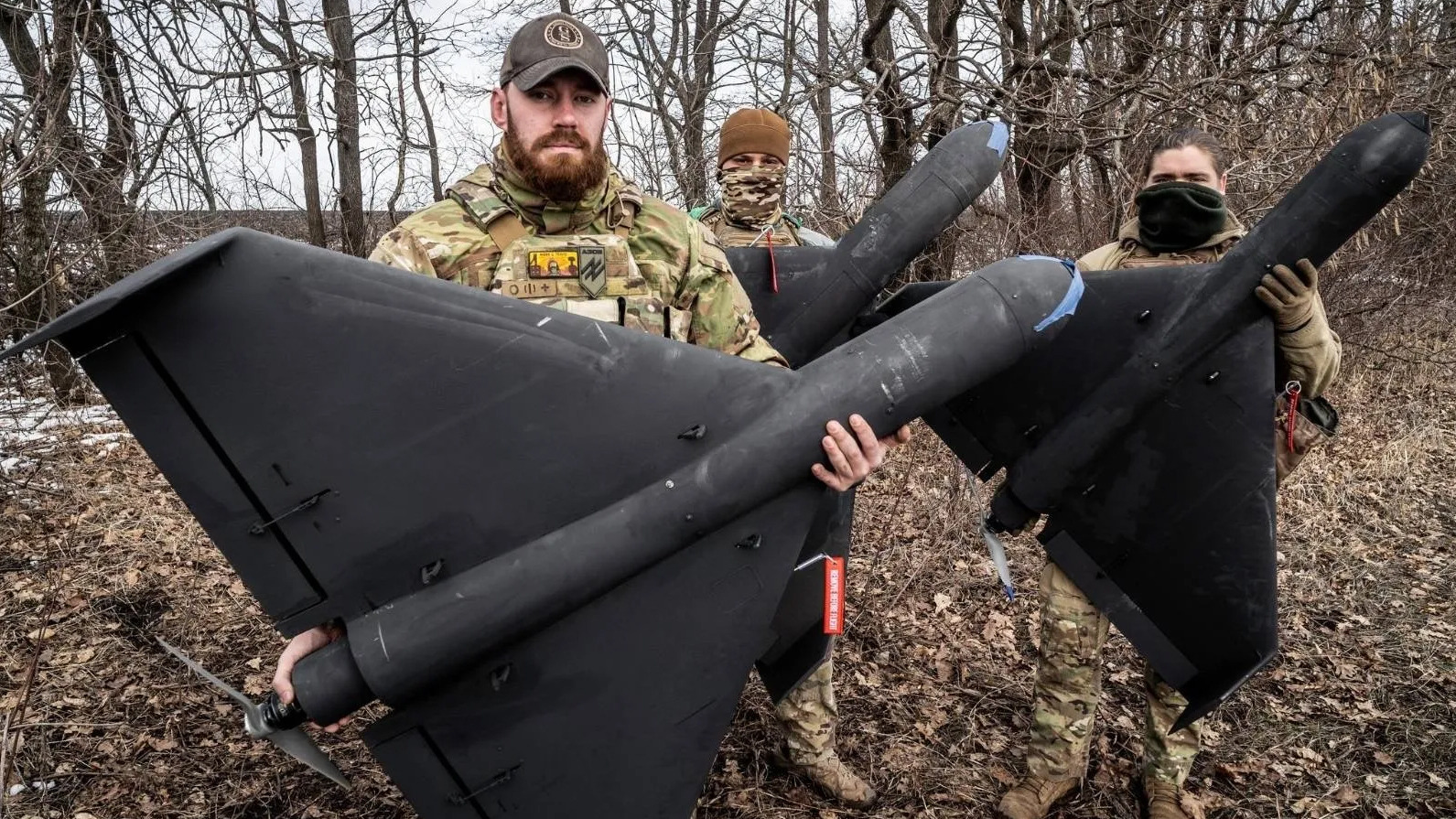
드론은 받아서 바로 안 쓰고 반드시 정비대대에서 개조/정비과정을 거친 후 파일럿과 항법사 팀의 점검 후 운용된다고 하네요. Shahed와 유사한 SETH라는 자국산 델타익 드론도 운용을 시작했다고.
UGV는 아직 기술이 미완성단계라 보급용으로 쓴다고 하네요. 무선연결만 가능하고 FPV도 안돼서 중계드론이 필수고 배터리도 자주 충전해야 한다고. 기관총 등 살상 무장은 아직 탑재하지 않는다고 합니다.
1. 5줄 이내 핵심 요약
우크라이나 아조프 여단 무인시스템 대대장은 동부 전선에서 드론 전투가 어떻게 진화하고 있는지, 러시아군의 변화된 전술과 드론 활용 현황을 상세히 설명했다. 아조프 대대는 수백 명의 병력과 수만 대의 FPV·폭격형 드론을 운용하며, 주로 적의 보급·통신망을 타격하고 보병 손실을 줄이는 데 집중하고 있다. 러시아군도 드론을 더 영리하게 운용하며, 양측 모두 고가·신형 드론 도입, 전술 변화, 신호 중계용 ‘모선’ 드론 활용 등에서 치열한 경쟁을 벌이고 있다. 아조프 대대는 80%에 달하는 공격을 드론으로 수행하고 있으며, 육상 무인차량(UGV)은 주로 후송·보급용으로만 제한적으로 사용한다. 무인전의 비중이 계속 커지면서 인명 손실을 줄이고 있지만, 기술적 미숙과 피로 누적으로 인한 실수, 오폭(프래트리사이드) 등 새로운 도전도 함께 늘고 있다.
2. 기사 전문 번역
지난 10월, 우크라이나 국가방위군 아조프 여단 제1군단은 드론과 운용 인력의 필요성이 커진 것을 인식하고, 무인시스템 대대를 신설했다. 현재 이 부대는 수백 명의 병력과 수만 대에 달하는 FPV(1인칭 시점) 드론부터 중(重)폭격형 드론까지 다양한 기체를 보유하고 있다. 이들은 현재 격전지인 도네츠크주 토레츠크와 그 주변에서 전투 중이다. 거의 두 시간에 걸친 독점 인터뷰에서 이 부대의 지휘관(콜사인 ‘Yas’)은 드론 전투의 진화와 실제 전장 경험에 대해 상세히 전했다.
Yas는 드론이 효과적으로 쓰이는 방식과 한계, 러시아군의 새로운 전술, ‘드래곤 드론’의 문제점, 신형 SETH 드론의 실전 활용, 그리고 살상능력이 있는 무인 지상차량(UGV) 운용에 대한 경계 등 다양한 이슈에 대해 답했다. (이 Q&A는 일부 명확성을 위해 편집되었음.)
Q: 러시아군의 전술이 달라졌나? 그렇다면 어떻게 달라졌는가?
A: 네, 확실히 변화가 있습니다. 매일은 아니지만 한 달에 한 번 꼴로 전술이 바뀌곤 합니다. 예전처럼 인원을 소모시키는 ‘고기분쇄기’식 돌격이나 기계화 돌격은 줄었고, 대신 소규모 집단 전술로 은밀하게 침투해 우리의 약점을 노립니다. 이들이 성공하는 경우도 종종 있습니다. 아쉽게도 아직 모든 영토를 감시할 만큼 정찰 드론이 충분하지 않지만, 우리 조종사들은 적 탐지와 보병 피해 최소화라는 임무에 최선을 다하고 있습니다. 현실적으로는 완전한 성공은 어렵지만, 적과 아군 간 1~2km 완충지대를 만들고 적의 보급·통신 타격에 주력하며 보병의 직접 교전을 최대한 막고 있습니다.
Q: 가장 자랑스러운 공격 사례는?
A: 작전 그 자체보다는 그걸 수행한 대원들이 더 자랑스럽습니다. 대표적으로 1년 전 우리 대원이 무인 시스템으로 러시아 TOS-2(열압력 로켓) 시스템을 파괴한 적이 있습니다.
Q: 최근에는?
A: 현재는 작전 하나하나가 일상이 되어 특별히 눈에 띄는 사례를 꼽기 어렵습니다. 지금 또 다른 TOS 시스템을 타격한다고 해도 그냥 일상의 일부일 뿐입니다. 탱크 등 여러 종류의 차량을 상대해왔지만, 최근에는 적이 더 은폐를 잘 하고 거리가 멀어지면서 효율도 떨어지고 있습니다. 적도 계속 발전하기 때문입니다.
대규모 드론 공격에는 참여하지 않습니다. 우리가 운용하는 범위(최대 25km 내)에선 그런 대규모 타격이 의미가 없다고 판단합니다. 보통 23대가 협동해서 타격하는 게 한 대로 하는 것보다 낫다고 보고, 1020대씩 투입하는 대형 공격은 우리 전술과 맞지 않다고 생각합니다.
Q: 토레츠크 일대에서의 전투 난이도는?
A: 이 구역에서 적의 활동이 증가했고, 적이 우리 보급 역량을 점점 밀어내고 있습니다. 최근 1~2개월간 적도 무인 시스템을 활발히 쓰고 있습니다. 우리가 그들보다 낫다고 할 수는 없지만, 거의 같은 방식으로 드론을 운용하며 서로의 보급로를 공격하고 있습니다.
Q: 러시아가 드론 수량에서 앞서고 있나?
A: 숫자 우위인지는 단언하기 어렵습니다. 다만, 전선에 상당한 수의 드론을 배치했다는 건 분명 느껴집니다. 최근엔 이 드론들을 더 영리하게 써서, 우선순위가 높은 표적을 집중 타격합니다. 구체적 수치보다는 전술 변화가 더 두드러집니다.
Q: 병력 손실은?
A: 전쟁이기에 손실은 피할 수 없습니다. 우리도 잃은 병력이 있지만, 정확한 숫자는 밝힐 수 없습니다. 제 입장에선 한 명 한 명의 손실이 모두 치명적입니다.
Q: 드론 운용자의 실제 임무 과정은?
A: 드론이 도착하면, 먼저 우리 전문가들이 개조·정비합니다. 새로 제작된 드론도 그냥 쓰지 않고 반드시 자체 수리를 거칩니다. 그 후 현장에 옮겨가 파일럿들이 다시 한 번 점검·테스트합니다. 운반 중 문제 발생 가능성 등 모든 변수를 제거하기 위함입니다.
운용 자체는 조종사와 네비게이터가 팀을 이뤄 이루어집니다. 임무 중엔 보이스챗 등으로 상급 지휘관의 이륙 명령을 기다리며 항상 준비태세를 갖춥니다. 출격 전 모두 엄폐물에 몸을 숨기고, 안전이 확보된 뒤 드론을 띄웁니다.
파일럿이 드론을 조종하며 네비게이터가 지형을 세밀히 안내합니다. 특히 초보 조종사일 때는 네비게이터가 지형·지물 파악에 핵심 역할을 합니다.
Q: SETH 드론(델타익, 러시아 Shahed와 유사)의 활용 경험은?
A: ‘랑셋(Lancet) 아날로그’ 혹은 ‘미니 샤헤드’로 불리지만, 사실 러시아 무인기와 직접 비교는 적절하지 않다고 생각합니다. 이 드론은 정찰 UAV와 함께 운영하면 고가치 표적 타격 확률이 이론적으로 100%에 이르기도 합니다. 다만 실전에서의 성공률은 아직 평가 중입니다. 한 대당 수십만 달러의 고가여서 반드시 고가치 목표만 노립니다. 정찰 드론이 신호 중계기 역할도 병행합니다. 발전 가능성이 크지만 아직 기술이 미완성 단계입니다.
Q: SETH 드론의 운용 방식은?
A: 표적 자동 탐지·유도 기능은 없고, 파일럿이 직접 명령을 내려 표적에 접근·공격하게 합니다. GPS CRPA(방해저항 안테나)는 위치 확인용이고, 실제 유도는 영상에서 목표를 지정하면 자동으로 작동하는 대비유도 시스템을 씁니다.
Q: 사거리 및 탄두는?
A: 공식적으로 40~50km이지만 실제론 40km가 한계입니다. 3kg(6.6파운드) 고폭·파편 탄두(일부는 열압력탄두로 부름)를 탑재하지만, 중장갑 차량 파괴엔 한계가 있습니다.
Q: ‘모선’ 신호 중계 드론 활용은?
A: 모선 드론 기술은 아직 고가(1대 20만 달러)라서 자체 개발이 더 낫다고 봅니다. 신호 중계기는 단순히 사거리 확장뿐 아니라, 라디오 음영지대 등 신호 확보가 어려운 곳을 커버하는 용도가 더 큽니다. 고품질 중계기와 운반체가 있으면 더 먼 거리도 가능하겠지만, 만능은 아닙니다.
Q: 드래곤 드론(열화물 투하형) 운용 경험은?
A: 계절에 따라 쓰기도 하지만, 실제 효율성은 의문입니다. 100m 전방에 5대를 써도 아무 효과가 없을 때가 있고, 우연히 화재가 나면 단 1대도 효과가 있을 수 있습니다. 대체로 심리적 효과가 큽니다.
Q: 실전 효율이 낮은 이유는?
A: 투하된 열화물의 절반 정도만 목표에 도달할 정도로, 공중에서 대부분 소진됩니다.
Q: 러시아군 표적의 몇 %를 드론이 타격하는가?
A: 우리 여단 기준으로, 전체 화력의 80% 정도가 드론으로 적 표적을 공격하고 있습니다. 다른 화기(포병 등)가 부족해 드론의 비중이 더 커졌고, 경제적이기 때문입니다.
Q: 무인 지상차량(UGV)의 운용 실태는?
A: 주로 의약품·혈액 수송 등 보급용으로 씁니다. 2024년 가을부터 실전 투입 중이나, 기술은 아직 미완성입니다. 라디오 연결만이 유일하게 안정적인 통신 방법이고, 신호 중계용 드론(Mavic 등) 없이는 제대로 쓸 수 없습니다. 1인칭 시점 영상 송출도 안 되어서, 중계 드론을 띄워서 관찰·조종해야 하고, 배터리 충전도 잦아 임무가 몇 시간씩 걸릴 때도 많습니다. 시신 수습이나 보급 등엔 쓸 수 있지만, 자폭형으론 효과가 미미합니다.
Q: 기관총 등 무장 UGV는 쓰는가?
A: 아직 신뢰성 부족과 오발 우려로, 살상 무장은 탑재하지 않습니다. 중국산 부품 조립에 의존한 시스템으론 안정적 전투 솔루션이 어렵고, 국가적 기준이 정립되기 전엔 본격 실전 투입이 힘듭니다. 그마저도 완벽히 아군 안전을 보장할 수 없을 것입니다.
Q: 미래 전투가 인간은 숨고, 드론끼리 싸우는 세상이 될까?
A: 실제로 그런 방향으로 가고 있습니다. 인력이 부족해진 현실이 이런 변화를 이끕니다. 결국 여러 무인 시스템을 한 명이 엄폐에서 조작하는 방식으로 바뀌고, 한 명의 목숨이 어떤 장비보다 소중하다는 원칙에 가까워집니다. 너무 빠른 변화 탓에 많은 시행착오와 손실이 있지만, 이는 후대가 배울 소중한 경험이기도 합니다.
Q: 어떤 실수가 발생하는가?
A: 기술 도입이 급격히 이뤄지면서 피로 누적, 과로 등으로 인한 실수가 종종 치명적 결과를 낳기도 합니다. 다행히 빈도는 높지 않지만, 실전에서의 실험적 시스템 사용이나 폭발물 취급이 사고로 이어질 수 있습니다.
Q: 오발(프래트리사이드, 아군 오인사격) 사례인가?
A: 드론 자체나 폭발물 취급 실수로 조작자가 다치는 경우가 때때로 있습니다.
(기사 끝)
Ukrainian Commander’s Exclusive Insights On Brutal Drone Warfare On The Frontline
The commander of Azov's Unmanned Systems Battalion shares the latest details about how tactics are evolving in the bloody Donbas region.
Published Jun 4, 2025 4:17 PM EDT
(12th Special Forces Brigade Azov of the National Guard of Ukraine.)
The TWZ Newsletter
Weekly insights and analysis on the latest developments in military technology, strategy, and foreign policy.
Email addressSign Up
Terms of Service and Privacy Policy
Last October, the First Corps Azov Brigade of the Ukrainian National Guard saw the need to increase the number of drones it had and people to operate them. So it created the 12th Special Forces Brigade Azov of the Ukrainian National Guard’s Unmanned Systems Battalion. It now has several hundred troops and tens of thousands of drones ranging from first-person view (FPV) variants to heavy ‘bomber’ types. They are fighting in and around Toretsk, a now-destroyed city in Donetsk Oblast where some of the war’s fiercest battles are taking place. In a deeper dive into our nearly two-hour exclusive interview, the commander of this battalion, callsign “Yas,” shared new details about the ever-evolving use of drones in combat.
Yas addressed a huge range of issues. He told us about what is working and what is not, Russia’s new battlefield tactics, the problem with ‘dragon drones,’ how they are putting their new fixed-wing SETH drones to use, how combat is morphing to war between robots, and why he is wary of operating unmanned ground vehicles (UGVs) that are equipped with the ability to kill. The questions and answers have been slightly edited for clarity. You can catch up with his insights on the pros and cons of fiber-optic controlled FPV drones in our recent piece linked here.
Q: Have the Russians changed the way they are operating, and if so, how?
A: Yes, there are definitely changes. I cannot say that there are daily changes, but approximately every month, more or less, the enemy changes their tactics. And for example, we see fewer and fewer ‘meat grinder’ assaults, those cannon fodder assaults that the enemy was so famous for, and fewer motorized assaults. Instead, we see that the tactics change, and we spend more and more time trying to identify the enemy, trying to locate the enemy. So now they’re using their small group tactics. They’re infiltrating our positions, infiltrating our defense lines, and they are using our vulnerabilities. And I must say that from time to time, they do this successfully. Unfortunately, we still do not have a sufficient amount of reconnaissance drones in the air to cover every square meter of the territory. But the pilots of our reconnaissance drones do their best to detect the enemy and to carry out the main task. That is actually defined for our unmanned systems battalion, namely, to save as many lives of our infantrymen as possible and to prevent the infantry from entering combat, from entering the battle. Unfortunately, we are not always successful in carrying out this task, but we are doing our best. We are trying to create the so-called buffer zone, approximately one or two kilometers between the enemy lines and the positions of our infantry. And we mostly deal with striking the enemy’s logistics, the enemy’s communication. And in this case, we are preventing the enemy from fulfilling their aims and engaging our troops.
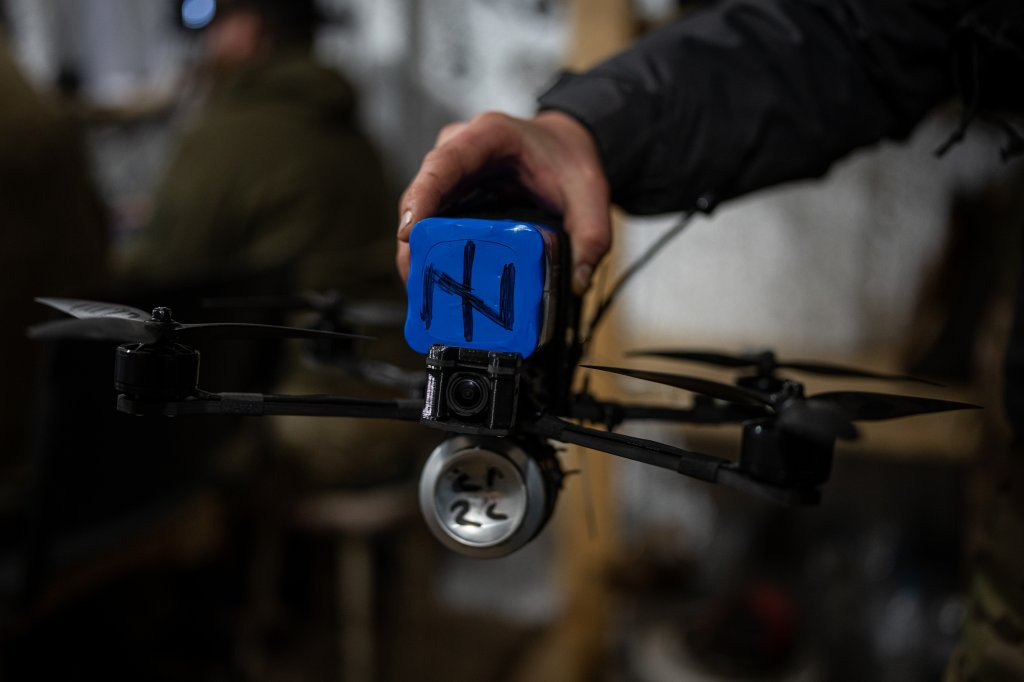
A FPV drones drone is held by a serviceman of Azov brigade in the direction of Toretsk, Ukraine, on Dec. 21 2024 (Photo by Wolfgang Schwan/Anadolu via Getty Images) Anadolu
Q: What’s an attack that you are most proud of?
A: I’m mostly proud not of operations, but of people conducting those operations. So I do remember one of the most notable cases. Approximately one year ago, one of our men in one of the sectors destroyed a TOS-2 [thermobaric rocket launcher] system with the unmanned system. That was really notable.
Q: Anything more recent?
A: At the moment our operations have become more of a routine for us, and we just operate based on the principle that we must do this. We must get the job done. And it is quite difficult for me to single out something that is really notable for me. So even if now we have a chance to strike another TOS system, that would be just a part of our routine work. We have engaged tanks, for example. We dealt with all types of vehicles, but once again, at this particular moment, they become less and less visible. More and more concealment measures are employed, and they are usually located at larger distances, and this is why, mostly, we use more and more resources. But unfortunately, the level of efficiency decreases because the enemy also doesn’t wait for us and doesn’t stop their development.
…
We didn’t really participate in any massive drone attacks, because we have quite a modest depth of operation, approximately up to 25 kilometers (about 15.5 miles) in depth. And within this area, it doesn’t really make much sense to conduct massive drone strikes. So we usually establish communication with other drone teams, and we stick to the principle that two or three drones flying to strike a target are better than only one drone for this purpose. But if we are talking about a massive deployment of drones, like 10 to 20 unmanned systems, we didn’t participate in such massive attacks, and we find this particular kind of drone usage quite inappropriate at our level.
Q: Talk about the challenges of fighting in and around Toretsk.
A: At the moment, the level of the enemy’s activity in this sector has risen, and the enemy advances. The enemy pushes our logistical capacities backwards. And over the recent one and a half months, approximately, the enemy uses the unmanned systems. Well, I cannot say whether it is at our level or better than us. That is a difficult thing to determine, but they’re using our tactics approximately the same as us, and they are also striking our logistical capacities, and this creates a significant problem for us.
Q: Are you seeing the Russians increasing the number of drones that they have and are using? And are they outpacing you yet in terms of the number of drones you’re using?
A: It is difficult to say whether they are outpacing us in terms of numbers. I can only tell you about the tactics … They deployed their drones along the front edge of the battle area, and the number was quite significant, so we felt that number quite well. But at this moment, I’m not so sure about the numbers that they deploy, but they are starting to deploy their drones more intelligently. They are selecting their high-value targets, their priority targets, and this is why it is quite difficult for me to talk about exact numbers.
Q: How many troops have you lost in this difficult fight?
A: That’s war. It is impossible to fight a war without losses, and of course, we also suffered losses. But I will not disclose the exact number of troops that we have lost. For me, personally, from my perspective, the loss of every soldier is a critical loss, just from a human side of this issue.
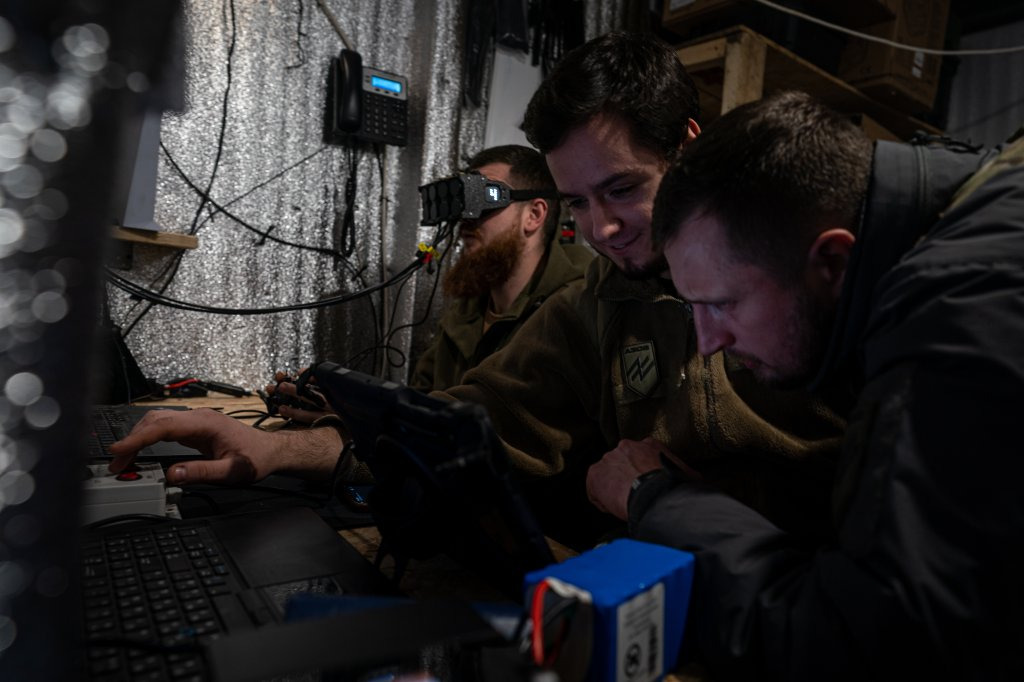
Ukrainian servicemen of Azov Brigade operate FPV drones, which are used to hunt Russian reconnaissance drones in the direction of Toretsk. (Photo by Wolfgang Schwan/Anadolu via Getty Images) Anadolu
Q: Describe what it is like for the drone operators who carry out your missions.
A: The process is quite complex. First, we receive the drones. We send them to our workshop to be worked on by our specialists. This has now become a complete must for us. Any freshly manufactured drone still has to be refined by our specialists, because a newly manufactured drone is frequently inefficient. After our specialists work with our drones, we transport them directly to the positions where our pilots test them once more, because there can be some malfunctions due to the transportation, conditions, etcetera, etcetera. We need to make sure that the drones are completely operational.
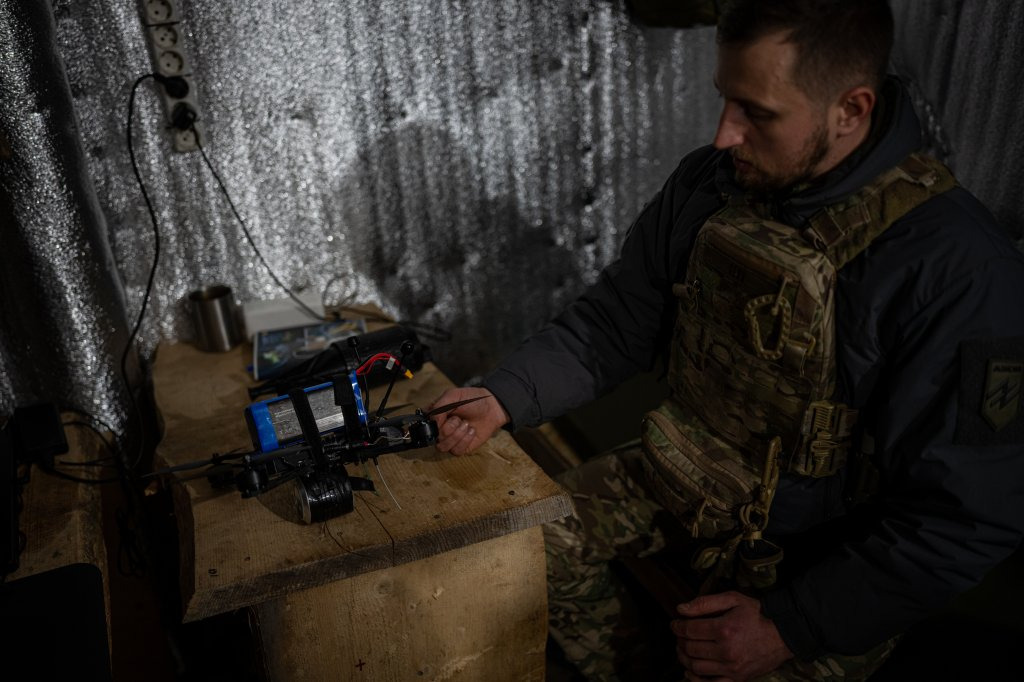
A member of Azov’s drone unit prepares to launch one near Toretsk. (Photo by Wolfgang Schwan/Anadolu via Getty Images) Anadolu
In terms of the work of the pilots themselves, they are always monitoring their voice chat – any secure voice chat that is agreed to – and when the superior commander gives an order to lift off, they already have this drone ready. Depending on the conditions, they might have a lot of space for the drone or less space for the drone, but they always have the UAVs handy. And then a pilot switches the drone on, then gives feedback to the command that everything is fine. Then the pilot returns back to the shelter, because this creates additional protection in case, for example, there is a malfunction, or there is an explosion of the ammunition, etcetera. Only after everyone in the team takes shelter does the actual liftoff happen, and the mission starts.
Basically, the pilot flies the drone, and the pilot is assisted by the navigator, and they fulfill their orders of their superiors. The pilot is also the one who is responsible for the mechanical work, and the pilot is told what to strike and where to fly, etc. With time, of course, as pilots become more and more experienced, they have a more detailed understanding of all of the aspects. But when we have new pilots, when they are just fresh from training, usually the most important role, and this is just a philosophical thought from my side, the most important work is conducted by the navigator, because they need to have impeccable knowledge of the topography, of the terrain. They need to know all the terrain benchmarks to navigate through it. And this becomes especially important while flying long ranges.
Q: Late last year, you began to use the new SETH drone, which features a delta wing planform similar to the Russian Shahed drones. What can you tell me about this new drone?
A: They are, from time to time, called Lancet analogs. From time to time, they are called mini Shaheds. Well, I do not know why we tend to use those analogies with the Russian systems. I think that’s not really appropriate, but I must say that, in collaboration with the reconnaissance UAVs, these drones make quite a strong complex and operating together, they can ensure up to 100% probability of engaging high-value targets. But of course, that’s just what is said on paper. In practice, we have already had cases of actual combat deployment of those systems, but I’m not really ready to comment on their success at this moment. However, I would just like to say that since these systems are quite expensive – one system costs approximately several hundred thousand dollars – we need to find high-value targets for such systems.
So for example, this can be the enemy’s air defense assets. And I think that one of the interesting specificities for deployment of these unmanned systems is that the reconnaissance drone that is used in tandem with this drone, it is also used as the repeater for the strike component of the system. In general, this drone has huge potential, but still, the technology is quite raw. It still has to be refined.
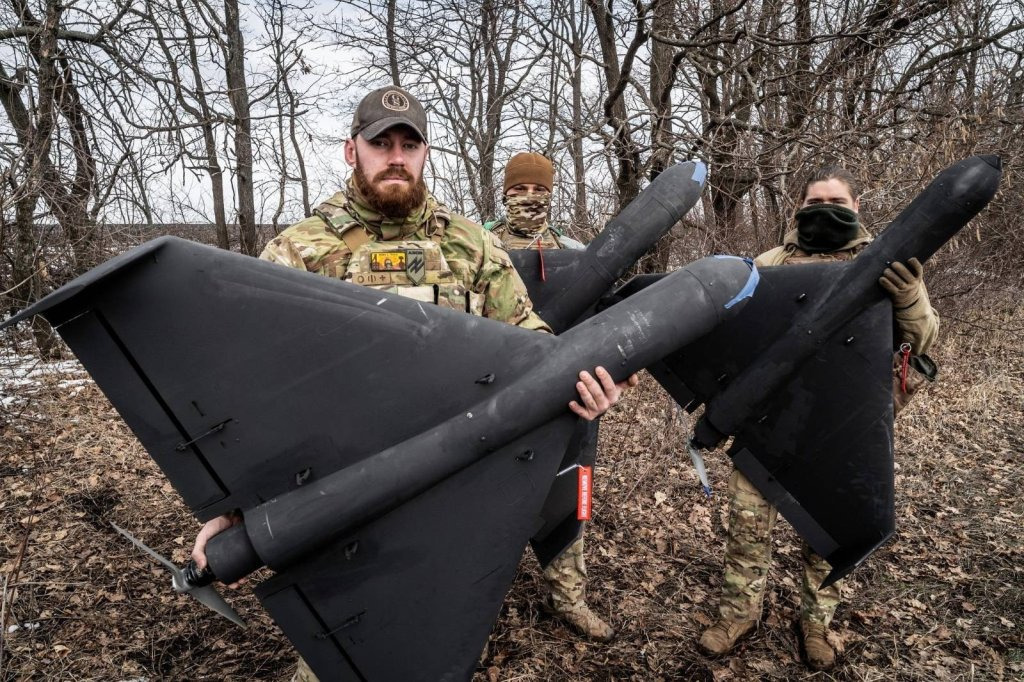
Members of the battalion with their SETH drones. (12th Special Forces Brigade Azov of the National Guard of Ukraine.)
Q: Talk about how the SETH drone works.
A: This drone doesn’t really detect the target … all the commands are still given by the pilot, so the pilot commands when the drone should center on the target and fly towards it, and it doesn’t have any auto-detection or auto-guidance systems … It is equipped with GPS CRPA [Controlled Reception Pattern Antenna] but that is used mainly for positioning the system, positioning the strike component, and not for guidance. As for the guidance system, it is equipped with a contrast target acquisition system so we see the picture, we indicate what exactly we need to capture as an acquired target, and after that, the guidance system comes into action.
Q: What is the range of the SETH?
A: Its range of operations is up to 40 kilometers (about 25 miles). Anything that is further than 40 kilometers is quite a questionable issue. So if, for example, you have a range of 50 kilometers (about 31 miles), it’s not a fact that it can do such distances. It also definitely depends on weather conditions, which definitely define whether we are going to get the intended results. If the weather conditions are unsatisfactory, if they are poor, then even flying 40 kilometers can be quite a problem. But the official specifications indicate that its range of operations is from 40 to 50 kilometers.
Q: What kind of warhead does it have?
A: It is equipped with a high explosive and a fragmentary warhead. Some people call it a thermobaric warhead. The payload is three kilograms (about 6.6 pounds). And I must say that this is not a lot for such a weapon. And if, for example, we try to strike heavily armored enemy vehicles, it is questionable whether this strike is going to be successful, which is why we actually hunt those targets that I have already mentioned before.
Q: Do you use so-called mothership drones as signal repeaters to extend the range of your FPV drones?
A: In terms of those mother drones that you were referring to, the technology still needs further refining, and at the moment, it is quite expensive. The highest price offer that I heard for one is approximately $200,000 and it is quite unacceptable for us to pay so much for one asset, for one function, a stable functioning operational asset. As for the repeaters, there is a misconception that they are only used to increase range. We mostly use them at the beginning to cover areas that were not covered by our radio signals, those areas that were behind the radio horizon or that were in the radio shadows. Only with the evolution of these tactics, of these technologies, with the use of more powerful carriers that could bear a huge payload and that could lift up more. We could also use higher quality parts, and with these high-quality parts, with better repeaters, we could also cover longer distances. But again, the repeaters are also not a magic pill. So there are still some challenges in using them.
As for the mother drone technology, we are currently experimenting with this technology ourselves, because we understand that for us, it is going to be cheaper to invent something ourselves than to pay for unknown assets, unknown products and unknown technologies that still need to be tested.
Q: Do you use thermite-dropping so-called dragon drones?
A: We do deploy such drones depending on the season. But I would like to mention that there is nothing very special about such drones, and their efficiency is also questionable. From time to time, you can use five drones like this within a 100-meter (about 328-foot) sector of the front line, and there will be no effect at all. But if something catches fire, then, of course, even one drone like that can be effective. But in general, if you ask me, I would like to say that they mostly have a psychological effect.
Q: Why are they not effective from a combat standpoint?
A: This combat inefficiency is caused by the fact that the majority of the incendiaries that are dropped burn out before even reaching the surface that they target. So if we talk about, let’s say, a 2.5 kilogram (about 55 pounds) payload, then only approximately 50% of the incendiary that is dropped actually reaches the Earth and reaches the target.
Q: What percentage of Russian targets in your sector are destroyed by drones as opposed to artillery, indirect fire, aerial munitions or other means?
A: I would like to say that, according to my conservative estimation, well, once again, we use drones more than the Russians because there is a deficit of other kinds of fires. And drones are actually the cheapest way to strike the enemy, the cheapest kind of fires that we have. And that’s also quite efficient, because, for example, if we fire one artillery shell that costs $3,000, that’s quite a lot. But we have switched to drones, and I can say about my unit that we ensured approximately 80% of all targets engaged, from our brigade, are by unmanned systems. I think that this percentage is a bit lower, but still, most of the targets struck by our fires are struck by drones.
Q: What about uncrewed ground vehicles (UGVs)? How prevalent are they in your operations?
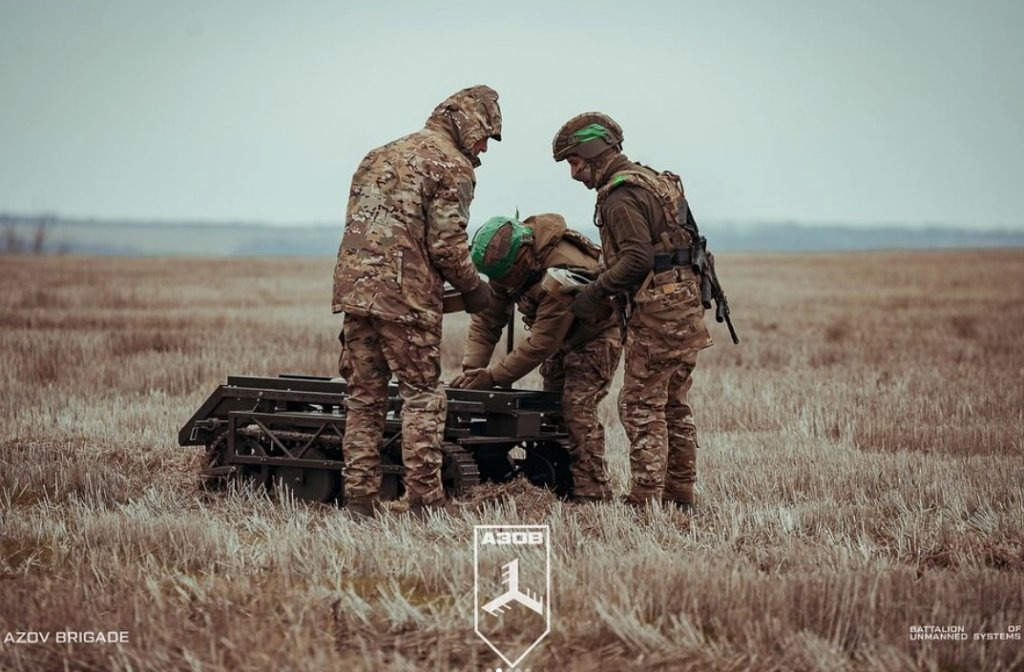
A: We use land-based systems for supply purposes, and especially for supplying medicine, including blood. We also used air drones for that as well. But in terms of land-based systems, we mostly use them for logistical purposes. The system is still under development. The technology is still quite raw, and the level of stability is not very high. We have been deploying such systems since the autumn of 2024, and now they’re more or less stable. They are quite functional and operational, but still, there are many peculiarities that still need further refinement.
For example, there are problems with the radio connection. The radio connection is now the only possible stable way to connect with the drone. No other stable connection solution has been offered as of now. As a maximum, we can use the land-based robotic systems to evacuate the bodies of our fallen brothers in arms. We have also tried to deploy them as kamikaze drones, but they didn’t show a very high level of efficiency. They usually do not reach the target. There are some problems with the radio connection, and the only way to connect to them is by using repeaters. Usually, we mount [the repeaters] on the Mavic drones. And we also do not have a first-person view video from the land-based system, so we can only observe and control the land-based systems by observing them from the Mavic drone, from the repeater drone, and the need to continually charge the repeater drone and fly back and forth slows down the operation. And because of that, the operation can last from two hours to the whole night, for example.
azov
Q: Do you use ground drones with machine guns or other kinetic systems?
A: We do not use such systems with mounted fires on them, because this is actually the area where I am afraid of the friendly fire … These systems can have unexpected behavior, and this is why they are still waiting for further refinement of the technology. But we cannot rely on systems collected from Chinese parts to provide us with reliable combat solutions. So until the state introduces some kind of standards, some kind of mandatory requirements for such systems, we cannot talk about steady combat solutions. And I think that even then, we won’t have an ultimate guarantee that such systems won’t harm our units, our troops.
Q: Do you envision a future where combat will be between drones and humans will just be hiding out, operating them?
A: We are actually moving towards that. We gradually move towards that, and not because we want that, but mostly because we are short on human resources. And we are moving towards the situation where we have, like, several unmanned systems that can be operated by one person who is in the shelter, that is safe. We are gradually moving towards the principle that the life of one soldier, one human, is considered to be of much higher value than any piece of equipment, no matter how high value it is. And maybe we are transitioning to those principles of unmanned system usage way too fast, and that is why we also suffer a lot of losses that maybe could be avoided. But maybe that’s also for the better, because at the moment, we are making a lot of mistakes that our successors would be able to learn from.
Q: What kind of mistakes?
A: I think that we are currently in the state of the so-called technological rush, and we are trying to implement the unmanned systems as fast as possible, and we are deploying our unmanned systems units with the same level of intensity as our infantry units. And when people are tired, when they’re exhausted, they can make mistakes, and from time to time, unfortunately, these mistakes can lead to lethal consequences. Fortunately that these cases are not very frequent, but still, they happen.
Q: Are you talking about fratricide?
A: If we see fratricide as the damage that is dealt to that very crew that operates this drone. From time to time, when some experimental systems are tested, then this may lead to the injury of the operators, and the problems may be related both to the drones themselves and also the explosives that are used.
Contact the author: howard@thewarzone.com

Howard AltmanSenior Staff Writer
Howard is a Senior Staff Writer for The War Zone, and a former Senior Managing Editor for Military Times. Prior to this, he covered military affairs for the Tampa Bay Times as a Senior Writer. Howard's work has appeared in various publications including Yahoo News, RealClearDefense, and Air Force Times.