급하게 만들어야 돼서 신형 프리깃 플라이트1에는 VLS도 안 넣고 RAM만 단다고 합니다. 그냥 지금 생산중인 레전드급 커터를 그대로 생산해서 쓸 생각이네요.
필요하면 컨테이너식 Mk.70 VLS를 달 순 있다고 하는데... 이런 거 만들어서 뭐에다 쓰려고 하는지...
해군의 새 프리깃은 미사일용 수직발사체계(VLS)를 갖추지 않을 것이다
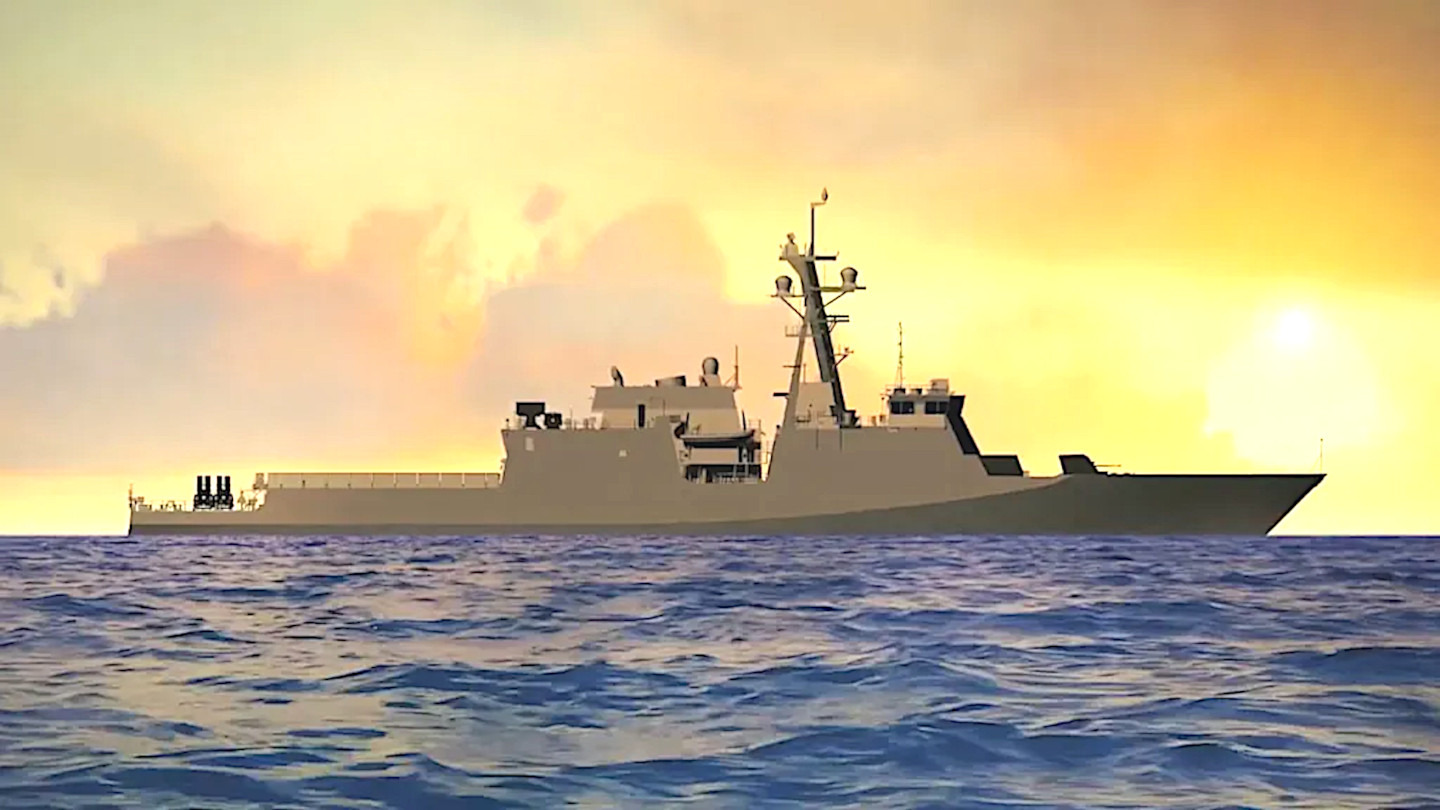
FF(X)는 초기에는 연안전투함(LCS)과 동일한 무장을 탑재하며, 무인 플랫폼과 모듈형 탑재체에 의존해 확장된 능력을 확보할 예정이다.Joseph Trevithick, Howard Altman
2025년 12월 22일 오후 4:27(미 동부 표준시) 게시
788
미 해군은 자사의 신형 FF(X) 프리깃의 첫 번째 “플라이트(flight)”에 대한 무장 패키지에는 내장형 수직발사체계(VLS)가 포함되지 않을 것이라고 TWZ에 확인했다. 그러한 특징이 뚜렷하게 보이지 않는 렌더링이 공개된 뒤, 이 함정들에 VLS 배열이 포함될지 여부를 놓고 광범위한 의문이 제기돼 왔다.
FF(X) 설계에 어떤 형태의 VLS도 없다는 것은 눈에 띄는 결함이며, 이 함정들의 작전적 유용성과 유연성에 대한 의문을 불러일으킬 수밖에 없다. 동시에 신형 프리깃은 선미에 컨테이너형 미사일 발사기 등을 포함한 모듈형 탑재체를 실을 수 있게 될 것이다. 해군은 또한 FF(X)들을 무인 수상정(USV)을 위한 “모함(motherships)”으로 운용하겠다는 명시적 계획도 갖고 있는데, 이는 작전 중 프리깃이 활용할 수 있는 분산형 ‘무기고’와 추가 센서를 제공할 가능성이 크다.
지난주 해군이 공개한 FF(X) 설계 렌더링 중 하나. USN via USNI News
해군은 지난 금요일 신형 FF(X) 프리깃 함대를 확보하겠다는 계획을 발표했는데, 이는 그달 초 실패로 끝난 콘스텔레이션급 프로그램이 취소된 뒤 나온 것이다. 해군은 앞서 FF(X)들이 미 해안경비대를 위해 헌팅턴 잉걸스 인더스트리(HII)가 처음 개발한 레전드급(Legend class) 국가안보커터(NSC)를 기반으로 할 것이라고 확인한 바 있다.
“FF(X)의 초기 플라이트는 57mm 함포, 30mm 함포 2문, Mk 49 롤링 에어프레임 미사일[발사기], 각종 대책체계, 그리고 헬리콥터와 무인체계를 발진할 수 있는 비행갑판을 갖추게 될 것입니다. 비행갑판 뒤쪽에는 유연한 무장 체계가 자리하며, 이는 컨테이너형 탑재체(대(對)무인기(UAS) 능력, 기타 미사일)를 수용할 수 있습니다.” 해군 대변인은 오늘 TWZ에 이렇게 말했다. “성공적인 DDG-51[알레이 버크급 구축함] 프로그램과 매우 유사하게, 우리는 이를 플라이트 단위로 건조하고 있습니다. 프리깃은 연속된 플라이트를 거치며 업그레이드되어 진화할 것이고, 시간이 지나며 능력을 향상시키는 데 필요한 공간 예약도 갖추고 있습니다.”
“목표는 [FF(X)] 선체를 가능한 한 빨리 물에 띄우는 것입니다.” 또 다른 해군 관계자는 오늘 TWZ에 이렇게 말했다. “첫 번째 플라이트에는 선체를 가능한 한 빨리 물에 띄울 수 있도록 최소한의 설계 변경만 반영될 것입니다.”
“HII의 입장에서도 [FF(X)] 설계 변경 사항은 최종 확정 단계에 있으며, 미 해군과의 광범위한 경험과 협업이 성공적인 승인 절차로 이어질 것이라고 확신합니다.” HII 대변인도 우리에게 이렇게 말했다. “고유한 임무 요구를 충족하기 위해 구체적이고 표적화된 변경들이 구현될 것입니다. 이 과정은 DDG 프로그램에서 기본형 업그레이드 방식과 유사할 것이며, 이 방식은 해당 급의 역사 전반에 걸쳐 여러 차례 새로운 능력을 도입하는 데 성공적으로 사용되어 왔습니다. 설계 작업은 진행 중이며, 우리는 조달을 신속히 하기 위해 변경을 최소화하겠다는 해군의 의도를 이해하고 있습니다.”
미 해안경비대의 기존 레전드급 국가안보커터 중 하나. USCG
우리가 FF(X)에 대해 처음 보도했을 때 언급했듯이, 이전에 계획됐던 콘스텔레이션급 프리깃의 Mk 41 VLS 배열 크기는 뜨거운 논쟁거리였다. 과거 TWZ 기사에서 더 자세히 다룬 것처럼, 그 함정들에 달릴 32셀 VLS가 예상되는 작전 임무를 충족하기에 충분할지에 대한 의문이 제기돼 왔다.
콘스텔레이션급 프리깃 렌더링. USN
전반적으로 Mk 41 VLS 요구조건은 콘스텔레이션급 설계로 이어진 FFG(X) 프로그램의 중심이었다. 이는 해군의 만성적으로 성과가 저조했던 연안전투함(LCS) 프로그램의 잘못을 바로잡는 핵심 요소로 여겨졌다. 인디펜던스급과 프리덤급 LCS 모두 VLS 배열이 없다. 또한 여기서 기억할 만한 점은, HII가 패배한 FFG(X) 입찰안이 VLS를 탑재한 국가안보커터 파생형 ‘초계 프리깃(Patrol Frigate)’ 개념이었다는 점이다. 또한 아래 영상에서 보이듯, 그 전에도 회사는 VLS를 갖춘 다른 초계 프리깃 변형들을 해군에 제안했었다.
Patrol Frigate Variants – Information Video
미래 플라이트의 FF(X) 프리깃에 VLS를 통합하는 것은 분명 하나의 선택지지만, 처음부터 그 수용을 염두에 둔 설계가 아니라면 복잡하고 비용이 많이 들 수 있다. TWZ가 앞서 강조했듯, 지금까지 보아온 FF(X) 구성은 해안경비대 레전드급 및 과거 초계 프리깃 개념과 비교해 상부구조(main superstructure)가 크게 재설계돼 있다. 여기에는 주 상부구조 전방으로 뻗어 선수 공간에 걸쳐 돌출된 뚜렷한 ‘선반(shelf)’이 포함되는데, 과거에 공개된 패트리엇 프리깃(Patriot Frigate) 구성에서는 그 선수 공간이 VLS에 사용됐다. 우리가 지금 아는 바에 따르면, 그 돌출부는 향후 어떤 유형의 근접방어체계를 장착하는 장소로 쓰일 가능성이 더 크며, 레이저 지향성 에너지 무기일 가능성도 있다. 물론 향후 소형 VLS 배열을 수용하도록 개조될 가능성도 있다. 통합형 VLS가 없다는 점은, 지금까지 공개된 FF(X) 렌더링에서 보다 고급 레이더가 보이지 않았던 이유를 설명할 수도 있다.
FF(X) 설계를 위에서 내려다본 렌더링으로, 주 상부구조 전방으로 뻗은 ‘선반’이 분명히 보인다. USN 캡처
FF(X)의 선수미(팬테일, fantail)에 미사일 발사기를 설치하면, 통합형 VLS 배열이 없는 상황에서도 화력을 보강할 수 있을 것이다. 지금까지의 렌더링은 그 위치에 최대 16발의 해군 타격 미사일(NSM) 발사기가 설치된 것으로 보이는 모습을 보여 왔다. NSM은 대함 순항미사일이며 부차적으로 대지 공격 능력도 갖고 있는데, 해군은 이미 일부 LCS와 최소 1척의 알레이 버크급 구축함에 이를 통합했고, 해병대도 현재 지상 기반 구성으로 이를 운용 중이다. 또한 그곳에는 최소 1개의 컨테이너형 Mk 70 페이로드 딜리버리 시스템(PDS)을 위한 공간이 있는 것으로도 보인다. 이는 해군이 이미 확보 중인 또 다른 능력이다. 각 Mk 70은 Mk 41 VLS에서 파생된 4셀 발사기를 포함하며, SM-6 다목적 미사일과 토마호크 대지공격 순항미사일 등 다양한 무기를 발사할 수 있는 점에서도 유사하다. FF(X)들은 또한 수상전투단의 일부로 운용될 때, 표적획득을 위해 더 큰 유인 전투함의 센서를 활용할 수도 있다.
미 해군 인디펜던스급 LCS의 선미 비행갑판에 장착된 Mk 70 컨테이너형 발사기에서 SM-6 미사일이 발사되는 모습. USN
“FF(X)는 무인 함정 집단을 지휘하도록 설계될 것이며, 일종의 ‘모함’ 역할을 하면서, 그 무인 함정들에 탑재된 무기와 센서에 기반해 지휘관에게 맞춤형 전력 패키지를 제공할 것입니다.” 해군 대변인은 오늘 TWZ에 이렇게도 말했다.
이런 방식이라면 FF(X)는 함정 자체에 VLS를 직접 통합하지 않더라도, 더 깊고 더 유연한 무장 선택지를 호출할 수 있을 것이다. 무인 플랫폼은 또한 어떤 단일 유인 프리깃보다 훨씬 더 넓은 지역에서 작전할 수 있으며, 고위험 환경에서 작전할 때의 위험 계산을 다르게 만든다. 이 모든 것은 결합 전력의 전반적 도달 범위를 확장하고, 상대에게 표적화의 어려움을 제시할 것이다. 그러나 이런 구성에는 상당한 개발 및 운용 위험도 있다. 현재로서는 이런 종류의 자율 함정과 유인 함정의 팀 운용은 아직 개발 단계다. 운용 측면에서, 함정을 지역방공 능력 없이 혹은 매우 제한된 수준으로 두는 것은 많은 미래 위협 시나리오와 어긋난다.
해군은 또한 모듈형 수상 공격정(MASC)이라 불리는 프로그램의 일환으로, 컨테이너형 탑재체 배열을 실어 유인 수상함대의 능력과 작전 용량을 강화할 수 있는 더 큰 무인 수상정(USV) 계열을 별도로 추진하고 있다. 이에 대해 더 알고 싶다면 여기에서 읽을 수 있다.
이 모든 점을 감안하더라도, VLS의 부재는 여전히 FF(X) 계획에 대해 중요한 의문들을 제기한다. 특히 함정들이 더 독립적으로 작전할 수 있는 능력과 관련해서 그렇다. 이는 해군의 기존 LCS 함대에서 핵심 이슈였고, 콘스텔레이션급이 이를 해결하는 데 도움이 될 것으로 기대됐던 부분이다.
USS 프리덤(뒤쪽)이 USS 인디펜던스와 함께 항해하는 모습. USN USS 프리덤(뒤쪽)이 전경의 USS 인디펜던스와 함께 항해한다. 두 함정은 각각의 연안전투함(LCS) 급의 선도함이며, 둘 다 2021년에 퇴역했다. USN
최소한 ESSM(개량형 시 스패로 미사일)을 운용할 수 있는 VLS를 생략하는 것은 공중 위협에 대한 자기방어 능력에 특히 큰 제약을 가한다. 최근 홍해 주변에서의 작전 중 해군이 겪은 경험은 대함 미사일과 드론이 초래하는 점점 커지는 위험을 두드러지게 부각시켰는데, 이는 태평양에서의 미래 고강도 전투에서는 훨씬 더 심각해질 것이다. 이는 또한 FF(X)들이 모듈형 컨테이너 탑재체 없이는 수송선단 작전에서 지역방공을 제공할 수 없다는 뜻이며, 설령 탑재체를 사용하더라도 고효율 VLS 배열과 비교하면 탄약 보유량은 매우 제한적일 것이다.
해군은 또한 가능한 한 빠르게 더 많은 선체를 실전 배치하려는 데 분명히 초점을 맞추고 있다. 해군은 전반적으로 더 많은 수상함에 대한 큰 작전 수요를 갖고 있으며, 콘스텔레이션급 프로그램 붕괴 이후 메워야 할 추가 공백도 생겼다. FF(X)의 목표 진수 시점은 2028년이다.
“HII는 자금 계약과 자재가 확보되는 즉시 시작할 것입니다.” HII 대변인은 오늘 TWZ에 이렇게 말했다. “우리는 2028년에 첫 함정을 물에 띄운 뒤, 최종 장착, 체계 가동, 시험을 수행하고 함대에 인도할 능력에 확신이 있습니다.”
HII는 또한 첫 FF(X) 선체 작업을 가속하기 위해 해안경비대 레전드급 국가안보커터 프로그램에서 이미 확보한 자재를 활용할 계획이다. 그 함정이 실제 운용에 들어가는 현재의 일정은 아직 알려지지 않았다.
전반적으로, 오늘의 소식은 해군이 이 신형 프리깃들을 가능한 한 빠르고 저렴하게 함대에 투입하려고 얼마나 공격적으로 움직이고 있는지 분명히 보여준다. 향후 VLS 배열과 더 정교한 전투 체계를 갖춘 확장형 변형들이 실제 가능성으로 보이기는 하지만, 탑재 무장 측면에서 미국의 차세대 프리깃은 이전의 LCS만큼이나 경무장한 함정이 될 전망이다.
저자에게 연락: joe@twz.com
Joseph Trevithick부편집장Joseph는 2017년 초부터 The War Zone 팀의 일원이다. 그 전에는 War Is Boring의 부편집장이었고, 그의 이름은 Small Arms Review, Small Arms Defense Journal, Reuters, We Are the Mighty, Task & Purpose 등 다른 매체에도 실린 바 있다.
Howard Altman선임 스태프 기자Howard는 The War Zone의 선임 스태프 기자이며, Military Times의 전 선임 총괄편집자였다. 그 전에는 탬파베이 타임스에서 선임 기자로 군사 분야를 취재했다. Howard의 글은 Yahoo News, RealClearDefense, Air Force Times 등 다양한 매체에 실린 바 있다.
Navy’s New Frigate Will Not Have A Vertical Launch System For Missiles

Navy’s New Frigate Will Not Have A Vertical Launch System For Missiles
FF(X) will initially have the same armament installed as the Littoral Combat Ships, relying on uncrewed platforms and modular payloads for expanded capability.
Joseph Trevithick, Howard Altman
Published Dec 22, 2025 4:27 PM EST
Navy capture
The TWZ Newsletter
Weekly insights and analysis on the latest developments in military technology, strategy, and foreign policy.
Email addressSign Up
Terms of Service and Privacy Policy
The U.S. Navy has confirmed to TWZ that the armament package for its first “flight” of its new FF(X) frigates will not include a built-in Vertical Launch System (VLS). There had been widespread questions about whether the ships would include a VLS array after renderings were released with no such feature readily apparent.
A lack of any type of VLS on the FF(X) design is a glaring omission that can only raise questions about the operational utility and flexibility of the ships. At the same time, the new frigates will be able to carry modular payloads, including containerized missile launchers, on their sterns. The Navy also has an explicit plan to employ the FF(X)s as “motherships” for uncrewed surface vessels (USV), likely offering a distributed arsenal, as well as additional sensors, for the frigates to leverage during operations.
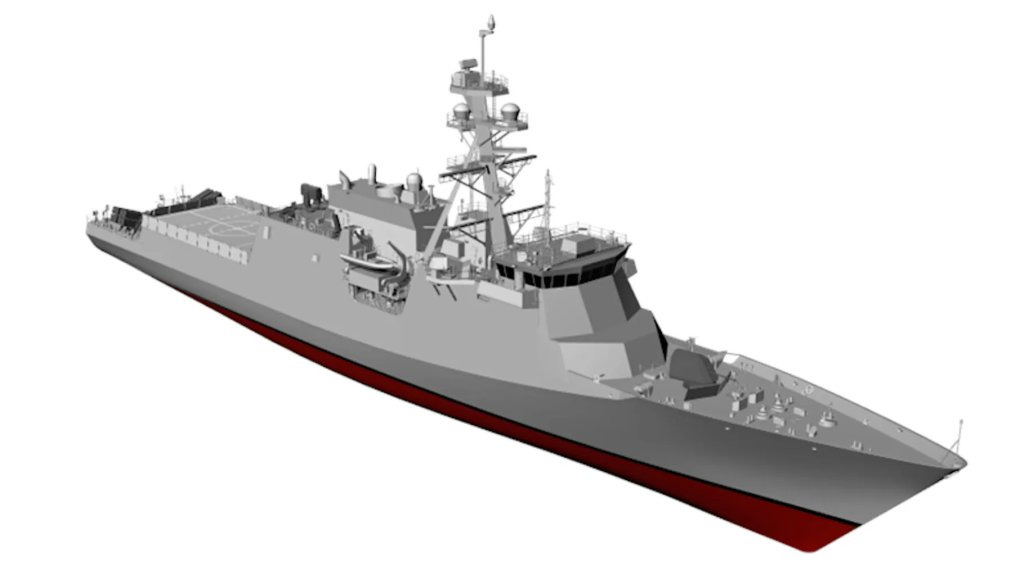
One of the renderings the Navy released last week of the FF(X) design. USN via USNI News
The Navy announced its plan to acquire a fleet of new FF(X) frigates last Friday, which followed the cancellation of the abortive Constellation class program earlier in the month. The service previously confirmed that the FF(X)s will be based on the Legend class National Security Cutter (NSC), which Huntington Ingalls Industries (HII) first developed for the U.S. Coast Guard.
“The initial flight of FF(X) will have a 57mm gun, 2 x 30mm guns, a Mk 49 Rolling Airframe Missile [launcher], various countermeasures, and a flight deck from which to launch helicopters and unmanned systems. Aft of the flight deck, there will be a flexible weapons system, which can accommodate containerized payloads (Counter-UAS, other missiles),” a Navy spokesperson told TWZ today. “Much like the successful DDG-51 [Arleigh Burke class destroyer] program, we are building this in flights. The frigate will be upgraded over successive flights to evolve and has the space reservations needed to improve capability over time.”
“The goal is to get [FF(X)] hulls in the water ASAP,” another Navy official told TWZ. “Minimal design changes will be incorporated into the first flight so that we can get hulls into the water as soon as possible.”
“The [FF(X)] design changes are in the process of being finalized and we are confident that our extensive experience and collaboration with the U.S. Navy will lead to a successful approval process,” a HII spokesperson also told us. “Specific and targeted changes will be implemented to meet unique mission requirements. The process will be similar to a baseline upgrade on the DDG program, which has been successfully used to introduce new capabilities multiple times over the class’ history. Design work is ongoing and we understand the Navy’s intent is to minimize changes in order to expedite procurement.”
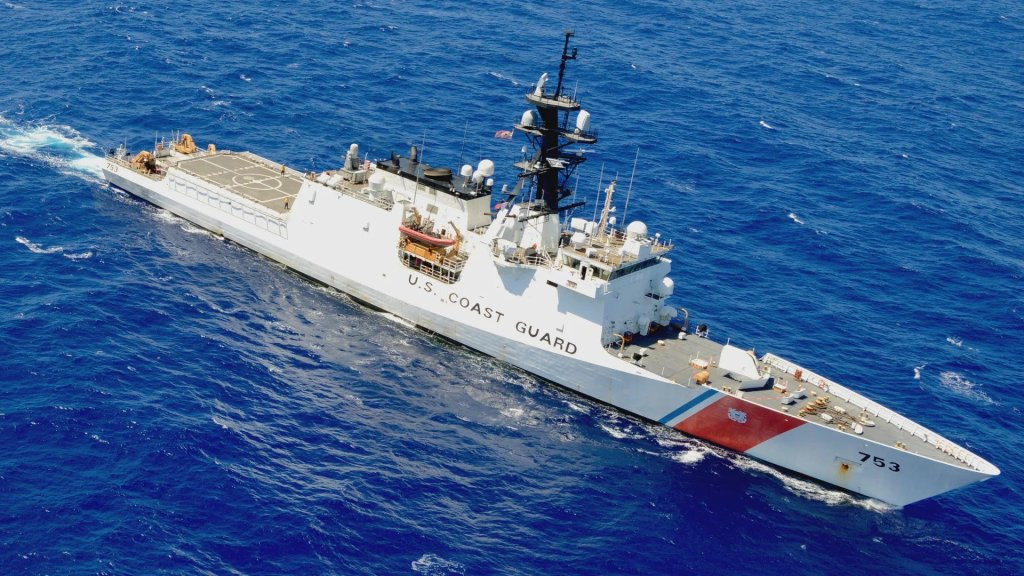
One of the US Coast Guard’s existing Legend class National Security Cutters. USCG
As we mentioned in our initial reporting on FF(X), the size of the Mk 41 VLS array on the previously planned Constellation class frigates was a hot topic of debate. Questions had been raised whether the 32-cell VLSs on those ships would be sufficient to meet their expected operational taskings, as you can read about more in this past TWZ feature.
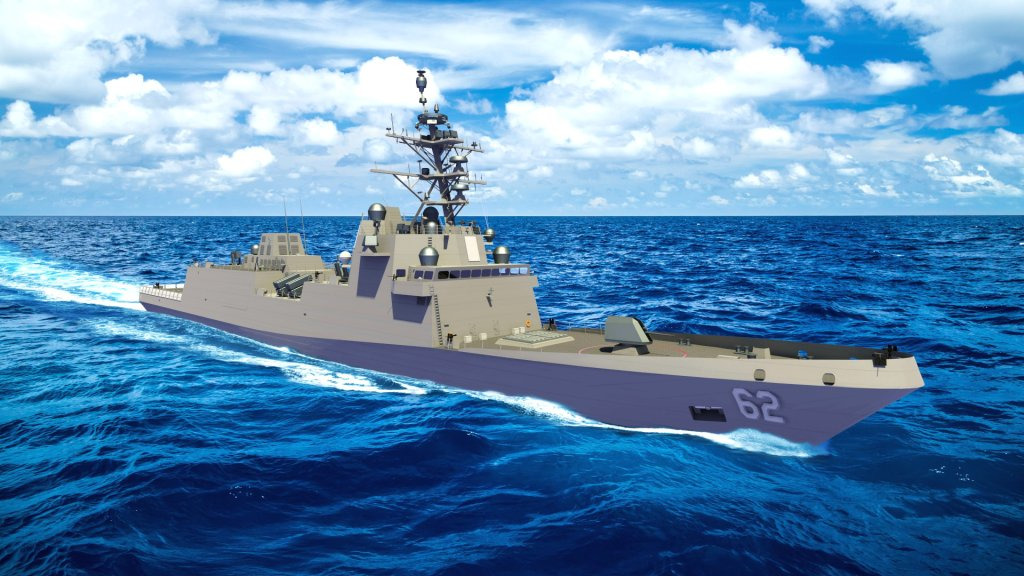
A rendering of a Constellation class frigate. USN
Overall, the Mk 41 VLS requirement was central to the FFG(X) program that led to the Constellation class design. This was viewed as a key element of righting the wrongs of the Navy’s chronically underperforming Littoral Combat Ship (LCS) program. The Independence class and Freedom class LCSs both lack a VLS array. In addition, it’s worth remembering here that HII’s losing FFG(X) bid was notably a Patrol Frigate concept derived from the National Security Cutter that featured a VLS. The company had also pitched other VLS-equipped Patrol Frigate variations to the Navy before then, as seen in the video below.
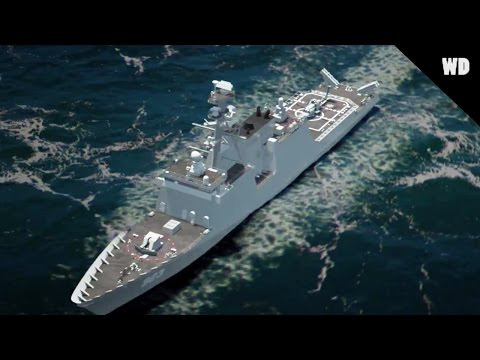
Patrol Frigate Variants – Information Video
Integrating a VLS into future flights of FF(X) frigates is certainly an option, but one that could be complex and costly if the design is not configured to accommodate one to begin with. As TWZ previously highlighted, the FF(X) configuration, as it has been seen so far, has a significantly redesigned main superstructure compared to the Coast Guard’s Legend class and previous Patrol Frigate concepts. This includes a prominent ‘shelf’ that extends forward into the space on the bow utilized for VLSs on previously seen Patriot Frigate configurations. With what we know now, that extension seems more likely to be utilized in the future as a mounting place for some type of point defense system, possibly even a laser directed energy weapon. It’s possible it could be adapted to accommodate a small VLS array in the future, as well. The lack of an integrated VLS could explain the lack of a more advanced radar in the renderings of the FF(X) that have been shown so far.
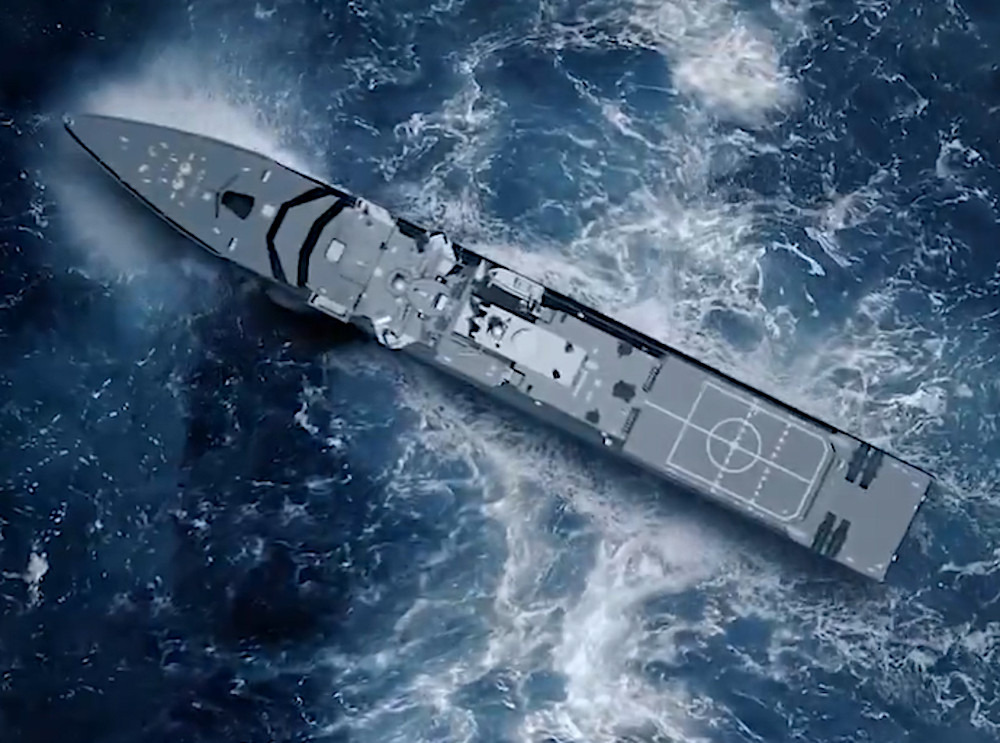
A rendering showing the FF(X) design from the top down with the ‘shelf’ extending forward of the main superstructure clearly visible. USN capture
Installing missile launchers on the FF(X)’s fantail would give the ships a boost in firepower in the absence of an integrated VLS array. Renderings so far have shown what look to be launchers for up to 16 Naval Strike Missiles (NSM) installed in that position. NSM is an anti-ship cruise missile with secondary land-attack capability that the Navy has already integrated onto a portion of its LCSs and at least one Arleigh Burke class destroyer, and that the Marine Corps is fielding now in a ground-based configuration. There also looks to be space there for a least one containerized Mk 70 Payload Delivery Systems (PDS), another capability the Navy is already acquiring. Each Mk 70 contains a four-cell launcher derived from the Mk 41 VLS, and similarly capable of firing a variety of weapons, including SM-6 multi-purpose missiles and Tomahawk land-attack cruise missiles. FF(X)s could also leverage sensors on larger crewed warships for targeting purposes when operating as part of a surface action group.
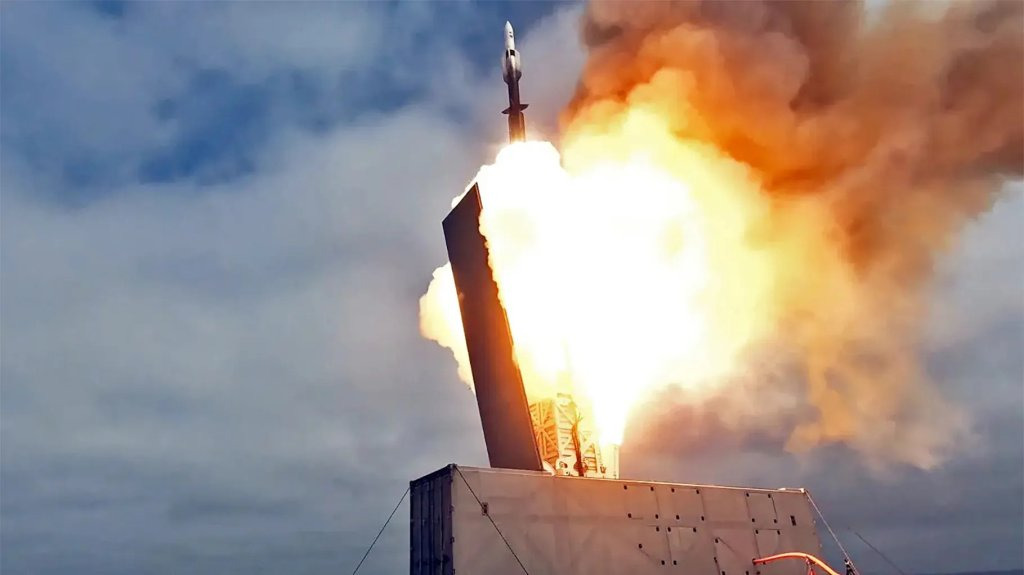
An SM-6 missile seen being fired from a Mk 70 containerized launcher mounted on the stern flight deck of a US Navy Independence class LCS. USN
“The FF(X) will be designed to command groups of unmanned vessels, acting as a sort of ‘mothership,’ providing the commander tailored force packages based upon the weapons and sensors fielded on those unmanned craft,” a Navy spokesperson also told TWZ today.
In this way, an FF(X) could still call upon a deeper and more flexible array of weapon options without having to have a VLS integrated directly onto the ship. The uncrewed platforms would also be able to operate across a much broader area than any single crewed frigate and present a different risk calculus for operating in higher-risk environments. All of this would expand the overall reach of the combined force and present targeting challenges for opponents. But there are also substantial development and operational risks with this kind of arrangement. As it sits, this kind of autonomous vessel and manned vessel teaming is still in development. Operationally, leaving the ship without, or with very limited, area defense capability is at odds with many future threat scenarios.
The Navy is already separately pursuing a family of larger uncrewed surface vessels (USV) able to carry an array of containerized payloads to bolster the capability and operational capacity of its crewed surface fleets as part of a program called Modular Surface Attack Craft (MASC), which you can read more about here.
Even with all this in mind, the lack of a VLS still raises significant questions about the FF(X) plans, especially about the ability of the ships to operate more independently. This has been a key issue for the Navy’s existing LCS fleets, and one that the Constellation class was supposed to help address.
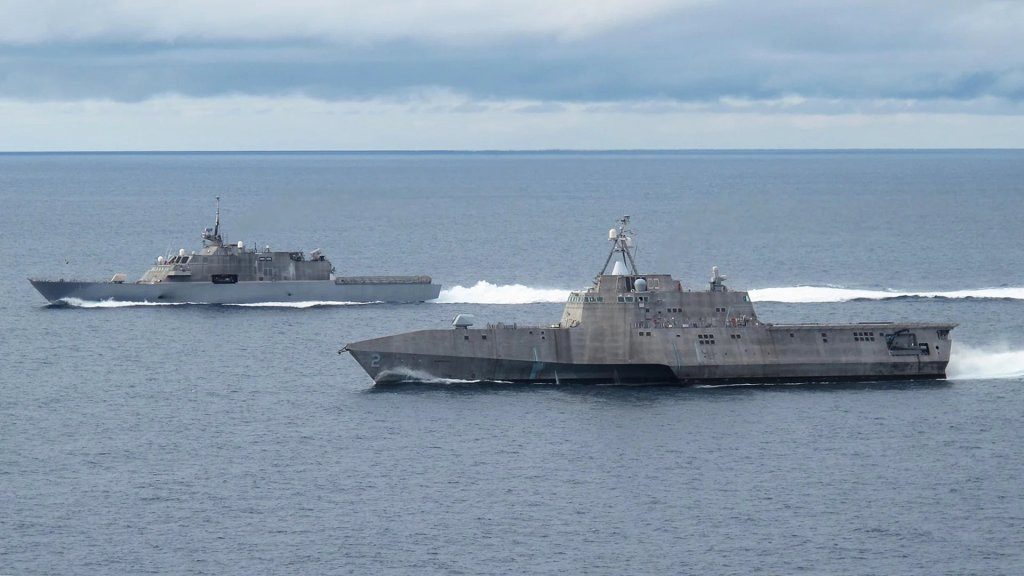
The USS Freedom, seen at the rear, sails alongside the USS Independence. USN The USS Freedom, at rear, sails alongside the USS Independence, in the foreground. The lead ships in both of their classes of Littoral Combat Ships (LCS), these vessels were both been decommissioned in 2021. USN
Omitting a VLS capable of at least employing Evolved Sea Sparrow Missiles (ESSM) imposes particular limitations on the ship’s ability to defend itself against aerial threats. Navy experiences during recent operations in and around the Red Sea have served to put a notable spotlight on the ever-growing dangers posed by anti-ship missiles and drones, which would be far more severe in any future high-end fight in the Pacific. All of this also means FF(X)s will not be able to provide area defense for convoy operations without a modular containerized payload, and that would only offer a very limited supply of munitions compared to a highly efficient VLS array.
The Navy is also clearly focused on just trying to get more hulls into service as quickly as it reasonably can. The service has major operational demands for more surface warships, in general, and now has an additional gap to fill following the collapse of the Constellation class program. The goal is for the FF(X) to be launched in 2028.
“We will start as soon as a funding contract and material are available,” the HII spokesperson told TWZ today. “We are confident in our ability to launch the first ship into the water in 2028, then conduct final outfitting, systems activation, and testing before delivering to the Fleet.”
HII also plans to leverage materials already acquired under the Coast Guard’s Legend class National Security Cutter program to help accelerate work on the first FF(X) hull. The current timeline for that ship to enter operational service remains unknown.
Overall, just how aggressively the Navy is moving to get these new frigates into the fleet as fast and cheaply as possible is now clear with today’s news. While expanded variants in the future with VLS arrays and more exquisite combat systems seem like a real possibility, when it comes to installed armament, America’s next frigate is set to be just as lightly armed as the LCS that came before it.
Contact the author: joe@twz.com

Joseph TrevithickDeputy Editor
Joseph has been a member of The War Zone team since early 2017. Prior to that, he was an Associate Editor at War Is Boring, and his byline has appeared in other publications, including Small Arms Review, Small Arms Defense Journal, Reuters, We Are the Mighty, and Task & Purpose.

Howard AltmanSenior Staff Writer
Howard is a Senior Staff Writer for The War Zone, and a former Senior Managing Editor for Military Times. Prior to this, he covered military affairs for the Tampa Bay Times as a Senior Writer. Howard’s work has appeared in various publications including Yahoo News, RealClearDefense, and Air Force Times.