1월 4일 SCMP에 중국 측이 AGM-158C LRASM 10발과 중국 해군 구축함대간의 워게임 결과 중국 해군 구축함이 격침됐다는 결과를 보도하는 기사를 냈다고 하네요. 기사 원문은 유료라 다 보이지를 않고, 해당 기사를 인용한 2차 보도와 RUSI의 분석 기사가 있네요.
워게임은 북중국 전산기술연구소( North China Institute of Computing Technology (NCICT)에서 실시했고, 동사군도 근해에서 미국이 10발의 LRASM을 사용해 중국 해군의 구축함을 공격했으며, 중국 해군의 구축함들이 전자공격을 가해 레이다 유도 및 GPS 유도를 무력화시켰음에도 불구하고 IIR 시커로 표적을 성공적으로 타격했다고 합니다. 시뮬레이션 상에는 하드킬 수단 사용은 배제한 듯 합니다.
표면적으론 LRASM의 승리, 중국 해군 구축함대의 패배로 보이지만, 실제로는 다른 의미가 숨어있다고 분석하네요.
1. 055급 순양함의 전자공격으로 LRASM의 레이다 유도를 무력화할 수 있다?
AGM-158C는 능동레이다가 아니라 페이브레이다 호밍 방식이기 때문에 이는 055급 구축함이 스텔스 미사일인 AGM-158C의 위치를 정확히 파악해 잘못된 신호를 전송하는 directional jamming이 가능한 것으로 간주했다는 뜻.
2. LRASM의 GPS 유도를 10km 거리에서 비활성화시켰다고 주장
GPS 재밍은 넓은 지역에 걸쳐 수행해야 하며, M-Code를 사용하는 미군의 미사일을 재밍했다는 것은 M-Code를 스푸핑할 수 있거나, 재밍신호가 엄청나게 강력하다는 뜻.
3. 하드킬 수단을 사용하지 않았다.
자체 하드킬 수단 및 AWACS 및 전투기 지원을 배제했는데, 패시브 레이다 호밍 재밍을 가능할 정도로 미사일의 위치를 파악할 수 있다면 실전에서는 더 원거리에서 미사일과 교전할 수 있을 것.
AGM-158C의 각종 스펙 데이터는 당연히 기밀이지만, 워게임을 수행한 북중국전산기술연구소=중국전자통신연구원 제15연구소( 15th Research Institute of CETC)는 특정 미국 기반 기술기업과의 수출위반 사건에 여러 차례 연루됐었고 연구원들이 기밀 데이터에 접근할 수 있는 곳이라고 합니다. 물론, 이것이 허장성세일 가능성도 있다고 보고 있네요.
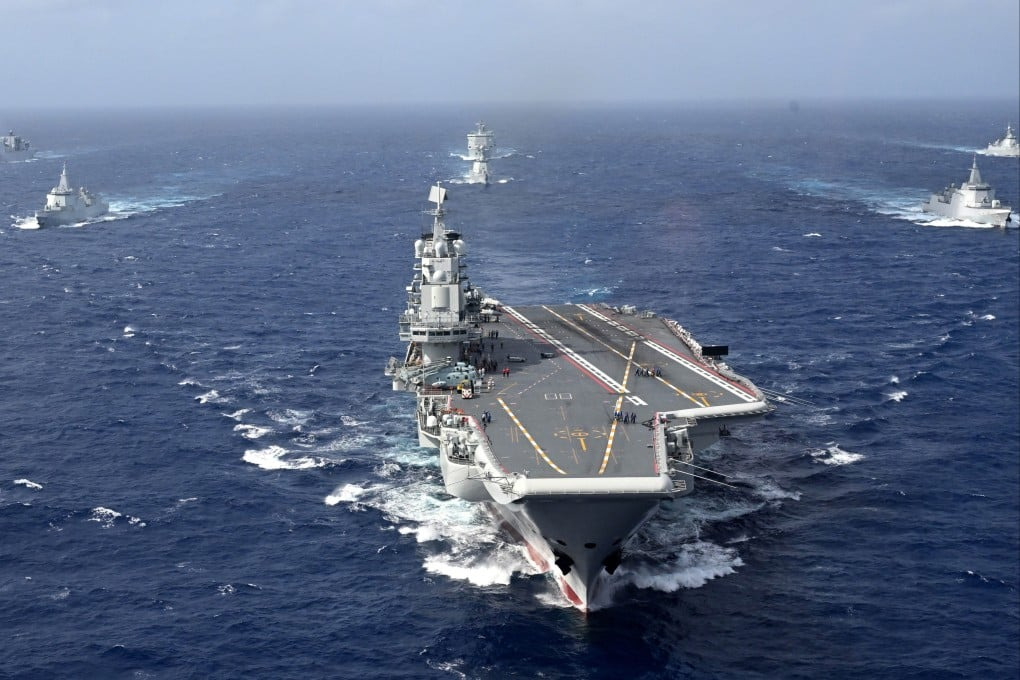
Chinese war games system sees surprise US attack on PLA carrier group in South China Sea
When key details about a US stealth anti-ship missile were added to a war games simulation, the results were unexpected
Reading Time:2 minutes
Why you can trust SCMP
71
Listen
Stephen Chenin Beijing
Published: 12:30pm, 3 Jan 2025
Chinese scientists claim to have obtained key parameters of the US military’s latest stealth anti-ship missile and applied them to a warfare simulation.
Boasting unparalleled realism, the enhanced warfare simulation platform reproduces the US military’s most powerful offensive weapons in unprecedented detail, helping the People’s Liberation Army (PLA) formulate more effective countermeasures and tactics to deal with potential military conflicts.
Better understanding the strengths of the enemy will only make China stronger, according to the project team led by researcher Wang Tianxiao with the North China Institute of Computing Technology, a supplier of the PLA’s war gaming system in Beijing.
China simulating surprise US missile attack in South China Sea - Asia Times
China simulating surprise US missile attack in South China Sea
Chinese war gamers play out successful US stealth long-range missile strike on PLA carrier group in contested sea

by Gabriel HonradaJanuary 5, 2025
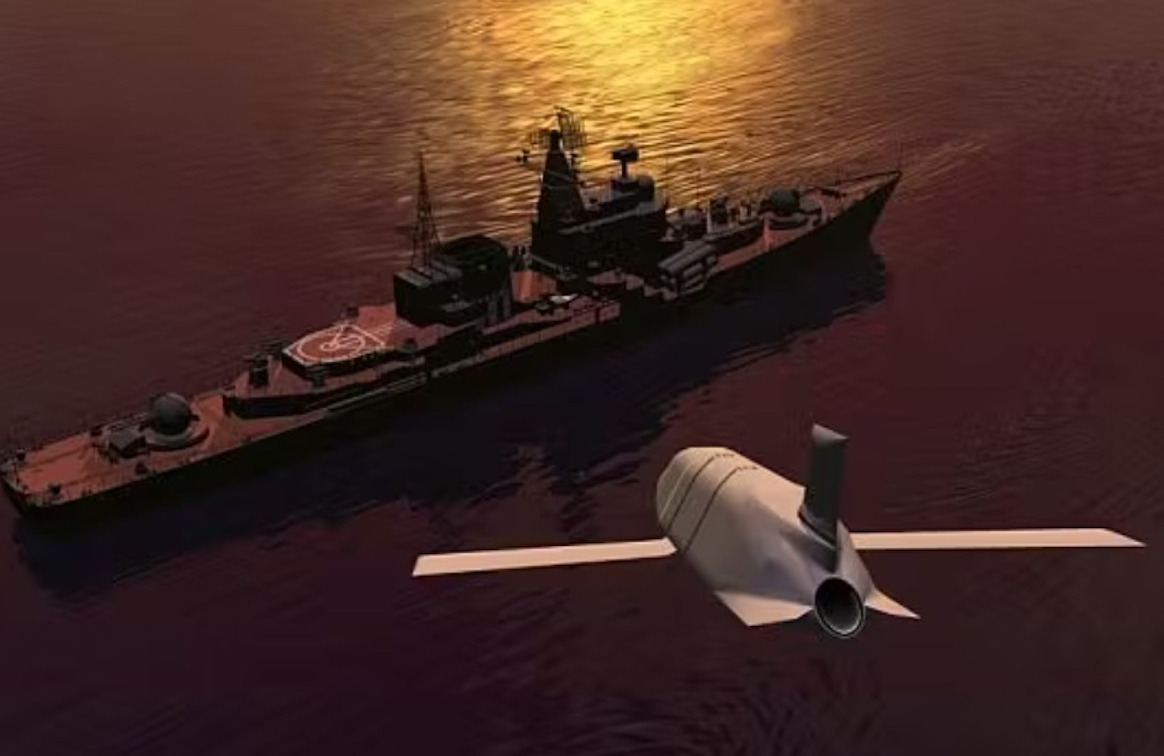
China and the US could clash in the South China Sea. Image: X Screengrab
China’s simulated defense against a US stealth missile assault reveals a high-stakes battle for technological supremacy pitting stealth versus counter-stealth capabilities in the contested South China Sea.
This month, the South China Morning Post (SCMP) reported that Chinese scientists have simulated a surprise US attack on a People’s Liberation Army (PLA) carrier group in the South China Sea, revealing key details about the US military’s latest stealth anti-ship missile, the AGM-158C Long Range Anti-Ship Missile (LRASM).
According to SCMP, the simulation, led by researcher Wang Tianxiao from the North China Institute of Computing Technology, aimed to enhance the PLA’s countermeasures and tactics. It mentions that the simulated battle occurred near the Pratas Islands, with the US launching a large-scale attack using ten LRASMs.
These missiles, known for their radar stealth capabilities and nearly 1,000-kilometer range, targeted a Chinese destroyer in the simulation. Despite electronic warfare interference deployed by the PLA, the missiles switched to thermal imaging cameras and successfully hit the target.
SCMP says the simulation’s unprecedented realism and detailed parameters could significantly impact future military strategies. However, the SCMP report points out that the data used in the simulation remains unclear, with the Chinese team claiming it came from open-source intelligence and long-term accumulation.
It adds that the US military classified the LRASM’s technical parameters and operational methods, making the Chinese team’s claims difficult to verify independently.
The Chinese simulation’s choice of using stealthy cruise missiles over hypersonic weapons may reflect the advantages the former has over the latter and the fact that the US has not yet fielded any hypersonic weapons. Thus, using stealthy cruise missiles against Chinese targets is more likely in a potential conflict in the Taiwan Strait in the short to medium term.
Asia Times mentioned in September 2024 that stealth cruise missiles like the LRASM offer several advantages over hypersonic missiles.
Latest stories

UK on horns of a mega-Chinese embassy dilemma

Carlos Ghosn case: One try left after Kelly guilty verdict upheld
The depths of Taiwan’s military morale crisis
Firstly, their low radar cross-section and minimal infrared signature make them difficult for enemy defenses to detect and intercept. Secondly, they reduce dependency on external intelligence, surveillance, and reconnaissance (ISR) platforms, ensuring effectiveness in intense electromagnetic warfare environments.
Thirdly, their capability to coordinate attacks through data-sharing among multiple missiles provides swarm capabilities, allowing for coordinated, high-precision strikes.
In contrast, hypersonic missiles, despite their extreme speeds, create unique phenomena such as plasma wakes and chemical reactions, which could make them easier to detect. Additionally, the distinctive plumes and wavelengths of light they leave behind can be tracked by advanced sensors.
Despite the simulation’s results, China may have multiple options to defeat the stealthy US LRASM, such as directed-energy weapons, counter-stealth technology and “shooting the archer” – destroying the launch aircraft or ships before they come into range.
Unlike conventional gun and missile systems, laser weapons give instantaneous hits with a virtually unlimited ammunition magazine at negligible cost. These attributes make them ideal for countering drone and cruise missile attacks.
Asia Times mentioned in August 2024 that China has made significant strides in laser weapon technology, as evidenced by the upgrade of its Type 071 amphibious ship, Shiming Shan, with an advanced laser weapon system.
The laser system, whose specifics remain undisclosed, is expected to bolster defenses against unmanned aircraft and small boat swarms, potentially including dazzler capabilities to blind sensors and seekers.
However, laser weapons are still in their early development stage and they face significant drawbacks such as substantial space and power requirements, diminished effectiveness at longer ranges and sensitivity to atmospheric conditions.
China could also use advanced detection technologies alongside next-generation aircraft to defeat stealthy cruise missiles such as the LRASM, enabling the interception of both the missile and its launching aircraft.
Asia Times mentioned in November 2024 that simulations by the PLA National Defense University and the State Key Laboratory of Intelligent Game in Beijing revealed that China’s new counter-stealth radars could detect F-22 and F-35 stealth fighters from up to 180 kilometers.
The simulations, which modeled a US attack on Shanghai from Japan, highlighted vulnerabilities in the stealth shields of the F-22 and F-35, mainly when the F-35 operates in “beast mode,” making it detectable from 450 kilometers away. These findings come amid increased US deployment of F-22s in Japan, intensifying China’s focus on countering stealth threats.
China’s investment in radar technology includes a cost-effective system that uses signals from the BeiDou navigation satellite system to detect stealth aircraft. This radar employs a unique algorithm to identify targets without emitting detectable signals, enhancing China’s anti-stealth capabilities.
Furthermore, Asia Times reported this month that China’s reveal of its new stealth aircraft, the J-36 and J-50, marks a significant leap in its military aviation capabilities.
The J-36, developed by Chengdu Aircraft Corporation, features a tailless, delta-wing design to reduce radar signature and enhance stealth. Equipped with three engines, it emphasizes high-speed flight and long-range operations, making it suitable for air superiority and strike missions. The J-36’s design includes large weapon bays capable of carrying substantial payloads, indicating its role in air-to-air and air-to-surface combat.

Sign up for one of our free newsletters
- The Daily ReportStart your day right with Asia Times' top stories
- AT Weekly ReportA weekly roundup of Asia Times' most-read stories
Sign up
On the other hand, the Shenyang Aircraft Corporation’s J-50 is a twin-engine stealth fighter designed for versatility in contested environments. Its advanced stealth technologies and avionics make it a formidable opponent in air superiority and strike roles.
Furthermore, Asia Times mentioned in December 2024 that China could use hypersonic weapons from air, sea and land to attack US targets. The YJ-21 hypersonic anti-ship missile, fired from its Type 055 cruisers, is a formidable weapon against US surface combatants such as Ticonderoga-class cruisers and Arleigh Burke-class destroyers.
While China’s simulation of an LRASM attack resulted in the loss of a destroyer, the scenario may be simulating a one-off incident that does not account for a possible war of attrition at sea.
China is the world’s largest shipbuilder, producing three-quarters of global shipbuilding orders in 2024. Thanks to military-civil fusion, China’s shipbuilding capacity also translates to naval power. China’s shipbuilding capacity has surged past that of the US, with the former’s shipbuilding capacity 232 times greater than the latter.
Furthermore, the US Department of Defense’s 2024 China Military Power Report states that the PLA Navy (PLA-N) is numerically the world’s largest navy, with 370 ships and 140 major surface combatants.
Such formidable shipbuilding capacity means that China could quickly build new warships and repair damaged ones, ensuring numerical superiority that trumps short-lived technological advantages and which historically has been the decisive factor in naval warfare.
The Humble Brag: China’s Recent Wargame and Its Implications | Royal United Services Institute
The Humble Brag: China’s Recent Wargame and Its Implications
Commander Edward Black and Dr Sidharth Kaushal
23 January 2025Long Read
Share
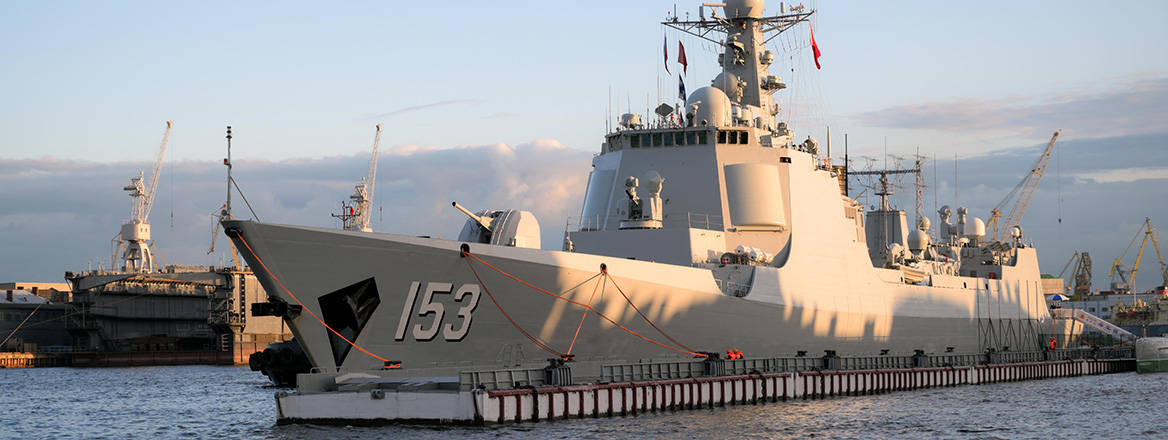
A Chinese simulation admitting to a PLAN destroyer's defeat by US missiles hints at advanced electronic warfare capabilities while raising questions about PLA transparency and messaging.
On 4 January 2025, the South China Morning Post (SCMP) newspaper published an article detailing how a Chinese-run ‘wargame’ had modelled the sinking of a People’s Liberation Army Navy (PLAN) destroyer by US missile attack. The missiles in question were the Lockheed Martin-made, US Navy/Air Force-employed AGM-158C Long Range Anti-Ship Missiles (LRASM). Given that these missiles are specifically designed to sink ships from range, the fact that they did so in a simulation is hardly remarkable. That such a simulation should be run and documented in a peer-reviewed academic publication is possibly a little more surprising, given Chinese military sensitivity. What is noteworthy is that the institute which ran the simulation is one that provides modelling and simulation tools for the PLA and is one of the institutes run by the China Electronics Technology Corporation (CETC), a powerful state-owned enterprise which has been involved with projects including China’s nuclear and satellite programmes. The decision of academics from the 15th Institute who presumably hold security clearances to provide interviews to a pro-Chinese government publication, a promoter of Chinese ‘soft power’ (the SCMP) would presumably have occurred with state encouragement or at a minimum approval. This raises the question of why seemingly negative results were published in an English-language newspaper which is accessible to foreign audiences. Moreover, what can be understood regarding the People’s Liberation Army’s (PLA) assessment of its own capabilities based on the outcome of the exercise? This article seeks to provide some plausible rationales for the PLA to publicise the seemingly disappointing results of this simulation.
The Technical Dimensions of the Exercise: A Humble Brag?
Based on what was reported regarding the exercise, the wargame simulated a large clash between the US and China. The article details a simulation set in the northeastern part of the South China Sea where the US attacks a Chinese battlegroup from the ‘nine-dash line’, Beijing’s declared limit of sovereignty in the South China Sea. The attack consists of 10 LRASM launched from different platforms, all targeting a PLAN destroyer. The simulation sees the PLA disable both radar guidance and GPS navigation by means of electronic warfare (EW). However, the ‘thermal imaging’ capability of the LRASM (its IR seeker) allows for a terminal navigation phase for accurate and successful targeting.
While the result of the simulation would appear negative for the PLAN, several details are noteworthy. First, the claim that the PLAN’s Type-055 cruiser was able to disable the radar on the LRASM is of interest. The reason for this is that the LRASM does not use an active radar like many anti-ship missiles, but rather relies on a passive radar for wide area surveillance using emissions from enemy ships. The advantage of passive radar is that they are a relatively difficult target for directional jamming because the location of the receiver is difficult to ascertain, unlike active radar which must emit and can thus be detected. Implicit in the Chinese claim that the LRASM’s passive radar was disabled, then, is the suggestion that the PLAN vessel was deemed to have located the missile with sufficient accuracy to enable directional jamming, which would involve transmitting false signals into the passive radar’s aperture. The jamming of the missile’s onboard radar would thus suggest two things. First, the vessel was deemed to have a very accurate sense of the missile’s location despite the LRASM’s stealthy profile. Second, Chinese efforts to develop modes of jamming passive radar, into which the state has invested funding through its talent programmes, are deemed to have borne fruit. The methods of doing so might include emitting signals which produce an interference peak on a radar’s doppler map and thus create false tracks. The PLA’s claimed success here would, if true, have ramifications both for the survivability of missiles with a low radar cross-section (which the PLA is implicitly claiming the ability to track) and for US naval efforts at emissions control and the use of passive detection in the first island chain.
The second aspect of note is that the article claims that the LRASM’s GPS guidance was disabled 10 km from the Type-055. While the jamming of GPS-guided capabilities is not new and has been achieved by the Russians in Ukraine against JDAM, blocking signals from all of the GNSS satellites from which a missile or munition can receive signals requires jamming over a wide area, possibly requiring multiple overlapping EW systems in the case of the Russians in Ukraine. Additionally, since US munitions are programmed to not receive messages that are not in encrypted M-Code, successful jamming would imply the ability either to spoof signals in M-Code or to generate enough power that all signals are blocked. All of this would point to a robust Electronic Counter Measures suite on the Type-055 and any vessels supporting it in the simulation.
The PLA’s claimed success would have ramifications both for the survivability of missiles with a low radar cross-section and for US naval efforts at emissions control and the use of passive detection in the first island chain
Third, the paper talks only of the EW defences, and does not appear to consider the host of other ‘hard kill’, medium- and short-range options open to the PLA and PLAN. Additionally, the article references the fact that the radar coverage AWACS and fighter aircraft were not considered. As can be seen from the indignant response to the article on some Chinese message boards, many commentators have noted this omission. This could include the 1130 or 730 Close-in Weapon Systems (similar to NATO’s Goalkeeper or Phalanx) and ‘Hong Qi’ (red flag) family of vertical launch systems, short- and medium-range models such as the HHQ 9 and HHQ 16. Given that the LRASM is a stealth missile, the degree to which these Chinese systems would be effective remains unexamined in the article.
However, as mentioned, the claim that the Chinese battlegroup had a good enough understanding of the missile’s location to enable jamming of passive radar is telling. A degree of knowledge sufficient to enable directional jamming of a passive receiver would also be sufficient to enable hard kill. An implicit message might, then, be that the Type-055 could have engaged the LRASM with its onboard missiles in their terminal phase, and perhaps at even greater distances with AWACS and fighter support.
A PLA Active Measure to Undermine LRASM?
Relatedly, the claimed fidelity of the simulation is noteworthy. What is specifically alluded to is the flight profile of the missile and the assertion of a degree of ‘complex details’ captured in the simulation by the academic paper’s author. This may be further indication to its adversaries that the PLA knows more than perhaps the US would like them to about the missile specifications. As defence industry experts know, details of the flight profiles, link communications, navigation systems, ranges and missile speeds are generally classified, and this is certainly true for the LRASM as a state-of-the-art ‘stealth’ missile. That there are vertical launch variants for ships and that the LRASM has been adapted for multiple aircraft types is in the public domain, but specific details are not easy to come by. Officially released data or other promotional detail is deliberately vague, and official publications state that specifics have not been released for security reasons. It is, however, true that much can be gleaned from open source investigations, and it is not unheard of for classified details to appear on public forums; especially if the unwary are being specifically probed for such information. A classic example of such a disclosure was the well-publicised case of Challenger II tank specifications being released on a ‘War Thunder’ gaming forum in order to try to win an argument. It is possible that the simulation was modelled around best guesses and supposition, or that technical specifications were (as claimed) garnered from prolonged and diligent open-source research.
However, as discussed, it is of note that the simulation was run by the North China Institute of Computing Technology (NCICT), the 15th Research Institute of CETC. As a Chinese state-owned conglomerate, it has been implicated on multiple occasions in cases of ‘export violations’ with certain US-based technology companies. The role of the 15th Institute and its parent organisation in the Chinese defence ecosystem would suggest that its researchers have access to classified data. Through its claims to be able to accurately model the LRASM’s flight profile and radar cross-section, the PLA would appear to be tacitly claiming to have either penetrated classified US systems or deduced highly classified data using available information.

Subscribe to the Military Sciences Newsletter
Stay up to date with the latest publications and events from the Military Sciences Research Group
This does, however, raise questions regarding the veracity of the claims. If the PLA was truly confident in its success in accessing sensitive data, it would have strong incentives to keep this private to achieve surprise in a conflict rather than alerting the US to the compromise of critical systems. Perhaps the PLA deems the programmatic disruption to LRASM resulting from any inquest within the US that this revelation causes to be a worthwhile result, especially if the programme is too late in its development for vulnerabilities to be easily fixed. However, if disruption is the aim, it should be noted that a similar effect could be achieved through false claims as well. As a historical analogy, we might consider how the USSR attempted to strengthen the hands of critics of the Strategic Defence Initiative by leaking (often spurious) technical data that reinforced the idea that any missile shield could be easily penetrated. One interpretation, then, is that the PLA is trying to undermine a programme which causes it genuine concern.
The PLA Focus on Realistic Blue Forces
More broadly, the simulation likely tells us something about the modelling and simulation work conducted in support of the PLA, both in terms of the intelligence which supports it and the levels of realism being sought.
The nature of the simulation and in particular the absence of AWACS support and hard kill measures is of interest. This is, perhaps, explicable given the institute which conducted the modelling. The Beijing-based NCICT specialises in military model development and the development of major projects in aerospace measurement and control systems. The parent corporation of CETC also advertises itself as working in radar and EW-related technology. It is therefore unsurprising that the wargame appears to have limited itself to testing EW defensive measures. Industry wargaming, unlike defence ministry or military wargaming, works with different constraints and may have different or more focused aims. These can range from product design, development and testing to demonstrations and sales. It is perhaps in this light that the article should be viewed – as a declaration of capability in EW and a statement of competence to the West (and especially the US), but perhaps also an internal pitch that the NCICT has done its bit, and that it is for others to within the PLA and industry to move in by, for example, providing countermeasures against IR seekers (on which the LRASMs relied after their radar malfunctioned).
More broadly, the PLA is increasingly not a stranger to wargaming, and invests heavily in this and ‘opposing force training’, with ‘blue’ (or enemy) forces occasionally even going so far as to wear the uniforms of the forces they are representing. The emphasis on using models with high levels of fidelity and dedicated experts on adversary forces is considered by the PLA to be critical to meeting Xi Jinping’s demand for realistic training and ensuring the combat effectiveness of a force that has not seen combat since 1979. The danger of what the PLA calls the ‘peace disease’ is one that China’s leaders are acutely aware of.
The PLA is increasingly not a stranger to wargaming, and invests heavily in this and ‘opposing force training’, with ‘blue’ forces occasionally even going so far as to wear the uniforms of the forces they are representing
Since Chinese leaders and planners seem aware that the PLA’s lack of combat experience is both a limitation and something which likely opponents may perceive as a weakness, advertising the fact that Chinese wargames are not just scripted exercises in which the PLA always wins might, then, be seen as a way of making the PLA more credible in the eyes of its opponents. The message may be that unlike, for example, the Russian military before Ukraine – which was plagued by the habit of subordinates painting excessively rosy pictures to their superiors – the PLA is a force which confronts its own deficiencies.
Moreover, the accompanying risk that the negative outcome leads an opponent to downrate its assessment of Chinese equipment is mitigated. Any potential adversary – in this case the US – will know that the limitations of the simulation as discussed in the SCMP article will be well understood by the PLA, and the findings of a military run wargame are unlikely to be so well publicised. In addition to the hard kill options and AWACS support mentioned above, the wider principles of anti-access/area denial would be at play, making any scenario as proposed in the simulation far more complex, multi-layered and multi-dimensional.
Conclusion
In conclusion, the Chinese article was an interestingly stark acknowledgment that the US is the enemy, rather than using a nameless adversary with capabilities similar to the US that often features in exercise and wargames. Although framed as a ‘humble brag’ with the loss of a PLAN destroyer, the article clearly advertised a certain Chinese confidence in the inevitable arms race in which China and the US, as technological world leaders, are engaged. The (possible) NCICT sales pitch hints at a certain level of knowledge and understanding, and leaves much unsaid for the US to consider as it continues in the development of increasingly complex, stealthy and long-range anti-ship missiles. It is therefore an article of interest to many ‘defence watchers’, but manages to deliver some very specific messages.
© RUSI, 2025
The views expressed in this Commentary are the authors', and do not represent those of RUSI or any other institution.
For terms of use, see Website Ts&Cs of Use.
Have an idea for a Commentary you’d like to write for us? Send a short pitch to commentaries@rusi.org and we’ll get back to you if it fits into our research interests. Full guidelines for contributors can be found here.
