중국이 아시아에서 미국의 확장억제 정책 무력화를 꾀한다는 포린 어페어스의 분석입니다. 미국은 확장억제를 미 동맹국의 핵무장을 억제하는 비확산 정책이라고 주장하지만, 중국은 미국의 확장억제가 오히려 핵무기 확산을 초래한다고 본다고 하네요.
경제적 압박과 회색지대 전략, 사이버 공격 등의 수단과 함께 최근에는 대규모 해상훈련을 실시하는 등 전통적인 군사외교 수단도 동원하고 있지요.
아시아에서 확장억제의 종말?
중국, 미국의 동맹 안보 보장을 잠식 중 데이비드 산토로 (Pacific Forum 회장) Foreign Affairs, 2025년 5월 22일
지난 5년 넘는 기간 동안, 남중국해에서 활동 중인 중국 선박들은 필리핀 선박과 반복적으로 충돌하거나, 고압 물대포를 쏘는 등의 물리적 충돌을 벌여 인명 피해를 초래해왔다. 이에 대응해 미국은 지난해 필리핀에 ‘타이폰’ 중거리 미사일 시스템을 배치했다. 이는 냉전 종식 이후 미국이 동맹국에 이 정도 수준의 무기를 제공한 것은 처음이며, 외교적 파장을 불러왔다. 중국 외교부는 이 배치가 “지역 평화와 안정을 저해하고, 다른 국가들의 정당한 안보 이익을 훼손하며, 평화와 발전에 대한 지역 민중의 염원에 반한다”고 비판했다. 이어 필리핀이 이 무기를 철수하지 않는다면 “좌시하지 않겠다”고 경고했다.
중국의 이러한 행동과 위협은 미국의 확장억제 정책을 무력화하려는 보다 광범위한 전략의 일부다. 확장억제는 미국이 동맹국에 대한 공격을 억지하기 위해 필요시 핵무기 사용까지 포함해 방어를 약속하는 전략이다. 중국은 이 전략이 미국이 자국 이익을 추구하고 중국을 견제하기 위한 도구라고 주장하며, 이를 지속적으로 비판해왔다. 최근에는 미국을 지역 불안정의 주범으로 묘사하고, 경제적 유인책과 제재를 병행하며 동맹을 이탈시키려 시도하고 있으며, 군사적 충돌 가능성을 높이는 행동을 확대하고 있다. 이는 궁극적으로 미국의 확장억제 신뢰성을 훼손하려는 시도다. 이 전략은 미국의 역량에 대한 신뢰, 그리고 워싱턴의 약속에 대한 믿음에 기반하고 있기 때문이다.
베이징의 시각
중국 지도자들은 미국의 확장억제를 방어가 아닌 억제된 성장을 억누르려는 시도로 보고 있다. 이들은 미국이 호주, 일본, 한국 등을 중국의 ‘정당한 영향권’에 속한 국가로 간주하며 이들에게 확장억제를 ‘강요’하고 있다고 본다.
미국은 확장억제가 동맹국의 핵무장 필요성을 억제하여 핵 비확산에 기여한다고 주장해왔다. 하지만 중국은 이에 동의하지 않는다. 중국의 국제관계학자인 궈샤오빙은 “확장억제 개념 자체가 핵무기 확산의 주요 원인”이며 “핵무기의 지리적 확산”을 초래한다고 지적했다. 중국 외교부 또한 미국이 ‘핵 공유와 확장억제’를 유지하면서도 적국에겐 최대한의 압박을 가한다며 이중잣대를 적용한다고 비판했다.
2014년, 시진핑 국가주석은 “아시아 문제는 아시아인 스스로 해결해야 한다”며 미국의 개입을 비판한 바 있다. 그는 “아시아는 자주적으로 평화와 안정을 실현할 수 있는 지혜를 갖추고 있다”고 강조했다.
중국은 외교무대에서 확장억제를 공격하는 데 그치지 않고, 경제적 수단도 적극 활용한다. 남중국해에서 필리핀 선박을 위협하기 전, 중국은 일대일로 사업을 통해 필리핀에 인프라 투자와 경제적 유인을 제시하며 미국과의 군사 협력 심화를 저지하려 했다.
2016년 미국이 고고도미사일방어체계(THAAD)를 한국에 배치한 뒤, 중국은 단체 관광 금지, 한류 연예인 제재, 한국 기업에 대한 불이익, 중국 주도의 외교·문화 프로젝트에서의 배제 등 다양한 보복 조치를 단행했다. 비슷하게 호주가 미국과의 안보 협력을 강화하자 중국은 호주 수출품에 제재를 가했다.
중국의 군사적 대응 확대
군사적으로도 중국은 회색지대 전략을 확장하고 있다. 이는 미국이 반응할 명확한 기준선을 설정하기 어려운 해양과 사이버 영역에서 두드러진다. 중국은 남중국해를 군사화하고, 해경과 해상 민병대를 동원해 동맹국 선박을 괴롭히고 있다. 대만과 미국 동맹국을 대상으로는 사이버 공격과 영향력 작전도 진행 중이다. 최근 중국 해커들은 미국 핵심 인프라를 겨냥해, 지역 분쟁 시 미국의 개입을 억지할 능력을 과시하고 있다.
중국은 대규모 해상 훈련도 강화하고 있다. 미국 인도태평양사령부 사령관 사무엘 파파로 제독은 이를 “공격 리허설”이라 표현하며, 대만 침공 등을 포함한 시나리오를 실전처럼 훈련하고 있다고 분석했다. 2024년과 2025년에는 ‘연합검(聯合劍)-2024A, B’ 훈련을 통해 해군, 공군, 로켓군, 해경이 대만 인근에서 합동 작전을 수행했다. 올해 초에는 대만 영공과 해역에 대한 군사 활동도 증가했다.
궁극적으로 중국은 인근 영토를 신속히 점령하고 미국의 개입을 불가능하게 만들 군사력을 갖추는 데 집중하고 있다. 2017년 중국 공산당 제19차 당대회에서 시진핑은 2049년까지 “세계 일류 군대”를 건설하겠다고 선언했다. 이후 중국은 핵·재래식 무기 분야에 대규모 투자를 해왔으며, 현재 세계에서 가장 다양한 탄도미사일 개발 프로그램을 보유하고 있다. 또한, 사이버·우주·전자전 분야의 역량도 강화 중이다.
이러한 모든 노력은 미국이 위기 발생 시 개입을 주저하게 만들고, 동맹국들이 미국의 방위 약속을 신뢰하지 못하게 만들기 위한 것이다.
미국과 그들
확장억제에 반대하는 것은 중국뿐만이 아니다. 러시아 역시 이 전략을 비판해왔고, 최근에는 중국과 협력해 반미 연대를 강화하고 있다. 2022년 초, 러시아의 우크라이나 침공 직전 베이징 정상회담에서 시진핑과 푸틴은 “제한 없는 우정”을 선언했다. 이후 두 나라는 “다극화된 세계”를 지지하며 미국의 “절대 안보” 추구를 비판하고 있다. 이들은 미국-영국-호주(AUKUS) 안보협정을 인도-태평양의 군사화를 촉진하는 조치로 간주하며, 중거리 미사일의 역내 배치에도 강한 반감을 보이고 있다.
양국은 인도-태평양과 유럽-대서양 지역에서 군사 협력을 강화하고 있다. 2024년 로이터 보도에 따르면, 러시아는 중국 내에서 장거리 공격 드론 개발 비밀 프로그램을 운영 중이며, 조기 경보 시스템 구축도 지원하고 있다.
미국은 그간 이런 상황에 대응하기 위해 다양한 조치를 취해왔다. 바이든 행정부는 동맹 강화를 위한 노력을 했고, AUKUS 주도를 통해 지역 안정을 도모했다. 트럼프 행정부 역시 이 기조를 유지하며, 방위력 강화를 꾀할 것으로 보인다. 그러나 이를 위해서는 다음과 같은 추가 조치가 필요하다.
미국의 대응 방향
미국은 외교무대에서 중국의 확장억제 비판에 적극적으로 대응해야 한다. 중국은 미국을 지역 불안정의 주범으로 묘사하고 있으며, 2022년 샹그릴라 대화에서 중국 국방부장 웨이펑허는 미국을 “깡패 국가”라 칭하고, 지역 문제에 간섭한다고 비난했다. 미국은 확장억제의 목적을 명확히 설명하고, 중국의 핵 증강과 동맹국 위협을 국제사회에 알릴 필요가 있다.
또한, 중국의 회색지대 전략에 대응하기 위해 정보 공유, 사이버 방어, 허위정보 대응에서의 협력을 심화해야 한다. 특히 동남아시아와 태평양 지역에서는 정책 및 작전 조율, 회복력 강화가 요구된다. 수출 통제와 제재 같은 경제 수단도 통합해 중국의 강압에 실질적인 대가를 부과해야 한다.
무엇보다, 미국과 동맹국들은 중국의 침략에 신속하고 효과적으로 대응할 수 있는 군사 개념과 능력을 갖춰야 한다. 필요한 경우 중국과의 충돌에서도 승리할 수 있어야 하며, 집단 군사력—핵전력을 포함한—을 어떻게 활용할지에 대한 전략도 마련해야 한다.
마지막으로, 미국과 동맹국들은 앞으로 중국과 러시아가 안보 협력을 심화할 가능성에 대비해야 한다. 두 국가의 결속은 인도-태평양과 유럽-대서양 모두에 중대한 영향을 끼친다. 따라서 미국과 동맹들도 이에 상응하는 안보 협력을 강화해야 한다. 그렇지 않으면, 미국의 확장억제는 무력화될 수 있으며, 이는 미국의 영향력과 국제 질서에 치명적인 결과를 초래할 수 있다.
🔎 핵심 요약
●**확장억제(extended deterrence)**는 미국이 동맹국에 대한 공격을 방어하겠다고 약속하는 전략으로, 핵 억제력도 포함된다.
● 중국은 이 전략을 자국 부상을 억제하려는 미국의 수단으로 인식하고, 외교·경제·군사적으로 이를 약화시키려는 행동을 취하고 있다. ● 중국과 러시아는 협력하여 미국 주도의 동맹 구조에 도전하고 있으며, 인도-태평양의 군사 균형을 재편하려 한다.
● 미국은 외교적 설명력, 회색지대 대응, 군사력 개발, 동맹과의 협력 강화를 통해 확장억제를 유지해야 한다.
● 실패 시 동맹국의 신뢰 저하와 미국의 아시아 내 영향력 약화라는 구조적 위기를 초래할 수 있다.
The End of Extended Deterrence in Asia? | Foreign Affairs

The End of Extended Deterrence in Asia?China Is Chipping Away at America’s Security Guarantees to Its AlliesDavid SantoroMay 22, 2025

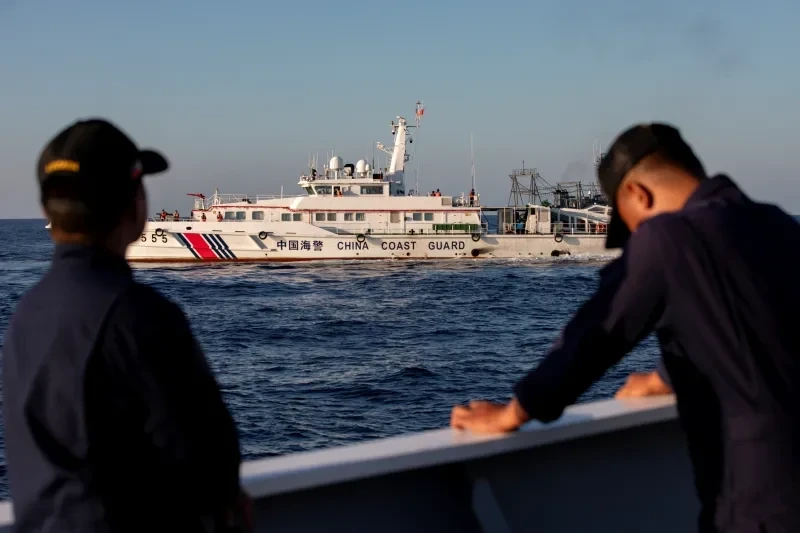
A Chinese vessel blocking a Philippine ship in the South China Sea, March 2024Adrian Portugal / Reuters
DAVID SANTORO is President and CEO of the Pacific Forum.
Listen
Share &Download
For more than five years, Chinese vessels operating in the South China Sea have repeatedly collided with Philippine ships, sometimes dousing them with water cannons and injuring personnel. In response, the United States deployed a Typhon intermediate-range missile system to the island country last year. It was the first time since the end of the Cold War that the United States had supplied an ally with a weapon of such magnitude—and it kicked off a diplomatic storm. China’s foreign ministry argued that the installation “disrupts regional peace and stability, undermines other countries’ legitimate security interest, and contravenes people’s aspiration for peace and development.” China, the ministry continued, would “not sit idly by” if the Philippines refused to remove it.
Beijing’s actions and threats against the Philippines are part of a broader attempt to counter the United States’ policy of “extended deterrence,” a strategy that commits Washington to defending its allies against aggression, including, in certain cases, with U.S. nuclear weapons. Beijing has long been critical of U.S. extended deterrence, on the grounds that it is a way for the United States to advance its interests against China. Chinese officials are now ramping up their efforts to undermine it. They have portrayed the United States as a destabilizing force in the region, made attempts to peel off U.S. allies using economic enticements and penalties, and engaged in ever more confrontational military operations. Such acts are intended to sap the credibility of U.S. extended deterrence, which is predicated on trust in Washington and faith in the United States’ capabilities.
For the Trump administration, maintaining extended deterrence in the Indo-Pacific should be a priority. It should challenge Beijing’s rhetoric in diplomatic forums and counter Chinese gray-zone tactics, as well as strengthen military cooperation with regional allies. Otherwise, Washington’s power and influence in the region will soon be eclipsed.
THE VIEW FROM BEIJING
For Chinese leaders, U.S. extended deterrence is not a defensive strategy but part of a broader effort by the United States to contain and even roll back China’s rise. Beijing also dismisses the idea that extended deterrence exists because U.S. allies want it. Rather, Chinese officials see Washington’s strategy as an imposition on Australia, Japan, South Korea, and others that, in Beijing’s view, belong in China’s rightful sphere of influence.
Subscribe to Foreign Affairs This Week
Our editors’ top picks, delivered free to your inbox every Friday.
Sign Up
* Note that when you provide your email address, the Foreign Affairs Privacy Policy and Terms of Use will apply to your newsletter subscription.
American officials have long argued that U.S. extended deterrence keeps nuclear proliferation in check, because U.S. allies under the protection of the United States’ nuclear umbrella see no need to develop their stockpiles. That logic does not hold sway in Beijing. In the words of Guo Xiaobing, a scholar at the China Institutes of Contemporary International Relations, “The concept of ‘extended deterrence’ itself is a major contributor to nuclear proliferation” since it spreads “nuclear weapons geographically.” China’s Ministry of Foreign Affairs echoes this perspective, accusing the United States of having “double standards” on nonproliferation because it “exerts maximum pressure on so-called geopolitical adversaries” but also “strengthens nuclear sharing and extended deterrence arrangements” with its allies.
In diplomatic forums, Beijing has long sought to undermine U.S. extended deterrence by castigating the United States as a destabilizing force in the region. In a speech in 2014, Chinese President Xi Jinping signaled his displeasure with the United States playing the role of security guarantor. “It is for the people of Asia to run the affairs of Asia, solve the problems of Asia, and uphold the security of Asia,” Xi said. “The people of Asia have the capability and wisdom to achieve peace and stability in the region through enhanced cooperation.”
China has also attacked U.S. extended deterrence directly. Last year, Beijing called on all parties to the Nuclear Nonproliferation Treaty to adopt a no-first-use policy and used the proposal to attack extended deterrence, arguing that it is a threat to peace, contributes to nuclear proliferation, and prevents the establishment of nuclear-free zones. According to this view, there is no place for U.S. alliances in the region. As Beijing sees it, if the United States did not maintain such a large military presence in the Indo-Pacific, there would be fewer crises to manage. Hence, the way to prevent and mitigate crises in the area is for the United States to withdraw its forces—or to constrain their use considerably.
Beyond challenging U.S. alliances and extended deterrence in diplomatic forums, Beijing takes economic actions to weaken Washington’s regional role. It does so using both carrots and sticks. Before it began menacing Philippine ships at sea, Beijing had tried, in vain, to forestall deeper military cooperation between the Philippines and the United States by offering substantial infrastructure projects and economic incentives through its Belt and Road Initiative.
Maintaining extended deterrence in the Indo-Pacific should be a priority.
In 2016, after the United States stationed a Terminal High Altitude Area Defense system in South Korea, Beijing banned Chinese group tours to South Korea, blacklisted South Korean celebrities so they could not appear on Chinese television programs, imposed restrictions on South Korean businesses in China, and excluded South Korea from a number of Chinese-led diplomatic and cultural initiatives. Similarly, after Australia began strengthening defense ties with the United States in the late 2010s, Beijing imposed restrictions on Australian exports.
Beijing’s military responses to U.S. extended deterrence have also become more assertive. In recent years, China has scaled up its use of gray-zone tactics against U.S. allies in many areas, but especially in the maritime and cyber domains, where there is no clear redline that would trigger a response from the United States. Beijing has gradually militarized the South China Sea, deploying the Chinese coast guard and maritime militia to harass U.S. allies’ vessels. Beijing has also orchestrated influence operations and cyber-campaigns against Taiwan and other American allies. Chinese hackers have also targeted U.S. critical infrastructure to demonstrate Beijing’s ability to disrupt essential services and deter American involvement in regional conflicts.
For years, China has patrolled and conducted military drills in contested waters, and it has increased the scale and scope of those drills significantly. Admiral Samuel Paparo, head of the U.S. Indo-Pacific Command, has called such exercises “rehearsals” because they simulate attacks on U.S. allies, such as an invasion of Taiwan. In 2024 and 2025, for example, China conducted large-scale exercises (Joint Sword-2024A and Joint Sword-2024B) that involved coordinated operations by the Chinese navy, air force, rocket force, and coast guard around Taiwan. Earlier this year, Beijing also ramped up military incursions into Taiwan’s airspace and waters.
Finally, Beijing is building up its military forces to allow for quick action, such as the seizure and control of territory close to China, and to make it prohibitively costly for the United States to intervene. At the 19th National Congress of the Chinese Communist Party in October 2017, Xi announced that China is committed to building “world-class military forces” by 2049. Since then, Beijing has made significant investments in conventional and nuclear weapons. According to the U.S. Department of Defense, China has the world’s most active and diverse ballistic missile development program and is currently pursuing a nuclear buildup. Beijing is also enhancing its capabilities in cyberspace, outer space, and electronic warfare.
Taken together, these steps are meant to make the United States hesitate to act in the event of a contingency—and to cast doubts in the minds of U.S. allies that Washington will abide by its defense commitments.
US AND THEM
China is hardly alone in pushing back against U.S. extended deterrence. Russia has long been critical of this strategy, and as of late, the two countries have joined forces to counter it. At a summit in Beijing in early 2022, just two weeks before Russia launched a full-scale invasion of Ukraine, Xi and Russian President Vladimir Putin declared a “friendship without limits.” In that spirit, Beijing and Moscow have promoted “global strategic stability,” calling for a more multipolar world and chastising the United States for its pursuit of “absolute security.” They have criticized the security arrangement among Australia, the United Kingdom, and the United States (AUKUS) as one of the latest efforts to militarize the Indo-Pacific, and they have expressed alarm at U.S. plans to deploy more intermediate-range missiles in their respective regions.
Beijing and Moscow are also strengthening their military cooperation, conducting numerous joint military exercises and joint air and maritime patrols in the Indo-Pacific and Euro-Atlantic, including near the territories of U.S. allies such as Japan and the Scandinavian countries. Moreover, according to a 2024 Reuters investigation, Moscow has established a covert program in China to develop long-range attack drones. The Russians are also assisting Beijing in developing a missile early warning system.
Since the first decades of this century, successive U.S. administrations have taken important measures to adapt to China’s evolving approach. The Biden administration has done much to strengthen regional alliances and its spearheading of the AUKUS security partnership has also helped promote stability in the region. The Trump administration appears committed to continuing the same trajectory and further strengthening regional defense and deterrence. To do so effectively, it should take further action across several additional fronts.
The United States and its allies must deepen their security cooperation.
In diplomatic forums, Washington should step up its efforts to challenge Chinese rhetoric about the United States’ role in the Indo-Pacific and the aim of U.S. extended deterrence. Chinese officials have portrayed the United States as a destabilizing force in the region, if not an existential threat to China. Speaking at the 2022 Shangri-La Dialogue, Asia’s largest annual defense summit, Wei Fenghe, then China’s defense minister, called the United States a “bully” and accused Washington of “interference” in territorial disputes in the region. “Some people in the U.S. try to suppress China on all fronts,” he said. To regain control of the narrative, American officials should set the record straight on the goals of extended deterrence and nuclear sharing. Washington should also call greater attention to China’s increasingly aggressive measures against U.S. allies, as well as to Beijing’s nuclear buildup.
Additionally, the United States should increase its efforts to counter Chinese gray-zone tactics. In recent years, Washington and its allies have enhanced intelligence collaboration, and they have countered disinformation and cyberattacks. They should further strengthen policy and operational coordination and enhance resilience in vulnerable regions, such as Southeast Asia and the Pacific. To counter Chinese disinformation campaigns, Washington and its allies should better integrate their economic tools, such as export controls and sanctions. In the absence of severe consequences, Beijing will continue and even intensify its coercive actions.
Crucially, the United States and its allies should develop military concepts and capabilities allowing them to respond to aggression quickly and effectively. In other words, they should make every effort to be able to deny territory grabs by China. They should be prepared to fight and win a conflict with Beijing, if necessary, despite the increasingly long nuclear shadow that China casts over the region. They should, in turn, consider how they can best leverage their collective military might, including nuclear weapons, against China.
Finally, Washington and its allies should expect Beijing and Moscow to strengthen security ties in the years ahead. The relationship between China and Russia has significant implications for both the Indo-Pacific and the Euro-Atlantic. As both ratchet up their defense cooperation, the United States and its allies from these regions must likewise deepen their security cooperation. Failure to do so could prove fatal to U.S. extended deterrence, with far-reaching consequences for U.S. power and influence.
댓글
댓글 리스트-
작성자Minowski(김유철) 작성시간 25.05.23 확장억제 전략을 변경한다면 핵고슴도치들이 최소 3마리 늘어나서 중국에도 별로 좋은 시나리오가 아니라고 보는데 중국의 시각은 또 다르네요...
그나저나 아침에 서해문제 이야기했더니 이런 기사가 뜨네요.........https://www.thepublic.kr/news/articleView.html?idxno=264043 -
답댓글 작성자위종민 작성자 본인 여부 작성자 작성시간 25.05.23 누가 대통령이 되건 서해는 꽤나 시끄러울 것 같습니다.