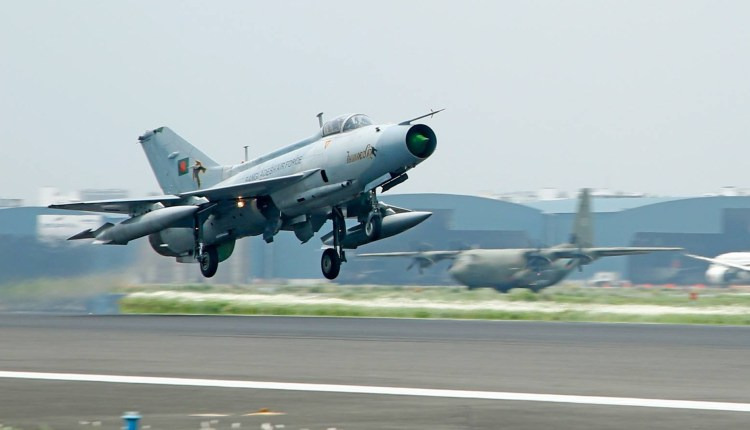
7월 21일 오후 1시 18분 경 방글라데시 공군 소속 F-7 1기가 다카 북부의 학교를 덮쳐 19명이 사망하고 100명 이상이 부상당했네요.
삼가 고인의 명복을 빕니다.
방글라데시 F-7 전투기, 다카 학교 추락으로 19명 사망…국가 최악의 항공 참사
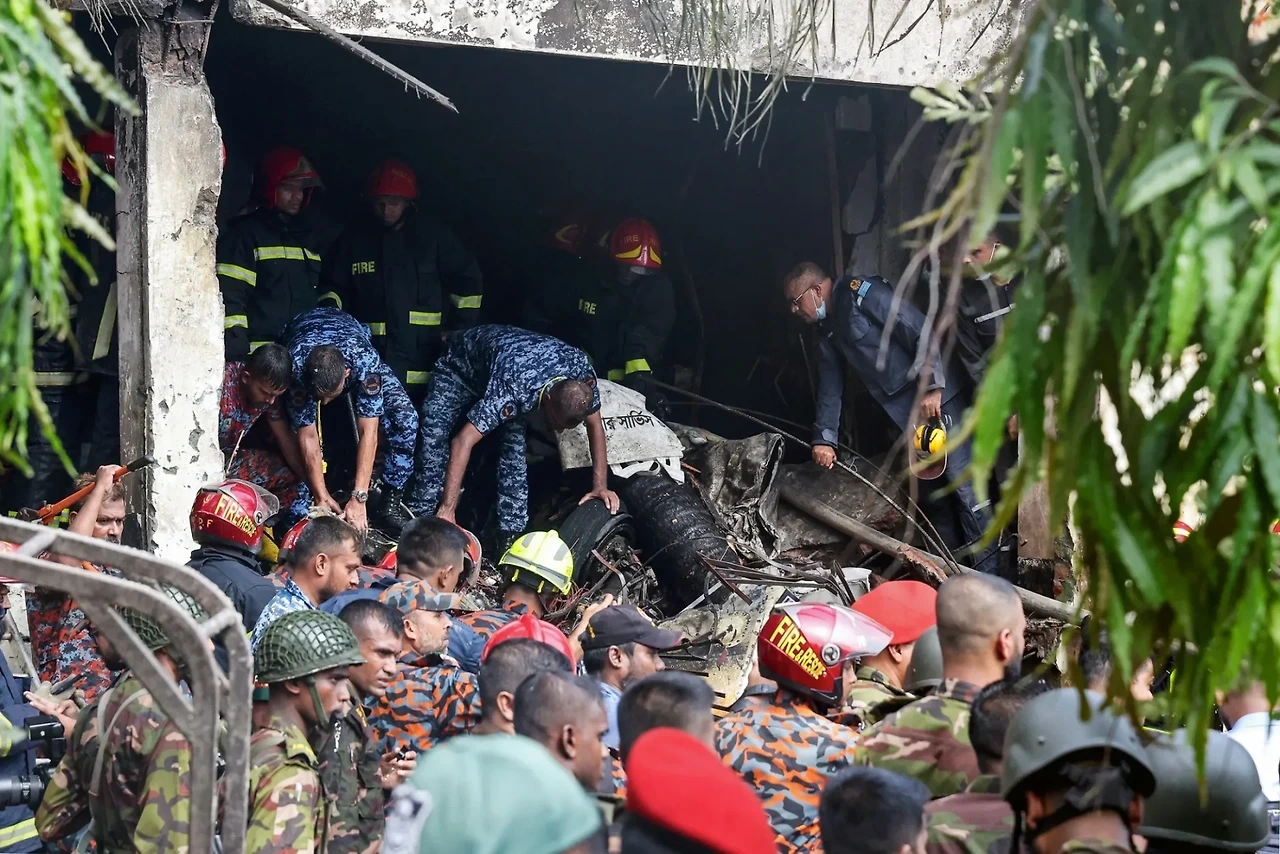
방글라데시 현대사에서 가장 치명적인 항공 참사 중 하나가 발생했다. 방글라데시 공군(BAF) 소속 F-7 전투기가 7월 21일 월요일, 인파로 붐비는 다카 북부 디아바리 지역의 마일스톤 스쿨 앤 칼리지(Milestone School and College) 캠퍼스에 추락해 최소 19명이 숨지고 100명 이상이 부상했다고 긴급구조 관계자들이 밝혔다.
고속으로 날아온 전투기는 현지 시각 오후 1시 18분경 학교를 강타했으며, 사고 현장에는 불타는 잔해와 혼란스러운 상황이 펼쳐졌다. 구조대가 피해자 구조와 화재 진압에 총력을 기울였다.
지역 당국과 AP통신 보도에 따르면, 조종사는 사망자 명단에 포함됐으며, 임시 국가 지도자 무하마드 유누스는 100명 이상의 부상자 중 83명이 대부분 학생으로, 다카 시내 여러 병원에서 치료를 받고 있다고 전했다. 중상자도 다수 포함돼 있다.
유누스는 X(구 트위터)에 “이번 비극으로 인한 희생에 깊은 슬픔과 애도를 표한다”며 “국가적으로 깊은 고통의 순간이다. 부상자들의 빠른 쾌유를 기원하며, 병원을 비롯한 관계 기관 모두에게 최우선적으로 사태에 대응할 것을 지시한다”고 밝혔다.
이 사건은 국가적 애도의 분위기를 불러일으켰을 뿐 아니라, 방글라데시 공군의 노후 항공기 의존에 대한 논란도 재점화시켰다.
추락한 항공기는 중국제 청두 F-7으로, 소련제 MiG-21의 파생형이다. 1980년대 후반 도입 이래 방글라데시 영공 방위의 주축 역할을 해왔다.
30년 넘게 지속적으로 개량돼 왔지만, F-7 기종은 최근 스텔스 전투기와 장거리 교전(BVR) 체계가 확산되는 동남아 지역의 빠른 전력 현대화 속에서 점점 구식으로 평가받고 있다.
방글라데시는 1980년대 후반 노후 항공기를 대체하기 위해 F-7MB를 처음 도입해, 한정된 국방예산 내에서 신속대응임무(QRA)의 핵심으로 삼았다. 이후 2000년대 초에는 항전장비를 개선한 F-7BG/FT-7BG, 2012년에는 디지털 콕핏과 레이더 유도 미사일 능력이 추가된 F-7BGI를 도입하며 점진적으로 전력을 보강했다.
하지만 F-7의 설계적 기반은 고속·저항력 위주 소련제 MiG-21로, 기동성·상황 인식·다목적 능력에서 본질적 한계가 있다. 단일 WP-13F 애프터버닝 터보제트 엔진으로 마하 2.0, 초당 155m 상승을 자랑하지만, 최신 터보팬 엔진에 비해 연비와 작전지속력이 부족해 전투반경도 850km에 그친다.
F-7BGI는 KLJ-6E 레이더, 글래스 콕핏, 다기능 디스플레이(MFD), PL-9C 레이더 유도 공대공미사일 운용 등 현대화가 이뤄졌으나, 여전히 4.5세대 전투기에서 표준으로 여겨지는 전천후 작전능력이나 BVR 시스템은 갖추지 못했다.
무장은 단거리 위주로, 30mm 기관포 2문, PL-5E·PL-9C 단거리 공대공미사일, 무유도 로켓, 중력폭탄을 최대 2,000kg까지 5개 장착점에 탑재 가능하다.
운용 교리상 방글라데시 공군은 F-7을 주로 영공차단과 신속 대응을 위한 요격기로 활용하고, 다목적·원정작전 임무는 부여하지 않는다. 주요 공군기지(Bangabandhu, Zahurul Haque, Matiur Rahman 등)에서 지상 레이더, 지대공미사일(SAM) 체계와 연동해 요격 훈련을 반복 실시한다.
그러나 인도가 라팔 전투기를 도입하고, 중국이 스텔스 J-20, J-35 등을 전개하는 등 지역 항공력이 급격히 강화되면서, F-7 같은 노후 플랫폼의 열세가 더욱 뚜렷해지고 있다.
데이터링크 부재, 레이더 성능 한계, 전자전장비 미탑재, 네트워크 기반 교전 능력 부족 등으로, F-7은 실제 작전환경에서 동급·상위급 경쟁기에 비해 대부분 열세를 면치 못한다.
그럼에도 불구하고, F-7은 저렴한 운용 비용과 쉬운 정비성 덕분에, 방글라데시 공군이 제한된 예산 하에서 일정 수준의 영공 경계 능력을 유지할 수 있게 해왔다. F-7BGI 1대의 도입가는 미화 1,000만 달러(약 4,600만 링깃) 이하로, 중국제 J-10C(3,0004,000만 달러), 라팔(8,0001억 달러) 등 다목적 4.5세대 전투기 대비 압도적으로 저렴하다.
하지만 다카 국방당국은 최신 기종 도입에 점차 관심을 보이고 있다. 중국산 JF-17 Block III(AESA 레이더, BVR 미사일 탑재)가 유력한 후계기로 거론되고, 일부 소식통은 베이징의 유리한 금융 조건에 따라 J-10C 도입 가능성도 언급한다. 서방제 기종 도입설도 간간이 나오지만, 정치적 관계, 부품 지원, 비용이 여전히 걸림돌이다.
이런 과도기적 상황에서, F-7은 방글라데시 공군의 주력 요격기로 계속 영공 방위 임무를 수행하고 있다. 하지만 주변국들이 전력투사 및 제공권 능력을 확대함에 따라, 방글라데시도 항공 전력 현대화의 긴급성이 더욱 커지고 있다.
이번 다카 추락 참사는 구식 플랫폼에 대한 의존이 가져올 수 있는 인적·전략적 대가를 다시금 일깨워주는 사건이 될 전망이다. 방글라데시 공군이 여러 제약 속에서도 임무를 충실히 수행해왔지만, 평시 노후 전투기 사고로 인명 피해가 반복되는 상황은, 위험관리·정비체계·현대화의 시급성을 강하게 제기한다.
궁극적으로 청두 F-7은 방글라데시의 항공력에서 끈질긴 생존력과 한계를 동시에 상징하는 존재다. 빠르고 민첩한 요격기로 여전히 영공을 지키고 있지만, 더 큰 비극을 막으려면 새로운 후계기가 시급히 필요함을 보여준다.

Bangladesh F-7 Fighter Jet Crashes into Dhaka School, Kills 19 in Nation’s Worst Aviation TragedyThe high-speed jet struck the Milestone School and College in Diabari, northern Dhaka, at approximately 1:18 p.m. local time, leaving behind smoldering wreckage and a scene of chaos as rescue teams rushed to recover victims and extinguish the flames.

By admin On Jul 22, 2025
Bangladesh Air Force's F-7
Share
In one of the deadliest aviation disasters in Bangladesh’s modern history, a Bangladesh Air Force (BAF) F-7 fighter jet crashed into a crowded college campus in Dhaka on Monday, killing at least 19 people and injuring more than 100 others, according to emergency officials.The high-speed jet struck the Milestone School and College in Diabari, northern Dhaka, at approximately 1:18 p.m. local time, leaving behind smoldering wreckage and a scene of chaos as rescue teams rushed to recover victims and extinguish the flames.The pilot of the aircraft was among the fatalities, as confirmed by regional authorities and corroborated by reports from the Associated Press.A spokesperson for interim national leader Muhammad Yunus reported that of the more than 100 injured, 83 victims—mostly school students—are being treated at various hospitals across the capital, with several listed in critical condition.“I express my deep grief and sorrow over the tragic incident of casualties caused by the crash,” Yunus posted on X.“This is a moment of profound pain for the nation. I pray for the speedy recovery of the injured and direct all concerned authorities, including hospitals, to address the situation with the utmost priority,” he added in the wake of the tragedy.The incident has not only sparked national mourning but also reignited debate over the continued reliance on ageing military aircraft by the Bangladesh Air Force.
The aircraft involved in the crash was a Chengdu F-7, a Chinese-built derivative of the Soviet-era MiG-21, which has served as the mainstay of Bangladesh’s air defence architecture since the late 1980s.Though modernized across three decades of service, the F-7 platform is increasingly seen as outdated in a region marked by rapid airpower modernization, stealth aircraft proliferation, and beyond-visual-range (BVR) engagements.Bangladesh inducted the first F-7MB units in the late 1980s to replace an ageing mix of legacy aircraft, forming the backbone of its Quick Reaction Alert (QRA) capabilities at a time when fiscal constraints limited access to more advanced platforms.Subsequent acquisitions included the F-7BG/FT-7BG in the early 2000s with improved avionics, and the more modern F-7BGI delivered in 2012, which featured digital cockpits and radar-guided missile capability—marking the most advanced iteration of the type in BAF service.However, the F-7’s foundational design—based on the high-speed, low-drag Soviet MiG-21—carries inherent limitations in agility, situational awareness, and multi-role capability.Its single WP-13F afterburning turbojet engine offers supersonic speed (Mach 2.0) and rapid climb rates (155 meters per second), but lacks the fuel efficiency and endurance of modern turbofans, with a combat radius of just 850 km.The F-7BGI variant introduced some modernisation with KLJ-6E radar, a glass cockpit, multi-function displays (MFDs), and compatibility with PL-9C radar-guided air-to-air missiles, yet the aircraft still lacks all-weather combat capability and BVR systems standard in 4.5-generation fighters.Armament remains limited to short-range munitions, including two 30mm cannons, PL-5E and PL-9C short-range air-to-air missiles, unguided rockets, and gravity bombs—with a maximum payload capacity of approximately 2,000 kg spread over five hardpoints.In terms of operational doctrine, the BAF employs the F-7 as a point interceptor—focused on airspace denial and quick reaction—rather than for multirole or expeditionary combat missions.Operating from key airbases such as BAF Base Bangabandhu (Dhaka), BAF Base Zahurul Haque (Chattogram), and BAF Base Matiur Rahman (Jessore), F-7 squadrons conduct routine interception drills integrated with ground-based radar systems and surface-to-air missile (SAM) defences.However, growing regional airpower asymmetry—highlighted by India’s acquisition of Rafale fighters and China’s deployment of stealth-capable J-20 and J-35 platforms—exposes the growing obsolescence of platforms like the F-7 in 21st-century aerial warfare.With no datalink, limited radar performance, lack of electronic warfare suites, and no network-centric warfare capability, the F-7 is outclassed by peer and near-peer adversaries in most operational environments.Despite these limitations, the aircraft’s low cost and ease of maintenance have allowed the BAF to retain credible air policing capabilities within its modest defence budget.Current estimates place the cost of an F-7BGI unit at under USD $10 million (approximately RM46 million), a fraction of what multirole 4.5-generation fighters such as the J-10C (estimated USD $30–40 million / RM140–186 million) or Rafale (USD $80–100 million / RM373–466 million) would cost.Nonetheless, defence planners in Dhaka have signaled growing interest in acquiring newer platforms.China’s JF-17 Block III, equipped with AESA radar and BVR missiles, has been touted as a potential replacement, while some defence sources have even speculated interest in the J-10C under favourable financing terms from Beijing.There have also been periodic murmurs of interest in Western platforms, though political alignment, after-sales support, and cost remain formidable barriers.Until such transitions occur, the F-7 remains the BAF’s primary interceptor, tasked with defending Bangladesh’s sovereign airspace in an increasingly complex regional threat environment.As regional rivals expand their force projection and air superiority capabilities, the urgency for Bangladesh to modernize its aerial inventory becomes more acute.The tragic crash in Dhaka may serve as a watershed moment, prompting deeper reflection on the human and strategic cost of relying on outdated legacy platforms in a region where air dominance increasingly determines national security outcomes.While the Bangladesh Air Force has performed admirably within its constraints, the loss of lives in peacetime due to an ageing fighter jet raises serious questions on risk management, maintenance protocols, and long-overdue modernization.In the final analysis, the Chengdu F-7 stands as both a symbol of Bangladesh’s resilience and its limitations—a fast, agile interceptor still guarding its skies, but one that now demands a successor before more tragedy unfold.
댓글
댓글 리스트-
작성자백선호 작성시간 25.07.24 어쩌다 학교에 추락... ㅠ.ㅠ
그런데 F-7BGI는 BVR 능력이 없으니 '새로 만든 F-5E'같은 존재네요. 2012-2013년에 마지막으로 만든 것들이 방글라데시에 납품되었다고 합니다. -
답댓글 작성자위종민 작성자 본인 여부 작성자 작성시간 25.07.25 학교가 공항 바로 옆에 있네요 ㄷㄷㄷ
https://en.somoynews.tv/news/2025-07-24/MXJE0QRO
F-7BGI는 글래스콕핏에 HOTAS에, 그간 문제가 됐던 MiG-21의 조종성을 많이 개선했을 것 같긴 한데, 그래도 AIR POLICING에나 쓸 물건을 10여년 전에 도입했네요.이미지 확대