미국과 영국의 SSN 조선 역량이 모자라 미국이 호주에 넘겨줄 신형 핵잠수함이나 여유분 버지니아급을 빼올 능력이 없고, 영국이 SSN AUKUS를 설계하고 공동건조하는 것도 언감생심이라는 주장입니다. 콜린스급을 업그레이드하고, 호주에서 잠수함을 건조해야 한다는 주장이네요.
성대하게 출범한 AUKUS가 5년도 안 돼서 폐기되려나요.
AUKUS 잠수함 계약은 끝났다
2025년 8월 6일 15:31(EST) – 핵심 요점 및 요약 – AUKUS 안보 협정의 핵심 약속, 즉 호주에 핵추진 잠수함을 제공한다는 계획은 미국과 영국 방위산업 기반의 심각한 위기로 인해 더 이상 실현 가능하지 않게 되었다.
미 해군은 자체 잠수함 함대를 건조 및 유지하는 데도 어려움을 겪고 있으며, 버지니아급 잠수함을 호주에 양도할 여력이 없다. 영국 산업 역시 부족분을 보충할 여력이 없다. 이로 인해 호주는 위험한 전력 공백에 직면했다. 결과적으로 캔버라는 노후한 콜린스급 잠수함을 업그레이드하고 자국 내 잠수함 생산을 신속하게 추진할 수밖에 없게 됐다. 이 과정은 10년 이상 소요될 것이다.
AUKUS 잠수함 계약, 사실상 사망 선고
AUKUS의 중심 요소는 언제나 호주에 핵추진 잠수함을 제공한다는 약속이었다. 협정에 따르면 미국은 최소 3척의 버지니아급 잠수함을 호주에 제공하고, 영국 및 호주는 자체 SSN-AUKUS 플랫폼 개발을 시작할 예정이었다. 그러나 이 계획은 더 이상 실행이 불가능하다.
미국은 잠수함을 제공할 수 없고, 영국은 부족분을 채우거나 실질적인 공동개발을 신속히 추진할 수 없다. 이제 캔버라는 2021년에 한 약속이 현실적인 약속이 아니라 환상에 가까웠음을 인정할 수밖에 없다.
AUKUS의 초기 구상은 전략적으로 결함이 없었다. 최근 10여 년간 인도-태평양 지역에서 중국의 군사 태세가 발전함에 따라, 호주는 생존력, 은밀성, 장거리 타격 능력을 갖춘 전력이 필요했다. 핵추진 잠수함이 그 요건에 부합한다. 버지니아급 잠수함은 단기 및 중기 대안이 될 수 있고, SSN-AUKUS는 장기적으로 호주의 수요를 충족시킬 수 있을 터였다. 하지만 핵추진 잠수함 프로그램은 단순한 추진체계가 아니라, 산업 기반 전체를 필요로 한다는 암묵적 인식이 있었다. 산업 기반, 숙련된 노동력, 안정된 공급망, 그리고 무엇보다 수십 년간 축적된 제도적 경험이 필요하다. AUKUS는 미국이 자국과 AUKUS 파트너들을 위해 버지니아급 잠수함을 건조할 수 있다고 가정했다. 이는 더 이상 합리적인 가정이 아니다.
미 해군은 목표 대비 2척이 부족하고, 연간 1.2척의 건조 속도로 두 척 기준에 크게 못 미치고 있다. 만성적인 정비 적체로 인해 전력의 3분의 1이 항구에 묶여 있다. 숙련 노동력, 원자로 모듈, 드라이독의 확보도 어렵고, 조선소에는 수십억 달러가 투입돼도 추가 공간이 없다. 병목 현상은 구조적이다.
지난달 다릴 코들 제독은 미 의회에서 “미국 산업 기반이 공격잠수함 생산량을 두 배로 늘려야 AUKUS 협정상 미국과 영국, 호주 세 나라의 수요를 충족할 수 있다”고 솔직히 말했다. 4월, 미 국방부는 미 해군과 호주의 수요를 동시에 충족할 수 있는지 30일간 검토에 착수했다. 4개월이 지난 지금도 보고서는 공개되지 않았으나, 결론은 이미 명확하다. 미국은 두 가지 모두를 해낼 수 없다. 설령 의지가 있다 해도 호주에 한두 척을 넘길 수 있는 여력이 없다. 자국 전력이 줄어드는 상황에서 고성능 잠수함을 타국에 이전하는 것을 미 의회가 받아들일 가능성도 없다.
영국 역시 미국이 약속한 잠수함을 대신 제공할 수 없다. 영국 해군은 이미 SSN-AUKUS 프로그램에 원칙적으로 동의한 상태지만, 현재 건조 중인 애스튜트급 잠수함 프로그램은 오랜 기간 지연, 예산 초과, 생산 차질로 어려움을 겪어왔다. BAE 시스템즈는 국내 주문 이상의 생산 능력을 확대할 여력이 거의 없다. 단기적으로도 호주에 수출할 여유 잠수함은 없으며, 현실적으로 2040년 이전에 핵추진 잠수함을 호주에 수출할 가능성도 없다. 정치적 의지와 별개로, 산업적 역량 자체가 부족하다. 결국, AUKUS의 3자 공급망은 사실상 붕괴되었다. 이제 호주는 국내 잠수함 산업 기반을 빠르게 구축할 수밖에 없다.
캔버라는 이미 이에 대응 중이다. 20년 이상 된 콜린스급 잠수함의 성능을 개량하고 수명을 연장하고 있다. 남호주 오스본 해군조선소는 대대적으로 확장 중이다. 호주 잠수함청은 핵 인증 인력 양성, 규제 중복 해소, 부품 국산화 기반 구축에 박차를 가하고 있다. 이 모든 조치는 자국 내에서 잠수함을 건조하기 위한 첫 단계이며, 캔버라는 이를 조용히 그러나 확고하게 추진 중이다. 이 선행 투자에도 불구하고, 호주가 자국산 핵추진 잠수함을 진수하는 것은 2030년대 후반 이후가 될 전망이다. 전력 공백은 실재하며, 위험도는 높아지고 있다.
미국이 버지니아급 잠수함 한두 척을 이전해 공백을 메운다는 아이디어는 초기에 제기됐다. 그러나 정치 상황이 달라졌다. 미군 준비태세가 워낙 열악한 상황에서 장비를 이전한다는 데 대해 의회는 점점 회의적이다. 해군 스스로도 잠수함 전력이 부족한 상황에서 추가 이전을 반대한다. 상황은 유동적인 것이 아니라, 이미 결정되었다. 워싱턴은 약속한 것을 제공할 수 없다. 이미 의회에 제출된 펜타곤의 내부 검토 결과도 이를 명확히 한다. 언어는 외교적일지라도, 현실은 그렇지 않다.
호주는 재조정 중이다. 공식적으로는 미국산 버지니아급 잠수함이 2030년대 초에 전력화된다고 밝혔지만, 실현 가능성은 희박하다. 오히려 콜린스급 잠수함의 성능을 유지해 자국 건조 프로그램이 가동될 때까지 버텨야 할 것으로 보인다. 그 산업적 도약은 지금 있는 지점에서, 향후 10년간 급속히 진행될 것이다.
캔버라는 이미 다른 파트너들과의 접촉을 시작한 것으로 알려졌다. 일본과 한국 모두 수출이 가능한 우수한 디젤-전기추진 잠수함 설계안을 갖고 있으며, 호주가 주목하고 있다.
AUKUS의 본질을 고수하는 이들에게는 실망스러운 일일 수 있지만, 현실주의가 교조주의를 앞선다.
AUKUS 자체는 끝나지 않는다. 동맹 자체는 여전히 중요하다. 사이버보안, AI, 극초음속, 양자 등 ‘필라 2’ 의제는 실질적인 진전이 있다. 그러나 AUKUS의 핵심은 언제나 잠수함이었다. 그것이 무너지면 전체 구조물의 의미도 의심받을 수밖에 없다. 실질적인 해군 전력이 뒷받침되지 않는 전략적 동맹은 명분에 그친다. 호주는 잠수함을 원했다. 그 약속이 이행되지 않으면, 전체 프로젝트의 신뢰성도 위험에 처하게 된다.
AUKUS는 애초에 신념에 가까운 도전이었다. 캔버라는 이제 선의만으로는 산업 현실을 극복할 수 없음을 깨닫고 있다. 잠수함은 보도자료로 만드는 것이 아니라, 용접공과 강철, 우라늄, 드라이독이 있어야 만들어진다. 동맹은 실패하지 않을 것이다. 그저 수사적 한계와 실제 성과 간의 괴리가 계속될 뿐이다. 호주는 이제 단순한 AUKUS 파트너가 아니라, 독자적 산업 주권국가가 되어야 한다.
앞으로 어떻게 될까?
시간이 촉박하다. 펜타곤의 검토 결과는 몇 달 내에 공개될 예정이다. 외교적 수사는 동반될 수 있지만, 결론은 분명할 것이다. 미국은 약속을 이행할 수 없다. 호주는 이제 최소한 미국 또는 영국산 핵잠수함 획득과 관련해서는 AUKUS의 공허한 약속을 넘어 새로운 대안을 찾아야 한다.
인도-태평양에서 해군력은 전략적 신뢰도의 핵심 요소다. 잠수함은 단순한 상징이 아니라, 검이자 방패다. 워싱턴과 런던이 호주에 필요한 잠수함을 제공하지 못한다면, 호주는 스스로 제공하거나 새로운 공급처를 찾아야 한다.
The AUKUS Submarine Deal is Dead - National Security Journal

The AUKUS Submarine Deal is Dead

By
Published
11 hours ago
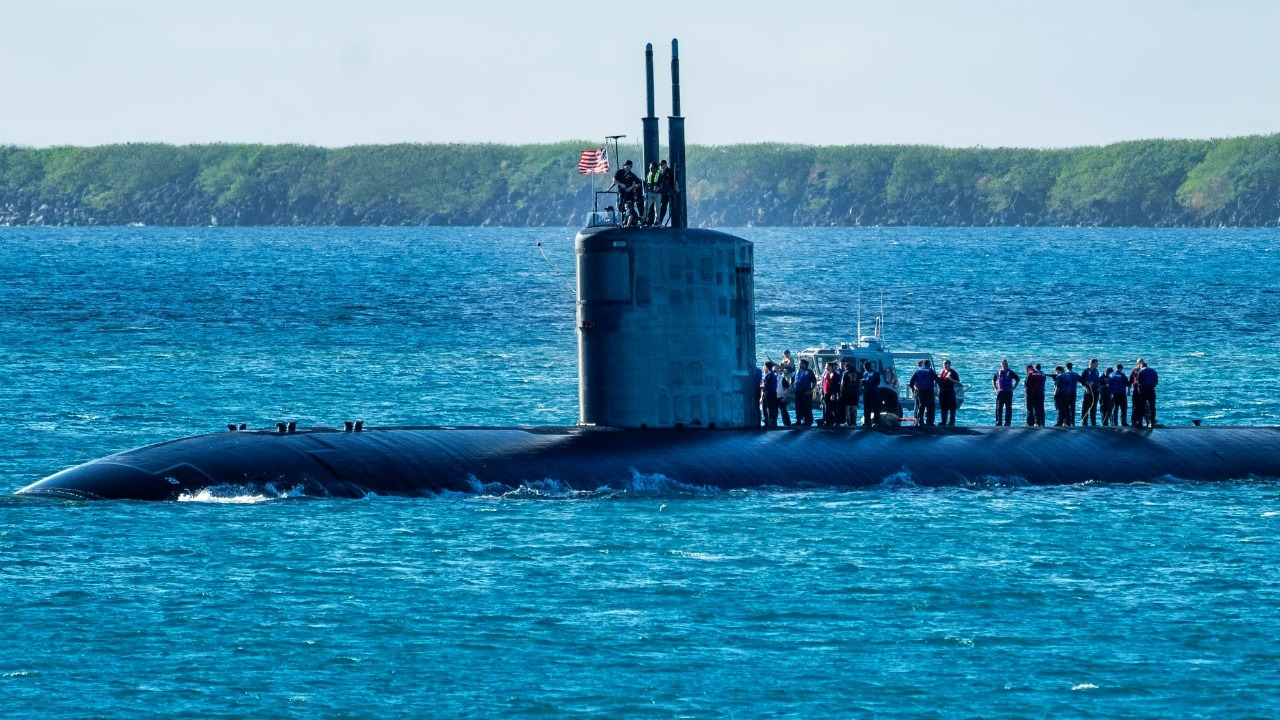
NAVAL BASE GUAM (Dec. 11, 2024) – The Los Angeles-class fast-attack submarine USS Annapolis (SSN 760) transits Apra Harbor, Naval Base Guam, Dec. 11, 2024. Assigned to Commander, Submarine Squadron 15, based at Polaris Point, Naval Base Guam, Annapolis is one of five forward-deployed fast-attack submarines. Renowned for their unparalleled speed, endurance, stealth, and mobility, fast-attack submarines are the backbone of the Navy’s submarine force. Regarded as apex predators of the sea, Guam’s fast-attack submarines serve at the tip of the spear, helping to reaffirm the submarine force's forward-deployed presence in support of a free and open Indo-Pacific. (U.S. Navy photo by Lt. James Caliva)
PUBLISHED on August 6, 2025, 15:31 PM EST – Key Points and Summary – The central promise of the AUKUS security pact—to provide Australia with nuclear-powered submarines—is reportedly no longer viable due to a severe crisis in the U.S. and UK defense industrial bases.
-The U.S. Navy is struggling to build and maintain its own submarine fleet and cannot spare any Virginia-class boats, while the UK’s industry has no surplus capacity to make up the shortfall.
-This leaves Australia facing a dangerous capability gap.
-As a result, Canberra is now forced to upgrade its aging Collins-class submarines and fast-track its own domestic submarine production, a process that will take over a decade.
The AUKUS Submarine Deal Looks RIP
The central element of AUKUS was always the promise to provide Australia with nuclear-powered submarines. According to the terms of the agreement, the US would provide Australia with at least three Virginia-class boats, and the UK and Australia would begin development on their own SSN-AUKUS platform. This plan is no longer viable.
The United States can’t provide the submarines; the United Kingdom can neither make up for the shortfall nor co-develop such a submarine in a reasonable timeframe; and Canberra must now face the unpleasant truth that the promises made in 2021 were more fantasy pledges than realistic commitments.
The original thinking behind AUKUS was hard to fault—at least in strategic terms. China’s military posture in the Indo-Pacific has developed over the past decade to such an extent that Australia needs a capability that is survivable, stealthy, and with a long-range strike capacity. Nuclear submarines fit that description. The Virginia-class submarine would offer a short- to mid-term option, and the SSN-AUKUS could meet Australia’s long-term needs. But there was a tacit acknowledgement all along that a nuclear submarine program was more than a propulsion system—it was an entire industrial ecosystem. It needs an industrial base, a trained workforce, a secure supply chain, and, most critically, decades of institutional memory. AUKUS made the assumption that the United States could build Virginia-class submarines for itself and its AUKUS partners. That is no longer a reasonable assumption.
The US Navy is two boats short of its target force, it’s fielding a rate of barely 1.2 boats a year (far short of a two-per-year benchmark), and it has a chronic maintenance backlog that leaves a third of its force in port. It is unable to uprate its skilled labor pool, reactor modules, or dry dock capacity, and there is no margin in the shipyards even with billions in new money being injected into the program. Canberra had pledged US$2bn by the end of 2025 to help build up US industrial capacity. The yards at Groton and Newport News have no space to spare even for that investment. The bottleneck is a systemic one.
Admiral Daryl Caudle was frank in testimony last month. The US industrial base, he testified, would have to double its attack submarine output for America to meet its obligations under the AUKUS agreement with Australia and the United Kingdom. In April, the Pentagon initiated a 30-day review to see if it could simultaneously meet the needs of the US Navy and the Australian demand. Four months later, the review is still not public, but the answer is already clear: the US cannot do both. It cannot, even if it wanted to, turn over one or two boats to Australia, because the Navy has none to spare. Even if it did, the optics of transferring high-end submarines to another country while its own force contracts would be impossible for Congress to accept.
And the UK simply cannot provide subs in place of the promised but undeliverable American boats. The Royal Navy has already made an in-principle commitment to the SSN-AUKUS program. Still, Britain’s existing submarine program, which produces the Astute-class submarine, has suffered from years of delays, budget overruns, and production shortfalls since it was first launched. And BAE Systems, the prime contractor in the British submarine industry, has minimal spare capacity to increase the rate of production beyond its existing domestic orders. In short, there are no surplus subs—and, more importantly, no realistic possibility of any near-term export of nuclear-powered boats to Australia before the 2040s. Political will aside, industrial capacity isn’t there. The UK cannot bail out the US shortfall, and the AUKUS partnership as a viable trilateral supply chain has effectively ceased to exist. That, in turn, leaves Australia with no option but to fast-track its submarine industrial base; a process which it is already doing, quietly but steadily.
Canberra is already responding. The Collins-class submarines, at more than 20 years old, are being upgraded and their lifespan extended. The Osborne Naval Shipyard in South Australia is being massively expanded. The Australian Submarine Agency is now working to develop nuclear-certified workers, strip out regulatory duplication, and build a domestic component manufacturing base. All of this is the first movement to build submarines domestically, and Canberra is doing this under low-key, but with unmistakable determination. Even with this head start, Australia will not be launching a domestically built nuclear submarine before the late 2030s. That is a decade away. The capability gap is real, and the risk profile is increasing.
The idea that the US could transfer a Virginia-class boat or two to make good the gap was floated early on. The politics have since moved against it. Congress is increasingly dubious about hardware transfers when the state of American readiness is already so poor. The Navy itself is against anything that would take boats from its already underpowered undersea fleet. The situation is not in flux: it is set. Washington cannot deliver what it promised. The internal Pentagon review, which has already been provided to Congress, reportedly makes that clear. The language might be diplomatic; the reality is not.
Australia is recalibrating. The publicly stated timeline still envisages a U.S.-built Virginia-class submarine becoming operational in the early 2030s. It is hard to see that coming to pass. The more likely scenario is that Australia will have to sustain the Collins-class submarines and their capabilities until the domestic build program can go online. That industrial build will have to start from where it is now, accelerating rapidly over the coming decade.
Canberra has also reportedly already started reaching out to other potential partners. Both Japan and South Korea have capable, exportable, diesel-electric submarine designs that are on Canberra’s radar already.
That will disappoint AUKUS purists, but realism trumps dogma.
AUKUS is not ending. The alliance itself remains important. Pillar Two of the AUKUS agenda, which covers cybersecurity, AI, hypersonics, and quantum, has real momentum and is already well developed. But the keystone of AUKUS was always to be submarines. If that does not work, the whole edifice comes into question. No amount of public relations can paper over the fact that hard power needs to be on the water to make strategic alignments more than words. Australia signed up for submarines. If they do not materialize, the credibility of the entire enterprise is at risk.
AUKUS was always a leap of faith. Canberra is now finding that good intentions will not make up for industrial realities. Submarines do not have a switch that a press release can activate. They turn up on the order of welders, steel, uranium, and dry docks. The partnership will not fail, but only because its rhetorical reach does not need to match its capacity to deliver. Australia will now have to become not just an AUKUS partner, but an industrial sovereign in its own right.
What Happens Next?
Time is short. The Pentagon review will soon be made public in a few months. In the form in which it is released, it may be hedged with diplomatic language, but its conclusions will likely be quite stark. The findings, which are already known to Congress, make it clear that the United States is not in a position to deliver. Australia must now look beyond the empty promises of AUKUS3—at least with respect to acquiring American or British nuclear-powered subs.
Because, in the Indo-Pacific—where naval power is a key determinant of strategic credibility—the submarine is not just a symbol. It is both a sword and a shield. And if neither Washington nor London can provide Canberra the subs it needs, then the Aussies must seek out those who can—or perhaps build their own.
About the Author: Dr. Andrew Latham
Andrew Latham is a non-resident fellow at Defense Priorities and a professor of international relations and political theory at Macalester College in Saint Paul, MN. You can follow him on X: @aakatham. He writes a daily column for National Security Journal.