주미 대만 대표부 대표인 티 레이 유이가 포린 폴리시와 1) 대만은 무임승차자가 아니다 2) 미국이 무기를 제때 넘겨주질 않는데 국방비를 늘려봐야 무슨 소용이냐 3) TSMC가 미국 투자를 확장하고 있는데, 대만이 망하면 미국 일자리도 날라갈 걸? 이라고 인터뷰했네요.
대만 대표는 UN 총회에 들어가지는 못해도 뉴욕에서 각종 회의와 행사에 참가하기는 하는 모양입니다.
트럼프와 유엔에 보내는 대만의 메시지: ‘우리는 무임승차자가 아니다’
워싱턴 주재 사실상 대사인 이가 트럼프, 중국, 국방 지출 등에 대해 밝힌 입장. By Rishi Iyengar, Foreign Policy 기자.
타-레이 유이가 흰색 건물 쪽으로 걸어가며 미소를 지어 보이고 엄지 손가락을 치켜들고 있다. 타-레이 유이가 흰색 건물 쪽으로 걸어가며 미소를 지어 보이고 엄지 손가락을 치켜들고 있다. 알렉산더 타-레이 유이, 대만의 미국 대표가 2024년 3월 6일 워싱턴의 국회의사당에서 미 의원들과 만나기 위해 도착하고 있다. Mandel Ngan/AFP via Getty Images
My FP: 관심 있는 주제와 저자를 팔로우해 바로 찾아보세요. FP 구독자 전용. 지금 구독 | 로그인
2025년 9월 19일 오후 5:02
Foreign Policy가 알렉산더 타-레이 유이와 마지막으로 마주 앉았을 때, 그는 워싱턴 주재 대만의 사실상 대사—공식 명칭은 대만의 미국 대표—로 부임한 지 몇 달이 지난 시점이었고, 조 바이든 미국 대통령의 임기 종료까지는 1년도 채 남지 않았다. 바이든은 중국의 공격 시 미국 군이 대만을 방어할 것이라고 여러 차례 밝히며, 대만에 대한 오랜 미국의 ‘전략적 모호성’ 정책에서 벗어난 듯한 발언을 했지만(바이든 행정부 당국자들은 정책이 바뀌지 않았다고 거듭 강조했다), 집권 4년 동안 대만에 대한 10여 건이 넘는 무기 판매에도 서명했다.
금요일, 유이는 다시 Foreign Policy와 마주 앉았다—맥락은 사뭇 달랐다. 도널드 트럼프 대통령의 두 번째 임기가 시작된 지 8개월이 지난 상황에서, 백악관의 대만에 대한 태도는 말과 행동 모두에서 다소 더 모호해졌다. 트럼프는 올해 대만의 라이칭더 총통의 뉴욕 경유 요청을 거부했고, 트럼프 행정부는 6월 워싱턴에서 예정됐던 대만 국방부장과의 회담을 취소했다.
그리고 목요일, 워싱턴포스트는 트럼프가 시진핑 중국 국가주석과의 무역 합의를 모색하는 가운데 최근 몇 달 동안 대만에 대한 4억 달러 규모의 군사 원조 승인을 거부했다고 보도했다. 유이의 금요일 인터뷰는 트럼프와 시가 바로 그 무역 협상을 논의하기 위해 고위급 통화를 진행하던 와중에 이뤄졌다. 트럼프는 통화를 “매우 생산적”이라고 설명했고, 내년에 중국을 방문하겠다는 뜻도 밝혔다.
유이는 양측이 대화하는 것은 “좋은 일”이라고 표현했지만, 동시에 “대만은 이 협상을 매우 예의주시한다”며 “대만의 현안이 거래나 흥정의 대상이 되지 않도록 한다”고 덧붙였다.
통화 직후 발표된 베이징과 워싱턴의 즉각적인 발표문 어디에도 대만은 언급되지 않았지만, 중국은 최근 몇 년 사이 외교적 성명과 군사적 도발을 통해 대만에 대한 압박을 강화해 왔다. 둥쥔 중국 국방부장은 목요일 베이징에서 열린 안보 포럼에서, 중국이 자국이 분리된 성으로 간주하는 자치 민주주의 대만에 대한 접수(접수)는 “전후 국제질서의 필수 불가결한 일부”라고 말했다.
유이는 중국의 위협을 심각하게 받아들이면서도, 트럼프 정권하에서 미국의 지원 없이 그 위협을 마주해야 한다는 일각의 관측은 낮춰 평가했다. 그는 “미-대만 양자 간 진행 사안들은 매우 긴밀하고, 우리의 소통은 계속되고 있다는 점을 확신시켜드릴 수 있다”며, 대만에 대한 미국의 기본 정책 입장도 변하지 않았다고 덧붙였다. 취소됐던 미·대만 국방 당국자 간 회동은 “이후 다른 장소에서 진행됐다”고도 했다.
나는 또한 워싱턴 주재 대만 대표가, 우크라이나와 중동 분쟁을 중재하려는 트럼프의 노력을 통해 어떤 교훈을—있다면—얻었는지 알고 싶었다. 유이는 “그들은 이미 전쟁 또는 무력 충돌 상태—우리는 아니다. 우리는 그 상태가 유지되도록 하고 싶다”고 답했다. “내가 보기엔 미국은 정말로 그 분쟁들을 끝내려는 데 진지하다. … 접근 방식은 다를 수 있고—내가 평가할 처지는 아니지만—미국이 진정으로 평화에 이르기 위해 노력하고 있다는 점은 안심이 된다.”
유이는, 잠재적인 중국의 대만 침공은 훨씬 더 광범위한 글로벌 파급 효과를 낳을 것이라고 경고했다. “세계 무역의 절반 이상이 대만해협을 통과합니다. 대만 반도체 제조는 말할 것도 없고요.” 그는 말했다. “문제는 우리만이 아닙니다—충돌이 발생하면 중국의 항만이 봉쇄되고, 우리의 항만도 봉쇄되며, 일본과 한국의 항만도 봉쇄될 것입니다. 세계 무역은 사실상 멈춰 설 겁니다.”
대만은 또한 트럼프를 달래고, 그가 자주 내세우는 큰 숫자를 제시하기 위한 조치를 취하고 있다. 라이 정부는 내년까지 대만의 국방 지출을 GDP의 최소 3%까지 늘리겠다고 약속했다(하지만 트럼프와 다른 행정부 당국자들은 10%를 요구해 왔다). 유이는 북대서양조약기구(NATO) 기준으로 국방지출을 산정하면 “내년에는 쉽게 5%를 넘길 것”이라고 말했다. 여기서 그는 6월에 합의된 나토 회원국의 새로운 지출 목표—국방비 3.5%와 국방 관련 인프라 1.5% 합계—를 가리켰다.
문제의 일부는 미국의 무기 인도가 너무 오랜 시간이 걸린다는 점이라고 유이는 말했다. 이는 돈을 어떻게 쓸지를 둘러싼 대만 내 점점 더 격렬해지는 국내 논쟁을 악화시킨다. 그는 2019년 트럼프 1기 때 합의된 108대의 에이브럼스 M1A2T 전차를 예로 들며, 지난 1년간 두 차례에 걸쳐 일부만 인도됐다고 지적했다. “우리는 국방에 필요한 만큼 무엇이든 지출할 수 있습니다. 하지만 문제는 물자가 오지 않는다면, 그 돈을 쓴들 무슨 소용이겠습니까.” 그는 말했다. “누구를 탓하려는 게 아닙니다. 그냥 느렸을 뿐입니다.”
트럼프가 보류한 것으로 보도된 4억 달러의 원조는 대통령 인도 권한(Presidential Drawdown Authority, PDA)으로 알려진 조항에서 나온다. 이는 미국이 동맹국에 무기를 신속히 이전하는 수단이다. 유이는 “그 돈 자체의 문제가 아닙니다.”라고 말했다. “PDA를 통해 미국은 그 장비에 즉시 접근해 상당히 빠르게 대만에 제공할 수 있습니다.” 그는 또한 해당 원조 패키지에 대한 결정이 아직 최종 확정되지 않았다는 백악관의 워싱턴포스트에 대한 설명을 강조했다.
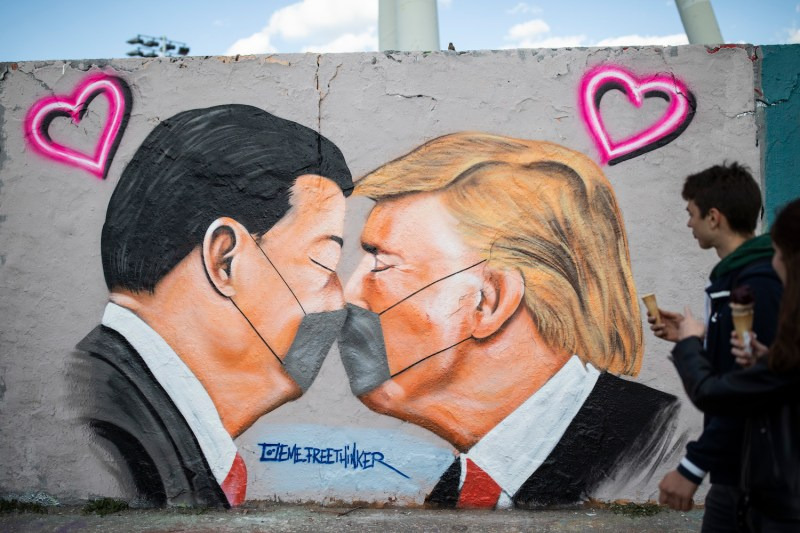
더 읽어보기 도널드 트럼프 미국 대통령과 시진핑 중국 국가주석의 거리 예술 벽화가 베를린 마우어파크의 옛 베를린 장벽 구간에 그려져 있다. 도널드 트럼프 미국 대통령과 시진핑 중국 국가주석의 거리 예술 벽화가 베를린 마우어파크의 옛 베를린 장벽 구간에 그려져 있다. 트럼프는 대만을 팔아넘길 수도 있다—그걸 막는 방법 타이베이는 국방비를 더 늘리고 미국에 더 투자해야 한다.
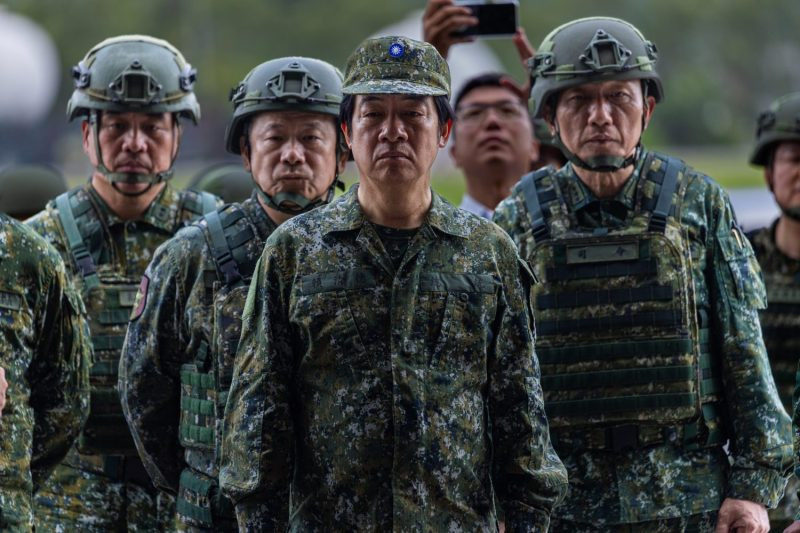
주장 | Philip H. Gordon 대만의 라이칭더 총통이 2024년 7월 23일 대만 화롄의 화롄 공군기지에서 실시된 군사 훈련을 시찰하고 있다. 대만의 라이칭더 총통이 2024년 7월 23일 대만 화롄의 화롄 공군기지에서 실시된 군사 훈련을 시찰하고 있다. 대만은 자위에 대해 진지해지고 있다 중국의 공격을 막아내려면 대만을 ‘고슴도치’로 만드는 것이 필수적이다.
분석 | Matthew Kroenig
미국에 대한 대만의 확대된 약속은 국방을 넘어선다. 대만의 보석과도 같은 기업이자 세계의 첨단 컴퓨팅 칩 대부분을 생산하는 대만반도체제조회사(TSMC)는, 바이든의 ‘반도체 및 과학법(CHIPS and Science Act)’의 대표적 수혜자였지만, 트럼프의 두 번째 임기 동안 미국 내 제조에 추가로 1,000억 달러를 투자하기로 약속해 총 투자액을 1,650억 달러로 끌어올렸다.
이는 워싱턴과 베이징 간 협상에서—유이의 표현을 빌리면—“버스에 치여 나가떨어지거나” 흥정 카드로 사용되지 않기 위한 대만의 메시지 전략의 일부다. 전 세계의 인공지능(AI) 추진과, AI 응용을 뒷받침할 반도체 칩에 대한 수요는 대만이 감당할 수 있는 수준을 훨씬 웃돈다.
Editors’ Picks 구독 신청 FP가 엄선한 필독 기사 모음.
구독 신청
“우리는 이미 대만에서 90%—거의 전부—를 생산하고 있습니다. 하지만 대만은 메릴랜드주 규모에 불과합니다.” 유이는 말했다. “반도체 제조의 성장에 대한 필요가 큽니다만, 그 공급망이 민주주의 진영 안에 남아 있도록 해야 합니다.” 그는 덧붙였다. “우리는 함께하는 편이 더 낫고, 만약 대만에서—부디 아니길 바라지만—충돌이 일어난다면, TSMC가 중국에 접수될 경우 미국의 일자리가 위태로워질 것이기에 미국인들은 더 큰 관심을 갖게 될 것입니다.”
대만의 글로벌 가치와 유용성에 관한 이 메시지는, 다음 주 유엔총회 고위급 회기가 열리는 뉴욕에서도 유이가 전할 계획이다. 대만은 유엔의 승인을 받지 못했고, 외교관들은 유엔 본부에 들어갈 수 없다(1971년 베이징이 유일한 중국 의석을 부여받으며 대만은 유엔에서 축출됐다). 유이는 도시의 다른 장소에서 회의와 행사에 참석할 계획이라고 말했다.
“다음 주에 뉴욕에 갑니다.” 그는, 마치 유엔 본부 밖에서 확성기를 들고 들어가게 해 달라고 외치는 것과 비슷할 것이라 농담하며, 이를 섬의 “매년 반복되는” 글로벌 인정 추구라고 설명했다. 이는 트럼프와 워싱턴에 그가 전하는 메시지와 같다.
“우리는 무임승차자가 아닙니다.” 그는 말했다. “여러분의 것을 이용하려고 온 게 아니라, 실제로 함께 참여해 기여하려고 합니다. 그러니 우리는 부담이 아니라 자산입니다.”
My FP: 관심 있는 주제와 저자를 팔로우해 바로 찾아보세요. FP 구독자 전용. 지금 구독 | 로그인
Taiwan Ambassador on Trump-Xi Call, China, Military Aid
Taiwan’s Message to Trump and the U.N.: ‘We’re Not a Freeloader’
The island’s de facto ambassador to Washington on Trump, China, defense spending, and more.
By Rishi Iyengar, a staff writer at Foreign Policy.
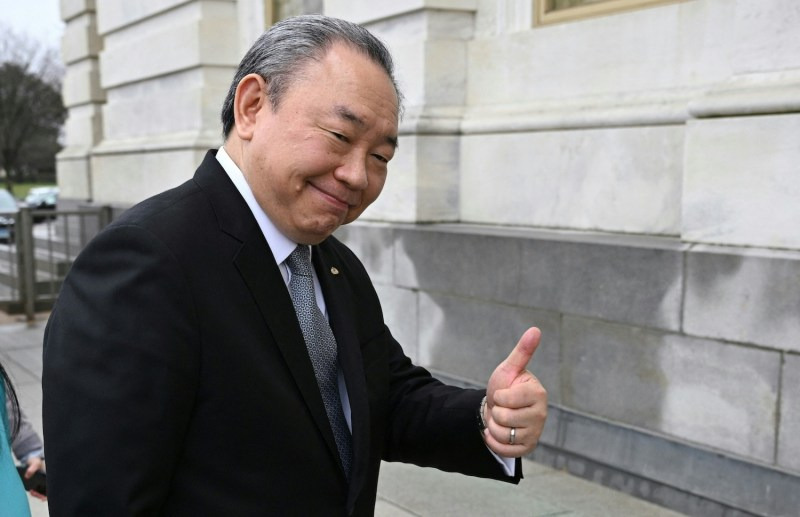
Tah-ray Yui smiles and gives a thumbs-up gesture as he walks toward a white building.Alexander Tah-ray Yui, Taiwan’s representative to the United States, arrives to meet with U.S. lawmakers on Capitol Hill in Washington on March 6, 2024. Mandel Ngan/AFP via Getty Images
My FP: Follow topics and authors to get straight to what you like. Exclusively for FP subscribers. Subscribe Now | Log In
September 19, 2025, 5:02 PM
The last time Foreign Policy sat down with Alexander Tah-ray Yui, he was just months into his new role as the de facto Taiwanese ambassador to Washington—officially known as Taiwan’s representative to the United States—with less than a year left in U.S. President Joe Biden’s term. Biden said on multiple occasions that the U.S. military would defend the island in the event of an attack from China, seemingly straying from a long-standing U.S. policy of “strategic ambiguity” toward Taiwan (though Biden administration officials repeatedly stressed that the policy hadn’t changed). He also signed off on more than a dozen weapons sales to Taiwan during his four years in office.
On Friday, Yui sat down again with Foreign Policy—in a rather different context. Eight months into President Donald Trump’s second term, the White House’s attitude toward Taiwan has been somewhat more ambivalent in both words and actions. Trump denied a request for Taiwanese President Lai Ching-te to transit through New York this year, and the Trump administration canceled a planned meeting in Washington with Taiwan’s defense minister in June.
And on Thursday, the Washington Post reported that Trump had declined to approve $400 million in military aid to Taiwan in recent months as he seeks a trade deal with Chinese President Xi Jinping. Yui’s Friday interview took place even as Trump and Xi were engaging in a high-profile phone call to discuss those trade negotiations, which Trump subsequently described as “very productive.” He also committed to visiting China next year.
Yui described it as “a good thing that the two sides are talking,” but he added that “Taiwan puts a very big eye on” these negotiations “to make sure Taiwan’s issues are not for trade or for barter.”
Neither Beijing’s nor Washington’s immediate readouts on the call mentioned Taiwan, but China has stepped up its pressure on the island in recent years through both diplomatic statements and military provocations. Chinese Defense Minister Dong Jun said at a security forum in Beijing on Thursday that China’s takeover of Taiwan—a self-governing democracy that Beijing treats as a breakaway province—is “an integral part of the post-war international order.”
Yui takes the threat of China seriously but downplayed suggestions that Taiwan would have to face it without U.S. support under Trump. “I can reassure you that U.S.-Taiwan bilateral ongoings are pretty close, very tight, and our communications are ongoing,” he said, adding that the fundamental U.S. policy position on Taiwan hadn’t changed. The meeting between U.S. and Taiwanese defense officials that was canceled, he said, “happened later on in another place.”
I also wanted to know what lessons, if any, the Taiwanese envoy to Washington had derived from Trump’s efforts to mediate the conflicts in Ukraine and the Middle East. “They’re already at war or in armed conflict—we’re not. So we want to make sure that it stays that way,” Yui said. “What I see is the United States is really serious in trying to bring an end to those conflicts. … There are different approaches in how to do it—and who am I to judge?—but it’s comforting to see that the United States is really working to reach peace.”
A potential Chinese invasion of Taiwan, Yui warned, would have far wider global implications. “Over half of world trade passes through the Taiwan Strait, not to mention the manufacturing of Taiwan’s semiconductors,” he said. “It’s not just us—if there’s a conflict, the Chinese ports will be sealed, ours will be sealed, the Japanese, the Koreans’. World trade will basically be put to a halt.”
Taiwan is also taking steps to mollify Trump and give him the big numbers he likes to tout. Lai’s government has committed to increasing Taiwan’s defense spending to at least 3 percent of its GDP by next year (though Trump and other administration officials have demanded 10 percent). “If we count defense expenditure in terms of NATO standards, we’ll have passed 5 percent easily next year,” Yui said, referring to NATO members’ new spending target, agreed on in June, that includes 3.5 percent in defense spending and 1.5 percent in defense-related infrastructure.
Part of the problem, Yui said, is how long U.S. weapons deliveries tend to take, which exacerbates increasingly contentious domestic debates in Taiwan on how to spend the money. He cites the example of Taiwan’s 108 new Abrams M1A2T tanks, which have been only partially delivered in two batches over the past year despite the purchase being agreed during Trump’s first term in 2019. “We can spend whatever we need on defense, but the problem is if we don’t get it,” he said. “We’re not blaming anyone. It’s just been slow.”
The $400 million in aid Trump reportedly blocked comes from a provision known as the Presidential Drawdown Authority (PDA), which expedites the transfer of U.S. weapons to foreign partners. “It’s not about the money itself,” Yui said. “Through PDA, the United States can access that equipment immediately and make it available to Taiwan fairly quickly.” He also highlighted the White House statement to the Post that a decision on that aid package had not been finalized.
Read More
Street art shows U.S. President Donald Trump and Chinese President Xi Jinping at a section of the former Berlin Wall at Mauerpark in Berlin.
Trump Might Sell Out Taiwan—Here’s How to Prevent It
Taipei needs to spend more on defense and invest more in the U.S.
|
Taiwanese President Lai Ching-te inspects military drills at Hualien Air Force Base in Hualien, Taiwan, on July 23, 2024.
Taiwan Is Getting Serious About Self-Defense
Turning Taiwan into a porcupine will be essential for staving off a Chinese attack.
|
The island’s expanded commitments to the United States go beyond defense. Taiwan Semiconductor Manufacturing Co. (TSMC), the island’s crown jewel and which produces most of the world’s advanced computing chips, was already a champion of Biden’s CHIPS and Science Act but has pledged an additional $100 billion investment in its U.S. manufacturing during Trump’s second term, bringing its total investment to $165 billion.
It’s all part of Taiwan’s messaging to ensure it does not get—in Yui’s words—“thrown under the bus” or used as a bargaining chip in negotiations between Washington and Beijing. The global push for artificial intelligence and the resulting demand for semiconductor chips to power AI applications are many orders above what Taiwan can produce.

Sign up for Editors’ PicksA curated selection of FP’s must-read stories.
Sign Up
“We’re already making 90 percent, almost all of it, in Taiwan, but Taiwan is the size of Maryland,” Yui said. “There’s a big need for semiconductor manufacturing growth, but let’s make sure that supply chain stays within democracies,” he added. “We’re better bound together, and if there’s a conflict in Taiwan—hopefully not—I think people in the United States will be more concerned because that will be U.S. jobs at stake if TSMC is taken over by the Chinese.”
That message of Taiwan’s global value and utility is what Yui also plans to take to New York next week during the United Nations General Assembly’s high-level gathering. Although Taiwan is not recognized by the United Nations and its diplomats are not allowed into the U.N. headquarters (Beijing was granted the sole Chinese seat in 1971, leading to Taiwan’s expulsion from the body), Yui said he plans to attend meetings and events elsewhere in the city.
“I’ll be in New York next week,” he said, joking that his engagements will be akin to standing with a megaphone outside the U.N. asking to be let in and describing it as the island’s “yearly quest” to be recognized globally. It’s the same message he shares with Trump and Washington.
“We’re not a freeloader,” he said. “We’re not here to take advantage of what you have, but we are actually willing to join and contribute. So we’re an asset, not a liability.”
My FP: Follow topics and authors to get straight to what you like. Exclusively for FP subscribers. Subscribe Now | Log In