노스롭 그루먼이 루미너리 클라우드라는 스타트업과 협업해 물리기반 AI 플랫폼을 우주선 추진기 노즐 설계에 도입하기로 했네요. 향후 더 큰 구성품이나 우주선 설계 전체에 AI를 도입할 예정입니다.
물리 기반 AI는 챗GPT같은 생성형 AI가 아니라 시스템이 물리세계와 상호작용하는 방식을 예측할 수 있는 모델을 생성한다고 합니다.
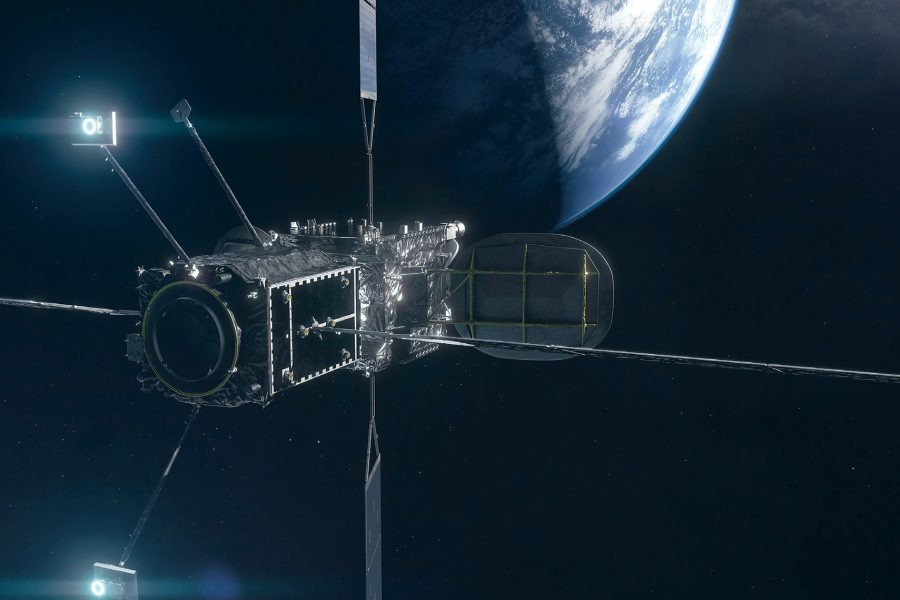
노스럽 그러먼의 스페이스로지스틱스 미션 익스텐션 비히클(MEV)에 대한 아티스트 일러스트. 스페이스로지스틱스 제공
노스럽, 스타트업과 협력해 인공지능으로 우주선 설계 추진 2025년 10월 29일 | 코트니 앨본
노스럽 그러먼이 스타트업 루미너리 클라우드와 협력하여, 이 회사의 물리 기반 인공지능(AI) 플랫폼을 활용함으로써 우주 시스템 설계 및 개발에 걸리는 시간을 대폭 단축하는 것을 목표로 하고 있다.
두 회사는 10월 28일 이 파트너십을 발표했지만, 이미 두 달 전부터 협업을 시작했다. 그들은 우주선 추진기 노즐을 설계하고 개발하기 위한 모델을 구축했으며, 수년에 걸칠 수 있는 과정을 불과 몇 개월로 압축했다.
“AI를 이용해 우주선 추진기처럼 작은 것을 만드는 것은, 더 큰 구성품이나 심지어 전체 우주선을 AI로 설계하는 길로 나아가는 과정입니다.” 노스럽 우주 시스템 사업부 내 AI 통합 담당 부사장 한 박은 10월 28일 성명에서 이렇게 말했다.
루미너리 클라우드의 최고기술책임자 후안 알론소는 『에어 앤드 스페이스 포시스 매거진』과의 인터뷰에서, 물리 기반 AI는 새롭지만 빠르게 성장 중인 기술 분야라고 설명했다. 대규모 데이터 세트를 기반으로 텍스트와 이미지를 생성하는 생성형 AI와 달리, 물리 기반 AI는 시스템이 물리적 세계와 상호작용하는 방식을 예측할 수 있는 모델을 생성하는 데 이 기술을 사용한다.
“지난 2년 동안이 전환점이 되었는데, 루미너리 같은 회사들이 생성할 수 있는 데이터의 양이 충분해져 이러한 모델의 정확도를 보장할 수 있게 되었습니다.” 그는 이렇게 말했다.
이 기술은 국방부와 산업계가 채택해온 디지털 설계(digital design)의 발전 위에 구축된 것이다. 디지털 설계는 엔지니어들이 펜과 종이를 쓰지 않고 시스템을 설계할 수 있도록 하는 소프트웨어 도구로, 설계 수정이 용이하며 모든 이해관계자들이 변화 내용을 실시간으로 공유받을 수 있게 한다.
노스럽의 로켓 추진기 노즐의 경우, 루미너리 클라우드의 플랫폼은 물리 기반 AI를 이용해 다양한 설계가 어떻게 작동할지를 단 몇 초 만에 예측할 수 있었다. 이는 기존에 수 시간이 걸리던 작업을 대체했다. 이 플랫폼은 NVIDIA의 오픈소스 ‘PhysicsNeMo’ 기능을 활용해 데이터를 입력하고 모델을 학습시켰다.
이러한 기술이 프로그램 전체의 비용과 일정에 미치는 영향은 매우 크다고 알론소는 말했다.
“개발 초기 단계에서 위험을 훨씬 더 빨리 줄일 수 있고, 설계 과정에서 시도하는 모든 것에 대해 훨씬 더 명확한 결론을 얻을 수 있습니다. 그 결과, 새로운 제품을 설계하고, 시제품을 만들고, 실전 배치하는 데 필요한 전체 시간을 대폭 줄일 수 있으며, 그에 따른 비용 역시 줄어듭니다.” 그는 이렇게 설명했다.
이러한 물리 기반 AI 모델이 국방 및 상업 시장 전반에서 더 널리 채택되는 데에는, 기술의 신뢰성에 대한 엔지니어들과 프로그램 관리자들의 확신을 얻는 것이 걸림돌이 되고 있다. 그러나 알론소는 루미너리 클라우드와 같은 플랫폼이 제공하는 정확성과 효율성을 직접 경험한 엔지니어들이 점점 태도를 바꾸고 있다고 말했다.
“대부분의 엔지니어들은 본래 회의적인 성향을 가지고 있습니다.” 그는 말했다. “하지만 시간이 지나면서 그들은 점점 깨닫습니다. ‘세상에, 이건 실제 고정밀 시뮬레이션만큼이나 잘 작동하잖아. 그런데 이걸로는 단 한 번의 시뮬레이션에 걸리던 시간에 수만 번을 돌릴 수 있네.’라고요.”
루미너리 클라우드는 국방고등연구계획국(DARPA), 공군, 그리고 기타 국방부 기관들과 플랫폼 도입에 관해 논의 중이라고 알론소는 밝혔다. 그러나 아직 어떤 계약도 공식적으로 체결되지는 않았다. 그는 일부 잠재 고객들은 기밀 요건을 가지고 있으며, 현재 플랫폼은 그 요건을 충족하도록 설계되어 있지 않다고 덧붙였다.
노스럽 그러먼과의 협력에 관해서는, 이번 시범 프로젝트가 시작에 불과하다고 알론소는 말했다.
“우리는 이번 협력을 노스럽 그러먼과의 협업을 위한 출발점으로 보고 있습니다.” 그는 말했다. “우리는 이 모델을 개념증명(proof of concept) 형태로 함께 개발해왔지만, 앞으로 노스럽이 자체적으로 데이터 세트를 생성하고 우리 제품을 활용해 우리가 직접 관여하지 않는 다양한 응용 분야용 새로운 모델들을 만들 것으로 기대합니다.”
Northrop, Startup Hoping to Use AI to Design Spacecraft

An artist illustration of a Northrop Grumman SpaceLogistics Mission Extension Vehicle (MEV). SpaceLogistics
Expand Photo
Northrop Teams With Startup, Hoping to Use AI to Design Spacecraft
Oct. 29, 2025 | By Courtney Albon
Share Article
Northrop Grumman is teaming up with startup Luminary Cloud to use the tech firm’s physics-based AI platform, with hopes of significantly reducing the time it takes to design and develop space systems.
The companies announced the partnership Oct. 28, but they’ve already started working together; Over the last two months, they have developed a model to design and develop a spacecraft thruster nozzle, condensing what can be a yearslong process to just months.
“Using AI to make something small, like a spacecraft thruster, puts us on a path to do much bigger things, like using AI to design larger components or even an entire spacecraft,” Han Park, vice president for AI integration within Northrop’s space systems business, said in an Oct. 28 statement.
Physics AI is a new, but fast-growing, technology area, Luminary Cloud’s Chief Technology Officer Juan Alonso told Air & Space Forces Magazine. Rather than generative AI, which can produce text and image from large data sets, physics AI uses the technology to generate models that make predictions about how a system will engage with the physical world.
“It’s been within the last two years where that inflection point of the curve has started to take place, where the amount of data people like us at Luminary can actually generate is sufficient to give you good accuracy of these models,” he said.
The technology builds on the progress the Pentagon and industry have made in adopting digital design—software tools that allow engineers to design systems without pen and paper, making tweaks easier and keeping stakeholders informed of all changes as they happen.
In the case of Northrop’s rocket thruster nozzle, Luminary Cloud’s platform was able to use physics AI to predict how different designs might perform in a matter of seconds versus the hours it might typically take. The platform used NVIDIA’s open source PhysicsNeMo capability to feed data and train its models.
The implications of that technology for a program’s overall cost and schedule are significant, Alonso said.
“You could retire risks much earlier on, you could get more conclusive answers for anything that you try in the design process, and obviously, then you have a downstream impact of greatly reducing the total amount of time that it takes to create, prototype, and field a new product—and also the cost that’s required to do that,” he said.
One hurdle to greater adoption of these types of physics AI models across the defense and commercial markets is getting engineers and program managers to trust that the technology works. But Alonso said he’s seen engineers change their tune as they see the accuracy and efficiency platforms like Luminary Cloud can offer.
“Most engineers are skeptical by nature,” he said. “Little by little, they start seeing, ‘Holy cow, this thing actually works just as well as the high-fidelity simulations, yet I can do tens of thousands of simulations in the time that it would have taken me to do a single one.’”
Luminary Cloud is in discussions with the Defense Advanced Research Projects Agency, the Air Force, and other Defense Department agencies that are interested in the platform, Alonso said, though none of those deals have been formalized. He noted that some of these potential customers have classification requirements that the platform is not yet equipped to manage.
As for the Northrop Grumman partnership, Alonso said he expects the initial demonstration is just the beginning.
“We view this as a starting point for collaboration with Northrop Grumman,” he said. “We have been helping develop this model as a proof of concept, but we expect them to internally generate data sets and create new models for different applications that we may not even be involved in but using our product.”
댓글
댓글 리스트-
작성자Minowski(김유철) 작성시간 25.10.31 AI에 의한 설계+적층성형+휴머노이드 조합이 제조업을 획기적으로 바꿀것 같긴한데 그 임계점이 언제쯤일런지..
-
답댓글 작성자위종민 작성자 본인 여부 작성자 작성시간 25.11.04 느낌상 휴머노이드 쪽이 왠지 병목이 될 것 같습니다.
-
작성자백선호 작성시간 25.10.31 다른 AI는 물리학 방정식을 직접 풀지는 않는다는데 이 AI는 풀라나요?
https://cafe.daum.net/NTDS/50q9/2920 -
답댓글 작성자위종민 작성자 본인 여부 작성자 작성시간 25.11.04 챗GPT는 자료 던져주고 NFL 팀별 성적 ELO 레이팅 계산을 시키면 외부 모듈을 불러와서 계산을 한다고 하면서 결과 뽑는 시간이 좀 길어지기 시작하는데, 저 놈은 직접 연산 기능을 탑재했을 수도 있겠습니다.