When Computers Went To Sea | 미해군, 홍해에서 아군 오사로 F/A-18F 격추 - Daum 카페

When Computers Went To Sea | CVN-75 USS 해리.S.트루먼, 이집트 포트사이드 인근에서 상선과 충돌 - Daum 카페

When Computers Went To Sea | 후티 공습작전 도중, USS 해리.S.트루먼 항모 갑판에서 F/A-18E 슈퍼 호넷이 바다로 떨어짐 - Daum 카페

When Computers Went To Sea - Daum 카페

작년 12월 22 CG-64 USS 게티스버그의 아군 오사, 2월 12일 CVN-75 포트 사이드에서의 트루먼함과 상선과의 충돌, 4월 18일 탄도미사일 회피기동 중 F/A-18E 슈퍼호넷 1대가 바다로 추락, 5월 6일 착함중이던 F/A-18F 슈퍼호넷 1대의 추락 사고에 대한 보고서가 나왔네요.
1) 아군 오사 관련해, CG-64는 항모전단 대공지휘함이었지만 항모전단과 많은 시간 동행하지못하고 단독행동한 시간이 많았으며 유류보급함 부족으로 전단이 모두 모여 항해하고 훈련할 시간이 10일에서 이틀로 줄었다고 합니다. 시간이 모자라 '했다 치고' 훈련을 실시했다고... ㅜㅜ IFF 등 각종 시스템들도 고장났었다고 하네요.
항모전단에 후티가 자폭드론 공격을 가하자, DCA 임무 수행을 위해 슈퍼호넷들이 여러 대 출격했고, 후티 타격을 지휘하던 공습지휘관이 DCA 중이던 호넷에 복귀를 지시했지만 전단 전체에 제대로 배포되지도 않았고 당직 교대 과정에서 IFF 오작동 사실이 인수인계되지 않아 DCA중인 호넷을 적 대함미사일로 판단하고 SM-2를 쐈다고 합니다.
2) 상선과의 충돌은 미흡한 항해술과 훈련 부족이 원인이라고 합니다. 갑판일지 기록도 부정확하고, 의사소통도 비효율적이었고 AIS도 꺼놨었네요. 포트사이드 인근 항로를 19노트로 항해중이었고. 함교 당직자의 직별이 수상함이 아니었는데, 이 경우 항해술 교육은 별도로 이수시키기 않고 OJT로만 이뤄졌다고 하네요.
충돌 직전 함장의 우현전타 지시로 피해가 좀 줄어들었다고 합니다.
3) 4월의 호넷 추락은 미끄럼방지 코팅의 노후, 고정 불량, 의사소통 불량을 원인으로 지정했넹. 15노트로 항해하며 엘리베이터에 주기된 호넷의 고임목과 체인을 제거하고 격납고 안으로 견인작업중이었는데 회피기동으로 30노트로 증속하고 10도-15도 우현 전타를 시작하자 함정이 빠른 속도로 기울어져 배가 떨어졌네요. 비행기에 승조원이 탑승해 브레이크를 밟고 있었지만 (아마도) 브레이크 고장으로 브레이크가 작동하지 않았다고 합니다. 격납고와 비행갑판 모두 함교의 회피기동 발표를 듣거나 확인하지 못했다고 합니다.
4) 착함 도중 손실된 호넷은, 장비 고장으로 녹색/황색 표시등이 점멸중이었고 규정에 따라 Foul Deck을 선언해야 했지만 조작수는 대신 수리를 시도했다고 하네요. 인력 부족으로 어레스팅기어 QA 담당 세 보직 중 한 자리만 채워져 있었다고 합니다.
항모 해리 S. 트루먼 충돌 및 슈퍼 호넷 3대 상실에 따른 조사, 연쇄적 실패 드러나
샘 라그론, 말로리 셸번, 케이틀린 버칫 2025년 12월 4일 오후 10시 40분
2025년 5월 25일, 헬리콥터 해상전투비행대대 11(HSC-11) ‘드래곤슬레이어스’ 소속 MH-60S 나이트 호크 헬리콥터가 니미츠급 항공모함 해리 S. 트루먼함(USS Harry S. Truman, CVN-75)과 수직보급(vertical-replenishment)을 실시하고 있다. 미 해군 사진
지휘부의 리더십 실패, 훈련 격차, 오작동 장비가 상호 작용해, 예방 가능했던 F/A-18 슈퍼 호넷 3대의 상실과 항공모함 해리 S. 트루먼(CVN-75)과 상선의 충돌 사고를 초래했다고, 해군이 목요일 공개한 조사 결과는 밝히고 있다.
이 네 건의 사고는 2024년 12월 말부터 2025년 5월 초 사이에 발생했으며, 당시 해리 S. 트루먼과 항모전단(CVW-1, 및 그 호위 전력)은 예멘 내 후티 반군의 군사 표적 타격 임무를 수행하고 있었다. 52일간의 ‘러프 라이더 작전(Operation Rough Rider)’을 포함한 전개 막바지에, 이 타격전단은 탄도 및 대함 미사일, 일방향 자폭 드론 위협을 견뎌냈다.
공개된 조사는 네 건의 사건에 초점을 맞추고 있다.
12월 22일: 이지스 순양함 게티즈버그함(USS Gettysburg, CG-64)이, 해리 S. 트루먼에 착함을 위해 접근 중이던 슈퍼 호넷 2대를 향해 스탠더드 미사일 2발(SM-2)을 발사. 2월 12일: 해리 S. 트루먼이 지중해 포트 사이드(Port Said)에서 상선 유조선과 충돌. 4월 18일: 해리 S. 트루먼이 후티의 탄도미사일 접근을 회피하는 과정에서, F/A-18E 슈퍼 호넷 1대가 격납고 갑판에서 밀려나 바다로 추락. 5월 6일: 해리 S. 트루먼에 착함을 시도하던 F/A-18F 슈퍼 호넷 1대가 갑판에서 이탈해 바다로 추락.
각 사건에서, 조사 책임 장교들은 각각의 사고가 모두 예방 가능했다는 결론을 독립적으로 내렸다.
목요일 기자들과의 통화에서, 해군 당국자들은 예멘에 기반을 둔 후티 세력으로부터 드론 및 미사일 공격을 반복적으로 받은 홍해의 높은 작전 템포를 강조했다. 이들 사건에도 불구하고, 이들은 9개월간의 전개 기간 동안 타격전단 전체의 전반적인 수행 성과를 높이 평가했다.
해군은 네 건의 사건에 관련된 장병들에 대한 문책 조치를 공개해 달라는 USNI News의 요청에 응하지 않았다. 2월 12일 충돌 이후 해리 S. 트루먼함의 함장 데이브 스노든(Capt. Dave Snowden)을 보직 해임한 것 외에, 해군은 다른 누구라도 처벌을 받았는지 혹은 재훈련을 받았는지 여부를 밝히지 않았다.
한 고위 해군 관계자는 기자들에게 “이와 관련된 모든 운용자들에게 책임 조치가 내려졌다는 점은 분명히 할 수 있다”고 말했다. “이는 단순히 행정적 조치로 누군가의 감시(워치) 자격을 박탈하고 재자격 부여를 요구하는 수준에서, 통합군사법전(UCMJ)에 따른 행정 절차에 이르기까지 다양할 수 있다. 저는 그 결과를 세상에 공표해야 할 의무가 있다고 느끼지 않는다.”
아군 오사(誤射)
타이콘데로가급 유도탄 순양함 게티즈버그함(USS Gettysburg, CG-64)이 2024년 12월 16일 미 중부사령부 작전구역에서 항해 중인 모습. 미 해군 사진
해리 S. 트루먼과 그 전단은 2024년 9월 버지니아주 노퍽 해군기지(Naval Station Norfolk)를 출항해, 미 동부 해역에서 훈련을 마친 뒤 대서양을 건넜다.
막 대규모 정비를 마친 순양함 게티즈버그함의 함장은 저스틴 하지스(Capt. Justin Hodges)였다. 그는 항모전단의 공중방어 사령관(에어 디펜스 커맨더, 통상 ‘Whiskey’로 불림)으로 지정되어, 항모전단 8을 이끄는 숀 베일리(Rear Adm. Sean Bailey) 소장에게 보고했다. 에어 디펜스 커맨더는 전단 방공을 조정하며, 항모 주변에서 작전하는 함정과 항공기를 관리하는 책임을 가진다.
12월 말, 전단은 홍해에 진입해 후티 표적에 대한 작전을 시작했다. 이때 게티즈버그는 전단과 떨어져 운용 중이었고, 유도탄 구축함 스토트함(USS Stout, DDG-55)이 공중방어 사령관 역할을 대신 수행했다.
해리 S. 트루먼은, 2023년 10월 7일 하마스의 이스라엘 공격 이후 홍해에 전개된 일련의 항모들 가운데 하나였다. 바이든 행정부는 이후 상선에 대한 후티의 공격을 저지하기 위해 ‘프로스페리티 가디언 작전(Operation Prosperity Guardian)’을 개시했다.
게티즈버그는 12월 18일, 전단의 나머지 함정보다 4일 늦게 홍해에 도착했다. 전개 첫 세 달 동안 이 순양함은 대부분 항구에 있거나 전단과 떨어져 운용했고, 공중방어 사령관 역할을 수행한 시간은 약 43%에 그쳤다고, 조사 보고서는 밝혔다.
전 해리 S. 트루먼함 함장 카본 하킴자데(Rear Adm. Kavon Hakimzadeh)가 수행한 조사에는 다음과 같이 적혀 있다.
“사건 발생 직전 45일 동안, [게티즈버그]는 전단과 함께 작전한 시간이 전체의 15%에 불과했다(45일 중 7일).”
전개 초기에, 전단의 전투 지휘관들이 함께 훈련할 수 있도록 계획된 10일간의 그룹 세일(group sail)은, 미 동부 연안의 유류 보급함 부족으로 인해 이틀로 줄어들었다.
항모전단 8의 비공개 참모장은 조사관들에게 “우리는 통합 운용 과정에서 무엇을 배울 기회를 제대로 얻지 못했다”고 말했다. “이틀보다 더 긴 그룹 세일을 했으면 좋았을 것이다. 우리는 ‘이건 통하지 않는다… 다른 걸 시도해 보자’고 말할 기회도 없었다. 그저 ‘이건 끝났다, 저것도 끝났다’고만 하고 다음 목록으로 넘어갈 수밖에 없었다. 그러고 나서는 다음 과제로 넘어가야 했다.”
조사관들은, 게티즈버그 승조원들이 전단과 떨어져 운용하는 동안, 12월 21일 첫 방어 타격 임무를 앞두고 계획 회의에 제대로 참여하지 못해, 전단과 단절된 상태가 되기도 했다고 밝혔다.
보고서는 “공격 임무와 관련된 방공 계획 모두가 게티즈버그에서 충분히 이해되지 못했다”고 지적했다. “전투정보실(CIC) 당직조원들 사이에서, 그들은 사건의 시점, 편대의 출격 및 복귀 계획, 잠재적 위협 대응 방안을 이해하지 못했다.”
이와 더불어, 아군 항공기를 식별하는 여러 시스템이 꺼져 있거나 작동하지 않고 있었다. 많은 장애가 12월 21일 시작된 첫 대규모 타격 임무에 앞서 항모의 전단 지휘부에 보고되지도 않았다.
그 토요일, 해리 S. 트루먼에서 발진한 슈퍼 호넷 편대가 후티 표적을 타격하기 위해 예멘 상공으로 날아간 사이, 게티즈버그, 스토트, 제이슨 더넘함(USS Jason Dunham, DDG-109), 더 설리번스함(USS The Sullivans, DDG-68)과 방공임무(DCA)에 투입된 슈퍼 호넷들이 항모 인근에서 작전하고 있었다.
조사 보고서는 “타격 편대가 발진하자마자, 예상보다 이른 후티의 대응이 시작되었고, 이로 인해 방공 임무에 투입 가능한 DCA 전력에 대한 광범위한 목표 지정이 이루어졌다”고 적고 있다.
후티는 몇 시간에 걸쳐 대함 및 일방향 자폭 드론을 파상적으로 발사했고, 전단은 이를 격퇴하기 위해 싸워야 했다. 항모에서는 타격 지휘관이, 타격 임무를 마치고 귀환하던 일부 슈퍼 호넷을 전단 방어에 투입된 전투 공중초계(DCA)에 편입시켰다.
조사에 따르면, “총 4시간 동안 14차례 다른 DCA 출격이 이루어졌고, 원래 계획되었던 6차례의 DCA 출격과 달리 총 11기의 개별 항공기가 투입되었다.”
방공 임무에 추가로 투입된 전력에는, 공중급유 임무를 맡고 있던 ‘레드 리퍼스’ 공격비행대대 11(VFA-11) 소속 F/A-18F(조사에서는 ‘항공기 107’로 표기), 또 다른 F/A-18F(‘항공기 112’), 그리고 또 다른 슈퍼 호넷(‘항공기 211’)이 포함됐다.
오전 1시 40분, 게티즈버그는 인근에 적대적 표적이 없다고 보고했다. 이후 40분 동안, 방공 임무에 나선 DCA 편대는 “상충되는 지시(conflicting orders)”를 받았고, 그 결과 계속 상공에 머물렀다고 보고서는 설명한다.
해리 S. 트루먼에서는, 예멘 타격 임무를 지휘하던 타격전 지휘관이 남아 있던 DCA 슈퍼 호넷들에게 항모로 복귀하라고 명령했다. 그러나 이 명령은 전단 전체에 제대로 이해되지 못했다고, 조사 보고서는 밝힌다.
전투기들이 항모로 귀환하는 동안, 게티즈버그 전투정보실의 두 핵심 보직은 막 교대를 마쳤고, 승조원들은 헬기 착함을 준비하느라 바빴다. 이로 인해 함정의 AN/SPY-1 대공 탐지 레이더 감시 범위가 줄어든 상황이었다. 동시에, 전단의 공중 상황을 관리하던 E-2D 호크아이 조기경보기가 레이더 고장을 일으켜, 자신의 임무를 구축함 한 척에 넘겼다고, 항공기 107 조종사가 별도 진술에서 설명하고 있다.
새로 교대한 당직조들은 남은 DCA 전투기들의 위치를 알지 못했고, 게티즈버그의 아군 식별(IFF) 시스템이 오작동하고 있다는 사실도 몰랐다. 이들의 화면에서 전투기들은 “미확인(Unknown)” 표적으로 표시되고 있었다.
보고서는 “게티즈버그 CIC 요원들은 이들을 적 대함 순항미사일로 판단했다”고 적고 있다.
다른 수단으로 확인하지도 않은 채, 게티즈버그함장 하지스는 승조원들에게 SM-2 두 발을 발사하라고 지시했다. 한 발은 항공기 107, 다른 한 발은 항공기 112를 향해 발사되었다고 보고서는 전한다.
슈퍼 호넷 조종석에서, 항공기 107 조종사는 게티즈버그에서 미사일이 발사되는 것을 보고, 그 목표가 무엇인지 혼란스러워했다.
조사에 인용된 항공기 107 조종사의 별도 진술에는 다음과 같은 말이 나온다.
“야아… 이거 미쳤네, 저게 드론 쏴 떨어뜨리는 거라는 걸 믿을 수가 없네.”
몇 초 뒤, 조종사와 무장체계사(WSO)는 자신들이 목표가 되었다는 사실을 깨닫고, 첫 번째 미사일이 격발되기 직전 슈퍼 호넷에서 탈출했다.
두 번째 슈퍼 호넷(항공기 112)은 회피 기동을 실시하며 탈출을 준비했지만, 두 번째 SM-2는 명중 전에 비활성화되었다.
항공기 112 조종사는 별도 진술에서 “미사일이 우리 전투기에서 100피트 이내를 스쳐 지나가면서 기체를 흔들었다”고 말했다. “그 미사일은 우리 왼쪽 수면 위에서 폭발했다.”
조사 보고서는, 장비 고장이 있었음에도 불구하고, 두 슈퍼 호넷에 대한 공격은 예방 가능했었다고 결론 내렸다.
보고서는 “게티즈버그에 내재한 문제와 고장 상황에 따른 제약은, 12월 21일 작전에 앞선 효과적인 계획과 적시의 실행을 통해 완화할 수 있었다”고 지적한다. “이 두 가지는 이루어지지 않았다. 계획 과정의 특정 실패가 이미 어려운 전단 통합 상황을 더욱 악화시켰다.”
하지스는 1월 30일 해상에서 치른 함장 이취임식을 끝으로 함을 떠났다. 그는 USNI News의 논평 요청에 응하지 않았다.
이후 해군은, 에이징(Aegis) 전투체계의 아군 추적 식별 실패를 수정하는 소프트웨어 패치를 도입했다고, 한 고위 해군 당국자는 목요일 기자들에게 밝혔다.
한 고위 해군 관계자는 “이번 사건 이후 우리는 에이징 무기체계 결함을 수정하기 위해 5,500만 달러 이상을 투자했다”고 말했다. “지난 2년 동안, 우리 산업 파트너들은 이 소프트웨어 결함을 신속히 수정할 수 있는 의지와 능력을 입증해 왔으며, 이는 매우 인상적이다.”
포트 사이드 인근의 충돌
2025년 2월 13일, 이집트 포트 사이드 인근 해역에서 상선 베식타스-M호(Besiktas-M)와의 충돌 이후, 상선의 선체에 의해 항공모함 해리 S. 트루먼(CVN-75) 우현 엘리베이터 뒤쪽 스폰슨이 손상된 외부 모습. 당시 해군의 고무보에서 촬영된 사진. 미 해군 사진
게티즈버그가 아군 슈퍼 호넷을 격추시킨 지 두 달 뒤, 해리 S. 트루먼은 그리스 수다베이(Souda Bay) 해군지원기지에서 출항해 수에즈 운하로 향하던 중, 상선 베식타스-M호와 충돌했다.
토드 웨일런(Rear Adm. Todd Whalen) 소장이 주도한 조사는, “미흡한 항해술(poor seamanship)”과 훈련 부족이 2월 12일 이집트 포트 사이드 인근에서 발생한 충돌의 원인이라고 결론지었다.
조사에서는, 충돌 당일 저녁 함교에서 일련의 실수가 발생했음을 밝혀냈다. 갑판 일지(deck log)의 부정확한 기록, 승조원들 간 비효율적인 의사소통, 해리 S. 트루먼의 자동식별시스템(AIS) 송신 미가동 등이 그것이다.
조사에 따르면, 항모는 수에즈 운하 남하를 준비하며 포트 사이드 인근의 혼잡한 해역을 19노트 속도로 항해하던 중, 현지 시각 11시 45분에 상선과 충돌했다.
승조원들 중 부상자나 사망자는 없었으나, 항공모함 우현 엘리베이터 뒤쪽 스폰슨이 손상되었고, 상선의 선체가 항모의 후방 상부에 파고들어 수선 위 선체 일부를 절단했다. 충돌 이후 일주일 만에, 해군은 당시 함장 스노든을 보직 해임했다.
조사는, 이번 사건을 2017년 해군 충돌사고 두 건과 비교했다. 하나는 유도탄 구축함 피츠제럴드함(USS Fitzgerald, DDG-62)과 필리핀 국적 상선 ACX 크리스탈호의 충돌로 미 해군 장병 7명이 사망한 사고, 다른 하나는 존 매케인함(USS John McCain, DDG-56)과 라이베리아 유조선 간 충돌로 10명이 사망한 사고이다.
조사 보고서는 “사람은 본능적으로 아슬아슬한 ‘근접 사고’를 축소해 받아들이고, 가정적인 위험을 대수롭지 않게 여기는 경향이 있다”고 적고 있다. “이번 경우, 생사 간의 차이는 단지 몇 피트 혹은 몇 초에 불과했다. 이는 피츠제럴드함과 매케인함 충돌에서 실제로 벌어졌던 일, 그리고 해리 S. 트루먼에서 일어날 수도 있었던 일을 일깨워 주는 엄중한 경고가 되어야 한다.”
2017년 피츠제럴드함(USS Fitzgerald, DDG-62)이 중대 수리를 위해 2017년 중순, 중량선박 MV 트랜스셸프(Transshelf)에 선적되기 전 대기 중인 모습. 미 해군 사진
웨일런의 조사에서는, 피로가 충돌의 중요한 인간적 요인이었다고 지적했다. 부서장들은 함내 분위기를 “그냥 어떻게든 해낸다(just get it done)”는 분위기로 묘사했다. 승조원들의 수면 부족과 위험 여부와 관계없는 성과 압박은, 2017년 두 번의 충돌사고에서 나타났던 핵심 주제이기도 했다.
목요일 기자들이, 이번 조사 결과와 2017년 두 충돌사고 조사 내용과의 유사성을 질문하자, 한 고위 해군 관계자는, 홍해의 어려운 전투 환경을 언급하며, 해군이 인력 부족으로 어려움을 겪고 있다고 말했다.
그는 “우리는 해상에서 1만8,000명의 결원을 안고 있으며, 이를 해소하기 위해 최선을 다하고 있다”고 말했다. “그럼에도, 전단 지휘관들은 함정이나 비행대, 부대가 임무 수행을 위해 인력·훈련·장비를 갖추지 못한 상태로 전개 허가를 내리지 않는다. 그렇다고 해서, 우리가 해리 S. 트루먼 사례처럼, 해군 장병들을 어려운 상황에 투입하지 않는다는 뜻은 아니다.”
조사는 이 충돌의 네 가지 “근본 원인(root causes)”을 지목했다. 그 가운데 하나는, 다섯 가지 국제해상충돌예방규칙(Rules of the Road)에 배치되는 항해를 수행한 당직 사관의 “미흡한 항해술”과, 함교 자원관리(Bridge Resource Management)의 부재였다. 또한, 조사에서는 스노든이 “수에즈 운하 접근 과정에서 안전 항해에 대한 자신의 책임을 항해사(navigator)와 당직 사관에게 넘겼는데, 이는 미 해군 규정에 반하는 것”이라고 결론지었다. 항해사는 또한 운하로 향하는 항해 동안 자신의 책임을 “포기(abdicated)”한 것으로 평가되었다.
항해사는 충돌 2분 전인 밤 11시 43분에 스노든 함장을 함교로 호출했다. 11시 44분, 조타 사관(conning officer)은 “좌전타(hard left rudder)”를 명령했고, 곧 이어 스노든은 충돌이 불가피하다고 판단하고 “우전타(hard right rudder)”를 명령해 충돌 각도를 최소화하려 했다.
조사는 “스노든의 ‘우전타’ 명령은 해리 S. 트루먼과 베식타스-M 간의 접근 속도를 줄이고 충돌 각도를 완화했으며, 충돌 시점을 늦추어 더 큰 피해와 인명 손실을 방지한 것으로 보인다”고 적었다.
웨일런은 “스노든의 진술 인터뷰는 소유(ownership)와 책임(accountability)에 관한 교과서와 같았다. 그의 솔직함과 프로페셔널리즘은 인상적이었다”고 썼다.
충돌 이후 항모는 수다베이로 이동해 수리를 받았으며, 수리 비용은 68만5,000달러가 들었다.
보고서는 “수리 작업에는 구멍을 막고 임시 격벽을 설치하며, 안전 난간을 교체하고 구조 보강재를 추가하고, 비구조용 손상 물질을 제거하는 작업 등이 포함됐다”고 적고 있다.
2025년 2월 12일 상선과의 충돌 이후, 헬리콥터 해상전투비행대대 11(HSC-11) ‘드래곤슬레이어스’ 소속 MH-60S 나이트 호크에서 촬영한 해리 S. 트루먼함(CVN-75)의 외부 손상 모습. 미 해군 사진
웨일런은 보고서에서, 항모 함교 당직자에 대한 교육이, 수상전 지휘 커뮤니티(수상전 장교, SWO) 기준에 더 가깝게 맞춰져야 한다고 권고했다.
보고서는 “함정이 CVN(항공모함)인 경우, 브리지 당직자들이 SWO가 아닌 이상, 자격을 얻기 전에 항해 및 항해술(Seamanship) 교육 과정을 이수할 필요가 없다”고 지적한다. “CVN에서 함교 당직자 교육은 전적으로 현장(on-the-job)에서 이루어진다.”
조사 보고서는 “서로 다른 형식사령부(Type Commander)의 지휘를 받는 함교 당직자에게 해군이 두 가지 서로 다른 기준을 적용해서는 안 된다”고 강조했다. “CVN에 해기사(mariner) 기술 교육 요건을 추가하면, 향후 작전에서 충돌 위험을 줄일 수 있을 것이다.”
웨일런은, 충돌이 약간만 다른 조건에서 발생했더라도 상황은 훨씬 더 심각했을 것이라고 썼다.
그는 “[충돌] 시점이나 충돌 각도가 조금만 달랐어도, 결과는 재앙적이었을 것이다. 충돌 지점이 100피트만 더 전방이었다면, 충돌은 120명의 승조원이 자고 있던 침실 구역을 관통했을 가능성이 높다. 충돌 당시 3번 항공기 엘리베이터가 내려가 있었다면, 해리 S. 트루먼의 비행 갑판 운용은 심각한 타격을 입었을 것”이라고 썼다.
“실제로, 충돌 지점으로부터 10피트도 안 되는 공간에 8명의 승조원이 있었는데, 충돌 궤적이 1도만 달랐어도 그 공간은 파괴되고 8명이 모두 사망했을 것이다. 조사팀은 이 8명과 이야기를 나누었고, 이들은 자신들이 얼마나 가까스로 목숨을 건졌는지 결코 잊지 못할 것이다. 우리 역시 잊어서는 안 된다.”
장비 결함으로 인한 두 건의 슈퍼 호넷 상실
2025년 5월 6일, 해리 S. 트루먼함(CVN-75)에서 와이어 단선 사고 이후 손상된 어레스팅 케이블. 미 해군 사진
수다베이에서 수리를 마친 뒤에도, 해리 S. 트루먼의 문제는 끝나지 않았다. 항모는 그 이후 장비 결함으로 인해 슈퍼 호넷 두 대를 추가로 잃었다.
해군은, incoming 미사일 회피를 위해 갑작스럽게 기동을 실시하던 해리 S. 트루먼에서, 갑판과 격납고에서 동시에 항공기 이동이 이루어지던 상황이 겹쳐, 결과적으로 전투기 1대와 견인 트랙터 1대를 상실한 것에 대해, 불량 제동, 되살릴 수 없는 노후 논슬립(non-skid) 코팅, 부적절한 의사소통을 원인으로 지목했다.
4월 28일, 격납고 3번에서 견인 트랙터에 연결된 슈퍼 호넷이 함께 떨어져 홍해에 침몰했다. 3,600만 달러 상당의 이 전투기는, 중동 전개 중 해리 S. 트루먼이 잃은 세 번째 기체 중 두 번째였다.
더글러스 이바나크(Capt. Douglas Ivanac)가 이끈 조사에 따르면, 당시 해리 S. 트루먼은 약 15노트 속도로 항해 중이었다. 전술행동장교(Tactical Action Officer)는 중거리 탄도미사일이 접근 중이라는 사실을 발표했다. 격납고에서는, 엘리베이터 웰에 주기된 슈퍼 호넷의 휠 초크와 체인을 제거하고, 격납고 문을 닫기 위해 항공기를 안쪽으로 끌어들이려는 이동 팀이 작업 중이었다.
동시에, 함정은 표준작전절차(SOP)에 따라 회피 기동을 실시했고, 속력을 30노트로 높이면서 10도 우현 전타를 시작했다. 이후 전타는 15도로 늘어났다. 이로 인해 함정은 더 빠른 속도로 기울었고, 함교 팀은 러더 각도를 다시 10도, 이어 2도로 줄였다.
고정되지 않은 전투기와 견인 트랙터는 뒤로 굴러가기 시작했고, 전투기 조종석에 앉아 브레이크를 잡고 있던 브레이크 탑승자와 트랙터 운전자는, 전투기와 트랙터가 갑판 끝으로 향하기 직전에 뛰어내렸다. 이들은 바다로 떨어지지는 않았지만, 한 명이 경미한 부상을 입었다.
조사관들은, 전투기의 브레이크 시스템이 고장났을 가능성이 높다고 결론 내렸다. 여러 진술에서, 브레이크 탑승자가 브레이크를 작동시키려 했음에도 타이어가 자유롭게 구르던 모습이 묘사되었다.
조사관들은, 사고의 주요 원인은 브레이크 고장이었지만, 2018년 1월 이후 교체되지 않았던 격납고 3번의 논슬립 코팅도 문제였다고 밝혔다. 조사에 따르면, 격납고는 “미끄럽다”는 평가를 받았고, 목격자는 견인 트랙터가 항공기를 끌면서 “견인 중 그립을 잃고 약간 미끄러지는” 모습을 보았다고 진술했다.
최종 승인서에서, 존 검블턴 부제독(Vice Adm. John Gumbleton)은, 함교·비행 갑판·격납고 간의 부적절한 의사소통이 사고에 “상당한 영향을 미쳤다”고 판단했다. 보고서는, 격납고 통제와 비행갑판 통제 어느 쪽도 함교의 발표를 듣거나 확인하지 못해, 그들은 함정의 첫 회전 기동을 예상하지 못했다고 적고 있다.
검블턴은 “나는 항모전력 대서양사령부(Naval Air Force Atlantic)의 판단, 즉 항공기 407의 상실은, 격납고의 논슬립 코팅이 개선되거나 견인 장비 타이어가 새것이었다 해도 어차피 발생했을 것이라는 점에 동의한다”고 적었다. “중요한 것은, 이번 사고에 기여한 두 핵심 문제 모두, 확립된 절차와 프로세스를 준수하지 않은 데서 비롯되었다는 점이다.”
해군은, 또 다른 슈퍼 호넷의 바다 추락에 대해서는, 장비 결함뿐 아니라, 비효율적인 훈련과 지도부의 부실한 감독을 지적했다. 다만 앞선 사고와 달리, 5월 6일 사고는 “전적으로 예방 가능했다”고, 션 베일리(Rear Adm. Sean Bailey)가 서명한 조사 승인서에는 적혀 있다.
‘레드 리퍼스’ VFA-11 소속 2인승 슈퍼 호넷은, 5월 6일 밤 9시경 해리 S. 트루먼에 착함을 시도하던 중, 전투기가 걸었던 어레스팅 와이어가 끊어지면서 홍해로 추락했다. 두 명의 승무원은 탈출해 무사히 구조되었다고, USNI News는 이전에 보도한 바 있다.
조사에 따르면, 항공기가 와이어를 걸었을 때, 목격자들은 큰 굉음과 함께 스파크와 불꽃이 튀어 오르는 것을 보았고, 그 직후 전투기가 바다로 추락했다. 갑판 아래 4번 우현 쉬브 댐퍼(#4 starboard sheave damper) 공간에서는, 승조원들이 큰 폭발음을 들었고, 크로스헤드(crosshead)가 뒤쪽으로 튕겨나와 쉬브 댐퍼 후방에서 이탈해, 5번 우현 축전 패널(#5 starboard accumulator charging panel)에 충돌하는 것을 보았다.
보고서는, 크로스헤드가 와이어가 여전히 연결된 상태에서 “태즈매니아 데빌처럼” 회전했다고 적고 있다. 쉬브 댐퍼 조작수는, 그 직전에 안전케이지를 열어 놓은 상태였는데(절차 위반), 이 과정에서 목에 경미한 찰과상을 입었으며, 헤드셋이 뜯겨나갔다.
유압식 완충 장치인 쉬브 댐퍼는, 캐슬 너트와 클레비스 핀 사이에 설치되어야 할 적절한 와셔가 장착되지 않아 고장났다고 조사 보고서는 밝혔다. 와셔는 공간 어디에서도 발견되지 않았으며, 이는 재료 결함이 5월 6일 사고 며칠 혹은 몇 주 전부터 존재했을 가능성을 시사한다.
보고서는 “올바른 와셔가 없었기 때문에 클레비스 핀이 클레비스와 요크에서 점차 빠져나올 수 있었고, 결국 클레비스 핀이 전단·파단되었다”고 설명한다. “클레비스 핀이 파손되자, 하중은 클레비스에서 요크로 전달되었고, 이로 인해 크로스헤드를 피스톤에 연결하는 홀에서 클레비스 핀이 빠져 나오게 만들었다. 그 결과 쉬브 댐퍼 크로스헤드는 레일에서 이탈했고, P4 케이블이 과부하로 파단되는 결과로 이어졌다.”
조사 보고서는, 높은 작전 템포, 불충분한 인력과 훈련, 낮은 수준의 전문 지식이 사고를 야기했다고 지적한다. 이 사고는, 해리 S. 트루먼이 52일 연속 비행 작전을 수행하던 날 발생했다. 조사에서는, 저급한 정비 관행, 부실한 어레스팅 기어 지휘, 어레스팅 기어 담당 인원 전반의 낮은 지식 수준이 사고에 기여했다고 밝혔다.
조사에 따르면, 5월 5일 실시된 정비와 사고 당일 수행된 운용 전 점검에도 불구하고, 승조원들은 쉬브 댐퍼의 재료 결함을 발견하지 못했다.
보고서는 “각 회수 사이클 사이에 실시되는 시각적 장비 점검은, #4 우현 쉬브 댐퍼 조작수가 캐슬 너트와 코터 핀이 클레비스 내부에 있다는 사실을 파악할 수 있었던 또 하나의 기회였다”고 적었다.
또한 조사에 따르면, 사고 이전, 쉬브 댐퍼 준비등(ready light)은 항공기의 착함 전, 녹색과 황색 사이를 깜빡이며 “준비됨/준비 안 됨” 상태를 반복했다. 그러나, 절차에 따라 “갑판 불가(Foul Deck)”를 선언했어야 할 조작수는, 그 대신 문제 해결을 시도했다.
US Navy 이미지
보고서는 또한, 해당 부서의 품질보증(QA) 프로그램이 비효율적이었다고 지적한다. 어레스팅 기어 QA 담당 세 보직 중, 하나만이 채워져 있었던 것이다. 품질보증 감독자는, 항공기 이함 및 착함 장비(ALRE) 정비에 참여한 인원들의 훈련을 모니터하거나 검토하지 않았고, 그 결과 해당 부서의 정비 문화는 기준 이하로 추락했다.
어레스팅 기어 작업반은 인력 부족에도 시달리고 있었다. 5월 18일 기준, 10명의 임시 배속 인원을 포함해 34명의 승조원만이 있었다. 어레스팅 기어 보조 주임상사는, 전개 초기에 어레스팅 기어 작업반에는 50명이 있었다고 진술했다.
조사 승인서에서 베일리는 다음과 같이 적었다. “해리 S. 트루먼의 함장과 항공부서가 단지 항공기 이함·착함 장비 정비 프로그램(ALREMP)의 요구사항만 준수했더라면, 이번 사고는 전적으로 예방 가능했다. 조사팀은 해리 S. 트루먼 V2 부서의 기준 저하에 기여한 여러 요인을 지적했지만, 냉엄한 현실은, 모든 계층의 여러 인원들이 ALRE 정비 프로그램이 완전한 실패 상태로 추락하도록 방치하는 데 공범이 되었다는 것이다.”
결국, 이 사고로 일부 승조원이 경미한 부상을 입었고, 6,000만 달러 상당의 슈퍼 호넷 1대를 상실했으며, 어레스팅 케이블과 엔진 수리에 20만7,000달러 이상이 소요되었다.
샘 라그론, 말로리 셸번, 케이틀린 버칫 샘 라그론, 말로리 셸번, 케이틀린 버칫은 USNI News의 상근 기자이다.
Investigations Show Failures Behind USS Harry S. Truman Collison, Fighter Losses - USNI News
Investigations Show Failures Behind Carrier Harry S. Truman Collision, Loss of 3 Super Hornets
Sam LaGrone, Mallory Shelbourne and Caitlyn Burchett
December 4, 2025 10:40 PM
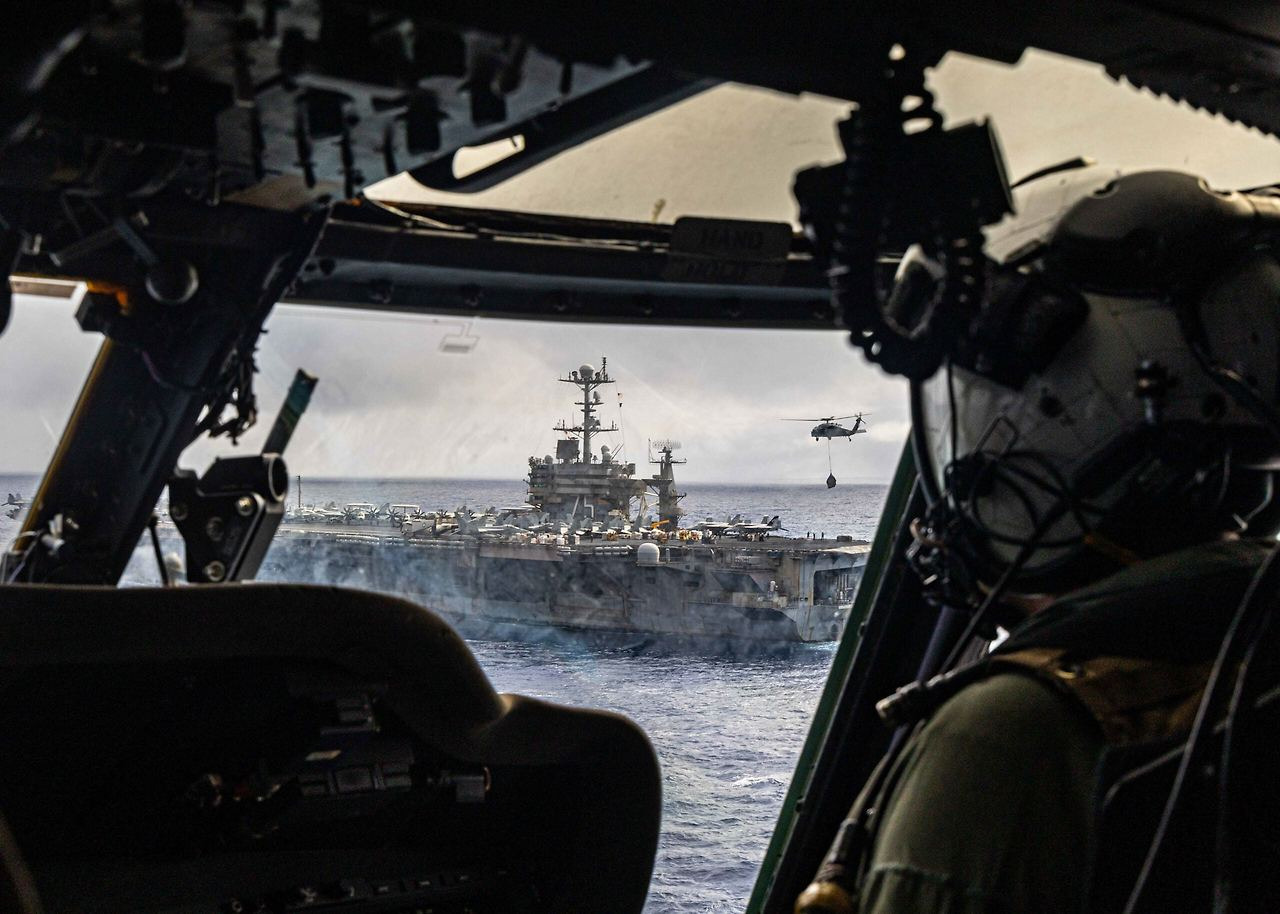
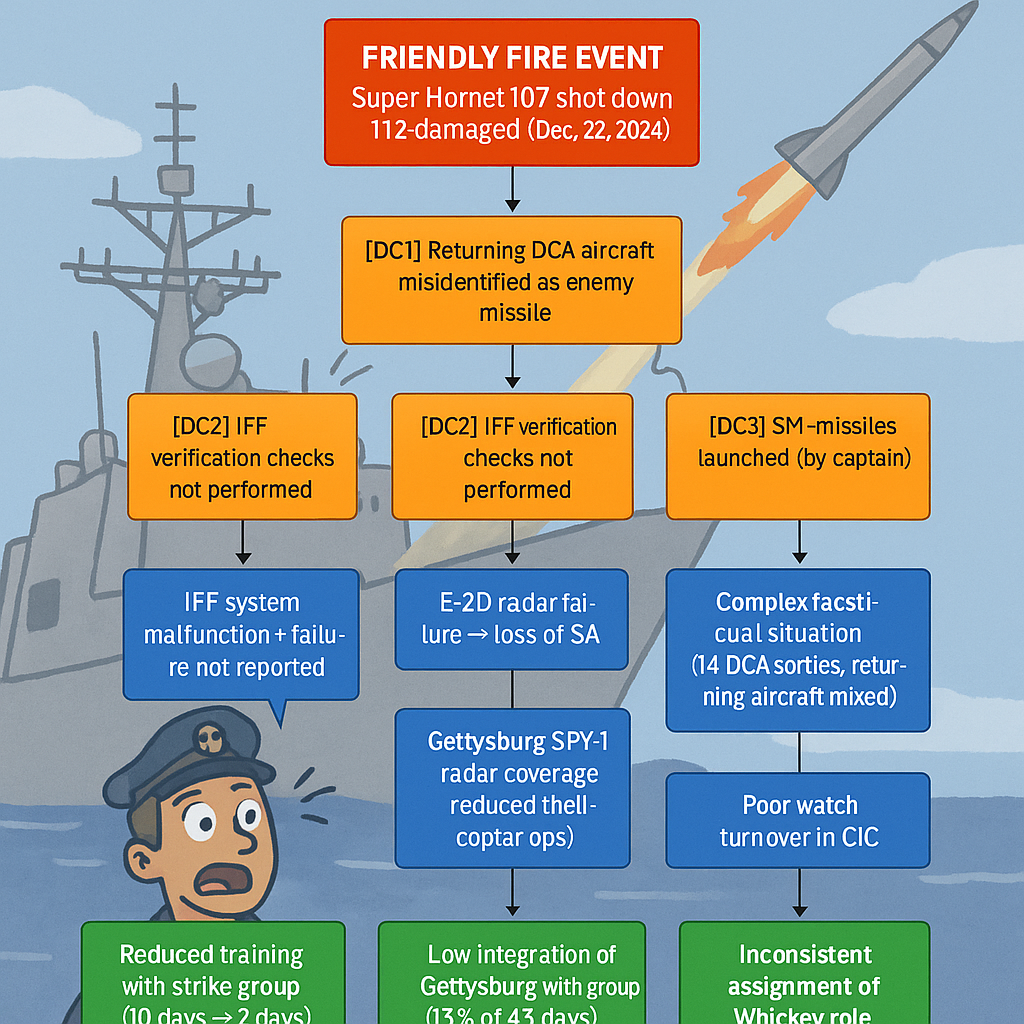
An MH-60S Knight Hawk helicopter, attached to the ‘Dragonslayers’ of Helicopter Sea Combat Squadron (HSC) 11, conducts a vertical-replenishment with the Nimitz-class aircraft carrier USS Harry S. Truman (CVN-75) on May 25, 2025. US Navy Photo
Leadership failures, training gaps and malfunctioning equipment drove the preventable loss of three F/A-18 Super Hornets and a collision between carrier USS Harry S. Truman (CVN-75) and a merchant ship, according to investigations released Thursday by the service.
The four mishaps occurred from late December 2024 to early May 2025 while Harry S. Truman, Carrier Air Wing 1 and the carrier’s escorts were tasked with striking Houthi military targets in Yemen. Near the tail end of its deployment – which included the 52-day Operation Rough Rider – the strike group weathered ballistic and anti-ship missiles and one-way attack drones.
The released investigations focused on four incidents:
- Dec. 22: Guided-missile cruiser USS Gettysburg (CG-64) fired two Standard Missile 2s at a pair of Super Hornets coming in for a landing aboard Harry S. Truman.
- Feb. 12: Harry S. Truman collided with a merchant tanker in Port Said in the Mediterranean Sea.
- April 18: While Harry S. Truman was evading an incoming Houthi ballistic missile, an F/A-18E Super Hornet slid from the carrier’s hangar bay.
- May 6: An F/A-18F Super Hornet attempting to land on Harry S. Truman went over the edge of the carrier.
In each case, the investigating officers independently concluded that each mishap was preventable.
In a call with reporters on Thursday, service officials emphasized the high operational tempo in the Red Sea, where sailors repeatedly came under drone and missile fire from the Yemen-based Houthis. Despite the incidents, the officials praised the overall performance of the strike group throughout its nine-month deployment.
The Navy declined to release the accountability actions for sailors involved in the four incidents when asked by USNI News. Outside of removing Harry S. Truman’s commander Capt. Dave Snowden following the Feb. 12 collision, the service did not say whether anyone else was punished or retrained.
“I assure you that accountability actions were taken across all the operators involved in this. That could be from an administrative reaction to take away someone’s watch qualification and have them requalified to administrative procedures in accordance with the Uniform Code of Military Justice,” a senior Navy official told reporters. “I don’t feel an obligation to publish those results to the world.”
Friendly Fire
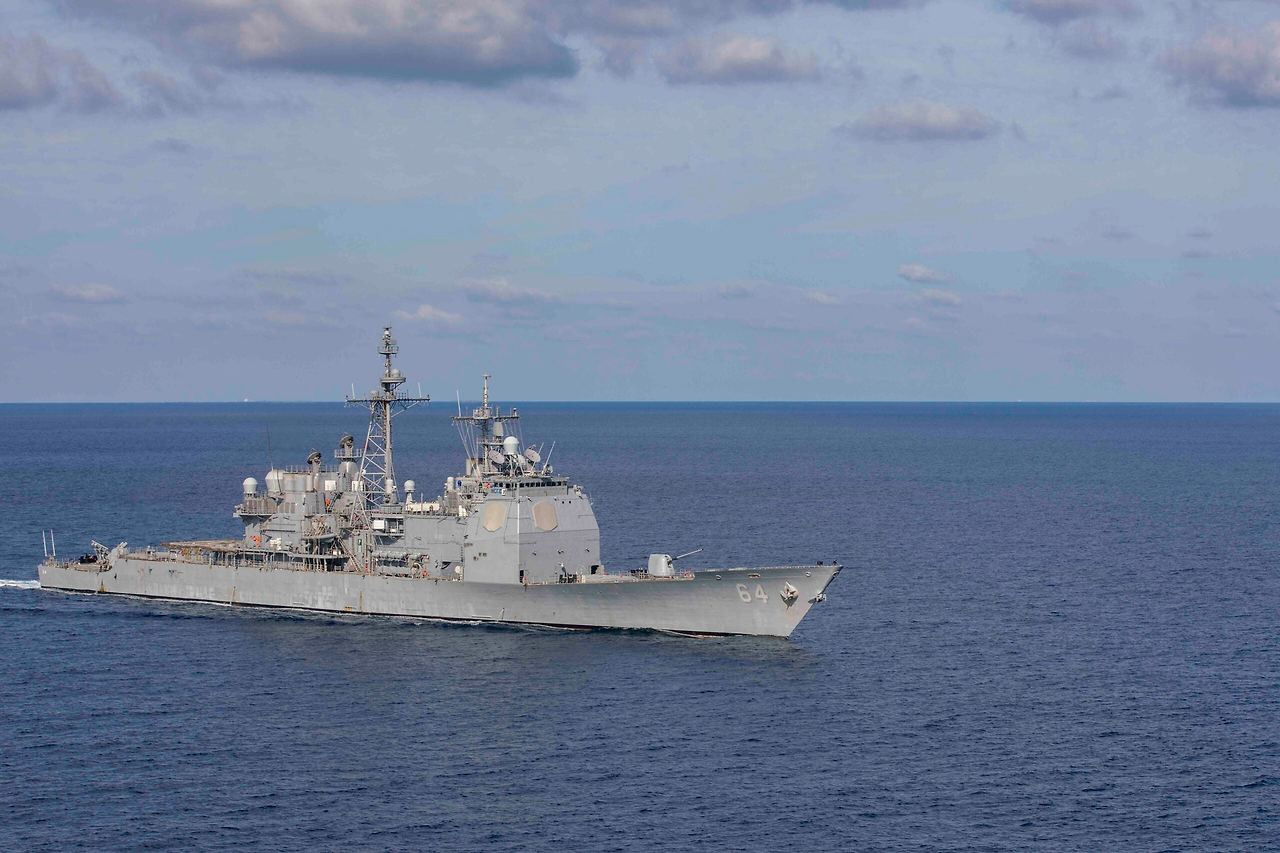
Ticonderoga-class guided-missile cruiser USS Gettysburg (CG-64) steams in the US Central Command area of responsibility on Dec. 16, 2024. US Navy Photo
Harry S. Truman and the strike group set out across the Atlantic in September 2024 from Naval Station Norfolk, Va., after training on the East Coast.
Capt. Justin Hodges commanded the freshly refurbished cruiser USS Gettysburg (CG-64). He was designated as the air defense commander for the strike group, reporting to Rear Adm. Sean Bailey, who led Carrier Strike Group 8. The air defense commander, or Whiskey, is responsible for coordinating the defense of the strike group, managing both ships and aircraft operating around the carrier.
In late December, the strike group entered the Red Sea and began operations against Houthi targets. Gettysburg was operating away from the strike group while guided-missile destroyer USS Stout (DDG-55) filled in as the air defense commander.
Harry S. Truman was one of a string of carriers deployed to the Red Sea after Hamas’ Oct. 7, 2023 attack on Israel. The Biden administration launched Operation Prosperity Guardian to counter subsequent Houthi strikes on merchant shipping.
Gettysburg entered the Red Sea on Dec. 18, four days after the rest of the strike group. For the first three months of the deployment, the cruiser mostly stayed in port or operated apart from the formation, serving as Whiskey for about 43 percent of the time, according to the investigation.
“It is important to note that over the immediate 45 days prior to the incident, [Gettysburg] only operated with the [strike group] 15 percent of the time (seven of 45 days),” reads the investigation conducted by former Harry S. Truman commander Rear Adm. Kavon Hakimzadeh.
On the front end of the deployment, a planned 10-day group sail where warfare commanders could train together was cut down to two due to an oiler shortage on the East Coast.
“We never really got a chance to learn from the integration,” the unnamed chief of staff for Carrier Strike Group 8 told investigators. “I would have liked to have a group sail longer than two days. We never got the chance to say ‘that does not work … let’s try something else.’ We just had to be like that’s done, that’s done, and move down the list. We then had to move on to the next thing.”
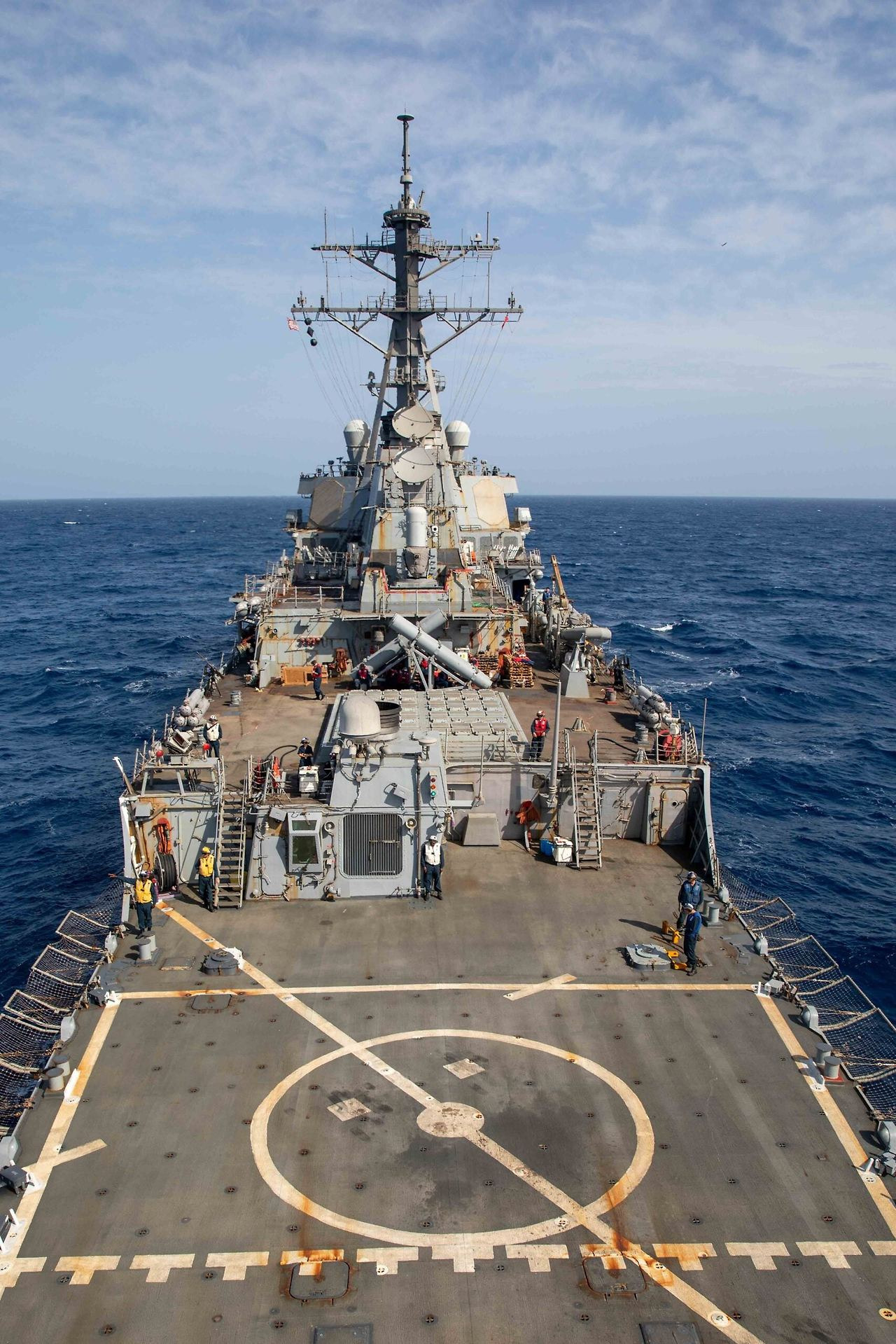
USS Stout (DDG-55) sails in the U.S. Central Command area of responsibility on April 4, 2025. US Navy Photo
Investigators found that crew on the Gettysburg was sometimes disconnected with the rest of the strike group while operating at a distance and wasn’t participating in planning meetings ahead of the initial defensive strike mission on Dec. 21.
“The plan for both the strike and the associated air defense plan was not well understood on Gettysburg. Across various members of the [combat information center] watch team, they did not understand the timing of the event, the departure and return to force plan, or the potential threat response,” reads the report.
Additionally, several systems that identified friendly aircraft were either switched off or not working. Many of those failures weren’t reported to the strike group leadership on the carrier ahead of the first major series of strike missions that kicked off on Dec. 21.
On that Saturday, waves of Super Hornets from Harry S. Truman flew into Yemen to strike Houthi targets while Gettysburg, Stout, USS Jason Dunham (DDG-109),USS The Sullivans (DDG-68) and a group of defense counter air (DCA) Super Hornets operated near the carrier.
“Almost immediately after the strike package launched, there was an earlier than anticipated Houthi response, which led to extensive targeting of available DCA to airborne threats,” reads the report.
The Houthis fired waves of anti-ship and one-way attack drones for hours while the strike group fought off the threats. Aboard the carrier, the strike commander directed some of the Super Hornets returning from strike missions to join the fighters protecting the strike group.
“In total, 14 different DCA sorties occurred over the course of four hours, involving a total of 11 individual aircraft, in comparison to the original six scheduled DCA sorties,” reads the investigation.
Fighters looped into the protection mission included an F/A-18F serving as a tanker for the air wing, labeled in the investigation as Aircraft 107, assigned to the “Red Rippers” of Strike Fighter Squadron (VFA) 11; an F/A-18F designated Aircraft 112; and another Super Hornet designated as Aircraft 211.
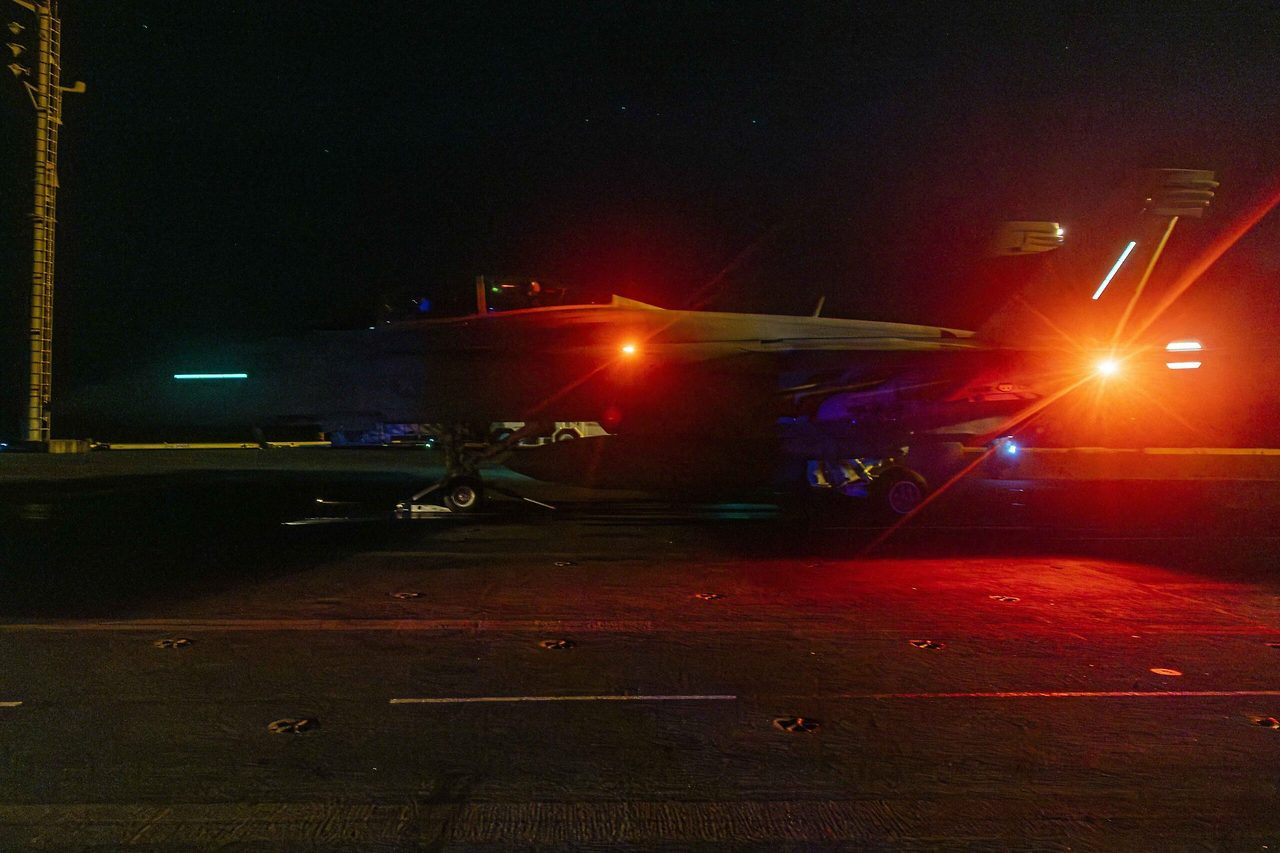
Sailors prepare an F/A-18F Super Hornet, attached to the ‘Red Rippers’ of Strike Fighter Squadron (VFA) 11, to take off from the flight deck of the Nimitz-class aircraft carrier USS Harry S. Truman (CVN-75), Sept. 25, 2024. US Navy Photo
At 1:40 a.m., Gettysburg reported that the area was clear of hostile tracks. Over the course of the next 40 minutes, the DCA was given “conflicting orders” and stayed airborne, the report reads.
Aboard Harry S. Truman, the strike warfare commander, who directed the attacks in Yemen, ordered the remaining DCA Super Hornets to return to the carrier. According to the investigation, that order was not understood by the entire strike group.
As fighters returned to the carrier, two key positions in the guided-missile cruiser’s combat information center had just changed shifts, and sailors were preparing for a helicopter landing on its flight deck, reducing the coverage of the cruiser’s AN/SPY-1 air search radar. At the same time, the E-2D Hawkeye that had overseen the strike group with its radar had a malfunction and transferred its responsibilities to one of the destroyers, according to a separate account from the pilot of Aircraft 107.
The new watchstanders didn’t know where the remaining DCA fighters were or that Gettysburg’s Identification Friend or Foe system, which automatically identifies friendly targets, was malfunctioning. For the new watchstanders, the fighters appeared on their screens as “unknown” contacts.
“The Gettysburg CIC team believed them to be enemy anti-ship cruise missiles,” reads the report.
Without checking via other means, Gettysburg’s commander, Capt. Justin Hodges, directed his crew to fire two SM-2s — one at Aircraft 107 and the other at Aircraft 112 – according to the report.
From the cockpit of the Super Hornet, the pilot saw the missile launch from Gettysburg, but was confused about the target.
“Yooooo that shit is crazy, I can’t believe they’re shooting a drone down,” reads a quote from Aircraft 107’s pilot in the separate account.
Within seconds the pilot and the weapon systems officer realized they were targets and ejected from the Super Hornet before it was destroyed by the first missile.
The second Super Hornet made an evasive maneuver and was set to eject, but the second SM-2 was deactivated before impact.
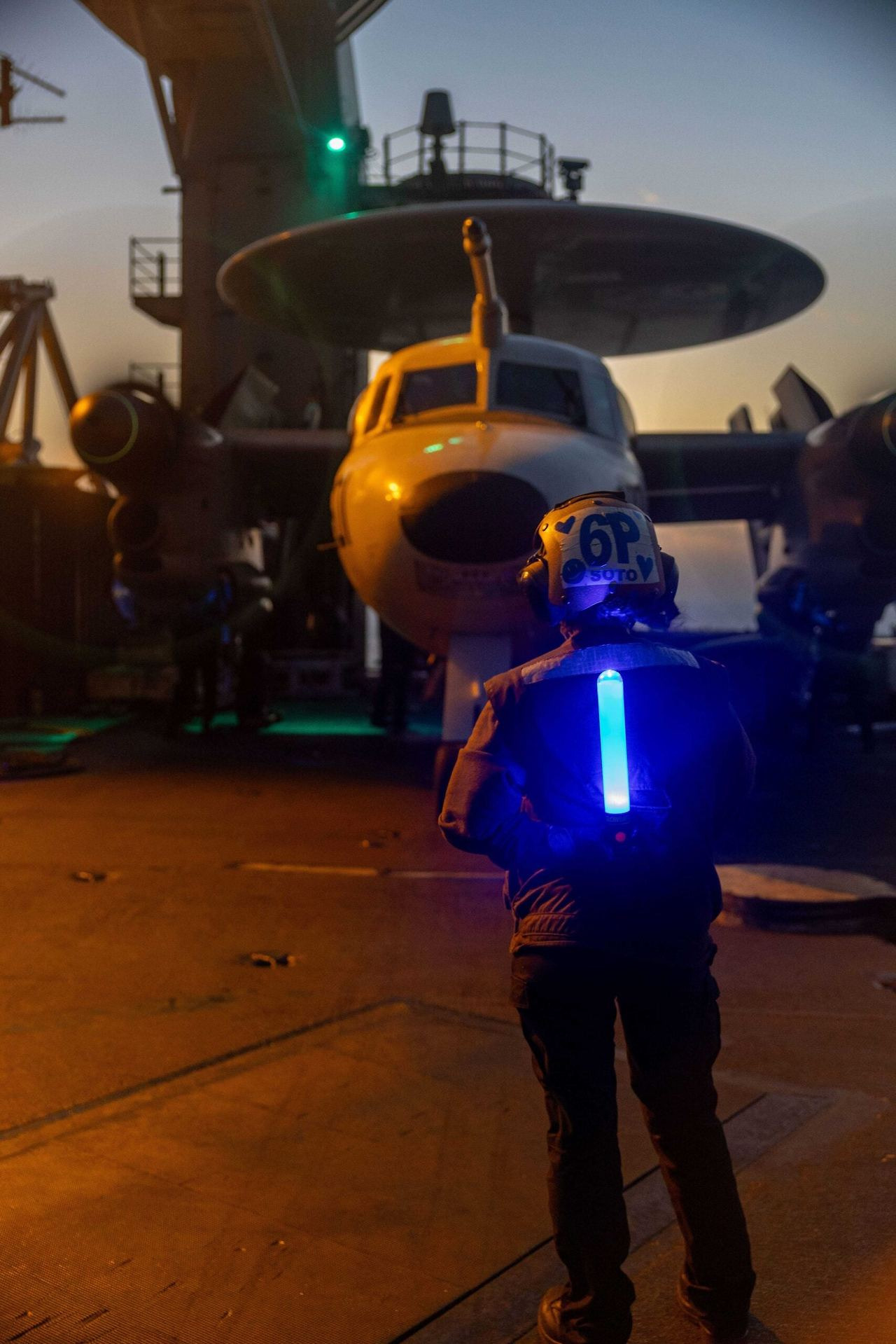
An Aviation Machinist’s Mate, assigned to Airborne Command and Control Squadron (VAW) 126, directs an E-2D Advanced Hawkeye on pre-flight checks on the flight deck of the Nimitz-class aircraft carrier USS Harry S. Truman (CVN-75) on March 28, 2025. US Navy Photo
“It passes within 100 feet of our jet and shakes the jet,” the pilot of Aircraft 112 said in a separate account of the incident. “It explodes off our left on the surface of the water.”
The investigation concluded that the attacks on the two Super Hornets were preventable, despite the equipment failures.
“The issues inherent to Gettysburg and caused by casualty conditions could have been mitigated through effective planning and timely execution prior to the 21 December operations,” reads the report. “Neither of these occurred. Specific failures in the planning process exacerbated an already challenging integration scenario for the strike group.”
Hodges left the ship following an at-sea change of command on Jan. 30. He did not respond to a request for comment from USNI News.
Afterwards, the Navy introduced a software patch to correct the Aegis Combat System’s failure to identify friendly tracks, a senior Navy official told reporters on Thursday.
“We’ve invested over $55 million since this incident to correct those Aegis Weapon System deficiencies,” a senior naval service official told reporters. “Over the last two years, our industry partners have demonstrated their commitment and their ability to rapidly correct these software deficiencies, and it’s been very impressive.”
Collision off Port Said
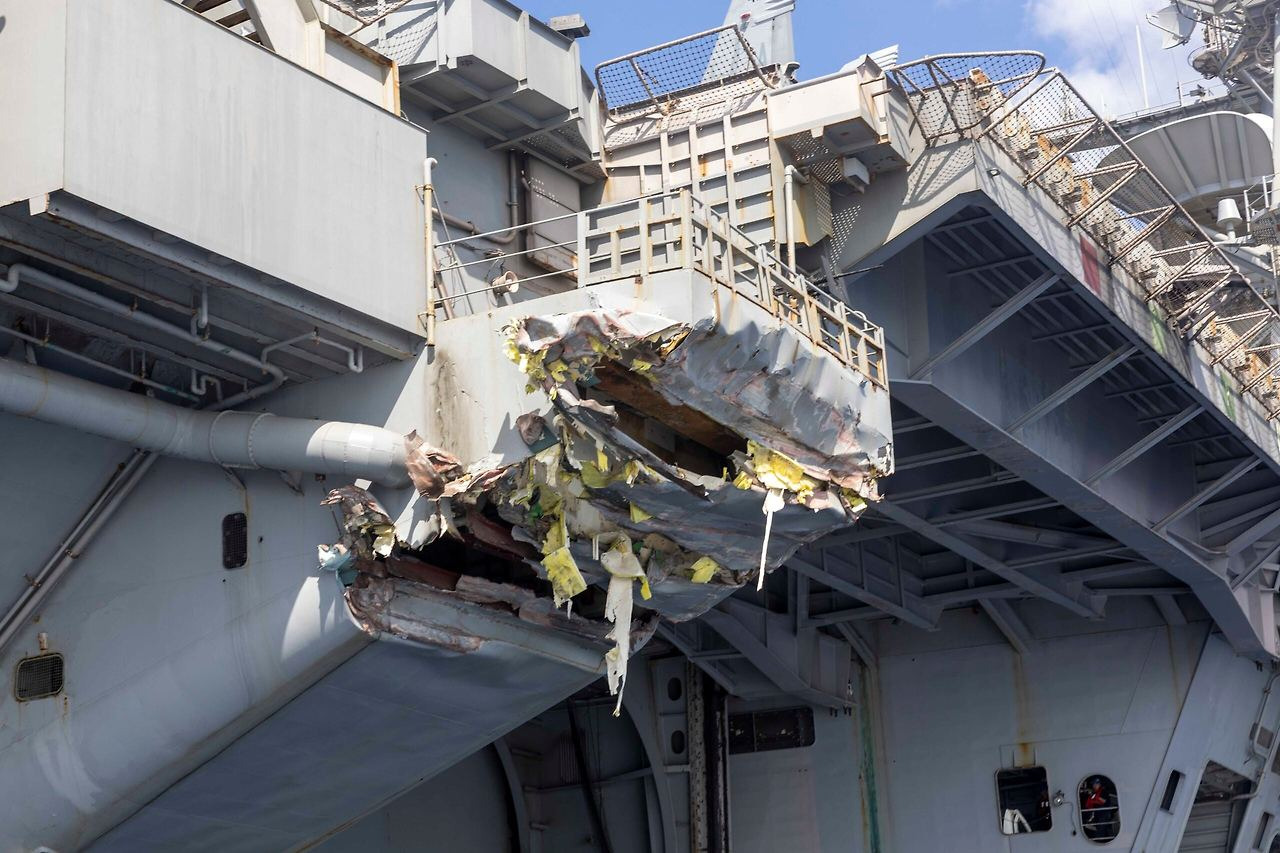
Exterior damage of USS Harry S. Truman (CVN-75) viewed from a ship’s rigid-hull inflatable boat following a collision with merchant vessel Besiktas-M, Feb. 12, while operating in the vicinity of Port Said, Egypt on Feb. 13, 2025. US Navy Photo
Two months after Gettysburg shot down its Super Hornet, while Harry S. Truman was traveling from a port visit to Naval Support Activity Souda Bay, Greece to the Suez Canal, the carrier collided with merchant ship MV Besiktas-M.
An investigation led by Rear Adm. Todd Whalen found that “poor seamanship” and a lack of training led to the Feb. 12 collision near Port Said, Egypt.
The probe found a series of missteps occurred on the bridge that evening before the collision, including improperly recorded deck logs, inefficient communication between sailors and a lack of an Automatic Identification System transmission from Harry S. Truman.
The carrier was sailing 19 knots through the crowded waters near Port Said, preparing to transit south through the Suez Canal, when it collided with the merchant vessel at 11:45 p.m. local time, according to the investigation.
No sailors were injured or killed, though a sponson located to the rear of the carrier’s starboard aircraft elevator was damaged and the merchant tanker cut into the hull above the waterline further aft. One week after the collision, the Navy relieved Snowden, Harry S. Truman’s commanding officer at the time of the incident.
The probe compared the incident to two 2017 Navy collisions, including one between guided-missile destroyer USS Fitzgerald (DDG-62) and the Philippine-flagged merchant vessel ACX Crystal that killed seven U.S. sailors, and another between USS John McCain (DDG-56) and a Liberian tanker that killed 10.
“There is a natural human tendency to minimize near misses and dismiss the hypothetical,” reads the investigation into the Harry S. Truman collision. “In this case, the difference between life and death was a few feet or a few seconds. This should be a sobering reminder of what happened in the Fitzgerald and McCain collisions, and what could have happened on [Harry S. Truman].”
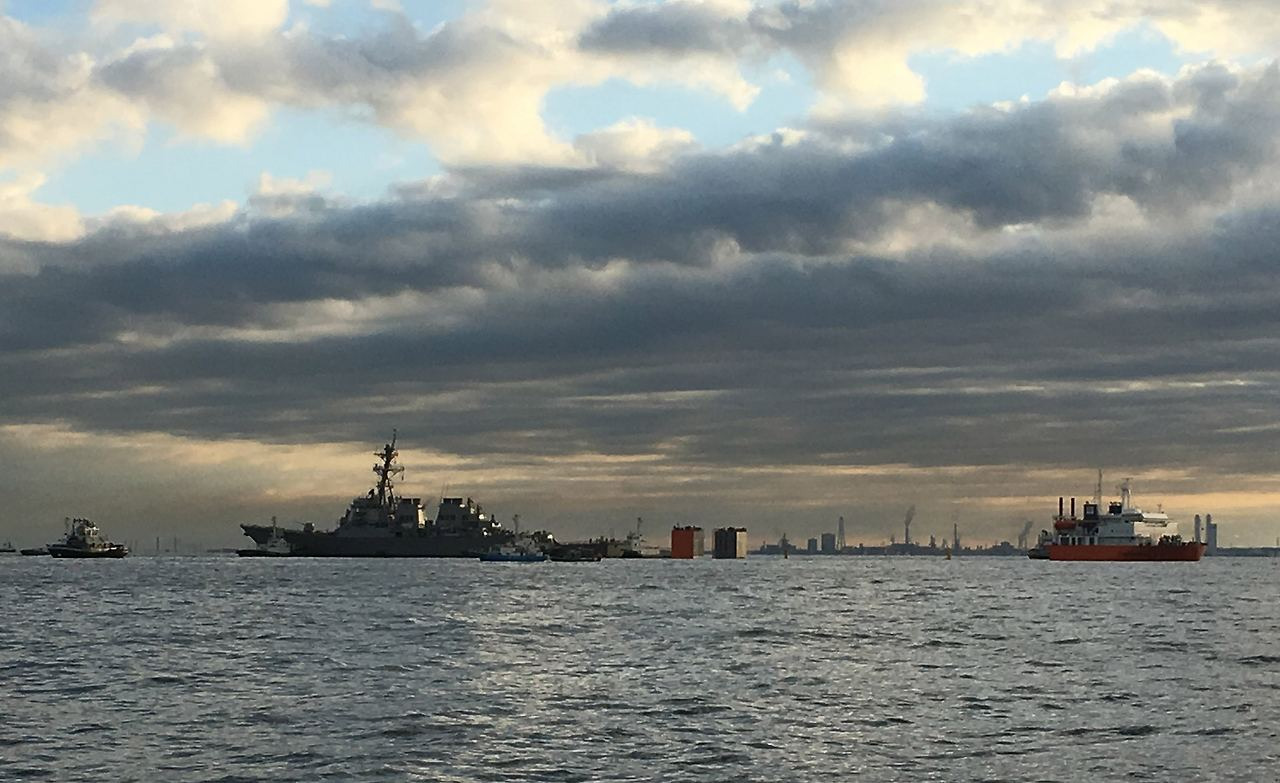
USS Fitzgerald (DDG-62) stands by before it is loaded onto the heavy lift transport vessel MV Transshelf in 2017. US Navy Photo
Whalen’s investigation cited fatigue as a human factor in the collision and cited department heads who described a “just get it done” atmosphere aboard the carrier. Both sailors’ lack of sleep and pressure to perform tasks regardless of risk were crucial themes in the 2017 collisions.
Asked about the similarities between this investigation’s findings and the probes into the two 2017 collisions, the senior Navy official told reporters Thursday that the service is undermanned, citing the challenging combat environment in the Red Sea.
“We have 18,000 gaps at sea, which we are working mightily to reverse,” the official said. “That said, the fleet commanders do not certify ships or squadrons or units to deploy unless they’re manned, trained and equipped to go execute that mission. That doesn’t mean we’re not going to put those sailors into challenging situations, as we did with [Harry S. Truman].”
The investigation identified four “root causes” that led to the collision, including “poor seamanship” exhibited by the officer of the deck that went against the Rules of the Road and a lack of bridge resource management. The probe also found that Snowden “abdicated his responsibility for safe navigation during the approach to the Suez Canal to [the navigator
and [officer of the deck] contrary to U.S. Navy regulations,” according to the investigation. The navigator also “abdicated responsibility” while sailing to the Canal, the probe concluded.
The navigator called Snowden to the bridge at 11:43 p.m., two minutes before the collision occurred. At 11:44 p.m., the conning officer “ordered a hard left rudder” and then Snowden “ordered a hard right rudder to minimize the angle of contact” after realizing a collision was inevitable, according to the investigation.
Snowden’s “hard right rudder order reduced the closure rate between Harry S. Truman and Besiktas-M, reduced the angle of impact, and delayed the time to impact, which likely prevented more significant damage and potential loss of life,” reads the investigation.
“[Snowden’s] witness interview was a master class in ownership and accountability. I admired his candor and professionalism,” Whalen wrote.
After the collision, the carrier sailed to Souda Bay for repairs that cost the Navy $685,000.
“Repair efforts included patching holes, erecting a temporary bulkhead, replacing safety rails, adding structural supports, and removing non-structural damaged material,” reads the investigation.
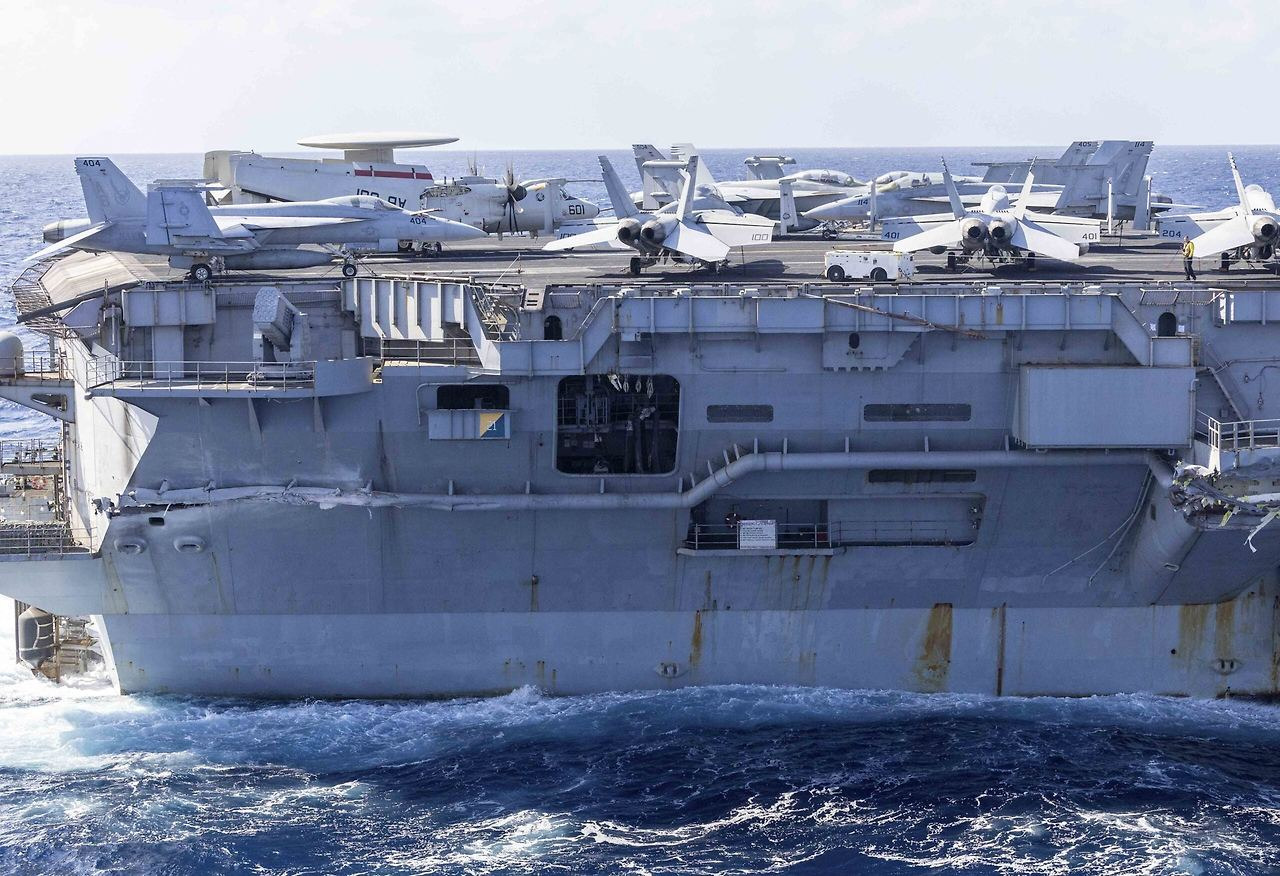
Exterior damage of USS Harry S. Truman (CVN-75) viewed from an MH-60S Knight Hawk helicopter, attached to the ‘Dragonslayers’ of Helicopter Sea Combat Squadron (HSC) 11 following a collision with the merchant vessel on Feb. 12, 2025. US Navy Photo
In the investigation, Whalen recommends improving training for carrier watchstanders so it more closely aligns with the surface warfare community standards.
“Unless they are SWOs, CVN watchstanders are not required to attend navigation and seamanship training prior to qualifying as a Bridge watchstander. On CVNs, Bridge watchstander training is strictly on-the-job,” reads the investigation.
“The Navy should not have two standards for Bridge watchstanders under the cognizance of different [t]ype [c]ommanders,” the investigation continues. “Adding mariner skills training requirements for CVNs would reduce risk of collision in future operations.”
Whalen wrote that the collision could have been much worse if the conditions were only slightly different.
“[A] small change in the timing of the collision or the angle of impact could have caused catastrophic results. Had the collision occurred 100 feet forward, the impact would have likely pierced a berthing compartment with 120 sleeping sailors. Had [aircraft elevator three] been lowered at the time of the collision, Harry S. Truman would have suffered a significant degradation to flight deck operations,” wrote Whelan.
“As it was, there were eight sailors in a space less than 10 feet from the impact location; a one-degree change in trajectory could have destroyed the space and caused eight fatalities,” he wrote. “My team spoke with those eight sailors, and they will never forget how close they came to losing their lives. Neither should we.”
Equipment Failures Blamed for Two Super Hornet Losses
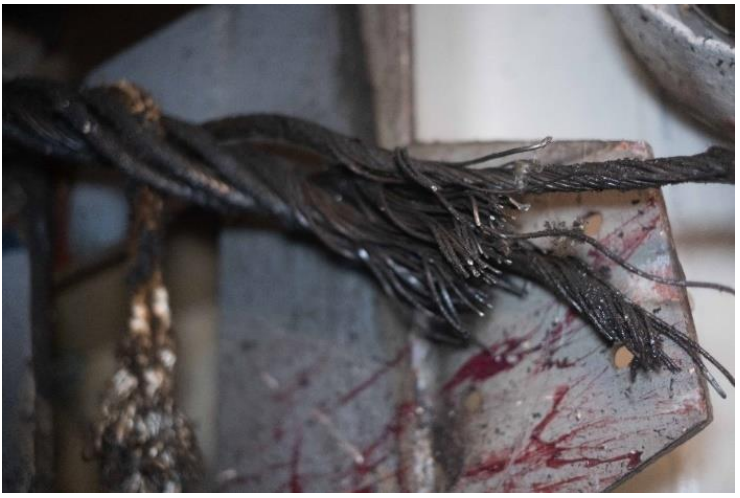
Severed cable from USS Harry S. Truman (CVN-75) following a wire break on May 6, 2025. US Navy photo
Harry S. Truman’s troubles weren’t over. After its repairs at Souda Bay, the carrier lost two more Super Hornets to equipment failures.
The Navy faulted bad breaks, irreparable non-skid and inadequate communication for the loss of an F/A-18 fighter jet and a tow tractor after Harry S. Truman unexpectedly made an evasive maneuver to avoid an incoming missile at the same time the flight deck and hangar bay conducted aircraft movements.
On April 28, a towing tractor and attached Super Hornet from the “Knighthawks” of Strike Fighter Squadron (VFA) 136 both sank into the Red Sea after falling from Hangar Bay 3. The $36 million jet was the second of three that Harry S. Truman lost during its Middle East deployment.
An investigation headed by Capt. Douglas Ivanac found that Harry S. Truman had been traveling at about 15 knots when a tactical action officer announced a medium-range ballistic missile was incoming. A move team in the hangar bay removed the wheel chocks and tiedown chains from a Super Hornet parked in an elevator well to pull the aircraft into the hangar bay so the deck doors could close.
Simultaneously, the ship performed an evasive maneuver – in accordance with its standard operating procedure – increasing speed to 30 knots and making a 10-degree starboard turn before the turn was increased to 15 degrees. The increased turn rate caused the ship to heel at a faster rate before the bridge team eased the rudder back to 10 degrees and eventually down to two degrees.
The unsecured fighter and towing tractor began rolling backwards, forcing a brake rider in the cockpit of the Super Hornet and the tractor operator to jump from their positions just before the jet and tractor went over the edge. No sailors were lost in the incident, but one suffered a minor injury.
Investigators found that the fighter jet likely had a brake system failure after multiple interviewees described the aircraft’s tires as freely rolling despite the brake rider actively attempting to stop the aircraft.
While investigators said brake failure was the main cause of the accident, they also found inefficient non-skid coating in Hangar Bay 3, which had not been replaced since January 2018. According to the investigation, the hangar bay was described as “slippery” and a witness saw the tractor losing traction when towing and “sliding a bit during transit.”
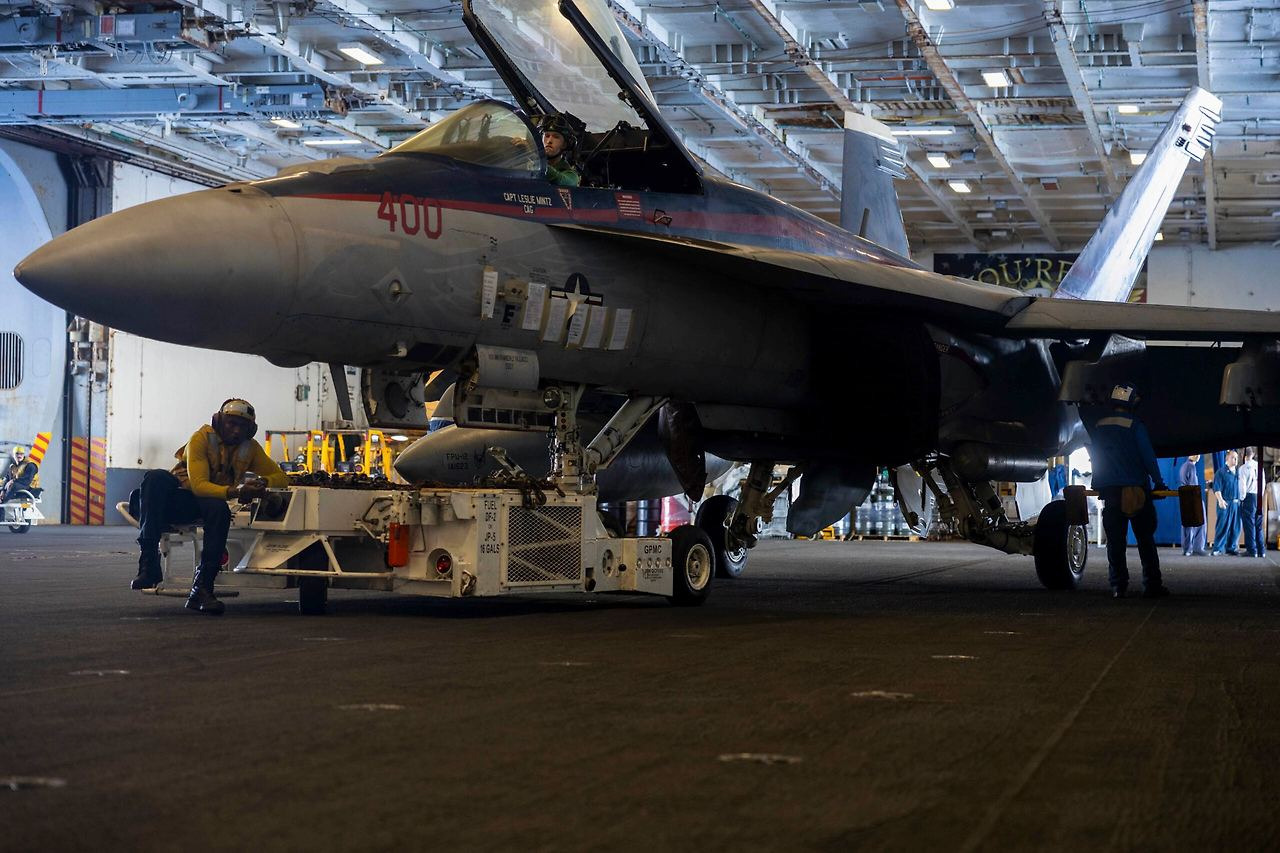
Sailors transport an F/A-18E Super Hornet, attached to the ‘Knighthawks’ of Strike Fighter Squadron (VFA) 136, aboard the Nimitz-class aircraft carrier USS Harry S. Truman May 22, 2025. US Navy Photo
Vice Adm. John Gumbleton, who penned the investigation’s final endorsement letter, found that insufficient communication between the bridge, flight deck and hangar bay “significantly contributed” to the incident. The report says neither Flight Deck Control nor Hangar Bay Control heard or acknowledged the bridge announcement, so they didn’t expect the ship’s first turn.
“I concur with [Naval Air Force Atlantic]’s determination that the loss of Aircraft 407 would have occurred irrespective of improved hangar bay non-skid or new spotting dolly tires. Significantly, both core issues contributing to the F/A-18F’s loss represent a failure to adhere to established procedures and processes,” Gumbleton wrote.
The Navy faulted equipment failure, as well as ineffective training and poor leadership oversight, for the loss of another Super Hornet overboard during an attempted landing just one week later.
However, unlike the preceding loss, the May 6 mishap was considered “entirely preventable,” according to an investigation endorsement signed by Rear Adm. Sean Bailey.
A two-seat Super Hornet assigned to the “Red Rippers” of Strike Fighter Squadron (VFA) 11 came in for a landing around 9 p.m. local time May 6 when the arresting wire tail-hooked by the jet failed, letting the plane plummet into the Red Sea. The air crew ejected and were safely recovered from the water, USNI News previously reported.
According to the investigation, when the aircraft hooked the wire, witnesses heard a loud boom and saw sparks and flames as the jet went overboard. Below deck in the #4 starboard sheave damper space, crew heard a loud explosion and saw the crosshead stroke out and eject from the back of the sheave damper, smashing into the #5 starboard accumulator charging panel.
The crosshead was spinning “like the Tasmanian devil” with the wire still attached, the report reads. The sheave damper operator, who had opened the safety cage moments earlier – against procedure – suffered a minor laceration to the neck, and the operator’s headset was ripped off during the incident.
The sheave damper, which is a hydraulic shock absorber, failed because the proper washer was not installed between the castle nut and the clevis pin. A washer was never recovered from the space, indicating that the material failure may have occurred days or weeks prior to the May 6 incident.
“The lack of the correct washer enabled the clevis pin to back out from the clevis and yoke, which ultimately caused the clevis pin to shear and fail. As soon as the clevis pin failed, load was transferred from the clevis to the yoke, which forced the clevis pin out of the hole that attaches the crosshead to the piston. This caused the sheave damper crosshead to leave the track, resulting in overload and failure of the P4 cable,” the investigation report reads.
The high operational tempo, inadequate manning and training and low level of knowledge caused the incident, which occurred on Harry S. Truman’s 52nd consecutive day of flight operations, the report reads. Substandard maintenance practices, substandard arresting gear leadership and overall low level of knowledge among arresting gear personnel contributed.
The crew failed to notice the material failure of the sheave damper despite maintenance completed May 5 and a pre-operational check done the day of the incident.
“Visual equipment inspections between recovery cycles presented yet another missed opportunity for the #4 STBD sheave damper operator to identify that the castle nut and cotter pin were inside the clevis,” the report reads.
It was also reported to investigators that the sheave damper ready light flickered yellow and green, indicating “ready/not ready,” prior to the aircraft making the arrested landing, but the operator responsible for calling “Foul Deck” in accordance with procedure attempted to troubleshoot the issue instead.
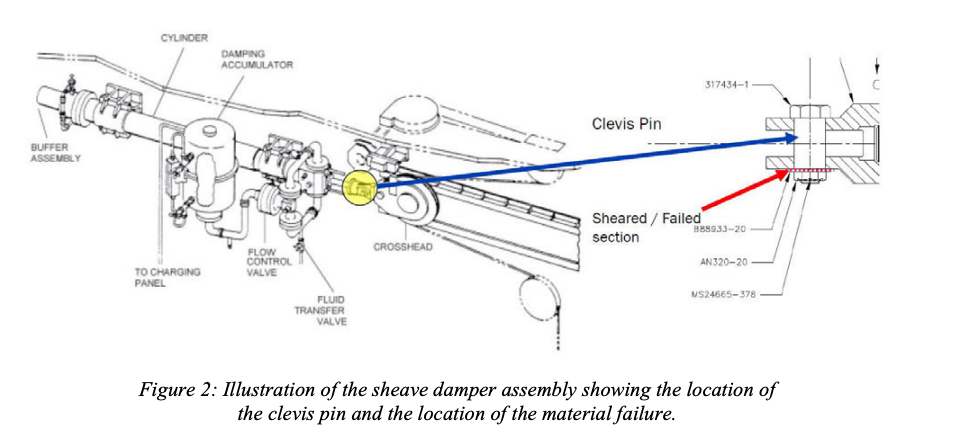
US Navy image
Additionally, the division’s quality assurance program was ineffective, with only one of three arresting gear quality assurance positions filled. The quality assurance supervisor, the report reads, was not monitoring or reviewing the training of personnel involved in the maintenance of aircraft launch and recovery equipment, resulting in a substandard maintenance culture in the division.
The arresting gear work center was also facing a personnel shortage, with 34 sailors – including 10 temporary additional duty sailors – as of May 18. The arresting gear assistant leading petty officer noted that, earlier in the deployment, there were 50 sailors in the arresting gear work center, according to the investigation.
“This mishap was entirely preventable had the commanding officer and air department on USS Harry S. Truman simply complied with the requirements of the aircraft launch and recovery equipment maintenance program (ALREMP). While the investigating team highlighted several factors that contributed to the eroding standard within V2 Division on Harry S. Truman, the hard reality is that multiple individuals at all levels of leadership were complicit in allowing the ALRE Maintenance Program to degrade to the level of abject failure,” reads the investigation’s first endorsement signed by Bailey.
Ultimately, the incident resulted in minor injuries among an unspecified number of crew, the loss of a $60 million Super Hornet and more than $207,000 in repairs to the arresting cable and engine.