프랑스 육군의 육군항공병과장이 헬기는 여전히 중요하며, 초기에 헬기들 손실이 많았던 건 주간에 고고도로 무유도 병기를 주로 쓴 전술 때문이었다고 말했네요.
프랑스 육군 지도자들은 우크라이나가 헬리콥터 운용을 끝내는 것이 아니라 바꾸고 있다고 말한다
작성자
Clement Charpentreau
편집자
Emma Yates-Badley
2026년 1월 14일, 17:38 (UTC +3)
DefenseFrench Army NH90 helicopter
AeroTime
프랑스 육군의 헬리콥터 병과(ALAT)는, 드론과 무인 시스템이 공격 및 정찰 헬리콥터에만 맡겨졌던 역할들로 확장되는 가운데서도, 우크라이나 전쟁이 고강도 분쟁에서 유인 회전익기를 버리기보다 전술을 조정하도록 군대를 밀어붙이고 있다고 주장한다.
프랑스 주간지 Le Point에 한 발언에서, 프랑스 육군 헬리콥터 병과를 지휘하는 다비드 크뤼질 장군과 그의 부관 위베르 두토 장군은, 2022년에 헬리콥터가 현대전에 더는 버틸 수 없게 되고 있다는 초기 예측이 사건 전개에 의해 확인되지 않았다고 말했다.
우크라이나 초기 전투에서는 플랫폼보다 전술이 더 중요했다
회전익 항공은 과거 전쟁들에서 반복적으로 높은 손실을 감내해 왔다. 베트남 전쟁만 해도 미군 헬리콥터 5,600대 이상이 상실되었고, 그 대부분은 사고와 충돌 때문이었다. 그러나 운용자들은 헬리콥터를 퇴역시키기보다 전술을 바꾸는 방식으로 대응했다.
전차나 항공모함이 주기적으로 구식이라고 선언되듯이, 헬리콥터가 “끝났다”는 예측은 2022년 2월과 3월 이후 널리 퍼졌는데, 이는 러시아 Ka-52와 Mi-8 항공기가 키이우 인근 호스토멜 공항에 대한 실패한 공격 동안 큰 손실을 입은 뒤였다.
크뤼질에 따르면, 2022년 초 러시아의 헬리콥터 손실은 그것들이 어떻게 운용되었는지를 반영했다. 항공기들이 더 높은 고도로, 그리고 주간에 비행하면서, 단거리 방공 체계(맨패드 포함)와 전투기에 노출되었다.
러시아 승무원들이 야간의 저고도 운용으로 전환하자 손실은 줄었고, 헬리콥터들은 우크라이나의 실패한 2023년 반격 동안 더 큰 역할을 했는데, 전선에沿해 신속한 대전차 대응자로 기능했다.
한편 우크라이나는 생존한 Mi-8 수송기와 공격 헬리콥터를 기동식 대드론 사수로 재목적화하여, 야간에 쌍으로 비행하면서 저고도에서 느린 샤헤드형 체공 탄약을 표적으로 삼았다.
크뤼질은 또한, 베네수엘라에서의 최근 미군 급습이 공격 및 수송 헬리콥터에 의존해 특공대를 투입했다는 점을, 그가 승무원이 많은 고급 임무에서 계속 중심적일 것이라고 믿는 이유를 보여주는 사례로 지적했다.
헬리콥터는 저고도로 운용될 수 있고, 지상 기동과 긴밀히 통합될 수 있으며, 차량이 대규모로는 건널 수 없는 지형 위에서 정밀한 기동성을 제공할 수 있는 곳에서 관련성을 유지했다.
드론화될 수 있는 것과 유인으로 남는 것
헬리콥터가 가장 큰 압박을 받은 곳은, 조밀한 방공망을 관통해야 하는 심부 정찰과 전진(stand-in) 타격 임무들이다. 여러 나토 군대는 그러한 역할들을 드론, 체공 탄약, 공중발사 효과체로 옮기고 있는데, 소모 가능한 무인 시스템이 유인 항공기가 감당할 수 없는 위험을 흡수할 수 있다고 주장한다.
미국은 이 방향으로 가장 멀리 나아갔다. 2025년 미 육군은, 더 광범위한 항공 개편의 일환으로, 여러 기존 유인 헬리콥터 부대를 줄이고 드론 군집, 소모성 센서, 발사형 효과체를 확대할 계획을 확인했다. FARA 무장 정찰 헬리콥터의 취소는 이 흐름을 강화했다: 이제 경쟁적 공역 깊숙한 곳의 정찰은 주로 무인 임무로 간주된다.
A U.S. Army drone swarm experiment
RELATED
US Army to cut legacy helicopters, scale up drone swarms in aviation overhaul
대조적으로, 병력 수송, 의무후송, 화력지원, 지휘통제를 결합하는 중형 수송 임무는 가까운 장래까지 유인으로 남을 것으로 예상된다. 이런 임무들은 판단, 지상군과의 소통, 적의 행동에 대한 실시간 해석을 요구하는데, 프랑스의 헬리콥터 지휘관들은 이런 특성들이 자동화되기 어렵다고 주장한다.
“전투 지역에 특공대 20명을 투입하기 위해 우리는 항상 탑승 승무원이 있는 헬리콥터를 사용할 것입니다,”라고 두토는 설명했다. “[…] 리비아에서 초기 급습 동안, 우리는 카다피의 병사들에게 우리가 장비만을 노리고 있다는 것을 이해시켰습니다. 그들이 우리가 오는 소리를 들었을 때, 우리는 그들에게 사격하지 않을 것을 알았기 때문에 그들은 차량들로부터 떨어진 곳으로 재집결했습니다. 드론이 그걸 할 수 있었을지는 확신이 서지 않습니다.”
크뤼질은 대형 수직이착륙 드론이 헬리콥터의 단순하거나 더 저렴한 대체재가 될 것이라는 주장에 회의적이며, 터빈급 출력과 유의미한 체공 시간을 요구하게 되면 헬리콥터와 유사한 크기, 복잡성, 비용으로 수렴한다고 주장한다.
최근의 미국 프로그램들은 그 관점을 부분적으로 가로지르는데, 중량 화물 재보급이 대형 회전익 드론의 초기 활용 사례로 간주되기 때문이다. 이는 전선 근처의 예측 가능한 비행 패턴에서 승무원을 제거하기 때문이다.
예를 들어, 시코르스키의 U-Hawk 개념은 UH-60 블랙호크에서 조종석과 승무원을 제거하고 이를 완전 무인 화물 항공기로 바꾸어 자율 재보급을 수행한다. 이 모델은 기본 기체가 블랙호크로 남아 있기 때문에 헬리콥터의 경제성에서 벗어나지는 못하지만, 일부 유인 수송 임무를 대형 드론으로 대체해 유인 헬리콥터를 다른 임무에 투입할 수 있도록 하려는 것이다.
Sikorsky S 70UAS U Hawk autonomous helicopter
The U-Hawk concept (Credit: Sikorsky)
대-UAS와 ‘드론 운반’ 헬리콥터
두 장교는 모두 대드론 전쟁을 회전익 항공에 가장 중대한 신규 임무 세트 중 하나로 지목했다. 프랑스는 소형 공중 표적을 야간에 추적하는 데 적합한 기관포와 조준 체계를 갖춘 타이거 공격 헬리콥터의 운용에 대-UAS 임무를 통합하기 시작했다. NH90 카이만 같은 수송 헬리콥터도 객실 또는 후방 램프 사수를 통해 기여할 수 있다.
다른 서방 군대들도 비슷한 개념을 탐색하고 있다. 미 육군은, 계층화된 대-UAS 접근의 일부로 기관포와 유도 70mm 로켓을 활용하며, 시범에서 아파치 공격 헬리콥터로 소형 드론을 교전한 바 있다.
프랑스 기획자들은 또한, 타이거 또는 카이만이 편대의 수 킬로미터 앞쪽에서 정찰을 제공하도록 항공기에서 소형 드론을 방출하는 유·무인 팀 개념을 탐색하고 있다.
Frances DGA tests manual drone drops from Airbus A400M
RELATED
France tests manual drone drops from Airbus A400M in DGA flight trials
미국 제조사들도 비슷한 방향으로 움직이고 있으며, 시코르스키는 블랙호크와 CH-53K 승무원이 비행 중 여러 무인 자산을 지시하고 회수할 수 있게 하는 디지털 백본을 홍보하고 있다.
이 접근은 유인 항공의 민첩성과 판단을 보존하면서, 소모 가능한 플랫폼 위로 위험과 감지를 전방으로 밀어내며, 차세대 전투기와 함께 개발되는 고정익 “로열 윙맨” 개념을 반향한다.
현대화와 기체 갱신
A French Army Tigre attack helicopter (Credit: AeroTime)
프랑스는 이러한 전술적 전환을 현대화 예산으로 뒷받침하고 있다. 2025년에 확인된 타이거의 수명중기 업그레이드는, 그 플랫폼을 2040년대까지 신뢰할 수 있게 유지하려는 의도다.
병행하여 프랑스와 스페인은, 저가시성 환경에서의 성능을 강화하기 위한 NH90 카이만 특수부대형을 개선하는 새로운 개발 계약을 시작했는데, 여기에는 새로운 헬멧 장착 조준기와 분산 시야 시스템이 포함된다.
프랑스의 헬리콥터 기체가 여전히 대략 12개 유형에 걸쳐 있는 가운데, 에어버스의 H160 민수 플랫폼에서 파생된 새로운 HIL 게파르 경헬리콥터가 2029년부터 배치되어, 3개 군 전체에서 5개의 구형 기체군을 대체할 것이다. 5개의 구형 기체군을 대체하기 위해 169대를 계획하고 있는 게파르는, 핵심 경·중형 수송 자산이 될 것으로 예상된다.
futur-helicoptere-interarmees-leger-hil-1.jpg
RELATED
Airbus H160M “Guépard” to enter service two years early
종합하면, 이러한 투자는 드론이 더 고위험 또는 지속 임무의 비중을 더 크게 흡수하더라도, 프랑스가 2030년대까지 자국 지상군에서 유인 헬리콥터가 중심적일 것이라고 기대하고 있음을 보여준다.
French Army: Ukraine reshaping, not ending, helicopter ops

French Army leaders say Ukraine changing helicopter operations, not ending them
Edited ByEmma Yates-Badley
January 14, 2026, 17:38 (UTC +3)
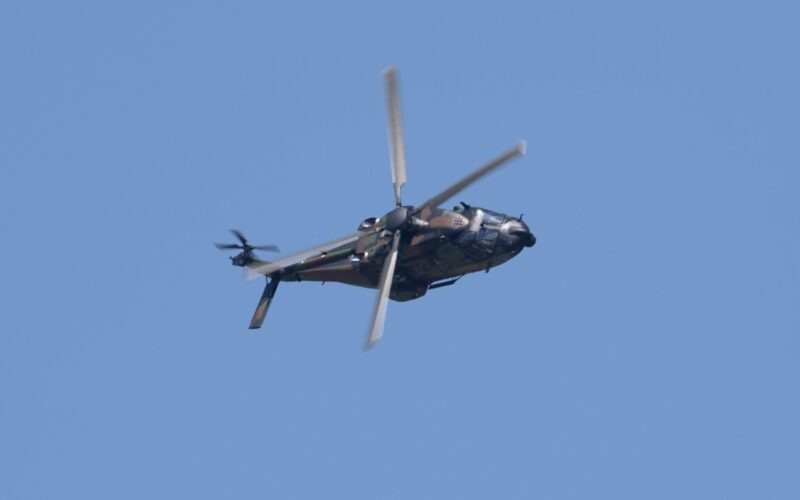
AeroTime
The French Army’s helicopter arm (ALAT) argues that the war in Ukraine is pushing armed forces to adjust tactics rather than abandon crewed rotorcraft in high-intensity conflict, even as drones and unmanned systems expand into roles once reserved for attack and reconnaissance helicopters.
In comments to French weekly Le Point, General David Cruzille, who commands the French Army’s helicopter branch, and his deputy General Hubert Doutaud said early predictions in 2022 that helicopters were becoming untenable in modern war have not been confirmed by events.
Tactics mattered more than the platform in early Ukraine fighting
Rotary-wing aviation has repeatedly absorbed high attrition in past wars. Vietnam alone saw more than 5,600 US helicopters lost, most to accidents and collisions. Yet operators responded by changing tactics rather than retiring helicopters from service.
In the same way that battle tanks or aircraft carriers are periodically declared obsolete, the prediction that helicopters were “over” circulated widely after February and March 2022 as Russian Ka-52 and Mi-8 aircraft took heavy losses during the failed assault on Hostomel airport near Kyiv.
According to Cruzille, Russia’s helicopter losses in early 2022 reflected how they were employed. Aircraft flew higher and during daylight, exposing them to short-range air defense systems (including MANPADS) and fighters.
Once Russian crews shifted to lower-level operations at night, attrition declined, and helicopters played a greater role during Ukraine’s unsuccessful 2023 counteroffensive, serving as fast anti-armor responders along the front.
Ukraine, meanwhile, repurposed its surviving Mi-8 transports and attack helicopters as mobile counter-drone shooters, flying in pairs at night to target slow Shahed-type loitering munitions at low altitude.
Cruzille also pointed to the recent US raid in Venezuela, which relied on attack and transport helicopters to insert commandos, as an illustration of why he believes crews will remain central in many high-end missions.
Helicopters retained relevance where they could operate at low level, integrate tightly with ground maneuver, and offer precision mobility over terrain that vehicles could not cross at scale.
What can be dronized and what remains crewed
Where helicopters have come under the most pressure is in deep reconnaissance and stand-in strike missions that require penetrating dense air defenses. Several NATO armies are shifting those roles toward drones, loitering munitions, and air-launched effects, arguing that expendable unmanned systems can absorb risk that crewed aircraft cannot.
The United States has moved furthest in this direction. In 2025, the US Army confirmed plans to cut several legacy manned helicopter units and expand drone swarms, attritable sensors, and launched effects as part of a broader aviation overhaul. The cancellation of the FARA armed scout helicopter reinforced the trend: reconnaissance deep inside contested airspace is now seen primarily as an unmanned mission.

RELATEDUS Army to cut legacy helicopters, scale up drone swarms in aviation overhaul
By contrast, medium-lift roles that combine troop transport, medevac, fire support, and command-and-control are expected to remain crewed for the foreseeable future. These missions demand judgment, communication with ground forces, and real-time interpretation of adversary behavior, qualities that France’s helicopter commanders argue remain difficult to automate.
“To deploy twenty commandos into a combat zone, we will always use helicopters with a crew on board,” Doutaud explained. “[…] In Libya, during the initial raids, we made Gaddafi’s soldiers understand we were only after the equipment. When they heard us coming, they regrouped away from the vehicles, knowing we wouldn’t fire on them. I’m not sure drones could have done that.”
Cruzille is skeptical that large vertical takeoff drones will offer a simple or cheaper substitute for helicopters, arguing that once they require turbine-class power and useful endurance, they converge toward helicopter-like size, complexity, and cost.
Recent US programs partially cut across that view, where heavy-cargo resupply is seen as an early use case for large rotary drones, since it removes crews from predictable flight patterns near the front.
For example, Sikorsky’s U-Hawk concept removes the cockpit and crew from a UH-60 Black Hawk and turns it into a fully uncrewed cargo aircraft for autonomous resupply. The model does not escape helicopter economics, since the underlying airframe remains a Black Hawk, but it does aim to replace some crewed lift missions with a large drone, freeing up crewed helicopters for other missions.
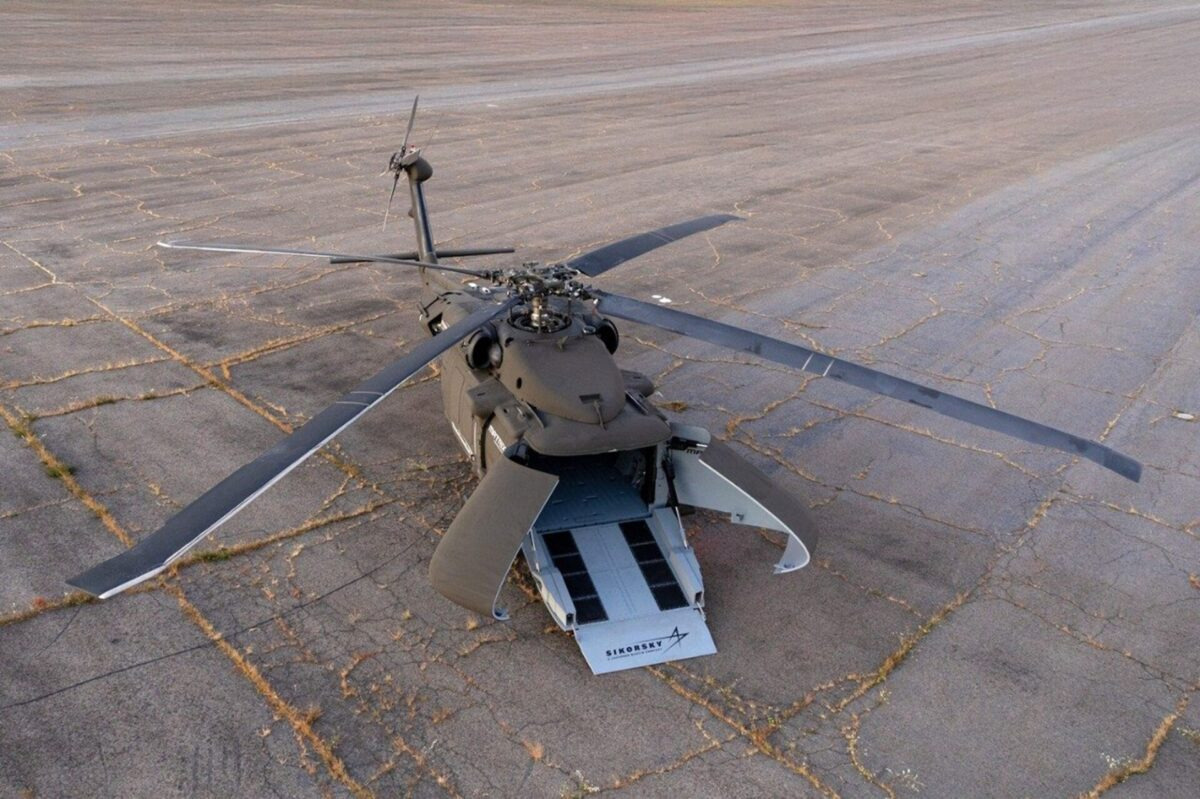
The U-Hawk concept (Credit: Sikorsky)Counter-UAS and ‘drone-carrying’ helicopters
Both officers pointed to counter-drone warfare as one of the most consequential new mission sets for rotary aviation. France has begun integrating anti-UAS tasks into the employment of its Tiger attack helicopters, whose cannon and sighting systems are suited to tracking small aerial targets at night. Transport helicopters such as the NH90 Caïman could also contribute with cabin or rear-ramp gunners.
Other Western militaries are exploring similar concepts. The US Army has used Apache attack helicopters to engage small drones during demonstrations, leveraging cannon and guided 70mm rockets as part of a layered counter-UAS approach.
French planners are also exploring manned-unmanned teaming concepts in which Tigers or Caïmans would release small drones from the aircraft to provide reconnaissance several kilometers ahead of the formation.

RELATEDFrance tests manual drone drops from Airbus A400M in DGA flight trials
US manufacturers are moving in a similar direction, with Sikorsky promoting digital backbones that allow Black Hawk and CH-53K crews to task and recover multiple unmanned assets in flight.
The approach preserves the agility and judgment of crewed aviation while pushing risk and sensing forward onto expendable platforms, echoing the fixed-wing “loyal wingman” concepts now being developed alongside the next generation of fighter jets.
Modernization and fleet renewal
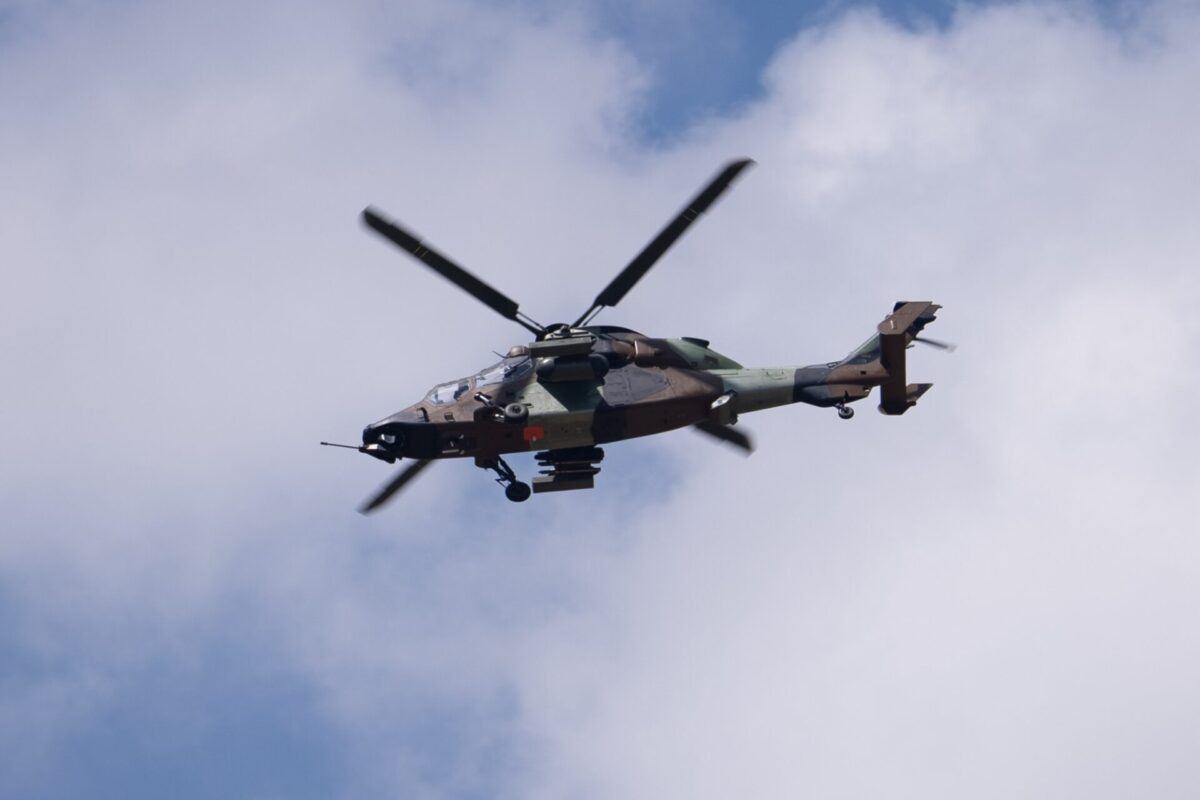
A French Army Tigre attack helicopter (Credit: AeroTime)
France is backing these tactical shifts with modernization spending. A mid-life upgrade for the Tiger, confirmed in 2025, is intended to keep the platform credible into the 2040s.
In parallel, France and Spain have launched new development contracts to enhance the NH90 Caïman special forces variant’s performance in low-visibility environments, including new helmet-mounted sight and distributed vision systems.
With France’s helicopter fleet still spanning roughly a dozen types, the new HIL Guépard light helicopter, derived from Airbus’s H160 civilian platform, will be fielded from 2029 onward to replace five older fleets across the three services. Planned at 169 units to replace five older fleets, the Guépard is expected to become a core light and medium-lift asset.

RELATEDAirbus H160M “Guépard” to enter service two years early
Taken together, these investments indicate that France expects crewed helicopters to remain central to its land forces through the 2030s, even as drones absorb a larger share of high-risk or persistent roles.
댓글
댓글 리스트-
작성자백선호 작성시간 26.01.17 마두로 잡아 온 것을 보면 방공망을 마비시키거나 제압할 수 있다면 헬리콥터가 적지 깊숙히 들어갔다가 살아서 돌아올 수 있네요.
https://www.heliopsmag.com/antares/articles/reports-of-the-death-of-the-helicopter-appear-to-have-been-exaggerated/ -
답댓글 작성자위종민 작성자 본인 여부 작성자 작성시간 26.01.18 빈 라덴 잡으러 갈 때처럼 스텔스 형상 헬기도 아니고 그냥 MH-60으로 들어간 거 보면 어지간히 확신이 강했나 봅니다. 이글라 한 발만 발사돼도 실패할 수도 있었는데...