중국은 동남아의 각 국가들을 모두 종속적 지위에 놓으려고 하며, 미국의 지원을 받아가며 이에 저항중인 필리핀을 제외하고는 대부분 이 움직임에 굴복하고 있다고 하네요.
동남아 안보 실무자들은 "안보환경이 악화되고 있다는 사실"은 인지하지만 그 원인을 명확히 지목하는 데는 주저하고 있다고 합니다.
흔히 중국의 남중국해 전략을 자원 확보나 구단선으로 대표되는 해양지배권 확보로 이해하지만, 본질적으로는 동남아 전체를 길들이는 게 목표라고 주장합니다.
중국의 남중국해 패권 전략 게임
2025년 5월 20일 | 유안 그레이엄(Euan Graham)
남중국해가 안보 이슈로서 복잡하다는 수많은 분석과 달리, 중국에게 있어 이 지역의 지정학적 의미는 단순하다. 중국은 동남아 국가들을 '하위 지위(subordinate status)'에 길들이려 한다. 동남아 국가들은 베이징의 동기와 행동을 평가할 때, 이 점을 고려해야 한다.
나는 이달 초 싱가포르에서 열린 **국제 해양안보회의(IMSC)**에 참석했다. 이 회의는 싱가포르 해군이 주최하고, 라자라트남 국제관계대학원이 주관하는 행사로, IMDEX 아시아 2025의 일환이었다. 호주, 영국, 캐나다, 중국, 인도, 프랑스, 일본, 뉴질랜드, 스리랑카, 미국 및 아세안 회원국들이 고위급 대표단을 파견했다.
협력 강조하지만, 진짜 문제는 ‘권력 경쟁’
이런 회의에선 보통 불법 어업, 해저 인프라 보호, 해양 오염, 사이버 위협, 기후, 자원 탐사 등 복잡한 초국가적 위협이 논의되곤 한다. 협력과 국제법 준수의 중요성도 빠지지 않는다. 하지만 현실은 새로운 협력 구상이 거의 등장하지 않는다.
예를 들어, 자주 인용되는 말라카 해협 순찰(MSP)은 벌써 20년이 지난 사업이다. 최근 몇 년 동안 **‘지정학적 충돌’, ‘무력 충돌’**이라는 표현이 다시 회의 주제에 등장하고 있다는 점은 매우 상징적이다.
동남아는 위협의 '원천'을 직시하지 않으려 한다
동남아 안보 실무자들은 안보 환경이 악화되고 있다는 사실은 인지하고 있지만, 그 직접적인 원인을 명확히 지목하는 데 주저한다. 많은 이들이 미중 간 대국 경쟁을 가장 큰 위협으로 보며, 중국의 지배적 의도는 외면한다.
이러한 태도는 **‘질서 유지’보다는 ‘충돌 회피’**를 최우선 목표로 삼게 만들었고, 이는 남중국해에서 특히 뚜렷하다.
남중국해는 지정학적 '경기장'
지정학적으로 볼 때, 남중국해는 중국과 동남아 간의 게임의 장이다. 해저 자원이나 해양 그 자체의 가치보다, 중국의 전략적 목적은 반복적인 길들이기를 통해 동남아를 지배하는 것이다.
호주, 일본, 미국, 일부 유럽국가들도 이 게임에 참여하고 있다. 이들 국가는 주권 평등과 국제법 존중이 무너지고, 중국이 동남아 국가들과 위계적 관계로 전환할 경우, 자신들의 안보도 위협받는다는 점을 인식하고 있다.
중국은 외부 군대(비접경국)를 남중국해에서 몰아내려는 의도를 갖고 있으며, 이 때문에 항행의 자유 문제가 집중 조명되고 있다. 하지만 이 외부 국가들의 존재 자체는 동남아 국가들의 정치적 지지가 전제되어야 정당화된다.
지역 주요국가들의 대응 양상
브루나이, 인도네시아, 말레이시아, 필리핀, 베트남이 핵심 국가다.
필리핀과 베트남은 가장 직접적인 압박을 받고 있으며, 특히 필리핀은 공개적으로 중국에 저항하고 미군과의 동맹을 복원해 중국의 고립 시도 대상이 되고 있다. 베트남은 지리적으로 남중국해 항행에 대한 제한이 경제·군사에 치명적일 수 있어 특히 민감하다. 인도네시아는 공식적으로는 중국과 영유권 분쟁이 없다고 주장해왔으나, 작년 11월 북경 공동성명에서 '중첩된 주장'을 인정하며 사실상 중국의 압박에 일보 양보했다는 비판을 받는다. 브루나이는 신중하게 접근하고 있으나, 올해 2월 중국과 자원 공동개발 협정을 체결함으로써 중국에 사실상 양보한 셈이 되었다. 말레이시아는 중간 입장으로, 중국은 말레이시아령 스프래틀리 제도와 EEZ 일부를 주장하며, 지속적으로 말레이시아 해역에 해경을 투입해 압박하고 있다.
말레이시아 대표단 중 한 명은 중국과 공동 자원개발을 제안하기도 했다. 이는 정부 공식 입장은 아니지만, 중국 측 참가자들은 동남아 집단 의지가 약화되고 있다고 판단할 것이다.
아세안 나머지 국가들의 입장
캄보디아와 라오스는 이미 상당 수준 중국에 종속된 상태다. 싱가포르는 직접적인 영유권 주장은 없지만 항행의 자유에 크게 의존하며, 미 해군 및 동맹국 접근을 적극 지원하고 있다. 태국과 미얀마는 상대적으로 관심이 낮으며, 주된 관심은 **‘아세안-중국 행동수칙(Code of Conduct)’**이다.
이 행동수칙은 실질적 구속력이 없고, 중국의 전략을 제약하지 못하지만, **중국에겐 유용한 '길들이기 도구'**다. 수년간 이어지는 협상 자체가 아세안에게 중국의 전략 활동을 막을 수 없다는 메시지를 반복적으로 각인시키고 있다.
중국의 핵심 목표는 ‘해양’이 아니다
중국의 남중국해 전략은 자원이나 해양 분쟁 자체가 아니다. 본질적으로는 ‘지정학적 길들이기’가 목적이다. 동남아 국가들을 개별적으로, 그리고 집단적으로 ‘하위 상태’에 두려는 시도다.
중국이 전쟁 없이 이 목표를 달성할 수 있다면, 남중국해는 계속 긴장되겠지만 무력 충돌로는 이어지지 않을 가능성이 크다.
현재로선 필리핀만이 뚜렷하게 저항하고 있으며, 다른 아세안 국가는 중국의 패권에 맞서지 못한 채, "싸우지 않고 지는" 방향으로 가고 있다.
China’s geopolitical dominance game in the South China Sea | The Strategist

China’s geopolitical dominance game in the South China Sea
20 May 2025|Euan Graham
SHARE
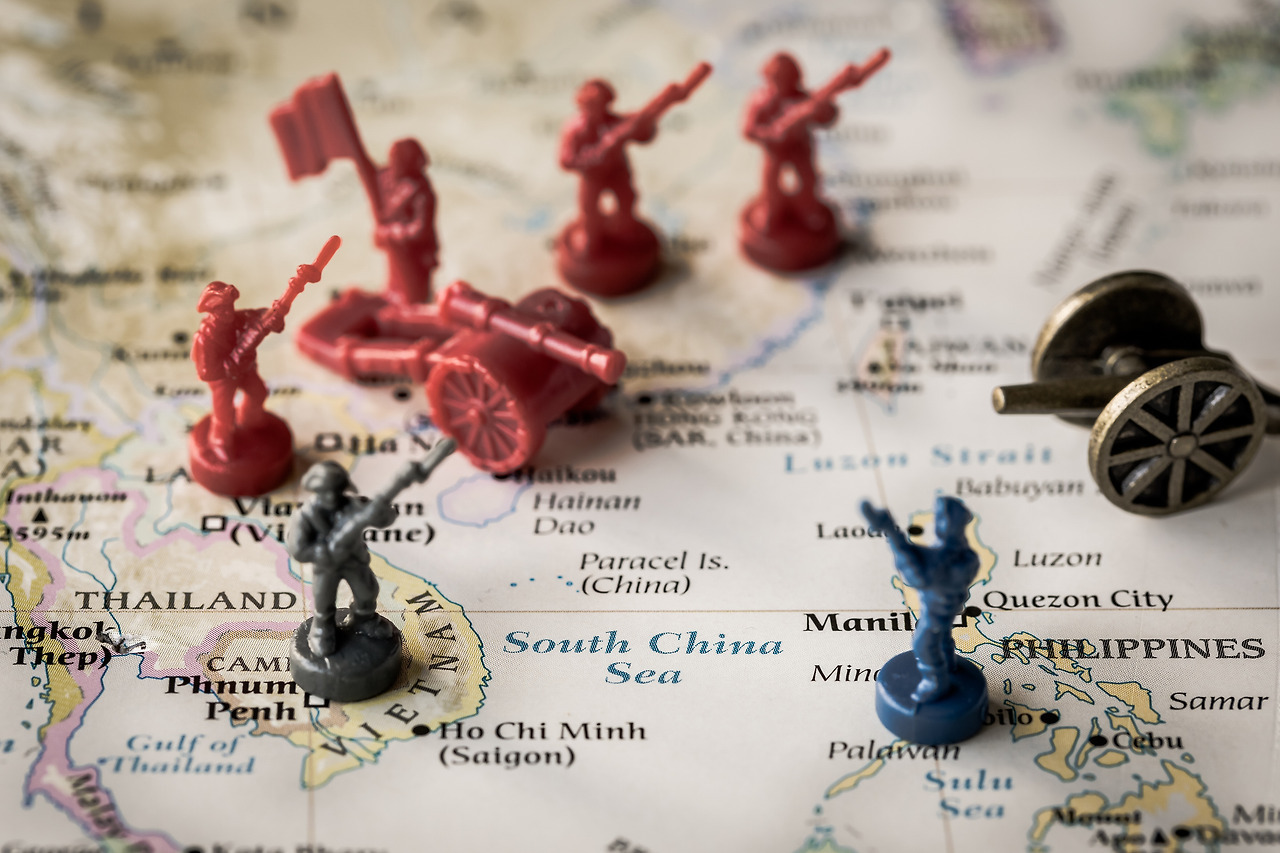
For all the talk about the South China Sea’s complexity as a security issue, its geopolitical significance to China is simple: China wants to condition Southeast Asian states to subordinate status. Southeast Asian countries would do well to consider this when assessing Beijing’s motivations and behaviour.
I was in Singapore earlier this month to participate in the International Maritime Security Conference, organised by the S Rajaratnam School of International Studies. The conference was part of IMDEX Asia 2025, a biennial congregation of sailors and warships from around the region, hosted by Singapore’s navy. This edition included senior representatives from Australia, Britain, Canada, China, India, France, Japan, New Zealand, Sri Lanka, the United States, and member states of the Association of Southeast Asian Nations.
It’s common for speakers at regional conferences to present the maritime environment in terms of complex, cross-cutting transnational security challenges, such as illegal fishing, critical seabed infrastructure, marine pollution, cyber, climate, autonomy, energy exploration and others. (The list expands continually.)
The importance of cooperation and adherence to international law remains a staple theme of such gatherings. Yet advocates of regional maritime cooperation struggle to name new initiatives. The widely referenced Malacca Strait Patrol, for example, is two decades old. It is also telling that the lexicon of power and competition has gradually crept back into session titles. Phrases such as ‘geopolitical implications’ and ‘armed conflict’ were an uncommon sight at maritime conference agendas 15 years ago. This is no longer the case.
Southeast Asian analysts and security practitioners know that the regional security environment is deteriorating, but they remain reluctant to acknowledge the source of the problem head-on. Some have convinced themselves that great-power competition between the US and China is their primary security challenge, rather than domination by the latter. This manifests in a collective view that conflict avoidance is ASEAN’s primary security objective, more than order preservation—though these are not necessarily mutually exclusive aims. Nowhere is this more evident than in the South China Sea.
In geopolitical terms, the South China Sea is best thought of as an arena. The core game within this arena is between China and Southeast Asia. Beyond access to seabed resources and any intrinsic significance of the sea itself, China’s strategic purpose is to establish dominance over Southeast Asia through repeated conditioning.
Australia, Japan, the US and some European countries are also players in this game. They recognise that their own security will suffer if China successfully resets its relations with Southeast Asia in hierarchical terms, at the expense of respect for sovereign equality and international law. They rightly fear that China aims to eject the armed forces of non-littoral states from the South China Sea, hence their preoccupation with freedom of navigation. But these nations also rely on political support from Southeast Asian countries to legitimise their presence to a significant degree.
In relation to the South China Sea, Southeast Asia’s core group of states is composed of Brunei, Indonesia, Malaysia, the Philippines and Vietnam. The latter two are Southeast Asia’s frontline territorial claimants and are most directly exposed to Chinese pressure tactics. Vietnam’s geography makes it uniquely vulnerable to any impediment on navigation or commercial activity in the sea. China’s current focus is to isolate the Philippines as far as possible within ASEAN, since Manila has publicly defied Beijing’s attempts to establish dominance and has revived its military alliance with the US. Chinese participants at the conference made this focus clear.
Brunei and Indonesia do not have territorial disputes with China, but Beijing claims overlapping jurisdiction within both countries’ exclusive economic zones, based on its dashed-line claims. Jakarta has long maintained that it has no maritime boundary dispute with Beijing, as it has treated China’s claims as without legal foundation. So the admission to ‘overlapping claims’ in last November’s joint statement during Indonesian President Prabowo Subianto’s inaugural visit to Beijing was a surprising concession to China’s dominance game. Indonesia’s Foreign Ministry maintains that its position on the South China Sea is unchanged. But if Chinese firms can pursue ‘joint development’ based on the November statement, Beijing can claim to have eroded Jakarta’s resolve.
Brunei has proceeded more cautiously on the question of overlapping maritime boundaries. But, in February, Brunei and China jointly agreed ‘to cooperate in the development of resources in mutually agreed areas, on a without prejudice basis to legal positions of the respective countries under international law’. Such development could include joint fisheries activities or hydrocarbons extraction. Whatever form it takes, China is likely to treat such overtures from Southeast Asian claimants as tacit concessions.
Malaysia occupies a middle position among ASEAN claimant states. China claims Malaysian-occupied territory in the Spratly Islands and disputes Malaysia’s jurisdiction within significant portions of its exclusive economic zone and continental shelf. China behaves less aggressively towards Malaysia than it does towards the Philippines and Vietnam. But China’s coast guard maintains a continuous watch inside Malaysia’s exclusive economic zone and exerts physical pressure to deter Putrajaya from developing untapped seabed energy resources within Chinese-claimed areas. One Malaysian participant at the conference floated a proposal for Malaysia to pursue joint energy development with China, without formally acknowledging disputed jurisdiction—similar to Brunei. This is a personal view, not reflective of Malaysian government policy, but Chinese participants will perceive it as further evidence that Southeast Asia’s collective resolve is weakening.
The rest of ASEAN has lower, less direct stakes in the South China Sea. Cambodia and landlocked Laos are already dominated by China to a considerable degree. Singapore, though not a claimant state, relies heavily on freedom of navigation and actively facilitates access for the US Navy and its allies, including Australia through the Five Power Defence Arrangements. Thailand and Myanmar, especially, are less invested. Their main interest is the ASEAN-China Code of Conduct. Frequently dismissed as irrelevant, the code nonetheless serves Beijing’s interests as a useful conditioning tool, since it binds the whole of Southeast Asia (except East Timor) into a seemingly endless diplomatic process. The code’s torturous lack of progress repeatedly demonstrates to ASEAN’s members that negotiations on a draft code have no practical constraint on China’s strategic activities.
China’s quest for dominance in the South China Sea is not about resources nor any single maritime issue; in essence, it isn’t about the sea at all. Beijing’s geopolitical aim is to condition Southeast Asian states, individually and collectively, into accepting subordinate status. If it can achieve this without fighting, the likelihood is that the South China Sea will remain tense but stay below the threshold of armed conflict.
With the standout exception of the Philippines, things are currently trending in Beijing’s direction. Indeed, from Beijing’s perspective, ASEAN’s collective trajectory might be summarised as ‘losing without fighting’.
댓글
댓글 리스트-
작성자백선호 작성시간 25.05.22 http://cafe.daum.net/NTDS/50q9/2365
ㅠ.ㅠ -
답댓글 작성자위종민 작성자 본인 여부 작성자 작성시간 25.05.22 사실 도련선이나 구단선 등의 line 개념에 너무 매몰돼서, 동남아를 중국의 남미-_-로 만들겠다는 진짜 의도는 너무 늦게 파악하지 않았나 싶기도...
-
답댓글 작성자Minowski(김유철) 작성시간 25.05.23 위종민 근데 엎어치나 매치나 마찬가치 아닐까요? 라인개념은 군사력 투사개념이고 준식민지화는 경제력이 우선이고... 둘이 따로 가는 것이 아니고 문제를 일으켜도 경제력으로 눌러버리는 패턴을 늘 계속해오고 있는거니.... 그런 면에서 서해 중간수역 인근에서 일어나고 있는 불법 구조물이나 드론탑재 항모형 해양탐사선(?)건 등 진짜 남의 일이 아니죠...
-
답댓글 작성자위종민 작성자 본인 여부 작성자 작성시간 25.05.23 Minowski(김유철) 구단선을 확보가 1순위고, 동남아 뒷마당화는 알아서 따라오는 전리품(?)이란 게 기존의 인식이었다면, 저 분의 분석은 군사적 팽창 외에 냉전기에 소련이 핀란드에 그랬듯 중국이 동남아에 정치경제적으로도 적극적으로 영향력을 투사하겠다는 의도가 있고, 그런 영향력을 자국의 이익을 위해 적극적으로 행사할 의도도 있다는 것으로 보이네요.
동남아에 대한 정책이 이럴 진데, 한국에 대해선 어떻게 나올 지는 사실 불보듯 뻔하네요...