The Client with Peripheral Vascular Disease
1. Peripheral blood flow is dependent on which of the following variables?
1. Blood viscosity and diameter of vessels.
2. Diameter and resistance of vessels.
3. Force of contraction of the heart and resistance of vessels.
4. Pressure differences in the arterial and venous systems and resistance.
Blood flows in a unidirectional manner, and the blood flow involves the differences in pressure between the arterial and venous systems.
The two variables influencing blood flow within this closed system are the pressure differences and the resistance to blood flow throughout the system.
The greater the resistance, the greater the driving force needed, which results in an increase in the force of the contraction of the heart.
2. Blood pressure in the systemic circulation is highest in the
l. arterioles.
2. capillaries.
3. aorta.
The blood pressure is the highest in the aorta
as the blood is being ejected out of the left ventricle into the aorta.
4. venules.
The pressure declines as the blood flows
through the arteries, capillaries, arterioles, veins, capillaries, and venules.
3. Which of the following factors is the most important in determining the resistance of a vessel?
1. Length of the vessel.
a factor in determining resistance
2. Diameter of the vessel.
the most important component in determining resistance
in the systemic circulation.
3. Blood being too thin.
4. Blood being too thick.
Viscosity, whether the blood is "thin" or "thick,"
is less important when discussing blood flow.
4. A common abnormality associated with the development of peripheral vascular disease (PVD) is
1. high serum calcium.
2. high serum lipids.
are associated with an increased incidence of PVD
3. low serum potassium.
4. low serum lipids.
5. Which of the following is an important regulator of blood flow in the peripheral circulation of the human body?
1. Autonomic nervous system.
The autonomic nervous system is divided into two branches,
the sympathetic branch and the parasympathetic branch.
2. Central nervous system.
is composed of the brain and the spinal cord
and does not have an influential effect on peripheral blood flow.
3. Parasympathetic nervous system.
does not control peripheral blood flow.
4. Sympathetic nervous system.
sympathetic nervous system (adrenergic)
is involved in regulating the blood flow in the peripheral blood vessels.
6. The nurse has been assigned to a client with a history of PVD who has symptoms of claudication. These symptoms result when
1. oxygen demand by the muscle exceeds the supply.
Claudication is the term used to describe the discomfort a person experiences
when oxygen demand in the leg muscles is greater than the supply.
The pain is a result of tissue hypoxia in the working muscle.
Symptoms include aching, cramping, and weakness.
2. oxygen demand and supply of the working muscle are in balance.
3. the oxygen supply exceeds the demand of the working muscle.
4. oxygen is absent.
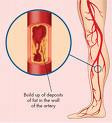
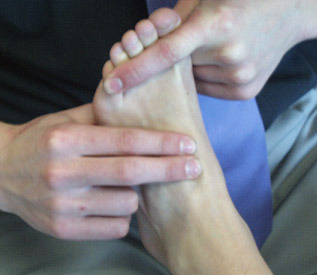
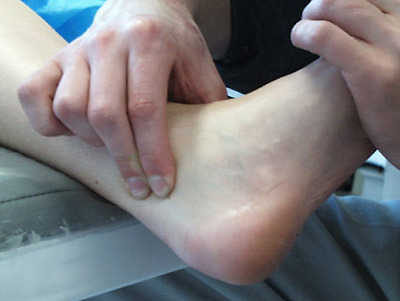
7. To assess the client's pedal pulses, the nurse would palpate the
1. medial aspect of the foot and the ventral aspect of the ankle.
2. top of the foot and inner side of each foot.
Assessing pedal pulses involves palpating
both the dorsalis pedis and the posterior tibial arteries.
located on the top of the foot (ventral aspect)
and the inner aspect of the ankle (medial surface of the ankle).
3. popliteal space and the medial aspect of the ankle.
4. posterior aspect of the foot and anterior aspect of the ankle.
8. Which of the following explains the influence of aging on the development of PVD?
1. Decreased resistance.
2. Increased resistance.
As people age, the accumulation of collagen in the intima of the blood vessels
results in the vessels' becoming stiff and less flexible.
Consequently, there is an increased resistance
within the aging adult's circulatory system.
3. Decreased viscosity.
4. Increased viscosity.
9. The client admitted with PVD asks the nurse why her legs hurt when she walks.
The nurse bases a response on the knowledge that the main characteristic of PVD is
1. decreased blood flow.
Decreased blood flow is a common characteristic of all PVD.
When the demand for oxygen to the working muscles
becomes greater than the supply, pain is the outcome.
2. increased blood flow.
3. slow blood flow.
Slow blood flow throughout the circulatory system may suggest pump failure.
4. thrombus formation.
Thrombus formation can result from stasis
or damage to the intima of the vessels
10. The nurse notes on the client's chart that he has PVD and a history of heart failure. The nurse must plan care and anticipate that the client may have a low tolerance for exercise related to
1. decreased blood flow.
A client with PVD and pump failure will experience a decreased blood flow.
In this situation, low exercise tolerance (oxygen demand becomes greater than the oxygen supply) may be related to less blood being ejected
from the left ventricle into the systemic circulation.
Decreased blood supply to the tissues results in pain
2. increased blood flow.
3. decreased pain.
4. increased blood viscosity.
Increased blood viscosity may be a component,
but it is of much less importance than the disease processes.
11. When assessing the lower extremities of a client with PVD,
the nurse notes bilateral ankle edema. The edema is related to
1. competent venous valves.
Valves often become incompetent with PVD.
2. decreased blood volume.
Blood volume is not decreased in this condition.
3. increase in muscular activity.
Decreased muscular action would contribute to the formation of edema
in the lower extremities.
4. increased venous pressure.
In PVD, a decreased blood flow can result in increased venous pressure.
The increase in venous pressure results in an increase in capillary hydrostatic pressure, which causes a net filtration of fluid out of the capillaries into the interstitial space and resulting in edema.
12. When assessing lower-extremity pulses in older adults with PVD,
the nurse first notes whether or not the pulses are palpable.
The nurse then assesses for which of the following characteristics?
2. Quality.
Presence or absence of a peripheral pulse is essential data
when assessing peripheral pulses in clients with PVD.
The quality of the pulse is the next important piece of information needed.
3. Rate.
The heart rate is not assessed during evaluation of the peripheral pulses.
1. Rhythm.
4. Pattern.
The client's cardiac rhythm, or pattern,
is not assessed by evaluating pulses in the lower extremities.
13. Atherosclerosis results in stenosis of the arteries.
Which of the following vascular problems is also a result of atherosclerosis?
1. Thickened endothelial lining of the vessels walls.
3. Hardening of the arteries.
Arteriosclerosis, or "hardening" of the arteries,
involves the endothelial lining and results in thickened arterial walls.
2. Formation of aneurysm.
A common result of atherosclerosis is the formation of an aneurysm.
4. Formation of varicose veins.
Varicose veins are the outcome of incompetent valves in the venous system
14. The nurse realizes that the underlying etiology for the nursing diagnosis of Pain related to PVD is atherosclerotic lesions resulting from
1. atheromas.
2. calcium plaques and hardening.
3. thickened intima and calcium plaques.
Atheromas, calcium plaques, and thickening of the intima
are associated with arteriosclerosis.
4. fibrous plaque and fatty streaks.
Yellowish, smooth, fatty streaks
are associated with atherosclerosis of the arteries.
15. The nurse reviews with the client the risk factors associated with atherosclerosis. Nonmodifiable risk factors that the nurse instructs the client about include
2. age.
a nonmodifiable risk factor for atherosclerosis.
1. diabetes.
3. exercise level.
4. dietary preferences.
The nurse instructs the client to manage modifiable risk factors such as comorbid diseases (eg, diabetes), activity level, and diet.
Controlling serum blood glucose levels,
engaging in regular aerobic activity,
and choosing a diet low in saturated fats
can reduce the risk of developing atherosclerosis.
16. The nurse is assessing the lower extremities of the client with PVD.
The nurse would expect to find which of the following signs of PVD?
1. Hairy legs.
3. Pink, cool skin.
4. Warm, moist skin.
2. Mottled skin.
Reduction of blood flow to a specific area
results in decreased oxygen and nutrients.
As a result, the skin may appear mottled.
17. The client complains of experiencing midcalf pain when walking a block or more.
The patient states that the discomfort is relieved with rest.
The nurse suspects that this client may be experiencing intermittent claudication.
Intermittent claudication occurs when arterial occlusion reaches which of the following percentages?
1. 20%.
2. 40%.
3. 50%.
Generally, a 50% to 75% occlusion in the arterial lumen
causes symptoms associated with intermittent claudication.
When the demand for oxygen becomes greater than the supply in the working muscle, the client experience pain (aching, cramping).
When the individual sits down and rests, the demand and supply of oxygen become balanced and the discomfort dissipates.
4. 100%.
result in ischemia and necrosis of tissue distal to the artery
would require immediate surgical intervention.
18. The nurse is unable to palpate the client's left pedal pulses.
Which of the following actions would the nurse take next?
1. Auscultate the pulses with a stethoscope.
is not likely to be helpful if the pulse isn't palpable.
2. Call the physician.
be necessary if there is a change in the client's condition.
3. Use a Doppler ultrasound device.
the nurse should obtain a Doppler ultrasound device.
4. Inspect the left lower extremity.
can be done simultaneously when palpating,
but the nurse should first try to locate a pulse by Doppler.

19. When using a Doppler instrument to assess peripheral pulses,
the nurse understands that correct placement of the transducer is important
because it is difficult to differentiate between
1. arterial and capillary blood flow.
cannot be auscultated with a Doppler instrument
2. arterial and venous blood flow.
The sound produced by the Doppler machine reflects all of the vascular structures in the path of the sound beam; therefore, it may be hard to differentiate between arterial and venous blood flow.
3. arterial and arteriole blood flow.
4. capillary and venous blood flow.
20. Which of the following lipid abnormalities is a risk factor for the development of atherosclerosis and PVD?
1. Low concentration of triglycerides.
Low triglyceride levels are desirable.
2. High levels of high-density lipid (HDL) cholesterol.
4. Low levels of LDL cholesterol.
High HDL and low LDL levels are beneficial
and are known to be protective for the cardiovascular system.
3. High levels of low-density lipid (LDL) cholesterol.
An increased LDL cholesterol concentration
a risk factor for the development of atherosclerosis.
LDL cholesterol is not broken down in the liver
but is deposited into the intima of the blood vessels.
21. When assessing an individual with PVD, which clinical manifestation would indicate complete arterial obstruction in the lower left leg?
1. Aching pain in the left calf.
2. Burning pain in the left calf.
3. Numbness and tingling in the left leg.
earlier signs of tissue hypoxia and ischemia
are commonly associated within incomplete obstruction.
4. Coldness of the left foot and ankle.
is consistent with complete arterial obstruction
include paralysis and pallor.
22. One goal of care for a client with PVD is to decrease anxiety,
so as to decrease or prevent vasoconstriction of the
1. arteries.
Anxiety stimulates the sympathetic nervous system,
which results in the secretion of epinephrine, angiotension, and serum proteins
that cause vasoconstriction in the arteries of the peripheral circulatory system.
As a result, peripheral vascular resistance is increased.
This vasoconstriction may increase the pain in the areas
where the PVD is the greatest.
2. capillaries.
3. lymphatics.
does not affect the blood supply of tissues
4. veins.
23. A 70-year-old man with the diagnosis of claudication has been hospitalized
for an evaluation of his increasingly impaired mobility and complaints of pain.
The client tells the nurse that he can no longer walk a block
without having severe pain in his left calf and foot.
Based on these data, which nursing diagnosis would be most appropriate for this client?
1. Activity Intolerance related to decreased blood supply and pain.
a common problem with clients experiencing claudication.
The goal would be to educate the individual to maintain his level of activity and incorporate frequent rest periods to prevent episodes of decreased blood supply.
2. Self-Care Deficit Level II related to increased leg pain.
3. Ineffective Coping related to chronic pain.
The data do not suggest
4. Impaired Skin Integrity related to poor circulation.
Risk for Impaired Skin Integrity into the client's plan of care.
24. A client with PVD returns to the surgical care unit after having femoral-popliteal bypass grafting. Of the following interventions, which is the nurse's first priority?
1. Assess the client for postoperative pain.
2. Assess the client's peripheral pulses.
Evaluation of the presence
and quality of the pedal pulses in the affected extremity
is essential after surgery to validate that the bypass graft is functioning.
3. Assess the client's urinary output.
4. Initiate measures to prevent wound infection.

25. A client with a history of heart failure has bilateral +4 edema of her right ankle
that extends up to midcalf.
She is sitting out of bed and has her legs in a dependent position.
The nurse will choose interventions to obtain which of the following outcomes?
1. Decrease venous congestion.
Decreasing venous congestion in the extremities
is a desired outcome for clients with heart failure.
The nurse would elevate the client's legs above the level of the heart
to achieve this goal.
2. Maintain normal respirations.
3. Maintain body temperature.
4. Prevent injury to lower extremities.
26. The nurse is assessing an older Caucasian man who has a history of PVD.
The nurse observes that the man's left great toe is black.
The discoloration is probably a result of
1. atrophy.
the shrinking of tissue
2. contraction.
joint stiffening secondary to disuse
3. gangrene.
blackened, decomposing tissue that is devoid of circulation
Chronic ischemia and death of the tissue
can lead to gangrene in the affected extremity.
Injury, edema, and decreased circulation
lead to infection, gangrene, and tissue death.
4. rubor.
a reddish color of the skin
27. The nurse uses a Doppler ultrasound device to assess the client's lower extremities. In addition, the nurse calculates the ankle-brachial index to estimate stenosis of the
1. arteries.
The ankle-brachial index
is based on the ratio of the ankle systolic blood pressure
to arm systolic blood pressure.
It allows one to quantify the degree of arterial stenosis.
2. aorta.
3. carotid.
4. veins.
28. A client is scheduled for an arteriogram.
The nurse should explain to the client that the arteriogram
will confirm the diagnosis of occlusive arterial disease by
1. showing the location of the obstruction and the collateral circulation.
An arteriogram involves injecting a radiopaque contrast agent
directly into the vascular system to visualize the vessels.
It usually involves computed tomographic scanning.
2. scanning the affected extremity and identifying the areas of volume changes.
3. using ultrasound to estimate the velocity changes in the blood vessels.
The velocity of the blood flow can be estimated by duplex ultrasound
4. determining how long the client can walk.
The client's ankle brachial index is determined,
and then the client is requested to walk.
The normal response is little or no drop in ankle systolic pressure after exercise.
29. A client is scheduled to have an arteriogram.
During the arteriogram, the client complains of nausea, tingling, and dyspnea.
The nurse's immediate action should be to
2. inform the physician.
Clients may have immediate or delayed reaction to the radiopaque dye.
The physician should be notified immediately,
because the symptoms may suggest an allergic reaction.
1. administer epinephrine.
3. administer oxygen.
Treatment may involve administering oxygen and epinephrine.
It would not be inappropriate
to ignore significant symptoms such as these
or to attribute the symptoms to anxiety.
4. inform the client that the procedure is almost over.
30. A client with PVD has chronic, severe pretibial and ankle edema bilaterally.
Because the client is on complete bed rest and circulation is compromised,
one goal is to maintain tissue integrity.
Which of the following interventions will help achieve this outcome?
1. Administering pain medication.
will not have an effect on skin integrity.
2. Encouraging fluids.
not a direct intervention for maintaining skin integrity,
although being well hydrated is a goal for most clients.
3. Turning the client every 1 to 2 hours.
The client is at greater risk for skin breakdown in the lower extremities
related to the edema and to remaining in one position,
which increases capillary pressure.
Turning every 1 to 2 hours promotes vasodilatation
and prevents vascular compression.
4. Maintaining hygiene.
does influence skin integrity but is secondary in this situation.
31. A client who has been diagnosed with PVD is being discharged.
The client needs further instruction if she says she will
1. avoid heating pads.
cause injury, which, because of the decreased blood supply,
can be difficult to heal.
2. not cross her legs.
can further impede blood flow.
3. wear leather shoes.
provide better protection.
4. use iodine on an injured site.
The client should avoid using iodine or over-the-counter medications.
Iodine is a highly toxic solution.
An individual who has known PVD should be seen by a physician f
or treatment to avoid infection.
32. A client with PVD has bypass surgery.
The primary goal of the plan of care after surgery is to
1. maintain circulation.
the focus of care
The graft can become occluded, and the client must be assessed frequently
to determine whether the graft is patent
2. prevent infection.
3. relieve pain.
are important but are secondary to maintaining graft patency.
4. provide education.
in the preoperative phase
then continued during the recovery phase.
33. A client has been admitted with the diagnosis of occlusion of the left subclavian artery. The nurse anticipates that which of the following procedures will be done?
1. Amputation.
is necessary only if gangrene from complete loss of blood supply develops.
2. Bypass grafting.
3. Coronary artery bypass grafting.
is a specific procedure involving the arteries in the heart.
4. Percutaneous transluminal angioplasty (PTA).
PTA would be attempted first.
If the blood flow is being diverted from the cranial circulation,
other surgical procedures involving bypass grafts may be indicated.
34. A client is scheduled to undergo a right axillary-to-axillary artery bypass surgery which of the following interventions is most important for the nurse to implement in the preoperative period?
1. Assess the temperature in the affected arm.
2. Monitor the radial pulse in the affected arm.
3. Protect the extremity from cold.
4. Avoid using the arm for a venipuncture.
If surgery is scheduled,
the nurse should avoid venipunctures in the affected extremity.
The goal would be to prevent unnecessary trauma
and possible infection in the affected arm.
Disruptions in skin integrity and even minor skin irritations
can cause the surgery to be canceled.