https://youtu.be/zkmxwmKB8FE?si=6cAd1iJrQLXtcHVQ
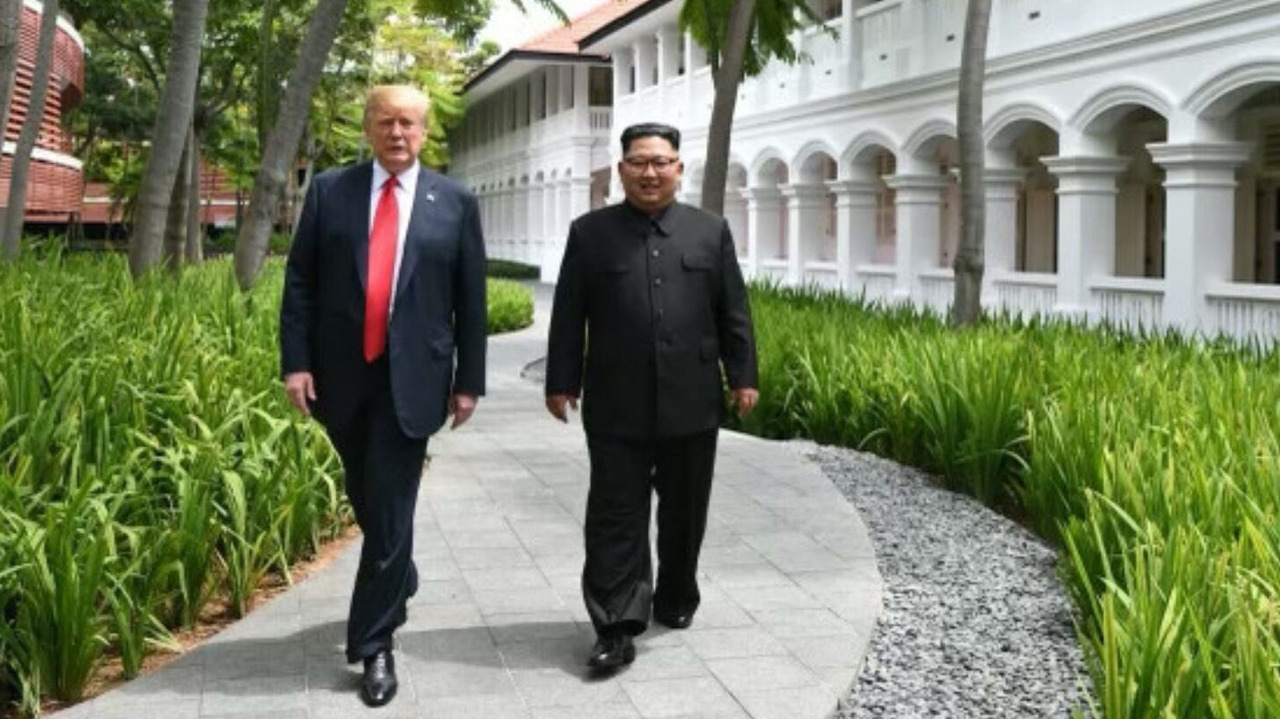
미국 대통령 도널드 트럼프가 6월 13일(미국 시간) 자신의 소셜 미디어 계정 '트루스 소셜'에 게시한 이 사진은 2018년 6월 싱가포르에서 김정은 북한 국무위원장과 정상회담 후 함께 걷는 트럼프 대통령의 모습입니다. (트럼프의 트루스 소셜)
미국 대통령 도널드 트럼프가 이란과의 휴전 협정 이후 북한에 관심을 돌릴 가능성에 대한 우려가 커지고 있지만, 전문가들은 북한은 이란과는 다른 유형의 도전 과제를 제시한다고 말합니다.
이러한 추측은 지난주 트럼프 대통령이 2018년 김정은 위원장과의 정상회담 사진과 이번 주 프랑스에서 열린 G7 정상회담에서 이재명 대통령과의 대화 사진을 자신의 소셜 미디어에 게시하면서 더욱 증폭되었습니다.
대한민국 대통령실에 따르면, 이 대통령은 트럼프 대통령에게 북한 문제의 평화적 해결을 위한 노력에 앞장서 줄 것을 촉구했고, 트럼프 대통령은 그 목표를 위해 노력하겠다고 답했다.
이러한 대화는 미국이 목요일 이란과 체결한 14개 항 양해각서 전문을 공개한 시점에 이루어졌다. 이 양해각서는 이란이 핵무기 개발을 자제하고 현재의 핵 프로그램을 유지하는 한편, 제재 완화, 동결 자산 접근, 그리고 최소 3천억 달러 규모의 재건 개발 패키지에 대한 문을 열어주는 내용을 담고 있다.
일각에서는 이 합의가 트럼프 대통령의 1기 대북 외교를 떠올리게 하며, 평양이 트럼프 대통령이 자칭 평화 조성 노력의 다음 목표가 될 수 있는지에 대한 의문을 제기하고 있다.
양무진 북한대학원 석좌교수는 트럼프 대통령의 이 대통령에 대한 답변은 한반도 문제 해결에 대한 그의 의지를 재확인하는 것으로 해석해야 한다고 말했다.
양씨는 "이번 대화에서 북한 문제는 이란에서처럼 군사적 대결이 아닌 대화와 협상을 통해 해결해야 한다는 공통된 이해가 확인됐다"고 말했다.
그는 또한 트럼프 대통령이 김정은 위원장과 싱가포르 정상회담에서 찍은 사진을 게시한 것을 두고, 트럼프 대통령이 이미 북한을 미래의 외교적 과제로 고려하고 있을 가능성이 있다고 지적했다.
이란의 휴전과 트럼프 대통령의 최근 남북 문제 관련 발언으로 북한이 트럼프 대통령의 외교적 관심사로 다시 떠오른 것은 사실이지만, 대부분의 전문가들은 이란과 북한의 유사점은 제한적이며 이란 모델을 북한에 적용하는 것은 훨씬 더 어렵다고 주장한다.
이화여자대학교 북한학과 박원곤 교수는 "두 사례는 근본적으로 다르다"며,
"이란은 핵무기 개발 단계였지만, 북한은 이미 핵무장한 국가다. 두 사례에 같은 모델을 적용하는 것은 적절하지 않다"고 말했다.
이란이 양해각서(MOU)에서 핵무기 획득 및 개발을 하지 않겠다고 재확인한 것과는 달리, 북한은 핵 보유국 지위는 협상 불가라고 거듭 강조해 왔다. 북한은 2022년 새로운 핵무기법을 채택하고 2023년 헌법을 개정하여 핵무장국으로서의 지위를 강화하는 등 비핵화 의사가 없음을 거듭 강조했다.
이달 초 김여정은 북한의 핵무기 보유국 지위는 "절대 되돌릴 수 없는 레드라인"이라고 주장하며, 핵무기 보유는 협상 불가라는 평양의 오랜 입장을 재확인했다. 김정은은 그 직후 핵시설을 방문하여 무기급 핵물질 생산 기지 확대를 촉구했다.
홍민 한국통일연구원 선임연구원은 북한의 전략적 환경 또한 이란과는 매우 다르다고 지적했다.
홍 교수는 "북한은 중국과 러시아 모두와 국경을 접하고 있으며, 미중 전략 경쟁의 중심에 있다"며 "북한 핵 문제의 구조는 이란의 경우와 근본적으로 다르다"고 말했다.
그는 2018~2019년 정상회담 외교 당시 북한은 워싱턴과의 협상을 주요 외교적 수단으로 여겼지만, 현재 평양은 모스크바와 베이징 모두와 훨씬 강력한 관계를 구축하여 전략적 영향력을 확대하고 미국과의 대화에 대한 의존도를 낮췄다고 지적했다.
분석가들은 서울의 과제는 대화가 재개될 경우 워싱턴과의 긴밀한 조율이 될 것이라고 말한다.
양 교수는 남북 대화가 교착 상태에 빠진 현 상황에서 한국은 향후 미북 협상에서 한국의 이익이 반영되도록 노력해야 한다고 강조했다.
그는 "핵심은 외교와 지역 협력의 문을 열어두는 동시에 한미 간 긴밀한 조율을 유지하는 것"이라고 말했다.
일부 관계자들은 11월 미국 중간선거를 앞두고 있는 국내 정치적 고려 사항들이 트럼프 대통령으로 하여금 쿠바와 같은 자국 문제에 더 집중하도록 만들 수 있다고 주장한다.
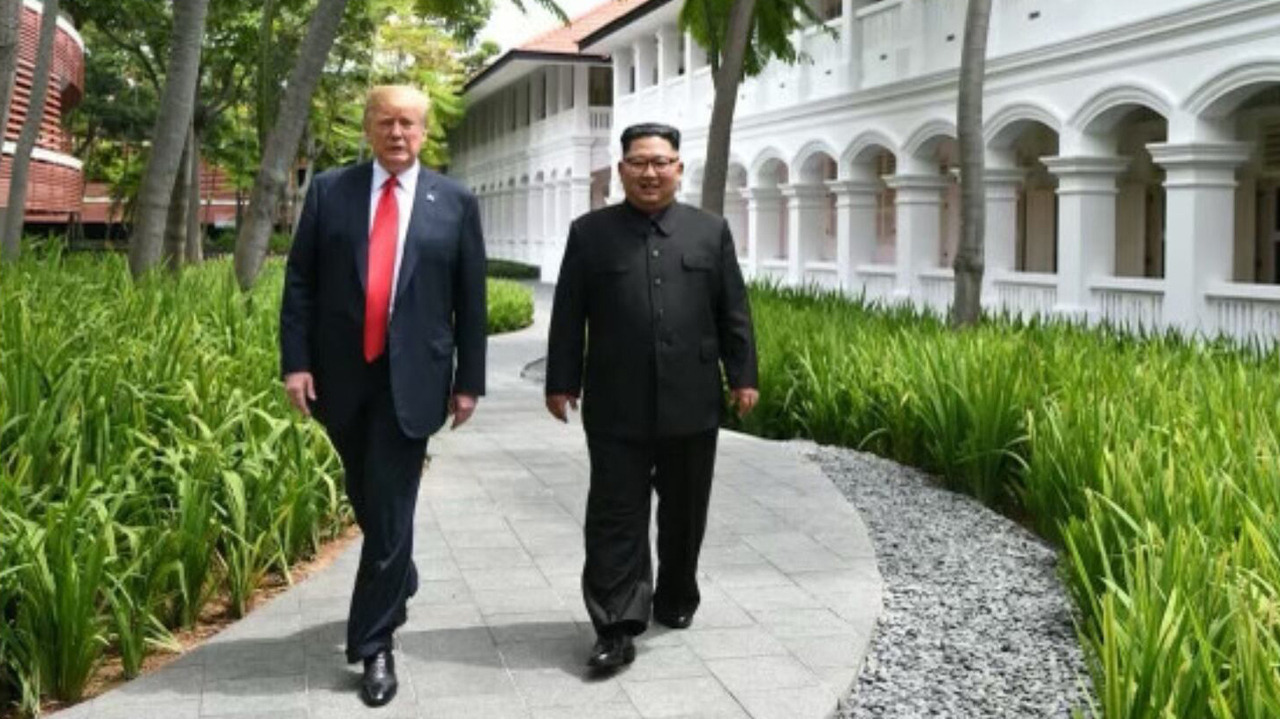
In this photo posted on US President Donald Trump's Truth Social account on June 13 (US time), Trump walks with North Korean leader Kim Jong-un after their summit in Singapore in June 2018. (Trump's Truth Social)
There is growing concern that US President Donald Trump could turn his attention to North Korea following the ceasefire deal with Iran, but experts say that Pyongyang presents a different set of challenges in comparison.
Speculation has intensified following Trump's social media post last week featuring a photograph from his 2018 summit with North Korean leader Kim Jong-un and his exchange with President Lee Jae Myung at the G7 summit in France this week.
According to the presidential office in Seoul, Lee urged Trump to help lead efforts toward a peaceful resolution of North Korea issues, while Trump responded that he would work toward that goal.
The exchange came around the time that Washington released the text of a 14-point memorandum of understanding signed with Iran on Thursday. The document commits Tehran to refraining from developing nuclear weapons and maintaining its current nuclear program while opening the door to sanctions relief, access to frozen assets and a reconstruction and development package worth at least $300 billion.
For some observers, the agreement has revived memories of Trump's first-term diplomacy with North Korea and raised questions about whether Pyongyang could become the next target of his self-described peacemaking efforts.
Yang Moo-jin, a distinguished professor at the University of North Korean Studies, said Trump's response to Lee should be viewed as a reaffirmation of his willingness to engage on Korean Peninsula issues.
"The conversation confirmed a shared understanding that North Korea should be addressed through dialogue and negotiations rather than through the type of military confrontation seen in Iran," Yang said.
He also pointed to Trump's posting of a photograph from the Singapore summit with Kim as a sign that the US president may already be considering North Korea as a future diplomatic challenge.
While North Korea may be back on Trump's diplomatic radar following the Iran ceasefire and his recent remarks on inter-Korean issues, most experts argue that the similarities between Iran and North Korea are limited and that applying the Iran model to Pyongyang would be far more difficult.
"The two cases are fundamentally different," said Park Won-gon, a professor of North Korean studies at Ewha Womans University.
"Iran was still at the stage of developing nuclear weapons, whereas North Korea is already a nuclear-armed state. It is not appropriate to approach the two cases with the same model."
Unlike Iran, which reaffirmed in the MOU that it would not acquire or develop nuclear weapons, North Korea has repeatedly declared that its nuclear status is nonnegotiable. North Korea has repeatedly underscored that it has no intention of denuclearizing, having adopted a new nuclear forces law in 2022 and revised its constitution in 2023 to reinforce its status as a nuclear-armed state.
Earlier this month, Kim Yo-jong insisted that North Korea's status as a nuclear weapons state was an "absolutely irreversible red line," underscoring Pyongyang's longstanding position that its nuclear arsenal is nonnegotiable. Kim Jong-un soon after called for expanding the production base for weapons-grade nuclear materials during a visit to a nuclear facility.
Hong Min, a senior research fellow at the Korea Institute for National Unification, said that North Korea's strategic environment is also vastly different from that of Iran.
"North Korea borders both China and Russia and sits at the center of US-China strategic competition," Hong said. "The structure of the North Korean nuclear issue is fundamentally different from the Iranian case."
He noted that during the 2018-2019 summit diplomacy period, North Korea viewed negotiations with Washington as its primary diplomatic outlet. Today, however, Pyongyang enjoys significantly stronger ties with both Moscow and Beijing, giving it greater strategic leverage and reducing its dependence on talks with the United States.
For Seoul, analysts say the challenge will be ensuring close coordination with Washington if dialogue resumes.
Yang stressed that South Korea must work to ensure that its interests are reflected in any future US-North Korea negotiations, particularly at a time when inter-Korean dialogue remains frozen.
"The key is maintaining close South Korea-US coordination while keeping the door open to diplomacy and regional cooperation," he said.
Some observers also argue that domestic political considerations ahead of November's US midterm elections may push Trump toward issues closer to home, such as Cuba, rather than the far more complex challenge of North Korea, which involves not only Pyongyang but also China and Russia.
Whether Trump's Iran breakthrough ultimately becomes a model for future North Korea diplomacy remains uncertain. But experts agree on one point: any negotiations with Pyongyang would be considerably more complicated than those with Tehran and would likely require a very different set of objectives.
mkjung@heraldcorp.com