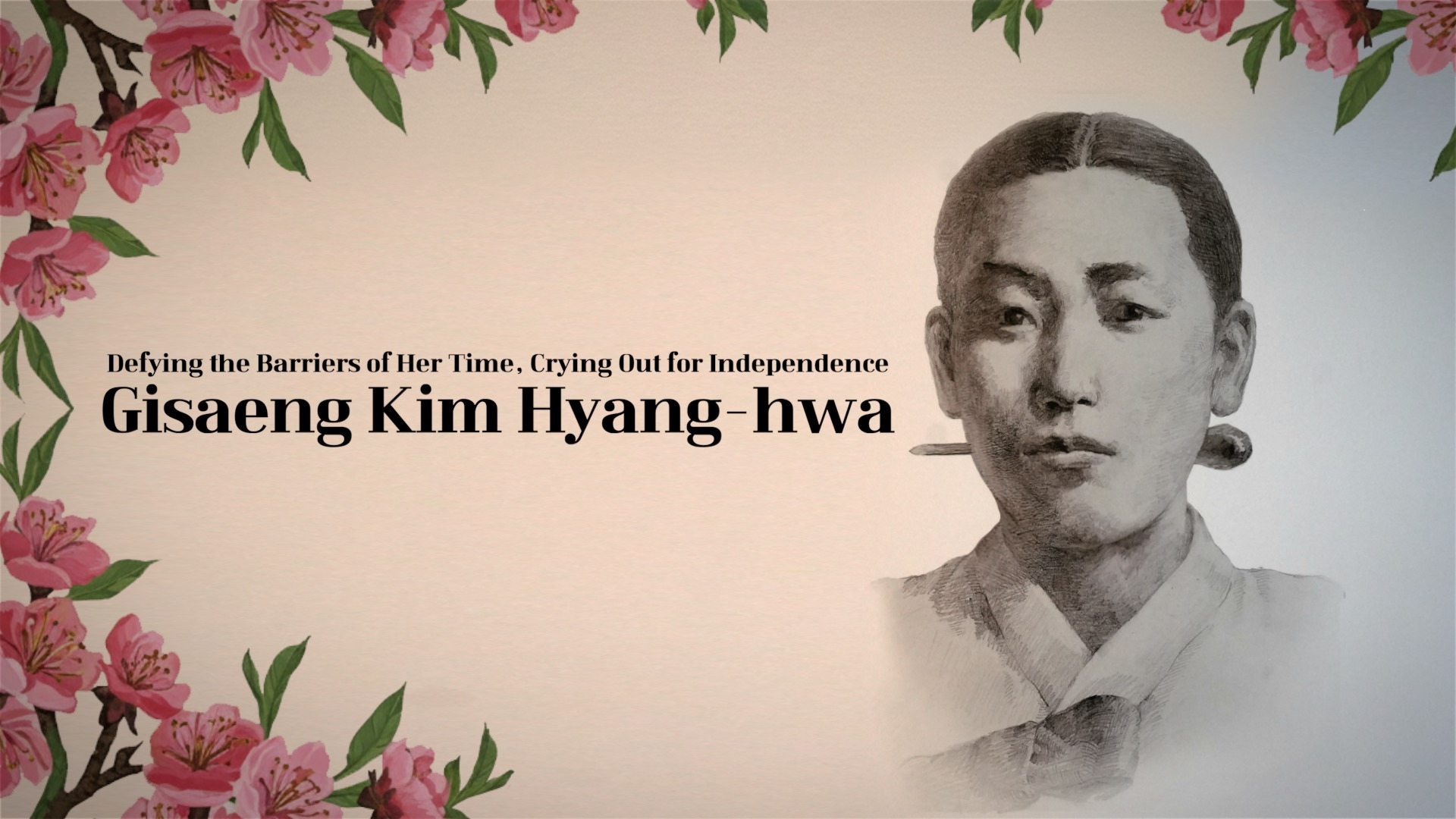
Defying the Barriers of Her Time, Crying Out for Independence – Gisaeng Kim Hyang-hwa
The Japanese occupation was one of the most difficult and painful chapters in Korean history. Yet it was women who helped overcome hardship and open the door to a new modern era, laying the foundation for today’s Korea. Many female independence activists stood as true agents of history, such as the Korean Women's Declaration of Independence before the March 1st Movement. Among them were others who transcended class barriers and discrimination to fight for independence - the gisaeng.
Originating in the Goryeo Dynasty, gisaeng were professional female artists who performed court ceremonies, music, and dance, and were also skilled in poetry, calligraphy, and painting, earning the title hae-eo-hwa. The noble spirit shown by gisaeng, such as Nongae and Gyewolhyang in earlier times, remained unchanged even amid the turmoil of the Japanese occupation. After seizing Korea’s sovereignty, Japan dismantled the state gisaeng system and turned them into mere commodities as tools for cultural propaganda. It also converted historic sites such as Bongsu-dang Hall at Hwaseong Haenggung Palace in Suwon into Jahye Hospital and began to suppress gisaeng.
Even amid such humiliation, Kim Hyang-hwa, the most renowned gisaeng of Suwon, remained unbowed. In January 1919, after Emperor Gojong's passing, she visited Deoksugung Palace to mourn him, shedding tears of sorrow for a lost nation. That rage soon turned into action.
On March 29, she and about thirty fellow gisaeng took out Taegeukgi flags in front of the Jahye Hospital inside the Hwaseong Haenggung Palace and cried out for independence. Their defiant shouts, even in front of the police station, sparked similar gisaeng-led independence movements across the country. She was sentenced to six months in prison and confined to Cell No. 8 in the women’s ward of Seodaemun Prison. Even under brutal torture by the Japanese, she joined other women like Yu Gwan-sun and Eo Yun-hee, continuing the legacy of the women's independence movement.
In 2009, Kim Hyang-hwa, an independence activist, was posthumously awarded the Presidential Commendation. Yet the honor remains unclaimed to this day, as she lived the rest of her life in hiding after parole, escaping Japanese surveillance, and thus, she was forgotten. Now, on the 80th anniversary of liberation, let us recall the great heroine of history whose story remained untold to many.
Link : https://youtu.be/QiX2Y2lhNf0