🧠 Cerebellar Syndrome Tricks
Identify the Lesion. Remember the Pattern. Localize with Confidence.
⸻
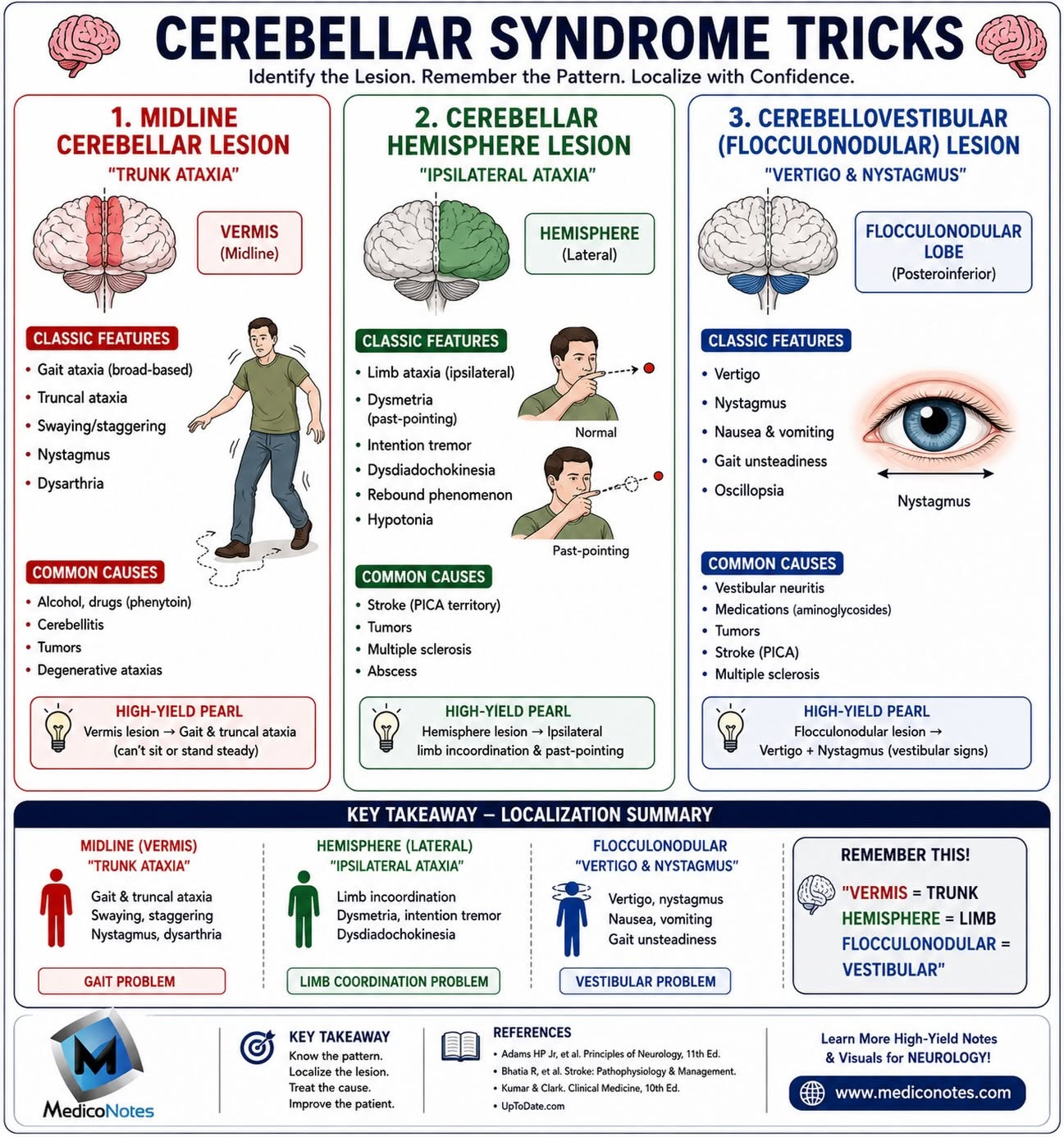
1️⃣ Midline Cerebellar Lesion (Vermis)
🔴 “TRUNK ATAXIA”
➊ Broad-based gait
➋ Truncal instability
➌ Swaying and staggering
➍ Nystagmus
➎ Dysarthria
💡 High-Yield Pearl:
Vermis = Trunk
Unable to sit or stand steadily.
⸻
2️⃣ Cerebellar Hemisphere Lesion
🟢 “IPSILATERAL ATAXIA”
➊ Limb ataxia (same side)
➋ Dysmetria (past-pointing)
➌ Intention tremor
➍ Dysdiadochokinesia
➎ Rebound phenomenon
➏ Hypotonia
💡 High-Yield Pearl:
Hemisphere = Limb Coordination Problem
⸻
3️⃣ Flocculonodular Lobe Lesion
🔵 “VERTIGO & NYSTAGMUS”
➊ Vertigo
➋ Nystagmus
➌ Nausea and vomiting
➍ Oscillopsia
➎ Unsteady gait
💡 High-Yield Pearl:
Flocculonodular = Vestibular Cerebellum
⸻
4️⃣ Classic Causes
🔸 Stroke (especially PICA territory)
🔸 Multiple sclerosis
🔸 Cerebellar tumors
🔸 Alcohol toxicity
🔸 Phenytoin toxicity
🔸 Cerebellitis
⸻
5️⃣ Quick Localization Trick
🔴 Vermis → Trunk Ataxia
🟢 Hemisphere → Limb Ataxia
🔵 Flocculonodular → Vertigo & Nystagmus
⸻
🎯 Exam Tip
If the patient has:
• Limb incoordination → Think Hemisphere lesion
• Truncal instability → Think Vermis lesion
• Vertigo + Nystagmus → Think Flocculonodular lesion
⸻
📚 Master Neurology with our comprehensive high-yield Neurology Book — packed with exam-focused illustrations, localization guides, and clinical pearls.
🌐 Visit our website:
http://www.mediconotes.com
#Neurology #CerebellarSyndrome #StrokeLocalization #MedicalEducation #MedEd