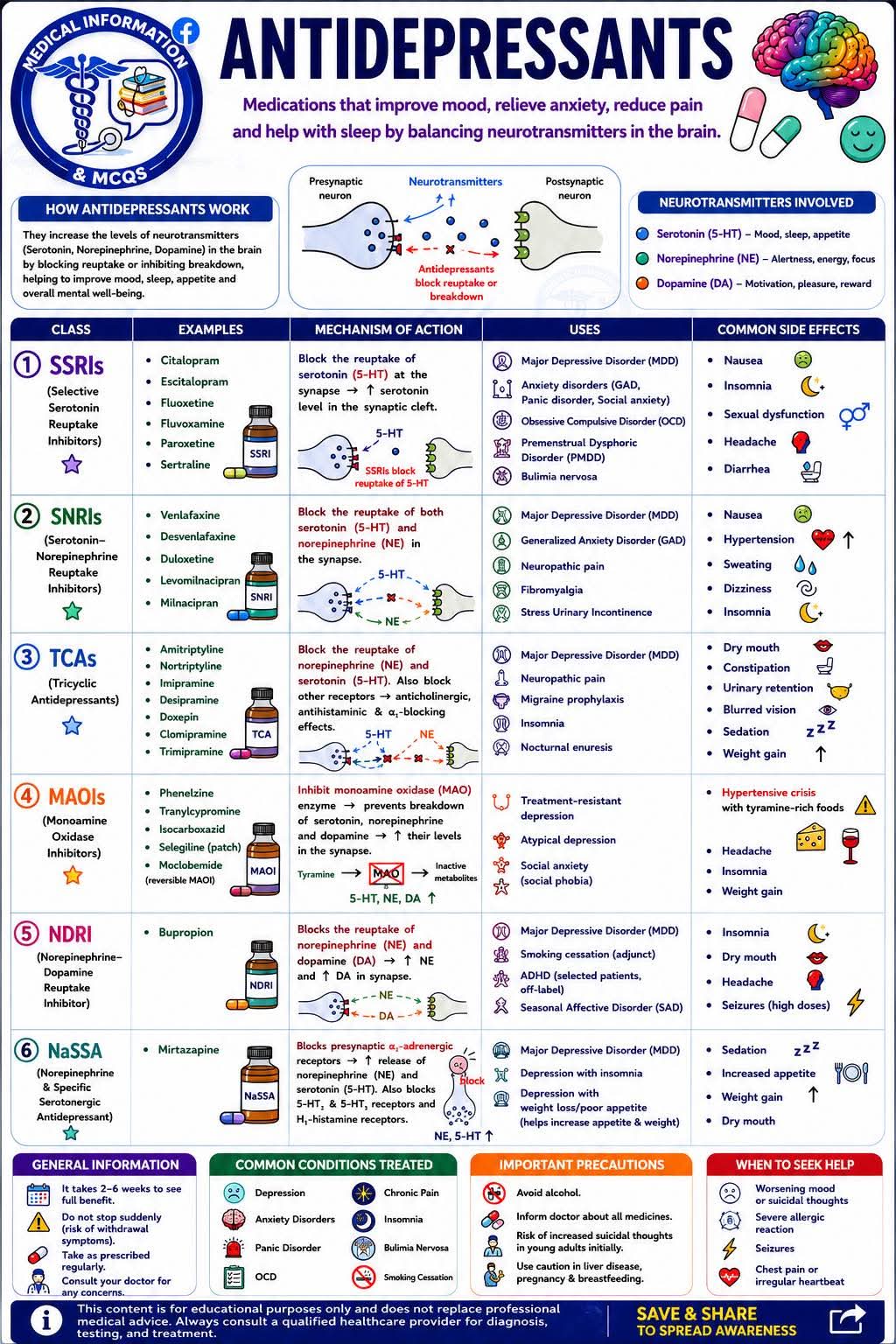
Antidepressants: Complete Educational Guide
What Are Antidepressants?
Antidepressants are medications primarily used to treat depression, but they are also prescribed for anxiety disorders, panic disorder, obsessive-compulsive disorder (OCD), chronic pain conditions, insomnia, post-traumatic stress disorder (PTSD), eating disorders, and several other mental health conditions.
They work by affecting chemical messengers in the brain called neurotransmitters, which help regulate mood, emotions, sleep, appetite, concentration, and pain perception.
⸻
How Antidepressants Work
Brain cells (neurons) communicate through neurotransmitters.
The most important neurotransmitters involved include:
Serotonin (5-HT)
Functions:
* Mood regulation
* Sleep
* Appetite
* Emotional stability
* Anxiety control
Low serotonin levels are often associated with:
* Depression
* Anxiety disorders
* OCD
⸻
Norepinephrine (NE)
Functions:
* Alertness
* Attention
* Energy
* Concentration
Low levels may contribute to:
* Fatigue
* Poor concentration
* Low motivation
⸻
Dopamine (DA)
Functions:
* Motivation
* Reward
* Pleasure
* Drive
Low dopamine activity may cause:
* Loss of interest
* Lack of motivation
* Reduced enjoyment
⸻
Main Classes of Antidepressants
⸻
1. SSRIs
Selective Serotonin Reuptake Inhibitors
Examples
* Citalopram
* Escitalopram
* Fluoxetine
* Fluvoxamine
* Paroxetine
* Sertraline
How They Work
SSRIs block the reuptake of serotonin, increasing serotonin levels in the brain.
Common Uses
* Major depressive disorder
* Generalized anxiety disorder (GAD)
* Panic disorder
* Social anxiety disorder
* OCD
* Premenstrual dysphoric disorder (PMDD)
* Bulimia nervosa
Advantages
* Generally first-line treatment
* Safer than older antidepressants
* Effective for both depression and anxiety
Common Side Effects
* Nausea
* Headache
* Insomnia
* Diarrhea
* Sexual dysfunction
⸻
2. SNRIs
Serotonin-Norepinephrine Reuptake Inhibitors
Examples
* Venlafaxine
* Desvenlafaxine
* Duloxetine
* Levomilnacipran
* Milnacipran
How They Work
Increase both serotonin and norepinephrine levels.
Common Uses
* Depression
* Anxiety disorders
* Fibromyalgia
* Neuropathic pain
* Chronic pain syndromes
Benefits
Especially useful when depression occurs with:
* Fatigue
* Low energy
* Chronic pain
Common Side Effects
* Nausea
* Sweating
* Dizziness
* Increased blood pressure
* Insomnia
⸻
3. TCAs
Tricyclic Antidepressants
Examples
* Amitriptyline
* Nortriptyline
* Imipramine
* Clomipramine
* Doxepin
* Desipramine
How They Work
Increase serotonin and norepinephrine by blocking reuptake.
They also affect:
* Histamine receptors
* Acetylcholine receptors
* Alpha-adrenergic receptors
Common Uses
* Depression
* Chronic nerve pain
* Migraine prevention
* Insomnia
* Nocturnal enuresis (bedwetting)
Common Side Effects
* Dry mouth
* Constipation
* Blurred vision
* Urinary retention
* Sedation
* Weight gain
Important Note
TCAs have a higher risk of toxicity in overdose compared with SSRIs.
⸻
4. MAOIs
Monoamine Oxidase Inhibitors
Examples
* Phenelzine
* Tranylcypromine
* Isocarboxazid
* Selegiline (patch)
How They Work
Block monoamine oxidase (MAO), an enzyme that breaks down:
* Serotonin
* Norepinephrine
* Dopamine
This increases neurotransmitter levels.
Common Uses
* Treatment-resistant depression
* Atypical depression
* Social anxiety disorder
Major Precaution
Patients must avoid tyramine-rich foods because of the risk of:
Hypertensive Crisis
Potential symptoms:
* Severe headache
* Very high blood pressure
* Chest pain
* Stroke risk
Examples of tyramine-rich foods:
* Aged cheeses
* Cured meats
* Certain wines
* Fermented foods
⸻
5. NDRIs
Norepinephrine-Dopamine Reuptake Inhibitors
Example
* Bupropion
How It Works
Increases:
* Norepinephrine
* Dopamine
Unlike most antidepressants, it has minimal serotonin effects.
Common Uses
* Depression
* Smoking cessation
* Seasonal affective disorder (SAD)
Advantages
* Less sexual dysfunction
* Less weight gain
* May improve energy and motivation
Side Effects
* Insomnia
* Dry mouth
* Headache
Serious Risk
High doses can increase seizure risk.
⸻
6. NaSSA
Noradrenergic and Specific Serotonergic Antidepressants
Example
* Mirtazapine
How It Works
Enhances release of:
* Norepinephrine
* Serotonin
Also blocks histamine receptors.
Common Uses
* Depression
* Depression with insomnia
* Depression with poor appetite or weight loss
Benefits
Helpful when patients have:
* Difficulty sleeping
* Weight loss
* Poor appetite
Common Side Effects
* Sedation
* Increased appetite
* Weight gain
* Dry mouth
⸻
Conditions Commonly Treated with Antidepressants
Mental Health Conditions
* Major depressive disorder
* Generalized anxiety disorder
* Panic disorder
* OCD
* Social anxiety disorder
* PTSD
* PMDD
Other Conditions
* Chronic pain
* Fibromyalgia
* Neuropathic pain
* Migraine prevention
* Bulimia nervosa
* Smoking cessation
* Insomnia (selected medications)
⸻
How Long Do Antidepressants Take to Work?
Many people expect immediate improvement, but antidepressants require time.
Typical Timeline
Week 1–2
* Possible side effects
* Sleep may improve
Week 2–4
* Anxiety may begin improving
* Energy may increase
Week 4–6
* Mood improvement often becomes noticeable
Week 6–12
* Full therapeutic effect develops
Most antidepressants require 2–6 weeks before significant benefits occur.
⸻
Important Safety Information
Do Not Stop Suddenly
Abrupt discontinuation may cause withdrawal-like symptoms:
* Dizziness
* Nausea
* Irritability
* Anxiety
* Electric shock sensations (“brain zaps”)
Always follow a healthcare provider’s tapering plan.
⸻
Drug Interactions
Always inform your doctor about:
* Prescription medications
* Over-the-counter drugs
* Herbal supplements
* Recreational substances
Certain combinations can be dangerous.
⸻
Serotonin Syndrome (Medical Emergency)
Can occur when serotonin becomes excessively elevated.
Symptoms:
* Agitation
* Confusion
* Fever
* Sweating
* Tremor
* Rapid heart rate
* Muscle rigidity
Requires immediate medical attention.
⸻
Black Box Warning
Some antidepressants may increase suicidal thoughts or behaviors in:
* Children
* Adolescents
* Young adults
Particularly during:
* Treatment initiation
* Dose adjustments
Monitoring by healthcare professionals is essential.
⸻
When to Seek Immediate Medical Help
Seek urgent medical attention if experiencing:
🚨 Suicidal thoughts
🚨 Severe allergic reaction
🚨 Seizures
🚨 Chest pain
🚨 Irregular heartbeat
🚨 Severe agitation or confusion
🚨 Symptoms of serotonin syndrome
⸻
Key Takeaways
SSRIs
Most common first-line treatment for depression and anxiety.
SNRIs
Useful when depression is accompanied by fatigue or chronic pain.
TCAs
Older medications effective for depression and certain pain disorders but have more side effects.
MAOIs
Reserved for treatment-resistant cases due to dietary restrictions and interaction risks.
NDRIs (Bupropion)
Useful for low energy, smoking cessation, and minimizing sexual side effects.
NaSSA (Mirtazapine)
Helpful when depression is associated with insomnia or poor appetite.
⸻
Disclaimer
This content is for educational purposes only and does not replace professional medical advice, diagnosis, or treatment. Antidepressants should only be taken under the supervision of a qualified healthcare professional. Never start, stop, or change medication doses without consulting your healthcare provider.