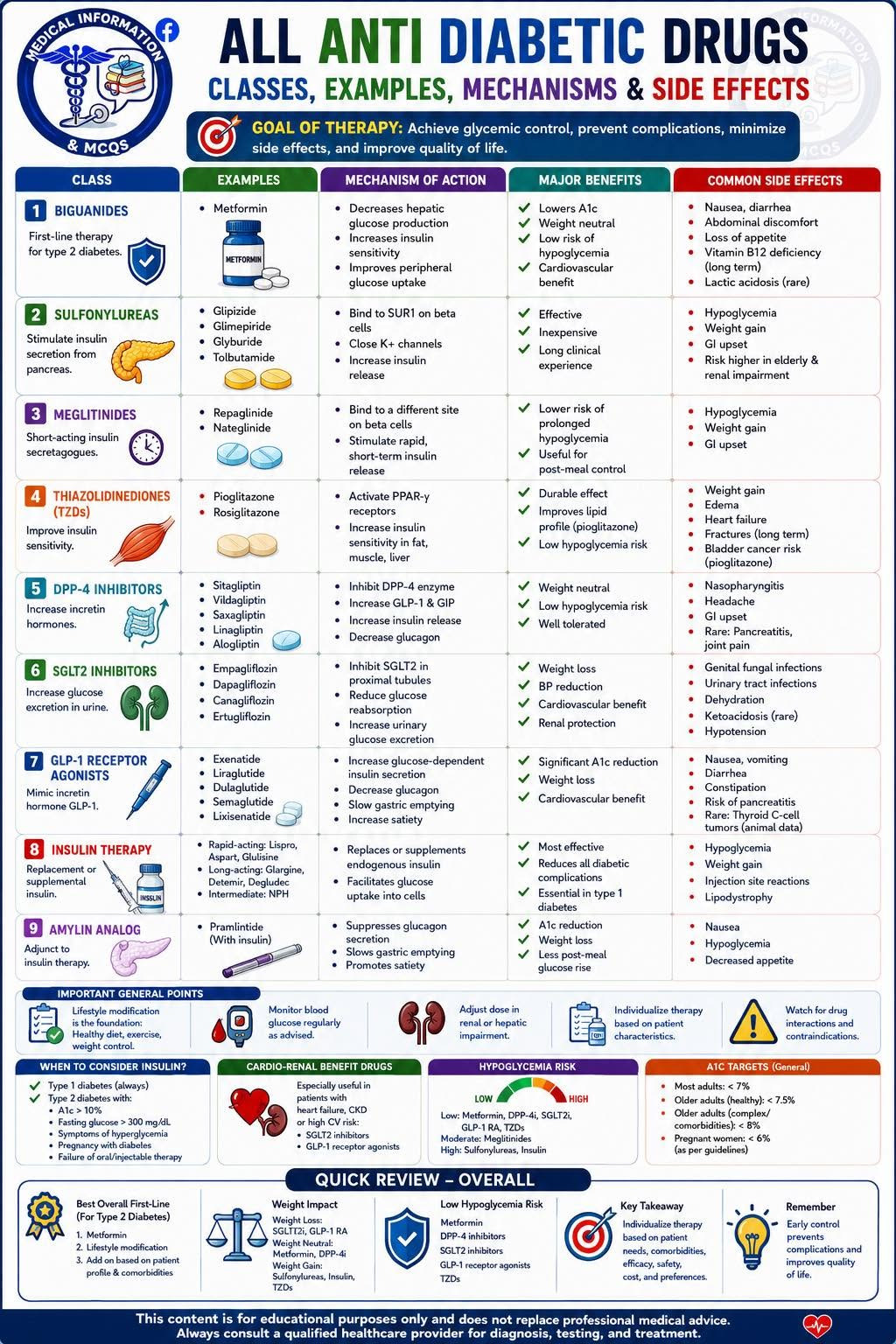
Anti-Diabetic Drugs
Introduction
Diabetes mellitus is a chronic metabolic disorder characterized by elevated blood glucose levels resulting from:
* Insufficient insulin production
* Insulin resistance
* Or both
Major Types
Type 1 Diabetes Mellitus (T1DM)
* Autoimmune destruction of pancreatic beta cells
* Absolute insulin deficiency
* Requires insulin therapy
Type 2 Diabetes Mellitus (T2DM)
* Insulin resistance with progressive beta-cell dysfunction
* Most common form (>90% of cases)
Treatment Goals
* Achieve glycemic control
* Prevent complications
* Reduce cardiovascular risk
* Protect kidney function
* Improve quality of life
⸻
Understanding HbA1c
HbA1c reflects average blood glucose over approximately 3 months.
General Targets
Patient Group HbA1c Target
Most adults <7%
Healthy elderly <7.5%
Frail elderly <8%
Pregnancy Individualized
⸻
1. BIGUANIDES
Drug Class
Metformin
Metformin is the first-line treatment for most patients with Type 2 diabetes.
⸻
Mechanism of Action
Metformin:
✅ Decreases hepatic glucose production
✅ Improves insulin sensitivity
✅ Enhances peripheral glucose uptake
✅ Reduces intestinal glucose absorption
⸻
Benefits
* First-line therapy worldwide
* No weight gain
* Low risk of hypoglycemia
* Cardiovascular benefits
* Inexpensive
⸻
Side Effects
Common
* Nausea
* Diarrhea
* Abdominal discomfort
* Metallic taste
Long-Term
* Vitamin B12 deficiency
Rare but Serious
* Lactic acidosis
⸻
Clinical Pearl
Always monitor:
* Renal function
* Vitamin B12 levels
⸻
2. SULFONYLUREAS
Examples
* Glipizide
* Glimepiride
* Glyburide (Glibenclamide)
⸻
Mechanism
Stimulate pancreatic beta cells to release insulin.
Result:
⬆ Insulin secretion
⬇ Blood glucose
⸻
Advantages
* Effective glucose lowering
* Inexpensive
* Rapid response
⸻
Side Effects
Major
⚠ Hypoglycemia
⚠ Weight gain
Others
* Dizziness
* GI upset
⸻
Clinical Pearl
Avoid or use cautiously in:
* Elderly patients
* Renal impairment
⸻
3. MEGLITINIDES
Examples
* Repaglinide
* Nateglinide
⸻
Mechanism
Stimulate rapid insulin release.
Work similarly to sulfonylureas but for a shorter duration.
⸻
Advantages
* Useful for post-meal glucose control
* Flexible dosing with meals
⸻
Side Effects
* Hypoglycemia
* Weight gain
* GI discomfort
⸻
Clinical Pearl
Useful when meal timing is irregular.
⸻
4. THIAZOLIDINEDIONES (TZDs)
Examples
* Pioglitazone
* Rosiglitazone
⸻
Mechanism
Activate PPAR-γ receptors.
Result:
* Improved insulin sensitivity
* Better glucose utilization
⸻
Benefits
* Durable glycemic control
* Low hypoglycemia risk
* Improves insulin resistance
⸻
Side Effects
Common
* Weight gain
* Edema
Serious
* Worsening heart failure
* Bone fractures
Important
Pioglitazone has been associated with a possible increased bladder cancer risk in some studies.
⸻
Avoid In
Patients with:
* Symptomatic heart failure
⸻
5. DPP-4 INHIBITORS
Examples
* Sitagliptin
* Saxagliptin
* Linagliptin
* Alogliptin
* Vildagliptin
⸻
Mechanism
Block DPP-4 enzyme.
This increases:
* GLP-1
* GIP
Result:
⬆ Insulin secretion
⬇ Glucagon secretion
⸻
Benefits
* Weight neutral
* Low hypoglycemia risk
* Generally well tolerated
⸻
Side Effects
* Headache
* Nasopharyngitis
* GI symptoms
Rare
* Pancreatitis
* Severe joint pain
⸻
6. SGLT2 INHIBITORS
Examples
* Empagliflozin
* Dapagliflozin
* Canagliflozin
* Ertugliflozin
⸻
Mechanism
Block sodium-glucose co-transporter 2 (SGLT2) in the kidney.
Result:
* Increased urinary glucose excretion
* Reduced blood glucose
⸻
Benefits
Major Modern Benefit
Reduce:
✅ Heart failure hospitalization
✅ Cardiovascular mortality
✅ Kidney disease progression
⸻
Additional Benefits
* Weight loss
* Blood pressure reduction
⸻
Side Effects
Common
* Genital fungal infections
* Urinary tract infections
Others
* Dehydration
* Dizziness
Rare
* Euglycemic diabetic ketoacidosis
⸻
Clinical Pearl
Excellent choice in patients with:
* Heart failure
* Chronic kidney disease
⸻
7. GLP-1 RECEPTOR AGONISTS
Examples
* Semaglutide
* Liraglutide
* Dulaglutide
* Exenatide
* Lixisenatide
⸻
Mechanism
Mimic GLP-1 hormone.
Effects:
* Increased insulin secretion
* Reduced glucagon release
* Delayed gastric emptying
* Increased satiety
⸻
Benefits
Strong A1c Reduction
Significant Weight Loss
Cardiovascular Protection
⸻
Side Effects
Common
* Nausea
* Vomiting
* Diarrhea
* Constipation
Rare
* Pancreatitis
⸻
Clinical Pearl
Semaglutide is among the most effective medications for both:
* Glucose control
* Weight reduction
⸻
8. DUAL GIP/GLP-1 RECEPTOR AGONIST
Example
Tirzepatide
(Newer generation therapy)
⸻
Mechanism
Activates:
* GIP receptor
* GLP-1 receptor
⸻
Benefits
Produces:
✅ Very large HbA1c reductions
✅ Significant weight loss
✅ Improved metabolic outcomes
⸻
Side Effects
Similar to GLP-1 agonists:
* Nausea
* Vomiting
* Diarrhea
⸻
Clinical Pearl
Currently among the most effective medications available for Type 2 diabetes and obesity management.
⸻
9. INSULIN THERAPY
Insulin remains the most effective glucose-lowering therapy.
⸻
Types
Rapid Acting
* Lispro
* Aspart
* Glulisine
Short Acting
* Regular insulin
Intermediate Acting
* NPH
Long Acting
* Glargine
* Detemir
* Degludec
⸻
Mechanism
Replaces or supplements endogenous insulin.
Allows glucose to enter cells.
⸻
Indications
Always Required
Type 1 Diabetes
Often Needed
Type 2 Diabetes with:
* Severe hyperglycemia
* Pregnancy
* Acute illness
* Failure of oral medications
⸻
Side Effects
Major
⚠ Hypoglycemia
Others
* Weight gain
* Injection site reactions
* Lipodystrophy
⸻
10. AMYLIN ANALOG
Example
Pramlintide
⸻
Mechanism
* Slows gastric emptying
* Suppresses glucagon
* Increases satiety
⸻
Benefits
* Lower post-meal glucose
* Weight loss potential
⸻
Side Effects
* Nausea
* Hypoglycemia (especially with insulin)
⸻
Which Drugs Cause Weight Loss?
Significant Weight Loss
🥇 Tirzepatide
🥈 Semaglutide
🥉 Other GLP-1 agonists
Moderate Weight Loss
* SGLT2 inhibitors
Weight Neutral
* Metformin
* DPP-4 inhibitors
Weight Gain
* Sulfonylureas
* Insulin
* TZDs
⸻
Which Drugs Have the Lowest Hypoglycemia Risk?
Very Low Risk
* Metformin
* SGLT2 inhibitors
* DPP-4 inhibitors
* GLP-1 agonists
* TZDs
High Risk
* Sulfonylureas
* Insulin
⸻
Drugs With Proven Cardiovascular Benefits
Strong evidence exists for:
SGLT2 Inhibitors
* Empagliflozin
* Dapagliflozin
GLP-1 Receptor Agonists
* Semaglutide
* Liraglutide
* Dulaglutide
⸻
Drugs With Kidney Protection
Best evidence:
SGLT2 Inhibitors
* Empagliflozin
* Dapagliflozin
These reduce progression of chronic kidney disease.
⸻
Current Practical Treatment Approach
First-Line
Metformin + lifestyle modification
⸻
If Cardiovascular Disease
Add:
* GLP-1 agonist
or
* SGLT2 inhibitor
⸻
If Heart Failure or CKD
Prefer:
* SGLT2 inhibitor
⸻
If Obesity
Prefer:
* Tirzepatide
* Semaglutide
⸻
If Cost Is a Major Issue
Consider:
* Sulfonylureas
* Metformin
⸻
Key Exam Pearls
⭐ Metformin = First-line drug
⭐ Sulfonylureas = Hypoglycemia + weight gain
⭐ Pioglitazone = Edema + heart failure risk
⭐ DPP-4 inhibitors = Weight neutral
⭐ SGLT2 inhibitors = Cardio-renal protection
⭐ GLP-1 agonists = Weight loss + CV benefit
⭐ Tirzepatide = Greatest weight loss and HbA1c reduction
⭐ Insulin = Most effective glucose-lowering therapy
⭐ Pramlintide = Amylin analog
⭐ Type 1 diabetes always requires insulin