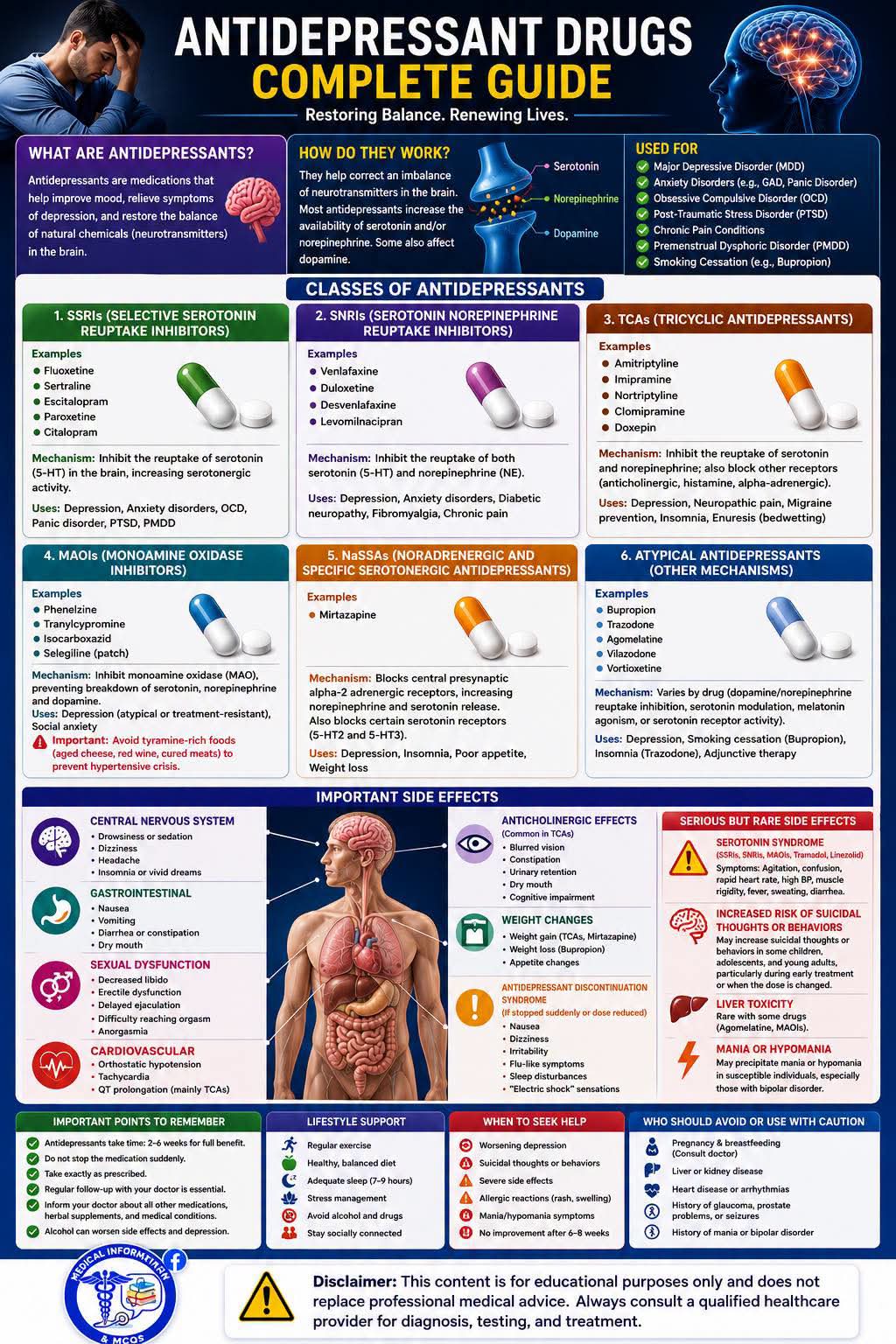
Antidepressant Drugs: Full Educational Explanation
What Are Antidepressants?
Antidepressants are medications used to treat depression and several other mental health conditions by affecting chemical messengers (neurotransmitters) in the brain.
The main neurotransmitters involved include:
* Serotonin (5-HT) – mood, sleep, appetite, emotions
* Norepinephrine (NE) – energy, attention, alertness
* Dopamine (DA) – motivation, pleasure, reward
Antidepressants help restore balance in these neurotransmitter systems, improving symptoms and overall functioning.
⸻
How Do Antidepressants Work?
Brain cells communicate using neurotransmitters.
Normally:
1. Neurotransmitters are released.
2. They transmit signals between neurons.
3. They are reabsorbed (reuptake) or broken down.
Many antidepressants work by:
* Blocking reuptake
* Increasing neurotransmitter availability
* Modulating receptors
* Preventing neurotransmitter breakdown
This helps strengthen communication between nerve cells.
⸻
Conditions Treated with Antidepressants
Antidepressants are used for more than depression.
Major Depressive Disorder (MDD)
Symptoms:
* Persistent sadness
* Loss of interest
* Fatigue
* Poor concentration
⸻
Anxiety Disorders
Including:
* Generalized Anxiety Disorder (GAD)
* Panic Disorder
* Social Anxiety Disorder
⸻
Obsessive-Compulsive Disorder (OCD)
Helps reduce:
* Intrusive thoughts
* Compulsive behaviors
⸻
Post-Traumatic Stress Disorder (PTSD)
May improve:
* Flashbacks
* Anxiety
* Sleep disturbances
⸻
Premenstrual Dysphoric Disorder (PMDD)
Can reduce:
* Mood swings
* Irritability
* Depression related to menstrual cycles
⸻
Chronic Pain Conditions
Certain antidepressants help with:
* Neuropathic pain
* Fibromyalgia
* Migraine prevention
⸻
Smoking Cessation
Bupropion may help reduce nicotine cravings and withdrawal symptoms.
⸻
Major Classes of Antidepressants
⸻
1. SSRIs
Selective Serotonin Reuptake Inhibitors
Examples
* Fluoxetine
* Sertraline
* Escitalopram
* Paroxetine
* Citalopram
Mechanism
Block serotonin reuptake, increasing serotonin levels in the brain.
Common Uses
* Depression
* Anxiety disorders
* OCD
* Panic disorder
* PTSD
* PMDD
Advantages
* Generally well tolerated
* Safer in overdose than older antidepressants
Common Side Effects
* Nausea
* Headache
* Insomnia
* Sexual dysfunction
⸻
2. SNRIs
Serotonin-Norepinephrine Reuptake Inhibitors
Examples
* Venlafaxine
* Duloxetine
* Desvenlafaxine
* Levomilnacipran
Mechanism
Increase both:
* Serotonin
* Norepinephrine
Uses
* Depression
* Anxiety disorders
* Neuropathic pain
* Fibromyalgia
Side Effects
* Nausea
* Sweating
* Increased blood pressure
* Insomnia
⸻
3. TCAs
Tricyclic Antidepressants
Examples
* Amitriptyline
* Imipramine
* Nortriptyline
* Clomipramine
* Doxepin
Mechanism
Block reuptake of:
* Serotonin
* Norepinephrine
Also affect:
* Histamine receptors
* Muscarinic receptors
* Alpha-adrenergic receptors
Uses
* Depression
* Neuropathic pain
* Migraine prevention
* Selected cases of nocturnal enuresis
Important Side Effects
* Dry mouth
* Constipation
* Blurred vision
* Urinary retention
* Drowsiness
Major Risk
Can cause dangerous heart rhythm disturbances in overdose.
⸻
4. MAOIs
Monoamine Oxidase Inhibitors
Examples
* Phenelzine
* Tranylcypromine
* Isocarboxazid
* Selegiline (patch)
Mechanism
Prevent breakdown of:
* Serotonin
* Norepinephrine
* Dopamine
Uses
* Treatment-resistant depression
* Certain anxiety disorders
Important Warning
Avoid tyramine-rich foods:
Examples:
* Aged cheese
* Cured meats
* Some fermented foods
* Red wine
Combining MAOIs with tyramine may cause:
Hypertensive Crisis
A potentially life-threatening increase in blood pressure.
⸻
5. NaSSAs
Noradrenergic and Specific Serotonergic Antidepressants
Example
* Mirtazapine
Mechanism
Enhances:
* Norepinephrine release
* Serotonin release
Uses
* Depression
* Poor appetite
* Insomnia
* Weight loss
Common Side Effects
* Drowsiness
* Increased appetite
* Weight gain
⸻
6. Atypical Antidepressants
These work through different mechanisms.
Examples
Bupropion
* Dopamine and norepinephrine effects
* Useful in depression and smoking cessation
Trazodone
* Commonly used for insomnia
* Also treats depression
Agomelatine
* Melatonin receptor agonist
* Helps regulate sleep-wake cycles
Vilazodone
* SSRI with serotonin receptor activity
Vortioxetine
* Multimodal serotonergic antidepressant
⸻
Common Side Effects of Antidepressants
⸻
Central Nervous System
May include:
* Drowsiness
* Dizziness
* Headache
* Insomnia
* Vivid dreams
⸻
Gastrointestinal Effects
Common symptoms:
* Nausea
* Vomiting
* Diarrhea
* Constipation
* Dry mouth
⸻
Sexual Dysfunction
Particularly common with SSRIs and SNRIs.
May include:
* Reduced libido
* Erectile dysfunction
* Delayed ejaculation
* Difficulty reaching orgasm
* Anorgasmia
⸻
Cardiovascular Effects
May include:
* Orthostatic hypotension
* Tachycardia
* QT prolongation (especially some TCAs and specific SSRIs)
⸻
Weight Changes
Weight Gain
Common with:
* Mirtazapine
* Some TCAs
Weight Loss
May occur with:
* Bupropion
⸻
Antidepressant Discontinuation Syndrome
May occur if medication is stopped suddenly.
Symptoms:
* Dizziness
* Nausea
* Irritability
* Flu-like symptoms
* Sleep disturbances
* “Electric shock” sensations
Prevention
Always taper medications under medical supervision.
⸻
Serious but Rare Side Effects
⸻
Serotonin Syndrome
A potentially dangerous condition caused by excessive serotonin activity.
Symptoms
* Agitation
* Confusion
* Rapid heart rate
* High blood pressure
* Fever
* Tremor
* Muscle rigidity
* Sweating
Risk increases when multiple serotonergic drugs are combined.
Medical emergency.
⸻
Suicidal Thoughts or Behaviors
Some antidepressants may increase suicidal thoughts or behaviors in:
* Children
* Adolescents
* Young adults
especially during:
* Early treatment
* Dose changes
Close monitoring is important.
⸻
Mania or Hypomania
May occur in susceptible individuals, particularly those with:
Bipolar Disorder
Symptoms include:
* Excessive energy
* Reduced need for sleep
* Racing thoughts
* Risk-taking behavior
⸻
Liver Toxicity
Rare but possible with certain antidepressants, particularly:
* Agomelatine
Monitoring may be required.
⸻
How Long Do Antidepressants Take to Work?
Many people expect immediate improvement.
However:
Most antidepressants require 2–6 weeks
before full benefits become noticeable.
Some symptoms may improve earlier than others.
⸻
Important Treatment Advice
Take Medication Exactly as Prescribed
Do not:
* Skip doses
* Double doses
⸻
Do Not Stop Suddenly
Stopping abruptly can cause discontinuation symptoms.
⸻
Attend Follow-Up Appointments
Regular review helps:
* Monitor effectiveness
* Adjust doses
* Detect side effects
⸻
Inform Healthcare Providers About Other Medications
This helps prevent:
* Drug interactions
* Serotonin syndrome
* Adverse effects
⸻
Lifestyle Measures That Support Recovery
Medication works best when combined with healthy habits.
Exercise
Benefits:
* Improves mood
* Reduces anxiety
* Enhances sleep
⸻
Healthy Diet
Supports:
* Brain health
* Energy levels
* Overall well-being
⸻
Adequate Sleep
Aim for:
7–9 hours per night
⸻
Stress Management
Helpful techniques:
* Mindfulness
* Meditation
* Deep breathing
* Counseling
⸻
Social Support
Maintaining social connections can improve outcomes.
⸻
Who Should Use Extra Caution?
Consult a healthcare professional before use if you have:
* Pregnancy or breastfeeding
* Liver disease
* Kidney disease
* Heart disease
* Arrhythmias
* Seizure disorders
* Bipolar disorder
* Glaucoma
* Prostate enlargement
⸻
When to Seek Medical Help
Seek urgent medical attention if you experience:
🚨 Suicidal thoughts
🚨 Severe allergic reactions
🚨 Serotonin syndrome symptoms
🚨 Severe worsening depression
🚨 Mania or hypomania symptoms
🚨 Severe side effects
⸻
Key Take-Home Messages
💊 Antidepressants treat depression and several other mental health conditions.
💊 They work by affecting serotonin, norepinephrine, dopamine, or related neurotransmitter systems.
💊 SSRIs are generally the first-line treatment for depression and many anxiety disorders.
💊 Most antidepressants take 2–6 weeks to achieve full therapeutic benefit.
💊 Common side effects include nausea, headache, sleep disturbances, and sexual dysfunction.
💊 Never stop antidepressants suddenly without medical advice.
💊 Medication, therapy, exercise, sleep, and social support often work best together.
⸻
Disclaimer
This content is for educational purposes only and does not replace professional medical advice. Always consult a qualified healthcare provider for diagnosis, testing, and treatment.