🧠 BRAINSTEM & CRANIAL NERVES MADE EASY
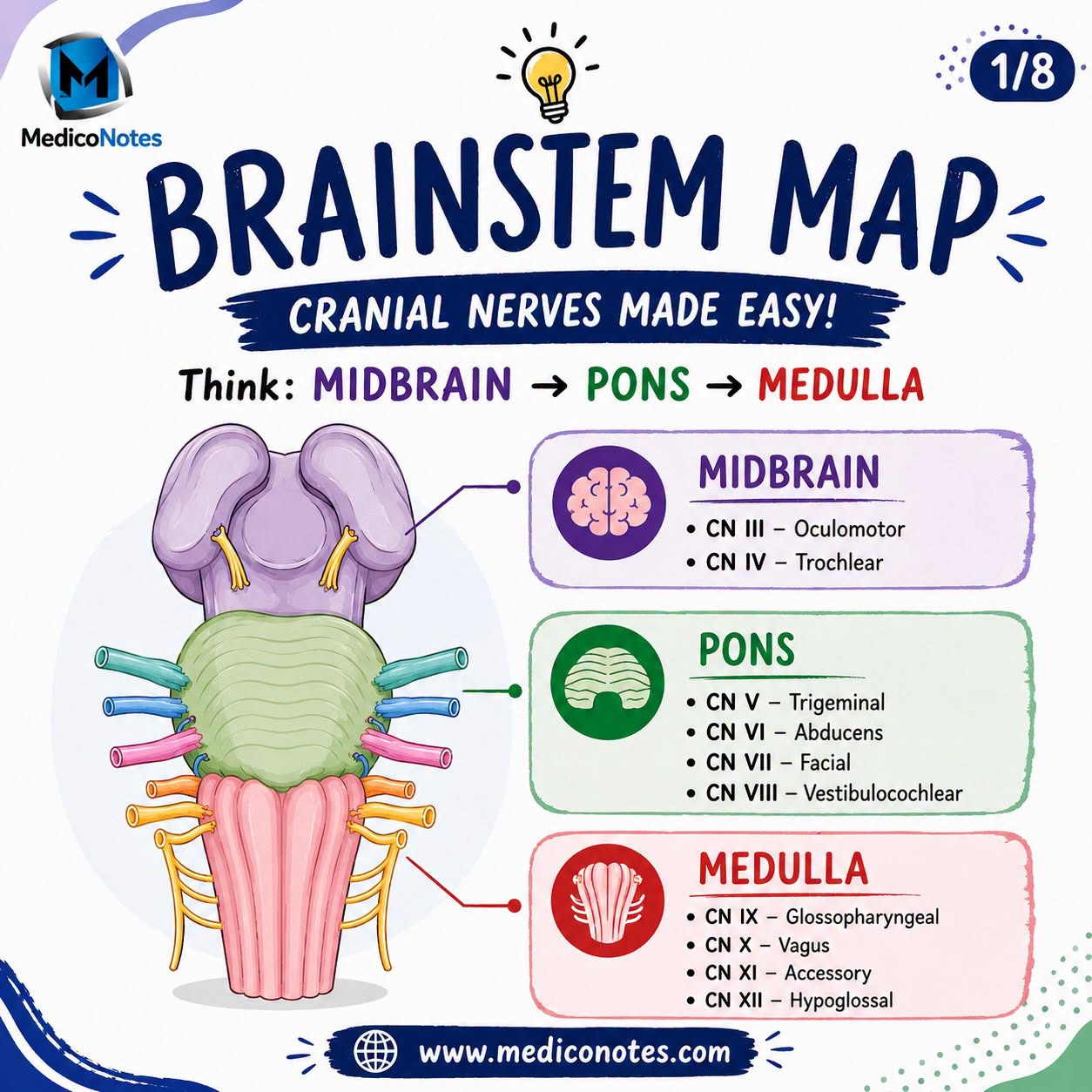
Mastering the brainstem is one of the fastest ways to localize neurological lesions and ace exams! Remember the simple sequence:
MIDBRAIN → PONS → MEDULLA
⸻
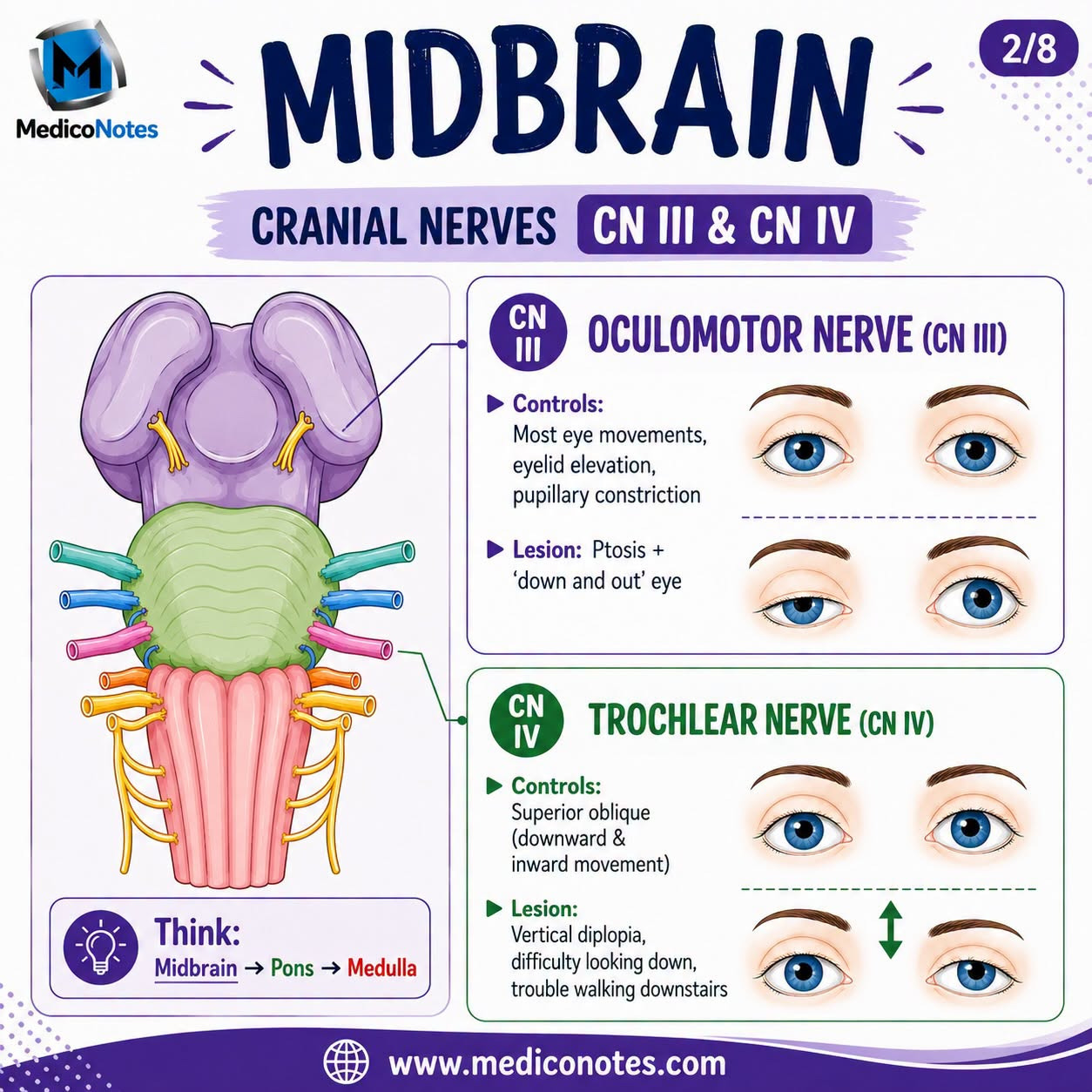
1️⃣ Midbrain (CN III & IV)
➊ CN III – Oculomotor
• Controls most eye movements, eyelid elevation, and pupillary constriction
• Lesion → Ptosis, dilated pupil, “down and out” eye
➋ CN IV – Trochlear
• Innervates the superior oblique muscle
• Lesion → Vertical diplopia, difficulty looking down, trouble walking downstairs
💡 Pearl: “Down and Out + Ptosis = CN III palsy”
⸻
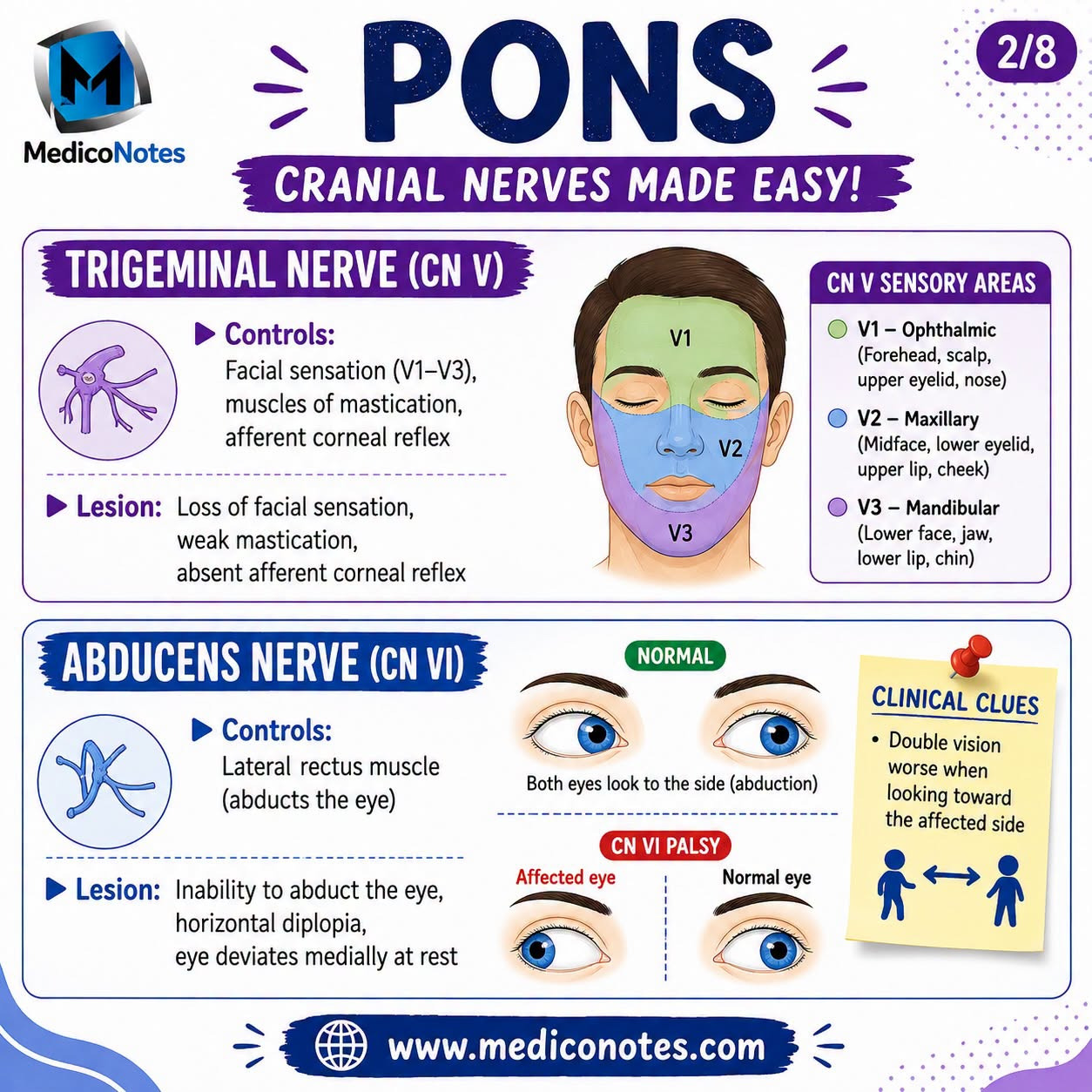
2️⃣ Pons (CN V, VI, VII, VIII)
➊ CN V – Trigeminal
• Facial sensation (V1–V3) + muscles of mastication
• Loss → Facial numbness, weak jaw, absent corneal reflex
➋ CN VI – Abducens
• Abducts the eye (lateral rectus)
• Lesion → Failure to abduct + horizontal diplopia
➌ CN VII – Facial
• Facial expression, taste anterior 2/3 of tongue
• Lesion → Facial weakness
➍ CN VIII – Vestibulocochlear
• Hearing and balance
• Lesion → Vertigo, hearing loss, nystagmus
💡 Pearl: Diplopia worse when looking toward the affected side suggests CN VI palsy.
⸻
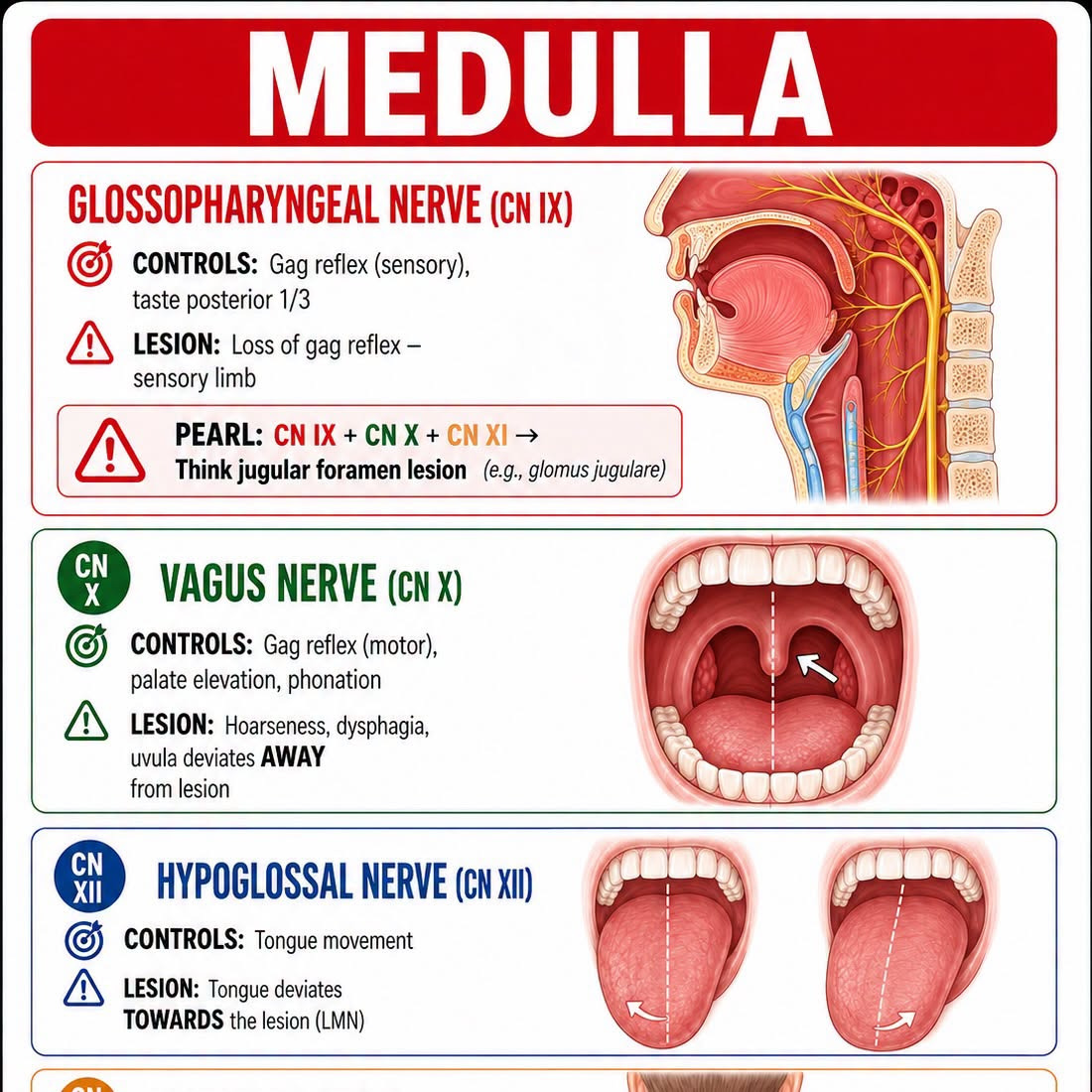
3️⃣ Medulla (CN IX, X, XI, XII)
➊ CN IX – Glossopharyngeal
• Sensory limb of gag reflex
• Taste posterior 1/3 of tongue
➋ CN X – Vagus
• Motor limb of gag reflex, palate elevation, phonation
• Lesion → Hoarseness, dysphagia, uvula deviates away from the lesion
➌ CN XI – Accessory
• Sternocleidomastoid and trapezius muscles
• Lesion → Shoulder droop and weak head rotation
➍ CN XII – Hypoglossal
• Tongue movement
• LMN lesion → Tongue deviates towards the lesion
💡 Pearl: CN IX + X + XI involvement = think jugular foramen lesion.
⸻
🚨 High-Yield Localization
🟣 Midbrain: CN III, IV
🟢 Pons: CN V, VI, VII, VIII
🔴 Medulla: CN IX, X, XI, XII
Remember:
3-4 Midbrain → 5-8 Pons → 9-12 Medulla
Save this post for quick revision before your next neurology exam! 🧠
📚 Visit our website for high-yield Neurology notes:
http://www.mediconotes.com
#Neurology #CranialNerves #Brainstem #MedicalEducation #FOAMed