Art Critic Louis Choi Chul-joo Criticism [65~78] Modern Art Critic Louis C
작성자최관우작성시간26.01.09조회수294 목록 댓글 0Art Critic Louis Choi Chul-joo Criticism [65~78] Modern Art Critic Louis Choi Chul-joo's Criticism of Contemporary Art & Design Criticism of Contemporary Art = Contemporary Art Today contemporary artworks contemporary artist Choi Chul-joo's Art Criticism, Contemporary Abstract Art Painter Criticism: Choi Chul-joo Desire Concept Abstract pop art combines the abstract conceptual approach of the other's desire art with the design form and linguistic abstract image of pop art. His concept of desire, or conceptual abstract art, appears, and a picture that conflicts with the concept of linguistic meaning emphasized in metaphysical philosophical light creates a dramatic event image with artificial lighting. & Abstract contemporary art that designed modern art abstract painting: Contemporary artist Louis Choi Chul-joo's realistic abstract work criticism of antinomical contemporary art as a conceptual art of treachery based on the concept of desire of others and Contemporary Art Critic Louis Choi Chul-joo's Contemporary Art work criticism: Jackson Pollock's Dripping Techniques and Action Painting
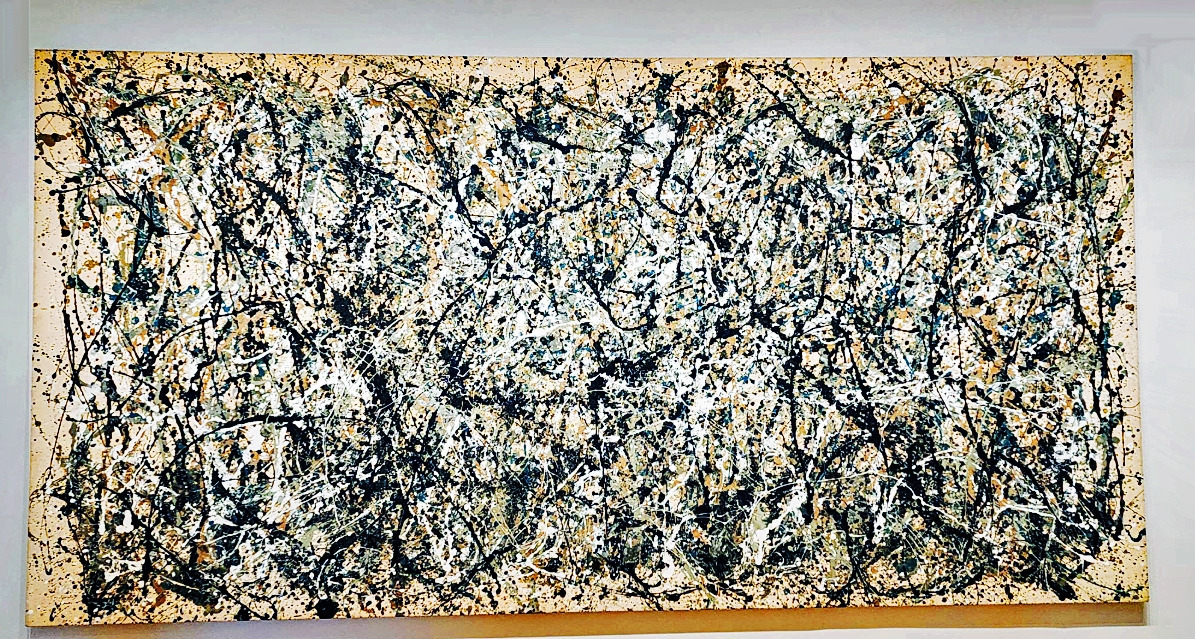
Jackson Pollock, by MoMA
Jackson Pollock's Dripping Techniques and Action Painting
Jackson Pollock's dripping technique and action painting are the traces of abstract realism of the concept of paint dripped as a substance that lacks linguistic meaning as a concept of unconscious desire. This is a trace of abstraction that expresses the deficient desire in which the reality in which the subject has disappeared by dripping the other's desire into a conceptual abstract realism image.
The trace is a material image of conceptual abstract realism, interpreting the separation of signifiers and signifiers, i.e., the absence of meaning, as an abstract device that constructs images in accordance with the rules of symbolic desire structures that show traces before meaning is created.
The absolute meaning of the symbolic form of the visible image cannot cross the category of imitative painting as a metaphor visible from the painting. Abstract expressionism different from conceptual abstract realism images enters the symbolic world as a given correlation between abstract and expressive images, while abstractly accepting differences between abstract and expressive images in the imagination.
The symbolic metaphor for the visible signifier image of the symbolic world includes signifiers on the canvas in the category of imitation in painting, and painting up to modern times is free from the social constraints that are acceptable in religious practices. The meaning of an image as a linguistic meaning hides the figurative reality in painting and becomes a signifier image as a non-real object whose abstract expressionist meaning transcends the symbolic meaning.
His dribbling develops a structure of desire in which the subject is divided into unrealities on the canvas, leaving traces of nonverbal reality in the shadow of reversible light whose linguistic meaning is ambiguous and thus unimaginable.
In the real world as an invisible non-verbal reality, the symbolic signifier image of the invisible metaphor represents expressionism as a signifier image of abstract meaning. Abstract expressionist painting is a signifier image, which is a substantial shape, and the substance of the shape disappears and is a metamorphic fixation as a signifier of an imaginary symbol. In other words, in abstract expressionist painting, the figurative meaning embodied in the absence of desire is transformed into a symbolic form. This breaks down pictorial symbolism by showing traces of desire that are not linguized with abstract images, away from the categories of realistic forms and traditional subjectivity that show the stages of light and darkness.
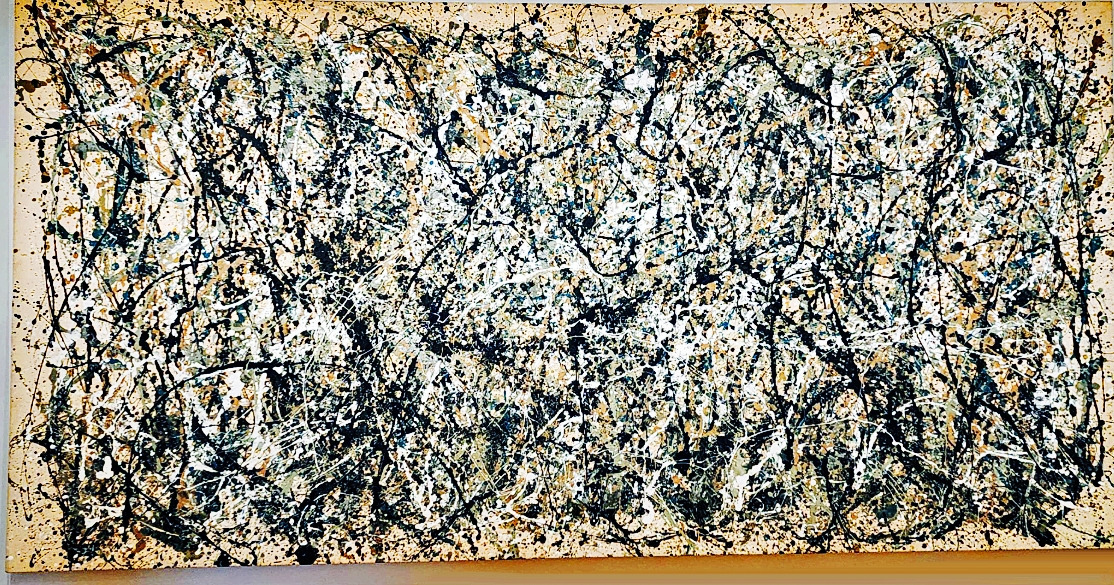
Abstract expressionist painting is only a continuous symbol of an object and cannot form a pictorial composition. This structure creates an image of a transcendent symbol of abstract reality and becomes a reality as an abstract material separated from the symbolic domain that abstract expressionism does not accept. It is an abstract object that shows dripping techniques and action painting separated from the realm of existential virtual images contained in realism. The symbolic image of the virtual image consistent with the metaphorical subject is no longer covered up, and it is a material object wrapped in a non-verbal sense.
Therefore, action painting before non-verbal meaning is a map image that tracks the object of desire of the cause of failure to express the desire of others as a trace of desire that is not verbalized and drifts the deficient desire to find the original desire of conceptual abstract realism.
The subjectivity of the abstract meaning of finding original desires in conceptual abstract realism paintings rejects the pictorial meaning and reveals the reality of illusions hidden in conventional reason by expressing the other's desire to recognize the concept of desire and identify it with the image of linguistic meaning in a new sense. This is an absolute non-verbal image fixation phenomenon that cannot reveal reality in symbolism as an invisible reality.
As a non-verbal image, it abstractly shows the reality of all stages of linguistic ambiguity, which symbolizes abstract metaphor. Its meaning does not equate the unconscious with language like Freud's unconsciousness, but, like Samuel Beckett's theater stage, expresses an abstract structure in which time and space lose reality and lack of linguistic meaning as an absurd image in which insufficient desire disappeared from the place of existence.
Abstract expressionism, although it cannot reveal abstract reality through mirror theory, originates from the imagined world of recognizing signifiant images in mirrors. Abstract representation is formed by recognizing that the abstract signifiant image as the subject differs from the mirror image, through the separation between the symbolic representation of the signifiant image and the abstract reality. Here, the abstract image and reality are shifted through division, and the encounter with reality takes place. As an abstract reality, the signifier image is revealed through action painting, but as a non-reality, it is a meeting with reality in a non-verbal sense.
An image in a non-verbal sense is a pre-stage of hieroglyphics and is a non-verbal structure without a symbolic image. This is another language of the unconscious that lacks linguistic meaning in the unconscious, fragmented reality that cannot form a real structure with a dripping image.
The desires of others who have stopped from themselves reflect obscene reality in the mirror, repeatedly drifting the self of divided desires into conceptual abstract realist images, but never leading to the meaning of linguistic desires and encountering abstractions away from fragmented reality./ Writing. Choi Chul-joo, a contemporary art critic (Doctor of Cultural Design)
Choi Chul-joo, a contemporary art critic
----------------------------------------------------------------------------------------
Art Critic Louis Choi Chul-joo
Contemporary Art Review by Louis Choi 66
Art Critic Louis Choi Chul-joo Criticism [66] Modern Art Critic Louis Choi Chul-joo's Criticism of Contemporary Art & Design Criticism of Contemporary Art = Contemporary Art Today contemporary artworks contemporary artist Choi Chul-joo's Art Criticism, Contemporary Abstract Art Painter Criticism: Choi Chul-joo Desire Concept Abstract pop art combines the abstract conceptual approach of the other's desire art with the design form and linguistic abstract image of pop art. His concept of desire, or conceptual abstract art, appears, and a picture that conflicts with the concept of linguistic meaning emphasized in metaphysical philosophical light creates a dramatic event image with artificial lighting. & Abstract contemporary art that designed modern art abstract painting: Contemporary artist Louis Choi Chul-joo's realistic abstract work criticism of antinomical contemporary art as a conceptual art of treachery based on the concept of desire of others and Contemporary Art Critic Louis Choi Chul-joo's Contemporary Art work criticism: Picasso's "Virgin of Avignon (Le Bordel d’Avignon)" VS Choi Chul-joo's the definition of conceptual abstract realism abstraction
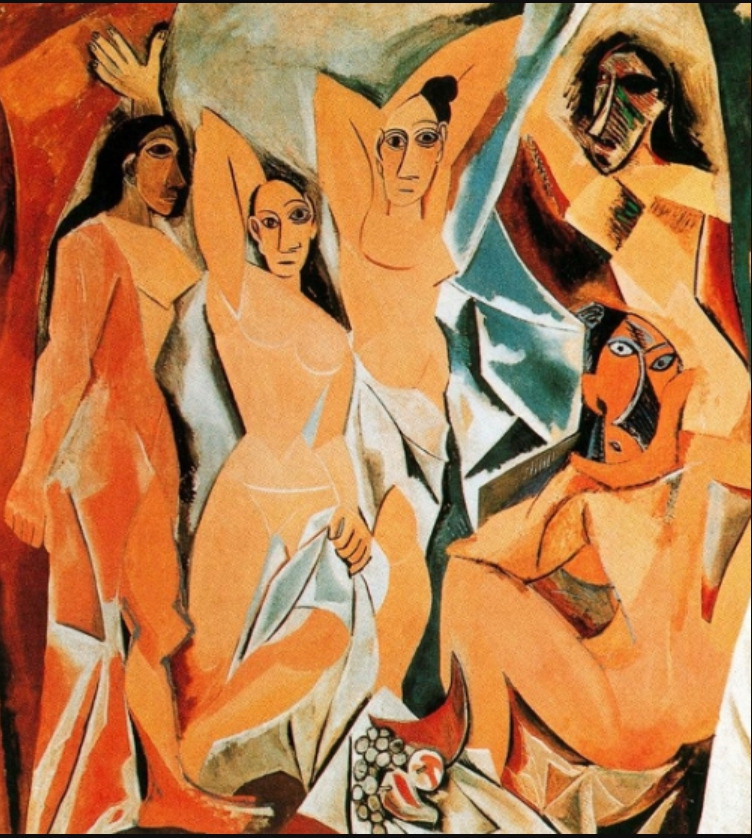
"Virgin of Avignon" by MoMA
"Virgin of Avignon" by MoMA
Picasso's "Virgin of Avignon (Le Bordel d’Avignon)" VS Choi Chul-joo's the definition of conceptual abstract realism abstraction
In Picasso's "Virgin of Avignon," the virgins as a signifiant image are subjective objects of symbolic structure, with desire as an unconscious linguistic meaning created by Picasso.
As a symbolic structure, the face and mask of a virgin are symbolic devices of the symbolic world that cover the desires of others with masks, creating a gap that is divided from reality. By seeing the gap as a reversible light, it allows us to recognize the structure of realism in reality. This defines conceptual and abstract realist paintings as a methodology for drawing the present subject.
Therefore, the definition of conceptual abstract realism abstraction is that the subject's structure is realized as a shaded structure of reversible light because it repeatedly visually recognizes the illuminated form according to the past temporality. In other words, the object is repeatedly shown with the present gaze according to the temporality, and the philosophical result that the concept of the object can be predicted with abstract causality is conceptual abstract realism abstraction.
In the symbolic world, the other's object is alienated from the lack of desire as a non-verbal meaning and loses its essence as the subject of desire, dividing it into Avignon's virgins, regarded as an abstract desire concept according to grammar disclosed as a symbolic image of existence in the previous stage of linguistic meaning.
As a result, Avignon's maidens choose the other's desire structure and make it meaningful as seeing the maidens in a linguistic sense rather than the image of the maidens as the subject of the desire structure.
In this way, virgins are images that lack linguistic meaning, and the desire structure is re-embodied, and the image of linguistic meaning becomes a new conceptual abstract realism image by repeating the design as an ex post effect of another desire structure.
Therefore, the direction and viewpoint of reversible light are all stages of the perspective visual system according to temporality, and the line space of the visual structure, that is, the linguistic image constitutes the desire structure, and the reversible light that constitutes the effect of the post-image has a intersection in the existential position with continuity.
At the intersection, the maidens create a multi-loyal structural image of the linguistic meaning of the unconscious structure composed of shades from the perspective and the multiple points of reversible light separated from the perspective of perspective, and the maidens are abstracted as divided subjects as flesh that can be momentarily stared at while being dismantled from the point of view of the stereophonic monolith.
As a divided subject, it acts as an existential image of the concept of abstract desire as an image with the same linguistic meaning as a virgin and self as a mirror image reflected in a pond.
Divided into the structure of desire in imagination, "Virgin of Avignon" consists of real images as self by equating conceptual abstract realism images with mirror images by mistaking chicks for young chickens in imagination.
Here, by equating the other's desire with the mirror image and stating the linguistic meaning of the image as a statements image, the ego acts as a linguistic meaning representing the other's desire.
As a linguistic meaning, the subject of the image structures the image like grammar with an object that specifies unconscious desire.
Picasso's "Virgin of Avignon," viewed from Choi Chul-joo's conceptual abstract realism perspective, is a prototype abstraction of conceptual abstract realism that reveals the dismantling structure of reality and desire before language beyond the conceptual abstraction of stereotacticism.
This is not a stereoscopic painting that simply dismantles the sign and reconstructs the structure of desire, but creates traces of desire that have not been linguized through the separation of signified image as a form and meaning as a linguistic meaning. This collides with the Lacan imagination and the real world and is read as Choi Chul-joo's conceptual abstract realism.
As the gaze of the other, the eyes of the maidens stare directly at the viewer, and form a structure in which the viewer is staring and staring at the same time, forming a visual structure with the concept of the other's desire.
The visual structure of the concept of desire interprets the nude images of virgins as a visual device in which sexual desire and death impulses intersect. In particular, as a structure of desire, it is interpreted as a visual device that creates a conceptual abstract realism image by colliding the African mask of the two women on the right with the female image in a linguistic sense as reality.
In "Virgin of Avignon," the clash between linguistic meaning and image implies an irony between the image of "Virgin" and its linguistic meaning, and its image and meaning reveal a division of desire through inconsistency.
As a reversible shaded structure of light, the linguistic instability of the lack of desire transfers to a conceptual abstract realist image as the present existential image, as the nude of the maidens equates with the principle of simultaneity of Cubism on both the front and the side with a reversible shaded light that does not distinguish direction and position.
The five virgins, interpreted as the other's desire structure, are no longer subjective characters, but symbolic desire beings composed of the other's desire structure. In particular, the African mask faces of the two characters on the right are traces of the other's gaze dismantling the subject of the desire structure.
The destruction of a viewpoint using Picasso's principle of synchronicity is the same as the multiple viewpoint in which Choi Chul-joo's desire structure is used as an image in a linguistic sense. This is not just a visual experiment, but it symbolizes the collapse of linguistic unity. In other words, it is a visualization of the divided self of modern people and is the core structure of conceptual abstract realism.
The composition Picasso borrowed from Cezanne's "Women in the Bath" is not just an imitation, but the same as creating an image by connecting the present with a shade of reversible light in Choi Chul-joo's conceptual abstract realism. This is not just an homage, but functions as a device of symbolic reproduction through repetition and difference of the desire structure.
Therefore, the 'Virgin of Avignon' is not just an image of the concept of Cubism, but a cause of the structure of desire that interprets the visual language meaning that reveals the structure of unconsciousness and desire in modern society as an image. This is a philosophical result that cannot abstractly define the structure of desire according to the object and causal relationship that embodies the structure of desire.
This is a philosophical result that cannot abstractly define the structure of desire according to objects and causality that specify the structure of desire, establishing events as a subject image of desire as an exemplary example of conceptual abstract realism through the dissolution of reality before language, the desires of others, and symbols.
Here, conceptual Abstraction Realism Abstraction is constructed to question the philosophical consequences that can be predicted by causal relationships, and the subject image asks what the desires of others want. And it maintains the abstractly specific subject of desire that must exist as a concept of desire as a conscious action.
The conscious behavior dismantles symbolic language and embodies a visual object in which significance separates it from the image of the signifiers as a linguistic meaning. And the object designs an image of linguistic meaning at the level of statements consciousness as an image and is transferred to the desire structure of unconscious images in the dimension of enunciation act.
Therefore, the conceptual abstract realism painting of desire becomes a structure of desire that visualizes the philosophical psychological structure as a conceptual abstract realism of the concept of imperceptible desire and the linguistic desire at the level of expressive consciousness and becomes a device of desire that painterly reveals the image of reality before the linguistic meaning. Here, it becomes an object of desire at the intersection of conceptual abstraction and unrealistic realism that represents insufficient desire.
In this way, conceptual abstract realism abstraction is a map of unconscious desire that reveals the hue and form of invisible desire in reversible shades of light./ Writing. Choi Chul-joo, a contemporary art critic (Doctor of Cultural Design)
Choi Chul-joo, a contemporary art critic
----------------------------------------------------------------------------------------
Art Critic Louis Choi Chul-joo
Contemporary Art Review by Louis Choi 67
Art Critic Louis Choi Chul-joo Criticism [67] Modern Art Critic Louis Choi Chul-joo's Criticism of Contemporary Art & Design Criticism of Contemporary Art = Contemporary Art Today contemporary artworks contemporary artist Choi Chul-joo's Art Criticism, Contemporary Abstract Art Painter Criticism: Choi Chul-joo Desire Concept Abstract pop art combines the abstract conceptual approach of the other's desire art with the design form and linguistic abstract image of pop art. His concept of desire, or conceptual abstract art, appears, and a picture that conflicts with the concept of linguistic meaning emphasized in metaphysical philosophical light creates a dramatic event image with artificial lighting. & Abstract contemporary art that designed modern art abstract painting: Contemporary artist Louis Choi Chul-joo's realistic abstract work criticism of antinomical contemporary art as a conceptual art of treachery based on the concept of desire of others and Contemporary Art Critic Louis Choi Chul-joo's Contemporary Art work criticism: <Choi Chul-joo, Island Gyebangdaedo>, which became a landscape as a meaning of an old story
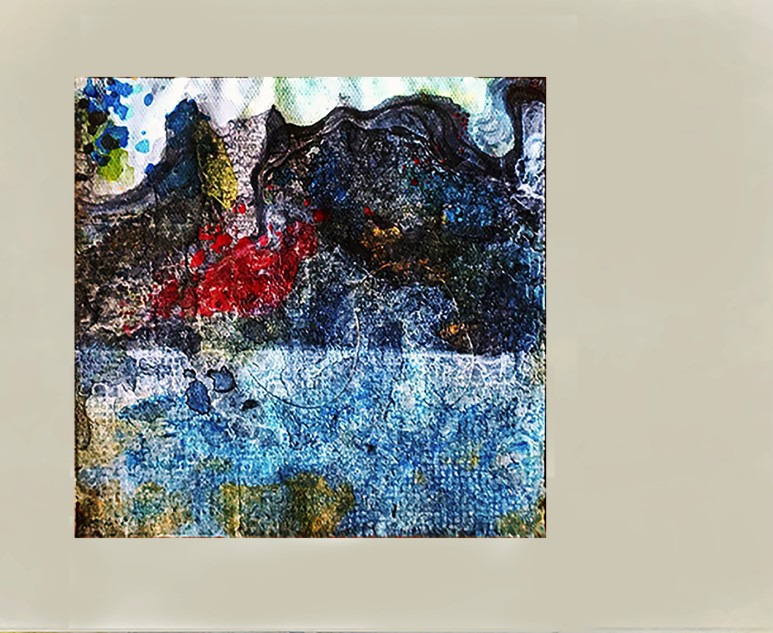
Louis Chul-joo Choi, 최철주섬계방대도(崔徹柱剡溪訪戴圖), 6X6cm, acrylic and composite materials on vinyl, 2021
Realistic structures reflect the shape by being distorted by light. It is the outline and shadow that are determined by the shade of light that reveals its shape. Realistic abstractions as treacherous conceptual art take note of this and shape realistic concepts.
(Choi Chul-joo's Conceptual Art Theory on Realistic Abstract Painting)
Therefore, realistic abstraction using treacherous conceptual art abstracts realistic concepts by confirming the formation of the shape as a shade of light that distorts the realistic structure in everyday events.
A shape abstracts the concept of a realistic structure and determines its shape by a reversible shade of light, but as the entire shape is obscured, the shape is summed up in monotone.
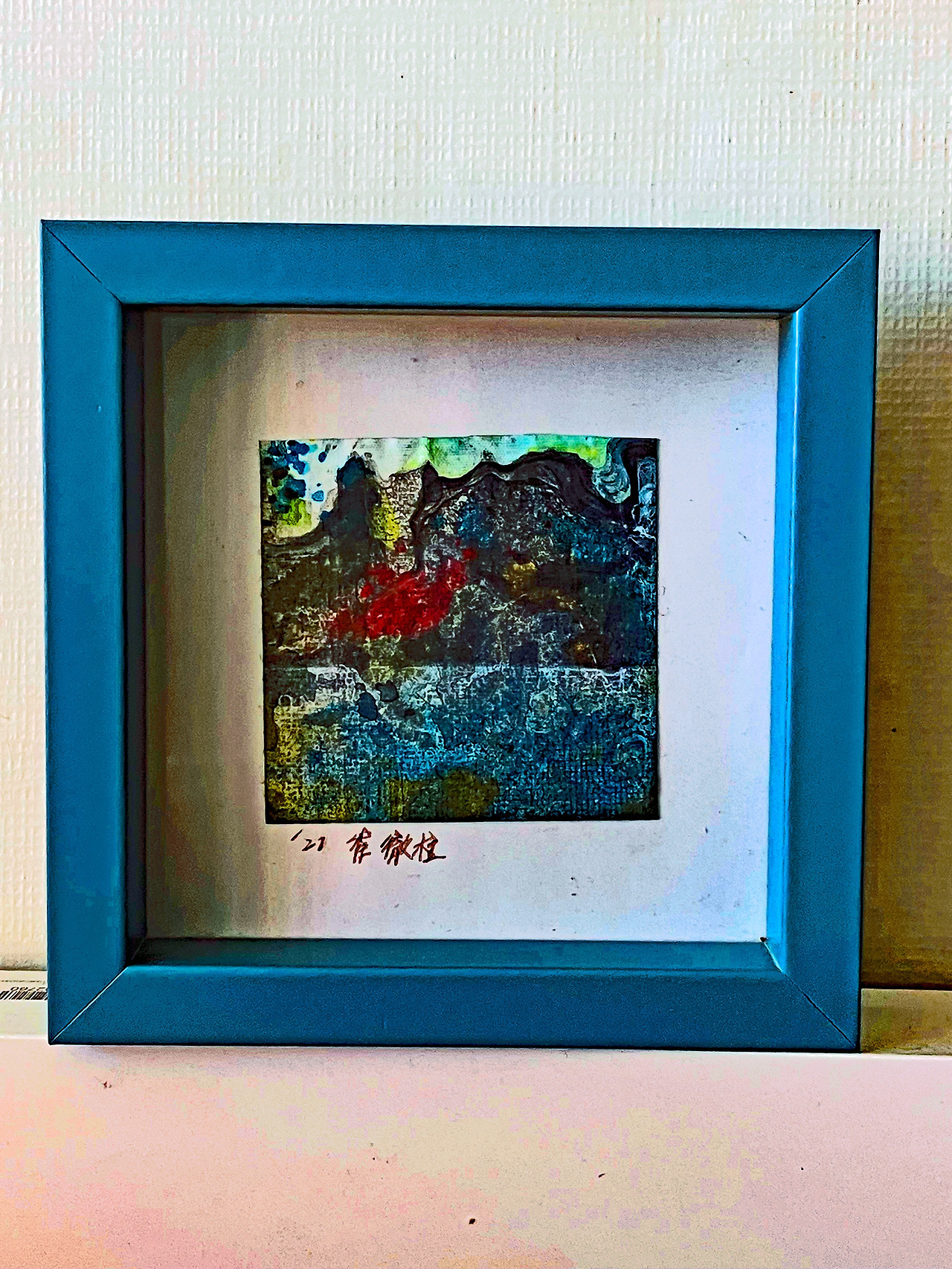
Louis Chul-joo Choi, 최철주섬계방대도(崔徹柱剡溪訪戴圖), 6X6cm, acrylic and composite materials on vinyl, 2021
<Choi Chul-joo, Island Gyebangdaedo>, which became a landscape as a meaning of an old story
Choi Chul-joo's Island Gyebangdaedo is a landscape painting composed of paintings of the ancient Chinese Yuan Dynasty, and is the same as the Island Gyebangdaedo. The realistic structure is abstracted into hues by inserting reversible shades of light into the island's atmosphere.
It is not just a landscape painting, but a conceptual realist image that combines literary old stories and conceptual abstract realism art. This work is a modern reinterpretation of the old story of the ancient Chinese Yuan Dynasty's Hwang Gong-mang, "Island Gyebangdaedo (剡溪訪戴圖)" which visualizes abstract concepts as realism paintings through reversible shades of light according to each other's desires and timeliness.
Therefore, images are abstractions that match shapes and concepts with contrasting light that illuminates the place of the shade with shades.
Choi Chul-joo is a representative example of conceptual abstract realism painting as a treacherous conceptual art that attempts a conceptual return of contemporary painting through this work and replaces the place of reality with the desire of others.
He abstracts abstract concepts like Jasson Pollock's dripping paint as "a landscape that stops temporality in abstract space and is fixed as an object without a subject" and abstracts past the boundary between existence and non-existence as materialistic realism paintings.
Rather than an aesthetic structure that forms the value of an image in a phenomenal concept, it is a literary painting that speaks of life experiences in accordance with abstract concepts and the meaning of death. It looks like a Time landscape from the past time when I saw it as a discipline, not distinguished from images.
This does not simply reproduce images of conceptual abstract structures as landscapes featured in old stories, but abstracts realistic structures into shades through reversible shades of light.
Hwang Gong-mang's Island Gyebangdaedo (剡溪訪戴圖) drawing forms linearly and determines perspective treatment as a joke of ink, but Choi Chul-joo Island Gyebangdaedo darkens the shadow of the object with reversible light with pointillism, overlapping the experience and timeliness of the impression with color points.
It refers to an island by exaggerating the small stream of water in the valley in contact with the landscape with its color tone and the structure of the shade treated with reversible light.
Wang Ja-yu, who visited his friend there by boat, was excited and went there, but after God disappeared, he described mountains and water, saying, "Do I have to meet you?" (何必見戴), but it is the same as Choi Chul-joo's "Island Gyebangdaedo" and "morning glory", which represents desire.
The "morning glory" conceptual abstraction by mirroring the unrealistic desires and unrealistic objects of desire.
As an imaginary world, Choi Chul-joo's "Island Gyebangdaedo" calculates the difference between the mountain and the river's landscape facing the desires of others by the color of the river.
This was adapted to the subject of the concept of artistic desire by representing the romantic historical events with the desires of others.
Like the consultative mise-en-scène of ancient history, desire and valleys are equipped with color dots as visual materials.
From the water surface of the valley to the outline of the mountain, the surface of the mountain, which is overlapped with the maple color according to time, is composed of very short color dots.
Composition conveys the meaning of old stories and combines perspective and color to form an inseparable volume.
By fixing the perspective shape with color dots, the volume is formed with a color tone simply treated with color sensitivity.
This is a formative effect that embodies the meaning of an old story, but it does not reveal reality like a pictorial photograph, but expresses formative reality through literary recognition. In other words, it is a beautifully abstract painting with the meaning of the previous story as an abstract landscape
By stopping repetitive temporality in abstract space, the picture is fixed in abstraction as an image of an object without an object.
This is a physical shading structure in which reversible light is added to the color tone, unlike the picture of the Hwang Gong-mang's painting, which sweeps the contour into a shading structure. The structure abstracts the concept of referring to an object in which realistic outlines and abstracts are non-realistically overlapped, such as the 'Choi Chul-joo morning glory'.
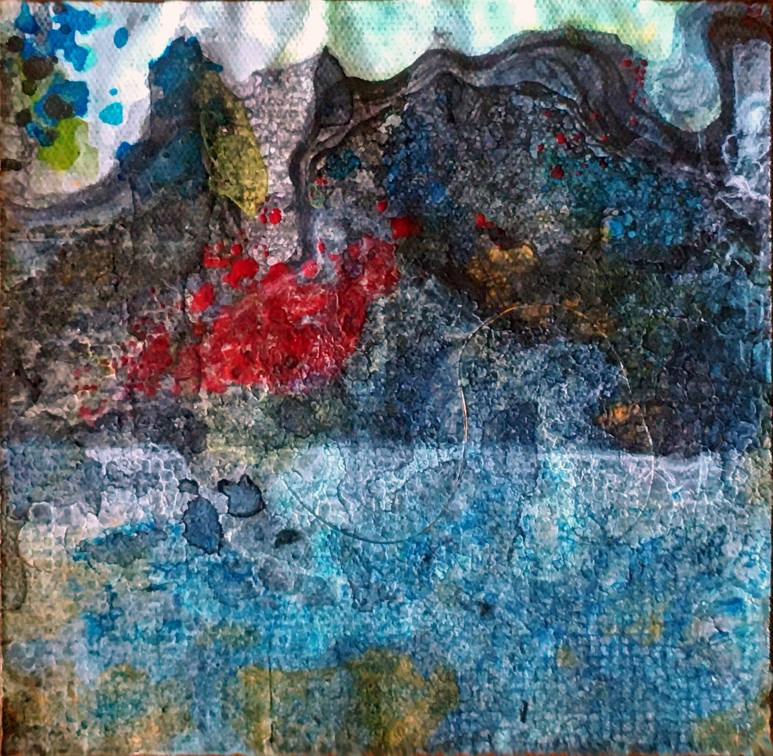
Louis Chul-joo Choi, 최철주섬계방대도(崔徹柱剡溪訪戴圖), 6X6cm, acrylic and composite materials on vinyl, 2021
In "<Choi Chul-joo, Island Gyebangdaedo>", pointillist treatment superimposes the experience of temporal and landscape impression with color dots instead of the traditional Zen tombs of the Yuan Dynasty, expressing the phenomenal structure with paint as a new technique of material realism.
<Choi Chul-joo, Island Gyebangdaedo> is a conceptual abstract reflection of non-realistic objects, that is, a non-realistic image centered on the desires of others, reflecting the concept of desire like a mirror, blurring the boundary between reality and imagination.
The "Island Gyebangdaedo" is an imaginary world, and the difference between streams and arithmetic is calculated in color as a pointill on the mountains of streams faced by the desire of others. Therefore, as the same literary conceptual painting image as "morning glory", it is defined as a conceptual abstract realism painting that unravels the meaning of an old story through life experiences and philosophical thoughts, not a simple aesthetic structure.
It visualized abstract concepts through shadow structures in which light disappears and reappears, unlike classical shades. Through the interaction of light and shadow, the traces of temporality and existence were expressed as the desires of others, and the abstract concepts were visualized through reversible shades of light.
The color point, which expresses the surface of the mountain as very short and small points, is a way to express the overlapping of the passage of time and the sense of color by emphasizing the phenomenal structure instead of the line drawing through point-by-point color processing, and it formed an aesthetic space by connecting it with the blank beauty of oriental ink painting.
This communicates the meaning of the old story, combining perspective and hue to form an inseparable volumetric landscape, repeating the volume of the landscape in hue, and forming a fixedly colored perspective in hue.
In addition, the expression of arithmetic is the same as Choi Chul-joo's Thread Painting, which uses thread and paint together to break the boundaries between embroidery and painting, and expresses the timeliness of sensory desire, combining the physical texture of modern painting with color points.
Abstract landscapes are images composed of the desires of others by applying non-existent concepts to express reality as literary perceptions like realist photographs, reflecting reality like mirrors, but forming a structure that does not exist. The landscape in the picture image of the old story is composed of a subjectless gaze, and the structural boundary between existence and absence is produced by material realist paintings.
And by fixing the painting as an aesthetic object without a subject who has stopped temporality by repeating the design in the abstract space, <Choi Chul-joo, Island Gyebangdaedo> conceptually returned to the Yuan Dynasty's ancient island-Gyebangdaedo as a literary painting structure and composed a conceptual abstract realism painting as an image of life's philosophy and linguistic meaning structure.
By stopping repetitive temporality in abstract space, the picture is fixed in abstraction as an image of an object without an object.
This is a physical shading structure in which reversible light is added to the color tone, unlike the picture of the Hwang Gong-mang's painting, which sweeps the contour into a shading structure. The structure abstracts the concept of referring to an object in which realistic outlines and abstracts are non-realistically overlapped, such as the 'Choi Chul-joo morning glory'.
The conceptual art of "Choi Chul-joo morning glory" is an abstract idea attributed to the art theory of the concept of desire. As a result, the concept is abstracted into traces of practical formality and reversible shades of light as a non-realist with the theme of the desire of others.
This place where abstractions are illuminated forms a stream of abstract concepts where the realistic structure is omitted.
The creek is positioned by irregular dots that extend to the middle of the mountain and its shape structure reflected in the stopped waves. This forms the aesthetic needs of the literary old story where the life seen as a dot has settled, and shows linguistic sensitivity by illuminating the value of life in the stream with the imaginary mountain as a reversible color point of light. And it makes a mountainous landscape appear as a reversible light with a volume of a dot about a life hidden in a stream. This refers to the value of life as the cognitive structure of desire hidden in timeliness time. It is an abstraction of the non-real structure as a conceptual form as a structure of the same meaning.
"Choi Chul-joo Island Gyebangdaedo" is a modern conceptual art that abstracts the meaning of an old story in the process of realizing the concept.
This creates a life pattern according to the symbolic landscape of the story and abstracts it in abstract shades.
The Island Gyebangdaedo, where one meaning that does not distinguish the genre of the image has become a conceptual landscape, faces the gaze from an abstract perspective./ Writing. Art critic Choi Chul-joo (abstract painter & Doctor of Cultural Design)
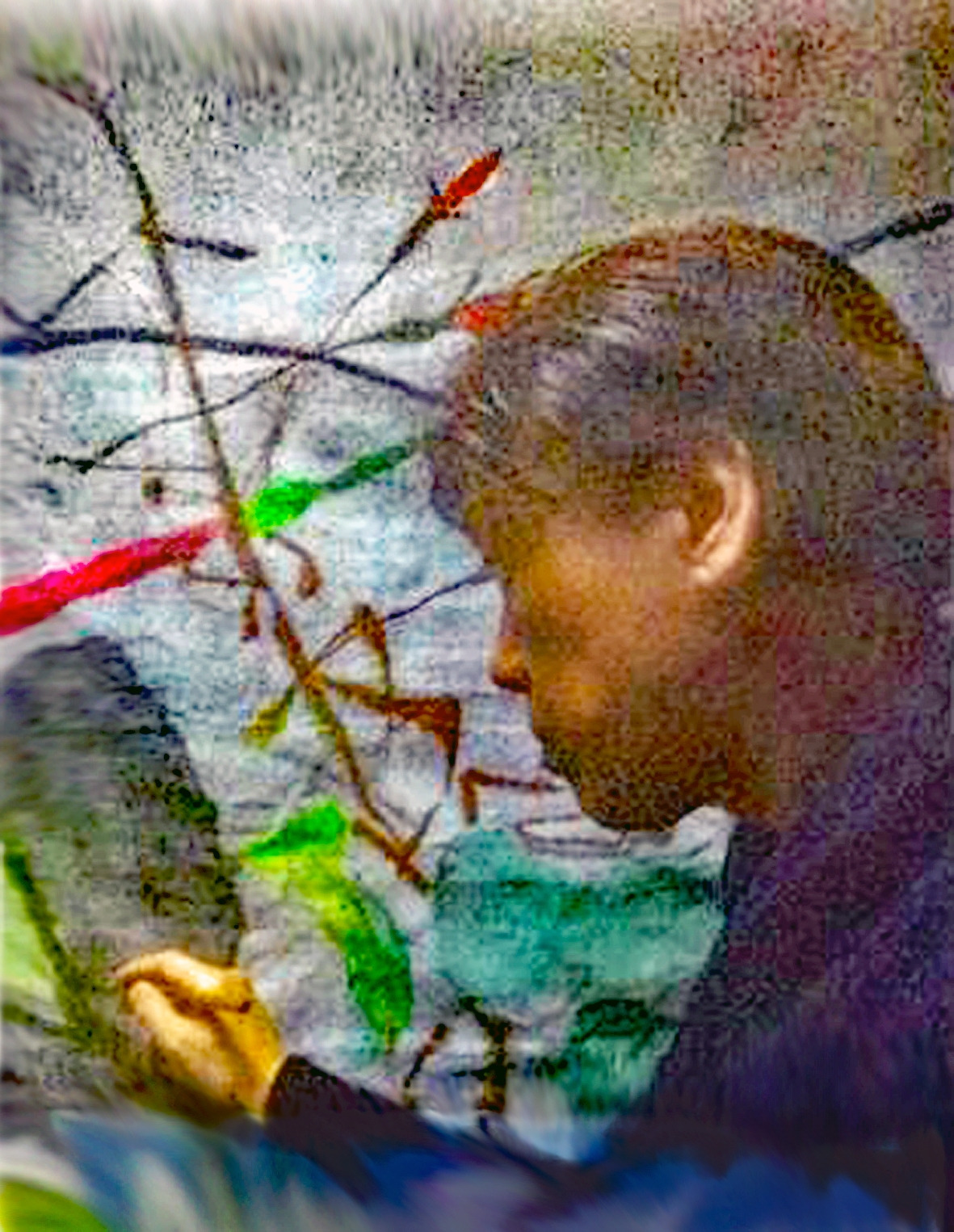
Choi Chul-joo, a conceptual abstract realism painter
----------------------------------------------------------------------------------------
Art Critic Louis Choi Chul-joo
Contemporary Art Review by Louis Choi 68
Art Critic Louis Choi Chul-joo Criticism [68] Modern Art Critic Louis Choi Chul-joo's Criticism of Contemporary Art & Design Criticism of Contemporary Art = Contemporary Art Today contemporary artworks contemporary artist Choi Chul-joo's Art Criticism, Contemporary Abstract Art Painter Criticism: Choi Chul-joo Desire Concept Abstract pop art combines the abstract conceptual approach of the other's desire art with the design form and linguistic abstract image of pop art. His concept of desire, or conceptual abstract art, appears, and a picture that conflicts with the concept of linguistic meaning emphasized in metaphysical philosophical light creates a dramatic event image with artificial lighting. & Abstract contemporary art that designed modern art abstract painting: Contemporary artist Louis Choi Chul-joo's realistic abstract work criticism of antinomical contemporary art as a conceptual art of treachery based on the concept of desire of others and Contemporary Art Critic Louis Choi Chul-joo's Contemporary Art work criticism: In Renaissance art, which opened up the image of contemporary art, "2025-Mona Lisa"
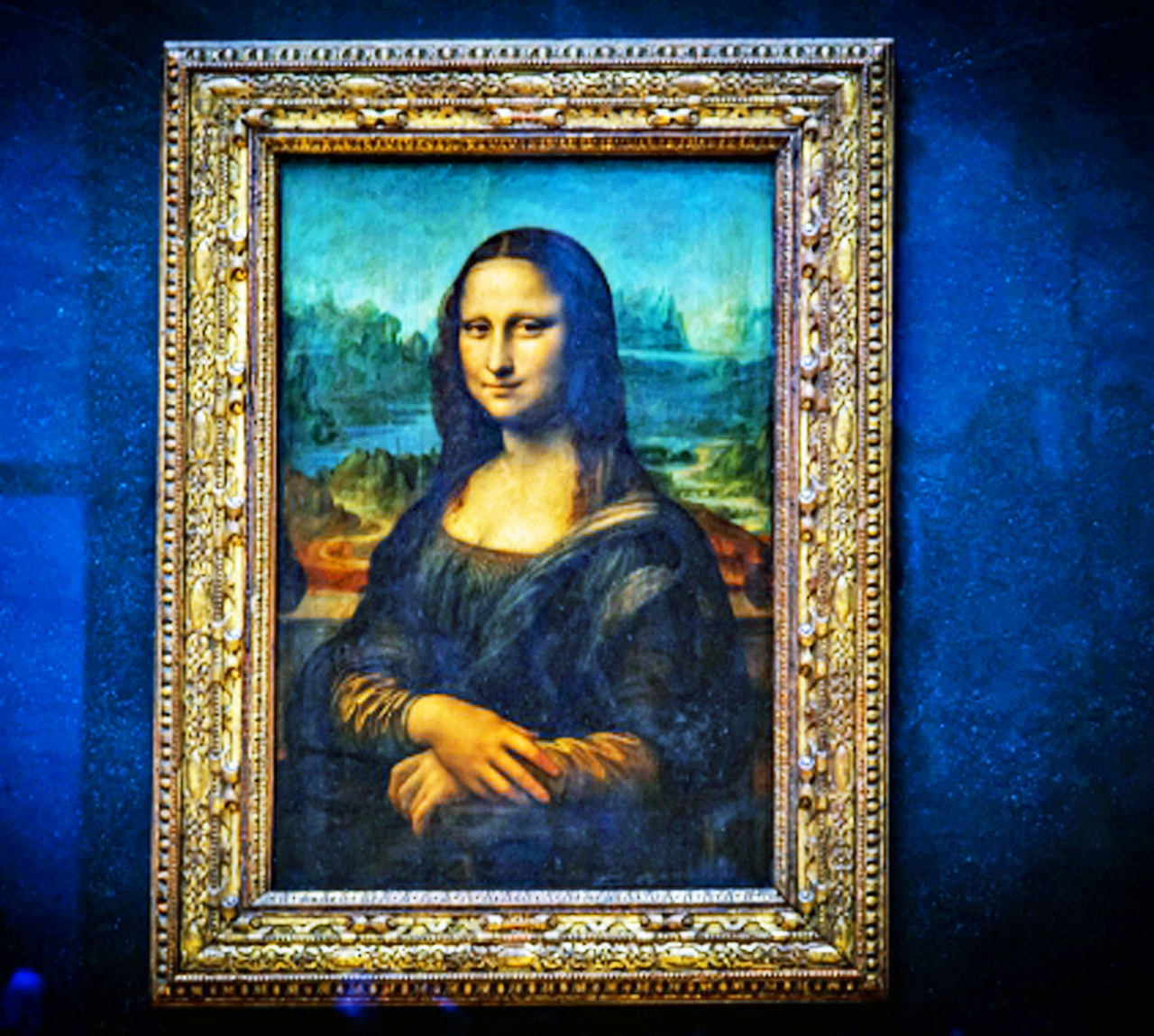
Leonardo di ser Piero da Vinci, Mona Lisa, 77×53cm, Collection: Louvre Museum
In Renaissance art, which opened up the image of contemporary art, "2025-Mona Lisa"
In Renaissance art, which opened up the image of contemporary art, "2025-Mona Lisa (La Joconde)" refers to the aesthetic desire that spread from aristocrats to merchants. This is where the desire of the other to monopolize the artistic value of contemporary art is established.
The concept of desire is humanism, which deviates from religious creativity.
"Mona Lisa" abstracts the mysterious image saved by Da Vinci(Leonardo di ser Piero da Vinci)'s sfumato technique as the outline of reality as an image beyond the mysterious atmospheric effect of the color of the object, which is the background of desire.
Abstraction is established as an aesthetic effect of safe desire with object on the face of the Mona Lisa and a background on the left.
From the background, the image of desire mediated by object and Mona Lisa is repeated, showing an abstract reverberation effect in the shadow of reversible light.
As a reverberation effect, the background of desire were properly placed behind the object so that the gaze could lead from the object to the Mona Lisa, the background of desire, and the gaze was focused on the object and connected to the face of the Mona Lisa as the subject of desire.
And by creating a position facing the Mona Lisa in the obect, the gaze is directed to the Mona Lisa, the subject of desire.
The metaphor for the concept of desire The Mona Lisa is replaced with a desire image in the object, and the object is demarcated into the background of desire. Here, the gaze of desire focuses on the Mona Lisa with a red window structured into a frame.
As a Renaissance thinking, it has a desired meaning with the object of desire, as an allegory.
The object is an abstraction that shows the real world of desire as a subject by linking the image of desire with a sensus allegoricus that explains other meanings beyond the literal meaning, and the object window interprets the demarcation problem between objects and desires as a symbolic metaphor in the meaning of the text.
Unlike the conceptual art of Dadaism, which transforms the image of the object as meaning, this materializes the object of desire and realizes the subject's desire structure in the shadow of reversible light.
As a reality, the desire structure is the object, and the Mona Lisa becomes the object of the cause of creating the desire structure as an image symbolized in the object through the relationship of symbolic expression made by the Mona Lisa as a object.
The simultaneous function of the desire structure and the real image reveals the underlying image in which the meaning of the concept is integrated into the desire image as a retroactive effect, and the Mona Lisa, who metaphorized the image, hides in the desire concept.
As a fundamental image, the Mona Lisa is disclosed as the first concept of desire and reaches a symbolic conceptual abstract realism image as a deliberate abstraction. / Writing. Art critic Choi Chul-joo (conceptual abstract realism painter & Doctor of Cultural Design)
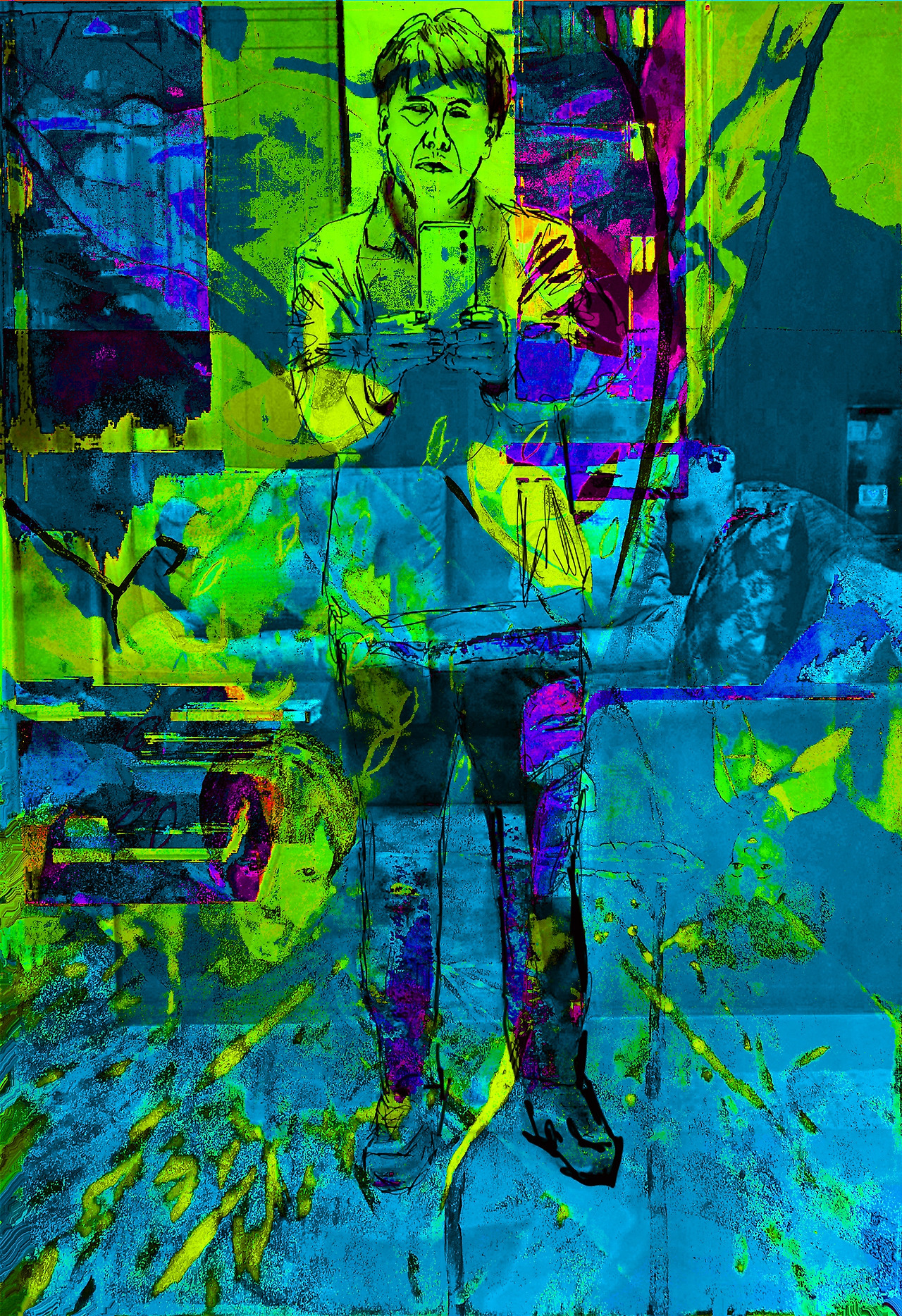
Choi Chul-joo, aconceptual abstract realism painter
----------------------------------------------------------------------------------------
Art Critic Louis Choi Chul-joo
Contemporary Art Review by Louis Choi 69
Art Critic Louis Choi Chul-joo Criticism [69] Modern Art Critic Louis Choi Chul-joo's Criticism of Contemporary Art & Design Criticism of Contemporary Art = Contemporary Art Today contemporary artworks contemporary artist Choi Chul-joo's Art Criticism, Contemporary Abstract Art Painter Criticism: Choi Chul-joo Desire Concept Abstract pop art combines the abstract conceptual approach of the other's desire art with the design form and linguistic abstract image of pop art. His concept of desire, or conceptual abstract art, appears, and a picture that conflicts with the concept of linguistic meaning emphasized in metaphysical philosophical light creates a dramatic event image with artificial lighting. & Abstract contemporary art that designed modern art abstract painting: Contemporary artist Louis Choi Chul-joo's realistic abstract work criticism of antinomical contemporary art as a conceptual art of treachery based on the concept of desire of others and Contemporary Art Critic Louis Choi Chul-joo's Contemporary Art work criticism: Millais's Ophelia Choi Chul-joo Art Criticism
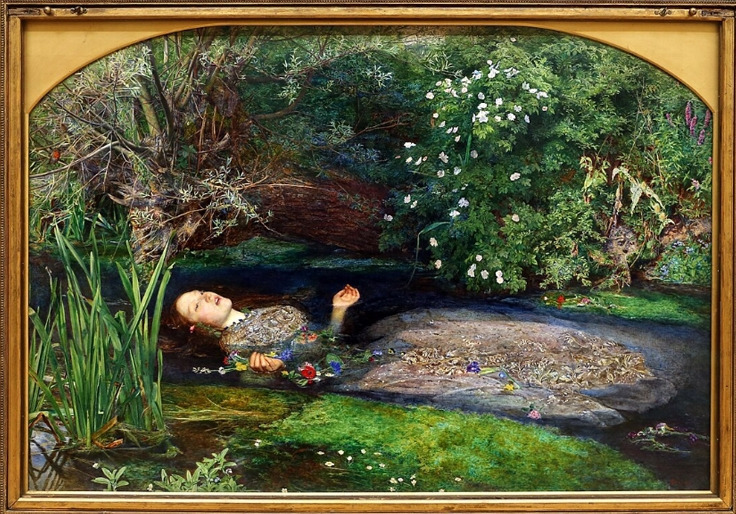
John Everett Millais, Ophelia, 76×112cm, collection: Tate Britain
Conceptual Abstract Realism Painting of the Theater Scene, Millais's Ophelia Choi Chul-joo Art Criticism
John Everett Millais's Ophelia visualizes Ophelia's death in Shakespeare's Hamlet, creating a naturalistic detailed background and tragic romantic image of Ophelia reflecting the desire for love reflected in the pond structure.
The surface of the water, which is placed alongside the structure of a pond that has stopped in the flowing river, transforms into a mirror image when viewed forward like a mirror in the dark. As a result, Ophelia is a realistic image that is drawn so that it can be seen by observing the same appearance as a mirror image.
The Ophelia image, which is a linguistic meaning of a desire death composed of reversible light shades, shows a realistic structure in which images illuminated by reversible light shades in several directions produce a single theatrical scene.
This is an image that divides the contrasting description of nature and death as a desire that lacks a symbolic structure in the theatrical stage scene according to its scientificity. As the subject of desire, the linguistic meaning of death and the image described by observing the pond are identified, making a tragic death that is closer to a fantasy than reality ideal.
The symbolic structure in the theatrical stage scene is an image in which the subject is divided by insufficient desire. This is identified with the linguistic meaning of the concept of desire, and the meaning of death repeats through abstraction as a conceptual image of death set in the image of a pond where the river flowing as a symbol of tragic love and war stopped.
Here, Ophelia's tragic symbol is a theatrical theme, "Wrong love and war end in death," and Ophelia's death becomes a tragedy caused by the conflict of love and power.
It accurately depicts Ophelia as a botanical form in harmony with the plants and plants around the drifting river, contrasting Ophelia's tragic moment of death with the pond structure that stopped the drifting river, giving it a stronger emotional shock.
As such, he reflects the essential image of death as a desire lacking in the pond structure by becoming a symbolic being according to causal relationships in the symbolic structure.
The water surface of the flowing river draws attention in and out depending on the brightness of the light. When the inside is dark, it reflects the external image like a pond. This derives a phenomenal image with the desire structure as the subject so that the linguistic meaning in the culturally deficient theatrical structure is reflected according to the idealistic structure of Pre-Raphaelite and reflects it according to the realism image. It was pure and honest artistic idealism, which contrasted the pre-Renaissance pure and honest artistic idealism with the pond structure in and around Ophelia, stopping the association of death with the head and upper body and giving the lower body a sense of rhythm in the flowing river.
In the early Renaissance, it emphasized elegance by regenerating transparent colors as a pre-Raphaelite art, and captured the complexity of human emotions and the purity of flowing rivers and desire in Ophelia's facial expressions and postures with a realistic image of idealistic structures through detailed natural depictions.
The flowing river repeatedly reflects the stationary subject and specifies the bright part in the solar light.
The atmosphere, which embraces air as a medium of light, sends the light directed at the place where the theater stage is reconstructed according to the temporal and various directions of the sky light. The light starting from the sun shines on Ophelia as an object in the present, even though it is at a long time.
This shows Ophelia's reality as an essential image of desire that is lacking as the subject of the concept of desire for cultural desire. Like the image of a window in which sky light permeates through a window, Ophelia's reality as an essential image of the other's desire in Shakespeare's plays as an essential image of a past theater image shows the reality of Ophelia as an essential image of a desire that is lacking as a subject of the concept of desire as an actual stage structure of a window through which sky light passes through a window with the same linguistic meaning.
As such a lack of desire, the subject of death equates Ophelia reflected in the pond with the character of the play in the imagination, and although Ophelia's death is a tragic and dark event in Shakespeare's original work, Milay aestheticizes death and reconstructs it into a beautiful and peaceful image from a cultural perspective.
By illuminating Ophelia as the main character in a reversible shade of light, the identified self is formed, and the linguistic meaning of the concept of desire is reproduced as a mosaic pond image in a small piece in an Ophelian image to form the Ophelian self with the same image. The stage image of Yeonguk created in this way constitutes a realistic portrait of Ophelia drawn as a meaning action of the concept of desire. In other words, it is an abstract painting that is "a painterly attempt to sublimate death aesthetically" as a conceptual realism painting and provides viewers with a new sensory aesthetic experience of death.
Ophelia's concrete structure of desire reflected in the pond structure that brought the river to a standstill is the same as the abstraction that exists in the visual system. This is a phenomenal structure in which the boundary between nature and humans is dismantled by realizing an image of abstract linguistic meaning that does not exist as a being facing the desired gaze drawn on the canvas.
He said that the moment the boundary between nature and man is blurred in Ophelia, Ophelia's body is floating in the water, but the nature surrounding her is lively and detailed, blurring the boundary between death and life.
He tried to aestheticize death as an abstract structure that communicates with the other's death in order to equate the concept of desire with abstract existence, and the existential structure that communicates with the linguistic death meaning made the concurrent color tone look different depending on the spatial structure.
Accordingly, the abstract design method of the desire structure captures the existential structure and repeats the real image as a shaded color of reversible light so that the gaze and the structure of the gaze subject are the same object of meaning, expressing Ophelia's death as a beautiful and peaceful image rather than painful.
Drawing the subject of the desire structure as an Ophelia image as a theatrical character creates an abstract desire concept with an image in a linguistic sense as a theatrical stage space to match the shape and color of the desire background with a reversible shade of light.
Unlike visible light, which distinguishes the phenomenal structure, reversible light returns to the position of the object that was shared with the previous time. This is either reflected in the direction illuminated by the dark river surface, or when Ophelia lying in the river moves, the light bends and refracts.
Millais explores new possibilities of painting through extremely realistic natural descriptions of Ophelia. This is an experiment that expands the language of painting, and Ophelia's facial expressions and postures as a linguistic meaning of death are a preliminary stage of linguistic meaning, revealing the inner psychological state as a visual image.
As Ophelia moves, it bends in a direction reflected in the direction reflected on the dark surface or bent in shape.
In this way, the subject of the desire structure is reversible light, and the meaning of unconscious language is structured as an image.
Additionally, it is confirmed that the image of the abstract desire concept cannot match even though the linguistic meaning is the same by deriving the deficient desire of a specific desire structure as a phenomenal image and interpreting it in a linguistic sense. As a result, the image becomes abstract even though the linguistic meaning of the desire concept can be transformed into a real image.
Here, it specifies the substance of the linguistic meaning desired by the subject of desire, which does not need to be abstracted into a real image, and matches the object with the pond-structured Ophilia created by the pieces of the river as the existence of the desire lacking in the river.
By visualizing inner conflict and death as objects of desire, the theatrical image is identified with the image of meaning according to linguistic sociality and abstracted into the desire of the other reflected by the light that can return to the pond-structured.
Desire structure in a linguistic sense is an abstract concept of desire and correlated with intermittent perception between real images. It represents the real desire subject as the same concept between Enkuni image and desire structure in social phenomena.
It abstracts certain desire structures that are not seen as reversible light as "betrayal conceptual art" that visualizes concepts as realist images instead of recreating reality.
Here, when drawing a theatrical image as an abstract desire object, the progression applying the Choi Chul-joo desire formula is designed as a desirable and noticeable characteristic reality of the linguistic meaning of the concept of abstract desire specified as a specific phenomenal structure of the other's desire to acquire a realistic image that obscures the abstract desire structure.
In this way, the abstract design method according to the desire formula conceals the linguistic meaning of a specific abstract desire concept with a reversible shade of light and draws abstraction as a realistic image.
Therefore, abstraction as a realistic image is a correlation between the linguistic meaning, that is, the desire concept, interpreted from the other's desire specified in the abstract desire concept, and the linguistic meaning structure inductively interprets the other's desire in a specific phenomenon of the actual structure as a linguistic grammar structure in which the abstract linguistic meaning is related to the inevitable reality based on objective standards. .
In other words, Ophelia's inductive interpretation as a linguistic grammatical structure is a victim of love and power in Shakespeare's plays, but emphasizes the natural landscape in the painting as an abstract image of desire that visualizes the landscape of inner desires and emotions.
However, it is challenging to match the grammatical structure with the linguistic significance of the abstract desire concept as a reality. As a result, a formal grammatical structure creates a sentence using the concept of abstract desire that can be seen as a phenomenon, and the meaning of a generated grammatical language is transformed into a formative image as a shaded structure contrasted with reversible light.
Therefore, in the process of realizing the concept of desire, the object is transferred to a real image as the existence of a specific deficient desire as an act of linguistic meaning and expression desired by the subject of desire.
In this way, the concept of desire is repeatedly designed to reveal Ophelia reflecting desire in the river by identifying the theatrical image as a conscious reality structure in the process of unconscious linguistic meaning.
This distinguishes between Ophelia and its surrounding objects, but emphasizes the subjective effect of the desire structure as a shaded complementary color afterimage of reversible light without applying the perspective size of the object.
And according to the reversibility of the subjective existence, Ophelia's image reveals how the desire structure, in which the boundaries between life and death, love and hatred, reality and fantasy are reversed and intersected, transcends artistic reality.
Ophelia's death is interpreted as a symbol of pure and oppressed women in Shakespeare's original work, but Millais visually recreates the image of purity and women as the meaning of death. It is also linked to a Victorian female figure at the time, and at the boundary of death, Ophelia's image of death acquires a sacrificial image in a linguistic sense.
The linguistic semantic structure expresses an abstract image based on the subject of the other's desire according to culturality. This is a representation of the concept of desire that avoids unrealistic abstraction, and by drawing the symbolic symbolic symbolic system as a real image, it becomes an abstraction in which a realistic image that deviates from the perspective system is collaged.
The symbolic subject of the abstraction is a symbolic object that correlates with the other's desire, which is identified with the linguistic meaning of the concept of desire.
It has the meaning of a conceptual abstract realism abstraction based on Ophelia, which reflects the image of desire, which designs the flowing river as a pond, the same as Choi Chul-joo's pond structure, which is the symbolic subject and background of desire.
Ophelia, which reflects desire, is a conceptual abstract realism painting drawn from abstract structure as realism in a linguistic sense, and is an aesthetic image as an abstract being that exists in the real world.
As an aesthetic structure, a picture has a linguistic meaning that literary distorts the reality distinct from the image existing in the real world in an abstract concept.
This is realism, which interprets the concept of abstract desire as an expressive image with linguistic meaning and an actual structural image.
Here, by applying existential semantics using the object of the realist structure as a theatrical image, it is an image depicting the death of Ophelia in Shakespeare's Hamlet, and it is specified as a realism abstraction by equating the abstract structure with conceptual reality.
The actualization of Ophelia as a shaded structure of reversible light by the subject's structure specifies the present object as reversible light so that the illuminated form can be repeatedly visually recognized according to the temporality of the last play. And according to that temporality, Ophelia's death is directed with the present gaze.
Ophelia's desire, which is lacking as a non-verbal meaning in the present time, is alienated and the essence as the subject of desire is lost, and it is disclosed as a symbolic image of existence in the entire stage of linguistic meaning. The image is divided into a realist image, which is regarded as an abstract desire concept according to grammar, and the realist image of death as the subject of the desire structure has meaning verbally and anachronistically in the play.
Thus, as an image lacking the linguistic meaning of love that Ophelia abstracts, the desire structure is re-embodied, and the image in the linguistic sense is repeatedly designed as an ex post effect of another desire structure. According to the chain of design, the direction and viewpoint of reversible light constituting the image are all stages of the perspective visual system according to temporality, and the line space of the visual structure, that is, the space-time in which the image in the linguistic sense constitutes the desire structure, and the reversible light that constitutes the effect of the post-image are abstracted as images with the same linguistic meaning at the intersection.
This is an abstraction of Ophelia's desire as a conceptual abstract realism, which visualizes the philosophical and psychological structure as a conceptual abstract realism of insufficient and linguistic desires that cannot be recognized at the level of expression consciousness, and abstracts as a linguistic realism that intersects unrealistic and conceptual abstractions to express images of insufficient desires. "Conceptual abstract realism painting is a conceptual abstract realism abstraction that reveals the hues and forms of realism in the reversible shadow of light that obscures the desires of others, and as a map of unconscious desires."
The linguistic meaning in the symbolic world is only a continuous symbolic existence for abstract objects. The rendering of this existence as a conceptual abstract realism image is a Signifiant image. Conceptual abstract realism is abstractly designed and drawn from the image of conceptual abstract realism in reality, an area separated from the realm of the symbolic world that cannot be accepted in the contemporary era. This is typicalized as a new conceptual abstract realism and generalized by forming an event image that appeared in the play as an object for realistic abstraction into an artistic picture using abstraction.
It is the process of equating realistic cognitive structures with theatrical images and abstract concepts of desire of others, and embodying abstract structures as allegorical phenomenal images of reality that express literature.
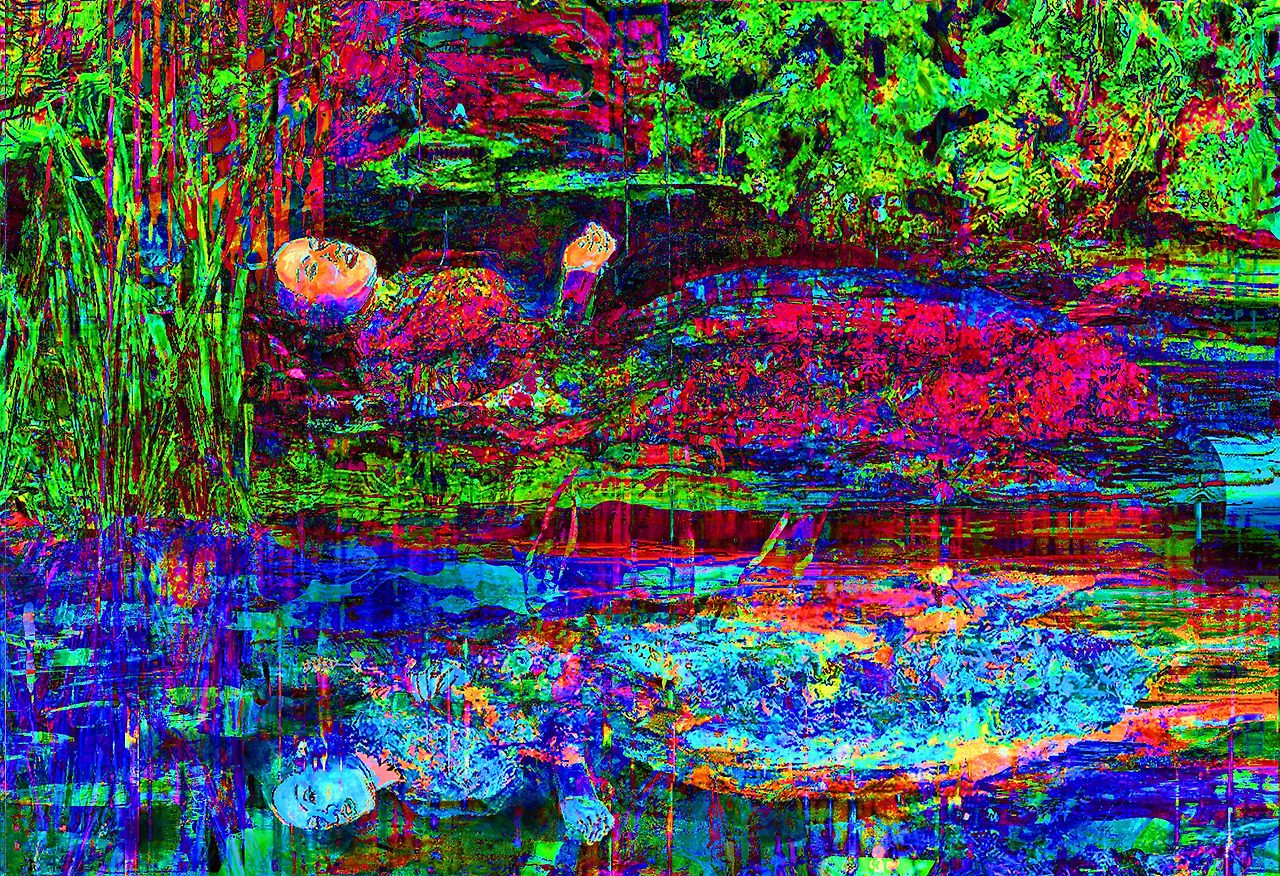
Louis Choi Chul-joo, 2025-Ophelia 2, a hand-painted picture on a computer
Choi Chul-joo Conceptual abstract realism's definition is a new conceptual abstract theory that combines philosophical concepts, linguistic semantic structures, and visual expressions of reality in modern art, a new realist art trend that goes beyond mere visual abstractions or metaphorical-themed conceptual art wrapped in religious norms without symbolically hiding the desires of others.
Therefore, through the mathematical design of a new literary structure as a result of conceptual abstract realism, the aesthetic structure is grammatically composed by integrating linguistic meaning and realism images, and the desired object is visualized as the death of Ophelia in Shakespeare's Hamlet.
As an object of pictorial structure that reflects current desires, abstract desires are realized when desires with others face linguistic meaning and have aesthetic meaning, and as an object that represents the image in the painting in a desire structure, unconscious desires are divided into unconscious and real images.
Here, the concept of desire is a symbolic metaphor abstracted as an image of reality, and the image is abstracted by the desire of the other, but does not go beyond the scope of an imitative real picture.
Therefore, the concept of desire is applied as a theatrical image to express the object of the real structure as a phenomenal image of the real world and equate the abstract structure with conceptual reality.
Ophelia's death takes a difference from abstract desire concepts to linguistic concepts, embodying abstract images that form desire and relationship structures as real structures created by the linguistic meaning of the conceptual reality of desire structures.
This is the same as the abstraction of Choi Chul-joo's conceptual abstract realism, which hides the formative reality of desire in painting and abstracts the image of reality, away from the social constraints (制約) acceptable in religious customs.
The abstraction is a subjective concept that refers to linguistic meaning, and it is an expressive aesthetic structure that expresses human love as the true value of the concept of necessity and embodies actual affection as an image of linguistic meaning. The abstraction is represented by abstraction, the truth value of the concept of desire, as an expressive aesthetic structure that identifies Ophelia's love.
In abstraction, the abstract reality of desire represents the structure of desire by forming a causal structure of desire, that is, a semantic relationship with desire with contradictory equivalence. In abstraction, which consists of real images as a structure of desire, the formative image of visible metaphor is transferred to abstract language meaning. As a real image, Ophelia's love abstracts the structure of desire by forming a semantic relationship between desire and reality according to temporality.
As a result of exploring the realism according to the temporality, the real is the denaturation fixation realism image as an abstract meaning in which the structure of desire is hidden. In other words, in abstraction, the desire of the other person is transformed into an additional form as an image of social events.
Based on the theatrical image, the realist image induced by social phenomena repeatedly appeared in the real that repeatedly appeared in social phenomena as a desire formula is an area of the real world separated from the area of the symbolic world. The abstraction of the theatrical image is an existential real image as a phenomenal structure with a conceptual abstraction.
He is not satisfied with the illusion in the theatrical image and attempts to escape from the illusion through a shade of reversible light through the desire of a realism picture. Thus, the present conceptual abstract realism is achieved separated from the abstract domain.
Therefore, unlike the perspective visual system system, theatrical realism, which reflects the current abstract concept, illuminates symbolic reality images in which reality and the past overlap with each other with several reversible lights according to the conceptual abstract temporality of the desire structure to create the texture of desire and realize conceptual abstract realism abstraction as the same structure as a single real image.
This is a modern reality image of a conceptual abstract realism painting that is fixed as the desire of the other without showing the abstract meaning and realism image of the object that metaphorically expresses the theatrical image in the theatrical world, that is, the subject and the desire of the other are concealed. The concealment invisible in the play creates meaning as an abstract and an image of a realistic play. However, in the play, by understanding abstract as a reality, the conceptual abstract realism picture as another reality in the abstract is abstracted as an image of a theatrical reality structure that symbolizes modern social desires.
This realist abstraction image composition interprets an abstract object that exists in reality as a subject as a metaphysical structure. This is an object of the concept of desire based on a play as a motif as a social event image in metaphysics for its existence as a real-world structure and is reconstructed as a conceptual abstract realism picture abstracted as a shade of reversible light as an abstraction rather than a theatrical image.
Here, the abstract desire concept, which reconstructs the object of abstract concept into a realistic image, provides a cause that leads to abstraction of a picture represented by a real image as a result by composing images of expressive beings that can be abstracted in the real world.
Thus, the concept of desire interpreted abstractly is produced as a conceptual abstract realism image constructed grammatically by transforming the linguistic meaning into an abstract being within the framework of the literary structure..
The painter of conceptual abstract realism shows another reality that symbolizes religion or political metaphor in painting. In abstract realism, Choi Chul-joo's desire formula is applied to interpret conceptual abstract realism to find symbolic meaning in real expression. Here, the painting equates the linguistic meaning of interpreting the concept of unconscious desire as a category of the symbolic world with the image of conceptual abstract realism.
In this way, abstract realism becomes a typical and abstraction of the actual structure by forming a theatrical image that appeared as an object of realistic abstraction in everyday plays as an artistic picture.
This is a conceptual abstract realism painting, and Ophelia asks the question of the fleetingness and beauty of human existence, and how art can capture it with painting.
In addition, the conceptual abstract realism picture is specified as a conceptual abstract realism image that identifies the realistic cognitive structure as a theatrical image and the concept of the abstract desire of others, which is an allegory phenomenon that literaryizes the abstract structure./ Written by Choi Chul-joo, Contemporary Art Critic (Dr. Cultural Design)
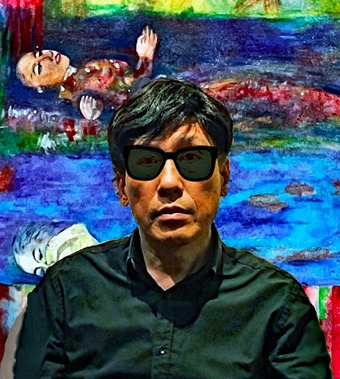
Choi Chul-joo, a conceptual abstract realism painter
----------------------------------------------------------------------------------------
Art Critic Louis Choi Chul-joo
Contemporary Art Review by Louis Choi 70
Art Critic Louis Choi Chul-joo Criticism [70] Modern Art Critic Louis Choi Chul-joo's Criticism of Contemporary Art & Design Criticism of Contemporary Art = Contemporary Art Today contemporary artworks contemporary artist Choi Chul-joo's Art Criticism, Contemporary Abstract Art Painter Criticism: Choi Chul-joo Desire Concept Abstract pop art combines the abstract conceptual approach of the other's desire art with the design form and linguistic abstract image of pop art. His concept of desire, or conceptual abstract art, appears, and a picture that conflicts with the concept of linguistic meaning emphasized in metaphysical philosophical light creates a dramatic event image with artificial lighting. & Abstract contemporary art that designed modern art abstract painting: Contemporary artist Louis Choi Chul-joo's realistic abstract work criticism of antinomical contemporary art as a conceptual art of treachery based on the concept of desire of others and Contemporary Art Critic Louis Choi Chul-joo's Contemporary Art work criticism: The invisibility of Velazquez's <Las Meninas> existential space
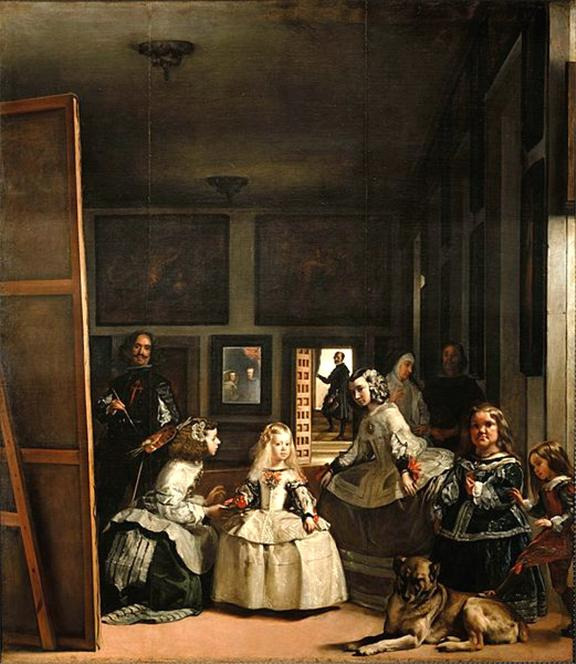
Velázquez (Diego Rodríguez de Silva y Velázquez), The Handmaids (Las Meninas),
1656. oil on canvas, 318cm×276cm, Museo del Prado, Madrid
The invisibility of Velazquez's <Las Meninas> existential space
In the Baroque period of the 17th century, as an ideological and atypical painter in absolute monarchy, the character who appeared in Velazquez's "The Handmaids" excludes symbolism from the space of the canvas and emphasizes the realistic presence of the object as a substance. Velazquez solves the problem of gaze perspective in "The Handmaids". First, it decides who the object is, how the arrangement of the characters will be organized, and where the viewpoint will be placed.
And by excluding temporality, the space opens and identifies the king, queen, and Velazquez as they open up to different viewpoints. The appearance of the maids is not a symbolic existence like a mythical woman, but shows the phenomenon of the time and the presence of humans. As an expression of the shape of symbolism, he emphasizes his presence as the subject of reality by gaze at the position in space rather than the characteristic description of the maids.
Therefore, Velázquez does not paint a simple court scene that is tailored to the subjective point of view of the gaze painting according to who sees it and who sees it. He places the power relationship between the 'viewer' and the 'visible' on the canvas. The characters in the painting look at the audience, but the king and queen in the mirror are in the audience's place. In this way, Velázquez asks the question of who is the subject of gaze.
This is the politics of artistic gaze that corrects the wrong gaze as an aesthetic dilemma of "Is the political subject of gaze the subject of power or art?"
In "The Handmaids", the object reflected in the mirror is an illusion, and the object of illusion in the mirror is real. The progression of this illusion is the cutting of the subject by significance. The subject of the object reflected in the mirror is cut into reality as an object of illusion. As an illusion, reality is a non-real being reflected in the mirror and takes place in a circular structure through the mirror as an object of illusion. Here, the semantic function is symbolic by accepting a new subject by Sinifian.
Therefore, in "The Handmaids", the mirror reproduces the object of illusion as a non-real thing. The mirror image in "The Handmaids" in the mirror is not just a reflective device. It is a philosophical device that asks the nature of representation.
Velázquez appears himself in a mirror painting, suggesting that the artist is not a mere non-realist representative of an illusion object but a being who constitutes reality. This repeats the question of "Does the mirror reflect reality or create reality" to the fantasy object as a non-realist.
Significance(記標) is meaning and is cut to accept a new subject. In this way, the cut subject is fixed in a representative shape. In a painting, the space reflected in the mirror is another space in the physical space revealed in the scene of the painting, that is, the reality seen as a 'gaze' that cannot be seen from the point of view of the entire scene of the painting. In order to reproduce the reality seen through such a gaze, the artist in the painting uses a mirror as a material.
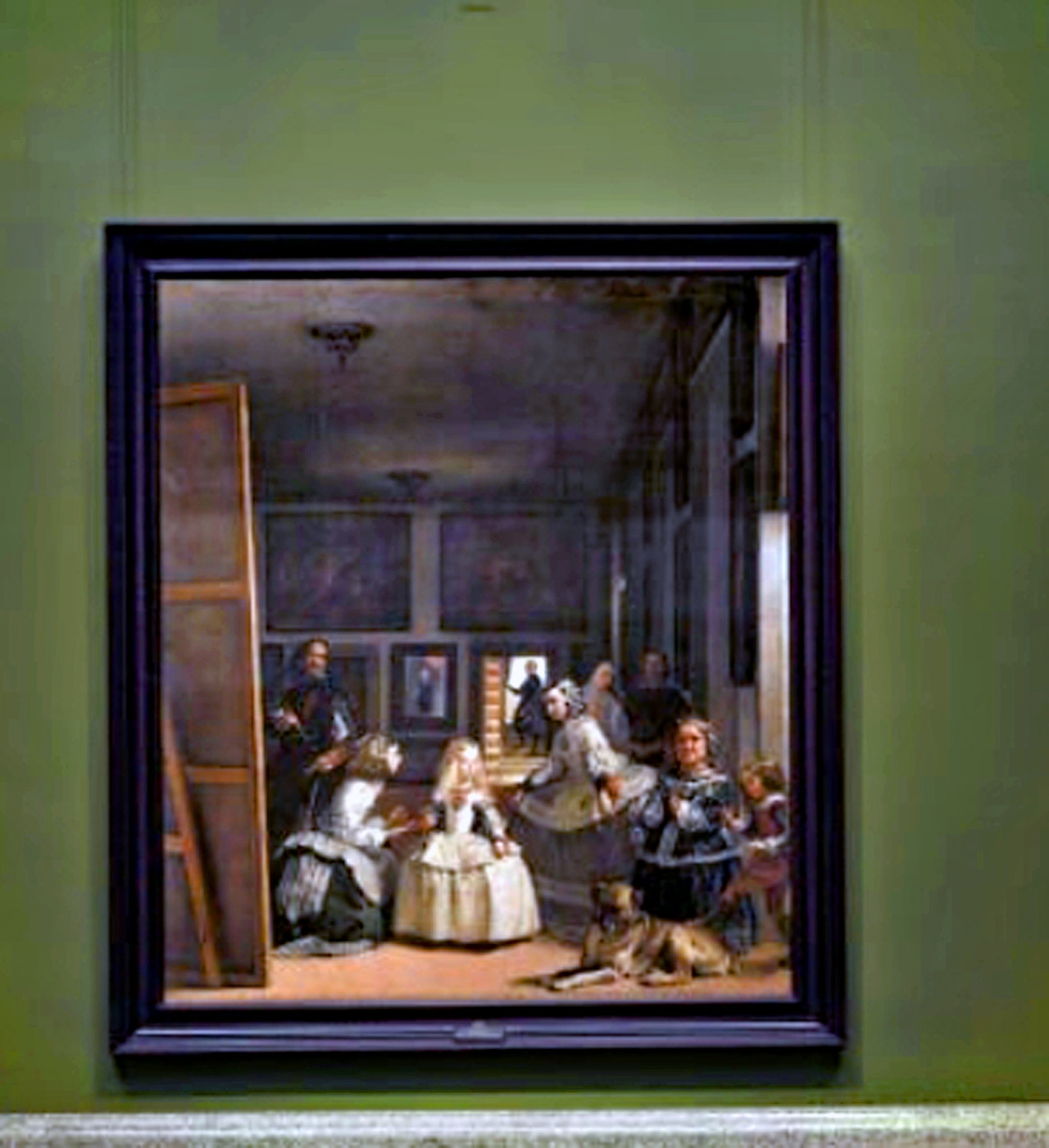
Velázquez (Diego Rodríguez de Silva y Velázquez), The Handmaids (Las Meninas),
1656. oil on canvas, 318cm×276cm, Museo del Prado, Madrid
"The Handmaids" is not a space-time as a single mirror material by constructing reality and an illusion space in reality in the picture reflecting the layer of existence as the material of the mirror. In the picture, reality and the fantasy space in reality form another existential space of multi-layered reality.
He cannot see the canvas painted in "The Handmaids", but the object painted in it creates an existential space in reality that can be a king and a queen in a mirror, and creates an illusion space in reality to recognize "the existence of the invisible" as a structure. This expresses the "invisibility of the existential space" as an image space, and what "The Handmaids" reveal as art constitutes a trace of the existential space of the invisible, not the visible.
In "The Handmaids", the mirror is a real representation of time and space that shows us the contemporary space seen by Velazquez. The shape reflected in the mirror is an invisible space, and it is the shape in his time that was seen by Velazquez. The gaze he looks at and the gaze of the other are identified, and it is transferred back to the gaze of the king and queen reflected in the mirror. The gaze moves back to the princess. It shows the reproducibility and gaze that symbolically reveals the princess' situation.
In this way, he reproduces the situation of the princess symbolically and makes her gaze at the status of the artist in "The Handmaids" by creating an existential space as a philosopher, not just a court painter.
He is not just a court painter, but he raises the artist's status to a position equal to that of power by placing his existence in the work. This is "the ontological declaration of an artist who expresses the subject as a self-portrait", so a painting allows us to gaze at the existential space that is not just a decoration but an independent act that constitutes the artist's existential space.
The artist's existential space, which represents the subject of the perspective visual system as a self-portrait, is separated and the gaze point is revealed in a reversible shadow of light. This distinction is a gaze point that focuses on the point where the light is revealed.
Velázquez, who appears in "The Handmaids", sees himself as an object reflected in the mirror and draws it. Another mirror in the painting shows Felipe IV and his wife, Maria Anna. This mirror reflects Velázquez and the king and queen outside the painting, but only the king and queen are reflected in the mirror in the painting.
What cannot be seen by the maids who exist in the meantime is an image that cannot be interpreted with a perspective visual system. Here, if the image reflected in the mirror is real, the mirror shows an image that does not fit the optical principle. Therefore, in "Maidens", the image in the mirror is a virtual non-realistic image, and it is a fantastic image that Velázquez revealed in the unconscious desire of the other.
This is because it is an image that is not revealed in "The Handmaids" and is seen as a non-reality in the perspective visual system. In the picture, the reality of Velazquez is revealed by contrasting the subject Princess Margarita as the other and the subject King and Queen as the absence. And the image reflected in the mirror is an invisible 'gaze' that deviates from the entire point of view. This is a metaphorical image as an inner reality looking at Princess Margarita rather than as a king and queen as a member.
Therefore, as soon as Velázquez's eyes are connected to capture the reflection of the king and queen in the mirror, the gaze continues to an unidentified man (the queen's mastermind) standing at the opposite door. If there are kings and queens reflected in the mirror, the man standing at the opposite door is an image of non-existence. Therefore, the rest of the characters are virtual images as non-existence. By revealing the image seen through such a gaze, Velázquez erases the space domain and mannerism of 17th-century painting.
In "The Handmaids", the place revealed by Lacan's gaze is a space of existence in which the position of the man standing at the door appearing at the vanishing point in the entire virtual image cannot be counted. Therefore, the man is the reality of the existential space that Velazquez revealed through gaze from the other's desire point of view. Velazquez reveals himself as an object in "The Handmaids" as a painter. The object as such a subject cannot be a cognitive subject. However, the image of reality and non-existence is reproduced in the same space.
Therefore, "The Handmaids" is not just a painting, but an immeasurable existential space, a philosophical structure of desire structure, obtained from the artist's experience.
In this way, Velazquez drew a philosophy of existential space that could not be drawn with a brush to find a connection with the gaze image of the existential space that could not be expressed on the same plane, and made him stare at the transparency of the space with that philosophy./ Written by Choi Chul-joo, Contemporary Art Critic (Dr. Cultural Design)
Choi Chul-joo, a conceptual abstract realism painter
----------------------------------------------------------------------------------------
Art Critic Louis Choi Chul-joo
Contemporary Art Review by Louis Choi 71
Art Critic Louis Choi Chul-joo Criticism [71] Modern Art Critic Louis Choi Chul-joo's Criticism of Contemporary Art & Design Criticism of Contemporary Art = Contemporary Art Today contemporary artworks contemporary artist Choi Chul-joo's Art Criticism, Contemporary Abstract Art Painter Criticism: Choi Chul-joo Desire Concept Abstract pop art combines the abstract conceptual approach of the other's desire art with the design form and linguistic abstract image of pop art. His concept of desire, or conceptual abstract art, appears, and a picture that conflicts with the concept of linguistic meaning emphasized in metaphysical philosophical light creates a dramatic event image with artificial lighting. & Abstract contemporary art that designed modern art abstract painting: Contemporary artist Louis Choi Chul-joo's realistic abstract work criticism of antinomical contemporary art as a conceptual art of treachery based on the concept of desire of others and Contemporary Art Critic Louis Choi Chul-joo's Contemporary Art work criticism: Piet Mondrian, ‘Composition with Red, Blue, and Yellow’
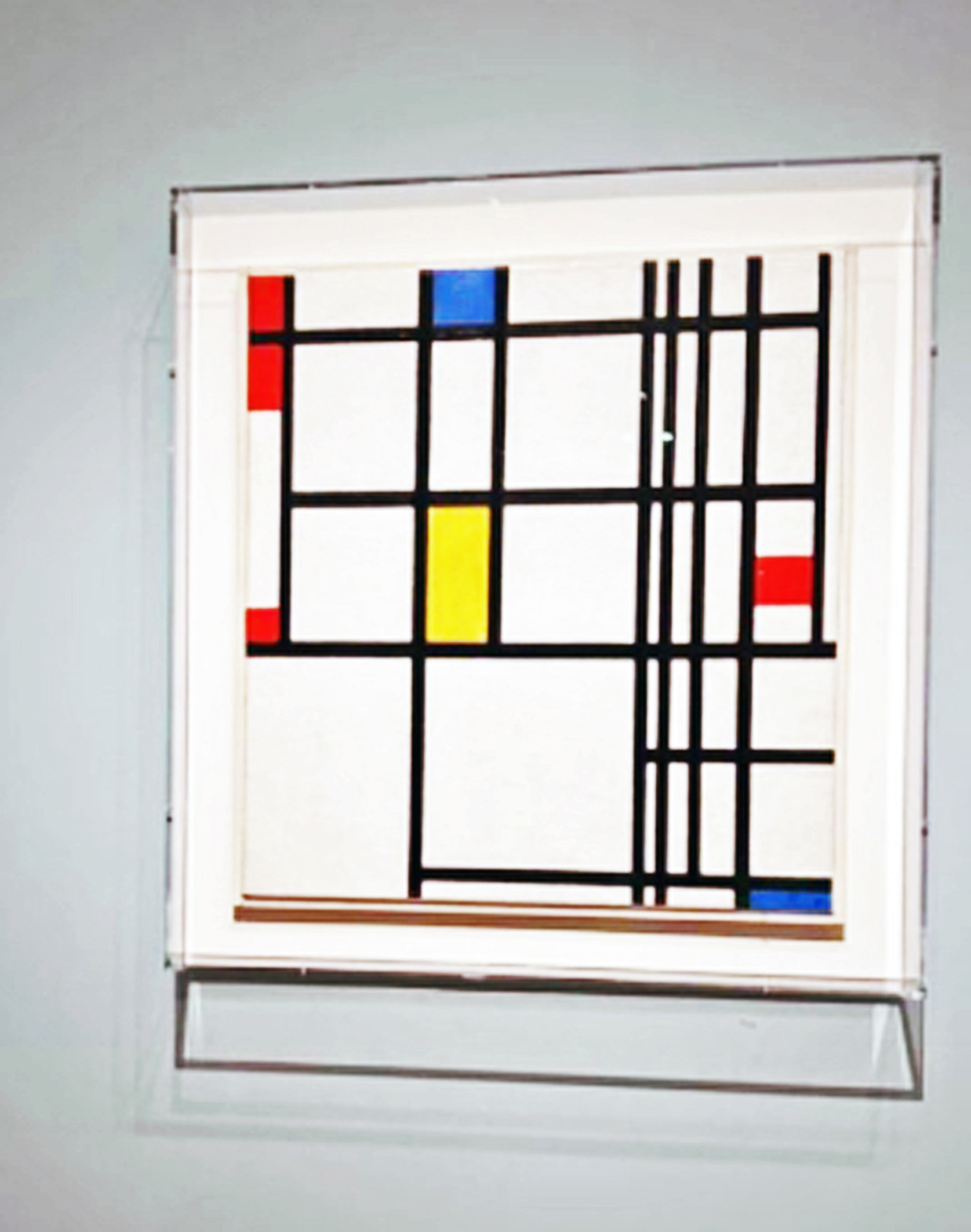
Piet Mondrian, Composition with Red, Blue, and Yellow, 1937, Collection: Museum of Modern Art, New York
Piet Mondrian, ‘Composition with Red, Blue, and Yellow’
In modern times, abstract art is created by Piet Mondrian (1872-1944), who identified the geometric image and temporality of the object as the same subject as the color image of the object by equating the geometric structure and symbolic color. This is not just an abstract painting, but "an extension of the philosophical aesthetics of a compositional concept."
The reality of the philosophical aesthetics of the constituent concept of the color plane is the philosophical aesthetics in the representational idea of color and color composition in the visual system, and the structural color image as a material constitutes the fundamental color theory with sentimental humans.
The composition separated from reality with limited color is realized as a pictorial conceptual abstract realism image as a linguistic meaning of the object by deriving a concealment of reality that is not revealed through the object as the subject of reality in "Composition with Red, Blue, and Yellow".
As a subject of painting revealed in the sentimental realm of color composition, the desire of the other is abstracted into images, and it is a structural image formed by ideological abstraction at the entire stage of linguistic meaning avoided by philosophical aesthetics, which consists of continuous black lines and white margins at the intersection with real colors.
The image formed here is a cross-sectional color of the symbolic structure, and based on the geometric structure that transforms the subject of the erased structure designated by morphological deficiency, the relationship with temporality interrupted by color unity is divided, so the structure of reality has two abstract nature: simplified geometric black lines and abstract colors.
Geometric black lines are real structures by abstract thinking, and through the act of revealing the existence of objects in "Composition with Red, Blue, and Yellow", they form a boundary in the composition of colors, and simultaneously show abstract colors in which the white of the margin and the three primary colors that decorate the visual system are divided.
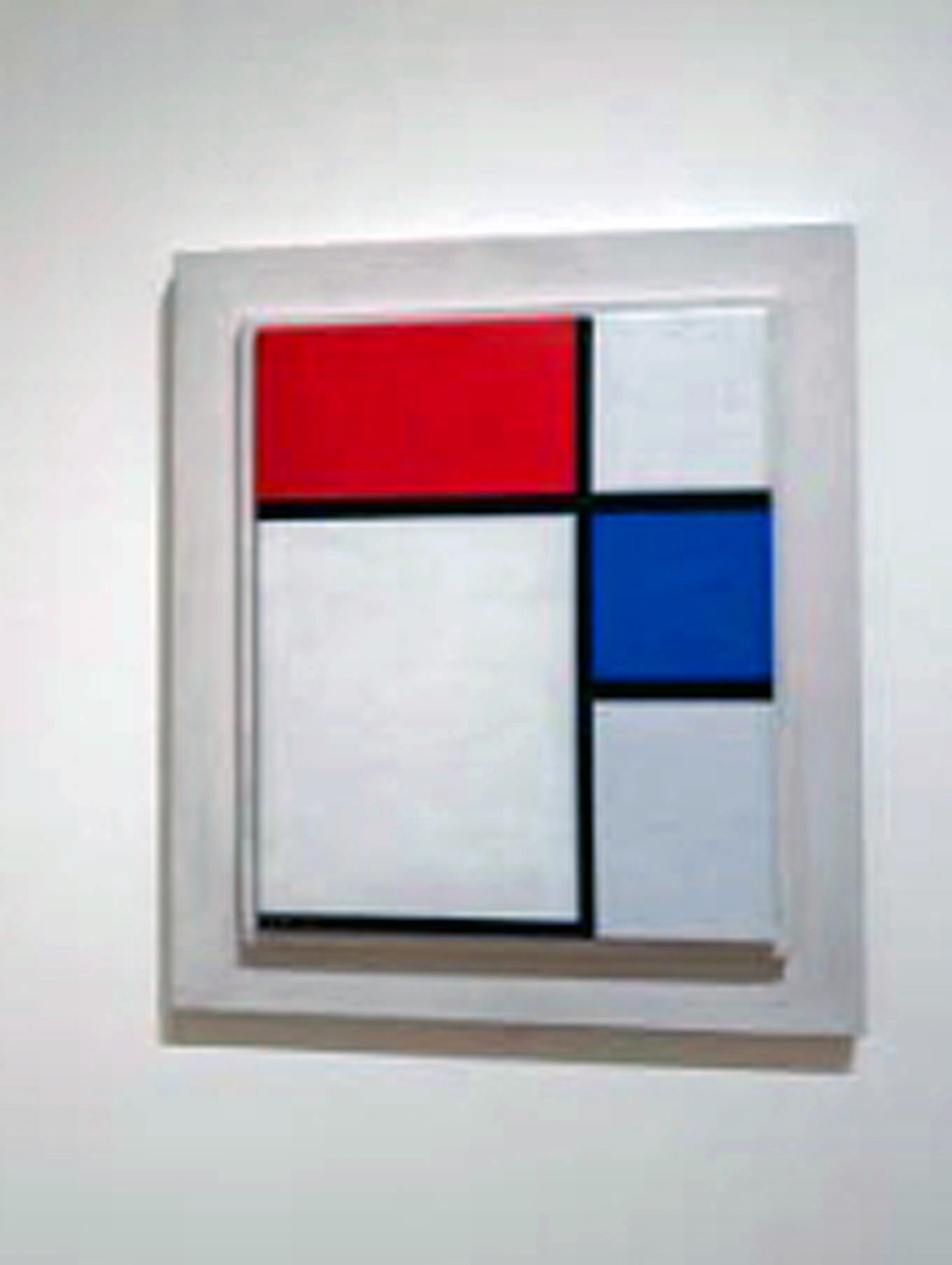
Mondrian uses "red and blue, composition" as material reality to eliminate the existence of false phenomena in previous stages of linguistic meaning and produce real images of philosophical aesthetics of the compositional concepts of color planes.
Color as an object has a continuous abstract presence at all stages of linguistic meaning in the composition of conceptual philosophical aesthetics. This existence has another symbolic meaning as a monochromatic surface that divides the image of transcendental signifiers from the real world in the visual system.
Painting due to the limitations of flat space is a world of painting that can be enjoyed in the realm of the visual system. On the other hand, Mondrian formed an abstract image through a symbiotic relationship with abstraction as a dual order as an object and being that seems to be a limited composition of red, yellow, blue, and black. This is the aesthetics of a geometric order, and it symbolizes abstract art with the dualism of a being and the order of symbolic images.
By looking at objects reflected in a mirror as a single color structure, he abstracted abstract art as a visible symbolic metaphor through geometric and real object images that satisfy the abstract structure. This abstraction abstracted another geometric image reflected in a mirror, creating another abstraction of a geometric real image that satisfies the real structure and the symbolic color plane.
Beyond expressionist paintings strongly represented by German expressionists in the early 20th century, Mondrian forms abstract art with geometric structures and square planes as color painting.
This is a geometric structure of De stijl. It is an abstract art that forms the framework of abstract boundary and material realism structure with black line through symbolic color as a pure geometric structure that does not distinguish expressionist individuality.
Geometrical structure with an object that looks like a limited image with intense emotional expression, meaning of pure geometry as an abstraction with a color plane as one, and aesthetics as an empty philosophical structure with empty space as the domain of meaning and meaning. And empty space induced the aesthetic composition of empty space in modern media art visual culture, which is connected with digital image structure of modern art.
It presents a structuralist language structure as a digital image, and as a visual communication, it presents an abstracted structure of color in modern media art.
Thus, symbolic color composition as being is metaphorical in the linguistic representation of abstraction, but it exists as an abstract image reproduced as material reality, assuming that it is an abstract image.
Mondrian, as a constructive abstract painter, shows a geometric structure with black lines that symbolically represent the structure, like unconscious language. This is a metaphorical expression that interprets color composition in a symbolic sense. Here, as a symbolic category, the composition of philosophical colors reflected in the mirror of the meaning of unconscious language is identified as an image.
Mondrian identified the art of natural structure as Neo-Plasticism abstract art through the same steps as mirror theory. In mirror theory, the identification stage of structure is the process by which an infant recognizes the difference between his or her image in the mirror and the image of the other and the self. It is a neoclassical abstraction that clearly reveals the composition of Neo-Plasticism aesthetics and balanced colors based on black lines in this process.
This is consistent with the identification of mirror theory expressed in Neo-plasticism of a mechanical order that balances the white margin by designing black lines and color planes as a formative structure lacking in the structure of nature as a metaphor for real objects seen in paintings from the Renaissance to modern times.
Revealing reality through mirror theory begins with the imagination world in which an infant identifies the image reflected in the mirror. Recognizing that the image is not himself as a subject, it transitions to the symbolic world through separation from the symbolic image and reality of the signifier.
In the symbolic world, the color plane arrangement in a geometric structure that excludes neo-plasticism order and emotional expression forms a free formative rhythm, breaking down the boundaries between art and design with the universality of visual language, and achieving abstract visual communication.
The symbolic image and reality of the abstract structure meet with reality through division. As a reality, Mondrian's composition is revealed as an abstract image, but as a non-reality, it has an encounter with abstraction./ Written by Choi Chul-joo, Contemporary Art Critic (Dr. Cultural Design)

Choi Chul-joo, an art critic
----------------------------------------------------------------------------------------
Art Critic Louis Choi Chul-joo
Contemporary Art Review by Louis Choi 72
Art Critic Louis Choi Chul-joo Criticism [72] Modern Art Critic Louis Choi Chul-joo's Criticism of Contemporary Art & Design Criticism of Contemporary Art = Contemporary Art Today contemporary artworks contemporary artist Choi Chul-joo's Art Criticism, Contemporary Abstract Art Painter Criticism: Choi Chul-joo Desire Concept Abstract pop art combines the abstract conceptual approach of the other's desire art with the design form and linguistic abstract image of pop art. His concept of desire, or conceptual abstract art, appears, and a picture that conflicts with the concept of linguistic meaning emphasized in metaphysical philosophical light creates a dramatic event image with artificial lighting. & Abstract contemporary art that designed modern art abstract painting: Contemporary artist Louis Choi Chul-joo's realistic abstract work criticism of antinomical contemporary art as a conceptual art of treachery based on the concept of desire of others and Contemporary Art Critic Louis Choi Chul-joo's Contemporary Art work criticism: Jean-Michel Basquiat <Untitled (Skull), 1981>
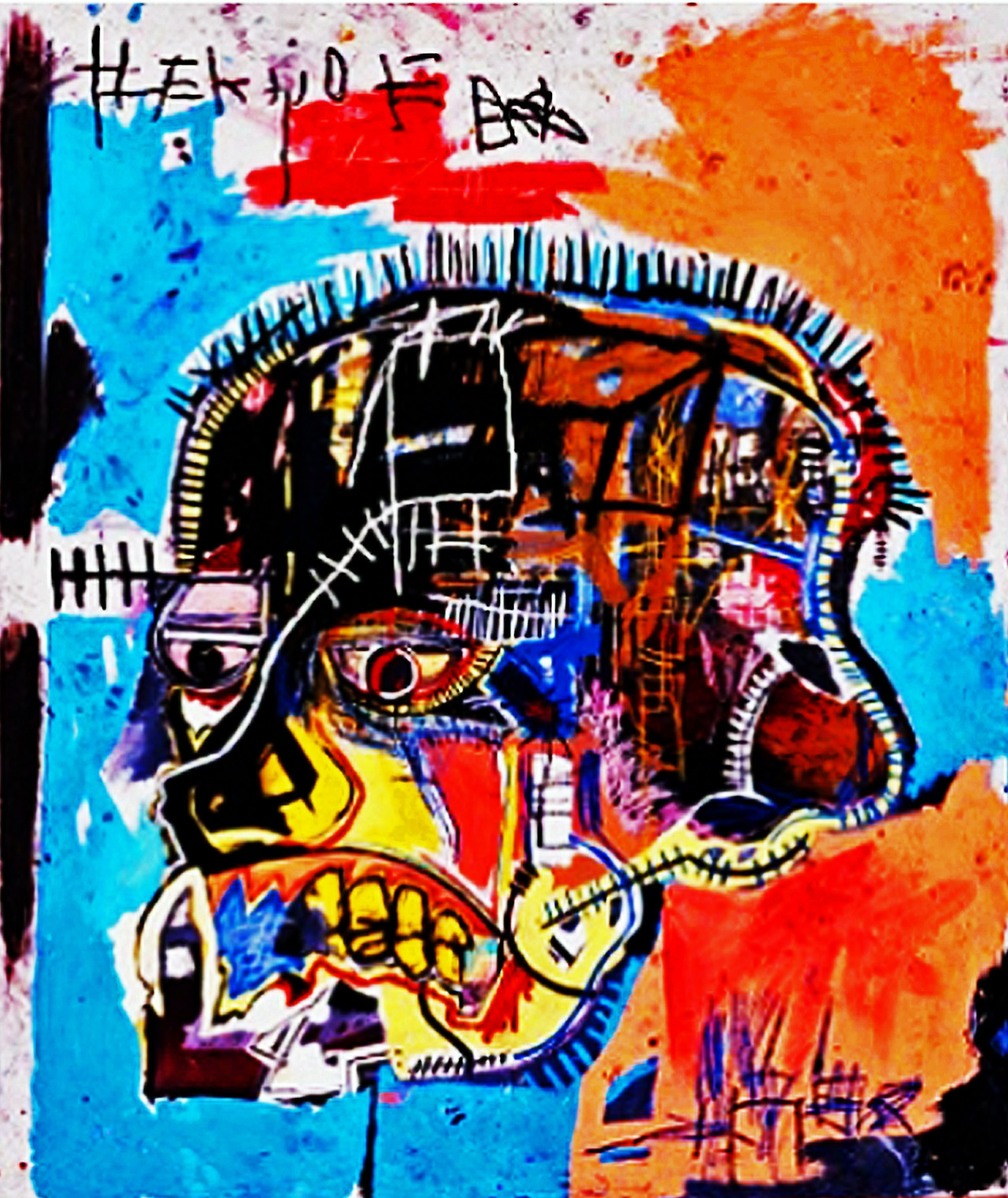
Jean-Michel Basquiat, Untitled (Skull), 1981, Collection: The Broad Museum of Art in Los Angeles
Jean-Michel Basquiat,《Untitled (Skull), 1981》
Basquiat's graffiti 'skull' image is a squeaky narrative image in a linguistic sense.
This is an image of an artistic language that expresses the emotion of the previous stage of the linguistic meaning as a skeleton, using the theme carved into the skull as a symbolic image as an excess of desire.
Therefore, the skull is a linguistic image in which the existence of death is divided. Jean Basquiat is pushing the boundaries between the inside and the other through linguistic grammar through the skull.
'skull' is an image that symbolizes death in a symbolic world as a linguistic meaning, and is a structure of a subject that is separated from the absence of desire for division. This is an existential image according to image design in a linguistic sense, and is the result of repeatedly aiming for death as a symbolic structure in the pre-creation stage.
Therefore, his graffiti identifies skulls with skulls with structures of deficient desires that are alienated from the city's identity as vectors that aim for the image of the existential subject.
In this way, his graffiti is a vector aimed at the image of an existential subject, identifying the structure of insufficient desire that is alienated from the identity of the city and the subject of the skull, and expressing the skull as an abstract realism picture in vector space as a result of ex post facto according to the existential orientation of the subject.
This is a critical image of the linguistic meaning as a result of the violent structure as a structure of desire lacking and bursting the social identity of the city.
The skull as a critical image in a linguistic sense stops at the imaginary identification of the skull reflected in the mirror toward the critical image of the real face in the imagination world.
In "Untied (Skull)," a skull is an unfinished human face, a "disruption of identity of mirror images" fragmented by death, which transformed a fragmented facial image from social identity into a skull.
This recognizes the self as a subject with the skull image reflected in the mirror as the same facial image as oneself.
This is a semantic function that interprets the image reflected in the mirror as an expressive image of the other's desire structure in a linguistic sense.
Therefore, his symbolic graffiti shows an excessive breakdown of meaning expressed as a signifier image of desire, and shows traces of sociality lacking as an armage in a linguistic sense.
In other words, graffiti images in the linguistic sense of racism and intense colors that reject sociality are graffiti images caused by mental suffering from urban violence.
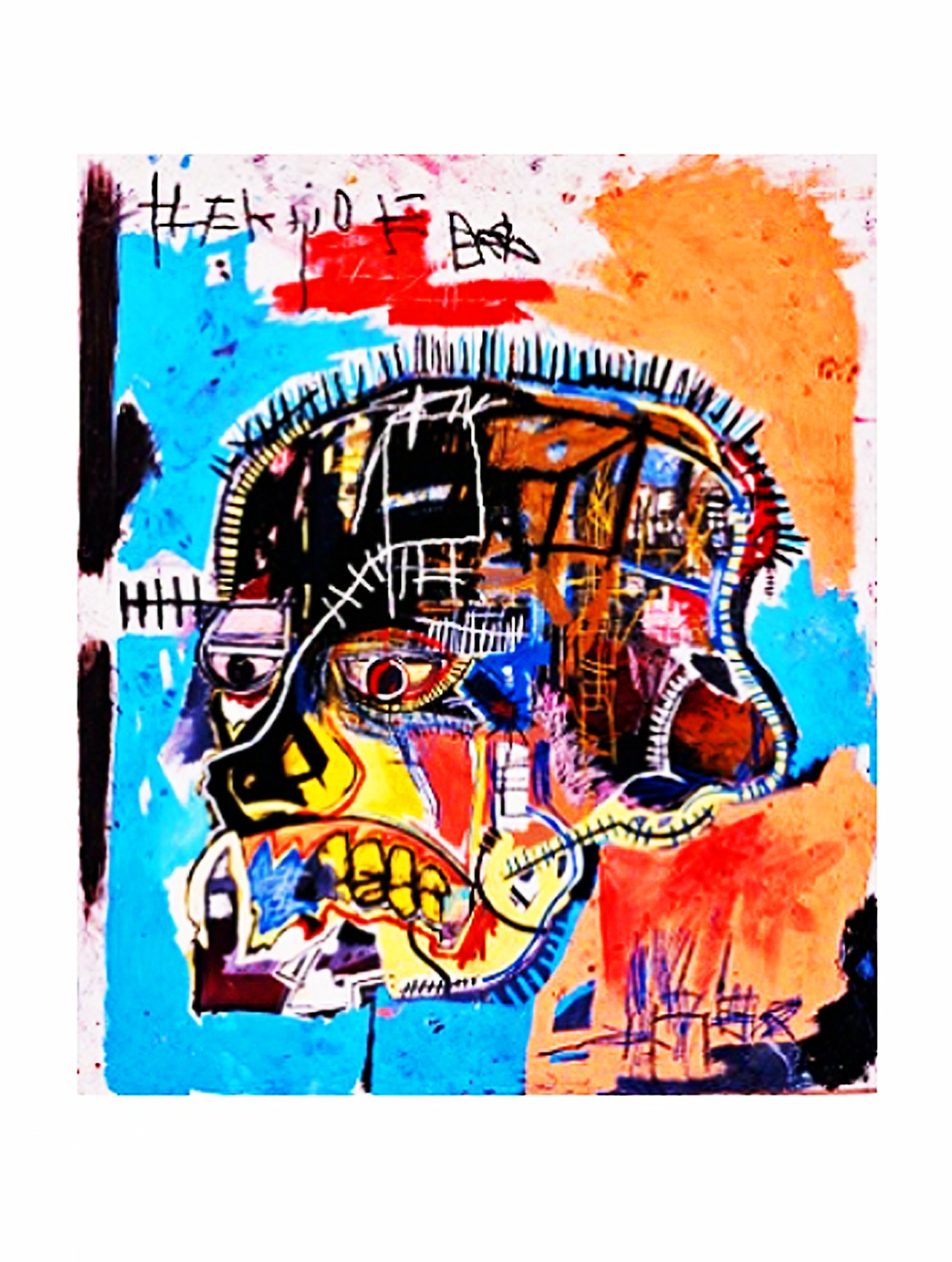
As a subject, the skull structures the traces of desire as a linguistic grammatical structure, and the subject expresses the linguistic meaning as an image and structures the unconscious abstract as a language structure. In this way, the abstract is transferred to a specific object and interpreted as a meaning of language. In other words, according to causality, the skull as an abstract structure is interpreted as an image of death as a linguistic meaning, resulting in a grammatical causal relationship.
This is a "post-colonial graffiti aesthetic" that resists dividing space into the eyes of slave structures by interpreting skulls as traditional African masks due to grammatical causality.
As such, Basquiat's skull becomes a specific object of abstract structure, which is interpreted in a linguistic sense.
The design of the image interpreted in a linguistic sense connects the design (d) to the skull image (i) as an abstract structure according to Choi Chul-joo's desire formula. It repeatedly selects the insufficient death image as an image of a skull concept, and another skull image that has reached a fantastic abstract structure of what the object the other's desire structure wants. The choice (i/d) follows an abstract structure in which a specific linguistic meaning is supported by a desire structure that exists as an object image.
This is a conceptual abstract realism image expressed in the previous stage of symbolic language as a non-verbal reality, and refers to the dissolution of an ego and the division by the other's desire as a desire signifier image based on the intense hue projected by the desire of the other and the anatomical distortion of the human body.
He constructs graffiti that combines skulls, texts, and symbols to express the inner resistance of black people who function as a symbolic system of similarities.
It symbolically implies life and death, human identity and social struggle through social repression, and it symbolizes an image that lacks the linguistic meaning of the concept of desire and dissolution as an ego of desire. And the graffiti of symbolic characters reconstructs the reality image of non-verbal conceptual abstraction through the collapse of linguistic meaning as an excessive signifier image.
His graffiti is an image that records the event image itself as a picture. It serves as a visual device to express realistic images by blurring the line between reality and abstract optical illusions due to reversible shades of light that make up the linguistic meaning of event images.
Therefore, his work functions as a phenomenal event image beyond the painterly meaning. Here, the fantastic boundary between reality and reality constitutes the boundary where light and darkness intersect through the eyes and mouth of the skull as a place of conflict with desire. In addition, the linguistic semantic structure of the concept of desire overlaps the division of gaze and the structure of desire in a reversible shadow of light. The act as a linguistic meaning, in which the skull image is a semantic structure in the conscious structure in the linguistic sense, is a linguistic semantic structure of the concept of desire in the same temporal sense, and is a death image replicated by a black-style trickster graffiti aesthetic structure in both dimensions of consciousness in the social context and the unconsciousness that contends the fundamental death of human existence./ Written by Choi Chul-joo, Contemporary Art Critic (Dr. Cultural Design)
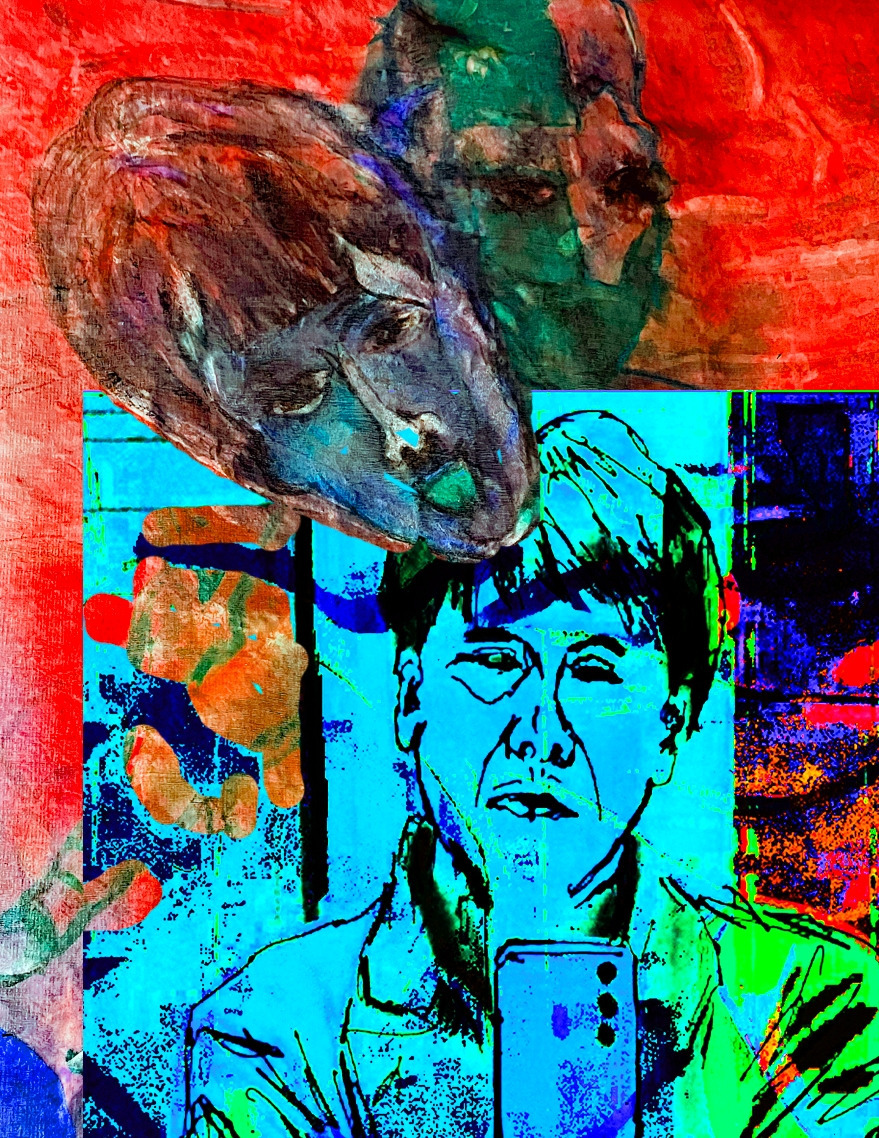
Choi Chul-joo, a Contemporary art critic
----------------------------------------------------------------------------------------
Art Critic Louis Choi Chul-joo
Contemporary Art Review by Louis Choi 73
Art Critic Louis Choi Chul-joo Criticism [73] Modern Art Critic Louis Choi Chul-joo's Criticism of Contemporary Art & Design Criticism of Contemporary Art = Contemporary Art Today contemporary artworks contemporary artist Choi Chul-joo's Art Criticism, Contemporary Abstract Art Painter Criticism: Choi Chul-joo Desire Concept Abstract pop art combines the abstract conceptual approach of the other's desire art with the design form and linguistic abstract image of pop art. His concept of desire, or conceptual abstract art, appears, and a picture that conflicts with the concept of linguistic meaning emphasized in metaphysical philosophical light creates a dramatic event image with artificial lighting. & Abstract contemporary art that designed modern art abstract painting: Contemporary artist Louis Choi Chul-joo's realistic abstract work criticism of antinomical contemporary art as a conceptual art of treachery based on the concept of desire of others and Contemporary Art Critic Louis Choi Chul-joo's Contemporary Art work criticism: Louis Choi Chul-joo, 2025-Mona Lisa-a portrait of a mirror reflecting its desire on the window, 113X165cm, acrylic and composite materials on cloth, 2025 & the 2025-Mona Lisa reflected in the pond
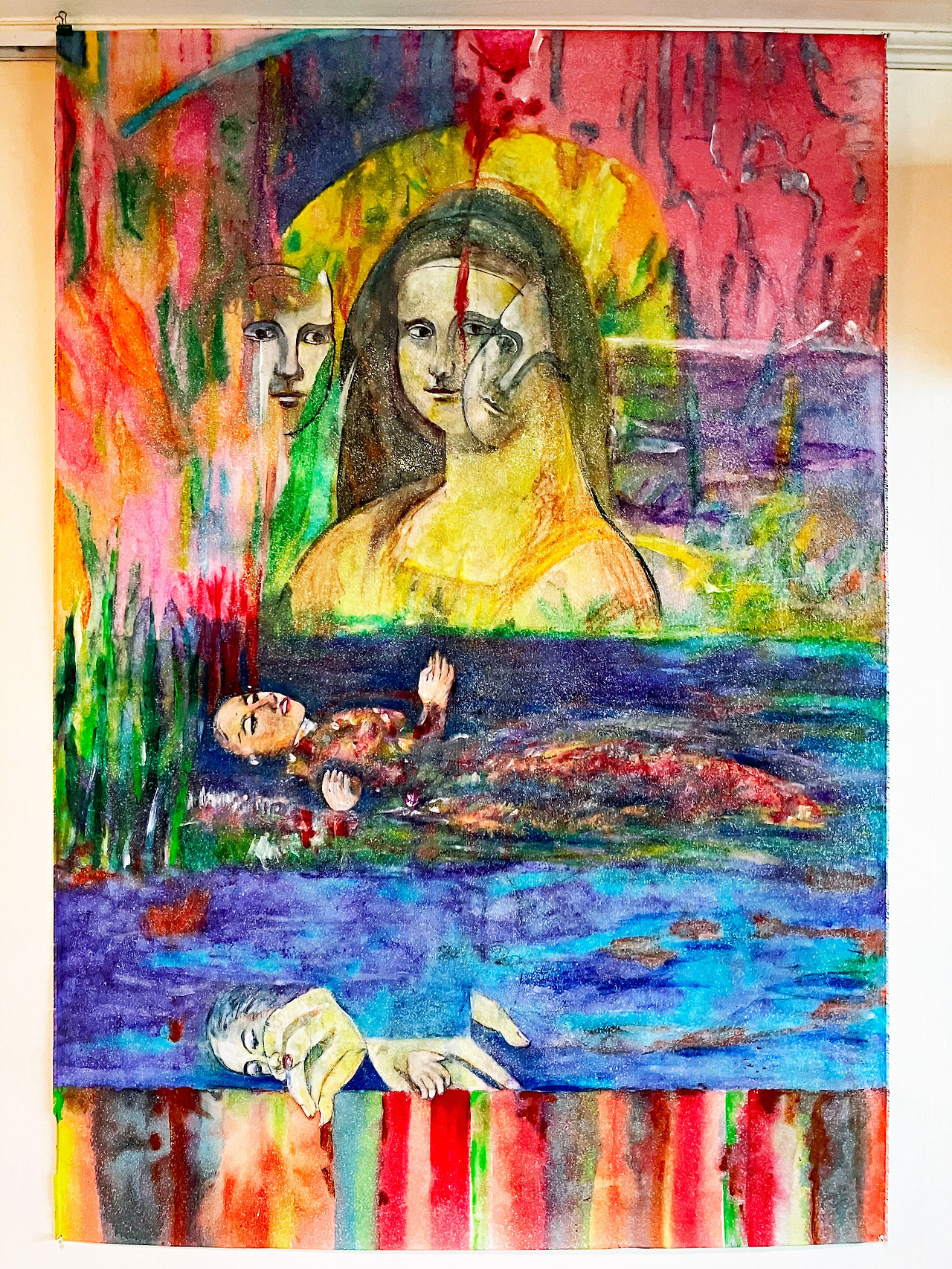
Louis Choi Chul-joo, 2025-Mona Lisa-a portrait of a mirror reflecting its desire on the window, 113X165cm, acrylic and composite materials on cloth, 2025
In Renaissance art, which opened up the image of contemporary art, "2025-Mona Lisa" In Renaissance art, which opened up the image of contemporary art, "Mona Lisa (La Joconde)" refers to the aesthetic desire that spread from aristocrats to merchants. This is where the desire of the other to monopolize the artistic value of contemporary art is established.
The concept of desire is humanism, which deviates from religious creativity.
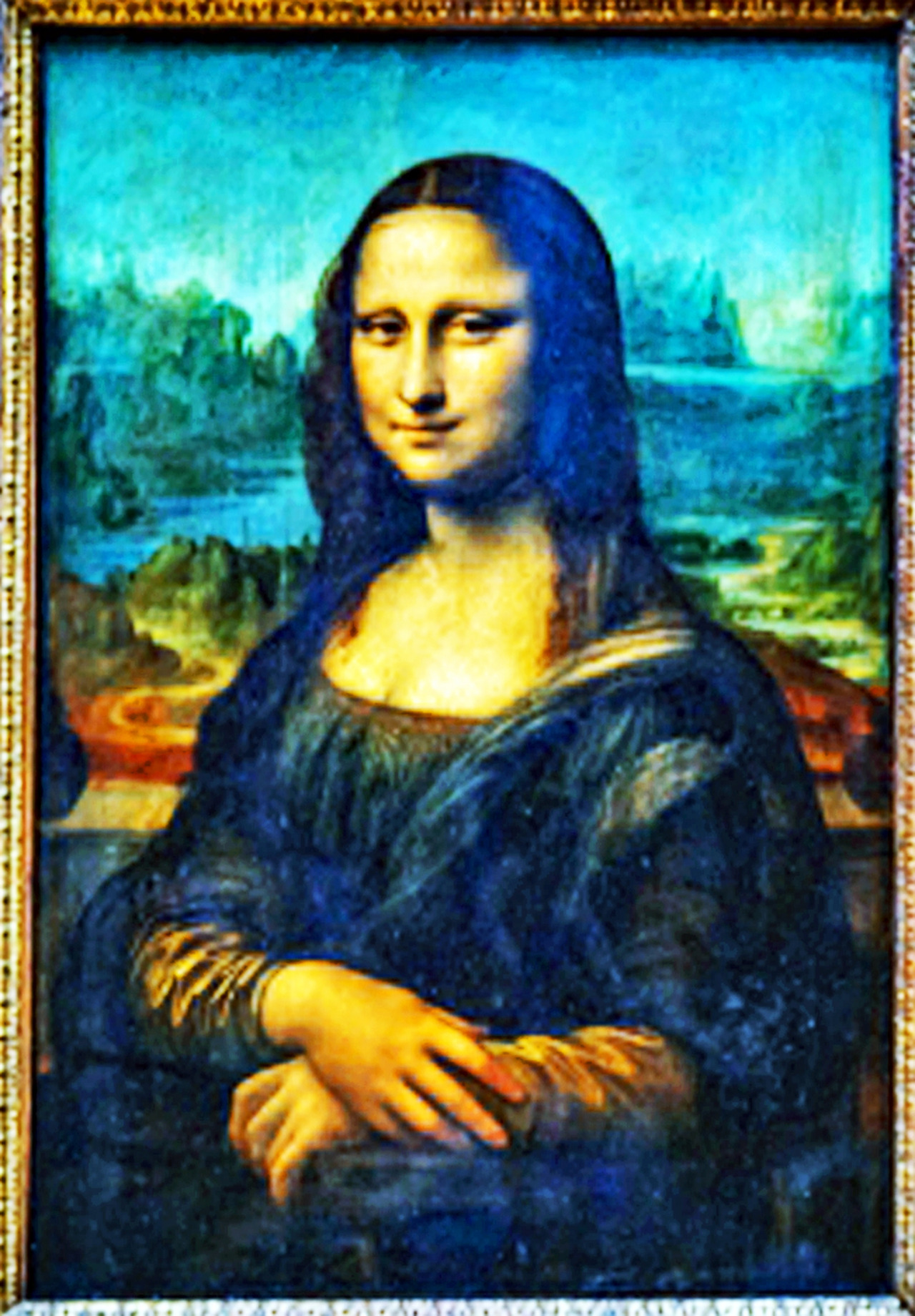
Leonardo di ser Piero da Vinci, Mona Lisa, 77×53cm, Collection: Louvre Museum
"Mona Lisa" abstracts the mysterious image saved by Da Vinci(Leonardo di ser Piero da Vinci)'s sfumato technique as the outline of reality as an image beyond the mysterious atmospheric effect of the color of the object, which is the background of desire.
Abstraction is established as an aesthetic effect of safe desire with object on the face of the Mona Lisa and a background on the left.
From the background, the image of desire mediated by object and Mona Lisa is repeated, showing an abstract reverberation effect in the shadow of reversible light.
As a reverberation effect, the background of desire were properly placed behind the object so that the gaze could lead from the object to the Mona Lisa, the background of desire, and the gaze was focused on the object and connected to the face of the Mona Lisa as the subject of desire.
And by creating a position facing the Mona Lisa in the obect, the gaze is directed to the Mona Lisa, the subject of desire.
The metaphor for the concept of desire The Mona Lisa is replaced with a desire image in the object, and the object is demarcated into the background of desire. Here, the gaze of desire focuses on the Mona Lisa with a red window structured into a frame.
As a Renaissance thinking, it has a desired meaning with the object of desire, as an allegory.
The object is an abstraction that shows the real world of desire as a subject by linking the image of desire with a sensus allegoricus that explains other meanings beyond the literal meaning, and the object window interprets the demarcation problem between objects and desires as a symbolic metaphor in the meaning of the text.
Unlike the conceptual art of Dadaism, which transforms the image of the object as meaning, this materializes the object of desire and realizes the subject's desire structure in the shadow of reversible light.
As a reality, the desire structure is the object, and the "2025-Mona Lisa-a portrait of a mirror reflecting its desire on the window" becomes the object of the cause of creating the desire structure as an image symbolized in the object through the relationship of symbolic expression made by the Mona Lisa as a object.
The simultaneous function of the desire structure and the real image reveals the underlying image in which the meaning of the concept is integrated into the desire image as a retroactive effect, and the Mona Lisa, who metaphorized the image, hides in the desire concept.
As a fundamental image, the Mona Lisa is disclosed as the first concept of desire and reaches a symbolic conceptual abstract realism image as a deliberate abstraction.
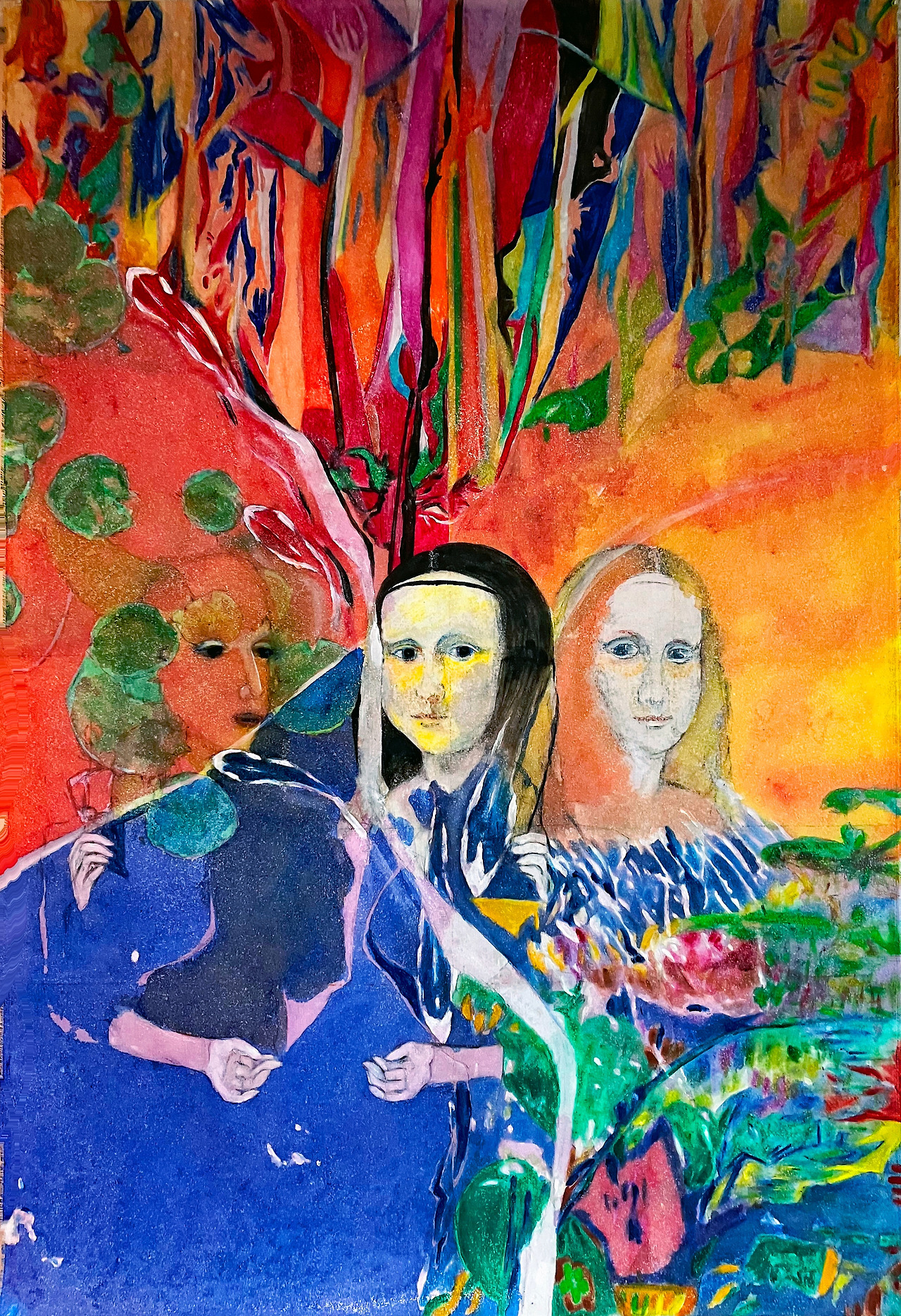
Louis Choi Chul-joo, the 2025-Mona Lisa reflected in the pond, 113X165cm, acrylic and composite materials on cloth, 2025
the 2025-Mona Lisa reflected in the pond
The Mona Lisa reflected in the pond is a structure of desire that elicited realism according to its artistry, another structure of gaze away from the visual system, and an image as a realism of another abstract object that reveals an image to reality.
As a perspective visual structure, the instantaneous desire in contact with the water surface is a structure of light that deviates from the border of a pond where water is buried on the surface's tangent, and constitutes the same realism image as the image of desire reflected on the water surface.
Perspective objectivity as a structure of light that deviates from the concept of instantaneous desire by the shadow of reversible light in the pond distorts reality as the range of the sky and the size of the perspective, where the realist image is superimposed on the surface as another gaze structure.
In "The Mona Lisa Reflected in the Pond", abstract realism is a desire structure that conveys an abstract image as an effect of the dual structure of reality and the Mona Lisa's realism abstraction, in which the real sense that gave movement to the flow of the water by moving the fish with abstract traces in the pond and the flat abstract view of the lotus flower contrast. The image simplifies the real image, which recognizes the object of the reversible viewpoint in a linguistic sense according to the temporality of the abstract viewpoint, from abstract thinking to a phenomenal pond structure.
It is a German style that abstracts the rhythms of objects into flat, digital forms, but expresses them in reversible light, just like the hand-painted Arnouveau (Jugendstil). So that abstraction and art are distinguished by the existence of matter as reality and the existence of images formed from each other's abstract perspectives as virtual beings.
The condition of a work of art is to reveal existence in the form of non-existent beings and imaginations, and it is a sketch that passes through an allegory that images objects and events into reality. Therefore, it is not an impressionistic image that captures the moment of the Mona Lisa reflected in the pond as an impression, but a realist image that linguistically interprets the abstract meaning of the Mona Lisa reflected in the pond in explicit temporality as a shade of reversible light.
This defines that by repeating sketches, Choi Chul-joo's conceptual abstract realism image, which connects an existential image seen as a structure of gaze to another realistic image separated from reality, can reconstruct the realist image as a concept of abstract desire through cartoon sketches and picture images.
The definition is a abstract realism that evades the unconscious surreal formative structure as an error in abstract perception that brought concepts and abstractions to existential realism, or reversible perspectives, through abstraction of modern conceptual abstract realism such as modern media art images or abstraction.
This abstracts the present image by expressing the present image verbally and the present image as a reversible shadow of light that embodies the concept of desire in the present place. The abstraction is an abstract realism object, and the abstract object revealed as a point of light in the eyes of others is Choi Chul-joo's aesthetic structure revealed in the gaze system of desire, and the abstract realism object gaze, which has different abstract meanings as a philosophical device, is produced according to temporality.
Therefore, the temporality of a verbal image according to reversible light presents reality as an image as a being through existential theoretical interpretation, just like Aristotle's time.
This image coincides with images in realist space and abstract linguistic meaning, so an abstract and invisible object appears in the path of gaze viewed from the conceptual point of view of desire.
Here, Choi Chul-joo's conceptual abstraction of realism shows an image in a linguistic sense that appears as the concept of desire. This simplifies a specific surface of the image and brings abstract realism back to its real image as a correlative structure of time elapsed. In the linguistic meaning of the conceptual abstract realism of the image, it intersects the image as an object that contains the desires of others as a fictional element of human limited by causal relations, and the realist image is structured as a linguistic meaning of unconscious abstract realism.
Thus, by simplifying realist images that specify abstract structures and erasing the contrast in the cross-section into reversible shades of light, the essence of abstraction is flattened into the cross-section. This is a conceptual abstract realist abstraction that erases abstract images of linguistic meaning from abstract objects that are identical to current images that exist according to temporality.
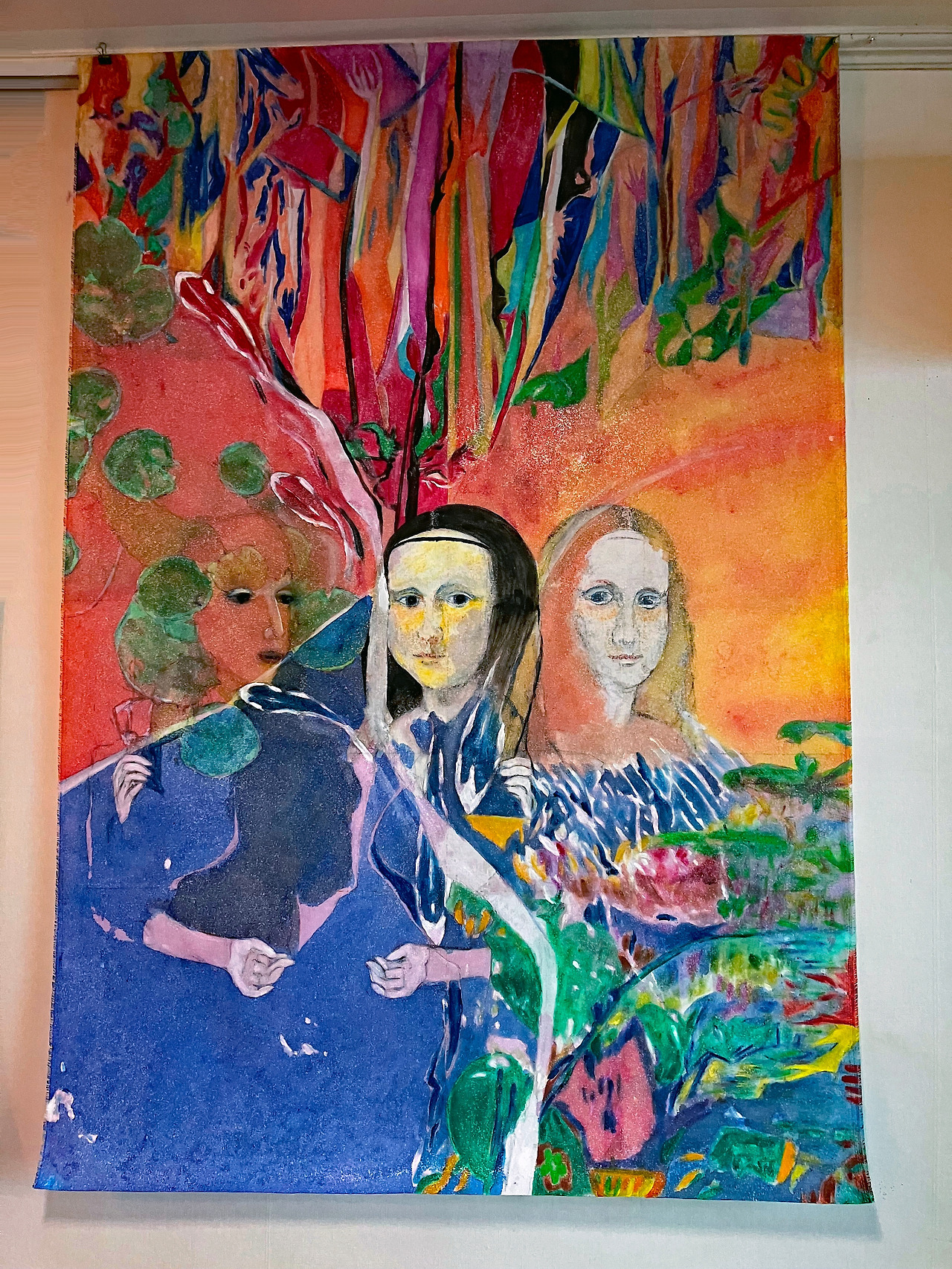
As a result, the conceptual abstract realism abstraction design process is an abstraction that derives realism according to its artistry, and another abstract object that reveals the image to reality as a structure of gaze that deviates from the visual system is the image of realism.
In realism abstraction design, the effective way to convey the dual message of abstraction and reality is to express concepts and abstractions realistically through modern conceptual abstract realism abstractions, such as modern media art and painting images or abstractions. Therefore, the process of designing conceptual abstract realism abstraction design is as follows.
1. Realism Object Concept: An image formed from a virtual object by reproducing a realistic object is a virtual image that hides reality. A virtual image is recognized as a plane and looks like a realistic image. Here, it is hidden in a geometric plane image of a perspective visual system that reproduces realistic objects and is momentarily revealed as a gaze from the perspective of desire revealed by the unconscious. This defines the concept of a realist object with creativity and autonomy as an image in a linguistic sense as another existence of a conceptual abstract realism object through the unconsciousness suppressed by the desires of others.
2. Sketch Connecting Realism Images with Allegory: Abstract art and art are that matter is distinguished by its existence as a reality and the existence of objects formed from each other's abstract perspectives as virtual beings. The condition of a work of art is to reveal existence in the form of non-existent beings and imaginations as sketches that pass through an Allegory, which images objects and events as reality.
It repeats the sketch to connect an anamorphosis image as another reality separated from an image of reality, that is, an existential image that seems to be the structure of gaze, to form an abstract language image into a sketch so that it can be re-formed into a conceptual abstract realism concept.
3. Abstract Realism Object Gaze: As an abstract realism object, the abstract object revealed as a point of light in the eyes of others makes Choi Chul-joo's aesthetic structure anamorphosis image revealed in the desire gaze system look like an abstract Realism object gaze as a philosophical device whose abstract meaning varies depending on the viewer's position and gaze. This image matches the perspective of realist space with the abstract linguistic meaning, and from the conceptual point of desire, abstract and invisible objects appear as gaze paths. As an object that implies the desires of others as a fictional element of human limited by causal relationship in the linguistic meaning of the conceptual abstract realism of images, it intersects with the image and is structured into the linguistic meaning of unconscious abstract realism.
4. Abstract Realism's Abstraction: Abstract realism's abstraction gets an abstract object specified in Choi Chul-joo's Desire Formula, and the desire image(i) design(d)s beyond the desires of others, which is an opportunity to verbally interpret the conditions under which the abstract object's image is realized(i/d) through grammatical interpretation of the linguistic meaning. And to reach <D(I...I')d=I(D...D'i)i> conceptual abstract realism abstraction as a reality by abstractly selecting a specific object that the subject of desire asks itself what abstract realism wants. This is a realism image that has stopped from the concept of abstract desire that has been realized by abstracting the abstract place that humans cannot experience in life as an object of desire in a linguistic meaning system. It is a conceptual abstract realism abstraction as a philosophical image that reproduces the essence of human existence and the limitations of perception as a metaphor by operating as Choi Chul-joo's conceptual abstraction as a device that transfers philosophical and linguistic meanings to images.
The background image of abstract realism abstraction refers to a place in realist space formed by reversible shades of light that fit the philosophical logic of returning to temporality, replacing the abstract space that exists in the linguistic sense. The image interprets the desire image (i) design (d) as a realistic image in the linguistic sense, and the condition (i/d) in which the image of the abstract object is realized through the grammatical interpretation of the other's desire in the linguistic sense in order to obtain the abstract object specified in Choi Chul-joo's desire formula. As a subject of abstraction, the subject of desire selects a specific object that asks itself what abstract realism wants and reaches conceptual abstraction <D(I...I')d=I(D...D'i)i> as a reality.
Here, the abstraction as a linguistic meaning is that the image formed in the structure of the text is tailored to art while approaching philosophical logic, forming a realist structure. This is a realist image that stopped from the concept of abstract desire, which was realized by abstracting the abstract structure that divides abstract places that humans cannot experience into linguistic semantic systems as objects of conceptual abstraction.
Like the the theological formation structure of the Renaissance Church, which attributed philosophical logic to religion, Choi Chul-joo's abstract concept of desire has a linguistic meaning that abstracts the concept of abstract desire to see the Mona Lisa as an abstract structural and practical image. Therefore, in order to reproduce the abstract limitations of the nature and perception of human existence as a real image, Choi's conceptual abstraction design abstracts philosophical images and uses abstract perception as a device to convey philosophical and linguistic meanings as symbolic images to reproduce them as realism images.
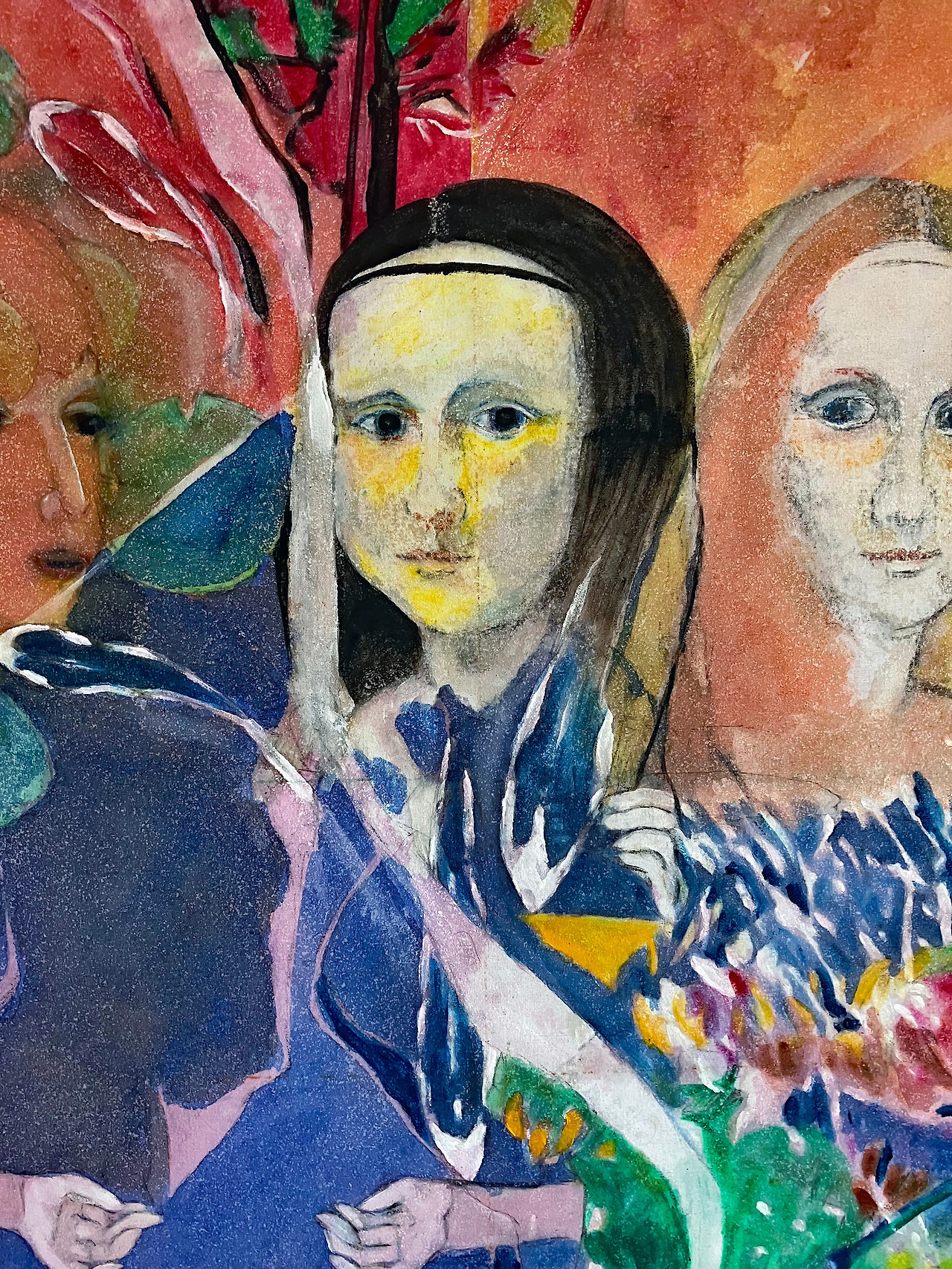
The Renaissance, which opened the image of conceptual abstract realism, establishes the aesthetic desires that spread from aristocrats to merchants and the desires of others whose artistic value of contemporary art is obscured. Conceptually, the artistic inspiration of early conceptual art of Dadism cannot be ignored, but Choi Chul-joo's conceptual abstraction as a new modern art with existential conceptual abstraction away from religion builds a realist image as a flat installation in line with conceptual abstraction with literal concepts and linguistic meanings, as if sketching Mona Lisa reflected in a pond.
The installation is a linguistic meaning that expresses abstract concepts as real images, and conceptual art is interpreted as an abstract crystal of philosophical thinking by transferring the structure of Idea to the structure of reality and showing the real image as an event and performance image. This is a realist abstraction that deviates from the realist image in the linguistic sense, that is, the religious creationism of abstract concepts, at the peak of abstract images.
In this way, desire as a being in the "2025-Mona Lisa reflected in the pond" is an essential image of linguistic meaning and is abstracted as a realist image tailored to the correlation conditions with the past experiences of the unconscious. This connects the realism object with the concept of gaze and at the same time abstracts the "mirror image reflecting the desire of others" that evokes the sense that the viewer is being stared at.
The abstraction establishes itself as an aesthetic effect of abstract desire between the pond background and the Mona Lisa's face. Here, an overlapping image of meaningful desire hidden in temporality appears in the pond as an image of reality, but Mona Lisa is an abstract composition that deviates from the perspective visual system. By simplifying the abstract image by flattening its shape, it transfers the existence of unconscious desire to the existence of objective reality image to realism abstraction.
Unlike the Sfumato technique, this led to abstraction by tracing the temporality of the Mona Lisa smile. Da Vinci's spumato technique is an ambiguous expression that blurs the contour, but Choi Chul-joo visualizes the feelings of a smile based on temporality as a trace of temporality, revealing the 'trace of the temporality of Mona Lisa's smile' through painting technique.
As the subject of the trace, the desire structure is divided into background and actor, and the image reflected in the pond is expressed as the actor of desire, and the abstract realism image is expressed as the objective correlation of the concept of desire.
It also becomes a realistic abstraction as a correlation in which the Mona Lisa mimics abstraction as the subject of the cause that made the desire structure an abstract image as the subject of the 'Mona Lisa reflected in the pond'. In other words, abstraction as a realistic structure directs the abstract impression that is perceived as a real meaning into a conceptual abstract realism abstraction./ Writing. Choi Chul-joo, a contemporary art critic (Doctor of Cultural Design)
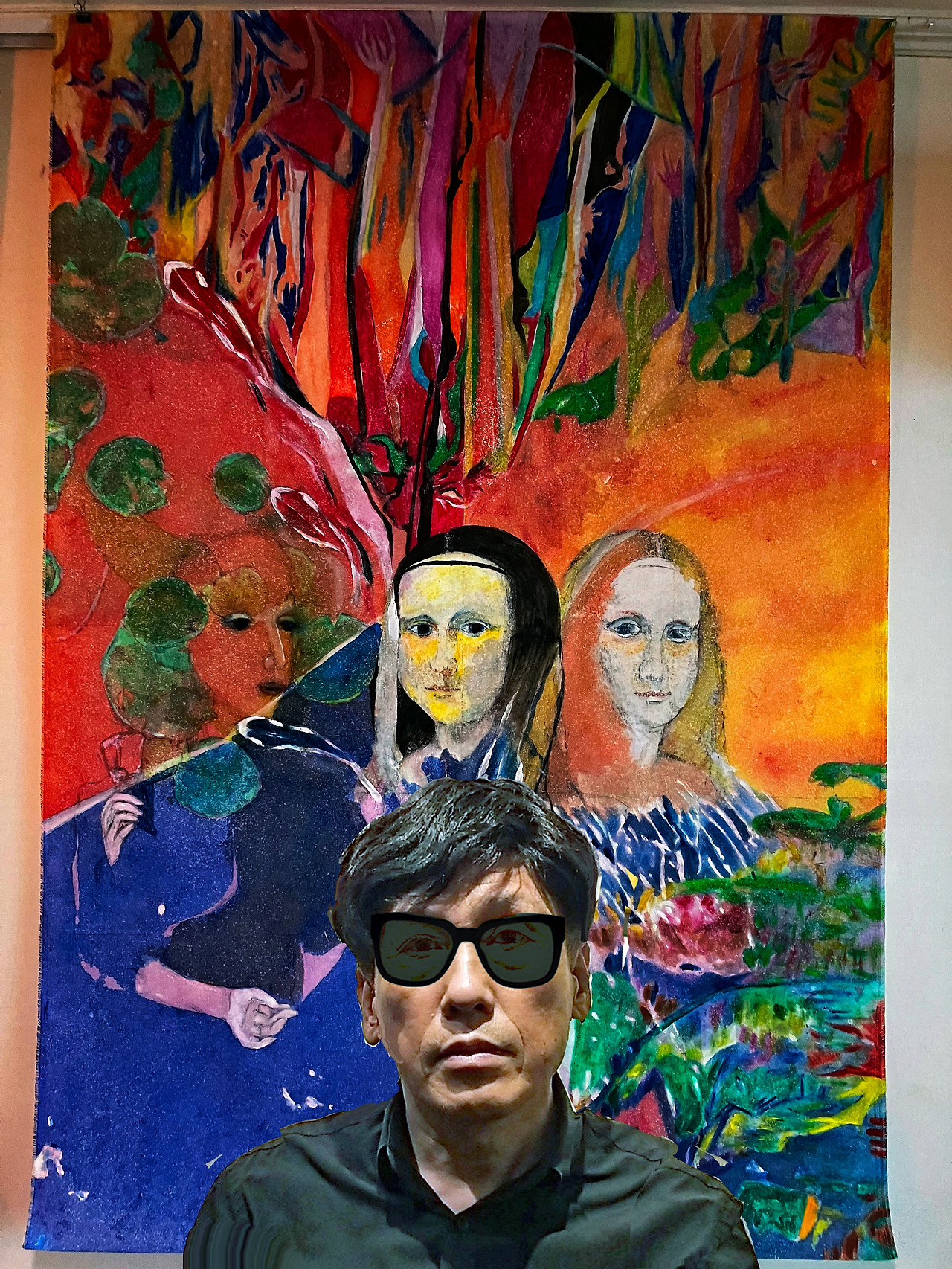
Choi Chul-joo, conceptual abstract realism painter
----------------------------------------------------------------------------------------
Art Critic Louis Choi Chul-joo
Contemporary Art Review by Louis Choi 74
Art Critic Louis Choi Chul-joo Criticism [74] Modern Art Critic Louis Choi Chul-joo's Criticism of Contemporary Art & Design Criticism of Contemporary Art = Contemporary Art Today contemporary artworks contemporary artist Choi Chul-joo's Art Criticism, Contemporary Abstract Art Painter Criticism: Choi Chul-joo Desire Concept Abstract pop art combines the abstract conceptual approach of the other's desire art with the design form and linguistic abstract image of pop art. His concept of desire, or conceptual abstract art, appears, and a picture that conflicts with the concept of linguistic meaning emphasized in metaphysical philosophical light creates a dramatic event image with artificial lighting. & Abstract contemporary art that designed modern art abstract painting: Contemporary artist Louis Choi Chul-joo's realistic abstract work criticism of antinomical contemporary art as a conceptual art of treachery based on the concept of desire of others and Contemporary Art Critic Louis Choi Chul-joo's Contemporary Art work criticism: Pablo Picasso, Weeping Woman, 1937
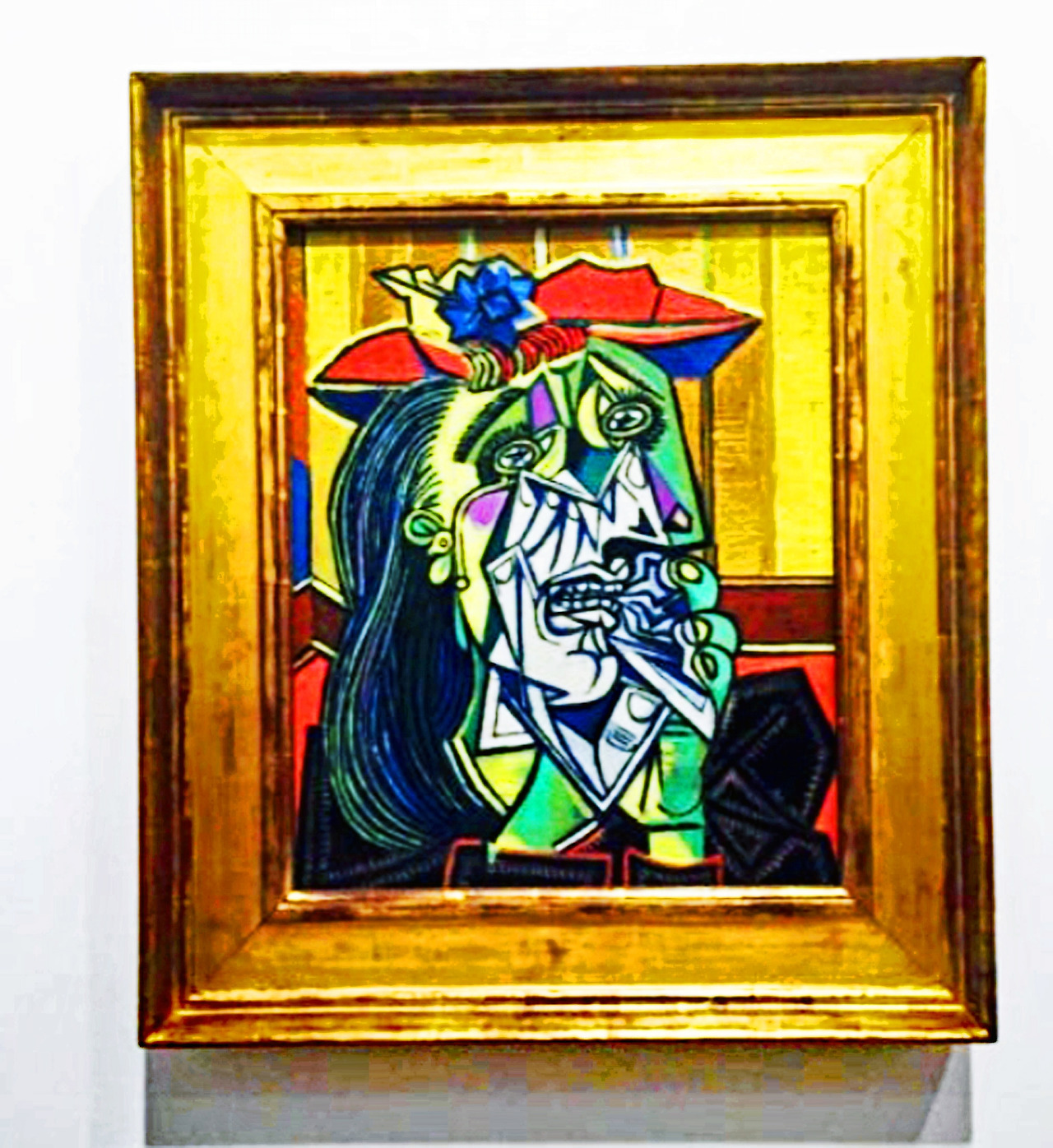
Pablo Picasso, Weeping Woman, 60.8×50cm, oil on canvas, 1937, Tate Gallery, London
Pablo Picasso, Weeping Woman
Painting that transitions from the modern to the contemporary is the art of using images as the theme or in the linguistic sense of a painting. Therefore, Pablo Picasso's The Weeping Woman (1881-1973) as the flat image is a three-dimensional structure and an ontological structure visualized by collages of divided sides.
This is a contemporary visualization of not only the sorrow that Picasso expressed, but also the fundamental suffering of realism as a human being.
Abstracting realistic images into other people's desire structures is not irrelevant to flat crooked images.
Beyond the dimensions of "The Woman Is Weeping," an unrealistic visual image of abstraction, it transitions from each other's desires to areas of gaze that don't matter whether it's flat or three-dimensional, to divided realism images.
It interprets from a psychological point of view to perceive the continuity of the realist image as a gaze according to the temporality included in "Weeping Woman".
The motion of an object changes the spatial structure of the background by continuity over time.
The abstract background is an aestheticization of historical events, depicting emotions in historical paintings and portraits.
Thus, the abstract background of "The Weeping Woman" determines the space that exists in the Spanish Civil War, the place of aesthetic facial movement according to time, and the space that exists in the passage of time, that is, the spatiality of the crooked image.
Pablo Picasso, Weeping Woman, 60.8×50cm, oil on canvas, 1937, Tate Gallery, London
The tears of a woman who can't hold back her sadness are connected in a straight line between her eyes and an ellipse to tell her where she is away from her eyes. As a situation that continues to show the traces of water flowing down at the end of the eye, the woman's face shows the side and the front at the same time, and the movement of the woman crying makes her feel sad at first glance.
The line that marks the direction of the crying woman's tears forms the process of time and the space in which it exists.
This is because the dwarf image in the form revealed from the line is composed at the momentary point of time, and as a temporality, it reveals in three dimensions the suppressed social structure of an emotion through a woman's inner sensibility and existence.
In this way, the picture of a woman crying in the social structure does not have a perspective density and a sense formed from a single light source point of view by choosing a crooked image integrated with lines. Here, the crying woman's face is a partial crooked image like a collage. This means that each partial image exists in space as a crooked shape revealed at the same time.
Through the crying woman, he expressed the complexity of emotions with his face and hands through the distortion of the cubist form, allowing him to stare at the intensity of his emotions with a strong contrast of primary colors to radiate the energy of sadness from his head.
The energy released in this way gathers the gaze of the viewer of the sad face that existed in the space.
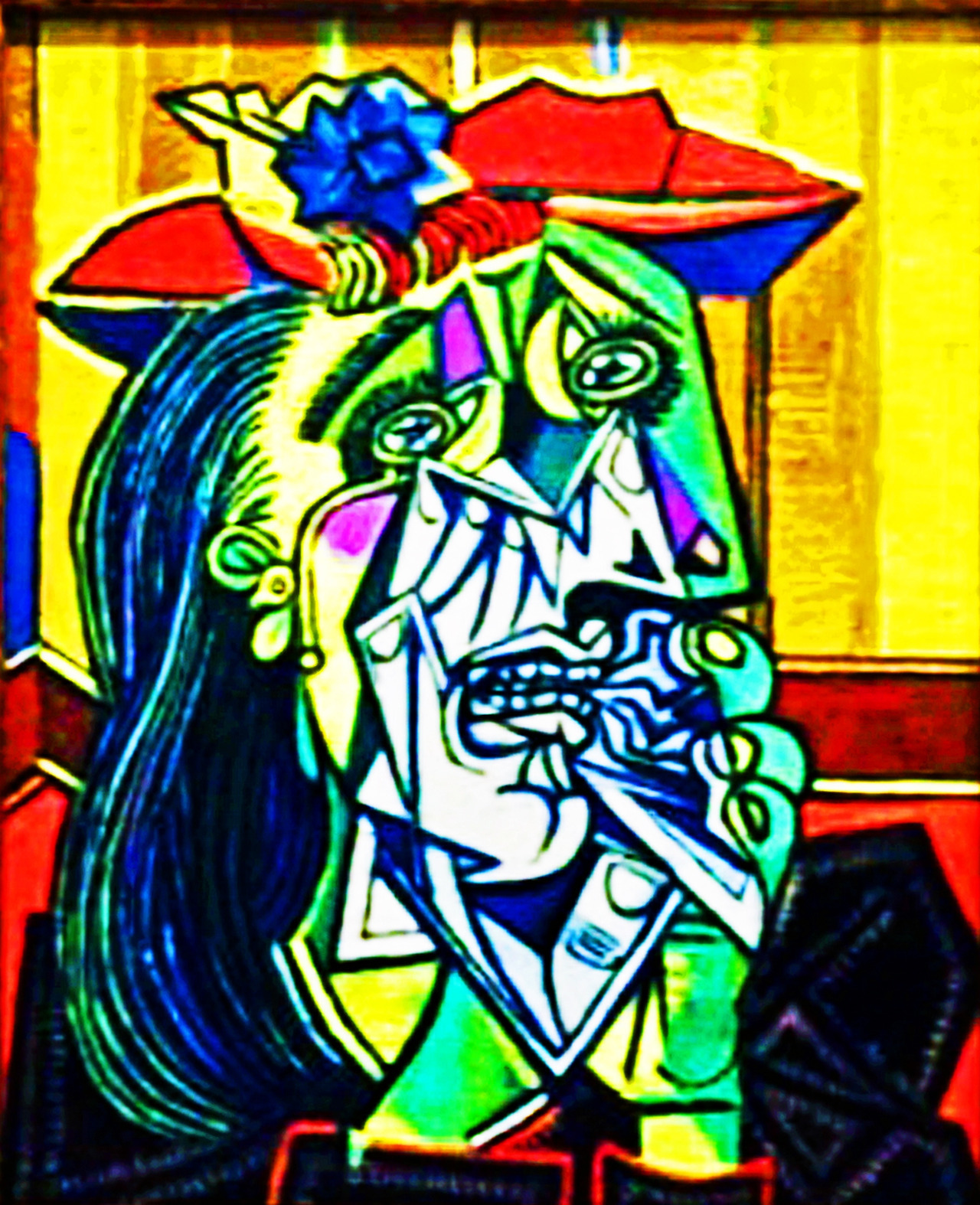
Pablo Picasso, Weeping Woman, 60.8×50cm, oil on canvas, 1937, Tate Gallery, London
Picasso offers a new direction of gaze by reconstructing the eyes, eyebrows, and ears in various directions in the painting. It also reveals the up and down positions that connect the eyes and tears. He shapes his face into geometric shapes to represent the sobbing head of a crying woman and the movement of her flowing tears in segmented realist images.
Additionally, his cubist representation visualized the complex emotions of pain by decomposing and recombining the woman's face into various angles, and the crying woman's movement while showing the side and the front at the same time makes one feel sad at first glance. The line that marks the direction of the crying woman's tears makes one aware of the process of time and the linguistic meaning of the image of sadness in which it existed.
The direction of the moving tears expressed here constituted a fragmented form of realism from a psychological point of view that recognizes the linguistic meaning of the subject generated from the observer's gaze. Here, the symbolic image represents the sadness of a woman who lost her family to war.
In this way, Picasso's three-dimensional sculpture creates a geometric shape as a new architectural space structure in a different dimension from the existing perspective. Instead of the perspective of the previous painting, he superimposes an object on the same screen from various perspectives. This superimposed sense of volume is transferred to the sense of movement that the object is trying to express, creating a dynamic space.
His three-dimensional structure simultaneously decomposes a cross-section of an object and superimposes the decomposed cross-section on another object, placing it in the position of his choice like a collage. As a result, several forms from different perspectives are overlapped on the same monochromatic plane. The result is a distorted plane image that was not seen in perspective images.
This is interpreted as an abstract portrait in which simultaneously decomposed cross-sections go beyond the sadness of a crying woman and perceive it as the pain of the whole human race.
In addition, Paul Cézanne's flat screen composition is a cross-sectional form and is close to a realistic image. This cross-sectional expression method is the principle of the simultaneity of cubism and coincides with the simultaneous vision that divides an object into several viewpoints and puts it in the same canvas. This simultaneity and distortion of his cubist form abstracts "Weeping Woman" as a symbolic structure by expressing the complexity of emotions.
As a new attempt to reject the mannerism of previous painters, he flattened the distorted image of the face revealed as an object as a reality of temporality, or a multidimensional gaze, on canvas.
In "Weeping Woman" a woman's face is a distorted image, and space for an object is made into a face by temporality, and another space is created in the form of crying. In such a space, multiple viewpoints are dismantled, and two eyes with different viewpoints are overlapped on a canvas as a single face image. In other words, the object is dismantled with the other person's gaze and collected on the canvas as a cubist image.
In this way, the perspective visual structure is a language structure revealed by the unconscious desire that has disappeared and is composed of an image as a gaze space. This is a cubist process and has an artistic meaning as an abstraction. By combining distorted images carved from the reality of unconscious desire and gaze images using collage techniques, Picasso constructs sadness. It also makes us recognize that realismimages of the segmented plane of grief are abstracted into multi-faceted conceptual abstract realism images as formative structures./ Written by Choi Chul-joo, Contemporary Art Critic (Dr. Cultural Design)

Choi Chul-joo, a art Critic
----------------------------------------------------------------------------------------
Art Critic Louis Choi Chul-joo
Contemporary Art Review by Louis Choi 75
Art Critic Louis Choi Chul-joo Criticism [75] Modern Art Critic Louis Choi Chul-joo's Criticism of Contemporary Art & Design Criticism of Contemporary Art = Contemporary Art Today contemporary artworks contemporary artist Choi Chul-joo's Art Criticism, Contemporary Abstract Art Painter Criticism: Choi Chul-joo Desire Concept Abstract pop art combines the abstract conceptual approach of the other's desire art with the design form and linguistic abstract image of pop art. His concept of desire, or conceptual abstract art, appears, and a picture that conflicts with the concept of linguistic meaning emphasized in metaphysical philosophical light creates a dramatic event image with artificial lighting. & Abstract contemporary art that designed modern art abstract painting: Contemporary artist Louis Choi Chul-joo's realistic abstract work criticism of antinomical contemporary art as a conceptual art of treachery based on the concept of desire of others and Contemporary Art Critic Louis Choi Chul-joo's Contemporary Art work criticism: Paul Cézanne, Lunch on the Grass
Paul Cézanne, Lunch on the Grass (Le Dejeuner Sur L'herbe), Oil on canvas, 35 x 21 cm, 1876-1877, Orangery Museum (Musée de l'Orangerie)
Paul Cézanne, Lunch on the Grass
In "Lunch on the Grass", Cézanne simplified the character with various colors, deviating from impressionistic objectivity with a dull touch on the arrangement and form of the character. This is a metaphor seen in painting and does not exceed the category of imitative painting.
Therefore, in order to enter the symbolic world as a pictorial genre painting due to sociality, he tries to match the scenery of lunch in an indefinite time that looks like a painting width in a simple form. This is a category of imitation that puts folk paintings on canvas and removes the social constraints (restrictions) that are accepted by the religious customs of painting until modern times. In other words, the visual image of the essence of painting is explored by destroying the symbolism of invisible reality as the desire of others to escape from the religiously established subject that revealed the stage of contrast and conventional subjectivity.
Beyond simple visual representation, he reduces the essence of the object to a geometric form, bringing "Lunch on the Grass" into line with "autonomy of realism painting," which focuses on the structure of objects and the order of space rather than the character's narrative.
The landscape on the grass matches the sky and the color of the person in the same way and puts it in the blank space of the tree in the sky light.
This does not actually stop the form, but rather places a mind on the symbolism of the simplified form. It's like giving a direction to a floating cloud and looking at the whole sky.
As a linguistic meaning, the concept of realism objects with the creativity and autonomy of the sky structure is determined as another existence of conceptual abstract realism objects through unconsciousness suppressed by other people's desires.
The landscape is a shading perspective with a distorted side from the geometric structure of tree and human, making the object's meaning found in the order in the landscape.
<Lunch on the grass> is an entertainment painting that depicts the relationship between nature and human beings, interpreted as a geometric order of scenery, and is not a simple description of scenery, but a place of thought as a background structure, which visually dismantles and reconstructs the essence of nature.
In addition, as a structure of the background, a luncheon image that connects the landscape with an allegory on the grass is sketched and formed as a virtual being, and it is connected with another reality separated from the real image, that is, an existential image that looks like a structure of a gaze according to a direction tailored to the multi-view, to visualize temporality and variability by capturing several perspectives on a single screen of conceptual abstraction.
This is a unique modern art interpretation that has passed the Choi Chul-joo abstract design process that explores conceptual abstract realism, visualizing it as a realism image that ignores the linguistic semantic structure and abstract form specificity.
Accordingly, he hides the figurative reality in a painting through shading perspective and is symbolized as a realism image based on the story of daily scenery. In symbolic nature as an invisible reality, the morphological signifiers of visible metaphors nature are transferred to images in symbolic meaning.
In the imagination world, socially forbidden illusions have a symbolic meaning, but images of morphological and linguistic meanings do not differ. Therefore, he adheres fantastically as a meaning of illogical symbols as an image that is a real form. In other words, in painting, the imaginary meaning as a social constraint transforms into an image of linguistic meaning embodied by Cézanne's desire.
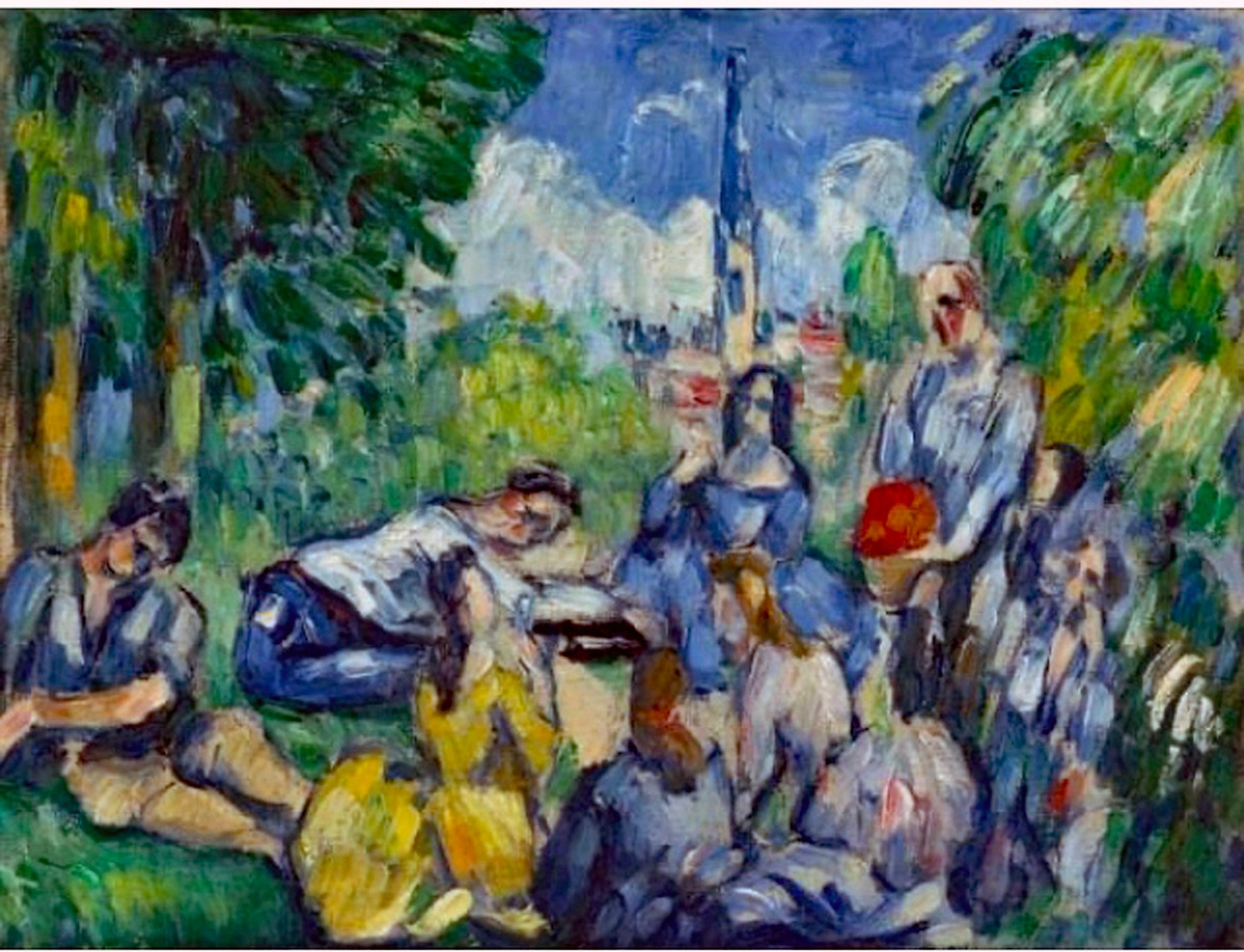
Paul Cézanne, Lunch on the Grass (Le Dejeuner Sur L'herbe), Oil on canvas, 35 x 21 cm, 1876-1877, Orangery Museum (Musée de l'Orangerie)
On the lawn, a structure formed by a series of trees and figures in landscape images, lunch stops at the leisure of time.
The sky at rest at that time is a structure in which clouds and trees are on the same side, and they appear easily in terms of light and darkness, making them pay attention to the phenomenal significance of the phenomenon.
In order to recognize the subjectivity of objects that are the same as the sky through the structure of the sky according to temporality, the phenomenal image of the sky in an open space exposed to reality in contemporary social regulations is recognized as the subject in the same linguistic sense as the object.
This fixed the cloud's gaze, making the image of the sky look different like the moment it was transformed into temporality, but its meaning appears to be a real sky that does not change.
The sky matches the abstract linguistic image of the realist space in which the abstract meaning revealed in the abstract realism object's gaze system is different.
Thus, abstract and invisible images are structured in the linguistic meaning of unconscious abstract realism in the visual system.
Cézanne structures the other person's desire to find a visual order, and "structures the other person's desire into a visual form," transforming several objects into a geometric form.
Thus, Cézanne forms a combination of clumsy geometric figures and trees that are out of perspective, and realizes the object's meaning in a simplified form to realize the object's linguistic meaning.
By expressing the flatness of painting as a realization in a new linguistic sense, the exchange revealed through his desire shows the contemporary social reality and communicates with the substance, rejecting the illusory pictorial meaning and revealing the reality of conventional reason.
In fact, the symbolic meaning of an object is distorted by the stage of dividing the light from the outline that appears sky blue, rather than modifying the picture to form a landscape. Then, to match the width of the picture in the real landscape, the displaced shape is divided into colors, and the cross-section of the object matches the subjective color of the object at the point where light and darkness intersect. In other words, it does not explain the characteristics of objects like Romanticism, but rather conceptualizes the nature of the landscape as it approaches the lawn in a simplified form tailored to the philosophical light and color of nature, visualizing the essence beyond the phenomenon of linking abstract realism with the sky like an iron fortress.
Cézanne reveals the symbolism of an invisible reality as a reality in a linguistic sense. Unlike the way the object is expressed to the viewer realistically, this is a form of simply drawing perspective and form with the difference in brightness of color light to find out what social taboos and forms of visual desire meant at the time.
Therefore, he does not modify the impression of the landscape viewed through the gaze of the object, but abstracts the semantic effects of objects that are similar in size to real objects that are not depicted in a specific space.
In this way, his painting is an image of a real object identified through a grammatical interpretation of the linguistic meaning. This is the conceptual image specified in Choi Chul-joo's conceptual abstraction of desire, which is the same as conceptual abstract realism painting.
However, Cézanne's "Lunch on the Grass" ignores the three-dimensional nature of bright colors. As a result, Manet's work takes over all the issues in the "salon des refuses" and he experiences his work being buried.
Nevertheless, he reduces the distorted images seen from the gaze to the geometric form of contemporary art, visualizing existential realities divided into color and abstract structures as linguistic realities of philosophical light.
This is a genre painting depicting the relationship between realist nature and man as a dramatic event, interpreting it as the geometric order of the landscape and sublimating the pain of reality into a conceptual abstract structure like an artistic device.
Furthermore, the color of light reflected by the shape mimics the shape in a way that makes the entire space pictorial, and focuses on the color of light that is close to a similar shape. In other words, it is an impractical form that separates the visible form of light from the real space.
Through the "linguistic transformation of realism painting," he composes the image of linguistic meaning into traces of formative order, and as a symbolic meaning of the image, color is a device that expresses the depth of the spatial structure and dismantles the visual structure to match the harmony of space.
Therefore, it embodies "cognitive image ethics of visual realism structure" as an act of asking questions to obtain the ontological reality of painting by dismantling perspective and recombining space.
Thus, it embodies the "cognitive image ethics of the structure of visual presence" as an act of questioning to obtain the ontological realism of painting by dismantling the perspective and recombining the space.
And Cézanne matches the color of abstract realism with shades of light to the conceptual reality form of the background expressed by the non-realistic imitative form and the multi-layeredness of cubist distorted emotions rather than the specificity of the form as a visual element of the work.
In this way, he explores the order beyond the semantic interpretation of objects with the same light in the space of people and backgrounds, creates a philosophical form for the color of light as an image of the linguistic meaning of painting, and visualizes the intuitive abstract sense before recognizing the object as a whole stage in the linguistic sense of necessity, and stands at the boundary between abstract meaning and reality as a temporal trace tarnished by the structure of abstract perception and reversible light shades./ Written by Choi Chul-joo, Contemporary Art Critic (Dr. Cultural Design)

Choi Chul-joo, a art Critic
----------------------------------------------------------------------------------------
Art Critic Louis Choi Chul-joo
Contemporary Art Review by Louis Choi 76
Art Critic Louis Choi Chul-joo Criticism [76] Modern Art Critic Louis Choi Chul-joo's Criticism of Contemporary Art & Design Criticism of Contemporary Art = Contemporary Art Today contemporary artworks contemporary artist Choi Chul-joo's Art Criticism, Contemporary Abstract Art Painter Criticism: Choi Chul-joo Desire Concept Abstract pop art combines the abstract conceptual approach of the other's desire art with the design form and linguistic abstract image of pop art. His concept of desire, or conceptual abstract art, appears, and a picture that conflicts with the concept of linguistic meaning emphasized in metaphysical philosophical light creates a dramatic event image with artificial lighting. & Abstract contemporary art that designed modern art abstract painting: Contemporary artist Louis Choi Chul-joo's realistic abstract work criticism of antinomical contemporary art as a conceptual art of treachery based on the concept of desire of others and Contemporary Art Critic Louis Choi Chul-joo's Contemporary Art work criticism: Morning glory and fish-Mona Lisa design
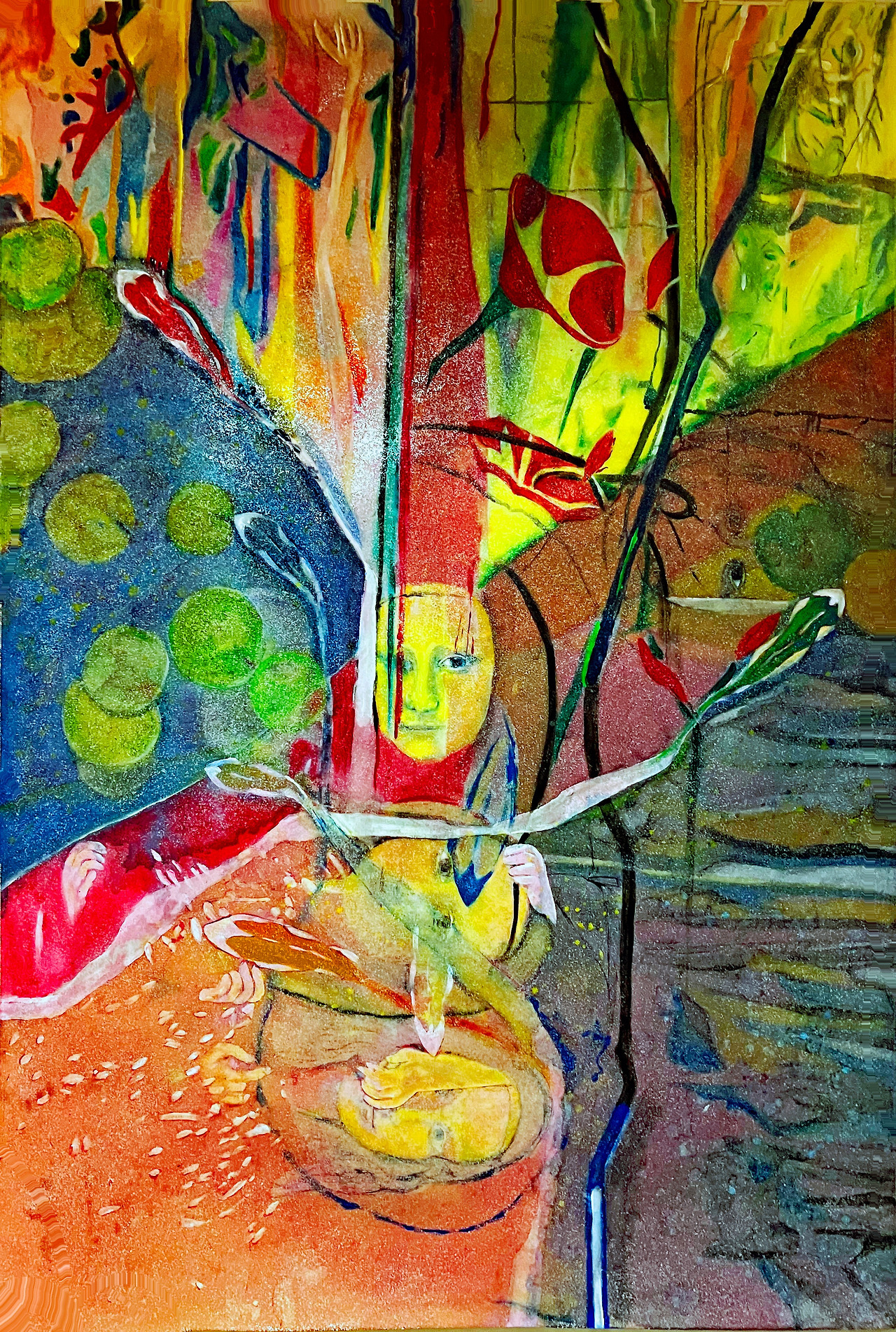
Louis Choi Chul-joo, Morning glory and fish-Mona Lisa design, 113X165cm, acrylic and composite materials on cloth, 2025
Morning glory and fish-Mona Lisa design
The more you think about the difference by looking at the shape of the "morning glory" and the fish, the more you understand the shape in one direction, so you abstractly conceive the meaning behind it. When speaking the same linguistic meaning even though the shapes are different, the abstraction as a symbolic structure is a similar color and size, that is, a structure with the same meaning is an abstraction of the realistic structure of non-real world as a conceptual form.
In fact, the reversible abstraction of the structure cannot be limited to the abstract time corresponding to the reversible light as the structure of the branches and mouth of the morning glory, and it shows the meaning of an abstract form in which the morning glory and the fish are in harmony. It illuminates the fish and the Mona Lisa reflected by the reversible light to develop the position of the 'morning glory' into a pond with a reflective structure of desire.
Here, the pond is a symbolic space before forming an ego, acting as a mirror reflecting the desires of others, and the viewer looks at the pond and faces his unconscious desires and the fish reflected in it.
Therefore, the reversible abstraction of the desire structure is the structure of morning glory flowers and branches, and the traces of abstract fish corresponding to reversible light explore the boundary between existence and absence reflecting the temporal structure in which reversible light and traces intersect.
This is not a simple illumination reflected in the pond, but a symbolic device in which the fish and Mona Lisa, which represent the desire of the batter, reflect the desire structure of the batter.
Viewers face the unconscious desire reflected in the pond, and 'morning glory' is an image method that shows morning glory in an unconscious abstract structure instead of morning glory, and the realistic spot of the morning glory is transferred to the shadow image of abstract fish and Mona Lisa as the image of light that is reflected reversibly is repeated.
Abstracts that collide with the factual structure thus serve as objects representing lack of desire at the point where the materiality of the imaginary Mona Lisa and the real fish collide, and discover the form of the linguistic structure of conceptual abstraction. As an image of its linguistic form, the reflection of the pond waves and light forms a reversible shadow structure, and the fish and Mona Lisa visualize traces of time, leaving traces of desire self-consciousness, and viewers recognize their existence and absence as conceptual forms at the same time.
In addition, abstraction as a meaning in various forms is a realistic image of conceptual abstraction that exists as an ideological informal being with various colors and sizes. Accordingly, a conceptual abstract realism design methodology related to "Morning glory and Fish-Mona Lisa" is presented
1. Existential Concept Abstract Realism Image Concept is an image abstracted as a conceptual object in an ideological form by reproducing a realist image. The image is a virtual image that conceals its existence and is perceived as a plane, so it appears to be a realist cross-sectional image.
Here, even if the images are different, abstraction as a symbolic structure has the existential concept of a realism object with creativity and autonomy in a linguistic sense that reproduces them in similar colors and sizes. Accordingly, the concept of an existential conceptual abstract realism image with creativity and autonomy in a linguistic sense constitutes another image of existence as a linguistic meaning of a conceptual abstract realism object through the unconsciousness suppressed by the desires of others.
Therefore, the image is composed by defining the concept of an existential image that is alienated from an image lacking a realistic structure as a vector representing the direction of the non-realistic subject entering the symbolic world as a structure of the other representing a synchronic semantic chain as a conceptual form of a realism image.
As a semantic structure that cannot be solved like Gordian Knot, Alexandros appears as a realist image of conceptual abstraction as an existential subject through division that cuts the knot with a sword and expresses the essence of externality in a comprehensive and immediate manner.
Alexandros cuts the knot with a sword in a comprehensive and immediate way by unconsciously selecting an unpredictable effect image as a pre-stage of linguistic meaning, such as expression abstraction, with an orderly vector that displays the meaning structure that cannot be solved through time.
As a difficult problem to solve, the knot determined by semanticizing the knot through time as a semantic structure that cannot be solved as before entering the symbolic world is physically bisected and divided, expressing the conceptual abstract realism image as an existent subject.
2. Sketches that connect realism images into allegories as linguistic meanings distinguish fish as a reversible light structure that deviates the concept of instantaneous desire from an abstract pond to a reversible shade of light, distinguishing them from "morning glory" as a structure of desire, with the existence of objects formed from each other's abstract perspectives as reality and virtual beings.
The structure of the morning glory and branch cannot be determined according to the temporality of the response to light, and shows the meaning of harmonizing with the morning glory.
Its meaning is developed as a pictorial linguistic structure in which fish and Mona Lisa move in the position of the pond abstracted by reversible temporality and in the position of the morning glory illuminated by the divided retroactive light.
The movement of the fish is linked to the temporality of the Mona Lisa as a sign of necessity self-consciousness, reveals the sensory structure before the symbol translated into pictorial language, and becomes an abstract space pond that functions as a formative reality beyond the literary nature of early conceptual art.
Perspective objectivity in abstract pond structures distorts the reality of Mona Lisa, which contrasts with fish, as the range of the sky and the size of the perspective, where reversible light is limited to objects superimposed with realism images as another gaze structure on the surface.
In the symbolic abstract world, the Mona Lisa as a real visual image aimed at by repeating the image sketch as a linguistic meaning in the conceptual abstraction of flat formations and colors reveals its existence in the form of non-existent beings and imaginations reflected in the pond, and it is a sketch that passes through an allegory that images fish, Mona Lisa, and pond structure as reality.
3. The structuring of the linguistic meaning of existential realism is an abstract realism object, and the abstract object revealed as a discernment of light in the eyesight of others is Choi Chul-joo's aesthetic desire structure revealed in the gaze system of desire, and looks the same as the object's gaze, which is based on a sketch of an existential realism image in which the abstract meaning is different as a philosophical desire device.
The sketch is a perspective visual structure, and the border of the pond, where water is buried on the surface's tangent line to the surface of the earth that touches the surface of the earth, is a method of sketching images that display abstraction morning glory as unconscious beings and geometric tangents in the shape of the surface of the water. The sketch is interpreted as a mirror image reflecting the desire of the other, and it is connected with the concept that the viewer is being stared at at at the same time, and the Mona Lisa's gaze creates an optical realism space that varies depending on the viewer's position.
As the image of the reversible reaction that constitutes the space of realism abstracted by the concept of desire is repeated, the spot of the morning glory is abstracted. In other words, as the sequence increases according to the reversible temporality, the shadowy image of the morning glory staring at the reversible light is displayed on the fish- Mona Lisa.
The Mona Lisa smile blurs an outline with da Vinci's spumato technique according to the temporality, visualizing ambiguous expressions as realistic images, and Choi Chul-joo's conceptual abstract realism design shows a "trace of time" embodied at the intersection of the same time as the effect and phenomenon structure of the stationary moment when the muscle of the movement meets the background of the stationary moment.
4. The actualization of conceptual abstract realism abstraction acquires the abstract object specified in Choi Chul-joo's desire formula, and the desire image (i) design (d) is an opportunity to verbally interpret the conditions (i/d) under which the image of the abstract realism object is realized through grammatical interpretation of the linguistic meaning beyond the desires of others.
<D(I...I')d=I(D...D'i)>The conceptual abstract realism image as a reality reaches abstraction by abstractly selecting a specific object that the subject of desire asks itself what abstract realism wants as the subject of desire. This indicates the meaning of symbolic action that characterizes the design of the fish- Mona Lisa image, which repeatedly combines pieces of distorted morning glory image in the process of abstraction.
Here, the image is not a visual phenomenon of a fish, but a device that visualizes the flow of unconsciousness and the process by which symbols are transformed into realistic images, and it is the meaning of language that symbolizes abstract images of conceptual fish and Mona Lisa.
Thus, abstraction expresses the abstract structure that stopped from the concept of existential desire realized by abstracting abstract places that humans cannot experience in life from a linguistic semantic system to an object of desire as a realism image.
It is a device that conveys philosophical abstract meaning and linguistic meaning to images, and operates as Choi Chul-joo's conceptual abstract realism abstraction and designs it as a philosophical abstract image that reproduces the nature of human existence and the limitations of perception as a metaphor to become an existential realism image. In other words, it visualizes the formation and dismantling of the fish and Mona Lisa ego reflected in the pond, the conflict between the Mona Lisa's existential abstract structure and the linguistic meaning revealed in the gaze, and reinterprets the mirror images of abstract realism that passed the background "morning glory" and desire formula to abstract the fish- Mona Lisa.
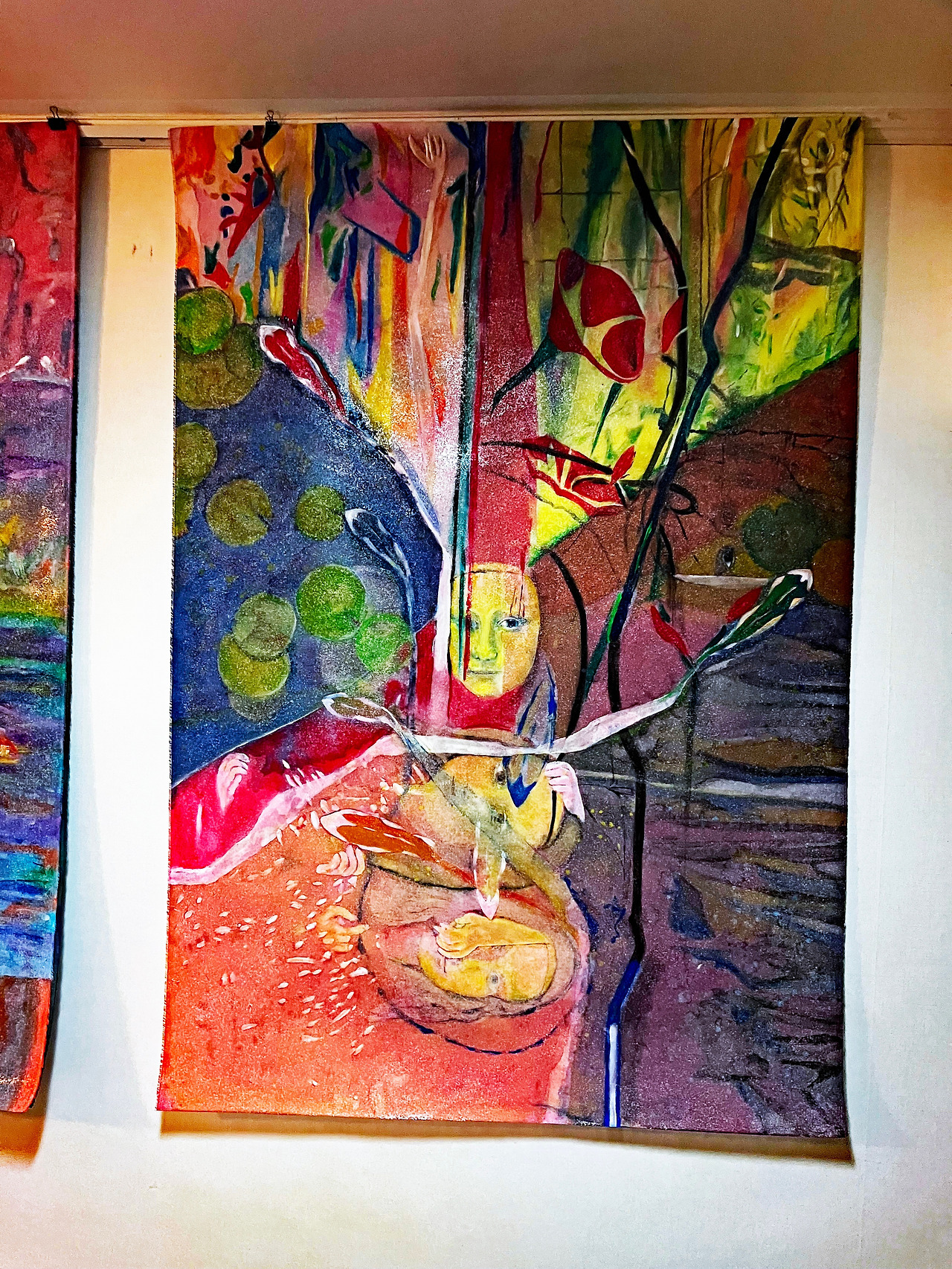
As an image of linguistic meaning, it conceptualizes the abstract structure divided in religious savior as a lifelike fish and is imaged as an existential realism image.
In "Morning glory and Fish-Mona Lisa", fish is a form of existence of realism that expresses necessity and self-consciousness through traces of paint on the margins as time and abstract space.
This form reveals the sensory structure before the perception of existential fish, that is, the previous stage image of linguistic meaning, and is a conceptual abstraction in which more diverse space-time and pictorial formality intersect through the eyes of viewers beyond the literary nature of modern conceptual art.
Here, images from previous stages convey a protective color similar to their surroundings in a linguistic sense, such as the back of a fish to avoid bird attacks. As a result, the color of the fish in the pond changes to a protective color with a reversible shade of light in the realm of existence. And Choi Chul-joo's Desire Formula allows us to grasp the conflict between realism before language and abstract symbols before language so that we can approach it from the perspective of conceptual abstract realism as a symbolic structure of desire by directing free fish with the flow of waves.
In this way, realism and abstract symbols repeatedly collide, revealing the symbolic structure before language.
The iconic fish moves to the object of desire in an abstract image that reveals the unconscious desire of the other person. Through this, it is possible to realize a conceptual abstract realist image in modern art.
It is interpreted as a dynamic structure of reversible light in Choi Chul-joo's media art "Pond," as it sometimes contains traces of temporality and realism, depending on the symbolism of the medium.
As a way of dismantling multiple perspectives in conceptual abstraction, we implement a flat cross-sectional structure in which a fish is stationary from a dynamic image by segmenting it into a visual image.
In this abstract design method applied to conceptual abstract realism painting, the shape of the fish acting as a sign of desire before linguistic meaning is an image as a signifier, and its meaning is transferred to a variable image in linguistic meaning according to the unconscious desire structure in which the time of the moving desire coexists while unconsciously synthesizing according to temporality.
Therefore, the color of the figurative image 'morning glory' as an unconscious linguistic meaning decorates the reality of customary universality faced by the object with reversible colors of light. The fish and the Mona Lisa are in a dark space, in contrast to the light reflected from this decorated desire structure. It is the shadow of desire created by the morning glory in the place where it stopped.
This is a piece of meaning symbolized in the non-existent space that abstracts the fish-mona Lisa imitating the morning glory as a desire structure.
The sculpture functions as a pictorial event image and is a fragmented image of a fish-Mona Lisa in the spot of a morning glory combined with a shade of color generated by reversible light that explores the boundary between existence and absence.
Thus, the colors and shapes of objects that accelerate the separation of objects are revealed in dynamic images with intervals between objects produced by reversible light. However, the meaning of a fixed background collectively visualizes the segmental structure of sensory structures prior to speech In other words, a simplified abstraction as a landscape image with an abstract object and a conceptual theme is realized from a desire structure into an image of a fragmentary trace of desire through abstract division and transmutation, and it is a dimension of linguistic meaning that breaks away from stimulating visual effects. The realist structure and the conceptual abstract realism image of linguistic meaning that occur in the unconscious function together in both conscious and unconscious dimensions to obtain an existential realism according to artistry.
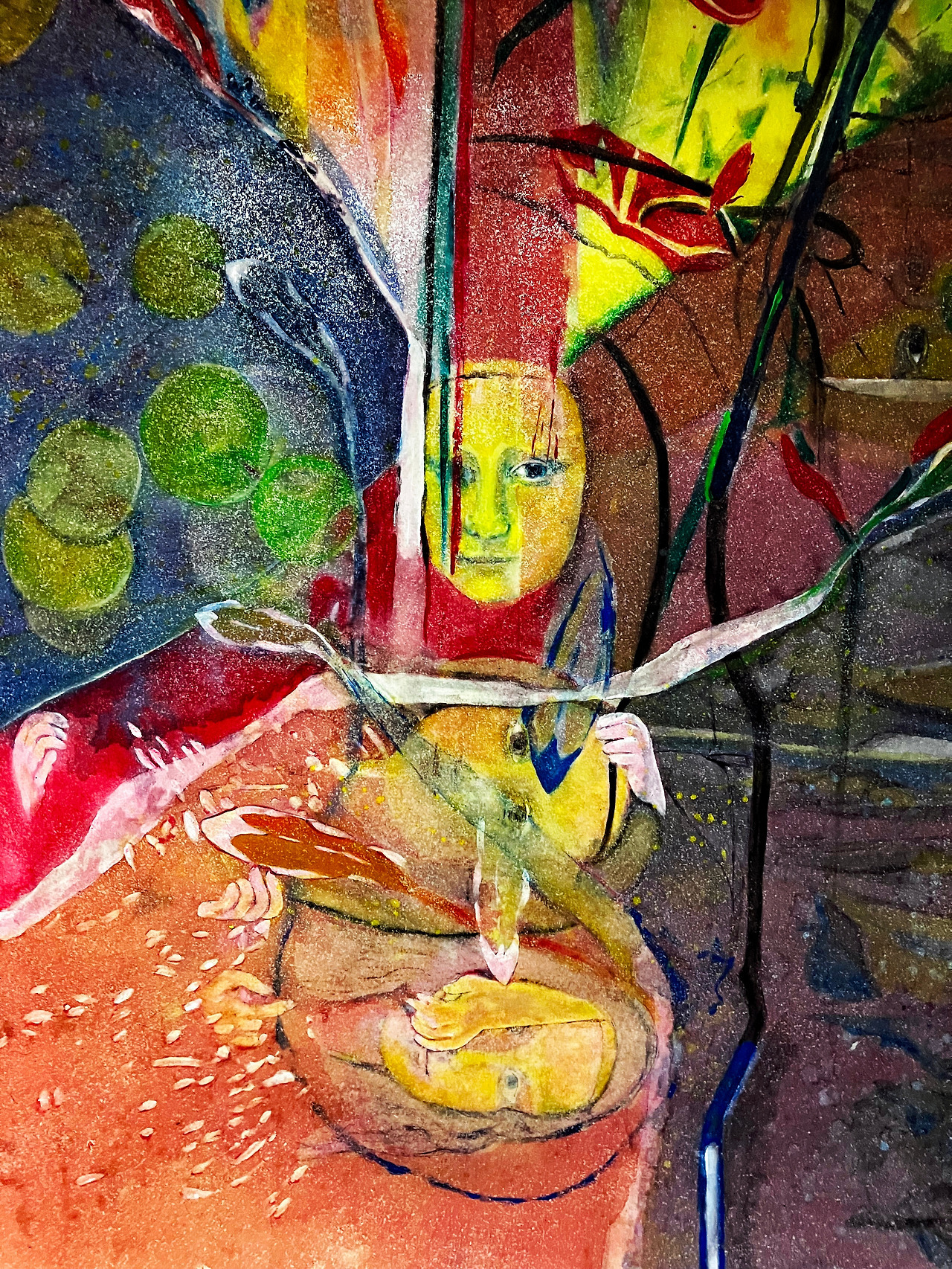
Choi Chul-joo's conceptual abstract realism design shows a "trace of time" in which the effects of motion and the phenomenal structure intersect at the same time as the effects of motion and the phenomenal structure of motion meet the background at the moment the muscles of the motion are stationary. As a result, the conceptual abstract realism design methodology for abstractions related to dynamic realism objects and abstract background images is as follows.
1, Existential Concept Abstract Realism Image Concept is an image abstracted as a conceptual object in an ideological form by reproducing a realist image. The image is a virtual image that conceals its existence and is perceived as a plane, so it appears to be a realist cross-sectional image.
Here, even if the images are different, abstraction as a symbolic structure has the existential concept of a realism object with creativity and autonomy in a linguistic sense that reproduces them in similar colors and sizes. Accordingly, the concept of an existential conceptual abstract realism image with creativity and autonomy in a linguistic sense constitutes another image of existence as a linguistic meaning of a conceptual abstract realism object through the unconsciousness suppressed by the desires of others.
Therefore, the image is composed by defining the concept of an existential image that is alienated from an image lacking a realistic structure as a vector representing the direction of the non-realistic subject entering the symbolic world as a structure of the other representing a synchronic semantic chain as a conceptual form of a realism image.
As a semantic structure that cannot be solved like Gordian Knot, Alexandros appears as a realist image of conceptual abstraction as an existential subject through division that cuts the knot with a sword and expresses the essence of externality in a comprehensive and immediate manner.
Alexandros cuts the knot with a sword in a comprehensive and immediate way by unconsciously selecting an unpredictable effect image as a pre-stage of linguistic meaning, such as expression abstraction, with an orderly vector that displays the meaning structure that cannot be solved through time.
As a difficult problem to solve, the knot determined by semanticizing the knot through time as a semantic structure that cannot be solved as before entering the symbolic world is physically bisected and divided, expressing the conceptual abstract realism image as an existent subject.
2. Sketches that connect realist images into allegories as linguistic meanings distinguish dynamic images as a structure of reversible light, which deviates from the concept of instantaneous desire from the background of abstract desire to the shadow of reversible light, from the background as a structure of desire as an existence as reality and an existence of objects formed from each other's abstract perspectives as virtual beings.
The detailed structure of the background cannot be determined by the temporality of the response to light, and shows meaning in harmony with the fixed structure.
Its meaning is developed as a pictorial language structure in which dynamic images and abstract still structures move from positions in the background abstracted by reversible temporality and from positions in the stationary objects illuminated by the segmented retroactive reversible light.
The movement of dynamic images is linked to the temporality of abstract structures as a sign of necessity self-consciousness, revealing sensory structures before symbols translated into pictorial languages and serving as formative realities beyond the literary nature of early conceptual art.
In abstracted background structures, perspective objectivity distorts the phenomenal structure by the extent of the sky and the size of the perspective as opposed to dynamic images, where reversible light is limited to objects superimposed with realist images as another gaze structure on the surface.
In the symbolic abstract world, abstract structure is a sketch that reveals existence in the form of existence and imagination reflected in a desire background by repeating image sketches as linguistic meanings in a conceptual abstraction of flat forms and colors, and passes through an allegory that realizes dynamic images, abstract structures, and background structures of desire.
3. The structuring of the linguistic meaning of existential realism is an abstract realism object, and the abstract object revealed as a discernment of light in the eyesight of others is Choi Chul-joo's aesthetic desire structure revealed in the gaze system of desire, and looks the same as the object's gaze, which is based on a sketch of an existential realism image in which the abstract meaning is different as a philosophical desire device.
The sketch is a perspective visual structure, and the boundary between dynamic images and abstract structures in phenomenal structures is a method of sketching an abstract image as an unconscious being and an image that expresses a geometric tangent to the form of an abstract background. As a result, the sketch is interpreted as a mirror image that reflects the desire of the other, and it is connected to the concept that the viewer is staring at at the same time, creating an optical reality space where the abstract structure's gaze varies depending on the viewer's position.
The position of the desire background is abstracted as the image of the reversible reaction that constitutes the realist space abstracted by the concept of desire is repeated. In other words, as the order increases with reversible temporality, the shadow image of the object staring at the reversible light is displayed in dynamic images and abstract structures.
Choi Chul-joo's conceptual abstract realism design, which is visualized as an ambiguous realism image according to temporality, shows a "trace of time" implemented at the intersection of the same time by the static background image as the effect and phenomenon structure of the stationary moment when the dynamic image of the movement meets the background of the stationary moment.
4. The actualization of conceptual abstract realism abstraction acquires the abstract object specified in Choi Chul-joo's desire formula, and the desire image (i) design (d) is an opportunity to verbally interpret the conditions (i/d) under which the image of the abstract realism object is realized through grammatical interpretation of the linguistic meaning beyond the desires of others.
<D(I...I'd)=I(D...D'i)> Conceptual abstract realism images as reality reach abstraction by abstractly selecting a specific object, where the subject of desire asks what abstract realism wants from him. This dictates the meaning of the symbolic action that characterizes the design of dynamic and abstract structural images, which repeatedly combine pieces of distorted desire background images in the process of abstraction.
Here, an image is not a visual phenomenon of a dynamic image, but a device that visualizes the flow of unconsciousness and the process by which symbols are transformed into realistic images, and it is the meaning of language that symbolizes abstract images of conceptual dynamic images and abstract structures.
Therefore, abstraction expresses the abstract structure that stopped from the concept of existential desire realized by abstracting an abstract place that humans cannot experience in life from a linguistic semantic system to an object of desire as a realism image.
It is a device that conveys philosophical abstract meaning and linguistic meaning to images, and operates as Choi Chul-joo's conceptual abstract realism abstraction and designs it as a philosophical abstract image that reproduces the nature of human existence and the limitations of perception as a metaphor to become an existential realism image. In other words, it visualizes the conflict between dynamic images and abstract self-formation, existential abstract structures as effects, and linguistic meanings revealed in the gaze, and reinterprets the mirror image of abstract realism to abstract dynamic images and abstract structures beyond phenomenal backgrounds and desire formulas as desire structures.
This form reveals the sensory structure before the perception of existential fish, i.e., the previous stage image of linguistic meaning, and beyond the literary nature of modern conceptual art, it is a realism abstraction as a linguistic meaning where more diverse spatiotemporal and pictorial forms intersect through the viewer's eyes.
In this way, realism and abstract symbols repeatedly collide, revealing the symbolic structure before language.
The iconic fish moves to the object of desire in an abstract image that reveals the unconscious desire of the other person. Through this, it is possible to realize a conceptual abstract realist image in modern art.
This is a piece of meaning symbolized in a non-existent space, an abstract abstraction of an abstract structure that mimics the dynamic image and the structure of desire.
Abstraction functions as a pictorial event image, and instead of desire, it explores the boundary between existence and absence by combining fragmentary sculptural images with shades of color produced by reversible light.
In this abstract design method applied to conceptual abstract realism painting, the shape of a dynamic image that acts as a sign of desire before linguistic meaning is transferred to an image as a symbol, and the meaning of it is transferred to a variable image in linguistic meaning according to the unconscious desire structure in which the time of desire that moves while unconsciously synthesizing according to temporality coexists.
As an image of linguistic meaning, it conceptualizes abstract structure as a living dynamic image and images it as an existential realist image, resulting in a conceptual abstract realism design that phenomenally expresses abstractness and self-consciousness as abstract spaces according to temporality through the traces of time. / Writing. Choi Chul-joo, a contemporary art critic (Doctor of Cultural Design)
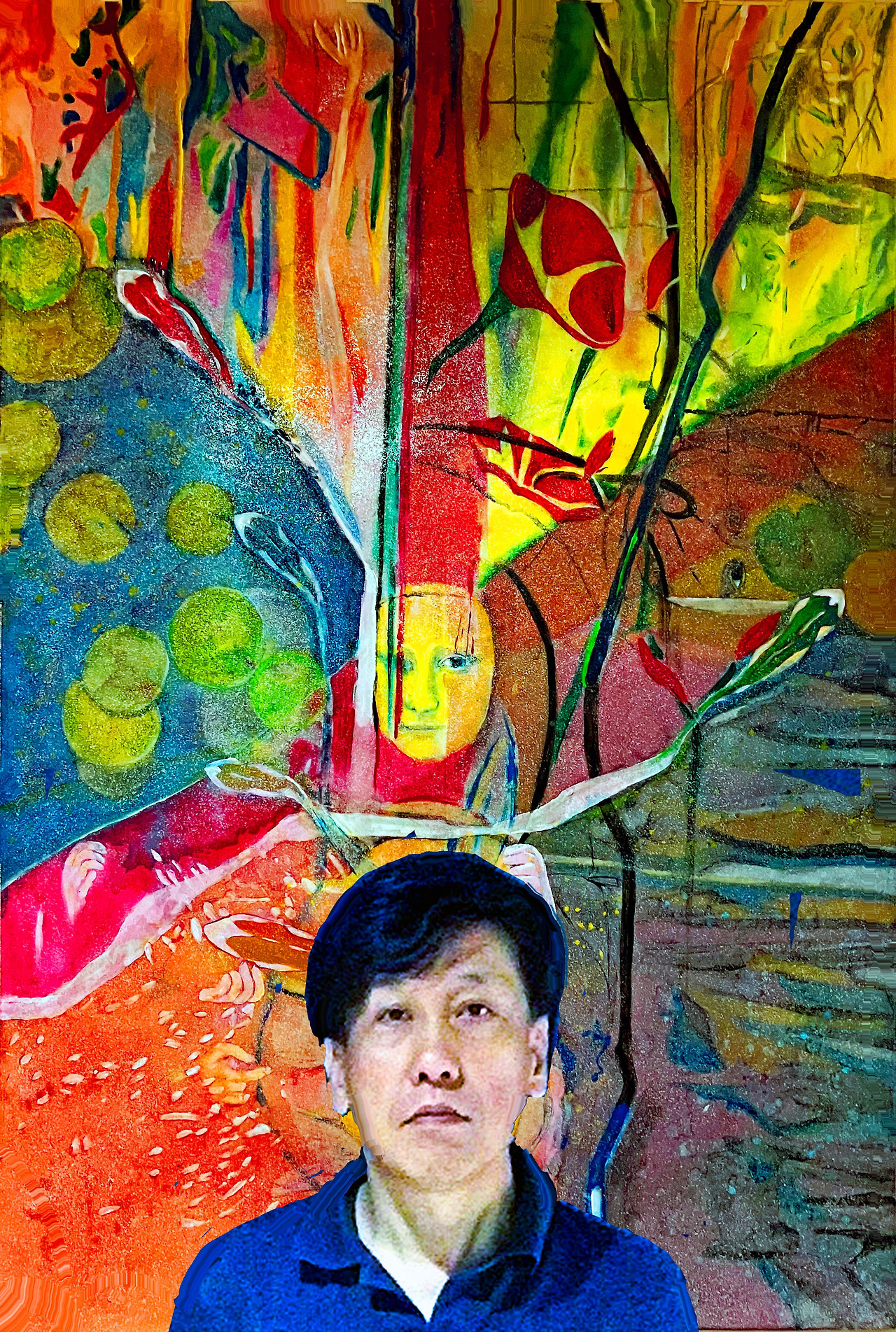
Choi Chul-joo, a conceptual abstract realism painter
----------------------------------------------------------------------------------------
Art Critic Louis Choi Chul-joo
Contemporary Art Review by Louis Choi 77
Art Critic Louis Choi Chul-joo Criticism [77] Modern Art Critic Louis Choi Chul-joo's Criticism of Contemporary Art & Design Criticism of Contemporary Art = Contemporary Art Today contemporary artworks contemporary artist Choi Chul-joo's Art Criticism, Contemporary Abstract Art Painter Criticism: Choi Chul-joo Desire Concept Abstract pop art combines the abstract conceptual approach of the other's desire art with the design form and linguistic abstract image of pop art. His concept of desire, or conceptual abstract art, appears, and a picture that conflicts with the concept of linguistic meaning emphasized in metaphysical philosophical light creates a dramatic event image with artificial lighting. & Abstract contemporary art that designed modern art abstract painting: Contemporary artist Louis Choi Chul-joo's realistic abstract work criticism of antinomical contemporary art as a conceptual art of treachery based on the concept of desire of others and Contemporary Art Critic Louis Choi Chul-joo's Contemporary Art work criticism: morning glory and "The Three Graces" fish & Conceptual Abstract Realism Abstraction Design Methodology
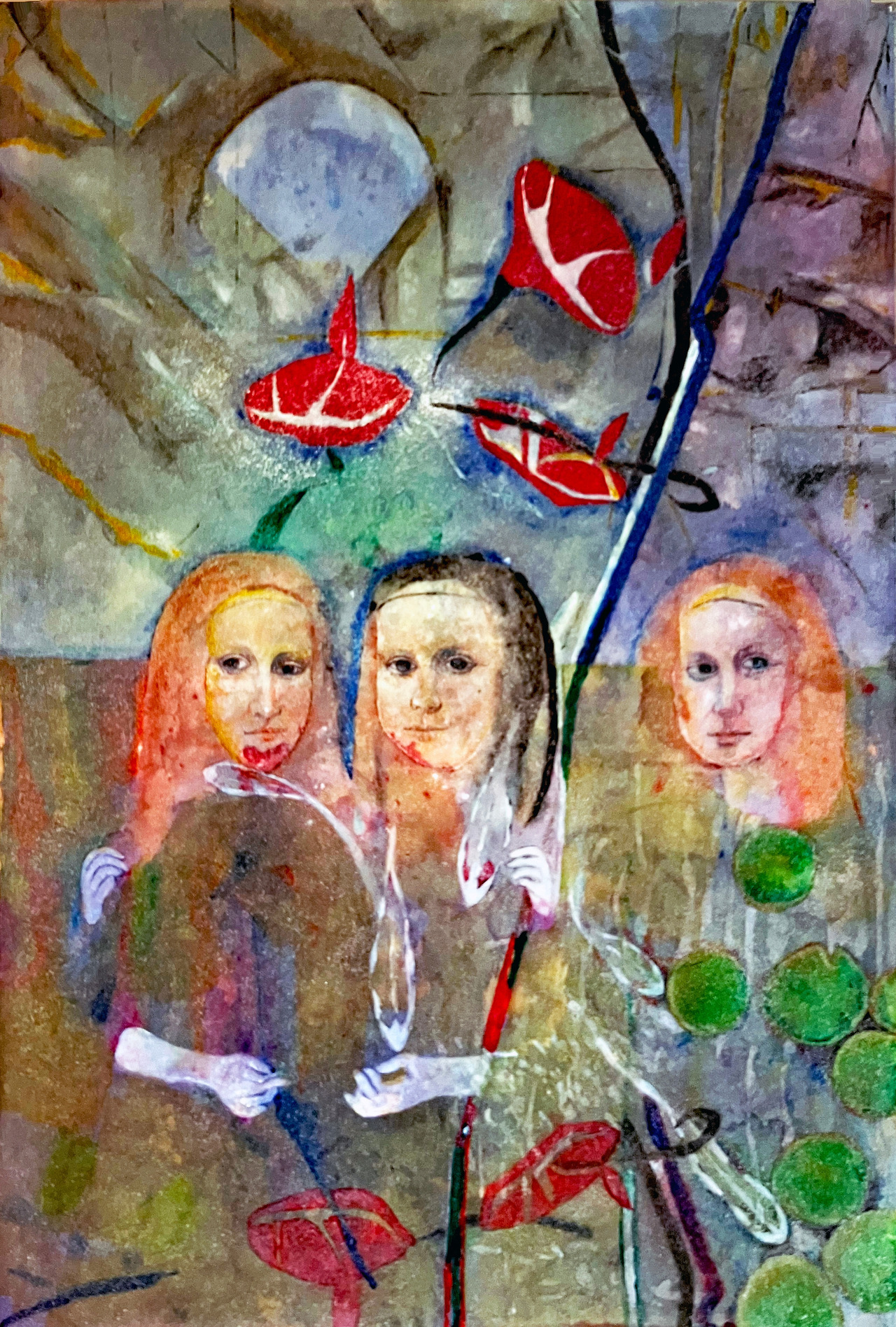
Louis Choi Chul-joo, morning glory and The Three Graces fish, 113X165cm, acrylic and composite materials on cloth, 2025
morning glory and "The Three Graces" fish
The more you think about the difference by looking at the shapes of the "morning glory" and "The Three Graces" fish, the more you understand the shape, so the meaning behind the faces of the three goddesses, who symbolize aesthetic structure in "The Three Graces" Greek mythology, is envisioned as "morning glory" and "The Three Graces" fish in an abstract background. When speaking of the same linguistic meaning even though the shapes are different, abstraction as a symbolic structure is a structure of similar color and size, that is, the same meaning, and human inner desires and aesthetic senses are visually dismantled and recombined as a conceptual form of abstraction.
In fact, the reversible abstraction of the structure here shows the meaning of an abstract form in which the morning glory and "The Three Graces" fish are in harmony with the abstract temporality that corresponds to the reversible light as the structure of the branches and mouths of the morning glory in which the desire of the other is harmonized with the linguistic semantic structure in the abstract background of "The Three Graces" fish as the subject. Its meaning develops in a pond as a reflective structure of desire in the place of the morning glory, which is retroactively illuminated with light in a reversible temporality.
Here, the pond is a symbolic space before forming the self, and functions as a mirror in which the desires of others are reflected, so the viewer looks at the pond and faces <The Three Graces>'s own unconscious desires reflected in it.
Fish traces explore the boundary between existence and absence, reflecting the temporal structure in which reversible light and traces intersect.
This is not just a reflection of the shape reflected in the pond, but a symbolic device in which "The Three Graces" fish, which represents the other's desire, reflects the other's desire structure.
Therefore, the viewer faces his unconscious desire reflected in the pond, and "morning glory" is a method of image that displays unconscious actual morning glory in the place of morning glory, and as the light image of reversible reaction is repeated, the spot of the realistic morning glory is transferred to the shadow image of the abstract morning glory.
Abstraction, which collides with the realistic structure, functions as an object that reveals the lack of desire at the point where "The Three Graces" of the imagination and the materiality of the fish of the real world collide, discovering the form of the linguistic structure of conceptual abstraction. As an image of its linguistic form, the waves of the pond and the reflection of light form a reversible shadow structure, and the waves of pond and <morning glory "The Three Graces" fish>, which explore the tension between aesthetic values and other desires, linguistic semantic structures, and harmony between desire structures and real images as a subject, leave traces of necessity self-consciousness, and philosophical thinking devices are operated in which viewers visually interpret their existence and absence as a conceptual form at the same time.
In addition, abstraction as a meaning with different forms is a realistic image of conceptual abstraction that exists as an ideological non-form with different colors and sizes. Accordingly, abstraction as an object. Conceptual abstraction Realist design related to <morning glory "The Three Graces" fish> is an existential conceptual abstract image that is abstracted as a conceptual object in an ideological non-form by recreating the realist image. The image is seen as a realist cross-sectional image by being perceived as a plane as a virtual image that obscures existence.
Here, even if the images are different, abstraction as a symbolic structure has an existential concept of a realism object with creativity and autonomy in a linguistic sense that reproduces them in similar colors and sizes. Accordingly, the concept of an existential conceptual abstract realism image with creativity and autonomy in a linguistic sense constitutes another image of existence as a linguistic meaning of a conceptual abstract realism object through the unconsciousness suppressed by the desire of the other.
Therefore, as a conceptual form of a realism image, a vector representing the direction of the non-existent existential subject entering the symbolic world as a structure of the other that represents a synchronic semantic chain, and an image is formed by defining the concept of an existential image that is alienated from an image lacking a realistic structure.
As an unsolvable semantic structure like the Gordian knot, Alexander the Great is revealed as an abstract realism image as an existential subject through division that expresses the essence of ex post facto by cutting the knot with a knife and expressing the essence of ex post facto.
It is an orderly vector that displays the orientation to solve this unsolvable semantic structure in a comprehensive and immediate way by unconsciously selecting an unpredictable effect image as a whole stage of linguistic meaning, such as expression abstractism. This is a semantic structure that cannot be solved as an existence before the abstract structure enters the symbolic world, and it expresses the image of realism in conceptual abstraction as an existential subject in which the knot determined by synonymously meaningful is physically divided into two equal parts to solve the event.
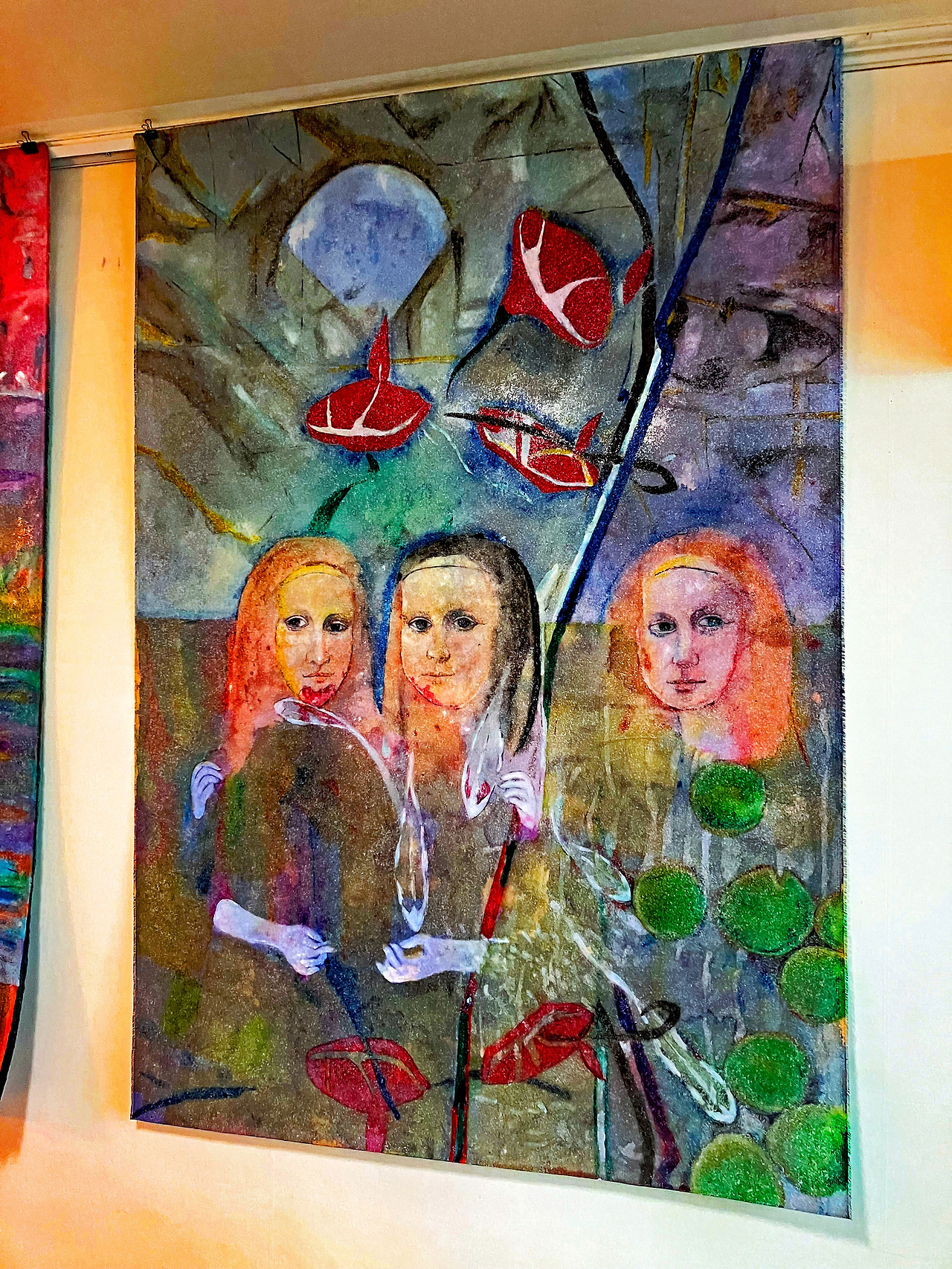
Louis Choi Chul-joo, morning glory and The Three Graces fish, 113X165cm, acrylic and composite materials on cloth, 2025
Sketches that connect realist images into allegories as linguistic meanings distinguish objects as reversible light structures, which deviate from the concept of instantaneous desire from abstract ponds to reversible light shades, from "morning glory" as a structure of desire, with objects formed from each other's abstract perspectives as reality and virtual beings.
The structure of the morning glory and branch cannot be determined according to the temporality that corresponds to light, and shows the meaning of harmonizing with the morning glory. Its meaning is developed as a pictorial language structure in which objects move on the spot of the pond abstracted by reversible temporality and the spot of the morning glory illuminated by the divided retroactive light.
The movement of "The Three Graces" fish is linked to the temporality of the Mona Lisa as a sign of necessity self-consciousness, reveals the sensory structure before the symbol translated into pictorial language, and becomes an abstract space pond that functions as a formative reality beyond the literary nature of early conceptual art.
Perspective objectivity in abstract pond structures distorts the reality of objects contrasted with fish as the range of the sky and the size of the perspective, where reversible light is limited to objects superimposed with realism images as another gaze structure on the water surface.
In the symbolic abstract world, the Mona Lisa as a real visual image aimed at by the abstract structure lacking by repeating image sketches as linguistic meanings in flat formations and colors reveals its existence in the form of non-existent beings and imaginations reflected in the pond, and it is a sketch that passes through an allegory that images morning glory, "The Three Graces" fish, and pond structure as reality.
The structuring of the linguistic meaning of existential real is an abstract real object' realism image that is revealed as a point of light to the eyes of others, and Choi Chul-joo's aesthetic structure revealed in the gaze system of desire looks the same as the gaze of the object, which is based on the distorted image as a philosophical device and the existential real image. The image is a perspective visual structure, and the boundary of the pond structure where water is buried on the surface that is in contact with the surface is the geometric tangent of the object surface and the image of an abstract morning glory as an unconscious being.
It is interpreted as a mirror image reflecting the desire of the other and is connected to the concept that the viewer is staring at "The Three Graces" fish at the same time, and <The Three Graces>'s gaze creates an optical realism space that varies depending on the viewer's location.
As the image of the reversible reaction that constitutes the realist space abstracted by the concept of desire is repeated, the spot of the morning glory is abstracted. In other words, the shaded image of the morning glory staring at the reversible light is displayed on the "The Three Graces" fish as it is sequenced according to the reversible temporality, and "The Three Graces" fish divided at the same temporality is reconstructed into a realistic abstraction with a shade of reversible light.
Its abstraction coincides with the perspective of realism space and the abstract linguistic meaning of fish and Mona Lisa, and abstract and invisible objects from the conceptual point of desire appear as visual pathways by time.
This visualizes the structure of desire and the aesthetic concept of reality through tension and harmony between aesthetic value and human desire and linguistic semantic structure through the subject.
"The Three Graces", the goddess of beauty in Greek mythology, is substituted for the Mona Lisa to divide the symbolic aesthetic sense of desire according to time.
The Mona Lisa smile visualizes the ambiguous expression as a realistic image by blurring one outline with da Vinci's spumato (sfumato) technique depending on the temporality, but as a double object, it appears to be an "aesthetic trace of time" embodied through the movement of facial muscles and nerves superimposed with the Choi Chul-joo's "The Three Graces".
Conceptual Abstract Realism The realization of abstraction is a realism desire image that can verbally interpret the conditions (i/d) under which the image (i) of conceptual abstract realism is realized by grammatically interpreting the linguistic meaning beyond the design (d) of the desire of others by conceptualizing the abstract object specified in Choi Chul-joo's desire formula.
In addition, when the conceptual abstraction as the subject of desire is transferred to a realism image, the conceptual abstract realism image as a reality reaches abstraction by selecting a specific object as the actual image of the abstract concept by the subject of desire asking himself what the abstract structure wants, <D(I...I')d=I(D...D'i)i>. This indicates the meaning of symbolic action that characterizes the design of "The Three Graces" fish's space, which combines pieces of distorted morning glory image repeatedly in the process of abstraction.
Here, the image is not a visual phenomenon of "The Three Graces" fish, but a device that visualizes the flow of unconsciousness and the transition of symbols to realism images, and it is the meaning of language that symbolizes the abstract image of the conceptual "The Three Graces" fish and the morning glory as a constant body in the place.
In this way, abstraction that stopped from the concept of existential desire, which was realized by abstracting the abstract structure that cracked in the linguistic semantic system as an object of desire, is expressed as a realistic image.
Therefore, images recognize the present as a shade of reversible light by visually expressing the nature of human existence and the limitations of perception by obscuring or revealing reality through reversible shades of light, that is, by illuminating the present in which light from the past is sustainable. This is the effect that light from the abstract past has been transferred to a real image as the same structure as the current artificial lighting, and is represented by a conceptualistic realism image that takes the place of the formative traces of the unconscious past as the desire of others.
"The Three Graces" fish, which appears as an object that visualizes the desires of others, reveals the structure of desire through the conflict between linguistic meaning and real image.
This is a device that communicates the philosophical and linguistic images of the formative structure, Choi Chul-joo's conceptual abstraction, which operates as a realist abstraction and is designed as a philosophical image that reproduces the essence of human existence and the limitations of perception as a metaphor to become an existential realist image. In other words, it is a philosophical device that visualizes the formation and dismantling of "The Three Graces" fish self reflected in the pond, and the conflict between the existential abstract structure of the morning glory and the linguistic meaning of the morning glory, in which the desire structure of the other is revealed through staring, and reinterprets the mirror image of the abstract realism image that passed the Choi Chul-joo desire formula, resulting in the abstraction of morning glory and "The Three Graces" fish.
As an image of linguistic meaning, it conceptualizes the abstract structure divided by religious saviors as a "The Three Graces" fish with life and is imaged as an existential realism image.
The "The Three Graces" Fish expresses the real image in linguistic meaning through the collision between the religious abstract structure and the real image. Here, "The Three Graces" Fish is a form of existence of realism that expresses necessity of self-consciousness through traces of paint on the margins as temporal and abstract spaces.
This form reveals the sensory structure before the perception of the existential "The Three Graces" fish, that is, the image of the entire stage of linguistic meaning, and is a conceptual abstraction in which more diverse space-time and pictorial formality intersect through the eyes of viewers beyond the literary nature of modern conceptual art.
Here, like the back of a "The Three Graces" fish, the image of the previous stage in linguistic meaning transfers a protective realism iamge color similar to the surrounding color to avoid attacks from birds. Therefore, the image of "The Three Graces" fish in the pond is realized as a being in a reversible light shade.
And Choi Chul-joo's Desire Formula, which produced the free "The Three Graces" fish according to the wave flow so that it can be approached from the perspective of conceptual abstract realism as a symbolic structure of desire, can be identified as a conflict point between realism and abstract symbols before language.
In this way, realism and abstract symbols repeatedly collide to reveal the symbolic structure before language through transgenic transfer. In this way, realism and abstract symbols repeatedly collide to reveal the symbolic structure before language through transgenic transfer.
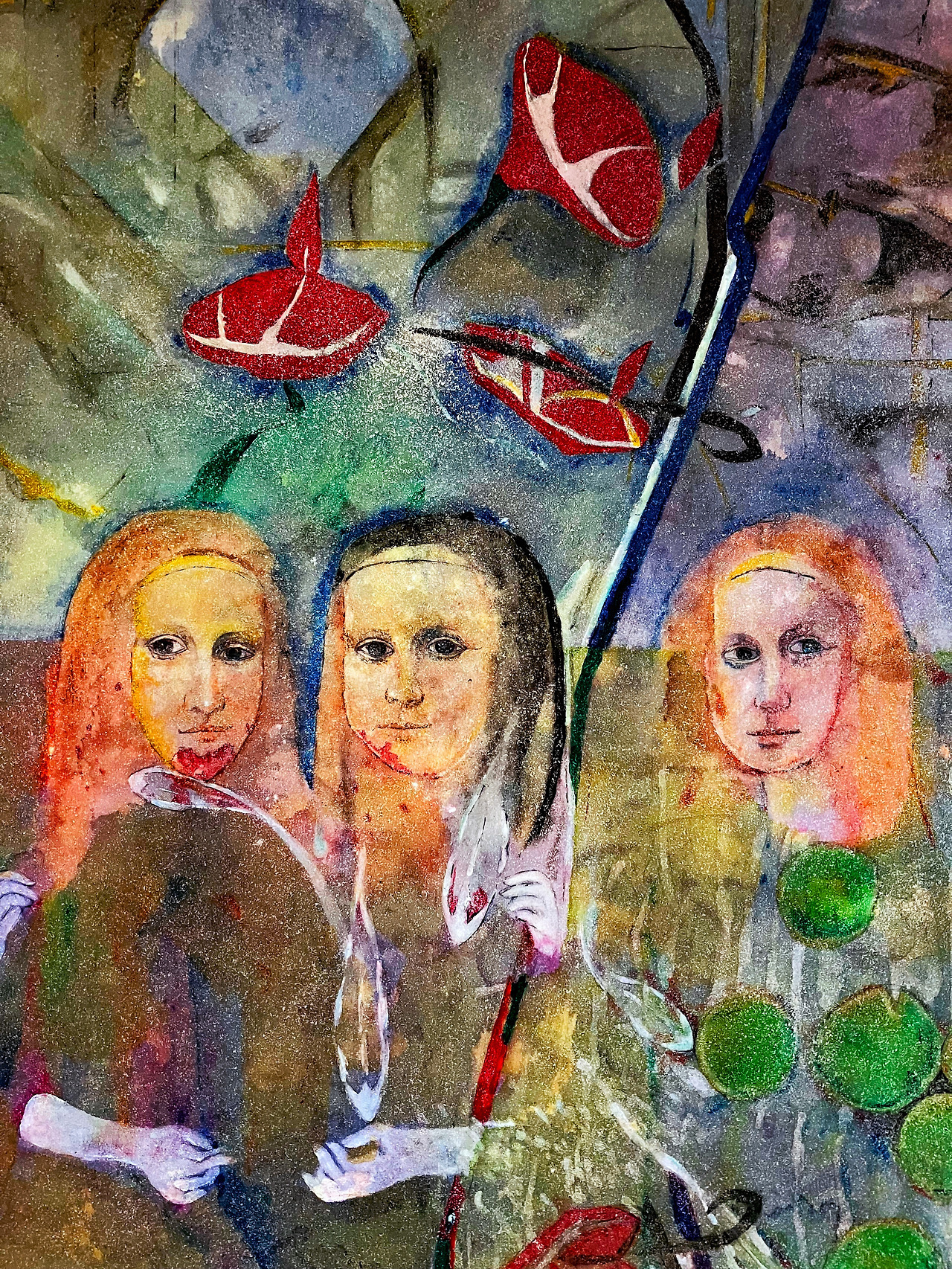
The symbolic "The Three Graces" fish transfers to an abstract image's desire object that reveals the unconscious desire of the other. This continues in modern craft art, which leads to the belief that fish will always keep their eyes open and protect precious things, and transforms the sculpture of contemporary art into a conceptual abstract realism style.
The "The Three Graces" fish, symbolized as an abstract realism object, is a collection of symbolic objects and expands the structure of desire by distorting the boundary between reality and non-existence.
Sometimes, depending on the symbolism of the medium, it contains traces of temporality and reality, so it is interpreted as a shaded dynamic structure of reversible light in Choi Chul-joo's media art "Pond".
It is a method of implementing the dismantling of multiple viewpoints directed in conceptual abstract painting by dividing at the time of the flat cross-sectional structure of "The Three Graces" fish as a realism image.
In this way, the abstract design method applied to conceptual abstract realism painting is an image as a signifier, and its meaning is transferred to a variable image in linguistic meaning according to the unconscious desire structure in which the time of the moving viewer coexists while unconsciously synthesizing according to temporality.
Therefore, the color of the figurative image of the 'morning glory', the background of desire as an unconscious linguistic meaning, becomes the color of light that reverses the reality of customary universality facing the object. Unlike the light reflected from the decorated shape, the morning glory and the "The Three Graces" fish preside (駐在) in the dark margin space, and the shadow created by the morning glory becomes the "The Three Graces" fish.
Here, the reversible color of light as a grammatical being in the meaning of language is a single-phase realism image of cultured customs seen as a gaze. This is a piece of meaning symbolized in a non-realistic space that abstracts a "The Three Graces" fish that imitates a morning glory as a structure of desire.
The sculpture functions as a pictorial event image, a fragmented (離間) image of a "The Three Graces" fish in the spot of a morning glory, combined with a shade of color generated by reversible light that explores the boundary between existence and absence.
The gap between the real self and the object is that the color and shape of the object speeding up the division of the object is a visualization of the object of the sensory structure before language, that is, a landscape image with a conceptual theme rather than a portrait, and the object realizes it from the structure of desire into an image of a fragmentary trace of desire through abstract division and transmutation, and the meaningful realism structure and linguistic image that take place within the unconscious mind function together in both conscious and unconscious dimensions to obtain an existential reality according to artistry.
Therefore, in <morning glory & 'The Three Graces' fish> images obscure or reveal reality through reversible shades of light. This visually expresses the nature of human existence and the limitations of perception, that is, by illuminating the present in which light from the past is sustainable, recognizing the present as a shade of reversible light. In other words, the light of the abstract past is transferred to the real image as the same structure as the current artificial lighting, and the conceptual abstract structure results in the realist image. This represents abstraction, which takes the place of the formative traces of the unconscious past as the desire of others, as an image of the real place./ Writing. Choi Chul-joo, a contemporary art critic (Doctor of Cultural Design)
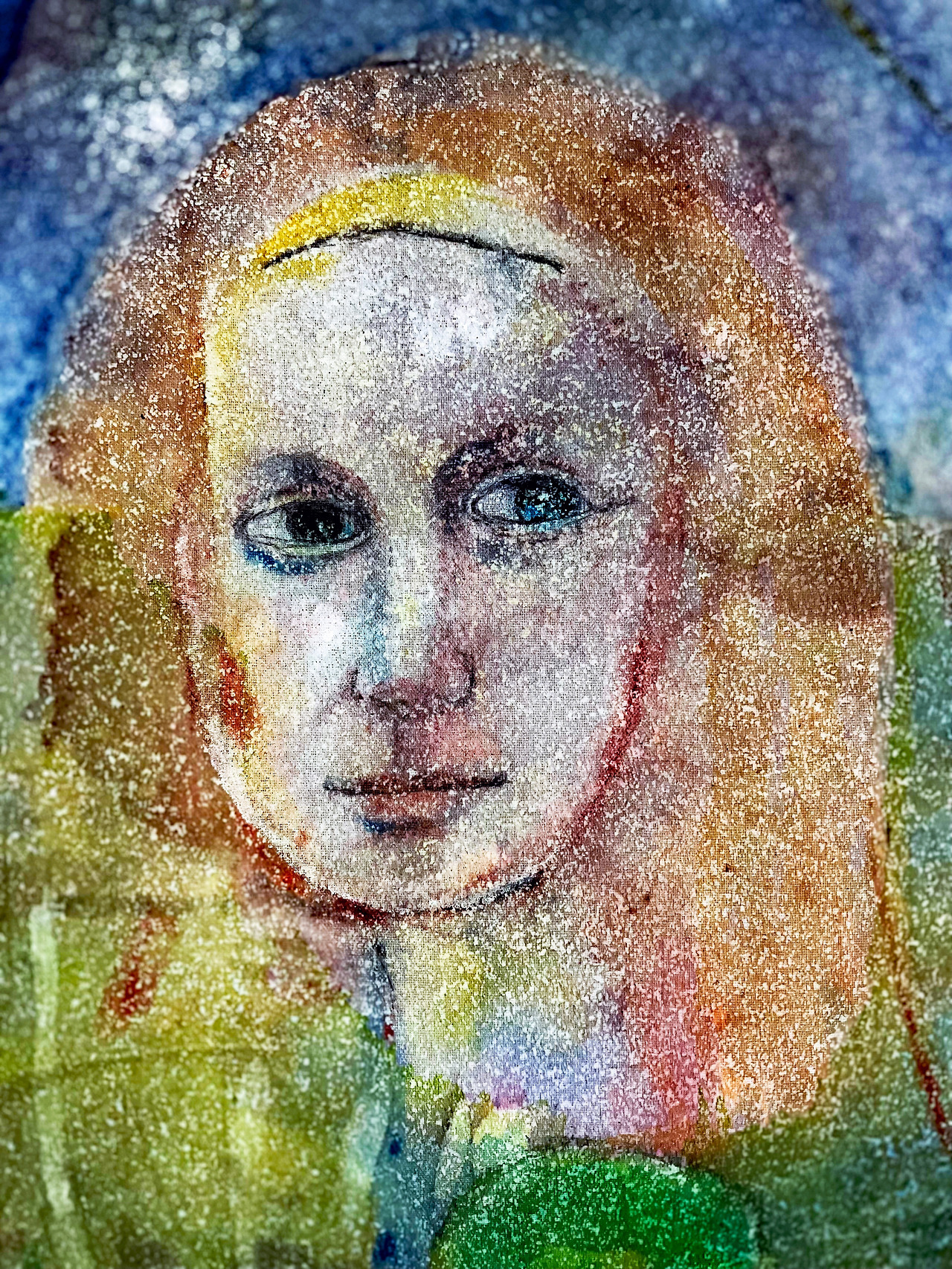
Conceptual Abstract Realism Abstraction Design Methodology
1 Conceptual Abstract Realism concept of realism is an image abstracted as a conceptual object in a non-ideological form by recreating the realist image. The image is a virtual image whose existence is obscene and is perceived as a plane, making the realist image appear as a real structure.
Here, even if the image is different from the actual structure, when the same linguistic meaning is spoken, abstraction as a symbolic structure has an existential concept of a realism object with creativity and autonomy in a linguistic sense that reproduces in similar colors and sizes. Accordingly, the concept of abstract realism abstraction with creativity and autonomy in the linguistic sense constitutes another image of existence as a linguistic meaning of a conceptual abstract realism object through the unconsciousness suppressed by the desire of the other.
Therefore, the image is composed by defining the concept of an existential image that is alienated from an image lacking a realistic structure as a vector representing the direction of the non-realistic subject entering the symbolic world as a structure of the other representing a synchronic semantic chain as a conceptual form of a realism image.
The conceptual abstract realism abstraction as an existential subject is revealed through division, which expresses the essence of ex post facto in a comprehensive and immediate way of solving an image with a different linguistic meaning as a semantic structure that cannot be expressed as a real image.
It is an orderly vector that displays the orientation to solve this unsolvable semantic structure in a comprehensive and immediate way by unconsciously selecting an unpredictable effect image as a whole stage of linguistic meaning, such as expression abstractism.
This is a semantic structure that cannot be solved as a being before the abstract structure enters the symbolic world, and it is a concept that abstracts conceptual realism as an existential subject by physically dividing the material and same essence of ex post facto that solves events by synonymously meaning knots.
2. Sketches on the linguistic semantic structure of conceptual abstraction connect realist images into allegories in linguistic meaning, distinguishing objects from reversible light structures that deviate from the concept of instantaneous desire and turn into reversible shadows of light, and distinguish them from 'morning glory' as a structure of desire as reality and objects formed from each other's abstract view as virtual beings.
The structure of the morning glory and its branches does not determine the position of the structure depending on the time of the response to light, but shows the meaning of harmonizing with the morning glory.
Its meaning is developed as a pictorial linguistic structure in which the object moves in the position of the object abstracted by reversible temporality and in the position of the morning glory illuminated by the divided retroactive light.
The movement of the object is linked to temporality as a sign of necessity self-consciousness, reveals the sensory structure before the symbol translated into pictorial language, and becomes a place of abstract space that actually functions formatively beyond the literary nature of early conceptual art.
Perspective objectivity in an abstract spatial structure distorts the real image of an object contrasted with the object as the range of space and the size of the perspective in which reversible light is limited to the object superimposed on the surface as another gaze structure.
In the symbolic abstract world, image sketches as linguistic meanings are repeated in conceptual abstractions in flat formations and colors to reveal the existence of objects as real visual images and imaginations, and it is a sketch of a linguistic semantic structure that passes through an allegory that images morning glory and object structures as reality.
3. The image structure in the linguistic meaning of conceptual abstract realism is an abstract realism object, and an abstract object revealed as a point of light in the eyes of others identifies as a philosophical device the distorted image as an aesthetic desire structure revealed in the gaze system of desire, such as the gaze of an object with an existential realism image that appears the same as the abstract meaning. An image is a perspective visual structure, a method of producing an image that expresses geometric tangents and abstract morning glory as unconscious beings.
It is interpreted as a mirror image reflecting the desire of the other and is connected to the concept that the viewer is staring at the object at the same time, and the object's reflex gaze creates an optical realism space that varies depending on the viewer's position.
As the image of the reversible reaction that constitutes the space of realism abstracted as the concept of desire is repeated, the spot of the morning glory is abstracted. In other words, the shadowy image of the morning glory staring at the reversible light is displayed on the object as it is sequenced according to the reversible temporality, and the image of the linguistic meaning of conceptual abstract realism abstraction is structured as a shade of reversible light from the object divided at the same temporality. The abstraction coincides with the abstract linguistic meaning of the object from the perspective of realist space, and from the conceptual point of desire, an abstract and invisible object appears as a gaze path according to temporality.
Through this theme, the structure of desire and the aesthetic concept of reality are visualized as a realist image through tension and harmony between aesthetic values, human desires, and linguistic semantic structures, but it appears to be an "aesthetic trace of time" embodied as a double object.
4. The actualization of conceptual abstract realism abstraction is an opportunity to verbally interpret the conditions (i/d) under which the image of the object of conceptual abstract realism is realized through grammatical interpretation of the linguistic meaning beyond the desire of the other by designing the image (i) of desire by conceptual abstract realism specified in Choi Chul-joo's desire formula. In addition, the subject of desire asks itself what the abstract structure wants when transferring the conceptual abstraction as the subject of desire to the realist image and selects a specific object as the actual image of the abstract concept, so that the conceptual abstract realism image as reality reaches abstraction <d(i...i')d=i(d...d'i)>. </d(i...i')d=i(d...d'i)>
This indicates the meaning of the symbolic action that characterizes the design in the place of the object, which repeatedly combines pieces of the distorted image of the morning glory during the abstraction process. Here, the image is not a visual phenomenon of an object, but a device that visualizes the flow of unconsciousness and the transition of symbols to a realism image, and the abstract that imitates the morning glory and the figurative object as a constant figure in the place are the meanings of language that symbolizes the conceptual abstract realism image of the morning glory.
In this way, abstraction that stopped from the concept of existential desire, which was realized by abstracting the abstract structure that cracked in the linguistic semantic system as an object of desire, is expressed as a realistic image.
Therefore, images recognize the present as a shade of reversible light by visually expressing the nature of human existence and the limitations of perception by obscuring or revealing reality through reversible shades of light, that is, by illuminating the present where light from the past is sustainable. This is the effect that light from the abstract past has been transferred to a real image as the same structure as the current artificial lighting, and the conceptual abstract realism image, which takes the place of the formative traces of the unconscious past as the desire of others, is abstracted.
Objects that appear as objects that visualize the desires of others reveal the structure of desire through conflict between linguistic meaning and real image.
This is a device that conveys the philosophical desire design and linguistic image of the formation structure, and is designed as a philosophical desire image that works as Choi Chul-joo's conceptual abstract realism abstraction to reproduce the essence of human existence and the limits of perception in a metaphor.
----------------------------------------------------------------------------------------
Art Critic Louis Choi Chul-joo
Contemporary Art Review by Louis Choi 78
Art Critic Louis Choi Chul-joo Criticism [78] Modern Art Critic Louis Choi Chul-joo's Criticism of Contemporary Art & Design Criticism of Contemporary Art = Contemporary Art Today contemporary artworks contemporary artist Choi Chul-joo's Art Criticism, Contemporary Abstract Art Painter Criticism: Choi Chul-joo Desire Concept Abstract pop art combines the abstract conceptual approach of the other's desire art with the design form and linguistic abstract image of pop art. His concept of desire, or conceptual abstract art, appears, and a picture that conflicts with the concept of linguistic meaning emphasized in metaphysical philosophical light creates a dramatic event image with artificial lighting. & Abstract contemporary art that designed modern art abstract painting: Contemporary artist Louis Choi Chul-joo's realistic abstract work criticism of antinomical contemporary art as a conceptual art of treachery based on the concept of desire of others and Contemporary Art Critic Louis Choi Chul-joo's Contemporary Art work criticism: morning glory · Cecilia Gallerani, Louis Choi Chul-joo, morning glory · Cecilia Gallerani, 39.4×49.4Cm, acrylic and composite materials on cloth, 2025
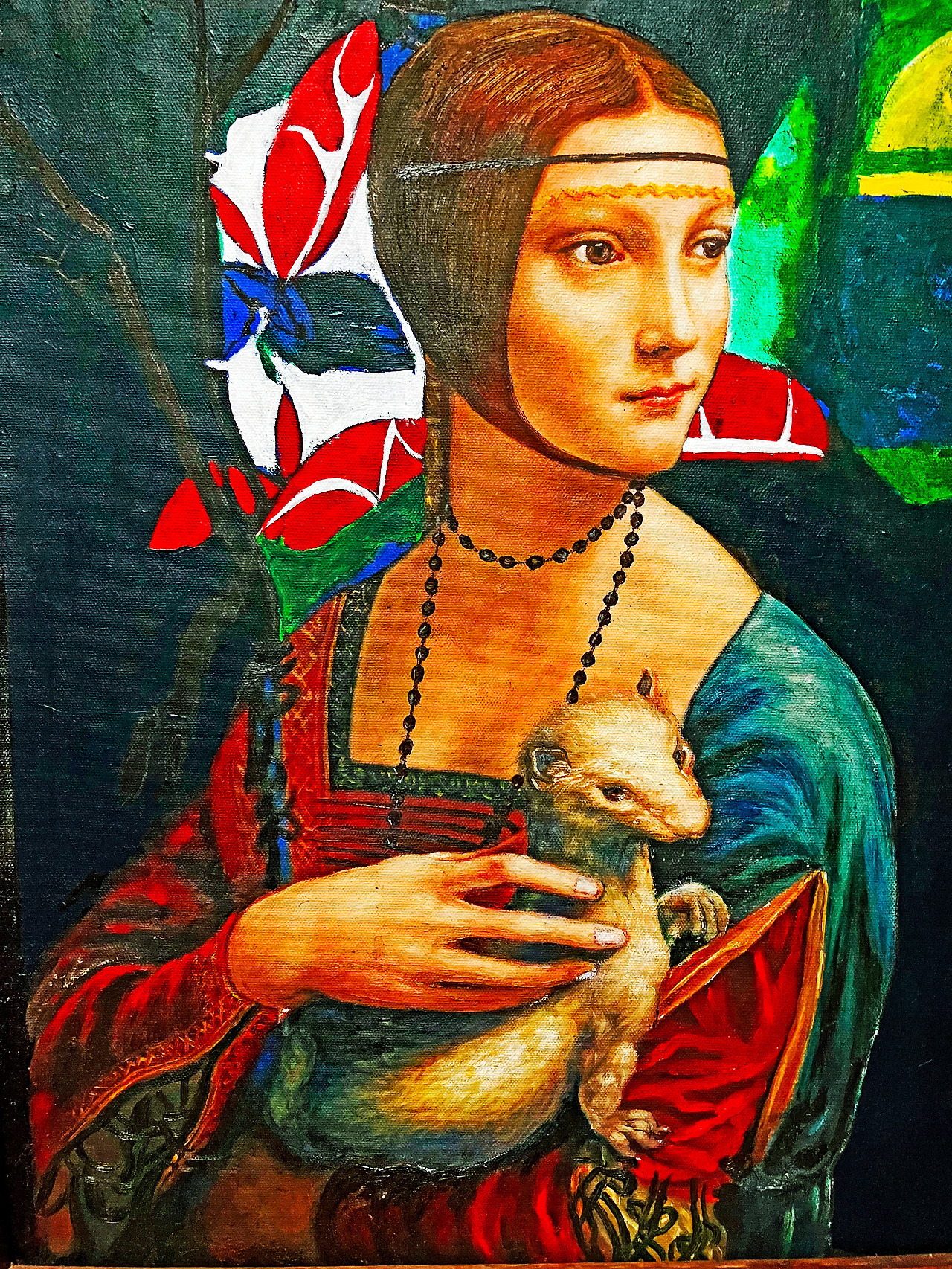
Louis Choi Chul-joo, morning glory · Cecilia Gallerani, 39.4×49.4Cm, acrylic and composite materials on cloth, 2025
In Leonardo da Vinci’s Lady with an Ermine, the symbolic structure of the ermine reveals not only the social alienation of the woman portrayed—Cecilia Gallerani—but also the fragmented subjectivity of the ermine itself, which, within the contemporaneous structure of desire, becomes a vector of meaning that transcends its zoological form. This vector, emerging from the synchronic repetition of linguistic signification within the sociocultural matrix of the time, bifurcates into a pre-linguistic ontological image, thereby transferring the alienated woman and the desiring subject of the ermine into the realm of abstraction.
The moment this abstract structure of linguistic meaning is connected to a symbolic allegory—where the conceptual object of instantaneous desire is projected onto the real existence of Gallerani and the virtual presence of the ermine—the background motif of the “morning glory” emerges as a temporal and symbolic field shaped by the reversible light that once illuminated the subject. Within this field, Gallerani, unable to anchor herself in a fixed position, is seen harmonizing with the morning glory, which itself becomes a spatialized allegory of desire. The temporally refracted light, cast retroactively upon the morning glory, renders Gallerani as a phenomenological abstraction of realist structure.
The movement of the ermine, as a symbolic subject, is arrested and linked to Gallerani through traces of anterior self-consciousness, while the morning glory—translated through the structure of abstract language—reveals the spatial logic of the background, functioning as a site of abstraction liberated from the religious subjugation of early conceptual art. Within this symbolic abstraction, the repetition of planar forms and chromatic fields in conceptual design transforms the portrait into a visual allegory of linguistic deficiency, where the morning glory and Gallerani are rendered as images of ontological absence.
In this context, the “Morning Glory Gallerani” becomes not merely a replication of Lady with an Ermine in similar hues and proportions, but a conceptual realist image that embodies the autonomy and creativity of the contemporary subject, whose ontological concept is derived from the linguistic interplay between the woman and the ermine. The figurative form of this image, as a diachronic chain of signification, constructs a representational structure of existential absence, which, through the visual deconstruction of consumption, refuses to fix meaning through the lens of desire and instead weaves a multilayered semantic network.
Thus, Choi Chuljoo’s definition of Conceptual Abstract Realism does not merely symbolize the desire of the Other, but rather visualizes the repetition of linguistic deficiency to generate new strata of meaning. As such, Conceptual Abstract Realism bridges the gap between reality and abstraction through linguistic imagery, exploring ontological meaning visually and reinterpreting the structure of reality through the aesthetic lens of symbolic politics. Through the reversible shadows of light, this abstraction visualizes the temporal flux of meaning, reflecting the phenomenological delay of perception and forming a simultaneous linguistic structure in which the desire of the Other is perceived through realist imagery.
In this simultaneity, the fragmented structure of desire within contemporary language identifies with the mirrored image of the woman holding the ermine, constructing the self as a real image. The symbolic woman, in turn, speaks to the ermine through the language of imagery. Thus, by abstracting the image of the woman and the ermine through a conceptual approach, new meanings are embedded within the symbolic layers of the image, visualizing the desire of the Other at the intersection of phenomenological image and abstract meaning, while deconstructing the instability and fluidity of language to open new interpretive and philosophical possibilities.
The allegorical painting, connected through the morning glory, becomes a conceptual object that distinguishes the woman and the ermine as subjects formed through abstract perspectives. The concealed structure of the morning glory’s branches, shaped by the temporality of light, reveals a harmony between the woman and the ermine, whose meaning is translated into pictorial language as a manifestation of realist abstraction. This overlapping of realist imagery, bounded by the canvas and juxtaposed with the non-perspectival morning glory, distorts the abstract real.
The ermine, as a motif image of purity (vagina), is symbolically structured through its placement and the silver folds of the woman’s garment, contrasting moral virtue with latent desire. This abstraction of morality, distilled through the realist image of the ermine, is translated into a concrete form of abstraction grounded in visual structure, driven not by pure aesthetic form but by conceptual motifs and ideas. The ontological image is thus structured linguistically, passing through Choi’s philosophical apparatus of aesthetic desire to become a realist image of existential abstraction.
The shifting gaze of the woman and the ermine creates an illusory realist space, where the morning glory is generated as a background that reconstructs abstraction into realist form according to temporal flow. This reveals the “trace of time” as implemented by the movement of the conceptual subject, aligning the abstract linguistic meaning of the woman and the ermine with the image. The subject of conceptual abstraction, as a motif image, identifies the object of deficient desire through language, selecting an inevitable ontological image that remains suspended in abstract demand.
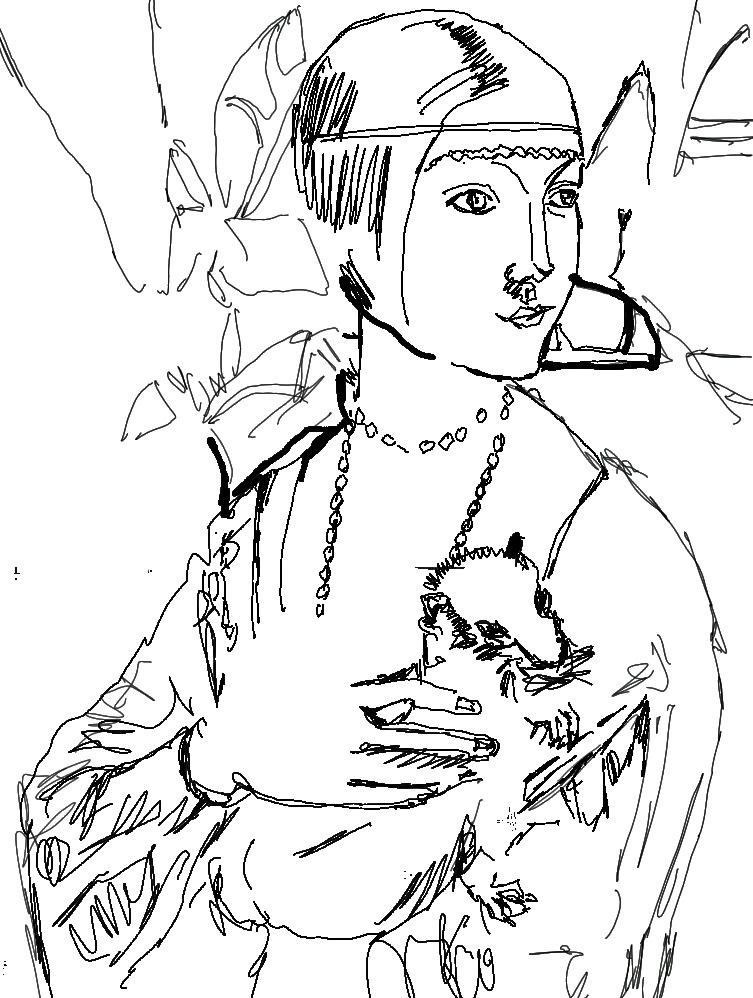
Louis Choi Chul-joo, morning glory · Cecilia Gallerani - sketch 1, 39.4×49.4Cm, acrylic and composite materials on cloth, 2025
Through this process, the image—whether of the ermine or the woman—transforms into abstraction via language and sign, and is then retranslated into realist form through the reversible structures of light and form. This allows the abstract desire of the Other to be expressed as a form of social allegory, where repeated signification produces a dual image of desire, distilled into visual form through the cultural meaning embedded in the ermine.
“Morning Glory Gallerani” thus becomes a Conceptual Abstract Realist image that does not merely symbolize desire but visualizes the structural design of desire through the background of reversible light, embedding the woman and the ermine within a new stratum of linguistic meaning. Gallerani, as an ontological object of abstract realism, is identified with the aesthetic structure of desire, while the ermine, through perspectival visual structure, marks the background with the morning glory.
This repetition of reactive imagery transforms the position of the morning glory into a linguistic abstraction of realist form. From the perspective of realism, Gallerani and the ermine are aligned with symbolic meaning, while from the conceptual viewpoint of desire, the invisible morning glory halts along the temporal trajectory of desire. This visualizes the aesthetic trace of time within Conceptual Abstract Realism, where the subject of desire, having departed from abstraction, selects a specific image of desire and transforms it into a real image of conceptual abstraction.
Ultimately, this process reveals the metaphysical desire of the subject, where the abstract structure questions its own object of desire and selects a real image of conceptual abstraction, reaching the point of abstraction as expressed in the formula: Choi Chul-joo’s desire formula, D(I...I')d=I(D...D')i, is not merely a symbolic gesture within art but a formal structure that encodes the recursive logic of desire. From a mathematical standpoint, this equation represents a bidirectional equivalence, where the left-hand side models the dynamic process by which desire (D) is activated through a sequence of images (I...I') under a driving coefficient (d), and the right-hand side reflects how those images recursively reconstruct the layered structures of desire (D...D') and resolve into a conceptual image (i). Each symbol carries structural weight:
D: The archetype of desire, representing the foundational lack or drive.
I...I': A sequence of visual representations through which desire is projected.
d: The dynamic coefficient—akin to a force or operator—that triggers the transformation from structure to image.
I: The emergent image of desire, a perceptual unit.
D...D': The recursive layers of desire, reflecting its multiplicity and transformation.
i: The conceptual resolution of desire, the cognitive abstraction of the image.
This formula resembles a fixed-point function in mathematics, where recursive inputs stabilize into a coherent output. It models desire as a self-referential system, where the structure of lack is mirrored and reconstituted through visual repetition, ultimately producing a symbolic image that encodes the original drive. The formula thus formalizes desire as a recursive, bidirectional system of transformation between structure and image.
� Cognitive Scientist’s Perspective: Desire as a Symbolic-Cognitive Loop
From a cognitive science perspective, Choi’s formula offers a compelling model of how the human mind processes desire—not as a static object, but as a dynamic interplay between symbolic abstraction and perceptual encoding. The sequence D(I...I') represents the mind’s pattern recognition mechanism, where repeated images allow the brain to infer the underlying structure of desire. The coefficient
� reflects internal cognitive forces—memory, imagination, and intersubjective projection—that drive this transformation. Conversely, I(D...D') models how abstract structures of desire are re-rendered into perceptual images, which are then cognitively categorized as conceptual desire (D).
This loop mirrors the symbolic mediation described by Lacan, where the subject’s desire is shaped by the gaze of the Other, and Freud’s notion of unconscious repetition, where desire is expressed through symbolic substitution. Cognitively, the formula encodes how the mind oscillates between image and structure, between perception and abstraction, forming a recursive loop that constructs desire as both absence and presence. The “morning glory” floating in the sky becomes a visual metaphor for this loop—a symbolic image that reflects and refracts the recursive architecture of longing.
Choi Chul-joo’s desire formula, expressed as D(I...I')d=I(D...D')i, operates not merely as a symbolic representation of emotional longing but as a sophisticated cognitive model that reveals how the human mind constructs, processes, and externalizes desire—not through direct emotional impulse or sensory reaction, but through a recursive interplay of repeated visual patterns, abstract structural inference, and symbolic conceptualization, such that the sequence of images (I...I') becomes the perceptual basis through which the structure of desire (D) is inferred, while the dynamic coefficient (d) represents the internal cognitive forces—such as memory, imagination, and intersubjective projection—that drive the transformation of structure into image, and conversely, the recursive structures of desire (D...D') are re-rendered into a singular image (I) that is cognitively resolved into a conceptual form of desire (i), thereby forming a symbolic loop in which the mind oscillates between image and abstraction, perception and meaning, and in doing so, constructs desire as both absence and presence, both repetition and emergence, and this process is vividly illustrated in the visual metaphor of the “morning glory” floating in the sky, where the flower becomes not only the object of desire but the medium through which desire is shaded, refracted, and encoded in reversible shadow structures—
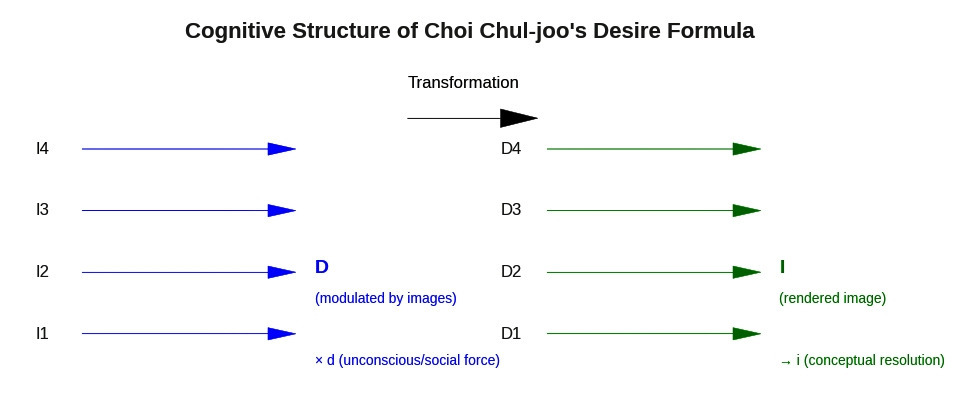
Choi Chul-joo’s desire formula D(I...I')d=I(D...D')i an be visualized as a dynamic vector field, where each component represents a transformation in the structure of desire:
Left-hand side D(I...I')d: Desire D is activated by a sequence of images I...I', forming a directional vector across perceptual space. The coefficient d scales this vector, representing unconscious forces, cultural pressure, and social visibility. This side models the generation vector, where desire emerges from visual stimuli and is modulated by internal dynamics.
Right-hand side I(D...D')i: Recursive structures of desire D...D'′ are transformed into a singular image I, which is cognitively resolved into a conceptual value i. This side models the resolution vector, where abstract desire is re-rendered into perceptual form and interpreted semantically.
Transformation Arrows: Arrows between both sides represent recursive feedback loops, showing how desire oscillates between abstraction and realization.
The entire graph behaves as a fixed-point system, where desire continuously loops through image, structure, and meaning.
� Cognitive Psychologist’s Perspective: Desire as Symbolic Simulation
This is the moment of symbolic closure, where desire becomes intelligible.
This graph reveals that desire is not a linear impulse but a recursive cognitive algorithm, where the mind loops through symbolic abstraction, perceptual encoding, and conceptual resolution. The object—whether a pop art image, a shaded metaphor, or a reflective pond—functions as a recursive node in this system, simulating the architecture of desire through visual recursion and symbolic feedback.
5. The actualization of conceptual abstract realism abstraction acquires the abstract object specified in Choi Chul-joo's desire formula, and the desire image (i) design (d) is an opportunity to verbally interpret the conditions (i/d) under which the image of the abstract realism object is realized through grammatical interpretation of the linguistic meaning beyond the desires of others.
<D(I...I'd)=I(D...D'i)> Conceptual abstract realism images as reality reach abstraction by abstractly selecting a specific object, where the subject of desire asks what abstract realism wants from him. This dictates the meaning of the symbolic action that characterizes the design of dynamic and abstract structural images, which repeatedly combine pieces of distorted desire background images in the process of abstraction.
Here, an image is not a visual phenomenon of a dynamic image, but a device that visualizes the flow of unconsciousness and the process by which symbols are transformed into realistic images, and it is the meaning of language that symbolizes abstract images of conceptual dynamic images and abstract structures.
Therefore, abstraction expresses the abstract structure that stopped from the concept of existential desire realized by abstracting an abstract place that humans cannot experience in life from a linguistic semantic system to an object of desire as a realism image.
It is a device that conveys philosophical abstract meaning and linguistic meaning to images, and operates as Choi Chul-joo's conceptual abstract realism abstraction and designs it as a philosophical abstract image that reproduces the nature of human existence and the limitations of perception as a metaphor to become an existential realism image. In other words, it visualizes the conflict between dynamic images and abstract self-formation, existential abstract structures as effects, and linguistic meanings revealed in the gaze, and reinterprets the mirror image of abstract realism to abstract dynamic images and abstract structures beyond phenomenal backgrounds and desire formulas as desire structures.
This form reveals the sensory structure before the perception of existential fish, i.e., the previous stage image of linguistic meaning, and beyond the literary nature of modern conceptual art, it is a realism abstraction as a linguistic meaning where more diverse spatiotemporal and pictorial forms intersect through the viewer's eyes.
In this way, realism and abstract symbols repeatedly collide, revealing the symbolic structure before language.
The iconic fish moves to the object of desire in an abstract image that reveals the unconscious desire of the other person. Through this, it is possible to realize a conceptual abstract realist image in modern art.
This is a piece of meaning symbolized in a non-existent space, an abstract abstraction of an abstract structure that mimics the dynamic image and the structure of desire.
Abstraction functions as a pictorial event image, and instead of desire, it explores the boundary between existence and absence by combining fragmentary sculptural images with shades of color produced by reversible light.
In this abstract design method applied to conceptual abstract realism painting, the shape of a dynamic image that acts as a sign of desire before linguistic meaning is transferred to an image as a symbol, and the meaning of it is transferred to a variable image in linguistic meaning according to the unconscious desire structure in which the time of desire that moves while unconsciously synthesizing according to temporality coexists.
As an image of linguistic meaning, it conceptualizes abstract structure as a living dynamic image and images it as an existential realist image, resulting in a conceptual abstract realism design that phenomenally expresses abstractness and self-consciousness as abstract spaces according to temporality through the traces of time.
� Choi Chul-joo's conceptual abstract realism science definition is conceptual abstract realism, which identifies existence as a limited form of image as a linguistic semantic image, realizes it as a formula for mathematical desire, constructs real structures in logical places, and intuitively considers abstract concepts as existential images in modern art's conceptual abstract realism science, abstracting linguistic meaning and unconscious desire through a thorough design process, the depth of the concept of contemporary art and visual reality, or how the world is viewed as an aesthetic value, are simultaneously studied.
Accordingly, the conceptual abstractive design process is
1. Concept Abstract Reality Image Sketch sketches an image by abstracting the conceptual abstract realism image as a conceptual object, and the image is a virtual image that hides its existence and sketches it into a real structure. This visualizes Choi Chul-joo's concept of desire as a conceptual abstract real image and sketches it as a philosophical abstract design process.
Here, the sketch has the existential concept of a realism object as a symbolic structure in a linguistic sense that identifies it with the conceptual abstract real image. Therefore, the image sketch of the existential concept of abstract reality with creativity and autonomy in the linguistic sense consists of a sketch of another image of existence as a linguistic meaning of a conceptual abstract realism object through the unconsciousness suppressed by the desire of the other.
2. Conceptual abstract image rendering (R) is an opportunity to verbally interpret the conditions (i/d) under which the image of the conceptual abstract realism object is realized through grammatical interpretation of the linguistic meaning beyond the desire of the other by conceptualizing the abstract object specified in Choi Chul-joo's desire formula.
This is an abstract rendering method that automatically converts philosophical abstraction into visual images by grammatically interpreting Choi Chul-joo's desire theory, linguistic semantic structure, and reversible light shades into mathematical and symbolic structures to simultaneously render AI renders that combine conceptual abstract images and conceptual abstract images created in one image. Conceptual abstract realism images reach abstract rendering as a reality <DR(I...I')d=I(DR...D'i)ir> by the subject of desire asking himself what the abstract structure wants when transferring the abstract image rendering to a realistic image. This is a method of rendering the symbolic action that characterizes the design rendering of the object seat as a realistic image by repeatedly combining the pieces of the distorted morning glory image in the process of rendering the conceptual abstract image into a realistic image with the unconscious flow and symbolic realism image.
3. Concept Abstract The actual image composition is a real object and abstracts the image by defining the concept of an existential image as an abstract concept. Abstract structure is a semantic structure that cannot be expressed as a real object, and an image in linguistic meaning that cannot be solved by existence is defined as a semantic structure that physically separates material and identical personalities to form a conceptual abstract real image as an existential subject.
4. Concept Abstract Image Design combines desire structure with the existence of reality, and the existence of objects formed from an abstract perspective, combining reversible light structure with reversible shading of light that deviates from the concept of instantaneous desire. The AI design of the conceptual abstract real image autonomously implements the conceptual abstract real image design by algorithmizing Choi Chul-joo's conceptual abstract realist theory into AI. Therefore, the abstraction of conceptual abstract realist images according to conceptual abstract realist theory in the spatial structure abstracts perspective objectivity as another gaze structure on the surface, and the object overlapping a realism image is abstracted from the object's real image as the scope of space limited by reversible light and the size of the perspective.
5. Conceptual abstraction The abstract realist image's abstraction is an aesthetic desire structure in which an abstract realist object, which is an image-structured in a linguistic sense, is revealed as a point of light to the eyes of others, is revealed in the gaze system of desire. By designing an image with an abstract meaning as a philosophical device, aesthetic abstraction is painted with an image of an existential realism object that appears to have the same meaning. Choi Chul-joo's abstraction as a conceptual abstract realist image is a tool that visualizes his desire formula through an art algorithm, and it is a conceptual, language, design, psychology, and philosophical realist abstraction. Therefore, the abstraction of an abstract realist image abstracts the conceptual abstract linguistic meaning of a realist space by equating the perspective of a realist space with the conceptual abstract linguistic meaning of an object.
This formula signifies the recursive design of symbolic function, where the image is not a visual phenomenon but a device that visualizes the unconscious flow and symbolic transition into realist imagery. The morning glory, as a mimetic abstraction, becomes the linguistic sign of Conceptual Abstract Realism, where the abstract space of desire—unreachable in lived experience—is fractured within the linguistic system and visualized as a realist image.
Through the reversible shadows of light, these images conceal or reveal reality, expressing the essence and limits of human existence. The light of the past, illuminating the sustainable present, becomes a realist image of the now, and the abstract past is transferred into the real structure of contemporary realism. In this way, Conceptual Abstract Realism explores the gap between reality and abstraction, reinterpreting the structure of reality through symbolic politics and visualizing the temporal shift of meaning, ultimately producing new aesthetic values at the intersection of language and image./ Writing. Choi Chul-joo, a Conceptual Abstract Realism Art Scholar Critic (Doctor of Cultural Design)
Choi Chul-joo, a Conceptual Abstract Realism Art Scholar