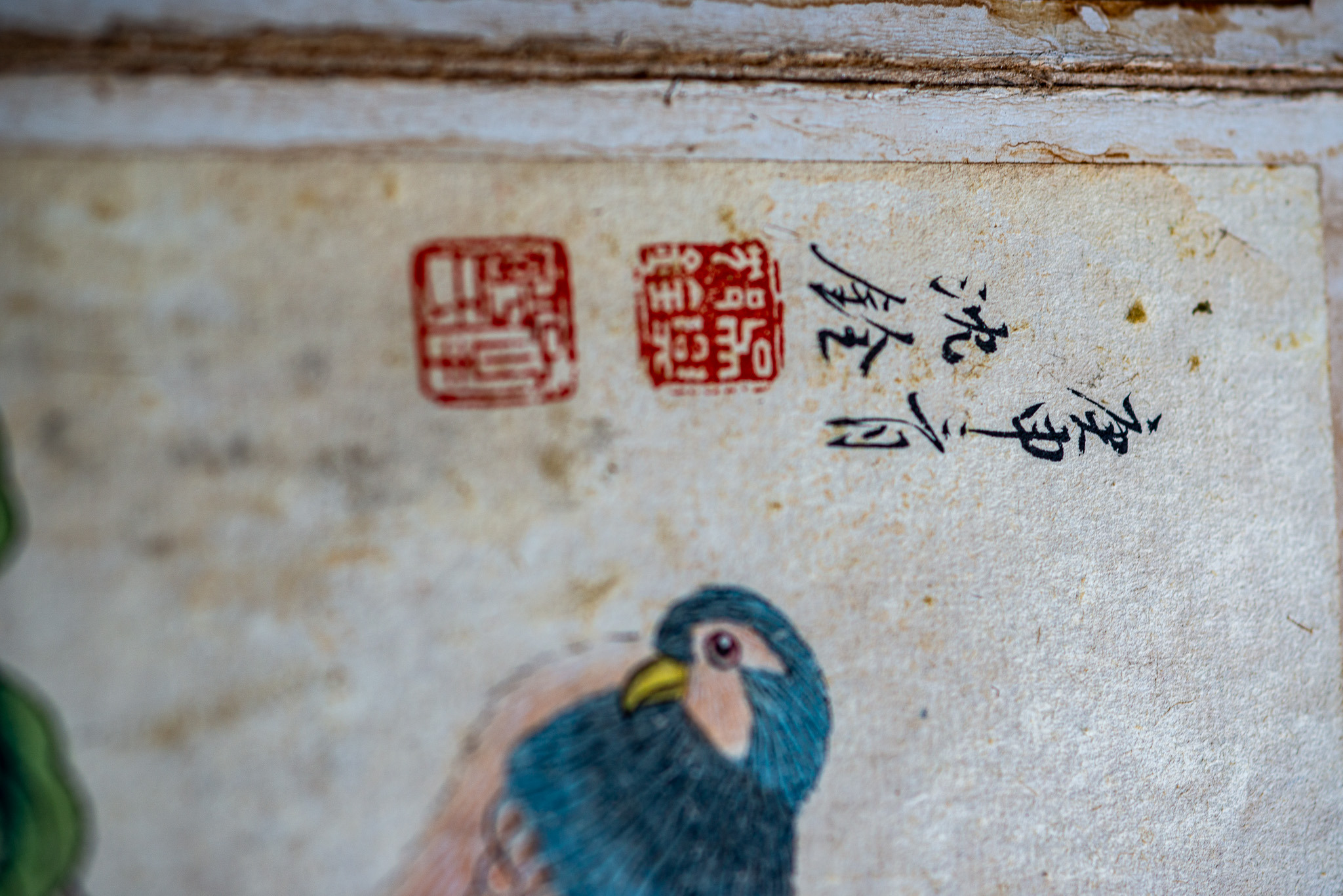
The Inscription (Calligraphy)
The text is written in vertical Hanja (Chinese characters used in Korea) read from top to bottom, right to left.
沈 銓 (Sim Jeon / Shen Quan): The first two characters on the right read 沈 (Sim/Shen) and 銓 (Jeon/Quan). This is a proper name. In art history, Shen Quan (1682–1760) was a highly influential Chinese painter of the Qing dynasty renowned for his lifelike bird-and-flower paintings, whose style heavily influenced Japanese and Korean artists of the 18th and 19th centuries.
庚申三月 (Gyeongsin Samwol): The characters to the left of the name indicate a cyclical date and month.
庚申 (Gyeongsin): This refers to the Year of the White Monkey in the 60-year sexagenary cycle (e.g., 1980, 1920, 1860, 1800, 1740, etc.). Given the aging of the paper and the classic style, it denotes the specific year in the cycle the piece was executed or copied.
三月 (Samwol): Literally translates to the "Third Month" (March, or the third lunar month of spring).
The Seals (Nakgwan)
To the left of the calligraphy are two red intaglio and relief seals stamped in vermilion paste. These are used by artists or collectors to authenticate the work:
The Square Seal (Middle): This seal features stylized seal script (jeonseo). It corresponds directly to the signature, likely spelling out the artist's name or courtesy name (style name) to solidify the attribution.
The Oval/Rectangular Seal (Far Left): This is often a duin (leisure seal) or an auspicious phrase, studio name, or a collector's mark used to balance the composition of the canvas.
Artwork Style and Observations
Subject Matter: The meticulous detail on the bird's feathers, the distinct ring around the eye, and the bright, mineral-based pigments are classic indicators of fine folk art or a scholarly copy honoring the meticulous style of court painters.
Condition: The paper shows characteristic foxing (brown spotting) and natural aging along the top border, suggesting a vintage or antique origin.
Are you looking to trace the specific provenance of this piece, or do you have a full view of the painting showing the rest of the composition?