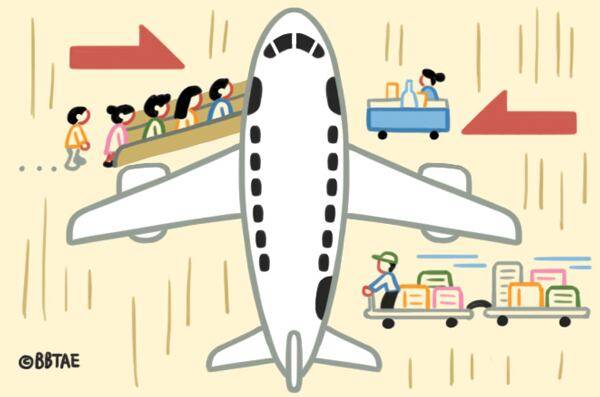
그러고 보니(come to think of it) 그렇다. 여객기 승객(airline passenger)은 모두 기체의 왼쪽으로 타고 내린다(board and disembark from the port side of the fuselage). 어느 나라에 가든, 어느 항공사든 막론하고(regardless of the airline) 승객 탑승구(passenger boarding door)는 예외 없이 비행기 왼쪽에 있다. 마치 불문율(unwritten rule)처럼 돼 있다.
이 오랜 관행(long-running practice)은 과거 해양 시대로 거슬러 올라간다(date back to the maritime era). 항공 전문 매체 The Aviation Historian에 따르면, 항공 용어(aviation terminology) 상당수는 해양 전통에서 유래했다(be derived from maritime lore). 선박을 항구에 정박할 때 배의 왼쪽을 부두에 갖다 대던(dock ships with their left side facing the pier) 관행도 항공 분야에 그대로 이어졌다(be carried over into the field of aviation).
왼쪽이 효율성 면에서도 낫다(be better in terms of efficiency). 승객이 왼쪽으로 타고 내리는 동안, 오른쪽에서는 지상 요원들이 연료 보급(refueling), 수하물 적재·하역(baggage loading and unloading), 기내식 공급(in-flight meal supply) 등 각종 업무를 원활하게 처리할 수 있다. 양쪽 동선이 겹치지(overlap) 않아 안전에 도움이 되고(help ensure safety) 시간도 절약된다(save time).
하지만 작용(action)이 있으면 반작용(reaction)이 일어나기 마련. 현상 타파를 위한 쿠데타 시도(coup attempt)가 있었다. 1930년대 미국 유나이티드항공이 오른쪽 탑승을 기도했다. 그러나 항공 여행이 그야말로 급격히 유행하기 시작하고(begin to take off quite literally) 공항 구조가 복잡해지면서 좌측 사용이 더 효율적이라는(be more efficient) 사실이 입증되자 다시 왼쪽 탑승으로 돌아왔다(revert to left-side boarding). 비행기 기장 좌석이 조종석(cockpit) 왼편에 있어 공항 게이트에 접근할(taxi to the gate) 때 거리를 더 쉽게 판단할 수 있다는 점도 한몫했다(play a role). 이후 터미널 게이트와 비행기를 직접 연결하는 이동식 탑승교(movable air bridge)가 도입되면서 모든 항공기가 같은 방향으로 이동하게 됐고, 왼쪽 탑승이 수십 년간 변함없이 이어져 왔다(steadfastly remain the same for decades).
‘port side’는 말 그대로 항구(port)에서 부두와 맞닿는 선박의 측면(side)을 말한다. 그래서 배의 뒷부분 고물(stern)에서 뱃머리(bow) 방향으로 왼편 앞부분인 좌현(左舷)을 일컫는 단어로 굳어졌다. 그 과정에서 port는 왼쪽을 뜻하는 left와 동의어처럼 쓰이게 됐고(be used almost synonymously), portside는 형용사·부사로 ‘좌측의’ ‘왼쪽으로’, 속어(slang)로는 ‘왼손잡이의(left-handed)’라는 뜻으로 의미가 확장됐다.
[영문 참조자료 사이트]

The reason why you only ever board a plane from the left-hand side
비행기에 탑승할 때 항상 왼쪽에서만 탑승해야 하는 이유
You’ve likely never thought twice about the side of the plane you board on, but there is an actual explanation for it.
여러분은 비행기 탑승 시 측면에 대해 두 번 생각해 본 적이 없을 것입니다. 하지만 그 측면에 대한 실제 설명이 있습니다.
Dougie Sharpe, the self-proclaimed “fact guy” on TikTok, shared the historical reason why we board airplanes on the left-hand side.
TikTok에서 스스로를 "팩트맨"이라고 칭하는 더기 샤프는 우리가 비행기에 왼쪽으로 탑승하는 역사적인 이유를 공유했습니다.
“The reason we always load and unload planes from the left-hand side of the plane is a holdover from when humanity moved on boats,” he explained in the video.
"우리가 항상 비행기 왼쪽에서 짐을 싣고 내리는 이유는 인류가 배를 타고 이동하던 시절부터 이어져 온 방식입니다."라고 그는 영상에서 설명했습니다.
Sharpe said that since ancient times, the left-hand side of boats was the side cargo and passengers would load and unload from.
샤프는 고대부터 배의 왼쪽은 화물을 싣는 곳이었고 승객들은 거기서 짐을 싣고 내렸다고 말했습니다.
“This made things simple logistically and would allow ships to travel all over the world from port to port and always have the correct equipment on the correct side no matter where they went,” he explained.
그는 "이렇게 하면 물류가 간소화되고 선박은 전 세계의 항구에서 항구로 이동하면서도 어디로 가든 항상 올바른 쪽에 올바른 장비를 갖출 수 있게 됩니다."라고 설명했습니다.
This allowed for consistency and ease with building ports because everyone agreed that the left-hand side was used for loading and unloading.
이를 통해 항구 건설의 일관성과 용이성이 확보되었는데, 모두가 왼쪽을 화물 적재 및 하역에 사용한다는 데 동의했기 때문입니다.
It explains why the left-hand side of the boat is called the “port side” and the right-hand side is called “starboard.”
이는 배의 왼쪽을 '항구쪽(좌현)', 오른쪽을 '스타보드(우현)'이라고 부르는 이유를 설명합니다.
“As humanity changed from boats to airplanes, engineers just held the concept over and designed every airport and airplane so that passengers always load and unload the plane from the left-hand side,” he concluded.
"인류가 배에서 비행기로 바꾸면서 엔지니어들은 그 개념을 그대로 이어받아 모든 공항과 비행기를 설계할 때 승객이 항상 왼쪽에서 비행기에 탑승하고 하역하도록 했습니다."라고 그는 결론지었습니다.
One person commented agreeing, “all true, May I also add, the term starboard comes from the fact they used to have a steering board on the right side of the ship.”
한 사람은 "모두 사실입니다. 덧붙여 말씀드리자면, '스타보드(우현)'이라는 용어는 배의 오른쪽에 조타판이 있었던 사실에서 유래했습니다."라고 동의하며 댓글을 남겼습니다.
“These are my favorite types of facts; practices that have lasted thousands of years,” another said.
"이게 제가 가장 좋아하는 사실이에요. 수천 년 동안 이어져 온 관행이죠." 다른 사람이 말했습니다.
The managing editor of “The Aviation Historian” Michael Oakley has previously explained this as well.
"항공 역사가"의 편집장 마이클 오클리도 이에 대해 이전에 설명한 적이 있습니다.
“It is one of the many aviation practices that goes back beyond aviation itself to the traditions of ships,” Oakley told AFAR Media in January.
오클리는 1월에 AFAR 미디어에 "이것은 항공 자체를 넘어 선박의 전통까지 거슬러 올라가는 수많은 항공 관행 중 하나입니다."라고 말했습니다.
“Much of aviation terminology had its origins in maritime lore (rudder, cockpit, cabin, bulkhead, knots, etc.), and similarly, the aeronautical ways of doing things owe a lot to sailing. Just as boats and ships have a port side—the side of the vessel conventionally adjacent to the dock when in port—aircraft are the same. Sensibly, people decided to continue to board on the port (or left) side,” he said.
항공 용어의 상당 부분은 해양학(키, 조종석, 객실, 격벽, 매듭 등)에서 유래했으며, 마찬가지로 항공 관련 업무 방식도 항해에서 많은 영향을 받았습니다. 배와 보트에 좌현(항구에 있을 때 관례적으로 부두에 인접한 선박의 측면)이 있는 것처럼 항공기도 마찬가지입니다. 현명하게도 사람들은 좌현(또는 왼쪽)으로 탑승하기로 했습니다."라고 그는 말했습니다.
윤희영 기자 / 조선일보