Not AI, will shape future 트렌드 코리아 2026'은 인공지능이 아닌 인간의 전문성이 미래를 형성할 것이라고 예측
작성자Condel작성시간25.09.26조회수95 목록 댓글 0
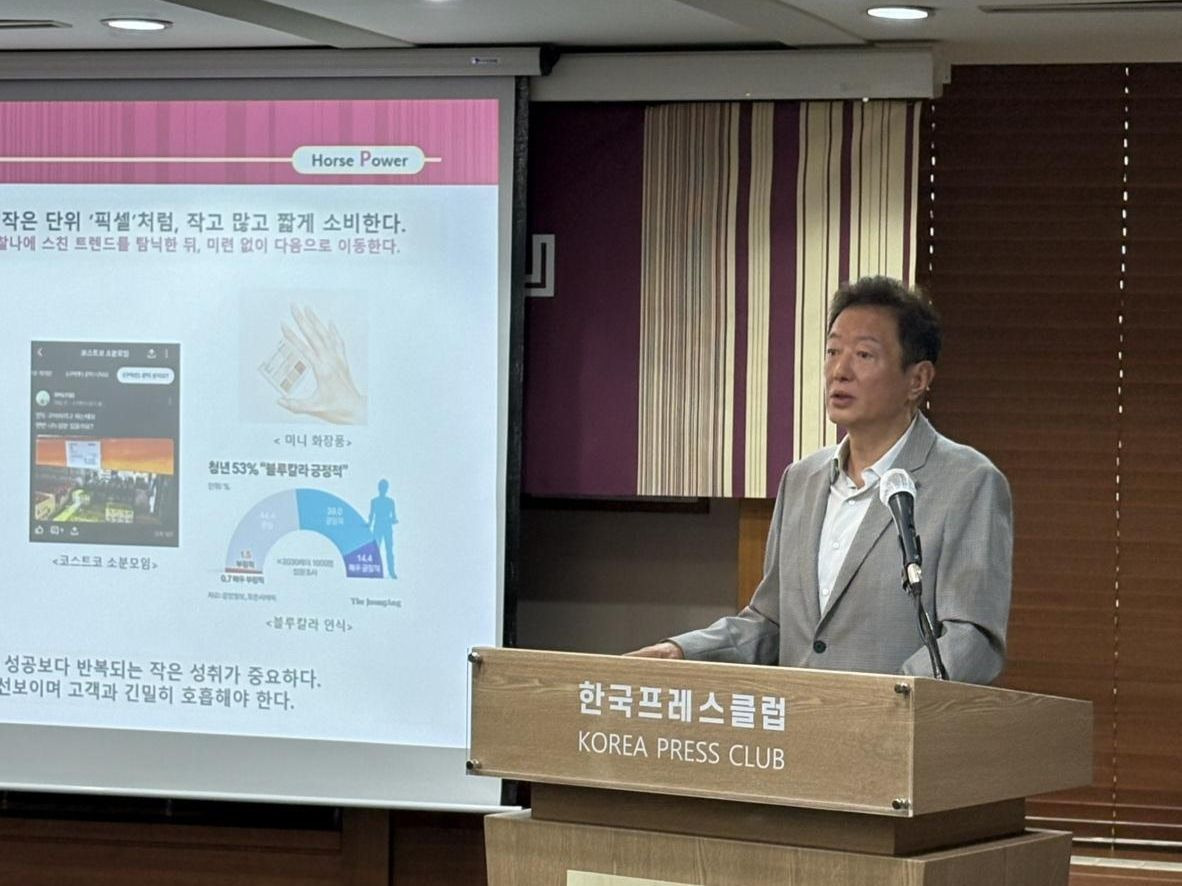
김난도교수가 "렌드 코리아 2026" 출간 기념 기자회견을 가졌습니다.
AI 시대의 진정한 승자는 깊이 사고하고 현명한 질문을 던질 줄 아는 인간이라고 말합니다.
AI에 대한 인간의 개입은 필수적이며 한 번이상 반드시 개입해야 하고 자기분야의 전문성이 더욱 중요해 졌습니다.
풍부한 전문 지식을 가진 사람들은 AI로 효율이 비약적으로 높아지지만 그렇지 못한 사람들은 기계에만 의존해 오히려 흔들릴 것입니다.
‘Trend Korea 2026' predicts human expertise, not AI, will shape future
'트렌드 코리아 2026'은 인공지능이 아닌 인간의 전문성이 미래를 형성할 것이라고 예측
By Park Han-sol 박한솔 기자
Published Sep 24, 2025 4:44 pm KST Updated Sep 24, 2025 5:30 pm KST
Korea Times
Artificial intelligence (AI) has stepped into the center of human affairs. The seismic rise of generative AI has already begun to reshape the workplace, the classroom, the halls of politics and even the fabric of culture itself.
인공지능(AI)은 인간 문제의 중심에 들어섰다. 생성적 AI의 급격한 부상은 이미 직장, 교실, 정치의 전당, 심지어 문화의 구조 자체를 재편하기 시작했다.
In its wake, an age-old question stirs anew: What role do humans still occupy?
그 후, 오래된 질문이 새롭게 떠오른다: 인간은 여전히 어떤 역할을 하고 있을까?
Two years ago, Kim Ran-do, professor emeritus of consumer science at Seoul National University, offered his own answer. He coined the neologism “Homo Promptus” to describe individuals adept at strategically harnessing AI through the art of prompt-writing and engineering, while reserving for themselves the final judgment over its output.
2년 전, 김란도 서울대 소비자과학부 명예교수가 직접 답을 제시했다. 그는 인공지능의 최종 판단을 스스로 유보하면서 신속한 작성과 엔지니어링 기술을 통해 인공지능을 전략적으로 활용하는 데 능숙한 사람들을 묘사하기 위해 신조어 '호모 프롬프트'를 만들었다.
With the release of his latest annual book, “Trend Korea 2026,” Kim has distilled his vision into a new keyword: “Human-in-the-Loop.”
김 교수는 최신 연례 저서 "트렌드 코리아 2026"을 출간하며 자신의 비전을 새로운 키워드인 "휴먼 인 더 루프"로 압축했다.
The question of AI no longer lies simply in whether one can wield it or not — that threshold has long been crossed. What is unfolding now, he argues, is a “widening rift” in the quality of what humans create with AI.
인공지능의 문제는 더 이상 단순히 인공지능을 휘두를 수 있는지 여부에 국한되지 않는다. — 그 한계는 이미 오래전에 넘어섰다. 지금 벌어지고 있는 일은 인간이 인공지능으로 만들어내는 것의 질에 대한 "넓어지는 균열"이라고 그는 주장한다.
“When we look closely at the work born with AI’s help, the difference is not merely in who manipulates the tool more deftly. The true divide lies in the depth of knowledge the human brings from their own field,” he said at a press conference for his book in Seoul, Wednesday.
"AI의 도움으로 탄생한 작품을 자세히 살펴보면 단순히 누가 도구를 더 능숙하게 조작하느냐에 차이가 있는 것이 아니다. 진정한 분열은 인간이 자신의 분야에서 가져온 지식의 깊이에 있다."라고 그는 수요일 서울에서 열린 저서 기자간담회에서 말했다.
“Those with strong expertise in their discipline find that their efficiency soars with even the lightest touch of AI. But those without such grounding often see their work falter, because they rely too heavily on what the machine delivers and fail to bring their own critical eye.”
"학문에 대한 전문 지식이 풍부한 사람들은 아무리 가벼운 인공지능이라도 효율성이 치솟는다고 생각한다. 하지만 이러한 기반이 없는 사람들은 기계가 제공하는 것에 너무 많이 의존하고 자신의 비판적인 시각을 가져오지 못하기 때문에 종종 자신의 업무가 흔들리는 것을 볼 수 있다."
In the end, the power to elevate productivity and refine the final product rests not in digital skills but in the most analog of virtues: the depth of one’s own knowledge. It is this very expertise that, in Kim’s eyes, keeps humans firmly “in the loop.”
결국 생산성을 높이고 최종 제품을 정제하는 힘은 디지털 기술이 아니라 가장 유사한 덕목인 자신의 지식의 깊이에 달려 있다. 김 대표의 눈에는 바로 이 전문성이 인간을 '루프'에 단단히 묶어준다.
Kim’s book suggests that as AI accelerates the pace of change, it also summons a longing to “return to fundamentals,” expressed in a recent tide of historical nostalgia.
김씨의 책은 AI가 변화의 속도를 가속화함에 따라 최근 역사적 향수의 물결 속에서 표현된 "기본으로 돌아가고자 하는 갈망"도 불러일으킨다고 제안한다.
In Korea today, museums and old palaces are teeming with young visitors. Members of Gen Z, who were raised on digital entertainment, find themselves increasingly drawn to film cameras, cassette tapes, CDs and vinyl records.
오늘날 한국에서는 박물관과 고궁이 젊은 관람객들로 가득 차 있습니다. 디지털 엔터테인먼트에서 자란 Z세대 멤버들은 점점 더 필름 카메라, 카세트 테이프, CD, 비닐 레코드에 매료되고 있다.
“We now live in a world where AI can not only replicate, but generate something that never existed at all,” the professor observed. “In such a time, where can we find what Walter Benjamin once called the ‘aura’? It is the search for that aura — for something that has endured the weight of history, something singular and irreproducible — that sends young people to museums.”
"우리는 이제 인공지능이 복제할 수 있을 뿐만 아니라 전혀 존재하지 않았던 무언가를 생성할 수 있는 세상에 살고 있다."라고 교수는 관찰했다. "이런 시대에 월터 벤자민이 한때 '오라'라고 불렀던 것을 어디서 찾을 수 있을까? 역사의 무게를 견뎌온 그 아우라, 즉 독특하고 재현할 수 없는 무언가를 찾는 것이 젊은이들을 박물관에 보내는 것이다."
This yearning also reveals itself in nostalgia for a past never actually lived — a desire to brush against the textures of a predigital age.
이 갈망은 또한 실제로 살지 못한 과거에 대한 향수, 즉 디지털 이전 시대의 질감에 맞서고자 하는 욕망으로 드러난다.
Kim introduced “HORSE POWER” as the keyword for next year’s consumer trend, a term built from the initials of 10 themes.
김 교수는 내년 소비자 트렌드의 키워드로 'HORSE POWER'를 소개했는데, 이는 10가지 테마의 이니셜을 바탕으로 만든 용어이다.
Beginning with “Human-in-the-Loop,” these include “Oh, my feelings! The Feelconomy,” “Results on Demand: Zero-click,” “Self-directed Preparation: Ready-core” and “Efficient Organizations through AI Transformation.”
"Human-in-the-Loop"으로 시작하는 "Human-in-the-Loop"에는 "오, 내 감정!", "주문형 결과: 제로 클릭", "자기 주도적 준비: 레디코어", "AI 혁신을 통한 효율적인 조직" 등이 포함된다.
The second half comes from “Pixelated Life,” “Observant Consumers: Price Decoding,” “Widen your Health Intelligence,” “Everyone is an Island: the 1.5 Households” and “Returning to the Fundamentals.”
후반부는 "픽셀화된 삶", "관찰 소비자: 가격 해독", "건강 지능 확대", "모두는 섬이다: 1.5 가구", "기본으로 돌아가기"에서 나온다.
#Human-in-the-Loop휴먼인더루프 #Feelconomy필코노미(감정중심소비) #Zero-click제로클릭검색/클릭없는자동화소비 #Ready-core #레디코어자기주도형준비 #EfficientOrganizationsthroughAITransformationAI혁신을통한효율적조직