Many Korean investors pull out of home market 미국 증시에 매료된 한국 투자자들, 국내 증시이탈
작성자Condel작성시간25.11.22조회수258 목록 댓글 0
한국투자자들의 서울 증시에 대한 신뢰가 하락하여 미국증시에 투자하고 있습니다.
‘코리아디스카운트’는 취약한 지배구조와 낮은 수익률로 인해 한국 주식시장의 매력을 떨어뜨렸습니다.
전문가들은 미국 주식시장의 주주친화적인 환경이 한국투자자들을 유인하는 주요요인이라고 말합니다.
한국 주식시장을 투자자들에게 더 매력적으로 만들기 위해 정책 개혁이 필요합니다.
Many Korean investors pull out of home market, drawn by US stocks
미국 증시에 매료된 한국 투자자들, 국내 증시에서 대거 이탈
By Park Ung 박웅 기자
Published Nov 21, 2025 1:00 am KST

Erosion of faith in Seoul market drives Koreans to invest in Wall Street
서울 증시에 대한 신뢰 하락, 월가 투자로 이끈다
Korea’s benchmark stock index, the KOSPI, recently soared past the 4,000 mark for the first time, a surge that would signal exuberant confidence in most major economies.
한국의 주가지수인 코스피가 최근 사상 처음으로 4,000선을 돌파하며, 이는 대부분의 주요 경제국에 대한 과도한 기대감을 시사하는 급등세다.
Yet, beneath the number, a sense of anxiety persists, fueled by a long history of stagnation and a deep-seated fear among domestic investors that they are better off betting on Wall Street than on Seoul.
그러나 이러한 수치 이면에는 오랜 경기 침체와 국내 투자자들 사이에 서울보다 월가에 투자하는 것이 더 나을 것이라는 뿌리 깊은 두려움이 깔려 있어 불안감이 여전히 남아 있다.
For years, the index had been stuck between 1,800 and 2,100 — a long stretch of stagnation in the early 2010s that earned it the nickname “BoxPI,” a play on “box pattern.”
수년간 이 지수는 1,800에서 2,100 사이에 머물렀다. 2010년대 초반 장기간 정체되어 "박스 패턴(Box Pattern)"을 뜻하는 "박스PI(Box PI)"라는 별명이 붙었다.
Shaped by their personal experiences in the domestic market and a deep belief in U.S. stocks, many young investors remain drawn to Wall Street.
국내 시장에서의 개인적인 경험과 미국 주식에 대한 깊은 신뢰가 형성되면서 많은 젊은 투자자들이 여전히 월가에 매력을 느끼고 있다.
Lee Sang-min, a 30-year-old consultant, said his portfolio is now entirely in U.S. stocks.
30세 컨설턴트 이상민 씨는 현재 자신의 포트폴리오가 미국 주식으로만 구성되어 있다고 말했다.
“When I started investing at age 20, I put my money into the Korean stock market. Now, my entire portfolio is in U.S. stocks,” he told The Korea Times.
"20살에 투자를 시작했을 때는 한국 주식 시장에 투자했다. 지금은 전체 포트폴리오가 미국 주식으로 채워져 있다."라고 그는 코리아타임스와의 인터뷰에서 말했다.
The shift reflects a broader trend: Younger Koreans, frustrated by limited domestic returns and drawn by global opportunities, are increasingly moving capital abroad.
이러한 변화는 더 큰 추세를 반영한다. 국내 수익률의 한계에 좌절하고 해외 투자 기회에 매료된 젊은 한국인들이 해외로 자본을 이전하는 경우가 점점 늘어나고 있다.
Between March and April this year, Lee bought Tesla shares and sold them last month, earning roughly 30 million won ($21,000) on a 50 million won investment in just five months — a return that underscores the allure of Wall Street.
이씨는 올해 3월과 4월 사이 테슬라 주식을 매수했다가 지난달 매도하여 5천만 원을 투자해 단 5개월 만에 약 3천만 원(2만 1천 달러)의 수익을 올렸다. 이는 월가의 매력을 여실히 보여주는 수익이다.
Although the KOSPI recently hit an all-time high, Lee is part of a growing cohort of Koreans who place greater trust in the U.S. market and invest primarily in American stocks.
최근 코스피 지수가 사상 최고치를 경신했지만, 이 회장은 미국 시장에 대한 신뢰도가 높아지고 미국 주식에 주로 투자하는 한국인 투자자 집단의 일원이다.
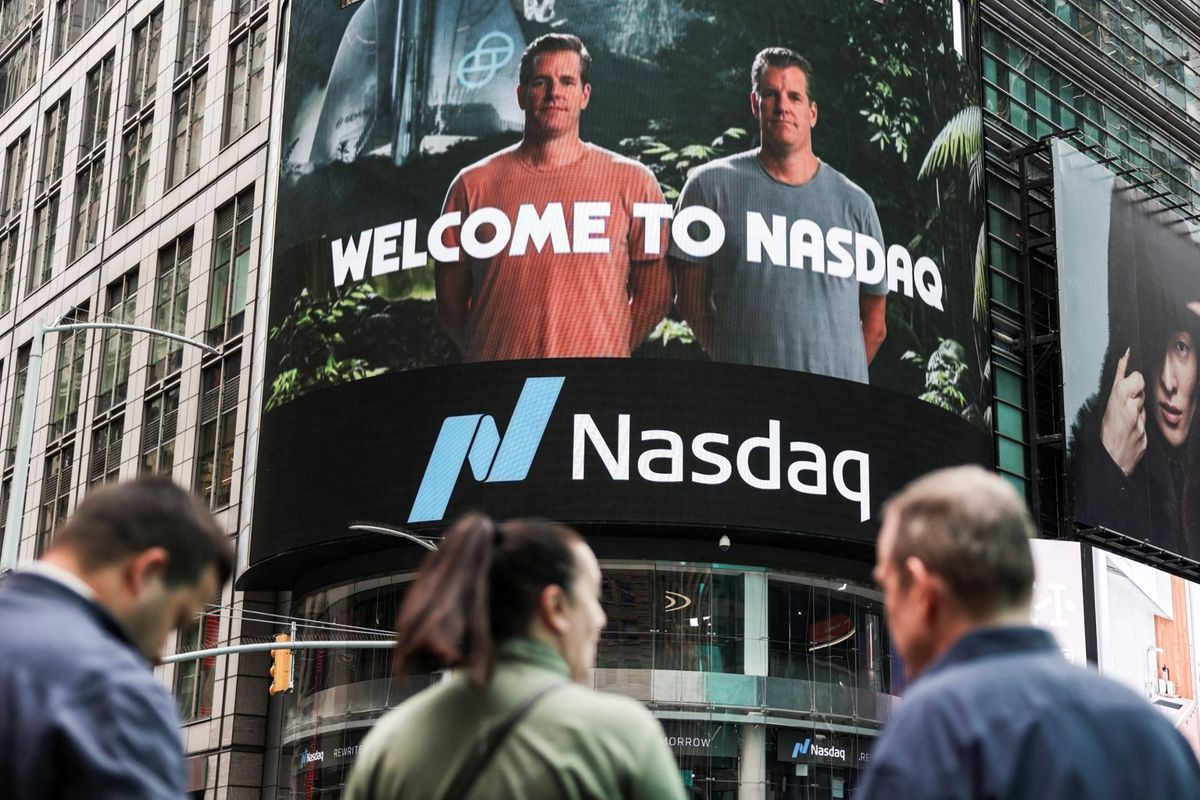
According to the Korea Securities Depository (KSD), Korean investors net purchased approximately $1.24 billion in U.S. stocks during the Chuseok holiday period from Oct. 3 to 9.
한국예탁결제원(KSD)에 따르면, 한국 투자자들은 10월 3일부터 9일까지 추석 연휴 기간 동안 약 12억 4천만 달러 상당의 미국 주식을 순매수했다.
That’s more than 300 times the amount recorded during last year’s Chuseok holiday, which ran from Sept. 14 to 18.
이는 지난해 추석 연휴(9월 14일부터 18일까지)보다 300배 이상 많은 금액이다.
Experts say that the U.S. stock market’s comparatively shareholder-friendly environment is a key factor attracting Korean investors.
전문가들은 미국 주식 시장의 비교적 주주 친화적인 환경이 한국 투자자들을 끌어들이는 주요 요인이라고 분석한다.
Kim Sang-bong, an economics professor at Hansung University, said many Korean investors prefer U.S. stocks because, unlike in Korea, share prices in the United States tend to move in line with corporate performance.
한성대 경제학과 김상봉 교수는 한국과 달리 미국 주가는 기업 실적과 연동되는 경향이 있어 많은 한국 투자자들이 미국 주식을 선호한다고 말했습니다.
“Recent revisions to Korea’s Commercial Act have helped somewhat, but for years, the share prices of Korean companies often failed to reflect their actual performance,” Kim said. “Corporate ethics were weak in cases involving spinoffs or mergers and acquisitions, and that frequently distorted valuations.”
김 교수는 "최근 상법 개정이 어느 정도 도움이 되었지만, 수년 동안 한국 기업의 주가는 실제 실적을 반영하지 못하는 경우가 많았습니다."라고 말했다. "기업 분사나 인수합병(M&A) 관련 사건에서 기업 윤리가 취약했고, 이로 인해 가치 평가가 왜곡되는 경우가 많았다."
Hwang San-hae, an analyst at LS Securities, said retail investors’ perception of stock investment has shifted from simple asset allocation to the pursuit of tangible gains, and in that sense, the U.S. market is far more appealing than Korea’s.
LS증권 황산해 애널리스트는 개인 투자자들의 주식 투자에 대한 인식이 단순한 자산 배분에서 실질적인 이익 추구로 전환되었으며, 이러한 측면에서 미국 시장이 한국보다 훨씬 매력적이라고 말했다.
Hwang added that the ongoing artificial intelligence (AI) boom is another reason investors are flocking to U.S. equities, with the industry’s core value chain largely concentrated in the United States.
황 애널리스트는 인공지능(AI) 붐이 계속되는 것도 투자자들이 미국 주식으로 몰리는 또 다른 이유라고 덧붙였다. AI 산업의 핵심 가치 사슬은 대부분 미국에 집중되어 있기 때문이다.
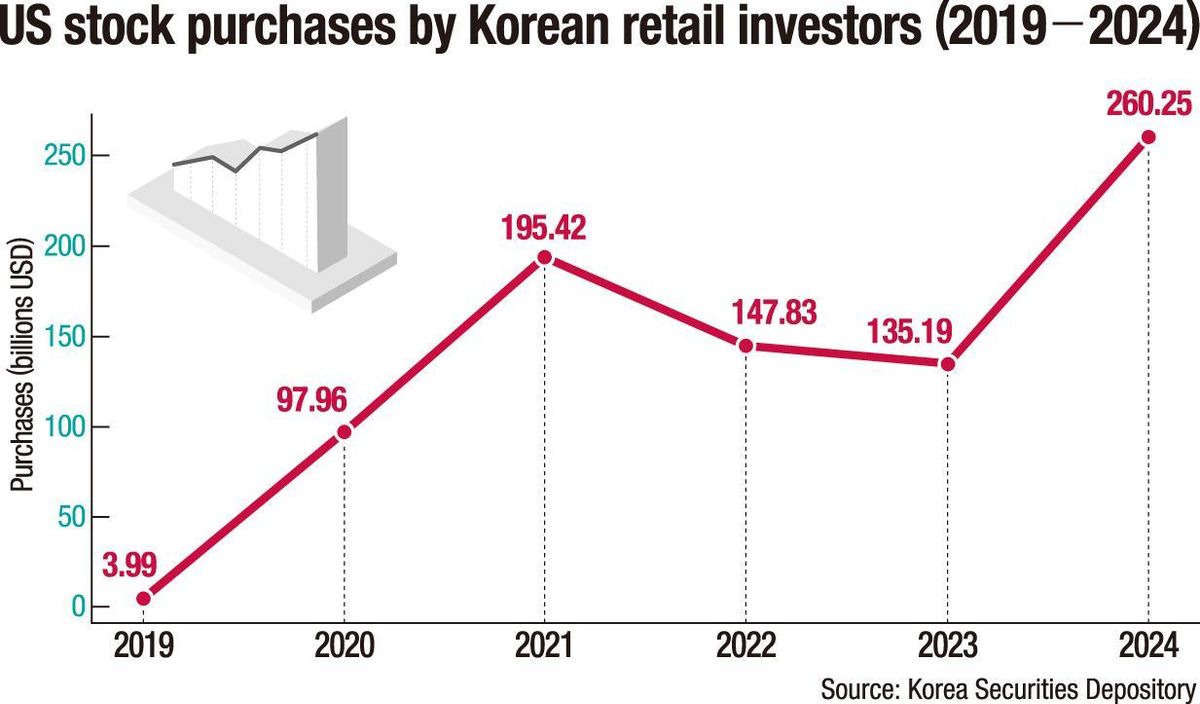
As of July, Korean investors held a record $131.7 billion in U.S. stocks, up more than 20 percent from January.
7월 기준 한국 투자자들은 미국 주식에 1,317억 달러의 역대 최고치를 기록했으며, 이는 1월 대비 20% 이상 증가한 수치이다.
This surge reflects a broader trend of Koreans increasingly seeking opportunities abroad, with their appetite for foreign markets growing markedly in recent years.
이러한 급증은 최근 몇 년 동안 해외 시장에 대한 관심이 크게 증가하면서 해외 투자 기회를 모색하는 한국인들의 전반적인 추세를 반영하다.
Koreans purchased $260.25 billion in U.S. stocks through KSD in 2024, a surge of nearly 6,400 percent from 2019.
한국인들은 2024년 한국예탁결제원을 통해 2,602억 5천만 달러 상당의 미국 주식을 매수했는데, 이는 2019년 대비 약 6,400% 급증한 수치이다.
Lee said he began investing in the U.S. stock market in 2022 during the COVID-19 pandemic, when prices had fallen and many around him saw it as a good time to buy.
이씨는 코로나19 팬데믹 기간인 2022년에 미국 주식 시장에 투자를 시작했다고 밝혔다. 당시 주가는 하락했고 주변 사람들은 매수 적기로 판단했다.
After years of trading in both Korean and U.S. markets, he has shifted his portfolio entirely to American stocks, citing stagnant returns at home even as many U.S. shares surged over the same period.
수년간 한국과 미국 시장에서 거래해 온 그는 같은 기간 동안 많은 미국 주식이 급등했음에도 불구하고 국내 수익률은 정체되어 있다는 점을 들어 포트폴리오를 미국 주식으로 완전히 전환했다.
In 2021, when the stock price of Naver, Korea’s dominant internet platform and technology conglomerate, reached the 300,000-won range, Lee bought about 5 million won’s worth of the shares. But the price barely moved — and often fell — over the next four years. He recently sold his holdings, barely breaking even.
2021년 한국의 주요 인터넷 플랫폼이자 기술 대기업인 네이버의 주가가 30만원대를 돌파했을 때, 이 대표는 약 500만 원 상당의 네이버 주식을 매수했다. 하지만 이후 4년 동안 주가는 거의 변동이 없었고, 종종 하락하기도 했다. 그는 최근 보유 주식을 매도하며 간신히 손익분기점을 넘겼다.
“During that same period, U.S. indexes like the Nasdaq and S&P 500 surged. I should’ve just bought and held American stocks back then,” Lee said.
"같은 기간 동안 나스닥이나 S&P 500 같은 미국 지수가 급등했습니다. 그때는 미국 주식을 사서 보유했어야 했다."라고 이 씨는 말했다.
According to the Korea Exchange, Naver closed at 343,500 won on Jan. 22, 2021. On Monday, the stock closed at 255,500 won — down 26 percent over the four-year period.
한국거래소에 따르면 네이버는 2021년 1월 22일 343,500원으로 마감했습니다. 월요일에는 255,500원으로 마감했는데, 이는 4년 동안 26% 하락한 수치이다.
On the same day four years ago, QQQ — an exchange-traded fund (ETF) tracking the Nasdaq index — closed at $325.42. As of Nov. 14, it had risen to $608, an increase of about 87 percent over that period.
4년 전 같은 날, 나스닥 지수를 추종하는 상장지수펀드(ETF)인 QQQ는 325.42달러로 마감했다. 11월 14일 기준, QQQ는 608달러로 상승했는데, 이는 같은 기간 동안 약 87% 상승한 수치이다.
The gap of roughly 113 percentage points in performance underscores why many Korean investors are shifting capital abroad, favoring U.S. markets that have outpaced domestic returns.
약 113%포인트의 수익률 격차는 많은 한국 투자자들이 국내 수익률을 앞지르는 미국 시장을 선호하며 해외로 자본을 옮기는 이유를 여실히 보여준다.
Last week's Yonhap News Agency analysis of more than 2.4 million NH Investment & Securities clients who held domestic stock balances showed that, as of Oct. 30 — the day the KOSPI surpassed 4,100 during intraday trading for the first time — more investors posted losses than gains.
지난주 연합뉴스가 국내 주식을 보유한 NH투자증권 고객 240만 명 이상을 분석한 결과, 코스피가 장중 거래에서 처음으로 4,100을 돌파한 10월 30일 기준으로 손실을 본 투자자가 수익을 본 투자자보다 많았다.
Of them, more than 1.31 million — 54.6 percent — were in the red. Their combined losses reached 12.2 trillion won, averaging roughly 9.31 million won per investor.
그중 131만 명 이상(54.6%)이 손실을 기록했다. 이들의 총 손실액은 12조 2천억 원에 달했으며, 투자자 1인당 평균 손실액은 약 931만 원에 달했다.
Lee said that the Korean stock market holds little appeal because of the so-called “Korea discount,” a term referring to the chronic undervaluation of domestic companies, largely attributed to owner-centered governance and weak shareholder returns.
이씨는 한국 주식시장이 소위 '코리아 디스카운트' 때문에 매력이 거의 없다고 말했다. 코리아 디스카운트는 국내 기업들의 만성적인 저평가 현상을 일컫는 용어로, 주로 오너 중심의 지배구조와 저조한 주주 수익률로 인해 발생한다.
He added that many Korean firms tend to spin off promising business units for separate listings — a practice that often drags down their stock prices.
그는 많은 한국 기업들이 유망한 사업부를 분사하여 별도 상장하는 경향이 있는데, 이러한 관행이 주가 하락을 초래한다고 덧붙였다.
“In the U.S. market, even if stocks like Nvidia or Tesla fall by 20 percent, I still believe they’ll eventually bounce back,” he said. “That’s why I keep my money there.”
그는 "미국 시장에서 엔비디아나 테슬라 같은 주가가 20% 하락하더라도 결국 반등할 것이라고 믿는다."라고 말했다. "그래서 나는 미국에 투자한다."
It’s a sentiment shared by Gu Young-seok, a 30-year-old office worker who invests about half of his portfolio in American stocks.
포트폴리오의 절반 가량을 미국 주식에 투자하는 30대 직장인 구영석 씨도 같은 생각이다.
“I put half of my stock assets in Korean shares, but not because I find the local market promising,” Gu said. “I’m optimistic about Korea’s defense industry — that’s where nearly all my domestic holdings are concentrated.”
구씨는 "주식 자산의 절반을 한국 주식에 투자하지만, 한국 시장이 유망하다고 생각해서 투자하는 것은 아니다."라고 말했다. "나는 한국의 방위산업에 대해 낙관적이다. 제가 보유한 국내 주식의 거의 대부분이 여기에 집중되어 있기 때문이다."
But he remains confident in the broader U.S. stock market.
하지만 그는 미국 주식 시장 전반에 대해서는 여전히 확신을 가지고 있다.
“Buying an ETF that tracks the S&P 500 or Nasdaq means having faith in the market as a whole, not just in individual stocks. But I don’t feel that way about the Korean market,” he said.
"S&P 500이나 나스닥 지수를 추종하는 ETF를 매수한다는 것은 개별 주식뿐만 아니라 시장 전체를 신뢰한다는 것을 의미한다. 하지만 한국 주식 시장에 대해서는 그렇게 생각하지 않는다."라고 그는 말했다.
Gu believes Korea’s stock market remains opaque and weighed down by complex ownership structures.
구씨는 한국 주식시장이 여전히 불투명하고 복잡한 소유 조로 인해 어려움을 겪고 있다고 생각한다.
“For example, Doosan’s recent plan to restructure its holdings through stock swaps among affiliates drew backlash from retail investors,” he said. “Long-term investors need a market free of such noise.”
"예를 들어, 두산이 최근 계열사 간 주식 교환을 통해 지분 구조를 재편하려는 계획은 개인 투자자들의 반발을 샀다."라고 그는 말했다. "장기투자자들에게는 그러한 잡음이 없는 시장이 필요하다."
Experts say policy reforms are needed to make the Korean stock market more appealing to investors.
전문가들은 한국 주식 시장을 투자자들에게 더 매력적으로 만들기 위해 정책 개혁이 필요하다고 말한다.
“The National Assembly (led by the ruling Democratic Party of Korea) is pushing for revisions to the Commercial Act, with the expected third amendment likely to mandate share buybacks and cancellations,” said Hwang Sei-woon, a senior economist at the Korea Capital Market Institute.
자본시장연구원 황세운 선임연구원은 "여당인 더불어민주당이 이끄는 국회가 상법 개정을 추진하고 있으며, 3차 개정안에서는 자사주 매입 및 소각을 의무화할 가능성이 높다"고 말했다.
“Such policies could help make the domestic stock market more attractive. Offering broader tax incentives, such as applying a separate tax system to dividend income, could further boost its appeal.”
"이러한 정책은 국내 주식 시장의 매력을 높이는 데 도움이 될 수 있다. 배당소득에 대한 분리과세 제도 적용 등 광범위한 세제 혜택을 제공하면 주식 시장의 매력도가 더욱 높아질 수 있다."
#Investor sentiment 투자자 심리 #Korea discount 코리아 디스카운트 #Overseas investment 해외 투자 #Stock market stagnation – 주식시장 정체 #Shareholder-friendly environment 주주 친화적 환경