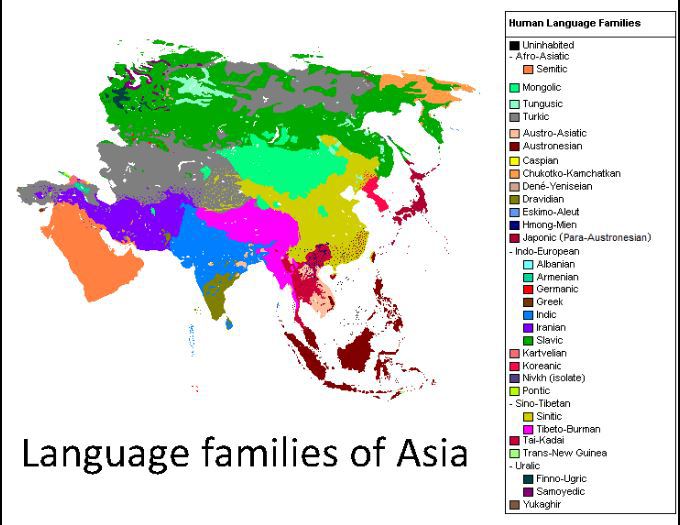
러시아 백과사전에 의하면, 한국인은 몽골이 아니다.
한국은 전 지구에서 가장 독특하다. 언어적으로
그리고 언어적으로 게르만 쪽인데,
현재 독일은 오히려 터키 계열임에 반해,
한국은 게르만 아리안 쪽으로 분류된 것 같음.
유일한 천손임이 맞는 듯ㅡ.
갑자기 밀려드는 뿌듯감 ㅡ
그리고,,,,
러시아 역사연구자들은 타타르제국의 지배층에 대해
최소한 그들이 자기들만의 독특한 언어를 썼다는 것 까지는 밝혀냈음.
그러면 한국어를 몽골어에 집어넣지 않고 별따로 독특하게 분류한, 게르만계열로,
러시아 언어학의 분류가 옳은 것임.
그들이 언젠간 우릴, 타타르 제국, 여기 숨어 계시군요 !! 하며 ㅡ 찾으러 오겠지 ㅡ 라고 생각함.
최근 추적한 것 한 가지는, 타타르 단어 뜻은 거대한 보호자 란 의미일 가능성이 높다는 것.
그리고
....
라틴어를 왜 만들었는 지, 뱀들이, 이유도 알겠음.
타타르 지배층이 고유언어를 쓰므로,
자신들도 지배층에게 고유 독특언어를 부여하고 싶었던 것임, 타타르 흉내내기, 시온성도 마찬가지.
그래서, 라틴어를 힘들게 만들어는 놨는데, 카톨릭 사제층에서 잠간 쓰다 지금은 거마저 거의 죽은 상태가 됨.
천손을 지구 상 타 민족 습관이나 언어 속에 집어 우겨 넣으려는 시도는 이제 더 하면 안된다고 생각함.
천손에게는 천손이어야 할 이유, 천손에게 주어진 의무가 있음.
이걸 찾아 나가야 함.
한국민족이 매우 독특하고 고귀하다는 것을, 본 필자는 유태인,미국인들과 페북 삼사년 하며
비로소 알게 됨. 이천년전부터 화랑오계, 삼강오륜 이런 걸로 자손 가르치는 국가 없음.
이토록 수준 높은 도덕성은 어디에도 없음. 유태인이 만든 성경책의 수준은 살인강도도적들 교화 수준임.
십계명, 살인하지 마라, 훔치지 마라. 간통하지 마라. 등등, 수준이하임. 소년원 교화 수준임.
교회 나가는 사람들 깨달아야 함. 거길 벗어나야 함.
한국인 누구도 자녀에게 살인하지 마라 가르칠 필요없고 못 느낌. 피부 속에서 아니까.
반면 백인들 흑인들, 전기 나가면 도둑질하러 거리로 나감. 한국과 다름, 이것은 한국에 온 미국인이 한 말임.
저들은 감시자 없으면 강도질, 살인에 능숙함.
지구인간들이 그나마 인간 된 것은 타타르 제국 고구려 무사들이 각 곳에 빠른 스피드로 진출하면서
삼강오륜과 스와스티카 홍익인간 정신으로 가르쳐서 그 결과임.
천손이 타 민족과 비슷해지면 타락이고 죄악인데,
현재 민주주의, 공산주의가 한국인을 그렇게 만들어가고 있는 중임.
Mongolian people
| Number and range | |
|---|---|
Total: about 10 million | |
| Language | |
| Religion | Buddhism , Islam , shamanism , Orthodoxy , Protestantism , Catholicism |
| Related peoples | |


Mongolian peoples are a group of related peoples speaking Mongolian languages , and are closely related to the common centuries-old history, culture, traditions and customs.
They inhabit the north of the PRC , Mongolia and the regions of the Russian Federation - the republics of Buryatia and Kalmykia, as well as the Irkutsk Region and the Trans-Baikal Territory [5] .
About 10 million people consider themselves to be Mongolian. Of these, 3 million are in Mongolia, 4 million are in the Inner Mongolia Autonomous Region , up to 3 million in Liaoning , Gansu , Xinjiang Uygur Autonomous Region and other regions of China .
The structure of the Mongolian people are: Khalkha Mongols , Buryats , Barghouti , Kalmyk , Oirat , Chahar , Khorchin Mongols , harachiny , aruhorchiny , tumety , dzhalayty , avga , avganary , baariny , mu-myangaty , Naiman , aohane , onnyuty , durben-huhety , urates , throats , ordos , hongirats, dzharuty , uzumchiny , huchita , Mongors (tu) , daurs , dunsians , baoan .
Moguls and Hazaras in Afghanistan are of Mongol origin, but several [ how many? ] centuries are Iranian-speaking Muslim peoples. Sogvo-arigi speak the Tibetan language .
Content
[ hide ]Title [ edit ] edit the code ]
A number of researchers (N. Ts. Munkuev) note that the ethnonym "Mongol" is first encountered in the Chinese sources "Tszyu Tan Shu" ("The Old History of the Tang Dynasty ", compiled in 945 ) in the form of "men shu -wei" - "Mongols Shiwei", and in "Sin Tan Shu" ("The New History of the [Tang Dynasty]", compiled in 1045 - 1060 years ) in the form of "men-va bu" - "the tribe of men-va." In different Khitan and Chinese sources of the 12th century, these names were also used for these tribes: meng-ku, menguli, manguzi, mangoo. [6] : 238
Perhaps the name of the Mangut race ( Mongu mongood ) was an ancient sound of the name "Mongols" . [7]
History [ edit ] edit the code ]
Proto-Mongolian tribes who lived in Central Asia in the II-I millennium BC. e., created the so-called culture of tile graves . [8] [9]
In the year 209 BC. e. Tsar Mode founded the state of Hunnu ( 209 BC up to the 2nd century AD) on the Mongolian plateau . Mongolian scholars consider Hunn to be a protomongol. The proto-Mongolian states Xianbi (93-234), Northern Wei (386-534), the Zhuzhan Kaganate (330-555), the Kidan (907-1125) and the Karakite khanate (1125-1218) existed until the XIII century .
For the first time, the ethnonym of the Mongols (men-gu, men-gu-li, men-va) is found in historical chronicles of the Tang period (7-10 centuries) [10] . Presumably the original place of settlement of the Predagonal tribes was the interfluve of the Argun and Onon rivers , from which they migrated to the Three Rivers (the Onon , Kerulen and Tuul rivers ) in the 8th century . [6] : 238
Iakinf Bichurin well-known orientalist of the XIX century , having studied the ancient Chinese chronicle, wrote that the ethnonym Mongol appeared in the beginning of IX century . n. e., and the history of Mongolian peoples (protomongols) begins no later than the 25th century. BC. e. He also wrote that the ancient Mongols were known to the Chinese for 20 centuries under different names: Hun , Wuhuan , Xianbi , Zhuzhany , Dulga [11] , Oihor , Siyayanto , Khitan [12] .
Hamag Mongol [ edit ] edit the code ]
In the XII century , the state formation of the Mongols of the Three Rivers - ulus Khamag Mongol ("All Mongols") was formed. The first ruler of the state was Khabul Khan [cf. 1] , which combined, according to " The Secret History of the Mongols " 27 tribes Nirun-Mongolian ( "Mongolian proper"), including superior position occupied genera hiad- Borjigin and Tayichi'ut [6] : 238-239 . In addition to these Mongols, there were tribes of the Darlequin-Mongols ("Mongols in general") who were not members of the Hamag Mongol association and were nomadic in the areas adjacent to the Three-Rivers.
The Mongol Empire [ edit ] edit the code ]
In the XIII century, the Mongols, led by Genghis Khan and two generations of his descendants, created the most significant empire of the era [13] . At the same time, the tribal division was abolished and gave way to division according to the tumes and arms of the troops. As a result, the ethnonyms of the Mongol tribes, who have played a significant role in doimperskuyu era (eg saldzhiut ) remained on the fringes of the Empire, and after the collapse of the state in addition to a number of new, on the basis of military supplies (eg, Torgouts , sharayd , kubdut ) . A significant part of the Mongols refers to the Bordigins - the descendants of Genghis Khan and his relatives.
| Approximate location of Mongolian and Turkic tribes [6] : 242 | |||||||||
|---|---|---|---|---|---|---|---|---|---|
| Oirats (Sayano-Altai) | Bargut and Chori Tumata near Lake Baikal | bayat along the Selenga River | Jalair on the Onon River | ||||||
| mergady (on the river Selenga ) |  | Tatars and Khongirads (south of the right bank of the Argun River and the lakes of Buyr and Hulun) | |||||||
| kereits (along the rivers Orkhon and Tuul ) further to the southwest. naimans (along the Altai Range ) | Ongudy (north of the Great Wall of China ) | ||||||||
Empire Yuan [ edit ] | edit the code ]
At the end of the XIII century, the grandson of Genghis Khan Khubilai founded the Yuan dynasty with capitals in Beijing and Shandu . After defeating the opponents in the midst of the Mongolian nobility, he subdued most of the territory of modern Mongolia .
A significant portion of the Mongols formed the upper stratum of the administration and the internal troops of China, along with those who came from other non-Chinese peoples, attracted by Khubilai and his heirs. Thanks to this, there appeared such groups of population as the Mongols of Yunnan in Southern China.
In 1368 the Mongols, after the internecine clashes of the Mongolian nobility, were driven from China to the north by the troops of Zhu Yuanzhang , who captured Peking and proclaimed the Ming dynasty .
Mongols in the period of the Lesser Khans [ edit ] edit the code ]
In the XIV-XVII centuries the territory of Mongolia was divided among themselves by Chingisids and Oirats - the western Mongols, who gradually created the powerful Dzungar Khanate .
XVII-XIX century [ edit ] edit the code ]
In 1640, the last general-Mongol congress took place, at which Khalkha-Mongols and Oirats , including Kalmyks , were present .
In 1670-1690 the Oirat leader Galdan-Bososhtu , the first in Dzungaria who proclaimed himself khan, successfully subjugated a number of cities on the Silk Road and made successful trips to Central Mongolia. The Chingisid princes appealed to their allies for help to the Manchus , who provided such assistance on the condition that the Mongols empowered the Mongols to accept citizenship.
In the XVII century, the lands of the Mongolian peoples and the peoples themselves fell under varying degrees of dependence on China and Russia. In the Qing empire, theMongols of Inner and Outer Mongolia had different rights and lost the opportunity for free communication, which caused the formation of separate nationalities.
XX century [ edit ] edit the code ]

In 1911 the independence of Outer Mongolia was proclaimed from the Manchu empire of Qing , and after the revolutions in Russia the autonomous formations of the Mongolian peoples inhabiting it were formed in the RSFSR - the Buryat-Mongolian ASSR (1923) and the Kalmyk ASSR (1935). For Inner Mongolia , autonomy was declared in the Republic of China, then (1936-1945) on part of its territory with the help of Japanese militarists, during the war with China , the Mengjiang state ("Mongolian frontier lands"), headed by the Prince Borjigin Demchigdonrov , The existence after the capitulation of Japan inWorld War II . A significant part of the Mongolian administration of Mengjiang fled to Taiwan and partly to Mongolia.
Genetics [ edit ] edit the code ]
According to the study of genetics in 2014, the most common Y-chromosome haplogroups in the Mongols are: C - 56.7%, O - 19.3%, N - 11.9% [14] .
See also [ edit ] edit the code ]
================================================
Mongolian Languages
| Mongolian Languages | |
| Taxon : | Group |
|---|---|
| Ancestral home : | Central-Eastern Asia |
| Areal: | |
| Classification | |
| Category : | |
Nostratic macrofamily (hypothesis)
| |
| Composition | |
Khitan language , Mongolian language , Mongolian language , Kalmyk language , Oirat language , Buryat language and a number of others | |
| Time of separation : | I thousand BC. e. |
| Language Group Codes | |
| ISO 639-2 : | - |
| ISO 639-5 : | |
| See also: Project: Linguistics | |


Mongolian languages are a language family that includes several fairly closely related languages of Mongolia , China , Russiaand Afghanistan . According to the data of lexicostatistics, they disintegrated around the 5th century AD. e. Supporters of the Altai hypothesis are included in the composition of the hypothetical Altaic macrofamily .
The bearers are the Mongolian peoples united by a cultural community and language affiliation. In addition, the classical Mongolian served as the written language of the Tuvinians until 1940.
A characteristic feature of the Mongolian languages is a significant number of Turkic borrowings, which, when influenced by the Mongolian language in the Turkic languages, significantly complicates the problem of studying language connections . To this day in Mongolia and China, there are a number of ethnic groups of Turk-Mongolian bilinguals ( hotons , yellow Uighurs ). Probably, earlier such bilingualism was more widespread.
Content
[ hide ]Classification [ edit ] | edit the code ]
North-Mongolian group
- The old-written Mongolian language (the classic old-written Mongolian language) is the common literary language of all Mongolian tribes from the 13th to the 17th century.
- Middle Mongolian language (XIII-XVI centuries)
- Buryat expulsion
- modern literary language of Inner Mongolia (China)
- Central Mongolian cluster - includes 3 languages structurally speaking in the same language
- modern Mongolian language
- Buryat (Buryat-Mongolian) - Russia, Mongolia and China
- Hamnigan
- Western Mongolian languages , (Mongolian-Kalmyk) language
- Oirat classical (literary) language
- Kalmyk (Mongolian-Kalmyk) language of Russia
- Oirat and Mongolian- Oirat languages of China and Mongolia
South Mongolian group
- shira-yugur language - lexically closer to North-Mongolian languages.
- Mongolian language (that, shirongol-Mongolian). In Western literature, it is usually divided into two languages, corresponding to the dialects of the Khuizu and Minghe adopted in the Soviet tradition.
- the Baoist-Dongxian cluster
The Mughal group
Kidan group
- Khitan language † - the language of the Khitan
- Dahurian
Other ancient languages
- Xianbi language - the language of the Xianbi tribe , who lived in the II-IV centuries. in the territory of modern Inner Mongolia , in the IV. won together with the tribe TabgachesChina and founded the "pozdneveyskuyu" dynasty Toba , lasted until the middle of VI.
- Tabgachian
Ergativity and grammatical gender in Mongolian [ edit ] edit the code ]
Interesting distinctive features of Mongolian in comparison with other Altai are ergativity , traceable from written sources, as well as genus in nouns with the meaning of individuals and animals, manifested in adjectives, numerals, pronouns and verbs [ source is not specified 558 days ] . They are not recognized by all researchers [to clarify ] .
In modern Mongolian is manifested mainly in adjectival colors and age.
Examples [ edit ] edit the code ]
Ečige inü tere kö'üni tanib a . "His father recognized that man." Eke inü tere kö'üni tanib i . "His mother recognized that man." Tere kö'ün ečigeyi inü tanib a . "That man recognized his father." Tere kö'ün ekeyi inü tanib a / tanib i . "That man recognized his mother."
Gergei inu Gang si da sing qoo gün wusin nare ög čigi . - His wife Gang shi (emperor) granted the title shing hoo gene vushin.
Mön kü urida yosuğar ... nere ber wungsinglağsan a ǰuğu , gergei Ong sida ... nere ber wungsingla ǰiği . - In the same way, as before gave (title) to the title ..; his wife Ong shi gave the title.
A finite verb in some time forms is consistent with the subject in the genus, but if the sentence contains a female object, the verb can have feminine characteristics [ source is not specified 558 days ] .
Qara - qara ğčin ğaqai 'black boar' - 'black pig' Ğunan - ğun ǰin temege 'three-year-old camel' - 'three-year-old camel Mongqol - Mongqol ǰin qoa ... -' Mongol '-' Mongolian ' Barqu dai mergen - Barqu ǰin qoa ... - of the genus barqun ya'un - ya'u ' ǰin -' whose '-' whose qoyar - ǰirin - 'two' - 'two'
See also [ edit ] edit the code ]
Literature [ edit ] edit the code ]
- Sanzheev, GD Mongolian languages // Linguistic encyclopaedic dictionary . - M .: SE, 1990.
Links [ edit ] edit the code ]
- Monumenta Altaica / Grammar / Mongolian grammar
- Monumenta Altaica / Dictionaries on-line / Mongolian dictionaries
- Monumenta Altaica / Ancient and medieval written monuments / Mongolian monuments
- Monumenta Altaica / Modern texts / Texts in modern Mongolian languages
- On the nature of the Mongolian-Kazakh lexical parallels