홍진영 선생님의 <"탐라"는...인도양 전체를 이름함이고...근대의 "섬라"라 함은 "수마트라"일까 합니다...왜구들의 거점지일 겁니다.>라는 제목의 글 속에서,
“인도네시아 일대 전체에...웨(우, 왜)란 지명도 널널하단 겁니다.”라고 주장하셨습니다만,
홍진영 선생님이 그 증거로 제시한 내용은 아래와 같았습니다.
전부 <두산백과사전>에서 나온 내용입니다.
-----
웨섬 Weh Island
인도네시아 수마트라섬의 북서쪽에 위치한 섬. 면적 156.3㎢이다. 풀라우웨(Pulau Weh) 또는 풀로웨(Pulo Weh)라고도 불린다. 안다만해(海)에 자리 ...
웨웨와족 Wewewa
인도네시아 소순다열도(Lesser Sunda Islands) 숨바섬(Sumba I.) 서부에 거주하는 소수 종족. 대부분 소규모의 농업에 종사하며 총 인구는 10만 3,600명(2000년)으로 추산된다.
웨타르섬 Wetar I.
인도네시아 동부 소(小)순다 열도에 딸린 섬. 면적 3,625km2. 최고점은 1,400m. 중심 마을은 일와키. 티모르섬의 북동부에 위치하며, 몰루카주(州)에 속한다. 섬 ...
-----
제가 인터넷 백과사전 등 여러 자료를 찾아보았으나,
널널하게 나오는 게 아니라,
몇 개의 섬 이름, 종족 이름에 불과하였습니다.
인도네시아 섬들 전체에 골고루 분포되어 있는 이름이 아니라는 겁니다.
역사 연구에 있어서,
발음(소리)이 비슷하면 무조건 한통속으로 간주하는 경향이 문제입니다.
그런 주장에 관한 적절한 근거를 찾으려면,
적어도 언어학적으로 어원(語源)을 분석해야 됩니다.
특히, 인도네시아 지역은 오스트로네시아어족(Austronesian languages)에 해당하므로 관련 자료를 분석해야 합니다.
자료가 부족하여 분석이 안되면, 결론을 주장하지 말아야 합니다.
근거가 되는 출전이나 출처를 전혀 언급하지 않고
무슨 이론을 정립한다는 것인지 이해가 안 됩니다.
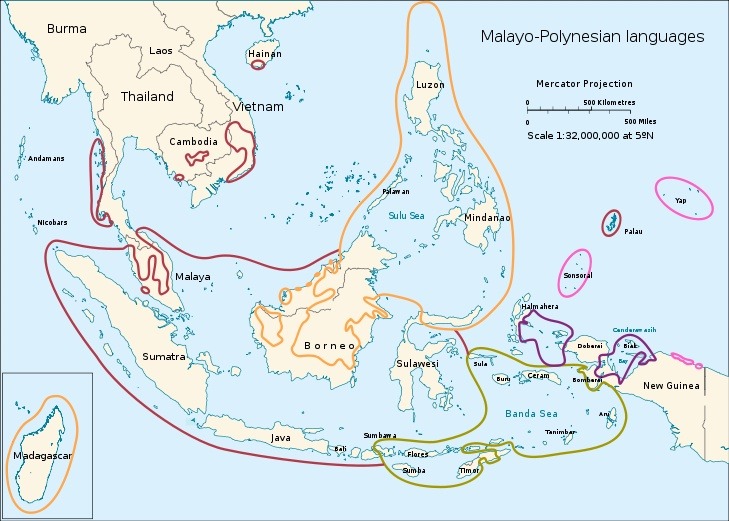
[출처=http://en.wikipedia.org/wiki/Austronesian_languages]
발음이 비슷한 다른 단어들도 검색되었습니다.
이런 것들도 전부 왜(倭) 또는 왜구(倭寇)와 관련이 있다는 말입니까???
아래에 검색결과를 인용합니다.
New Zealand Grebe
The New Zealand Grebe, New Zealand Dabchick, or Weweia, Poliocephalus rufopectus, is a member of the grebe family endemic to New Zealand. This species was formerly present in the lowland lakes of South Island, but underwent a rapid decline there (for unknown reasons) in the 19th century- the last certain breeding record for this species on South Island was in 1941. On North Island it is found on the West coast on coastal lakes from North Cape to Pukekohe and from Southern Taranaki to Paraparaumu, on lakes and dams of the central plateau, Gisborne, Hawkes bay and the Wairarapa. Their diet consists mostly aquatic insects and their larvae, as well as small mollusks such as freshwater snails. Bigger prey such as fish and freshwater crayfish are sometimes taken.
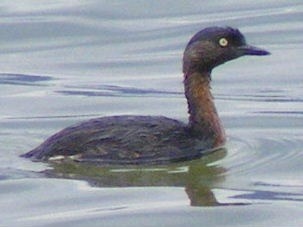
[출처=http://en.wikipedia.org/wiki/New_Zealand_Grebe]
Allen Weh
Allen Edward Weh (born 17 November 1942, Salem, Oregon) was the chairman of the New Mexico Republican Party from 2004 to 10 January 2009.[1] He is a retired US Marine Corps Reserve officer, and is president and CEO of CSI Aviation Services, Inc.
Weh graduated with a bachelor of science from the University of New Mexico in 1966, and received his Master's degree from there in 1973.[2] In between he served as a pilot in the United States Marine Corps during the Vietnam War where he reached the rank of Captain and received a Silver Star, the Legion of Merit, a Bronze Star with V device, a Purple Heart with two gold stars, the Meritorious Service medal with gold star, and five Air Medals. After the war he remained in the reserves and retired at the rank of Colonel in 1997. He was called back to active duty three times, in 1990-1991 for the Persian Gulf War, in 1992-1993 for Somalia Civil War, and finally from retirement in 2003-2004 for the Iraq War.
Upon receiving his Master's, he worked at the Bank of New Mexico, but in 1974 he became the president of New Mexico Airways, Inc. After working with the New Mexico Indochina Refugee Program and UNC Mining & Milling Co. of Albuquerque (a division of United Nuclear Corp.), in 1979 he became president and CEO of CSI Aviation Services, Inc.
[출처=http://en.wikipedia.org/wiki/Allen_Weh]
Wawa, Ontario
Wawa, Ontario is a community in Northern Ontario, Canada, located in Michipicoten Township in the Algoma District. The community is known for its 28-foot-tall metal statue of a Canada goose, which was built in 1963. Wawa takes its name from the Ojibwe word for "wild goose", wewe. Wawa was defined as wild goose in the Songs of Hiawatha.
The community is located on Highway 101, just a few kilometres east of the junction with Highway 17. Sault Ste. Marie is located approximately 220 km south. Lake Superior Provincial Park is located just south of Wawa.
Wawa as seen across Wawa LakeMost of the movie Snow Cake (2006) takes place (and was filmed) in Wawa.
[출처=http://en.wikipedia.org/wiki/Wawa,_Ontario]
Ojibwe language
Ojibwe (or Ojibwa, Ojibway, Chippewa) is an indigenous language of the Algonquian linguistic family. Ojibwe is characterized by a series of dialects that have local names and frequently local writing systems. There is no single dialect that is considered the most prestigious or most prominent, and no standard writing system that covers all dialects. The relative autonomy of the regional dialects of Ojibwe is associated with an absence of linguistic or political unity among Ojibwe-speaking groups.
The dialects of Ojibwe are spoken in Canada from southwestern Québec, through Ontario, Manitoba and parts of Saskatchewan, with outlying communities in Alberta, and in the United States from Michigan through Wisconsin and Minnesota, with a number of communities in North Dakota and Montana, as well as migrant groups in Kansas and Oklahoma.
The aggregated dialects of Ojibwe comprise the second most commonly spoken First Nations language in Canada (after Cree), and the fourth most widely spoken in North America (excluding Mesoamerica), behind Navajo, Inuit and Cree.
[출처=http://en.wikipedia.org/wiki/Ojibwe_language]