


|
| ||||
|
| |||
|
| ||||
|
1.JPG (48.5 KB), Download : 0 | |||
|
| ||||
|
동슬라브 민족의 분열 | |||
|
| ||||


|
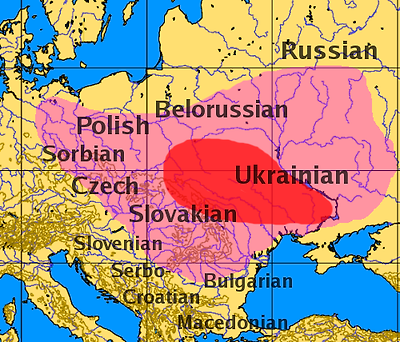


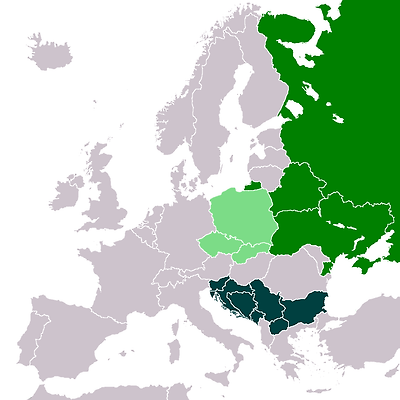


|
| ||
|
| ||
| ||
| 게르만족의 원거주지라고 서유럽사에서 이야기 하는 부분과 겹치지 않나요? 서고트의 출발지라고 말하던 곳도 저 언저리 같은데., | ||
|
| ||
|
| ||
|
| ||
| ||
| 게르만이나 슬라브의 이동거리를 보면, 솔직히 요하 유역에서 한반도로의 이동은 새발의 피입니다. 어마어마하게 멀리 이동했다고들 생각하지만, 별것도 아닌거리. 요하유역에서 한반도 안으로 이동해 들어오는 거리는 직선거리로 치면 평양에서 경주까지의 거리보다도 짧을걸요? 평양에서 경주로의 세형동검문화의 이동과 주민의 이동은 인정하면서 요하유역에서 한반도로의 이동이 단순히 거리때문이라고 생각한다면 이건 무리가 있다는거죠., 물론 단순히 거리때문만은 아니라고 저도 생각은 해봅니다만. | ||
|
| ||
|
| ||
|
| ||
| ||
| 서고트가 비운 자리를 슬라브가 차고 들어오는것인가요? | ||
|
| ||
|
| ||
|
| ||
| ||
 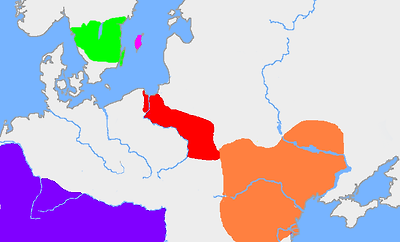 위에 gotland 또는 goetaland라고 표시된 부분이 제가 알기로는 고트족 원주지일 것입니다. | ||
|
| ||
|
| ||
|
| ||
| ||
| 그리고 키에프 러시가 노르만족 정권 하에서이고, 슬라브족의 어원이 slave란 점을 유념하시길 바랍니다. 또한 위의 지도에서 슬라브족 원주지는 오렌지 색이며 고트족이 이까지는 들어오지 않았습니다. 그리고 레드가 고트족이 이동해왔던 정착지였고... 좀 있다가 시간나면 보충하는 지도 올리겠습니다. | ||
|
| ||
|
| ||
|
| ||
| ||
| 그런데 이상우님께서는 어떻게 생각하시나요., 이 "슬라브족"이라는것, 한국사에서는 지금 남한과 북한과의 관계보다는 소위 말하는 "동이족"이라는거 하고 더 비슷하지 않을까요. 저는 사서에서 나오는, 그리고 고고학적으로 확인되는 한반도 바깥과의 문화적 공통점 (단경식 비파형동검이 나오는 지역 포함) 을 보이는 지역에서 살던 사람들을 "동이족"이라고 총칭할수 있다면, 유럽사에서 게르만이나 슬라브족의 실체는 이것에 더 가까운것 아닐까요? | ||
|
| ||
|
| ||
|
| ||
| ||
| 슬라브가 Slave에서 왔다는이야기는 확실히 밝혀진 이야기인가요? 좀 모욕적으로도 볼수 있는 어원으로도 보이는데 아직도 그대로 유지된다는게 납득이 좀., | ||
|
| ||
|
| ||
|
| ||
| ||
| 다음은 키에프 루시가 노르만 정권이었다는 점에 근거해서 slav의 어원을 slave(노예)에 맞춘 것이고 가장 합리적입니다. http://www.aboutsociology.com/sociology/Slavery Slavery in medieval Europe Slave catching and slave trade was one of the main occupations of the Vikings. Swedish Vikings, the Varangians or Rus, established strongholds and founded the first Russian state, Kievan Rus' during their trade and Slave catching operations. The Persian traveller Ibn Rustah recounts how they terrorized the Slavs and treated them like cattle. This trade was part of making the ethnic label Slav the name for "slave". "As for the Rus [Swedes], they live on an island … that takes three days to walk round and is covered with thick undergrowth and forests; … They harry the Slavs, using ships to reach them; they carry them off as slaves and … sell them. They have no fields but simply live on what they get from the Slav's lands … When a son is born, the father will go up to the newborn baby, sword in hand; throwing it down, he says, 'I shall not leave you with any property: You have only what you can provide with this weapon.'" (1) | ||
|
| ||
|
| ||
|
| ||
| ||
| 아래는 Slave설에 반하는 설인데, 개인적인 느낌은 그닥 설득력은 없는 것 같습니다. 잘 읽어 보시면 드라비다어까지 인용되는군요. :) http://en.wikipedia.org/wiki/Slavic_peoples Origin of their original name "Slověne" Ptolemy identified tribes called Stavanoi and Soubenoi, and are one of earliest references under names similar to names from the 6th century. The names are written variously as Sklabenoi, Sklauenoi, or Sklabinoi in Byzantine Greek, and as Sclaueni, Sclauini, or Sthlaueni in Latin. The oldest documents written in Old Slavonic and dating from the 9th century use the word "slověne". It might come from slovo, which means "word". Thus, slověne would mean "people who speak (the same language)"... It might come from slava, which means "fame, glory". This would refer to the ancient Slavic warriors. Thus, Slaviane would mean "people who are famous, glorious"... According to S.B. Bernstein, the name slověne derives from a Proto-Indo-European *(s)lawos, cognate to Greek λᾱ(ϝ)ός "population, people", which itself has no commonly accepted etymology... several authors derive the word from a river name or from a word for water *slo/*sla. Cyril A. Hromník states that the word slovo means both "word, proverb/say" and "glory/glorify, praise" in Dravidian (in analogy to the Slavic words "slovo/sloviti" and "sláva/slaviti"). Parenthetically, the English word slave is derived from Middle Latin sclavus, from Greek Sklabenoi. The word sklebia or schlebia in Slavic languages carries some kind of enslavement (but in opposite direction) as for example in Czech or Polish. | ||
|
| ||
|
| ||
|
| ||
| ||
| 뽀로로 (2007-05-06 16:41:21) 뽀로로님이 말씀하신 동이족의 개념은 전체 슬라브 민족에게 적용되는 일이지, 東슬라브족에 대해서 적용하기는 좀 어려울 것 같습니다. 보시면, 東슬라브족은 몽골 침략 전후(한국으로 따지면 고려말) 까지는 공동운명체에 공동문화/문명권이었습니다. | ||
|
| ||
|
| ||
|
| ||
| ||
| 그럼 14~15세기에 東슬라브 족에게 무슨 일이 벌어졌던가? 지도를 새로 찾아서 붙여봅니다. 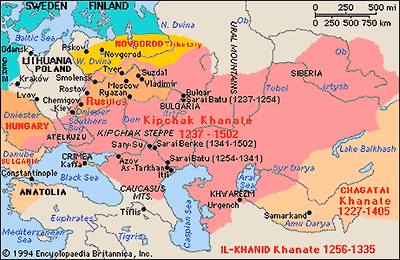 보시면 키에프는 점령지 안에 들어가있고, 모스크바는 점령지 가장자리에 있습니다. 킵착한국에게 점령당하지 않은 동슬라브 민족의 범위는 Novgorod republic입니다. http://en.wikipedia.org/wiki/Novgorod_Republic  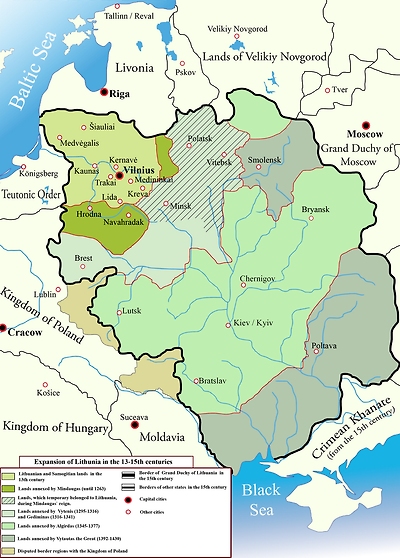  | ||
|
| ||
|
| ||
|
| ||
| ||
| 킵착한국은 1237년 성립되었고 리투아니아 대공국의 영토변화를 보면, 벨로루시의 주도인 minsk는 1263~1316년 사이에 리투아니아 대공국에게 점령당했고, 우크라이나의 주도였던 kiev는 당시 파괴되었었지만 1345~1377년에 폴란드-리투아니아 제국(대공국?) 에 의해서 점령당합니다. | ||
|
| ||
|
| ||
|
| ||
| ||
| 물론 이는 文語의 분화에만 해당하는 사항이지만, 口語도 분리시기가 위의 계통도를 본다면 11세기 이상 올라가지 않습니다. 따라서 동이족의 분화와 비교하기는 매우 어렵다고 판단됩니다. | ||
|
| ||
|
| ||
|
| ||
| ||
 동이족 분화와 비교한다면, 전체 슬라브족을 봐야겠죠. | ||
|
| ||
|
| ||
|
| ||
| ||
http://en.wikipedia.org/wiki/Wielbark_culture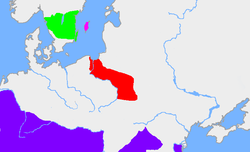 Wielbark Culture (red) in the first half of the 3rd century, with the island of Gotland (pink) and the traditional extent of Götaland (green)  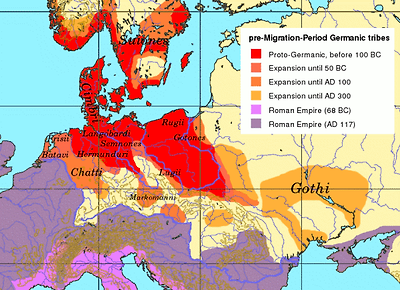 | ||
|
| ||
|
| ||
|
| ||
| ||
| goths 고트족....."고딕" 양식의 어원이 되는 종족이죠. http://en.wikipedia.org/wiki/Gothic   http://images.google.co.kr/images?q=gothic+metal&ndsp=20&svnum=10&um=1&hl=ko&lr=&newwindow=1&rlz=1T4GGIC_koKR215KR215&start=140&sa=N gothic metal 이미지 요정 이미지가 떠오르는 켈트족과는 달리 고트족은 음울한 이미지이죠. 따라서, 헤미메탈의 이미지로 적당한 듯.... 물론 고딕메탈이라는 이미지는 중세의 음울함이라는 의미이겠지만... | ||
|
|
다음검색