The Economist Articles for Dec. 4th week : Dec. 22th(Interpretation)
작성자Statesman작성시간24.12.14조회수262 목록 댓글 0The Economist Articles for Dec. 4th week : Dec. 22th(Interpretation)
Economist Reading-Discussion Cafe :
다음카페 : http://cafe.daum.net/econimist
네이버카페 : http://cafe.naver.com/econimist
Leaders | The end of the house of Assad
How the new Syria might succeed or fail
Much will go wrong. But for now, celebrate a tyrant’s fall
Dec 12th 2024
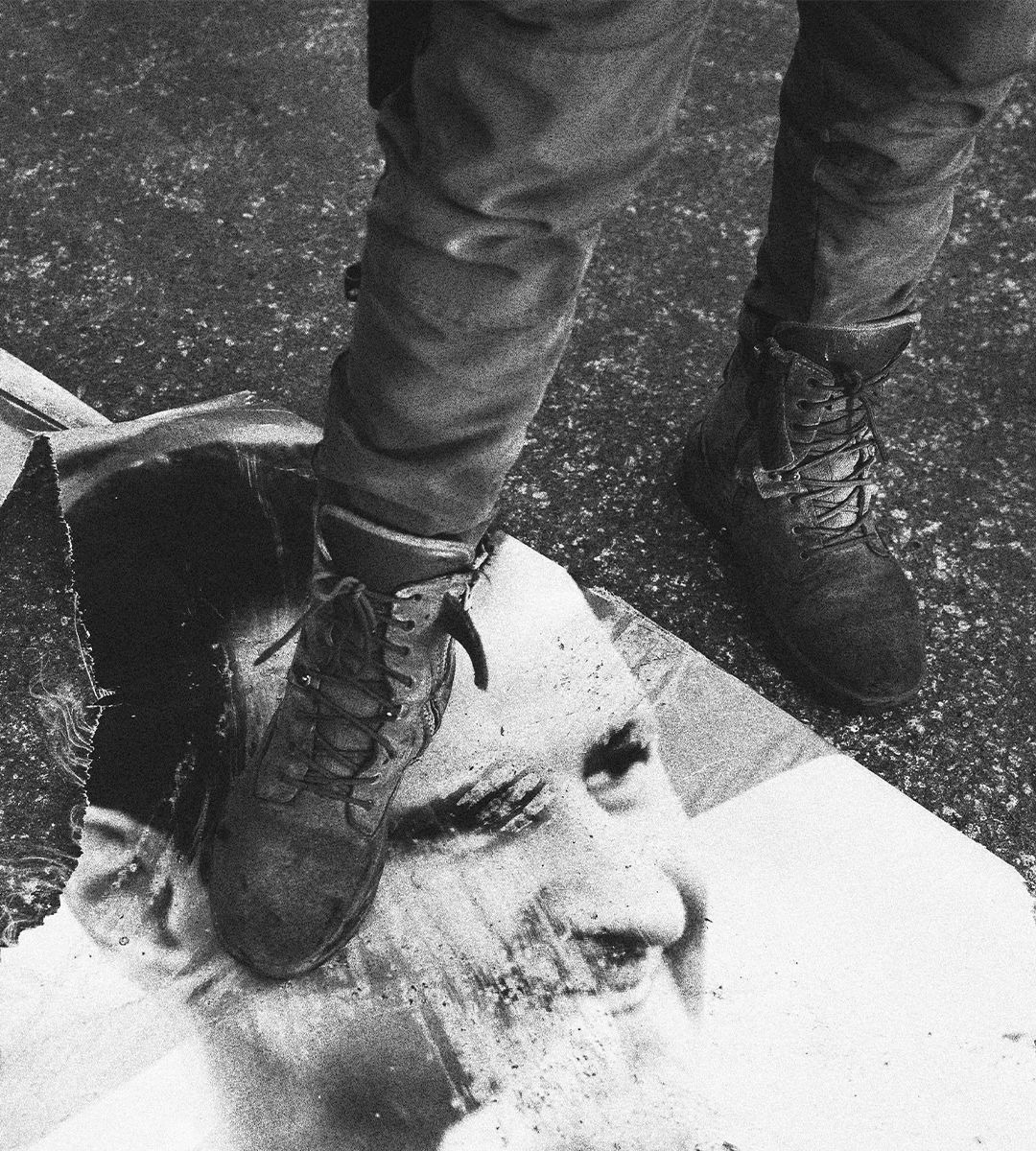
AFTER 53 YEARS in power, the house of Assad left behind nothing but ruin, corruption and misery. As rebels advanced into Damascus on December 8th, the regime’s army melted into the air—it had run out of reasons to fight for Bashar al-Assad. Later, Syrians impoverished by his rule gawped at his abandoned palaces. Broken people emerged blinking from his prisons; some could no longer remember their own names.
Now that Mr Assad has fled to Moscow, the question is where will liberation lead. In a part of the world plagued by ethnic violence and religious strife, many fear the worst. The Arab spring in 2010-12 taught that countries which topple their dictators often end up being fought over or dominated by men who are no less despotic. That is all the more reason to wish and work for something better in Syria.
There is no denying that many forces are conspiring to drag the country into further bloodshed. Syria is a mosaic of peoples and faiths carved out of the Ottoman empire. They have never lived side by side in a stable democracy. The Assads belong to the Alawite minority, which makes up about 10-15% of the population. For decades, they imposed a broadly secular settlement on Syrian society using violence.
Syria’s people have many reasons to seek vengeance. After 13 years of civil war in a country crammed with weapons, some factions will want to settle scores; so will some bad and dangerous men just released from prison. Under the Assads’ henchmen, many of them Alawite and Shia, Sunnis suffered acts of heinous cruelty, including being gassed by chlorine and a nerve agent.
Syria’s new powerbrokers are hardly men of peace. Take the dominant faction in the recent advance. Until 2016 Hayat Tahrir al-Sham (HTS) was known as Jabhat al-Nusra, the Syrian branch of al-Qaeda. Its founder, Ahmad al-Sharaa, had fought the Americans as a member of Islamic State (IS) in Iraq under the nom de guerre Abu Muhammad al-Jolani. HTS and Mr Sharaa swear they have left those days behind. If, amid the chaos, such groups set out to impose rigid Islamic rule, foreign countries, possibly including the United Arab Emirates, will bankroll other groups to take up arms against them.
Indeed, some of those foreign countries are already fighting in Syria to advance their own interests. In the north, Turkey’s proxies are clashing with Kurds who want autonomous rule. In central Syria, America is bombing IS camps, for fear the group will rekindle its jihad. Israel has destroyed military equipment and chemical weapons—and encroached deeper into the Golan Heights, occupying more Syrian territory.
With so much strife, no wonder many share a fatalistic belief that Syria is doomed to collapse into civil war once again. If it does so, they rightly warn, it will export refugees, jihadists and instability beyond the Middle East and into Europe.
But despair is not a policy. At the least, the Assads’ fall is a repudiation of Iran and Russia, two stokers of global chaos. And witness the jubilation in Syria this week: a nation exhausted by war could yet choose the long road towards peace.
The essential condition for Syria to be stable is that it needs a tolerant and inclusive government. The hard-learned lesson from the years of war is that no single group can dominate without resorting to repression. Even most of the Sunni majority do not want to be ruled by fundamentalists.
The daunting task of attempting to forge a new political settlement out of a fractured country could well fall to Mr Sharaa. As ruler of Idlib, a rebel province in the north, he ran a competent government that nodded at religious pluralism and oversaw a successful economy. However, although he has distanced himself from more radical groups and courted the West, Mr Sharaa has become increasingly autocratic, and had taken to purging rivals and imprisoning opponents.
His interim national government, announced this week, is exclusively made up of HTS loyalists. Because it is laying claim to a dysfunctional state, competence and order will go a long way. Yet if Mr Sharaa attempts to run Syria permanently as a giant Idlib—a Sunni fief dominated by HTS—he will fail. Syria will remain divided between feuding warlords, many of them mini-dictators in their own right.
Syria will also fail if it becomes an arena for the rivalries of outside powers. It is more likely to prosper if it is left alone. And only if it prospers will millions of refugees choose to return home. That is especially important for Turkey, which is weary of the 3m Syrians living there. As a backer of HTS, it will be hoping for contracts in a thriving country. Turkey’s president, Recep Tayyip Erdogan, should also understand that the best way to weaken calls for Kurdish self-rule is to create a Syria where the Kurds and other minorities have a voice.
The world may not like HTS, but to sabotage the creation of a stable government would risk the poison spreading to Iraq, Jordan and Lebanon. America and Saudi Arabia should therefore prevail upon Israel, Turkey and the UAE not to ruin Syria’s chances. If Mr Sharaa emerges as a plausible national leader, the West should be prepared to speedily remove its designation of HTS as a terrorist group.
The new Syria has one great gift: it can be rid of Iran and Russia. They spent tens of billions of dollars to keep Mr Assad in power, but the tyrants in Tehran and Moscow proved no more able to sustain despotism in a country that had rejected its despot than the West was able to sustain democracy in Iraq and Afghanistan. Russia has failed to realise its imperial ambitions—a message that will echo in the Caucasus and Central Asia. In little over a year, Iran has seen its proxies defeated in Gaza, Lebanon and now Syria. Its benighted influence in the Middle East has shrunk dramatically, possibly opening space for negotiations with the incoming Trump administration.
Much will go wrong in a traumatised place like Syria. The effort to rebuild the country is bound to entail a struggle for influence. Its strongmen will need reserves of courage, foresight and wisdom that they have yet to reveal. But before writing off the future, pause for a moment and share Syrians’ joy at bringing down a tyrannical dynasty. ■
Leaders | Artificial exuberance
America’s searing market rally brings new risks
Financial innovation is just as much to blame as the technological sort
Illustration: Rose Wong
Dec 11th 2024
SINCE AMERICA elected Donald Trump as president on November 5th, the value of its listed firms has increased by $4.2trn, more than the entire worth of London’s stockmarket. The S&P 500 is up by nearly 30% this year. At 23 times its forward earnings, the index has rarely been so highly rated by investors. Nor, in recent years, have its constituents been able to borrow more cheaply. The cost for risky companies of raising funds is at its lowest relative to Treasury bonds since the spring of 2007. Everywhere you look, there are signs of exuberance. This month the price of bitcoin reached $100,000. And all this is happening despite positive real interest rates.
What is going on? A familiar part of the explanation is that American technological innovation has made investors giddy. No two businessmen exemplify the boom better than Jensen Huang, whose firm sells artificial-intelligence (ai) chips, and Elon Musk, who makes electric vehicles and rockets, and will be part of Mr Trump’s administration. Their two firms, Nvidia and Tesla, are part of the “Magnificent Seven” which now account for a third of the S&P 500’s market value and a quarter of its profits—an extraordinary degree of concentration.
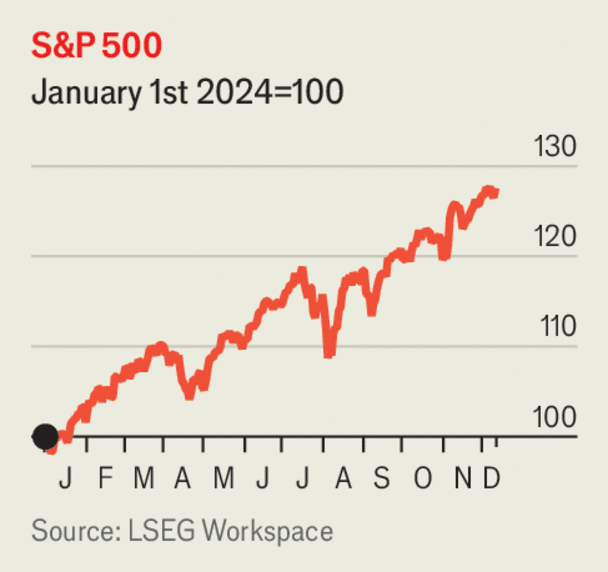
Chart: The Economist
Less remarked upon, however, is the wave of financial innovation that is under way, and which brings new risks. The Schumpeterian urge burns as hot among the country’s financial engineers as it does for those who build real things. Exchange-traded funds (ETFs), for instance, have accelerated their decades-long rise. Those listed in America now manage $11trn-worth of assets, and come in increasingly speculative forms. Investors can now buy ETFs that provide leveraged exposure to Nvidia and Tesla—or even MicroStrategy, a software firm raising billions to purchase bitcoin, whose share price has shot up by around 500% this year.
The structural changes taking place in private markets are no less dramatic. On average, share prices in the three biggest private-markets firms have risen by more than those of the Magnificent Seven this year. Private-credit providers are nosing into lending markets once dominated by banks, often funding investments with life-insurance policies. A Cambrian explosion of products for individual investors is under way.
Their architects are not bankers. Quant firms such as Jane Street are minting fortunes making markets in ETFs. The popularity of such low-cost investment products has squeezed active portfolio managers; survivors have migrated to huge multi-manager hedge funds such as Citadel and Millennium. BlackRock, dominant in public markets, is targeting private ones: this month it agreed to buy HPS, a lender. Apollo, a private-markets firm with a big insurance arm, is moving the other way. It plans to launch a private-credit ETF.
Investors buying the most speculative new products are likely to end up disappointed. Firms consolidating the private-credit industry today risk doing so at the top of the market.
What matters more is the risk this rapid innovation poses to the broader financial system. Regulators face at least a dozen growing non-bank institutions which on the basis of their size, novelty, opacity and interconnectedness may be deemed systemically important. Some of these companies may indeed efficiently shift risk away from the banking system, which is always vulnerable to runs by depositors. But deciding which of them strengthen the system in this way, and which pose new, unacceptable and poorly understood threats, is the most urgent question in financial regulation today.
That may not be a priority for Mr Trump, whose interest in regulation appears to centre on lifting rules for the crypto industry (see Buttonwood). Yet today’s sky-high asset prices lend the task urgency. Markets show signs of becoming more fragile. In August the VIX, a measure of stockmarket volatility, recorded its biggest-ever one-day spike as hedge funds unwound highly leveraged currency trades. Equity investors react more and faster to company earnings than they used to. In debt markets, reports from business-development companies, a type of investment vehicle, indicate plenty of sloppy lending in private credit.
Some investors acknowledge that returns in years to come may be lower. But many are too sanguine about the risk of a market crash. Although volatility has returned to normal and default expectations are benign, minds could change quickly. Imagine that one of America’s tech champions suddenly issues a gloomy outlook and that financial innovators also turn out to have misunderstood the risk contained in their new products. Markets would be falling from a very great height. ■
By Invitation | Holding the line
South Korea’s crisis highlights both fragility and resilience, writes Wi Sung-lac
The country is deeply polarised, but its living memory of military rule strengthens its commitment to democracy
Illustration: Dan Williams
Dec 11th 2024
The audio version of this story is available in our app. It has been produced using an AI voice. Learn more.
President Yoon Suk Yeol’s declaration of martial law on December 3rd brought a profound sense of déjà vu to many South Koreans, evoking memories of the military coups from the 1970s and 1980s. For decades, South Koreans had believed that such events were consigned to the past. Yet the martial law declared by President Yoon shocked not only Koreans but the entire world. It exposed both the fragility and the resilience of democracy in South Korea. Although the immediate threat was averted, the situation remains fraught with uncertainty.
The crisis reveals two critical weaknesses in South Korea’s democracy. The first is the highly polarised political environment that allowed Mr Yoon—an anti-democratic, anti-political, dogmatic figure with no political experience—to rise to the presidency. He never shed the mental habits of a prosecutor when he entered politics. Mr Yoon lacks the capacity for political dialogue or compromise. His binary mindset, where people were either guilty or innocent, led him to view political opponents as enemies to be eliminated. With far-right leanings, self-righteousness and impulsiveness, Mr Yoon exhibits traits reminiscent of dictators from history.
Mr Yoon gained prominence by prosecuting former President Park Geun-hye and clashing with President Moon Jae-in, earning a reputation for independence. South Korea’s political polarisation allowed the conservatives to overlook his authoritarian tendencies, adopting him as a presidential candidate to prevent another progressive administration. As president, Mr Yoon has wielded power to target political opponents, shielding himself and his wife from mounting legal difficulties. His administration became notorious for its abuse of prosecutorial power, becoming, in a perversion of Lincoln’s famous phrase, a government of the prosecution, by the prosecution, and for the prosecution.
The second fragility is the lingering interference exerted by South Korea’s military and intelligence agencies on politics (and political manipulation in those agencies in turn). Despite efforts to depoliticise these institutions, certain people with political ambitions remain entrenched, misusing their personal networks based on military-school ties. Mr Yoon manipulated these networks, appointing his high-school peers to top positions in the military and intelligence services.
The president exploited these two South Korean fragilities to consolidate his power. As his administration faced mounting scandals after a decisive defeat in the April parliamentary election, he resorted to extreme measures instead of seeking compromise. With his political survival at stake, Mr Yoon and his loyalists in military and intelligence agencies declared martial law, sought to shut down the press, and tried to use military force to dismantle the parliamentary majority of opposition parties.
The coup attempt failed when opposition lawmakers swiftly convened in the National Assembly to lift martial law. Of the 300 lawmakers, 190 gathered, including 18 from Mr Yoon’s own party, and unanimously passed the resolution. This moment underscored South Korea’s democratic resilience.
Traditionally, coup leaders in South Korea have suppressed such resolutions by arresting lawmakers or dissolving the legislature. This time, citizens, opposition parties and the media played pivotal roles in resisting. The leader of the opposition Democratic Party, Lee Jae-myung, livestreamed in his car on the way to the National Assembly, calling for citizens to protect the institution. Citizens gathered in the cold, surrounding the National Assembly building to protest, and the citizen action became the first line of defence for democracy.
Democratic Party lawmakers, embedded with the spirit of defending democracy that stretches back through South Korea’s pro-democracy movements, climbed over fences to bypass police blockades and enter the National Assembly. Special forces advanced to within metres of the main assembly hall where I was gathered with other legislators to vote on lifting martial law. Amid tense confrontation, staffers resolute in their commitment, built barricades to block them from entering. On-site media coverage also played a crucial role, limiting the military actions. These acts of defiance bought precious time for the vote.
The coup’s failure was also due to the rushed and poorly executed operation by a few leaders of the military and police. Rank-and-file soldiers and mid-level commanders were reluctant to attack civilians or lawmakers, a hesitation probably influenced by historical reckoning with past military atrocities like the Gwangju Massacre, a slaughter of hundreds of pro-democracy protesters against martial law in 1980. These factors culminated in the successful resistance in the latest crisis.
However, the battle is not over. The aftermath of the failed coup remains uncertain. Impeachment proceedings against President Yoon, despite overwhelming public support, were blocked by him and his conservative allies, allowing him to remain in office and plot a counteroffensive. Public sentiment is boiling. It is not clear whether South Korea’s fragility or resilience will prevail.
Strengthening the resilience must begin with the resignation or the impeachment of the president who orchestrated the coup, along with holding the individuals involved accountable. This would mark an additional historical reckoning, reaffirming democratic principles and ensuring such abuses are never repeated. In parody of Lincoln’s famous line, a government of the prosecution, by the prosecution, and for the prosecution must perish from the earth. Furthermore, to prevent the rise of authoritarian figures, we must address political and social polarisation, depoliticise the military and intelligence agencies, and strengthen the resilience of democracy by fostering sustained political dialogue. There must be greater military transparency and guaranteed civilian oversight, and promotion of public awareness of democratic values and rights.
As political polarisation deepens globally, South Korea’s experience serves as a reminder that no democracy is immune to such threats. Martial law in Korea highlighted that democracy relies not just on institutions but on active citizen engagement, constant vigilance and the collective resolve of citizens and leaders. South Korea’s struggle offers invaluable lessons for all.■
United States | Tort report
America’s best-known practitioner of youth gender medicine is being sued
Johanna Olson-Kennedy leads the Centre for Transyouth at LA’s Children’s Hospital. One of her patients thinks she has been negligent
Photograph: Melissa Lyttle/Redux/eyevine
Dec 6th 2024|NEW YORK
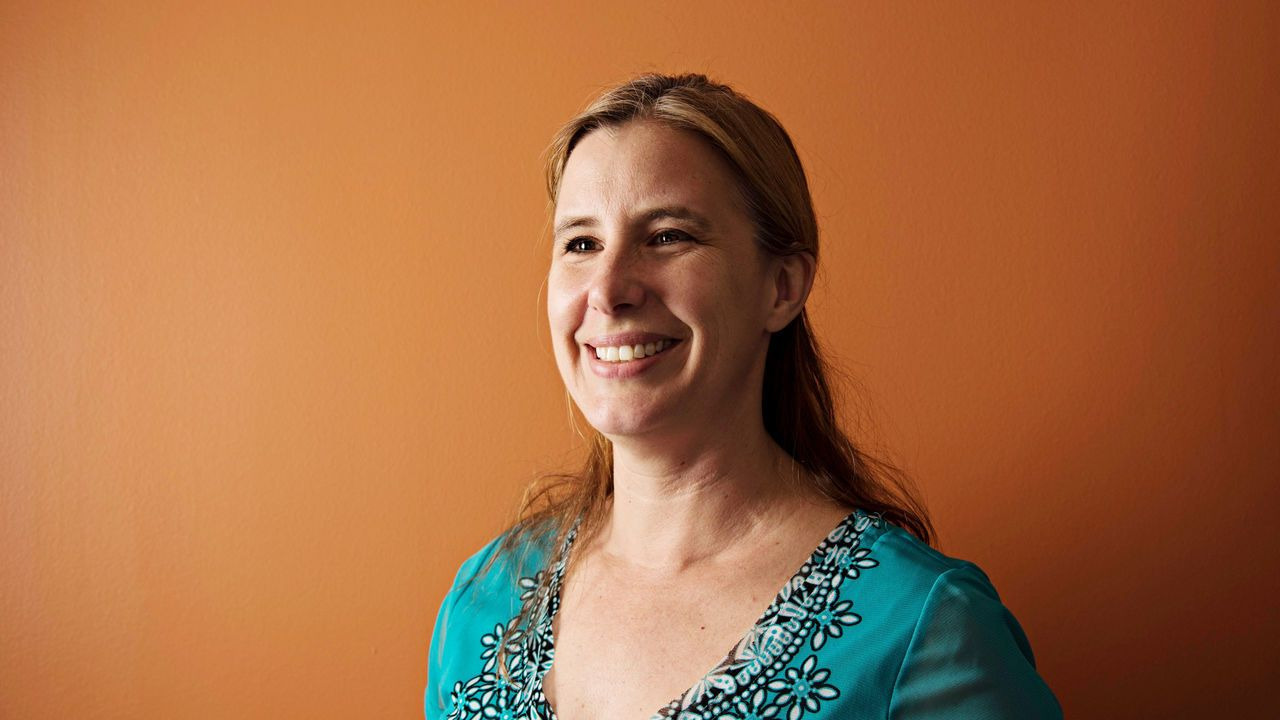
JOHANNA OLSON-KENNEDY is among the most celebrated youth gender-medicine clinicians in the world. She has been the Medical Director of the Center for Transyouth Health and Development at Children’s Hospital Los Angeles (CHLA), one of the first high-profile American youth gender clinics and presently the largest, since 2012. A frequent expert witness in court cases who is often quoted in the media, Dr Olson-Kennedy also leads a $10m initiative funded by the National Institutes of Health to study youth gender medicine—by far the largest such project in America. In addition, she is the president-elect of the United States Professional Association for Transgender Health.
As state-level bans on youth gender medicine have accumulated, and are being tested at the Supreme Court, this controversial field has been seized by a fierce debate over the proper role of mental-health assessments. The Dutch clinicians who published the seminal youth gender-medicine protocol in 2012 emphasised the importance of conducting a careful, in-depth assessment prior to starting a young person on puberty blockers or cross-sex hormones. But Dr Olson-Kennedy has emerged as a critic of what she views as undue and unnecessary “gatekeeping”. “I don’t send someone to a therapist when I’m going to start them on insulin,” she told the Atlantic in 2018. In her published research, Dr Olson-Kennedy has reported prescribing cross-sex hormones to patients as young as 12, and referring patients as young as 13 for double mastectomies.
Now, however, Dr Olson-Kennedy is being sued by a former patient, Clementine Breen, who believes that she was harmed precisely by a lack of gatekeeping. And many of Ms Breen’s claims appear to be backed up by Dr Olson-Kennedy’s own patient notes, which Ms Breen and her legal team have shared with The Economist. The medical-negligence lawsuit was filed on December 5th in California.
Ms Breen is a 20-year-old drama student at UCLA whose treatment at Dr Olson-Kennedy’s clinic included puberty blockers at age 12, hormones at 13 and a double mastectomy at 14. She stopped taking testosterone for good about a year ago and then began detransitioning in March. The lawsuit’s defendants are Dr Olson-Kennedy, the gender therapist to whom Dr Olson-Kennedy referred Ms Breen, the surgeon who performed the double mastectomy and 20 as-yet-unnamed “Doe Individuals” who were “agents, servants, and employees of their co-defendants.” Ms Breen’s lawyers accuse them of medical negligence on a number of grounds, including lack of psychological assessment, poor management of her mental health and a lack of concern about the effects of puberty blockers on her bone health.
Why sue? Ms Breen is seeking monetary damages. But she also cites “personal closure reasons” in an interview, as well as a desire to rebut the notion that rushed youth gender transitions are rare in America, a claim commonly made by some activists. “People are just brushing exactly what happened to me off as something that doesn’t happen,” she says.
While little is known about the practices of American youth gender clinics, Dutch-style assessment does not appear to be the norm. None of the 18 American youth gender clinics contacted by Reuters for an investigation published in 2022 described such a protocol. The share of Americans who regret their gender transitions, or who detransition, is unknown too. Anecdotally there appears to be an uptick in the number of detransitioners seeking redress, says Jordan Campbell, one of Ms Breen’s lawyers. His firm, which focuses on detransitioners, has been approached by more than 100 people but has pursued litigation on behalf of less than a fifth.
In most instances state statutes of limitations make it all-but-futile for detransitioners to pursue legal claims, or the potential client ultimately decides against the often-bruising experience of doing so. In Ms Breen’s case, though, her treatment was recent enough to allow her to sue her providers and she is willing to speak out. That—and Dr Olson-Kennedy’s perch at the very top of her field—is what makes Ms Breen’s case particularly noteworthy. And if plaintiffs like Ms Breen prevail, health-care systems in states where these treatments are still legal—always wary of lawsuits and the potential of rising premiums for medical-malpractice insurance—might take a more conservative approach to youth gender medicine, or even abandon offering it altogether.
Ms Breen’s story starts early in the 2016-17 school year, when she turned 12. She felt depressed and sought help from a counsellor. “I mentioned that I might be trans,” she recalled in the interview, “but I also mentioned that I might be a lesbian and that I might be bisexual, like I wasn’t really sure about my identity at all.” In retrospect, she said, she believes that her unsettled feelings about going through puberty stemmed from a violent situation at home involving her older brother, who has severe autism, as well as abuse she experienced at the hands of someone outside the family when she was six years old, which she did not disclose to anyone until much later.
Ms Breen and her lawyers claim that despite the vagueness of her musings about her identity, her counsellor fixed on the possibility that she was transgender. “Based on those conversations and few statements, the counsellor called Clementine’s parents and told them she believed Clementine was transgender,” they write in the complaint. With the support of her school, Ms Breen, who went by the name Kaya at the time, changed her name to Kai and her pronouns to he/him. Her parents took her to the CHLA gender clinic, and Ms Breen’s first appointment there, records show, was in December 2016.
Dr Olson-Kennedy’s notes from that first visit show that she immediately set Ms Breen down a path towards medical transition. She writes that Ms Breen had not yet seen a gender therapist and had come out as trans three months earlier. Nevertheless, she asserts that Ms Breen meets the specific Diagnostic and Statistical Manual criteria for gender dysphoria, one of which, she writes, is a cross-sex identity that has lasted for six months or longer.
At the time of this appointment, the latest guidelines for gender-medicine practitioners, the World Professional Association for Transgender Health’s (WPATH) Standards of Care Version 7, noted that “Before any physical interventions are considered for adolescents, extensive exploration of psychological, family, and social issues should be undertaken, as outlined above. The duration of this exploration may vary considerably depending on the complexity of the situation.”
Three months later, Ms Breen returned to CHLA to have a puberty-blocker implant inserted into her left arm. “I still have the scar—it’s very little, but it’s right here,” says Ms Breen, showing it on a Zoom call. From there, her path towards fully irreversible treatments was swift. Medical records show that less than a year later Dr Olson-Kennedy prescribed testosterone for Ms Breen. In May 2019 Ms Breen, who was 14 at the time, had a double mastectomy.
Ms Breen and her lawyers claim in their lawsuit that when her parents expressed reservations about testosterone, Dr Olson-Kennedy spoke with them away from Clementine. “Dr Olson-Kennedy first told them that Clementine was suicidal,” they write in the complaint. “At that time, Clementine had never had any thoughts of suicide, and she certainly had never expressed anything along those lines to Dr Olson-Kennedy. Dr Olson-Kennedy went even further [...] by telling them that if they did not agree to cross-sex hormone therapy, Clementine would commit suicide.”
Because Ms Breen’s parents declined an interview request, Ms Breen herself is the only source for this claim. It is true, however, that there is no mention of suicide risk in any of Dr Olson-Kennedy’s notes before Ms Breen’s double mastectomy, and the visit notes for the appointment when Dr Olson-Kennedy ordered testosterone describe Clementine’s (then Kai’s) mental state as “Alert… No acute distress… Cooperative, Smiling.” Even if Ms Breen had been suicidal, the evidence that cross-sex hormones ameliorate suicidality is thin: in a 2021 systematic review on the effects of cross-sex hormones on trans people commissioned by the World Professional Association of Transgender Health, the authors write that due to a lack of quality published research, “We could not draw any conclusions about death by suicide.”
Fluid recordkeeping
Perhaps the lawsuit’s most damning claim is that Dr Olson-Kennedy misrepresented Ms Breen’s gender-identity history in the letter of support she wrote to Ms Breen’s surgeon. In the letter, quoted in the complaint and also obtained in full by The Economist, Dr Olson-Kennedy writes that Ms Breen had “endorsed a male gender identity since childhood”—language intended to signal that a young person’s gender identity has been stable for a long time, alleviating concerns that the patient might change their mind. But the claim was contradicted by Dr Olson-Kennedy’s own records. (Dr Olson-Kennedy did not respond to a request for comment through her hospital. Ms Breen’s surgeon declined to comment through his lawyer.)
Save for a fleeting period of improved mood following the insertion of the implant, Ms Breen says that she does not believe any of these treatments made her feel better. In fact, her mental health began to decline after she went on testosterone.
The CHLA team prescribed and tweaked various psychotropic medications, but nothing in the records suggests anyone at the hospital questioned whether the transition was helping rather than harming Ms Breen, despite what appear in retrospect to be some warning signs. By July 2020 she was having a “very difficult time remembering” her weekly testosterone shots, and was missing three quarters of them, Dr Olson-Kennedy wrote at the time (Dr Olson-Kennedy switched her to a gel). Three sentences after mentioning this, Dr Olson-Kennedy expresses the opinion that “Kai” “would probably benefit from an increased dose of testosterone.” A psychiatrist at CHLA wrote after a September 2020 telehealth visit that Clementine was at that time engaging in “compulsive cutting to see if he has blood.” Later in the notes he explained that Clementine “has a complex diagnosis that includes tics, psychosis, obsessions, and compulsions”.
Ms Breen says she is doing significantly better today—partly, she believes, simply because she ceased taking testosterone. But well before that, she ditched the therapist Dr Olson-Kennedy referred her to, who she said fixated entirely on her gender identity. She switched to a dialectical behavioural therapist whom she described as a godsend, with whom she had her first-ever in-depth conversations about the physical and sexual abuse she endured earlier in life. Ms Breen says she is fairly confident that if she’d had these conversations at age 12, she wouldn’t have pursued medical transition. She has been left with a lower voice than she wants, an Adam’s Apple that distresses her, the prospect of breast reconstruction if she wants to partially regain a female shape, and the possibility that she is infertile due to the years she spent on testosterone.
In a statement provided to The Economist, CHLA notes “we do not comment on pending litigation; and out of respect for patient privacy and in compliance with state and federal laws, we do not comment on specific patients and/or their treatment.” Unfortunately, the paper trail that shines a light on Dr Olson-Kennedy’s approach to Ms Breen’s care does not exist for her former therapist, whom we also contacted for comment. California state law requires therapists to retain patient visit notes for five years. But the therapist Ms Breen is suing told us, via a lawyer, that almost all of the notes were unavailable, due to water damage. ■
United States | Message in a bullet
Luigi Mangione’s manifesto reveals his hatred of insurance companies
The man accused of killing Brian Thompson gets American health care wrong

Photograph: AP
Dec 12th 2024|CHICAGO
Homicide investigations are like bankruptcies: they come along gradually and then all at once. On December 9th, Luigi Mangione, a 26-year-old engineering graduate of the University of Pennsylvania, an Ivy League school, was arrested and charged with murdering Brian Thompson, the ceo of UnitedHealthcare, America’s biggest health insurer, in a predawn assassination in Manhattan on December 4th. The arrest came after five days of frenetic investigation in which police seemed to have almost no leads at all. The fugitive was finally captured in a branch of McDonalds in Altoona, a town in central Pennsylvania, after a member of staff recognised his face from a security camera photo circulated by the police.
Mr Mangione, of course, is legally innocent until proven guilty. But the public evidence against him is piling up. Police say the arresting officers discovered a fake New Jersey id of the sort the killer apparently used to check into a hostel in Manhattan, as well as a 3D-printed gun, a silencer, and a bundle of cash. (Mr Mangione apparently disputes this last detail). There was also a 262-word handwritten note that included the passage: “I do apologise for any strife or traumas but it had to be done. Frankly, these parasites simply had it coming.” Health insurers, he wrote, are “too powerful, and they continue to abuse our country for immense profit.”
Despite his writings, Mr Mangione did not seem determined to get caught. He skillfully eluded his pursuers. He apparently arrived in New York and left again by bus; covered his face for much of his time in the city, may have used a “burner” phone; and paid for things exclusively in cash. Searches in Central Park had turned up a backpack that the killer had apparently discarded, but it contained only a jacket and a bundle of Monopoly money. Had he not revealed his face to a security camera for a few seconds in the hostel, or been recognised by an eagle-eyed burger flipper, he might very well still be free.
Mr Mangione now faces five criminal charges in New York City, including second-degree murder. He is also charged with weapons offences and using a false id in Pennsylvania. He is currently fighting extradition back to the Empire State, a process that could take several weeks to resolve. He will then have to plead formally to the charges. His lawyer suggested he intends to plead not guilty.
What could have inspired the killing? Mr Mangione’s short note suggested a calculating desire to wreak revenge on America’s health-care system. America, he correctly noted, has the most expensive health care in the world, but life expectancy has stagnated. “Many have illuminated the corruption and greed” in the system, he wrote. “Evidently I am the first to face it with such brutal honesty.”
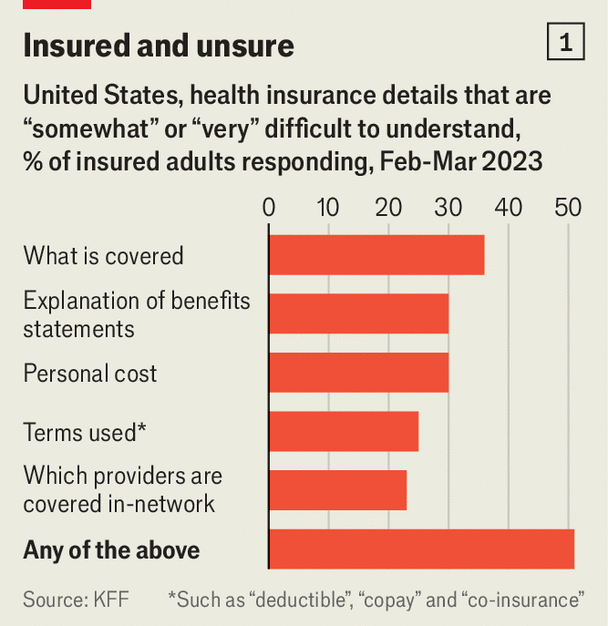
Chart: The Economist
Biographical details add some context. Mr Mangione belongs to a wealthy Italian-American family from Baltimore. He was the valedictorian of his elite private school in the city. After studying computer science and graduating from Penn in 2020, he lived in Hawaii, working as a data engineer for TrueCar, a car-buying website. Though clearly fit and active, according to friends in Hawaii, he suffered chronic back pain, possibly made worse by a surfing injury. In 2023 he apparently underwent back surgery. On his Reddit account, he posted an X-ray image of a spine with several bolts implanted into it. About six months ago he disappeared, cutting contact with friends and family, until reappearing in Altoona.
If his goal was to get America discussing its health-care system, Mr Mangione seems sure to succeed. In the days leading up to his arrest, three words written on the casings of the bullets used to kill Mr Thompson—“deny”, “defend” and “depose”—seemingly intended to echo words used by insurance companies while rejecting claims, became a meme. On TikTok sympathisers made out the then mysterious killer was some sort of superhero, with influencers singing ballads to him and getting tattoos of his face.
Certainly frustration with insurers is growing. According to a survey conducted last year by the Kaiser Family Foundation, a health policy think-tank, in the preceding year 18% of Americans were refused care they thought would be covered, and 27% had insurers pay out less than expected. Two-fifths say that they have had to go without health care because of insurance limitations. In recent years denial rates have been rising, while insurers have adopted new tactics (such as the use of artificial intelligence to make determinations) that are deeply unpopular and have produced some shocking errors. Knowing what will be covered or denied is extraordinarily difficult, even for professionals. Around half of Americans say that they are unsure how their coverage works (see chart 1). The other half are overconfident.
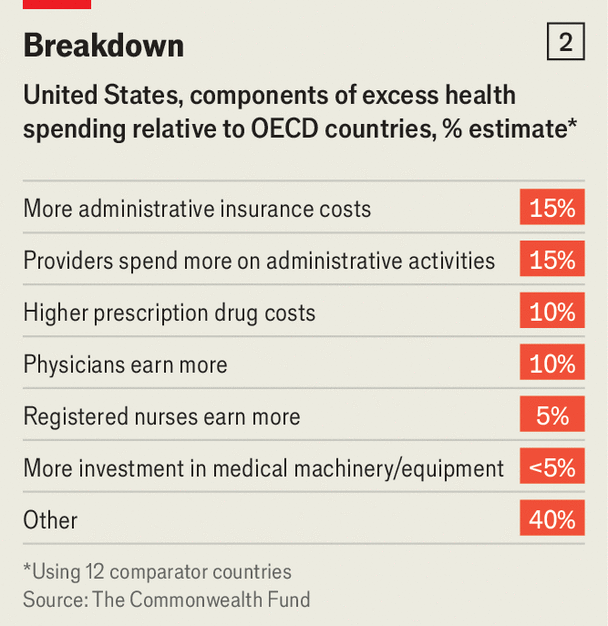
Chart: The Economist
The tricky thing is that insurers are hardly the only villains in this story. UnitedHealthcare’s net profit margin is about 6%; most insurers make less. Apple, a tech giant, by contrast, makes 25%. Insurers are forced to deny coverage in large part because the firms’ resources are limited to what patients pay in premiums, sometimes with the help of federal subsidies. Yet every other part of America’s health-care system incentivises providers to overdiagnose, overprescribe and overcharge for treatment, a lot of which is probably unnecessary. Many in-demand doctors refuse to accept insurers’ rates, leading to unexpected “out-of-network” charges. Hospitals treat pricing lists like state secrets. America’s enormous health administration costs (see chart 2) are bloated by the fact that almost any treatment can lead to a combative negotiation between insurer and provider.
America has fewer doctors per capita than almost all other rich countries, and over one in four doctors earns more than $425,000. Yet a tight federal cap on residencies stops more being trained. And much treatment offered to Americans (and either paid for or refused by insurers) simply would not be offered at all in more statist countries. Mr Mangione’s back surgery is in fact a revealing case in point. The details are unclear, including whether insurance paid for his treatment. But his Reddit account suggests that he shopped around doctors before persuading one to conduct a “spinal fusion” surgery. Elsewhere, the number of such surgeries has declined over the past decade because research shows them to be ineffective compared to simpler treatments. Yet in America the number has continued to rise.
Sadly, changing health-care policy is easier to talk about than to do. And one irony of Mr Mangione’s writing is that, while it is true that American health care is expensive and often ineffective, that is not clearly linked to America’s lagging life expectancy. Indeed, one notable contributor to shorter lifespans has nothing to do with doctors. That is, the 20,000 or so murders committed each year with guns. ■
Asia | The coup that crashed
South Korea’s unrepentant president is on the brink
His attempt to impose martial law has triggered a constitutional crisis
Photograph: Getty Images
Dec 12th 2024|SEOUL
“Seoul’s spring”, the highest-grossing South Korean film of 2023, tells the story of how Chun Doo-hwan, a military dictator, seized power more than 40 years ago. It is supposed to be an edifying historical drama, a reminder of the horrors the country endured under martial law and of how far it has come in the decades since. Instead, on December 3rd, Yoon Suk Yeol, the current president, staged a real-life sequel by imposing martial law for the first time since Chun’s era. The film has shot back to the top of streaming platforms in South Korea. Mr Yoon, however, has crash landed. After quickly backtracking on the declaration of martial law, he now faces imminent impeachment or even arrest.
Mr Yoon has been defiant since his failed self-coup. He survived an impeachment vote in the National Assembly on December 7th, thanks to a boycott by his People’s Power Party (PPP). The party then proposed an “orderly” transition of power. But the dubious legality of this arrangement caused a constitutional crisis. By law, Mr Yoon remained in charge of the country and the commander-in-chief. In political and moral terms he had lost all authority.
The president underscored his unfitness for office with a raving address on December 12th, the 45th anniversary of Chun’s coup. He accused the opposition of seeking to turn South Korea into a “paradise” for foreign spies and a “drug den” overrun by “gangsters”. He railed against a “parliamentary dictatorship” that thwarted his agenda and promised to “fight until the end”. The speech came shortly after Han Dong-hoon, the head of the PPP, had changed tack and called for immediate impeachment. The Democratic Party (DP), the main opposition, will hold a vote on a second impeachment motion on December 14th. Only eight PPP members need to break ranks for it to pass.
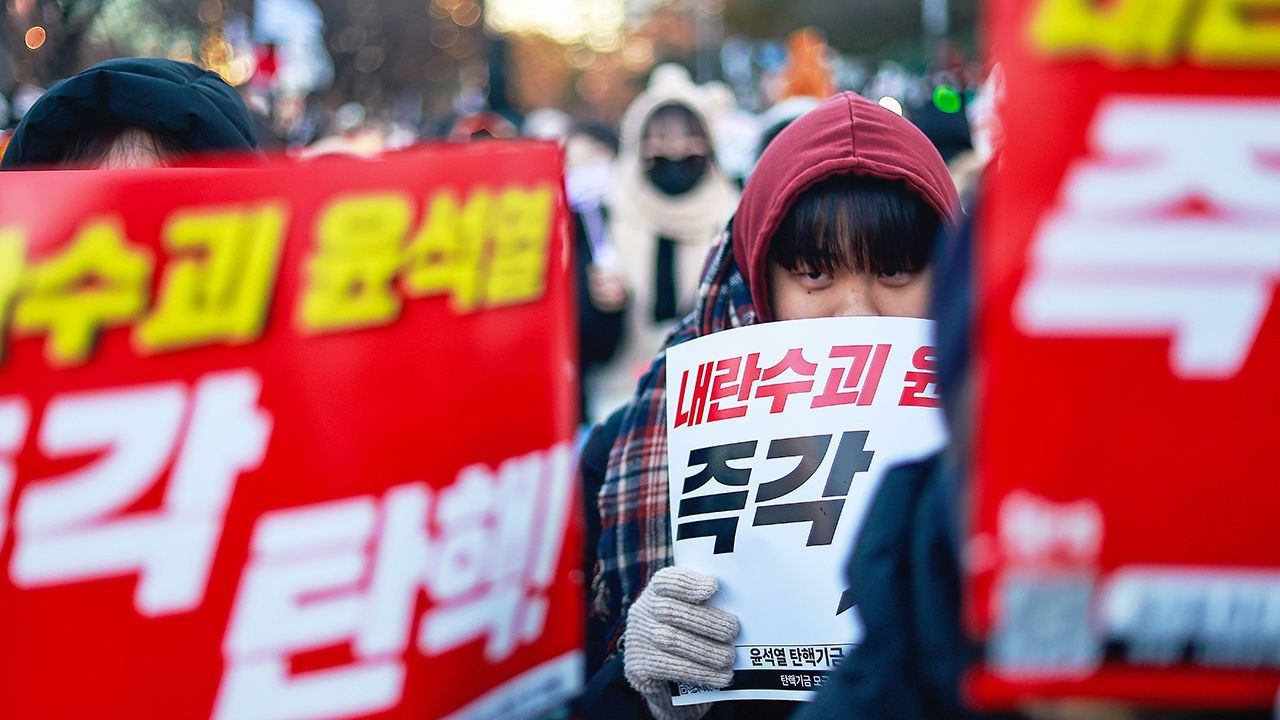
Pressure from the streets is also building. Protest movements have been a powerful force in the country’s history, from the democratisation process in the late 1980s to the impeachment of a former president, Park Geun-hye, in 2016-17. Tens of thousands gathered on December 7th. Smaller rallies have since persisted. The mood is carnivalesque, with music, dancing and vendors selling lighting sticks intended for K-pop concerts that have been plastered with anti-Yoon slogans. But the protests are fuelled by real fury. “I’m too old to be doing this in the cold, but I’m just so angry,” says Park Ju-yeon, a 62-year-old pensioner from Seoul who promises to continue until Mr Yoon is gone.
The picture of the fateful night of the coup has become only more disturbing as details have emerged. Troops were dispatched not only to the National Assembly, but also to the national election commission. Mr Yoon says this was to gather evidence of purported North Korean hacking (which he implies led to his party’s defeat in general elections in April). The president ordered the arrests of leading politicians, including Lee Jae-myung, the head of the DP, and even Mr Han. As farcical as the affair now seems, the intent was all too serious. One special-forces commander testified that Mr Yoon personally called him during the operation and ordered him to “break down the doors” and “drag out” the lawmakers inside.
Only a small cabal, many of whom graduated from the same high school as the president, knew of the plot in advance. Rhee Chang-yong, the governor of the Bank of Korea, was among many senior officials who learned of the impending martial law only when he saw Mr Yoon on television. The declaration was so unlikely that “I initially thought the video was a deepfake and that the television station had been hacked,” says Mr Rhee.
In retrospect, signs of Mr Yoon’s intentions had been visible. In recent months he had moved loyalists into key positions in the defence ministry and intelligence services. Opposition leaders had been warning of the possibility of martial law since August. Mr Yoon’s defence minister, Kim Yong-hyun, dismissed the idea as fearmongering during his confirmation hearings. He ended up being the first official arrested in connection with the plot; he attempted suicide while in custody.
Mr Yoon’s justification for his rash act is unlikely to convince many. Mr Rhee calls the move an “unnecessary and unimaginable mistake” and an “embarrassment”. Other current and former officials, politicians and diplomats use even starker language: shameful, stupid, crazy, surreal, unthinkable, outrageous, psychotic.
Liable to be a laughing-stock
The consequences will be far-reaching. Mr Yoon positioned his country as a democratic bulwark, even co-hosting, with America, a “Summit for Democracy” in Seoul this year. He promoted the idea of South Korea as a “global pivotal state”. He has instead made it look ridiculous.
American officials insist that their alliance with South Korea remains “ironclad”. Yet trust in it may suffer, especially since America had no advance notice, despite having nearly 30,000 troops stationed there. South Korea will also be in a worse position to manage Donald Trump, America’s president-elect. A longtime sceptic of the alliance, Mr Trump discussed withdrawing American troops from the Korean peninsula during his first term. South Korea’s best hope of changing his views was for its leader to forge a personal bond, but there is likely to be a leadership vacuum in Seoul when he is inaugurated.
The political crisis may well drag on for months. If the National Assembly approves a motion to impeach, the president will be suspended, with power passing to the prime minister in the interim. The constitutional court then must issue a final ruling within 180 days. The court has just six of its nine seats filled (three justices retired in October). While only six votes are needed to convict, in normal circumstances seven would be required for a quorum. It is a matter of debate whether the court could issue a verdict in its current state.
Prosecutors may get to the president even sooner. South Korean law makes treason an exception to presidential immunity. The National Assembly voted on December 10th to empower a special counsel. Investigators have already put Mr Yoon on a no-fly list and moved to search his office.
Mr Lee, the DP’s presumptive presidential candidate, faces his own legal problems, having been convicted of lying to investigators. (He calls the charges politically motivated.) The PPP hopes that his conviction will be upheld on appeal before the next election, barring him from running. A second constitutional crisis looms if he tries to stand regardless.
Any DP candidate will be favoured to win the new elections. If they do, foreign policy will be an area of “dramatic change”, reckons Kim Sook, a former ambassador. Those changes will probably frustrate Western governments that welcomed Mr Yoon’s alignment with America, Japan and Europe. The DP may bid for more engagement with North Korea, which has been happy to sit back and watch Mr Yoon’s antics. The relationship with Japan will face friction. DP leaders are also loth to aid Ukraine or Taiwan.
The impact on South Korea’s economy will probably be more muted. “There is a mechanism for economic issues to be dealt with irrespective of political issues,” says Mr Rhee. Mr Yoon’s finance minister has agreed to take part in a consultative body for emergency economic policymaking alongside the DP. Daily life has continued without interruption since the abortive martial-law attempt. Acute turbulence on financial markets proved short-lived. But prolonged political uncertainty will make it harder to tackle longer-term economic challenges. A DP president will want to implement labour-friendly policies, while corporate-governance reforms that Mr Yoon promoted may stall.
For all the turmoil, the incident has also highlighted the evolution and resilience of South Korea’s democracy. During Chun’s rule, Ms Park, the pensioner, and her husband, Hyeong-Bae, were too afraid to protest. Previous periods of upheaval, including the massacre of protesters by Chun’s forces in Gwangju in 1980, helped strengthen South Koreans’ dedication to democracy. “I hope this will be another of those episodes that feeds into that process,” says Mr Park. The film version, when it inevitably gets made, will write itself. ■
China | Language lessons
Why China is losing interest in English
Learning the world’s lingua franca is no longer a priority for students or businessmen
Photograph: Getty Images
Dec 12th 2024|BEIJING
IN PREPARATION FOR the summer Olympics in 2008, the authorities in Beijing, the host city and China’s capital, launched a campaign to teach English to residents likely to come in contact with foreign visitors. Police, transit workers and hotel staff were among those targeted. One aim was to have 80% of taxi drivers achieve a basic level of competency.
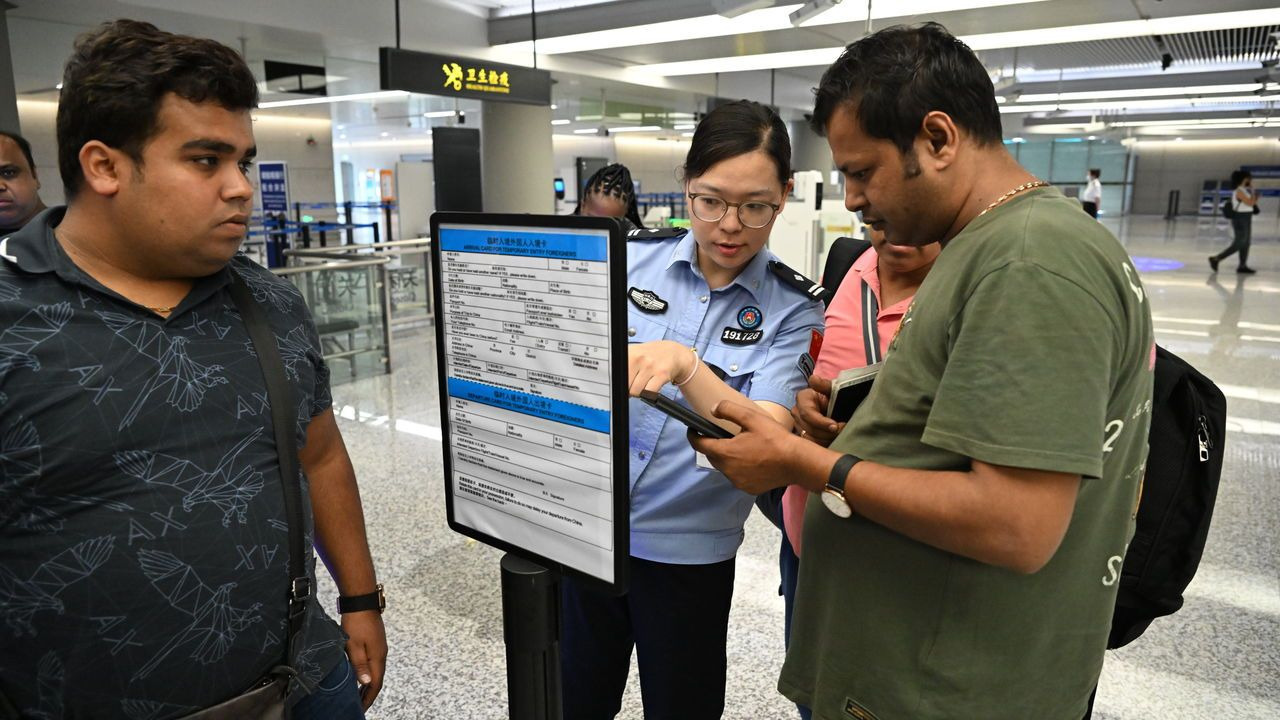
Today, though, any foreigner visiting Beijing will notice that rather few people are able to speak English well. The 80% target proved a fantasy: most drivers still speak nothing but Chinese. Even the public-facing staff at the city’s main international airport struggle to communicate with foreigners. Immigration officers often resort to computer-translation systems.
For much of the 40 years since China began opening up to the world, “English fever” was a common catchphrase. People were eager to learn foreign languages, English most of all. Many hoped the skill would lead to jobs with international firms. Others wanted to do business with foreign companies. Some dreamed of moving abroad. But enthusiasm for learning English has waned in recent years.
According to one ranking, by EF Education First, an international language-training firm, China ranks 91st among 116 countries and regions in terms of English proficiency. Just four years ago it ranked 38th out of 100. Over that time its rating has slipped from “moderate” to “low” proficiency. Some in China question the accuracy of the EF index. But others note that this apparent trend is happening when China is also growing more insular.
During the covid-19 pandemic, for example, China shut its borders. Officials and businessmen, let alone ordinary citizens, made few trips abroad. Long after the rest of the world began opening up, China remained closed. At the same time, China’s relations with the world’s biggest English-speaking countries soured. Trade wars and diplomatic tiffs strained its ties with America, Australia, Britain and Canada.
The mood is such that legislators and school administrators have tried to limit the amount of time devoted to the study of English, and to reduce the weight given to it on China’s all-important university-entrance exams. In 2022 a lawmaker proposed de-emphasising the language in order to boost the teaching of traditional Chinese subjects. The education ministry demurred. But a professor at one of China’s elite universities says many students consider English less important than it used to be and are less interested in learning it.
As China’s economy slows, people have become more cautious and inward-looking. Today fewer Chinese are travelling abroad than before the pandemic. Young people are less keen on jobs requiring English, choosing instead to pursue dull but secure work in the public sector.
Then there are translation apps, which are improving at a rapid pace and becoming more ubiquitous. The tools may be having an effect outside China, too. The EF rankings show that tech-savvy Japan and South Korea have also been losing ground when it comes to English proficiency. Why spend time learning a new language when your phone is already fluent in it? ■
China | China and America
MAGA with Chinese characteristics
Why many in China cheer for Donald Trump, despite his tariffs and team of hawks
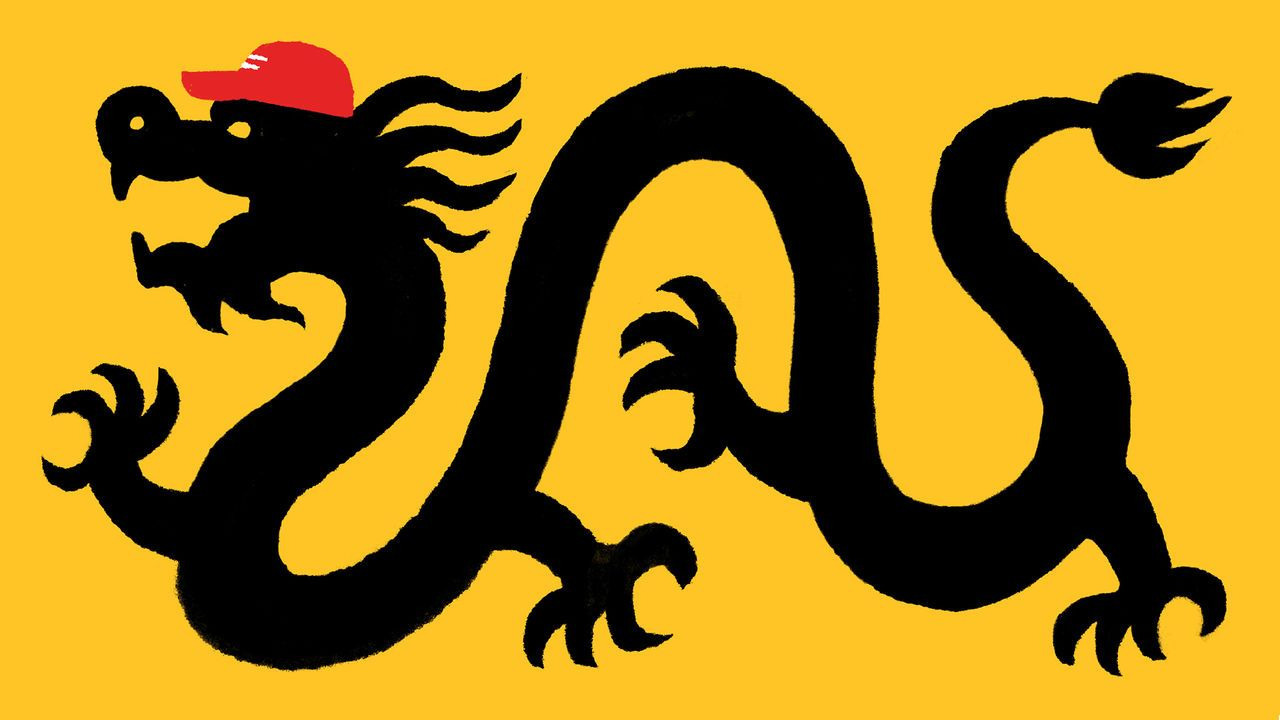
Illustration: Ben Hickey
Dec 9th 2024|BEIJING
THE INTERNET in China is not a friendly place for admirers of anything American. Fire-breathing nationalists, helped by censors who are quick to stamp out liberal views, rule the roost. Yet as China digests the implications of Donald Trump’s re-election as president, including his threat of huge tariffs on Chinese goods, many netizens see in him something to like. In their own world of economic anxiety and yawning social divides, strands of the MAGA movement seem familiar. China’s nationalists can be surprisingly Trumpian. Some of them are even pro-Trump.
To be sure, many of those who cheer for Mr Trump do so out of contempt for America. They share clips of his moments of buffoonery and sneer at his nominations for cabinet posts—don’t they prove what a sham democracy is, with jobs so flagrantly doled out to loyalists regardless of their suitability? The nationalists relish the thought that Mr Trump might weaken American support for Taiwan or end military aid for Ukraine. They refer to him by a nickname: Chuan Jianguo, meaning “Trump the Nation Builder”. It is supposed to be ironic—they mean he is making China stronger by undermining America.
But China’s nationalists also genuinely admire aspects of Mr Trump. They like his strongman image and the conservative social views he professes. “There are many lessons to be learned by our government departments about Trump’s coming to power,” wrote a doctor, Ning Fanggang, who has nearly 1.6m followers on the microblogging site Weibo and supports attacking Taiwan as well as condemning LGBT activism. “The most important takeaway is this: loud voices do not necessarily represent the true will of the people,” he said, referring to Democrats’ backing for LGBT rights. “Trump’s election revealed that the vast majority of ordinary people were opposed to those ideas deep down.”
In recent weeks Chinese nationalists have expressed outrage at a video showing Jin Xing, a transgender celebrity, raising a rainbow flag at a performance (Ms Jin was once a male colonel in a Chinese army dance troupe). They have also applauded Mr Trump’s campaign speeches on trans issues. A Weibo user with more than 700,000 followers posted a clip of one of them, in which Mr Trump pledged to “defeat the toxic poison of gender ideology”. Ms Jin and people like her, said the blogger, “must be hopping mad with rage”. Commenters agreed. “This is why I don’t want Trump to win,” said one. “Only Harris can make America even worse.”
Many of the nationalists brush off Mr Trump’s talk of imposing tariffs of 60% on Chinese goods. One of them is Ren Yi, a Harvard-educated princeling (as descendants of powerful politicians are known). Mr Ren goes by the name “Chairman Rabbit” on social media (his Weibo followers number more than 1.8m). He tells The Economist that Mr Trump’s instincts are not necessarily anti-China.
For example, he notes, the president-elect has suggested that he would reverse a ban on TikTok, a Chinese-owned video-sharing app, and invite Chinese carmakers to do business in America. The tariff talk is just a tactic, Mr Ren believes: Mr Trump might change his mind if Chinese companies invest in America. Mr Ren and other nationalists see promise in Mr Trump’s close associate, Elon Musk, whose car firm, Tesla, makes more than half of its vehicles in China. Some of Mr Trump’s picks for government posts may be China hawks, but others, like Mr Musk, seem to be “much more open” to China, Mr Ren says.
A particularly vocal group of nationalists is known as xiaofenhong, or “little pinks”. These young, fiercely patriotic netizens are not the kind of people who, in America, would be thought of as typical Trump supporters. Chinese academics say the pinks are often well educated and urban. The original little pinks were mainly young women, though the group is now more diverse. As with MAGA types in America, the main targets of their discontent are liberals at home, such as Ms Jin.
Public opinion in China is polarised. Culture wars rage, just as they do in America. Some nationalists share the misogynist worldview of young men in the West known as “incels” (involuntary celibates), who blame their inability to form sexual relationships on supposedly over-empowered and picky women. In China, such people sometimes self-deprecatingly call themselves diaosi, which literally means “dick hair”. They do endless battle online with China’s equally fiery feminists.
Cyber-liberals point out the irony of their opponents’ pro-Trump views. “Some so-called ‘little pinks’ and patriotic bloggers on Weibo spend their days opposing feminism and LGBT rights, demonising the left, and end up idolising one extreme anti-China, deranged right-winger after another,” wrote a Weibo user who has more than 390,000 followers after Mr Trump’s victory.
Pro-Trump sentiment, however, will not persuade China’s leader, Xi Jinping, to be better disposed towards America’s next president. Mr Xi shares the nationalists’ views on social values. And he would doubtless love it if Mr Trump were to prove as transactional on Taiwan, and as unsympathetic to Ukraine, as his supporters in China hope he will be.
But Mr Xi is surely anxious about Mr Trump’s return. It will make China’s relationship with America more unpredictable. It could also—if Mr Trump’s threatened tariffs do indeed materialise—further damage China’s struggling economy. America’s election may even have reminded the stability-obsessed Mr Xi of something the little pinks may be wary of saying out loud: citizens embittered by economic malaise can turn against elites. ■
Middle East & Africa | Getting away with murder
Kenyan women are fed up with rampant sexual violence
A spate of horrific murders has fuelled a campaign to end femicide
Taking the fight to the streetsPhotograph: Getty Images
Dec 12th 2024|Nairobi
Each fresh killing seems more gruesome than the last. In July the hacked-up remains of nine women were found stuffed into sacks in a quarry in Nairobi, Kenya’s capital. In September Rebecca Cheptegei, a Ugandan Olympic runner who was living in Kenya, was doused in petrol and set on fire by her estranged boyfriend. And in October police found the remains—apparently boiled, flesh methodically removed—of a female body near a cemetery in Nairobi.
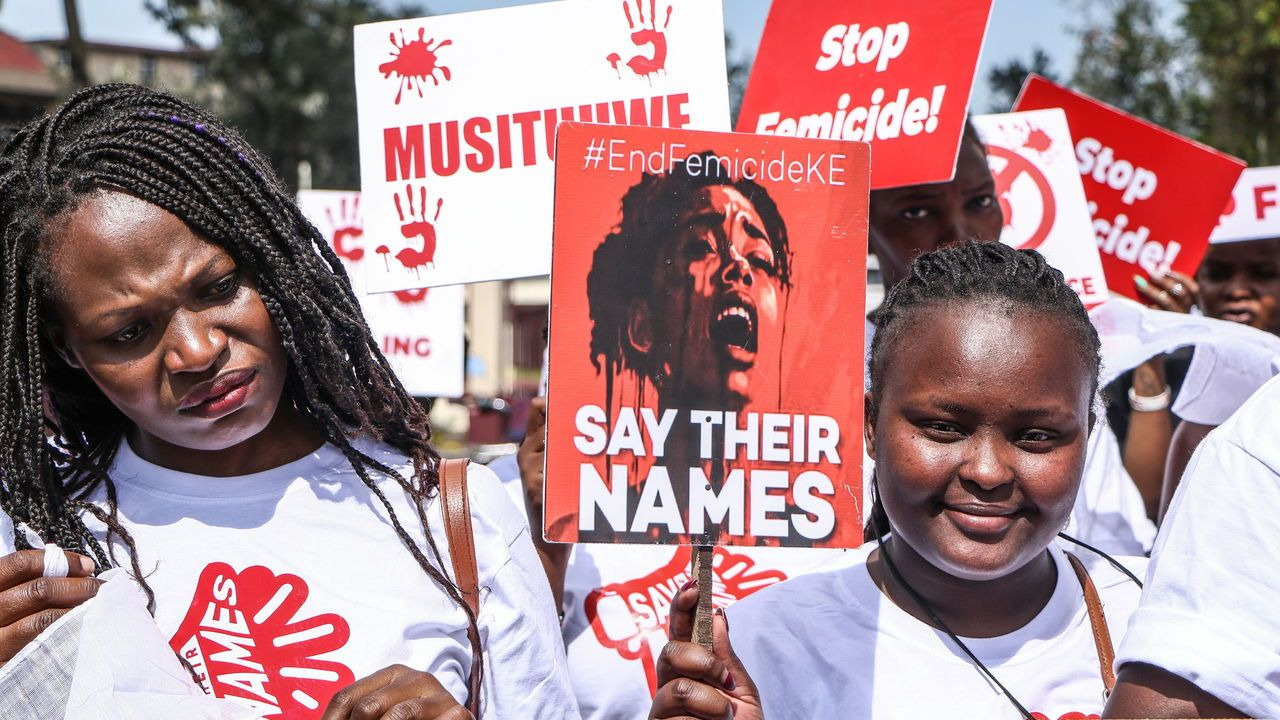
Kenyan women have had enough of the grim routine. Back in January 10,000 protesters took to the streets of Nairobi, after at least 31 women were killed in a single month. The protest sparked a sustained campaign to “end femicide”. Activists want the government to make the murder of a woman or a girl because she is female a specific crime. But misogynistic social-media influencers are stoking hate against women online. And there are signs that the violence is getting worse.
Campaigners have had some success highlighting the problem. A new survey by the Ichikowitz Family Foundation, a South African charity, finds that 95% of young Kenyans are worried about violence against women, a higher proportion than in any other country in Africa bar South Africa. Several MPs say that femicide should be declared a national disaster.
Yet a reduction in violence looks far off. A study by Africa Data Hub, a research group in Nairobi, counted more than 500 reports of femicide in the Kenyan media between 2016 and 2023, with a sharp spike between 2022 and 2023. The real number is likely to be much higher. Many crimes in Kenya are never reported to the police; only the most heinous killings make the news. “We can assume this is just the tip of the iceberg,” says Irungu Houghton of Amnesty International, a human-rights group.
If anything, things seem to have worsened in 2024. The number of reported rapes has increased by 40% compared with 2023, according to the government’s latest national-security report (though some of this may be down to improved reporting). Kenya’s deputy police chief notes 97 women were murdered in just the three months up to November, though it is unclear how many were killed on account of their sex. “Every single day you wake up and a woman has been killed somewhere,” says Muthoni Maingi, a leading campaigner.
Change is likely to be slow. In Kenya, as in many African countries, patriarchal values are entrenched. According to the latest demographic and health survey, more than a third of Kenyan women have experienced violence. Some 13% have experienced sexual violence. As elsewhere, the main perpetrators are intimate partners. Three-quarters of femicides counted by Africa Data Hub were committed by men who knew their victims.
Economic trends may have made things worse. In 2020, when covid-19 lockdowns slowed the economy, incidents of violence against women went up by more than 90%, according to Kenya’s National Crime Research Centre. Since then the economy has struggled; 67% of those under the age of 34 have no regular job. For men for whom “money is connected to his status as a man”, economic frustration may make them lash out against women in their lives, says Onyango Otieno, another activist.
Male anger is also being stoked online. A network of misogynistic influencers has exploded in recent years. Figures such as Amerix (whose real name is Eric Amunga) and Andrew Kibe boast huge followings of young men, to whom they offer advice on how to be “real men” and control their wives and girlfriends. Though no direct link can be drawn between individual murders and specific online influencers, Kenya’s “manosphere” “rationalise[s] women’s murders as part of disciplining women back into their traditional roles,” argues Awino Okech of the School of Oriental and African Studies in London.
On December 10th women were back on the streets of Nairobi. They expect little from the government. The dispiriting truth, says Wangui Kimari, an academic, is that in Kenya “it is easy to kill a woman, and get away with it.” ■
Middle East & Africa | Back in the dock
Binyamin Netanyahu is in court again in Israel
As he fights charges of corruption, his country’s democracy may suffer
Photograph: AP
Dec 12th 2024|Tel Aviv
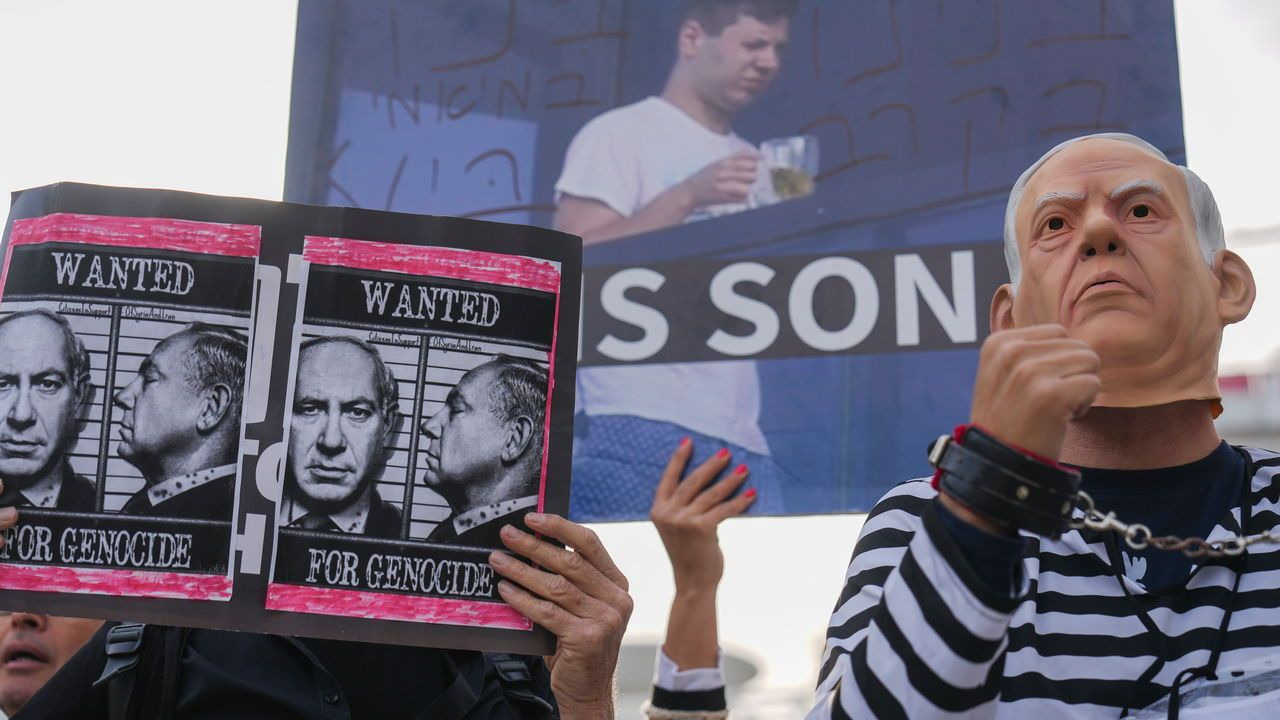
The small but noisy groups of protesters shouting at each other outside the Tel Aviv District Court on December 10th agreed on one thing. It was absurd for the man running a country, with wars on several fronts, to spend three days a week in court defending himself against complex corruption charges. Critics of Binyamin Netanyahu, Israel’s first serving prime minister to appear as a witness in his own defence in a criminal trial, think he should resign and face his manifold legal challenges as an ordinary citizen.
His supporters, however, are convinced he is indispensable. They consider the whole case a witch-hunt that should be called off. As for Mr Netanyahu, in recent weeks he has tried in vain to get a security assessment that it was dangerous for him to attend court at fixed times in the same place. Then he said he had too little time to prepare his testimony. Finally, he denied ever having tried to delay the show. “I’ve waited eight years for this moment,” he told the court. “I’m a marathon-runner” who can prevail “with 20kg on my back”.
The investigations into Mr Netanyahu’s affairs began in 2016. Charges of fraud and bribe-taking were laid against him five years ago. He is accused of accepting illicit gifts from rich benefactors and colluding with media barons to get favourable coverage. He strenuously denies all the charges.
At the start of his testimony Mr Netanyahu claimed that what the media say about him “is not really important”, then went on to explain in detail how journalism in Israel works and defended his meetings with publishers and editors to influence journalistic appointments.
The case has dragged on so long for many reasons, including covid-19, the war against Hamas since October 7th 2023, delaying tactics by Mr Netanyahu’s defence team, and the slow pace of Israel’s courts. Judges are overloaded partly because Mr Netanyahu’s coalition has tried to change the judicial-appointments system and, having failed to do so, has been obstructing the existing process.
Mr Netanyahu’s legal travails have been responsible for forcing the country to hold five elections in four years, as centrist parties have refused to join a government led by an indicted prime minister. In 2021 he lost power for 18 months but came back at the end of 2022 with a coalition supported by far-right and religious parties that share his hostility to Israel’s courts.
The ambitious judicial reforms that he promoted last year aimed to weaken the Supreme Court and independent legal counsel to government but were largely stymied by a massive wave of protest. They were then dropped in the name of national unity after last year’s war in Gaza began.
But in recent months his government has restarted the campaign to increase control of parts of the state. This includes laws now going through the Knesset, Israel’s parliament, that would let politicians fire the attorney-general and control the appointments of the commissioner of the civil service and of the ombudsman investigating complaints against judges. Other laws would grant members of parliament virtual immunity from investigation and would defund or privatise Israel’s stubbornly independent broadcasting corporation. In his autobiography in 2022 Mr Netanyahu says he has “always been a staunch believer in liberal democracy” and been “immersed since my teens in its classical texts”. That assertion may be tested under cross-examination by the prosecution.
Mr Netanyahu is the first of many witnesses for the defence. It could be years before a verdict is reached. But Israel’s courts have held Israeli leaders to account before. Ehud Olmert, a former prime minister, was jailed for bribery. Mr Netanyahu is determined to avoid that fate. But by clinging to power by every means, he may undermine Israel’s democracy. ■
Europe | La excepción
Spain shows Europe how to keep up with America’s economy
Reforms a decade ago are bearing fruit with high-tech success

Photograph: dpa
Dec 12th 2024|Madrid
“Spain is becoming a global reference point for prosperity,” boasted Pedro Sánchez, the country’s prime minister, at a congress of his Socialist Party in Seville on December 1st. While Europe’s other large economies are plunged in gloom, Spain’s is soaring. It is set to grow 3% this year (see chart 1), almost four times the euro-area average. Hit harder than most by the pandemic, it now boasts 1.8m more jobs than at the end of 2019. Investors have noticed: with faster growth and a lower fiscal deficit than France, Spain has seen its bond yields dip below those of its northern neighbour for the first time since 2007.
With packed restaurants and throngs of shoppers, Madrid is enjoying a palpable pre-Christmas buzz. But how long can the good times last? Forecasters expect Spain to outpace its peers for at least the next two years, helped in part by large dollops of Next Generation funds, the European Union’s post-pandemic aid scheme. The country is the biggest beneficiary of these after Italy. Much of the expansion has been driven by immigration, tourism and public spending, which may all eventually tail off. But some of the growth comes from non-tourist service exports, by companies ranging from tech firms to engineering consultants. And that bodes well.
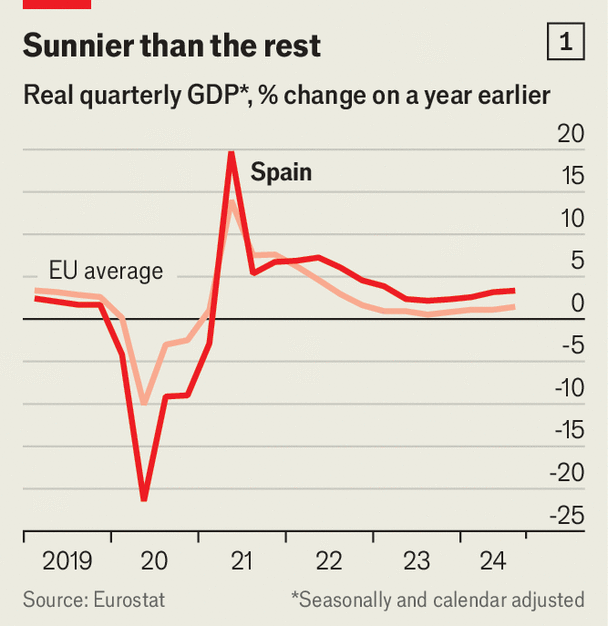
Chart: The Economist
Take Smartick, an educational software company based in Pozuelo, a well-heeled suburb of Madrid. It uses big data and AI to provide pupils with individualised learning materials in maths, reading and coding. Founded in 2009 by Javier Arroyo and a fellow management consultant, it is poised for growth. Mr Arroyo expects to double the firm’s €10m ($10.5m) of annual sales in three years, with most of the expansion coming from abroad. “There’s now a startup culture that wasn’t there five or ten years ago,” Mr Arroyo says. “Spain is starting to figure in the digital world.”
During the pandemic, non-tourism service exports overtook tourism revenues for the first time. But the travel sector is booming too, with over 90m visitors expected this year, a record. That has produced outbreaks of tourism phobia among locals.
The tourism boom is also one of the reasons for immigration: a quarter of those who work in hospitality are foreign-born. Spain’s population has increased by 1.5m in the past three years (to 48.9m), with nearly all the increase due to immigration (see chart 2). Latin Americans, with the same language and a similar culture, make up 70% of the recent arrivals, which has reduced friction. Whether immigration can continue at this pace depends in part on the availability of housing. “It’s a bigger bottleneck than ever,” says Rafael Domenech of BBVA, a bank.
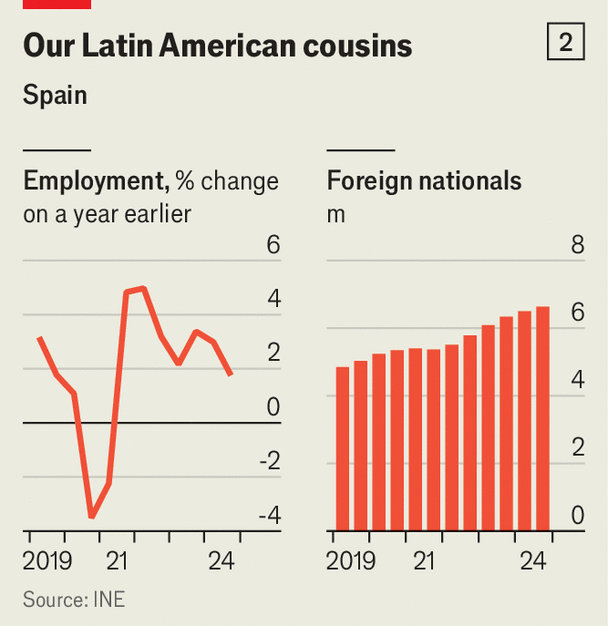
Chart: The Economist
But with around 90% of the new jobs going to immigrants, income per person has barely grown. That explains a paradox: “The macroeconomic picture is extraordinary but the social perception of it is not,” says Raymond Torres of Funcas, a think-tank. Although the inflation triggered by Russia’s invasion of Ukraine has subsided, in real terms the income of a family who stayed in the same jobs is slightly below that of 2019. Only in the past year or so have average real wages started to rise. Officials point out that thanks to Mr Sánchez’s big increases in the minimum wage, the incomes of poorer Spaniards have risen faster than the average.
Worryingly, investment by the private sector lags behind the rest of the economy. It is still below its 2019 level. Until the pandemic interrupted it, Spain’s economy was growing at a respectable 3% or so a year between 2015 and 2019 and adding jobs faster than in the past. This owed much to reforms of the financial system and the labour market pushed through by the previous conservative government during the great recession. “Spain is still living from that,” says Iñigo Fernández de Mesa of the employers’ association.
A second labour reform in 2021, under Mr Sánchez, preserved labour flexibility and added a crackdown on the abuse of temporary contracts. But business leaders blame the slowdown in investment on more recent government policies. They complain especially of constant tinkering with labour rules and a relentless rise in taxes. As a result, “businesses are on hold, waiting,” says Juan María Nin of the Circulo de Empresarios, a business think-tank.
Since an election last year, Mr Sánchez’s minority government has had to accommodate the conflicting demands of half a dozen leftist and nationalist parties which sustain it in parliament. Amid chaotic parliamentary scenes last month, it managed to get approval for tax rises worth €4.5bn (0.3% of GDP). They include an extension for three years of an emergency tax on the interest and fee income of banks, initially brought in as a temporary measure when interest rates rose in 2022. Bankers grumble that this involves double taxation and will force banks to become more cautious in granting credit.
Officials note that banks and businesses are making healthy profits. The bank tax “has generated revenues to finance the social safety-net”, says Carlos Cuerpo, the economy minister. He says he expects investment and private consumption to be the main motor of growth from now on. The tax rises will also help the government meet its policy of gradually reducing the fiscal deficit and thus secure the next tranche of EU aid. “We think a soft landing is possible,” says Mr Cuerpo. That may well be true for the public finances. The proof of the Spanish model more broadly now lies in the rate of investment. ■
International | The Telegram
The Art of the Deal: global edition
Donald Trump will have vast leverage over American allies, but ruthless despots may resist his dealmaking
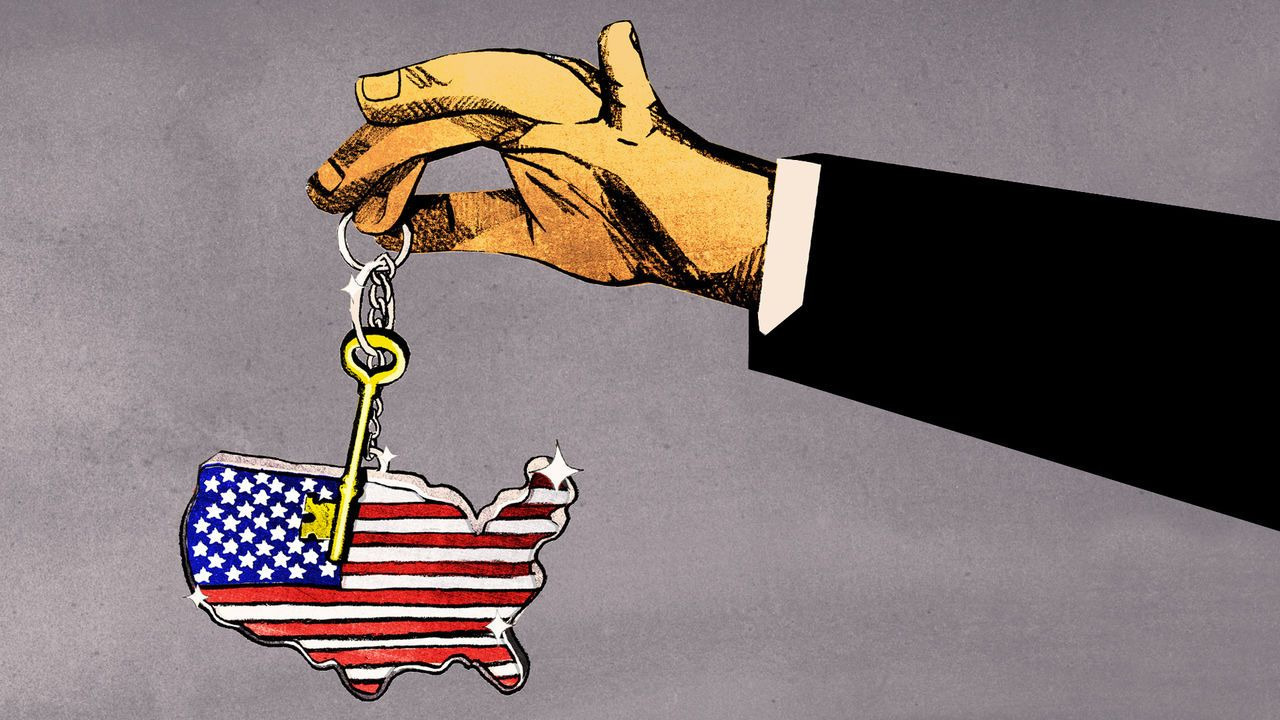
Illustration: Ellie Foreman-Peck
Dec 10th 2024
WITH THE right portfolio of assets, property developers enjoy tremendous power over architects, builders and potential tenants. Yet even the richest have little leverage over arsonists.
That bricks-and-mortar framing is surprisingly helpful for understanding why America’s next president is both right and wrong about his ability to reshape the global order. The Telegram is willing to risk a prediction: in his second presidency, Donald Trump will wield tremendous power over allies and countries that profit from ties with America. With adversaries ready to burn relations with the West to the ground, his grip will be less sure.
Mr Trump sounds confident that he has leverage on all fronts. Big economic partners, whether that means Canada, China, the European Union or Mexico, have been warned to brace for tariffs on their exports, followed by calls to renegotiate terms of trade with America. At the same time, Mr Trump has pledged to end Russia’s war with Ukraine within 24 hours. He has warned Hamas to release hostages taken in Israel on October 7th 2023, or face being “hit harder than anybody has been hit in the long and storied history of the United States of America”.
The strengths and limits of this approach are apparent to American and foreign officials who watched Mr Trump’s first presidency up close. It is striking how often the same insiders draw lessons from his career building casinos, hotels and golf courses. Indeed, go back to interviews that Mr Trump has given over many years, and he sometimes makes America’s economy sound like the world’s most valuable bit of real estate. Because he thinks previous American presidents were “suckers” who let foreign partners pay too little for access to it, he is ready to impose aggressive rent reviews.
In Mr Trump’s first presidency, numerous allies endured his dealmaker’s scrutiny. This was often a humiliating experience. In June 2017 Panama’s then-president, Juan Carlos Varela, secured a meeting in the Oval Office, a visit liable to boost him with voters back home. During their encounter, Mr Trump questioned why American warships pay to use the Panama Canal, which returned to Panamanian control in 1999. Mr Trump told his Panamanian guest that surrendering the canal zone was a terrible deal and that “we should take that thing back”, recalls America’s then-ambassador to Panama, John Feeley. To his relief the Panamanian leader, whom he had “assiduously prepped” to avoid confronting Mr Trump at all costs, tactfully changed the subject, Mr Feeley says. Mr Varela asked his host: “Mr President, can I ask you a question? How are you doing in Syria?” (America is winning, he was told.)
Another former American official watched Mr Trump bullying a string of allies, and draws links to his business career. As a developer, Mr Trump routinely told suppliers to lower their prices after they had completed projects. Some sued. Others wanted future business so gave in. “He always stiffed his subcontractors,” notes that eyewitness. “To him, allies are like subcontractors.”
Many times, Mr Trump’s “unconventional thinking cut to the quick of things”, the former official goes on. Mr Trump asks “very good questions” and was “a wrecking ball to things that needed to be disrupted”. He had a patchier record when it came to building sturdier alternatives. Too often, his ambitions were thwarted by his impatience with detail, and by his struggles to understand foreign leaders guided by incentives very different from his own.
For all his tough talk, Mr Trump wants to be loved, seeing himself as a man of destiny sent to protect ordinary Americans’ interests, says the former official. He craves the approval of financial markets and of very rich people, whose wealth he takes as a proxy for brilliance. Truly cold-blooded rulers confound him. “Someone who is utterly ruthless, and who will slaughter anyone they need to, Trump can’t get his head around that.” In his first presidency, the businessman was “totally shocked” by intelligence briefings about Syria’s then-dictator, Bashar al-Assad, using poison gas on women and children in his own country. In contrast, the same former official watched Mr Trump failing to fathom leaders who acted on humanitarian impulses, as when Germany’s then-chancellor, Angela Merkel, told him she had allowed Syrian refugees into her country because it was the right thing to do.
Not everyone wants to build beach resorts
Those same blind spots could become apparent once more when Mr Trump returns to office. President Vladimir Putin is willing to sacrifice terrible numbers of Russian lives to keep pushing deeper into Ukraine. Given that the Russian leader is currently winning ground while Ukraine suffers a crisis of manpower and morale, some Western officials wonder why Mr Trump imagines he can force Russia to stop the war soon. Trumpian threats to strike Hamas are equally unconvincing, for that terrorist group is willing to see Gaza destroyed to advance its fanatical goals.
A former Western diplomat says that Mr Trump placed excessive faith in economic incentives, as when he left an Obama-era pact to constrain Iran’s nuclear programme, the JCPOA, in 2018. Trump aides told allies that their builder-boss saw the pact as an edifice with bad foundations, fit only for demolition. The JCPOA was imperfect, agrees the former diplomat. Still, it imposed real curbs on Iran and Mr Trump’s rebuilding plan was worse: he asserted that harsher sanctions would swiftly bring Iran to its knees, leaving its rulers begging for a new deal. This did not happen. Nor was North Korea’s hereditary despot, Kim Jong Un, swayed by Mr Trump’s invitation to abandon nuclear arms and develop his country’s beaches for tourism. To the former diplomat, Mr Trump is constrained twice over: by his “vast lack of knowledge about abroad” and by his instinct that America should disengage from foreign wars. In a world on fire, the art of the deal has limits. ■
Business | Bartleby
The employee awards for 2024
Least accurate website photo. Best AI-washer. Let’s celebrate our winners

Illustration: Paul Blow
Dec 12th 2024
It’s that time of year again, when we celebrate our successes and gloss over our failures. For our 2024 employee awards we have all our classic categories, from team member of the year and newcomer of the year to the big one: employee of the year. As usual, the winner of that award will enjoy a weekend away in a location of our choosing.
But first, we have taken on board last year’s criticisms that these awards have an overly traditional view of achievement. We are fully committed to inclusivity and have introduced several new categories this year to reflect the extraordinary range of contributions that all of you make. Please join me in congratulating our debut winners.
Most likely to make an irrelevant point. There was enormous competition in this category; several people who took part in the judging process ended up coming close to winning. But we’d like this to go to Violet. None of us could recall a discussion when she had not made a point; none of us could remember a time when that point was salient.
Least punctual colleague. We used actual data to track arrivals in virtual meetings. We can see that Akshat arrives 12 minutes late on average, which is enough to earn him a commendation. But the winner is someone called Mandy, who did not turn up to a single meeting to which she was invited. We are currently trying to work out who this person is and why no one has ever heard of her.
Least accurate website photo. Again, a very hotly contested category. A few colleagues appear to be using their passport photos: they are doing themselves a disservice. But most people look younger, friendlier and more attractive than they actually are. The prize in this category goes to Paul, who resembles a promising young novelist on the site and looks like a repeat offender in real life.
Most likely to nominate themselves for an award. This (self-nominated) category honours those who know the value of self-promotion and struggle with irony. We think this category may well be a reliable guide to spotting our leaders of tomorrow. So well done, Willem.
Source of greatest uncertainty over what they actually do. All of our senior leadership team received lots of nominations. So did the marketing and HR departments. But the clear winner is the strategy office. No other team received more nominations from its own members than this one, which is surely an achievement worth marking.
Most disliked item of clothing worn by a co-worker. We can’t get any of you to answer the employee survey except through veiled threats. But give people permission to weigh in on how their colleagues dress and suddenly everyone has a view. Overly tight T-shirts, sweaters with holes in them, weirdly jaunty scarves, those terrible trousers: they all featured. But in the end no one wanted to look beyond, or at, Bogdan’s shorts.
Longest co-working relationship without conversation. Sylvie and Edgar have been colleagues for 19 years and have recently only moved to nodding terms. They are both gearing up to say “hello” to each other some time in 2032, and we’ll keep a very close eye on their progress. Well done, both of you.
Greatest cyber-security threat. It’s not the Russians but Danny in the client-services team. He clicked on every single phishing email we sent last year in order to test your awareness of the risk of hacking. Out of curiosity we ended up sending him customised test messages, including one headlined “DANGER: This contains a virus” and another titled “For God’s sake, Danny, do not open this”—and he opened all of them. He has taken all our cyber-security courses and we don’t know what to do next.
Best piece of AI-washing. We’re genuinely impressed by your efforts to shoehorn mentions of artificial intelligence into everything you do. Product descriptions, marketing copy and strategic plans all overflow with exaggerated references and promises. But we’d like to give this award to DAIsy for starting to sign her name like that.
Darwin Nuñez bin-thrower of the year. This award goes to the person who misses the bin most often when they toss stuff at it. We’ve reviewed the footage and Mariano takes the prize. No matter what he is throwing or how close he is, his aim is off. He wins a bigger bin.
Least likely to succeed. We were simply unable to make a decision on this award. But the fact that so many of you were in with a shout says something. Everyone here can have an impact, even if it is negative. Congratulations, all!■
Business | Schumpeter
Tesla, Intel and the fecklessness of corporate boards
Too many directors at American companies aren’t doing their job
Illustration: Brett Ryder
Dec 12th 2024
SITTING ON THE board of a large American company is at once the plummest and most thankless work in business. Plum because, when everything is going right, you pocket $300,000 a year in cash and stock for showing up to a well-catered meeting every month and a half. Thankless because you seldom get credit for things going right but take the blame when they go awry. And awry they go with disturbing regularity.
Consider two recent events. On December 2nd directors of Intel sacked its hapless chief executive, Pat Gelsinger. He had torched $150bn in shareholder value over his three-and-a-half-year tenure at the chipmaker, even as the fortunes of virtually all other chip firms were boosted by white-hot demand for computing power amid the artificial-intelligence (AI) revolution. Good riddance, then. But what took the board so long?
The same day, a judge in Delaware reaffirmed her ruling from January to annul the eye-watering $56bn compensation package awarded in 2018 to Elon Musk by the board of Tesla, his electric-car company. The decision is controversial. Tesla’s shareholders have minted it lately thanks to the soaring price of the company’s stock. In June 75% of them voted to bless the mega-paycheque (and move the company’s incorporation from Delaware to management-friendlier Texas). Tesla called the latest ruling “wrong” and will be filing an appeal. Still, the imbroglio is a reminder that Tesla’s notionally independent directors who signed off on Mr Musk’s windfall were, in a judge’s opinion, anything but.
Intel and Tesla represent two ways in which boards fail in their duty to represent investors and hold management to account. The case of Tesla shows how directors at the mercy of a domineering figure—be it a controlling shareholder, an imperial CEO or, like Mr Musk, both—have a powerful incentive to humour that person’s whims even if it might mean ignoring their fiduciary obligations. Equally, as possibly happened at Intel, thoroughly independent directors may lack enough of an incentive to care. Either way, the result looks like feckless passivity.
Certain features of American capitalism are making both problems worse. For a start, more companies are going public with ownership structures in which some shares are more equal than others. Jay Ritter of the University of Florida keeps a tally of businesses that opt for such dual-class shares. When Google famously did so 20 years ago, they were a rarity. In the 2000s they accounted for fewer than one in ten initial public offerings on American exchanges. In the past five years they made up more than a quarter—and nearly half of tech IPOs, from Airbnb to Zoom.
Dual-class arrangements appeal to founders, who are happy to take money from public markets but not to give up control. Investors used to be suspicious. After Snap, a social-media firm, sold stock with no voting rights in 2017, some of them persuaded S&P Dow Jones, a compiler of indices, to bar new arrivals with multiple share classes from the blue-chip S&P 500 and its sisters.
Many have since had a change of heart, no doubt impressed by the trillion-dollar market values of dual-class darlings like Alphabet, Berkshire Hathaway and Meta. So has S&P Dow Jones, which in 2023 rowed back its ban. In January Mr Musk mused about adopting the structure at Tesla, apparently out of fear that his mere 13% stake makes him vulnerable to be “voted out by some random shareholder-advisory firm”.
Investors may be right to conclude that a heroic entrepreneur alone can lead a company to greatness. But they should have no illusions about the resulting emasculation of their representatives in the boardroom. This is easier to swallow when returns are healthy than when they are not. Just ask the shareholders of Snap, which is worth a third less today than at its IPO.
The rise of emasculated directors is coinciding with that of absentee ones. Most are physically present at board meetings but, like at Intel, too many appear disengaged. In the latest annual survey by PwC, a consultancy, only 30% of executives rated their board’s performance as good or excellent. A fifth thought it poor. Most telling of all, 84% of executives did not think that directors overstepped the boundaries between themselves and management. Often this is precisely what a vigilant board ought to do.
One reason for directors’ disengagement may be overcommitment. This was brutally exposed by covid-19, when boards often convened weekly rather than every seven weeks or so. A subsequent backlash against “overboarding” forced many directors to split their time between fewer companies. The typical busy S&P 500 director now sits on two boards, manageable in non-pandemic times. But this has been offset by the rising number of hours they spend on board duties as the world gets more complicated.
Directors’ rut
Companies are also finding it harder to recruit heavy-hitters who won’t nod off. A headhunter recalls that chief executives, a mostly white and male bunch, were out of favour amid the push for greater diversity a few years ago. “Now that is the only thing companies want.” With the share of active or former chief executives on S&P 500 boards in decline over the past few years, many won’t get it.
There is no recipe for a perfect board. But some ingredients may make them better. Lucian Bebchuk of Harvard Law School proposes “enhanced-independence” directors, whose dismissal by an imperious boss can be vetoed by minority shareholders. A version of this exists in Britain and Israel. And whereas a board’s size or average age seems not to affect investor returns, S&P 500 firms with a wider age range tend to do better. Expedia’s eldest director, Barry Diller, a media baron, is 55 years older than the youngest, Alex Wang, an AI billionaire. Perhaps intergenerational tiffs keep everyone else on boards alert. ■
Finance & economics | Buttonwood
Bitcoin is up by 138% this year. It is a nonsense-free rally
The link between digital assets and mainstream finance is strengthening
Illustration: Satoshi Kambayashi
Dec 12th 2024
BITCOIN IS BACK. Since Donald Trump’s election victory on November 5th, the world’s dominant cryptocurrency has surged to new heights above $100,000 a unit, enjoying a rise of 138% since the start of the year. Altogether, the world’s cryptocurrencies now have a market capitalisation of almost $4trn—making them more valuable than the entirety of Britain’s stockmarket.
Holders of digital assets certainly have reason to be excited. Mr Trump has nominated Paul Atkins, a lawyer and head of a crypto-advocacy group, to lead the Securities and Exchange Commission, America’s main financial regulator. The incoming administration is surrounded by Silicon Valley moguls who believe that regulation and enforcement have held back the crypto industry. A proposal by Cynthia Lummis, a Republican senator, for a government reserve of 1m bitcoin may be absurd, but it no longer seems impossible.
As such, today’s crypto surge looks different from earlier booms. Rallies in 2017 and 2021 dovetailed with rising excitement over new crypto use cases. The most fanatical believers envisaged a future in which the tech would take over the financial world, displacing stodgy existing institutions. This time, there is less hyperbole. Bitcoin, in particular, is being whipped into shape by large, mainstream investors. And so the way the market behaves is changing. The utopian exuberance of earlier crypto adopters is giving way to a more institutional and mercenary climate.
Hedge funds are the most prominent members of the new wave of investors. In the third quarter of the year, even before bitcoin’s recent surge, BlackRock’s bitcoin exchange-traded fund had grown to become the fourth-largest ETF in the hedge-fund world, with a long position worth $3.8bn. A survey by PwC and the Alternative Investment Management Association suggests that 47% of traditional hedge funds now invest in digital assets, up from 21% in 2021.
When it comes to decentralised finance and web3, the optimistic (and often deluded) fads from the last great crypto surge, investor interest has waned dramatically. Some $7bn has been raised by startups in these fields this year, according to Crunchbase, a data provider, roughly the same as last year and far below the $34bn raised in 2021. The VanEck Digital Transformation ETF, which invests in a bundle of crypto-adjacent firms, is down by more than 40% from its high in 2021. The floor price of non-fungible tokens (NFTs) issued by CryptoPunks on the Ethereum blockchain may be up by 20% this year, but it is down by almost 70% from its high in 2021.
In its focus on untrammelled speculation, the current rally is much more straightforward. What matters for new owners of bitcoin is the prospect that the line will continue to go up. Crypto is a highly volatile asset that prospers in relatively brief periods of rising risk appetite, a feature that its new owners value. Very few hedge-fund managers booking a triple-digit return on bitcoin will lose sleep over whether crypto will fulfil the lofty aims of early adopters.
The changing of the guard is more than just a transition from shorts and t-shirts to chinos and Patagonia gilets. Indeed, it is already altering how crypto markets move. Research by Alexander Copestake and Davide Furceri of the IMF and Tammaro Terracciano of IESE Business School suggests that crypto is becoming more closely bound to other risky asset markets, as it is now connected by institutional investors who own both. As a result, the market has become more sensitive to monetary-policy changes by the Federal Reserve, since demand for the asset is more closely tied to the overall appetite for risk in stockmarkets. Financiers and asset managers are not in the business of HODLing—crypto parlance for buying and holding assets indefinitely, no matter the news. They will sell to take profits and offset losses suffered in other asset classes.
If the regulatory threat to the industry does recede, it seems likely that the institutional adoption of crypto will accelerate, especially when it comes to bitcoin—tying the market closer still to more traditional ones. Crypto’s true believers will find themselves in an awkward position. Bitcoin and its ilk might be rallying but the surge is being driven by the increased institutionalisation of the asset class. That will make it more ordinary, and more linked to the ups and downs of the regular financial world, which advocates had hoped to replace. At least they can comfort themselves with simply enormous profits.■
Finance & economics | Free exchange
What a censored speech says about China’s economy
If growth is on target, why is inflation so low?
Illustration: Álvaro Bernis
Dec 12th 2024
At this time of year, many policymakers want to know how fast their economies will grow in the year ahead. China’s leaders set themselves a still tougher question: how fast their economy “should” grow. They are seeking not a forecast but a target.
The Central Economic Work Conference will conclude as The Economist goes to press. At the event, Communist Party officials will have debated whether to stick with this year’s growth target of “around 5%”. Their answer, which is not usually revealed until March, will guide fiscal and monetary policymaking in the year ahead, as well as the borrowing and spending plans of state-owned enterprises. Early signs suggest that officials will set an ambitious goal. In recent days party leaders have promised “extraordinary” efforts to fight China’s slowdown, including a “moderately loose” monetary policy and a “more proactive” fiscal policy. They have also resolved to boost consumption “vigorously”.
So what number should they pick? The textbook answer is that an economy should expand as fast as it can without jeopardising price stability. If GDP exceeds its speed limit (the “potential” rate of growth) demand will outstrip supply, and inflation will rise uncomfortably. By this yardstick, China’s economy has room to accelerate. Consumer prices rose by only 0.2% in November, against a year earlier, far below the government’s ceiling of 3%.
In China, though, the link between growth and inflation is puzzling, according to Gao Shanwen of SDIC Securities, a financial firm. The two used to have a steady relationship. Core inflation (excluding volatile food and energy prices) rose or fell in line with the “output gap” between potential and actual GDP. Yet this relationship has broken down in the past two years, he argued during a recent talk in Shenzhen, a southern tech hub. Growth has been close to the speed limit; inflation has been “abnormally” low.
Perhaps the problem lies with the data. “China’s economic data is generally good,” he said, diplomatically. “But some data are better than others.” Prices, for example, are relatively easy to collect. You can leave your Shenzhen hotel and look up the price of an apple at a shop door, he pointed out to his conference audience. Calculating GDP is trickier. So if growth and inflation are suddenly out of whack, maybe growth has been overstated. Cut three percentage points from China’s growth—reducing it from about 5% to about 2% for this year, for example—and its relationship with inflation becomes “completely normal”, Mr Gao said.
Mr Gao highlighted a similar mismatch between China’s growth and its retail sales, which used to expand faster than GDP, but have underperformed it more recently. Retail spending has been particularly weak in provinces with fewer elderly people. In China, paradoxically, the most youthful provinces seem the least dynamic. The country is “full of vibrant old people, lifeless young people and middle-aged people who have lost hope”, he said.
What explains their gloom? One answer is the country’s property slump. Yet Mr Gao suspects that weak retail spending and lacklustre home purchases reflect something deeper: doubts about future job prospects. In China’s cities employment has grown more slowly than its pre-pandemic trend. The cumulative shortfall from 2021 to 2023 amounts to 47m jobs, he calculates, or about 10% of urban employment. Such an undershoot casts further doubt on China’s GDP data: if employment is one-tenth below trend, perhaps true GDP is 10% below the official figure.
Mr Gao’s talk was widely circulated online, then swiftly censored. But just because the government suppressed it does not mean it is true. Amid all the fuss, some of Mr Gao’s claims were misreported. Others remain poorly understood.
Start with the 47m missing jobs. This finding has been wrongly interpreted as 47m extra unemployed people. In fact, many of these missing urban workers, Mr Gao was careful to point out, either stopped looking for work (in which case they do not technically count as unemployed) or left cities in search of jobs elsewhere. Rural employment, Mr Gao calculates, has exceeded its historical trend by over 41m across the same three year-period.
Farm out
Moreover, the 47m figure seems to yoke together a shortfall in 2021 (of 5m), 2022 (22m) and 2023 (20m). Mr Gao perhaps has in mind a measure more akin to man-hours or “person-years” than urban employment. If a ten-person firm loses an employee to sickness for two years, it has lost two person-years, but it is still only a man down. Similarly, cities lost 47m person-years of work from 2021 to 2023, but as of last year, were only 20m people down. Assuming workers found rural jobs, operating at a quarter of urban productivity, the hit to GDP in 2023 would be about 2.5%, not 10%.
The broken relationship between inflation and output is also not proof that GDP is wildly miscalculated. In theory, when growth is close to the speed limit, inflation should not be falling, but it can still be low. And in practice, links of this kind can be treacherous. After Japan’s central bank loosened policy in 2013, the output gap vanished, even as prices stayed flat. The central bank blamed “a deflationary mindset” and stubbornly low price expectations. Thus soft prices may reflect the same subdued view of the future that Mr Gao sees at work elsewhere in China’s economy.
Mr Gao’s speech clearly upset Chinese officials, who do not want incisive commentary to further undermine the public’s morale. But the party’s recent promise of loose, proactive and vigorous policy suggests they broadly share Mr Gao’s prescriptions. Policymakers, he said, have more work to do to stimulate the economy by easing monetary policy, expanding government borrowing and bolstering financial institutions. Analysts can have doubts about how fast China’s economy is truly growing, and still feel sure that growth should be faster. ■
Science & technology | The Babel wish
Machine translation is almost a solved problem
But interpreting meanings, rather than just words and sentences, will be a daunting task
Illustration: Mark Pernice
Dec 11th 2024|Lisbon
Vasco Pedro had always believed that, despite the rise of artificial intelligence (AI), getting machines to translate languages as well as professional translators do would always need a human in the loop. Then he saw the results of a competition run by his Lisbon-based startup, Unbabel, pitting its latest AI model against the company’s human translators. “I was like…no, we’re done,” he says. “Humans are done in translation.” Mr Pedro estimates that human labour currently accounts for around 95% of the global translation industry. In the next three years, he reckons, human involvement will drop to near zero.
It is hardly a surprise that the AI model-makers are bullish, but the optimism feels apt. Machine translation has become so reliable and ubiquitous so fast that many users no longer see it. The first computerised translations were attempted more than 70 years ago, when an IBM computer was programmed with a vocabulary of 250 words of English and Russian and six grammatical rules. That “rules-based” approach was superseded in the 1990s by a “statistical” approach, based on crunching large datasets, which was still the state of the art when Google Translate was launched in 2006. The field exploded in 2016, though, when Google switched to a “neural” engine—the forebear of today’s large language models (LLMs). Influence flowed both ways: when LLMs became better, so too did machine translation.
In Unbabel’s test, human and machine translators were asked to translate everything from casual text messages to dense legal contracts and the archaic English of an old translation of “Meditations” by Marcus Aurelius. Unbabel’s AI model held its own. Measured by Multidimensional Quality Metrics, a framework that tracks translation quality, humans were better than machines if they were fluent in both languages and also experts in the material being translated (for instance, specialist legal translators dealing with contracts). But the lead was small, says Mr Pedro, who added that it would be hard to see how, two or three years from now, machines would not overtake humans entirely.
Marco Trombetti, boss of Translated, based in Rome, has created a different measure for the quality of machine translations, called Time to Edit (TTE). This is the amount of time it takes a human translator to check a transcript produced by a machine. The more errors in the transcript, the slower the human has to go. Between 2017 and 2022 TTE dropped from three seconds per word to two across the ten most-translated languages. Mr Trombetti predicts it will fall to one second in the next two years. At that point, a human is adding little to the process for most tasks other than what Madeleine Clare Elish, head of responsible AI at Google Cloud, calls a “moral crumple zone”: a face to take the blame when things go wrong, but with no reasonable expectation of improving outcomes.
The problem of translating one sentence to another is “pretty close to solved” for those “high-resource” languages with the most training data, says Isaac Caswell, a research scientist at Google Translate. But going beyond this to make machine translation as good as a multilingual person—especially for languages that do not have reams of available training data—will be a more daunting task.
Complex translations face the same problems that plague LLMs in general. Without the ability to plan, refer to long-term memory, draw from factual sources or revise their output, even the best translation tools struggle with book-length work, or precision tasks such as keeping a translated headline to a certain length. Even tasks that a human finds trivial still trip them up. They will, for instance, “forget” translations for static phrases like shop names, translating them afresh, and often differently, each time they are encountered. They may also hallucinate information they don’t have to fit grammatical structures of the target language. “To have the perfect translation, you also have to have human-level intelligence,” says Mr Caswell. Without being a competent poet, it is difficult to translate a haiku.
That is if users can even agree on what a perfect translation is. Translation has long been a struggle between “transparency” and “fidelity”—the choice between translating sentences exactly as they are in the original language, or exactly as they feel to the target audience. A transparent translation would leave an idiomatic phrase as it is, letting English speakers hear a Pole dismiss a problem as “not my circus, not my monkeys”; a faithful one may even go so far as to change whole cultural references, so that Americans aren’t taken off-guard by “football-shaped” being used to describe a spherical object.
Even if there could be a simple dial to turn between transparency and fidelity, perfecting the interface of such a system would require AI assistance. Translating between languages can sometimes require more information than is present in the source material: to translate “I like you” from English to Japanese, for instance, a person needs to know the gender of the speaker, their relationship to the person they are addressing and ideally their name to avoid the impolite use of the word “you”. A perfect machine translator would need to be able to interpret and replicate all these subtle cues and inflections.
Adding checkboxes and dials to an interface would bamboozle users. In practice, therefore, a perfect machine translator would be human-level in the quality of its output as well as the method of its input. The requirement to ask follow-up questions, to know when to trade transparency for fidelity, and to understand what a translation is for, means that advanced translation will need more information than just the source text, says Jarek Kutylowski, founder of DeepL, a German startup. “If we can see the address you’re emailing, maybe the conversation history, we can say, ‘Hey, this person is actually your boss’ and tailor it to that.” (DeepL also works with The Economist to provide translations in “Espresso”, our daily news app, which is free for students.)
Then there is the issue of “low-resource” languages, where the paucity of written text means that the accuracy of translations is not being improved by the LLM breakthroughs that have transformed the rest of the industry. Less data-hungry approaches are being tested. A team at Google, for instance, built a system to add speech-to-speech translation for 15 African languages. Rather than being trained on gigabytes of audio data, it instead learns to read written words the same way a child would, associating speech sounds with sequences of characters in written form.
Live translation is also in the works. DeepL launched a voice-to-voice translation system in November, offering interpretation for one-on-one conversations in person and multi-member video chats. Unbabel, meanwhile, has demonstrated a device capable of reading small muscle movements in the wrists or eyebrows and pairing them with LLM-generated text to allow communication without the need to speak or type. The firm intends to build the tech into an assistive device for people with motor-neurone disease who can no longer speak by themselves.
Despite the progress, and his part in it, Mr Caswell is hopeful that the value in speaking other languages will not disappear entirely. “Translation tools are very useful for navigating the world, but they’re a tool,” he says. “They can’t replace the human experience of learning a language in terms of actually understanding where other people are coming from, understanding what a different place is like.” ■
Business | Prosperity uncommon
From Apple to Starbucks, Western firms’ China dreams are dying
Economic growth is slowing, competition is stiffening and geopolitical tensions loom
Illustration: Alberto Miranda
Dec 8th 2024|Shanghai
Editor’s note (December 9th 2024): This article has been updated to incorporate news of China’s investigation of Nvidia.
Things have never looked rosier for foreign firms in China—at least according to the country’s Council for the Promotion of International Trade. The body, which is controlled by the commerce ministry, claims that 90% of foreign companies rate their experience in China as satisfactory or better. According to a recent survey by the council, foreign firms say the economy is strong, local markets are attractive and their outlook is bright. Following years of isolation during the covid-19 pandemic, China’s government insists that the country is open again for business, and that reforms have made life easier for foreign companies.
Executives of those companies scoff at all this. Many say they now struggle to justify investing in the country and talk instead of cutting staff. In a recent survey by the American Chamber of Commerce in Shanghai, less than half of respondents said they were optimistic about the prospects for their business in China over the next five years—a record low. On December 4th General Motors (GM), an American carmaker, said it would write down the value of its once-thriving joint ventures in the country and close some of its factories there. On December 9th it was reported that China’s government was opening a competition probe into Nvidia, America’s AI chip champion.
In recent decades Western bosses looked to China not just as a place to make things cheaply, but as a vast and growing market for their wares. According to our analysis, the sales in China of listed American and European companies that disclose them peaked at $670bn in 2021, accounting for 15% of those firms’ total revenue. Things have gone south since. Last year sales were down to $650bn; their share of total revenue slipped to 14%. This year has shown no sign of improvement. Of those firms in our dataset that report quarterly sales in China, almost half saw these decline, year on year, in the most recent reporting period.
Companies confronting shrinking sales in the country range from Apple, a tech giant, and Volkswagen, a carmaker, to Starbucks, a coffee chain, and LVMH, a luxury conglomerate. “At this point we should have turned a corner,” complains the regional boss of a global firm. Another foreign executive laments that the days of feverish growth in China for his business have passed. Although some Western companies, such as Eli Lilly, a drugmaker, and Walmart, a retail behemoth, continue to grow in the country, their ranks are steadily thinning.
One reason for this is China’s economic stagnation. A housing crisis has sent property prices across the country plummeting and caused consumers to tighten their belts. The central government signalled in September that it would do what it takes to reflate the economy, and on December 9th the politburo announced that China would shift to a “moderately loose” monetary policy for the first time in over a decade. But expectations remain low. Property sales are still falling, compared with last year, and will probably continue doing so well into 2025. Despite the government’s promises to stimulate consumption, gauges of demand are down.
Deflationary pressure is hurting all companies in China, not just foreign ones, notes Bo Zhengyuan of Plenum, a consultancy in Beijing. Fully 27% of Chinese industrial firms were making losses at the end of October. Oversupply in various industries, from electric vehicles (EVs) to building materials, has led to ferocious price wars. Mary Barra, GM’s boss, has blamed a “race to the bottom” for the firm’s difficulties making money in the country.
Yet Western companies are also being outcompeted by Chinese rivals. Starbucks has ceded market share to Luckin Coffee, a cheaper local competitor that in September had 21,000 stores in the country, about three times as many as the American chain and up from 13,000 a year before. Brian Niccol, the newish boss of Starbucks, told investors in October that it faces “extreme” competition in China. It is said to be considering selling a stake in its business there to a local partner.
In many industries Western firms no longer enjoy the technological edge they once did over Chinese rivals. Chinese manufacturers of industrial robots now supply almost half the local market, up from less than a third in 2020. Apple’s troubles in the country have been compounded by flashy new smartphones from Huawei, including the Mate 70 range it unveiled on November 26th. The EVs produced by BYD, NIO and other Chinese carmakers are not only much cheaper than Western ones, but packed full of the clever tech that local consumers desire. When the Chinese market was still expanding briskly, Western firms were able to increase their sales there even as they lost share. They no longer have that luxury.
If all that were not bad enough, Western companies are also becoming collateral damage in the rivalry between their governments and China’s. On December 2nd America introduced new restrictions on the sale of chipmaking tools to certain Chinese companies, as well as of high-bandwidth-memory chips. That will hurt American manufacturers of semiconductor equipment such as Applied Materials, Lam Research and KLA, as well as ASML, a Dutch maker of advanced lithography tools. Other Western chip businesses may also suffer as a result. After the announcement, four Chinese industry associations responded with a call to reduce purchases of American chips. The timing of China’s Nvidia probe suggests it too may be an act of retaliation for America’s restrictions.
Companies in sensitive industries such as chipmaking are familiar with the risk attached to their sales in China. The list of firms exposed to geopolitical ructions, however, is lengthening. The shares of European brandy-makers, including Rémy Cointreau and Pernod Ricard, slumped in October after China said it would impose anti-dumping measures on the spirit, seemingly in retaliation for tariffs levied on Chinese EVs by the EU. Last month the founder of Uniqlo, a Japanese clothing retailer, incurred the wrath of Chinese netizens when he said that the company did not use cotton from Xinjiang, a region of China mired in allegations of forced labour. China’s commerce ministry may soon slap restrictions on the local operations of pvh, the American owner of Tommy Hilfiger and Calvin Klein, for complying with an American law that bans the use of cotton from the region.
If Donald Trump follows through with his threat to raise tariffs on Chinese goods, Xi Jinping may respond by making life harder still for American companies. Foreign firms in China are trapped in the middle of a dangerous geopolitical struggle, writes Andrew Polk of Trivium China, another consultancy. Their troubles will not ease soon. ■
Culture | From the shelf to the couch
Does great literature translate into great television?
Netflix hopes so, with its adaptation of Gabriel García Márquez’s “One Hundred Years of Solitude”

Trying to capture the spark on screenPhotograph: Netflix
Dec 10th 2024
IT WOULD BE hard, Gabriel García Márquez thought, to do justice to the surreal, sprawling tale on screen. By his reckoning, “One Hundred Years of Solitude”, his celebrated novel of 1967, would need a runtime of 100 hours; it would also have to be filmed in Colombia, entirely in Spanish.
Netflix, with the support of Márquez’s estate, has honoured two of those three proclamations. The streamer boasts that its new adaptation of Márquez’s novel—the first on screen—is “one of the most ambitious productions in Latin American history”. (“Ambitious” is also a synonym for “expensive”: Netflix will not reveal the budget but claims it is the largest ever for a production in the region.) But keeping in mind how much solitude viewers actually want, it has opted to compress Márquez’s novel into 16 episodes, with the first tranche released on December 11th.
The book presents a formidable challenge to film-makers for two reasons. One is its status: many think “One Hundred Years of Solitude” was the greatest novel of the 20th century. It helped Márquez win the Nobel prize in literature in 1982 and has sold some 50m copies worldwide. With affection comes expectation. When the TV show was announced, fans online were quick to express their fears about an oversimplified, “caricatured” retelling.
Those remarks point to the other test for adaptors, which is the novel’s sheer complexity. Set in around 1850-1950, the book traces the fortunes of the Buendía family across several generations, from the time José Arcadio and his wife, Úrsula, establish the town of Macondo to the moment their last descendant dies, with civil war, modernisation, economic prosperity and ruin in between.
Time, in this tale, is a “turning wheel” that yields “unavoidable repetitions”. Male scions are all called some combination of José, Arcadio or Aureliano. (Readers everywhere are grateful to whoever thought to include a family tree at the front of the book.) There are more unusual occurrences, too. Characters die, only to return as ghosts. One man is permanently surrounded by a kaleidoscope of yellow butterflies; another cracks his head open, leaking not blood but an “amber-coloured oil that was impregnated with that secret perfume”.
On the page this magical realism, as Márquez’s style came to be known, can be entrancing. The risk is that it could look oddly unconvincing on screen. When Netflix approached Alex García López, a director, about the project, he was excited but apprehensive. “I remember the book having very little dialogue. I remember it being a very existential kind of book and jumping all over the place. I thought: ‘This is just not really doable, is it?’”
It was. José Rivera, one of the screenwriters, decided that the story should proceed chronologically and that it needed a narrator. It quotes from the novel verbatim. “It was a great way of having Gabo’s voice guide us through the story,” Mr López says, and a way to be “faithful to the book…to its execution, to its style”.
As a result, the film-makers have captured the strangeness of the story, in which events are at once fantastical and mundane. They have also retained its sensuality. At times this makes for uneasy viewing: the novel recounts several incidents of incest and one of paedophilia. “We do not want to rewrite history,” asserts Francisco Ramos, Netflix’s vice-president of Latin American content: “That’s the way things happened.” In fact, keeping in Aureliano’s wooing of Remedios, a nine-year-old girl, makes the tale more timely. Only last month Colombia passed legislation prohibiting anyone under the age of 18 from getting married.
To write “One Hundred Years of Solitude” Márquez drew on his childhood town of Aracataca. The novel “couldn’t be more specific and more grounded…in a very specific part of a huge, huge country”, Mr Ramos says, but “because of the way he tells the story it has global resonance”. Almost 60 years later, Netflix is hoping this is true of its own version. Márquez’s book, after all, is about history repeating itself. ■
Who are the main rebel groups in Syria?
They were united against the country’s dictator. Now they have little in common
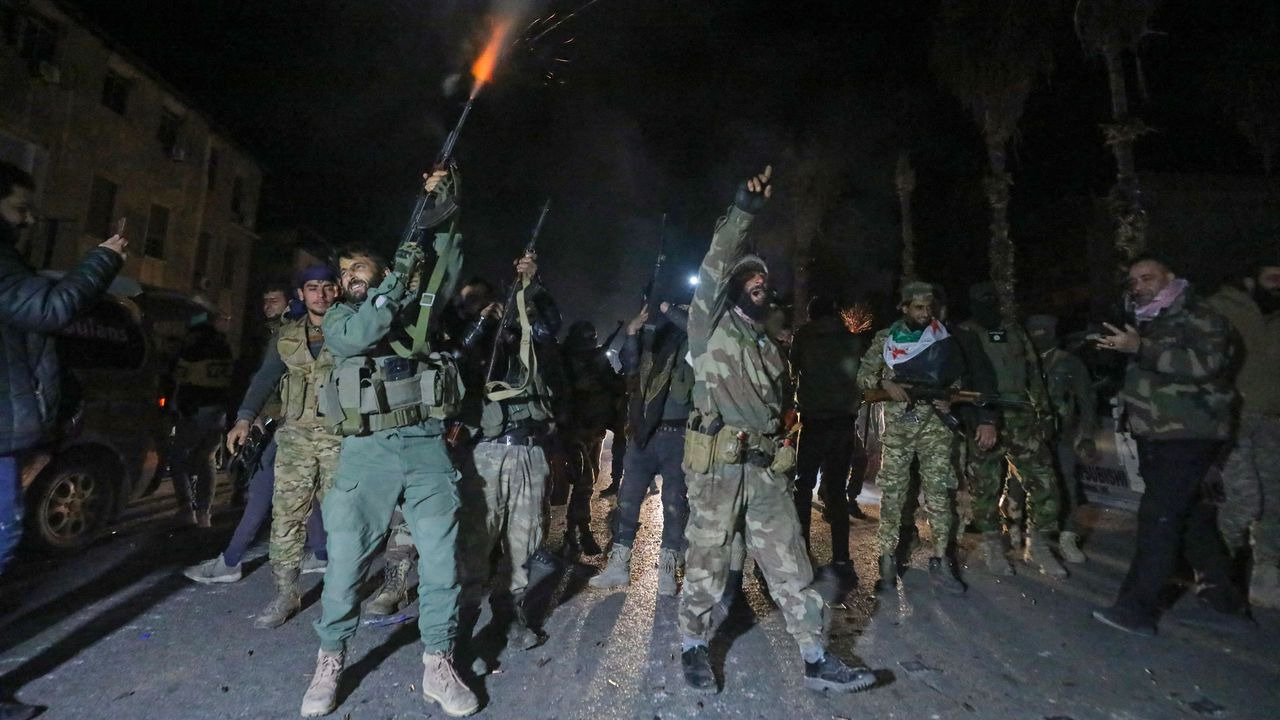
Photograph: AFP
Dec 10th 2024
The audio version of this story is available in our app. It has been produced using an AI voice. Learn more.
WHEN REBELS reached Syria’s capital, Damascus, on December 8th, they did so from two directions. Fighters from the south were the first to arrive. From the north came members of Hayat Tahrir al-Sham (HTS), a former affiliate of al-Qaeda that had led the push against the country’s dictator, Bashar al-Assad, over the preceding fortnight. The Syrian National Army (SNA) and Syrian Democratic Forces (SDF), two other important groups, were also involved in the fight to topple Mr Assad. This was the culmination of 13 years of bloody civil war. Soon after rebels reached the city, the president fled, ending more than 50 years of his family’s rule.
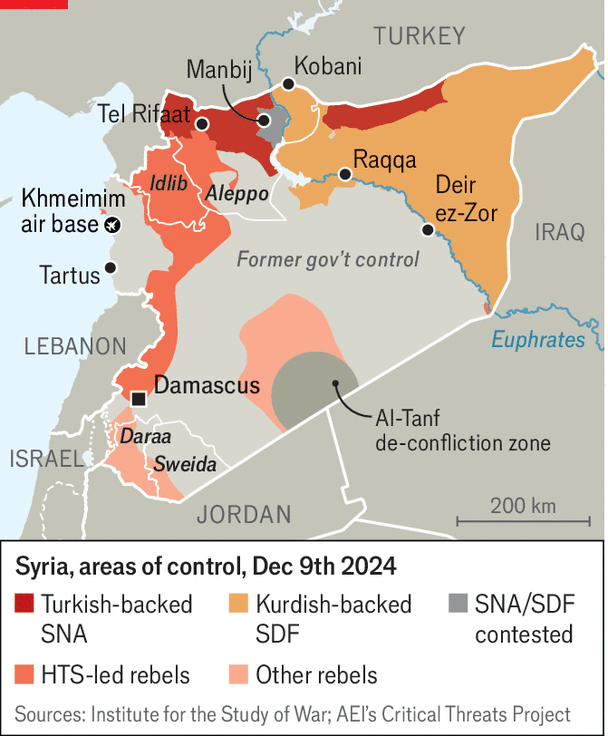
Map: The Economist
Mr Assad is a member of Syria’s Alawite minority: he terrorised both the Sunni majority and other minorities, including Kurds, Christians and Druze. Over the course of the civil war, hundreds of militias sprang up. Rebel groups with disparate aims were united in their opposition to him. Now that he is gone, those militias may find that they lack a common purpose. Who are Syria’s main players and what do they want?
Hayat Tahrir al-Sham
This group, led by Ahmed al-Sharaa (also known as Abu Muhammad al-Jolani), is believed to have 10,000-30,000 fighters. It is an Islamist movement rooted in Salafism, an ultra-conservative branch of Islam. HTS was founded in 2011, under the name Jabhat al-Nusra, as an affiliate of al-Qaeda. It broke with the group in 2017 and has sought to distance itself from jihadism, purging al-Qaeda loyalists from its ranks. Since that year HTS has ruled a slice of Idlib governorate, in Syria’s north-west, pushing the bulk of Islamic State (IS) fighters out of the area. It established the Syrian Salvation Government there, which taxes residents, provides social services and issues identity cards. Syria’s new prime minister, Muhammad al-Bashir, previously served as the head of that administration. Mr Sharaa has sought to present HTS as a religious nationalist group tolerant of minorities: it does not impose dress codes on women and permits church services. But America, Britain, Europe and the United Nations still classify HTS as a terrorist group (though they are pondering whether to change that).
Syrian Democratic Forces
East of Idlib governorate, in the north of the country, the SDF runs a fief that encompasses roughly a quarter of Syria. The SDF is Kurdish-led, though it also has Arab and Christian fighters. Its military wing is led by the People’s Protection Units, many of whom are veterans of the Kurdistan Workers Party, a militant group that fought for years inside Turkey for an independent Kurdish state. Turkey considers the SDF a terrorist group, and the country’s president, Recep Tayyip Erdogan, sees the presence of a Kurdish force on his doorstep as a threat. But the SDF is backed by America, which has spent hundreds of millions of dollars training and arming the group to help it fight IS. In recent years the SDF has spent more time fighting the SNA than the Islamists. It has played a role in the recent offensive, pushing government forces out of Deir ez-Zor, the main city in the north-east. But the SDF has also come under attack from the SNA in Manbij and Raqqa in recent days, as both groups aim to bolster their power bases in the north. Kurds fear the rebellion will be used to push them out of areas they have held for years. Hours after Aleppo fell on November 30th, HTS negotiated an SDF withdrawal from Kurdish suburbs. There are reports of Kurds retreating east, deeper into their (safer) heartland.
Syrian National Army
HTS may have led the offensive, but the SNA’s role has also been decisive. It too is influential in the north. Mr Erdogan established the group in 2017, bringing together a network of anti-Islamist militias who opposed Mr Assad. Many SNA fighters were once members of the Free Syrian Army, a collection of opposition groups made up of defectors from Syria’s armed forces, and the group remains fairly decentralised. Turkey, which funds, trains and arms it, uses the SNA as a proxy to fight the SDF. The SNA has created “safe zones” along the Turkish border, to which Turkey has repatriated some of its 3m Syrian refugees. The group is also a sometime enemy of HTS, but joined forces with the Islamists to oust Mr Assad. Many Syrians criticise the SNA for serving Turkey’s aims at the expense of domestic peace. Already, the group is turning its attention to Kurdish-held areas: in recent weeks it has seized important towns from the SDF.
Other rebels
Daraa, in southern Syria, is often called “the cradle of the revolution”. It was there that Syria’s popular uprisings began. In the early days of the recent offensive, a ragtag group of Druze, Christian and Alawite rebel groups from the south took control of towns and cities, including Sweida, the heartland of Syria’s Druze minority. Some are backed by Jordan, which shares a border with southern Syria. By December 7th southern rebels were poised to enter Damascus. (They were joined by Maghawir al-Thawra, a small group of limited importance that holds territory near the Al-Tanf deconfliction zone, and relies on the American military base there.) In recent days they have branded themselves as the “Southern Operations Room”. That name refers to about 50 militias of varying capacity, and with diverse goals, who joined the fight against Mr Assad. Until a few weeks ago, these groups were often fighting each other: they carried out tit-for-tat kidnappings in the Sweida governorate this year. They may now share a name, but they have little else in common.
Islamic State
IS is a diminished force in Syria—but the uncertainty created by the overthrow of Mr Assad could provide it with an opportunity. The jihadist group originated in Iraq, where its members fought alongside al-Qaeda as part of the Iraqi insurgency that sprang up after America and Britain deposed Saddam Hussein. In 2014 IS seized a large chunk of north-eastern Syria, as well as territory in Iraq, where it imposed an extremist interpretation of Islamic law. By 2019 its caliphate had been dismembered: the land it had held was divided between rebel groups and its fighters retreated to small pockets of rural Syria. Some 10,000 of its fighters are imprisoned by the SDF. If fighting in Kurdish areas intensifies, and leads to their escape or release, IS could pose a renewed threat to Syria and the West. ■
Obituary | The hangman’s tale
Shalom Nagar was picked by lottery to kill Adolf Eichmann
The Israeli prison officer turned ritual slaughterer died on November 26th, aged 88
Photograph: Geert van Kesteren
Dec 11th 2024
At midnight on May 31st 1962, Shalom Nagar looked his prisoner in the eye. They stood perhaps a metre apart, in a room on the second floor of Ramla prison in central Israel. Adolf Eichmann was tied at the wrists, knees and ankles and stood on a trapdoor, as instructed. He still wore his brown plaid slippers. A thick rope was knotted round his neck. He had refused a blindfold. Just before, he had smoked a cigarette and drunk half a cup of white wine. The smell of both was on his breath.
Over the past six months they had often been this close. This close while Eichmann, peering through his glasses, wrote his memoirs at a tiny desk piled high with books. This close when Eichmann dressed, buttoning his shirts to the neck and shuffling into the favourite slippers. This close while he washed, shaved, used the facilities, made his bed and paced around a tiny courtyard. This close while he ate, from a plate of food into which Officer Nagar had already dipped a fork here and there. It was a curious intimacy, to share meals that way. They came in locked containers, so that Eichmann would not be poisoned. If Officer Nagar was not dead after two minutes, all was well.
He was the innermost guard of the 22 who watched Eichmann, his 24-hour shifts always spent in his personal cell. An entire wing on the second floor, five rooms, had been given over to this man. Israel had never held so important a prisoner. Eichmann had been in charge of the whole logistics of the Holocaust: the roundings-up, the deportations, the railway shipments and, ultimately, the deaths of millions of Jews. After the war he had escaped justice and fled to Argentina, living as a quiet suburbanite until Mossad tracked him down. In 1961, on trial in Jerusalem, he showed no remorse and accepted no blame. He had been following the orders and iron will of Hitler; he was “a little cog in the machinery”. The sight of him, thin, nervy-looking, balding, compulsively clean, might almost have convinced Officer Nagar this was so.
Most of the guards at Ramla would happily have killed him. Almost all were Ashkenazi, either survivors of the camps or men who had lost family there. Officer Nagar, by contrast, was Sephardi. The long arms of Hitler and Eichmann had not reached Yemen, where he was born, though his father had once gone to scout out mountain hideaways, in case they did. His childhood had been hard enough: from the age of eight, with his father dead and his mother unable to cope, he lived on the street in the Jewish part of Sana’a, running errands for food and sleeping at night under market stalls, wrapped in his father’s goatskin prayer-shawl. (How he blessed that shawl!) But unlike his Ashkenazi brothers in the force, he had no numbers tattooed on his arm or on his mind.
That very fact, the authorities thought, made him the ideal man to hang Eichmann. It would not look like vengeance then. He disagreed, and begged them to find someone else. Of course he did not like the man, but there was civility between them. They exchanged very few words. But he was the one who, at a signal, would fetch what he wanted, or escort him to the lavatory; after which Eichmann always said “Gracias”, imagining that, like many Sephardis, he came from Spain. He could not hang him; at 26, he could not hang anyone. But his superiors in the end held a lottery, and he was picked. To brace him for that probability, he had been shown a film of Nazi atrocities. He had to agree that there could be no mercy for Eichmann or any of his kind.
Besides, orders were orders. He was well imbued with that code. At 16, four years after migrating to the new state, he had joined the Israeli army, first in the parachute brigade and then in the border patrol. When ordered to jump, he jumped. If told to dismantle land mines, he went to it. When a police van screeched up beside him, as he walked on his day off down the street with his family, and he realised that this was the time to hang Eichmann, he climbed in. And now, at midnight, he yanked the lever backwards without hesitation and the trapdoor sprang open, hurtling Eichmann towards the basement. It was the first, and last, judicial execution performed in Israel.
What he had to do next was far harder. He had to take down the body, wrap it in sheets, push it on a stretcher to the oven already red-hot for it and then transport the ashes to the sea, where they would be cast out beyond Israeli waters. But he was traumatised by the sight of the body: the chalk-white face, the lolling tongue, the blood on neck and chest where the rope had torn the skin away. To take Eichmann down involved lifting his head, which drove trapped air out of his mouth in a booming cry. A cry as if the angel of death had come for his executioner, too. He was not easily scared. But now, shaking all over, with Eichmann’s blood on him, he could barely manipulate the stretcher or close the oven doors. His orders were moot now; he had to be taken home.
Those moments gave him nightmares for years. He could not return to the second floor at Ramla unless two colleagues escorted him. (He tried it once alone, singing a Yemeni song for courage, but mistook his own shadow on a glass door for Eichmann, and tumbled down the stairs in terror.) The hauntings stopped only as he recovered the faith of his childhood. He had been brought up strictly as far as religion went, wearing sidelocks and avoiding women; when he first came to Israel, at 12, the easy ways of the kibbutzim scandalised him. Once in the army, he fell away from all that. After hanging Eichmann, it returned. He eventually spent his days in his local kollel, the rowdy hall of reading and arguing over the Talmud. Conquering his nerves, he also became a ritual slaughterer of chickens. And he came to understand that his quick, fatal action in 1962 was at the behest of God. On that day he had performed a great mitzvah: he had obliterated the enemy of Israel, Amalek, erasing his memory from under the sky. Even, perhaps, from the stairs to the second floor. ■