The Economist Articles for Nov. 5th week : Nov. 30th(Interpretation)
작성자Statesman작성시간25.11.21조회수32 목록 댓글 0다음게시판에서 Economist 기사의 사진이 붙여넣기가 되지 않고 있습니다. 그 사유를 확인할 수 가 없습니다.
모든 기사에 사진이 있는 Economist 기사를 보시려면 하기 링크를 클릭하면 네이버카페에서 사진이 있는 Economist 기사를 볼 수 있습니다.
https://cafe.naver.com/econimist/350

The Economist Articles for Nov. 5th week : Nov. 30th(Interpretation)
Economist Reading-Discussion Cafe :
다음카페 : http://cafe.daum.net/econimist
네이버카페 : http://cafe.naver.com/econimist
Leaders | Donald Trump’s presidency
Welcome to Anything Goes America
Where the loosening of rules and tolerance of corruption will lead
Nov 20th 2025|5 min read
Listen to this story
WHEN HARRY TRUMAN left office he had many opportunities to get rich. He turned them down. “I could never lend myself to any transaction, however respectable, that would commercialise the prestige and dignity of the office of the presidency,” he said. The man who had given the order to drop two atom bombs lived on income from his memoirs and an army pension worth $1,350 a month in today’s money.
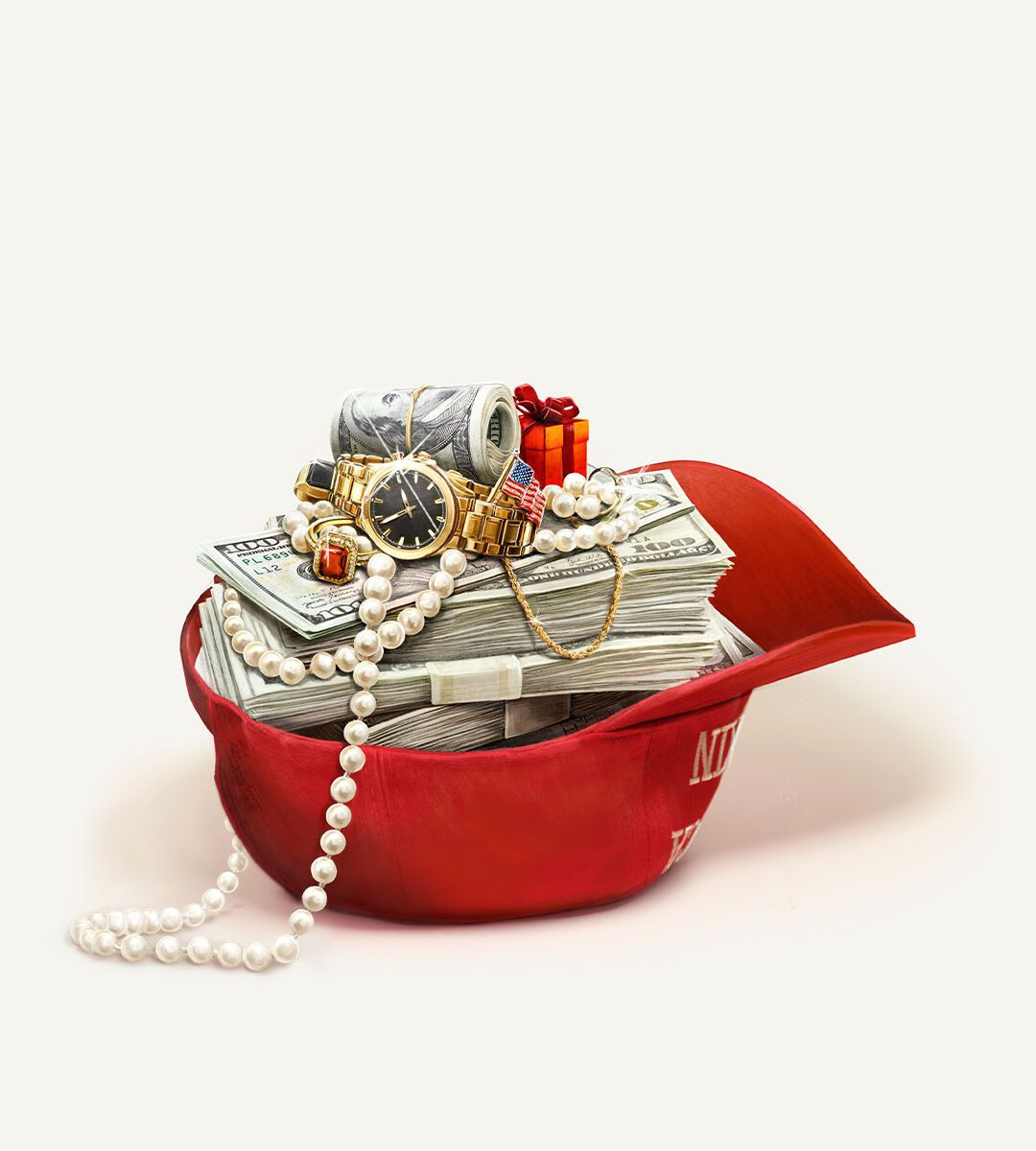
What a sucker! Had he been president in the 21st century, Truman could now be flying private to paid speaking engagements, soliciting donations to his foundation from foreign governments and watching his daughter serve on company boards and his former staffers run their own lobbying shops. Presidents reflect the mores of their times. Truman’s instinct to follow self-imposed rules was characteristic of 1950s America. What, then, are America’s rules in 2025, when the president has accepted a Boeing 747 from one country seeking his favour and a $130,000 gold bar from another, and when his family has struck cryptocurrency partnerships with foreign governments?
Read the rest of our cover package
In Washington, everything appears to be for sale
Shut up, or suck up? How CEOs are dealing with Donald Trump
This is the Anything Goes Era in America. It did not start with Donald Trump, but he has upped the tempo and removed constraints that once held others back. Skirting the rules is all right if you have political protection. Wealthy individuals may rest easy knowing that their tax returns will not be audited. The Department of Justice has dropped prosecutions of politicians for corruption. Its public-integrity unit has been gutted; the Foreign Corrupt Practices Act, a post-Watergate piece of good-government reform, has in effect been shelved. Past presidents have pardoned donors and relatives, but only on the eve of leaving office. Recipients of Mr Trump’s clemency this year include a cryptocurrency mogul jailed for money-laundering and the son of someone who gave his political movement $1m.
The way the president’s family members have enriched themselves in his second term would have astonished Truman, but it is small print in a $30trn economy. That is not true of tariffs, export controls and mergers, where Mr Trump’s power and personality make it almost a fiduciary duty for company bosses to seek his good graces. Donors to the new White House ballroom, where the East Wing once stood, include firms whose main business is government contracting and those seeking regulatory approval for mergers.
Now heaven knows
When there is one decision-maker and he often changes his mind, it is worth spending a lot to win his favour. Washington lobbyists used to focus on Congress. Now many of them ignore lawmakers and instead sell to clients the impression that they can influence the president or his political movement. All this eats away at the rule of law. Did the administration approve a merger, or grant an export licence, because it was in the national interest? Or because the company bought the president’s goodwill? When anything goes, nobody knows.
It is easy for Mr Trump’s opponents to be shocked—shocked!—at the discovery that people love money and power, and that when mixed together they are intoxicating. And his supporters are right that there can be economic benefits when governments refrain from aggressively enforcing some rules. It may make it easier for companies to operate and foreigners to invest, without worrying that an overzealous bureaucrat will nail them for some petty infraction.
Yet this argument can lead somewhere dismal. All advanced economies have strong laws and expectations that they will be applied impartially. There is no example of a big, mature, wealthy democracy smiling on public corruption and treating rules as arbitrary. So although the eventual costs are uncertain, it is plainly harder for an economy to thrive in the long run when the most important question for a boss is: “Do you know the president?”
The best parallels are found in some emerging markets, where big men rule by whim and companies must suck up to succeed. Or in America’s past, before the rules and habits that until recently promoted clean government were set out. But the Anything Goes Era is different from the Gilded Age or the 1920s, both moments when a dash of political corruption went along with technological innovation and economic growth. Then, politicians stole or skimmed money off contracts to buy political support. That is not how it works now. Outright theft from government appears to be rare. The president does not need to buy his party’s loyalty, since the rank and file love him and Republican lawmakers fear him.
There are other differences, too. In the 1920s federal, state and local government spending amounted to just 5% of GDP, compared with 36% now. In the Gilded Age the presidency was even more marginal to the lives of Americans. The republic has had florid political corruption scandals before. What is new is the mix of a bossy, gargantuan state with the perception that it can be bought.
Surprisingly, the president appears to pay a puny political price for his self-dealing, or the loosening of rules that accompanies it. Partisanship means that if Democrats say something is crooked, MAGA types conclude that it must be fine. The other side has enough examples of grubbiness—think of how President Joe Biden’s family took advantage of his position, or the Clinton Foundation received money from Qatar—to make what Mr Trump is doing seem different only in degree.
That is mistaken. And to assume partisanship gives unlimited permission to abuse or suspend rules is too pessimistic. Good-governance reforms have followed each era of excess: the Federal Corrupt Practices Act after the Gilded Age, the Ethics in Government Act after Watergate. Ten years ago a man ran for president denouncing Washington insiders and promising to drain the swamp. That is still one of the great themes in American politics, much more persuasive than warning that liberal democracy is under threat. The president has given his opponents a solid-gold opportunity to use it. ■
Leaders | Time for a pause
Why governments should stop raising the minimum wage
After a decade of rises, there are now far better tools for fighting poverty

Illustration: Simon Bailly
Nov 20th 2025|3 min read
Listen to this story
It is easy to see why politicians like raising the minimum wage. Short of cash yet keen to fight inequality, they have seized on a tool of redistribution that costs governments little and wins votes. In its budget on November 26th Britain is likely to raise the minimum wage, which sits at 61% of median income, up from 48% a decade ago. Germany introduced a minimum wage only in 2015; by 2023 it had crossed 50%. And although America’s federal rate of $7.25 an hour has not changed since 2009, many states and cities controlled by Democrats have raised their pay floors far higher. The average effective minimum wage is around $12 per hour; the highest is over $21.
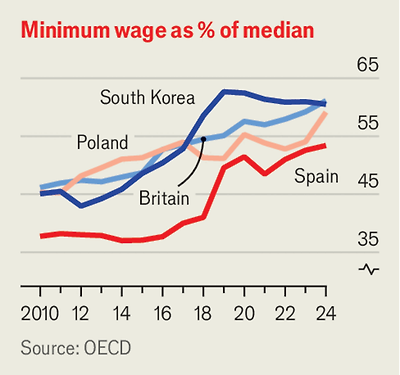
Chart: The Economist
In one respect the surging minimum wage is a triumph for economists. Having originally been sceptics, they embraced the policy around the turn of the millennium, arguing that wage floors did not eliminate jobs as they once feared—a finding that the experience of the past two decades seemed to confirm. Yet as we report this week, just as governments are championing the consensus, scholars are getting cold feet. A growing body of research suggests that minimum wages distort economies in ways that do not immediately appear in jobs numbers.
Dig deeper
Economists get cold feet about high minimum wages
One worry is that it takes time for minimum wages to kill jobs. Evidence from a big hike to Seattle’s pay floor in 2015 and 2016 suggests hiring at the bottom end of the labour market slowed by 10%, even though existing workers were typically not laid off. Another is that higher minimums degrade jobs rather than destroy them. When employers must pay more, but can still hire easily, they may cut corners elsewhere. New research finds that big increases in the minimum wage are associated with shorter or less predictable working hours, more workplace accidents and fewer perks such as health insurance.
A final risk is that early success breeds overconfidence. Moderate minimum wages can, counterintuitively, make jobs more abundant, by offsetting the bargaining power of big employers, who would otherwise restrain hiring to suppress pay. But the more governments embrace big hikes, the more likely they are to eliminate jobs—just as a big enough tax rise will reduce revenue. One recent peer-reviewed estimate puts the average American minimum wage that corrects for employer market power at under $8.
Beyond that, the minimum wage is a crude and wasteful tool for redistribution. Many minimum-wage workers are not poor, but live with higher earners. And when firms raise prices to offset their steeper costs, it is the poor who suffer most—more so than from sales taxes, according to one paper.
Politicians should beware these effects. Although raising minimum wages invariably polls well, electorates everywhere are also angry about soaring prices and a crisis of affordability. There is a danger of a doom loop in which employers’ higher costs are passed on to consumers, making life still less affordable, including for the very workers governments are trying to help. Zohran Mamdani, the mayor-elect of New York, has promised to raise the minimum wage from $16.50 today to $30 by 2030. Prices would rise significantly as a result, making an already expensive place to live even dearer.
There are better ways to help low earners. In-work tax credits are better targeted towards the poor and, if paid for with growth-friendly taxes, less harmful to the economy. They may lack the appeal of minimum wages, the costs of which are well hidden. But after a decade of aggressive increases, the responsible option is not to go higher still. It is to stop. ■
Asia | Banyan
To glimpse Indonesia’s future, look to its president’s view of the past
Why Prabowo Subianto is rehabilitating the late Suharto

Illustration: Lan Truong
Nov 20th 2025|4 min read
Listen to this story
AS THE ASIAN financial crisis swept through Indonesia in 1997, the IMF offered the country a bail-out. It was thought that the loan would help Indonesia to turn the page quickly. After all, Suharto, the dictator since 1967, had long appointed capable (often American-educated) technocrats to run the economy, and the result had been three decades of rapid development.
It had also been a long period of enrichment for Suharto, his family members and his cronies as they reached ever deeper into business, finance and the running of the state and the armed forces. Among other things, the crisis laid bare the extent to which this group had abused the financial system. Despite pleas from the IMF, regulators refused to crack down on corruption. The confidence of foreign investors, once strong, collapsed in early 1998, reversing decades of economic growth, and 36m Indonesians fell back into poverty. Amid protest, unrest and blood-letting, Suharto stepped down.
His departure marked the start of the current, generally happier, era in Indonesia: reformasi, or the country’s transition to democracy. And so it is notable, and worrying, that on November 10th the sitting president, Prabowo Subianto, formally elevated the late Suharto to the pantheon of national heroes.
The move was not unexpected. Mr Prabowo served as the commander of the crack special forces in Suharto’s army. He was, indeed, once married to Suharto’s daughter.
Yet there is more to Mr Prabowo’s move than a simple whitewashing of the Suharto era. On the same day as Suharto’s beatification, the president named several of the dictator’s opponents national heroes as well. One is the late Abdurrahman Wahid, or Gus Dur, a nearly blind cleric who led opposition to Suharto’s regime and who was elected president in the first free polls of the post-Suharto years. Another is Marsinah, a labour activist; she was murdered (and her body mutilated) in 1993. None of the soldiers thought responsible has been brought to justice. At a ceremony in the presidential palace in Jakarta, Mr Prabowo handed medals to next-of-kin while the portraits of Gus Dur and Marsinah stood witness.
Mr Prabowo’s backers argue that a spirit of reconciliation is behind his big-tent approach to Indonesia’s history—they note it could have been a matter of just rehabilitating his late father-in-law. Yet his simultaneous honouring of Suharto’s opponents makes the approach far more corrosive than whitewash. By elevating both those who fought for democracy and those who fought to suppress it, Mr Prabowo is in effect flattening Indonesian history, rendering it at best as a kind of bas-relief. In Mr Prabowo’s particular topography of 20th-century Indonesia, there are no persons of particular moral prominence. All struggles, whether for good or for ill, are honoured alike.
A flattened version of history certainly plays to Mr Prabowo’s advantage. His Suharto-era career is littered with abuses. In the final months of Suharto’s rule, as students poured onto the streets in outrage over the first family’s venality, at least nine of their leaders disappeared, kidnapped and tortured by Mr Prabowo’s troops. Mr Prabowo later acknowledged ordering their kidnapping but says they were unharmed—two, his defenders note, even serve as deputy ministers in his administration. But in a separate drive, 13 student activists disappeared and were never heard from again. Mr Prabowo says he knows nothing about those cases. But before he was sworn in as president, his party quietly offered the families of some of the victims around $60,000 each. What was not offered was justice for the killers.
As for Suharto, he never even had to answer for his rule’s original sin in 1965-66: the killing of hundreds of thousands of suspected communist sympathisers on his path to power. One of Suharto’s top lieutenants in the massacres, Sarwo Edhie Wibowo, was also named a national hero this month.
Most troubling, these moves are not just about the past. The president calls for a governing coalition of all Indonesia’s political parties, and has shown that he is willing to use legal coercion to achieve it. All parties would be present in government, but accountability would not. Mr Prabowo might, he muses, even make such a coalition “permanent”. That would amount to a return to the authoritarian politics of the Suharto era. Mr Prabowo’s move to rehabilitate the late dictator says as much about his plans for the future as it does about the past. ■
China | Big lenders
The charts that show how much money China lends to the rich world
Many of the loans look harmless. But some are raising eyebrows

Photograph: AP
Nov 20th 2025|Hong Kong|4 min read
Listen to this story
CHINA HAS become one of the world’s biggest bankers and donors. But its financial influence overseas is hard to track. Its government has a “transparency allergy”, says Brad Parks of AidData, a research centre at the College of William and Mary in Virginia. In 2009 he and his colleagues tried to persuade China’s Ministry of Commerce to open up a bit. “Don’t you want the world to know how generous you are?” they asked. The ministry was unmoved. “Everyone who needs to know how generous we are already knows,” it said.
The researchers, therefore, took a different tack. They scoured media reports for news of loans and grants from China’s government and its state-owned creditors. They also tapped official sources in borrowing countries and multilateral institutions such as the World Bank. They have previously published their findings on Chinese financing to developing countries. On November 18th they released a report on its aid and lending to the whole world. The new database covers more than 30,000 projects from 2000 to 2023. It spans rich and poor countries; and private, as well as sovereign, borrowers.
Dig deeper
Four charts show how much money China lends to the rich world
On borrowed dime
China’s financial commitments over that period amount to $2.17trn (adjusted for inflation), an enormous sum. Of that total, only 6% qualifies as aid (either grants or cheap loans). Another 3% is hard to classify one way or the other, given the paucity of information available. Poor countries borrowed another $1.02trn (47% of the total) from state-owned creditors (see chart 1). And high-income countries took the rest (43%). The biggest single borrower, receiving $202bn, was America.

Chart: The Economist
A surprisingly small amount of this money relates to the “Belt and Road Initiative” (BRI), a global lending and investment scheme championed by Xi Jinping, China’s leader. Loans for infrastructure under the BRI accounted for only 20% of total Chinese credit in the decade after the initiative was launched in 2013. The BRI was spearheaded by China’s state-directed “policy banks”, such as China Development Bank and Export-Import Bank of China. But they have become less prominent creditors in recent years, as Chinese lending to poor countries has receded.

Chart: The Economist
That has cleared the stage for China’s massive commercial banks, such as ICBC or Bank of China. Owned by the government, but keen to make a profit, they were responsible for about 60% of all lending by China’s state-owned creditors from 2019 to 2023 (see chart 2). In high-income countries, perhaps their more natural habitat, they accounted for more than 80% of such lending.
Many of these loans look harmless enough. Lenders such as ICBC or Bank of China have followed their clients abroad, setting up subsidiaries in the world’s richest markets. They also chip in to syndicated loans alongside other global banks. In 2012 Bank of China joined JPMorgan Chase and others in making the first of several syndicated loans to Disney.
Sometimes they are just “banks doing what banks do”, says Mr Parks. Other lending, however, raises more eyebrows. A growing share of credit for acquisitions is directed towards 17 industries that governments tend to deem “sensitive”, such as telecoms infrastructure, microprocessors and companies that collect personal data. In 2015, for example, four Chinese state-owned commercial banks provided a loan to Fosun, a Chinese multinational, to help it buy Ironshore, which sold liability insurance through its American subsidiary to officials at the CIA and FBI.
How do AidData’s figures compare with other estimates of Chinese lending? According to China’s State Administration of Foreign Exchange, the stock of loans at the end of 2023 was $805bn, plus another $644bn in trade finance. But these official figures are not directly comparable with the AidData numbers. They exclude credit extended by the overseas subsidiaries of Chinese banks and leave out loans that finance foreign direct investment, which is recorded separately. The official figures also represent the stock of loans that remained outstanding at the end of 2023, whereas AidData have added up the flow of credit over the preceding 24 years.
Mr Parks and his team may also have identified loans that even China’s authorities struggle to track. Their database spans over 1,100 lenders and donors. Although they are all owned by the Chinese state, its ministries do not have “full visibility on what all these different banks are doing”, he explains. He and his team have, on more than one occasion, discovered that Chinese officials sometimes use the AidData figures in their own work. “Having a one-stop shop where they can get all this information is too convenient to pass up,” Mr Parks reckons. Not even the Chinese government always knows exactly how generous it has been. ■
United States | Transparency in government
Release the Epstein files!
What Congress has actually voted to make public
Photograph: Getty Images
Nov 20th 2025|WASHINGTON, DC|2 min read
Listen to this story
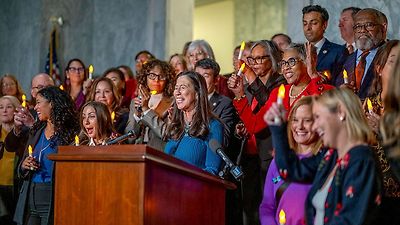
It is the scandal that will never die. For more than six years the case of Jeffrey Epstein, a dead sex offender with links to the president and other prominent figures, has spawned a dizzying array of conspiracy theories. On November 18th American lawmakers passed a law compelling the government to release its files on Epstein. The bill has been signed by the president. Yet what exactly are the Epstein files, and what can the public expect to see?
The largest batch is held by the Department of Justice (DoJ) and encompasses two criminal investigations that unfolded between 2006 and 2019. The first involved charges that Epstein abused dozens of underage girls in Florida. That case led to a controversial plea deal in 2008. Other DoJ files accumulated during a second investigation that did result in a trafficking charge in July 2019. The department also holds information about Epstein’s apparent suicide the following month while in federal custody.
Federal agents amassed documents from property seizures as well as detailed witness interviews. A July memo from the DoJ noted that it had some 300 gigabytes of data and physical evidence, which included a large volume of images and videos of Epstein’s victims. The files also contain reams of internal DoJ communications.
Yet the narrow focus of the criminal investigations may disappoint those expecting damning new revelations about Epstein’s associates. “What’s crucial [in these cases] is what happened to the women, and not what people happen to be connected to Epstein,” says Jeremy Paul, a law professor at Northeastern University.
If the DoJ files are released, information about Epstein’s victims is likely to be extensively redacted. The DoJ can also withhold any documents that could jeopardise ongoing investigations. (Mr Trump recently ordered the department to investigate prominent Democrats associated with Epstein.) For those podcasters and politicians who believe withholding documents is evidence of conspiracy, there will be plenty to talk about. ■
United States | Learning like the ancients
AI is accelerating a tech backlash in American classrooms
Handwritten and oral exams are making a comeback

The latest in edtechPhotograph: Getty Images
Nov 20th 2025|NEW YORK|5 min read
Listen to this story
Acentury and a half before Apple marketed iPads to schools, in 1857, a Greek-born Harvard professor, Evangelinus Apostolides Sophocles, held a bonfire of newly introduced “blue books”, bound exam booklets for pen-and-paper tests that (to his ire) were to replace oral recitations. He lost. These booklets would torment generations of American students before yielding in turn to computerised testing. But now the blue book is making a comeback, with booklet sales more than doubling from 2022 to 2024 (see chart), according to Circana, a data firm. And oral exams appear ripe for revival, too.
From high school to university, teachers are playing defence against classroom tech that enables cheating and foments distraction. Laura Lomas, a literature professor at Rutgers University, now requires students to attend a play whose ending changes every night, so she knows if they were there. She assigns oral presentations rather than more AI-friendly PowerPoints, and allows no bathroom breaks during blue-book exams so students can’t peek at their phones. Sara Brock, a high-school English teacher in Port Washington, New York, requires students to write exercises by hand in class. Justin Reich, director of the MIT Teaching Systems Lab, says his daughter’s middle school has “more or less given up on [assigning] homework other than math.” Students are told to read instead.
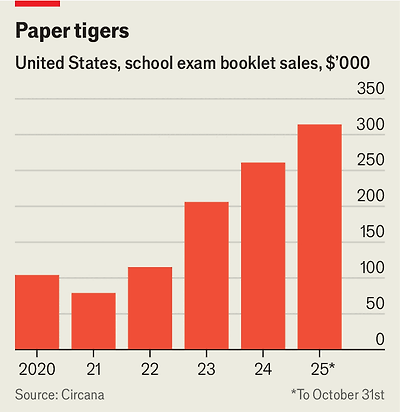
Chart: The Economist
Such retrenchments are likely to keep spreading. In a 2023 survey by Intelligent, a research outfit, 66% of high-school and college instructors said they were changing assignments because of ChatGPT; of those changing, 76% required or planned to require handwritten work. And 87% said they require or plan to add an oral presentation component. A survey the same year by EdWeek Research Centre found that 43% of educators think students should solve maths problems in class using pencil and paper to show they are not using AI. And in a Stanford University pilot programme, proctors—how quaint!—prowl classrooms to monitor test-taking.
The battle for and against classroom tech in America is raging in other rich countries, notes Isabel Dans Álvarez de Sotomayor, an education scholar at the University of Santiago de Compostela in Spain. As poorer countries race to digitise, richer countries are restricting classroom tech even as they invest in more digital infrastructure. After initially going all-in on technology, in 2023 Sweden banned digital tools for young children and now emphasises physical textbooks, handwriting and reading. Schools in Denmark and Finland are on the same page.
The reason is not just ChatGPT and the mass cheating it makes possible. Teachers are worried about mass distraction as well. In 2025 56% of educators said laptops, tablets or desktops are a major source of diverted attention, according to another EdWeek Research Centre survey. At Bowdoin College, a private liberal-arts college in Maine, the dean says that “many faculty had already marked their classrooms as, for the most part, device-free spaces” even before “the recent ubiquity of AI”.
Cheating is nothing new—in a study ten years ago, 87% of high-school students admitted to cheating at least once the month before, and the researchers found that percentage has actually come down since—but the “magnitude of cheating is substantially different” since advanced AI arrived, says Mr Reich of MIT. “We have a zillion interviews with kids of all kinds who say things like, ‘In my senior year [of high school] I never did homework. Every assignment I did used generative AI.’” The college level is no better, says Ms Lomas. “One student even quoted a paper by me that AI made up out of thin air”.
Rigorous studies have shown that classroom tech can help pupils learn algebra, but evidence of improved outcomes in other areas is thin. By contrast, the benefits handwriting offers for cognition are gaining new respect, even beyond the humanities. A computer science teacher at Hunter College High School in New York recently reinstituted handwriting for coding assignments because it helps with retention as well as critical thinking.
But not everyone who wants to go old-school can. Parents often can’t easily opt out of edtech. And Derek Vaillant, a history professor at the University of Michigan, says that while there is a consensus that teachers need to “get back to basics” by prioritising original, in-person, pen-and-paper exams, large public universities are not providing resources commensurate with the challenge by hiring enough teaching assistants. Administrators are “speaking out of both sides of their mouths”.
Among parents, it is the affluent and educated who want less tech in the classroom, says Anne Maheux of the University of North Carolina at Chapel Hill, who studies adolescent tech use. A Pew Research Centre report in December 2024 found that 58% of Hispanic and 53% of black teenagers reported being on the internet almost constantly, compared with 37% of white teenagers. The digital divide, she notes, has flipped.
The changes require rethinking the purpose of time in the classroom. At Hunter, an 11th-grade English teacher assigned five literature responses to be written by hand, each taking up a whole period. In the past that was not considered a good use of a teacher’s effort, says Mr Reich. But today, with digital “heat-seeking missiles” soaking up attention, “maybe the best thing we can do in the classroom is give young people the gift of quiet, undistracted time.”■
The Americas | War and peace
Is Donald Trump preparing to strike Venezuela or lining up a deal?
The answer is both
Photograph: Shutterstock
Nov 19th 2025|Caracas and Washington, DC|3 min read
Listen to this story
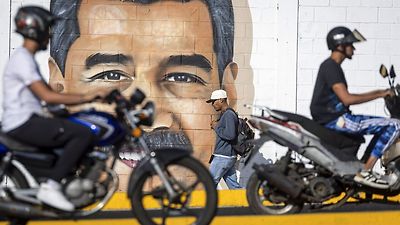
What does Donald Trump want from Nicolás Maduro, Venezuela’s strongman? As the uss Gerald R. Ford, a giant aircraft-carrier, entered the Caribbean on November 16th the administration said it would designate the Cartel de los Soles, which it alleges is headed by Mr Maduro, as a Foreign Terrorist Organisation (fto)—with effect from November 24th. Mr Trump has refused to rule out the use of force, even leaving open the possibility of a ground invasion; yet at the same time he has floated the idea of talks. “We may be having some discussions with Maduro,” he said. In response Mr Maduro, who stole last year’s presidential election, said he would be willing to talk “face to face, without any problem”.
A deal that would sate the Trump administration and leave Mr Maduro in power is difficult to imagine; so is Mr Maduro voluntarily stepping down. Much depends on what Mr Trump thinks is the best way to get a headline-grabbing win: a deal secured through gunboat intimidation, or dramatic but limited strikes to unseat—or even kill—Mr Maduro.
Read a guest essay by María Corina Machado, Venezuela’s opposition leader and Nobel peace laureate, on why time is running out for Nicolás Maduro
The fto designation bolsters both the political and perhaps the legal case for strikes in Venezuela. It frames what is essentially a campaign for regime change as a counter-terrorism and counter-narcotics operation, says Brian Finucane of International Crisis Group, a think-tank. Earlier this month the administration is said to have told Congress that it lacked the legal authority to strike Venezuela. Now Mr Trump is implying that the new designation allows him to do just that. Plenty disagree. “The designation means nothing under international law,” says Mary Ellen O’Connell of the University of Notre Dame in Indiana.
There is little evidence that the Cartel de los Soles is an organised gang run by Mr Maduro, though parts of the Venezuelan armed forces are involved in drug trafficking. Still, the designation will make it a crime to provide money or services to the group. That could affect foreign firms that do business with the Venezuelan state. The administration has conspicuously refrained from declaring Venezuela a state sponsor of terrorism, which is the bigger worry for companies such as Chevron, an American oil giant.
What any deal might look like remains unclear. A well-placed businessman says the regime doubts Mr Trump will send in the troops. That might limit how much Mr Maduro is willing to concede. Still, in secret negotiations earlier this year the dictator is said to have offered the United States sweeping access to Venezuela’s oil and minerals. He may also be tempted to hand over some top brass as drug-trafficking scapegoats, too. Some American officials would surely demand any deal remove Mr Maduro from power. Yet because they insist their focus is drug interdiction, not restoring democracy, that could leave one of his cronies in charge.
Mr Trump is unpredictable. He ordered strikes on Iran’s nuclear facilities in June, as talks continued. He could leave his armada in the Caribbean, striking only alleged drug boats or menacing others. He recently said he “would be proud” to bomb drug gangs in other countries, such as Mexico and Colombia. Alas, of the possible scenarios, very few include what most Venezuelans voted for last year: a democratic country without Mr Maduro. ■
Leaders | Time for a pause
Why governments should stop raising the minimum wage
After a decade of rises, there are now far better tools for fighting poverty
Illustration: Simon Bailly
Nov 20th 2025|3 min read
Listen to this story
It is easy to see why politicians like raising the minimum wage. Short of cash yet keen to fight inequality, they have seized on a tool of redistribution that costs governments little and wins votes. In its budget on November 26th Britain is likely to raise the minimum wage, which sits at 61% of median income, up from 48% a decade ago. Germany introduced a minimum wage only in 2015; by 2023 it had crossed 50%. And although America’s federal rate of $7.25 an hour has not changed since 2009, many states and cities controlled by Democrats have raised their pay floors far higher. The average effective minimum wage is around $12 per hour; the highest is over $21.
Chart: The Economist
In one respect the surging minimum wage is a triumph for economists. Having originally been sceptics, they embraced the policy around the turn of the millennium, arguing that wage floors did not eliminate jobs as they once feared—a finding that the experience of the past two decades seemed to confirm. Yet as we report this week, just as governments are championing the consensus, scholars are getting cold feet. A growing body of research suggests that minimum wages distort economies in ways that do not immediately appear in jobs numbers.
Dig deeper
Economists get cold feet about high minimum wages
One worry is that it takes time for minimum wages to kill jobs. Evidence from a big hike to Seattle’s pay floor in 2015 and 2016 suggests hiring at the bottom end of the labour market slowed by 10%, even though existing workers were typically not laid off. Another is that higher minimums degrade jobs rather than destroy them. When employers must pay more, but can still hire easily, they may cut corners elsewhere. New research finds that big increases in the minimum wage are associated with shorter or less predictable working hours, more workplace accidents and fewer perks such as health insurance.
A final risk is that early success breeds overconfidence. Moderate minimum wages can, counterintuitively, make jobs more abundant, by offsetting the bargaining power of big employers, who would otherwise restrain hiring to suppress pay. But the more governments embrace big hikes, the more likely they are to eliminate jobs—just as a big enough tax rise will reduce revenue. One recent peer-reviewed estimate puts the average American minimum wage that corrects for employer market power at under $8.
Beyond that, the minimum wage is a crude and wasteful tool for redistribution. Many minimum-wage workers are not poor, but live with higher earners. And when firms raise prices to offset their steeper costs, it is the poor who suffer most—more so than from sales taxes, according to one paper.
Politicians should beware these effects. Although raising minimum wages invariably polls well, electorates everywhere are also angry about soaring prices and a crisis of affordability. There is a danger of a doom loop in which employers’ higher costs are passed on to consumers, making life still less affordable, including for the very workers governments are trying to help. Zohran Mamdani, the mayor-elect of New York, has promised to raise the minimum wage from $16.50 today to $30 by 2030. Prices would rise significantly as a result, making an already expensive place to live even dearer.
There are better ways to help low earners. In-work tax credits are better targeted towards the poor and, if paid for with growth-friendly taxes, less harmful to the economy. They may lack the appeal of minimum wages, the costs of which are well hidden. But after a decade of aggressive increases, the responsible option is not to go higher still. It is to stop. ■
Asia | Banyan
To glimpse Indonesia’s future, look to its president’s view of the past
Why Prabowo Subianto is rehabilitating the late Suharto
Illustration: Lan Truong
Nov 20th 2025|4 min read
Listen to this story
AS THE ASIAN financial crisis swept through Indonesia in 1997, the IMF offered the country a bail-out. It was thought that the loan would help Indonesia to turn the page quickly. After all, Suharto, the dictator since 1967, had long appointed capable (often American-educated) technocrats to run the economy, and the result had been three decades of rapid development.
It had also been a long period of enrichment for Suharto, his family members and his cronies as they reached ever deeper into business, finance and the running of the state and the armed forces. Among other things, the crisis laid bare the extent to which this group had abused the financial system. Despite pleas from the IMF, regulators refused to crack down on corruption. The confidence of foreign investors, once strong, collapsed in early 1998, reversing decades of economic growth, and 36m Indonesians fell back into poverty. Amid protest, unrest and blood-letting, Suharto stepped down.
His departure marked the start of the current, generally happier, era in Indonesia: reformasi, or the country’s transition to democracy. And so it is notable, and worrying, that on November 10th the sitting president, Prabowo Subianto, formally elevated the late Suharto to the pantheon of national heroes.
The move was not unexpected. Mr Prabowo served as the commander of the crack special forces in Suharto’s army. He was, indeed, once married to Suharto’s daughter.
Yet there is more to Mr Prabowo’s move than a simple whitewashing of the Suharto era. On the same day as Suharto’s beatification, the president named several of the dictator’s opponents national heroes as well. One is the late Abdurrahman Wahid, or Gus Dur, a nearly blind cleric who led opposition to Suharto’s regime and who was elected president in the first free polls of the post-Suharto years. Another is Marsinah, a labour activist; she was murdered (and her body mutilated) in 1993. None of the soldiers thought responsible has been brought to justice. At a ceremony in the presidential palace in Jakarta, Mr Prabowo handed medals to next-of-kin while the portraits of Gus Dur and Marsinah stood witness.
Mr Prabowo’s backers argue that a spirit of reconciliation is behind his big-tent approach to Indonesia’s history—they note it could have been a matter of just rehabilitating his late father-in-law. Yet his simultaneous honouring of Suharto’s opponents makes the approach far more corrosive than whitewash. By elevating both those who fought for democracy and those who fought to suppress it, Mr Prabowo is in effect flattening Indonesian history, rendering it at best as a kind of bas-relief. In Mr Prabowo’s particular topography of 20th-century Indonesia, there are no persons of particular moral prominence. All struggles, whether for good or for ill, are honoured alike.
A flattened version of history certainly plays to Mr Prabowo’s advantage. His Suharto-era career is littered with abuses. In the final months of Suharto’s rule, as students poured onto the streets in outrage over the first family’s venality, at least nine of their leaders disappeared, kidnapped and tortured by Mr Prabowo’s troops. Mr Prabowo later acknowledged ordering their kidnapping but says they were unharmed—two, his defenders note, even serve as deputy ministers in his administration. But in a separate drive, 13 student activists disappeared and were never heard from again. Mr Prabowo says he knows nothing about those cases. But before he was sworn in as president, his party quietly offered the families of some of the victims around $60,000 each. What was not offered was justice for the killers.
As for Suharto, he never even had to answer for his rule’s original sin in 1965-66: the killing of hundreds of thousands of suspected communist sympathisers on his path to power. One of Suharto’s top lieutenants in the massacres, Sarwo Edhie Wibowo, was also named a national hero this month.
Most troubling, these moves are not just about the past. The president calls for a governing coalition of all Indonesia’s political parties, and has shown that he is willing to use legal coercion to achieve it. All parties would be present in government, but accountability would not. Mr Prabowo might, he muses, even make such a coalition “permanent”. That would amount to a return to the authoritarian politics of the Suharto era. Mr Prabowo’s move to rehabilitate the late dictator says as much about his plans for the future as it does about the past. ■
China | Big lenders
The charts that show how much money China lends to the rich world
Many of the loans look harmless. But some are raising eyebrows
Photograph: AP
Nov 20th 2025|Hong Kong|4 min read
Listen to this story
CHINA HAS become one of the world’s biggest bankers and donors. But its financial influence overseas is hard to track. Its government has a “transparency allergy”, says Brad Parks of AidData, a research centre at the College of William and Mary in Virginia. In 2009 he and his colleagues tried to persuade China’s Ministry of Commerce to open up a bit. “Don’t you want the world to know how generous you are?” they asked. The ministry was unmoved. “Everyone who needs to know how generous we are already knows,” it said.
The researchers, therefore, took a different tack. They scoured media reports for news of loans and grants from China’s government and its state-owned creditors. They also tapped official sources in borrowing countries and multilateral institutions such as the World Bank. They have previously published their findings on Chinese financing to developing countries. On November 18th they released a report on its aid and lending to the whole world. The new database covers more than 30,000 projects from 2000 to 2023. It spans rich and poor countries; and private, as well as sovereign, borrowers.
Dig deeper
Four charts show how much money China lends to the rich world
On borrowed dime
China’s financial commitments over that period amount to $2.17trn (adjusted for inflation), an enormous sum. Of that total, only 6% qualifies as aid (either grants or cheap loans). Another 3% is hard to classify one way or the other, given the paucity of information available. Poor countries borrowed another $1.02trn (47% of the total) from state-owned creditors (see chart 1). And high-income countries took the rest (43%). The biggest single borrower, receiving $202bn, was America.
Chart: The Economist
A surprisingly small amount of this money relates to the “Belt and Road Initiative” (BRI), a global lending and investment scheme championed by Xi Jinping, China’s leader. Loans for infrastructure under the BRI accounted for only 20% of total Chinese credit in the decade after the initiative was launched in 2013. The BRI was spearheaded by China’s state-directed “policy banks”, such as China Development Bank and Export-Import Bank of China. But they have become less prominent creditors in recent years, as Chinese lending to poor countries has receded.
Chart: The Economist
That has cleared the stage for China’s massive commercial banks, such as ICBC or Bank of China. Owned by the government, but keen to make a profit, they were responsible for about 60% of all lending by China’s state-owned creditors from 2019 to 2023 (see chart 2). In high-income countries, perhaps their more natural habitat, they accounted for more than 80% of such lending.
Many of these loans look harmless enough. Lenders such as ICBC or Bank of China have followed their clients abroad, setting up subsidiaries in the world’s richest markets. They also chip in to syndicated loans alongside other global banks. In 2012 Bank of China joined JPMorgan Chase and others in making the first of several syndicated loans to Disney.
Sometimes they are just “banks doing what banks do”, says Mr Parks. Other lending, however, raises more eyebrows. A growing share of credit for acquisitions is directed towards 17 industries that governments tend to deem “sensitive”, such as telecoms infrastructure, microprocessors and companies that collect personal data. In 2015, for example, four Chinese state-owned commercial banks provided a loan to Fosun, a Chinese multinational, to help it buy Ironshore, which sold liability insurance through its American subsidiary to officials at the CIA and FBI.
How do AidData’s figures compare with other estimates of Chinese lending? According to China’s State Administration of Foreign Exchange, the stock of loans at the end of 2023 was $805bn, plus another $644bn in trade finance. But these official figures are not directly comparable with the AidData numbers. They exclude credit extended by the overseas subsidiaries of Chinese banks and leave out loans that finance foreign direct investment, which is recorded separately. The official figures also represent the stock of loans that remained outstanding at the end of 2023, whereas AidData have added up the flow of credit over the preceding 24 years.
Mr Parks and his team may also have identified loans that even China’s authorities struggle to track. Their database spans over 1,100 lenders and donors. Although they are all owned by the Chinese state, its ministries do not have “full visibility on what all these different banks are doing”, he explains. He and his team have, on more than one occasion, discovered that Chinese officials sometimes use the AidData figures in their own work. “Having a one-stop shop where they can get all this information is too convenient to pass up,” Mr Parks reckons. Not even the Chinese government always knows exactly how generous it has been. ■
United States | Transparency in government
Release the Epstein files!
What Congress has actually voted to make public
Photograph: Getty Images
Nov 20th 2025|WASHINGTON, DC|2 min read
Listen to this story
It is the scandal that will never die. For more than six years the case of Jeffrey Epstein, a dead sex offender with links to the president and other prominent figures, has spawned a dizzying array of conspiracy theories. On November 18th American lawmakers passed a law compelling the government to release its files on Epstein. The bill has been signed by the president. Yet what exactly are the Epstein files, and what can the public expect to see?
The largest batch is held by the Department of Justice (DoJ) and encompasses two criminal investigations that unfolded between 2006 and 2019. The first involved charges that Epstein abused dozens of underage girls in Florida. That case led to a controversial plea deal in 2008. Other DoJ files accumulated during a second investigation that did result in a trafficking charge in July 2019. The department also holds information about Epstein’s apparent suicide the following month while in federal custody.
Federal agents amassed documents from property seizures as well as detailed witness interviews. A July memo from the DoJ noted that it had some 300 gigabytes of data and physical evidence, which included a large volume of images and videos of Epstein’s victims. The files also contain reams of internal DoJ communications.
Yet the narrow focus of the criminal investigations may disappoint those expecting damning new revelations about Epstein’s associates. “What’s crucial [in these cases] is what happened to the women, and not what people happen to be connected to Epstein,” says Jeremy Paul, a law professor at Northeastern University.
If the DoJ files are released, information about Epstein’s victims is likely to be extensively redacted. The DoJ can also withhold any documents that could jeopardise ongoing investigations. (Mr Trump recently ordered the department to investigate prominent Democrats associated with Epstein.) For those podcasters and politicians who believe withholding documents is evidence of conspiracy, there will be plenty to talk about. ■
United States | Learning like the ancients
AI is accelerating a tech backlash in American classrooms
Handwritten and oral exams are making a comeback
The latest in edtechPhotograph: Getty Images
Nov 20th 2025|NEW YORK|5 min read
Listen to this story
Acentury and a half before Apple marketed iPads to schools, in 1857, a Greek-born Harvard professor, Evangelinus Apostolides Sophocles, held a bonfire of newly introduced “blue books”, bound exam booklets for pen-and-paper tests that (to his ire) were to replace oral recitations. He lost. These booklets would torment generations of American students before yielding in turn to computerised testing. But now the blue book is making a comeback, with booklet sales more than doubling from 2022 to 2024 (see chart), according to Circana, a data firm. And oral exams appear ripe for revival, too.
From high school to university, teachers are playing defence against classroom tech that enables cheating and foments distraction. Laura Lomas, a literature professor at Rutgers University, now requires students to attend a play whose ending changes every night, so she knows if they were there. She assigns oral presentations rather than more AI-friendly PowerPoints, and allows no bathroom breaks during blue-book exams so students can’t peek at their phones. Sara Brock, a high-school English teacher in Port Washington, New York, requires students to write exercises by hand in class. Justin Reich, director of the MIT Teaching Systems Lab, says his daughter’s middle school has “more or less given up on [assigning] homework other than math.” Students are told to read instead.
Chart: The Economist
Such retrenchments are likely to keep spreading. In a 2023 survey by Intelligent, a research outfit, 66% of high-school and college instructors said they were changing assignments because of ChatGPT; of those changing, 76% required or planned to require handwritten work. And 87% said they require or plan to add an oral presentation component. A survey the same year by EdWeek Research Centre found that 43% of educators think students should solve maths problems in class using pencil and paper to show they are not using AI. And in a Stanford University pilot programme, proctors—how quaint!—prowl classrooms to monitor test-taking.
The battle for and against classroom tech in America is raging in other rich countries, notes Isabel Dans Álvarez de Sotomayor, an education scholar at the University of Santiago de Compostela in Spain. As poorer countries race to digitise, richer countries are restricting classroom tech even as they invest in more digital infrastructure. After initially going all-in on technology, in 2023 Sweden banned digital tools for young children and now emphasises physical textbooks, handwriting and reading. Schools in Denmark and Finland are on the same page.
The reason is not just ChatGPT and the mass cheating it makes possible. Teachers are worried about mass distraction as well. In 2025 56% of educators said laptops, tablets or desktops are a major source of diverted attention, according to another EdWeek Research Centre survey. At Bowdoin College, a private liberal-arts college in Maine, the dean says that “many faculty had already marked their classrooms as, for the most part, device-free spaces” even before “the recent ubiquity of AI”.
Cheating is nothing new—in a study ten years ago, 87% of high-school students admitted to cheating at least once the month before, and the researchers found that percentage has actually come down since—but the “magnitude of cheating is substantially different” since advanced AI arrived, says Mr Reich of MIT. “We have a zillion interviews with kids of all kinds who say things like, ‘In my senior year [of high school] I never did homework. Every assignment I did used generative AI.’” The college level is no better, says Ms Lomas. “One student even quoted a paper by me that AI made up out of thin air”.
Rigorous studies have shown that classroom tech can help pupils learn algebra, but evidence of improved outcomes in other areas is thin. By contrast, the benefits handwriting offers for cognition are gaining new respect, even beyond the humanities. A computer science teacher at Hunter College High School in New York recently reinstituted handwriting for coding assignments because it helps with retention as well as critical thinking.
But not everyone who wants to go old-school can. Parents often can’t easily opt out of edtech. And Derek Vaillant, a history professor at the University of Michigan, says that while there is a consensus that teachers need to “get back to basics” by prioritising original, in-person, pen-and-paper exams, large public universities are not providing resources commensurate with the challenge by hiring enough teaching assistants. Administrators are “speaking out of both sides of their mouths”.
Among parents, it is the affluent and educated who want less tech in the classroom, says Anne Maheux of the University of North Carolina at Chapel Hill, who studies adolescent tech use. A Pew Research Centre report in December 2024 found that 58% of Hispanic and 53% of black teenagers reported being on the internet almost constantly, compared with 37% of white teenagers. The digital divide, she notes, has flipped.
The changes require rethinking the purpose of time in the classroom. At Hunter, an 11th-grade English teacher assigned five literature responses to be written by hand, each taking up a whole period. In the past that was not considered a good use of a teacher’s effort, says Mr Reich. But today, with digital “heat-seeking missiles” soaking up attention, “maybe the best thing we can do in the classroom is give young people the gift of quiet, undistracted time.”■
The Americas | War and peace
Is Donald Trump preparing to strike Venezuela or lining up a deal?
The answer is both
Photograph: Shutterstock
Nov 19th 2025|Caracas and Washington, DC|3 min read
Listen to this story
What does Donald Trump want from Nicolás Maduro, Venezuela’s strongman? As the uss Gerald R. Ford, a giant aircraft-carrier, entered the Caribbean on November 16th the administration said it would designate the Cartel de los Soles, which it alleges is headed by Mr Maduro, as a Foreign Terrorist Organisation (fto)—with effect from November 24th. Mr Trump has refused to rule out the use of force, even leaving open the possibility of a ground invasion; yet at the same time he has floated the idea of talks. “We may be having some discussions with Maduro,” he said. In response Mr Maduro, who stole last year’s presidential election, said he would be willing to talk “face to face, without any problem”.
A deal that would sate the Trump administration and leave Mr Maduro in power is difficult to imagine; so is Mr Maduro voluntarily stepping down. Much depends on what Mr Trump thinks is the best way to get a headline-grabbing win: a deal secured through gunboat intimidation, or dramatic but limited strikes to unseat—or even kill—Mr Maduro.
Read a guest essay by María Corina Machado, Venezuela’s opposition leader and Nobel peace laureate, on why time is running out for Nicolás Maduro
The fto designation bolsters both the political and perhaps the legal case for strikes in Venezuela. It frames what is essentially a campaign for regime change as a counter-terrorism and counter-narcotics operation, says Brian Finucane of International Crisis Group, a think-tank. Earlier this month the administration is said to have told Congress that it lacked the legal authority to strike Venezuela. Now Mr Trump is implying that the new designation allows him to do just that. Plenty disagree. “The designation means nothing under international law,” says Mary Ellen O’Connell of the University of Notre Dame in Indiana.
There is little evidence that the Cartel de los Soles is an organised gang run by Mr Maduro, though parts of the Venezuelan armed forces are involved in drug trafficking. Still, the designation will make it a crime to provide money or services to the group. That could affect foreign firms that do business with the Venezuelan state. The administration has conspicuously refrained from declaring Venezuela a state sponsor of terrorism, which is the bigger worry for companies such as Chevron, an American oil giant.
What any deal might look like remains unclear. A well-placed businessman says the regime doubts Mr Trump will send in the troops. That might limit how much Mr Maduro is willing to concede. Still, in secret negotiations earlier this year the dictator is said to have offered the United States sweeping access to Venezuela’s oil and minerals. He may also be tempted to hand over some top brass as drug-trafficking scapegoats, too. Some American officials would surely demand any deal remove Mr Maduro from power. Yet because they insist their focus is drug interdiction, not restoring democracy, that could leave one of his cronies in charge.
Mr Trump is unpredictable. He ordered strikes on Iran’s nuclear facilities in June, as talks continued. He could leave his armada in the Caribbean, striking only alleged drug boats or menacing others. He recently said he “would be proud” to bomb drug gangs in other countries, such as Mexico and Colombia. Alas, of the possible scenarios, very few include what most Venezuelans voted for last year: a democratic country without Mr Maduro. ■
Leaders | Time for a pause
Why governments should stop raising the minimum wage
After a decade of rises, there are now far better tools for fighting poverty
Illustration: Simon Bailly
Nov 20th 2025|3 min read
Listen to this story
It is easy to see why politicians like raising the minimum wage. Short of cash yet keen to fight inequality, they have seized on a tool of redistribution that costs governments little and wins votes. In its budget on November 26th Britain is likely to raise the minimum wage, which sits at 61% of median income, up from 48% a decade ago. Germany introduced a minimum wage only in 2015; by 2023 it had crossed 50%. And although America’s federal rate of $7.25 an hour has not changed since 2009, many states and cities controlled by Democrats have raised their pay floors far higher. The average effective minimum wage is around $12 per hour; the highest is over $21.
Chart: The Economist
In one respect the surging minimum wage is a triumph for economists. Having originally been sceptics, they embraced the policy around the turn of the millennium, arguing that wage floors did not eliminate jobs as they once feared—a finding that the experience of the past two decades seemed to confirm. Yet as we report this week, just as governments are championing the consensus, scholars are getting cold feet. A growing body of research suggests that minimum wages distort economies in ways that do not immediately appear in jobs numbers.
Dig deeper
Economists get cold feet about high minimum wages
One worry is that it takes time for minimum wages to kill jobs. Evidence from a big hike to Seattle’s pay floor in 2015 and 2016 suggests hiring at the bottom end of the labour market slowed by 10%, even though existing workers were typically not laid off. Another is that higher minimums degrade jobs rather than destroy them. When employers must pay more, but can still hire easily, they may cut corners elsewhere. New research finds that big increases in the minimum wage are associated with shorter or less predictable working hours, more workplace accidents and fewer perks such as health insurance.
A final risk is that early success breeds overconfidence. Moderate minimum wages can, counterintuitively, make jobs more abundant, by offsetting the bargaining power of big employers, who would otherwise restrain hiring to suppress pay. But the more governments embrace big hikes, the more likely they are to eliminate jobs—just as a big enough tax rise will reduce revenue. One recent peer-reviewed estimate puts the average American minimum wage that corrects for employer market power at under $8.
Beyond that, the minimum wage is a crude and wasteful tool for redistribution. Many minimum-wage workers are not poor, but live with higher earners. And when firms raise prices to offset their steeper costs, it is the poor who suffer most—more so than from sales taxes, according to one paper.
Politicians should beware these effects. Although raising minimum wages invariably polls well, electorates everywhere are also angry about soaring prices and a crisis of affordability. There is a danger of a doom loop in which employers’ higher costs are passed on to consumers, making life still less affordable, including for the very workers governments are trying to help. Zohran Mamdani, the mayor-elect of New York, has promised to raise the minimum wage from $16.50 today to $30 by 2030. Prices would rise significantly as a result, making an already expensive place to live even dearer.
There are better ways to help low earners. In-work tax credits are better targeted towards the poor and, if paid for with growth-friendly taxes, less harmful to the economy. They may lack the appeal of minimum wages, the costs of which are well hidden. But after a decade of aggressive increases, the responsible option is not to go higher still. It is to stop. ■
Asia | Banyan
To glimpse Indonesia’s future, look to its president’s view of the past
Why Prabowo Subianto is rehabilitating the late Suharto
Illustration: Lan Truong
Nov 20th 2025|4 min read
Listen to this story
AS THE ASIAN financial crisis swept through Indonesia in 1997, the IMF offered the country a bail-out. It was thought that the loan would help Indonesia to turn the page quickly. After all, Suharto, the dictator since 1967, had long appointed capable (often American-educated) technocrats to run the economy, and the result had been three decades of rapid development.
It had also been a long period of enrichment for Suharto, his family members and his cronies as they reached ever deeper into business, finance and the running of the state and the armed forces. Among other things, the crisis laid bare the extent to which this group had abused the financial system. Despite pleas from the IMF, regulators refused to crack down on corruption. The confidence of foreign investors, once strong, collapsed in early 1998, reversing decades of economic growth, and 36m Indonesians fell back into poverty. Amid protest, unrest and blood-letting, Suharto stepped down.
His departure marked the start of the current, generally happier, era in Indonesia: reformasi, or the country’s transition to democracy. And so it is notable, and worrying, that on November 10th the sitting president, Prabowo Subianto, formally elevated the late Suharto to the pantheon of national heroes.
The move was not unexpected. Mr Prabowo served as the commander of the crack special forces in Suharto’s army. He was, indeed, once married to Suharto’s daughter.
Yet there is more to Mr Prabowo’s move than a simple whitewashing of the Suharto era. On the same day as Suharto’s beatification, the president named several of the dictator’s opponents national heroes as well. One is the late Abdurrahman Wahid, or Gus Dur, a nearly blind cleric who led opposition to Suharto’s regime and who was elected president in the first free polls of the post-Suharto years. Another is Marsinah, a labour activist; she was murdered (and her body mutilated) in 1993. None of the soldiers thought responsible has been brought to justice. At a ceremony in the presidential palace in Jakarta, Mr Prabowo handed medals to next-of-kin while the portraits of Gus Dur and Marsinah stood witness.
Mr Prabowo’s backers argue that a spirit of reconciliation is behind his big-tent approach to Indonesia’s history—they note it could have been a matter of just rehabilitating his late father-in-law. Yet his simultaneous honouring of Suharto’s opponents makes the approach far more corrosive than whitewash. By elevating both those who fought for democracy and those who fought to suppress it, Mr Prabowo is in effect flattening Indonesian history, rendering it at best as a kind of bas-relief. In Mr Prabowo’s particular topography of 20th-century Indonesia, there are no persons of particular moral prominence. All struggles, whether for good or for ill, are honoured alike.
A flattened version of history certainly plays to Mr Prabowo’s advantage. His Suharto-era career is littered with abuses. In the final months of Suharto’s rule, as students poured onto the streets in outrage over the first family’s venality, at least nine of their leaders disappeared, kidnapped and tortured by Mr Prabowo’s troops. Mr Prabowo later acknowledged ordering their kidnapping but says they were unharmed—two, his defenders note, even serve as deputy ministers in his administration. But in a separate drive, 13 student activists disappeared and were never heard from again. Mr Prabowo says he knows nothing about those cases. But before he was sworn in as president, his party quietly offered the families of some of the victims around $60,000 each. What was not offered was justice for the killers.
As for Suharto, he never even had to answer for his rule’s original sin in 1965-66: the killing of hundreds of thousands of suspected communist sympathisers on his path to power. One of Suharto’s top lieutenants in the massacres, Sarwo Edhie Wibowo, was also named a national hero this month.
Most troubling, these moves are not just about the past. The president calls for a governing coalition of all Indonesia’s political parties, and has shown that he is willing to use legal coercion to achieve it. All parties would be present in government, but accountability would not. Mr Prabowo might, he muses, even make such a coalition “permanent”. That would amount to a return to the authoritarian politics of the Suharto era. Mr Prabowo’s move to rehabilitate the late dictator says as much about his plans for the future as it does about the past. ■
China | Big lenders
The charts that show how much money China lends to the rich world
Many of the loans look harmless. But some are raising eyebrows
Photograph: AP
Nov 20th 2025|Hong Kong|4 min read
Listen to this story
CHINA HAS become one of the world’s biggest bankers and donors. But its financial influence overseas is hard to track. Its government has a “transparency allergy”, says Brad Parks of AidData, a research centre at the College of William and Mary in Virginia. In 2009 he and his colleagues tried to persuade China’s Ministry of Commerce to open up a bit. “Don’t you want the world to know how generous you are?” they asked. The ministry was unmoved. “Everyone who needs to know how generous we are already knows,” it said.
The researchers, therefore, took a different tack. They scoured media reports for news of loans and grants from China’s government and its state-owned creditors. They also tapped official sources in borrowing countries and multilateral institutions such as the World Bank. They have previously published their findings on Chinese financing to developing countries. On November 18th they released a report on its aid and lending to the whole world. The new database covers more than 30,000 projects from 2000 to 2023. It spans rich and poor countries; and private, as well as sovereign, borrowers.
Dig deeper
Four charts show how much money China lends to the rich world
On borrowed dime
China’s financial commitments over that period amount to $2.17trn (adjusted for inflation), an enormous sum. Of that total, only 6% qualifies as aid (either grants or cheap loans). Another 3% is hard to classify one way or the other, given the paucity of information available. Poor countries borrowed another $1.02trn (47% of the total) from state-owned creditors (see chart 1). And high-income countries took the rest (43%). The biggest single borrower, receiving $202bn, was America.
Chart: The Economist
A surprisingly small amount of this money relates to the “Belt and Road Initiative” (BRI), a global lending and investment scheme championed by Xi Jinping, China’s leader. Loans for infrastructure under the BRI accounted for only 20% of total Chinese credit in the decade after the initiative was launched in 2013. The BRI was spearheaded by China’s state-directed “policy banks”, such as China Development Bank and Export-Import Bank of China. But they have become less prominent creditors in recent years, as Chinese lending to poor countries has receded.
Chart: The Economist
That has cleared the stage for China’s massive commercial banks, such as ICBC or Bank of China. Owned by the government, but keen to make a profit, they were responsible for about 60% of all lending by China’s state-owned creditors from 2019 to 2023 (see chart 2). In high-income countries, perhaps their more natural habitat, they accounted for more than 80% of such lending.
Many of these loans look harmless enough. Lenders such as ICBC or Bank of China have followed their clients abroad, setting up subsidiaries in the world’s richest markets. They also chip in to syndicated loans alongside other global banks. In 2012 Bank of China joined JPMorgan Chase and others in making the first of several syndicated loans to Disney.
Sometimes they are just “banks doing what banks do”, says Mr Parks. Other lending, however, raises more eyebrows. A growing share of credit for acquisitions is directed towards 17 industries that governments tend to deem “sensitive”, such as telecoms infrastructure, microprocessors and companies that collect personal data. In 2015, for example, four Chinese state-owned commercial banks provided a loan to Fosun, a Chinese multinational, to help it buy Ironshore, which sold liability insurance through its American subsidiary to officials at the CIA and FBI.
How do AidData’s figures compare with other estimates of Chinese lending? According to China’s State Administration of Foreign Exchange, the stock of loans at the end of 2023 was $805bn, plus another $644bn in trade finance. But these official figures are not directly comparable with the AidData numbers. They exclude credit extended by the overseas subsidiaries of Chinese banks and leave out loans that finance foreign direct investment, which is recorded separately. The official figures also represent the stock of loans that remained outstanding at the end of 2023, whereas AidData have added up the flow of credit over the preceding 24 years.
Mr Parks and his team may also have identified loans that even China’s authorities struggle to track. Their database spans over 1,100 lenders and donors. Although they are all owned by the Chinese state, its ministries do not have “full visibility on what all these different banks are doing”, he explains. He and his team have, on more than one occasion, discovered that Chinese officials sometimes use the AidData figures in their own work. “Having a one-stop shop where they can get all this information is too convenient to pass up,” Mr Parks reckons. Not even the Chinese government always knows exactly how generous it has been. ■
United States | Transparency in government
Release the Epstein files!
What Congress has actually voted to make public
Photograph: Getty Images
Nov 20th 2025|WASHINGTON, DC|2 min read
Listen to this story
It is the scandal that will never die. For more than six years the case of Jeffrey Epstein, a dead sex offender with links to the president and other prominent figures, has spawned a dizzying array of conspiracy theories. On November 18th American lawmakers passed a law compelling the government to release its files on Epstein. The bill has been signed by the president. Yet what exactly are the Epstein files, and what can the public expect to see?
The largest batch is held by the Department of Justice (DoJ) and encompasses two criminal investigations that unfolded between 2006 and 2019. The first involved charges that Epstein abused dozens of underage girls in Florida. That case led to a controversial plea deal in 2008. Other DoJ files accumulated during a second investigation that did result in a trafficking charge in July 2019. The department also holds information about Epstein’s apparent suicide the following month while in federal custody.
Federal agents amassed documents from property seizures as well as detailed witness interviews. A July memo from the DoJ noted that it had some 300 gigabytes of data and physical evidence, which included a large volume of images and videos of Epstein’s victims. The files also contain reams of internal DoJ communications.
Yet the narrow focus of the criminal investigations may disappoint those expecting damning new revelations about Epstein’s associates. “What’s crucial [in these cases] is what happened to the women, and not what people happen to be connected to Epstein,” says Jeremy Paul, a law professor at Northeastern University.
If the DoJ files are released, information about Epstein’s victims is likely to be extensively redacted. The DoJ can also withhold any documents that could jeopardise ongoing investigations. (Mr Trump recently ordered the department to investigate prominent Democrats associated with Epstein.) For those podcasters and politicians who believe withholding documents is evidence of conspiracy, there will be plenty to talk about. ■
United States | Learning like the ancients
AI is accelerating a tech backlash in American classrooms
Handwritten and oral exams are making a comeback
The latest in edtechPhotograph: Getty Images
Nov 20th 2025|NEW YORK|5 min read
Listen to this story
Acentury and a half before Apple marketed iPads to schools, in 1857, a Greek-born Harvard professor, Evangelinus Apostolides Sophocles, held a bonfire of newly introduced “blue books”, bound exam booklets for pen-and-paper tests that (to his ire) were to replace oral recitations. He lost. These booklets would torment generations of American students before yielding in turn to computerised testing. But now the blue book is making a comeback, with booklet sales more than doubling from 2022 to 2024 (see chart), according to Circana, a data firm. And oral exams appear ripe for revival, too.
From high school to university, teachers are playing defence against classroom tech that enables cheating and foments distraction. Laura Lomas, a literature professor at Rutgers University, now requires students to attend a play whose ending changes every night, so she knows if they were there. She assigns oral presentations rather than more AI-friendly PowerPoints, and allows no bathroom breaks during blue-book exams so students can’t peek at their phones. Sara Brock, a high-school English teacher in Port Washington, New York, requires students to write exercises by hand in class. Justin Reich, director of the MIT Teaching Systems Lab, says his daughter’s middle school has “more or less given up on [assigning] homework other than math.” Students are told to read instead.
Chart: The Economist
Such retrenchments are likely to keep spreading. In a 2023 survey by Intelligent, a research outfit, 66% of high-school and college instructors said they were changing assignments because of ChatGPT; of those changing, 76% required or planned to require handwritten work. And 87% said they require or plan to add an oral presentation component. A survey the same year by EdWeek Research Centre found that 43% of educators think students should solve maths problems in class using pencil and paper to show they are not using AI. And in a Stanford University pilot programme, proctors—how quaint!—prowl classrooms to monitor test-taking.
The battle for and against classroom tech in America is raging in other rich countries, notes Isabel Dans Álvarez de Sotomayor, an education scholar at the University of Santiago de Compostela in Spain. As poorer countries race to digitise, richer countries are restricting classroom tech even as they invest in more digital infrastructure. After initially going all-in on technology, in 2023 Sweden banned digital tools for young children and now emphasises physical textbooks, handwriting and reading. Schools in Denmark and Finland are on the same page.
The reason is not just ChatGPT and the mass cheating it makes possible. Teachers are worried about mass distraction as well. In 2025 56% of educators said laptops, tablets or desktops are a major source of diverted attention, according to another EdWeek Research Centre survey. At Bowdoin College, a private liberal-arts college in Maine, the dean says that “many faculty had already marked their classrooms as, for the most part, device-free spaces” even before “the recent ubiquity of AI”.
Cheating is nothing new—in a study ten years ago, 87% of high-school students admitted to cheating at least once the month before, and the researchers found that percentage has actually come down since—but the “magnitude of cheating is substantially different” since advanced AI arrived, says Mr Reich of MIT. “We have a zillion interviews with kids of all kinds who say things like, ‘In my senior year [of high school] I never did homework. Every assignment I did used generative AI.’” The college level is no better, says Ms Lomas. “One student even quoted a paper by me that AI made up out of thin air”.
Rigorous studies have shown that classroom tech can help pupils learn algebra, but evidence of improved outcomes in other areas is thin. By contrast, the benefits handwriting offers for cognition are gaining new respect, even beyond the humanities. A computer science teacher at Hunter College High School in New York recently reinstituted handwriting for coding assignments because it helps with retention as well as critical thinking.
But not everyone who wants to go old-school can. Parents often can’t easily opt out of edtech. And Derek Vaillant, a history professor at the University of Michigan, says that while there is a consensus that teachers need to “get back to basics” by prioritising original, in-person, pen-and-paper exams, large public universities are not providing resources commensurate with the challenge by hiring enough teaching assistants. Administrators are “speaking out of both sides of their mouths”.
Among parents, it is the affluent and educated who want less tech in the classroom, says Anne Maheux of the University of North Carolina at Chapel Hill, who studies adolescent tech use. A Pew Research Centre report in December 2024 found that 58% of Hispanic and 53% of black teenagers reported being on the internet almost constantly, compared with 37% of white teenagers. The digital divide, she notes, has flipped.
The changes require rethinking the purpose of time in the classroom. At Hunter, an 11th-grade English teacher assigned five literature responses to be written by hand, each taking up a whole period. In the past that was not considered a good use of a teacher’s effort, says Mr Reich. But today, with digital “heat-seeking missiles” soaking up attention, “maybe the best thing we can do in the classroom is give young people the gift of quiet, undistracted time.”■
The Americas | War and peace
Is Donald Trump preparing to strike Venezuela or lining up a deal?
The answer is both
Photograph: Shutterstock
Nov 19th 2025|Caracas and Washington, DC|3 min read
Listen to this story
What does Donald Trump want from Nicolás Maduro, Venezuela’s strongman? As the uss Gerald R. Ford, a giant aircraft-carrier, entered the Caribbean on November 16th the administration said it would designate the Cartel de los Soles, which it alleges is headed by Mr Maduro, as a Foreign Terrorist Organisation (fto)—with effect from November 24th. Mr Trump has refused to rule out the use of force, even leaving open the possibility of a ground invasion; yet at the same time he has floated the idea of talks. “We may be having some discussions with Maduro,” he said. In response Mr Maduro, who stole last year’s presidential election, said he would be willing to talk “face to face, without any problem”.
A deal that would sate the Trump administration and leave Mr Maduro in power is difficult to imagine; so is Mr Maduro voluntarily stepping down. Much depends on what Mr Trump thinks is the best way to get a headline-grabbing win: a deal secured through gunboat intimidation, or dramatic but limited strikes to unseat—or even kill—Mr Maduro.
Read a guest essay by María Corina Machado, Venezuela’s opposition leader and Nobel peace laureate, on why time is running out for Nicolás Maduro
The fto designation bolsters both the political and perhaps the legal case for strikes in Venezuela. It frames what is essentially a campaign for regime change as a counter-terrorism and counter-narcotics operation, says Brian Finucane of International Crisis Group, a think-tank. Earlier this month the administration is said to have told Congress that it lacked the legal authority to strike Venezuela. Now Mr Trump is implying that the new designation allows him to do just that. Plenty disagree. “The designation means nothing under international law,” says Mary Ellen O’Connell of the University of Notre Dame in Indiana.
There is little evidence that the Cartel de los Soles is an organised gang run by Mr Maduro, though parts of the Venezuelan armed forces are involved in drug trafficking. Still, the designation will make it a crime to provide money or services to the group. That could affect foreign firms that do business with the Venezuelan state. The administration has conspicuously refrained from declaring Venezuela a state sponsor of terrorism, which is the bigger worry for companies such as Chevron, an American oil giant.
What any deal might look like remains unclear. A well-placed businessman says the regime doubts Mr Trump will send in the troops. That might limit how much Mr Maduro is willing to concede. Still, in secret negotiations earlier this year the dictator is said to have offered the United States sweeping access to Venezuela’s oil and minerals. He may also be tempted to hand over some top brass as drug-trafficking scapegoats, too. Some American officials would surely demand any deal remove Mr Maduro from power. Yet because they insist their focus is drug interdiction, not restoring democracy, that could leave one of his cronies in charge.
Mr Trump is unpredictable. He ordered strikes on Iran’s nuclear facilities in June, as talks continued. He could leave his armada in the Caribbean, striking only alleged drug boats or menacing others. He recently said he “would be proud” to bomb drug gangs in other countries, such as Mexico and Colombia. Alas, of the possible scenarios, very few include what most Venezuelans voted for last year: a democratic country without Mr Maduro. ■
Middle East & Africa | MBS meets MAGA
Muhammad bin Salman takes a victory lap in Washington
But the deals he signed for arms sales and nuclear co-operation are unfinished

Photograph: Getty Images
Nov 18th 2025|WASHINGTON, DC|6 min read
Listen to this story
FOR saudi arabia, the visit could hardly have gone better. On November 18th Donald Trump welcomed Muhammad bin Salman, the Saudi crown prince, with all the pomp America could muster, including a military fly-past and a black-tie dinner at the White House. The two men signed deals for investment, arms sales and nuclear co-operation. Mr Trump declared Saudi Arabia a “major non-nato ally”. After a decade of tension, American-Saudi relations appear to be back on a solid footing.
Look closer, though, and the deals were typical Trump: long on promises, short on specifics. As Prince Muhammad heads home, two questions linger. First is whether he can hash out the details with a flighty Trump administration. Second is whether, as Mr Trump’s second term wears on, he will put pressure on the prince to sign the one deal he is not yet ready to make—to normalise ties with Israel.
Start with the nuclear pact. The Saudis want nuclear reactors to meet growing energy demand. Mr Trump wants American firms to build them. They have spent months negotiating the details, and America’s energy secretary says the talks have now finished. But the two countries have yet to sign a “123 agreement”, named after the relevant bit of America’s export-control laws. What they announced this week was more of a deal to reach an agreement.
The final pact will require approval from Congress. Many lawmakers want Saudi Arabia to follow the example of the United Arab Emirates, which swore off uranium enrichment to secure its own deal in 2009. But the Saudis are keen to possess such a capability, despite American fears about nuclear proliferation. Some officials have mooted a scheme to build a Saudi-owned enrichment facility in America as a way to split the difference.
If the nuclear talks may still need weeks or months to finish, the sale of f-35 fighter jets will need years. The kingdom wants to buy dozens of the planes, the most advanced in America’s arsenal. This too requires an okay from Congress, and lawmakers from both parties worry about what it will mean for Israel’s military edge in the region. Even if they do approve the sale, the aircraft are unlikely to be delivered before the end of the decade.
Then there are the investment deals. Mr Trump said Saudi Arabia promised to invest nearly $1trn in America, up from the $600bn it pledged when he visited Riyadh, the Saudi capital, in May. That is a sum larger than the kingdom’s entire sovereign-wealth fund. Saudi Arabia is struggling with low oil prices, which have forced it to take on debt and cut back some of its ambitious plans to diversify its economy. It is keen to invest in America—but does not have a spare trillion dollars lying around.
Still, these are questions for another day. If the point of the visit was to show that Saudi Arabia had rehabilitated itself in Washington, it was a success. By the time Prince Muhammad made his first trip to the White House in March 2018, his country had become a partisan issue. Democrats were angry at his courtship of Mr Trump and his ruinous war in Yemen.
Six months later Saudi agents murdered Jamal Khashoggi, a Saudi journalist who was a contributor to the Washington Post, inside the kingdom’s consulate in Istanbul. The killing poisoned American-Saudi relations for years. As a candidate in 2019, Joe Biden promised to make the prince a “pariah”. High oil prices forced him to reconsider: in the summer of 2022 he flew to Saudi Arabia, hat in hand, to ask the kingdom to pump more oil. But the relationship remained frosty.
No longer. In recent years the Saudis have adopted a more pragmatic foreign policy. Gone are the days when they blockaded a neighbouring country and kidnapped a Lebanese prime minister. They have also made a pitch to the Americans around great-power competition. The kingdom wants to supply American industry with critical minerals, for example, which would help break its dependence on China. In a recent meeting a top American official pulled out a periodic table of the elements and asked the Saudis to point out which minerals they could offer. “Opinions of Saudi have changed substantially in this town,” says one congressional staffer.
The f-35 deal is another sign of how things have changed. Israeli officials are not panicked about losing air superiority: by the time the Saudis receive their first f-35, Israel will have been flying the complex jets for 15 years.
But they are unhappy with how the deal was negotiated. For years sales of advanced American weapons to Arab countries took place only after detailed talks at the Pentagon between Israeli and American officers. Mr Trump bypassed that process. With Israel’s stock in Washington at a nadir after the Gaza war, this may be a worrying precedent.
That helps explain why Prince Muhammad is no longer eager to join the Abraham accords, the 2020 agreements that saw four Arab states normalise ties with Israel. Mr Biden was close to brokering such a deal in 2023. In return for Saudi recognition of Israel, America would have offered the kingdom a defence treaty and other incentives. Prince Muhammad saw this as a way to rebuild his standing in Washington.
But the outbreak of the Gaza war in 2023 put the agreement on ice. For more than a year, the Saudis have insisted they will not sign a deal unless it includes a serious path to creating a Palestinian state (which Binyamin Netanyahu, the Israeli prime minister, will not even consider). Mr Trump is nonetheless determined to expand the accords during his second term. His administration hopes a deal with the kingdom would have a ripple effect. Saudi Arabia is, by far, the largest Arab economy and the custodian of Islam’s holiest sites. If it agreed to recognise Israel, other Arab and Muslim countries might follow suit.
Prince Muhammad let Mr Trump down gently during their Oval Office meeting. “We want to be part of the Abraham accords,” he said. “But we want also to be sure that we secure [a] clear path [to] a two-state solution.” The Saudis will keep the prospect of normalisation on the table: it is a useful carrot to dangle in front of American lawmakers. They will also deepen discreet economic ties with Israel. Numerous Israeli businessmen have been observed in Riyadh this year (they travelled on second passports). But the Saudis are serious when they say that a deal requires progress towards a Palestinian state.
Some Saudis worry that Mr Trump will raise the pressure on Prince Muhammad later in his term; perhaps delivery of the f-35s, for example, will eventually be linked to normalisation. For now, though, Mr Trump seems inclined to be patient—and the Saudis feel no need to hurry, because their relationship with America no longer depends on recognition of Israel. ■
Europe | Atomic reaction
A huge corruption scandal threatens Ukraine’s government
Volodymyr Zelensky faces his biggest challenge since the invasion

Photograph: Reuters
Nov 17th 2025|Kyiv|5 min read
Listen to this story
VOLODYMYR ZELENSKY is facing his most challenging test since Russia’s full-scale invasion in 2022. A huge corruption scandal in which senior officials allegedly stole millions from Energoatom, the state nuclear company, has cost him two ministers. Officials and MPs are pressing him to purge tainted allies in order to save himself and the state. Meanwhile, on November 19th, American media reported on a secret 28-point ceasefire proposal negotiated by American and Russian officials demanding that Ukraine settle with its invader on crippling terms. The proposal may not have full American backing. But it adds to the pressure on Ukraine’s president at a critical time.
Sources in government say Mr Zelensky has been “floored” by the scale of corruption charges against members of his inner circle. On November 19th parliament voted to dismiss Svitlana Hrinchuk, the energy minister, and Herman Halushchenko, the justice minister. On November 20th, as The Economist went to press, Mr Zelensky was due to face members of his parliamentary party, many of whom want more heads to roll. “They want revenge for four years of being humiliated,” said an opposition MP.
The corruption investigations were a Herculean feat by detectives. Secretly recording conversations in flats and offices around Kyiv, they uncovered a scheme to embezzle at least $100m from Energoatom using kickbacks of 10-15% on contracts. Some of the money appears to have been sent to Moscow. Some was earmarked for villas near Kyiv allegedly intended for use by Oleksiy Chernyshov, a former deputy prime minister, and other officials. Detectives from the National Anti-Corruption Bureau (nabu) found a golden toilet bowl in an apartment owned by Timur Mindich, a former business partner of the president. Mr Mindich, accused of co-organising the scheme, fled the country mere hours before detectives arrived at his home. Six suspects have been arrested. Mr Chernyshov, Mr Halushchenko and Ms Hrinchuk deny any involvement in corruption.
As in a crime thriller, the accused used aliases. Detectives say “Carlson” referred to Mr Mindich, “Che Guevara” to Mr Chernyshov and “Professor” to Mr Halushchenko. In the tapes, one of the accused complains of back pain from lugging bags of cash. Another suggests it would be a “waste of money” to protect electrical substations near nuclear power plants. The same substations were targeted by Russian drones and missiles on November 8th, just before the scandal broke.
When the suspects realised they were being recorded, they allegedly began menacing the nabu detectives—following them, obtaining their home addresses and even tracking them using classified government cctv networks. Around this time the president’s office began to put pressure on anti-corruption bodies. On July 21st several detectives involved in the probe were detained by security services. The next day the president’s party pushed through a hasty bill stripping the anti-corruption agencies of their operational independence—a move reversed after huge public protests. Oleksandr Klymenko, the head of sapo, Ukraine’s anti-corruption prosecutor’s office, says it was only because the presidential office failed in its efforts that the investigation went ahead.
Sources close to the investigation say they have not yet established how high knowledge of the scheme went. Its roots likely predate Mr Zelensky’s presidency. Many alleged members are linked to Andriy Derkach, a former mp who once headed Energoatom and fled to Russia in 2022. Well-placed sources argue the president could not have known the details. Yet the proximity to the scheme of his close allies is enough to jeopardise his future.
At home, the scandal risks encouraging cynicism and leading more soldiers to desert. Abroad, it makes it harder for Ukraine to ask for the aid it needs, estimated at $100bn per year. Some will use revelations of corruption not as proof that the country has independent corruption-fighting bodies, but as an argument to cut support.
The risks to Ukraine’s Western backing were underlined by reports of the Russian-American peace proposal. Drafted without Ukraine’s knowledge by Steve Witkoff, Donald Trump’s special representative, and Kirill Dmitriev, Vladimir Putin’s envoy, it seems little short of a demand for capitulation. Sources familiar with the 28-point document say it envisages slashing Ukraine’s troop strength by 60%. Ukraine would be asked to cede more territory and barred from possessing several classes of weapons, including ones that could hit Moscow. No foreign troops would be allowed on Ukrainian soil. Ukraine would be required to designate Russian as a second state language and to restore the local Russian Orthodox Church, disbanded over charges of serving Kremlin propaganda.
Ukrainians see such demands as non-starters. It is unclear how widely the plan was circulated in the Trump administration, or whether it was a personal initiative by Mr Witkoff. The State Department has declined to comment on it. Ukraine first learned the details during a meeting in Miami this week between Mr Witkoff and Ukraine’s national-security chief, Rustem Umerov. Mr Zelensky is said to have been frustrated with the results of those talks. Mr Witkoff had been meant to fly to Turkey on November 19th to meet Andriy Yermak, Mr Zelensky’s intimidating chief of staff, who has faced growing criticism in the wake of the scandal. That meeting was cancelled at the last minute.
Knives are out for Mr Yermak, who has alienated both friends and enemies by monopolising access to the president. He has not been directly accused of involvement in the scheme, and supporters say he has been unfairly demonised. People “want to throw everything on Andriy”, says Iryna Mudra, deputy head of the presidential office. Yet some MPs insist Mr Zelensky cut him loose. A social-media post by Mykyta Poturaiev, a senior MP, suggested demands would also include forming a new government of national unity.
Mr Zelensky has no easy solutions. Anti-corruption investigators will no doubt uncover more damaging information. Some see the crisis as an opportunity for a reset, a chance for the president to free himself. “Zelensky faces his day of reckoning,” says a senior official. “Either he amputates a leg, or he gets an infection going through the whole body and dies.” ■
International | The Telegram
The loneliness of America’s model ally
Donald Trump has no desire to play global cop. That is tough on Denmark, a loyal sheriff’s deputy
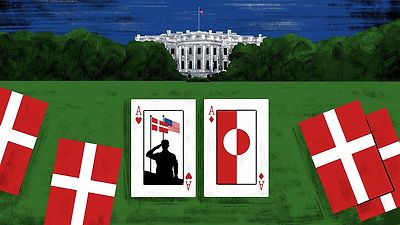
Illustration: Chloe Cushman
Nov 18th 2025|5 min read
Listen to this story
THESE ARE bracing times for America’s most feckless allies. President Donald Trump has turned his wrath on free-riders with puny armed forces, who ignored years of requests to do more. If those laggards feel friendless in a dangerous world, much of the blame is on them. But this is a frightening moment, too, for a smaller group: countries that spent decades trying to be useful to America, their superpower protector. Often, helpful partners fall into one of two camps: those that contribute useful services to an alliance, and those that hold territory in strategic places.
Until recently, Denmark imagined that it ticked both those boxes. A country of picture-book prosperity, near the top of global rankings for the contentment of its 6m people, Denmark is too small to deter enemies alone. For decades Denmark’s solution has involved signalling that it is an unusually willing member of NATO. After the fall of the Soviet bloc ushered in a unipolar age, led by an America ready and able to police the world, Denmark ditched years of semi-pacifism to become an eager sheriff’s deputy. Anders Fogh Rasmussen, prime minister from 2001-09, then NATO secretary-general from 2009-14, dates this “fundamental change in mindset” to the first Gulf war in 1990-91, when Denmark sent a warship to enforce a UN blockade of Iraq. Deployments in the Balkans followed. After the September 11th attacks in 2001 Danish expeditionary forces served alongside Americans in Afghanistan and Iraq, later joining NATO air strikes on Libya.
During America’s war on terror after 2001, Denmark rarely applied the “national caveats” used by other allies to exempt their forces from the most dangerous missions. Denmark lost more troops in Afghanistan as a share of its population than almost any other coalition member. Today Denmark is one of the largest contributors of aid to Ukraine, per person.
Unfortunately for Denmark, a small but fearless deputy, America has lost its appetite for policing the world. That impatience with “endless wars” began under Barack Obama and intensified under Mr Trump. Addressing naval cadets earlier this year, Vice-President J.D. Vance, who served in Iraq, denounced previous American governments for sacrificing lives to “lofty, often incoherent abstractions” about promoting democracy and other Western values far from home.
If Denmark can no longer serve America in expeditionary wars to build a kindlier world, it still has useful territory to offer, in two separate places. The Danish mainland guards the entrance to the Baltic Sea, a vital route for Russia’s navy. Then there is the vast Arctic island of Greenland, a Danish colonial possession since the 18th century. A narrow sea passage between Greenland, Iceland and Britain was a NATO hunting ground for Soviet submarines during the cold war. Greenland lies under a flight path for missiles and warplanes heading for America. At the height of the confrontation with the Soviets, America stationed thousands of troops, early-warning radars and long-range bombers on Greenland. A treaty with Denmark from 1951 gives America almost free rein to deploy forces on the island. That created a “Greenland card” so valuable that American governments tolerated Denmark’s often left-leaning foreign policies towards the end of the cold war.
Under Mr Trump, alas, useful Greenland has become a point of painful dispute. Briefly in his first term, and more insistently since returning to office, Mr Trump has declared that America must own the island, and will not rule out the use of force to take it. He correctly accuses Denmark of underinvesting in Arctic defences. But his claims that Denmark has left Greenland exposed to Russian and Chinese predations ignore America’s own armed forces on the island, centred on a missile-defence base. Mr Trump can expand their presence as he wishes under the existing 1951 treaty. Other Trump officials have suggested that Greenland’s worth lies in its critical minerals. Yet American companies could open mines there without their president invading Greenland.
The 57,000 people of Greenland mostly favour independence from Denmark, and have not forgotten abuses by past colonial administrations. That does not mean they want to become Americans. In island-wide elections this year, Greenlanders voted against radical secessionists who want to end Danish rule quickly, if need be with Mr Trump’s help. Against that, Greenland wants American investments and is willing to exploit its strategic location to that end, says Ulrik Pram Gad of the Danish Institute for International Studies. Denmark can no longer play the Greenland card, “because the Greenlanders want to play it for themselves”.
Fear of abandonment becomes fear of the bully
Denmark is not walking away from America, says the chairman of the Danish parliament’s foreign-policy committee, Christian Friis Bach, noting it has ratified a new agreement welcoming American troops on Danish soil. “But there is a fear that America will walk away from us.” Mr Friis Bach called it a gut punch when Mr Vance said that Denmark was “not a good ally” and did not deserve to own Greenland. The politician cites Denmark’s Afghan death toll in rebuttal. Unhappily, those casualties earn less credit with men like Mr Trump and Mr Vance, who deem that campaign a blunder.
Dangerous changes are afoot, fears Mr Rasmussen, towards a world order “where the big powers make the decisions and very often over the heads of smaller and weaker neighbours”. Denmark is duly hedging. It is spending billions of dollars on new weaponry, both American and European. In a big move, the kingdom is buying long-range missiles that can hit Russia. It has abandoned its legal opt-out from European Union defence co-operation.
Denmark, like its European neighbours, will remain dependent on America to deter Russia for many years. But it is hard to see trust in America recovering. Fecklessness cuts both ways. ■
Business | Schumpeter
How do you replace a CEO like Tim Cook or Warren Buffett?
Some shoes seem just too big to fill

Illustration: Brett Ryder
Nov 20th 2025|5 min read
Listen to this story
TIM COOK seems like a nice problem for Apple’s board to have. Since he took over from Steve Jobs in 2011, the iPhone-maker’s boss has lifted annual sales from $108bn to $416bn, operating profit from $34bn to $133bn and market capitalisation from around $350bn to $4trn, equivalent to roughly $700m for every day of his 14-year tenure. Only Jensen Huang of Nvidia has created more shareholder value overall, but most of it in the past two frantic, AI-fuelled years. Only Satya Nadella of Microsoft and Sundar Pichai of Alphabet, two big-tech counterparts, have generated more on the average day, but check again in a few years’ time, when their tenures match Mr Cook’s today. No CEO comes close to his record of producing nearly $1trn in cumulative net income.
This unrivalled performance does, though, come with a catch: how on earth do you replace someone like that? Two years ago Mr Cook told Dua Lipa, a pop star with a podcast, that “I love it there and I can’t envision my life without being there. And so I’ll be there for a while.” In recent days, however, the Financial Times hinted that this while may be shorter than expected, reporting that Mr Cook may stand down as early as next year. Apple’s enviable finances mean the shoes he will leave his successor are comfortable—but also uncomfortably large.
Apple is not the only corporate giant preparing a peer to succeed someone widely regarded as peerless. On November 14th Walmart announced that Doug McMillon, who has steered the world’s largest retailer through international expansion, a global pandemic and a digital reinvention, will in January hand over to the boss of its American business after nearly 12 years. Days earlier Warren Buffett, an icon of America Inc, said he was “going quiet” ahead of his imminent retirement after six decades in charge of Berkshire Hathaway, a textile mill he has woven into a $1trn investment powerhouse. Jamie Dimon, about to celebrate 20 years as head of JPMorgan Chase, the world’s most valuable bank, is no longer joking that his exit is five years away—and always will be.
Although the average tenure of an S&P 500 boss fell from 11 years in 2021 to eight in 2024, nearly one in five of the blue-chip index’s constituents is led by a “marathoner CEO” serving a decade or more. Such companies tend to be more successful than average, with a typical market value of $59bn and total five-year shareholder returns (including dividends) of 93%. That is respectively twice and almost three times the median for the 200 or so firms whose bosses have been in place for three years or less. Naturally: otherwise the board would have looked for someone else.
Unsurprising, then, that when marathoners do finally hand over the baton, those selected to carry it often stumble. “You don’t want to be the person who follows the legend,” a headhunting adage goes, “you want to be the person who follows the person who follows the legend.” Or, indeed, the person after that. It took GE 17 years and two failed attempts to find a worthy successor to Jack Welch, who led the industrial conglomerate for 20 years until 2001. Nike is on its second flat-footed boss since Mark Parker’s tremendous leg from 2006 to 2020. It is too early to tell if Kelly Ortberg, appointed last year to lead Boeing, can pull the planemaker out of a prolonged nosedive following the departure in 2015 of its last successful pilot, James McNerney.
Successors do not have to be a disaster to be disappointing. Spencer Stuart, an executive-search firm, looked at marathoner-CEO succession in the S&P 500 between 2000 and 2024. It found that 85% of the replacements were company insiders, and that 66% of those internal hires generated lower total returns than their predecessors, relative to the market. Worse, nearly half of the marathoners’ replacements, be they insiders or outsiders, actually trailed the S&P 500 as a whole on that measure.
How can companies minimise the chances of this undesirable reversion to the mean? First of all, they must take succession planning seriously. Although most large firms have such plans on paper, in practice many boards merely pay them lip service. As self-serving as headhunters sound when they bang on about how the search for a next chief executive must start the moment the new one is redecorating the corner office, they are not wrong.
Paradoxically, the more that a board is hoping for both the current boss as well as the next one to be corporate endurance athletes, the sooner the search ought to begin. That is because, as Jim Citrin of Spencer Stuart explains, in such cases a firm may need to skip past the C-suite and look to younger generations for candidates. In contrast to the current senior executive team, rising stars will have plenty in the tank come the next transition a decade or more hence. But the striplings are also more numerous and less tested. Identifying promising ones is therefore easier if you start early, advises Mr Citrin.
Succession plans must also be constantly updated, particularly in times of rapid change. “The right person three years ago might not be the right person today,” says Claudia Pici Morris of Korn Ferry, an executive-search consultancy. Three years ago no one had heard of ChatGPT and globalisation was less of a dirty word.
No Cookalikes, please
Third, especially in volatile periods like today, boards ought to seriously consider those unpopular outsiders. Walmart is culturally wedded to internal succession and the insular Mr Buffett was always going to pick a confidant. Apple looks poised to do the same. Yet it urgently needs to rethink its reliance on Chinese supply chains, belatedly devise an AI strategy and come up with a big new hit beyond the 18-year-old iPhone. Mr Cook’s neglect of these challenges may be why Mr Buffett has been selling down Berkshire’s Apple stake and buying Alphabet shares. Mr Cook’s board should look for his successor farther from the tree. ■
Business | Bartleby
When companies lose their way
Refounding is the process of rediscovering a firm’s essential character

Illustration: Paul Blow
Nov 20th 2025|4 min read
Listen to this story
On Elliott Hill’s first day on the job as chief executive of Nike, in October 2024, he gave a presentation to his staff. His opening slide had two things written on it. One was that Nike was a sports company. Mr Hill, who began his career as an intern at the firm, reckons that it had lost its obsession with sport. Nike had its origins on the running tracks of Oregon in the 1960s; refocusing on athletes, the secret to its prior success, is at the heart of the CEO’s turnaround strategy.
At around the same time as Mr Hill was starting his job, another new chief executive, Brian Niccol of Starbucks, was also resetting the direction of a big, struggling brand. In an open letter published during his first week, Mr Niccol announced his plans to get “Back to Starbucks”. “There’s a shared sense that we have drifted from our core,” he wrote. His goal is to make the coffee chain less transactional, a place where people want to gather and linger as well as watch queue-jumpers grab mobile orders.
This back-to-the-future strategy—returning a company that has lost its way to the values and strategy that had made it successful—is very common. So common, in fact, that Jon Iwata of the Yale School of Management has given it a name: “refounding”. Mr Iwata says that individual decisions to move into a new market or launch a new product can be completely rational: Starbucks’ mobile-ordering system was a boon during the pandemic, for example. But the cumulative effect of such decisions can be to pull a company badly off course.
Sometimes, the refounder is an actual founder. When Steve Jobs made his return to Apple in 1997, his diagnosis was that the firm had stopped doing the basics well; among other things, he slashed the product range. Before Mr Niccol’s elevation, Howard Schultz, the man who built Starbucks, had made more comebacks than a stand-up comedian.
But often, as in the case of Messrs Hill and Niccol, it is a fresh face who is appealing to old values. Kelly Ortberg, the newish CEO of Boeing, is trying to restore the aerospace company’s badly dented reputation for engineering excellence; one of his first moves was a literal one, to Seattle, where the firm’s commercial airlines are made. In the early 2000s, Lego moved its product line away from the brick, the very thing that made it Lego, and paid a heavy price; a non-family-member CEO was the one to return it to its core.
Firms cannot stand still, of course: hence the second statement on Mr Hill’s opening slide last year, that Nike is also a growth company. Bosses don’t survive for long with an attitude of everything is just dandy. Executives with their eye on the top job have to say what they would change as well as what they would keep. Mark Thompson, a coach and co-author of a new book called “CEO Ready”, recommends that during an appointment process, inside candidates for the top job write an activist-style letter in order to get the board focused on a firm’s weak spots. This ceaseless pressure to grow means that over time, it is easy for firms to drift away from their core activities.
The trick, therefore, is to grow in a way that is consistent with what makes a firm special. One way to do this is to articulate a firm’s essential character, against which strategies can be judged. Defining a company by its products risks being too constraining. Netflix shipped 5.2bn DVDs in total from its founding in 1997 to the closure of the business in 2023, but did not fixate on them as the only way to distribute films.
Purpose statements risk going too far the other way: they can often end up being a soufflé of meaningless words about excellence and innovation. Mr Iwata’s own definition of organisational character is meatier: a mixture of an enduring need and a distinctive capability. Disney, for example, found success by satisfying consumers’ enduring need for escapism through a distinctive ability to create immersive worlds.
Refounding moments are not always necessary. Some firms were completely right to escape their roots: Samsung started out selling noodles and probably should not get back into that business. And any definition of what makes a company special is subject to retrospective wisdom: firms that do well must have retained their essence and firms that stumble must have lost sight of theirs. But the frequency with which firms are lost and refounded is still a useful reminder to bosses—that it never hurts to codify what a company is really good at, and to use that as a guidepost for big decisions. ■
Finance & economics | Buttonwood
Is this the end of the scorching gold rally?
As bullish stories get tested, investors should worry
Illustration: Satoshi Kambayashi
Nov 16th 2025|4 min read
Listen to this story
THE JARGON of gold trading echoes that of poker. “Strong hands” are investors loyal to the metal no matter the price. “Weak hands” are flaky punters who fold at the first sign of trouble. Bullish investors win when they convince others of their story about why the price is rising, which boils down to why, this time round, strong hands outnumber weak ones. When the market tanks, their bluff is called.
Until recently the strong hands were winning so comfortably that the argument seemed over. But, since October 20th, when the price hit a record $4,380 an ounce, it has fallen sharply before hovering around $4,100. The bulls are shifting uneasily. The price remains 54% higher than in January and 42% above its previous inflation-adjusted peak, scaled in 1980. Some analysts now expect a gentle rise; others predict gold will break $5,000 next year. But the bears reckon it is just starting to descend. Whose story makes more sense?

Chart: The Economist
Each rests on a different buyer: institutional investors, central banks and speculators. Begin with the institutions. Gold’s main attraction is as a store of value, especially in times of crises. It is tangible, easy to transport and tradable on a global market, which reassures investors with big portfolios. Its previous bull runs came after the dotcom crash and the global financial crisis of 2007-09, and during the covid-19 pandemic. But this time is different. The price of gold has roughly doubled since March 2024, in the absence of a recession (see chart 1). America’s S&P 500 stockmarket index has risen by almost 30% in the same period; real interest rates remain high.
Perhaps institutional investors are seeking refuge in gold since they fear a crisis is near. This year President Donald Trump’s tariffs and his stand-off with China have threatened trade chaos. America has undergone its longest-ever government shutdown. Fears are mounting that an AI-stock crash could bring down the real economy. But it is tricky to reconcile these on-again, off-again shocks with gold’s almost linear climb. Mr Trump’s trade deals, his truce with China, peace in the Middle East—none has had much impact. Since America’s shutdown came to an end on November 12th, stockmarkets and gold have, unusually, appeared to bounce around in tandem.
A second explanation contends that the gold rush is being driven by central banks. According to this “debasement” theory, America’s political dysfunction and ballooning public debt, as well as sanctions and threats to the independence of the Fed, are feeding fears of rampant inflation and killing faith in the greenback, causing central banks worldwide to swap long-duration dollar assets for safer gold. But where’s the evidence? Were American securities being dumped en masse, the dollar would be falling and long-term yields would be rising. In reality, the dollar has been pretty stable after slumping earlier this year; yields on 30-year Treasuries have been mostly flat.

Chart: The Economist
Proponents of debasement note that emerging-market central banks are keen on the metal. If gold’s share in reserves is up, however, that is largely because its price is rising while the dollar is not. In volume terms, emerging-market purchases of gold have risen but remain small. A confidant of central-bank officials detects no urge to bet the farm on the metal, especially if doing so would mean chasing a bubble. IMF data suggest that their reported buying has slowed since last year (see chart 2), and purchases are driven by just a few banks. China’s unreported imports, as proxied by British customs data, seemingly peaked before 2025.
That leaves speculators as the most likely drivers of recent price movements. In late September “long” positions held by hedge funds on gold futures were at a record 200,000 contracts, equivalent to 619 tonnes of metal. Net purchasing by exchange-traded funds was also strong. Last month ETF flows ebbed; that, together with just 100 tonnes’ worth of net sales by hedge funds, would explain much of the price dip observed late that month, estimates Michael Haigh of Société Générale, a bank. ETF flows have since rebounded. It would therefore appear that the gold price closely tracks these flighty funds’ appetite.
What may have started, months ago, as a limited push for more gold in central banks’ reserves then snowballed into a self-propelled mass of hot money chasing prices higher. Now this classic “momentum trade”, of investors following trends, has stalled. Should it reverse, the “strong hands” have a large amount of chips at stake. ■
Finance & economics | Free exchange
Can the Chinese economy match Aruba’s?
Xi Jinping has lofty goals for 2035. But China faces a real problem
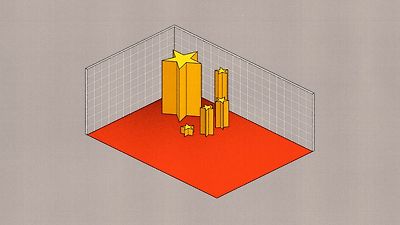
Illustration: Álvaro Bernis
Nov 20th 2025|5 min read
Listen to this story
The island of Aruba, off the coast of Venezuela, has a population of just 108,000. Its economy, once dependent on breeding horses, pivoted into sifting gold then refining oil. Now it relies on attracting tourists to its white beaches, 24-hour casinos and daily games of bingo. An island just 32km long would not seem to have many bragging rights over the world’s second-biggest economy. But tiny Aruba has achieved something China’s leaders would dearly love to emulate. It more than doubled its GDP per person in less than 15 years. And it accomplished that feat even after reaching the income per person that China has recently attained.
China’s leaders like to set ambitious and arbitrary goals for their sprawling economy. Mao Zedong proclaimed in 1957 that its steel output should surpass Britain’s in 15 years. Farmers turned their hands to smelting iron in backyard furnaces, with disastrous consequences. Under Deng Xiaoping, China’s government aimed to double the size of the economy between 1980 and 1990 and do it again by the end of the 20th century. It met both targets with ease.
The tradition has continued, more tentatively, under Xi Jinping, China’s current leader. In 2020 he said it was entirely possible China could double its GDP per person over 15 years. A new guide to the “fourth plenum”, a big party meeting held last month, states the country’s GDP per person should reach $20,000 by 2035 (measured at the prices and exchange rate prevailing in 2020). That would suffice, it says, to make China a “moderately developed economy”. Meeting both goals would require China’s GDP per person to grow by about 4.4% a year over the next ten years.
That target may not seem too daunting. Even over the past ten years—which began with a currency crisis, ended with a trade war, and featured a pandemic in between—Chinese growth has exceeded 5% per person on average. But as countries get richer, their growth tends to slow. China’s GDP now exceeds $13,000 per person (in 2020 prices). Few countries have grown as fast as China’s leaders now envisage after reaching that level of prosperity.
Aruba is one example of this rare breed. Its GDP, divided among its modest population, crossed the $13,000 threshold in 1983. Two years later, its oil refinery shut down. But Aruba still boomed in the late 1980s after tourism took off. From 1983 to 1993, its GDP per person grew by more than 8% a year on average.
How many other Arubas are out there? One place to look is the Penn World Table, which provides GDP and population figures for 185 economies from 1950 to 2023. Some countries, like America, enter the database with a GDP per person already far higher than $13,000 (converted into 2020 prices and market exchange rates using IMF data). Other economies have never met this threshold or reached it only recently. There are, however, 43 economies in the data that can provide a useful benchmark for China. They all reached a GDP per person of around $13,000 at some point after 1950 but before 2014.
Averaged together, these economies grew by 3% a year per person in the decade after reaching China’s current prosperity level. Only ten of them managed to grow faster than 4.4% a year. In addition to Aruba, they include Macau (another gambling paradise), Japan and the four original Asian tigers—Hong Kong, Singapore, South Korea and Taiwan. France and Italy reached the $13,000 threshold in the 1960s and grew at a tigerish rate in the next ten years. The last of the ten is Israel, a miracle economy of a different sort. Its GDP per person managed to grow by 4.4% a year on average from 1964 to 1974 despite several wars with its neighbours.
China’s 2035 goals are, then, ambitious. It is aiming for the top quarter of historical growth spells among comparably rich economies. And unlike its forerunners, its population is huge. A rapid rise in its GDP per person will translate into even greater economic heft. That will have implications for the global pecking order.
The plenum guidebook assumes that China’s population will shrink by 0.2% a year over the next decade. If that holds true and if China’s GDP per person grows as planned, its aggregate GDP will expand by 50% by 2035. China’s colossal economy will be half as big again as it is today. That is a much greater increase than anyone predicts for America over the period. All else equal, it could bring China’s economy close to beating America’s in total size.
However not all else is equal. The most obvious things that will change are prices and exchange rates. China’s leaders tend to set their goals in “real”, inflation-adjusted terms. That is true of their aims for 2035 and their annual growth targets for the year ahead. But the real world is nominal, as Matthew Yglesias, a blogger, once said. And in the real world, China’s prices have been falling for two and a half years, according to the broadest measure.
Moderately deflated
Due to this deflation, China’s nominal growth, before adjusting for inflation, has lagged behind America’s in recent years, even though its real growth has been faster. At the same time, its currency, the yuan, has wobbled. Thus when China’s current-price GDP is converted into dollars at the going exchange rate, it has lost ground to America’s, falling from over 70% of America’s in 2020 to only 64% last year. China’s leaders are free to set their long-term targets in terms of the prices and exchange rates that prevailed in 2020. But those are not the prices or rates anyone is paying today.
China can become a “moderately developed” economy by its own idiosyncratic definition without tackling this problem. But if it wants to become the biggest economy in the world, it will have to do more to expand demand, reverse deflation and maintain the value of the yuan. In these efforts, it would be better served by a different kind of long-term target. Instead of seeking to double GDP per person over 15 years in “real” terms, it should seek to triple it in the nominal dollar terms that really matter. ■
Middle East & Africa | MBS meets MAGA
Muhammad bin Salman takes a victory lap in Washington
But the deals he signed for arms sales and nuclear co-operation are unfinished
Photograph: Getty Images
Nov 18th 2025|WASHINGTON, DC|6 min read
Listen to this story
FOR saudi arabia, the visit could hardly have gone better. On November 18th Donald Trump welcomed Muhammad bin Salman, the Saudi crown prince, with all the pomp America could muster, including a military fly-past and a black-tie dinner at the White House. The two men signed deals for investment, arms sales and nuclear co-operation. Mr Trump declared Saudi Arabia a “major non-nato ally”. After a decade of tension, American-Saudi relations appear to be back on a solid footing.
Look closer, though, and the deals were typical Trump: long on promises, short on specifics. As Prince Muhammad heads home, two questions linger. First is whether he can hash out the details with a flighty Trump administration. Second is whether, as Mr Trump’s second term wears on, he will put pressure on the prince to sign the one deal he is not yet ready to make—to normalise ties with Israel.
Start with the nuclear pact. The Saudis want nuclear reactors to meet growing energy demand. Mr Trump wants American firms to build them. They have spent months negotiating the details, and America’s energy secretary says the talks have now finished. But the two countries have yet to sign a “123 agreement”, named after the relevant bit of America’s export-control laws. What they announced this week was more of a deal to reach an agreement.
The final pact will require approval from Congress. Many lawmakers want Saudi Arabia to follow the example of the United Arab Emirates, which swore off uranium enrichment to secure its own deal in 2009. But the Saudis are keen to possess such a capability, despite American fears about nuclear proliferation. Some officials have mooted a scheme to build a Saudi-owned enrichment facility in America as a way to split the difference.
If the nuclear talks may still need weeks or months to finish, the sale of f-35 fighter jets will need years. The kingdom wants to buy dozens of the planes, the most advanced in America’s arsenal. This too requires an okay from Congress, and lawmakers from both parties worry about what it will mean for Israel’s military edge in the region. Even if they do approve the sale, the aircraft are unlikely to be delivered before the end of the decade.
Then there are the investment deals. Mr Trump said Saudi Arabia promised to invest nearly $1trn in America, up from the $600bn it pledged when he visited Riyadh, the Saudi capital, in May. That is a sum larger than the kingdom’s entire sovereign-wealth fund. Saudi Arabia is struggling with low oil prices, which have forced it to take on debt and cut back some of its ambitious plans to diversify its economy. It is keen to invest in America—but does not have a spare trillion dollars lying around.
Still, these are questions for another day. If the point of the visit was to show that Saudi Arabia had rehabilitated itself in Washington, it was a success. By the time Prince Muhammad made his first trip to the White House in March 2018, his country had become a partisan issue. Democrats were angry at his courtship of Mr Trump and his ruinous war in Yemen.
Six months later Saudi agents murdered Jamal Khashoggi, a Saudi journalist who was a contributor to the Washington Post, inside the kingdom’s consulate in Istanbul. The killing poisoned American-Saudi relations for years. As a candidate in 2019, Joe Biden promised to make the prince a “pariah”. High oil prices forced him to reconsider: in the summer of 2022 he flew to Saudi Arabia, hat in hand, to ask the kingdom to pump more oil. But the relationship remained frosty.
No longer. In recent years the Saudis have adopted a more pragmatic foreign policy. Gone are the days when they blockaded a neighbouring country and kidnapped a Lebanese prime minister. They have also made a pitch to the Americans around great-power competition. The kingdom wants to supply American industry with critical minerals, for example, which would help break its dependence on China. In a recent meeting a top American official pulled out a periodic table of the elements and asked the Saudis to point out which minerals they could offer. “Opinions of Saudi have changed substantially in this town,” says one congressional staffer.
The f-35 deal is another sign of how things have changed. Israeli officials are not panicked about losing air superiority: by the time the Saudis receive their first f-35, Israel will have been flying the complex jets for 15 years.
But they are unhappy with how the deal was negotiated. For years sales of advanced American weapons to Arab countries took place only after detailed talks at the Pentagon between Israeli and American officers. Mr Trump bypassed that process. With Israel’s stock in Washington at a nadir after the Gaza war, this may be a worrying precedent.
That helps explain why Prince Muhammad is no longer eager to join the Abraham accords, the 2020 agreements that saw four Arab states normalise ties with Israel. Mr Biden was close to brokering such a deal in 2023. In return for Saudi recognition of Israel, America would have offered the kingdom a defence treaty and other incentives. Prince Muhammad saw this as a way to rebuild his standing in Washington.
But the outbreak of the Gaza war in 2023 put the agreement on ice. For more than a year, the Saudis have insisted they will not sign a deal unless it includes a serious path to creating a Palestinian state (which Binyamin Netanyahu, the Israeli prime minister, will not even consider). Mr Trump is nonetheless determined to expand the accords during his second term. His administration hopes a deal with the kingdom would have a ripple effect. Saudi Arabia is, by far, the largest Arab economy and the custodian of Islam’s holiest sites. If it agreed to recognise Israel, other Arab and Muslim countries might follow suit.
Prince Muhammad let Mr Trump down gently during their Oval Office meeting. “We want to be part of the Abraham accords,” he said. “But we want also to be sure that we secure [a] clear path [to] a two-state solution.” The Saudis will keep the prospect of normalisation on the table: it is a useful carrot to dangle in front of American lawmakers. They will also deepen discreet economic ties with Israel. Numerous Israeli businessmen have been observed in Riyadh this year (they travelled on second passports). But the Saudis are serious when they say that a deal requires progress towards a Palestinian state.
Some Saudis worry that Mr Trump will raise the pressure on Prince Muhammad later in his term; perhaps delivery of the f-35s, for example, will eventually be linked to normalisation. For now, though, Mr Trump seems inclined to be patient—and the Saudis feel no need to hurry, because their relationship with America no longer depends on recognition of Israel. ■
Europe | Atomic reaction
A huge corruption scandal threatens Ukraine’s government
Volodymyr Zelensky faces his biggest challenge since the invasion
Photograph: Reuters
Nov 17th 2025|Kyiv|5 min read
Listen to this story
VOLODYMYR ZELENSKY is facing his most challenging test since Russia’s full-scale invasion in 2022. A huge corruption scandal in which senior officials allegedly stole millions from Energoatom, the state nuclear company, has cost him two ministers. Officials and MPs are pressing him to purge tainted allies in order to save himself and the state. Meanwhile, on November 19th, American media reported on a secret 28-point ceasefire proposal negotiated by American and Russian officials demanding that Ukraine settle with its invader on crippling terms. The proposal may not have full American backing. But it adds to the pressure on Ukraine’s president at a critical time.
Sources in government say Mr Zelensky has been “floored” by the scale of corruption charges against members of his inner circle. On November 19th parliament voted to dismiss Svitlana Hrinchuk, the energy minister, and Herman Halushchenko, the justice minister. On November 20th, as The Economist went to press, Mr Zelensky was due to face members of his parliamentary party, many of whom want more heads to roll. “They want revenge for four years of being humiliated,” said an opposition MP.
The corruption investigations were a Herculean feat by detectives. Secretly recording conversations in flats and offices around Kyiv, they uncovered a scheme to embezzle at least $100m from Energoatom using kickbacks of 10-15% on contracts. Some of the money appears to have been sent to Moscow. Some was earmarked for villas near Kyiv allegedly intended for use by Oleksiy Chernyshov, a former deputy prime minister, and other officials. Detectives from the National Anti-Corruption Bureau (nabu) found a golden toilet bowl in an apartment owned by Timur Mindich, a former business partner of the president. Mr Mindich, accused of co-organising the scheme, fled the country mere hours before detectives arrived at his home. Six suspects have been arrested. Mr Chernyshov, Mr Halushchenko and Ms Hrinchuk deny any involvement in corruption.
As in a crime thriller, the accused used aliases. Detectives say “Carlson” referred to Mr Mindich, “Che Guevara” to Mr Chernyshov and “Professor” to Mr Halushchenko. In the tapes, one of the accused complains of back pain from lugging bags of cash. Another suggests it would be a “waste of money” to protect electrical substations near nuclear power plants. The same substations were targeted by Russian drones and missiles on November 8th, just before the scandal broke.
When the suspects realised they were being recorded, they allegedly began menacing the nabu detectives—following them, obtaining their home addresses and even tracking them using classified government cctv networks. Around this time the president’s office began to put pressure on anti-corruption bodies. On July 21st several detectives involved in the probe were detained by security services. The next day the president’s party pushed through a hasty bill stripping the anti-corruption agencies of their operational independence—a move reversed after huge public protests. Oleksandr Klymenko, the head of sapo, Ukraine’s anti-corruption prosecutor’s office, says it was only because the presidential office failed in its efforts that the investigation went ahead.
Sources close to the investigation say they have not yet established how high knowledge of the scheme went. Its roots likely predate Mr Zelensky’s presidency. Many alleged members are linked to Andriy Derkach, a former mp who once headed Energoatom and fled to Russia in 2022. Well-placed sources argue the president could not have known the details. Yet the proximity to the scheme of his close allies is enough to jeopardise his future.
At home, the scandal risks encouraging cynicism and leading more soldiers to desert. Abroad, it makes it harder for Ukraine to ask for the aid it needs, estimated at $100bn per year. Some will use revelations of corruption not as proof that the country has independent corruption-fighting bodies, but as an argument to cut support.
The risks to Ukraine’s Western backing were underlined by reports of the Russian-American peace proposal. Drafted without Ukraine’s knowledge by Steve Witkoff, Donald Trump’s special representative, and Kirill Dmitriev, Vladimir Putin’s envoy, it seems little short of a demand for capitulation. Sources familiar with the 28-point document say it envisages slashing Ukraine’s troop strength by 60%. Ukraine would be asked to cede more territory and barred from possessing several classes of weapons, including ones that could hit Moscow. No foreign troops would be allowed on Ukrainian soil. Ukraine would be required to designate Russian as a second state language and to restore the local Russian Orthodox Church, disbanded over charges of serving Kremlin propaganda.
Ukrainians see such demands as non-starters. It is unclear how widely the plan was circulated in the Trump administration, or whether it was a personal initiative by Mr Witkoff. The State Department has declined to comment on it. Ukraine first learned the details during a meeting in Miami this week between Mr Witkoff and Ukraine’s national-security chief, Rustem Umerov. Mr Zelensky is said to have been frustrated with the results of those talks. Mr Witkoff had been meant to fly to Turkey on November 19th to meet Andriy Yermak, Mr Zelensky’s intimidating chief of staff, who has faced growing criticism in the wake of the scandal. That meeting was cancelled at the last minute.
Knives are out for Mr Yermak, who has alienated both friends and enemies by monopolising access to the president. He has not been directly accused of involvement in the scheme, and supporters say he has been unfairly demonised. People “want to throw everything on Andriy”, says Iryna Mudra, deputy head of the presidential office. Yet some MPs insist Mr Zelensky cut him loose. A social-media post by Mykyta Poturaiev, a senior MP, suggested demands would also include forming a new government of national unity.
Mr Zelensky has no easy solutions. Anti-corruption investigators will no doubt uncover more damaging information. Some see the crisis as an opportunity for a reset, a chance for the president to free himself. “Zelensky faces his day of reckoning,” says a senior official. “Either he amputates a leg, or he gets an infection going through the whole body and dies.” ■
International | The Telegram
The loneliness of America’s model ally
Donald Trump has no desire to play global cop. That is tough on Denmark, a loyal sheriff’s deputy
Illustration: Chloe Cushman
Nov 18th 2025|5 min read
Listen to this story
THESE ARE bracing times for America’s most feckless allies. President Donald Trump has turned his wrath on free-riders with puny armed forces, who ignored years of requests to do more. If those laggards feel friendless in a dangerous world, much of the blame is on them. But this is a frightening moment, too, for a smaller group: countries that spent decades trying to be useful to America, their superpower protector. Often, helpful partners fall into one of two camps: those that contribute useful services to an alliance, and those that hold territory in strategic places.
Until recently, Denmark imagined that it ticked both those boxes. A country of picture-book prosperity, near the top of global rankings for the contentment of its 6m people, Denmark is too small to deter enemies alone. For decades Denmark’s solution has involved signalling that it is an unusually willing member of NATO. After the fall of the Soviet bloc ushered in a unipolar age, led by an America ready and able to police the world, Denmark ditched years of semi-pacifism to become an eager sheriff’s deputy. Anders Fogh Rasmussen, prime minister from 2001-09, then NATO secretary-general from 2009-14, dates this “fundamental change in mindset” to the first Gulf war in 1990-91, when Denmark sent a warship to enforce a UN blockade of Iraq. Deployments in the Balkans followed. After the September 11th attacks in 2001 Danish expeditionary forces served alongside Americans in Afghanistan and Iraq, later joining NATO air strikes on Libya.
During America’s war on terror after 2001, Denmark rarely applied the “national caveats” used by other allies to exempt their forces from the most dangerous missions. Denmark lost more troops in Afghanistan as a share of its population than almost any other coalition member. Today Denmark is one of the largest contributors of aid to Ukraine, per person.
Unfortunately for Denmark, a small but fearless deputy, America has lost its appetite for policing the world. That impatience with “endless wars” began under Barack Obama and intensified under Mr Trump. Addressing naval cadets earlier this year, Vice-President J.D. Vance, who served in Iraq, denounced previous American governments for sacrificing lives to “lofty, often incoherent abstractions” about promoting democracy and other Western values far from home.
If Denmark can no longer serve America in expeditionary wars to build a kindlier world, it still has useful territory to offer, in two separate places. The Danish mainland guards the entrance to the Baltic Sea, a vital route for Russia’s navy. Then there is the vast Arctic island of Greenland, a Danish colonial possession since the 18th century. A narrow sea passage between Greenland, Iceland and Britain was a NATO hunting ground for Soviet submarines during the cold war. Greenland lies under a flight path for missiles and warplanes heading for America. At the height of the confrontation with the Soviets, America stationed thousands of troops, early-warning radars and long-range bombers on Greenland. A treaty with Denmark from 1951 gives America almost free rein to deploy forces on the island. That created a “Greenland card” so valuable that American governments tolerated Denmark’s often left-leaning foreign policies towards the end of the cold war.
Under Mr Trump, alas, useful Greenland has become a point of painful dispute. Briefly in his first term, and more insistently since returning to office, Mr Trump has declared that America must own the island, and will not rule out the use of force to take it. He correctly accuses Denmark of underinvesting in Arctic defences. But his claims that Denmark has left Greenland exposed to Russian and Chinese predations ignore America’s own armed forces on the island, centred on a missile-defence base. Mr Trump can expand their presence as he wishes under the existing 1951 treaty. Other Trump officials have suggested that Greenland’s worth lies in its critical minerals. Yet American companies could open mines there without their president invading Greenland.
The 57,000 people of Greenland mostly favour independence from Denmark, and have not forgotten abuses by past colonial administrations. That does not mean they want to become Americans. In island-wide elections this year, Greenlanders voted against radical secessionists who want to end Danish rule quickly, if need be with Mr Trump’s help. Against that, Greenland wants American investments and is willing to exploit its strategic location to that end, says Ulrik Pram Gad of the Danish Institute for International Studies. Denmark can no longer play the Greenland card, “because the Greenlanders want to play it for themselves”.
Fear of abandonment becomes fear of the bully
Denmark is not walking away from America, says the chairman of the Danish parliament’s foreign-policy committee, Christian Friis Bach, noting it has ratified a new agreement welcoming American troops on Danish soil. “But there is a fear that America will walk away from us.” Mr Friis Bach called it a gut punch when Mr Vance said that Denmark was “not a good ally” and did not deserve to own Greenland. The politician cites Denmark’s Afghan death toll in rebuttal. Unhappily, those casualties earn less credit with men like Mr Trump and Mr Vance, who deem that campaign a blunder.
Dangerous changes are afoot, fears Mr Rasmussen, towards a world order “where the big powers make the decisions and very often over the heads of smaller and weaker neighbours”. Denmark is duly hedging. It is spending billions of dollars on new weaponry, both American and European. In a big move, the kingdom is buying long-range missiles that can hit Russia. It has abandoned its legal opt-out from European Union defence co-operation.
Denmark, like its European neighbours, will remain dependent on America to deter Russia for many years. But it is hard to see trust in America recovering. Fecklessness cuts both ways. ■
Business | Schumpeter
How do you replace a CEO like Tim Cook or Warren Buffett?
Some shoes seem just too big to fill
Illustration: Brett Ryder
Nov 20th 2025|5 min read
Listen to this story
TIM COOK seems like a nice problem for Apple’s board to have. Since he took over from Steve Jobs in 2011, the iPhone-maker’s boss has lifted annual sales from $108bn to $416bn, operating profit from $34bn to $133bn and market capitalisation from around $350bn to $4trn, equivalent to roughly $700m for every day of his 14-year tenure. Only Jensen Huang of Nvidia has created more shareholder value overall, but most of it in the past two frantic, AI-fuelled years. Only Satya Nadella of Microsoft and Sundar Pichai of Alphabet, two big-tech counterparts, have generated more on the average day, but check again in a few years’ time, when their tenures match Mr Cook’s today. No CEO comes close to his record of producing nearly $1trn in cumulative net income.
This unrivalled performance does, though, come with a catch: how on earth do you replace someone like that? Two years ago Mr Cook told Dua Lipa, a pop star with a podcast, that “I love it there and I can’t envision my life without being there. And so I’ll be there for a while.” In recent days, however, the Financial Times hinted that this while may be shorter than expected, reporting that Mr Cook may stand down as early as next year. Apple’s enviable finances mean the shoes he will leave his successor are comfortable—but also uncomfortably large.
Apple is not the only corporate giant preparing a peer to succeed someone widely regarded as peerless. On November 14th Walmart announced that Doug McMillon, who has steered the world’s largest retailer through international expansion, a global pandemic and a digital reinvention, will in January hand over to the boss of its American business after nearly 12 years. Days earlier Warren Buffett, an icon of America Inc, said he was “going quiet” ahead of his imminent retirement after six decades in charge of Berkshire Hathaway, a textile mill he has woven into a $1trn investment powerhouse. Jamie Dimon, about to celebrate 20 years as head of JPMorgan Chase, the world’s most valuable bank, is no longer joking that his exit is five years away—and always will be.
Although the average tenure of an S&P 500 boss fell from 11 years in 2021 to eight in 2024, nearly one in five of the blue-chip index’s constituents is led by a “marathoner CEO” serving a decade or more. Such companies tend to be more successful than average, with a typical market value of $59bn and total five-year shareholder returns (including dividends) of 93%. That is respectively twice and almost three times the median for the 200 or so firms whose bosses have been in place for three years or less. Naturally: otherwise the board would have looked for someone else.
Unsurprising, then, that when marathoners do finally hand over the baton, those selected to carry it often stumble. “You don’t want to be the person who follows the legend,” a headhunting adage goes, “you want to be the person who follows the person who follows the legend.” Or, indeed, the person after that. It took GE 17 years and two failed attempts to find a worthy successor to Jack Welch, who led the industrial conglomerate for 20 years until 2001. Nike is on its second flat-footed boss since Mark Parker’s tremendous leg from 2006 to 2020. It is too early to tell if Kelly Ortberg, appointed last year to lead Boeing, can pull the planemaker out of a prolonged nosedive following the departure in 2015 of its last successful pilot, James McNerney.
Successors do not have to be a disaster to be disappointing. Spencer Stuart, an executive-search firm, looked at marathoner-CEO succession in the S&P 500 between 2000 and 2024. It found that 85% of the replacements were company insiders, and that 66% of those internal hires generated lower total returns than their predecessors, relative to the market. Worse, nearly half of the marathoners’ replacements, be they insiders or outsiders, actually trailed the S&P 500 as a whole on that measure.
How can companies minimise the chances of this undesirable reversion to the mean? First of all, they must take succession planning seriously. Although most large firms have such plans on paper, in practice many boards merely pay them lip service. As self-serving as headhunters sound when they bang on about how the search for a next chief executive must start the moment the new one is redecorating the corner office, they are not wrong.
Paradoxically, the more that a board is hoping for both the current boss as well as the next one to be corporate endurance athletes, the sooner the search ought to begin. That is because, as Jim Citrin of Spencer Stuart explains, in such cases a firm may need to skip past the C-suite and look to younger generations for candidates. In contrast to the current senior executive team, rising stars will have plenty in the tank come the next transition a decade or more hence. But the striplings are also more numerous and less tested. Identifying promising ones is therefore easier if you start early, advises Mr Citrin.
Succession plans must also be constantly updated, particularly in times of rapid change. “The right person three years ago might not be the right person today,” says Claudia Pici Morris of Korn Ferry, an executive-search consultancy. Three years ago no one had heard of ChatGPT and globalisation was less of a dirty word.
No Cookalikes, please
Third, especially in volatile periods like today, boards ought to seriously consider those unpopular outsiders. Walmart is culturally wedded to internal succession and the insular Mr Buffett was always going to pick a confidant. Apple looks poised to do the same. Yet it urgently needs to rethink its reliance on Chinese supply chains, belatedly devise an AI strategy and come up with a big new hit beyond the 18-year-old iPhone. Mr Cook’s neglect of these challenges may be why Mr Buffett has been selling down Berkshire’s Apple stake and buying Alphabet shares. Mr Cook’s board should look for his successor farther from the tree. ■
Business | Bartleby
When companies lose their way
Refounding is the process of rediscovering a firm’s essential character
Illustration: Paul Blow
Nov 20th 2025|4 min read
Listen to this story
On Elliott Hill’s first day on the job as chief executive of Nike, in October 2024, he gave a presentation to his staff. His opening slide had two things written on it. One was that Nike was a sports company. Mr Hill, who began his career as an intern at the firm, reckons that it had lost its obsession with sport. Nike had its origins on the running tracks of Oregon in the 1960s; refocusing on athletes, the secret to its prior success, is at the heart of the CEO’s turnaround strategy.
At around the same time as Mr Hill was starting his job, another new chief executive, Brian Niccol of Starbucks, was also resetting the direction of a big, struggling brand. In an open letter published during his first week, Mr Niccol announced his plans to get “Back to Starbucks”. “There’s a shared sense that we have drifted from our core,” he wrote. His goal is to make the coffee chain less transactional, a place where people want to gather and linger as well as watch queue-jumpers grab mobile orders.
This back-to-the-future strategy—returning a company that has lost its way to the values and strategy that had made it successful—is very common. So common, in fact, that Jon Iwata of the Yale School of Management has given it a name: “refounding”. Mr Iwata says that individual decisions to move into a new market or launch a new product can be completely rational: Starbucks’ mobile-ordering system was a boon during the pandemic, for example. But the cumulative effect of such decisions can be to pull a company badly off course.
Sometimes, the refounder is an actual founder. When Steve Jobs made his return to Apple in 1997, his diagnosis was that the firm had stopped doing the basics well; among other things, he slashed the product range. Before Mr Niccol’s elevation, Howard Schultz, the man who built Starbucks, had made more comebacks than a stand-up comedian.
But often, as in the case of Messrs Hill and Niccol, it is a fresh face who is appealing to old values. Kelly Ortberg, the newish CEO of Boeing, is trying to restore the aerospace company’s badly dented reputation for engineering excellence; one of his first moves was a literal one, to Seattle, where the firm’s commercial airlines are made. In the early 2000s, Lego moved its product line away from the brick, the very thing that made it Lego, and paid a heavy price; a non-family-member CEO was the one to return it to its core.
Firms cannot stand still, of course: hence the second statement on Mr Hill’s opening slide last year, that Nike is also a growth company. Bosses don’t survive for long with an attitude of everything is just dandy. Executives with their eye on the top job have to say what they would change as well as what they would keep. Mark Thompson, a coach and co-author of a new book called “CEO Ready”, recommends that during an appointment process, inside candidates for the top job write an activist-style letter in order to get the board focused on a firm’s weak spots. This ceaseless pressure to grow means that over time, it is easy for firms to drift away from their core activities.
The trick, therefore, is to grow in a way that is consistent with what makes a firm special. One way to do this is to articulate a firm’s essential character, against which strategies can be judged. Defining a company by its products risks being too constraining. Netflix shipped 5.2bn DVDs in total from its founding in 1997 to the closure of the business in 2023, but did not fixate on them as the only way to distribute films.
Purpose statements risk going too far the other way: they can often end up being a soufflé of meaningless words about excellence and innovation. Mr Iwata’s own definition of organisational character is meatier: a mixture of an enduring need and a distinctive capability. Disney, for example, found success by satisfying consumers’ enduring need for escapism through a distinctive ability to create immersive worlds.
Refounding moments are not always necessary. Some firms were completely right to escape their roots: Samsung started out selling noodles and probably should not get back into that business. And any definition of what makes a company special is subject to retrospective wisdom: firms that do well must have retained their essence and firms that stumble must have lost sight of theirs. But the frequency with which firms are lost and refounded is still a useful reminder to bosses—that it never hurts to codify what a company is really good at, and to use that as a guidepost for big decisions. ■
Finance & economics | Buttonwood
Is this the end of the scorching gold rally?
As bullish stories get tested, investors should worry
Illustration: Satoshi Kambayashi
Nov 16th 2025|4 min read
Listen to this story
THE JARGON of gold trading echoes that of poker. “Strong hands” are investors loyal to the metal no matter the price. “Weak hands” are flaky punters who fold at the first sign of trouble. Bullish investors win when they convince others of their story about why the price is rising, which boils down to why, this time round, strong hands outnumber weak ones. When the market tanks, their bluff is called.
Until recently the strong hands were winning so comfortably that the argument seemed over. But, since October 20th, when the price hit a record $4,380 an ounce, it has fallen sharply before hovering around $4,100. The bulls are shifting uneasily. The price remains 54% higher than in January and 42% above its previous inflation-adjusted peak, scaled in 1980. Some analysts now expect a gentle rise; others predict gold will break $5,000 next year. But the bears reckon it is just starting to descend. Whose story makes more sense?
Chart: The Economist
Each rests on a different buyer: institutional investors, central banks and speculators. Begin with the institutions. Gold’s main attraction is as a store of value, especially in times of crises. It is tangible, easy to transport and tradable on a global market, which reassures investors with big portfolios. Its previous bull runs came after the dotcom crash and the global financial crisis of 2007-09, and during the covid-19 pandemic. But this time is different. The price of gold has roughly doubled since March 2024, in the absence of a recession (see chart 1). America’s S&P 500 stockmarket index has risen by almost 30% in the same period; real interest rates remain high.
Perhaps institutional investors are seeking refuge in gold since they fear a crisis is near. This year President Donald Trump’s tariffs and his stand-off with China have threatened trade chaos. America has undergone its longest-ever government shutdown. Fears are mounting that an AI-stock crash could bring down the real economy. But it is tricky to reconcile these on-again, off-again shocks with gold’s almost linear climb. Mr Trump’s trade deals, his truce with China, peace in the Middle East—none has had much impact. Since America’s shutdown came to an end on November 12th, stockmarkets and gold have, unusually, appeared to bounce around in tandem.
A second explanation contends that the gold rush is being driven by central banks. According to this “debasement” theory, America’s political dysfunction and ballooning public debt, as well as sanctions and threats to the independence of the Fed, are feeding fears of rampant inflation and killing faith in the greenback, causing central banks worldwide to swap long-duration dollar assets for safer gold. But where’s the evidence? Were American securities being dumped en masse, the dollar would be falling and long-term yields would be rising. In reality, the dollar has been pretty stable after slumping earlier this year; yields on 30-year Treasuries have been mostly flat.
Chart: The Economist
Proponents of debasement note that emerging-market central banks are keen on the metal. If gold’s share in reserves is up, however, that is largely because its price is rising while the dollar is not. In volume terms, emerging-market purchases of gold have risen but remain small. A confidant of central-bank officials detects no urge to bet the farm on the metal, especially if doing so would mean chasing a bubble. IMF data suggest that their reported buying has slowed since last year (see chart 2), and purchases are driven by just a few banks. China’s unreported imports, as proxied by British customs data, seemingly peaked before 2025.
That leaves speculators as the most likely drivers of recent price movements. In late September “long” positions held by hedge funds on gold futures were at a record 200,000 contracts, equivalent to 619 tonnes of metal. Net purchasing by exchange-traded funds was also strong. Last month ETF flows ebbed; that, together with just 100 tonnes’ worth of net sales by hedge funds, would explain much of the price dip observed late that month, estimates Michael Haigh of Société Générale, a bank. ETF flows have since rebounded. It would therefore appear that the gold price closely tracks these flighty funds’ appetite.
What may have started, months ago, as a limited push for more gold in central banks’ reserves then snowballed into a self-propelled mass of hot money chasing prices higher. Now this classic “momentum trade”, of investors following trends, has stalled. Should it reverse, the “strong hands” have a large amount of chips at stake. ■
Finance & economics | Free exchange
Can the Chinese economy match Aruba’s?
Xi Jinping has lofty goals for 2035. But China faces a real problem
Illustration: Álvaro Bernis
Nov 20th 2025|5 min read
Listen to this story
The island of Aruba, off the coast of Venezuela, has a population of just 108,000. Its economy, once dependent on breeding horses, pivoted into sifting gold then refining oil. Now it relies on attracting tourists to its white beaches, 24-hour casinos and daily games of bingo. An island just 32km long would not seem to have many bragging rights over the world’s second-biggest economy. But tiny Aruba has achieved something China’s leaders would dearly love to emulate. It more than doubled its GDP per person in less than 15 years. And it accomplished that feat even after reaching the income per person that China has recently attained.
China’s leaders like to set ambitious and arbitrary goals for their sprawling economy. Mao Zedong proclaimed in 1957 that its steel output should surpass Britain’s in 15 years. Farmers turned their hands to smelting iron in backyard furnaces, with disastrous consequences. Under Deng Xiaoping, China’s government aimed to double the size of the economy between 1980 and 1990 and do it again by the end of the 20th century. It met both targets with ease.
The tradition has continued, more tentatively, under Xi Jinping, China’s current leader. In 2020 he said it was entirely possible China could double its GDP per person over 15 years. A new guide to the “fourth plenum”, a big party meeting held last month, states the country’s GDP per person should reach $20,000 by 2035 (measured at the prices and exchange rate prevailing in 2020). That would suffice, it says, to make China a “moderately developed economy”. Meeting both goals would require China’s GDP per person to grow by about 4.4% a year over the next ten years.
That target may not seem too daunting. Even over the past ten years—which began with a currency crisis, ended with a trade war, and featured a pandemic in between—Chinese growth has exceeded 5% per person on average. But as countries get richer, their growth tends to slow. China’s GDP now exceeds $13,000 per person (in 2020 prices). Few countries have grown as fast as China’s leaders now envisage after reaching that level of prosperity.
Aruba is one example of this rare breed. Its GDP, divided among its modest population, crossed the $13,000 threshold in 1983. Two years later, its oil refinery shut down. But Aruba still boomed in the late 1980s after tourism took off. From 1983 to 1993, its GDP per person grew by more than 8% a year on average.
How many other Arubas are out there? One place to look is the Penn World Table, which provides GDP and population figures for 185 economies from 1950 to 2023. Some countries, like America, enter the database with a GDP per person already far higher than $13,000 (converted into 2020 prices and market exchange rates using IMF data). Other economies have never met this threshold or reached it only recently. There are, however, 43 economies in the data that can provide a useful benchmark for China. They all reached a GDP per person of around $13,000 at some point after 1950 but before 2014.
Averaged together, these economies grew by 3% a year per person in the decade after reaching China’s current prosperity level. Only ten of them managed to grow faster than 4.4% a year. In addition to Aruba, they include Macau (another gambling paradise), Japan and the four original Asian tigers—Hong Kong, Singapore, South Korea and Taiwan. France and Italy reached the $13,000 threshold in the 1960s and grew at a tigerish rate in the next ten years. The last of the ten is Israel, a miracle economy of a different sort. Its GDP per person managed to grow by 4.4% a year on average from 1964 to 1974 despite several wars with its neighbours.
China’s 2035 goals are, then, ambitious. It is aiming for the top quarter of historical growth spells among comparably rich economies. And unlike its forerunners, its population is huge. A rapid rise in its GDP per person will translate into even greater economic heft. That will have implications for the global pecking order.
The plenum guidebook assumes that China’s population will shrink by 0.2% a year over the next decade. If that holds true and if China’s GDP per person grows as planned, its aggregate GDP will expand by 50% by 2035. China’s colossal economy will be half as big again as it is today. That is a much greater increase than anyone predicts for America over the period. All else equal, it could bring China’s economy close to beating America’s in total size.
However not all else is equal. The most obvious things that will change are prices and exchange rates. China’s leaders tend to set their goals in “real”, inflation-adjusted terms. That is true of their aims for 2035 and their annual growth targets for the year ahead. But the real world is nominal, as Matthew Yglesias, a blogger, once said. And in the real world, China’s prices have been falling for two and a half years, according to the broadest measure.
Moderately deflated
Due to this deflation, China’s nominal growth, before adjusting for inflation, has lagged behind America’s in recent years, even though its real growth has been faster. At the same time, its currency, the yuan, has wobbled. Thus when China’s current-price GDP is converted into dollars at the going exchange rate, it has lost ground to America’s, falling from over 70% of America’s in 2020 to only 64% last year. China’s leaders are free to set their long-term targets in terms of the prices and exchange rates that prevailed in 2020. But those are not the prices or rates anyone is paying today.
China can become a “moderately developed” economy by its own idiosyncratic definition without tackling this problem. But if it wants to become the biggest economy in the world, it will have to do more to expand demand, reverse deflation and maintain the value of the yuan. In these efforts, it would be better served by a different kind of long-term target. Instead of seeking to double GDP per person over 15 years in “real” terms, it should seek to triple it in the nominal dollar terms that really matter. ■
Middle East & Africa | MBS meets MAGA
Muhammad bin Salman takes a victory lap in Washington
But the deals he signed for arms sales and nuclear co-operation are unfinished
Photograph: Getty Images
Nov 18th 2025|WASHINGTON, DC|6 min read
Listen to this story
FOR saudi arabia, the visit could hardly have gone better. On November 18th Donald Trump welcomed Muhammad bin Salman, the Saudi crown prince, with all the pomp America could muster, including a military fly-past and a black-tie dinner at the White House. The two men signed deals for investment, arms sales and nuclear co-operation. Mr Trump declared Saudi Arabia a “major non-nato ally”. After a decade of tension, American-Saudi relations appear to be back on a solid footing.
Look closer, though, and the deals were typical Trump: long on promises, short on specifics. As Prince Muhammad heads home, two questions linger. First is whether he can hash out the details with a flighty Trump administration. Second is whether, as Mr Trump’s second term wears on, he will put pressure on the prince to sign the one deal he is not yet ready to make—to normalise ties with Israel.
Start with the nuclear pact. The Saudis want nuclear reactors to meet growing energy demand. Mr Trump wants American firms to build them. They have spent months negotiating the details, and America’s energy secretary says the talks have now finished. But the two countries have yet to sign a “123 agreement”, named after the relevant bit of America’s export-control laws. What they announced this week was more of a deal to reach an agreement.
The final pact will require approval from Congress. Many lawmakers want Saudi Arabia to follow the example of the United Arab Emirates, which swore off uranium enrichment to secure its own deal in 2009. But the Saudis are keen to possess such a capability, despite American fears about nuclear proliferation. Some officials have mooted a scheme to build a Saudi-owned enrichment facility in America as a way to split the difference.
If the nuclear talks may still need weeks or months to finish, the sale of f-35 fighter jets will need years. The kingdom wants to buy dozens of the planes, the most advanced in America’s arsenal. This too requires an okay from Congress, and lawmakers from both parties worry about what it will mean for Israel’s military edge in the region. Even if they do approve the sale, the aircraft are unlikely to be delivered before the end of the decade.
Then there are the investment deals. Mr Trump said Saudi Arabia promised to invest nearly $1trn in America, up from the $600bn it pledged when he visited Riyadh, the Saudi capital, in May. That is a sum larger than the kingdom’s entire sovereign-wealth fund. Saudi Arabia is struggling with low oil prices, which have forced it to take on debt and cut back some of its ambitious plans to diversify its economy. It is keen to invest in America—but does not have a spare trillion dollars lying around.
Still, these are questions for another day. If the point of the visit was to show that Saudi Arabia had rehabilitated itself in Washington, it was a success. By the time Prince Muhammad made his first trip to the White House in March 2018, his country had become a partisan issue. Democrats were angry at his courtship of Mr Trump and his ruinous war in Yemen.
Six months later Saudi agents murdered Jamal Khashoggi, a Saudi journalist who was a contributor to the Washington Post, inside the kingdom’s consulate in Istanbul. The killing poisoned American-Saudi relations for years. As a candidate in 2019, Joe Biden promised to make the prince a “pariah”. High oil prices forced him to reconsider: in the summer of 2022 he flew to Saudi Arabia, hat in hand, to ask the kingdom to pump more oil. But the relationship remained frosty.
No longer. In recent years the Saudis have adopted a more pragmatic foreign policy. Gone are the days when they blockaded a neighbouring country and kidnapped a Lebanese prime minister. They have also made a pitch to the Americans around great-power competition. The kingdom wants to supply American industry with critical minerals, for example, which would help break its dependence on China. In a recent meeting a top American official pulled out a periodic table of the elements and asked the Saudis to point out which minerals they could offer. “Opinions of Saudi have changed substantially in this town,” says one congressional staffer.
The f-35 deal is another sign of how things have changed. Israeli officials are not panicked about losing air superiority: by the time the Saudis receive their first f-35, Israel will have been flying the complex jets for 15 years.
But they are unhappy with how the deal was negotiated. For years sales of advanced American weapons to Arab countries took place only after detailed talks at the Pentagon between Israeli and American officers. Mr Trump bypassed that process. With Israel’s stock in Washington at a nadir after the Gaza war, this may be a worrying precedent.
That helps explain why Prince Muhammad is no longer eager to join the Abraham accords, the 2020 agreements that saw four Arab states normalise ties with Israel. Mr Biden was close to brokering such a deal in 2023. In return for Saudi recognition of Israel, America would have offered the kingdom a defence treaty and other incentives. Prince Muhammad saw this as a way to rebuild his standing in Washington.
But the outbreak of the Gaza war in 2023 put the agreement on ice. For more than a year, the Saudis have insisted they will not sign a deal unless it includes a serious path to creating a Palestinian state (which Binyamin Netanyahu, the Israeli prime minister, will not even consider). Mr Trump is nonetheless determined to expand the accords during his second term. His administration hopes a deal with the kingdom would have a ripple effect. Saudi Arabia is, by far, the largest Arab economy and the custodian of Islam’s holiest sites. If it agreed to recognise Israel, other Arab and Muslim countries might follow suit.
Prince Muhammad let Mr Trump down gently during their Oval Office meeting. “We want to be part of the Abraham accords,” he said. “But we want also to be sure that we secure [a] clear path [to] a two-state solution.” The Saudis will keep the prospect of normalisation on the table: it is a useful carrot to dangle in front of American lawmakers. They will also deepen discreet economic ties with Israel. Numerous Israeli businessmen have been observed in Riyadh this year (they travelled on second passports). But the Saudis are serious when they say that a deal requires progress towards a Palestinian state.
Some Saudis worry that Mr Trump will raise the pressure on Prince Muhammad later in his term; perhaps delivery of the f-35s, for example, will eventually be linked to normalisation. For now, though, Mr Trump seems inclined to be patient—and the Saudis feel no need to hurry, because their relationship with America no longer depends on recognition of Israel. ■
Europe | Atomic reaction
A huge corruption scandal threatens Ukraine’s government
Volodymyr Zelensky faces his biggest challenge since the invasion
Photograph: Reuters
Nov 17th 2025|Kyiv|5 min read
Listen to this story
VOLODYMYR ZELENSKY is facing his most challenging test since Russia’s full-scale invasion in 2022. A huge corruption scandal in which senior officials allegedly stole millions from Energoatom, the state nuclear company, has cost him two ministers. Officials and MPs are pressing him to purge tainted allies in order to save himself and the state. Meanwhile, on November 19th, American media reported on a secret 28-point ceasefire proposal negotiated by American and Russian officials demanding that Ukraine settle with its invader on crippling terms. The proposal may not have full American backing. But it adds to the pressure on Ukraine’s president at a critical time.
Sources in government say Mr Zelensky has been “floored” by the scale of corruption charges against members of his inner circle. On November 19th parliament voted to dismiss Svitlana Hrinchuk, the energy minister, and Herman Halushchenko, the justice minister. On November 20th, as The Economist went to press, Mr Zelensky was due to face members of his parliamentary party, many of whom want more heads to roll. “They want revenge for four years of being humiliated,” said an opposition MP.
The corruption investigations were a Herculean feat by detectives. Secretly recording conversations in flats and offices around Kyiv, they uncovered a scheme to embezzle at least $100m from Energoatom using kickbacks of 10-15% on contracts. Some of the money appears to have been sent to Moscow. Some was earmarked for villas near Kyiv allegedly intended for use by Oleksiy Chernyshov, a former deputy prime minister, and other officials. Detectives from the National Anti-Corruption Bureau (nabu) found a golden toilet bowl in an apartment owned by Timur Mindich, a former business partner of the president. Mr Mindich, accused of co-organising the scheme, fled the country mere hours before detectives arrived at his home. Six suspects have been arrested. Mr Chernyshov, Mr Halushchenko and Ms Hrinchuk deny any involvement in corruption.
As in a crime thriller, the accused used aliases. Detectives say “Carlson” referred to Mr Mindich, “Che Guevara” to Mr Chernyshov and “Professor” to Mr Halushchenko. In the tapes, one of the accused complains of back pain from lugging bags of cash. Another suggests it would be a “waste of money” to protect electrical substations near nuclear power plants. The same substations were targeted by Russian drones and missiles on November 8th, just before the scandal broke.
When the suspects realised they were being recorded, they allegedly began menacing the nabu detectives—following them, obtaining their home addresses and even tracking them using classified government cctv networks. Around this time the president’s office began to put pressure on anti-corruption bodies. On July 21st several detectives involved in the probe were detained by security services. The next day the president’s party pushed through a hasty bill stripping the anti-corruption agencies of their operational independence—a move reversed after huge public protests. Oleksandr Klymenko, the head of sapo, Ukraine’s anti-corruption prosecutor’s office, says it was only because the presidential office failed in its efforts that the investigation went ahead.
Sources close to the investigation say they have not yet established how high knowledge of the scheme went. Its roots likely predate Mr Zelensky’s presidency. Many alleged members are linked to Andriy Derkach, a former mp who once headed Energoatom and fled to Russia in 2022. Well-placed sources argue the president could not have known the details. Yet the proximity to the scheme of his close allies is enough to jeopardise his future.
At home, the scandal risks encouraging cynicism and leading more soldiers to desert. Abroad, it makes it harder for Ukraine to ask for the aid it needs, estimated at $100bn per year. Some will use revelations of corruption not as proof that the country has independent corruption-fighting bodies, but as an argument to cut support.
The risks to Ukraine’s Western backing were underlined by reports of the Russian-American peace proposal. Drafted without Ukraine’s knowledge by Steve Witkoff, Donald Trump’s special representative, and Kirill Dmitriev, Vladimir Putin’s envoy, it seems little short of a demand for capitulation. Sources familiar with the 28-point document say it envisages slashing Ukraine’s troop strength by 60%. Ukraine would be asked to cede more territory and barred from possessing several classes of weapons, including ones that could hit Moscow. No foreign troops would be allowed on Ukrainian soil. Ukraine would be required to designate Russian as a second state language and to restore the local Russian Orthodox Church, disbanded over charges of serving Kremlin propaganda.
Ukrainians see such demands as non-starters. It is unclear how widely the plan was circulated in the Trump administration, or whether it was a personal initiative by Mr Witkoff. The State Department has declined to comment on it. Ukraine first learned the details during a meeting in Miami this week between Mr Witkoff and Ukraine’s national-security chief, Rustem Umerov. Mr Zelensky is said to have been frustrated with the results of those talks. Mr Witkoff had been meant to fly to Turkey on November 19th to meet Andriy Yermak, Mr Zelensky’s intimidating chief of staff, who has faced growing criticism in the wake of the scandal. That meeting was cancelled at the last minute.
Knives are out for Mr Yermak, who has alienated both friends and enemies by monopolising access to the president. He has not been directly accused of involvement in the scheme, and supporters say he has been unfairly demonised. People “want to throw everything on Andriy”, says Iryna Mudra, deputy head of the presidential office. Yet some MPs insist Mr Zelensky cut him loose. A social-media post by Mykyta Poturaiev, a senior MP, suggested demands would also include forming a new government of national unity.
Mr Zelensky has no easy solutions. Anti-corruption investigators will no doubt uncover more damaging information. Some see the crisis as an opportunity for a reset, a chance for the president to free himself. “Zelensky faces his day of reckoning,” says a senior official. “Either he amputates a leg, or he gets an infection going through the whole body and dies.” ■
International | The Telegram
The loneliness of America’s model ally
Donald Trump has no desire to play global cop. That is tough on Denmark, a loyal sheriff’s deputy
Illustration: Chloe Cushman
Nov 18th 2025|5 min read
Listen to this story
THESE ARE bracing times for America’s most feckless allies. President Donald Trump has turned his wrath on free-riders with puny armed forces, who ignored years of requests to do more. If those laggards feel friendless in a dangerous world, much of the blame is on them. But this is a frightening moment, too, for a smaller group: countries that spent decades trying to be useful to America, their superpower protector. Often, helpful partners fall into one of two camps: those that contribute useful services to an alliance, and those that hold territory in strategic places.
Until recently, Denmark imagined that it ticked both those boxes. A country of picture-book prosperity, near the top of global rankings for the contentment of its 6m people, Denmark is too small to deter enemies alone. For decades Denmark’s solution has involved signalling that it is an unusually willing member of NATO. After the fall of the Soviet bloc ushered in a unipolar age, led by an America ready and able to police the world, Denmark ditched years of semi-pacifism to become an eager sheriff’s deputy. Anders Fogh Rasmussen, prime minister from 2001-09, then NATO secretary-general from 2009-14, dates this “fundamental change in mindset” to the first Gulf war in 1990-91, when Denmark sent a warship to enforce a UN blockade of Iraq. Deployments in the Balkans followed. After the September 11th attacks in 2001 Danish expeditionary forces served alongside Americans in Afghanistan and Iraq, later joining NATO air strikes on Libya.
During America’s war on terror after 2001, Denmark rarely applied the “national caveats” used by other allies to exempt their forces from the most dangerous missions. Denmark lost more troops in Afghanistan as a share of its population than almost any other coalition member. Today Denmark is one of the largest contributors of aid to Ukraine, per person.
Unfortunately for Denmark, a small but fearless deputy, America has lost its appetite for policing the world. That impatience with “endless wars” began under Barack Obama and intensified under Mr Trump. Addressing naval cadets earlier this year, Vice-President J.D. Vance, who served in Iraq, denounced previous American governments for sacrificing lives to “lofty, often incoherent abstractions” about promoting democracy and other Western values far from home.
If Denmark can no longer serve America in expeditionary wars to build a kindlier world, it still has useful territory to offer, in two separate places. The Danish mainland guards the entrance to the Baltic Sea, a vital route for Russia’s navy. Then there is the vast Arctic island of Greenland, a Danish colonial possession since the 18th century. A narrow sea passage between Greenland, Iceland and Britain was a NATO hunting ground for Soviet submarines during the cold war. Greenland lies under a flight path for missiles and warplanes heading for America. At the height of the confrontation with the Soviets, America stationed thousands of troops, early-warning radars and long-range bombers on Greenland. A treaty with Denmark from 1951 gives America almost free rein to deploy forces on the island. That created a “Greenland card” so valuable that American governments tolerated Denmark’s often left-leaning foreign policies towards the end of the cold war.
Under Mr Trump, alas, useful Greenland has become a point of painful dispute. Briefly in his first term, and more insistently since returning to office, Mr Trump has declared that America must own the island, and will not rule out the use of force to take it. He correctly accuses Denmark of underinvesting in Arctic defences. But his claims that Denmark has left Greenland exposed to Russian and Chinese predations ignore America’s own armed forces on the island, centred on a missile-defence base. Mr Trump can expand their presence as he wishes under the existing 1951 treaty. Other Trump officials have suggested that Greenland’s worth lies in its critical minerals. Yet American companies could open mines there without their president invading Greenland.
The 57,000 people of Greenland mostly favour independence from Denmark, and have not forgotten abuses by past colonial administrations. That does not mean they want to become Americans. In island-wide elections this year, Greenlanders voted against radical secessionists who want to end Danish rule quickly, if need be with Mr Trump’s help. Against that, Greenland wants American investments and is willing to exploit its strategic location to that end, says Ulrik Pram Gad of the Danish Institute for International Studies. Denmark can no longer play the Greenland card, “because the Greenlanders want to play it for themselves”.
Fear of abandonment becomes fear of the bully
Denmark is not walking away from America, says the chairman of the Danish parliament’s foreign-policy committee, Christian Friis Bach, noting it has ratified a new agreement welcoming American troops on Danish soil. “But there is a fear that America will walk away from us.” Mr Friis Bach called it a gut punch when Mr Vance said that Denmark was “not a good ally” and did not deserve to own Greenland. The politician cites Denmark’s Afghan death toll in rebuttal. Unhappily, those casualties earn less credit with men like Mr Trump and Mr Vance, who deem that campaign a blunder.
Dangerous changes are afoot, fears Mr Rasmussen, towards a world order “where the big powers make the decisions and very often over the heads of smaller and weaker neighbours”. Denmark is duly hedging. It is spending billions of dollars on new weaponry, both American and European. In a big move, the kingdom is buying long-range missiles that can hit Russia. It has abandoned its legal opt-out from European Union defence co-operation.
Denmark, like its European neighbours, will remain dependent on America to deter Russia for many years. But it is hard to see trust in America recovering. Fecklessness cuts both ways. ■
Business | Schumpeter
How do you replace a CEO like Tim Cook or Warren Buffett?
Some shoes seem just too big to fill
Illustration: Brett Ryder
Nov 20th 2025|5 min read
Listen to this story
TIM COOK seems like a nice problem for Apple’s board to have. Since he took over from Steve Jobs in 2011, the iPhone-maker’s boss has lifted annual sales from $108bn to $416bn, operating profit from $34bn to $133bn and market capitalisation from around $350bn to $4trn, equivalent to roughly $700m for every day of his 14-year tenure. Only Jensen Huang of Nvidia has created more shareholder value overall, but most of it in the past two frantic, AI-fuelled years. Only Satya Nadella of Microsoft and Sundar Pichai of Alphabet, two big-tech counterparts, have generated more on the average day, but check again in a few years’ time, when their tenures match Mr Cook’s today. No CEO comes close to his record of producing nearly $1trn in cumulative net income.
This unrivalled performance does, though, come with a catch: how on earth do you replace someone like that? Two years ago Mr Cook told Dua Lipa, a pop star with a podcast, that “I love it there and I can’t envision my life without being there. And so I’ll be there for a while.” In recent days, however, the Financial Times hinted that this while may be shorter than expected, reporting that Mr Cook may stand down as early as next year. Apple’s enviable finances mean the shoes he will leave his successor are comfortable—but also uncomfortably large.
Apple is not the only corporate giant preparing a peer to succeed someone widely regarded as peerless. On November 14th Walmart announced that Doug McMillon, who has steered the world’s largest retailer through international expansion, a global pandemic and a digital reinvention, will in January hand over to the boss of its American business after nearly 12 years. Days earlier Warren Buffett, an icon of America Inc, said he was “going quiet” ahead of his imminent retirement after six decades in charge of Berkshire Hathaway, a textile mill he has woven into a $1trn investment powerhouse. Jamie Dimon, about to celebrate 20 years as head of JPMorgan Chase, the world’s most valuable bank, is no longer joking that his exit is five years away—and always will be.
Although the average tenure of an S&P 500 boss fell from 11 years in 2021 to eight in 2024, nearly one in five of the blue-chip index’s constituents is led by a “marathoner CEO” serving a decade or more. Such companies tend to be more successful than average, with a typical market value of $59bn and total five-year shareholder returns (including dividends) of 93%. That is respectively twice and almost three times the median for the 200 or so firms whose bosses have been in place for three years or less. Naturally: otherwise the board would have looked for someone else.
Unsurprising, then, that when marathoners do finally hand over the baton, those selected to carry it often stumble. “You don’t want to be the person who follows the legend,” a headhunting adage goes, “you want to be the person who follows the person who follows the legend.” Or, indeed, the person after that. It took GE 17 years and two failed attempts to find a worthy successor to Jack Welch, who led the industrial conglomerate for 20 years until 2001. Nike is on its second flat-footed boss since Mark Parker’s tremendous leg from 2006 to 2020. It is too early to tell if Kelly Ortberg, appointed last year to lead Boeing, can pull the planemaker out of a prolonged nosedive following the departure in 2015 of its last successful pilot, James McNerney.
Successors do not have to be a disaster to be disappointing. Spencer Stuart, an executive-search firm, looked at marathoner-CEO succession in the S&P 500 between 2000 and 2024. It found that 85% of the replacements were company insiders, and that 66% of those internal hires generated lower total returns than their predecessors, relative to the market. Worse, nearly half of the marathoners’ replacements, be they insiders or outsiders, actually trailed the S&P 500 as a whole on that measure.
How can companies minimise the chances of this undesirable reversion to the mean? First of all, they must take succession planning seriously. Although most large firms have such plans on paper, in practice many boards merely pay them lip service. As self-serving as headhunters sound when they bang on about how the search for a next chief executive must start the moment the new one is redecorating the corner office, they are not wrong.
Paradoxically, the more that a board is hoping for both the current boss as well as the next one to be corporate endurance athletes, the sooner the search ought to begin. That is because, as Jim Citrin of Spencer Stuart explains, in such cases a firm may need to skip past the C-suite and look to younger generations for candidates. In contrast to the current senior executive team, rising stars will have plenty in the tank come the next transition a decade or more hence. But the striplings are also more numerous and less tested. Identifying promising ones is therefore easier if you start early, advises Mr Citrin.
Succession plans must also be constantly updated, particularly in times of rapid change. “The right person three years ago might not be the right person today,” says Claudia Pici Morris of Korn Ferry, an executive-search consultancy. Three years ago no one had heard of ChatGPT and globalisation was less of a dirty word.
No Cookalikes, please
Third, especially in volatile periods like today, boards ought to seriously consider those unpopular outsiders. Walmart is culturally wedded to internal succession and the insular Mr Buffett was always going to pick a confidant. Apple looks poised to do the same. Yet it urgently needs to rethink its reliance on Chinese supply chains, belatedly devise an AI strategy and come up with a big new hit beyond the 18-year-old iPhone. Mr Cook’s neglect of these challenges may be why Mr Buffett has been selling down Berkshire’s Apple stake and buying Alphabet shares. Mr Cook’s board should look for his successor farther from the tree. ■
Business | Bartleby
When companies lose their way
Refounding is the process of rediscovering a firm’s essential character
Illustration: Paul Blow
Nov 20th 2025|4 min read
Listen to this story
On Elliott Hill’s first day on the job as chief executive of Nike, in October 2024, he gave a presentation to his staff. His opening slide had two things written on it. One was that Nike was a sports company. Mr Hill, who began his career as an intern at the firm, reckons that it had lost its obsession with sport. Nike had its origins on the running tracks of Oregon in the 1960s; refocusing on athletes, the secret to its prior success, is at the heart of the CEO’s turnaround strategy.
At around the same time as Mr Hill was starting his job, another new chief executive, Brian Niccol of Starbucks, was also resetting the direction of a big, struggling brand. In an open letter published during his first week, Mr Niccol announced his plans to get “Back to Starbucks”. “There’s a shared sense that we have drifted from our core,” he wrote. His goal is to make the coffee chain less transactional, a place where people want to gather and linger as well as watch queue-jumpers grab mobile orders.
This back-to-the-future strategy—returning a company that has lost its way to the values and strategy that had made it successful—is very common. So common, in fact, that Jon Iwata of the Yale School of Management has given it a name: “refounding”. Mr Iwata says that individual decisions to move into a new market or launch a new product can be completely rational: Starbucks’ mobile-ordering system was a boon during the pandemic, for example. But the cumulative effect of such decisions can be to pull a company badly off course.
Sometimes, the refounder is an actual founder. When Steve Jobs made his return to Apple in 1997, his diagnosis was that the firm had stopped doing the basics well; among other things, he slashed the product range. Before Mr Niccol’s elevation, Howard Schultz, the man who built Starbucks, had made more comebacks than a stand-up comedian.
But often, as in the case of Messrs Hill and Niccol, it is a fresh face who is appealing to old values. Kelly Ortberg, the newish CEO of Boeing, is trying to restore the aerospace company’s badly dented reputation for engineering excellence; one of his first moves was a literal one, to Seattle, where the firm’s commercial airlines are made. In the early 2000s, Lego moved its product line away from the brick, the very thing that made it Lego, and paid a heavy price; a non-family-member CEO was the one to return it to its core.
Firms cannot stand still, of course: hence the second statement on Mr Hill’s opening slide last year, that Nike is also a growth company. Bosses don’t survive for long with an attitude of everything is just dandy. Executives with their eye on the top job have to say what they would change as well as what they would keep. Mark Thompson, a coach and co-author of a new book called “CEO Ready”, recommends that during an appointment process, inside candidates for the top job write an activist-style letter in order to get the board focused on a firm’s weak spots. This ceaseless pressure to grow means that over time, it is easy for firms to drift away from their core activities.
The trick, therefore, is to grow in a way that is consistent with what makes a firm special. One way to do this is to articulate a firm’s essential character, against which strategies can be judged. Defining a company by its products risks being too constraining. Netflix shipped 5.2bn DVDs in total from its founding in 1997 to the closure of the business in 2023, but did not fixate on them as the only way to distribute films.
Purpose statements risk going too far the other way: they can often end up being a soufflé of meaningless words about excellence and innovation. Mr Iwata’s own definition of organisational character is meatier: a mixture of an enduring need and a distinctive capability. Disney, for example, found success by satisfying consumers’ enduring need for escapism through a distinctive ability to create immersive worlds.
Refounding moments are not always necessary. Some firms were completely right to escape their roots: Samsung started out selling noodles and probably should not get back into that business. And any definition of what makes a company special is subject to retrospective wisdom: firms that do well must have retained their essence and firms that stumble must have lost sight of theirs. But the frequency with which firms are lost and refounded is still a useful reminder to bosses—that it never hurts to codify what a company is really good at, and to use that as a guidepost for big decisions. ■
Finance & economics | Buttonwood
Is this the end of the scorching gold rally?
As bullish stories get tested, investors should worry
Illustration: Satoshi Kambayashi
Nov 16th 2025|4 min read
Listen to this story
THE JARGON of gold trading echoes that of poker. “Strong hands” are investors loyal to the metal no matter the price. “Weak hands” are flaky punters who fold at the first sign of trouble. Bullish investors win when they convince others of their story about why the price is rising, which boils down to why, this time round, strong hands outnumber weak ones. When the market tanks, their bluff is called.
Until recently the strong hands were winning so comfortably that the argument seemed over. But, since October 20th, when the price hit a record $4,380 an ounce, it has fallen sharply before hovering around $4,100. The bulls are shifting uneasily. The price remains 54% higher than in January and 42% above its previous inflation-adjusted peak, scaled in 1980. Some analysts now expect a gentle rise; others predict gold will break $5,000 next year. But the bears reckon it is just starting to descend. Whose story makes more sense?
Chart: The Economist
Each rests on a different buyer: institutional investors, central banks and speculators. Begin with the institutions. Gold’s main attraction is as a store of value, especially in times of crises. It is tangible, easy to transport and tradable on a global market, which reassures investors with big portfolios. Its previous bull runs came after the dotcom crash and the global financial crisis of 2007-09, and during the covid-19 pandemic. But this time is different. The price of gold has roughly doubled since March 2024, in the absence of a recession (see chart 1). America’s S&P 500 stockmarket index has risen by almost 30% in the same period; real interest rates remain high.
Perhaps institutional investors are seeking refuge in gold since they fear a crisis is near. This year President Donald Trump’s tariffs and his stand-off with China have threatened trade chaos. America has undergone its longest-ever government shutdown. Fears are mounting that an AI-stock crash could bring down the real economy. But it is tricky to reconcile these on-again, off-again shocks with gold’s almost linear climb. Mr Trump’s trade deals, his truce with China, peace in the Middle East—none has had much impact. Since America’s shutdown came to an end on November 12th, stockmarkets and gold have, unusually, appeared to bounce around in tandem.
A second explanation contends that the gold rush is being driven by central banks. According to this “debasement” theory, America’s political dysfunction and ballooning public debt, as well as sanctions and threats to the independence of the Fed, are feeding fears of rampant inflation and killing faith in the greenback, causing central banks worldwide to swap long-duration dollar assets for safer gold. But where’s the evidence? Were American securities being dumped en masse, the dollar would be falling and long-term yields would be rising. In reality, the dollar has been pretty stable after slumping earlier this year; yields on 30-year Treasuries have been mostly flat.
Chart: The Economist
Proponents of debasement note that emerging-market central banks are keen on the metal. If gold’s share in reserves is up, however, that is largely because its price is rising while the dollar is not. In volume terms, emerging-market purchases of gold have risen but remain small. A confidant of central-bank officials detects no urge to bet the farm on the metal, especially if doing so would mean chasing a bubble. IMF data suggest that their reported buying has slowed since last year (see chart 2), and purchases are driven by just a few banks. China’s unreported imports, as proxied by British customs data, seemingly peaked before 2025.
That leaves speculators as the most likely drivers of recent price movements. In late September “long” positions held by hedge funds on gold futures were at a record 200,000 contracts, equivalent to 619 tonnes of metal. Net purchasing by exchange-traded funds was also strong. Last month ETF flows ebbed; that, together with just 100 tonnes’ worth of net sales by hedge funds, would explain much of the price dip observed late that month, estimates Michael Haigh of Société Générale, a bank. ETF flows have since rebounded. It would therefore appear that the gold price closely tracks these flighty funds’ appetite.
What may have started, months ago, as a limited push for more gold in central banks’ reserves then snowballed into a self-propelled mass of hot money chasing prices higher. Now this classic “momentum trade”, of investors following trends, has stalled. Should it reverse, the “strong hands” have a large amount of chips at stake. ■
Finance & economics | Free exchange
Can the Chinese economy match Aruba’s?
Xi Jinping has lofty goals for 2035. But China faces a real problem
Illustration: Álvaro Bernis
Nov 20th 2025|5 min read
Listen to this story
The island of Aruba, off the coast of Venezuela, has a population of just 108,000. Its economy, once dependent on breeding horses, pivoted into sifting gold then refining oil. Now it relies on attracting tourists to its white beaches, 24-hour casinos and daily games of bingo. An island just 32km long would not seem to have many bragging rights over the world’s second-biggest economy. But tiny Aruba has achieved something China’s leaders would dearly love to emulate. It more than doubled its GDP per person in less than 15 years. And it accomplished that feat even after reaching the income per person that China has recently attained.
China’s leaders like to set ambitious and arbitrary goals for their sprawling economy. Mao Zedong proclaimed in 1957 that its steel output should surpass Britain’s in 15 years. Farmers turned their hands to smelting iron in backyard furnaces, with disastrous consequences. Under Deng Xiaoping, China’s government aimed to double the size of the economy between 1980 and 1990 and do it again by the end of the 20th century. It met both targets with ease.
The tradition has continued, more tentatively, under Xi Jinping, China’s current leader. In 2020 he said it was entirely possible China could double its GDP per person over 15 years. A new guide to the “fourth plenum”, a big party meeting held last month, states the country’s GDP per person should reach $20,000 by 2035 (measured at the prices and exchange rate prevailing in 2020). That would suffice, it says, to make China a “moderately developed economy”. Meeting both goals would require China’s GDP per person to grow by about 4.4% a year over the next ten years.
That target may not seem too daunting. Even over the past ten years—which began with a currency crisis, ended with a trade war, and featured a pandemic in between—Chinese growth has exceeded 5% per person on average. But as countries get richer, their growth tends to slow. China’s GDP now exceeds $13,000 per person (in 2020 prices). Few countries have grown as fast as China’s leaders now envisage after reaching that level of prosperity.
Aruba is one example of this rare breed. Its GDP, divided among its modest population, crossed the $13,000 threshold in 1983. Two years later, its oil refinery shut down. But Aruba still boomed in the late 1980s after tourism took off. From 1983 to 1993, its GDP per person grew by more than 8% a year on average.
How many other Arubas are out there? One place to look is the Penn World Table, which provides GDP and population figures for 185 economies from 1950 to 2023. Some countries, like America, enter the database with a GDP per person already far higher than $13,000 (converted into 2020 prices and market exchange rates using IMF data). Other economies have never met this threshold or reached it only recently. There are, however, 43 economies in the data that can provide a useful benchmark for China. They all reached a GDP per person of around $13,000 at some point after 1950 but before 2014.
Averaged together, these economies grew by 3% a year per person in the decade after reaching China’s current prosperity level. Only ten of them managed to grow faster than 4.4% a year. In addition to Aruba, they include Macau (another gambling paradise), Japan and the four original Asian tigers—Hong Kong, Singapore, South Korea and Taiwan. France and Italy reached the $13,000 threshold in the 1960s and grew at a tigerish rate in the next ten years. The last of the ten is Israel, a miracle economy of a different sort. Its GDP per person managed to grow by 4.4% a year on average from 1964 to 1974 despite several wars with its neighbours.
China’s 2035 goals are, then, ambitious. It is aiming for the top quarter of historical growth spells among comparably rich economies. And unlike its forerunners, its population is huge. A rapid rise in its GDP per person will translate into even greater economic heft. That will have implications for the global pecking order.
The plenum guidebook assumes that China’s population will shrink by 0.2% a year over the next decade. If that holds true and if China’s GDP per person grows as planned, its aggregate GDP will expand by 50% by 2035. China’s colossal economy will be half as big again as it is today. That is a much greater increase than anyone predicts for America over the period. All else equal, it could bring China’s economy close to beating America’s in total size.
However not all else is equal. The most obvious things that will change are prices and exchange rates. China’s leaders tend to set their goals in “real”, inflation-adjusted terms. That is true of their aims for 2035 and their annual growth targets for the year ahead. But the real world is nominal, as Matthew Yglesias, a blogger, once said. And in the real world, China’s prices have been falling for two and a half years, according to the broadest measure.
Moderately deflated
Due to this deflation, China’s nominal growth, before adjusting for inflation, has lagged behind America’s in recent years, even though its real growth has been faster. At the same time, its currency, the yuan, has wobbled. Thus when China’s current-price GDP is converted into dollars at the going exchange rate, it has lost ground to America’s, falling from over 70% of America’s in 2020 to only 64% last year. China’s leaders are free to set their long-term targets in terms of the prices and exchange rates that prevailed in 2020. But those are not the prices or rates anyone is paying today.
China can become a “moderately developed” economy by its own idiosyncratic definition without tackling this problem. But if it wants to become the biggest economy in the world, it will have to do more to expand demand, reverse deflation and maintain the value of the yuan. In these efforts, it would be better served by a different kind of long-term target. Instead of seeking to double GDP per person over 15 years in “real” terms, it should seek to triple it in the nominal dollar terms that really matter. ■
Middle East & Africa | MBS meets MAGA
Muhammad bin Salman takes a victory lap in Washington
But the deals he signed for arms sales and nuclear co-operation are unfinished
Photograph: Getty Images
Nov 18th 2025|WASHINGTON, DC|6 min read
Listen to this story
FOR saudi arabia, the visit could hardly have gone better. On November 18th Donald Trump welcomed Muhammad bin Salman, the Saudi crown prince, with all the pomp America could muster, including a military fly-past and a black-tie dinner at the White House. The two men signed deals for investment, arms sales and nuclear co-operation. Mr Trump declared Saudi Arabia a “major non-nato ally”. After a decade of tension, American-Saudi relations appear to be back on a solid footing.
Look closer, though, and the deals were typical Trump: long on promises, short on specifics. As Prince Muhammad heads home, two questions linger. First is whether he can hash out the details with a flighty Trump administration. Second is whether, as Mr Trump’s second term wears on, he will put pressure on the prince to sign the one deal he is not yet ready to make—to normalise ties with Israel.
Start with the nuclear pact. The Saudis want nuclear reactors to meet growing energy demand. Mr Trump wants American firms to build them. They have spent months negotiating the details, and America’s energy secretary says the talks have now finished. But the two countries have yet to sign a “123 agreement”, named after the relevant bit of America’s export-control laws. What they announced this week was more of a deal to reach an agreement.
The final pact will require approval from Congress. Many lawmakers want Saudi Arabia to follow the example of the United Arab Emirates, which swore off uranium enrichment to secure its own deal in 2009. But the Saudis are keen to possess such a capability, despite American fears about nuclear proliferation. Some officials have mooted a scheme to build a Saudi-owned enrichment facility in America as a way to split the difference.
If the nuclear talks may still need weeks or months to finish, the sale of f-35 fighter jets will need years. The kingdom wants to buy dozens of the planes, the most advanced in America’s arsenal. This too requires an okay from Congress, and lawmakers from both parties worry about what it will mean for Israel’s military edge in the region. Even if they do approve the sale, the aircraft are unlikely to be delivered before the end of the decade.
Then there are the investment deals. Mr Trump said Saudi Arabia promised to invest nearly $1trn in America, up from the $600bn it pledged when he visited Riyadh, the Saudi capital, in May. That is a sum larger than the kingdom’s entire sovereign-wealth fund. Saudi Arabia is struggling with low oil prices, which have forced it to take on debt and cut back some of its ambitious plans to diversify its economy. It is keen to invest in America—but does not have a spare trillion dollars lying around.
Still, these are questions for another day. If the point of the visit was to show that Saudi Arabia had rehabilitated itself in Washington, it was a success. By the time Prince Muhammad made his first trip to the White House in March 2018, his country had become a partisan issue. Democrats were angry at his courtship of Mr Trump and his ruinous war in Yemen.
Six months later Saudi agents murdered Jamal Khashoggi, a Saudi journalist who was a contributor to the Washington Post, inside the kingdom’s consulate in Istanbul. The killing poisoned American-Saudi relations for years. As a candidate in 2019, Joe Biden promised to make the prince a “pariah”. High oil prices forced him to reconsider: in the summer of 2022 he flew to Saudi Arabia, hat in hand, to ask the kingdom to pump more oil. But the relationship remained frosty.
No longer. In recent years the Saudis have adopted a more pragmatic foreign policy. Gone are the days when they blockaded a neighbouring country and kidnapped a Lebanese prime minister. They have also made a pitch to the Americans around great-power competition. The kingdom wants to supply American industry with critical minerals, for example, which would help break its dependence on China. In a recent meeting a top American official pulled out a periodic table of the elements and asked the Saudis to point out which minerals they could offer. “Opinions of Saudi have changed substantially in this town,” says one congressional staffer.
The f-35 deal is another sign of how things have changed. Israeli officials are not panicked about losing air superiority: by the time the Saudis receive their first f-35, Israel will have been flying the complex jets for 15 years.
But they are unhappy with how the deal was negotiated. For years sales of advanced American weapons to Arab countries took place only after detailed talks at the Pentagon between Israeli and American officers. Mr Trump bypassed that process. With Israel’s stock in Washington at a nadir after the Gaza war, this may be a worrying precedent.
That helps explain why Prince Muhammad is no longer eager to join the Abraham accords, the 2020 agreements that saw four Arab states normalise ties with Israel. Mr Biden was close to brokering such a deal in 2023. In return for Saudi recognition of Israel, America would have offered the kingdom a defence treaty and other incentives. Prince Muhammad saw this as a way to rebuild his standing in Washington.
But the outbreak of the Gaza war in 2023 put the agreement on ice. For more than a year, the Saudis have insisted they will not sign a deal unless it includes a serious path to creating a Palestinian state (which Binyamin Netanyahu, the Israeli prime minister, will not even consider). Mr Trump is nonetheless determined to expand the accords during his second term. His administration hopes a deal with the kingdom would have a ripple effect. Saudi Arabia is, by far, the largest Arab economy and the custodian of Islam’s holiest sites. If it agreed to recognise Israel, other Arab and Muslim countries might follow suit.
Prince Muhammad let Mr Trump down gently during their Oval Office meeting. “We want to be part of the Abraham accords,” he said. “But we want also to be sure that we secure [a] clear path [to] a two-state solution.” The Saudis will keep the prospect of normalisation on the table: it is a useful carrot to dangle in front of American lawmakers. They will also deepen discreet economic ties with Israel. Numerous Israeli businessmen have been observed in Riyadh this year (they travelled on second passports). But the Saudis are serious when they say that a deal requires progress towards a Palestinian state.
Some Saudis worry that Mr Trump will raise the pressure on Prince Muhammad later in his term; perhaps delivery of the f-35s, for example, will eventually be linked to normalisation. For now, though, Mr Trump seems inclined to be patient—and the Saudis feel no need to hurry, because their relationship with America no longer depends on recognition of Israel. ■
Europe | Atomic reaction
A huge corruption scandal threatens Ukraine’s government
Volodymyr Zelensky faces his biggest challenge since the invasion
Photograph: Reuters
Nov 17th 2025|Kyiv|5 min read
Listen to this story
VOLODYMYR ZELENSKY is facing his most challenging test since Russia’s full-scale invasion in 2022. A huge corruption scandal in which senior officials allegedly stole millions from Energoatom, the state nuclear company, has cost him two ministers. Officials and MPs are pressing him to purge tainted allies in order to save himself and the state. Meanwhile, on November 19th, American media reported on a secret 28-point ceasefire proposal negotiated by American and Russian officials demanding that Ukraine settle with its invader on crippling terms. The proposal may not have full American backing. But it adds to the pressure on Ukraine’s president at a critical time.
Sources in government say Mr Zelensky has been “floored” by the scale of corruption charges against members of his inner circle. On November 19th parliament voted to dismiss Svitlana Hrinchuk, the energy minister, and Herman Halushchenko, the justice minister. On November 20th, as The Economist went to press, Mr Zelensky was due to face members of his parliamentary party, many of whom want more heads to roll. “They want revenge for four years of being humiliated,” said an opposition MP.
The corruption investigations were a Herculean feat by detectives. Secretly recording conversations in flats and offices around Kyiv, they uncovered a scheme to embezzle at least $100m from Energoatom using kickbacks of 10-15% on contracts. Some of the money appears to have been sent to Moscow. Some was earmarked for villas near Kyiv allegedly intended for use by Oleksiy Chernyshov, a former deputy prime minister, and other officials. Detectives from the National Anti-Corruption Bureau (nabu) found a golden toilet bowl in an apartment owned by Timur Mindich, a former business partner of the president. Mr Mindich, accused of co-organising the scheme, fled the country mere hours before detectives arrived at his home. Six suspects have been arrested. Mr Chernyshov, Mr Halushchenko and Ms Hrinchuk deny any involvement in corruption.
As in a crime thriller, the accused used aliases. Detectives say “Carlson” referred to Mr Mindich, “Che Guevara” to Mr Chernyshov and “Professor” to Mr Halushchenko. In the tapes, one of the accused complains of back pain from lugging bags of cash. Another suggests it would be a “waste of money” to protect electrical substations near nuclear power plants. The same substations were targeted by Russian drones and missiles on November 8th, just before the scandal broke.
When the suspects realised they were being recorded, they allegedly began menacing the nabu detectives—following them, obtaining their home addresses and even tracking them using classified government cctv networks. Around this time the president’s office began to put pressure on anti-corruption bodies. On July 21st several detectives involved in the probe were detained by security services. The next day the president’s party pushed through a hasty bill stripping the anti-corruption agencies of their operational independence—a move reversed after huge public protests. Oleksandr Klymenko, the head of sapo, Ukraine’s anti-corruption prosecutor’s office, says it was only because the presidential office failed in its efforts that the investigation went ahead.
Sources close to the investigation say they have not yet established how high knowledge of the scheme went. Its roots likely predate Mr Zelensky’s presidency. Many alleged members are linked to Andriy Derkach, a former mp who once headed Energoatom and fled to Russia in 2022. Well-placed sources argue the president could not have known the details. Yet the proximity to the scheme of his close allies is enough to jeopardise his future.
At home, the scandal risks encouraging cynicism and leading more soldiers to desert. Abroad, it makes it harder for Ukraine to ask for the aid it needs, estimated at $100bn per year. Some will use revelations of corruption not as proof that the country has independent corruption-fighting bodies, but as an argument to cut support.
The risks to Ukraine’s Western backing were underlined by reports of the Russian-American peace proposal. Drafted without Ukraine’s knowledge by Steve Witkoff, Donald Trump’s special representative, and Kirill Dmitriev, Vladimir Putin’s envoy, it seems little short of a demand for capitulation. Sources familiar with the 28-point document say it envisages slashing Ukraine’s troop strength by 60%. Ukraine would be asked to cede more territory and barred from possessing several classes of weapons, including ones that could hit Moscow. No foreign troops would be allowed on Ukrainian soil. Ukraine would be required to designate Russian as a second state language and to restore the local Russian Orthodox Church, disbanded over charges of serving Kremlin propaganda.
Ukrainians see such demands as non-starters. It is unclear how widely the plan was circulated in the Trump administration, or whether it was a personal initiative by Mr Witkoff. The State Department has declined to comment on it. Ukraine first learned the details during a meeting in Miami this week between Mr Witkoff and Ukraine’s national-security chief, Rustem Umerov. Mr Zelensky is said to have been frustrated with the results of those talks. Mr Witkoff had been meant to fly to Turkey on November 19th to meet Andriy Yermak, Mr Zelensky’s intimidating chief of staff, who has faced growing criticism in the wake of the scandal. That meeting was cancelled at the last minute.
Knives are out for Mr Yermak, who has alienated both friends and enemies by monopolising access to the president. He has not been directly accused of involvement in the scheme, and supporters say he has been unfairly demonised. People “want to throw everything on Andriy”, says Iryna Mudra, deputy head of the presidential office. Yet some MPs insist Mr Zelensky cut him loose. A social-media post by Mykyta Poturaiev, a senior MP, suggested demands would also include forming a new government of national unity.
Mr Zelensky has no easy solutions. Anti-corruption investigators will no doubt uncover more damaging information. Some see the crisis as an opportunity for a reset, a chance for the president to free himself. “Zelensky faces his day of reckoning,” says a senior official. “Either he amputates a leg, or he gets an infection going through the whole body and dies.” ■
International | The Telegram
The loneliness of America’s model ally
Donald Trump has no desire to play global cop. That is tough on Denmark, a loyal sheriff’s deputy
Illustration: Chloe Cushman
Nov 18th 2025|5 min read
Listen to this story
THESE ARE bracing times for America’s most feckless allies. President Donald Trump has turned his wrath on free-riders with puny armed forces, who ignored years of requests to do more. If those laggards feel friendless in a dangerous world, much of the blame is on them. But this is a frightening moment, too, for a smaller group: countries that spent decades trying to be useful to America, their superpower protector. Often, helpful partners fall into one of two camps: those that contribute useful services to an alliance, and those that hold territory in strategic places.
Until recently, Denmark imagined that it ticked both those boxes. A country of picture-book prosperity, near the top of global rankings for the contentment of its 6m people, Denmark is too small to deter enemies alone. For decades Denmark’s solution has involved signalling that it is an unusually willing member of NATO. After the fall of the Soviet bloc ushered in a unipolar age, led by an America ready and able to police the world, Denmark ditched years of semi-pacifism to become an eager sheriff’s deputy. Anders Fogh Rasmussen, prime minister from 2001-09, then NATO secretary-general from 2009-14, dates this “fundamental change in mindset” to the first Gulf war in 1990-91, when Denmark sent a warship to enforce a UN blockade of Iraq. Deployments in the Balkans followed. After the September 11th attacks in 2001 Danish expeditionary forces served alongside Americans in Afghanistan and Iraq, later joining NATO air strikes on Libya.
During America’s war on terror after 2001, Denmark rarely applied the “national caveats” used by other allies to exempt their forces from the most dangerous missions. Denmark lost more troops in Afghanistan as a share of its population than almost any other coalition member. Today Denmark is one of the largest contributors of aid to Ukraine, per person.
Unfortunately for Denmark, a small but fearless deputy, America has lost its appetite for policing the world. That impatience with “endless wars” began under Barack Obama and intensified under Mr Trump. Addressing naval cadets earlier this year, Vice-President J.D. Vance, who served in Iraq, denounced previous American governments for sacrificing lives to “lofty, often incoherent abstractions” about promoting democracy and other Western values far from home.
If Denmark can no longer serve America in expeditionary wars to build a kindlier world, it still has useful territory to offer, in two separate places. The Danish mainland guards the entrance to the Baltic Sea, a vital route for Russia’s navy. Then there is the vast Arctic island of Greenland, a Danish colonial possession since the 18th century. A narrow sea passage between Greenland, Iceland and Britain was a NATO hunting ground for Soviet submarines during the cold war. Greenland lies under a flight path for missiles and warplanes heading for America. At the height of the confrontation with the Soviets, America stationed thousands of troops, early-warning radars and long-range bombers on Greenland. A treaty with Denmark from 1951 gives America almost free rein to deploy forces on the island. That created a “Greenland card” so valuable that American governments tolerated Denmark’s often left-leaning foreign policies towards the end of the cold war.
Under Mr Trump, alas, useful Greenland has become a point of painful dispute. Briefly in his first term, and more insistently since returning to office, Mr Trump has declared that America must own the island, and will not rule out the use of force to take it. He correctly accuses Denmark of underinvesting in Arctic defences. But his claims that Denmark has left Greenland exposed to Russian and Chinese predations ignore America’s own armed forces on the island, centred on a missile-defence base. Mr Trump can expand their presence as he wishes under the existing 1951 treaty. Other Trump officials have suggested that Greenland’s worth lies in its critical minerals. Yet American companies could open mines there without their president invading Greenland.
The 57,000 people of Greenland mostly favour independence from Denmark, and have not forgotten abuses by past colonial administrations. That does not mean they want to become Americans. In island-wide elections this year, Greenlanders voted against radical secessionists who want to end Danish rule quickly, if need be with Mr Trump’s help. Against that, Greenland wants American investments and is willing to exploit its strategic location to that end, says Ulrik Pram Gad of the Danish Institute for International Studies. Denmark can no longer play the Greenland card, “because the Greenlanders want to play it for themselves”.
Fear of abandonment becomes fear of the bully
Denmark is not walking away from America, says the chairman of the Danish parliament’s foreign-policy committee, Christian Friis Bach, noting it has ratified a new agreement welcoming American troops on Danish soil. “But there is a fear that America will walk away from us.” Mr Friis Bach called it a gut punch when Mr Vance said that Denmark was “not a good ally” and did not deserve to own Greenland. The politician cites Denmark’s Afghan death toll in rebuttal. Unhappily, those casualties earn less credit with men like Mr Trump and Mr Vance, who deem that campaign a blunder.
Dangerous changes are afoot, fears Mr Rasmussen, towards a world order “where the big powers make the decisions and very often over the heads of smaller and weaker neighbours”. Denmark is duly hedging. It is spending billions of dollars on new weaponry, both American and European. In a big move, the kingdom is buying long-range missiles that can hit Russia. It has abandoned its legal opt-out from European Union defence co-operation.
Denmark, like its European neighbours, will remain dependent on America to deter Russia for many years. But it is hard to see trust in America recovering. Fecklessness cuts both ways. ■
Business | Schumpeter
How do you replace a CEO like Tim Cook or Warren Buffett?
Some shoes seem just too big to fill
Illustration: Brett Ryder
Nov 20th 2025|5 min read
Listen to this story
TIM COOK seems like a nice problem for Apple’s board to have. Since he took over from Steve Jobs in 2011, the iPhone-maker’s boss has lifted annual sales from $108bn to $416bn, operating profit from $34bn to $133bn and market capitalisation from around $350bn to $4trn, equivalent to roughly $700m for every day of his 14-year tenure. Only Jensen Huang of Nvidia has created more shareholder value overall, but most of it in the past two frantic, AI-fuelled years. Only Satya Nadella of Microsoft and Sundar Pichai of Alphabet, two big-tech counterparts, have generated more on the average day, but check again in a few years’ time, when their tenures match Mr Cook’s today. No CEO comes close to his record of producing nearly $1trn in cumulative net income.
This unrivalled performance does, though, come with a catch: how on earth do you replace someone like that? Two years ago Mr Cook told Dua Lipa, a pop star with a podcast, that “I love it there and I can’t envision my life without being there. And so I’ll be there for a while.” In recent days, however, the Financial Times hinted that this while may be shorter than expected, reporting that Mr Cook may stand down as early as next year. Apple’s enviable finances mean the shoes he will leave his successor are comfortable—but also uncomfortably large.
Apple is not the only corporate giant preparing a peer to succeed someone widely regarded as peerless. On November 14th Walmart announced that Doug McMillon, who has steered the world’s largest retailer through international expansion, a global pandemic and a digital reinvention, will in January hand over to the boss of its American business after nearly 12 years. Days earlier Warren Buffett, an icon of America Inc, said he was “going quiet” ahead of his imminent retirement after six decades in charge of Berkshire Hathaway, a textile mill he has woven into a $1trn investment powerhouse. Jamie Dimon, about to celebrate 20 years as head of JPMorgan Chase, the world’s most valuable bank, is no longer joking that his exit is five years away—and always will be.
Although the average tenure of an S&P 500 boss fell from 11 years in 2021 to eight in 2024, nearly one in five of the blue-chip index’s constituents is led by a “marathoner CEO” serving a decade or more. Such companies tend to be more successful than average, with a typical market value of $59bn and total five-year shareholder returns (including dividends) of 93%. That is respectively twice and almost three times the median for the 200 or so firms whose bosses have been in place for three years or less. Naturally: otherwise the board would have looked for someone else.
Unsurprising, then, that when marathoners do finally hand over the baton, those selected to carry it often stumble. “You don’t want to be the person who follows the legend,” a headhunting adage goes, “you want to be the person who follows the person who follows the legend.” Or, indeed, the person after that. It took GE 17 years and two failed attempts to find a worthy successor to Jack Welch, who led the industrial conglomerate for 20 years until 2001. Nike is on its second flat-footed boss since Mark Parker’s tremendous leg from 2006 to 2020. It is too early to tell if Kelly Ortberg, appointed last year to lead Boeing, can pull the planemaker out of a prolonged nosedive following the departure in 2015 of its last successful pilot, James McNerney.
Successors do not have to be a disaster to be disappointing. Spencer Stuart, an executive-search firm, looked at marathoner-CEO succession in the S&P 500 between 2000 and 2024. It found that 85% of the replacements were company insiders, and that 66% of those internal hires generated lower total returns than their predecessors, relative to the market. Worse, nearly half of the marathoners’ replacements, be they insiders or outsiders, actually trailed the S&P 500 as a whole on that measure.
How can companies minimise the chances of this undesirable reversion to the mean? First of all, they must take succession planning seriously. Although most large firms have such plans on paper, in practice many boards merely pay them lip service. As self-serving as headhunters sound when they bang on about how the search for a next chief executive must start the moment the new one is redecorating the corner office, they are not wrong.
Paradoxically, the more that a board is hoping for both the current boss as well as the next one to be corporate endurance athletes, the sooner the search ought to begin. That is because, as Jim Citrin of Spencer Stuart explains, in such cases a firm may need to skip past the C-suite and look to younger generations for candidates. In contrast to the current senior executive team, rising stars will have plenty in the tank come the next transition a decade or more hence. But the striplings are also more numerous and less tested. Identifying promising ones is therefore easier if you start early, advises Mr Citrin.
Succession plans must also be constantly updated, particularly in times of rapid change. “The right person three years ago might not be the right person today,” says Claudia Pici Morris of Korn Ferry, an executive-search consultancy. Three years ago no one had heard of ChatGPT and globalisation was less of a dirty word.
No Cookalikes, please
Third, especially in volatile periods like today, boards ought to seriously consider those unpopular outsiders. Walmart is culturally wedded to internal succession and the insular Mr Buffett was always going to pick a confidant. Apple looks poised to do the same. Yet it urgently needs to rethink its reliance on Chinese supply chains, belatedly devise an AI strategy and come up with a big new hit beyond the 18-year-old iPhone. Mr Cook’s neglect of these challenges may be why Mr Buffett has been selling down Berkshire’s Apple stake and buying Alphabet shares. Mr Cook’s board should look for his successor farther from the tree. ■
Business | Bartleby
When companies lose their way
Refounding is the process of rediscovering a firm’s essential character
Illustration: Paul Blow
Nov 20th 2025|4 min read
Listen to this story
On Elliott Hill’s first day on the job as chief executive of Nike, in October 2024, he gave a presentation to his staff. His opening slide had two things written on it. One was that Nike was a sports company. Mr Hill, who began his career as an intern at the firm, reckons that it had lost its obsession with sport. Nike had its origins on the running tracks of Oregon in the 1960s; refocusing on athletes, the secret to its prior success, is at the heart of the CEO’s turnaround strategy.
At around the same time as Mr Hill was starting his job, another new chief executive, Brian Niccol of Starbucks, was also resetting the direction of a big, struggling brand. In an open letter published during his first week, Mr Niccol announced his plans to get “Back to Starbucks”. “There’s a shared sense that we have drifted from our core,” he wrote. His goal is to make the coffee chain less transactional, a place where people want to gather and linger as well as watch queue-jumpers grab mobile orders.
This back-to-the-future strategy—returning a company that has lost its way to the values and strategy that had made it successful—is very common. So common, in fact, that Jon Iwata of the Yale School of Management has given it a name: “refounding”. Mr Iwata says that individual decisions to move into a new market or launch a new product can be completely rational: Starbucks’ mobile-ordering system was a boon during the pandemic, for example. But the cumulative effect of such decisions can be to pull a company badly off course.
Sometimes, the refounder is an actual founder. When Steve Jobs made his return to Apple in 1997, his diagnosis was that the firm had stopped doing the basics well; among other things, he slashed the product range. Before Mr Niccol’s elevation, Howard Schultz, the man who built Starbucks, had made more comebacks than a stand-up comedian.
But often, as in the case of Messrs Hill and Niccol, it is a fresh face who is appealing to old values. Kelly Ortberg, the newish CEO of Boeing, is trying to restore the aerospace company’s badly dented reputation for engineering excellence; one of his first moves was a literal one, to Seattle, where the firm’s commercial airlines are made. In the early 2000s, Lego moved its product line away from the brick, the very thing that made it Lego, and paid a heavy price; a non-family-member CEO was the one to return it to its core.
Firms cannot stand still, of course: hence the second statement on Mr Hill’s opening slide last year, that Nike is also a growth company. Bosses don’t survive for long with an attitude of everything is just dandy. Executives with their eye on the top job have to say what they would change as well as what they would keep. Mark Thompson, a coach and co-author of a new book called “CEO Ready”, recommends that during an appointment process, inside candidates for the top job write an activist-style letter in order to get the board focused on a firm’s weak spots. This ceaseless pressure to grow means that over time, it is easy for firms to drift away from their core activities.
The trick, therefore, is to grow in a way that is consistent with what makes a firm special. One way to do this is to articulate a firm’s essential character, against which strategies can be judged. Defining a company by its products risks being too constraining. Netflix shipped 5.2bn DVDs in total from its founding in 1997 to the closure of the business in 2023, but did not fixate on them as the only way to distribute films.
Purpose statements risk going too far the other way: they can often end up being a soufflé of meaningless words about excellence and innovation. Mr Iwata’s own definition of organisational character is meatier: a mixture of an enduring need and a distinctive capability. Disney, for example, found success by satisfying consumers’ enduring need for escapism through a distinctive ability to create immersive worlds.
Refounding moments are not always necessary. Some firms were completely right to escape their roots: Samsung started out selling noodles and probably should not get back into that business. And any definition of what makes a company special is subject to retrospective wisdom: firms that do well must have retained their essence and firms that stumble must have lost sight of theirs. But the frequency with which firms are lost and refounded is still a useful reminder to bosses—that it never hurts to codify what a company is really good at, and to use that as a guidepost for big decisions. ■
Finance & economics | Buttonwood
Is this the end of the scorching gold rally?
As bullish stories get tested, investors should worry
Illustration: Satoshi Kambayashi
Nov 16th 2025|4 min read
Listen to this story
THE JARGON of gold trading echoes that of poker. “Strong hands” are investors loyal to the metal no matter the price. “Weak hands” are flaky punters who fold at the first sign of trouble. Bullish investors win when they convince others of their story about why the price is rising, which boils down to why, this time round, strong hands outnumber weak ones. When the market tanks, their bluff is called.
Until recently the strong hands were winning so comfortably that the argument seemed over. But, since October 20th, when the price hit a record $4,380 an ounce, it has fallen sharply before hovering around $4,100. The bulls are shifting uneasily. The price remains 54% higher than in January and 42% above its previous inflation-adjusted peak, scaled in 1980. Some analysts now expect a gentle rise; others predict gold will break $5,000 next year. But the bears reckon it is just starting to descend. Whose story makes more sense?
Chart: The Economist
Each rests on a different buyer: institutional investors, central banks and speculators. Begin with the institutions. Gold’s main attraction is as a store of value, especially in times of crises. It is tangible, easy to transport and tradable on a global market, which reassures investors with big portfolios. Its previous bull runs came after the dotcom crash and the global financial crisis of 2007-09, and during the covid-19 pandemic. But this time is different. The price of gold has roughly doubled since March 2024, in the absence of a recession (see chart 1). America’s S&P 500 stockmarket index has risen by almost 30% in the same period; real interest rates remain high.
Perhaps institutional investors are seeking refuge in gold since they fear a crisis is near. This year President Donald Trump’s tariffs and his stand-off with China have threatened trade chaos. America has undergone its longest-ever government shutdown. Fears are mounting that an AI-stock crash could bring down the real economy. But it is tricky to reconcile these on-again, off-again shocks with gold’s almost linear climb. Mr Trump’s trade deals, his truce with China, peace in the Middle East—none has had much impact. Since America’s shutdown came to an end on November 12th, stockmarkets and gold have, unusually, appeared to bounce around in tandem.
A second explanation contends that the gold rush is being driven by central banks. According to this “debasement” theory, America’s political dysfunction and ballooning public debt, as well as sanctions and threats to the independence of the Fed, are feeding fears of rampant inflation and killing faith in the greenback, causing central banks worldwide to swap long-duration dollar assets for safer gold. But where’s the evidence? Were American securities being dumped en masse, the dollar would be falling and long-term yields would be rising. In reality, the dollar has been pretty stable after slumping earlier this year; yields on 30-year Treasuries have been mostly flat.
Chart: The Economist
Proponents of debasement note that emerging-market central banks are keen on the metal. If gold’s share in reserves is up, however, that is largely because its price is rising while the dollar is not. In volume terms, emerging-market purchases of gold have risen but remain small. A confidant of central-bank officials detects no urge to bet the farm on the metal, especially if doing so would mean chasing a bubble. IMF data suggest that their reported buying has slowed since last year (see chart 2), and purchases are driven by just a few banks. China’s unreported imports, as proxied by British customs data, seemingly peaked before 2025.
That leaves speculators as the most likely drivers of recent price movements. In late September “long” positions held by hedge funds on gold futures were at a record 200,000 contracts, equivalent to 619 tonnes of metal. Net purchasing by exchange-traded funds was also strong. Last month ETF flows ebbed; that, together with just 100 tonnes’ worth of net sales by hedge funds, would explain much of the price dip observed late that month, estimates Michael Haigh of Société Générale, a bank. ETF flows have since rebounded. It would therefore appear that the gold price closely tracks these flighty funds’ appetite.
What may have started, months ago, as a limited push for more gold in central banks’ reserves then snowballed into a self-propelled mass of hot money chasing prices higher. Now this classic “momentum trade”, of investors following trends, has stalled. Should it reverse, the “strong hands” have a large amount of chips at stake. ■
Finance & economics | Free exchange
Can the Chinese economy match Aruba’s?
Xi Jinping has lofty goals for 2035. But China faces a real problem
Illustration: Álvaro Bernis
Nov 20th 2025|5 min read
Listen to this story
The island of Aruba, off the coast of Venezuela, has a population of just 108,000. Its economy, once dependent on breeding horses, pivoted into sifting gold then refining oil. Now it relies on attracting tourists to its white beaches, 24-hour casinos and daily games of bingo. An island just 32km long would not seem to have many bragging rights over the world’s second-biggest economy. But tiny Aruba has achieved something China’s leaders would dearly love to emulate. It more than doubled its GDP per person in less than 15 years. And it accomplished that feat even after reaching the income per person that China has recently attained.
China’s leaders like to set ambitious and arbitrary goals for their sprawling economy. Mao Zedong proclaimed in 1957 that its steel output should surpass Britain’s in 15 years. Farmers turned their hands to smelting iron in backyard furnaces, with disastrous consequences. Under Deng Xiaoping, China’s government aimed to double the size of the economy between 1980 and 1990 and do it again by the end of the 20th century. It met both targets with ease.
The tradition has continued, more tentatively, under Xi Jinping, China’s current leader. In 2020 he said it was entirely possible China could double its GDP per person over 15 years. A new guide to the “fourth plenum”, a big party meeting held last month, states the country’s GDP per person should reach $20,000 by 2035 (measured at the prices and exchange rate prevailing in 2020). That would suffice, it says, to make China a “moderately developed economy”. Meeting both goals would require China’s GDP per person to grow by about 4.4% a year over the next ten years.
That target may not seem too daunting. Even over the past ten years—which began with a currency crisis, ended with a trade war, and featured a pandemic in between—Chinese growth has exceeded 5% per person on average. But as countries get richer, their growth tends to slow. China’s GDP now exceeds $13,000 per person (in 2020 prices). Few countries have grown as fast as China’s leaders now envisage after reaching that level of prosperity.
Aruba is one example of this rare breed. Its GDP, divided among its modest population, crossed the $13,000 threshold in 1983. Two years later, its oil refinery shut down. But Aruba still boomed in the late 1980s after tourism took off. From 1983 to 1993, its GDP per person grew by more than 8% a year on average.
How many other Arubas are out there? One place to look is the Penn World Table, which provides GDP and population figures for 185 economies from 1950 to 2023. Some countries, like America, enter the database with a GDP per person already far higher than $13,000 (converted into 2020 prices and market exchange rates using IMF data). Other economies have never met this threshold or reached it only recently. There are, however, 43 economies in the data that can provide a useful benchmark for China. They all reached a GDP per person of around $13,000 at some point after 1950 but before 2014.
Averaged together, these economies grew by 3% a year per person in the decade after reaching China’s current prosperity level. Only ten of them managed to grow faster than 4.4% a year. In addition to Aruba, they include Macau (another gambling paradise), Japan and the four original Asian tigers—Hong Kong, Singapore, South Korea and Taiwan. France and Italy reached the $13,000 threshold in the 1960s and grew at a tigerish rate in the next ten years. The last of the ten is Israel, a miracle economy of a different sort. Its GDP per person managed to grow by 4.4% a year on average from 1964 to 1974 despite several wars with its neighbours.
China’s 2035 goals are, then, ambitious. It is aiming for the top quarter of historical growth spells among comparably rich economies. And unlike its forerunners, its population is huge. A rapid rise in its GDP per person will translate into even greater economic heft. That will have implications for the global pecking order.
The plenum guidebook assumes that China’s population will shrink by 0.2% a year over the next decade. If that holds true and if China’s GDP per person grows as planned, its aggregate GDP will expand by 50% by 2035. China’s colossal economy will be half as big again as it is today. That is a much greater increase than anyone predicts for America over the period. All else equal, it could bring China’s economy close to beating America’s in total size.
However not all else is equal. The most obvious things that will change are prices and exchange rates. China’s leaders tend to set their goals in “real”, inflation-adjusted terms. That is true of their aims for 2035 and their annual growth targets for the year ahead. But the real world is nominal, as Matthew Yglesias, a blogger, once said. And in the real world, China’s prices have been falling for two and a half years, according to the broadest measure.
Moderately deflated
Due to this deflation, China’s nominal growth, before adjusting for inflation, has lagged behind America’s in recent years, even though its real growth has been faster. At the same time, its currency, the yuan, has wobbled. Thus when China’s current-price GDP is converted into dollars at the going exchange rate, it has lost ground to America’s, falling from over 70% of America’s in 2020 to only 64% last year. China’s leaders are free to set their long-term targets in terms of the prices and exchange rates that prevailed in 2020. But those are not the prices or rates anyone is paying today.
China can become a “moderately developed” economy by its own idiosyncratic definition without tackling this problem. But if it wants to become the biggest economy in the world, it will have to do more to expand demand, reverse deflation and maintain the value of the yuan. In these efforts, it would be better served by a different kind of long-term target. Instead of seeking to double GDP per person over 15 years in “real” terms, it should seek to triple it in the nominal dollar terms that really matter. ■
Middle East & Africa | MBS meets MAGA
Muhammad bin Salman takes a victory lap in Washington
But the deals he signed for arms sales and nuclear co-operation are unfinished
Photograph: Getty Images
Nov 18th 2025|WASHINGTON, DC|6 min read
Listen to this story
FOR saudi arabia, the visit could hardly have gone better. On November 18th Donald Trump welcomed Muhammad bin Salman, the Saudi crown prince, with all the pomp America could muster, including a military fly-past and a black-tie dinner at the White House. The two men signed deals for investment, arms sales and nuclear co-operation. Mr Trump declared Saudi Arabia a “major non-nato ally”. After a decade of tension, American-Saudi relations appear to be back on a solid footing.
Look closer, though, and the deals were typical Trump: long on promises, short on specifics. As Prince Muhammad heads home, two questions linger. First is whether he can hash out the details with a flighty Trump administration. Second is whether, as Mr Trump’s second term wears on, he will put pressure on the prince to sign the one deal he is not yet ready to make—to normalise ties with Israel.
Start with the nuclear pact. The Saudis want nuclear reactors to meet growing energy demand. Mr Trump wants American firms to build them. They have spent months negotiating the details, and America’s energy secretary says the talks have now finished. But the two countries have yet to sign a “123 agreement”, named after the relevant bit of America’s export-control laws. What they announced this week was more of a deal to reach an agreement.
The final pact will require approval from Congress. Many lawmakers want Saudi Arabia to follow the example of the United Arab Emirates, which swore off uranium enrichment to secure its own deal in 2009. But the Saudis are keen to possess such a capability, despite American fears about nuclear proliferation. Some officials have mooted a scheme to build a Saudi-owned enrichment facility in America as a way to split the difference.
If the nuclear talks may still need weeks or months to finish, the sale of f-35 fighter jets will need years. The kingdom wants to buy dozens of the planes, the most advanced in America’s arsenal. This too requires an okay from Congress, and lawmakers from both parties worry about what it will mean for Israel’s military edge in the region. Even if they do approve the sale, the aircraft are unlikely to be delivered before the end of the decade.
Then there are the investment deals. Mr Trump said Saudi Arabia promised to invest nearly $1trn in America, up from the $600bn it pledged when he visited Riyadh, the Saudi capital, in May. That is a sum larger than the kingdom’s entire sovereign-wealth fund. Saudi Arabia is struggling with low oil prices, which have forced it to take on debt and cut back some of its ambitious plans to diversify its economy. It is keen to invest in America—but does not have a spare trillion dollars lying around.
Still, these are questions for another day. If the point of the visit was to show that Saudi Arabia had rehabilitated itself in Washington, it was a success. By the time Prince Muhammad made his first trip to the White House in March 2018, his country had become a partisan issue. Democrats were angry at his courtship of Mr Trump and his ruinous war in Yemen.
Six months later Saudi agents murdered Jamal Khashoggi, a Saudi journalist who was a contributor to the Washington Post, inside the kingdom’s consulate in Istanbul. The killing poisoned American-Saudi relations for years. As a candidate in 2019, Joe Biden promised to make the prince a “pariah”. High oil prices forced him to reconsider: in the summer of 2022 he flew to Saudi Arabia, hat in hand, to ask the kingdom to pump more oil. But the relationship remained frosty.
No longer. In recent years the Saudis have adopted a more pragmatic foreign policy. Gone are the days when they blockaded a neighbouring country and kidnapped a Lebanese prime minister. They have also made a pitch to the Americans around great-power competition. The kingdom wants to supply American industry with critical minerals, for example, which would help break its dependence on China. In a recent meeting a top American official pulled out a periodic table of the elements and asked the Saudis to point out which minerals they could offer. “Opinions of Saudi have changed substantially in this town,” says one congressional staffer.
The f-35 deal is another sign of how things have changed. Israeli officials are not panicked about losing air superiority: by the time the Saudis receive their first f-35, Israel will have been flying the complex jets for 15 years.
But they are unhappy with how the deal was negotiated. For years sales of advanced American weapons to Arab countries took place only after detailed talks at the Pentagon between Israeli and American officers. Mr Trump bypassed that process. With Israel’s stock in Washington at a nadir after the Gaza war, this may be a worrying precedent.
That helps explain why Prince Muhammad is no longer eager to join the Abraham accords, the 2020 agreements that saw four Arab states normalise ties with Israel. Mr Biden was close to brokering such a deal in 2023. In return for Saudi recognition of Israel, America would have offered the kingdom a defence treaty and other incentives. Prince Muhammad saw this as a way to rebuild his standing in Washington.
But the outbreak of the Gaza war in 2023 put the agreement on ice. For more than a year, the Saudis have insisted they will not sign a deal unless it includes a serious path to creating a Palestinian state (which Binyamin Netanyahu, the Israeli prime minister, will not even consider). Mr Trump is nonetheless determined to expand the accords during his second term. His administration hopes a deal with the kingdom would have a ripple effect. Saudi Arabia is, by far, the largest Arab economy and the custodian of Islam’s holiest sites. If it agreed to recognise Israel, other Arab and Muslim countries might follow suit.
Prince Muhammad let Mr Trump down gently during their Oval Office meeting. “We want to be part of the Abraham accords,” he said. “But we want also to be sure that we secure [a] clear path [to] a two-state solution.” The Saudis will keep the prospect of normalisation on the table: it is a useful carrot to dangle in front of American lawmakers. They will also deepen discreet economic ties with Israel. Numerous Israeli businessmen have been observed in Riyadh this year (they travelled on second passports). But the Saudis are serious when they say that a deal requires progress towards a Palestinian state.
Some Saudis worry that Mr Trump will raise the pressure on Prince Muhammad later in his term; perhaps delivery of the f-35s, for example, will eventually be linked to normalisation. For now, though, Mr Trump seems inclined to be patient—and the Saudis feel no need to hurry, because their relationship with America no longer depends on recognition of Israel. ■
Europe | Atomic reaction
A huge corruption scandal threatens Ukraine’s government
Volodymyr Zelensky faces his biggest challenge since the invasion
Photograph: Reuters
Nov 17th 2025|Kyiv|5 min read
Listen to this story
VOLODYMYR ZELENSKY is facing his most challenging test since Russia’s full-scale invasion in 2022. A huge corruption scandal in which senior officials allegedly stole millions from Energoatom, the state nuclear company, has cost him two ministers. Officials and MPs are pressing him to purge tainted allies in order to save himself and the state. Meanwhile, on November 19th, American media reported on a secret 28-point ceasefire proposal negotiated by American and Russian officials demanding that Ukraine settle with its invader on crippling terms. The proposal may not have full American backing. But it adds to the pressure on Ukraine’s president at a critical time.
Sources in government say Mr Zelensky has been “floored” by the scale of corruption charges against members of his inner circle. On November 19th parliament voted to dismiss Svitlana Hrinchuk, the energy minister, and Herman Halushchenko, the justice minister. On November 20th, as The Economist went to press, Mr Zelensky was due to face members of his parliamentary party, many of whom want more heads to roll. “They want revenge for four years of being humiliated,” said an opposition MP.
The corruption investigations were a Herculean feat by detectives. Secretly recording conversations in flats and offices around Kyiv, they uncovered a scheme to embezzle at least $100m from Energoatom using kickbacks of 10-15% on contracts. Some of the money appears to have been sent to Moscow. Some was earmarked for villas near Kyiv allegedly intended for use by Oleksiy Chernyshov, a former deputy prime minister, and other officials. Detectives from the National Anti-Corruption Bureau (nabu) found a golden toilet bowl in an apartment owned by Timur Mindich, a former business partner of the president. Mr Mindich, accused of co-organising the scheme, fled the country mere hours before detectives arrived at his home. Six suspects have been arrested. Mr Chernyshov, Mr Halushchenko and Ms Hrinchuk deny any involvement in corruption.
As in a crime thriller, the accused used aliases. Detectives say “Carlson” referred to Mr Mindich, “Che Guevara” to Mr Chernyshov and “Professor” to Mr Halushchenko. In the tapes, one of the accused complains of back pain from lugging bags of cash. Another suggests it would be a “waste of money” to protect electrical substations near nuclear power plants. The same substations were targeted by Russian drones and missiles on November 8th, just before the scandal broke.
When the suspects realised they were being recorded, they allegedly began menacing the nabu detectives—following them, obtaining their home addresses and even tracking them using classified government cctv networks. Around this time the president’s office began to put pressure on anti-corruption bodies. On July 21st several detectives involved in the probe were detained by security services. The next day the president’s party pushed through a hasty bill stripping the anti-corruption agencies of their operational independence—a move reversed after huge public protests. Oleksandr Klymenko, the head of sapo, Ukraine’s anti-corruption prosecutor’s office, says it was only because the presidential office failed in its efforts that the investigation went ahead.
Sources close to the investigation say they have not yet established how high knowledge of the scheme went. Its roots likely predate Mr Zelensky’s presidency. Many alleged members are linked to Andriy Derkach, a former mp who once headed Energoatom and fled to Russia in 2022. Well-placed sources argue the president could not have known the details. Yet the proximity to the scheme of his close allies is enough to jeopardise his future.
At home, the scandal risks encouraging cynicism and leading more soldiers to desert. Abroad, it makes it harder for Ukraine to ask for the aid it needs, estimated at $100bn per year. Some will use revelations of corruption not as proof that the country has independent corruption-fighting bodies, but as an argument to cut support.
The risks to Ukraine’s Western backing were underlined by reports of the Russian-American peace proposal. Drafted without Ukraine’s knowledge by Steve Witkoff, Donald Trump’s special representative, and Kirill Dmitriev, Vladimir Putin’s envoy, it seems little short of a demand for capitulation. Sources familiar with the 28-point document say it envisages slashing Ukraine’s troop strength by 60%. Ukraine would be asked to cede more territory and barred from possessing several classes of weapons, including ones that could hit Moscow. No foreign troops would be allowed on Ukrainian soil. Ukraine would be required to designate Russian as a second state language and to restore the local Russian Orthodox Church, disbanded over charges of serving Kremlin propaganda.
Ukrainians see such demands as non-starters. It is unclear how widely the plan was circulated in the Trump administration, or whether it was a personal initiative by Mr Witkoff. The State Department has declined to comment on it. Ukraine first learned the details during a meeting in Miami this week between Mr Witkoff and Ukraine’s national-security chief, Rustem Umerov. Mr Zelensky is said to have been frustrated with the results of those talks. Mr Witkoff had been meant to fly to Turkey on November 19th to meet Andriy Yermak, Mr Zelensky’s intimidating chief of staff, who has faced growing criticism in the wake of the scandal. That meeting was cancelled at the last minute.
Knives are out for Mr Yermak, who has alienated both friends and enemies by monopolising access to the president. He has not been directly accused of involvement in the scheme, and supporters say he has been unfairly demonised. People “want to throw everything on Andriy”, says Iryna Mudra, deputy head of the presidential office. Yet some MPs insist Mr Zelensky cut him loose. A social-media post by Mykyta Poturaiev, a senior MP, suggested demands would also include forming a new government of national unity.
Mr Zelensky has no easy solutions. Anti-corruption investigators will no doubt uncover more damaging information. Some see the crisis as an opportunity for a reset, a chance for the president to free himself. “Zelensky faces his day of reckoning,” says a senior official. “Either he amputates a leg, or he gets an infection going through the whole body and dies.” ■
International | The Telegram
The loneliness of America’s model ally
Donald Trump has no desire to play global cop. That is tough on Denmark, a loyal sheriff’s deputy
Illustration: Chloe Cushman
Nov 18th 2025|5 min read
Listen to this story
THESE ARE bracing times for America’s most feckless allies. President Donald Trump has turned his wrath on free-riders with puny armed forces, who ignored years of requests to do more. If those laggards feel friendless in a dangerous world, much of the blame is on them. But this is a frightening moment, too, for a smaller group: countries that spent decades trying to be useful to America, their superpower protector. Often, helpful partners fall into one of two camps: those that contribute useful services to an alliance, and those that hold territory in strategic places.
Until recently, Denmark imagined that it ticked both those boxes. A country of picture-book prosperity, near the top of global rankings for the contentment of its 6m people, Denmark is too small to deter enemies alone. For decades Denmark’s solution has involved signalling that it is an unusually willing member of NATO. After the fall of the Soviet bloc ushered in a unipolar age, led by an America ready and able to police the world, Denmark ditched years of semi-pacifism to become an eager sheriff’s deputy. Anders Fogh Rasmussen, prime minister from 2001-09, then NATO secretary-general from 2009-14, dates this “fundamental change in mindset” to the first Gulf war in 1990-91, when Denmark sent a warship to enforce a UN blockade of Iraq. Deployments in the Balkans followed. After the September 11th attacks in 2001 Danish expeditionary forces served alongside Americans in Afghanistan and Iraq, later joining NATO air strikes on Libya.
During America’s war on terror after 2001, Denmark rarely applied the “national caveats” used by other allies to exempt their forces from the most dangerous missions. Denmark lost more troops in Afghanistan as a share of its population than almost any other coalition member. Today Denmark is one of the largest contributors of aid to Ukraine, per person.
Unfortunately for Denmark, a small but fearless deputy, America has lost its appetite for policing the world. That impatience with “endless wars” began under Barack Obama and intensified under Mr Trump. Addressing naval cadets earlier this year, Vice-President J.D. Vance, who served in Iraq, denounced previous American governments for sacrificing lives to “lofty, often incoherent abstractions” about promoting democracy and other Western values far from home.
If Denmark can no longer serve America in expeditionary wars to build a kindlier world, it still has useful territory to offer, in two separate places. The Danish mainland guards the entrance to the Baltic Sea, a vital route for Russia’s navy. Then there is the vast Arctic island of Greenland, a Danish colonial possession since the 18th century. A narrow sea passage between Greenland, Iceland and Britain was a NATO hunting ground for Soviet submarines during the cold war. Greenland lies under a flight path for missiles and warplanes heading for America. At the height of the confrontation with the Soviets, America stationed thousands of troops, early-warning radars and long-range bombers on Greenland. A treaty with Denmark from 1951 gives America almost free rein to deploy forces on the island. That created a “Greenland card” so valuable that American governments tolerated Denmark’s often left-leaning foreign policies towards the end of the cold war.
Under Mr Trump, alas, useful Greenland has become a point of painful dispute. Briefly in his first term, and more insistently since returning to office, Mr Trump has declared that America must own the island, and will not rule out the use of force to take it. He correctly accuses Denmark of underinvesting in Arctic defences. But his claims that Denmark has left Greenland exposed to Russian and Chinese predations ignore America’s own armed forces on the island, centred on a missile-defence base. Mr Trump can expand their presence as he wishes under the existing 1951 treaty. Other Trump officials have suggested that Greenland’s worth lies in its critical minerals. Yet American companies could open mines there without their president invading Greenland.
The 57,000 people of Greenland mostly favour independence from Denmark, and have not forgotten abuses by past colonial administrations. That does not mean they want to become Americans. In island-wide elections this year, Greenlanders voted against radical secessionists who want to end Danish rule quickly, if need be with Mr Trump’s help. Against that, Greenland wants American investments and is willing to exploit its strategic location to that end, says Ulrik Pram Gad of the Danish Institute for International Studies. Denmark can no longer play the Greenland card, “because the Greenlanders want to play it for themselves”.
Fear of abandonment becomes fear of the bully
Denmark is not walking away from America, says the chairman of the Danish parliament’s foreign-policy committee, Christian Friis Bach, noting it has ratified a new agreement welcoming American troops on Danish soil. “But there is a fear that America will walk away from us.” Mr Friis Bach called it a gut punch when Mr Vance said that Denmark was “not a good ally” and did not deserve to own Greenland. The politician cites Denmark’s Afghan death toll in rebuttal. Unhappily, those casualties earn less credit with men like Mr Trump and Mr Vance, who deem that campaign a blunder.
Dangerous changes are afoot, fears Mr Rasmussen, towards a world order “where the big powers make the decisions and very often over the heads of smaller and weaker neighbours”. Denmark is duly hedging. It is spending billions of dollars on new weaponry, both American and European. In a big move, the kingdom is buying long-range missiles that can hit Russia. It has abandoned its legal opt-out from European Union defence co-operation.
Denmark, like its European neighbours, will remain dependent on America to deter Russia for many years. But it is hard to see trust in America recovering. Fecklessness cuts both ways. ■
Business | Schumpeter
How do you replace a CEO like Tim Cook or Warren Buffett?
Some shoes seem just too big to fill
Illustration: Brett Ryder
Nov 20th 2025|5 min read
Listen to this story
TIM COOK seems like a nice problem for Apple’s board to have. Since he took over from Steve Jobs in 2011, the iPhone-maker’s boss has lifted annual sales from $108bn to $416bn, operating profit from $34bn to $133bn and market capitalisation from around $350bn to $4trn, equivalent to roughly $700m for every day of his 14-year tenure. Only Jensen Huang of Nvidia has created more shareholder value overall, but most of it in the past two frantic, AI-fuelled years. Only Satya Nadella of Microsoft and Sundar Pichai of Alphabet, two big-tech counterparts, have generated more on the average day, but check again in a few years’ time, when their tenures match Mr Cook’s today. No CEO comes close to his record of producing nearly $1trn in cumulative net income.
This unrivalled performance does, though, come with a catch: how on earth do you replace someone like that? Two years ago Mr Cook told Dua Lipa, a pop star with a podcast, that “I love it there and I can’t envision my life without being there. And so I’ll be there for a while.” In recent days, however, the Financial Times hinted that this while may be shorter than expected, reporting that Mr Cook may stand down as early as next year. Apple’s enviable finances mean the shoes he will leave his successor are comfortable—but also uncomfortably large.
Apple is not the only corporate giant preparing a peer to succeed someone widely regarded as peerless. On November 14th Walmart announced that Doug McMillon, who has steered the world’s largest retailer through international expansion, a global pandemic and a digital reinvention, will in January hand over to the boss of its American business after nearly 12 years. Days earlier Warren Buffett, an icon of America Inc, said he was “going quiet” ahead of his imminent retirement after six decades in charge of Berkshire Hathaway, a textile mill he has woven into a $1trn investment powerhouse. Jamie Dimon, about to celebrate 20 years as head of JPMorgan Chase, the world’s most valuable bank, is no longer joking that his exit is five years away—and always will be.
Although the average tenure of an S&P 500 boss fell from 11 years in 2021 to eight in 2024, nearly one in five of the blue-chip index’s constituents is led by a “marathoner CEO” serving a decade or more. Such companies tend to be more successful than average, with a typical market value of $59bn and total five-year shareholder returns (including dividends) of 93%. That is respectively twice and almost three times the median for the 200 or so firms whose bosses have been in place for three years or less. Naturally: otherwise the board would have looked for someone else.
Unsurprising, then, that when marathoners do finally hand over the baton, those selected to carry it often stumble. “You don’t want to be the person who follows the legend,” a headhunting adage goes, “you want to be the person who follows the person who follows the legend.” Or, indeed, the person after that. It took GE 17 years and two failed attempts to find a worthy successor to Jack Welch, who led the industrial conglomerate for 20 years until 2001. Nike is on its second flat-footed boss since Mark Parker’s tremendous leg from 2006 to 2020. It is too early to tell if Kelly Ortberg, appointed last year to lead Boeing, can pull the planemaker out of a prolonged nosedive following the departure in 2015 of its last successful pilot, James McNerney.
Successors do not have to be a disaster to be disappointing. Spencer Stuart, an executive-search firm, looked at marathoner-CEO succession in the S&P 500 between 2000 and 2024. It found that 85% of the replacements were company insiders, and that 66% of those internal hires generated lower total returns than their predecessors, relative to the market. Worse, nearly half of the marathoners’ replacements, be they insiders or outsiders, actually trailed the S&P 500 as a whole on that measure.
How can companies minimise the chances of this undesirable reversion to the mean? First of all, they must take succession planning seriously. Although most large firms have such plans on paper, in practice many boards merely pay them lip service. As self-serving as headhunters sound when they bang on about how the search for a next chief executive must start the moment the new one is redecorating the corner office, they are not wrong.
Paradoxically, the more that a board is hoping for both the current boss as well as the next one to be corporate endurance athletes, the sooner the search ought to begin. That is because, as Jim Citrin of Spencer Stuart explains, in such cases a firm may need to skip past the C-suite and look to younger generations for candidates. In contrast to the current senior executive team, rising stars will have plenty in the tank come the next transition a decade or more hence. But the striplings are also more numerous and less tested. Identifying promising ones is therefore easier if you start early, advises Mr Citrin.
Succession plans must also be constantly updated, particularly in times of rapid change. “The right person three years ago might not be the right person today,” says Claudia Pici Morris of Korn Ferry, an executive-search consultancy. Three years ago no one had heard of ChatGPT and globalisation was less of a dirty word.
No Cookalikes, please
Third, especially in volatile periods like today, boards ought to seriously consider those unpopular outsiders. Walmart is culturally wedded to internal succession and the insular Mr Buffett was always going to pick a confidant. Apple looks poised to do the same. Yet it urgently needs to rethink its reliance on Chinese supply chains, belatedly devise an AI strategy and come up with a big new hit beyond the 18-year-old iPhone. Mr Cook’s neglect of these challenges may be why Mr Buffett has been selling down Berkshire’s Apple stake and buying Alphabet shares. Mr Cook’s board should look for his successor farther from the tree. ■
Business | Bartleby
When companies lose their way
Refounding is the process of rediscovering a firm’s essential character
Illustration: Paul Blow
Nov 20th 2025|4 min read
Listen to this story
On Elliott Hill’s first day on the job as chief executive of Nike, in October 2024, he gave a presentation to his staff. His opening slide had two things written on it. One was that Nike was a sports company. Mr Hill, who began his career as an intern at the firm, reckons that it had lost its obsession with sport. Nike had its origins on the running tracks of Oregon in the 1960s; refocusing on athletes, the secret to its prior success, is at the heart of the CEO’s turnaround strategy.
At around the same time as Mr Hill was starting his job, another new chief executive, Brian Niccol of Starbucks, was also resetting the direction of a big, struggling brand. In an open letter published during his first week, Mr Niccol announced his plans to get “Back to Starbucks”. “There’s a shared sense that we have drifted from our core,” he wrote. His goal is to make the coffee chain less transactional, a place where people want to gather and linger as well as watch queue-jumpers grab mobile orders.
This back-to-the-future strategy—returning a company that has lost its way to the values and strategy that had made it successful—is very common. So common, in fact, that Jon Iwata of the Yale School of Management has given it a name: “refounding”. Mr Iwata says that individual decisions to move into a new market or launch a new product can be completely rational: Starbucks’ mobile-ordering system was a boon during the pandemic, for example. But the cumulative effect of such decisions can be to pull a company badly off course.
Sometimes, the refounder is an actual founder. When Steve Jobs made his return to Apple in 1997, his diagnosis was that the firm had stopped doing the basics well; among other things, he slashed the product range. Before Mr Niccol’s elevation, Howard Schultz, the man who built Starbucks, had made more comebacks than a stand-up comedian.
But often, as in the case of Messrs Hill and Niccol, it is a fresh face who is appealing to old values. Kelly Ortberg, the newish CEO of Boeing, is trying to restore the aerospace company’s badly dented reputation for engineering excellence; one of his first moves was a literal one, to Seattle, where the firm’s commercial airlines are made. In the early 2000s, Lego moved its product line away from the brick, the very thing that made it Lego, and paid a heavy price; a non-family-member CEO was the one to return it to its core.
Firms cannot stand still, of course: hence the second statement on Mr Hill’s opening slide last year, that Nike is also a growth company. Bosses don’t survive for long with an attitude of everything is just dandy. Executives with their eye on the top job have to say what they would change as well as what they would keep. Mark Thompson, a coach and co-author of a new book called “CEO Ready”, recommends that during an appointment process, inside candidates for the top job write an activist-style letter in order to get the board focused on a firm’s weak spots. This ceaseless pressure to grow means that over time, it is easy for firms to drift away from their core activities.
The trick, therefore, is to grow in a way that is consistent with what makes a firm special. One way to do this is to articulate a firm’s essential character, against which strategies can be judged. Defining a company by its products risks being too constraining. Netflix shipped 5.2bn DVDs in total from its founding in 1997 to the closure of the business in 2023, but did not fixate on them as the only way to distribute films.
Purpose statements risk going too far the other way: they can often end up being a soufflé of meaningless words about excellence and innovation. Mr Iwata’s own definition of organisational character is meatier: a mixture of an enduring need and a distinctive capability. Disney, for example, found success by satisfying consumers’ enduring need for escapism through a distinctive ability to create immersive worlds.
Refounding moments are not always necessary. Some firms were completely right to escape their roots: Samsung started out selling noodles and probably should not get back into that business. And any definition of what makes a company special is subject to retrospective wisdom: firms that do well must have retained their essence and firms that stumble must have lost sight of theirs. But the frequency with which firms are lost and refounded is still a useful reminder to bosses—that it never hurts to codify what a company is really good at, and to use that as a guidepost for big decisions. ■
Finance & economics | Buttonwood
Is this the end of the scorching gold rally?
As bullish stories get tested, investors should worry
Illustration: Satoshi Kambayashi
Nov 16th 2025|4 min read
Listen to this story
THE JARGON of gold trading echoes that of poker. “Strong hands” are investors loyal to the metal no matter the price. “Weak hands” are flaky punters who fold at the first sign of trouble. Bullish investors win when they convince others of their story about why the price is rising, which boils down to why, this time round, strong hands outnumber weak ones. When the market tanks, their bluff is called.
Until recently the strong hands were winning so comfortably that the argument seemed over. But, since October 20th, when the price hit a record $4,380 an ounce, it has fallen sharply before hovering around $4,100. The bulls are shifting uneasily. The price remains 54% higher than in January and 42% above its previous inflation-adjusted peak, scaled in 1980. Some analysts now expect a gentle rise; others predict gold will break $5,000 next year. But the bears reckon it is just starting to descend. Whose story makes more sense?
Chart: The Economist
Each rests on a different buyer: institutional investors, central banks and speculators. Begin with the institutions. Gold’s main attraction is as a store of value, especially in times of crises. It is tangible, easy to transport and tradable on a global market, which reassures investors with big portfolios. Its previous bull runs came after the dotcom crash and the global financial crisis of 2007-09, and during the covid-19 pandemic. But this time is different. The price of gold has roughly doubled since March 2024, in the absence of a recession (see chart 1). America’s S&P 500 stockmarket index has risen by almost 30% in the same period; real interest rates remain high.
Perhaps institutional investors are seeking refuge in gold since they fear a crisis is near. This year President Donald Trump’s tariffs and his stand-off with China have threatened trade chaos. America has undergone its longest-ever government shutdown. Fears are mounting that an AI-stock crash could bring down the real economy. But it is tricky to reconcile these on-again, off-again shocks with gold’s almost linear climb. Mr Trump’s trade deals, his truce with China, peace in the Middle East—none has had much impact. Since America’s shutdown came to an end on November 12th, stockmarkets and gold have, unusually, appeared to bounce around in tandem.
A second explanation contends that the gold rush is being driven by central banks. According to this “debasement” theory, America’s political dysfunction and ballooning public debt, as well as sanctions and threats to the independence of the Fed, are feeding fears of rampant inflation and killing faith in the greenback, causing central banks worldwide to swap long-duration dollar assets for safer gold. But where’s the evidence? Were American securities being dumped en masse, the dollar would be falling and long-term yields would be rising. In reality, the dollar has been pretty stable after slumping earlier this year; yields on 30-year Treasuries have been mostly flat.
Chart: The Economist
Proponents of debasement note that emerging-market central banks are keen on the metal. If gold’s share in reserves is up, however, that is largely because its price is rising while the dollar is not. In volume terms, emerging-market purchases of gold have risen but remain small. A confidant of central-bank officials detects no urge to bet the farm on the metal, especially if doing so would mean chasing a bubble. IMF data suggest that their reported buying has slowed since last year (see chart 2), and purchases are driven by just a few banks. China’s unreported imports, as proxied by British customs data, seemingly peaked before 2025.
That leaves speculators as the most likely drivers of recent price movements. In late September “long” positions held by hedge funds on gold futures were at a record 200,000 contracts, equivalent to 619 tonnes of metal. Net purchasing by exchange-traded funds was also strong. Last month ETF flows ebbed; that, together with just 100 tonnes’ worth of net sales by hedge funds, would explain much of the price dip observed late that month, estimates Michael Haigh of Société Générale, a bank. ETF flows have since rebounded. It would therefore appear that the gold price closely tracks these flighty funds’ appetite.
What may have started, months ago, as a limited push for more gold in central banks’ reserves then snowballed into a self-propelled mass of hot money chasing prices higher. Now this classic “momentum trade”, of investors following trends, has stalled. Should it reverse, the “strong hands” have a large amount of chips at stake. ■
Finance & economics | Free exchange
Can the Chinese economy match Aruba’s?
Xi Jinping has lofty goals for 2035. But China faces a real problem
Illustration: Álvaro Bernis
Nov 20th 2025|5 min read
Listen to this story
The island of Aruba, off the coast of Venezuela, has a population of just 108,000. Its economy, once dependent on breeding horses, pivoted into sifting gold then refining oil. Now it relies on attracting tourists to its white beaches, 24-hour casinos and daily games of bingo. An island just 32km long would not seem to have many bragging rights over the world’s second-biggest economy. But tiny Aruba has achieved something China’s leaders would dearly love to emulate. It more than doubled its GDP per person in less than 15 years. And it accomplished that feat even after reaching the income per person that China has recently attained.
China’s leaders like to set ambitious and arbitrary goals for their sprawling economy. Mao Zedong proclaimed in 1957 that its steel output should surpass Britain’s in 15 years. Farmers turned their hands to smelting iron in backyard furnaces, with disastrous consequences. Under Deng Xiaoping, China’s government aimed to double the size of the economy between 1980 and 1990 and do it again by the end of the 20th century. It met both targets with ease.
The tradition has continued, more tentatively, under Xi Jinping, China’s current leader. In 2020 he said it was entirely possible China could double its GDP per person over 15 years. A new guide to the “fourth plenum”, a big party meeting held last month, states the country’s GDP per person should reach $20,000 by 2035 (measured at the prices and exchange rate prevailing in 2020). That would suffice, it says, to make China a “moderately developed economy”. Meeting both goals would require China’s GDP per person to grow by about 4.4% a year over the next ten years.
That target may not seem too daunting. Even over the past ten years—which began with a currency crisis, ended with a trade war, and featured a pandemic in between—Chinese growth has exceeded 5% per person on average. But as countries get richer, their growth tends to slow. China’s GDP now exceeds $13,000 per person (in 2020 prices). Few countries have grown as fast as China’s leaders now envisage after reaching that level of prosperity.
Aruba is one example of this rare breed. Its GDP, divided among its modest population, crossed the $13,000 threshold in 1983. Two years later, its oil refinery shut down. But Aruba still boomed in the late 1980s after tourism took off. From 1983 to 1993, its GDP per person grew by more than 8% a year on average.
How many other Arubas are out there? One place to look is the Penn World Table, which provides GDP and population figures for 185 economies from 1950 to 2023. Some countries, like America, enter the database with a GDP per person already far higher than $13,000 (converted into 2020 prices and market exchange rates using IMF data). Other economies have never met this threshold or reached it only recently. There are, however, 43 economies in the data that can provide a useful benchmark for China. They all reached a GDP per person of around $13,000 at some point after 1950 but before 2014.
Averaged together, these economies grew by 3% a year per person in the decade after reaching China’s current prosperity level. Only ten of them managed to grow faster than 4.4% a year. In addition to Aruba, they include Macau (another gambling paradise), Japan and the four original Asian tigers—Hong Kong, Singapore, South Korea and Taiwan. France and Italy reached the $13,000 threshold in the 1960s and grew at a tigerish rate in the next ten years. The last of the ten is Israel, a miracle economy of a different sort. Its GDP per person managed to grow by 4.4% a year on average from 1964 to 1974 despite several wars with its neighbours.
China’s 2035 goals are, then, ambitious. It is aiming for the top quarter of historical growth spells among comparably rich economies. And unlike its forerunners, its population is huge. A rapid rise in its GDP per person will translate into even greater economic heft. That will have implications for the global pecking order.
The plenum guidebook assumes that China’s population will shrink by 0.2% a year over the next decade. If that holds true and if China’s GDP per person grows as planned, its aggregate GDP will expand by 50% by 2035. China’s colossal economy will be half as big again as it is today. That is a much greater increase than anyone predicts for America over the period. All else equal, it could bring China’s economy close to beating America’s in total size.
However not all else is equal. The most obvious things that will change are prices and exchange rates. China’s leaders tend to set their goals in “real”, inflation-adjusted terms. That is true of their aims for 2035 and their annual growth targets for the year ahead. But the real world is nominal, as Matthew Yglesias, a blogger, once said. And in the real world, China’s prices have been falling for two and a half years, according to the broadest measure.
Moderately deflated
Due to this deflation, China’s nominal growth, before adjusting for inflation, has lagged behind America’s in recent years, even though its real growth has been faster. At the same time, its currency, the yuan, has wobbled. Thus when China’s current-price GDP is converted into dollars at the going exchange rate, it has lost ground to America’s, falling from over 70% of America’s in 2020 to only 64% last year. China’s leaders are free to set their long-term targets in terms of the prices and exchange rates that prevailed in 2020. But those are not the prices or rates anyone is paying today.
China can become a “moderately developed” economy by its own idiosyncratic definition without tackling this problem. But if it wants to become the biggest economy in the world, it will have to do more to expand demand, reverse deflation and maintain the value of the yuan. In these efforts, it would be better served by a different kind of long-term target. Instead of seeking to double GDP per person over 15 years in “real” terms, it should seek to triple it in the nominal dollar terms that really matter. ■
Science & technology | Well informed
Do women need testosterone supplements?
It can be helpful in some cases, but it’s no fountain of youth
Illustration: Cristina Spanò
Nov 14th 2025|3 min read
Listen to this story
Of the many health trends on social media, female demand for testosterone as a performance-enhancing drug is one of the strangest. It is a “powerhouse hormone”, proclaims one influencer, who goes on to recommend it for “energy, mood, muscle tone, libido and overall vitality”. Some women even have slow-dissolving testosterone pellets injected into their buttocks.
Although commonly thought of as a “male” hormone, testosterone is essential for women too—it contributes to libido, sexual arousal and orgasm by increasing dopamine levels in the central nervous system. Since the 1940s doctors had been prescribing the hormone to their female patients to address problems such as low libido. But this ended when a scare around hormone-replacement therapy (HRT) emerged at the turn of the millennium. Although the concern centred on oestrogen and progesterone, testosterone also got caught up in the mix. Doctors became worried about a shortage of evidence-based research to support its use.
As concerns about the use of HRT have fallen away, however, women have started reconsidering testosterone, says Caroline Messer, a doctor at Fifth Avenue Endocrinology, a clinic in New York. Since 2019 the hormone has been offered for low libido, now called hypoactive sexual desire disorder (HSDD). In America, between 2013 and 2023, prescriptions increased by almost 50%; in Britain they rose ten-fold between 2015 and 2022.
Testosterone peaks in a woman’s 20s; by menopause, blood levels are about a quarter of that peak. The goal of therapy for HSDD is to get women roughly to their pre-menopausal levels, using products applied to the skin. Dr Messer avoids injectable pellets—she says that women can get too much testosterone this way. Too much hormone comes with side-effects including acne, unwanted body hair, mood swings or a permanent deepening of the voice.
Testosterone may also be useful during menopause for reasons other than sexual dysfunction. Women in menopause frequently complain of “brain fog”—with symptoms including fatigue, difficulty concentrating, poor memory, reduced verbal fluency and reduced ability to multitask. Enone McKenzie, a consultant psychiatrist specialising in women’s hormonal mental health at The Soke, a clinic in London, says peri-menopausal women who have been prescribed testosterone for low libido report improvements in mood and say they remember things better and have less decision fatigue. A few studies also suggest improvements in mood and cognition in post-menopausal women treated with testosterone.
However, there is no good evidence from well designed trials for the long-term efficacy and safety of testosterone used this way. That leaves such therapies in a medical grey area. For younger women who have no medical need for testosterone, its use to improve mood or performance is therefore terra incognita. The use of high doses for muscle-building or performance, equivalent to the way male bodybuilders might use the hormone, is deemed unsafe by experts.
For women with medical needs, testosterone supplements, at sensible doses, can be invaluable. But for everyone else, says Dr Messer, this is another “hormone du jour” needlessly offered up by influencers on social media. ■
Obituary | The fields beneath
Gillian Tindall revelled in the past of ordinary lives
The historian of houses and unknown people died on October 1st, aged 87

Photograph: Rii Schroer/Eyevine
Nov 20th 2025|5 min read
Listen to this story
As you cross London’s Millennium Bridge from the North Bank to the South, a curious run of houses faces you. Squeezed between the new Globe theatre and the Tate Modern are three small, old houses, two of red brick and one, taller, of three storeys faced with white stucco. It sits beside Cardinal Cap Alley, one of the city’s narrowest, and its address is 49 Bankside. The two houses beside it were reconstructed after bombing, but 49 Bankside is the genuine article. It was rebuilt in 1710, in the graceful proportions of the age, and now draws covetous looks. Who would not dream of living in this little leftover house and gazing, from the front windows, straight at the dome of St Paul’s?
Gillian Tindall did more than dream. She contacted the owners and, in “The House by the Thames”, told the whole history of the house and the neighbourhood. Before Number 49 there was a medieval inn, the Cardinal’s Hat, and Bankside was a place of stinking tanneries, Flemish whores and price-gouging bargemen. The house had its own ups and downs: at first elegantly middle-class, with lavish wood panelling; in the next century, a house for wharf-hands and rabbit-skinners, surrounded by coal-heaps; then, by 1901, the dwelling of three struggling families, including in the tiny attic a crippled young woman called Marion, cooking sweets for sale over a stove.
Miss Tindall could not walk any street, or visit any house, without sensing the layers beneath. Towns were palimpsests, where the past was never quite scratched away. The earth of London was not just clay and gravel but also the dust of houses and people gone before. In her own battered patch of north London, Kentish Town, roads followed now-entombed rivers and old hedgerow lines. In Sainsbury’s she stood on the burial ground of a vanished chapel of ease, and therefore on the bones of people who, like her, bought milk and bread. After several novels, her first non-fiction book, “The Fields Beneath”, took its title from words on the lintel of a local house. Ever after, idylls of pastures, cows and a silvery Fleet river gained a certain hold on the neighbourhood.
Her own house had been built as a rural retreat in 1828, with a garden still long enough for an orchard. Inside she shared space with all those who, like her, had put their hand on just the same opportune spot on the turn of the banister when going up to bed. She was haunted by the Pikes, 19th-century residents who had left, under the floorboards and between the joists, hundreds of Temperance tracts. They had also warred crazily with their neighbours, and she conjectured that a deep scar on the banister rail might be something to do with them.
People like the Pikes, or like Marion at 49 Bankside, especially drew her attention: the overlooked characters of history, the unconsulted, who nevertheless had as many anxieties, passions and hopes as the famous. That interest had started when she first went to London’s East End in 1963, a wide-eyed girl not long out of Oxford, arriving to interview aged widows in run-down but solid houses that were about to be swept away. Under the Greater London Plan, they told her, “It’s all coming down round here, dear.” Over tea with tinned milk they remembered markets, celebrations, neighbourliness, thriving shops: all disappearing.
As for her, she developed a lifelong hatred of planners. Those of the 1960s were outright Stalinists who, in the name of some Brave New Future, simply bulldozed communities away. Matters gradually improved, but she still spent long hours at meetings of the London and Middlesex Archaeological Society, examining planning applications. She also co-founded the Camden History Society, and wrote pointed opinion pieces for the Guardian and the Observer, to keep the pressure up. She did not object to big projects on principle: Crossrail gave her fodder for another book, and even HS2 was tolerable in theory. But she could not forget that Kentish Town had been despoiled for ever not only by London’s sprawl, but by the coming in the 1860s of the Midland Railway.
Her hunger for evidence and exactitude made archives her natural home. She revelled in Census records, vestry ledgers and yellowing, discursive old newspapers. But maps gave her the greatest joy of all. She would pore over them so intently that she almost willed them to draw her right in, revealing every brick, tree, step and stone. She treasured the little figures on ancient maps, playing, fighting, conversing or loading boats; living.
The most intriguing documents she ever found, though, were not in an archive, but in a small cardboard case left on the mantelshelf of a house which she and her husband Richard bought in 1973 in Chassignolles, in central France. These, neatly folded, were marriage proposals from six different men written in the 1860s to Célestine Chaumette, the daughter of a village innkeeper. Some were polished, some endearingly clumsy, from young men not used to spelling. “Before anything else I would like to know if I suit you,” one began. Each suitor was rejected. This cried out for another book, not merely about Célestine but about the village and the huge social changes there between 1844 and 1933, the span of Célestine’s life. At its beginning, Chassignolles was a place isolated in oak woods and spectre-haunted hills, where the chief trade was clog-making. At its end cars, telephones, and again a nearby railway all forced the modern world in.
As its chronicler, she missed hearing the clatter of clogs in its streets. But she could revive them. Similarly, on the shores of the Thames, she missed the coarse banter of the ferrymen and the smell of open drains, but she could bring them back. The past never entirely went away. One night, baby-watching, she heard her small son Harry singing “London Bridge is Falling Down”. She hoped that children would still be singing about London Bridge, and that 49 Bankside would still be standing, long after she had joined the crowds walking into the unknown. ■