The Economist Articles for Jun. 2nd week : Jun. 14th(Interpretation)
작성자Statesman작성시간26.06.06조회수42 목록 댓글 0The Economist Articles for Jun. 2nd week : Jun. 14th(Interpretation)
Economist Reading-Discussion Cafe :
다음카페 : http://cafe.daum.net/econimist
네이버카페 : http://cafe.naver.com/econimist
Leaders | Our cover
India’s surprise baby bust is a warning to the world
It is not just rich places that are becoming less fertile

Jun 4th 2026|5 min read
Listen to this story
YOU ARE having too many babies. For decades that crude message was drilled into the minds of Indians by their rulers, abetted by inept foreign donors. In the 1960s slogans on school buildings chided parents, telling them: “Two or three children, enough”. By the 1970s officials had taken a crueller turn, overseeing the sterilisation of millions of young adults, usually the poor, many forcibly. But when Indian school textbooks are reprinted this summer, they will carry a very different message. They will warn not of the dangers of having too many babies, but of the risks of having too few.
That’s because the world’s most populous country is experiencing a baby bust. India has a total fertility rate (TFR), a measure of children per woman, of 1.9 and falling. This is below the replacement rate, of 2.1 or so, needed for a stable long-term population. In several Indian states the TFR now matches the sputtering rates you find in rich European countries. Tamil Nadu, an industrialised state in the south, and West Bengal, a populous one in the east, each have the same fertility rate (1.3) as Finland. Maharashtra, a big western state encompassing Mumbai, is on a par with Norway (1.4). If you think of Indian demography, Scandinavia is not the natural reference point. Increasingly, it will be.
Read the rest of our cover package
India’s population will still continue to grow from its current tally of 1.45bn: it takes time for fewer births to translate into fewer people overall. But the number of births is already down by a fifth from its peak in 2001. In Tamil Nadu 1,200 schools were closed last year for a lack of pupils to fill their classrooms. Those who do attend increasingly show up without any siblings. The government frets that India will get old before it gets rich—that the country is on a similar path to China, where the population has already peaked and is starting to fall. Some politicians are offering cash to encourage Indians to procreate.
India’s demographic transition is the most striking example of a global trend. For it is no longer just wealthy places where families have few, or no, kids. Over two-thirds of all countries are now below the replacement rate. Middle-income ones like Brazil, Iran, Thailand and Turkey have been well below it for years. Poorer countries are steadily joining their ranks. Sri Lanka has a TFR of just 1.3; Tunisia’s is 1.6. Morocco has fallen below replacement rate. Nairobi, the capital of Kenya, may be close to that point. In many places birth rates are plunging despite marriage remaining near-universal and even though few women have formal jobs.
India also exemplifies why this global slump is happening. Falling rates of child mortality provide one explanation: parents need not have as many children if they can be confident they will all make it to adulthood. But demographers have long shown that what really counts is girls’ education. Schooling means that girls gain more autonomy and a greater say in life’s decisions. It is no coincidence that, in the 1990s, both India and much of Africa saw a huge surge in girls attending schools. It is only in the few places where most girls still don’t go into formal education—like Niger, northern Nigeria or Chad—that fertility has hardly budged.
Education shoves down fertility in another way, too. The more aspirational parents get, the more they need to invest in each child. This dynamic is accelerated when public schools are dire. Remarkably, 39% of Indian children went to fee-paying schools last year, up from 32% in 2015. Parents are caught in an educational arms race. If your neighbours have few kids and spend more on their education, your own will be out-competed unless you do the same.
Aspiration also spreads more easily than it once did. One study showed how the arrival of cable television in Indian villages in the 2000s led to a moderate fall in fertility. Soap operas depicting urban, middle-class women with small families may have changed norms (though some wonder whether people were just watching TV rather than having sex). The smartphone is an even more powerful—and distracting—device for bringing the lifestyles of richer peers into poorer places.
Whatever its precise cause, the baby bust has big implications. The UN, which tries to predict such things, has failed to account for the speed of fertility decline in its central forecast for the global population. Its lower forecast is likely to be more accurate. That suggests India’s population will peak at about 1.6bn in 20 years or so, and then fall back dramatically to just under a billion before the century ends. Asia as a whole may also reach its apex in the 2040s. As for the peak of the overall human population, that is probably coming sooner than most expect, perhaps even in the 2050s, because Africa won’t be as populous as previously thought. In the worst-run, most conflict-ridden places, fertility will stay high. But the lesson of India is that predictions of a future in which there are 500m Nigerians or 3.8bn Africans should be treated with appropriate scepticism.
They grow up so fast
If most countries are set for low fertility, it will be harder for anyone to bank on imports of migrant labour to tackle their own worker shortages. In India, fertility fell below the replacement rate at a much lower level of development than most countries: its GDP per person at purchasing power parity was less than half that of Malaysia, Mexico and Turkey at the same point. That need not cramp growth—China and Vietnam crossed the threshold at an even lower level of income—but it will complicate policymaking. In particular India, and countries like it, will be forced to divert scarce public resources into things like pensions and old-age care sooner than expected. That makes it more important than ever to increase the tax take: far more people, especially women, should be brought into India’s formal labour force, for example.
The sources of falling fertility—girls’ education, lower child mortality and the choices of individuals—are unambiguously good. But as India and others hurtle through their demographic transition, the consequences will not be pain-free. ■
Leaders | Our cover
How to fight back against Gen-Z socialism
The me-first doctrine is a threat to prosperity

Jun 4th 2026|5 min read
Listen to this story
Something new is stirring on the left. A fresh crop of socialists want to remake the economy with price controls, hefty wealth taxes and a spree of nationalisations. Supercharged by fury over Gaza, they are winning voters at a formidable pace. Many rose to prominence only recently, like Zack Polanski, who leads the Green Party in Britain, or Zohran Mamdani, the mayor of New York. Others are long-standing political fixtures: the septuagenarian Jean-Luc Mélenchon is on his fourth swing at the French presidency, but thumping support from the 20-somethings of “Generation Z” has put the Elysée back in his sights again.
Call it Gen-Z socialism. Not because all its adherents are young—or because it is new for young people to lean leftward—but because it is the brand of leftism, made for the TikTok era, that today’s young revolutionaries support.
Read the rest of our cover package
Forget weighty collectivist ideals or seizing the means of production. Gen-Z socialism is a me-first doctrine. Climate change and race, preoccupations of the 2010s and early 2020s, are now much more peripheral concerns. So are social issues, barring Gaza. Angst about inflation, housing and artificial intelligence have replaced all that with something cruder. “This country is awash in wealth,” says Avi Lewis, freshly elected leader of the New Democratic Party in Canada, a country where productivity has been all but flat for a decade. “We can have nice things.” Saying that prices should be capped to keep your bills down while someone else pays for your public services is a seductive, shareable message.
Plenty of the grievances that animate Gen-Z socialists do stem from real issues. Inflation has been too high, rent in big cities is now often unaffordable and AI could upend the labour market. Dismissing these worries would be foolish. Yet Gen-Z socialism is wrong about how to fix the problems of capitalism. It must be resisted, because it is a profound threat to prosperity.
No country’s Gen-Z socialists are quite alike. The realities of power have forced some, like Mr Mamdani, to become more moderate. But they broadly agree on three core principles. First, that growth does little to help ordinary people. Theirs is a zero-sum mindset, where a better outcome comes not from creating but from taking—as they fear ai barons will soon do on a vast scale. Second, that spending can be paid for by the richest. Once the left wanted higher taxes for everyone; Gen-Z socialists demand handouts funded by billionaires. The third tenet is a remarkable hostility to private enterprise. Gen-Z socialists are uninterested in letting the market rip and redistributing the proceeds. They would have chunks of everyday life, from housing to groceries, governed by state diktat.
Politics has always had zany fringes. The far right is no less barmy—and more dangerous. But what is so worrying about the Gen-Z socialists is how deeply their ideas are bleeding into the centre-left. Desperate to compete, even mainstream Democrats in America now propose mad schemes like exempting over half of tax filers from federal income tax. In Britain the Labour Party, having won power on a centrist platform, has been spooked by the Greens and is rekindling its zeal for higher taxes and state control. Increasingly, the ideas of the Gen-Z socialists can win even when their candidates lose.
That is bad news. Rent controls would worsen housing shortages by crushing the incentive to build. The profit margins of big supermarket chains, demonised by Gen-Z socialists, are already wafer-thin after years of ruthless competition—a miracle of modern capitalism. Wealth taxes would become confiscatory and deter innovation. Do not assume that the failure of these policies, if implemented, would bring about an automatic course correction. Europe has struggled for decades to escape the low-growth funk left by its own over-regulation; the rise of statist “Peronists” in Argentina helps explain its century of relative decline.
Resisting Gen-Z socialism is therefore an urgent task. The first step is for free-market liberals to stop apologising. A series of popular criticisms of capitalism, each containing a grain of truth, has in aggregate obscured the fundamental wisdom that private enterprise is at the root of human prosperity. Yes, people aren’t always rational, as behavioural economics shows. True, inequality matters and growth is better when broad-based. Free trade and globalisation create losers as well as winners. But this is the best time in human history to be born, given record real incomes, high life expectancy and low rates of extreme poverty. A punchier defence of capitalism would work better in the social-media age than hand-wringing by uncharismatic centrists like Sir Keir Starmer.
Centrist governments must also solve the problems driving popular discontent. “Abundance” liberals are right to want to build cheap and plentiful housing and infrastructure. Politicians must stop saddling the young with the burden of funding excessive pensions. The tax system must ensure that meritocracy prevails over inheritocracy: broader-based inheritance taxes and levies on property would help. The hardest challenge will be the disruption caused by advances in AI. The Gen-Z leftists have set out their stall with calls for a moratorium on data centres and a government jobs guarantee. Liberals must be more positive and imaginative in their own prescriptions, using a mixture of taxes, distributed capital ownership and support for workers to make sure that the upsides of labour-market disruption are widely shared.
The world is ruled by little else
Populists have the wind in their sails; it can sometimes seem as though market liberalism is doomed to political failure. The Economist disagrees. A robust defence of the ideas that have brought unprecedented riches has barely been tried. Many of the problems that animate Gen-Z socialists, like high rents, are the result of markets that are insufficiently free, not excessively so. There is time yet for liberalism to once again produce results—and to win the argument. ■
By Invitation | Roll over and groan
The pain to come in private credit
It’s time to ditch assumptions built on cheap capital, stable growth and predictable exits, argues Hamza Lemssouguer
Illustration: Dan Williams
Jun 1st 2026|5 min read
Listen to this storyAI Narrated
TO UNDERSTAND TODAY’S private-credit market, broadly defined as loans to private mid-size companies made by investment funds, you must start with a simple truth: the current environment was shaped by a decade of very low interest rates and abundant liquidity, which flattered leverage and suppressed risk. Those conditions are unwinding, with implications that extend well beyond credit markets, to portfolio allocation, valuation methodology and risk-pricing across asset classes.
The sector has grown from around $500bn in 2015 to an estimated $2trn or more today by promising investors—including pension plans, insurance companies and increasingly individual investors—an attractive, stable yield with downside protection. Low interest rates and the hunt for yield fuelled investment in private markets and encouraged capital structures optimised for cheap money and seamless exits. That dynamic has now been fundamentally disrupted.
Higher interest rates have reset the cost of capital. Private equity, long the engine of deal flow and liquidity, has slowed, with exit paths such as mergers, acquisitions and initial public offerings narrowing and holding periods stretching well beyond historical norms. Capital is, in effect, trapped. Refinancing has become more difficult.
Layer onto this numerous structural pressures: a looming maturity wall as low-cost debt rolls into a higher-rate environment, the retreat of traditional bank lenders and sector-level disruptions, from AI-driven repricing in software to structurally higher energy costs, particularly in Europe.
And then there’s the geo-economic context. The long benign period in which debt-laden businesses were supported by globalisation has given way to an increasingly fragmented world, with its higher costs of doing business.
What does pain look like in this context? Many borrowers will face a financial shock, as the cost of debt resets to two or three times the levels before 2022, when markets began repricing risk after the long party. Some companies will adapt, preserving earnings power and restructuring their balance-sheets. Others will find that refinancing cannot restore sustainability. The dividing line will be the underlying resilience of each business.
Software is likely to be the first industry of many where these pressures erupt. Investors thought they were allocating to diversified, defensive, even “boring” private credit. Instead they were buying leveraged, highly concentrated exposure to a single sector with relatively low recovery rates in a downturn. We will look back on software’s go-go years as a major risk-management blind spot.
Many software firms took on piles of debt during the low-rate years, helping the industry to expand from about $8bn in 2015 to $500bn by the end of 2025. But the debt was often underwritten to aggressive growth assumptions rather than durable cash generation. Now the industry’s business and financing models are under heavy strain. AI is lowering barriers to entry, enabling competitors to quickly and cheaply replicate unique capabilities and workflows. Higher financing costs are exposing fragile capital structures built on optimistic expectations.
There will be winners, particularly firms able to integrate AI effectively. However, for many lenders, returns are likely to come under heavy pressure. Software businesses typically lack hard assets, limiting recoveries in downturns. When equity value is impaired, retaining senior engineers can also become difficult. These dynamics can compound in a restructuring. Recoveries for lenders may fall below historical averages, and in weaker cases could drop well below 50 cents on the dollar.
Signs of this shift are already visible in public credit markets, where software firms seeking leveraged loans are struggling to attract demand at a cost of capital they can afford. In private markets these pressures are taking longer to surface, with lenders amending loans and deferring interest to extend timelines. Default rates are still artificially low.
The recent benign period encouraged a belief that risk had been structurally reduced. In reality, it had often merely been deferred. This is hardly new in finance—and, indeed, the current transition follows a familiar pattern: as conditions normalise, overconfidence is corrected; and that adjustment forces a repricing of risk and a more disciplined use of capital.
Despite the portfolio-construction and underwriting mistakes of the decade following the global financial crisis, private credit does not present a systemic risk to the financial system. Unlike in 2008, this debt is not concentrated on the balance-sheets of highly leveraged banks. In that sense, much of the post-crisis regulation has worked as intended. The repricing will take years rather than months, and managing underperforming loans will soak up plenty of time and resources, limiting private-credit firms’ ability to adapt in a fast-changing market. But the risk of widespread contagion appears limited.
Nevertheless, the underwriting assumptions of the past decade, built on cheap capital, stable growth and predictable exits, can now be discarded. The new environment requires a far more forensic assessment of resilience, not just growth. It is a private-credit market defined less by outright distress and more by widening dispersion between winners and losers. There will still be opportunities. For investors able to distinguish between temporary dislocation and lasting impairment, the goal will be to deploy capital at more attractive entry points and to work through capital structures to restore sustainability.
The story of private credit today is not about excess giving way to crisis. It is about a structural transition from an era of abundant, undifferentiated capital to one in which liquidity is conditional, underwriting must be granular and outcomes will be increasingly unequal. The adjustment will not spark a broader financial meltdown, but expect it to inflict a good deal of pain—while, as always, giving those best placed to navigate choppier waters a chance to dig for treasure.■
Europe | Who’s afraid of the Bundeswehr?
Why France is uneasy about German rearmament
Germany could become the benchmark military power in Europe
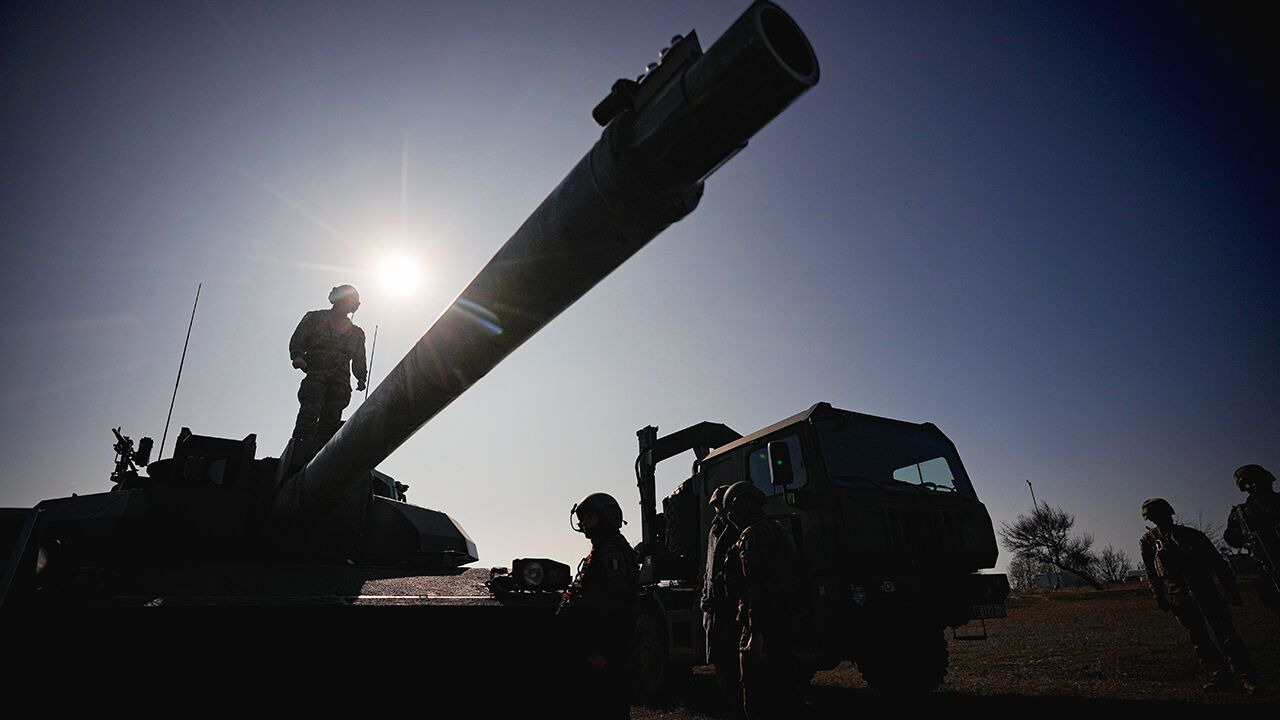
Tanks but no tanksPhotograph: AP
Jun 3rd 2026|PARIS|4 min read
Listen to this story
When Russia launched its full-scale invasion of Ukraine in 2022 France and Germany spent nearly the same amount on defence. By 2029 Germany’s defence budget is expected to swell to at least €150bn ($174bn)—roughly double France’s. For European security, German rearmament is plainly welcome. Yet in Paris the prospect also prompts discomfort. The risk, General Fabien Mandon, head of the armed forces, told a Senate hearing last month, is that in five years France “falls behind” its neighbour in the field it has hitherto dominated.
The Franco-German link was forged around an implicit equilibrium: France carries the military burden, while Germany provides economic might. As the EU’s only nuclear power, and with a strong expeditionary and strategic culture, France is used to taking the lead. For example, Emmanuel Macron, the president, has partnered with Britain to set up a “coalition of the willing” for Ukraine to be deployed in the event of a ceasefire. Germany has signed up, but Friedrich Merz, the chancellor, is reluctant to commit ground troops. Indeed French military types are dismissive about Germany’s low appetite for risk, and its tendency to need American reassurance. “We have to be able to think about waging war differently, and without America, but they are absolutely not ready to think about this,” says a French military official. On most defence matters, the French still find that they are far more in tune with the British.
Across Europe Mr Merz’s promise to make the Bundeswehr “the strongest conventional army in Europe”, with a 40% increase in troops by 2035, is broadly applauded. Mr Macron has long argued for greater European “strategic autonomy”. A bigger German contribution could help achieve that ambition. Poland and the Baltics are reassured by the prospect, as is Italy. A poll last year suggested that 48% of Poles think a reinforced Bundeswehr would improve Poland’s security, with just 25% disagreeing. Yet, behind closed doors, the French are uneasy—and not only out of frustration that they do not have the fiscal space to spend as much. “It’s the elephant in the room,” says a top French military figure. That Germany might have the biggest army in Europe is “unthinkable for us”.
Germany has invaded France three times, but nobody in the French establishment seriously thinks it might pose a threat to its NATO allies. The popularity of the populist-right Alternative for Germany stirs concern, but mainly due to its pro-Russian tilt. Yet a desire to embed German power in larger organisations, the EU and NATO, has long guided French geopolitical thinking. “Beneath the relief”, suggested Franziska Brantner, co-head of Germany’s Greens, in a speech about rearmament last month, “[allies] also feel something they are too polite to say loudly: a quiet, persistent, historically rooted unease at the prospect of a continent in which the dominant military power, by a considerable margin, is once again Germany.”
One genuine worry is industrial rivalry. France has leading defence firms such as Dassault, Thales, Safran and Naval Group, which have won big recent export contracts. But in other sectors, such as the manufacture of combat tanks, the two countries compete for exports. If Germany’s extra spending goes on improving technology and more efficient production, this could leave France behind. As it is, infighting between Dassault (a French aircraft-maker) and the German division of Airbus over the joint Future Combat Air System—a pet project of Mr Macron’s which includes a next-generation fighter jet—threatens the project’s survival.
For France, any future imbalance in conventional forces will be countered by its nuclear deterrent. In March Mr Macron proposed a new doctrine of “forward deterrence”, an arrangement with other European countries in which Germany will be the “key” partner. The idea is that European conventional forces should help “shoulder” the French deterrent, in exercises or deployments of France’s nuclear-capable fighter jets. Indeed, Michel Duclos, of the Institut Montaigne, a think-tank, suggests that “forward deterrence” could be seen as a further way to bind an expanding German conventional force into a broader European project.
In the short run the political consequences of the spending gap may be limited, argues François Heisbourg of the Foundation for Strategic Research in Paris, notably because of France’s deterrent. But were France to elect the populist-right National Rally (RN) in next year’s presidential election, this would bring fresh tension. Jordan Bardella, a possible RN candidate, says France’s nuclear deterrent should be extended only to allies who buy French, not American, fighter jets. Other European nationalists also want to attach strings: Poland’s want German rearmament to be accompanied by war reparations.
For now, German leadership within the EU is likely to continue to lean heavily on its economic clout. Its strategic credibility remains to be earned. Yet General Mandon argues that France cannot be complacent even on this point. “In five years’ time, the argument that we have operational experience and a certain culture will no longer hold,” he told the Senate. “For the Americans, Germany is little by little becoming the European benchmark.” ■
United States | Lexington
Donald Trump says Pete Hegseth loves war. That should disqualify him
How did standards for military leaders fall so low?
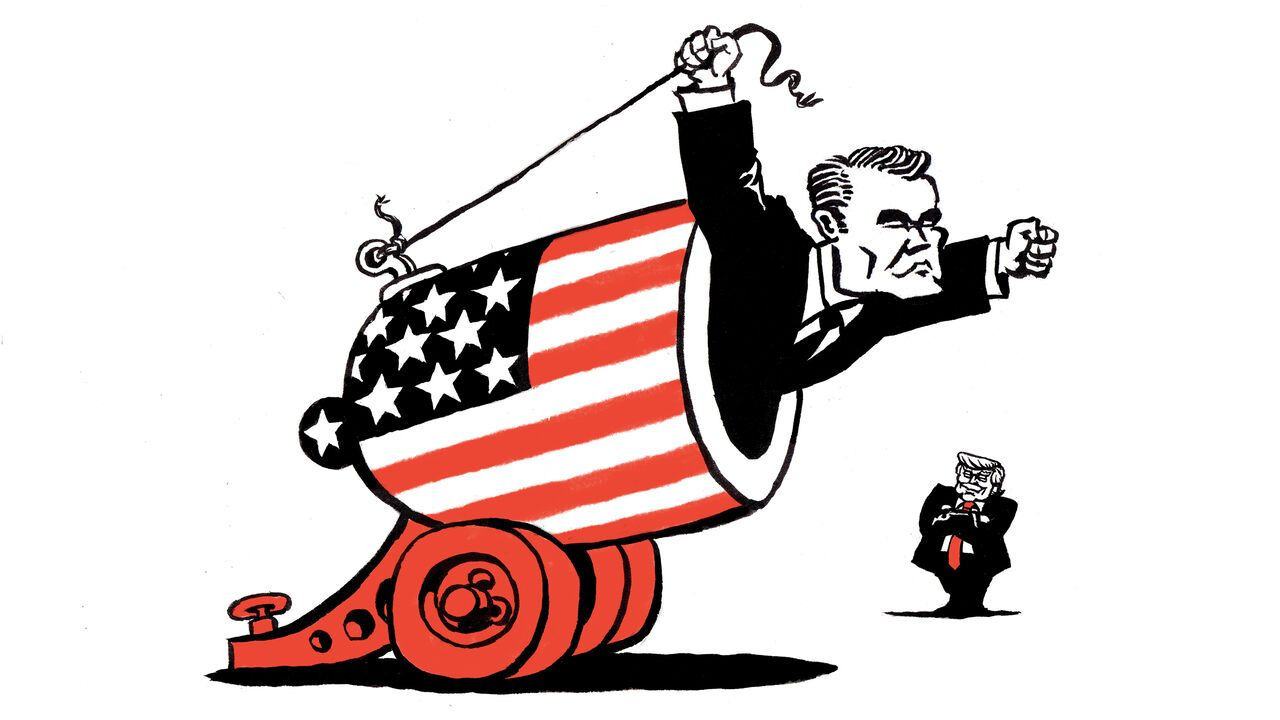
Illustration: David Simonds
Jun 4th 2026|5 min read
Listen to this story
Of all the jokes President Donald Trump has told at his aides’ expense, none has been more demeaning than his remark in late May about his civilian leader of the armed forces, Pete Hegseth. “He loves war,” Mr Trump said during a cabinet meeting, grinning as he patted Mr Hegseth on the arm. Mr Hegseth, fawning, chortled along. If Mr Hegseth meant what he has often said about America’s need to restore its warrior ethos, he should have winced instead. In the code of America’s greatest generals, hatred of war has been as foundational as grim awareness of the necessity to prepare for it.
“War is mankind’s most tragic and stupid folly,” General Dwight Eisenhower told the graduating class of the United States Military Academy at West Point in 1947. Fifteen years later, General Douglas MacArthur, no one’s idea of a pacifist, cautioned the cadets against becoming warmongers. “On the contrary,” he said, “the soldier above all other people prays for peace.”
Mr Trump may just have been teasing Mr Hegseth, as he had before, for his early advocacy of a war with Iran that is stuck in a costly stalemate. Yet with his knack for naming discomfiting truths, the president put his finger on an unsettling quality in his “secretary of war”, the title that he and Mr Hegseth prefer. Where past military leaders treated violence as a tragic necessity, Mr Hegseth celebrates it as righteous and even thrilling. His favourite word—it does sound pretty cool—is “lethality”. When he got his own chance to address West Point cadets, at their commencement on May 23rd, he deployed the word five times, not counting two mobilisations of “lethal”. By contrast, “peace” clouded his vision of ferocity only once, thus: “You feel comfortable inside the violence,” he instructed the cadets, “so that our fellow citizens can live peacefully. Lethality is your calling card.”
The essence of Mr Hegseth’s message would strike past leaders of the military as conventional: troops must be ready to fight and win. From his years in the National Guard, Mr Hegseth has a horror of being exposed as under-equipped. In his book “The War on Warriors”, published in 2024, he twice refers to a recurring “standing-naked-in-front-of-the-class nightmare” about being on a mission. “I’m racked with anxiety,” he writes. “Where is my weapon? I can’t find my rifle. I’m hoping nobody will notice.” (Well, Freud might have observed, sometimes a rifle is just a rifle.)
But, like hanging on to one’s rifle, the readiness to kill when called upon has traditionally been only a baseline requirement in the eyes of America’s greatest warriors. They have usually asked more of rising military leaders. When, as president, Eisenhower again addressed a West Point commencement, in 1955, he reflected on his own complacency upon graduating there 40 years earlier. The pace of change, the arrival of catastrophically powerful new weaponry, had since sharpened a “need for wisdom, and the caution that wisdom enforces”. Cadets had to prepare not just to command but to understand the economic, political and spiritual aspirations of other peoples: “Your entire lives may and should be as seriously devoted to leading toward peace as in preparing yourselves for the tasks of war.” For his part, MacArthur urged “the open mind of true wisdom, the meekness of true strength”. Since the cadets must have known that President Harry Truman fired MacArthur in 1951 over resisting a ceasefire in Korea, his exhortation to leave politics to the civilians must have landed with particular force. “Great national problems are not for your professional participation or military solution,” MacArthur said.
In his own speech, Mr Hegseth namechecked Eisenhower and MacArthur. But if technology is transforming the battlefield, if new threats darken the horizon, if the question of the military’s role in politics is again being asked, the cadets got no guidance from the secretary of war. “The world today is at a crossroads,” Mr Hegseth intoned, then swerved into a cul-de-sac, “just as it has been for the past 250 years.” Iran merited a bare passing mention. He dwelled instead upon the menace of diversity, equity and inclusion (DEI). “Woke and weak leaders” had tried to undermine West Point, but “you can’t throw your pronouns at the enemy.” It would not be surprising if DEI programmes committed some excesses for a time in the armed forces, as elsewhere in American life. But Mr Hegseth’s hysteria is hard to square with his rapture for the proficiency of the fighting forces. If DEI de-lethalised the troops, where is the evidence? If the battle against DEI is won, as he says, why is he still fighting the last war?
The old-boys preference
When Mr Hegseth told the cadets, “You’ve seen an obsession with race and gender,” he might have been speaking of his own pattern of stunting the careers of black or female officers. His boast that merit alone now determines promotion seemed a smokescreen for his efforts to promote loyalists, or possibly for himself.
Even before becoming chief of America’s biggest employer and the world’s mightiest military based on his performance as a Fox News commentator (“Central casting” was Mr Trump’s high praise for him at that cabinet meeting), Mr Hegseth was not averse to seeking preferential treatment in hiring. When he rejoined the National Guard in 2019, there were scant openings in infantry battalions for majors like him. “Thankfully,” he writes in “The War on Warriors”, “my good friend” had just become the commander in New York. When Mr Hegseth telephoned, this “great dude” promised to hire him “even if they had to create an additional slot”. But the perpetually aggrieved Mr Hegseth again winds up a victim because, he claims, the appointment was blocked for political reasons. One does not need DEI training to marvel at his sense of entitlement, or much common sense to long for a return to high standards for America’s most important jobs. ■
Middle East & Africa | Never-finished business
Even if America and Iran find an accord, don’t expect it to last
The Donald Trump Show could be back on air later this year
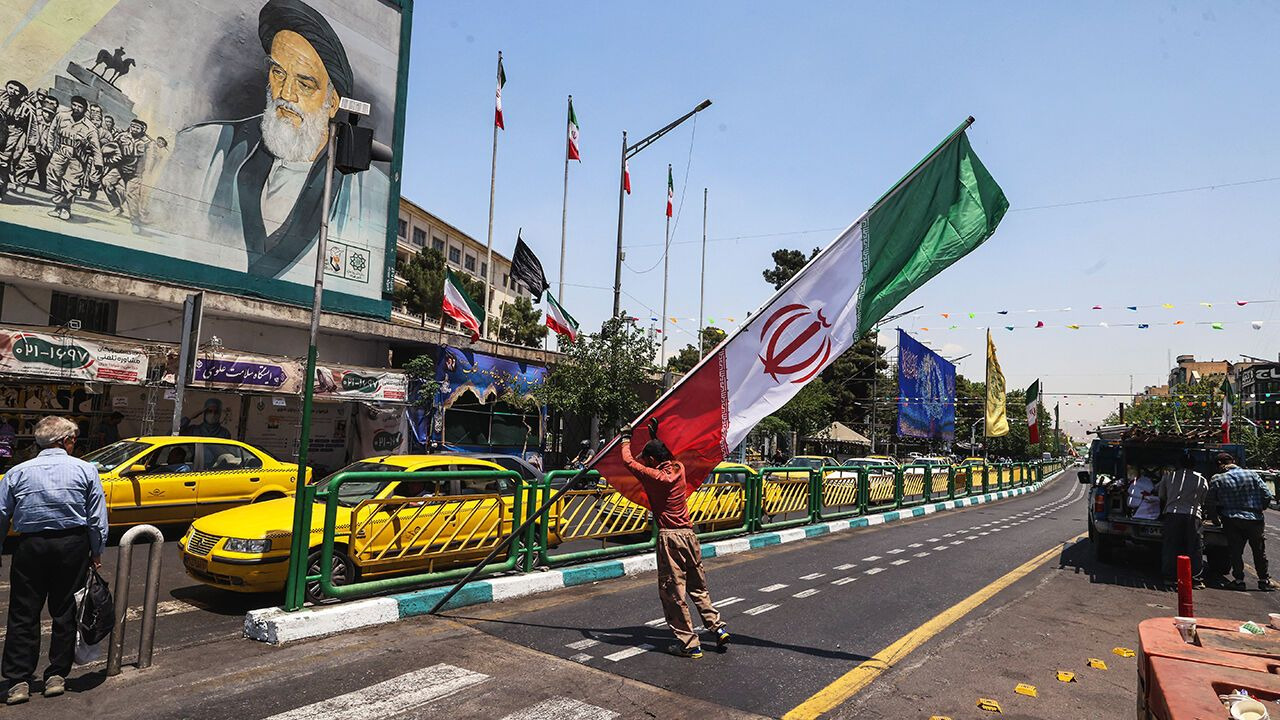
Photograph: Getty Images
Jun 3rd 2026|DUBAI|5 min read
Listen to this story
IT WAS another dramatic yet desultory week on “The Hormuz Apprentice”, a poorly rated reality-television show about Donald Trump’s war with Iran. America’s president said he was close to deciding on a deal to extend the ceasefire, only to demand more changes. Iran hinted it might abandon talks. Mr Trump said he too might “go silent”. They kept talking anyway. Missiles flew from both sides, as they have for weeks, despite a nominal truce.
For all the twists and turns, each episode ends on the same cliffhanger. America and Iran agree on the contours of a deal: prolong the ceasefire by at least 60 days; reopen the Strait of Hormuz; and deliver limited sanctions relief for Iran, which would pledge to roll back its nuclear programme. This is merely an interim accord. The parties would still need to negotiate a detailed final pact. Only then would Iran fulfil its nuclear promises and receive greater economic benefits.
Read all our coverage of the war in the Middle East
Yet negotiations have stalled on seemingly narrow disputes. Iran wants to unlock a fraction of its roughly $100bn in frozen assets once the interim deal is signed. Mr Trump insists on clearer promises that Iran will not pursue a nuclear weapon and will relinquish its stockpile of more than 400kg of near-weapons-grade uranium.
These seem like curious roadblocks. In theory, by the end of summer, Iran should hand over its uranium in return for a windfall. Why does it insist on a modest upfront payout of probably $6bn-12bn? Why is America’s president so fixated on language about Iran’s nuclear programme if it will not be binding anyway?
Both sides are behaving as if the interim accord will become permanent—or at least a long-term status quo. “It wouldn’t be the first time,” says an Arab diplomat in Washington. “We’ve seen Trump do this before.”
An unfinished deal would resemble the ceasefire that Mr Trump pushed Israel and Hamas, Palestinian militants, to accept in October. Pausing the Gaza war was meant to be a first step, with further talks to secure Hamas’s disarmament, Israel’s withdrawal and Gaza’s reconstruction. Eight months on, none of that has happened.
If an accord with Iran remains incomplete, the stakes would be far greater. Start with its nuclear programme. The highly enriched uranium might remain in Iran, where it is thought to be entombed in the facilities that America bombed last June. American and Israeli spies are no doubt watching them closely. Lindsey Graham, a Republican senator and ally of Mr Trump, suggests delineating a “circle of death” around the sites. “Anybody [who] goes inside...is going to die,” he told NBC last month. Other Republicans try to downplay the issue: even if Iran could retrieve the uranium, its enrichment sites are in ruins.
Yet it would not take many centrifuges to spin up a bomb’s worth of uranium. No surveillance programme is foolproof. Mr Graham’s scheme would require America to keep forces in the region on permanent standby. That seems a tall order. Though a vote on June 3rd by the House of Representatives to end the war is unlikely to do so, it reflects growing frustration with the conflict. If Iran cannot retrieve the uranium, it could still press ahead with other aspects of a nuclear-weapons programme: learning how to make uranium into a warhead and fit the warhead onto a missile. Leaving the stockpile in place would be an embarrassment for Mr Trump, who has long insisted that the war would end with Iran handing its “nuclear dust” to America.
Iran’s biggest concern would be economic. The war has caused billions of dollars in damage and thrown 1m people out of work. Year-on-year inflation hit 77% in May, and 114% for goods; one think-tank in Tehran calls these the highest figures since the second world war. Any upfront payment would be swiftly spent.
It would be more significant if Iran secured a waiver to export oil—which the Americans have proposed in order to avoid the uncomfortable image of Mr Trump sending cash to the regime. His allies insist that this concession could be reversed if Iran reneges on the interim deal or fails to reach a permanent one. Yet Iran could take a similar position on Hormuz. If the temporary becomes permanent, America could be hard-pressed to reimpose sanctions without the strait also closing again.
A half-finished deal means it would not return to normal soon. Iran would have to remove mines from Hormuz and declare it safe. That would allow hundreds of stranded vessels to rush for the exit (though it will take weeks for all of them to depart safely). A trickle of oil, gas and other commodities would return to markets.
But shippers and insurers might hesitate to send vessels back into the Persian Gulf lest they get stuck. Oil and gas producers would have to decide whether to make costly repairs to damaged facilities, knowing they might be attacked again.
Disruptions in the Gulf would stretch far beyond hydrocarbons. If the ceasefire holds through the summer, tourists might drift back as temperatures cool. Yet any sabre-rattling could bring another wave of cancellations. Firms might hold off on expansions until the situation is clearer. Expats might decide they are tired of the uncertainty and seek employment elsewhere.
This is not ideal for anyone, but it is arguably least bad for Iran, assuming it can export some oil. America, Israel and Gulf states would be left with persistent fear of an Iranian bomb and prolonged economic uncertainty. That means it may not be sustainable either. The producers may take a summer break—or perhaps work on a spin-off set in Havana—but Mr Trump’s show could be back on the air later this year. ■
The Americas | The Bolsonaro effect
Brazil’s high-tech voting system is losing voters’ trust
Blame social media, populist politicians and falling trust in institutions

Photograph: Getty Images
May 31st 2026|Rio de Janeiro|6 min read
Listen to this story
It is the only country in the world where all elections are entirely electronic. To celebrate the Brazilian system’s 30th anniversary in May, the country’s Superior Electoral Court (TSE), which oversees general elections, launched a mascot, Pilili, a friendly-looking voting machine with big round eyes. Yet Pilili and the court’s extensive outreach to Brazilians have not shored up sagging trust in their voting system.
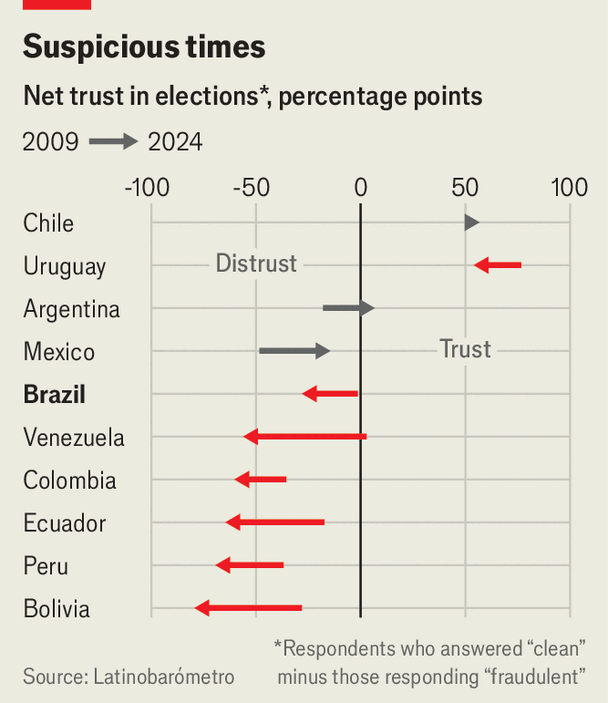
Chart: The Economist
In 2009 45% of respondents told Latinobarómetro, a pollster, that they believed elections were clean, while 47% said they were crooked. By 2024 just 32% trusted them and 61% suspected fraud (see chart). Views about voting machines have been shifting, too. In a recent poll 43% said they could not be trusted. In a survey by the same firm in 2022 only 22% said they had no confidence in the machines. It was in that year that Jair Bolsonaro, a right-wing populist who lost his campaign for re-election as president, flooded the internet with falsehoods about the machines. Those claims helped inspire an insurrection on January 8th 2023, when thousands stormed government buildings. Mr Bolsonaro is serving a jail sentence for trying to overturn the election result.
He was only Brazil’s most radical manifestation of a declining trust in voting systems seen around the world. His son, Flávio, a senator, is running for president in October. In March, at the Conservative Political Action Conference, a right-wing gathering held this year in Dallas, Flávio claimed he would win if the election was “free and fair”, suggesting any other outcome would show it was not. Many of the other MAGA types present have also stoked false rumours about dodgy voting machines. Though Flávio’s campaign has faltered after leaked messages linking him to a corrupt banker, the Bolsonaro effect lingers: a sizeable share of Brazil’s right is querying the voting machines, particularly on social media. Candidates disputed the general-election results in 2014, 2018 and 2022. If this year’s outcome is tight, the loser may once again cry foul.
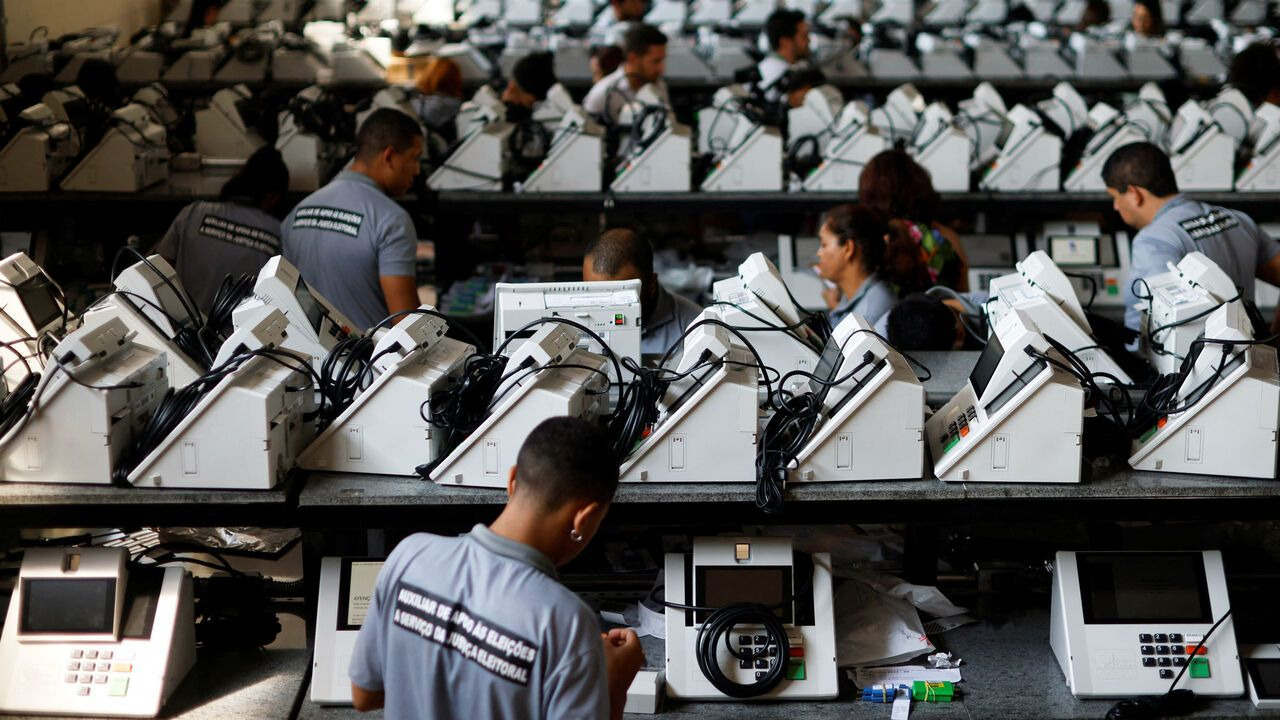
Distrust of the electoral system has been spurred by polarisation and online misinformation, not by proven fraud. But its technical nature helps false information about the system to spread. When voters enter a polling booth, the machine identifies them by their fingerprints. They then enter the two-digit ID of their chosen candidate. Votes are not recorded in chronological order, but at random, to preserve ballot secrecy. When polls close, at 5pm, a tally is printed out and hung up in the polling station for the public to see, the only paper record of the vote.
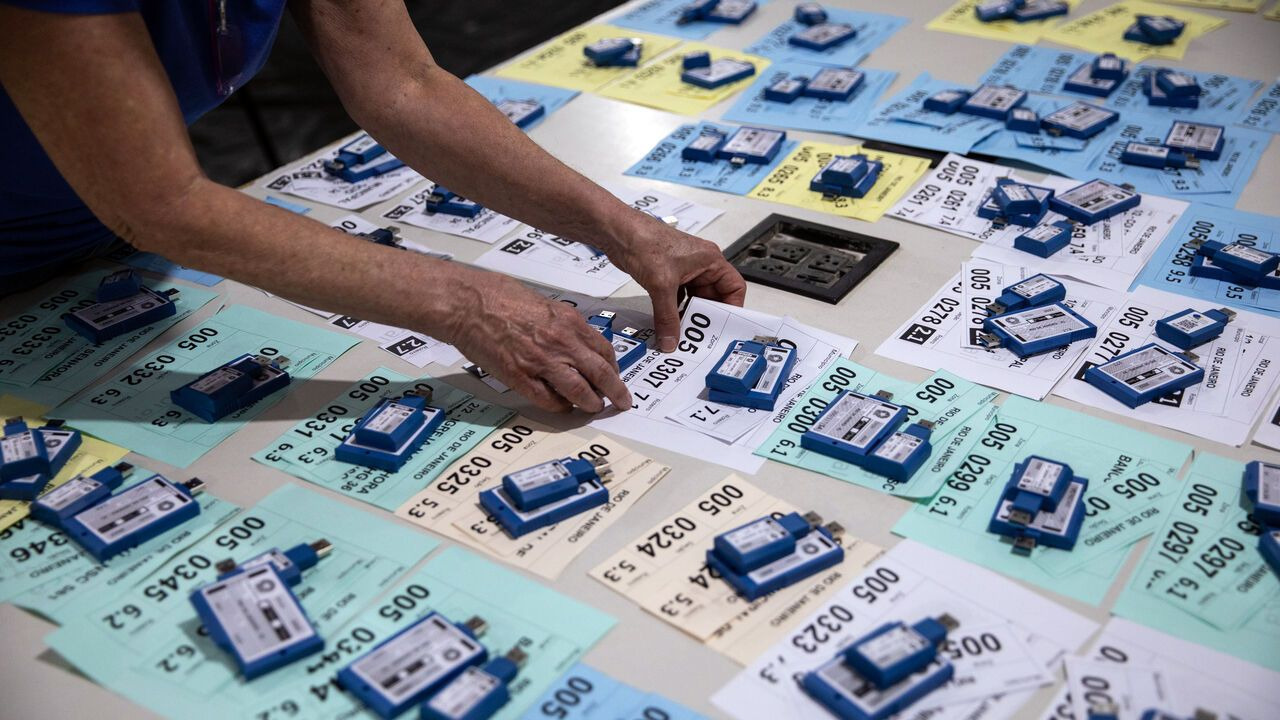
A polling officer then removes the memory sticks from each machine, and sends an encrypted electronic record of the tally to the TSE headquarters over a virtual private network. The software that does this was written by the TSE itself, and uses similar security protocols to bank transactions. Each machine has a unique digital signature for the electronic record transmitted to the TSE. If the signature on a batch of votes does not match the TSE’s records, it will be barred from entering the network. By design, the machines lack the hardware to connect to the internet or bluetooth themselves. The memory sticks also carry a signature, so the machines will reject any that do not match.
Photograph: Reuters
“Even if you have one or a few bad-faith actors in the TSE, there are too many layers of security for them to be able to affect the system as a whole, or the vote count,” says Carlos Alberto da Silva, a professor of cryptography at the Federal University of Mato Grosso do Sul. “Over the course of three decades, there has never been any evidence of electoral fraud in the Brazilian voting system,” says Cármen Lúcia, until recently the TSE’s president.
Brazilians know the election outcome within four hours of the polls closing. Voters can verify the result by seeing if the tallies in the polling stations match the electronic voter logs published on the TSE’s website. An independent federal audit office also collects a large sample of paper tallies, comparing them with the electronic tally, then certifies the winner.
Brazil chose to go electronic to beat widespread electoral fraud in the days when politicians’ henchmen often filled in many illiterate voters’ paper ballots in advance. Voter rolls often included dead or fake people. Matters came to a head in 1994, during a blatantly marred election in Rio de Janeiro. Hundreds of ballots were written in the same handwriting. After that, the TSE convened a group of engineers and lawyers to come up with a solution. By 2000 voting was fully electronic.
To boost trust, the TSE organises hackathons in the run-up to the election. Any citizen over 18 can attend, with expenses covered. Participants have access to voting machines’ hardware and software, and can attempt to compromise them. If a vulnerability is found, the TSE fixes it and asks participants back to repeat their attacks. It also lets universities, the army, the federal police, civil-society outfits like Brazil’s bar association and political parties inspect the machines’ source code. Marcos Roberto dos Santos, a cyber-security professor at Atitus, an institute in Rio Grande do Sul, has taken part in the tests four times. “If you have doubts or problems with the system, that’s your right,” he says. “Then go test it for yourself.” After Mr Bolsonaro’s loss in 2022, his party sued to have the results of the run-off annulled—but not those of the first round, in which it took the most seats in Congress.
Photograph: Eyevine
Yet openness and cryptography have their limits. Trust in Brazil’s courts is falling. In most countries, administrative authorities run elections, while courts try alleged violations separately. Brazil’s TSE runs everything, including voting machines and software. It certifies the results and adjudicates disputes. Its membership overlaps with the Supreme Court, which many Brazilians regard with suspicion.
Big Alex’s blunderbuss
Alexandre de Moraes, a pugilistic Supreme Court judge, oversaw Mr Bolsonaro’s coup trial. During his tenure on the TSE it fined some who discredited the machines and banned Mr Bolsonaro from office. But the TSE “holds too many roles that could create conflicts of interest”, says Diego Aranha, a Brazilian cyber-security expert at Aarhus University in Denmark. The country is so polarised that “any well-intentioned critic of the system becomes lumped together with bolsonarismo, even if the criticism is technical.”
Some well-meaning critics suggest combining the machines with individual paper receipts, not just the polling stations’ electronic tally, as in India. Brazil’s Congress has repeatedly called for printouts to complement the electronic record, but the TSE has ruled against. In 2002 it ran a pilot in which printers were attached to machines but often jammed; hence, the TSE argued, such malfunctions could delay the count. It also claimed that individual records could compromise the ballot’s secrecy, since gangs or local bigwigs could ask voters for proof of their vote. “In the Brazilian experience, the individual paper receipt has opened the door to coercion and control over voters, which undermines the process’s legitimacy,” says Ms Lúcia.
On May 12th Kassio Nunes Marques, who was appointed by Jair Bolsonaro to the Supreme Court, took charge of the TSE. Of the two other Supreme Court justices on the TSE, one is also a Bolsonaro appointee and the other has become closer to Flávio in recent years. Whereas Mr Moraes was accused of overreach, Mr Nunes Marques has said the TSE will interfere as little as possible this time around. That may assuage the bolsonaristas—for now. ■
International | The Telegram
Donald Trump could be the man to save Cuba
Ideological certainties have hurt Cubans for 70 years. Time to give cynicism a chance
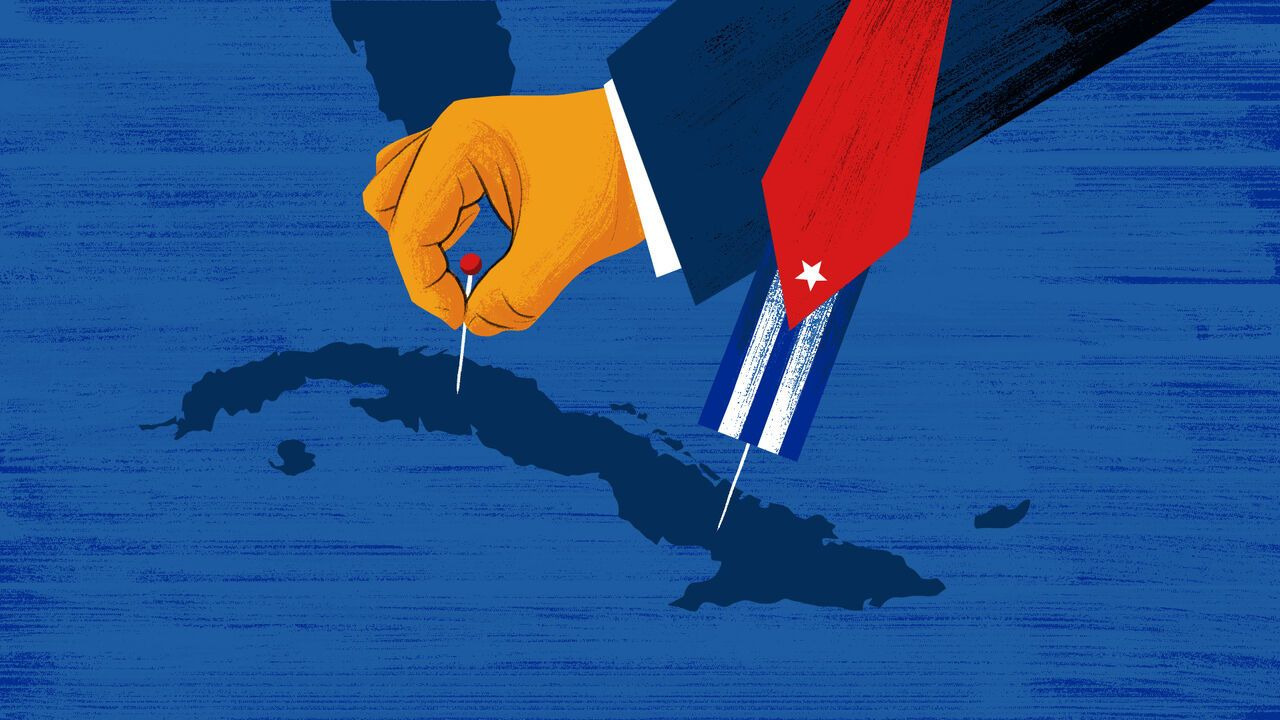
Illustration: Chloe Cushman
Jun 2nd 2026|5 min read
Listen to this story
FOR TOO long, dreams of heroic purity have harmed ordinary Cubans, both on the island and in exile. Cuba’s dwindling population of perhaps 9m rose this morning to yet another day of sweltering, man-made misery. With food, medicine, electrical power and clean water in short supply, Cubans can expect no swift relief from the ruling Communist Party. The island’s leaders are stubborn, lonely men. Fearing that openness will cost them control of their failed revolutionary project, they are trapped in a stance of fist-shaking resistance towards the world’s richest country, less than 200km away.
At the same time, islanders may justly blame another group in thrall to dreams of unyielding defiance, namely, hardline Cuban-Americans. Cuba’s current, extreme isolation may be the work of President Donald Trump. It is his administration that has cut the island off from supplies of oil from Venezuela, Russia and other old friends, triggering power cuts that last most of the day. In just the past few weeks, Mr Trump has frightened away long-standing foreign investors with financial sanctions of unprecedented severity. It is Mr Trump, bent on asserting “American dominance” over his neighbourhood, who sent special forces to snatch Cuba’s close ally, President Nicolás Maduro of Venezuela, and who has since threatened Cuban leaders with their own “friendly takeover”.
But Mr Trump’s “maximum pressure” sanctions build on an embargo that was decades in the making, as successive presidents and congressional leaders bowed to Cuban-American exiles. The diaspora has long had influence as a voter-bloc, notably in Florida, home to 1m-plus Cuban-Americans, among them Mr Trump’s secretary of state, Marco Rubio. Votes are not the group’s only source of strength. After Fidel Castro led revolutionaries to power in 1959, Cuba became a front line between the free world and communism. Even after the Soviet Union fell, Cubans reaching America enjoyed immigration privileges as refugees from tyranny.
In Miami, Orlando Gutiérrez-Boronat, secretary-general of the Assembly of the Cuban Resistance, declares Cuba’s regime closer to collapse than at any time in six decades. He was delighted by the Trump administration’s indictment of Raúl Castro, the former president and the younger brother of Fidel. Mr Castro, who turned 95 on June 3rd, is charged with authorising Cuba’s armed forces to shoot down two civilian aircraft in 1996, killing four Americans. “I hope he is snatched, I hope he is brought to justice,” says Mr Boronat. Even failing an American raid on Havana, Cuban security forces and leaders know there is no impunity for their crimes, he says. Predicting growing protests, he expects a model of regime change resembling that seen in Poland and Czechoslovakia in 1989, “with a little bit of Romania”, (a revolution that saw combat between regime security forces and a dictator’s death).
Other prominent Cuban-Americans worry about a different model, when Mr Maduro’s capture in Venezuela was followed by the installation of his former deputy, Delcy Rodríguez, as a more pliant autocrat. Though Mr Trump praises Ms Rodríguez as a “terrific person”, the continued existence of political prisoners in Venezuela and Mr Trump’s dismissal of Venezuela’s democratic opposition causes angst. “Venezuela is not a model that the community will accept for Cuba,” says Marcell Felipe, chairman of the American Museum of the Cuban Diaspora. His “ideal scenario” is a split within Cuba’s leadership, allowing America to recruit a “white knight” to break the regime and bring about democracy.
Ricardo Zúñiga, a former diplomat who helped lead President Barack Obama’s opening to Cuba, says Trump aides have not found a Cuban Delcy because “that is not how the regime works. It is a consortium of people with the guns and the will to retain power.” He predicts a stalemate for a while yet, possibly involving military strikes that do not change much. He says previous attempts at engagement were thwarted by the Cuban regime’s fear of reforms, but also by the modest carrots that presidents can offer, because by law only Congress can lift the embargo.
When political principle gets in the way
There, Mr Trump, a man untroubled by legal niceties or by the will of Congress, has an edge. Joe Garcia, a former Democratic member of Congress from Florida, thinks Mr Trump is better placed than any previous president to end the embargo. Miami hardliners will not rebel, he says. “If Trump says, we are going to kill them with capitalism and Marco Rubio says, they are going to have elections in three years, Cuban-Americans will go for it.” In Congress, if some Republicans rebel, enough Democrats will vote with Mr Trump to lift the embargo for humanitarian reasons, he adds.
The Trump approach lacks ideological certainties of the past. Former Trump officials report that the president does not care greatly about “Cuba as Cuba”, but would like “being the person who overturned the Castro government”. Unmoved by cold-war pieties, his immigration officials have deported Cubans in their thousands and want Cuba to accept many more.
Some Cubans are ready for more pragmatism. In Hialeah, a blue-collar Miami suburb, recently arrived Cuban-Americans can be found queuing outside Cubamax, an online supermarket, travel and shipping company, to ship solar panels, rechargeable lamps, bicycles and dry food to relatives on the island. Mr Trump is less radical than Mr Rubio, says a former English teacher from Cuba, met sending rice and beans to his family. “Rubio wants regime change, but the way he wants it will lead to chaos,” he says.
It should be no surprise if some are ready to abandon ideological rigidities. Purity of disapproval did not finish the Castro regime, which has outlasted 12 American presidents. If dealmaking does the job, and the regime is capable of responding in kind, Mr Trump will deserve any peace prize he wants. ■
Asia | Industry in East Asia
Worries about migrants imperil South Korea’s shipbuilding boom
Compared with most rich countries, the foreign workforce is still small
Photograph: Penta Press/Shutterstock
Jun 4th 2026|Ulsan|3 min read
Listen to this story
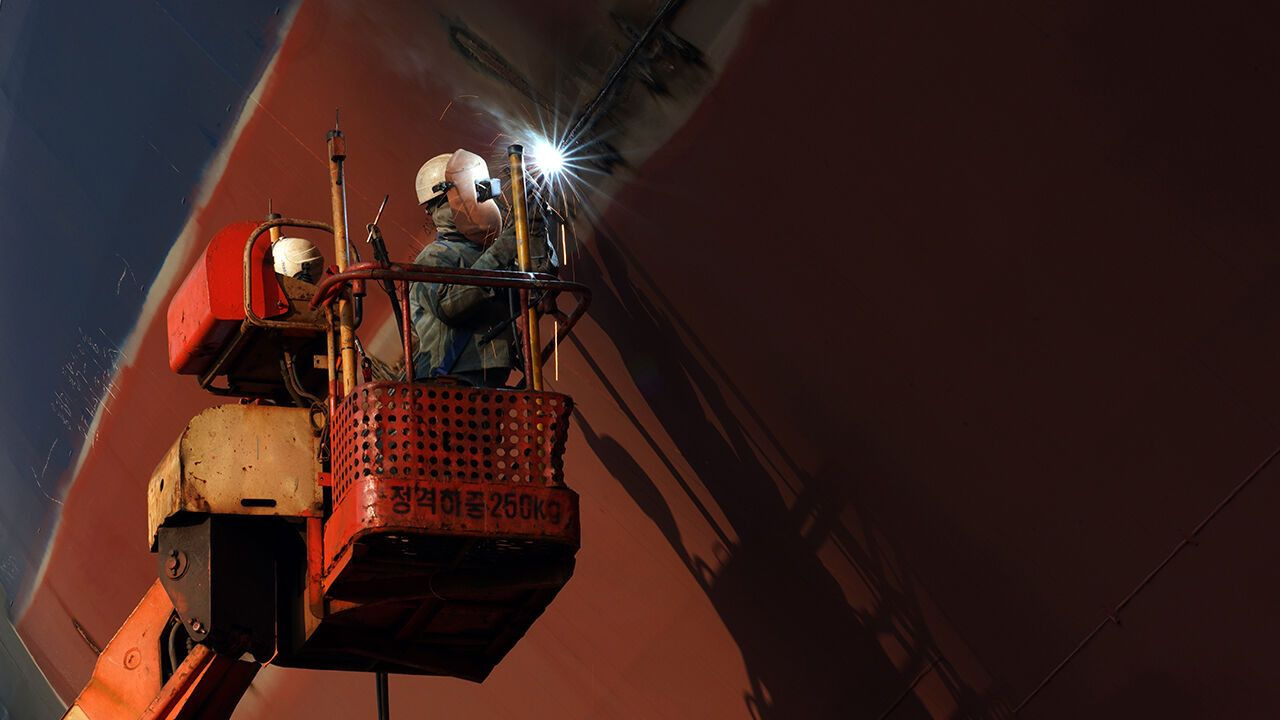
“THERE’S NO WORK back home,” says Wichit, a welder from Thailand. In Ulsan, a city in south-eastern South Korea, he’s found plenty. He works for HD Hyundai Heavy Industries (HHI), a South Korean shipbuilder. Migrants such as Wichit are helping companies like HHI fulfil a boom in orders from foreign buyers for liquefied-natural-gas carriers and fuel-efficient container ships. Now their presence is making waves.
In 2025 South Korean shipbuilders took 21% of all global orders, the largest share after China, according to Clarksons, a British maritime-research firm. The government has recently offered to share the country’s know-how to help Donald Trump “Make American Shipbuilding Great Again”. Last year it pledged to invest $150bn in shipbuilding projects in America as part of its effort to wriggle out of tariffs.
Yet the yards face a big staffing problem. South Korea’s population is one of the world’s fastest-ageing. Many of the workers who powered the industry through a previous boom in the 2000s have retired or moved into management. Young South Koreans see shipbuilding as dangerous, laborious and low-paying: the fatality rate at shipyards is four times higher than in the average industrial workplace. So they have left shipbuilding regions in droves. In Ulsan only 24% of adults are under the age of 40. That has decreased by six percentage points in a decade.
Instead, shipbuilders have courted workers from countries such as Indonesia, Sri Lanka, Thailand and Vietnam. These days close to a quarter of the shipbuilding workforce is foreign—four times the share ten years ago. The government has encouraged this through changes to visa rules for skilled workers passed in 2022.
While shipbuilding bosses welcome the new arrivals, locals in places such as Ulsan are feeling miffed. Boom times for the maritime industry used to be good for many smaller businesses in coastal communities, says Lee Soo-won, an estate agent in Ulsan. Eateries near HHI always filled up when shifts finished. That is no longer so true. The migrant workers “barely spend and hardly eat out”, says Ms Lee.
Many of them have to pay thousands of dollars to brokers who help them secure their visas, saddling them with debt before they even enter the country. They are also inclined to send much of their income home, rather than splash out in seaside towns. Wichit says that each month he sends 30,000 baht ($920) back to his family in Pattaya, his home in Thailand. That is roughly two-fifths of what he makes.
Locals’ grievances are becoming more difficult to ignore. Recently Lee Jae Myung, the president, appeared to criticise shipbuilders’ hiring and pay practices. Under pressure, the companies have started talking about giving contractors bonuses. They are promising to do more to help migrant workers move their families to South Korea (with the idea that this would reduce their desire to send money out of the country). Shipbuilding bosses have also started to make noises about reducing the overall size of their foreign workforces. Yet there is only so much they can do to tempt young South Koreans back. ■
Asia | Anything goes
Sex tourists fuel outrage about vice in Japan
The debates do not have women’s interests at heart
Tokyo nightsPhotograph: Getty Images
Jun 4th 2026|Tokyo|4 min read
Listen to this story
MAI, a 34-year-old woman in Tokyo, used to work at a hospital. But when covid-19 overwhelmed the wards, she found her work too stressful. A single mother, she also needed money for her family. Lured by higher pay, she entered the sex trade, first working as a porn actress before becoming a deriheru or “delivery health” worker—slang for call-girls who visit clients at home or in hotels. For a two-hour session, she earns ¥30,000 ($190).
Mai is among hundreds of thousands of women working in Japan’s sprawling sex industry. The business, thought to be worth ¥2trn-5trn ($12bn-31bn) a year, is woven into male social life. One study in 2022 found that 48% of Japanese men had paid for sex at some point, compared with 11% in Britain. Hagiwara, a 63-year-old man in Tokyo, recalls being taken to a brothel by senior colleagues after joining a company, as a rite of passage. Emu, a man in his 30s, says “most men around me have been at least once.”
Lately, however, lawmakers’ tolerance for the industry has come under much strain. Two recent triggers have encouraged Japanese to re-examine the confusing thicket of laws and conventions that govern how sex work is policed. One was an outrageous crime: last year authorities rescued a 12-year-old Thai girl who had been trafficked to Japan and forced to work at a sex shop in Tokyo.
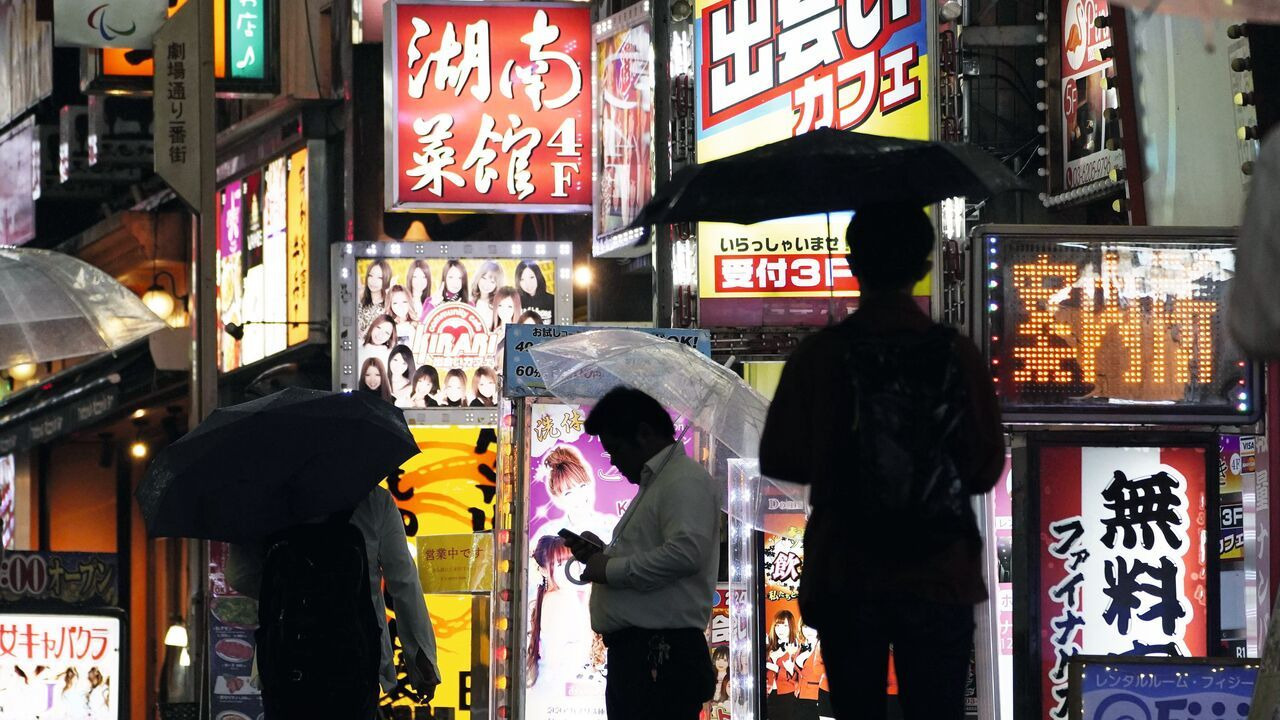
The second concern has been the growing visibility of women who sell sex around Okubo Park, near Tokyo’s red-light district (where the haggling more ordinarily goes on behind neon-lit doors). Relatively few women are involved in this. Nonetheless, solicitation (waiting for or approaching clients in public) is illegal in Japan. The sight of women openly waiting for clients has unsettled the public.
Compounding the public debate is the fact that some of their customers are foreign tourists, lured to Japan by the cheapness of the yen. Videos of them approaching women in Okubo Park have spread rapidly online. “It is truly lamentable,” said Kamiya Sohei, leader of the right-wing populist Sanseito party, in a video. Behind the outrage lies a sense of wounded pride: during Japan’s boom years in the 1970s and 1980s, it was Japanese men who went abroad for sex.
The authorities have decided to act—at least where the streetwalkers are concerned. Recently women around Okubo Park have been detained or arrested. Yet campaigners say it is unfair that authorities have not also been trying to punish the buyers. “Women are taken away by the police—while the men who buy sex stand beside them smirking,” says Kanajiri Kazuna of PAPS, a women’s-rights group. In November an opposition lawmaker raised this disparity in parliament. In response Takaichi Sanae, the prime minister, ordered the justice ministry to re-examine current practices and consider reforms.
The prospect of change has sparked very broad debate about how Japan could improve its policing of sex work. Some Japanese feminists would like their country to implement the Nordic style of regulation adopted by Sweden, France and others, which criminalises buying sex while shielding sellers themselves from prosecution. “Buying sex is a form of violence against women,” says Ms Kanajiri.
Other Japanese argue that getting tougher on buyers will drive sex work underground, leaving women more exposed to violence. Some want the industry fully legalised and regulated, as in Germany and the Netherlands. Nakayama Misato of Siente, a sex-work advocacy group, argues that criminalisation can mean that women are treated merely as victims, ignoring their agency. “Doing sex work is not a bad thing—it’s a valid way of making a living.”
To be more than skin deep, any changes would have to apply not only to streetwalking but to Japan’s vast indoor sex-industry, the laws for which are riddled with loopholes and selectively enforced. Consider the practice of “soapland”, in which customers ostensibly pay to be bathed; if sex happens to take place in the process, officials generally turn a blind eye. Takao Yasuo of Curtin University says this is typical of Japan’s approach to regulating the sex industry. The priority is to keep vice decorously out of public view.
A big rethink seems unlikely. For now, the justice ministry is narrowly focused on street prostitution. Taking care of that is “the lowest-cost, highest-visibility form of enforcement available to the state”, notes Mr Takao. “Many lawmakers, especially conservatives, are sensitive to the idea of women becoming sexually promiscuous,” says Shiomura Ayaka, a lawmaker. Women openly soliciting sex in public have become symbols of social disorder. ■
China | Chaguan
China’s delivery drivers are its most obvious underclass
New rules aim to help but the economy will keep them down
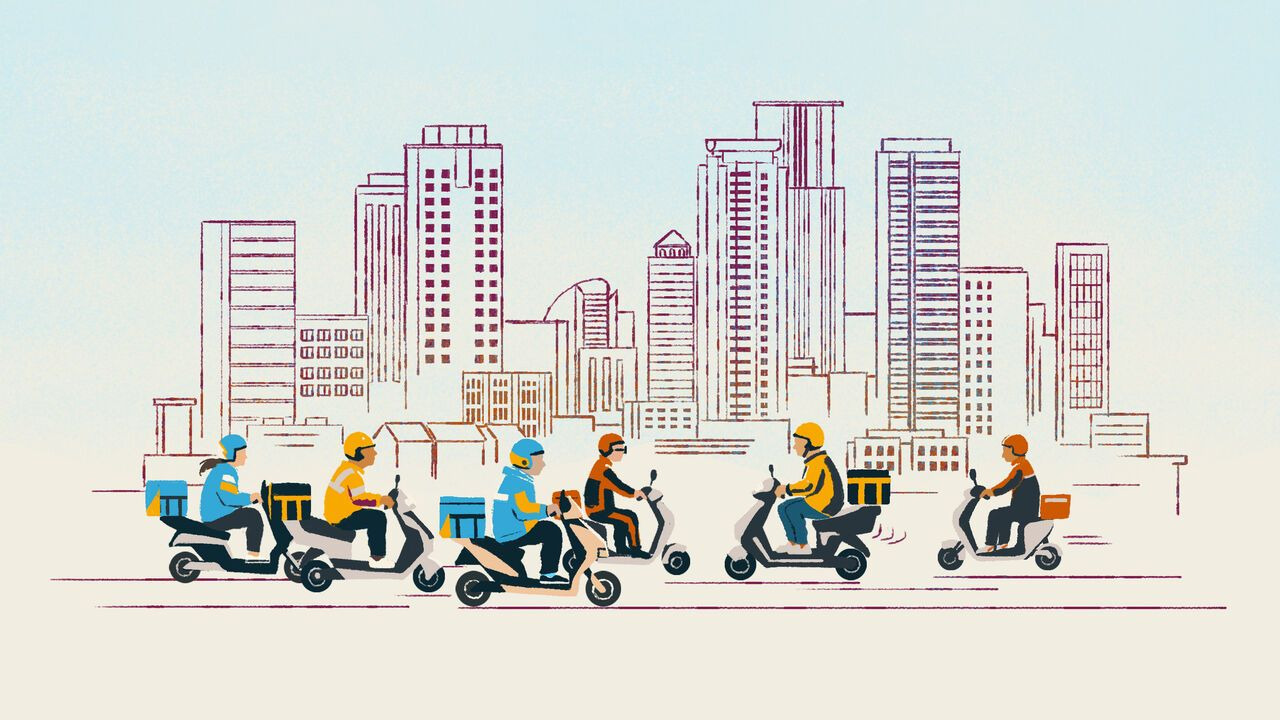
Illustration: Cornelia Li
Jun 1st 2026|5 min read
Listen to this story
CHINESE CITIES can look like a tableau of bold colours as delivery drivers on scooters—some yellow, orange or blue—zip through traffic bearing cargo to waiting customers. It is in the distant outskirts that the colours come to a rest. Amid the warrens of buildings, drivers rent cheap rooms, parking their scooters in the narrow streets and hanging their matching jackets from windows to air them out.
One colour absent from their uniforms—each associated with a different delivery service—is gloomy grey. But speak to them as they return home, and that is the dominant hue. For years the delivery industry attracted strivers who knew they could earn more than in factory jobs or who wanted easy cash while awaiting better opportunities. These days, the realisation has set in for many: this may be as good as it gets, and it is worse than it used to be.
“Whatever you do, nothing’s easy,” says Mr Wu, a driver for Taobao Flash, a delivery service. On his break after a long morning, he has taken off his orange jacket, revealing tattooed arms. He used to make seven yuan ($1) per order but that has fallen to four, in part because millions are chasing gig work as the wider economy slows. “After food and housing, there’s barely anything left.”
Many couriers have gruelling schedules—working as many as 14 hours a day and rarely taking time off. Being late cuts into earnings, so they race to beat deadlines. Accidents are common. Mr Guan, in the blue uniform of Shansong, a parcel service, accepts danger with fatalism. “There is nothing more frightening than not being able to eat,” he says. “Every morning when I wake up, it’s not safety I think about. It’s about earning enough.”
Chaguan spoke to these drivers in Yuxinzhuang, a commuter enclave in the north of Beijing. It achieved modest fame over the past month, sparked by a new documentary about migrant workers. The half-hour film, “2026 Chinese Delivery Drivers Survival Report”, was an unflinching look at their lives, following them from their cramped quarters in Yuxinzhuang through Beijing’s streets. The news website that hosted the documentary pulled it after a couple of days online. Whether because of official censorship or corporate pressure, it made for a Streisand effect with Chinese characteristics: the documentary ended up on YouTube, attracting viewers around the world.
In the past, Chinese media and officials have not shied away from discussing the pressures and perils faced by delivery drivers. Estimated to number as many as 20m, they are simply too ubiquitous and too woven into daily life to be ignored, bringing people food, clothes, medicine and more. During covid-19 lockdowns, they were a lifeline for many. They have been the subjects of articles, films, podcasts and books; indeed, a book by a former courier was a publishing sensation in China in 2023. Xi Jinping himself met delivery drivers on the eve of Chinese New Year a few months ago, noting that cities could not function without them.
Much of the commentary from state media conveys compassion, implicitly promising that the Communist Party is attuned to their challenges and will help them. At the street level, that is not the direction of travel. Many drivers point to the end of China’s covid restrictions in 2022 as the moment when things started to sour. The hoped-for economic rebound never materialised and consumer spending—the ultimate source of demand for their services—has stayed sluggish ever since.
More controversial is the government’s role as regulator and enabler of persistent problems. Many concerns focus not on drivers’ wages but on their working conditions. Algorithms dictate order flows, pushing them to work faster. Delivery platforms almost always side with consumers in disputes. And drivers are typically contractors for third-party staffing firms, which allows big e-commerce platforms to avoid payments for medical insurance and pensions. This adds up to extreme hazards and scant buffers. Surveys of drivers indicate that roughly a third have been hurt on the job and only a fifth have insurance against workplace injuries.
On paper, rules to protect delivery drivers, introduced by the government in 2021, appear to be on the mark. They guaranteed minimum wages and required platforms to make order-dispatching algorithms more humane, for example. In practice, officials have generally failed to implement these standards and punish violations. In April the Communist Party’s powerful Central Committee issued new labour rules for all gig workers, including delivery drivers. Yet these largely restate existing measures, fuelling scepticism about whether they will actually make a difference.
Tomorrow won’t be better
Even if officials are stricter in enforcement, structural realities stack up against drivers. With a low barrier to entry, the delivery industry is a final refuge for those unable to find more stable jobs elsewhere, ensuring that wages will remain under pressure so long as the economy is weak. Most drivers come from poorer parts of the country and struggle to acquire residency rights where they work. That limits their access to local social services, from unemployment insurance to hospitals. They are vulnerable not just because e-commerce platforms exploit them but because the state has made them so.
Drivers cannot engage in true collective bargaining. They are allowed to join unions but these all fall under the party, which is more committed to stamping out occasional protests than uniting workers as a social force. “Everyone knows that organising is useless,” says Mr Guan. After a bowl of noodles, he was heading back to the roads for an evening of work. Daytime deliveries had fallen well short of his target but he remained hopeful he would get there if he stayed out past midnight. “The point is not that it’s exhausting. There’s just no other way.” ■
Business | Bartleby
What to read to understand your next employer
From Kafka’s “The Trial” to Orwell’s “1984”

Illustration: Paul Blow
Jun 4th 2026|4 min read
Listen to this story
Welcome to Ungoliant! As part of your onboarding process, we encourage you to read a few books before you actually start work. That will give you the best chance of understanding our unique culture.
If a reading list seems retro, it’s not. “The Little Prince” has a special place in Netflix lore: Antoine de Saint-Exupéry is still quoted in the streaming firm’s culture guide. The US Marines have something called “The Commandant’s Professional Reading Programme”, a kind of book club with bullets; marines are expected to read five titles a year from a list of recommendations on topics such as strategy, warfare and decision-making. “The Looming Tower”, a history of the 9/11 attacks, and (more improbably) “Impro”, a guide to improvisational theatre, have both featured on lists for Palantir employees.
Other forms of entertainment can also provide clues to how bosses want you to think. As a child Howard Schultz, the man behind Starbucks, was a big fan of the Gene Wilder version of “Willy Wonka & the Chocolate Factory”. When he was planning the firm’s first roastery, a premium retail outlet built around coffee, he invited a bunch of executives to his house to watch the film and use it as a source of inspiration.
At Ungoliant, you will never ever be invited to watch the boss’s favourite childhood film. Willy Wonka is not a lodestar. But if you read these books instead, you will understand our values and how we like to work.
“The Trial” by Franz Kakfa. This tale of an ordinary person who is abruptly plunged into a nightmarish world of senseless bureaucracy is less a novel, more an employee handbook.
“Catch-22” by Joseph Heller. The title of Heller’s novel is about an impossible wartime dilemma: pleading insanity as a reason to avoid flying missions is itself clear proof of sanity. At Ungoliant, if you do good work, you will be asked to move into a role managing people. If you do bad work, you will be fired. There is absolutely no way to carry on doing what you actually enjoy.
“The Waves” by Virginia Woolf. Streams of consciousness, individuals blurring into each other, entire lifetimes passing and an overpowering sense of confusion. This is the perfect introduction to office life.
“Say Nothing” by Patrick Radden Keefe. It doesn’t matter what this book is about. It’s just very good advice.
“Tomorrow and Tomorrow and Tomorrow” by Gabrielle Zevin. None of us have actually read this one but we think it must be a primer on project management.
“1984” by George Orwell. Some people apparently regard this book as dystopian, and it is true that the Party is a bit keener on sticks than carrots. But there’s a lot to learn from its core messages: that harnessing data is a source of genuine competitive advantage and that it’s better to work together towards a common purpose than pursue your own selfish aims. Winston Smith is clearly not a team player and we can all see how well that worked out for him.
“The Island of Dr Moreau” by H.G. Wells. The one thing you can say about Dr Moreau is that he dared to dream. Yes, his dream was heavily based on vivisection, and some of the consequences were rather unfortunate. But no omelette is made without breaking a few eggs. To be clear, Ungoliant has no current plans to turn animals into beast folk. But thinking differently and failing is far, far better than accepting arbitrary boundaries. Further reading: “Frankenstein”, “Dr Jekyll and Mr Hyde”.
“Emma” by Jane Austen. An inveterate meddler ends up getting everything she wants. Proof that micromanaging can really pay off.
“The Secret History” by Donna Tartt. An outsider joins a tight-knit group of people who are devoted to a single mentor figure and steadily loses all sense of morality. The fact that the characters wind up paying a heavy price for their behaviour is the only thing to quibble with in this book. In all other respects, it tells you just what you can expect from your time working here.
“Wolf Hall” by Hilary Mantel. A supremely capable operator scales the organisational ladder on merit but fails to remember that his fate is in the hands of a wildly capricious boss. All Ungoliantians matter, but only one of us has 85% of the voting rights.
If you read all of these and still turn up to your first day at work, you are just the kind of employee we want. We look forward to seeing you next month. ■
Business | Schumpeter
American capitalism has taken an apocalyptic turn
Millenarian thinking permeates business and markets
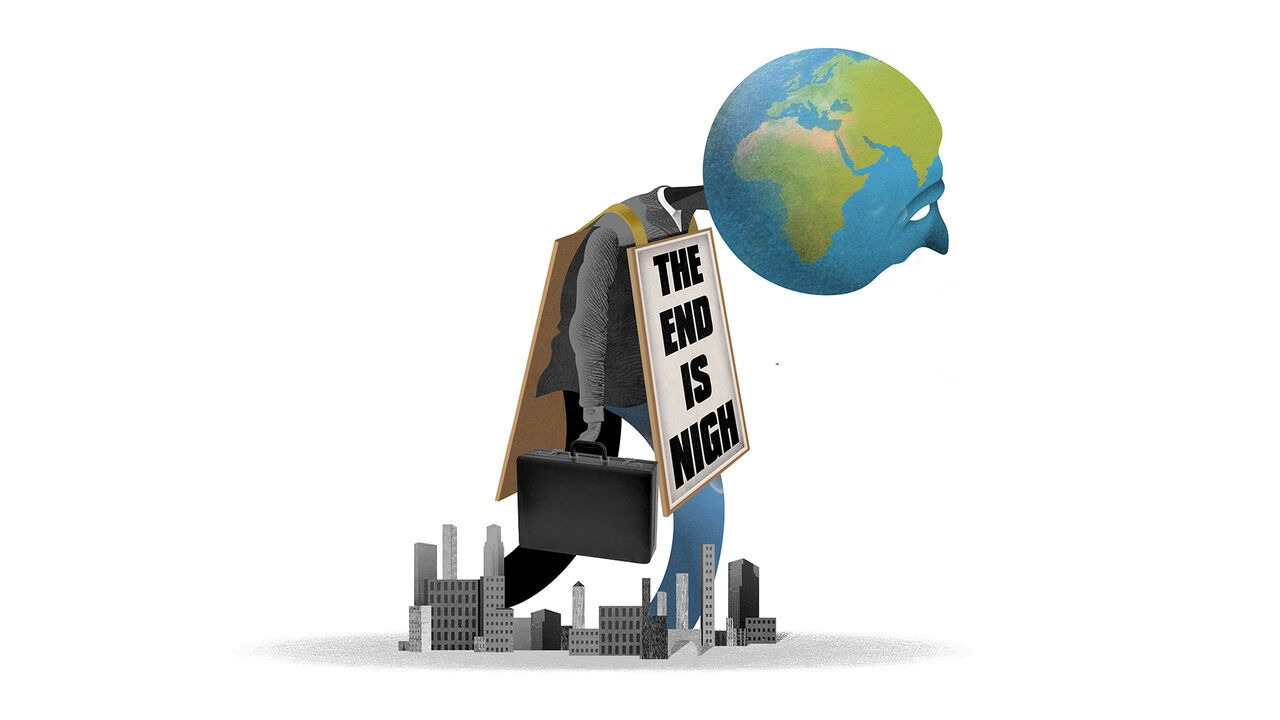
Illustration: Brett Ryder
Jun 3rd 2026|5 min read
Listen to this story
Charles Mackay’s “Extraordinary Popular Delusions and the Madness of Crowds” (1841) is reviled by historians and revered among traders. The book is best known for its colourful passages on tulip mania in the 17th century and the South Sea bubble in the 18th. But those wanting to understand business in the 21st should instead turn to Mackay’s chapter on the “epidemic terror of the end of the world”.
Apocalyptic thinking is the strongest impulse in American capitalism today. Elon Musk, a character who could be straight from Mackay’s pages, will soon float SpaceX, a rocket company whose professed mission is to avert existential threats to humanity by establishing a colony on Mars. Mr Musk is America’s richest capitalist in part because he is its loudest Cassandra.
Mr Musk is rushing to list before two other prophets with similarly millenarian worldviews. Anthropic filed paperwork for a public offering this week. Dario Amodei, its boss, has made much of the destructive potential of his firm’s Mythos model, which has thus far been kept from the public. OpenAI, run by Sam Altman, will probably file its paperwork soon. The lab recently published a utopian plan for the social contract after (or, rather, under) AI.
American business nowadays is best segmented not by industry but eschatology. The threat of war looms nearly as large in business as that of AI. Last year Alex Karp, the boss of Palantir, wrote a book arguing that the future of the West depends on high-tech defence companies such as his own. Palmer Luckey, the founder of Anduril, another defence-tech outfit, often talks up his expectation that China will try to invade Taiwan. Every firm selling critical minerals has a compelling story for why theirs would become painfully scarce in the event of such a conflict.
Much of Wall Street is in a fatalistic mood. Investor withdrawals from hitherto unknown private-credit funds recently shook faith in all private markets. The list of financial innovations central bankers say pose “systemic” risks to the economy is so long it’s hard to believe the system hasn’t collapsed under the weight of its own anxiety. One of these, cryptocurrency, is itself an intrinsically apocalyptic endeavour, since it claims to offer protection against government control and inflation caused by Uncle Sam’s spending—on, among other things, defence.
Dates of previous calamities assume almost superstitious significance. The most read book on Wall Street last year was called “1929”. A good bet for this year is “1873”. Traders describe the stockmarket in terms of previous catastrophes. “Will 1999 turn into 2000 or 1987? Or will the clock reset back to 1996?” wrote a strategist at Deutsche Bank this week. That’s before you even consider the prospect of a 1973. And surely a 1999 would increase the likelihood of another 2008?
A millenarian economy is necessarily a paranoid one. The appearance of comets has often foretold the end of the world. Nowadays a website tracks the private jets of the super-rich, supposedly because they would flee to safety in the event of a catastrophe. Economists anxiously examine America’s remarkably resilient economic data for the mark of “K”, the idea that the economy is unsustainably propped up by the super-rich while everybody else languishes.
Permitting disputes have become questions of national survival. “It’s over. We’re done, folks,” warned the governor of Utah if America were to cede ground to China in AI (his constituents are up in arms about a massive data centre in the state backed by Kevin O’Leary, a TV star best-known for appearing on “Shark Tank”). Issues of contract have assumed cosmic importance. “I apologise, but the fate of civilisation is at stake,” Mr Musk wrote to Mr Altman as they quarrelled over the governance of OpenAI.
Debates about regulating business have taken an evangelical turn. Peter Thiel, a tech investor, says AI will summon the Antichrist in the form of authoritarian rules. “Merely regulating it is insufficient,” wrote Pope Leo XIV in a 40,000-word essay on AI last month. “It must be disarmed.” A new tune by Charli XCX, a pop star, captures both the papal and the popular mood: “Spring, Summer ’26/When the world is gonna end, no hope for any of it/Yeah, we’re walkin’ on a runway that goes straight to hell.”
If things are so dire, why are American stocks so expensive? It is often said that American markets today are a triumph of greed over fear. But this gets things the wrong way round. Firms are raising capital in proportion to the intensity of their apocalyptic vision, and are rushing to do so before the impending market collapse many of them expect.
Fear of missing out has been replaced with something more hysterical. The instinct to accumulate capital is greater if you believe your labour will soon become worthless, as some hedge-fund types think. They are betting the house. But their portfolios are often indistinguishable from those who think that is nonsense. Other than tech stocks, what else can they buy? If AI does create a new economy, it will be a fast-growing one where bonds are worth less because of inflation and higher interest rates. If it doesn’t, it will wreck the existing economy and bonds will be worth even less. Every investor is an acolyte, whether they believe it or not.
The best of times, the worst of times
It is possible for a country to worry itself into irrelevance. But America is an experiment in terrifying yourself to riches. Predictions of total and irreversible change certainly have their uses: there is no stronger pitch to investors than claiming your business will end the world as we know it. That said, an economy which combines widespread distrust of business with a growing elite millenarianism is also a combustible one. Perhaps the danger is not 2008, 1999, 1973 or even 1873, but 1789. ■
Finance & economics | Buttonwood
Want to know the future? Don’t trust the stockmarket
Share prices are buffeted by far more than just new information

Illustration: Satoshi Kambayashi
Jun 2nd 2026|4 min read
Listen to this story
“If economists wished to study the horse,” a dismal scientist once joked, “they wouldn’t go and look at horses. They’d sit in their studies and say to themselves: ‘What would I do if I were a horse?’” But at least horses tend to be spared such attention; finance types are not. And one economic idea is especially liable to get them snorting with impatience and asking whether the person who cites it has been near a trading floor.
This is the efficient-market hypothesis, the formal version of which says that investors, in aggregate, perfectly and promptly incorporate new information into asset prices. Those who invoke it can often mean something even stronger: that markets therefore provide the best possible forecasts of fundamentals like corporate earnings. In other words, the price is always right, as it surely would be if it were economists cantering around and making all the decisions.
Right now this Platonic ideal feels especially remote. Retail traders clamour for meme stocks, whipping up prices just to give short-sellers a thrashing. Shares in GameStop, an ailing video-game seller selected for such favour in 2020, are still worth more than 20 times as much as they were then. They have done about as well as Nvidia’s, the biggest beneficiary so far of the artificial-intelligence revolution. Nvidia’s fellow tech giants are racing to issue new stock and sell it to the public—a sure sign that they reckon the bull market is nearing its peak. Yet investors are still happily piling in.
Those financial economists who do visit the stables have known for nearly half a century that markets are far more volatile than they would be if new information were all that moved them. Robert Shiller, who won the Nobel prize in 2013, showed this for bond yields in a paper published in 1979 and for stock prices in 1981. Over the hundred years or so of data he studied, stock prices fell several times by much more than could have been justified even by a Depression-scale downturn. This made it implausible that investors were pricing shares based only on sober forecasts of their dividends.
More recently Mr Shiller’s intellectual heirs have helped explain why—aside from people’s occasional tendency to bolt off and join a stampede. The most persuasive theory, held increasingly by both researchers and academically minded investors, is the “inelastic-markets hypothesis”, coined by Xavier Gabaix of Harvard University and Ralph Koijen of the University of Chicago. Its crux is that share prices, rather than being set by the dividends (or earnings) investors expect, are buffeted significantly and lastingly by capital flows. Messrs Gabaix and Koijen estimate that someone who buys $1-worth of shares with fresh cash pushes up aggregate stockmarket value by $3-8.
To see why, picture three types of investor. One is a return-chaser, who buys more shares when they are on a tear and sells when prices are falling (think of retail traders or trend-following hedge funds). The second maintains fixed asset allocations: 60% to stocks and 40% to bonds, say (think of a pension scheme). The third is a value investor, only interested in buying shares at rock-bottom after a crash (think of Warren Buffett). Squint, and this stylised mix looks rather like the groups that dominate real-world markets. Importantly, any arbitrageurs—who efficient-market enthusiasts imagine might smooth out distortions and reprice assets according to fundamentals—are few, and tightly constrained.
Now imagine a retirement saver who wants to buy shares in a bull market. They cannot hit up the return-chaser, who wants more themselves. The fixed allocator can sell only if prices rise, since they must maintain their 60/40 split. The value investor, too, will sell only if shares get more expensive and hence, to them, less attractive. So the capital flow sends stock prices up, regardless of what anyone thinks about future earnings.
If the thoroughbreds manning trading desks get frustrated by economists touting efficient markets, they in turn may smirk at this explanation. It does, after all, sound quite like “prices rise to match supply to demand”, without saying why demand rose to begin with.
That absence might in fact be a strength. Ordinary savers who buy stocks each payday do not generally base their purchases on predictions of stellar corporate earnings. Nor, necessarily, do institutional investors who are told to aim for a set return target and have few better shots. Their actions nevertheless push share prices up. Betting that this might forecast future champions seems like a good way to lose your shirt. ■
Finance & economics | Free Exchange
Some billionaires pay too little tax
But the case for levies on wealth is unconvincing

Illustration: Álvaro Bernis
Jun 4th 2026|5 min read
Listen to this story
Suppose you are the billionaire founder of Veblen Luxe SA, a European company selling solid-gold luggage tags. How should you organise your financial affairs? One option would be to hold your Veblen shares directly. But then you must pay income tax immediately when the company pays you dividends.
Your accountant might tell you it is wiser to put the shares in your holding company, Hespérides S.à r.l. In a holding company, dividends can pile up without triggering much of an income-tax bill. True, you cannot spend the cash. But it can still be used for investments and some expenses. If you persuade a bank to lend you your spending money against your Hespérides shares, and dividends pile up faster than your debts, you may be able to keep borrowing and postpone income taxes indefinitely.
It is such arrangements that Gabriel Zucman of the Paris School of Economics takes aim at in his short new book, “We Need to Tax Billionaires”. Mr Zucman, whom your columnist interviewed for our “Inside Economics” show, has arguably surpassed Thomas Piketty, his compatriot and erstwhile co-author, to become the favourite economist of left-wingers everywhere. His latest thesis is that holding companies allow the ultra-rich to pay taxes at far lower rates than most of the public, and even those who support flat (rather than strongly progressive) taxation should support new levies on wealth to level the playing field.
For example, in Mr Zucman’s native France holding companies enable billionaires to pay about 25% of their income in taxes, including corporate levies paid globally, he calculates. The average Frenchman, by comparison, faces an all-in effective tax rate of 51%. Mr Zucman sees this as an injustice and proposes to top up the annual tax bill of the ultra-rich to a minimum of 2% of their net worth. Last year he campaigned for such a levy in France.
Holding companies are more of a problem for European taxmen than for America’s IRS. Uncle Sam has since 1934 imposed a 20% tax on the undistributed income of personal holding companies, after public fury when J.P. Morgan, a plutocrat banker, paid no income tax for two years running. Still, Mr Zucman says this Rooseveltian fix was incomplete. He notes that Warren Buffett’s listed holding vehicle, Berkshire Hathaway, has not declared a cash dividend since 1967. Earnings pile up, free of income tax.
Wealthy Americans can also borrow against appreciating assets to fund their lifestyles. When they die, their heirs benefit from the “stepped-up basis”, which disregards all previous capital gains when shares are inherited. If assets appreciate fast enough, and profits are reinvested, in theory a dynasty can avoid income and capital-gains taxes for ever. Mr Zucman says the tax rate paid by the wealthiest 400 Americans—those appearing in the Forbes rich list—is 24%, compared with 30% for the average citizen.
Mr Zucman’s work often provokes controversy, because wealth taxes are unpopular among economists and because of regular disagreements about his data. His latest research, too, has brought about a data dispute. David Splinter of the Joint Committee on Taxation, a congressional body, says Mr Zucman and his co-authors have underestimated how much tax American billionaires pay. Mr Splinter makes different assumptions about capital gains, how Forbes fortunes are spread among family members, and state and local levies paid. He also includes transfers in income for all Americans and deducts tax credits from their tax bills. He finds billionaires’ tax rate to be 38%, and that of middle-income Americans just 18%. Mr Zucman says Mr Splinter has made mistakes.
Whatever you make of his data, Mr Zucman has identified laxity in Europe’s treatment of holding companies. He is also not the only person to note the injustice of the stepped-up basis and other loopholes like it elsewhere in the world. But is a minimum wealth tax the solution? It would be straightforward for Europe to copy America’s treatment of holding companies, and for America (and others) to fix their capital-gains taxes. Instead, Mr Zucman arrives at his 2% minimum by supposing that billionaires can expect to earn a 6% return on their fortune, so a 2% net-worth tax approximates to a 33% income tax. In reality, though, it is one thing to ask the owner of Veblen Luxe to pay 2% of his net worth. It is another to shake down startup founders, with no cash profits, based on valuations that could collapse if their business goes awry.
And would the rate stay at 2%? Mr Zucman charges that opponents of wealth taxes resemble early opponents of income taxes. Yet critics of income taxes were, in hindsight, right to warn that the tax would grow significantly over time. And plenty on the left would not stop at 2%. Odds are that California’s proposed 5% “one-time” tax on wealth will not be a one-off. From June 4th Mr Piketty can be found at the World Inequality Conference in Paris advocating a progressive global wealth tax starting at 1% annually above €2.2m ($2.5m) and rising to 20% above €553m. He has previously backed wealth taxes with top rates as high as 90%.
Crossing the Piketty line
It is unclear to what extent Mr Zucman endorses such extreme ideas. He supports experimenting with different rates. His suspicion of wealth runs deep: he says he sees little difference between those who get rich by capturing governments, like Russian oligarchs, and entrepreneurs who create new products. Wealth, he thinks, always brings dangerous political influence.
Yet the possible costs of deterring innovation are vast. Past research by William Nordhaus of Yale University has found that innovators capture for themselves just 2% of the value they provide to society; more recent work by Stefanie Stantcheva of Harvard finds that innovative effort is surprisingly responsive to tax rates. Closing tax loopholes is reasonable. Seizing the assets of society’s most productive people is a road to economic ruin. ■
Science & technology | Blue Origin
Rocket goes boom; so do moon plans
The phenomenal explosion could blow a hole in Amazon’s plans and NASA’s too
Photograph: Getty Images
Jun 3rd 2026|4 min read
Listen to this story
ROCKET LAUNCHES are always spectacular, but this was something else. On May 28th Blue Origin, a rocket firm owned by Jeff Bezos, was testing one of its New Glenn rockets at Cape Canaveral, in Florida. As its engines ignited a series of flashes could be seen. Then the entire rocket detonated, leaving an angry mushroom cloud looming above the launch site.
Shortly afterwards Blue Origin announced, in the prim language of official space flight, that it had suffered an “anomaly”. Mr Bezos confirmed that no one had been hurt. But the blast, which lit up the night sky a dozen miles away and wrecked the firm’s only working launchpad, may well have been the biggest in space flight since an N1, a large Soviet rocket, blew up on launch in 1969.
The explosion is a big setback for Blue Origin, which seemed to have hit its stride after years of slow progress. It is a headache for Amazon, another firm founded by Mr Bezos, which is trying to get Leo, a satellite-internet venture that aspires to rival Elon Musk’s Starlink, off the ground. And it could delay NASA’s plans to return to the Moon. Just two days before the explosion, America’s space agency had detailed its plans for a permanent lunar base in a slick press conference that featured Blue Origin prominently.
Explosions are not uncommon when testing new rockets. But explosions on the launchpad can destroy expensive ground hardware as well as the rocket itself. When a rocket built by SpaceX, Mr Musk’s rocketry firm, detonated at Cape Canaveral in 2016, it took the firm 15 months to repair the damage. SpaceX had access to a second pad, meaning the accident did not ground its rockets. Blue Origin does not.
The full extent of the damage is not yet clear. Photos of the aftermath show a destroyed transporter-erector (the giant vehicle that hauls the rocket to the pad and then stands it upright for launch), the demolished remains of a lightning-rod tower and severe damage to another tower. Writing on X, Dave Limp, Blue Origin’s boss, said that nearby tanks for propellant and water seemed unharmed, as did a booster stage inside a hangar not far from the pad. He then set a goal for Blue Origin to be flying again by the end of the year.
It is not just Blue Origin that will suffer in the meantime. In 2022 Amazon signed the biggest rocket-launch deal ever, booking up to 83 launches for its Leo satellite network, including up to 27 with Blue Origin. Leo aims to launch more than 3,000 low-orbit satellites to provide internet access from space. (Starlink already has around 10,000.) The firm is spending heavily. In April it bought Globalstar, another satellite operator that counts Apple as a customer, for $11.6bn, partly to gain access to its precious radio-spectrum rights.
Leo is already late. Amazon’s licence requires it to have deployed half its constellation by July, a deadline it cannot possibly meet (the firm is angling for an extension). It will now be later still. Blue Origin is supposed to fly 12 missions for Amazon, with an option for 15 more.
In the worst case, deployment could slow to a crawl. Of its 83 intended launches, Amazon booked 38 on Vulcan Centaur, a rocket owned by United Launch Alliance, an American launch-provider. Vulcan Centaur uses the same BE-4 engines, made by Blue Origin, as New Glenn does. If the explosion is traced to an engine issue, then the Vulcan Centaur could end up grounded too.
Then there is NASA, which sees itself as in a race to the Moon with China. In 2021 NASA awarded SpaceX a contract to build a lander to ferry astronauts from lunar orbit to the Moon’s surface. In 2023, worried about the risks of relying on a single supplier, the agency asked Blue Origin to build a lander of its own. SpaceX’s lander is already late. With Blue Origin now out of action for at least the next six months, NASA’s ambition to return humans to the lunar surface by early 2028 looks even more improbable than it already did.
NASA insists that, unlike in the 1960s, this time it wants to go to the Moon and stay there. On May 26th the agency outlined some of its plans for the eventual construction of a base at the lunar south pole. Blue Origin is to supply a lander capable of ferrying three tonnes of cargo to the lunar surface, to enable scouting missions and to pre-place useful bits of kit, such as lunar rovers, that will later be used by astronauts. Blue Origin’s first Moon-base mission was supposed to depart as early as this autumn. Just two days after the plan was made public, those ambitions also went up in smoke. ■
Culture | Passport to everywhere
Travel is becoming a competitive sport
Growing numbers of people are country counting

Are you down for the count?Photograph: Panos Pictures
Jun 2nd 2026|Funafuti|3 min read
Listen to this story
Tuvalu, made up of nine tiny islands in the South Pacific, is not your usual holiday destination. The former British colony, about halfway between Hawaii and Australia, is a haul to get to, served by only a few flights a week. Tourism barely exists. The main attractions are the airport runway in the capital, Funafuti, which transforms into a picnic spot and football pitch most afternoons, and the sleepy post office, which attracts enthusiastic stamp collectors. It is one of the least visited countries in the world.
None of that was enough to dissuade Ted Nims, an American who recently spent a week there and, in the process, checked off another country on his list: his 191st. The UN has 193 member states. Mr Nims is among a growing number of “country counters” trying to visit them all. Last year a record 82 people claimed to have achieved the feat of travelling to all 193 countries, according to NomadMania, an online hub for obsessive adventurers.
When the Travellers’ Century Club launched in 1954, only a fortunate few could boast of having been to 100 countries, the minimum required to join. Today the social group is nearly 2,000-strong, having enjoyed what it calls a “pretty significant upswing” in recent years. Serious travellers are whiling away hours on platforms such as NomadMania and Most Travelled People, where there are leaderboards and debates about what counts as a visit. (An airport transit is acceptable to some but dismissed by the most hardcore as too easy.)
So much time on the road may sound like solitary play. But hostels and homestays offer a lot of fun and social contact, says Carol Wong, a Malaysian who recently visited Samoa (her 142nd country). It is the “fancy hotel” that is “very lonely”, she says. Online, travel addicts share tips and socialise. Some destinations are so obscure that visitors seek advice from Facebook groups such as Every Passport Stamp, where questions range from the mundane (“Is the ferry from Kazakhstan to Azerbaijan operating?”) to the unusual (“Has anyone ever explored Enewetak Atoll in the Marshall Islands?”).

Photograph: Getty Images
Seeing new places is all the rage, even if you do not want to fill your whole passport with new stamps. About half of Brits polled last year by ABTA, a travel industry association, planned to visit a new country, compared with 18% a decade earlier. “There’s a braggadocious element,” says Seth Borko of Skift, a travel-news website, who points to the impact of social media.
The scourge of overtourism plays a part, too, as travellers want to skip packed piazzas. Rising numbers of Americans travelling to Europe are opting for small towns or the countryside, according to Skift. The world’s top ten most visited countries saw their share of international arrivals decline from about 60% in 1980 to 40% in 2024.
“I like to see places that aren’t as touched by tourists,” says Shang Qian Song, a 34-year-old Singaporean visiting Tuvalu, which may become one of the first countries to disappear because of rising sea levels. If you’re counting on becoming a country counter, better pack your bag. ■
Obituary | The last colossus
Sonny Rollins believed that jazz was all there was
The saxophone colossus died on May 25th, aged 95
Photograph: Getty Images
Jun 4th 2026|5 min read
Listen to this story
Though he lived a mere two blocks away, Sonny Rollins hadn’t noticed those steps on Delancey Street before. One summer day in 1959, he climbed up. There, at the top, he found himself on the Williamsburg Bridge above New York’s East River. Subway cars and traffic were rattling over, hooting boats passing underneath. All around him were pillars and abutments in which he could hide. Close above him was the open sky. Corny or not, it gave him a spiritual feeling to be there.
This was the ideal place to practise his music, which was not just any music. His tenor saxophone, endlessly inventive, seamlessly melodic, percussive or romantic, was already famous. Since 1953 he had been cutting records as the leader of small bands, but in 1956 came “Saxophone Colossus”, which put him in the same league as his heroes Charlie “Bird” Parker and John Coltrane. He kept that status for the rest of his career, which contained more than 60 albums and two Grammys. But however much he was applauded, he was never satisfied with the way he played. Every so often the voice that kept talking inside him would tell him to improve himself. Hence, later, his time in an ashram in India, and hence his daily sojourns on the Williamsburg Bridge.
They went on for two years. Sometimes he would play for 15 hours or more, coming down only for bathroom breaks or a cognac at a bar he liked. In winter he played with gloves on. Some passers-by noticed his tall frame squeezed among the steelwork, and all heard his music, but few spoke to him. That was fine, because the only company he needed was his horn, which he was pushing further and further. Somewhere, at the bottom of the ocean, maybe, or beyond the stars—way beyond Sonny Rollins as yet—there was an ultimate sound. He had no ideas about what it might be, but he would know it when he heard it, and perhaps twice a year onstage he might get a snatch of it. Instantly it would fulfil him, and he would know that, at last, he was playing well. But not til then.
His head was already full to bursting with scraps of musical material he had laid down over the years. Etudes his brother played on the violin; Fats Waller on the family’s piano roll; juke-box tunes in bars; pop songs and ballads from cheap gramophones, and the jazz that sounded all over Harlem from clubs and open windows. The pianist Thelonious Monk mentored him, and the saxophonist Coleman Hawkins lived nearby. He revered both of them, and from eight years old, toting the alto sax his mother had given him, he knew a musical life was for him, too.
His improvisations drew on all this. He loved playing quotes and, after any number of rhythmic and harmonic variations, each one could be joined to another. An aria from here, a Broadway ballad from there, a cheeky half-heard riff. It was as if all music had a natural unity, and he believed it had. He would walk onto every stage with his mind a blank, waiting for a fresh thought or a fresh note to fall upon it. His horn technique he knew he could trust completely, subconsciously, however complex or fast. He had a thing with his horn, a communion. (When he and his wife Lucille had to flee from their flat on 9/11, his saxophone was all he took with him.) But the rest of any piece, the emotion and the spirit, he left entirely to the higher powers to provide.
Because he played with Bird, Coltrane, the trumpeter Miles Davis and drummer Max Roach, he was often called a bebop star. But he wouldn’t be pigeonholed that way. The freshness of bebop when it appeared in the 1940s, with its speed, intricacy and long solos, certainly suited him; its strictures didn’t, because he was naturally free. He often fused jazz with calypso in homage to his mother, who came from St Thomas in the Virgin Islands; “St Thomas” was one of the most celebrated tracks on “Saxophone Colossus”. Another, “Blue 7”, mixed jazz with blues. He married it to Latin dance rhythms, to funk and even to rock, in a brief collaboration with the Rolling Stones on “Tattoo You” in 1981. (He wasn’t too proud to play a backbeat.) For a time he got rid of pianists, who annoyed him because they limited his harmonic range. He liked trios: a drummer and a bassist, faithfully following along. And he could lead them anywhere for his jazz—especially, he felt, on the albums “Freedom Suite”, “A Night at ‘The Village Vanguard’” and “Way Out West”—which was big-picture stuff in which everything came together. It was the unification of music; it was all one. God, perhaps.
His serenity, onstage and off, disguised his rough road to fame. Because as a young man he saw Charlie Parker as his Messiah, and Bird was on drugs, he used heroin himself to see if he could end up playing like that. All it did was set him to stealing, for which he eventually served ten months at Rikers Island. In 1955, after some tough rehabilitation, he was clean again, and stayed that way. It was Bird himself who had told him to stop and consider what he had to give to music.
That set him thinking. He had always considered music as a gift to him, ever since he had blown his first notes as a child. He had been in seventh heaven then. And it continued with each performance, as (with few exceptions, but some down days) he revelled in the gift he had been given. But the question was, was he truly giving back to his audiences, or just playing for himself? To mangle his own Golden Rule a bit, was he doing unto others as had been done to him?
He never really found the answer to that question. But he was looking for that as much as for the ultimate sound. It seemed to be his karma, ever, to search for these things. Well, he’d got a lot of bad stuff he was paying for. But that was the purpose of being in this inconsequential world. To learn; to try to get wisdom; to come back and try again, if you didn’t. And to keep on pushing that music, as he had on the Williamsburg Bridge; which, for his multitudes of admirers, was gift and glory enough. ■