The Economist Articles for Jun. 4th week : Jun. 28th(Interpretation)
작성자Statesman작성시간26.06.19조회수14 목록 댓글 0
The Economist Articles for Jun. 4th week : Jun. 28th(Interpretation)
Economist Reading-Discussion Cafe :
다음카페 : http://cafe.daum.net/econimist
네이버카페 : http://cafe.naver.com/econimist
Leaders | Our cover
AI has granted America vast new power
Its government is now the gatekeeper to frontier models—and most compute
Jun 18th 2026|5 min read
Listen to this storyAI Narrated
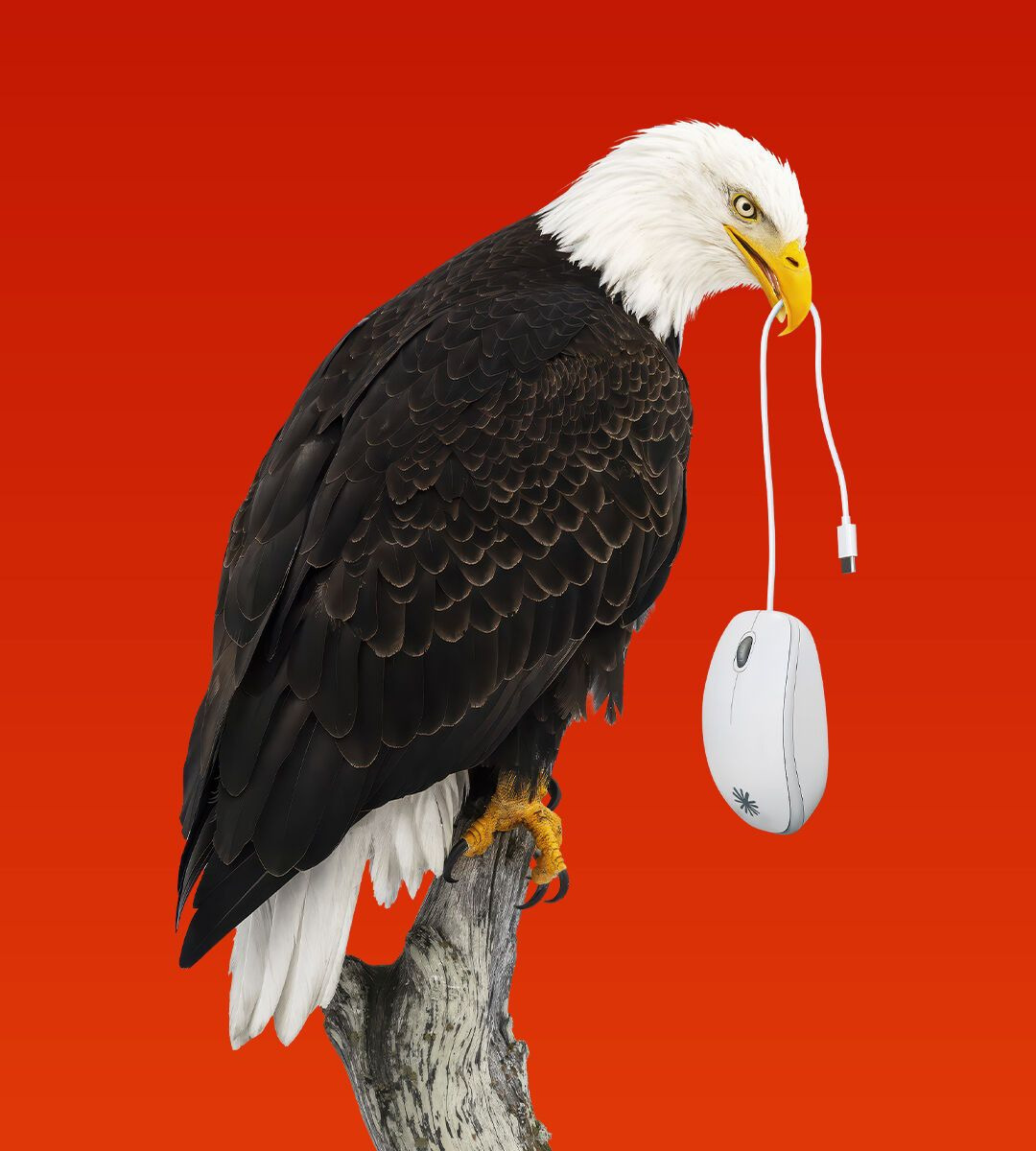
THE NEWS is full of how an ignominious peace deal with Iran exemplifies a decline in American power. That conclusion could hardly be more wrong. On June 12th the Trump administration ordered Anthropic to block foreigners from Fable and Mythos, its latest and most capable frontier AI models. In an instant, everyone learned that the American government can decide who may use the world’s most important technology. You don’t get much more powerful than that.
The administration was responding to a supposed jailbreak for Fable, meaning a prompt that circumvents defences against uses such as hacking computers or making bioweapons. The chances are that it wanted Anthropic to switch off the models for everyone, and that targeting foreigners was a means to an end. Sure enough, that is what Anthropic did, while claiming that the concern about its model was overblown. The legal basis of the order remains unclear, and the ban seems unlikely to last.
Read the rest of our cover package
What matters, though, is the demonstration that global access to the best AI may come down to a decision in the Oval Office. The administration showed in March that it is prepared to trample on the frontier AI companies, when it designated Anthropic a “supply-chain risk”. Now it has shown that it is prepared to trample on users, too.
America must decide how to wield this vast new power. The rest of the world must decide what to do about it. Even as it plans for an unreliable America in everything from defence to trade, it now has to cope with a new way of being captive to the world’s biggest economy.
This is not the first time America has tried to restrict access to frontier technologies. After the second world war it stopped helping Britain’s nuclear-weapons programme. When modern cryptography emerged in the 1970s, it blocked exports, before accepting the trade-off between having secure allies and using secrets to boost its own offensive capabilities. Uncle Sam still refuses to share its best military equipment, even with close allies. America kept the F-22 fighter for itself; allies got the F-35.
To control access to a technology, though, depends on its nature, and rivals’ ability to develop it independently. Nuclear co-operation with Britain resumed in the 1950s after it developed technology of its own; with other countries, America used the Nuclear Non-Proliferation Treaty of 1968. Cryptography methods could not be contained and eventually went public. Many countries are capable of cyber-attacks.
Frontier AI has echoes of all these examples. If the very best models can disable crucial infrastructure or help users create pandemic-ready pathogens then, like nuclear weapons, they are too dangerous for public hands. But as with cryptography algorithms, it will be hard to be sure that advanced proprietary capabilities will never be copied. Open-weight models, which anyone can download, could advance and proliferate. In cyber-security a small imbalance can bring big advantages: if an attacker has version 5 while the defender is stuck with version 4, and the better model uncovers just one more vulnerability, the weaker party will be compromised. As AI is embedded in military hardware, a similar logic may apply on the battlefield.
Yet America has a huge economic interest in leading in AI and selling its tech to foreigners. Many Anthropic staff are not American and so were hit by the ban; to freeze AI research at America’s best lab would be self-defeating. The firm also says that 80% of its consumer use is overseas. As American technology has boomed over the past decade, Europe’s payments to America for intellectual-property products have risen fivefold. America should not want to give the rest of the world a reason to team up with China, the second-ranking AI power.
This may lead to a hierarchy of access. The best capabilities will be closely guarded by America, to provide an edge in cyber-offence and military capability. The next-best alternatives may be available to allies—the equivalent of the F-35. And a sufficiently handicapped model may be sold to the world with the best safety precautions its makers can design.
Such a future would be uncomfortable for America’s allies, which are nowhere close to rivalling the likes of Anthropic. They are already vulnerable to Mr Trump’s bargaining on trade, alliances, the dollar system and more. AI could become the most important lever of the lot. True, some of the dependence is two-way: America needs Dutch lithography machines and Taiwanese fabs. And foreigners could always shun Anthropic or OpenAI in favour of good-enough open-weight alternatives.
Yet running models requires computing power, which America has perhaps 15 times more of than Europe, plus much more ongoing investment. If SpaceX, whose share price has surged after listing on June 12th, realises its vision of data centres in space, the gap is unlikely to close. “Europe 2031”, a gloomy essay about the future of AI, imagines vassal status for Europe as its cyber-security, defence and swathes of its economy come to depend on American models and compute .
Many countries will conclude they need America more than ever. They can still strengthen their bargaining positions. Compute is so lacking that it makes sense to build data centres almost anywhere, yet countries show no sense of what is at stake. In the seven months to June 2025 demand for new grid connections in Britain rose from 41GW to 125GW, more than twice peak power demand. OpenAI paused a data-centre project there in April, citing regulation and costly energy.
Token gestures
Throughout Europe more energy, easier planning and looser rules for modelmakers would help. In East Asia Taiwan, Japan and South Korea must integrate rather than duplicate their efforts. All should avoid the false promise of government attempts at steering investment. The goal should not be protectionism but ensuring that America is not the only economy where the AI ecosystem can thrive. As in trade and defence, the way to cope with Uncle Sam’s transactional turn is not to whine about alliances but to build strength. ■
Leaders | Endgame in Iran?
Donald Trump gambles that Iran wants money more than power
The peace deal is all carrot and no stick
Photograph: Haiyun Jiang/The New York Times/Redux/eyevine
Jun 18th 2026|3 min read
Listen to this storyAI Narrated
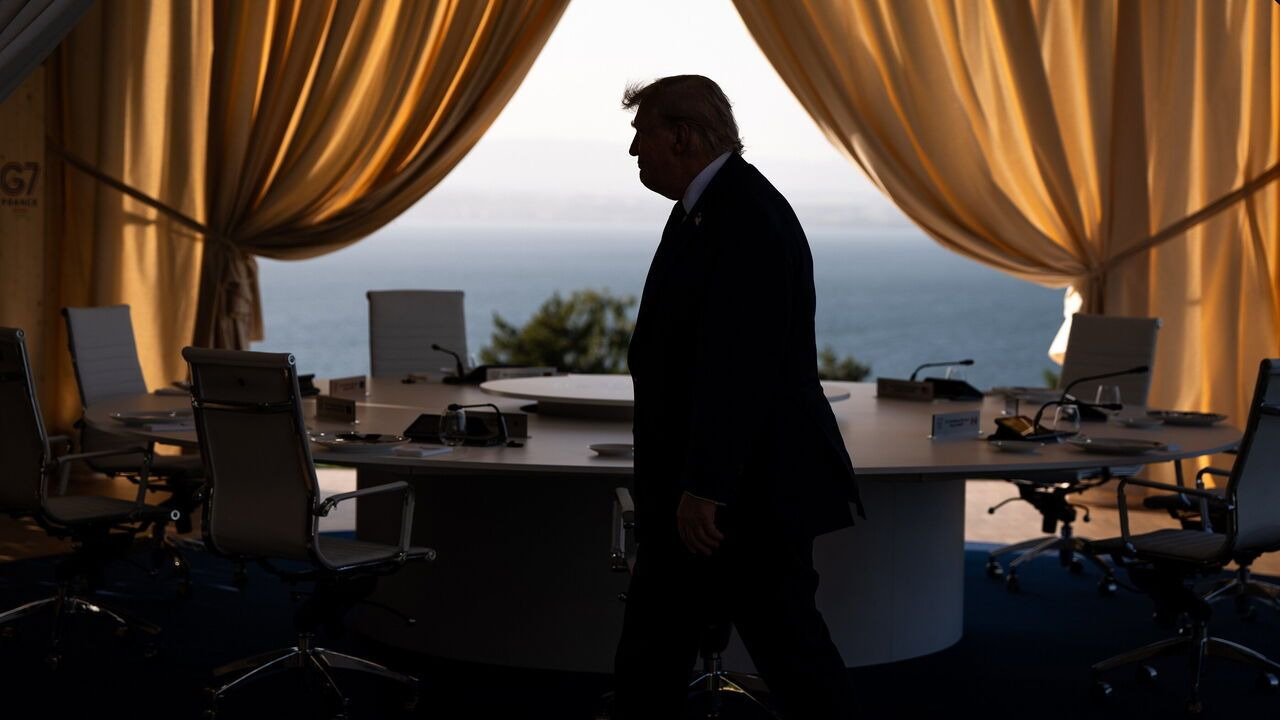
HAVING FAILED to defeat Iran with bombs, can President Donald Trump salvage something with bribes? After weeks of haggling over how to end the war, he and his Iranian counterpart have signed a short peace memo. It amounts to the promise of lots and lots of money for Iran, so long as it can satisfy Mr Trump that it has abandoned any plans for a nuclear weapon. That is a huge and unlikely gamble and it leaves the countries of the Middle East with some hard thinking.
The memo ditches many of Mr Trump’s war aims. There will be no regime change; no succour for Iran’s benighted people; no limits on Iran’s ballistic missiles or its support of proxies. Instead the deal focuses on two things. One is reopening the Strait of Hormuz, where the foolishness of Mr Trump’s war and the humiliation of his climbdown are laid bare. Before the fighting, vessels had free passage; after the 60 days in this deal, they may well have to pay a fee.
The other focus is the nuclear programme. The regime has given up almost nothing. Its promise not to get a bomb is old. It will down-blend its stocks of enriched uranium and discuss the rest of its programme, but the issues are complex and Iran is masterful at stringing things along. And then there are the bribes. Iran can immediately export oil and derivatives. Depending on the talks’ progress, America will unfreeze assets worth tens of billions of dollars, lift sanctions and help create a fund of at least $300bn for reconstruction and development. Mr Trump is tired of war. If, as planned, American troops depart within 30 days, his ability to use force will be limited.
The regime thus has an unprecedented opportunity to trade nukes for cash and investment. Unlike previous presidents, Mr Trump doesn’t care about democracy. Having weaponised the strait, Iran may now see less value in nuclear bombs. The regime is unpopular at home: it could use the money.
Yet there are many reasons to think this gamble will fail. Iran’s hardline leaders have no reason to trust America. They will expect Israel to sabotage the deal. The regional influence they crave comes from being the foe of the Great Satan. The nuclear programme offers prestige and, potentially, protection. Inspectors will struggle to stop them cheating. Iran’s leaders will be tempted to have their yellow cake and eat it.
Israel argued for this war, but it has turned out a bitter disappointment. It fought shoulder to shoulder with the Americans only for Mr Trump to cut it out of the negotiations and undermine its campaign against Hizbullah in Lebanon. That could cost its prime minister, Binyamin Netanyahu, re-election in October. The war was a strategic failure, because Iran remains a threat. Mr Netanyahu tested how far America was prepared to go, and it was not far enough for Israel to prevail. Any successor will need to devise a new security doctrine.
The Gulf countries need to restore their reputations as havens of prosperity in a violent neighbourhood. Prepare for some wishful thinking, but the fact is that Iranian drones and missiles will continue to pose a threat. Pipelines that bypass the Strait of Hormuz will help. But the Gulf also needs to overhaul its security. Nobody can be sure how willingly America will fight in the future. Some states will look for ways to deter Iran—the United Arab Emirates could seek even closer ties with Israel. Others may attempt to accommodate it. Still others may steer between the two.
Mr Trump should never have begun this war. Once again, he is basing his way out of it on the idea that people will do anything for money. However, the first rule of diplomacy is not to imagine that your opponent thinks as you do. ■
Europe | Charlemagne
Europeans should learn to love the air-conditioner
Green electricity means never having to say sorry for lowering the thermostat
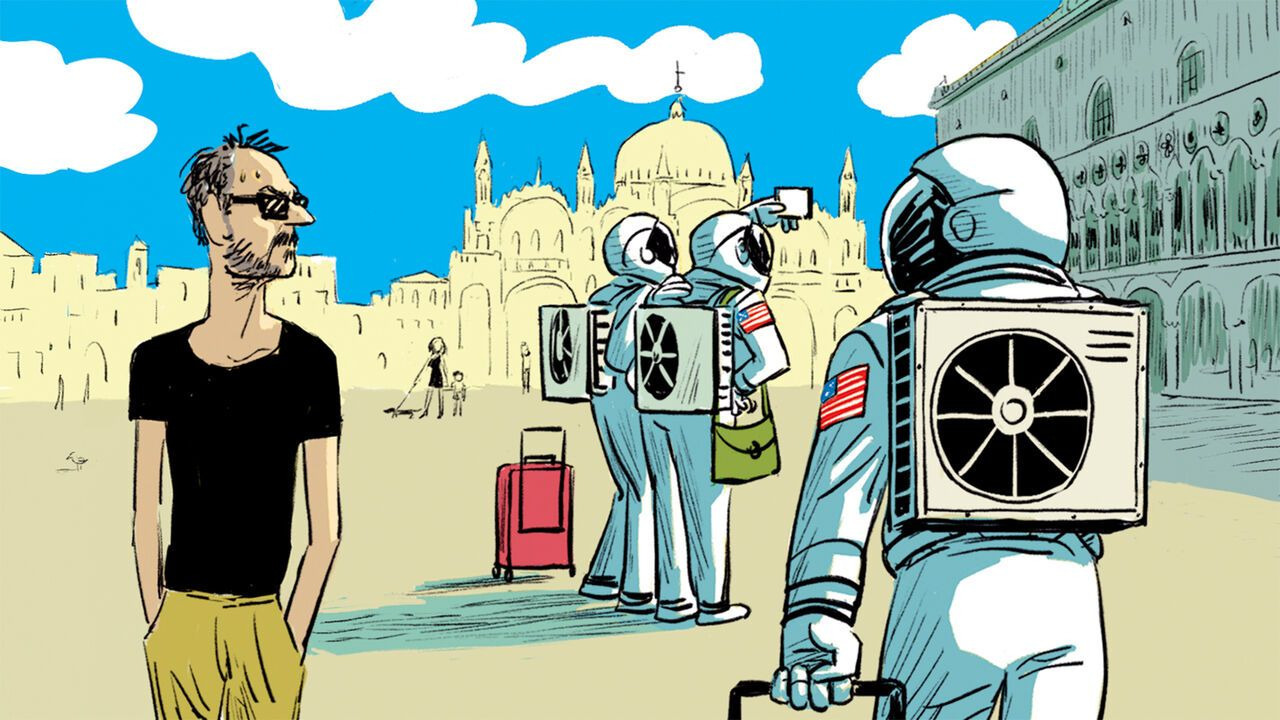
Illustration: Javi Aznarez
Jun 18th 2026|5 min read
Listen to this storyAI Narrated
AMERICANS AND Europeans differ loudly on many issues, from health-care policy to gun-carrying etiquette. But a quieter division appears every summer when they visit each other’s continents. Europeans touring America complain that shops and restaurants are so frigidly air-conditioned as to require a jacket; step outside again and your glasses fog over. Yanks holidaying in Europe expect cool comfort, and grow surly on finding that many old-world buildings require them to sweat and bear it.
The divide is rooted in both climate and culture. Long before General Electric began cooling using circulating chemicals, southern Europe was built to handle heat. In traditional houses, white paint and shaded courtyards keep things cool. Windows are thrown open and rooms aired in the mornings. Shutters keep out the midday sun, and siestas allow one to skip the hours when it is too hot to do much anyway. Europe’s southerners think coddled Americans don’t know how to cope with heat naturally. Northern Europe, meanwhile, is mostly spared the problem: June days can be cold enough for a Scandinavian knitted sweater. Flinty northern Protestants regard buying an air-conditioner for the year’s few scorchers as an expensive environmental sin.
These days, climate change is putting such attitudes to the test. Europe is expecting a broiling summer, in part thanks to the El Niño weather event. As it is, heat contributes to around 175,000 deaths a year on the continent, the UN reckons. Yet Europeans who think first-world lifestyles are largely to blame for global warming may feel pangs of carbon guilt about equipping their houses with air-conditioning, or using it if they have it. They needn’t. The impressive build-out of renewable energy in Europe’s hottest places means that judiciously dialling down the temperature will not do much to melt the glaciers.
Take Spain, where solar capacity has grown nearly tenfold in the past decade. Readers sweating it out in Seville can head to apps.electricitymaps.com to reassure themselves: on June 10th a kilowatt-hour of Spanish electricity produced just 86 grams of CO2 equivalent. In the American state of Georgia the figure was 442. On a sunny summer day at noon, only about 10% of Spain’s electricity comes from fossil fuels; around half comes from solar. Portugal does just as well, and France better still, thanks to its dozens of nuclear reactors. Italy is a laggard, getting 30-40%of its electricity from gas. But its 224g of CO2 per kilowatt-hour is positively verdant next to much of America.
Not all of Europe can congratulate itself. Poland remains heavily reliant on coal, making its electricity mix about as bad as America’s. Germany’s rash decision in 2010 to eliminate nuclear power left it dependent on coal and gas, producing three times as much CO2 per watt-hour as Spain. Britain, depending on the weather, falls between Italy and Iberia. There are also unexpected bright spots like Albania, which sometimes gets 100% of its electricity from hydroelectric dams. Latvia is the greenest of the Baltics, thanks to more solar power than you might expect.
Climate morality aside, many on the old continent fret about how to pay for cranking up the aircon dial.
Americans are roughly a third richer than Europeans, and to add insult to injury their household electricity costs about half as much. Even middle-class Europeans worry about a sudden bump in energy prices owing to an unexpected geopolitical crisis—say, a war in Iran.
Yet European homes are smaller than American ones, and use about a third as much electricity on average.
Moreover, the solar boom means that power is not just greener but cheaper on hot, sunny afternoons. Setting the dishwasher to run overnight (prices are generally highest around 9pm) can free up room in one’s budget to cool off the home before going to bed. Smart meters make this sort of demand-shifting easier. And astute governments offer funding to make old houses energy-efficient, which can pay for itself (provided they do not make the mistake of Italy’s “Superbonus” programme: failing to check that the renovations take place).
The war in Iran has driven up fossil-fuel prices, but in parts of Europe (notably France and Spain) electricity bills have risen much less. That reflects smart policies. After the war in Ukraine many Europeans not only throttled their use of Russian gas, but reduced reliance on it in general. The countries that decarbonised fastest have reaped the greatest benefits. Voters might consider taking the revolutionary step of rewarding politicians who made good decisions. They are probably best equipped to bring Europe the vast expansion of power capacity it needs for the future.
A chilling realisation
To be sure, Europe faces an energy crunch. It must electrify industries to compete with China and expand its data centres, dwarfed by America’s, lest the artificial-intelligence revolution render it a vassal. That means better-connected electricity markets; France should let its reactors compete with Spanish solar farms. It means accelerating the build-up of battery storage, upgrading grids, and adding vastly more renewable energy. In this equation a bit more domestic air-conditioning is little more than a rounding error.
For green politicians buffeted in recent years by falling support, a call to chill out in front of the AC may sound like surrender. That, however, is a script that ought to be flipped. It is precisely because climate-conscious governments have prodded Europe to quit fossil fuels that the continent’s electricity is becoming less harmful to the planet—and less expensive. As the world warms, Europe is heating up faster than any other region. Europeans poor and rich will be using more air conditioning, both to make lives more pleasant and in extreme cases to save them. Those who prefer to tough out the summer are free to do so. But the goal should be to make cheap, clean air-conditioning available to everyone. ■
United States | Lexington
The left is coming for Democratic incumbents
In primary challenges, Mayor Zohran Mamdani is trying to install allies in Congress
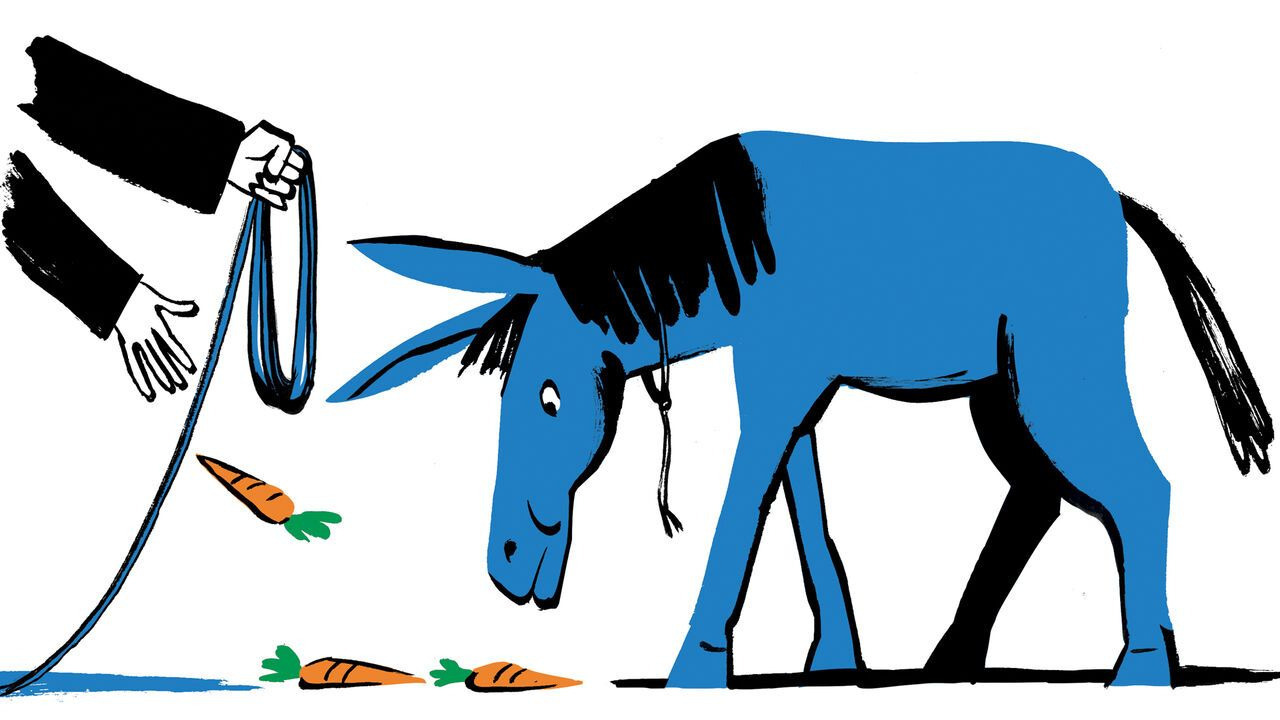
Illustration: João Fazenda
Jun 18th 2026|5 min read
Listen to this storyAI Narrated
Adriano Espaillat is the only formerly undocumented immigrant representing New York in Congress. He is so respected as a leader on matters concerning Hispanic Americans that he chairs the Congressional Hispanic Caucus. He called for dismantling Immigration and Customs Enforcement (ICE) as far back as 2018. And yet, as New York’s Democratic primary nears on June 23rd, he is in a fight for political survival against a first-time candidate, a graduate student in sociology less than half his age who is attacking him for not standing up to ICE, among other matters.
So it is going across New York City, in the most intense manifestation of what Democratic officeholders are experiencing across the country as congressional primaries unleash the party’s id. Candidates in New York who are not quite far enough left, or who bear a whiff of the establishment by virtue of their experience in public office, are struggling against insurgent challengers. For them the lesson for the Democrats of past defeats is not to moderate, but to charge the barricades.
In New York’s tenth congressional district, which jumps from lower Manhattan into Brooklyn, the incumbent congressman, Dan Goldman, is a former federal prosecutor who served as the lead counsel in the first impeachment of Donald Trump. His opponent, Brad Lander, is attacking him as a “corporate Democrat” who is helping enrich the president. When the candidates were asked in a recent debate if they would support a third impeachment of Mr Trump, Mr Lander’s hand shot up. After a moment Mr Goldman followed suit, but then exposed himself as a squish: “But after investigations,” he said. Polls have him trailing.
In these primaries Israel—or, rather, sufficiently strident opposition to Israel—is a dominant concern. That is true in Mr Espaillat’s race, though his district, the 13th, which stretches through Harlem and into the western Bronx, might seem beset by more immediate challenges than Middle East strife. The Palestinians’ plight has been the animating political cause of his challenger, Darializa Avila Chevalier, since she was an undergraduate at Columbia University, where she co-founded the campaign to press the university to divest from Israel. As an alumna, she helped organise campus protests during the war in Gaza that followed the Hamas attacks of October 7th 2023. She has hammered Mr Espaillat for accepting money from donors to the America-Israel Public Affairs Committee (AIPAC), a pro-Israel group.
Anger at Donald Trump and Israel, frustration with the status quo, impatience for generational change—these sentiments have been boiling over in Democratic primaries from Durham, North Carolina to Los Angeles, California. In New York they are given greater heat by the new mayor, Zohran Mamdani, along with two left-wing groups, the Democratic Socialists of America (DSA) and the Justice Democrats. As Mr Mamdani works to install loyalists in the congressional delegation, he has surprised the city’s politicos with his ruthlessness. “Regular Democrats are petrified because they know that the Justice Democrats and DSA are running modern, complex, very interesting and exciting campaigns,” says Juan Carlos Polanco, a former president of the board of elections who is now a professor of law at the University of Mount Saint Vincent in the Bronx. “If they have enough members of Congress that are all in the Mamdani camp, they will be juggernauts.”
Mr Mamdani broke a reported commitment to support Mr Espaillat and instead endorsed Ms Avila Chevalier. The mayor is also supporting Mr Lander against Mr Goldman. In the seventh district, known as the “Commie Corridor” for its density of Brooklyn and Queens hipsters, Mr Mamdani refused to endorse the anointed successor of the retiring congresswoman, Nydia Velázquez, an early supporter of his own run. “Your actions are raising serious concerns about taking you at your word—and that is very, very, very problematic in this business,” Ms Velázquez sniped about the mayor to Politico. She favours Antonio Reynoso, the Brooklyn borough president. Mr Mamdani supports Claire Valdez, a first-term member of the state assembly who also came to politics via Columbia University, which, seemingly by accident, has done more than any other institution lately to radicalise New York’s politics. Ms Valdez became a union activist while working in Columbia’s visual-arts department.
Tweet nothings
The template for these races, including Mr Mamdani’s, was set in 2018 by the congressional campaign of Alexandria Ocasio-Cortez. The Justice Democrats, which recruited her to run, had discovered a clever hack: because few Democrats vote in city primaries, and because no Republican stands a chance in most general elections in the city, an insurgent could win office by energising a relatively small number of voters. In her first primary Ms Ocasio-Cortez won fewer than 17,000 votes; that was more than enough to dispatch a ten-term incumbent and rattle American politics. This was also Mr Mamdani’s path. Though much was made about his success in turning out voters, less than 30% of Democrats participated in the primary that, in effect, delivered him the office.
In that primary Mr Mamdani carried Mr Espaillat’s district by 13 points, and the DSA is growing fastest in that area. Ms Avila Chevalier has their typical candidate profile. What she lacks in experience she makes up for with sunniness and self-certainty. She also has the usual barbaric history on social media. Just a few years back she called Joe Biden “a rapist”, wrote “fuck Kamala Harris”, described wiping her hand on the American flag, suggested white people should not be in interracial relationships and declared “no more police at all ever”. She has waved away her tweets as “the politics of the past”. Mr Mamdani said her views “have evolved”. The Democrats may be in for some serious evolving, too. ■
Middle East & Africa | What comes next?
War has strengthened the Islamic Republic. Peace could split it
For now, the hardliners are in the ascendant
Photograph: AP
Jun 18th 2026|4 min read
Listen to this storyAI Narrated
It proved to be the regime, not the people, that triumphed. The Iranians in whose name Binyamin Netanyahu and Donald Trump launched their war, repressed by Iran’s Islamic Revolutionary Guard Corps (irgc), scarcely seem to matter. The authorities still hang people in twos—like the serpents on the shoulders of Zahak, the tyrant of Persian myth, who demanded two human brains daily to sate them. Memories of the massacres after the protests of January have dulled any appetite to rise up. Mr Trump, meanwhile, is cursed for bringing penury, not liberation.
War steadied a wobbling regime, but the peace will bring challenges. Gone is the supreme leader, Ayatollah Ali Khamenei, who arbitrated among rival factions. Gone too, for now, are the foreign attackers that helped keep the elite united. In its place comes Mr Trump’s offer: a deal that could bring the Islamic Republic its biggest windfall in decades. For an impoverished country, the prospect is tantalising—and is dividing pragmatists from purists.
Read all our coverage of the war in the Middle East
The leading pragmatist is Mohammad Bagher Ghalibaf, the parliamentary speaker, a former irgc commander and ally of Iran’s oligarchs. Alongside Masoud Pezeshkian, the president, and Abbas Araghchi, the foreign minister, he has championed the deal as “a great stride to final victory”. Mr Ghalibaf, together with J.D. Vance, America’s vice-president, signed it remotely on June 14th before Mr Trump and Mr Pezeshkian put their names to it.
Mr Ghalibaf’s political evolution has been striking. As an irgc commander, he boasted of clubbing protesters from his motorbike in 1999. Yet since first running for president in 2005 he has courted the middle classes, seeking support from a public that has never trusted him. He now hopes to inherit the mantle of Hassan Rouhani and Akbar Hashemi Rafsanjani, former presidents who sought to open Iran to the West, says an Iranian analyst.
Allies of Mr Ghalibaf argue that economic realities leave little alternative. Another war, they warn, could see Iran’s oil infrastructure destroyed. State finances have been crippled by collapsing oil-export revenues. Mr Pezeshkian’s government has exceeded expectations in maintaining electricity and water supplies, but summer blackouts are expected. Many security people now operate from their cars for lack of functioning police stations. Any further weakening of central authority could trigger unrest.
Mr Ghalibaf’s allies also suggest he has bigger aims. With Khamenei’s death, the generals have taken the lead, sidelining the long-dominant clerics. Even before the war, mandatory veils for women were enforced ever less. In affluent parts of Tehran, shorts and tank-tops are common. Comparisons with Saudi Arabia’s crown prince, Muhammad bin Salman, who defanged the religious police and relaxed conservative social norms, abound.
Some speak optimistically of a political opening.
Reformers have proposed breaking up the vast bonyads, the clerics’ tax-exempt foundations—a latter-day dissolution of the monasteries. Veteran dissidents abroad say they have had personal invitations to return. After the war last June, the regime ignored calls to harness the wartime spirit of unity with efforts to reconcile and reform. Mass protests followed. This time, insists one dissident invited home, the lesson may have been learnt.
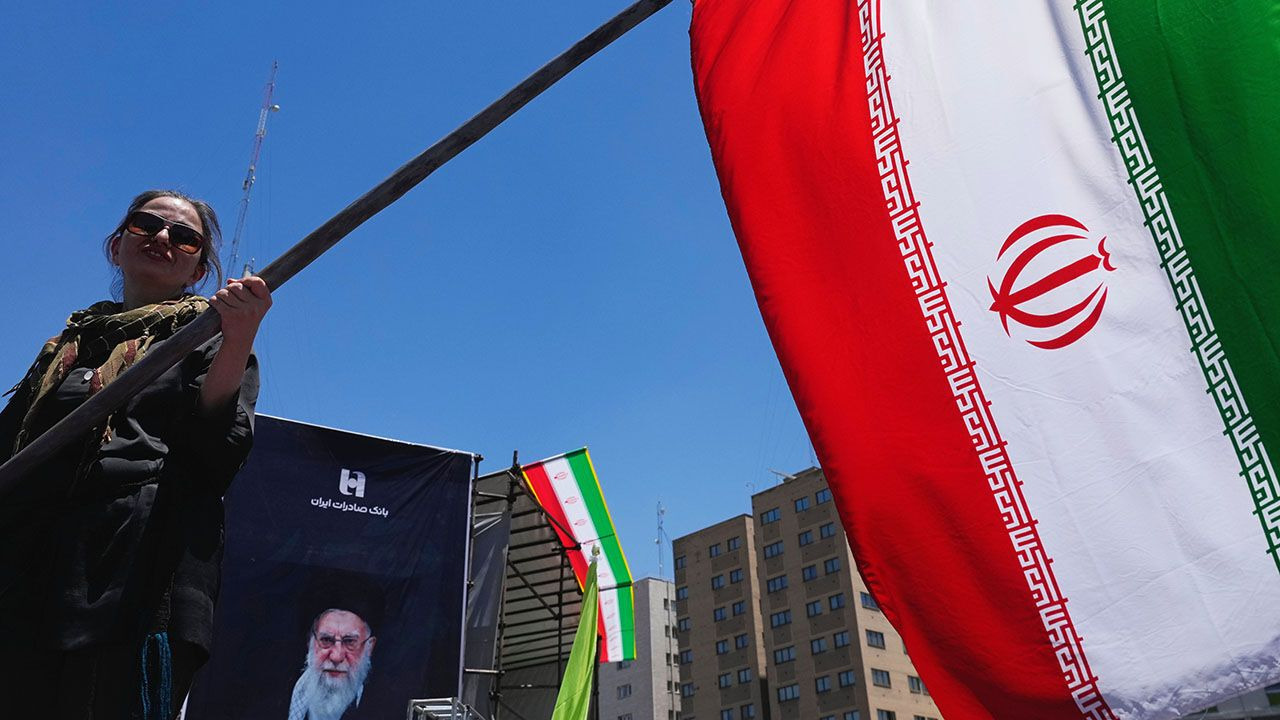
They may be disappointed. For now, at least, the hardliners dominate, euphoric from what they hail as their victory against America and Israel. Their zealous base came out at the start of the war with loudspeakers, rallying recruits and guarding against the return of the protesters, and have stayed ever since.
To them, Mr Ghalibaf’s bargain with the man they hold responsible for killing their rahbar—their political and spiritual leader—is treachery. At rallies they denounce him by name and mock him as naive for still trusting Mr Trump. The deal, they warn, is another Trumpian trick. This time, says one, the president wants Iran to reopen the Strait of Hormuz and replenish depleted global oil reserves. Once markets are resupplied, they fear, Mr Trump will strike again. Why settle now, they ask, when America is over a barrel?
Which faction prevails will probably depend on figures now largely hidden from view. Under velayat-e faqih, the Islamic Republic’s rule of the jurist, the supreme leader was designed to be the representative of the Hidden Imam whom Shias believe entered occultation in the ninth century. Mojtaba Khamenei, the late leader’s son and successor, is hidden too. One hundred days after assuming power, not even a photo has emerged as proof of life. Ahmad Vahidi, the irgc chief, and several senior generals remain underground.
For now, Mr Ghalibaf and his dealmakers appear to enjoy their backing. Mr Ghalibaf secured re-election as speaker last month with more than 80% of mps’ votes. Saeed Jalili, standard-bearer of the hardliners, has reportedly been removed from the Supreme National Security Council, the republic’s wartime decision-making body. A permanent ceasefire would allow the leadership to emerge from hiding and consolidate control. “You can play with nine men in extra time,” says one analyst, “but not match after match.” If America offers serious financial relief, it may prove difficult to resist. After Iran accepted a settlement to end the war with Iraq in the 1980s, it had to buy off a revolutionary base angered by what they saw as a sell-out. The same calculation may hold once again. ■
Middle East & Africa | Out in the cold
The end of the war in Iran threatens “glorious failure” for Israel
Donald Trump’s deal with Iran leaves America’s ally without any strategic gains
Photograph: Getty Images
Jun 16th 2026|JERUSALEM|4 min read
Listen to this storyAI Narrated
ON FEBRUARY 28TH hundreds of American and Israeli warplanes took off simultaneously to launch the opening salvo of their war on Iran. For 40 days the two allies’ military partnership was intense and close. But with the agreement by Donald Trump and Iran’s leaders meant to bring their war to an end, the nature of that partnership has shifted. Israel has been shut out of the negotiations with Iran. And the agreement signed between America and Iran on June 17th deals with few, if any, of Israel’s concerns.
The outcome for Israel is, as one of the country’s diplomats in Jerusalem describes it, “a glorious failure”. It is also a personal blow to Israel’s prime minister, Binyamin Netanyahu. He has invested enormous political capital in convincing America’s president that a war with Iran could fundamentally change the situation in the Middle East for the better, perhaps even topple the Islamic Republic’s regime.
Read all our coverage of the war in the Middle East
Despite Mr Netanyahu’s claims, and the serious damage inflicted on Iran, the regime is still standing. Indeed, hardliners have been empowered. The deal does not immediately tackle Iran’s nuclear programme, Israel’s greatest concern. Iran retains the capability to fire ballistic missiles at Israel, the rest of the Middle East and beyond. The agreement with America does not refer to Iran’s missile programme.
Nor does it address one of Israel’s other great worries: Iran’s network of regional proxies. The most powerful of these, Hizbullah, the Shia militia in Lebanon, gains new protection from Israeli attacks in the deal. Israel tried to scupper the truce hours before it was announced when it attacked a target in Beirut, after Hizbullah had launched more drones. But instead of derailing negotiations, as Mr Netanyahu clearly desired, the attack only encouraged Mr Trump to seal the deal.
Israel’s defence minister insisted that troops would remain in the “security zones” that it has captured in southern Lebanon, but the accord between America and Iran stipulates that America’s allies, namely Israel, end the war in Lebanon.
Israel can no longer rely on its ally’s backing over this. The American president gave a series of interviews in which he said he was “so pissed off” with his erstwhile partner for having “no fucking judgment” in launching the strike on Beirut and described him as “a very difficult guy”.
An Israeli official previously stationed in Washington said that “a large part of the problem is that we no longer have the same kind of relationship with America in which officials spoke openly to each other at all levels. Now it has all been subsumed by the connection between Netanyahu and Trump and their personal dramas.”
More fundamentally, Israel’s and America’s goals in Iran have become less aligned. A few in Israel’s defence and intelligence establishment warned their generals of this discrepancy in the first days of the war. But their bosses were swept away by the success of early air strikes and backed Mr Netanyahu through the war. Then Mr Trump called time. He was more interested in dealing with the same regime that Israel wanted to bring down. Since then, Israel has been left out in the cold.
Confronting Iran has been Mr Netanyahu’s idée fixe for years. He has led Israel twice into wars with that intention. Although these campaigns caused significant damage to Iran’s nuclear and missiles programmes, that could prove temporary. Israel has damaged its crucial ties with America and its relations with Arab countries that saw it as an ally against Iran.
All this is also likely to hurt Mr Netanyahu’s prospects of re-election in October. It will be hard to sell himself as the guarantor of Israel’s security when he appears to have achieved so little over Iran. Nor can he afford to be seen at loggerheads with Mr Trump. He has made much of his relationship with the president, who has been very popular in Israel.
That said, the main opposition leaders were just as gung-ho when war began. Their criticism is that Mr Netanyahu failed to get results, not that he launched it. “We desperately need a new Iran policy,” says a military planner. For now, Israel has no prospect of one. ■
The Americas | The bellwether
Travel Brazil’s mirror-state to see the country’s future
No one has ever been elected president in Brazil without carrying Minas Gerais
Photograph: Getty Images
Jun 16th 2026|Araçuaí and Belo Horizonte|7 min read
Listen to this storyAI Narrated
Minas Gerais, the second-most populous of Brazil’s 27 states, is often overlooked. It should not be. The geography and ethnic make-up of Minas, as the state is known, reflect Brazil’s. In the south, its forests spill into Rio de Janeiro; to the north, dry hinterlands run into the poor state of Bahia; north-west is Goiás, an agricultural powerhouse, in which sits the capital district of Brasília; the west borders wealthy São Paulo. More than half of the 21m mineiros say they are black or mixed-race—about the same as the nationwide share. The state is a crucial political battleground. Since 1989, when Brazil’s first democratic election was held after 21 years of military dictatorship, no one has won the presidency without carrying Minas.
Few know this better than Luiz Inácio Lula da Silva, known as Lula, Brazil’s president, who is running for his fourth term in the general election in October. He visited Minas eight times in 2025, and chose it as the site to launch a national programme offering subsidised cooking gas to poor households. Senator Flávio Bolsonaro, the right’s leading candidate and son of Jair Bolsonaro, a populist right-wing former president, knows it too. He visited the state this month. His team considered offering the vice-presidential candidacy to Romeu Zema, who recently resigned as Minas’s governor in order to run for president. The Economist travelled across Minas to understand what Brazil’s mirror-state reveals about the country’s future.
If Flávio falters, Jair Bolsonaro’s political heir will probably be a mineiro, Nikolas Ferreira (pictured), who was elected to Brazil’s lower house in 2022 as one of 53 representatives from the state. The 30-year-old provocateur, the son of an evangelical pastor, won more votes than any other congressman in the country. In videos for his 33m social-media followers he lampoons “gender ideology” and “cultural Marxism”, visits mega-prisons in El Salvador and sells leadership-coaching programmes.
Social media are Mr Ferreira’s weapon. In 2022, in the months after the national election, Alexandre de Moraes, a combative Supreme Court justice, temporarily blocked his accounts for spreading lies about voting machines. Elon Musk, the world’s richest man, rallied to Mr Ferreira’s defence, calling him “brave”. Last year Mr Ferreira falsely claimed that the government was going to start taxing transactions made on Pix, Brazil’s popular instant-payments system. The video was viewed 300m times, helping to cause the largest fall in Lula’s approval rating this term.
The content Mr Ferreira publishes is inflammatory. But his baby-faced demeanour and proclaimed religious convictions broaden his appeal. This has unnerved Mr Bolsonaro’s sons, all of whom are politicians. In April Eduardo Bolsonaro, a former congressman now living in Texas, posted a long denunciation of Mr Ferreira on X, a social-media service owned by Mr Musk, accusing him of “sidelining Flávio”. “The spotlight and fame have done you no good,” Eduardo scolded. “The day that Nikolas breaks away from the Bolsonaros, he’ll be elected president,” muses one of Mr Ferreira’s political rivals. “I reckon the penny has finally dropped for him.”
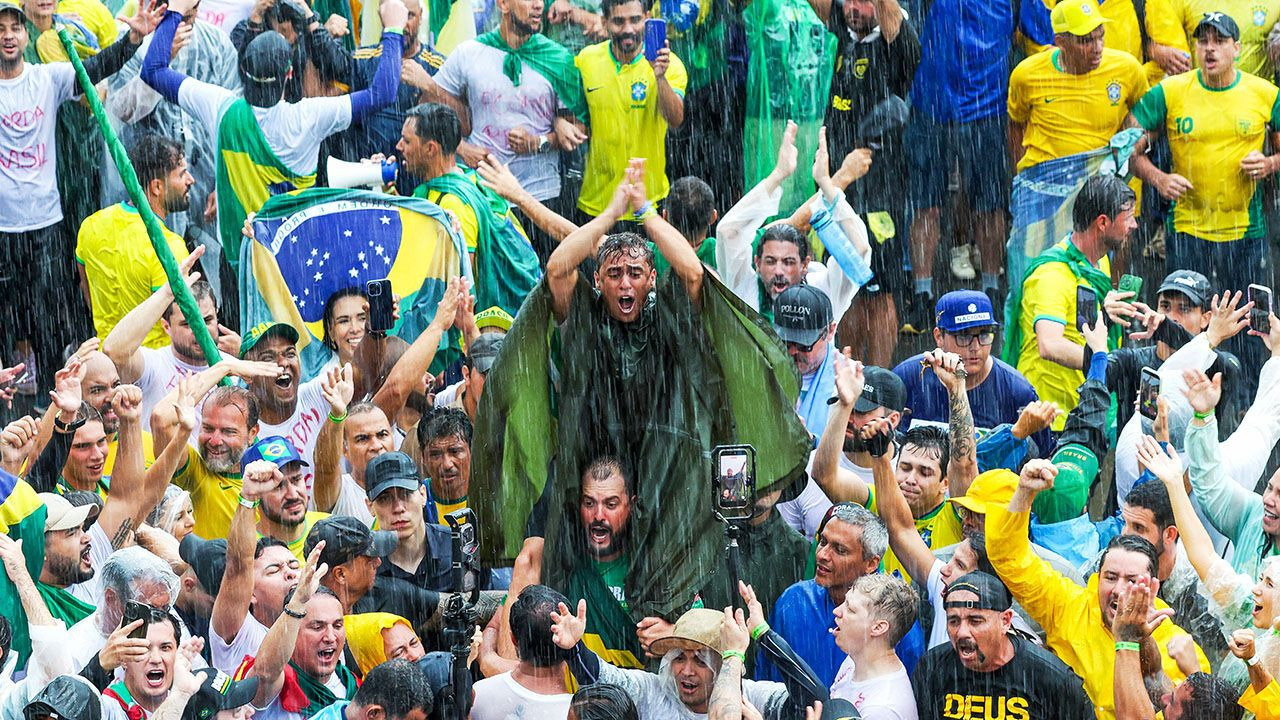
Mr Ferreira is not the only right-wing mineiro ruffling Bolsonaro feathers. Mr Zema, a liberal technocrat, criticised Flávio recently after recordings were published in which he can be heard asking a corrupt banker for money. Mr Zema called it a “slap in the face for decent Brazilians”. He says the Bolsonaros “should get all the credit for having created, having saved, the Brazilian right”. Then he quickly adds: “But we know that any cult of personality, any dependency on a single person is bad... there is no saviour of the nation.” What cult there is may be shifting. In January Mr Ferreira led 18,000 fans on a 240km “Walk for Freedom” from Paracatu in Minas to Brasília in support of Jair Bolsonaro, who is in jail for attempting a coup in 2022. Despite several people being struck by lightning during the march in torrential rain, his fans continue to adore him.

Photograph: Getty Images
As with the Brazilian right, so with the economy: Minas represents the country’s most pressing issues. The state finances are in ruins, mostly thanks to the cumulative effect of unfunded pension payments. Interest costs leave little space for discretionary spending. Under Mr Zema’s governorship Minas contracted no new debt from the federal government; the state has run primary surpluses since 2021. But the existing debt means that whoever wins the race to succeed him will still have to cut spending hard, a sure vote-loser. “It’s madness to take on this mess,” says João Gabriel Pio, chief economist of Minas’s industry association. “Whoever takes over won’t have any room for manoeuvre.”
The same could be said for the presidency. The IMF reckons that Brazil’s gross public debt will reach 107% of GDP by 2031, thanks in large part to sky-high real interest rates, currently around 10%. Juicy returns mean that wealthy Brazilians prefer to keep their money in savings accounts rather than investing it productively in machinery, R&D or infrastructure.
Nowhere is the damage caused by these public-finance constraints more visible than in Minas. Its roads are a mess. Brazil’s transport-industry body ranks a greater share of them as poor quality or worse than in any neighbouring state. It produces 40% of Brazil’s mineral output, including iron ore, tin, graphite and most of the world’s niobium. Troves of rare earths used in everything from wind turbines to weapons sit in the state’s south-west. Yet local economists lament that Minas still exports most of its raw materials rather than processing them to reap more value at home.
“We don’t need to be condemned to poverty for ever,” says Marco Crocco of the Federal University of Minas Gerais. “We can’t go from mining lithium to making batteries in one day. But we do need to improve our education and infrastructure, invest in R&D and de-risk private financing.” Mr Pio is blunt: “If we want to seize this opportunity, we have to face our structural problems head-on.”
Photograph: Leonardo Carrato/VII/Redux/eyevine
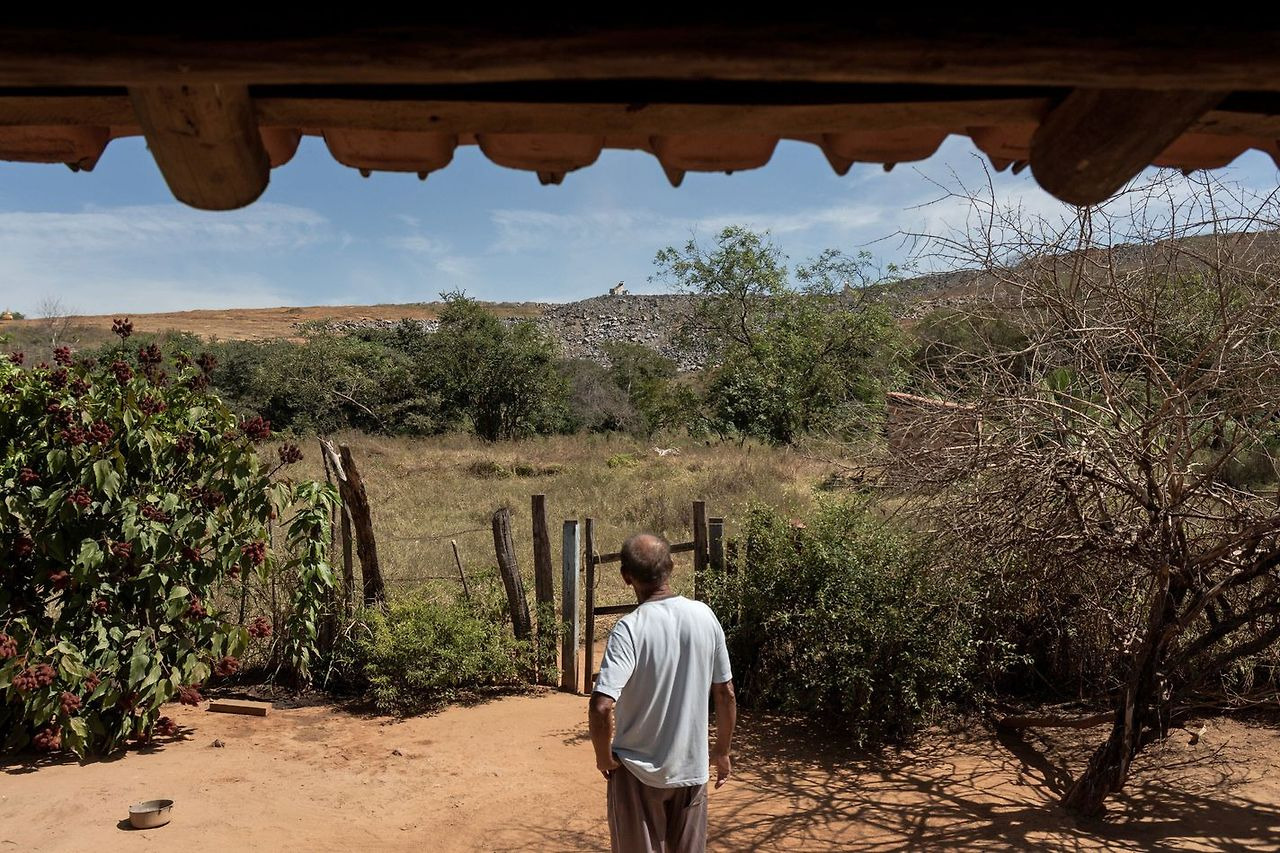
Even where mining booms, some locals are unhappy. In the Jequitinhonha river valley, an arid shrubland in north-east Minas rich in lithium, they complain that they see little of the wealth dug from the ground. Since Brazil’s largest lithium mine opened in 2023 outside Araçuaí, a town in the valley, there are new shops and more jobs. But rents have shot up, says Danilo Borges, a councillor. His constituents worry that rivers are drying up. They hate the mine dust that now fills their houses.
Here Lula wins comfortably. “I voted for Lula and I’ll never regret it,” says Maria Rita da Conceição Santos, a 55-year-old grandmother in Taquaral Seco, a village near Araçuaí. “He’s someone who was poor and knows the value of a poor person. Not the others! Those others are just a sham.”
This popularity may secure Lula a fourth presidential term. But that does not carry over to his Workers’ Party (PT). Lula scraped to victory in Minas in 2022, but the PT did badly in municipal elections two years later, taking just 35 of the state’s 853 municipalities. One Lula confidant reflects gloomily on his party’s prospects. “I think the PT will fragment into different parts after Lula is gone—he is the glue that holds the party together.”
Lula is 80. The right wing will probably flourish in Minas after he leaves politics, while the PT is likely to struggle. So the coming battles for Brazil’s heart will probably not be between left and right, but between Mr Ferreira’s brand of populist rage and the technocratic libertarianism espoused by Mr Zema. ■
Asia | Visiting big brother
The real winner in Myanmar’s civil war is China
It doesn’t want to fix the war-torn country but is fine managing it
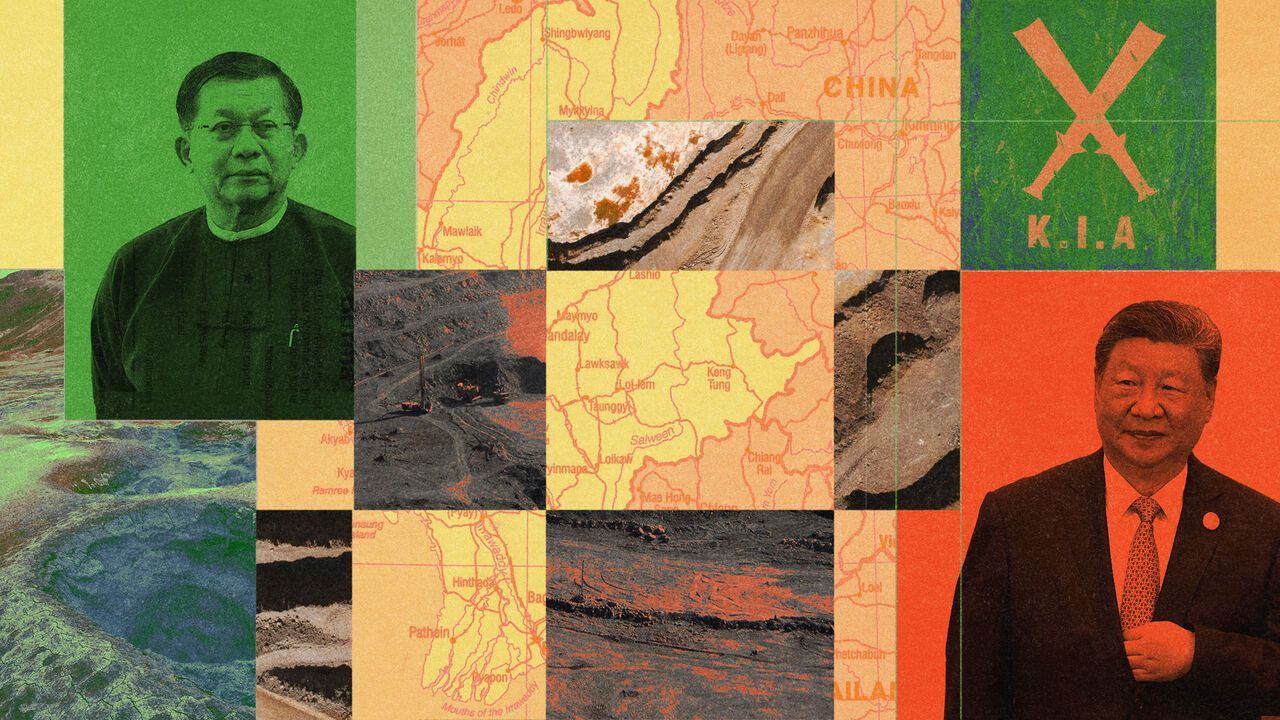
Illustration: Ricardo Santos
Jun 18th 2026|Singapore and Yangon|5 min read
Listen to this storyAI Narrated
WHEN MIN AUNG HLAING, then chief of Myanmar’s army, led a coup in February 2021, China called it “a major cabinet reshuffle”. On June 16th Xi Jinping, China’s leader, needed no euphemisms to justify meeting Mr Min Aung Hlaing on his first visit to Beijing as Myanmar’s president. It was a clear political endorsement from China of a sham election in December and January—held during a civil war with no big opposition parties and won overwhelmingly by an army-backed party.
Mr Min Aung Hlaing will have relished being welcomed as a head of state, as he was earlier this month in India. The election has not fully ended his status as the pariah leader of a pariah regime. But he is making progress. The regional club, the Association of South-East Asian Nations, still bars him from its summits, but is split between members that want to continue to shut out his junta and those tempted to make moves to accommodate it.
America, which once led the campaign to isolate him, has drifted into indifference. A year ago, the junta was delighted by a letter from Donald Trump threatening Myanmar with tariffs of 40% on its exports, because it named the general and so could be taken as implicit recognition of him. Since, America has quietly lifted sanctions on several of his cronies. Meanwhile, the feeding of USAID, America’s aid agency, into the woodchipper has forced ordinary people in Myanmar to rely on the junta’s hospitals and news outlets.
The regime has leant on a narrow set of patrons: Russia and China for diplomatic cover at the United Nations, as well as aircraft, the fuel to fly them, and drones and drone-jamming kit, lending it a technological advantage in the civil war; China and Thailand for revenues from exports of Myanmar’s natural gas.
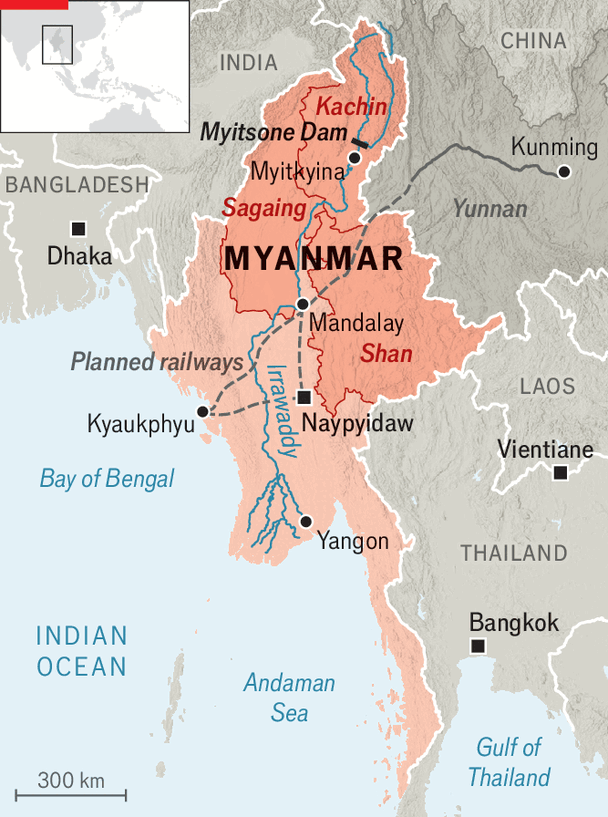
China is Myanmar’s largest foreign investor. In return, the generals offer what China wants: access to the Indian Ocean, allowing Chinese trade to bypass the potential choke-point of the Malacca Strait. Relations are transactional. Over the past year China has used its sway over powerful rebel groups on the shared border to help the junta. Several have signed ceasefire agreements and handed territory to the army. Not all the battlefield gains can be attributed to China’s help—a conscription drive begun in 2024 has swelled the army’s ranks past 100,000.
The junta has pushed forward across the country, taking towns in northern Sagaing province in April and May. As the rainy season begins, the army will almost certainly advance further, says Anthony Davis, a security analyst who studies the conflict. Its troops are moving towards trading posts in areas currently controlled by rebels along Myanmar’s borders with India, Thailand and China.
This is ominous for the Kachin Independence Army (KIA), an ethnic armed organisation that controls much of northern Myanmar but not Myitkyina, capital of Kachin state. Together Myanmar and China produce around 90% of the world’s heavy rare earths, says Jason Bedford of the East Asia Institute at the National University of Singapore. Nearly half of the world’s supply of these elements, used in electric vehicles, defence technology and satellites, comes from KIA-controlled mines. The ore is then shipped to China for processing.
Map: The Economist
China has long been pragmatic in its dealings with Myanmar, control of which is splintered between the junta, the KIA and other rebel groups, each dependent on Chinese markets, weapons routes and goodwill. China is the indispensable broker to all of them. It can exert pressure on the KIA by threatening to stop buying its rare earths or jade, by choking the routes through which it buys weapons, or by detaining leaders who live on the Chinese side of the border. And it can put pressure on the junta through the very trade and investment Mr Min Aung Hlaing went to China to court.
This leverage is not the same as control. Myanmar remains a low priority in the Chinese Communist Party’s global calculations—an irritating border problem to manage, not a project to finish. China wants the rare earths flowing, its pipelines and railways open and a south-western frontier stable enough to stem the spillage of refugees, drugs and scams across it. It does not need a unified Myanmar for any of that; it needs a Myanmar where it is the one party that every side must deal with.
Mr Min Aung Hlaing was accompanied to Beijing by the chief ministers of Kachin and Shan states, which abut China, suggesting the visit focused on border trade, including rare earths, and restarting Myitsone dam, a $3.6bn Chinese project in Kachin that has been frozen since 2011 after a public outcry.
China’s reach into Myanmar is more than just commercial. It is increasingly shaping not just what comes out of the ground inside the country but what can be known and said about it internationally. On June 3rd China detained Min Zin, a prominent Myanmar-born scholar of Myanmar politics, while he was visiting Kunming, a city in southern China. An American citizen, Mr Min Zin was accused of espionage. His detention may be more to do with China’s relations with America than with China doing the junta a favour by silencing a leading critic. But the episode has sent a chill through the community of academics and others who study China and Myanmar. As China’s grip on Myanmar tightens, both regimes are becoming harder than ever to understand. ■
China | Tails of toil
How China still outworks the West
A medal scheme masks the identity of its toughest labourers
Photograph: Getty Images
Jun 18th 2026|Hong Kong|4 min read
Listen to this storyAI Narrated
“IAM SIMPLY a jade maker,” Yang Fuyu told the local press after he won a national labour medal this year for his skill and dedication. One look at his intricate carving contradicts him: there is nothing simple about it. He and his colleagues spent five months on a recent piece, transforming the stone’s bumps and irregularities into mythological dragons, ethereal yet fierce. Titled “Nine dragons offering a jade disc”, the creatures look like they wouldn’t give it up without a fight.
The labour medals, which are awarded each year by the official federation of trade unions, are meant to celebrate and motivate beleaguered Chinese workers. Some of the winners richly deserve the recognition. But the mix of awards does not accurately reflect the job market of today. Instead it mirrors a government mindset that may actually be contributing to China’s employment problems.
China’s workers could do with a morale boost. In recent years millions of construction workers have lost their jobs amid a persistent property slump. White-collar workers fear the ethereal, yet fierce, threat posed by artificial intelligence. And although high-tech manufacturing is booming, it is better at scaring German workers than employing Chinese ones.
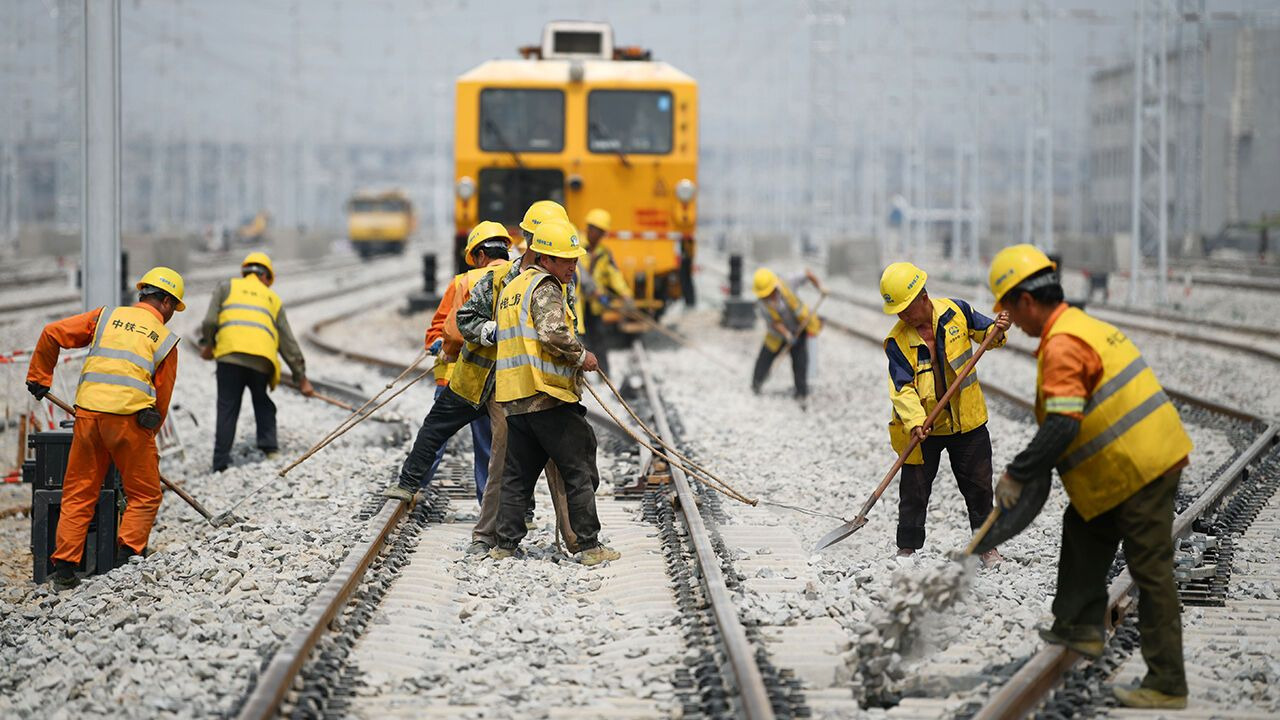
The medals’ honour roll is nonetheless littered with engineers, technicians and Communist Party secretaries. Services and the gig economy, which provide a growing share of jobs, are underrepresented. China’s railway industry (which employs 1.8m) picked 18 individual winners; financial services (which employs over 12.3m) chose 16. Only a handful of delivery riders made the cut, conspicuous in yellow-and-black biker outfits at the awards ceremony in Beijing.
The medals also fail to reflect the geography of Chinese labour. Each provincial branch of the trade-union federation is given a quota of awards to hand out, but they are only loosely linked to the size of the province’s workforce. Guangdong, where Mr Yang works, now accounts for almost 10% of Chinese employment but handed out less than 6% of the medals reserved for China’s provinces. Meanwhile Beijing, Shanghai and China’s old industrial heartland in the north-east are overrepresented among the medallists, claiming over a fifth of the quota but providing less than a tenth of employment between them.
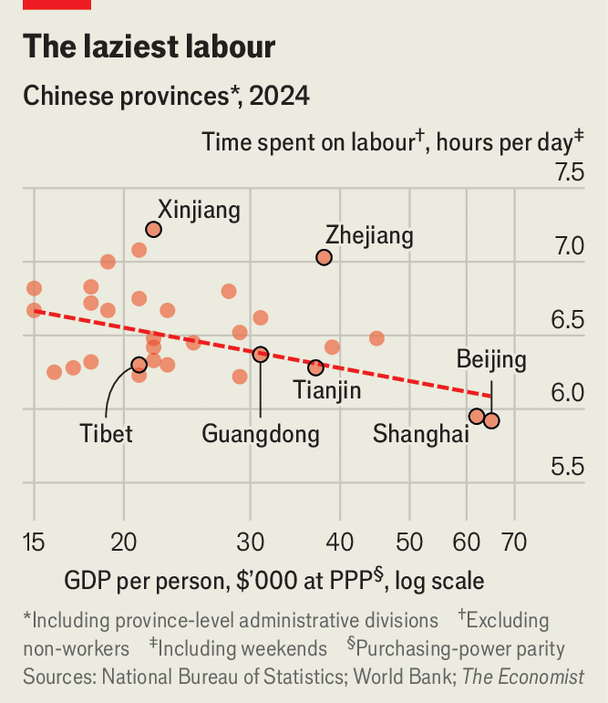
Chart: The Economist
Nor does the mix of medals reflect how hard people work in each part of the country. Workers in Beijing and Shanghai typically put in fewer hours than their comrades elsewhere, according to China’s time-use survey, which quizzes people about how they divide up their day (see chart).
Neither city would relish this distinction, of course. But it is not wholly surprising. As the richest parts of China, they can afford more leisure than poorer regions. The same link between hours and income is visible across the country: workers’ hours tend to be shorter in richer provinces. One notable exception is Zhejiang, a province which includes both the entrepreneurial city of Wenzhou and the tech capital of Hangzhou. Its workers’ hours of toil are surprisingly long, given the province’s prosperity.
In announcing the awards, the trade-union federation called on all workers to follow the example of the medallists, showing dedication to their posts and making greater contributions to national goals. China’s leaders often praise hard work and worry that generous welfare schemes will breed the laziness they associate with some Western countries.
But the pattern visible across China’s provinces is also discernible over time: as China gets richer, its workers’ hours have shortened. Looking at the the previous survey in 2018, workers averaged seven hours and eight minutes of paid labour per day, either in employment or family business. In the latest survey, they averaged six hours and 23 minutes. This more recent figure is, in fact, no higher than workers report in America and Germany.
The biggest difference between China and the decadent West revealed in these surveys is how many of its people work, not how long they work. In China, over 75% of 18- to 59-year-olds take part in some form of paid labour. In America (which classifies age groups differently) the equivalent percentage for 18- to 54-year-olds is 56%. One interpretation is that people who would be out of the workforce altogether in countries with better social-safety nets still chalk up some hours in China. Their contribution may drag down the national average. And they won’t win any medals. But they are the reason China still outworks the West.
International | The Telegram
Asian allies are doomed to hug Donald Trump close
Forget middle-power coalitions. Japan and its neighbours know that only America can deter China

Illustration: Chloe Cushman
Jun 16th 2026|5 min read
Listen to this storyAI Narrated
EIGHT YEARS ago, the German government made a childish mistake when it released a behind-the-scenes photo of President Donald Trump, arms folded and a defiant smile on his face, being confronted by European leaders at a G7 summit in Canada. The image went viral, for it exposed America’s isolation. (Mr Trump was blocking a summit communiqué.) Germany’s then chancellor, Angela Merkel, is seen leaning imploringly towards Mr Trump. The raised eyebrows of France’s president, Emmanuel Macron, convey Gallic incredulity. Only one leader looks unimpressed by this Euro-ambush: the late Abe Shinzo of Japan.
Years later, the picture—and its leaking—still makes high-ranking Japanese officials wince. In Tokyo it is argued that whenever allies isolate Mr Trump, they are not showing independence, but committing an act of self-harm.
As another G7 is held in France, from June 15th to 17th, a divide can be seen between American allies in Europe and those in Asia. European politicians and citizens rather like it when America looks lonely or weak, for they resent Mr Trump as a bully. Increasingly, they talk of a need to stand up to two predatory superpowers, America and China, and of middle powers co-operating to uphold a benign and equitable rules-based order.
That was the vision offered by Mark Carney, Canada’s prime minister, when he addressed the World Economic Forum in Davos in January. Mr Carney enthused about mid-size countries forming coalitions of the willing to defend their values and resist economic coercion by great powers. The audience, thrilled to hear America and China being bashed, gave him a standing ovation.
In Tokyo the Carney pitch is seen as an embarrassing fantasy. There is head-shaking dismay, too, at the thought that Europeans and Canadians could possibly believe that Mr Trump and China’s Xi Jinping pose comparable threats to their security, prosperity and autonomy. The claim is adolescent in its daftness.
Asian allies are wary of foreign policies based on values. More concretely, Japanese elites have no interest in joining any coalition that purports to free middle powers from their dependence on America and China alike. They fear a China that has grown strong and is now making its move. Japan is on the front line, while its giant neighbour amasses military firepower and uses its dominance of rare earths and other industrial inputs to hold other economies to ransom. To Japanese eyes, China is pursuing regional and quite possibly global dominance and only America has the clout to contain it.
Japan longs for the allies to get serious. Well-meaning middle powers are not about to deter China from an attack on Taiwan. Meanwhile, rogues are on the march, some of them in lockstep. Among them are Japan’s neighbours Russia and North Korea. Nobody expects Europeans or Canada to ride to the rescue. Australia is spoken of fondly, but with no illusions about its limited might.
Mr Carney and friends should worry that Japan does not buy their plan for middle powers to save the world. For if a coalition of middling countries ever did take shape, Japan would be one of its natural leaders. Though greying fast, the country still has 123m people and the world’s fourth-largest economy. It boasts some world-class technology and engineering firms and a shipbuilding industry. Its armed forces are being strengthened, testing to breaking-point the post-1945 shibboleth that Japan maintains only self-defence forces. It is a supplier of new and second-hand warships to Asia-Pacific governments that fear China. It rescued a trans-Pacific trade pact after America abandoned it.
Closer to home, Japan is cautiously deepening defence and security ties with South Korea. The south has not forgotten the crimes committed during Japan’s occupation of Korea. But nor can it ignore the dangers posed by North Korea, its fanatical, nuclear-armed poor cousin.
While other democratic incumbents are stalked by populists, Japan’s prime minister, Takaichi Sanae, in February led her mainstream party to a thumping majority. That has not stopped Chinese propagandists from calling Ms Takaichi a fascist warmonger, after she suggested that Japan’s pacifist constitution would not preclude defending Taiwan in a conflict. Other governments study how Japan has laboured (with partial success) to reduce its dependence on China for rare-earth minerals and other inputs.
No escaping superpower domination
For all those strengths, Japan still needs America. There is no Plan B, is the line in Tokyo. If Japan can be glimpsed hedging against a less reliable America, for instance by making more of its own weapons, that is called Plan A with an asterisk. Mr Trump or his successors cannot be allowed to weaken their commitment to Asia. Nor does the region have a better alternative to America’s nuclear umbrella. The game is to show why Japan is indispensable to America’s prosperity and technological primacy. In the past, Japanese politicians would arrive in Washington spouting bromides about liberty and democracy. Now, they brag of helping America to build an AI tech stack that will leave China in the dust.
To be sure, Japanese elites shudder when MAGA attacks American institutions: plenty of them studied at Ivy League schools. But as an ally, Japan is patient and unemotional. To Europeans or Canadians who see Americans as kin, Trumpian aggression feels like a betrayal. In Japan America is not family: it is the superpower that defeated then helped to rebuild the country. Against that, Japan has more to lose than many Western allies do. If America left Asia, very quickly Japan and its neighbours would have to accommodate China in unwelcome and wrenching ways. It would much rather do whatever it takes to keep America close. It is all very pragmatic. Other allies should take note, and grow up.■
Business | Bartleby
How to launch a tech product
Create a slick, irony-free corporate safe space
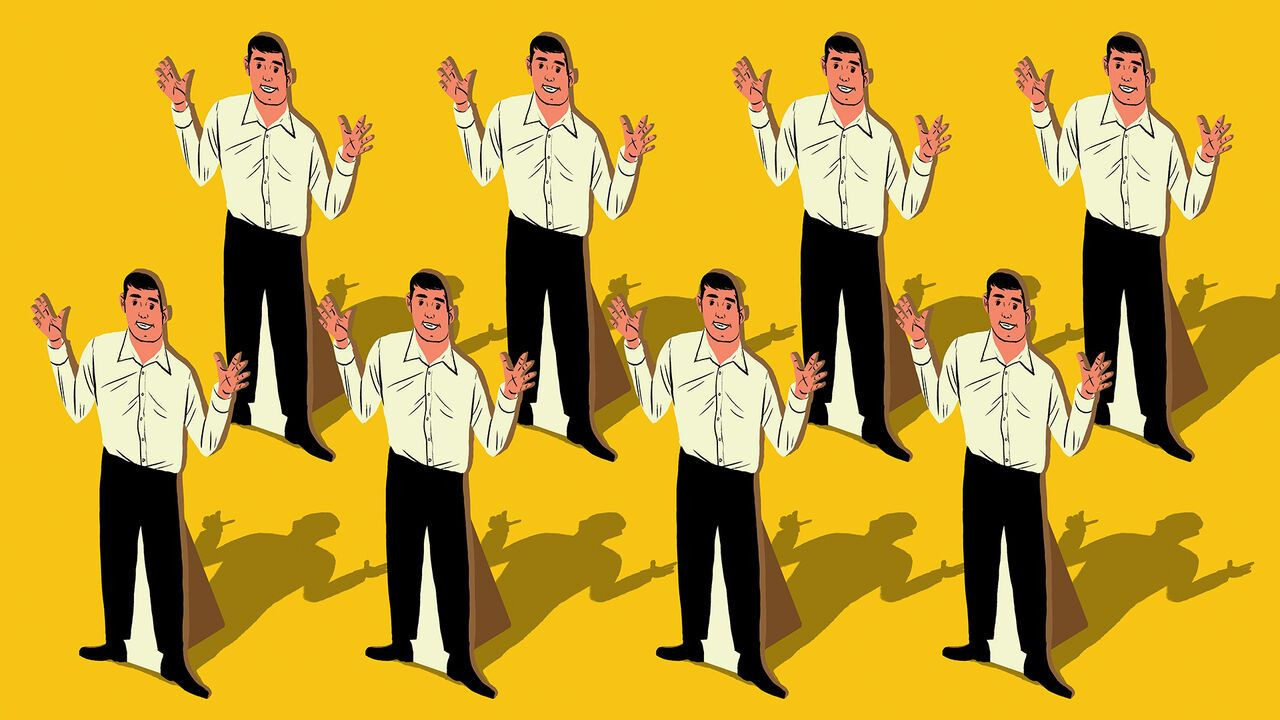
Illustration: Paul Blow
Jun 18th 2026|4 min read
Listen to this storyAI Narrated
In the past month, Apple has announced upgrades to Siri, its voice assistant; Google has unveiled new search agents that can carry out tasks on your behalf; and Nvidia has revealed a new chip for personal computers. Each outlined these plans, and many more, at their developer conferences. It’s not just the titans who turn product roadmaps into theatre. Any self-regarding enterprise tech firm will hold a global conference for its “community” (Sapphire for SAP, Oracle AI World and so on). The likes of Salesforce and Stripe run roadshows taking the message to international users.
These jamborees matter. Very occasionally, most obviously with the launch of the iPhone in 2007, they change the world. They provide investors, developers and users with information about a firm’s product pipeline. They set deadlines for internal teams: all firms could benefit from a few fixed dates in the calendar where they have to show what they have been up to. But for anyone who thinks that the tech industry suffers from groupthink, these events do not reassure. It doesn’t take long to see a slickly inauthentic formula.
Speakers hand off to each other by saying things like “And now here’s Kevin,” or “To tell you more about that, over to John.” A synth-laden electronic soundtrack, muzak for developers, will blast out while one person leaves the stage and the next person takes their place. (Apple does its launches on video; the camera will find Kevin, or John, lurking somewhere on its Cupertino campus.)
Kevin or John will be wearing an open-neck shirt, dark trousers and shoes with cushioned white soles. The only people who can wear sensible shoes on stage are customers from a boring industry like banking: their function is to show that regulated industries are clients, and it is important they look staid. No one can wear a tie. If you see someone wearing a tie, they are a security guard.
Kevin or John or whoever will stride into view, plant their feet apart and wait for the music to stop. They will look at the audience and, for reasons that are unclear, say: “Wow!” Then they will look at the autocue and start speaking. Every three seconds, they will raise their hands up from their sides and hold an imaginary cardboard box. To mix it up—they’re not robots!—they occasionally hold out their hands as though each contains a mango. Every two minutes they will move to one side of the stage, plant their feet and start doing the box or mango thing again.
No matter what Kevin or John is announcing, they will say they are “super-excited” about it. They might be telling the world that they have discovered a way to teleport, or revealing that a device is now available in a slightly different colour, but it will be impossible to tell from their monotonically rapturous delivery.
The product launch is a corporate safe space. Everything should be extremely rehearsed and come across that way. If a customer is invited on stage, sensible shoes or not, they will be asked things like “How excited are you by our partnership?” and “Why is your company so great?” There will be a demo desk on stage, where someone can apparently type without using their hands.
After announcing the latest breakthrough, Kevin or John will pause just long enough to make the audience think a reaction is expected. The lightest clapping, a susurration of applause, will begin. The autocue has not prepared Kevin or John for this, and they will stop in confusion. This will immediately silence the clapping.
Kevin or John will personalise new product features by drawing on examples of how they use technology in their own lives. These stories will usually involve cooking or buying someone a gift. The idea is to show how incredibly normal they are. The effect is somewhat different. Most people have families; technologists live with participants in an extended alpha test.
Irony will be everywhere but on stage. Kevin or John will demonstrate how easy it is to use technology to arrange a get-together with friends. They will talk about how unique humans are, how everyone on the planet has the potential to do extraordinary things, while never betraying any sense of individuality.
Kevin or John’s segment will end just as it began. They will say, “And now here’s Rohan,” or “Over to Mike,” and walk off the stage while the giant screen behind them does something vibrant and the muzak starts up again. Rohan or Mike will stride on, stand just where their predecessor did, and say: “Wow!”■
Business | Schumpeter
Tournament of losers
The World Cup is a festival for corporate has-beens
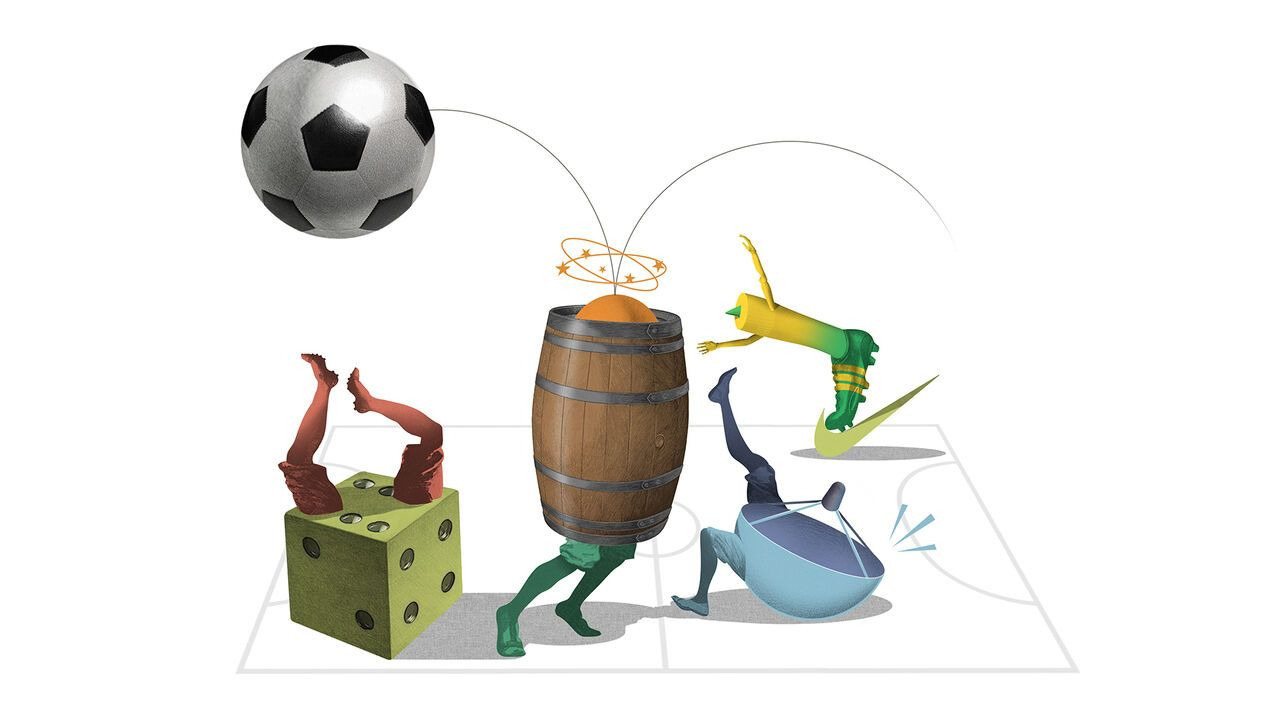
Illustration: Brett Ryder
Jun 17th 2026|5 min read
Listen to this storyAI Narrated
Money, it is often said, has ruined football. Staging the men’s World Cup mostly in America, a country that has produced so many great businessmen and so few good footballers, was supposed to mark the triumph of big business over the beautiful game. True, the ticket prices are extortionate. And the tournament often feels like a Silicon Valley conference circa 2016: this year referees have cameras strapped to their heads and each player has his own “digital twin”, whatever that means.
Yet despite the pretences of the tournament’s organisers the business of World Cup football is a simple one, and a struggling one. The retailers, television stations, brewers and betting houses that make up capitalism’s starting XI are an ageing and injury-prone lot. For some, this could even be their last tournament.
That the world’s greatest sporting event has become a carnival of condemned companies is most visible on the pitch. On their left breast, players proudly wear their national badge; on their right, logos of faltering sports brands. Nike has dressed 12 of the 48 teams at this year’s competition, fewer than Adidas (14) and slightly more than Puma (11). The rest rely on faded giants (the Democratic Republic of Congo is the only customer of Umbro, a British brand that once outfitted more teams than any other) or local ateliers (Iran’s team is kitted out by Majid, a firm which shares its name with the country’s short-range missile-defence system).
All three of the big kit-makers are worth less than they were in 2018, when France beat Croatia in an all-Nike final. Shares in the American firm, which has suffered a stunning fall from global cultural ubiquity in recent years, have lost three-quarters of their value since their peak in 2021. Competition from firms like On, a Swiss brand, and Asics, a Japanese one, partly explains the slide.
Analysts say a paucity of exciting new products is a bigger reason for the industry's slump. It is hard to disagree. In the “Trionda” Adidas has designed a truly forgettable football. It is not beautiful like the “Telstar” (Mexico 1970). Nor does it capture the essence of the competition’s hosts like the over-engineered “Teamgeist” (Germany 2006). Players’ boots this year are striking, but strikingly similar: most are shades of pink. More worrying still are Nike’s new “Aero-FIT” shirts, some of which clearly do not fit. Stitching on their shoulder causes the shirt’s material to protrude sharply, giving the slight men who wear them a pixieish appearance.
At the behest of FIFA, which has shown an extraordinary willingness to change the rules of a 19th-century sport it governs but did not invent, the game of two halves is now one of four quarters. The Swiss-based administrators say the new breaks (also known as “Powerade Hydration Breaks”) are necessitated by the summer heat. Fans mutter that the stoppages allow television stations to show more advertisements.
Perhaps the water breaks are a sly act of corporate charity. Though could there be a needier recipient? Fox, which holds the rights to air the competition in America, has liberally packed the short breaks with adverts, most of which appear to star Sir David Beckham. Its share price, after rallying last year, has stumbled. Other channels have seen better days. In France games are being broadcast by M6 (whose share price peaked in 2000); in Britain half are on ITV (2015); and many Spanish-speakers in America are watching them on Comcast’s Telemundo (2021).
A tournament with many more games (104, up from 64 last time) ought to mean much more drinking. Yet brewers, too, are struggling. The wave of temperance sweeping young people in rich countries is the industry’s biggest problem. The World Cup might be the perfect antidote to this excessive prudence were not the England squad, historically known for its talented boozers, so keen to encourage it. Players this year can be spotted wearing a Whoop, a wrist-borne body-tracking device favoured by the over-thinking and the under-drunk. Harry Kane, the team’s captain, advertises Oura rings, another popular piece of neurotic jewellery.
Some brewers still consider the tournament a Hail Mary. The world’s biggest expects the volume of beer sold this year to rise by between 0.2% and 0.3% because of it. American brewers will benefit from hosting the tournament. Though according to analysts at Morgan Stanley, how much is eventually drunk depends much more on which teams progress in the competition. Viewed this way, knockout games are also fixtures between the participating countries’ favourite beers. (Unexpected exits, though, can lead to massive unsold inventories, as they did when England crashed out in 2006 and 2010.)
A similar logic applies to the gambling industry: the more exciting the tournament becomes, the more money betting firms make. Investors hate them, too. According to Deutsche Bank, Flutter and DraftKings, two giants of the industry, can expect a record of around $2.4bn to be bet by their customers in America. Their share prices have fallen by a half and a fifth respectively this year. That said, unlike their cousins in the booze business, they have only themselves to blame for the existential threat they face from prediction markets.
Off the bench
It is easier to observe the passing of the old squad of World Cup corporates than to predict who will replace them in competitions to come. It is anyone’s guess who will make the shirts if the large sportswear companies continue their slide into irrelevance. Kalshi and Polymarket, the largest prediction markets, are, so to speak, a good bet. As are the giant streaming players like Netflix and Amazon: eventually the gap between the size of the event and the irrelevance of linear television will become unbridgeable. Much will depend on FIFA, which unlike the corporate has-beens enjoys a monopoly. Whoever’s in the team, the manager stays the same. ■
Business | Tata’s troubles
Tata’s big bets are yet to pay off
The Indian conglomerate’s boardroom drama highlights a speculative strategy
Photograph: Getty Images
Jun 18th 2026|MUMBAI|5 min read
Listen to this storyAI Narrated
Jamsetji Tata, the Victorian founder of his family’s business empire, dreamed big. He had four ambitions: to open a world-class hotel in India; to build the country’s first steel plant; to power Bombay (now Mumbai) with hydroelectricity; and to establish an Indian scientific institute to rival those in Europe. Though sceptics scoffed, all were eventually realised.
Today the Tata Group is one of India’s largest conglomerates, selling everything from salt to software. It is still dreaming. But investments in its new ventures—an airline, a digital “super-app”, smartphones and semiconductors—are absorbing vast amounts of capital.
Concerns about capital allocation have contributed to a boardroom dispute. Sixty-six per cent of Tata Sons, the group’s holding company, is owned by Tata Trusts, one of the world’s largest charities, established by the family over many years, which funds health care, education, poverty alleviation and culture. In February Noel Tata, the Trusts’ chairman, withdrew his support for Natarajan Chandrasekaran to have a third five-year term running Tata Sons. The two met to clear the air before a board meeting in May, at which some of the group’s lossmaking new entities gave presentations. At issue are the future of these ventures, whether the company should remain private, how to find an exit for a minority shareholder and a potential succession plan for Mr Chandrasekaran. None of these issues was resolved at the latest board meeting on June 12th.
The minority shareholder is the Mistry family, another Indian business dynasty (like the Tatas, from the Parsi religious minority), which owns 18% of Tata Sons via the Shapoorji Pallonji Group, an infrastructure company. The SP Group is heavily indebted and wants to sell its stake. (Noel Tata is married to Aloo Mistry, sister of the late Cyrus Mistry, former chair of Tata Sons. In 2016 Ratan Tata, Noel’s half-brother, who ran the business for many years and died in 2024, forced Cyrus out, replacing him with Mr Chandrasekaran.)
Four years ago this newspaper examined “the world’s biggest bet on India”: instead of deploying capital in foreign businesses such as Jaguar Land Rover, a British carmaker, and Corus Steel, an Anglo-Dutch smelter, Tata was refocusing on India’s ascendant economy. The bet is yet to pay off. An analysis by The Economist finds that Tata Sons’ return on capital employed (ROCE), a measure of profitability, has been roughly stable for the past three years, but that its new ventures are dragging performance down.
The ROCE of listed businesses, including Tata Motors and Tata Steel as well as Tata Consultancy Services (TCS), a big IT firm, was 25.1% last year, up from 17.9% in 2019 (see chart). TCS typically provides the largest chunk of Tata Sons’ income. In the 2025 financial year, TCS’s dividend made up over 80% of its revenue.
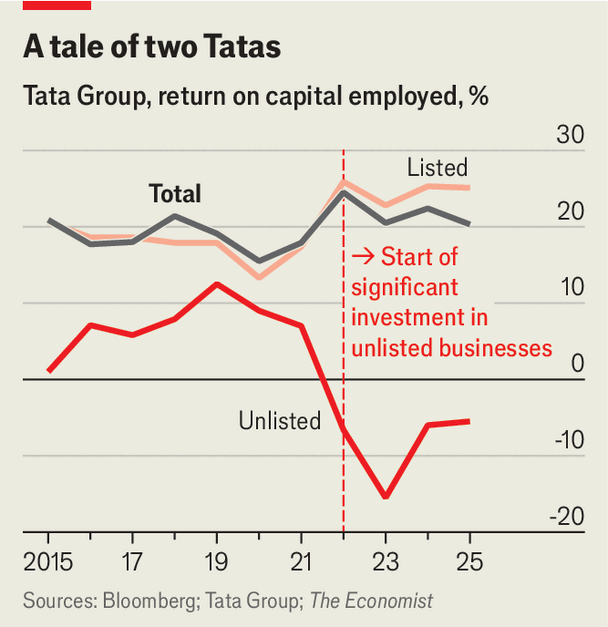
Chart: The Economist
But unlisted new businesses have little to show for the amounts lavished on them so far. Air India, the national flag-carrier privatised in 2022, is making heavy losses. It had been mismanaged in state hands, but the closure of Pakistani airspace to Indian airlines after a brief conflict in May 2025, a fatal air crash last June and the Gulf war’s disruption of jet-fuel markets have added to its woes. Tata Digital, an attempt to build a super-app selling Tata’s consumer range, is being scaled back.
The one bright spot has been Tata Electronics, which manufactures iPhones in India alongside Foxconn, a Taiwanese firm. It is now modestly in the black, but will need more investment to embed itself in supply chains for phones and semiconductors. With ASML, a Dutch firm, it is building an $11bn chip factory in Dholera, in western India. Agratas, a battery-making venture, is likewise hungry for capital. The Indian government has provided grants for Tata’s chip and battery factories. A grant from the British government has also contributed to a battery plant in England to supply Jaguar Land Rover. Yet the unlisted entities’ combined ROCE is -5.5%.
Worse, TCS is looking less secure. Since the end of 2024 its share price has fallen by more than half, largely on investors’ fears that generative artificial intelligence will undermine Indian IT outsourcers. Its earnings have not yet suffered: operating profit has risen by 12% in the same period. Even so, as well as turning around Air India and taking its next steps into high-tech manufacturing, Tata Sons must find a strategy for India’s largest IT firm to adapt to AI.
Mr Chandrasekaran thus faces competing demands: providing dividends for Tata Trusts, buying out the Mistrys and investing in the new ventures. The difficulty is compounded by another long-running dispute, over whether Tata Sons should remain private. The Reserve Bank of India, the central bank, has demanded that it list on the stock market. An RBI regulation requires non-bank financial corporations, which carry out banking functions but are regulated differently, to be listed. Though the holding company is in the investment business, Tata Sons argues that it is not a bank and does not intermediate between savers and borrowers. It has applied for a waiver, which the RBI has so far denied.
A listing would allow both Tata Sons to raise capital for its new ventures and the SP Group to sell up. The company would probably be valued at $120bn-150bn, even with a conglomerate discount analysts put at around a third. But Tata Trusts resists the idea. A public offering could mean the family loses control and could threaten Tata Sons’ particular role in India’s industrial development. It would, argues N.A. Soonawala, a former vice-chair of the firm, undermine a structure that has evolved over a century. Jamsetji Tata did not live to see all his dreams realised: he died in 1904 with only the hotel completed. The hydro plant did not start up for over a decade. Tata’s modern bosses may not have as long.■
Finance & economics | Buttonwood
America’s bull market has entered its manic phase
Options markets show optimism is giving way to euphoria

Illustration: Satoshi Kambayashi
Jun 16th 2026|4 min read
Listen to this storyAI Narrated
For most of the past couple of years the best argument that American stocks were not in a bubble was that things simply didn’t feel manic enough. Yes, prices had soared, and yes, valuations had risen so high that shareholders’ expected future returns were looking increasingly disappointing. Yes, the odds of unexpected returns were receding as well, with more or less everyone already convinced that corporate earnings would keep rocketing up while artificial intelligence revolutionised the economy.
But a proper bubble needs more. It is not enough for investors merely to book tomorrow’s profits today. Share prices really come unstuck from reality only after a mania takes hold. Then comes the grim doggedness of revellers who know the next morning’s hangover will be dreadful and are determined to put it off for as long as possible. Then, when it no longer can be, comes the crash.
Has the manic phase now arrived? Imagine telling a time-traveller from a decade ago that on June 11th SpaceX sold shares which valued it at $1.8trn, over 90 times its annual revenue. Mad? No—a fantastic deal for buyers, since the rocketry firm’s bankers reportedly told them it would increase its AI arm’s sales by a factor of 100 by 2030, to $322bn. Why the focus on revenue rather than the conventional way of valuing a company, relative to profits? Because SpaceX doesn’t make any; last year it lost $5bn. Four trading days after its listing its share price had risen by over 40%, valuing it at $2.5trn. In the meantime it agreed to pay $60bn in shares for Cursor, an AI-coding firm.
Some may argue, not unreasonably, that this is down to the seeming ability of Elon Musk, SpaceX’s founder, to distort both financial markets and reality. But investors’ euphoria extends far beyond the world’s first trillionaire. American shares, proxied by the S&P 500 index, are only a hair less expensive relative to long-run earnings than they were even at the peak of the dotcom bubble in 2000. This week prices popped again after President Donald Trump at last really did seem to strike a peace deal with Iran.
For the clearest demonstration of investors’ manic mood, look beyond the stock market to the trade in options. These are often described as insurance contracts: a simple “put” option, for instance, confers the right but not the obligation to sell a stock for a set “strike” price on an expiry date. This allows an investor to own the stock while limiting losses should prices crash—in return for paying to buy the option in the first place.
Today, however, much of the options market is better understood as a casino in which punters gamble on stock prices. Another way of describing a put option, after all, is as a bet that on its expiry date the underlying stock’s market price will be below the strike. If it is, you can buy the stock at the market price, sell it for the (higher) strike and pocket the difference. Otherwise, you let the option expire worthless and lose whatever you paid for it. Conversely, a “call” option, which confers the right to buy rather than sell a stock, is a bet on prices going up.
Trading in stock options has boomed. Volumes recorded in 2025 by OCC, a big American clearing house, were nearly double those in 2020, itself a blow-out year. In 2026 they are on course to be higher still. And trading in ultra-short contracts, which are great for gambling but almost useless as insurance, has expanded even faster. CME Group, a derivatives exchange, reckons that transactions for options on the S&P 500 index that expired on the same day were 3.7 times higher in 2025 than in 2021.
In spite of all this, the insurance function of options still ought to mean that puts are more in demand than calls. Few institutional investors need to insure themselves against a sudden jump in prices; lots (imagine a university endowment) need protection against crashes. What is more, markets tend to rise slowly but plunge quickly, making puts more valuable than equivalent calls. And the institutions seeking such insurance are generally far bigger than the speculators looking for a quick flutter, and thus move the market more.
So it is remarkable that the average call option for stocks in the tech-heavy NASDAQ index is now almost as expensive as the average put. It means the casino crowd is trading so furiously that its activity outweighs that of the much larger insurance buyers—and it is betting that prices will go to the Moon, or Mars. The party is entering the phase where things get out of hand. It may stay there for a while. But the longer the hangover is put off, the more it will hurt. ■
Finance & economics | Free Exchange
Europe buys the future, America builds it
Does that matter? A high-stakes transatlantic spat has erupted over GDP figures

Illustration: Álvaro Bernis
Jun 18th 2026|5 min read
Listen to this storyAI Narrated
Europeans do NOT often holiday in America: too far and, these days, too dear. Except for the World Cup. As fans chase their sides across America this summer, they are discovering country music, ranch dressing and—most striking of all—the mass affluence of America’s suburbs. “DUDE LMAO THIS IS A GAS STATION”, marvelled one German online upon encountering Bu-cee’s, a chain of gobsmackingly large Texan rest stops.
The American wealth enticing holidaymakers troubles European elites. America, once a peer, seems to be racing ahead. Mario Draghi, a revered Italian grandee, calls Europe’s stagnation an “existential challenge”. Hence the high stakes in a wonkish dispute over economic measurements. Captaining one side is Paul Krugman, an American Nobel laureate. Leading out the other are Philippe Aghion, a French one, and Luis Garicano, a Spanish economist. The spat has the feel of an economics World Cup final.
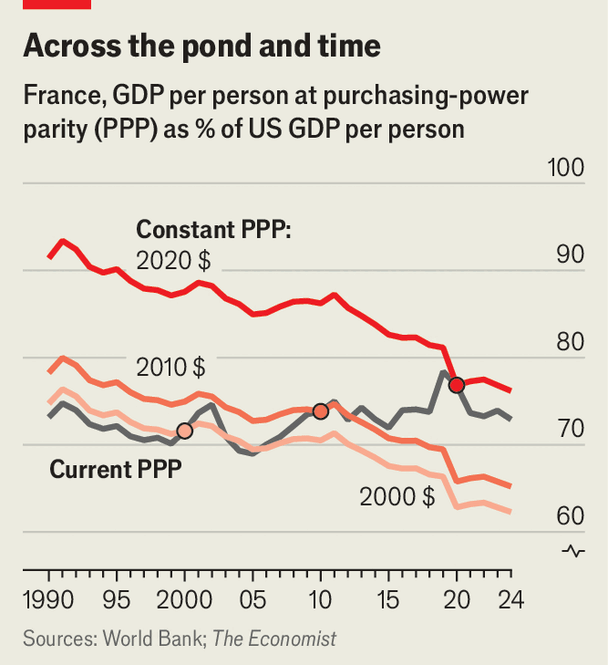
Chart: The Economist
Traditional measures of divergence, favoured by Team Aghion-Garicano, say that France’s GDP per person, as a fraction of America’s, has dropped by about 15 percentage points since 1990. The rest of western Europe looks similar. This “constant PPP” measure converts the output of an economy into a common currency for a chosen “index” year using purchasing-power parity exchange rates, which value currencies according to the goods and services they can buy. It extends that figure through time with a country’s real growth rate. Team Krugman argues a better measure is “current PPP”, which applies a new ppp adjustment to each year’s GDP. Sometimes, as with America and Japan, the results are similar. But Europe’s output measured using current PPP has been flat relative to America’s for decades. Europe is eking out a draw (see chart).
The befuddled are in good company. “Let me admit my total confusion,” wrote Olivier Blanchard, a former chief economist of the IMF. Mr Krugman argues that Europe’s respectable current-PPP performance reflects something counterintuitive: in theory a country can grow more slowly than a rival without getting relatively poorer. Assume that America’s technology sector is whizzier than Europe’s (which it is). Tech would then, all else equal, push American growth ahead. But rising tech productivity pushes prices down for everyone, at home and abroad. That boosts European spending power, splitting the productivity windfall.
Under some conditions, the gain could even be divided 50/50, as in the scenario Mr Krugman models. America has grown faster—as shown in its national accounts—but Europe’s spending power has kept up. Current PPP values American tech at those new, lower prices.
But this does not quite secure the win for Team Krugman. His calculation relies on the improbable assumption that America will not capture most of the gain from its productivity growth the usual way—by simply selling much more at those cheaper prices. Other data do not align with Mr Krugman’s story, either. Robert Inklaar, a PPP guru at the University of Groningen, points out that if Europe was picking up ever cheaper American tech exports, the constant-/current-PPP gap would disappear when comparing consumption rather than gdp. That is because in Mr Krugman’s model only one side produces tech, but both consume it and share the benefits of low prices. Since the gap persists when you look at consumption, something else must be afoot.
Team Aghion-Garicano contends that the gap between the two measures is mostly junk. On their side is Antonin Bergeaud of HEC Paris, a business school. He notes that each gauge tackles the same problem—of comparing output across both space and time—but in opposite ways. One converts nominal GDP to shared units first, then casts each country forward with its national figures for real growth. The other tracks GDP over time (using national-accounts figures) and only then converts to shared units.
These approaches yield different results not because of bad data—though these are far from perfect—but because of the thorny maths of converting a wide, shifting list of prices into a clean index. Goods that are representative over time in one country may be useless for another: cheese could mean Morbier in France and Monterey Jack in America. Many French cheeses are unavailable to Americans, and vice versa, or become available in different years. No price index can represent what consumers actually buy and also be comparable across space and time.
Still, this is not back-of-the-net for Team Aghion-Garicano, either. It is true that PPPs do not cope well with comparisons through time. Yet the gap between the two measures might still carry meaning. Perhaps, for instance, high French tech prices have edged closer to cheaper American ones, and by more than has been captured in the national accounts. Then the constant-PPP measure would understate how well France has kept up.
Penalty time
By now all but the most avid GDP-accounting fans will be ready to give up and turn on the football. At least after a World Cup match, everyone can agree who won. In the GDP debate, both sides dig in, often veering from economics into ethnography. Mr Krugman suggests a “walking around test”: if Europe is getting poor, why does it feel so pleasant? Mr Garicano proposes a “driving around test” instead. American suburbia might not have a medieval town’s charm but affluence oozes from the McMansion garages.
Where could the GDP debaters see eye to eye? First, Europe is growing slower than America. Second, that is a problem: even if Europe can free-ride on America’s dynamism, as Team Krugman argues, that is no way to run an economy. Third, the AI era may be less forgiving than the last wave of tech-driven growth. The European fans road-tripping across America, jaws agape at Buc-ee’s, know who they think is ahead.■
Science & technology | Leavesdropping
How plants keep tabs on the competition
They grow faster when their rivals are doing the same

The stalks have earsPhotograph: Getty Images
Jun 18th 2026|3 min read
Listen to this storyAI Narrated
Given their slow growth and sessile lives, the idea of plants battling one another may seem fanciful. Yet they do. They fight for access to water, nutrients and pollinators. Since one plant’s leaves are another’s shade, growing towards the sun can be a duel to the death. As in any conflict, espionage helps. A paper published in the Journal of Experimental Botany reveals how plants engage in it.
Botanists have known for years that plants can communicate with each other. One way is via chemicals known as volatile organic compounds (VOCs). When plants are attacked by pests, for instance, the composition of the VOCs they release changes. Previous work has shown that this drives nearby plants to raise their own defences in anticipation of being attacked in turn. What has gone unexplored is whether plants detect VOCs released by their neighbours when they are healthy. So Velemir Ninkovic, an ecologist at the Swedish University of Agricultural Sciences, decided to run an experiment.
With a team of colleagues, Dr Ninkovic planted three varieties of barley that grow at different rates—one quickly, one slowly and one at a middling pace. The plants were put in growing chambers next to one another, but with no way for them to shade their neighbours. The only connection that the plants had to one another was through one-way air vents that connected their growing containers. These allowed the researchers to blow air from one chamber to the next, and to monitor the effect that this had on the plants over 25 days.
The results were striking. The slow-growing barley grew more quickly when it was exposed to air from the chambers of its fast-growing cousins, producing 20% more biomass than when it was placed next to slower-growing plants. This, Dr Ninkovic surmises, is because the slow-growing plants were detecting the compounds released by their neighbours and realising that, in the wild at least, they would be at risk of getting shaded out if they did not get a shift on.
Fast-growing plants exposed to air from the chambers of their slow-growing cousins reacted in the opposite way. With less need to race for the sun, they cut their growth rates notably. (The plants with intermediate growth rates had no significant effects on their neighbours.) Dissection of these plants and genetic analysis of their tissues revealed more details about exactly what was going on. While the laggards were switching resources towards growth, the speedsters were able to spend more of theirs on metabolically expensive defensive measures, such as churning out chemicals that make their leaves unpalatable to herbivores.
Barley plants, in other words, can chemically eavesdrop on their competitors, and tweak their own growing strategies accordingly. Farmers are already experimenting with using VOCs to boost productivity. Dr Ninkovic’s results suggest they may be able to nudge crops to produce protective compounds if pests are expected to arrive, as well as inducing them to grow more quickly to boost yields when risks are low. ■
Culture | My con and only
Why Westerners are falling for love scams
Romance fraud is driven by poverty in west Africa and loneliness in the West, a new book argues
Photograph: The New York Times/Redux/eyevine
Jun 17th 2026|4 min read
Listen to this storyAI Narrated
The Yahoo Boys. By Carlos Barragán. Farrar, Straus and Giroux; 304 pages; $29. W&N; £22
It was love at first sleight. As with many relationships, Brian’s and Silvia’s courtship started on Tinder. Brian, a dashing American soldier, sent Silvia, a Spanish dentist, passionate affirmations of love: “I want you to be a happy wonderful woman, someone I would love to share more than my life with.” Brian said he was coming to Spain, and Silvia bought two rings.
But Brian was not a real soldier; he was a scammer posing as a suitor. He told Silvia he had found bars of solid gold while on deployment in Syria. Silvia’s son grew suspicious. He thought it might be a scam and that his mother would be asked to send money to cover the shipping. They used an IP-address tracker to find out where Brian’s emails were coming from: the fraudster was in Lagos, Nigeria.
Silvia is not the only lonely Westerner to be wooed by a phoney Romeo. Romance scams are one of the most costly types of fraud in America, according to the Federal Trade Commission: people gave away nearly $1.5bn to so-called “love scammers” in 2025. In Britain reports of romance fraud jumped by nearly a third last year, with people losing as much as £1m ($1.3m).
Silvia’s son, Carlos Barragán, was distressed and baffled that his mother had been duped. So in 2022 he flew to Lagos to search for the scammer. Though it proved impossible to find the real Brian, Mr Barragán discovered the “criminal underworld” of romance fraud. In an engrossing new book he takes readers from Kentucky to Lagos to explore how loneliness in the West and poverty in west Africa are “two sides of the same screen”.
Many love scams are run by crime syndicates in South-East Asia. Mr Barragán expected to find a “sophisticated network of fraudsters” in Nigeria, too: instead he encountered unemployed young men in rough neighbourhoods, who use copy-and-paste scripts rather than complex manipulation tactics. Many work alone, staying up all night to avoid their parents’ prying eyes.

Photograph: Carlos Barragán
In Nigeria Yahoo Boys—a nickname that nods to the email addresses scammers once used—say they rely on fraud to survive. Between 2022 and 2025 Mr Barragán spent months in Ikotun, a poor neighbourhood in Lagos, witnessing the effects of high youth unemployment and rampant inflation. He saw that for scammers like Azeez (pictured), a 14-year-old tailor’s apprentice, a $10 gift card from a British victim is worth more than his family pays in rent a month. (With some of their earnings Yahoo Boys prop up local businesses, splashing out at fancy boutiques and nightclubs.) Mr Barragán asks workers, policemen, academics and Yahoo Boys themselves to estimate the share of young men who are involved in such scams in Lagos: their answers range from 45% to 80%.
The Yahoo Boys call their victims “clients” to make their work seem legitimate; some see their relationships as transactional, providing companionship in exchange for cash. They share tactics with each other for finding vulnerable victims online, as well as the latest pickup lines and plausible scenarios to ask for money to be wired. Some pretend to have a sick child who needs help; others blackmail victims, threatening to share intimate pictures if they do not pay up.
Mr Barragán wonders how credulous Westerners can fall head-over-heels for such smarmy scripts. He looks “for a con so intricate it might justify” his clever mother believing it. But he finds something alarmingly simple: the scammers are successful because they provide attention to lonely people.
AI will complicate love scams. It could make it easier to target a much larger number of victims with personalised correspondence, without relying on teams of boys and men (and growing numbers of women) in Nigeria or elsewhere. But AI could also offer safer ways for people to feel less lonely. Various apps now provide virtual lovers that are even more fawning than fraudsters. As Mr Barragán puts it, AI partners provide “a fake relationship without the betrayal”. Yahoo Boys may struggle to compete with that. ■
Obituary | The swimming-pool genius
David Hockney believed in working from the heart
Britain’s boldest and most innovative painter died on June 11th, aged 88
Photograph: Getty Images
Jun 12th 2026|5 min read
Listen to this storyAI Narrated
The painting, ten feet wide, is a window onto a world. The slim man in the peachy-pink jacket stands by the edge of the pool, looking down, uncertain. Someone is swimming underwater towards him; a young man, clad in modest white trunks. The hills beyond the pool make overlapping triangles of cerulean blue, of olive, sage and lime. They could be those of California or Provence—or even biblical Galilee. Ever since the Renaissance, artists have painted bathers washing off stains and sin amid the peace of nature. David Hockney, who created this scene, knew that. He studied them all. The swimmer’s arms are outstretched. In the blue amniotic water he could be an angel. Or a new lover.
It is a double portrait, one of many that made him famous in the 1960s and 1970s on both sides of the Atlantic. The last time “Portrait of an Artist (Pool With Two Figures)” changed hands, in 2018, it became the most expensive picture by a living artist to be sold at auction. Swimming pools thrilled him from the moment he flew into Los Angeles at the age of 26, leaving grey post-war England behind, and saw the little blue oblongs tiling the city below. So did the challenge of painting water, with its unscripted colours, its surfaces that shimmered in two dimensions, and its tension.

Photograph: Getty Images
Having decided on the composition, he used props and photographs, played with perspectives, and paced out measurements in the studio: all the techniques he’d learned at art school and since. Mostly, though, he was working from the heart. Painting was how he made sense of the world. His brushes helped assuage the pain of the terrible break-up a year earlier, when the man standing by the pool had left him for a young Swede, tall and blond, and his mother, his staunchest ally, was the only person he could bear to have around.
At least there had been work to get on with. Not that it came easily. For months he sensed something was wrong. Four weeks before his new show was due to open in New York, he reoriented the swimming pool and started afresh. Painting 18 hours a day, seven days a week, he finished it at last the night before the shippers came to take it to America. He felt like his hero Picasso, who liked to say: “I’m not painting; I’m exploring.”
He’d always liked exploring. Although he was closest to his mother, a vegetarian Methodist who brought up five children on a modest budget, it was his father who inspired him. Time and again, Ken Hockney would come upon an old bicycle or a piece of domestic machinery, strip it down, paint it a bright colour and sell it as new. Though he was often short of paper, art became the heart of the boy’s life. In Bradford, in West Yorkshire, he’d wheel paints and brushes around in a cast-off pram that his father had repaired, looking for things to draw.
At 18 he made his first trip to London, dossing on the Tube until the museums opened and hitch-hiking back. He saw more art that day than he’d ever seen in his life. He became determined to study art in the city, but when he got to the Royal College of Art he found it beset with questions. Was abstract expressionism the only in-thing? Or was conceptual art equally important? And where did that leave figurative painting? For his first work at the RCA he drew a half-size human skeleton, which showed off how much he already knew about perspective and anatomy. The other students took note, and one, a former GI, offered him £5—£100 today—for it. (This was R.B. Kitaj, who went on to become a painter of note himself.) He stopped worrying about being contemporary and set about creating his own kind of art, art of his own time.
Photograph: Shutterstock
He painted his London life: his friends, his homosexuality, his need to combine sex and love, his passion for the poems of Constantine Cavafy and Walt Whitman. But when he won a prize for an etching, he spent the money on a ticket to New York. And America freed him. He stopped at a drugstore and bought his first pair of thick-framed glasses. He dyed his hair blond. He laughed with young men on the beach in California. Most of all he experimented with materials, exploring quick-drying acrylic, pastels, pencils, watercolours. He would fix on things for weeks on end. The broken surface and flying droplets of “A Bigger Splash” took him two weeks to paint.
One summer, working with a printer friend in upstate New York, he made a series of luscious coloured pool works, using mounds of wet coloured papier-mâché, which he’d corral into different shapes, squeeze between presses and print on huge sheets of wet paper. The scintillating watery effects were as close as you could get to plunging into the water yourself.
Finding new ways of making art filled his life with a sense of renewal. Flying on to California again, he found himself rising early, very early, and painting the canyons while the light was good, stopping only to take a step back and focus on a cigarette, his favourite pastime after painting. All his favourite painters had smoked—Picasso, Monet, Renoir, Cézanne. None had died young, which is how he justified it to himself.

Photograph: J. Paul Getty Museum, Los Angeles
From California he travelled back to Yorkshire, his inexhaustible native place. His attention turned now to gigantic murals of the stands of trees he’d known as a child. Soon he would swap paints for pixels, becoming just as adept at painting portraits and landscapes first on his phone, then on an iPad. In 2012 he covered four walls of the Royal Academy with iPad paintings of one particular bend of one lane in east Yorkshire, on every day of the year and in every sort of light. Just before covid-19 struck in 2019 he moved to Normandy, and posted digital pictures of the emerging spring. These were later turned into a massive galleria, a cathedral of green, enough to fill L’Orangerie in Paris. If his poolside painting of the man in the peachy-pink jacket was a snapshot of a moment when he was 35, he described his final work as his Bayeux Tapestry, a long walk through a whole life. ■