Understanding and Reflecting on Kimu Practice in Jinyoung Ssangkum Ryu -2
작성자진영작성시간25.05.05조회수759 목록 댓글 0《Table of Contents》
1. Kimu Training and Straight-Line Cutting
2. Why Move Slowly?
3. Even Breathing and Equanimity
4. Observing the Flow of Ki from a Third-Person Perspective
5. Common Mistakes Beginners Make
6. Kimu (氣舞): When the Body Begins to Dance — Understanding and Experiencing Spontaneous Movement
7. Kimu (氣無): The Principle of Non-Doing (Mu-wi Jeongbeop)
8. The Training Philosophy of Jinyoung Ssangkum Ryu
---
-----
1. Kimu Training and Straight-Line Cutting
Many martial arts practitioners may find the teachings and methods of Jinyoung Ssangkum Ryu Haedong Kumdo unique or even unexpected.
In the past, I’ve been called a healer, an acupuncturist, even a chiropractor. Just last week, a practitioner in the U.S. labeled Jinyoung Ssangkum Ryu as "a New Age (Buddhist) cult." I find it all quite amusing.
Before moving on to item 2 in the table of contents, let us briefly compare this path with the teachings of Sun Lutang, a grandmaster of Chinese martial arts. Here, however, we’ll focus only on the first item.
By contrasting his classical Chinese writings with the more accessible Korean explanations used in Jinyoung Ssangkum Ryu, we can reflect on how different styles aim to convey deep meaning and purpose.
Let’s begin.
---
Overview of Kimu Training
Kimu (氣武, Ki-based martial practice) in Jinyoung Ssangkum Ryu is a structured training system that unites body, mind, energy (Ki), and the principles of nature.
It is not merely about acquiring techniques, but also integrates philosophy, healing, and awareness.
In other words, it fuses movement (technique), thought (philosophy), and healing (love and restoration) into one holistic path.
---
The 3 Stages of Kimu Training
While these stages are presented separately for clarity, they often overlap in practice.
1. Su (修) – Relax, and Feel the Energy
Level: Beginner
Mindset: “I know.” (Desire to understand)
Focus: Relaxation and opening the senses to feel Ki
2. Pa (破) – Focus, and See It
Level: Intermediate
Mindset: “I can.” (Awareness and responsiveness)
Focus: Moving with the flow of Ki and deepening awareness
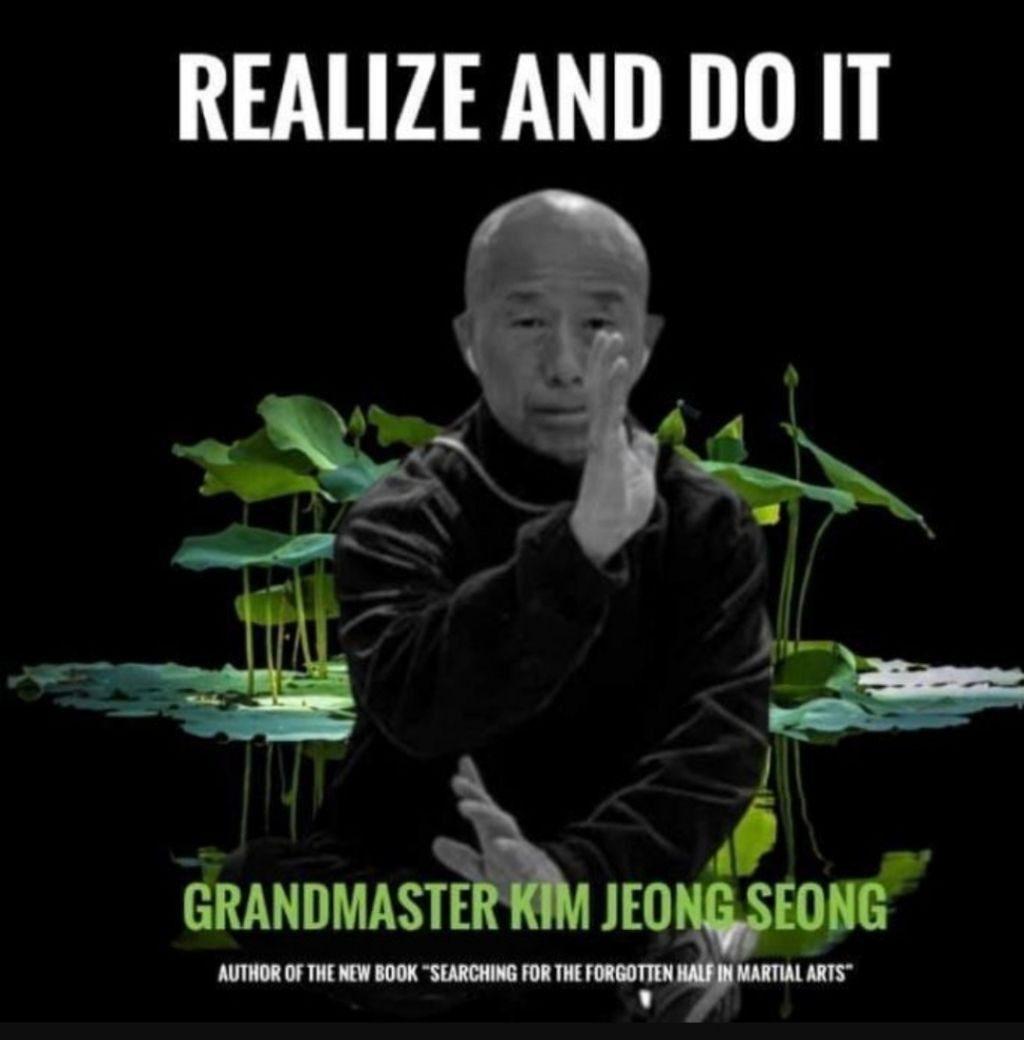
3. Ri (離) – Realize, and Do It
Level: Creative/Mature
Mindset: “I enjoy.” (Embodiment and realization)
Focus: Living in harmony with nature and embodying Muwi (Non-Doing)
At this stage, practice becomes indistinguishable from life itself. Martial training is no longer something apart from living — it is a lived experience of balance, clarity, and fulfillment.
While this may sound lofty, it’s actually simple: It just means living rightly — being fair-minded, uniting body and mind, and walking the path of practical action.
We can also reflect on why many seekers pursue training in remote or austere places, often trying to replicate ancient forms. Whether these efforts are meaningful is for each person to judge.
---
The Essence of Kimu
Kimu refers to the spontaneous movement of the body in harmony with the flow of Ki. It is about awakening the body’s natural intelligence and learning to follow energy rather than force it.
With continued practice, one experiences Kimu (氣舞) — the state where the body begins to move like a dance in sync with the flow of Ki.
As that deepens, it gives way to Kimu (氣無) — a state of non-separation between Ki and action, marked by mindlessness and non-doing.
Three Levels of Kimu in Jinyoung Ssangkum Ryu
Kimu (氣武) – Martial principles guided by the flow of Ki
Kimu (氣舞) – The body moves naturally as if dancing with Ki
Kimu (氣無) – A state of effortless unity beyond thought or intention
> “Kimu (氣武) gives rise to Kimu (氣舞), and ultimately becomes Kimu (氣無).”
This is what we refer to as the Kimu Body — a state where the body is magnetized and follows the natural rhythm of energy.
---
Kimu and Straight-Line Cutting
The core of Kimu lies in understanding and embodying spontaneous motion. This principle applies directly to the foundational technique of straight-line cutting (Jeongmyeon Baegi).
It’s more than a mechanical cut:
The sword follows the heart,
The heart follows the flow of Ki,
That flow is aligned with nature.
The practitioner learns to recognize the opening and blocking of Ki — turning the practice into healing as well.
Many systems consider spontaneous movement to be the highest level. However, in Jinyoung Ssangkum Ryu, we start by introducing this principle from the very beginning.
Rather than striving for it over a lifetime, we help each practitioner experience it first — and then build depth and refinement from there.
Practical Method
With sword in hand, breathe evenly and center your mind. Move slowly, not from the arms, but from the core — letting the Ki flow from your center through your hands to the tip of the blade.
The key is for the body and sword to follow the energy of the mind — effortlessly.
(See demonstration from 2023 Mexico Seminar: Link)
---
Summary:
Kimu training is more than martial skill. It’s an integrated discipline that bridges technique, life philosophy, healing, and nature.
At its heart is the principle of natural movement — “movement that happens on its own.”
Understanding this principle through the practice of straight-line cutting opens the door to deeper realization in both combat and daily life.
In Jinyoung Ssangkum Ryu Haedong Kumdo, we teach this from day one — guiding students through a path where the beginning already contains the essence of the end.
This is not about working your way up to the final destination. It is about seeing the destination from the very start, and moving forward with clarity and purpose.
That, perhaps, is the kind of modern, conscious training we need — not as a return to the past, but as a conscious evolution into a more integrated present.
April 14, 2025 — Kim Jeong Seong, Jinyoung Ssangkum Ryu Haedong Kumdo