Understanding and Reflecting on Kimu Practice in Jinyoung Ssangkum Ryu- 3
작성자진영작성시간25.05.05조회수402 목록 댓글 0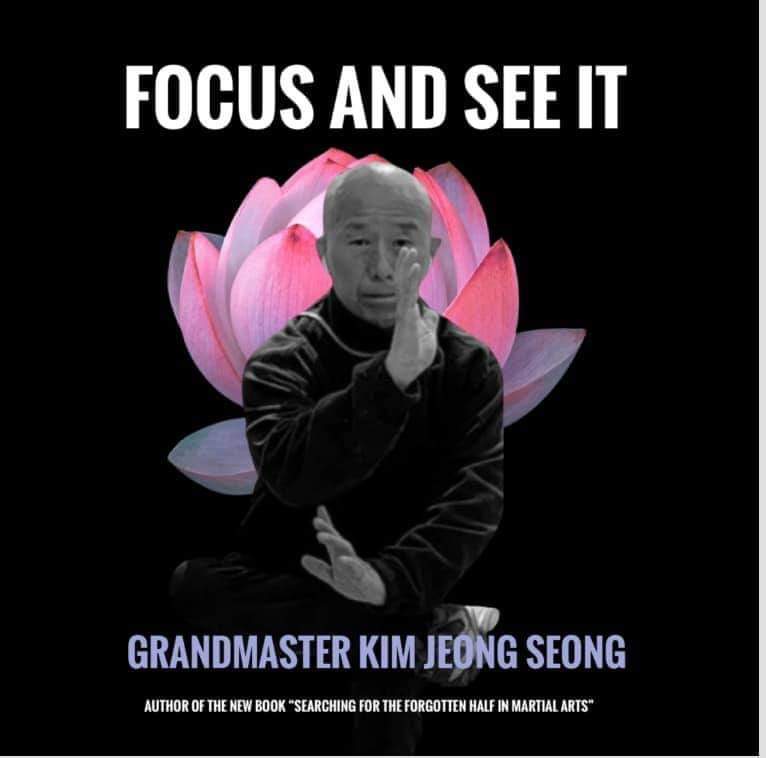
[Table of Contents]
1. Kimu Practice and Straight-Line Cutting
2. Why Move Slowly?
3. Even Breathing and Equanimity
4. Observe Energy Flow from a Third-Person Perspective
5. Common Mistakes Beginners Make
6. Kimu (氣舞): When the Body Begins to Dance – Understanding Spontaneous Motion
7. Kimu (氣無): The Principle of Non-Doing
8. The Training Philosophy of Jinyoung Ssangkum Ryu
---
Before we dive into #2, "Why Move Slowly?", I’d like to share a reflection related to the previous section.
A Comparative Look: Chinese Taijiquan vs. Korean Martial Art Jinyoung Ssangkum Ryu Haedong Kumdo
The following is based on a public post shared on Facebook, and this comparison is meant to invite diverse perspectives on how different traditions express similar insights. Below is an excerpt from the Chinese martial arts tradition, followed by a comparison with Jinyoung Ssangkum Ryu Haedong Kumdo.
This comparison was sparked by a comment from a student in the U.S. who jokingly called our training a "New Age Buddhist Cult"—which turned out to be an unexpected and amusing opportunity for reflection!
---
[Excerpt from Chinese Martial Tradition]
"All methods return to the One.
But where does the One return?"
Grandmaster Sun Lutang studied Xingyiquan with Guo Yunshen, Baguazhang with Cheng Tinghua, and Wu-style Taijiquan with Hao Weizhen.
Through years of practice, he came to realize the essential unity of the three systems and went on to create Sun-style Taijiquan.
His aim was to offer practitioners a direct path to the core of martial arts:
To cultivate pure, harmonized internal energy (中和之氣), strengthen the inner body, and integrate the Way (Dao) with martial techniques.
---
[Comparative Notes from Jinyoung Ssangkum Ryu]
1. "All methods return to the One. But where does the One return?"
→ In Jinyoung Ssangkum Ryu, this "One" is described as a singular universal principle—a natural law that governs all movement and existence.
2. Grandmaster Sun’s realization of unity across three styles
→ Jinyoung Ssangkum Ryu holds that all things in the universe ultimately stem from one universal principle.
Different martial arts are merely varied expressions of that same source.
Our system was founded on that principle, shaped through the unique character and insight of its founder.
Anything that deviates from that One principle is seen as incomplete or misguided.
3. Goal: Cultivate inner harmony and balanced energy (中和之氣)
→ In Jinyoung Ssangkum Ryu, this is seen as a "process of magnetic alignment"—a way to embody the natural flow of Ki (氣) and achieve harmony through mind-body balance.
4. Integrating martial techniques and philosophy (拳與道)
→ We emphasize that techniques (movement) and philosophy (Way) must be unified.
And even further…
Through refining the flow of Ki—learning to sense when it opens or blocks—we also develop the ability to practice healing (energy-based therapy) as part of our martial training.
This process begins from the very first stage of training.
---
How Jinyoung Ssangkum Ryu Interprets JungHwajiGi (中和之氣)
1. The Central Energy in Kimu (氣武)
Kimu training centers on Ki (energy), and its goal is to unite the body, mind, and martial practice through that energy.
JungHwajiGi (中和之氣)—balanced, harmonized energy—emerges when Ki flows evenly and without distortion.
At its highest point, martial movement is not about strength or skill—it’s about natural motion born from harmonized energy.
In Chinese Daoist and martial philosophy, JungHwajiGi is a refined, life-affirming energy—attainable only through deep internal cultivation.
In Jinyoung Ssangkum Ryu, this is linked to the idea of self-magnetization—a state where the body, Ki, and mind are harmonized, leading to spontaneous, natural motion.
This is not just physical mastery—it is the Way of integrated energy, spirit, and philosophy.
And because this Way is life itself,
practicing only for the sake of practice often wastes one's energy and time—leading to a life that never sees the bigger picture.
---
2. Kimu’s 3 Stages and JungHwajiGi
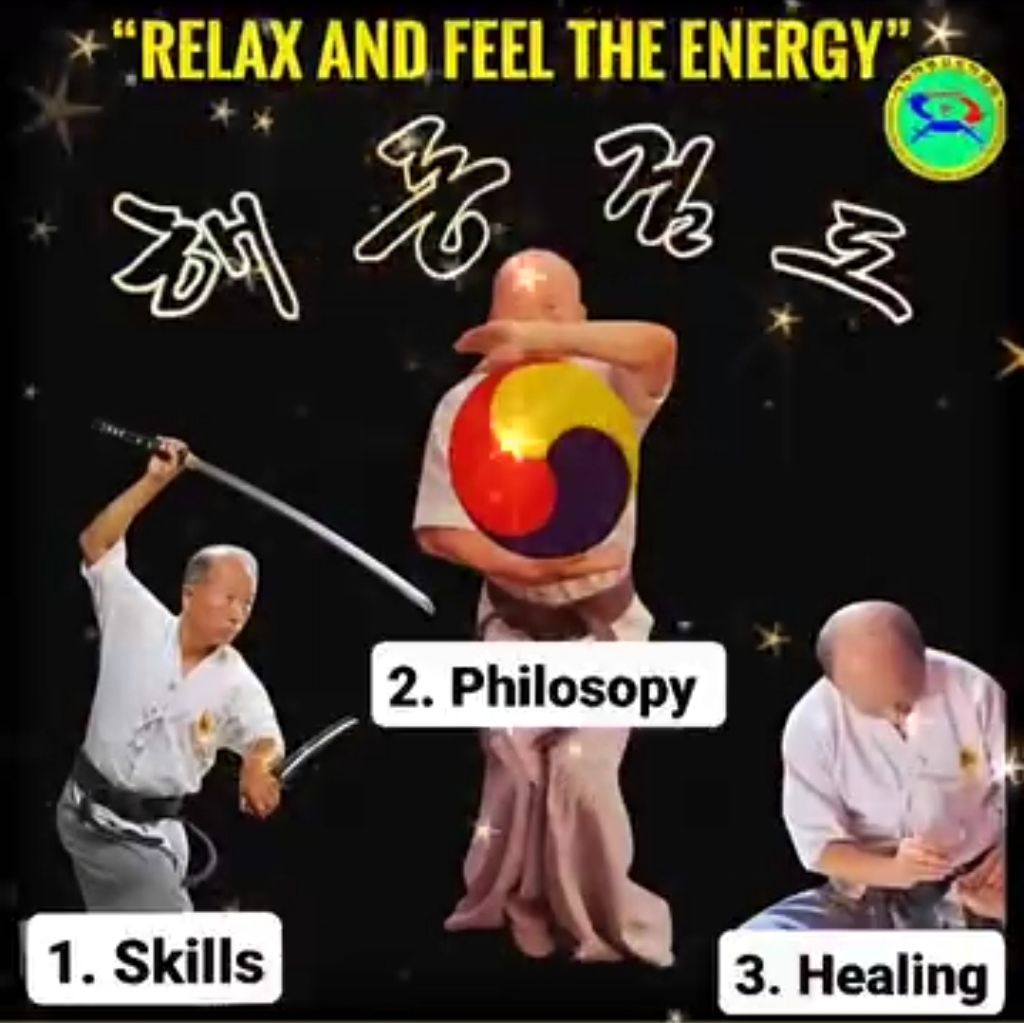
Stage 1 – Su (修): Relax and Feel the Energy
→ Opening energy awareness, the first "sprout" of harmonized energy
→ Letting the body relax and the mind accept nature’s flow
Stage 2 – Pa (破): Focus and See It
→ Developing awareness of energy and the principle behind movement
→ Recognizing the interactions between Ki and mind
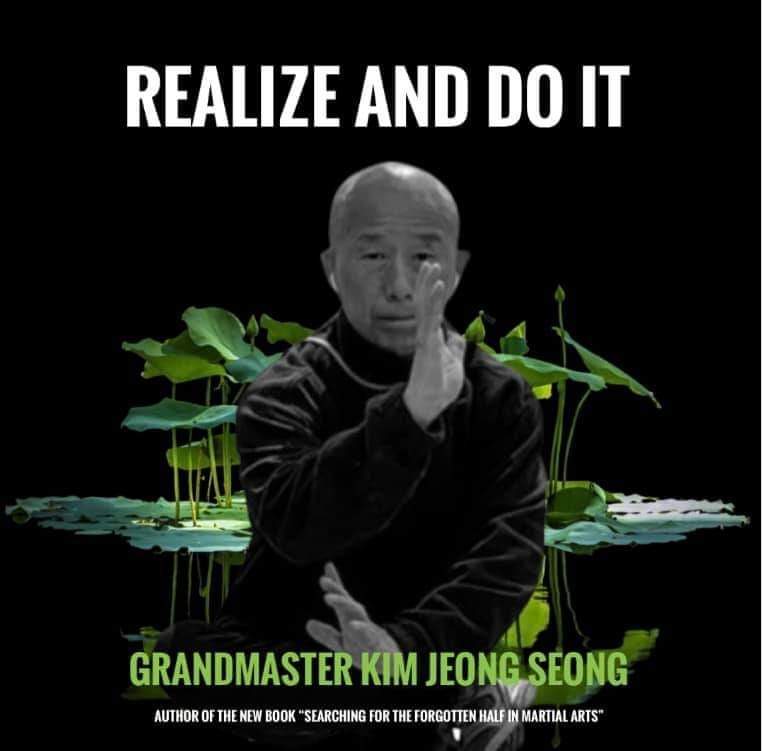
Stage 3 – Ri (離): Realize and Do It
→ Deep realization of harmony—entering the state of Kimu (氣舞) and ultimately Kimu (氣無)
→ This is when martial movement, healing, and philosophy become one with life itself
---
3. JungHwajiGi as the Gateway to Kimu (氣無)
In the flow from Kimu → Kimu (氣舞) → Kimu (氣無),
JungHwajiGi acts as the energetic bridge that connects the earlier stages to the highest state.
At this level, the sword follows the body, the body follows the mind, and the mind follows nature’s rhythm—this is the essence of Wu-Wei, or effortless action.
JungHwajiGi is both the beginning and the end.
It’s the foundation of all practice and the compass of a life lived well.
To live in balance is to live with awareness,
To live with awareness is to live with wisdom,
And to live wisely is to walk the path of understanding.
That is the Way of training.
In the end, no matter what you call it—
what truly matters is whether you practice right living in everyday life.
That’s the real reason we’re alive.
---
Note on JungHwajiGi (中和之氣):
JungHwajiGi refers to the “balanced and harmonized energy” that arises when body, mind, and Ki (氣) are in natural alignment.
It represents a state of inner equilibrium, where opposites like tension and release, motion and stillness, exist in dynamic harmony.
This state is essential for achieving spontaneous, effortless movement and deeper insight in both martial arts and life.
-----
April 14, 2025 (Monday)
Jinyoung Ssangkum Ryu Haedong Kumdo
Founder & Presedent : Kim Jeong Seong