In Korean 국문번역
https://m.cafe.daum.net/enlightenment-k/dcM5/606?svc=cafeapp

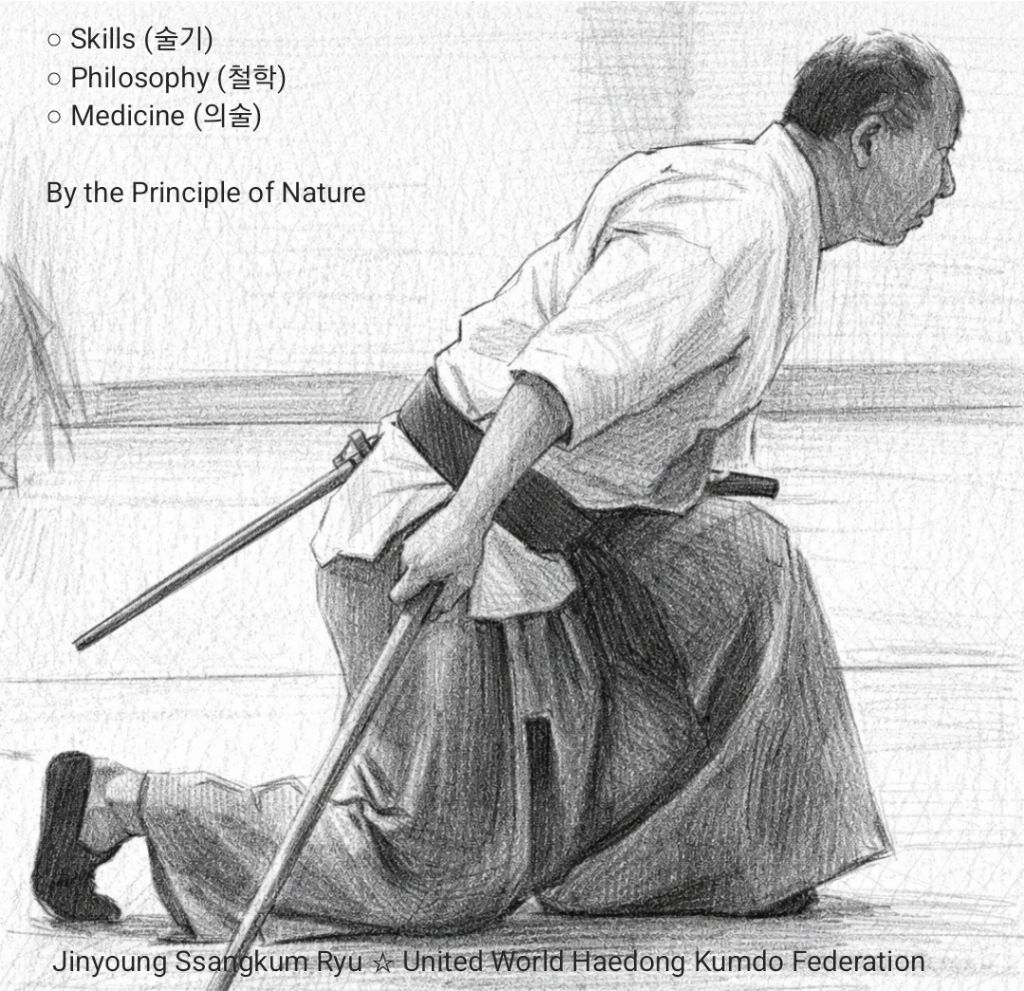
The Philosophy of Human Training in the Age of AGI
— Human Consciousness in a Civilizational Transition and the Training of Jinyoung Ssangkum Ryu
Preface
In the Age of AGI, What Must Humans Learn?
The history of human civilization has always changed alongside new technologies.
The Agricultural Revolution transformed the way humans lived, the Industrial Revolution reshaped social structures, and the Information Revolution even altered the way humans think.
Now humanity is once again facing another great turning point.
Beyond artificial intelligence, the age of AGI (Artificial General Intelligence) is approaching.
In the age of AGI, production and labor, knowledge and information, and even the role of human beings themselves are likely to be reorganized in ways different from before.
In many areas, technology will begin to replace human abilities, and social structures will also evolve into new forms.
Yet even amid such changes, some questions remain unchanged.
What does it mean to live a truly human life?
By what principles should human beings live?
As technology advances, where should the center of human life be placed?
As civilization develops, human life becomes more convenient. At the same time, however, the ability of human beings to judge and feel independently may gradually weaken.
In a society where technology makes decisions and information constantly overflows, human consciousness can easily become scattered.
For this reason, in the age of AGI what becomes more important for humans is not technology, but the center of consciousness.
Human consciousness cannot be sustained by intellectual knowledge alone.
A stable center is formed through the sensations of the body, lived experience, and the training that unfolds within daily life.
Martial arts training exists for each individual, by each individual, and as the responsibility of each individual, and it matures and develops only through one's own experience, effort, and realization.
Large or small events and organizations have nothing to do with this process. They may provide satisfaction, pride, or a sense of achievement that accompanies one's self-esteem.
Even that sense of satisfaction varies greatly depending on each person's level and depth of consciousness.
However, in the final reckoning of one's life, such things ultimately carry little real significance.
True awakening arises only from one's own effort and experience. That is the fundamental reason for practicing martial arts. Because training becomes part of one's life, through it we seek health and happiness.
Ultimately, the great question becomes the search for the true purpose of human life.
For a long time, many traditions in both the East and the West have emphasized training through the body for this very reason.
Through the process of moving the body, sensing the breath, and understanding the flow of nature, human beings are able to rediscover their own center.
The training philosophy of Jinyoung Ssangkum Ryu, which I founded, begins precisely from this perspective.
This training is not simply the process of learning techniques.
It is a path toward understanding the fundamental principles of human life through the body and consciousness.
Technology develops civilization,
but training develops the human being.
And the more dramatically civilization changes, the more necessary it becomes for humans to possess the strength to maintain their own center.
This essay was written in order to reexamine the meaning of human consciousness and training within the flow of the civilizational transition known as the age of AGI.
Through five essays, we will explore together the transformation of civilization, human consciousness, the body and training, and the question of human resilience.
Let us begin by reflecting on these ideas through Part One below.
Part I
The Civilizational Transition with AGI and the Inevitability of Consciousness Transformation
— The Meaning of the Training Philosophy of Jinyoung Ssangkum Ryu
The more an era is shaped by technological change,
the more humans must learn how to maintain their own center.
In the age of AGI, the way for humans to remain human
is not to surpass technology,
but to restore their original center through body and consciousness.
1. From the Industrial Revolution to AGI — A Transformation of Civilization
Throughout history, human civilization has transformed its existing order through technological innovation.
From the First Industrial Revolution to the Fourth Industrial Revolution,
the central drivers of change have always been the structure of labor and the movement of social systems.
However, the transformation humanity faces today is of an entirely different dimension.
With the emergence of AGI beyond artificial intelligence,
production, labor, economics, and even the role of human beings themselves are being fundamentally redefined.
2. Not the End of Labor, but the Redefinition of Labor
The defining characteristic of the AGI era is not simply technological advancement.
Rather, it is that the very meaning of labor is being shaken.
Instead of how much knowledge one stores in the mind,
what matters more is how effectively one can utilize artificial intelligence.
Knowledge has become a resource that can be called upon at any time,
and human memory is no longer the core of competitiveness.
As AGI and robotics combine,
the central cost of production shifts from human labor to energy and electricity.
Productivity increases dramatically,
and when supply surpasses demand, prices tend to decline.
In this process, existing economic systems and labor markets undergo profound transformation.
This change is often described as “the end of labor.”
More accurately, however, it is the redefinition of labor’s structure and meaning.
Such transformations have appeared repeatedly throughout human history in different forms.
3. Historical Comparisons of Civilizational Structures
When we examine the structure of human civilizations historically,
we can see how changes in modes of production reshape social structures.
Ancient Rome was a civilization based on slave labor.
Large-scale slave labor handled production, while citizens were provided with grain distributions and public spectacles such as gladiatorial games to ease social discontent.
Meanwhile, the Spanish Empire of the 16th and 17th centuries represented another type of civilizational structure.
Spain became the wealthiest empire in the world through massive inflows of gold and silver from the New World.
However, because this wealth did not arise from internal productive foundations but from external resource inflows,
its economic structure gradually weakened over time, and society became dominated by aristocratic consumption.
These two cases occurred in different eras, yet they reveal a common principle.
When a civilization depends excessively on a particular structure of production,
the entire civilization can be shaken when that structure changes.
The AGI era we face today may represent another transformation in the structure of production.
If the Roman Empire was based on slave labor,
and the Spanish Empire depended on external resource inflows,
then the AGI era represents a shift toward a civilization where production is handled by artificial intelligence and robotics.
This transformation may not simply be technological innovation but a historical signal that the structure of human civilization itself is once again changing.
Ultimately, civilization grows through expansion,
but human beings survive through resilience.
Resilience is precisely what the training of Jinyoung Ssangkum Ryu emphasizes.
4. The Social Structure of the AGI Era
These historical structures offer important insights into understanding the possible shape of AGI societies.
When AGI and robotics combine, production may be handled primarily by automated systems rather than human labor.
This structure can be compared as follows.
Roman Era
Slave labor → production
Grain distribution → basic livelihood
Large arenas → mass entertainment
AGI Era
AI and robotic production → replacement of labor
Universal basic income → livelihood support
Digital entertainment → mass entertainment
Civilization may become more prosperous,
yet such structures also raise new questions about the role of human beings and the organization of society.
5. The Society of Consciousness Poverty
The greatest danger of an AGI society is not material poverty.
Rather, it is poverty of consciousness.
AGI can solve production problems, reduce disease, and greatly increase material abundance.
However, AGI cannot create the center of human consciousness.
When technology makes decisions, algorithms guide choices, and information and stimulation overflow everywhere,
human beings may gradually lose the ability to think and judge independently.
This condition leads to what can be called a society of consciousness poverty.
Such a society is characterized by:
People no longer make their own judgments.
Sensory awareness becomes dull.
People merely react to stimuli.
The center of life is lost.
Externally such a society may appear prosperous,
yet internally the human being becomes increasingly empty.
6. Human Resilience
In the midst of such changes, the questions that remain for humanity ultimately converge into one.
What is a truly human life?
What is the identity of the human species?
What are the conditions for human survival in the age of AGI?
The answer leads to one conclusion.
Not technology, but human resilience.
Civilization grows through expansion,
but human beings survive through resilience.
And that resilience is cultivated through body and consciousness.
Whenever civilizations have collapsed, what remained were:
bodily skills
stories and memory
community
and humans with a center.
Therefore, even in future societies, the most important factor will be the resilience of trained human beings.
7. The Training Philosophy of Jinyoung Ssangkum Ryu
The core principle of Jinyoung Ssangkum Ryu training is always the same:
“Return to your original mind.
That is the way to live.”
This statement is not merely spiritual advice.
It refers to maintaining the human center even amid civilizational change.
This is why technique, philosophy, and healing are connected within Jinyoung Ssangkum Ryu.
Training is not merely the learning of techniques.
It is the process of restoring one’s center through the body, establishing the basis for judgment, and reconnecting with the natural order.
In the age of AGI, technology and information will overflow,
yet the human center does not arise automatically.
Therefore the meaning of martial arts must also evolve.
Martial arts must no longer be merely techniques of physical force.
They must become methods for cultivating human consciousness.
And people must learn how to study and teach those methods.
8. Conclusion
The age of AGI is not the end of human civilization but the beginning of a new stage.
Yet the direction of this transition will not be determined by technology.
It will be determined by the level of human consciousness.
To remain human in the age of AGI, the goal is not to surpass technology.
The essential task is to rediscover and preserve the original center of the human mind.
The system of training that helps human beings embody that center through the body is precisely the training philosophy of Jinyoung Ssangkum Ryu.
-------
Friday, March 13, 2026
Written by
Jeong Seong Kim
Founder of Jinyoung Ssangkum Ryu
--------
#AGI
#HumanConsciousness
#HumanResilience
#EnergyFlow
#KimuTraining
#NaturalMovement
#MartialArtsPhilosophy
#BodyAndMind
#JinyoungSsangkumRyu
#JinyoungSsangkumRyuHaedongKumdo