[학생활동]
왼손 들어, 오른손 들어 게임
조건을 이야기할 때는 왼손, 결과를 이야기할 때 오른손 들기
피곤할 때 여러분은 주로 무엇을 합니까?
나는 피곤하면 (왼손들기) , 잔다 (오른손들기) .
슬플 때 여러분은 주로 어떻게 해서 이겨냅니까?
나는 슬프면 (왼손들기) , 음악을 듣는다 (오른손들기) .
Now, try this in English.
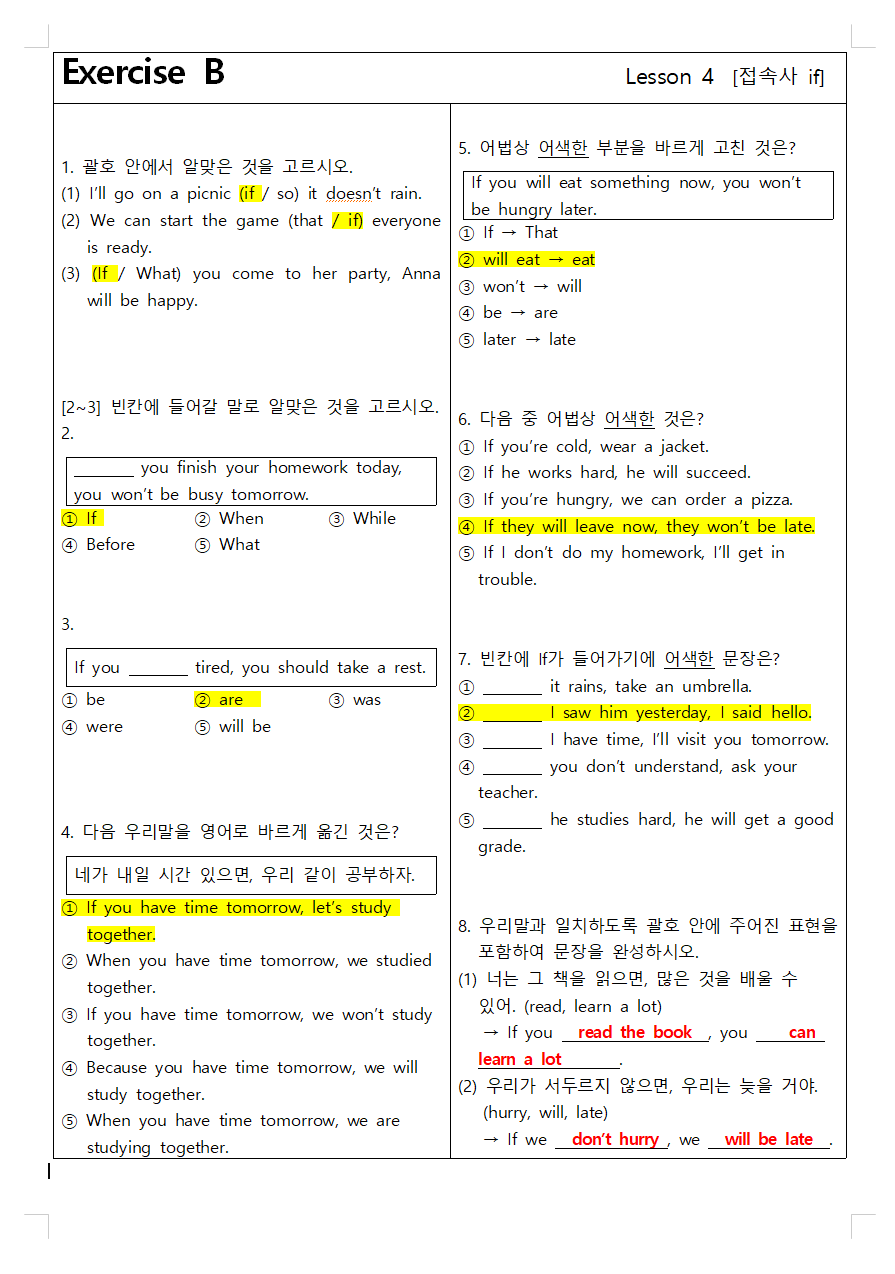
1) If I am tired, I will sleep.
2) If I am tired, I sleep.
연습해보자. 선생님이 말하는 문장을 이어 완성하기
If I am sick, I will _____________.
If I am hungry, I will _____________.
1)번 문장과 2)번 문장의 차이점은 어떻게 다를까?
1) If I am tired, I will sleep.
2) If I am tired, I sleep.
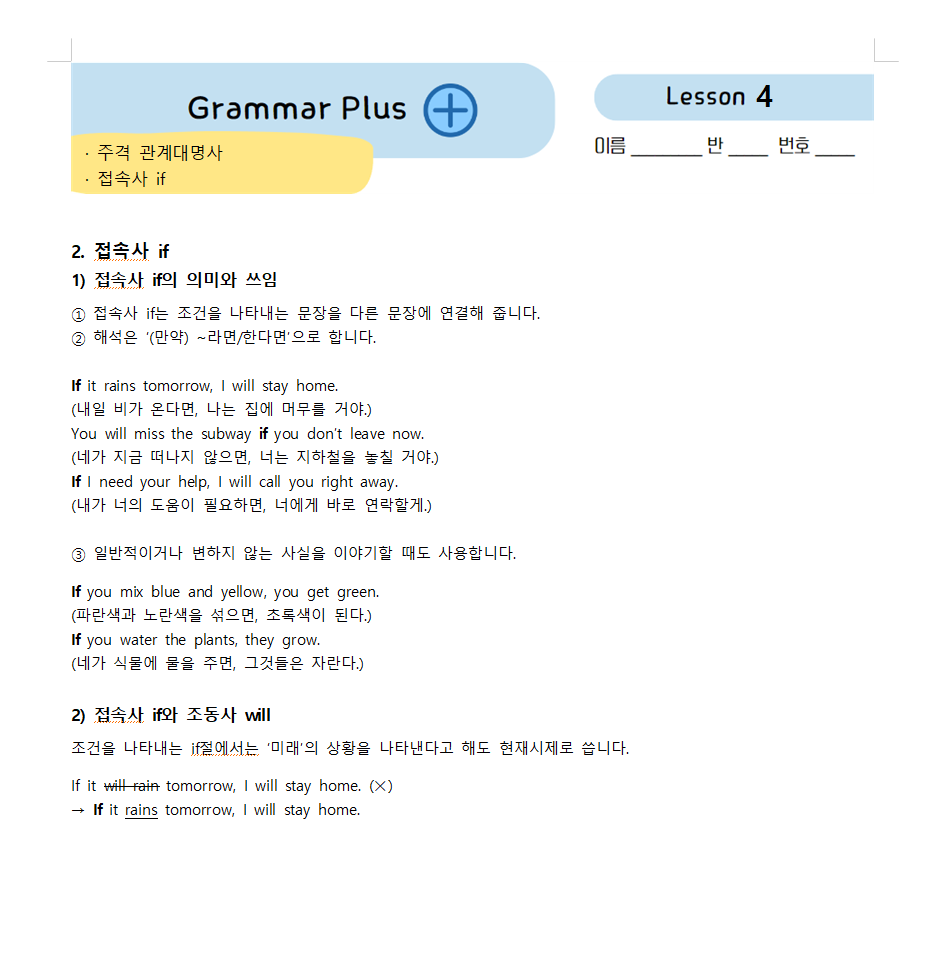
If + condition, result ( If 조건 , 결과 )
1. 일반적인 사실이나 진리: Always True, FACTS!!!
(If + present, present )
If you heat ice, it melts.
If it rains, the ground gets wet.
2. 실제로 일어날 가능성이 있는 미래: Possible Future!
(If + present, will ~ )
If it rains tomorrow, I will stay home.
If you study hard, you will pass the test.
----------------------------------------------------------------------------------------------
3. 현재 사실과 다른 상상: Unreal Imagination (중학교 3학년 과정)
(If + past, would ~ ) 가정법 과거시제로 내년에 자세히 배웁니다.
If I had a million dollars, I would travel around the world.
If I were a bird, I would fly to you.
Q: 왜?? 백만달러가 있다면, 새라면 이라는 문장은 과거로 쓰나요?
"Why does 'If I had a million dollars' use past tense? It's about now."
A: 과거형은 때로 실제 사실과 거리가 있다는 것을 의미하기도 합니다.
The past form does not always mean past time.
Sometimes it means distance from reality.
[ 한번 비교해보세요 ]
나는 자동차가 있다. "I have a car." (사실)
내가 자동차가 있다면, "If I had a car," (사실이 아님)
https://youtu.be/1ene6gOAppY?si=WsFchjsreAWZLWzv