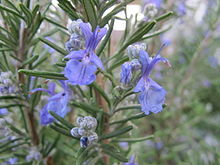
- 로즈마리, Rosemary
. 학명 Rosmarinus officinalis
. 개요; 꿀풀과의 다년생식물. 지중해원산. 높이 1.5미터내외. 수명30년.
. 효능; 향균, 경련, 위, 간, 비듬, 소화, 혈액순환, 류머티즘, 대머리, 멍, 상처에 효과
. 사용법; 잎 2티스푼을 우려마시거나 팅크로 활용하되 과도한 사용은 중독주의
1 학명과 약용부위
- 학명; Rosmarinus officinalis
- 약용부위
. Leaves, flowering tops.
. 잎, 꽃상판
2 통명
- 영어; Rosemary
- 한글; 로즈마리
3 개요
- 지중해원산의 상록관목
. 향과 요리허브로 전세계 재배
- 가지; 잿빛의 껍질
. 잎; 마주보며 두껍게 성장
- 꽃; 청색이나 백색으로 4월경 개화
Rosemary is an evergreen shrub which originated in the Mediterranean area and is now widely cultivated for its aromatic leaves and as a kitchen seasoning. The numerous branches have an ash-colored, scaly bark and bear opposite, leathery, thick leaves which are lustrous and dark green above and downy white under-neath. They have a prominent vein in the middle and margins which are rolled down. The pale blue (sometimes white) flowers grow in short axillary racemes, blooming during April and May, or later in cooler climates.
4 효능
- 진경제, 담즙촉진제, 월경촉진제, 각성제, 위장강정제
. 간기능개선, 소화촉진, 혈액순환개선
- 장기사용시 중독가능; 외용은 비교적 안전
- 로즈마리와인, 오일; 류머티즘, 습진, 타박상 유용
. 비듬개선, 구취예방; 로즈메리차
Antispasmodic, cholagogue, emmenagogue, stimulant, stomachic. The stimulant action of rosemary helps promote liver function, the production of bile, and proper digestion. It also acts to raise blood pressure and improve circulation. Because of the genuine danger of poisoning, however, resomary is more often used externally. Leaves cooked in wine or sale made from rosemary oil is useful for rheumatism, scrofulous sores, eczema, bruised, and wounds. An infusion of the leaves has also been used, alone or with borax, as a scalp wash to prevent baldness. Rosemary tea makes a good mouth-wash for halitosis, too. CAUTION; Excessive amounts of resomary taken internally can cause fatal poisoning.
5 사용법
- 우리기; 1/2컵의 물에 1티스푼
. 하루 1컵이내 음용
- 팅크; 5-20방울
Infusion; Steep 1 tsp. dried flowering tops or leaves in 1/2 cup water. Take up to 1 cup a day.
Tincture; A dose is from 5 to 20 drops.