How can I make sure I don’t forget the words of the Bible and remember them well? (Psalm 119:105)
2026-06-21(일) 주일오후찬양예배(투박한 요약 정리)
제목: 어떻게 하면 나도 성경말씀을 잊어버리지 않고 잘 기억할 수 있을까?(시편119:105)
_동탄명성교회 정보배 목사
1. Introduction
Every believer wants to remember the words of the Bible well. Even when the message heard during worship was a source of grace, our hearts were stirred by the sermon, and the Bible verses seemed to ring clearly in our ears, there are often times when they don’t come to mind easily as time passes. Consequently, when it comes time to share the gospel with someone, to hold fast to the Word in the face of trials and tribulations, or to resist demons and pray for the sick, the words that were once in our hearts may not come to mind easily. This is not simply a matter of having a poor memory. It is an issue that requires us to examine our ears and hearts as we listen to the Word, the memory that stores it, the discipline of retrieving and applying it, and even the spiritual forces that hinder it.
The psalmist confessed that God’s Word is a lamp to his feet and a light to his path (Psalm 119:105). The Word is the light that illuminates the dark path. However, even if you have a lamp, you cannot see the path if you keep your eyes closed. Even if there is light, if your ears, heart, and mind are closed off, that Word cannot become a path within you.
Psalm 119:105 Your word is a lamp to my feet and a light to my path.
Faith comes from hearing, and hearing comes through the word of Christ (Rom. 10:17). Therefore, listening to the Word is the starting point of the Christian life. However, simply listening is not enough. We must engrave the Word we have heard upon our hearts, draw upon it when needed, and be able to apply it to our life decisions and in the midst of spiritual warfare. The Word is not merely a set of good words; it is the light of God that enables us to overcome sin, resist evil spirits, and prepare for the kingdom of heaven.
Romans 10:17 Therefore, faith comes from hearing, and hearing through the word of Christ.
The starting point of this sermon is very practical. Why do some people forget the Word immediately after hearing it? Why are others able to freely recall Bible references and their contents?
Why is it that some people, even without exceptional natural intelligence, remember the Word for a long time and, when needed, can draw upon it—both new and old—as if retrieving it from a storehouse under the inspiration of the Holy Spirit? The answer lies in one’s attitude toward the Word, dealing with spiritual hindrances, healing the wounds of the heart, storing and retrieving memories through the hippocampus, and the practice of repeatedly drawing upon and applying it.
Memorizing the Bible is not merely a matter of rote memorization. It is a matter of faith—accepting the Word as life; a spiritual matter—dealing with the interference of evil spirits within through repentance and in the name of Jesus; an inner matter—healing emotional wounds through Christ’s forgiveness; and a matter of daily practice—training the hippocampus to recognize the Word as important by rewriting and speaking what we have heard. Therefore, in this session, we will examine why the words of the Bible are easily forgotten, and what we must prepare and practice in order to remember them for a long time—like the scribes who were disciples of the Kingdom of Heaven—and draw upon them when needed.
1. 들어가며
성도라면 누구나 성경 말씀을 잘 기억하기 원한다. 예배 시간에 들은 말씀이 은혜로웠고, 설교 중에 마음이 뜨거워졌으며, 성경 구절이 분명히 귀에 들어온 것 같은데도 시간이 지나면 잘 떠오르지 않을 때가 많다. 그래서 막상 누군가에게 복음을 전하거나, 시험과 환난 앞에서 말씀으로 자신을 붙들어야 할 때, 혹은 귀신을 대적하고 병든 자를 위해 기도해야 할 때, 마음속에 있던 말씀이 쉽게 꺼내지지 않는 경우가 있다. 이것은 단순히 머리가 나쁜 문제만이 아니다. 말씀을 듣는 귀와 마음, 말씀을 저장하는 기억 장치, 말씀을 다시 꺼내 쓰는 훈련, 그리고 말씀을 방해하는 영적 세력까지 함께 살펴보아야 하는 문제다.
시편 기자는 하나님의 말씀을 발의 등과 길의 빛이라고 고백하였다(시 119:105). 말씀은 어두운 길을 밝혀 주는 빛이다. 그런데 등불이 있어도 눈을 감고 있으면 길을 보지 못한다. 빛이 있어도 귀와 마음과 생각이 막혀 있으면 그 말씀은 내 안에서 길이 되지 못한다.
시 119:105 주의 말씀은 내 발에 등이요 내 길에 빛이니이다
믿음은 들음에서 나며 들음은 그리스도의 말씀으로 말미암는다(롬 10:17). 그러므로 말씀을 듣는 일은 신앙생활의 출발이다. 그러나 듣는 것만으로 충분하지 않다. 들은 말씀을 마음에 새기고, 필요할 때 꺼내 쓰며, 삶의 결정과 영적 전쟁의 현장에서 적용할 수 있어야 한다. 말씀은 단지 좋은 말씀이 아니라, 죄를 이기게 하고, 악한 영을 대적하게 하며, 천국을 준비하게 하는 하나님의 빛이다.
롬 10:17 그러므로 믿음은 들음에서 나며 들음은 그리스도의 말씀으로 말미암았느니라
이번 설교의 출발점은 매우 실제적이다. 왜 어떤 사람은 말씀을 들어도 금방 잊어버리는가? 왜 어떤 사람은 성경 주소와 내용을 자유롭게 꺼내어 말하는가?
왜 어떤 사람은 타고난 지능이 매우 뛰어나지 않아도 말씀을 오래 기억하고, 필요할 때 성령의 감동 가운데 새것과 옛것을 곳간에서 꺼내듯 사용할 수 있는가? 그 답은 말씀을 대하는 태도, 영적 방해의 처리, 마음의 상처 치유, 해마를 통한 기억의 저장과 회상, 그리고 반복적으로 꺼내 쓰는 훈련에 있다.
성경을 기억하는 것은 단순한 암기술이 아니다. 그것은 말씀을 생명으로 받아들이는 신앙의 문제이며, 내 속에 있는 악한 영들의 방해를 회개와 예수 이름으로 처리하는 영적 문제이고, 마음의 상처를 그리스도의 용서로 치유하는 내면의 문제이며, 들은 말씀을 다시 쓰고 말함으로 해마가 그 말씀을 중요한 것으로 인식하게 만드는 생활 훈련의 문제다. 그래서 이 시간에는 성경 말씀이 왜 쉽게 잊히며, 천국의 제자 된 서기관처럼 말씀을 오래 기억하고 필요할 때 꺼내 쓰려면 무엇을 준비하고 훈련해야 하는지를 살펴보고자 한다.
2. Why Do We Easily Forget the Words of the Bible Even After Hearing Them?
The first reason we easily forget the words of the Bible even after hearing them is spiritual interference. The Word is spirit. Although God’s Word is heard as sound by human ears, it is actually a seed of life that affects the spirit, the soul, and the whole body. Therefore, evil spirits interfere to prevent us from hearing the Word; even if we hear it, they prevent us from understanding it; and even if we do understand it, they work to snatch it away from us immediately. In the Parable of the Sower, Jesus said that Satan immediately comes and snatches away the Word sown along the path (Mark 4:15).
Mark 4:15 The seed sown along the path refers to those who, when they hear the Word, Satan immediately comes and snatches away the Word that was sown in them.
In Matthew, it says that when people hear the Word of the Kingdom
but do not understand it, the evil one comes and snatches away what was sown in their hearts (Matt. 13:19). What is important here is that the place where the Word is snatched away is not just the ear but the heart. If the Word is heard with the ears but not planted in the heart, it will not last long.
Matthew 13:19 “When anyone hears the message of the kingdom and does not understand it, the evil one comes and snatches away what was sown in his heart; this is the one sown along the path.”
The sermon manuscript explains the spiritual hindrances that prevent people from hearing the Word in a very practical way. Spirits associated with ancestral rites, spirits that instill doubt, spirits of unbelief, and spirits that prevent one from hearing the Word block the ears and the mind. In particular, spirits that have entered through ancestral rites and idolatry cause drowsiness when hearing the Word, bring other thoughts to mind, and raise doubts about the Word. Therefore, the first step in remembering the Word is not simply to improve concentration, but to deal with the spiritual blockages through repentance.
The second reason is physical fatigue. When the body is tired, spiritual concentration declines. If you stay up late on Saturday night and come to Sunday worship, your body will fall asleep before you even begin listening to the Word. When the body falls asleep, the ears close; and when the ears close, the Word cannot take root in the heart. Therefore, to remember the Word well, the body must also be prepared to receive it. This is a biblical balance that does not neglect the physical body. Even Jesus said that while His disciples were dozing in Gethsemane, “My spirit is willing, but my flesh is weak” (Matt. 26:41).
Matt. 26:41 “Watch and pray so that you will not fall into temptation. The spirit is willing, but the flesh is weak.”
The third reason is that our attitude toward the Word is too casual. Many believers listen to a sermon and say, “That was a good message.” But after saying it was a good message, they soon forget it. The following week, they hear another good message and forget that one as well. When this happens, the Word does not accumulate. If we consume the Word as if it were mere information, the hippocampus determines that there is no need to retain it for long. However, if we hear the Word as the voice of God that we must hold onto until the day we die, our attitude changes from the very moment we hear it.
2. 왜 성경 말씀은 듣고도 쉽게 잊히는가?
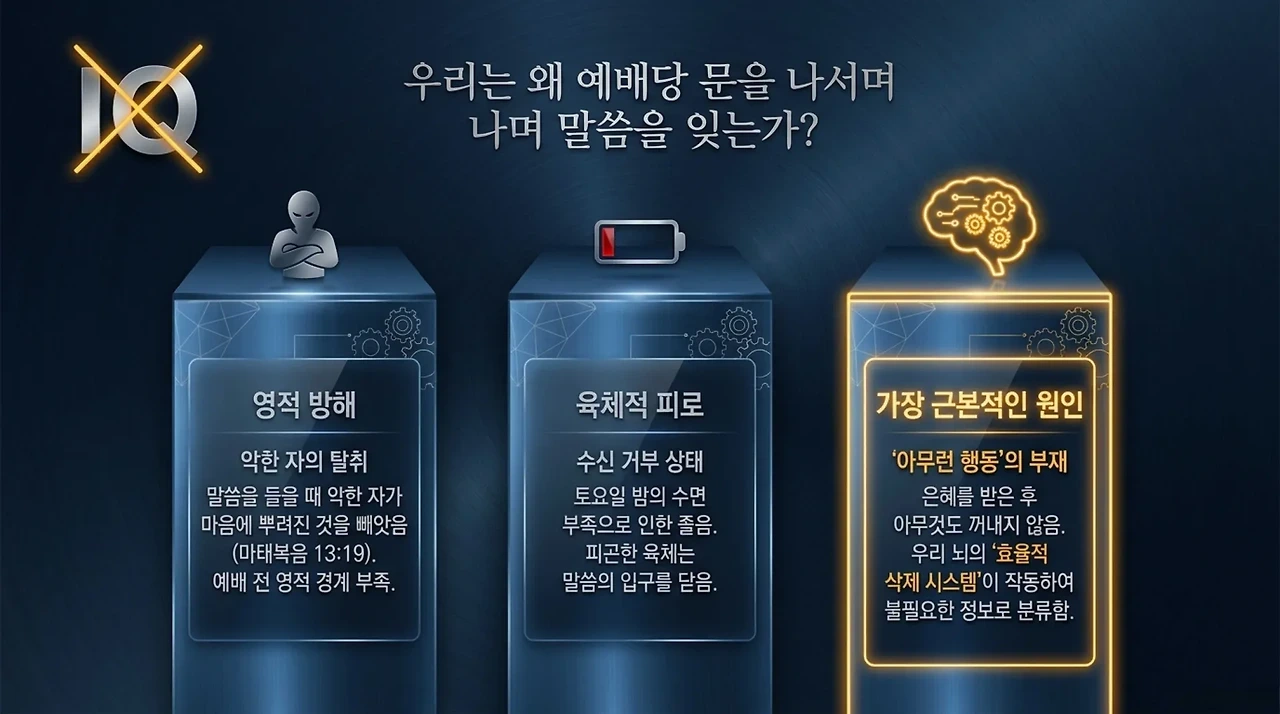
성경 말씀을 듣고도 쉽게 잊히는 첫 번째 이유는 영적 방해 때문이다. 말씀은 영이다. 하나님의 말씀은 사람의 귀에 소리로 들려도, 실제로는 영과 혼과 몸 전체에 영향을 주는 생명의 씨앗이다. 그러므로 악한 영들은 말씀을 듣지 못하게 하고, 듣더라도 깨닫지 못하게 하며, 깨달았다 해도 곧 빼앗기도록 방해한다. 예수님께서는 씨 뿌리는 비유에서 길가에 뿌려진 말씀을 사탄이 즉시 와서 빼앗는다고 말씀하셨다(막 4:15).
막 4:15 말씀이 길가에 뿌려졌다는 것은 이들을 가리킴이니 곧 말씀을 들었을 때에 사탄이 즉시 와서 그들에게 뿌려진 말씀을 빼앗는 것이요
마태복음에서는 천국 말
씀을 듣고 깨닫지 못할 때 악한 자가 와서 마음에 뿌려진 것을 빼앗는다고 했다(마 13:19). 여기서 중요한 것은 말씀을 빼앗기는 장소가 귀만이 아니라 마음이라는 사실이다. 귀로 들었으나 마음에 심기지 못하면 말씀은 오래가지 못한다.
마 13:19 아무나 천국 말씀을 듣고 깨닫지 못할 때는 악한 자가 와서 그 마음에 뿌려진 것을 빼앗나니 이는 곧 길가에 뿌려진 자요
설교 원고에서는 말씀을 듣지 못하게 하는 영적 방해를 매우 실제적으로 설명한다. 제사 계열의 영, 의심하게 만드는 영, 불신앙의 영, 말씀을 듣지 못하게 하는 영들이 귀와 생각을 막는다. 특히 조상 제사와 우상숭배를 통해 들어온 영들은 말씀을 들을 때 졸리게 하고, 다른 생각이 나게 하며, 말씀에 의심을 일으킨다. 그러므로 말씀 기억의 첫 단계는 단순히 집중력을 키우는 것이 아니라, 말씀을 막는 영적 통로를 회개로 처리하는 것이다.
두 번째 이유는 육체의 피곤이다. 육체가 피곤하면 영적 집중력이 떨어진다. 토요일 밤에 늦게 자고 주일 예배에 오면, 말씀을 듣는 자리에서 몸이 먼저 잠을 청한다. 몸이 잠들면 귀도 닫히고, 귀가 닫히면 마음에 말씀이 심기지 못한다. 그러므로 말씀을 잘 기억하려면 몸도 말씀을 받을 수 있도록 준비되어야 한다. 이것은 육체를 가볍게 여기지 않는 성경적 균형이다. 예수님도 제자들이 겟세마네에서 졸고 있을 때 마음은 원이로되 육신이 약하다고 말씀하셨다(마 26:41).
마 26:41 시험에 들지 않게 깨어 기도하라 마음에는 원이로되 육신이 약하도다 하시고
세 번째 이유는 말씀을 대하는 태도가 너무 가볍기 때문이다. 많은 성도들이 설교를 듣고 “좋은 말씀이었다”고 말한다. 그러나 좋은 말씀이라고 말한 뒤 곧 잊어버린다. 다음 주에도 좋은 말씀을 듣고, 또 잊어버린다. 그렇게 되면 말씀은 축적되지 않는다. 말씀을 정보처럼 소비하면 해마는 그 말씀을 오래 보존할 필요가 없다고 판단한다. 그러나 말씀을 죽을 때까지 붙들어야 할 하나님의 음성으로 들으면, 들을 때부터 태도가 달라진다.
Therefore, the reason why the words of the Bible are easily forgotten cannot be explained by intelligence alone. Spiritual hindrances—such as evil spirits stealing the Word—physical fatigue, a lack of readiness in the heart, and an attitude that does not regard the Word as life all work together. To remember the Word, one must first become someone who does not allow the Word to be stolen.
Another hindrance is the doubt that arises the moment one hears the Word. Doubt prevents the seed of the Word from taking root in the heart. If thoughts such as “Is that really true?”, “Does this apply to me?”, or “Isn’t that statement an attack on me?” are repeated, the Word cannot be connected to faith. This is different from a simple intellectual question. Questions asked to gain a deeper understanding of the truth are beneficial, but doubt used to push the Word away is a channel that evil spirits delight in using. Therefore, when believers hear the Word, they must not sit in the seat of the judge but stand before the Word in the seat of the one being judged.
3. What Kind of Person Is the Scribe Who Brings Forth the Word?
Jesus spoke of the scribe who has become a disciple of the Kingdom of Heaven. Here, the term “scribe” is the Greek word “grammateus.” This word refers to one who deals with letters and records. However, the scribe Jesus spoke of is not merely an expert in the Law. He is a scribe who has become a disciple of the Kingdom of Heaven. In other words, he is someone who knows the Kingdom of God and who stores up the Word within himself, bringing out both the new and the old when needed (Matt. 13:52).
Matt. 13:52 Jesus said, “Therefore every scribe who has been trained for the kingdom of heaven is like a householder who brings out of his treasure both the new and the old.”
The key phrase in this passage is “brings out of his treasure.” You cannot bring out what is not in the storehouse. You cannot use what you have not stored. Even if the Holy Spirit inspires you, if you have not stored the Word within yourself, you will lack the material to draw upon. Therefore, the one who draws upon the Word is not merely someone who has heard it many times, but someone who has stored the heard Word within themselves like a storehouse.
Here, the “new” and the “old” can be understood as referring collectively to the New Testament and the Old Testament. The Old Testament types and their New Testament fulfillments, the mystery of Christ recorded in the Law, the Prophets, and the Psalms, and the reality of the Gospel fulfilled by Jesus must all be drawn forth together. This is because, after His resurrection, Jesus told His disciples that everything written about Him in the Law of Moses, the Prophets, and the Psalms must be fulfilled (Luke 24:44).
Luke 24:44 Then he said to them, “These are my words that I spoke to you while I was still with you—that everything written about me in the Law of Moses, the Prophets, and the Psalms must be fulfilled.”
A scribe who is a disciple of the Kingdom is not someone who knows the Word in fragments. He is someone who can see the connections within God’s plan, from Genesis to Revelation. He does not view the stories of Abraham, Jacob, Judah, Joseph, Moses, Joshua, David, and Solomon as separate, scattered narratives. Within that entire flow, he discovers Jesus Christ—the one true God who came in the flesh. By connecting the Old Testament types with their New Testament fulfillments, he presents the way of life to the saints.
그러므로 성경 말씀이 쉽게 잊히는 이유는 지능 하나로 설명되지 않는다. 악한 영이 말씀을 빼앗는 영적 방해, 육체의 피곤, 마음의 준비 부족, 그리고 말씀을 생명으로 여기지 않는 태도가 함께 작동한다. 말씀을 기억하려면 먼저 말씀을 빼앗기지 않는 사람이 되어야 한다.
또 하나의 방해는 말씀을 듣는 순간에 생기는 의심이다. 의심은 말씀의 씨앗이 마음에 뿌리내리지 못하게 만든다. ‘정말 그럴까’, ‘나에게도 해당될까’, ‘저 말씀은 나를 공격하는 말이 아닐까’라는 생각이 반복되면, 말씀은 믿음으로 연결되지 못한다. 이것은 단순한 지적 질문과 다르다. 진리를 더 알기 위한 질문은 유익하지만, 말씀을 밀어내기 위한 의심은 악한 영들이 즐겨 사용하는 통로다. 그러므로 성도는 말씀을 들을 때 판단자의 자리에 앉지 말고, 말씀 앞에 판단받는 자리에 서야 한다.
3. 말씀을 꺼내 쓰는 서기관은 어떤 사람인가?
예수님은 천국의 제자 된 서기관을 말씀하셨다. 여기서 서기관은 헬라어로 ‘그람마튜스’(grammateus)이다. 이 단어는 문자와 기록을 다루는 사람을 가리킨다. 그러나 예수님께서 말씀하신 서기관은 단순한 율법 전문가가 아니다. 그는 천국의 제자가 된 서기관이다. 다시 말해 하나님의 나라를 아는 사람이며, 말씀을 자기 속에 저장해 두었다가 필요한 때에 새것과 옛것을 꺼내는 사람이다(마 13:52).
마 13:52 예수께서 이르시되 그러므로 천국의 제자 된 서기관마다 마치 새것과 옛것을 그 곳간에서 내오는 집주인과 같으니라
이 말씀에서 중요한 표현은 ‘곳간에서 내온다’는 것이다. 곳간에 없는 것은 꺼낼 수 없다. 저장하지 않은 것은 사용할 수 없다. 성령께서 감동을 주셔도, 내 속에 저장된 말씀이 없으면 꺼내 쓸 재료가 부족하다. 그러므로 말씀을 꺼내 쓰는 사람은 말씀을 많이 듣기만 한 사람이 아니라, 들은 말씀을 자기 안에 곳간처럼 저장해 둔 사람이다.
여기서 새것과 옛것은 신약과 구약을 함께 가리키는 방향으로 이해할 수 있다. 구약의 예표와 신약의 성취, 율법과 선지자와 시편에 기록된 그리스도의 비밀, 그리고 예수께서 성취하신 복음의 실체가 함께 꺼내져야 한다. 예수님께서 부활 후 제자들에게 모세의 율법과 선지자의 글과 시편에 자신에 관하여 기록된 것이 이루어져야 한다고 말씀하셨기 때문이다(눅 24:44).
눅 24:44 또 이르시되 내가 너희와 함께 있을 때에 너희에게 말한 바 곧 모세의 율법과 선지자의 글과 시편에 나를 가리켜 기록된 모든 것이 이루어져야 하리라 한 말이 이것이라 하시고
천국의 제자 된 서기관은 말씀을 단편적으로 아는 사람이 아니다. 그는 창세기부터 요한계시록까지 하나님의 경륜 안에서 연결하여 볼 줄 아는 사람이다. 그는 아브라함, 야곱, 유다, 요셉, 모세, 여호수아, 다윗, 솔로몬을 따로따로 흩어진 이야기로 보지 않는다. 그는 그 모든 흐름 속에서 한 분 하나님께서 육신을 입고 오신 예수 그리스도를 발견한다. 그는 구약의 예표와 신약의 성취를 연결하여 성도들에게 생명의 길을 제시한다.
Such a person is different even when preaching. Even if they have prepared a manuscript, if the Holy Spirit gives a more specific word at that moment, they can look up where that word is found in the Bible and point it out. Because they have stored up the Logos—that is, the written Word—in their hearts, the Holy Spirit can use it as a Rhema as needed. We can explain that Logos (logos) is the objective foundation of the written and proclaimed Word, while Rhema (rhēma) is the way that Word is applied in a specific situation through the inspiration of the Holy Spirit.
Therefore, becoming a scribe who draws upon and uses the Word is not a matter of boasting about biblical knowledge. It is preparation for saving people. When someone is discouraged, we must bring forth words of comfort; when someone is in sin, words of rebuke; when someone is under demonic oppression, we must proclaim the name of Jesus and the authority of the cross; and when someone is not preparing for the kingdom of heaven, we must bring forth words of judgment and reward.
Such a person does not keep the Word to themselves but uses it to build up the church and the saints.
This scribe is also the master of their own storehouse. A storehouse is not a warehouse where just any items are piled up. It is a place to store food and essential supplies. Believers, too, must have a storehouse of the Word within them. Some believers have a wealth of worldly knowledge, yet their storehouse of the Word is empty. Some know many worship song lyrics, but when it comes to saving a soul, no relevant Scripture verses come to mind. Believers in the last days must treasure and store God’s Word more highly than worldly news and information. Only then can they draw upon the Word—rather than succumbing to fear—in moments of crisis.
4. What Determines the Ability to Remember the Word, Rather Than IQ?
In his sermon manuscript, the pastor confesses that his intelligence was not particularly outstanding. What mattered was not innate genius. The secret to being able to freely draw upon and apply the Scriptures lay in his attitude toward the Word and his habit of repetitive accumulation. This gives hope to many believers. Memorizing the Word is not something reserved for a select few geniuses. Even ordinary people can become people of the Word if they cherish it, listen to it repeatedly, look it up, write it down, and draw upon it again and again.
One of the starting points for this was his encounter with Pastor Lee Sang-gwan—his spiritual mentor, who went by the name “Lee Seok.” The name “Lee Seok” carried the meaning of engraving the Word as if on stone. It is an attitude of engraving God’s Word on the tablet of one’s heart the moment it is heard. This aligns with the exhortation in Proverbs, which states that it is beautiful to listen to the words of the wise and keep them in one’s heart (Prov. 22:17–18).
이런 사람은 설교 현장에서도 다르다. 원고를 준비했더라도 성령께서 그 순간에 더 세밀한 말씀을 주시면, 성경 어디에 그 말씀이 있는지 꺼내어 보여 줄 수 있다. 로고스, 곧 기록된 말씀을 평소에 저장해 두었기 때문에, 성령께서 그때그때 레마처럼 사용하실 수 있는 것이다. 로고스(logos)는 기록되고 선포된 말씀의 객관적 토대이고, 레마(rhēma)는 그 말씀이 특정 상황 속에서 성령의 감동으로 적용되는 방식이라고 설명할 수 있다.
그러므로 말씀을 꺼내 쓰는 서기관이 된다는 것은 성경 지식 자랑이 아니다. 그것은 사람을 살리기 위한 준비다. 누군가 낙심했을 때 위로의 말씀을 꺼내고, 누군가 죄 가운데 있을 때 책망의 말씀을 꺼내고, 누군가 귀신의 억압 가운데 있을 때 예수 이름과 십자가의 권세를 선포하며, 누군가 천국을 준비하지 못하고 있을 때 심판과 상급의 말씀을 꺼내야 한다.
이런 사람은 말씀을 자기만 간직하지 않고 교회와 성도들을 세우는 데 사용한다.
이 서기관은 자기 곳간의 주인이기도 하다. 곳간은 아무 물건이나 쌓아 두는 창고가 아니다. 먹을 양식과 중요한 물건을 보관하는 장소다. 성도 안에도 말씀의 곳간이 있어야 한다. 어떤 성도는 세상 정보는 많지만 말씀의 곳간은 비어 있다. 어떤 성도는 찬양 가사는 많이 알지만, 정작 영혼을 살릴 성구는 떠오르지 않는다. 마지막 때의 성도는 세상 뉴스와 정보보다 하나님의 말씀을 더 귀하게 저장해야 한다. 그래야 위기의 순간에 두려움이 아니라 말씀을 꺼낼 수 있다.
4. 말씀 기억은 IQ가 아니라 무엇에 달려 있는가?
설교 원고에서 목사님은 자신의 지능이 특별히 뛰어난 편이 아니었다고 고백한다. 중요한 것은 타고난 천재성이 아니었다. 성경 말씀을 자유롭게 꺼내 쓰게 된 비결은 말씀을 대하는 태도와 반복적인 축적의 습관이었다. 이것은 많은 성도들에게 소망을 준다. 말씀 기억은 소수의 천재만 가능한 일이 아니다. 평범한 사람도 말씀을 귀하게 여기고, 반복하여 듣고, 찾아보고, 기록하고, 다시 꺼내 쓰면 말씀의 사람이 될 수 있다.
그 출발점 가운데 하나는 이상관 목사님, 곧 ‘이석’이라는 이름을 사용했던 영적 스승과의 만남이었다. ‘이석’은 말씀을 돌에 새기듯 새기겠다는 의미를 담고 있었다. 하나님의 말씀을 한 번 들으면 마음판에 새기겠다는 태도다. 이것은 잠언의 권면과도 맞닿아 있다. 잠언은 지혜 있는 자의 말씀을 귀로 듣고 마음에 두는 것이 아름답다고 말한다(잠 22:17-18).
Proverbs 22:17-18 Listen carefully to the words of the wise, and apply your heart to my knowledge. It is good to keep these things within you and to have them on your lips.
After listening to the pastor’s sermon, he made it a habit to look up the passages in his Bible when he got home. If he thought a passage was important, he would look it up in the Bible himself, underline it, and read the surrounding context to understand it. He would read a single verse, then read the entire chapter; he would read a chapter, then read the preceding and following chapters. In this way, his understanding of the Word gradually expanded. This is the practical method of memorizing the Bible: not letting the words you’ve heard slip away, but returning to the biblical text to verify them, understanding them within their context, and making them your own.
The principle God spoke to Joshua is the same. He commanded him to keep the Book of the Law always on his lips and to meditate on it day and night (Joshua 1:8). This is connected to the Hebrew word “hāgâ” (hāgâ), which means to murmur softly and reflect deeply. Biblical meditation is not a thought that merely flits through the mind, but a repetitive reflection in which the mouth, heart, and actions all participate together.
Joshua 1:8 Let this Book of the Law not depart from your mouth, but meditate on it day and night, so that you may be careful to do according to all that is written in it. Then you will make your way prosperous, and you will have good success.
Psalm 1 also states that the blessed person delights in the law of the Lord and meditates on it day and night (Psalm 1:2). Here, too, the key elements are delight and repetition. Knowledge memorized by force does not last long, but the Word meditated upon with joy sinks deep into the heart.
Psalm 1:2 But his delight is in the law of the Lord, and on his law he meditates day and night.
Remembering the Word depends not on IQ but on the value we place on it. If I consider that Word important, I will look it up again, write it down again, and speak it again. Then my memory recognizes that Word as important information. However, if we regard the Word merely as a momentary inspiration from worship, it vanishes the instant we step out of the sanctuary. Therefore, the secret to memorizing the Bible lies not in natural intelligence but in our attitude toward the Word, the habit of writing it down, and the practice of repeatedly retrieving and applying it.
Another secret to memorizing the Bible is “marking important verses as important.” Underlining is not merely a mark. It is an act of telling my heart and brain, “This passage is not something to be overlooked.” The moment I underline a passage in my Bible, leave a note, write down the date, and look it up again, that passage becomes a memory connected to me. The words that were in someone else’s sermon enter my Bible, and the words that were in my Bible enter my heart.
잠 22:17-18 너는 귀를 기울여 지혜 있는 자의 말씀을 들으며 내 지식에 마음을 둘지어다 이것을 네 속에 보존하며 네 입술 위에 함께 있게 함이 아름다우니라
목사님은 그분의 설교를 들은 뒤 집에 와서 성경을 찾아보는 연습을 했다. 중요한 말씀이라고 생각되면 성경에서 직접 찾아 밑줄을 그었고, 그 구절을 이해하기 위해 앞뒤 문맥을 읽었다. 한 구절을 읽다가 한 장을 읽고, 한 장을 읽다가 앞뒤 장을 읽었다. 이렇게 말씀이 점점 확장되었다. 이것이 성경 기억의 실제적 방법이다. 들은 말씀을 흘려보내지 않고, 성경 본문으로 돌아가 확인하고, 문맥 안에서 이해하고, 자기 것으로 만드는 것이다.
여호수아에게 하나님께서 말씀하신 원리도 동일하다. 율법책을 입에서 떠나지 않게 하고 주야로 묵상하라는 것이다(수 1:8). 여기서 묵상하다는 히브리어 ‘하가’(hāgâ)와 연결되며, 낮은 소리로 읊조리고 되새기는 의미를 가진다. 성경적 묵상은 머릿속으로 스쳐 지나가는 생각이 아니라, 입과 마음과 행동이 함께 참여하는 반복적 되새김이다.
수 1:8 이 율법책을 네 입에서 떠나지 말게 하며 주야로 그것을 묵상하여 그 안에 기록된 대로 다 지켜 행하라 그리하면 네 길이 평탄하게 될 것이며 네가 형통하리라
시편 1편도 복 있는 사람은 여호와의 율법을 즐거워하여 그 율법을 주야로 묵상한다고 말한다(시 1:2). 여기서도 핵심은 즐거움과 반복이다. 억지로 외우는 지식은 오래가지 못하지만, 즐거워하며 묵상하는 말씀은 마음속 깊이 들어간다.
시 1:2 오직 여호와의 율법을 즐거워하여 그의 율법을 주야로 묵상하는도다
말씀 기억은 IQ가 아니라 가치 부여에 달려 있다. 내가 그 말씀을 중요하다고 여기면, 다시 찾아보고, 다시 쓰고, 다시 말하게 된다. 그러면 기억 장치는 그 말씀을 중요한 정보로 인식한다. 그러나 말씀을 예배 시간의 감동으로만 여기면, 예배당 문을 나서는 순간 사라진다. 그래서 성경 기억의 비결은 타고난 머리보다 말씀을 대하는 태도, 기록하는 습관, 반복하여 꺼내 쓰는 훈련에 있다.
성경 기억의 또 다른 비결은 ‘중요한 말씀을 중요하게 표시하는 것’이다. 밑줄을 긋는 행위는 단순한 표시가 아니다. 그것은 내 마음과 뇌에게 ‘이 말씀은 그냥 지나칠 말씀이 아니다’라고 알려 주는 행위다. 성경책에 밑줄을 긋고, 메모를 남기고, 날짜를 적고, 그 말씀을 다시 찾아보는 순간, 말씀은 나와 관련된 기억이 된다. 남의 설교 속에 있던 말씀이 내 성경 속으로 들어오고, 내 성경 속에 있던 말씀이 내 마음속으로 들어오는 것이다.
5. Why Do Emotional Wounds Hinder the Memorization of God’s Word?
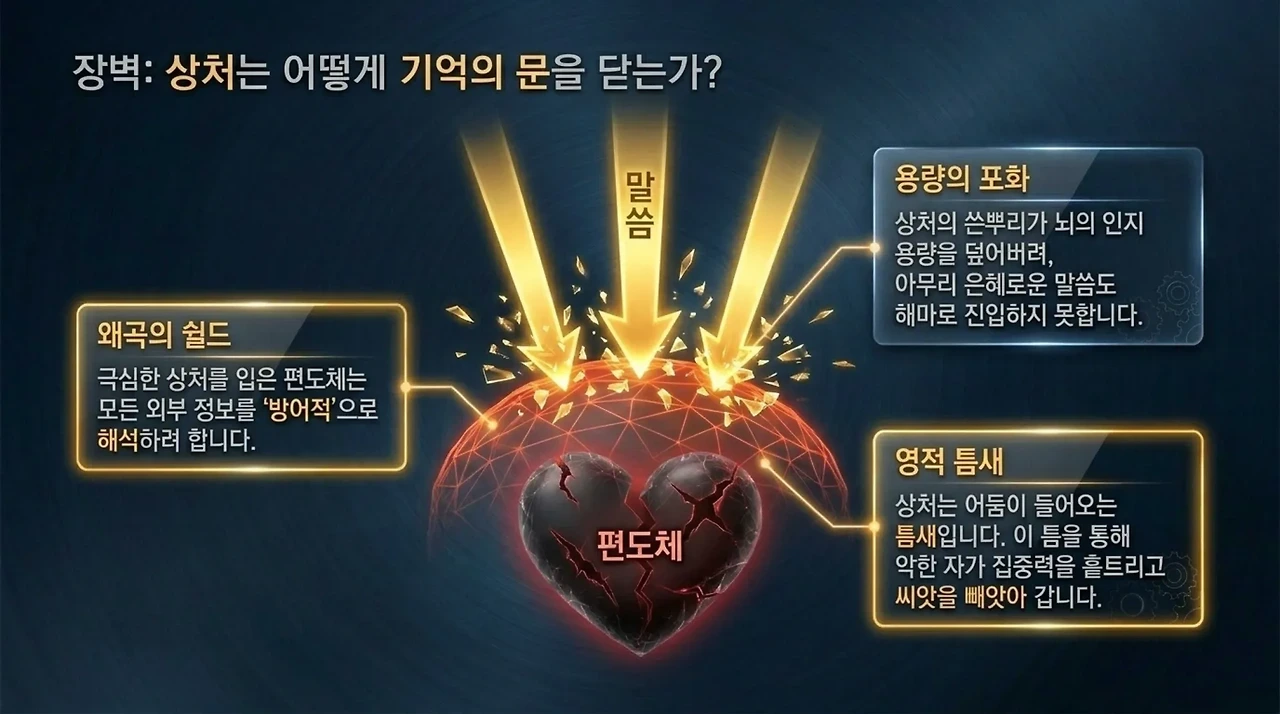
One of the key internal factors that hinders the memorization of God’s Word is emotional wounds. The sermon manuscript explains this by linking the amygdala in the brain to emotional wounds. The amygdala is described as the area of the brain associated with emotional shock, fear, and memories of trauma. In pastoral terms, people with deep emotional wounds tend to hear the Word through the lens of those wounds. Consequently, even rebuke intended to save their lives can feel like a dagger piercing their hearts.
For example, if someone who has experienced bullying has not healed from that trauma, they may interpret every situation through the lens of “Are they pushing me away?” They may feel ignored if someone is silent for a moment, or believe they have been abandoned if a minor misunderstanding arises within the community. The same applies to the Word. When a preacher rebukes sin, it should be received as the Holy Spirit’s surgical scalpel; however, if the emotional wound is deep, it is perceived as a sword attacking them. As a result, rather than being remembered as the Word, it lingers as a source of defensiveness and anger.
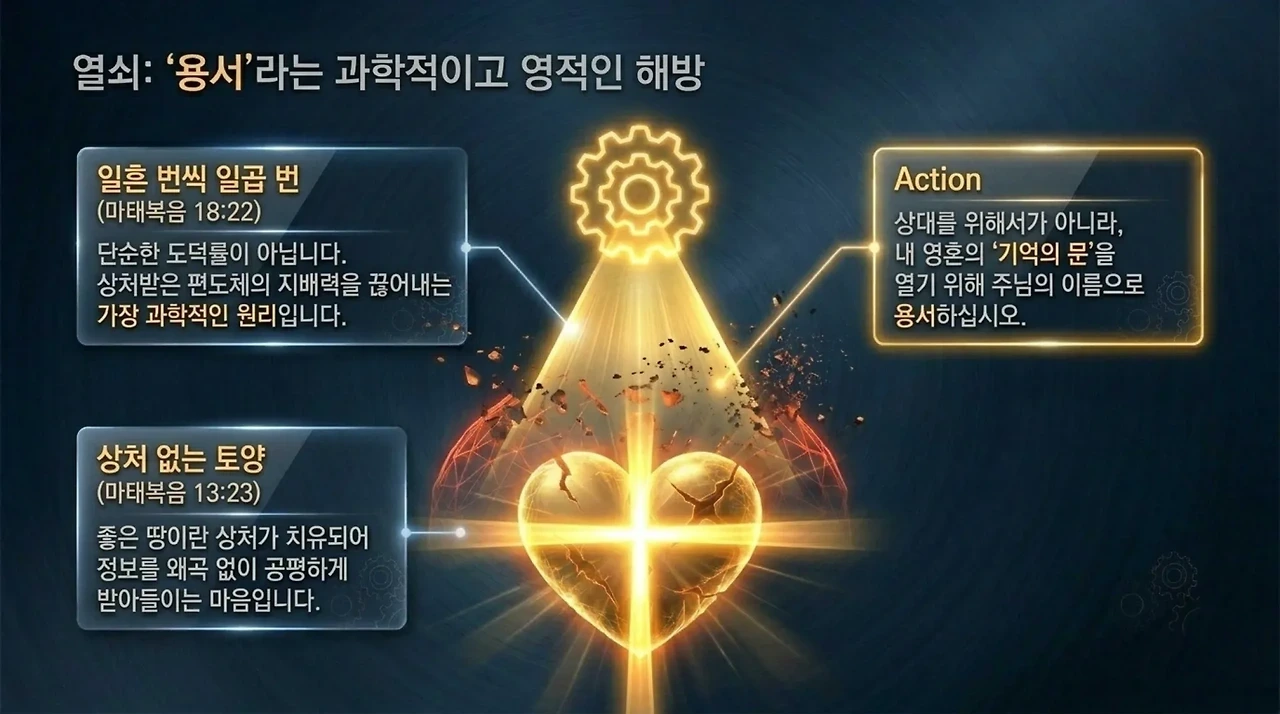
Therefore, in order to remember the Word for a long time and use it correctly, the wounds of the heart must be healed. The path to that healing is forgiveness and repentance. When Peter asked how many times he should forgive a brother who sins, Jesus replied that he should do so not just seven times, but seventy times seven (Matt. 18:21–22).
Matt. 18:21–22 Then Peter came to Him and said, “Lord, how often shall I forgive my brother who sins against me? Up to seven times?” Jesus said to him, “I do not say to you, up to seven times, but up to seventy times seven.”
Forgiveness does not mean taking the offender’s sin lightly. Forgiveness means laying down before the blood of Jesus Christ the power of the wounds that bind my heart. Because I have been forgiven by the Lord, I entrust the one who has hurt me to the Lord’s judgment and mercy. Paul also says that we must forgive one another, just as God has forgiven us in Christ (Eph. 4:31–32).
Ephesians 4:31–32: “Get rid of all bitterness, rage, anger, outbursts of wrath, and slander, along with all malice. Be kind to one another, compassionate, and forgiving one another, just as God in Christ forgave you.”
Preachers must be especially careful in this regard. When someone with unhealed emotional wounds preaches the Word, the sword of the Word can become a dagger that stabs people rather than a surgical knife that saves lives. Even when speaking the same truth, if it comes from a place of hurt, it becomes condemnation; if it comes from the love of the cross, it becomes a word of healing. Therefore, those who remember and teach the Word must first deal with their own wounds through repentance and forgiveness.
Hebrews exhorts us not to let a bitter root grow up to cause trouble and defile many (Heb. 12:15). When emotional wounds grow into a bitter root, they distort the Word. However, when Christ’s forgiveness washes away those wounds, the heart can once again receive the Word with an open mind.
5. 마음의 상처는 왜 말씀 기억을 방해하는가?
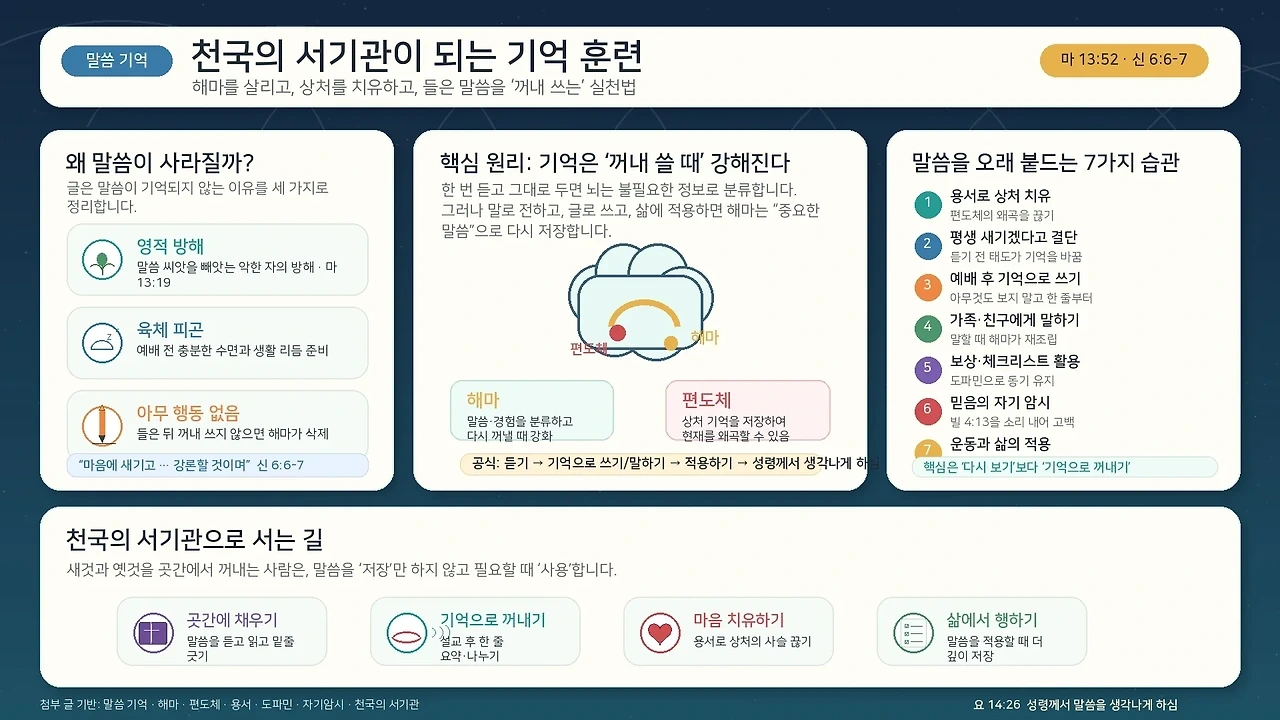
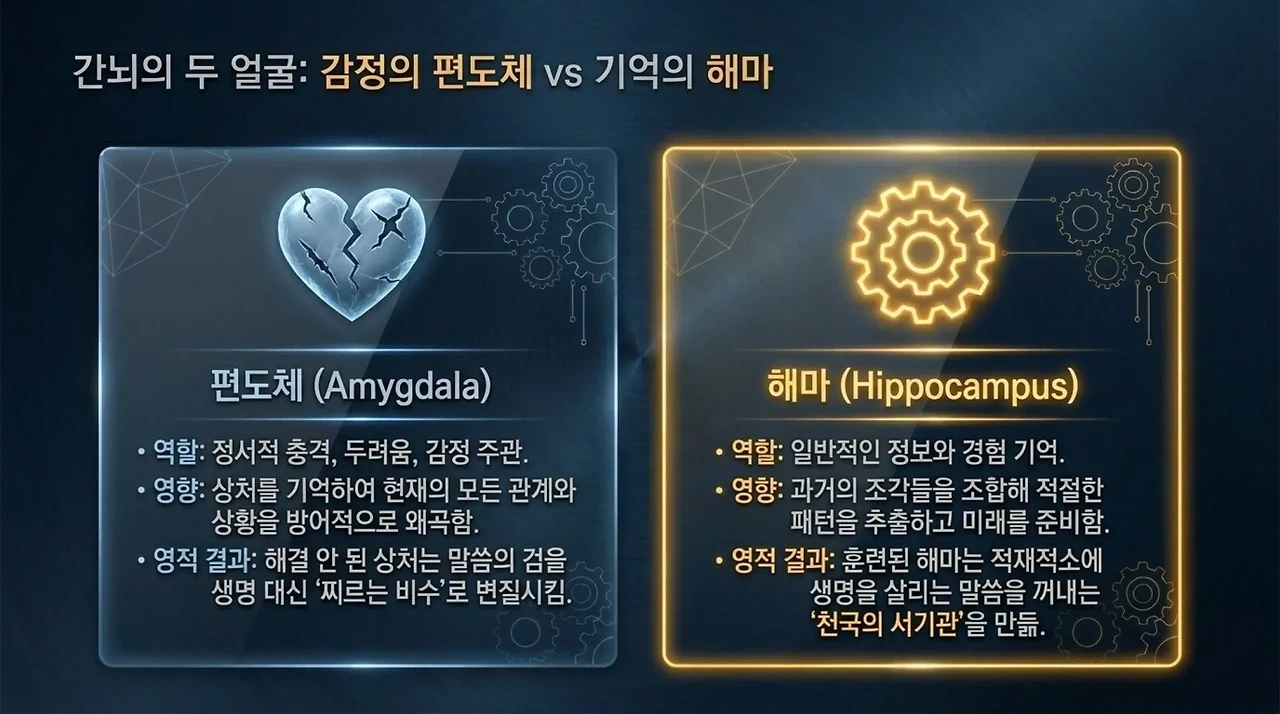
말씀 기억을 방해하는 중요한 내적 요인 가운데 하나는 마음의 상처다. 설교 원고에서는 뇌의 편도체를 상처와 연결하여 설명한다. 편도체는 감정적 충격과 두려움, 상처의 기억과 관련된 영역으로 설명된다. 목회적으로 말하면, 마음에 깊은 상처가 있는 사람은 말씀을 들어도 그 상처의 렌즈를 통해 듣기 쉽다. 그래서 생명을 살리기 위한 책망도 자신을 찌르는 비수처럼 느낄 수 있다.
예를 들어, 왕따를 경험한 사람이 그 상처를 치유받지 못하면 모든 상황을 ‘나를 밀어내는가’라는 관점으로 해석할 수 있다. 누군가 잠시 말이 없어도 자신을 무시한다고 느끼고, 공동체에서 작은 오해가 생겨도 자신이 버림받았다고 생각한다. 말씀도 마찬가지다. 설교자가 죄를 책망하면 성령의 수술 칼로 받아야 하는데, 상처가 강하면 자신을 공격하는 칼로 받아들인다. 그 결과 말씀은 기억으로 남기보다 방어와 분노의 감정으로 남는다.
그러므로 말씀을 오래 기억하고 바르게 사용하려면 마음의 상처가 치유되어야 한다. 그 치유의 길은 용서와 회개다. 베드로가 형제가 죄를 범하면 몇 번이나 용서해야 하는지 물었을 때, 예수님은 일곱 번뿐 아니라 일곱 번을 일흔 번까지라도 해야 한다고 말씀하셨다(마 18:21-22).
마 18:21-22 그 때에 베드로가 나아와 이르되 주여 형제가 내게 죄를 범하면 몇 번이나 용서하여 주리이까 일곱 번까지 하오리이까 예수께서 이르시되 네게 이르노니 일곱 번뿐 아니라 일곱 번을 일흔 번까지라도 할지니라
용서는 가해자의 죄를 가볍게 여기는 것이 아니다. 용서는 내 마음을 묶고 있는 상처의 권세를 예수 그리스도의 피 앞에 내려놓는 것이다. 내가 주님께 용서받았기 때문에, 나에게 상처 준 사람도 주님의 심판과 긍휼에 맡기는 것이다. 바울도 하나님이 그리스도 안에서 우리를 용서하신 것같이 서로 용서해야 한다고 말한다(엡 4:31-32).
엡 4:31-32 너희는 모든 악독과 노함과 분냄과 떠드는 것과 비방하는 것을 모든 악의와 함께 버리고 서로 친절하게 하며 불쌍히 여기며 서로 용서하기를 하나님이 그리스도 안에서 너희를 용서하심과 같이 하라
설교자는 특히 이 부분에서 조심해야 한다. 마음의 상처가 치유되지 않은 사람이 말씀을 전하면, 말씀의 칼이 사람을 살리는 수술 칼이 아니라 사람을 찌르는 비수가 될 수 있다. 같은 진리를 말하더라도 상처에서 말하면 정죄가 되고, 십자가의 사랑 안에서 말하면 회복의 말씀이 된다. 그러므로 말씀을 기억하고 가르치는 사람은 먼저 자기 상처를 회개와 용서로 처리해야 한다.
히브리서는 쓴 뿌리가 나서 괴롭게 하고 많은 사람이 더럽게 되지 않게 하라고 권면한다(히 12:15). 마음의 상처가 쓴 뿌리로 자라면 말씀을 왜곡한다. 그러나 그리스도의 용서가 그 상처를 씻으면 마음은 다시 공평하게 말씀을 받을 수 있다.
Hebrews 12:15 See to it that no one falls short of the grace of God, and that no bitter root springs up to cause trouble and defile many through it.
Ultimately, remembering the Word is both a matter of the mind and a matter of the heart. When wounds dominate the heart, the Word cannot remain there for long. When we, as those who have been forgiven, forgive others, our hearts are restored as vessels capable of holding the Word.
As wounds are healed, our interpretation of the Word changes. Words that once sounded only like rebuke now sound like loving exhortation, and words of devotion that once felt like a burden now sound like an invitation of grace. Even the same words are received completely differently depending on the state of the heart. Therefore, remembering the Word is related to preparing the soil of the heart before it is a matter of memory training. If the soil of the heart remains rocky or thorny, the Word cannot take deep root. When the soil of the heart is softened through repentance and forgiveness, the Word can remain there for a long time.
6. How does the hippocampus store and prune the Word?
The sermon manuscript places significant emphasis on the hippocampus when explaining the memorization of the Word. The hippocampus is described as a crucial structure in the brain related to memory. The pastor explains that the hippocampus stores information and retrieves past memories to predict future situations. The important pastoral application here is clear: the hippocampus does not hold onto all information forever. It prunes away information deemed unnecessary, just as a gardener prunes a plant.
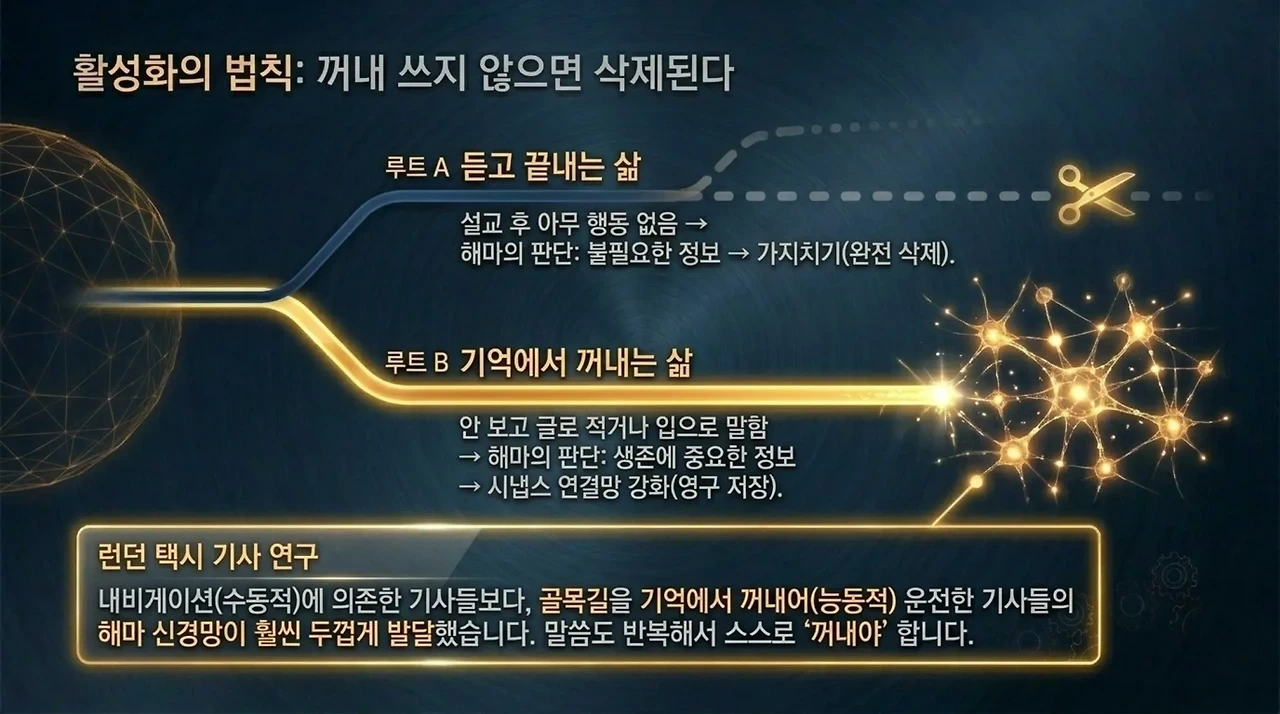
People can remember what they have just seen and heard. However, as a day or three days pass, many memories fade away. This is because the hippocampus deems them unimportant and discards them. If you listen to a sermon but do not revisit it, the hippocampus treats that message as temporary information. However, if you rewrite, repeat, and meditate on the message you have heard, the hippocampus recognizes it as important and retains it for a long time.
Psalm 119:11 speaks of “laying up” the Word in one’s heart. Here, “laying up” goes beyond simply storing something; it implies hiding and cherishing something precious. The Hebrew word “tsāphan” means to hide, store, or treasure. God’s Word is not a sound to be heard briefly and then let go; it is a treasure to be hidden deep within the heart (Ps. 119:11).
Ps. 119:11 I have hidden your word in my heart, that I might not sin against you.
When Mary heard the amazing news about Jesus, she treasured all these words in her heart and pondered them (Luke 2:19). This is the key principle of remembering God’s Word: to treasure it in your heart and ponder it. It is not merely a matter of marveling at it and moving on, but of repeatedly reflecting on those words within your heart.
Luke 2:19 But Mary treasured all these things and pondered them in her heart.
히 12:15 너희는 하나님의 은혜에 이르지 못하는 자가 없도록 하고 또 쓴 뿌리가 나서 괴롭게 하여 많은 사람이 이로 말미암아 더럽게 되지 않게 하며
결국 말씀 기억은 머리의 문제이면서 동시에 마음의 문제다. 상처가 마음을 지배하면 말씀은 오래 머물지 못한다. 용서받은 자로서 용서할 때, 마음은 말씀을 담을 수 있는 그릇으로 회복된다.
상처가 치유될 때 말씀의 해석도 달라진다. 이전에는 책망으로만 들리던 말씀이 사랑의 권면으로 들리고, 이전에는 부담으로만 느껴지던 헌신의 말씀이 은혜의 초청으로 들린다. 같은 말씀이라도 마음의 상태에 따라 전혀 다르게 받아들여진다. 그러므로 말씀 기억은 기억력 훈련 이전에 마음의 토양을 고르는 일과 관련된다. 마음 밭이 돌밭과 가시밭으로 남아 있으면 말씀은 깊이 뿌리내리지 못한다. 회개와 용서로 마음 밭이 부드러워질 때, 말씀은 오래 머물 수 있다.
6. 해마는 말씀을 어떻게 저장하고 가지치기하는가?
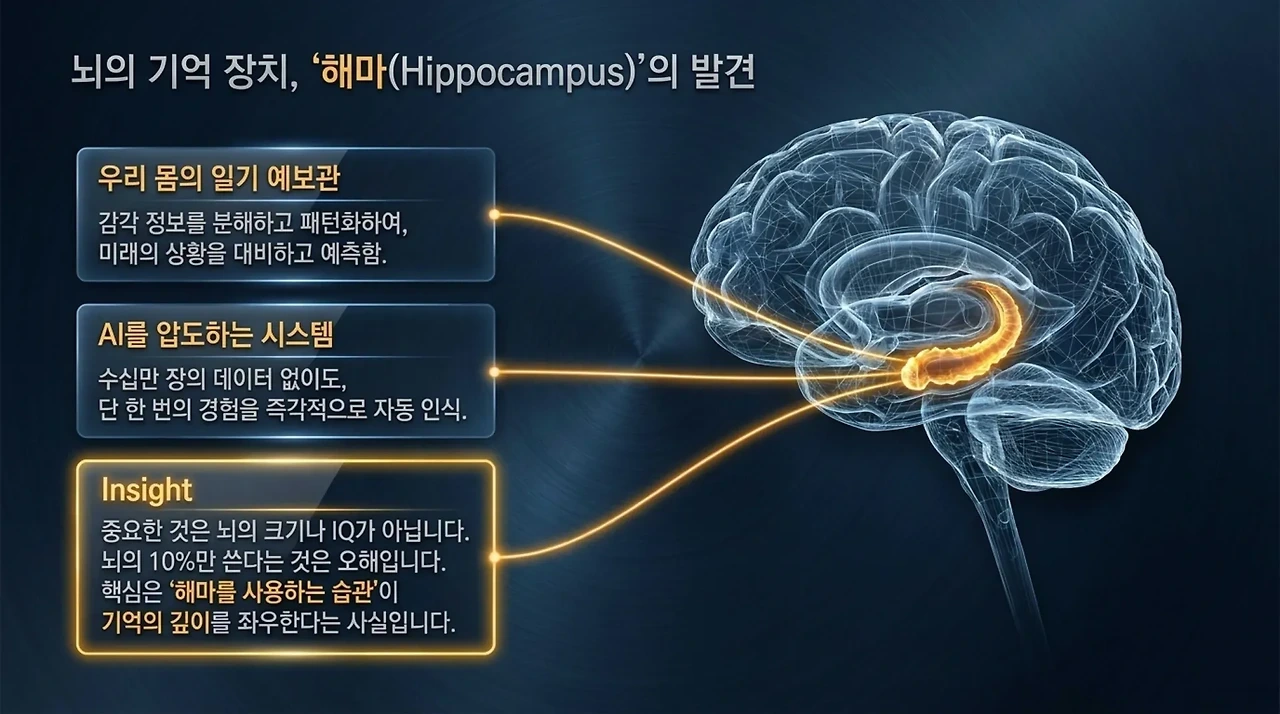
설교 원고는 말씀 기억을 설명하면서 해마를 중요하게 다룬다. 해마는 뇌 안에서 기억과 관련된 중요한 구조로 설명된다. 목사님은 해마가 정보를 저장하고, 과거의 기억을 꺼내 미래의 상황을 예측하는 데 사용한다고 설명한다. 여기서 중요한 목회적 적용은 분명하다. 해마는 모든 정보를 영원히 붙들고 있지 않는다. 필요 없다고 판단되는 정보는 가지치기하듯 쳐낸다.
사람은 방금 본 것과 들은 것을 기억할 수 있다. 그러나 하루가 지나고 사흘이 지나면 많은 기억이 사라진다. 왜냐하면 해마가 그것을 중요하지 않은 정보로 판단하여 정리하기 때문이다. 설교를 듣고도 다시 꺼내 보지 않으면, 해마는 그 말씀을 일시적 정보로 취급한다. 그러나 들은 말씀을 다시 쓰고, 다시 말하고, 다시 묵상하면, 해마는 그것을 중요한 것으로 인식하여 오래 남긴다.
시편 119편 11절은 말씀을 마음에 두었다고 말한다. 여기서 ‘두다’는 단순히 보관한다는 뜻을 넘어, 귀한 것을 숨겨 간직하는 의미를 가진다. 히브리어 ‘차판’(tsāphan)은 감추다, 저장하다, 소중히 간직하다는 의미를 가진다. 하나님의 말씀은 잠시 듣고 흘려보낼 소리가 아니라, 마음속 깊은 곳에 감추어 두어야 할 보화다(시 119:11).
시 119:11 내가 주께 범죄하지 아니하려 하여 주의 말씀을 내 마음에 두었나이다
마리아도 예수님에 관한 놀라운 말을 들었을 때 그 모든 말을 마음에 새기어 생각하였다(눅 2:19). 이것이 말씀 기억의 중요한 원리다. 마음에 새기고 생각하는 것이다. 단순히 감탄하고 끝내지 않고, 그 말씀을 반복하여 마음속에서 돌이켜 보는 것이다.
눅 2:19 마리아는 이 모든 말을 마음에 새기어 생각하니라
In the sermon manuscript, the seahorse is described as both a repository of memory and a tool for predicting the future. When the words of Scripture stored in the past are connected to one another, believers can use the Word to make sound judgments when faced with new situations. For example, by remembering David’s wars, the story of Jacob’s victory, and, together with these, Jesus’ victory on the cross and the promise of victory in the Book of Revelation, we can know what to hold onto in the midst of spiritual warfare.
Therefore, remembering the Word does not end with merely memorizing individual verses. Of course, memorizing Bible verses is important. However, a deeper level involves connecting verse to verse, event to event, and the Old Testament types to their New Testament fulfillments—seeing them within God’s bigger picture. This is a life in which the verses stored in the hippocampus are connected and applied in the Holy Spirit.
When you hear a verse and think, “I’ll forget this as soon as I step outside,” the memory won’t last long. However, if you listen to it thinking, “This is a word I will hold onto until I die,” your attitude itself changes. If you retrieve and apply that word before your hippocampus prunes it, it becomes imprinted as something important. Herein lies the real secret to remembering God’s Word.
The sermon manuscript also mentions the example of dementia. When the hippocampus and memory functions weaken, recent memories begin to fade first. You may find yourself unable to recall what you just heard, what you just did, or even what you ate today. This serves as a warning regarding the memory of God’s Word as well. If you do not use your mind regularly, do not bring the Word to mind and apply it, and leave everything to search engines and machines, your memory muscles may weaken. Believers must continue to exercise the pathways of memory by taking the trouble to look up Bible references, open the text themselves, and read the context before and after the passage.
Repetition is necessary to help the hippocampus prioritize the Word. However, this repetition is not merely mechanical. It involves reapplying the same passage to today’s circumstances, connecting it to yesterday’s experiences, and carrying it forward as a resolution for tomorrow. When we do this, the Word becomes not just past knowledge but a light for the present. The Lord’s Word is not a spark that shines once and vanishes, but a lamp that guides my steps day by day.
7. How Should We Write Down the Word to Remember It Long-Term?
The most powerful way to remember the Word for a long time is to write it down. Listening to sermons again is also beneficial. However, an even more powerful method is to write down what you remember on your own after listening to a sermon. Listening again is a way of inputting information from the outside one more time. Writing, however, is a way of retrieving what is stored internally. When we write things down, the hippocampus recognizes more strongly that the information is important.
In Habakkuk, God commanded that the vision be written down and clearly engraved on a tablet (Hab. 2:2). Writing is not merely an aid to memory; it is an act of organizing and clarifying what is in the heart. When we write, vague thoughts are organized into sentences. The Word organized into sentences is easier to recall.
Habakkuk 2:2 The LORD answered me and said, “Write down this vision clearly on tablets, so that a runner may read it.”
The first exercise in writing down the Word is summarizing a sermon. What was the title of today’s sermon? What was the Scripture passage? What was the first key point? Which Bible verse did the preacher repeatedly emphasize? What was the conclusion? At first, even writing just one line is enough. One line becomes two, two lines become ten, and ten lines become a page. This is a practical exercise for committing God’s Word to memory.
설교 원고에서 해마는 기억의 저장소이면서 동시에 미래 예측의 도구로 설명된다. 과거에 저장된 말씀들이 서로 연결될 때, 성도는 새로운 상황을 만났을 때 말씀으로 판단할 수 있다. 예를 들어 다윗의 전쟁을 기억하고, 야곱이 이긴 자가 된 사건을 기억하며, 예수님의 십자가 승리와 요한계시록의 이기는 자 약속을 함께 기억하면, 영적 전쟁의 현장에서 무엇을 붙들어야 하는지 알 수 있다.
그래서 말씀 기억은 낱개의 구절 암송으로만 끝나지 않는다. 물론 성경 구절을 외우는 일은 중요하다. 그러나 더 깊은 단계는 구절과 구절, 사건과 사건, 구약의 예표와 신약의 성취를 연결하여 하나님의 큰 그림 안에서 보는 것이다. 이것이 해마가 저장한 말씀을 성령 안에서 연결하여 사용하는 삶이다.
말씀을 들을 때 ‘문 밖에 나가면 잊어버릴 말씀’이라고 여기면 기억은 오래가지 않는다. 그러나 ‘이 말씀은 죽을 때까지 붙들 말씀’이라고 듣는다면 태도 자체가 달라진다. 해마가 가지치기하기 전에 다시 꺼내어 쓰면, 그 말씀은 중요한 것으로 각인된다. 말씀 기억의 실제 비밀은 여기에 있다.
설교 원고에서는 치매의 예도 함께 언급된다. 해마와 기억 기능이 약해지면 가까운 기억부터 흐려진다. 방금 들은 말, 방금 한 일, 오늘 먹은 식사부터 기억나지 않을 수 있다. 이것은 말씀 기억에도 경고가 된다. 평소에 머리를 쓰지 않고, 말씀을 꺼내 쓰지 않고, 모든 것을 검색과 기계에만 맡기면 기억의 근육은 약해질 수 있다. 성도는 성경 주소를 찾고, 본문을 직접 펼치고, 말씀의 앞뒤 문맥을 읽는 수고를 통해 기억의 길을 계속 사용해야 한다.
해마가 말씀을 중요하게 여기게 하려면 반복이 필요하다. 그러나 이 반복은 단순한 기계적 반복이 아니다. 같은 말씀을 오늘의 상황에 다시 적용하고, 어제의 경험과 연결하며, 내일의 결단으로 가져가는 반복이다. 그렇게 할 때 말씀은 과거의 지식이 아니라 현재의 빛이 된다. 주의 말씀은 한 번 비추고 사라지는 불꽃이 아니라, 날마다 내 발걸음을 인도하는 등불이다.
7. 말씀을 오래 기억하려면 어떻게 꺼내 써야 하는가?
말씀을 오래 기억하는 가장 강력한 방법은 꺼내 쓰는 것이다. 설교를 다시 듣는 것도 유익하다. 그러나 더 강력한 방법은 설교를 듣고 난 뒤, 기억나는 내용을 스스로 글로 써 보는 것이다. 다시 듣는 것은 외부에서 정보를 한 번 더 넣는 방식이다. 그러나 글로 쓰는 것은 내부에 저장된 것을 꺼내는 방식이다. 해마는 꺼내 쓸 때 그 정보가 중요하다는 사실을 더 강하게 인식한다.
하박국에서 하나님은 묵시를 기록하여 판에 명백히 새기라고 하셨다(합 2:2). 기록은 기억의 보조 장치일 뿐 아니라, 마음속에 있는 것을 정리하고 선명하게 만드는 행위다. 기록하면 모호하던 생각이 문장으로 정리된다. 문장으로 정리된 말씀은 다시 기억되기 쉽다.
합 2:2 여호와께서 내게 대답하여 이르시되 너는 이 묵시를 기록하여 판에 명백히 새기되 달려가면서도 읽을 수 있게 하라
말씀을 꺼내 쓰는 첫 번째 훈련은 설교 요약이다. 오늘 들은 말씀의 제목은 무엇이었는가? 본문은 무엇이었는가? 첫 번째 핵심은 무엇이었는가? 설교자가 반복해서 강조한 성경 구절은 무엇이었는가? 결론은 무엇이었는가? 처음에는 한 줄만 써도 된다. 한 줄이 두 줄이 되고, 두 줄이 열 줄이 되며, 열 줄이 한 페이지가 된다. 이것이 말씀을 저장하는 실제적인 훈련이다.
The second exercise is explaining it verbally. Deuteronomy instructs us to engrave God’s Word on our hearts, teach it diligently to our children, and speak it whether we are sitting at home, walking along the road, lying down, or getting up (Deut. 6:6–7). The Word comes alive again when we speak it. We need to practice sharing the Word with our family at the dinner table, explaining today’s message in conversations with fellow believers, and answering questions with Scripture when someone asks.
Deut. 6:6-7 “These words that I command you today shall be on your heart. You shall teach them diligently to your children, and shall talk of them when you sit in your house, when you walk by the way, when you lie down, and when you rise.”
Peter also told believers to always be ready to give an answer to anyone who asks about the hope that is within them (1 Pet. 3:15). It is difficult to speak a message without preparation. However, those who regularly write down Scripture and practice explaining it verbally will not be flustered when asked questions.
1 Peter 3:15 Sanctify Christ as Lord in your hearts, and always be ready to give an answer to anyone who asks you a reason for the hope that is in you, yet do so with gentleness and respect.
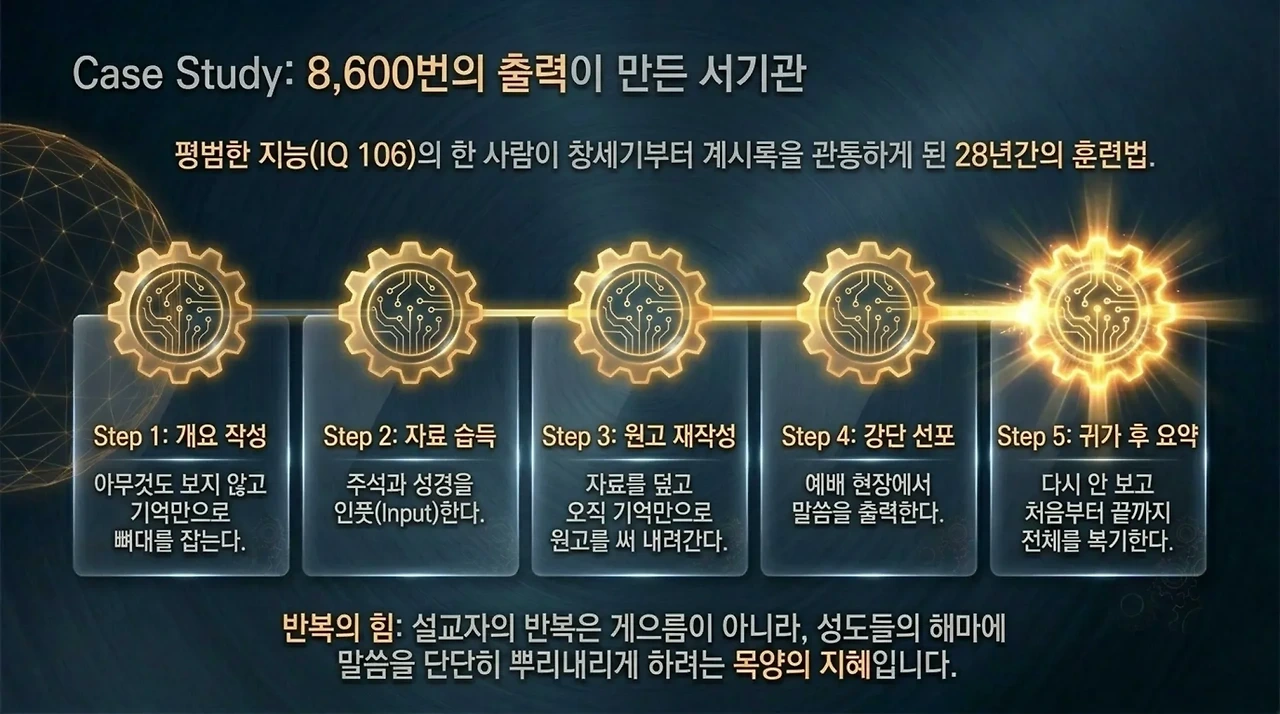
A pastor’s sermon preparation process also illustrates this principle. First, once the sermon topic is set, an outline is written. Next, relevant Scripture passages and materials are researched. A summary for the bulletin is written, and then the manuscript is drafted. Even after the sermon is delivered, a summary is written again. This entire process involves retrieving and articulating what is stored in memory. If you retrieve and articulate what you have heard at least five times in different ways, the Word becomes not merely information but a tool ingrained in your being.
The practice of retrieving and applying the Word is not just for preachers. It is something every believer must do. Parents must retrieve and apply the Word to explain it to their children. If someone at work asks about faith, you must retrieve and apply the Word. When facing attacks from demons, you must retrieve and apply the Word to resist in the name of Jesus. To avoid becoming discouraged in the midst of suffering, you must retrieve and apply the Word of promise.
Therefore, the secret to remembering the Word for a long time is not just hearing it again. It is remembering it and writing it down, remembering it and speaking it, and remembering it and applying it. The more you draw upon the Word, the more deeply it is stored in your heart.
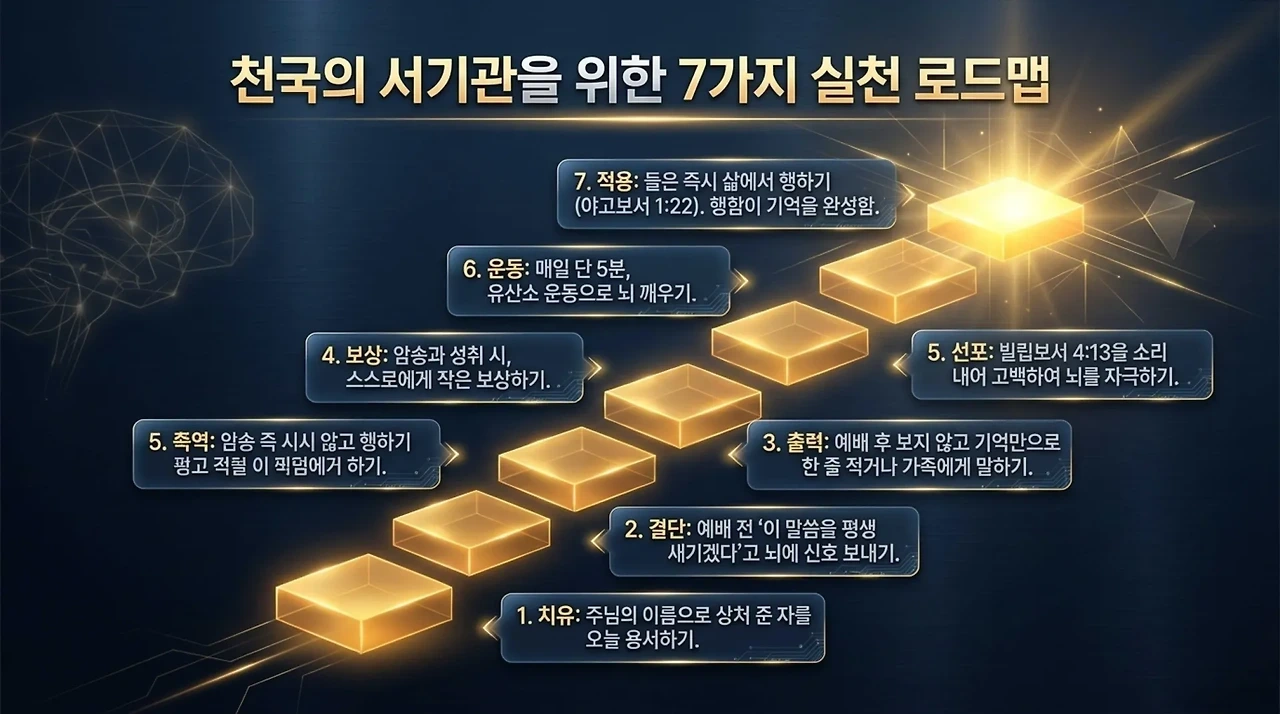
Practical training can start on a very small scale. On your way home after worship, first recall the Bible passage you heard today. Next, recall the title of the sermon. Then, write down three key words. For example, you might write “Word, hippocampus, put into practice.” Next, use those three words to form a sentence: “We must continually put the Word into practice so that the hippocampus recognizes its importance.” This is where the summary of the sermon begins. A single short sentence becomes a seed of memory.
There is a principle to explaining things in words as well. Simply saying, “It was a blessing,” does not deepen your memory. You must explain what exactly was a blessing, which Scripture passage stayed with you, and how that Word touched a specific part of your life. The moment you put it into words like this, the Word transforms from an emotional trace into a structure of thought. Once transformed into a structure of thought, the Word becomes easier to recall and apply.
두 번째 훈련은 말로 설명하는 것이다. 신명기는 하나님의 말씀을 마음에 새기고 자녀에게 부지런히 가르치며 집에 앉았을 때든지 길을 갈 때든지 누웠을 때든지 일어날 때든지 말하라고 한다(신 6:6-7). 말씀은 말할 때 다시 살아난다. 가족과 식탁에서 말씀을 나누고, 성도들과 대화 속에서 오늘 들은 말씀을 설명하며, 누군가 질문할 때 성경으로 대답하는 훈련이 필요하다.
신 6:6-7 오늘 내가 네게 명하는 이 말씀을 너는 마음에 새기고 네 자녀에게 부지런히 가르치며 집에 앉았을 때에든지 길을 갈 때에든지 누워 있을 때에든지 일어날 때에든지 이 말씀을 강론할 것이며
베드로도 성도들에게 속에 있는 소망에 관한 이유를 묻는 자에게 대답할 것을 항상 준비하라고 했다(벧전 3:15). 준비되지 않은 말씀은 꺼내기 어렵다. 그러나 평소에 말씀을 기록하고 말로 설명해 본 사람은 질문을 받을 때 당황하지 않는다.
벧전 3:15 너희 마음에 그리스도를 주로 삼아 거룩하게 하고 너희 속에 있는 소망에 관한 이유를 묻는 자에게는 대답할 것을 항상 준비하되 온유와 두려움으로 하고
목사님의 설교 준비 과정도 이 원리를 보여 준다. 먼저 설교 주제가 정해지면 개요를 쓴다. 그 다음 관련 본문과 자료를 찾아본다. 주보 요약을 쓰고, 다시 원고를 작성한다. 설교를 한 뒤에도 다시 요약한다. 이런 과정은 모두 기억을 꺼내 쓰는 과정이다. 한 번 들은 것을 다섯 번 이상 다른 방식으로 꺼내 쓰면, 말씀은 단순 정보가 아니라 몸에 익은 도구가 된다.
말씀을 꺼내 쓰는 훈련은 설교자만의 일이 아니다. 모든 성도가 해야 할 일이다. 부모가 자녀에게 말씀을 설명하려면 꺼내 써야 한다. 직장에서 누군가 믿음에 대해 물으면 꺼내 써야 한다. 귀신의 공격이 있을 때 예수 이름으로 대적하려면 말씀을 꺼내 써야 한다. 고난 중에 낙심하지 않으려면 약속의 말씀을 꺼내 써야 한다.
그러므로 말씀을 오래 기억하는 비결은 다시 듣기만이 아니다. 기억해서 써 보고, 기억해서 말해 보고, 기억해서 적용하는 것이다. 말씀은 꺼내 쓸수록 더 깊이 저장된다.
실제 훈련은 아주 작게 시작할 수 있다. 예배 후 집으로 돌아가는 길에 오늘 들은 성경 본문을 먼저 떠올린다. 그 다음 설교 제목을 떠올린다. 그리고 핵심 단어 세 개를 적는다. 예를 들어 ‘말씀, 해마, 꺼내 쓰기’와 같이 적는 것이다. 그 다음 그 세 단어를 가지고 한 문장을 만든다. ‘말씀은 해마가 중요하다고 여기도록 계속 꺼내 써야 한다.’ 여기서부터 설교 요약이 시작된다. 작은 문장 하나가 기억의 씨앗이 된다.
말로 설명할 때도 원리가 있다. 단순히 “은혜로웠다”고 말하면 기억은 깊어지지 않는다. 무엇이 은혜로웠는지, 어떤 성구가 마음에 남았는지, 그 말씀이 내 삶의 어떤 부분을 건드렸는지를 말해야 한다. 이렇게 말하는 순간 말씀은 감정의 흔적에서 생각의 구조로 바뀐다. 생각의 구조로 바뀐 말씀은 다시 꺼내 쓰기 쉬워진다.
8. What are the supplementary principles that aid in remembering the Word?
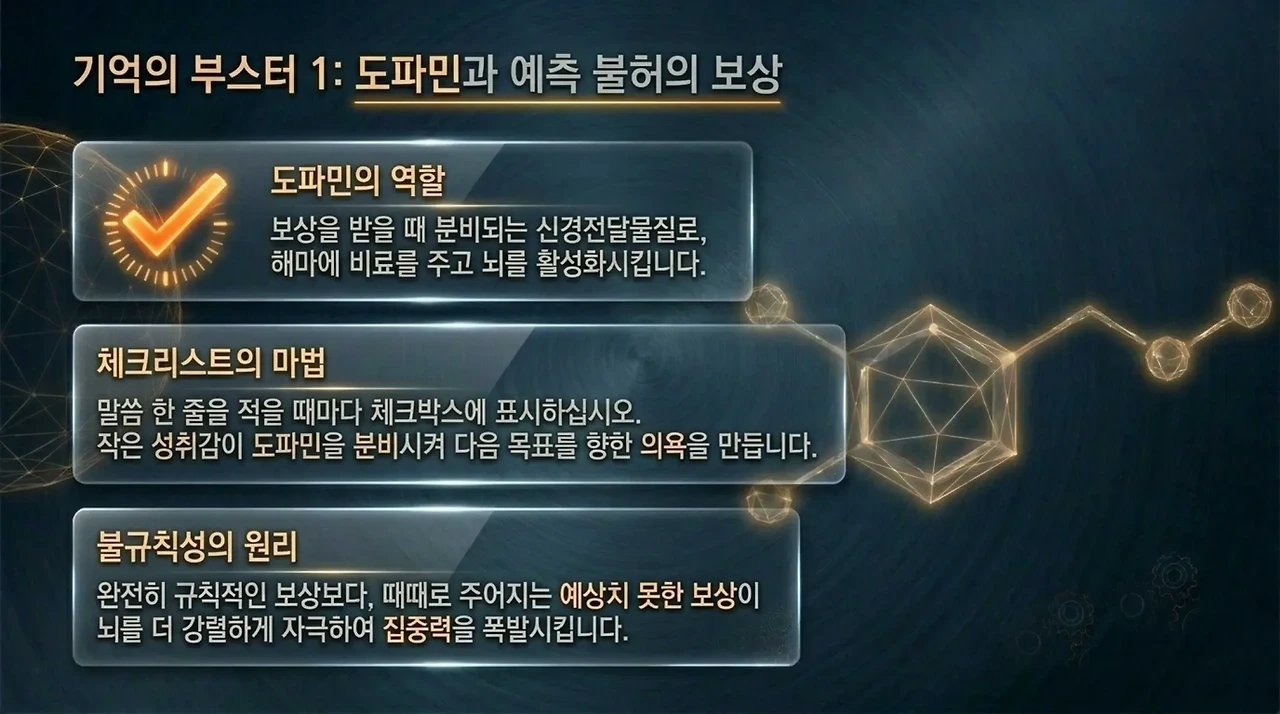
After discussing wound healing and retrieving memories as the core principles for developing the hippocampus, the sermon manuscript presents several supplementary principles. The first is the principle of joy and reward. The pastor explains this in relation to dopamine. When there is a reward, motivation arises, and when motivation arises, memory and training occur more effectively. The reward referred to here does not mean only worldly desires. The spiritual benefits gained as a result of holding fast to the Word, the fruits of ministry, the support of fellow ministers, progress in repentance, and the hope of heavenly rewards can all serve as holy motivations.
Paul says that everyone who competes exercises self-control in all things (1 Cor. 9:25). Just as an athlete exercises self-control to win a perishable victor’s crown, so a believer must discipline himself to obtain what is imperishable. The same applies to the discipline of memorizing the Word. When we look forward to the spiritual benefits we will receive in the future rather than seeking immediate comfort, we gain the strength to persevere.
1 Corinthians 9:25 Everyone who competes in the games exercises self-control in all things. They do it to receive a perishable wreath, but we do it to receive an imperishable one.
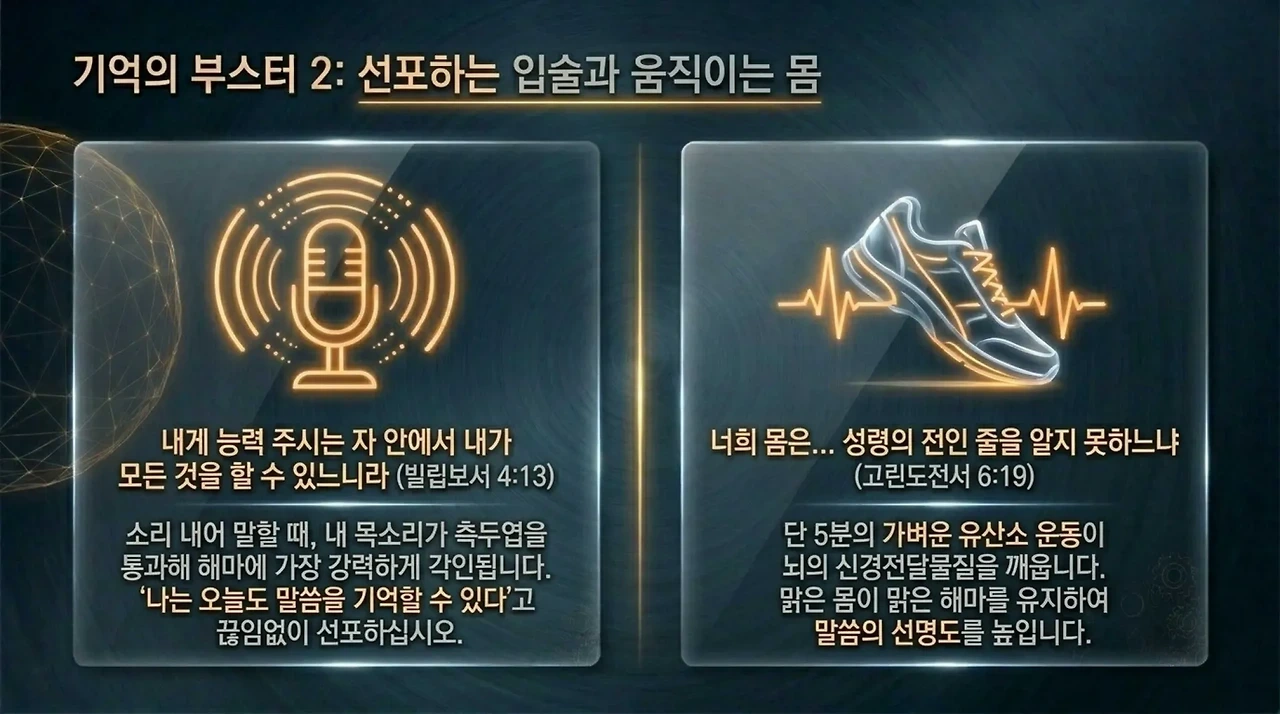
Second is self-suggestion—or, more precisely, a confession of faith based on the Word. This is not mere positive thinking. A believer is not someone who says, “I can do everything in my own strength.” A believer is someone who confesses, “I can do all things through Christ who strengthens me” (Phil. 4:13).
Phil. 4:13 I can do all things through Christ who strengthens me.
Jesus also said that whoever believes in Him will do the works He has done, and will even do greater works than these (John 14:12). Therefore, believers can speak words of faith to themselves based on the Word. “I can hold on to the Word more firmly today than I did yesterday.” “I can store up more deeply the words the Holy Spirit reveals to me.” “I can be established as one who brings life to others by drawing upon the Lord’s Word.” Such confessions are not empty words but acts of faith-based self-affirmation grounded in the Lord’s promises.
John 14:12 “Truly, truly, I say to you, whoever believes in me will also do the works that I do; and greater works than these will he do, because I am going to the Father.”
Third is physical discipline. The body and memory are not separate. When the body is too tired, it is difficult to listen to the Word, and when the body is excessively listless, it is difficult to practice recalling and applying what we have memorized. Therefore, appropriate exercise, sleep, and a regular routine also help in memorizing the Word. A spiritual person is not someone who neglects the body, but someone who carefully manages the body as a vessel for holding the Word.
Fourth is repentance and deliverance. Spirits that prevent us from hearing the Word, spirits that cause doubt, spirits that block our ears, and spirits that cloud our thoughts must be dealt with through repentance and in the name of Jesus. From the perspective of demonology that Dongtan Myeongseong Church has emphasized, the issue of remembering the Word is not merely a matter of the brain but also a matter of the spiritual realm. If evil spirits—which have entered through ancestral rites, idolatry, and unbelief—are blocking the Word, believers must confess those sins and resist those spirits through the blood and name of Jesus Christ.
8. 말씀 기억을 돕는 보조 원리는 무엇인가?
설교 원고는 해마를 발달시키는 핵심 원리로 상처 치유와 기억 꺼내 쓰기를 말한 뒤, 몇 가지 보조 원리를 제시한다. 첫째는 기쁨과 보상의 원리다. 목사님은 이것을 도파민과 연결하여 설명한다. 보상이 있으면 의욕이 생기고, 의욕이 생기면 기억과 훈련이 더 잘 이루어진다. 여기서 말하는 보상은 세속적 욕심만을 뜻하지 않는다. 말씀을 붙든 결과로 얻게 될 영적 유익, 사역의 열매, 사역자의 도움, 회개의 진전, 천국의 상급을 바라보는 것도 거룩한 동기가 될 수 있다.
바울은 이기기를 다투는 자마다 모든 일에 절제한다고 말한다(고전 9:25). 운동선수가 썩을 승리자의 관을 얻기 위해 절제한다면, 성도는 썩지 아니할 것을 얻기 위해 자신을 훈련해야 한다. 말씀을 기억하는 훈련도 마찬가지다. 즉각적인 편안함보다 장차 얻게 될 영적 유익을 바라볼 때 지속할 힘이 생긴다.
고전 9:25 이기기를 다투는 자마다 모든 일에 절제하나니 그들은 썩을 승리자의 관을 얻고자 하되 우리는 썩지 아니할 것을 얻고자 하노라
둘째는 자기 암시, 더 정확히 말하면 말씀에 근거한 믿음의 고백이다. 단순한 긍정 심리가 아니다. 성도는 ‘나는 내 힘으로 모든 것을 할 수 있다’고 말하는 사람이 아니다. 성도는 내게 능력 주시는 자 안에서 할 수 있다고 고백하는 사람이다(빌 4:13).
빌 4:13 내게 능력 주시는 자 안에서 내가 모든 것을 할 수 있느니라
예수님도 자신을 믿는 자는 주님이 하신 일을 그도 할 것이며 또한 그보다 큰 일도 하리라고 말씀하셨다(요 14:12). 그러므로 성도는 말씀을 근거로 자신에게 믿음의 말을 들려줄 수 있다. ‘나는 어제보다 오늘 말씀을 더 잘 붙들 수 있다.’ ‘성령께서 내게 깨닫게 하시는 말씀을 나는 더 깊이 저장할 수 있다.’ ‘나는 주님의 말씀을 꺼내어 사람을 살리는 자로 세워질 수 있다.’ 이런 고백은 허공에 던지는 말이 아니라, 주님의 약속 위에 서는 신앙적 자기 암시다.
요 14:12 내가 진실로 진실로 너희에게 이르노니 나를 믿는 자는 내가 하는 일을 그도 할 것이요 또한 그보다 큰 일도 하리니 이는 내가 아버지께로 감이라
셋째는 몸의 훈련이다. 육체와 기억은 분리되어 있지 않다. 몸이 너무 피곤하면 말씀을 듣기 어렵고, 몸이 지나치게 무기력하면 기억을 꺼내 쓰는 훈련도 어렵다. 그래서 적절한 운동과 수면, 규칙적 생활은 말씀 기억에도 도움을 준다. 영적인 사람은 육체를 무시하는 사람이 아니라, 육체를 말씀을 담는 그릇으로 잘 관리하는 사람이다.
넷째는 회개와 축사다. 말씀을 듣지 못하게 하는 영, 의심하게 하는 영, 귀를 막는 영, 생각을 흐리게 하는 영은 회개와 예수 이름으로 처리해야 한다. 동탄명성교회가 강조해 온 귀신론의 관점에서 보면, 말씀 기억의 문제는 단지 뇌의 문제가 아니라 영적 세계의 문제이기도 하다. 조상 제사와 우상숭배와 불신앙의 통로로 들어온 악한 영들이 말씀을 막는다면, 성도는 그 죄를 자백하고 예수 그리스도의 피와 이름으로 그 영들을 대적해야 한다.
However, the Word must be at the center of all these supporting principles. Rewards exist for the sake of the Word; self-suggestion must be grounded in the promises of the Word; and exercise should serve as physical preparation for hearing and serving the Word. Repentance and deliverance are ultimately paths to hearing and obeying the Word more effectively. The purpose of remembering the Word is not to boast of one’s memorization skills, but to know Christ more deeply, build up the church, and prepare to be an overcomer in the last days.
The principle of rewards is also linked to checklists. When you mark how many times you’ve prayed for repentance or indicate whether you’ve read the Bible and summarized a sermon, your brain tracks your progress. Seeing that progress sparks motivation. Just as stickers help young children, small marks and checkmarks give adults the strength to persevere. This is not legalism but the wisdom of discipline. Orderly discipline is necessary for the spiritual life as well.
Exercise should be understood in the same context. A believer who seeks to memorize the Word must not become someone who overworks their body. If the body becomes too exhausted, it is difficult to concentrate during worship, and one quickly becomes weary even while praying. Taking a light walk, catching one’s breath, and moving the body are all part of caring for the vessel that holds the Word. We must not make the body an idol, but neither should we neglect it. For the believer’s body is the temple of the Holy Spirit (1 Cor. 6:19).
1 Cor. 6:19 Do you not know that your body is a temple of the Holy Spirit who is in you, whom you have received from God? You are not your own.
9. Conclusion
In this session, we examined what we must do to remember the Word of God well and not forget it. The Word is a lamp to my feet and a light to my path, but for that Word to remain within me for a long time, my ears, heart, and body must be prepared to receive it. We must deal with the interference of evil spirits through repentance; we must not take the weariness of the flesh lightly; and we must not simply hear the Word as “good words” and let them slip away.
A scribe who is a disciple of the Kingdom of Heaven is one who brings out both the new and the old from the storehouse. Such a person is not made overnight. We must continue to practice looking up the words we have heard in the Bible, reading the context before and after, engraving them on our hearts, and then writing them down and explaining them verbally. The more we bring out the Word to use, the more deeply it is stored within us. Before the hippocampus deems a word unimportant and discards it, believers must retrieve that word and imprint it as something vital.
Emotional wounds must also be addressed. If wounds dominate the heart, one will hear the Word through a distorted lens and perceive words of rebuke as personal attacks. Those who have been forgiven in Christ must free themselves from emotional wounds by forgiving others. Only then can the Word
그러나 이 모든 보조 원리의 중심에는 말씀이 있어야 한다. 보상도 말씀을 위해 있고, 자기 암시도 말씀의 약속 위에 있어야 하며, 운동도 말씀을 듣고 섬기기 위한 몸의 관리가 되어야 한다. 회개와 축사도 결국 말씀을 더 잘 듣고 순종하기 위한 길이다. 말씀 기억의 목적은 암기력 자랑이 아니라, 그리스도를 더 알고, 교회를 세우며, 마지막 때에 이기는 자로 준비되는 데 있다.
보상의 원리는 체크리스트와도 연결된다. 회개기도를 몇 번 했는지 표시하고, 성경 읽기와 설교 요약을 했는지 표시하면 뇌는 진행 상황을 본다. 진행 상황이 보이면 의욕이 생긴다. 어린아이에게 스티커가 도움이 되는 것처럼, 어른에게도 작은 표시와 확인은 지속의 힘을 준다. 이것은 율법주의가 아니라 훈련의 지혜다. 영적 삶에도 질서 있는 훈련이 필요하다.
운동도 같은 맥락에서 이해해야 한다. 말씀을 기억하려는 성도는 몸을 혹사시키는 사람이 되어서는 안 된다. 몸이 너무 무너지면 예배 자리에서도 집중하기 어렵고, 기도 자리에서도 금방 지친다. 가볍게 걷고, 숨을 고르고, 몸을 움직이는 일은 말씀을 담는 그릇을 관리하는 일이다. 몸을 우상으로 삼으면 안 되지만, 몸을 방치해서도 안 된다. 성도의 몸은 성령의 전이기 때문이다(고전 6:19).
고전 6:19 너희 몸은 너희가 하나님께로부터 받은 바 너희 가운데 계신 성령의 전인 줄을 알지 못하느냐 너희는 너희 자신의 것이 아니라
9. 나오며
이번 시간에는 성경 말씀을 잊어버리지 않고 잘 기억하려면 무엇을 해야 하는지를 살펴보았다. 말씀은 내 발의 등이요 내 길의 빛이지만, 그 말씀이 내 안에 오래 머물기 위해서는 말씀을 듣는 귀와 마음과 몸이 준비되어야 한다. 악한 영의 방해를 회개로 처리해야 하고, 육체의 피곤을 가볍게 여기지 않아야 하며, 말씀을 좋은 말씀으로만 듣고 흘려보내지 않아야 한다.
천국의 제자 된 서기관은 새것과 옛것을 곳간에서 꺼내는 사람이다. 그런 사람은 하루아침에 만들어지지 않는다. 들은 말씀을 성경에서 찾아보고, 앞뒤 문맥을 읽고, 마음에 새기며, 다시 글로 쓰고 말로 설명하는 훈련을 계속해야 한다. 말씀은 꺼내 쓸수록 더 깊이 저장된다. 해마가 중요하지 않다고 판단하여 쳐내기 전에, 성도는 그 말씀을 다시 꺼내어 중요한 것으로 각인해야 한다.
마음의 상처도 반드시 처리되어야 한다. 상처가 마음을 지배하면 말씀을 삐뚤게 듣게 되고, 책망의 말씀도 공격으로 받아들이게 된다. 그리스도 안에서 용서받은 사람은 다른 사람을 용서함으로 마음의 상처에서 벗어나야 한다. 그래야 말씀을 공평하게 듣고, 생명을 살리는 말씀으로 전할 수 있다.
Remembering the Word is not a matter of IQ, but a matter of attitude and habit toward the Word. Even an ordinary person, if they cherish the Word and repeatedly draw upon it, can become someone through whom the Holy Spirit works at any moment. This must be accompanied by joy and reward, a confession of faith grounded in the Word, care for the body, and the practice of repentance and blessing.
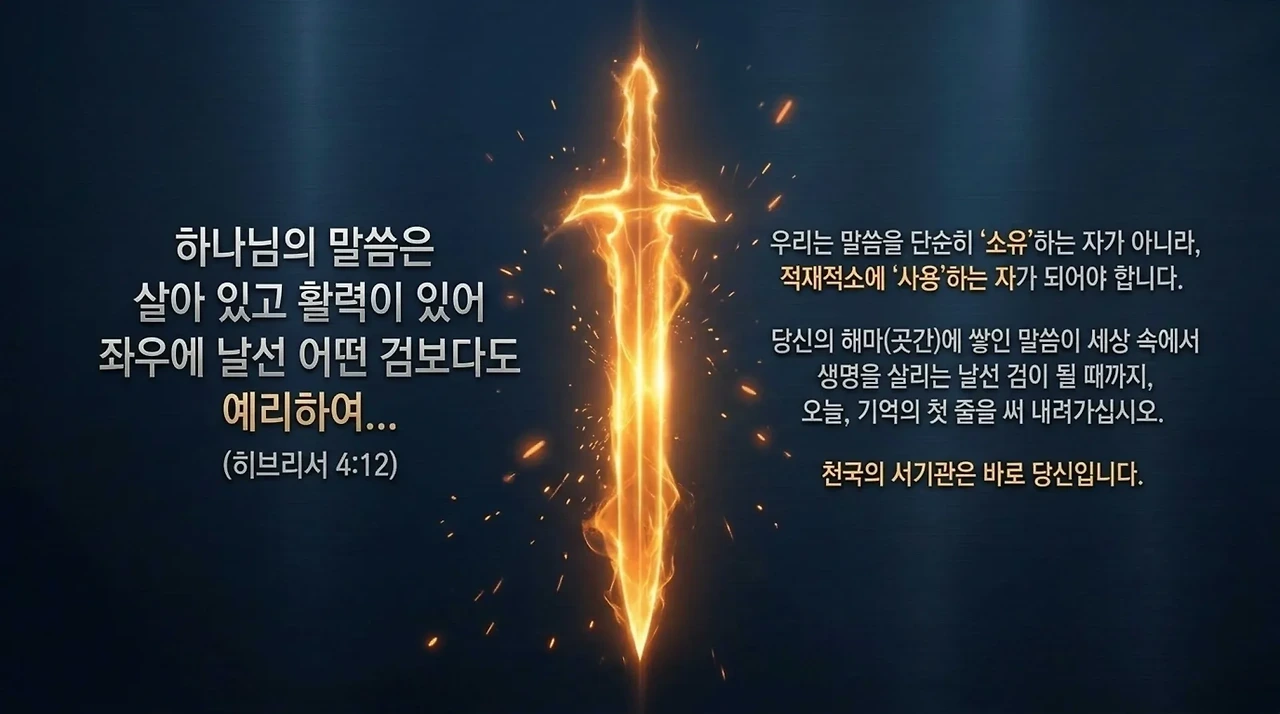
Believers must treasure the Word within themselves as if it were a precious treasure. And they must not hold onto the Word solely for themselves, but be able to draw upon it to save their families, the church, and souls. The ultimate purpose of remembering the Word is not the accumulation of knowledge, but to know Christ, to do His will, and to stand as an overcomer in the last days. May you thus make the Lord’s Word a lamp for your feet and a light for your path, and become a blessed believer who draws upon both the new and the old from the storehouse to serve the Lord and the church.
June 21, 2026 (Sun)
Pastor Jeong Bo-bae
말씀 기억은 IQ의 문제가 아니라 말씀을 대하는 태도와 습관의 문제다. 평범한 사람도 말씀을 귀하게 여기고 반복하여 꺼내 쓰면, 어느 순간 성령께서 그 말씀을 사용하시는 사람이 될 수 있다. 여기에 기쁨과 보상, 말씀에 근거한 믿음의 고백, 몸의 관리, 회개와 축사의 실제가 함께 작동해야 한다.
성도는 말씀을 자기 안에 보화처럼 간직해야 한다. 그리고 그 말씀을 자기만을 위해 붙들 것이 아니라, 가족과 교회와 영혼들을 살리기 위해 꺼내 쓸 수 있어야 한다. 말씀을 기억하는 최종 목적은 지식 축적이 아니라 그리스도를 알고, 그분의 뜻을 행하며, 마지막 때에 이기는 자로 서는 것이다. 그리하여 주의 말씀을 발의 등과 길의 빛으로 삼고, 새것과 옛것을 곳간에서 꺼내어 주님과 교회를 섬기는 복된 성도가 되기를 바란다.
2026년 06월 21일(일)
정보배 목사