에벨의 아들 욕단 민족의 이동과 그들에게 주어진 마지막 사명은?(창10:21~31) Migration of the Joktan
작성자에하드작성시간25.12.23조회수241 목록 댓글 0What was the migration of the people of Joktan(son of Eber) and the final mission given to them? (Genesis 10:21–31)
2025-12-21(주일) 주일낮2부예배
제목: [한민족사명(02)] 에벨의 아들 욕단 민족의 이동과 그들에게 주어진 마지막 사명은?(창10:21~31)
_동탄명성교회 정보배 목사
1. Who are we, and where did we come from?
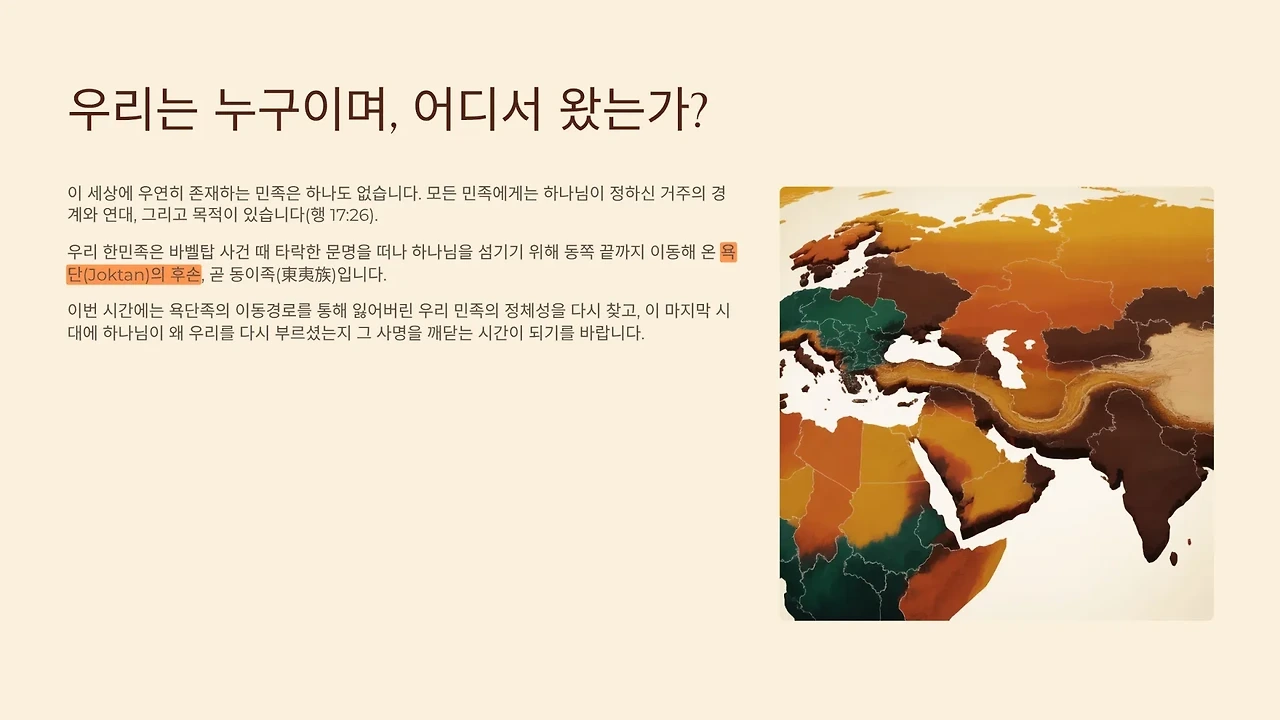
Today, we will examine the roots and mission of the Korean people for the second time, following last week's discussion. No nation exists in this world by chance. Every nation has its appointed boundaries, time, and purpose established by God (Acts 17:26). So where did we, the Korean people, come from, and why do we live on this land? Many people have only a vague understanding of our nation's origins or think of it merely as the Dangun myth taught in school. However, a careful examination of the Bible, archaeology, and our nation's ancient history reveals a remarkable truth. Our people are the descendants of **‘Joktan’**, who, after the Tower of Babel incident, left the fallen civilization and journeyed to the farthest east to serve God—the very **‘Eastern Yi Tribe’**. May today's message help us recover our lost national identity and understand why God is calling us again in this final age, realizing our mission.
2. What does the Bible say about the whereabouts of Joktan's people? (The Lost 13 Tribes)
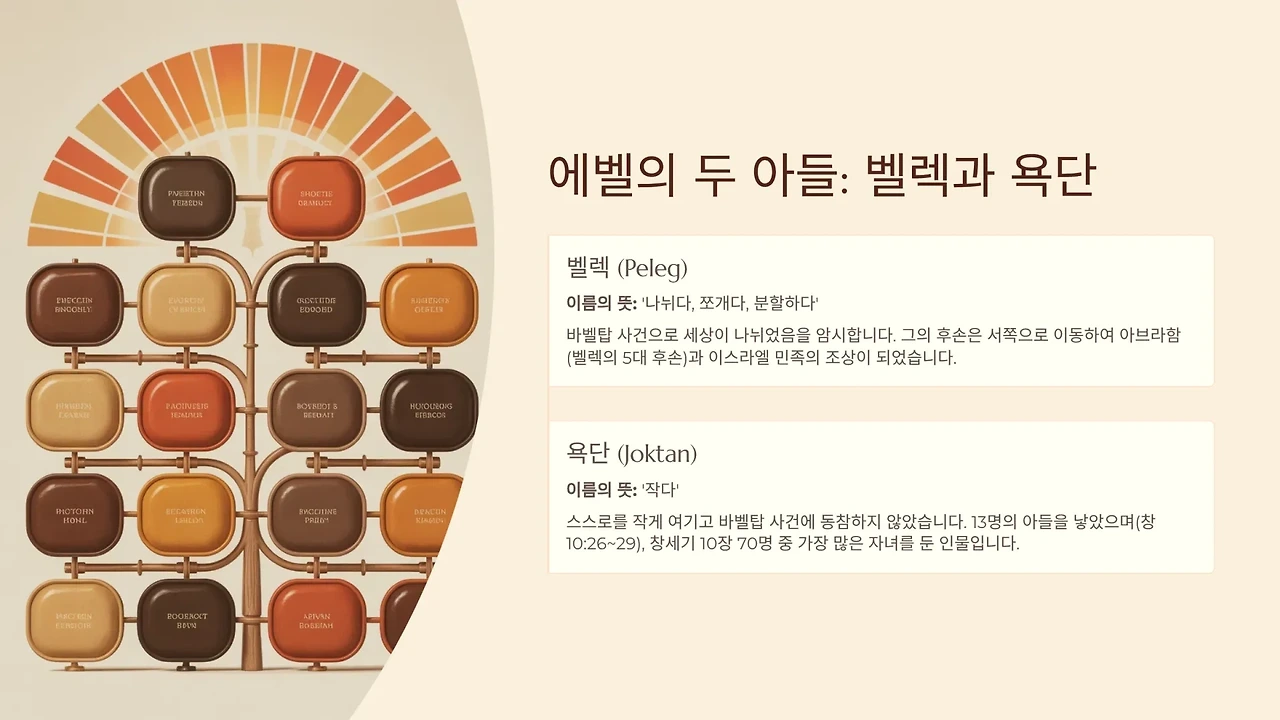
Genesis 10 contains the genealogy of Noah's three sons, showing how Noah's descendants spread throughout the world. Among them, the eldest son, Shem, begot Arpachshad, who begot Shelah, and Shelah begot Eber. It is recorded that Eber had two sons: one named ‘Peleg’ and the other named ‘Joktan’ (Gen 10:25). The name ‘Peleg’ means ‘to divide, split, or separate,’ implying that the world was divided at that time due to the Tower of Babel incident. At this point, Peleg's descendants either remained in that place or migrated westward, later becoming the ancestors of Abraham (Peleg's fifth-generation descendant) and the Israelite people (the Hebrews). And God sent the Messiah to this earth through that people. This is the mainstream history of the Bible.
So what happened to Peleg's brother Joktan? First, let's examine the meaning of Joktan's name. Its meaning is ‘small’. They considered themselves small and did not participate in the Tower of Babel incident where the descendants of Ham and the descendants of Shem gathered together to form an empire. Yet the Bible records that this very Joktan fathered thirteen sons, including Almodad, Sheleph, and others (Genesis 10:26-29). Among the seventy individuals listed in Genesis 10, he had more children than any other.
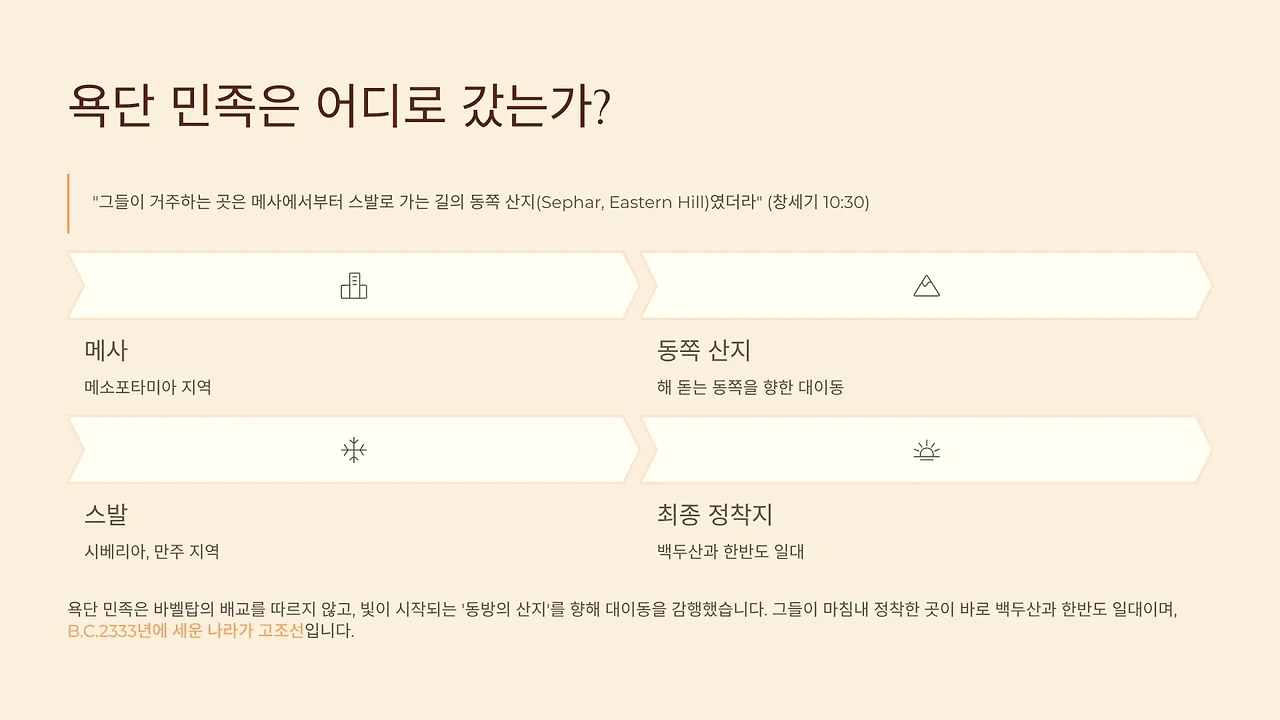
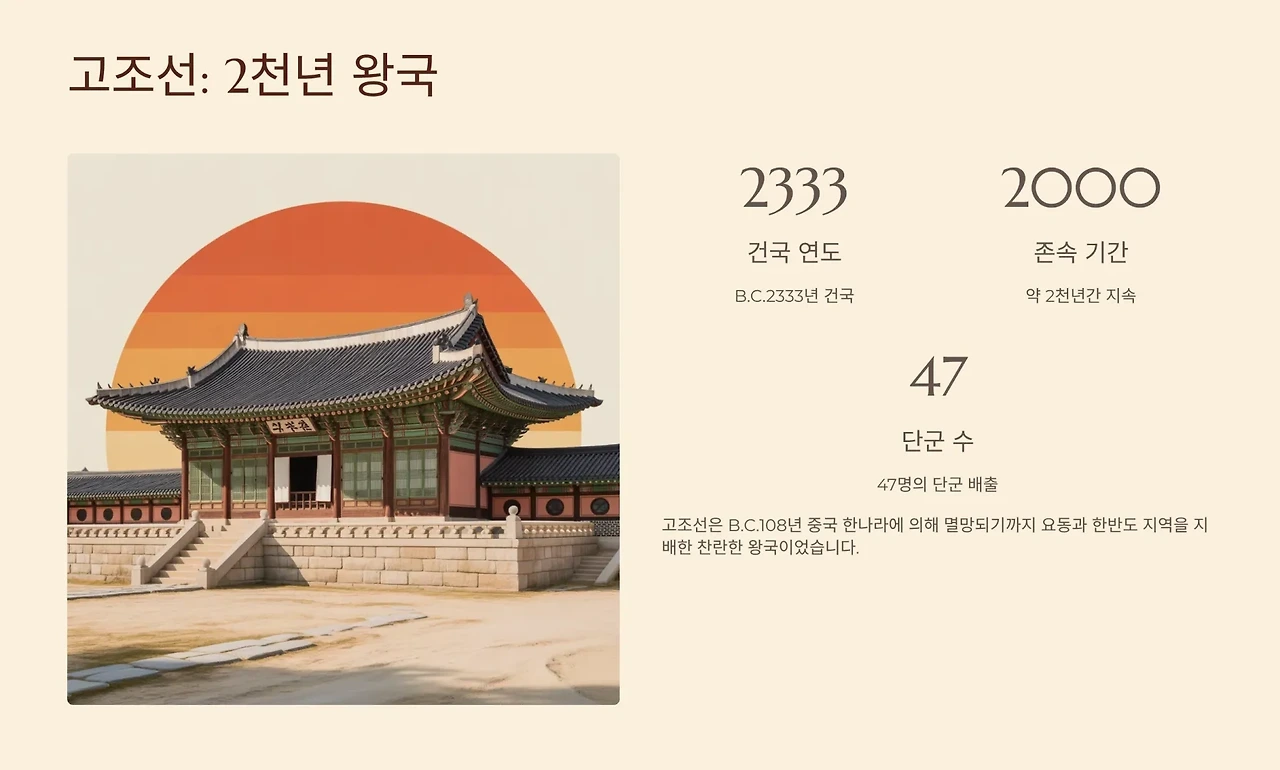
Strangely, however, records of this vast line of Joktan vanish from the Bible after Genesis 10. Where did they go? Yet Genesis 10:30 offers a clue: “They settled in the hill country east of Sephar, on the way to Shual.” According to biblical geography and linguistic research, the ‘Meshah’ mentioned here refers to Mesopotamia, while ‘Sephar’ is thought to indicate Siberia or the Manchurian region. Thus, the Yodan people did not follow the apostasy of the Tower of Babel. Instead, they humbled themselves and undertook a great migration toward the ‘mountains of the east’—the place where the sun rises, where they could first meet God, where light begins. Consequently, the place where they finally settled was the area around Mount Baekdu and the Korean Peninsula, and the nation they established was Gojoseon, founded in 2333 BC. Gojoseon ruled the Liaodong Peninsula and the Korean Peninsula for approximately 2,000 years, producing 47 Dangun rulers, until its fall to China's Han Dynasty in 108 BC.
1. 우리는 누구이며, 어디서 왔는가?
오늘 우리는 지난주에 이어 한민족의 뿌리와 사명에 대해 두 번째로 살펴보고자 한다. 이 세상에 우연히 존재하는 민족은 없다. 모든 민족에게는 하나님이 정하신 거주의 경계와 연대, 그리고 목적이 있다(행 17:26). 그렇다면 우리 한민족은 어디서 왔으며, 왜 이 땅에 살고 있는가? 많은 사람이 우리 민족의 기원을 막연하게 알거나, 학교에서 배운 대로 단군 신화 정도로만 생각한다. 그러나 성경과 고고학, 그리고 우리 민족의 고대사를 면밀히 추적해 보면 놀라운 사실을 발견하게 된다. 우리 민족은 바벨탑 사건 이후, 타락한 문명을 떠나 하나님을 섬기기 위해 동쪽 끝까지 이동해 온 **'욕단(Joktan)'**의 후손, 곧 **'동이족(東夷族)'**이다. 오늘 말씀을 통해 잃어버린 우리 민족의 정체성을 회복하고, 이 마지막 시대에 하나님이 왜 우리를 다시 부르시는지 그 사명을 깨닫는 시간이 되기를 바란다.
2. 성경은 욕단 민족의 행방에 대해 무엇이라 말하는가? (사라진 13지파)
창세기 10장에는 노아의 후손들이 어떻게 전 세계로 퍼져나갔는지를 보여주는 노아의 세 아들들의 족보가 나온다. 그중에 장자인 셈은 아르박삿을 낳고 그는 셀라를 낳았으며, 셀라는 에벨을 낳는다. 그런데 에벨은 두 아들을 낳았다고 기록하고 있는데, 하나는 '벨렉(Peleg)'이고 다른 하나는 '욕단(Joktan)'이다(창 10:25). 여기서 '벨렉'이라는 이름은 '나뉘다, 쪼개다, 분할하다'는 뜻으로, 그 시대에 바벨탑 사건으로 인해 세상이 나뉘었음을 암시해주고 있다. 그런데 이때 벨렉의 후손은 그 자리에 남거나 혹은 서쪽으로 이동하여 훗날 아브라함(벨렉의 5대 후손)과 이스라엘 민족(히브리인)의 조상이 된다. 그리고 하나님께서 그 민족을 통해 메시아를 이 땅에 보내셨다. 이것이 성경의 주류 역사다.
그렇다면 벨렉의 동생 욕단은 어떻게 되었는가? 먼저 욕단의 이름의 뜻부터 살펴보자. 그 이름의 뜻은 '작다'이다. 그들은 스스로를 작게 여기고 함의 자손과 셈의 자손들이 함께 모여 제국을 형성하는 바벨탑사건에 동참하지 않았다. 그런데 성경은 바로 이 욕단이 알모닷, 셀렙 등 무려 13명의 아들을 낳았다고 기록하고 있다(창 10:26~29). 창세기 10장에 나오는 70명의 인물들 중에서 어떤 인물보다 가장 많은 자녀를 둔 셈이다.
그런데 이상하게도 이 거대한 욕단 족속에 대한 기록은 창세기 10장 이후 성경에서 사라지고 만다. 그들은 어디로 갔는가? 그러나 창세기 10장 30절은 그 힌트를 준다. "그들이 거주하는 곳은 메사에서부터 스발로 가는 길의 동쪽 산지(Sephar, Eastern Hill)였더라."고 말이다. 성경 지리학과 언어학적 추적에 따르면, 여기에 나오는 '메사'는 메소포타미아를 가리키고, '스발'은 시베리아(Siberia) 혹은 만주 지역을 가리킨다고 본다. 즉, 욕단 민족은 바벨탑의 배교를 따르지 않고, 스스로를 작게 여기고 해 돋는 동쪽, 하나님을 가장 먼저 만날 수 있는 곳, 빛이 시작되는 '동방의 산[지]'을 향해 대이동을 감행한다. 그래서 그들이 마침내 정착한 곳이 바로 백두산과 한반도 일대이며, 그들이 세운 나라가 바로 B.C.2333년에 세워진 고조선인 것이다. 고조선은 B.C.108년 중국의 한나라에 의해 멸망되기까지 약 2천년간 47명의 단군을 배출하여 요동와 한반도 지역을 지배했다.
3. Why Were the Roots of Our People Hidden? (The Reality of Historical Distortion)
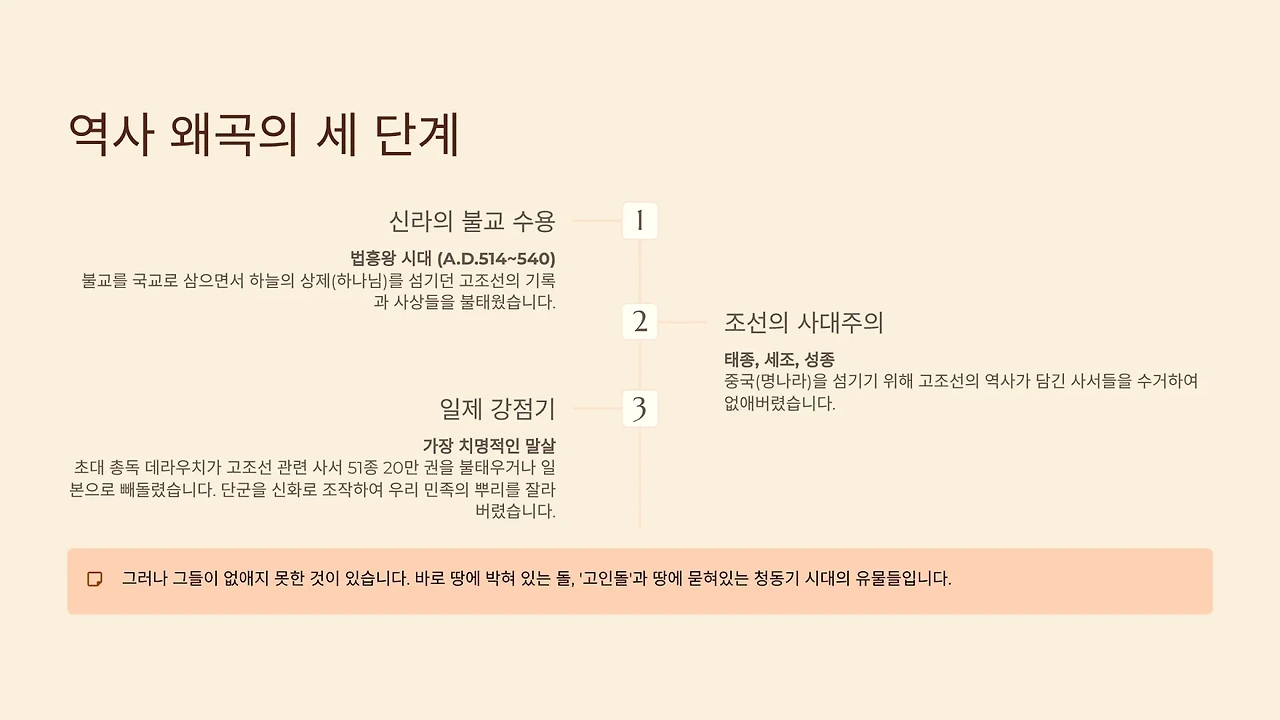
Then why have we lived unaware of this glorious history? There were three decisive instances of historical distortion and erasure. First, Silla's adoption of Buddhism. When King Beopheung made Buddhism the state religion, records and ideologies of Gojoseon that had previously worshipped the Heavenly Lord (God) were burned. Second, Joseon's servile adherence to China. Kings Taejong and Sejo, seeking to serve China (the Ming Dynasty), collected and destroyed historical texts containing the history of Gojoseon, which was older and greater than China's. Third, the Japanese colonial period. This was the most devastating. Japan, whose own history was a mere 1,700 years old, could not tolerate the idea that its colony, Korea, had a history spanning half a millennium. Therefore, the first Governor-General, Terauchi, scoured the entire country, burning or smuggling 200,000 volumes of historical records related to Gojoseon to Japan. They then fabricated Dangun into a myth, severing the roots of our people. However, there was something they could not destroy: the stones embedded in the ground, the **dolmen**.
4. What do the dolmens and artifacts of the Korean Peninsula tell us? (Traces of Heavenly Sacrifices)
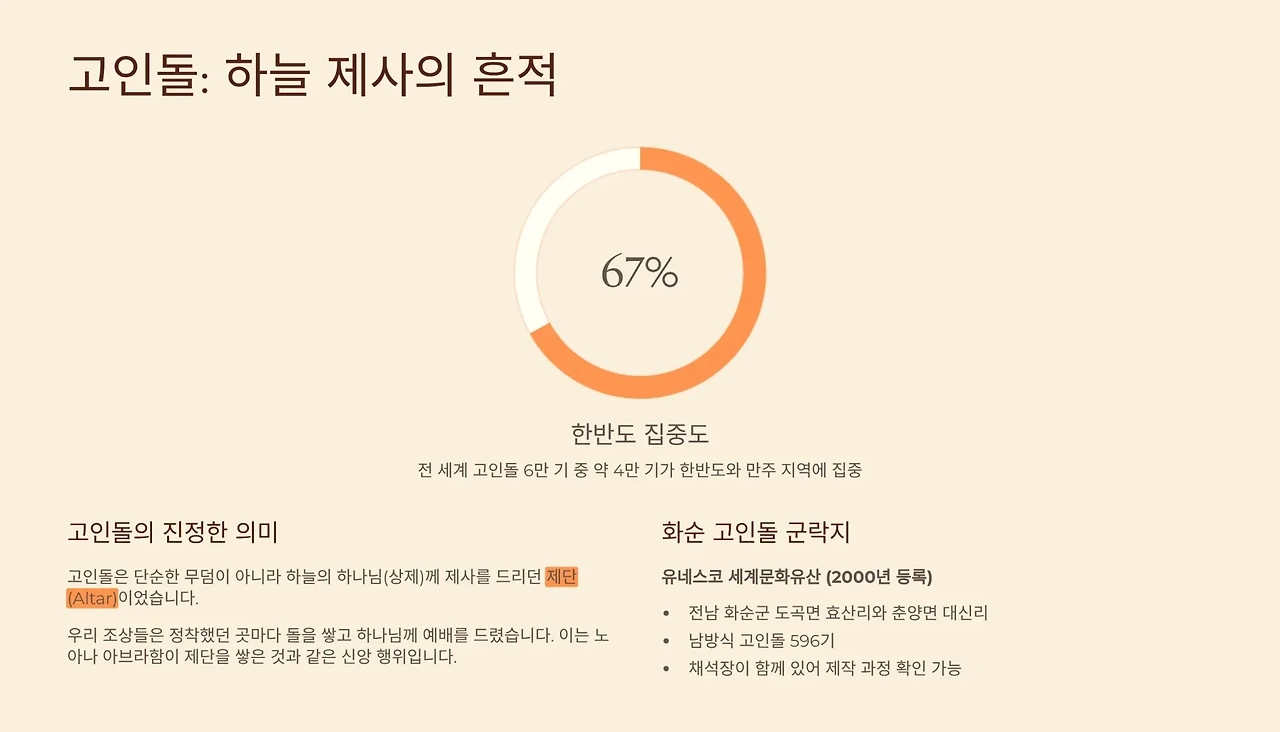
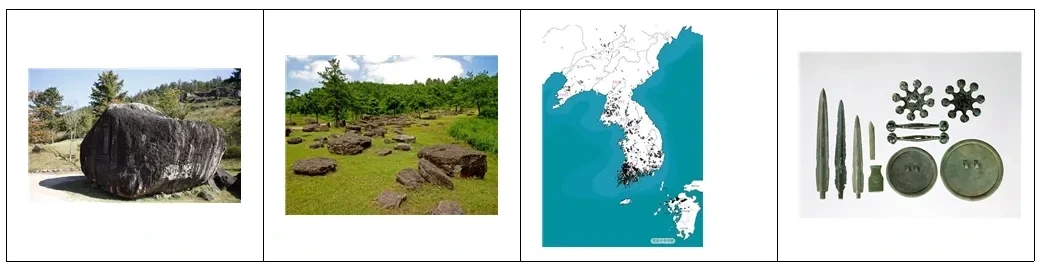
Approximately 40,000 of the world's 60,000 dolmens are concentrated in the Korean Peninsula and Manchuria. What does this signify? Dolmens were not merely simple tombs. They served as ‘altars’ where sacrifices were offered to the Heavenly God (Sangje). That is correct. Our ancestors built stone structures wherever they settled to worship God. This is an act of faith akin to Noah or Abraham building altars. In the valleys spanning about 3 km between Hyosan-ri, Dogok-myeon, and Daesin-ri, Chunyang-myeon, Hwasun-gun—my hometown—lies the world's largest dolmen cluster, registered as a UNESCO World Heritage Site over 2,000 years ago. It contains 596 southern-style dolmens. A quarry site coexists here, providing invaluable historical evidence revealing how these dolmens were constructed.
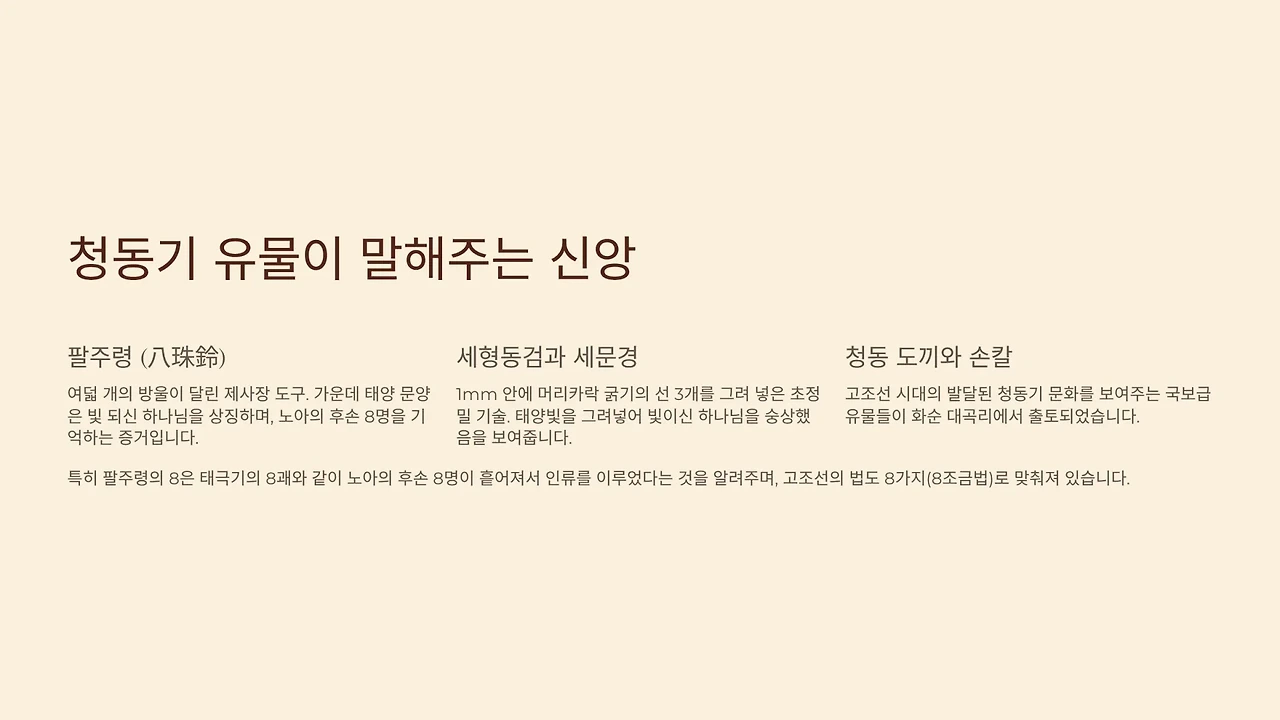
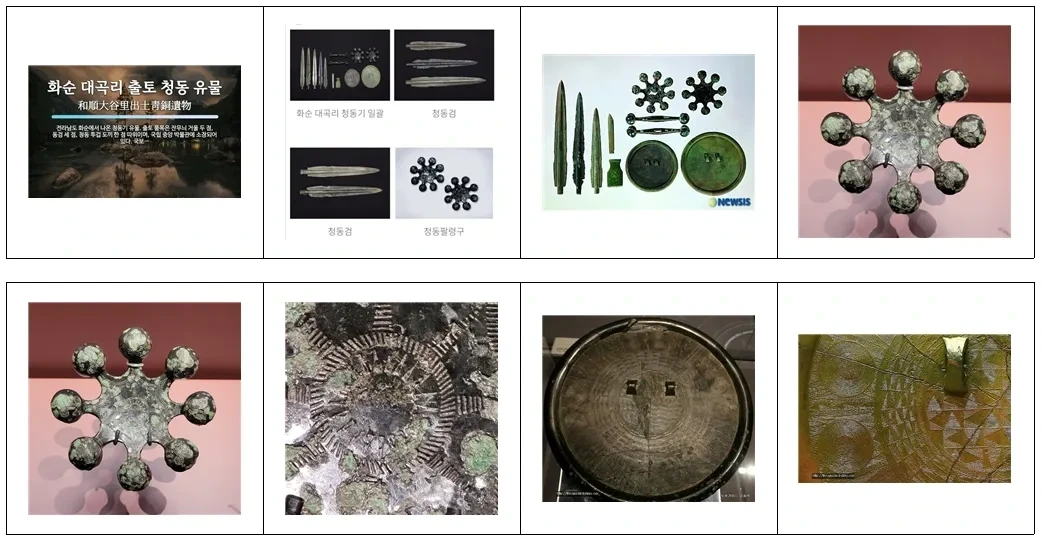
Meanwhile, in Daegok-ri, right next to Hyosan-ri, a settlement of people who lived during the Gojoseon period was discovered. Excavated there were bronze artifacts of national treasure-level significance, including a bronze ‘se-hyeong donggeom’ (sword), a bronze ‘palju-ryeong’ (eight-bead bell), a bronze ‘ssangju-ryeong’ (double-bead bell), a bronze ‘sonkal’ (knife), a bronze ‘do-kkeo’ (axe), and a bronze ‘semun-gyeong’ (mirror). Particularly, this eight-beaded bell, believed to have been used by priests for divination, actually signifies the eight descendants of Noah who scattered to form humanity, much like the eight trigrams on the Taegeukgi flag. Notably, the center of the Palju-ryeong bears an engraved sun motif. This serves as powerful evidence that our people, having come eastward seeking the God who is light (the sun), remembered themselves as descendants of Noah's eight family members (八). This is because the laws established by Gojoseon were also structured around eight principles (the Eight-Article Law).
5. What is the faith in God hidden within our language and culture? (Arirang and the Mugunghwa)
And deep within our people's DNA lies the deeply ingrained belief in serving God through heaven worship. It manifests in three things: the Arirang song, the mugunghwa flower, and the Taegeukgi flag.
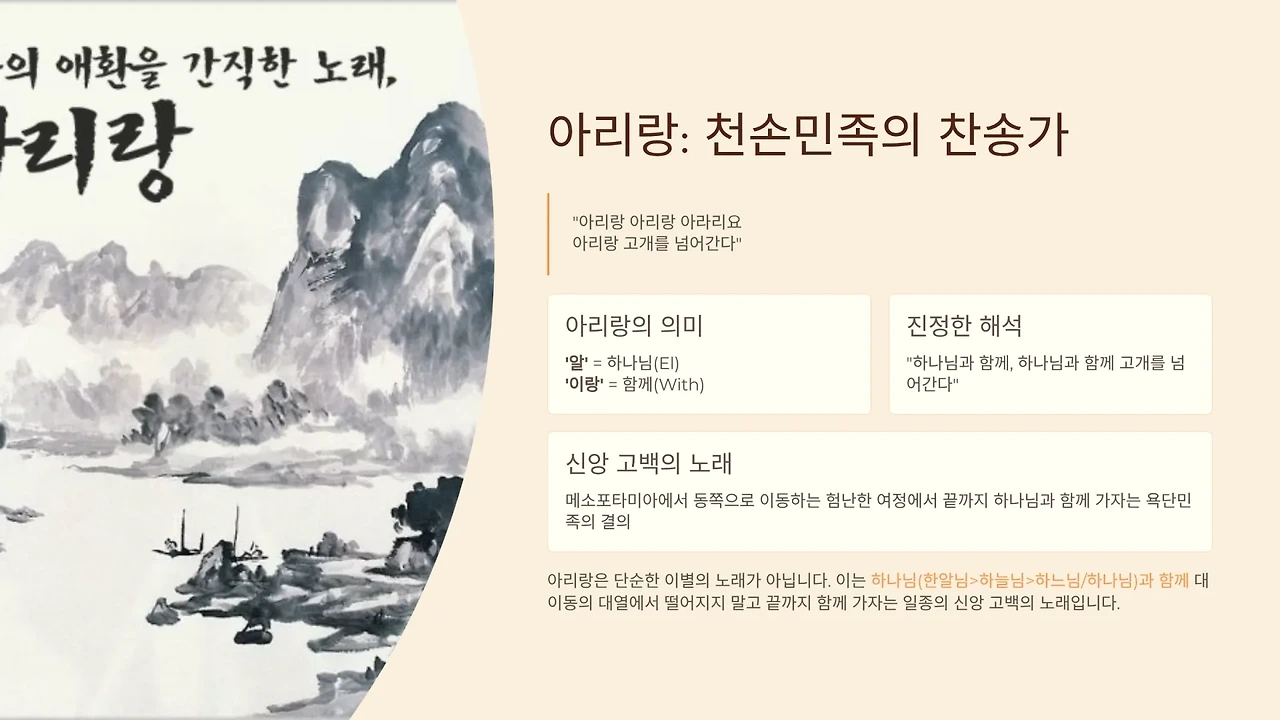
First, ‘Arirang’ is the hymn sung by the heavenly-descended people to God. Deep within our people's bones lies the song Arirang. So what kind of song is this? Is it merely a lament for someone parted, singing of sorrow? No. For the ‘Al’ in Arirang (Alirang) means God (El), and ‘irang’ means ‘with’. Therefore, the lyrics “Arirang (Alirang) Arirang (Alirang) Arariyo (Alalio) Arirang (Alirang) Over the hill we go” mean “With God (Han-al-nim > Heavenly Lord > God/Lord), with God, over the hill we go.” It is essentially a song of faith. It embodies the Yutdan people's resolve to journey eastward from Mesopotamia, enduring the perilous trek without straying from God's path until the end. The warning is clear: if one falls behind the procession, sickness will strike within ten li. Thus, the song urges: please, do not fall behind; let us journey together to the very end.
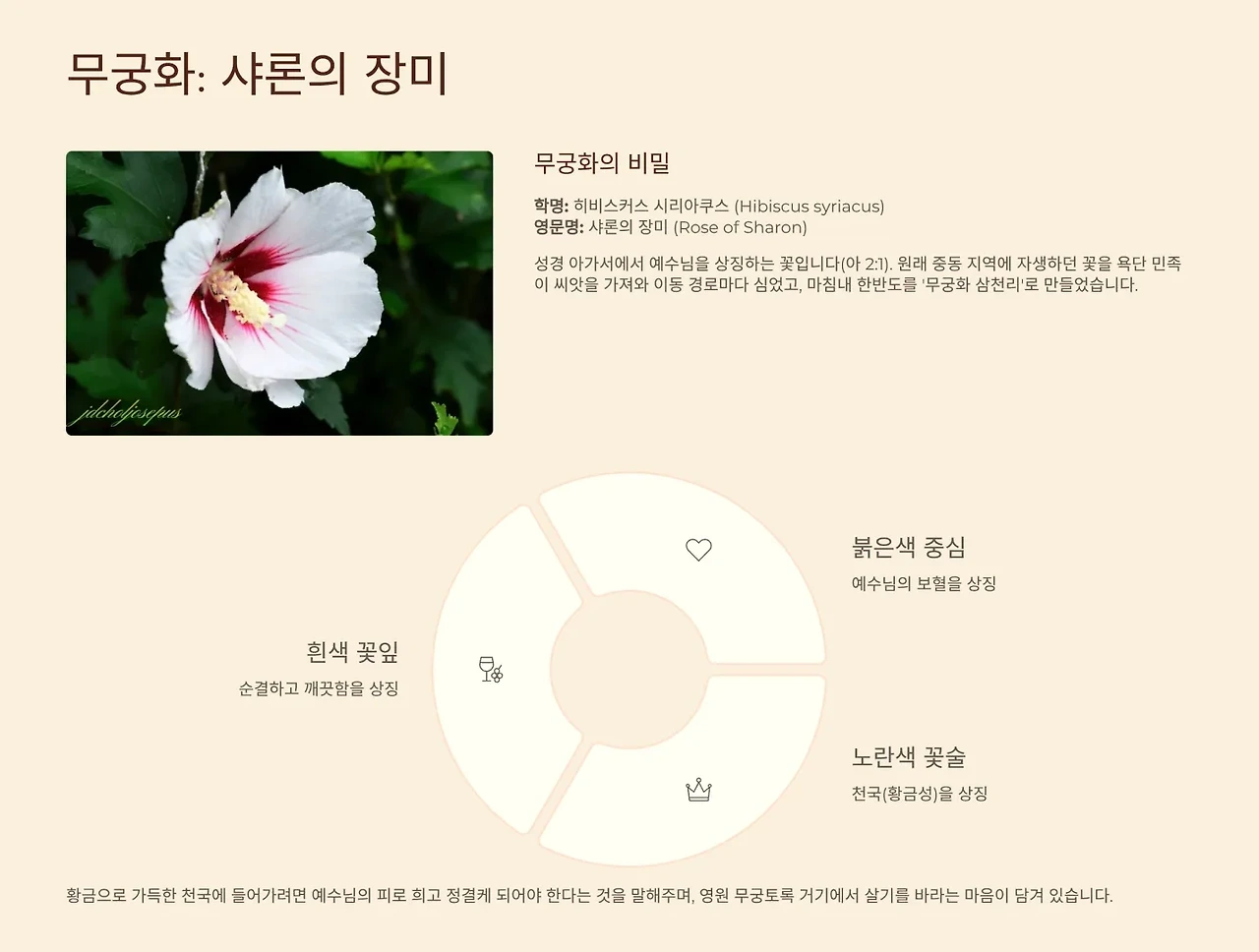
Second, the ‘mugunghwa’ (rose of Sharon) scattered across the beautiful land of Korea speaks of faith in one God. The mugunghwa is Korea's national flower. Its scientific name is ‘Hibiscus syriacus’. As Korea's national flower, it signifies ‘a flower that blooms eternally and never withers’. The rose of Sharon is found throughout the Korean peninsula. It is a beautiful flower that begins blooming in the hot month of July and continues to bloom for about 100 days until October. Yet, the English name for this flower is surprising. This is because in English, it is called the ‘Rose of Sharon’. This refers to the rose blooming in the peaceful land of Sharon in Israel. In the biblical Song of Songs, it is known as the flower symbolizing Jesus (Song 2:1). Originally native to the Middle East, the Yodan people brought its seeds and planted them along their eastward migration route, ultimately transforming the Korean Peninsula into the ‘Land of the Mugunghwa’. So why did the Yodan people love the mugunghwa so much? It wasn't just because of its habit of blooming and fading, then blooming again. It was because the shape and color of this flower are special. The outermost white petals signify purity and cleanliness, the red center represents the precious blood of Jesus, and the inner yellow stamens symbolize heaven (the golden city). In other words, it teaches that to enter the heaven filled with gold, one must be made white and pure through the blood of Jesus. That is why they longed to live there eternally. Hence, it is the everlasting mugunghwa.
Third, the pattern of the ‘Taegeukgi’ flag mentioned last time also speaks of faith in God. The Taegeuk pattern and the four trigrams actually originate from the Bagua. This originally embodied the principles of the universe but later degenerated into a tool for divination. However, it was created by the Yodan people who migrated eastward to pass down to later generations that they descended from Noah's eight family members. And have you seen the finial on the Taegeukgi flagpole? That finial is shaped like a budding rose of Sharon flower. Our people descended from Noah's eight family members, signifying that we are a heavenly-descended people who acknowledge only God as our head.
3. 우리 민족의 뿌리는 왜 감춰졌는가? (역사 왜곡의 실체)
그렇다면 왜 우리는 이 찬란한 역사를 모르고 살았는가? 여기에는 세 차례의 결정적인 역사 왜곡과 말살이 있었다. 첫째, 신라의 불교 수용이다. 법흥왕 때 불교를 국교로 삼으면서, 기존에 하늘의 상제(하나님)를 섬기던 고조선의 기록과 사상들을 불태웠다. 둘째, 조선의 사대주의다. 태종, 세조 등은 중국(명나라)을 섬기기 위해, 중국보다 더 오래되고 위대한 고조선의 역사가 담긴 사서들을 수거하여 없애버렸다. 셋째, 일제 강점기다. 이것이 가장 치명적이었다. 일본은 자신들의 역사가 고작 1,700년밖에 안 되는데, 식민지인 한국의 역사가 반만년이나 된다는 것을 용납할 수 없었다. 그래서 초대 총독 데라우치는 전국을 뒤져 고조선 관련 사서 20만 권을 불태우거나 일본으로 빼돌렸다. 그리고 단군을 신화로 조작하여 우리 민족의 뿌리를 잘라버렸다. 그러나 그들이 없애지 못한 것이 있다. 바로 땅에 박혀 있는 돌, **'고인돌'**이다.
4. 한반도의 고인돌과 유물은 무엇을 말해주는가? (하늘 제사의 흔적)
전 세계 고인돌 6만 기 중 약 4만 기가 한반도와 만주 지역에 집중되어 있다. 이것은 무엇을 의미하는가? 고인돌은 사실 단순한 무덤이 아니었다. 그것은 하늘의 하나님(상제)께 제사를 드리던 '제단(Altar)'이었기 때문이다. 그렇다. 우리 조상들은 정착했던 곳마다 돌을 쌓고 하나님께 예배를 드린 것이다. 이는 노아나 아브라함이 제단을 쌓은 것과 같은 신앙 행위다. 필자의 고향 화순군 도곡면 효산리와 춘양면 대신리의 계곡 약 3km에는 지난 2,000년 유네스코에서 세계문화유산으로 등록한, 세계적인 최대의 고인돌 군락지가 있다. 여기에는 남방식 고인돌이 596기가 있는데, 이곳에는 채석장이 함께 있어서 고인돌을 어떻게 만들었는지를 알려주는 귀중한 사료가 되고 있다.
그런데 효산리 바로 옆 대곡리에서는 고조선 때 살았던 사람들의 주거지가 발견되었는데, 거기에는 국보급 청동기 유물인 청동'세형동검', 청동'팔주령'(八珠鈴)', 청동'쌍주령', 청동'손칼'과 청동'도끼', 청동'세문경' 등이 출토되었다. 특히 총 여덟 개의 방울이 달린 이 팔주령은 제사장이 사용하던 것으로 점치는데에 사용했다고 한다. 그러나 이것은 사실 태극기의 8궤와 같이 노아의 후손 8명이 흩어져서 인류를 이루었다는 것을 알려주는 것이다. 특히 팔주령의 가운데에는 태양 문양이 새겨져 있는데, 이것은 우리 민족이 빛(태양) 되신 하나님을 찾아 동쪽으로 왔는데, 자기들이 노아의 여덟 식구(八)의 후손임을 기억하고 있었다는 정황을 알려주는 강력한 증거이기도 하다. 왜냐하면 고조선이 만든 법도 8가지(8조금법)로 맞춰져 있기 때문이다.
5. 우리말과 문화 속에 숨겨진 하나님 신앙은 무엇인가? (아리랑과 무궁화)
그리고 우리 민족의 DNA 속에는 하나님을 섬기는 제천 신앙이 깊이 박혀 있다. 그것은 3가지다. 그것은 아리랑 노래와 무궁화요 태극기다.
첫째, '아리랑(Arirang)'는 천손민족이 하나님을 노래하는 찬송가이다. 우리의 민족에게는 뼈속 깊이 아리랑이라는 노래가 박혀 있다. 그렇다면 이 노래는 어떤 노래인가? 단지 누군가르 이별하여 그 슬픔을 노래한 것인가? 아니다. 오냐하면 아리랑(알이랑)의 '알'은 하나님(El)이라는 뜻이요, '이랑'은 '함께(With)'라는 뜻이기 때문이다. 그러므로 "아리랑(알이랑) 아리랑(알이랑) 아라리이요(알알이요) 아리랑(알이랑) 고개를 넘어간다"는 가사는 "하나님(한알님>하늘님>하느님/하나님)과 함께, 하나님과 함께 고개를 넘어간다"는 뜻이다. 일종의 신앙 고백의 노래인 셈이다. 메소포타미아에서 동쪽으로 동쪽으로 이동하는 험난한 여정에서 낙오하지 말고 끝까지 하나님과 함께 가자는 욕단민족의 결의가 거기에 담겨 있는 것이다. 만약 그 대열에서 떨어져 나간다면 십 리도 못가서 발병이 날 것이니, 제발 떨어지지 말고 끝까지 함께 가자는 결의가 담겨있는 것이다.
둘째, 삼천리 금수강산에 널려있는 '무궁화'가 한 분 하나님을 믿는 신앙을 말해준다. 우리 나라의 국화는 무궁화다. 그런데 이 꽃의 학명은 '히비스커스 시리아쿠스(Hibiscus syriacus)이다. 무궁화는 우리 대한민국의 국화로서, '영원히 피고 또 피어서 지지 않는 꽃'이라는 뜻을 가지고 있다. 무궁화는 삼천리 반도에 전역에서 발견되며, 무더운 7월부터 피기시작하여 10월까지 약 100간 피는 아름다운 꽃이다. 그런데 이 이름의 영문명이 놀랍다. 왜냐하면 영어로 이 꽃은 '샤론의 장미(Rose of Sharon)'라고 불리기 때문이다. 이는 이스라엘의 샤론 평화에 피는 장미꽃이라는 뜻인데, 성경 아가서에 보면, 예수님을 상징하는 꽃으로 알려져 있다(아 2:1). 이 꽃ㅇ츤 원래 중동 지역에 자생하던 꽃이었는데, 욕단 민족이 씨앗을 가져와 동쪽으로 이동하는 경로마다 심었고, 마침내 한반도를 '무궁화 삼천리'로 만들었던 것이다. 그럼 왜 욕단민족은 무궁화를 이렇게 좋아했는가? 그것은 피고 지고 또 피는 습성 때문만은 아니다. 왜냐하면 이 꽃의 모양과 색깔이 특별하기 때문이다. 가장 바깥쪽의 흰 색은 순결하고 깨끗함을 가리키고, 가운데는 붉은 색은 예수님의 보혈을 가리키며, 안쪽의 꽃술은 노란색으로서 천국(황금성)을 상징하기 때문이다. 다시 말해 황금으로 가득한 천국에 들어가려면 예수님의 피로 희고 정결케 되어야 한다는 것을 말해주는 것이다. 그래서 영원 무궁토록 거기에서 살기를 바라고 있었던 것이다. 그래서 끝이 없는 무궁화인 것이다.
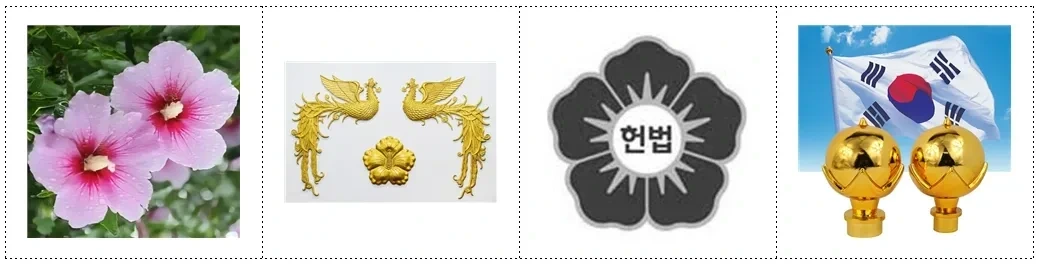
셋째, 지난 시간에 말씀드린 '태극기'의 문양 또한 하나님 신앙을 말해준다. 태극 문양과 사괘는 사실 팔궤에서 온 것이다. 이것은 원래는 우주의 원리를 담고 있었으나 나중에는 변질되어 점치는 도구가 되었다. 하지만 이것은 동쪽으로 이동했던 욕단민족이 자기들은 노아의 8명의 식구에서 왔다는 것을 후대에 전하기 위해 만든 것이다. 그리고 태극기의 깃봉을 보았는가? 그 깃봉(깃대 머리)에는 무궁화 꽃봉오리 모양을 하고 있다. 우리 민족은 노아의 8식구에서 온 것이며, 이는 우리가 하나님만을 머리로 삼는 천손 민족임을 말해주고 있는 것이다.
6. What secrets do the place names in Dogok-myeon, Hwasun hold? (Guidance of the Sun, Moon, and Stars)
What about the place names in Hwasun, my hometown? The place names around Hyosan-ri, Dogok-myeon, Hwasun-gun, Jeollanam-do, precisely reveal where the Yodan people came from. Looking back now, the Hwasun area in Jeollanam-do, my hometown, was like a time capsule holding the secrets of the Yodan people's migration and settlement.
First, in Hyosan-ri, Dogok-myeon, and Daesin-ri, Chunyang-myeon, Hwasun-gun, South Jeolla Province, 596 dolmens of various construction styles were discovered: northern-style table-type, southern-style chessboard-type, and open-stone-type. Moreover, in Daegok-ri, Dogok-myeon, right next door, a treasure trove of national-treasure-level Bronze Age artifacts poured out in 1971. Among them, the ‘Eight-Beaded Bell’ features an octagonal star shape with eight bells attached, and at its very center is an image of the sun. This signifies that Noah's eight family members and God, the Light, moved eastward toward the rising sun. Furthermore, the ‘Danyuseomun Mirror’ (a mirror with a pattern of interlaced lines) was crafted with ultra-precise technology, incorporating three lines as thin as a human hair within a 1mm space. They depicted sunlight on it, demonstrating their reverence for God as the Light.
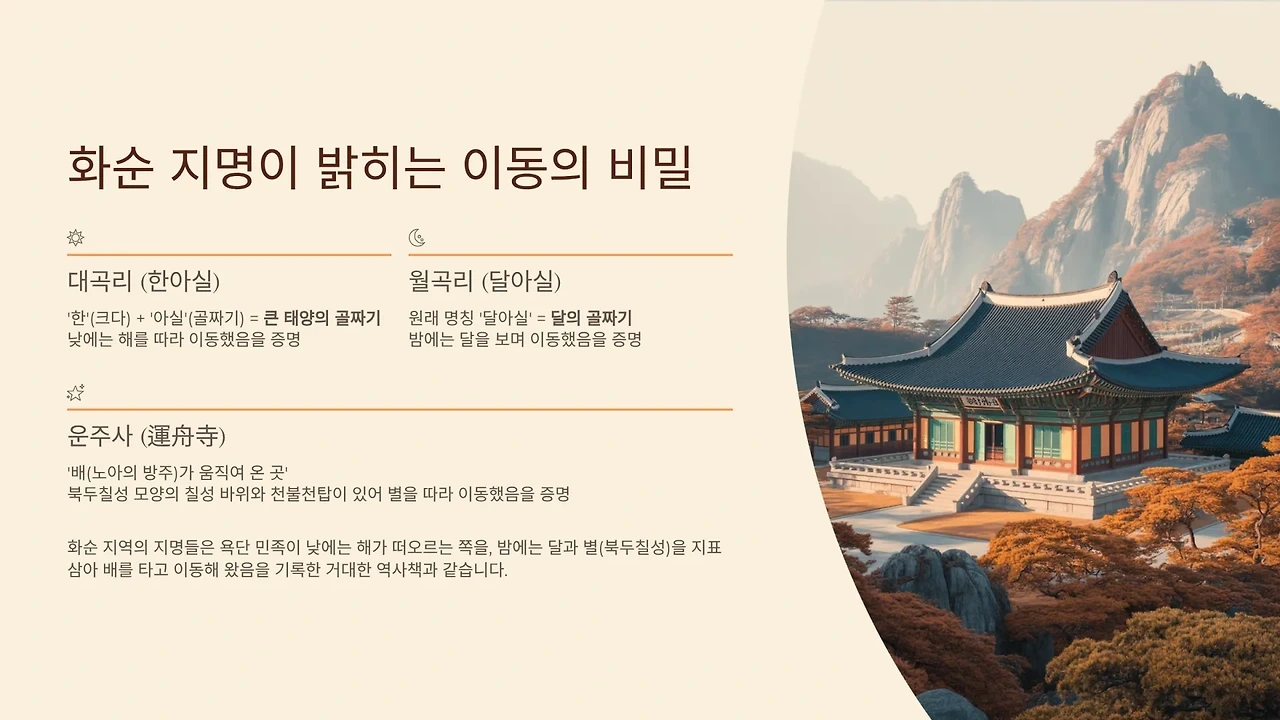
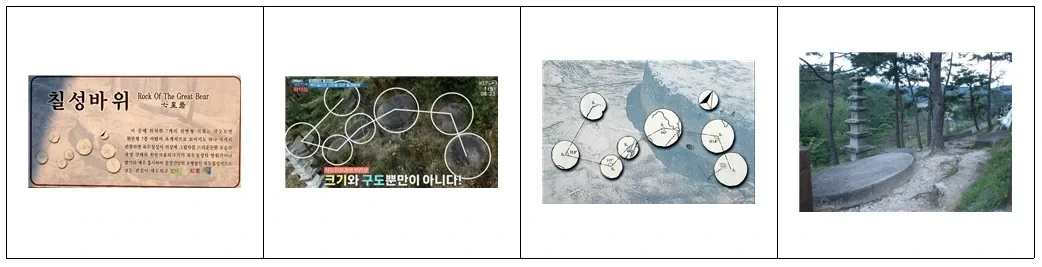
Furthermore, the surrounding village names reveal that they traveled during the day toward the rising sun and navigated by the moon and stars at night. This is evident starting from Daegok-ri (Hana-sil) in Dogok-myeon, Hwasun-gun, whose name is remarkable. ‘Han’ means ‘great,’ and ‘A-sil’ means ‘valley.’ Thus, Daegok-ri literally means 'Great Sun Valley.' This tells us they followed the sun by day. And right next to Hyosan-ri is Wolgok-ri. Wolgok-ri's original name was Dala-sil. That is, ‘Valley of the Moon’. Thus, it tells us they moved by night, following the moon. Furthermore, a short distance away in Doam-myeon, Hwasun-gun, lies Unjusa Temple. This name carries the meaning ‘the place where the boat (Noah's Ark) moved to’. Although the temple itself was established during the Joseon Dynasty, it originally stemmed from folk beliefs passed down for thousands of years. Therefore, this place holds a very special relic: the ‘Seven Star Rock’ shaped like the Big Dipper, and numerous thousand Buddhas and thousand pagodas (now largely destroyed) that transferred the constellations of the sky onto the earth. This is like a giant historical book recording how our ancestors navigated by the stars (the Big Dipper) at night and the sun by day while traveling by boat.
7. Why is God calling our people in this final hour? (Alpha and Omega)
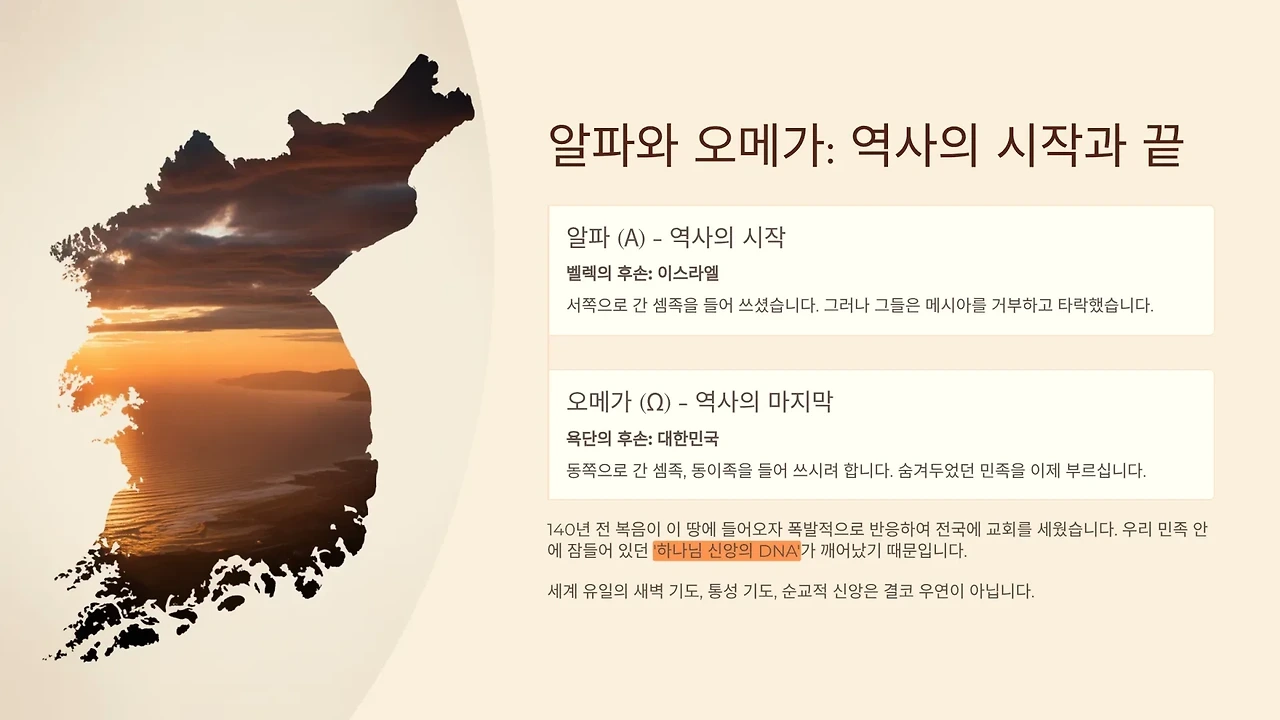
God is the Alpha and Omega. At the beginning of human history (Alpha), He used Israel, the descendants of Peleg. But they rejected the Messiah and fell into corruption. Now, at the end of history (Omega), He intends to use the hidden descendants of Joktan, the Dongyi people of Korea. Though we long forgot God and lived immersed in shamanism and idol worship, we responded explosively the moment the gospel arrived 140 years ago. Why? Because the ‘DNA of faith in God’ dormant within us awoke. The world's unique dawn prayers, united prayers, and martyr-like faith are no coincidence. Now God has given us the final weapons: **‘repentance’** and **‘the gospel of the kingdom of heaven’**. Where Israel failed, we must become a priestly nation that breaks the curse of idol worship through repentance and prepares the way for the Lord who is coming again.
8. Conclusion:
Restore the Pride of the Heavenly Descendants
Beloved saints, we are not a rootless people. We are the **‘Heavenly Descendants’**, the righteous descendants of Noah, inheriting the true lineage of Joktan. We are the descendants of faith who abandoned the wealth and glory of the Tower of Babel to cross the harsh wilderness and serve God. Even if our family line was defiled by idol worship, through repentance by the blood of Jesus, everything can be washed clean and restored to its original glorious state. I am that very witness. Behold God, who raises me—a descendant of a shaman family—to proclaim this astonishing secret. Now take pride. And awaken to your calling. I bless you in the Lord's name that our people and you may be used as protagonists in this holy task: leading the nations to repentance and guiding them to heaven.
December 21, 2025 (Sunday)
Pastor Jeong Bo-bae
6. 화순 도곡면의 지명은 어떤 비밀을 품고 있는가? (해, 달, 별의 인도)
필자의 고향 화순의 지명들은 또 어떠한가? 전남 화순군 도곡면 효산리 주변의 지명들은 욕단 민족이 어디서 왔는지를 정확히 알려준다. 이제와서 확인해보니 필자의 고향인 전남 화순 지역은 욕단 민족의 이동과 정착의 비밀을 간직한 타임캡슐과 같은 것이었다.
먼저, 전남 화순군 도곡면 효산리와 춘양면 대신리에서는 북방형 탁자식, 남방형 바둑판식, 개석식 등 다양한 축조 방식의 고인돌 596기가 발견되었다. 그리고 바로 그 옆동네인 도곡면 대곡리에서는 1971년에 국보급 청동기 유물이 쏟아져 나왔다. 그중 '팔주령(八珠鈴)'은 8각형 별 모양에 8개의 방울이 달려 있고 그 한 가운데에는 태양이 그려져 있는데, 이는 노아의 8 식구와 빛이신 하나님을 찾아서 해뜨는 동쪽으로 이동해 왔음을 알려준다. 또한, '다뉴세문경(잔무늬거울)'은 1mm 안에 머리카락 굵기의 선 3개를 그려 넣은 초정밀 기술로, 그들이 태양빛을 거기에 그려넣은 것으로서, 이들이 빛이신 하나님을 숭상했음을 보여준다.
그리고 이들이 낮에는 해가 떠오르는 쪽을 향하여 이동하였으며, 밤에 달을 따라서 그리고 별을 따라서 방향을 정하고 왔음을 주변의 동네 이름이 알려준다. 왜냐하면 화순군 도곡면 대곡리(한아실)부터 그 이름이 놀랍다. 왜냐하면 '한'은 크다는 뜻이며, '아실'은 골짜기라는 뜻이다. 즉, '큰 태양의 골짜기'가 대곡리인 것이다. 그러므로 이들이 낮에는 해를 따라왔음을 말해준다. 그리고 효산리 바로 옆의 마을로 월곡리가 있다. 월곡리의 원래의 몇칭은 달아실이었다. 즉 '달의 골짜기'였다. 고로 이들이 밤에는 달을 보며 이동했다는 사실을 알려준다. 더욱이 조금 떨어진 화순군 도암면에는 운주사(運舟寺)가 있다. 이곳은 '배(노아의 방주)가 움직여 온 곳'이라는 뜻을 담고 있다. 이곳 사찰은 조선시대에 조성된 것이지만 원래는 민간신앙으로 수천년을 내려온 곳이다. 그러므로 이곳에는 아주 특별한 유적이 있으니, 북두칠성 모양의 '칠성 바위'가 자리하고 있으며, 하늘의 별자리를 지상에 옮겨 놓은 천불천탑이 즐비해 있다(지금은 많이 소실된 상태이다). 이는 우리 조상들이 밤에는 별(북두칠성)을, 낮에는 해를 지표 삼아 배를 타고 이동해 왔음을 기록한 거대한 역사책과 같은 것이다.
7. 하나님은 왜 이 마지막 때에 우리 민족을 부르시는가? (알파와 오메가)
하나님은 알파와 오메가다. 인류 역사의 시작(알파)에는 벨렉의 후손인 이스라엘을 들어 쓰셨다. 그러나 그들은 메시아를 거부하고 타락했다. 이제 역사의 마지막(오메가)에는 숨겨두었던 욕단의 후손, 동이족인 대한민국을 들어 쓰시려 한다. 우리는 비록 오랫동안 하나님을 잊고 무당과 우상 숭배에 빠져 살았지만, 140년 전 복음이 들어오자마자 폭발적으로 반응했다. 왜인가? 우리 안에 잠들어 있던 '하나님 신앙의 DNA'가 깨어났기 때문이다. 세계 유일의 새벽 기도, 통성 기도, 순교적 신앙은 우연이 아니다. 이제 하나님은 우리에게 **'회개'**와 **'천국 복음'**이라는 마지막 무기를 주셨다. 이스라엘이 실패한 그 자리에서, 우리는 회개를 통해 우상 숭배의 저주를 끊고, 다시 오실 주님의 길을 예비하는 제사장 나라가 되어야 한다.
8. 나오며: 천손 민족의 자부심을 회복하라
사랑하는 성도 여러분, 우리는 뿌리 없는 민족이 아니다. 우리는 노아의 경건한 후손, 욕단의 적통을 이어받은 **'천손(天孫) 민족'**이다. 하나님을 섬기기 위해 바벨탑의 부귀영화를 버리고 거친 광야를 건너온 믿음의 후예들이다. 비록 우리 가문이 우상 숭배로 더러워졌을지라도, 예수의 피로 회개하면 모든 것이 씻겨지고 본래의 영화로운 모습으로 회복될 수 있다. 내가 바로 그 증인이다. 무당 집안의 자손인 나를 들어 이 놀라운 비밀을 선포하게 하시는 하나님을 보라. 이제 자부심을 가지라. 그리고 사명을 자각하라. 열방을 회개시키고 천국으로 인도하는 이 거룩한 과업에 우리 민족과 여러분이 주인공으로 쓰임 받기를 주님의 이름으로 축원한다.
2025년 12월 21일(주일)
정보배 목사
[Sermon Summary]
This sermon argues that Gojoseon was the nation established by Joktan, son of Eber in the Bible, after his migration to the East, emphasizing the roots and spiritual identity of the Korean people. The text retraces our lost history—erased during periods like Japanese colonial rule—using archaeological evidence such as dolmens and Bronze Age artifacts, alongside cultural traces like the mugunghwa flower and Arirang, to assert that the Korean people are a heavenly-descended people who originally served God. Specifically, using the archaeological site in Hwasun, South Jeolla Province as evidence, it explains the migration route our people followed in pursuit of the sun and stars. It awakens a missionary calling: that we must become the protagonists who inherit the mission Israel failed to fulfill, proclaiming the gospel of repentance in the last days. Ultimately, the purpose of this text is to make the Korean people realize they are a special tribe prepared by God, so that believers may take pride and lead the way in a movement of repentance for entering heaven.
[설교요점]
이 설교는 성경 속 에벨의 아들인 욕단이 동방으로 이동하여 세운 나라가 바로 고조선이라는 주장을 펼치며 한민족의 뿌리와 영적 정체성을 강조합니다. 본문은 일제강점기 등을 거치며 소실된 우리 역사를 고인돌과 청동기 유물 같은 고고학적 증거와 무궁화, 아리랑 등의 문화적 흔적을 통해 역추적하며, 한민족이 본래 하나님을 섬기던 천손 민족임을 역설합니다. 특히 전남 화순의 유적지를 근거로 우리 민족이 태양과 별을 따라 이동해 온 경로를 설명하며, 이스라엘이 놓친 사명을 이어받아 마지막 시대에 회개의 복음을 전할 주인공이 되어야 한다는 선교적 사명을 일깨우고 있습니다. 결국 이 글의 목적은 한민족이 하나님이 예비하신 특별한 족속임을 깨닫게 하여, 성도들이 자부심을 가지고 천국 입성을 위한 회개 운동에 앞장서게 하려는 데 있습니다.